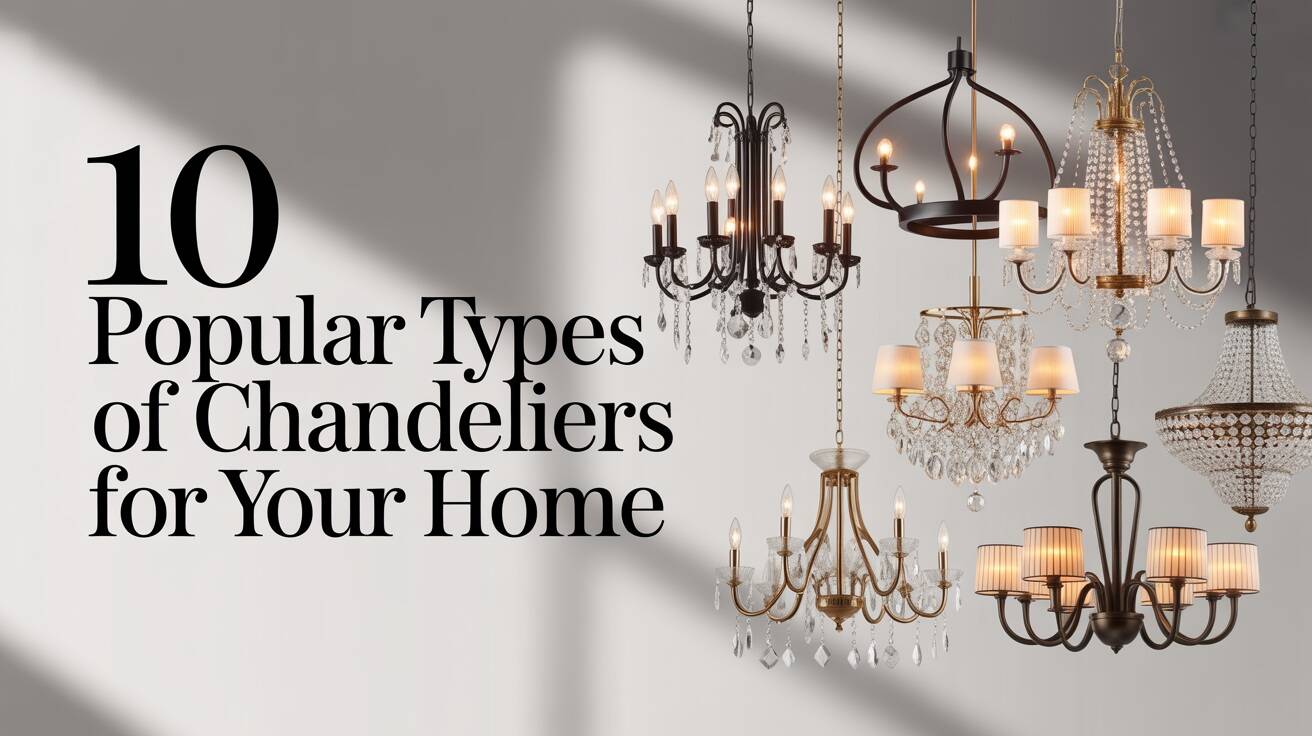

Chandelier prices span an enormous range — from compact pendant fixtures at the entry level to grand crystal cascades that cost as much as a car. Understanding what drives that range helps you evaluate whether a fixture is fairly priced, why two visually similar chandeliers can have a 5x price difference, and what to expect at each price tier. This guide covers chandelier pricing across categories, the factors that move prices up or down, and when prices typically drop.
Pricing Quick Reference
- Entry level: Pendant fixtures and compact modern chandeliers — most accessible category.
- Mid-tier: Standard residential chandeliers in glass, metal, or modest crystal — the largest market segment.
- Premium: Statement crystal, designer modern, oversized fixtures, branded designs.
- Luxury / Statement: Custom installations, large multi-tier crystal, designer-signed pieces.
- What pushes prices up: Material grade (K9 crystal, hand-blown glass), size, light count, brand, customization.
- What pulls prices down: Sale timing, floor models, direct-from-manufacturer purchases, simpler material substitutions.
- Best discount windows: Black Friday/Cyber Monday, January white sales, end-of-season clearance.
On this page
- Chandelier Price Tiers Explained
- What Drives Chandelier Prices
- Pricing by Chandelier Type
- Pricing by Size & Light Count
- Material Cost Breakdown
- Why Some Chandeliers Cost So Much
- Hidden Costs Beyond the Fixture
- Evaluating Value vs Price
- When Chandelier Prices Drop
- How to Avoid Overpaying
- Frequently Asked Questions
Chandelier Price Tiers Explained
Modern chandelier pricing organizes into four broad tiers. The right tier for your project depends on visibility (how prominent the fixture is in the home), longevity expectations, and the rest of the home's finish level. A high-traffic two-story foyer in a luxury home rarely tolerates an entry-level fixture; a guest bedroom rarely justifies a luxury statement piece.
Entry Level
Typical applications: Pendant lights, compact modern chandeliers for small dining nooks, secondary bedrooms, breakfast bars, hallway fixtures.
What you get: Modern silhouettes, basic LED-compatible construction, single-light or small multi-light formats, standard finishes (matte black, brushed nickel, basic gold). Functional and stylish for utility-focused applications.
What's typically not included: Hand-blown glass elements, K9-grade crystal, brand-name designer attribution, complex customization options.
Best buyer profile: First-time buyers, secondary rooms, rental properties, quick-replacement projects.
Mid-Tier
Typical applications: Standard dining room chandeliers, primary bedroom fixtures, kitchen island linear chandeliers, modern foyer fixtures, branched modern farmhouse chandeliers.
What you get: Quality crystal accents (machine-cut), hand-finished metal frames, blown glass elements, multi-light configurations (5-12 lights typical), warranty coverage, dimmer compatibility, broader finish options including aged brass and warm gold.
What's typically not included: Premium hand-blown artisan glass, K9-grade or higher crystal, true designer attribution, oversized statement scale.
Best buyer profile: Most US residential dining rooms, primary living spaces, modern farmhouse new builds, transitional renovations.
Premium
Typical applications: Statement dining room chandeliers, two-story foyer fixtures, large kitchen islands (8+ ft), designer modern living rooms, primary bedroom statement pieces.
What you get: K9-grade crystal, hand-blown artisan glass, premium metal finishes (aged brass with hand-applied patina), 10-25 light configurations, multi-tier compositions, sculptural branched silhouettes, longer warranties, smart-control integration, museum-grade CRI 95+ LED options.
What's typically not included: True custom dimensions, designer-signed editions, bespoke material specifications.
Best buyer profile: Modern luxury homes, two-story foyer projects, statement-focused renovations, design-conscious homeowners willing to invest in lighting as a primary design element.
Luxury / Statement
Typical applications: Cathedral foyer installations, grand staircase chandeliers, custom dining room centerpieces, designer-signed pieces, multi-tier statement installations.
What you get: Custom dimensions, designer attribution, hand-cut premium crystal, hand-blown one-off glass elements, complex multi-tier compositions (often 20-70+ light points), white-glove installation, extended warranties (3-5 years), occasionally architect consultation included.
Best buyer profile: Luxury new construction, high-end renovations where lighting is the primary design moment, commercial hospitality applications, custom-design projects.
What Drives Chandelier Prices
Two visually similar chandeliers can differ in price by 5x or more. Understanding which factors drive the difference helps evaluate whether a higher price reflects genuine quality or just brand markup.
| Factor | Impact on Price | Why It Matters |
|---|---|---|
| Crystal grade | Major (2-5x) | K9 grade or higher refracts light dramatically more than basic glass; the visual difference is real |
| Hand-blown vs molded glass | Major (3-4x) | Hand-blown shows subtle imperfections that read as authenticity; molded reads uniform/industrial |
| Metal finish quality | Significant (1.5-2x) | Hand-applied patinas, plated finishes, and authentic aged brass cost more than painted alternatives |
| Light count | Significant (linear) | Each additional light adds wiring, hardware, and assembly time |
| Size / scale | Major (geometric) | Doubling fixture diameter typically more than doubles cost (materials + structural support) |
| Brand / designer attribution | Major (2-10x) | Designer-signed pieces carry significant brand premium beyond material costs |
| Country of origin | Significant (varies) | Italian, German, and traditional crystal regions carry origin premium |
| Customization | Major (1.5-3x) | Custom dimensions, finishes, or configurations require dedicated production |
| LED technology | Modest (10-30%) | Integrated LED, tunable white, or smart features add manufacturing complexity |
| Warranty length | Modest reflection | Longer warranties typically signal manufacturer confidence in quality, indirectly priced in |
Pricing by Chandelier Type
Different chandelier categories sit at different baseline price points. The same buyer with the same project can pay vastly different amounts depending on which fixture type they choose for the same role.
Pendant Lights & Mini Pendants
Tier range: Entry to mid-tier dominant.
The most accessible lighting category. Single-light formats keep manufacturing simple; modern silhouettes work without elaborate ornamentation. Compact size limits material cost.
Modern Linear Chandeliers
Tier range: Mid-tier to premium.
Kitchen island standards. Multi-light configurations and longer dimensions push these above pendants, but cleaner construction keeps them below ornate crystal cascades. See linear chandelier guide.
Modern Crystal Chandeliers
Tier range: Mid-tier to luxury.
Crystal grade dominates pricing. Modern interpretations (restrained crystal on iron or warm-metal frames) cost less than full traditional crystal cascades. The 2026 direction favors restrained crystal.
Branched / Biomorphic Chandeliers
Tier range: Mid-tier to premium.
Defining 2026 silhouette. Handmade variants carry premium pricing; machine-formed branched fixtures sit in mid-tier. See farmhouse picks with branched options.
Staircase & Stairwell Chandeliers
Tier range: Premium dominant.
Long drop length, structural complexity, and premium installation requirements push staircase chandeliers above standard residential pricing. See staircase chandelier picks.
Statement / Oversized Chandeliers
Tier range: Premium to luxury.
Scale geometrically increases cost. Oversized fixtures require more material, more structural engineering, and often white-glove installation. See oversized chandelier guide.
Designer / Branded Chandeliers
Tier range: Premium to luxury, occasionally mid-tier.
Brand premium can double or triple the price of an otherwise comparable fixture. Italian, German, and Czech crystal brands historically carry the strongest premiums.
Custom / Bespoke Chandeliers
Tier range: Luxury / statement only.
Custom dimensions, materials, or configurations require dedicated production runs. Lead times stretch 8-16 weeks; pricing reflects single-unit manufacturing economics.
Pricing by Size & Light Count
Size and light count drive pricing more than most buyers expect. Doubling a chandelier's diameter rarely just doubles the price — it often triples or quadruples it because larger fixtures need more material, more structural support, and more elaborate assembly.
| Size Category | Diameter Range | Light Count Typical | Tier Distribution |
|---|---|---|---|
| Compact | Under 16" (40cm) | 1-3 lights | Entry to mid-tier |
| Standard | 16-30" (40-76cm) | 3-8 lights | Mid-tier dominant |
| Large | 30-48" (76-122cm) | 8-15 lights | Mid-tier to premium |
| Oversized | 48-72" (122-183cm) | 15-25 lights | Premium dominant |
| Statement | 72"+ (183cm+) | 25+ lights | Premium to luxury |
For sizing math by room type, see our complete chandelier size guide.
Material Cost Breakdown
Material choice drives more of the price than any other single factor. The same silhouette in basic glass versus K9 crystal can differ in price by 4-5x.
| Material | Relative Cost | Notes |
|---|---|---|
| Acrylic / Plastic | Lowest | Functional and lightweight; visually distinguishable from real glass on close inspection |
| Basic glass (machine molded) | Low | Standard quality, uniform appearance, broad availability |
| Hand-blown glass | Medium-High | Visible artisan quality, slight imperfections read as authentic; major 2026 trend |
| Smoked / tinted glass | Medium-High | Defining 2026 trend; specialty production |
| Basic crystal (machine cut) | Medium | Better light refraction than glass but lower than K9 grade |
| K9-grade crystal | High | Premium light refraction, superior clarity, durable |
| Hand-cut crystal | Highest | Traditional artisan production; significant premium over machine-cut |
| Iron / steel frame | Low-Medium | Structural backbone of most fixtures; finish quality drives perceived cost |
| Brass (plated) | Low-Medium | Most common warm-metal finish; aged brass plating dominant in 2026 |
| Solid brass | High | Authentic patina over time; significant premium over plated |
| Wood (engineered) | Low-Medium | Modern farmhouse staple; engineered options keep cost moderate |
| Solid hardwood | Medium-High | White oak, walnut, ash; premium farmhouse and biophilic fixtures |
| Natural stone (alabaster, travertine) | High | Defining 2026 luxury material; significant premium |
| Custom finishes / patinas | Highest | Hand-applied finishes, unique to each fixture |
Why Some Chandeliers Cost So Much
The gap between an entry-level fixture and a luxury chandelier isn't arbitrary. Several real cost factors compound:
- Material grade. K9-grade crystal, hand-blown glass, solid brass, and natural stone all cost meaningfully more than their entry-level alternatives. The 5x material cost difference is real, not invented.
- Manufacturing labor. Hand-cut crystal, hand-blown glass, hand-applied patinas, and custom finishes all require artisan labor that machine production avoids. Labor cost flows directly to fixture cost.
- Structural engineering. Larger and heavier fixtures need engineered mounting systems, reinforced frames, and tested load capacities. The engineering cost gets distributed across each fixture sold.
- Brand premium. Established designer brands carry markup beyond material and labor cost. The premium reflects design IP, brand equity, and limited distribution rather than manufacturing differences.
- Country of origin. Italian, German, and Czech crystal regions carry origin premiums tied to traditional craftsmanship reputations and regulatory compliance costs.
- White-glove installation. Premium fixtures often include or require professional installation, which gets bundled into pricing.
- Warranty and service. Longer warranties (3-5 years) and dedicated service support reflect manufacturer confidence and add ongoing cost.
- Limited distribution. Designer fixtures sold through select retailers carry lower volume economics than mass-market alternatives.
Hidden Costs Beyond the Fixture
The fixture's sticker price is rarely the total cost. Several real expenses sit alongside or after the purchase that buyers should budget for upfront.
| Hidden Cost | Typical Range | When It Applies |
|---|---|---|
| Professional installation | Significant | Always for staircase, statement, or oversized fixtures; usually for two-story foyer |
| Electrical upgrades | Variable | Older homes may need junction box upgrades, dimmer wiring, three-way switching |
| Reinforced mounting | Modest-Significant | Required for fixtures over 50 lbs or staircase installations |
| Dimmer compatibility | Modest | LED-compatible dimmers (TRIAC or ELV) often need replacement of older dimmer hardware |
| Light bulbs (when not included) | Modest | Multi-light fixtures with E12 or E26 bases need separate bulb purchase |
| Shipping (oversized) | Significant | Large fixtures often ship via freight rather than standard parcel |
| Periodic professional cleaning | Annual / biennial | Crystal cascades, statement fixtures, and high-installed chandeliers |
| Ceiling height fixes | Variable | If existing ceiling box doesn't support fixture weight or location |
For installation cost specifics, see our cost of installing a chandelier guide.
Evaluating Value vs Price
Higher price doesn't automatically mean better value, and lower price doesn't automatically mean worse. The right framework evaluates several factors simultaneously:
- Does the price reflect material grade? K9 crystal, hand-blown glass, solid brass — these justify premiums. Painted finishes pretending to be solid metal don't.
- Is the warranty meaningful? A 1-year warranty on a fixture you'll have for 20 years signals manufacturer caution; 3-5 year warranties signal confidence.
- Does the brand premium come with anything? Designer brands sometimes include white-glove installation, lifetime parts replacement, or custom service. Sometimes the premium is purely brand markup.
- Does the price scale with size? A 36" fixture priced like a 60" fixture suggests pricing inflation; a 36" priced lower than expected may signal corner-cutting on materials.
- What's the seller's return policy? Strong return policies signal seller confidence. No-return policies on high-priced fixtures push the risk entirely to the buyer.
- How visible is the fixture? A statement piece in the primary room of the home justifies more investment than a fixture in a guest bathroom — value scales with visibility and longevity expectation.
- What's the cost per visible year? A premium chandelier you'll use for 20 years effectively amortizes the purchase across 7,300+ days of visibility. Most buyers underestimate the per-day cost of premium fixtures.
When Chandelier Prices Drop
Chandelier prices fluctuate predictably across the year. The major discount windows in the US market:
| Window | Discount Depth | Best Categories |
|---|---|---|
| Black Friday / Cyber Monday | Deepest annual | All categories, especially large statement fixtures |
| January white sales | Significant | Modern crystal, traditional fixtures, end-of-year inventory |
| End-of-season clearance (Feb-Mar, Aug-Sep) | Significant | Discontinued styles, floor models, last-season collections |
| Memorial Day, Labor Day | Modest | Standard residential fixtures, typically site-wide percentages |
| 4th of July | Modest | Mid-tier residential, kitchen and dining categories |
| Floor model sales (anytime) | Variable, often deepest | Display models from local lighting showrooms; condition-dependent |
| End-of-year inventory clearance (Dec) | Significant | Discontinued styles, overstocked categories |
How to Avoid Overpaying
- Compare across at least three sellers. The same fixture often sells at meaningfully different prices across retailers. Ten minutes of comparison shopping protects against overpaying for identical merchandise.
- Check direct-from-manufacturer pricing. Some manufacturers sell directly at lower prices than retail distribution; the trade-off is sometimes longer lead times or limited return policies.
- Verify the material specifications. "Crystal" without grade specification could be glass; "brass" without "solid" specification could be plated. Real specifications justify real prices.
- Read return policies before buying premium fixtures. Premium fixtures occasionally arrive damaged or fail to suit the space once installed. Strong return policies eliminate buyer risk.
- Evaluate warranty terms carefully. A 1-year warranty on a $5,000 fixture is concerning; a 3-5 year warranty signals confidence.
- Buy during predictable discount windows. Black Friday, January, and end-of-season windows offer real discounts. Mid-cycle "limited time" sales often aren't.
- Verify dimensions match your space. Returning oversized fixtures is logistically difficult. Measure the room and verify the fixture sizing before purchase.
- Factor installation into the budget. A fixture you can't afford to install is the same as no fixture. Get installation estimates before committing to a purchase.
Frequently Asked Questions
How much does a chandelier cost?
Modern chandelier pricing spans four tiers: entry level (compact pendants, basic modern silhouettes), mid-tier (standard residential dining and bedroom chandeliers), premium (statement crystal, modern designer, oversized fixtures), and luxury/statement (custom installations, large multi-tier crystal, designer-signed pieces). The right tier depends on the fixture's role, visibility, and the surrounding home's finish level.
Why are chandeliers so expensive?
Real cost factors compound: material grade (K9 crystal, hand-blown glass, solid brass), manufacturing labor (hand-cut crystal, hand-applied finishes), structural engineering, brand premium, country of origin, white-glove installation, and limited distribution. The gap between entry and luxury isn't arbitrary — it reflects genuine differences in materials, labor, and engineering.
What's the average chandelier price?
"Average" depends entirely on chandelier type. Pendants and compact modern fixtures sit in entry-level pricing; standard dining room chandeliers in mid-tier; statement crystal and oversized fixtures in premium; custom and designer-signed pieces in luxury. Most US residential dining rooms install fixtures in the mid-tier range.
How much do chandeliers cost on average for a dining room?
Standard US dining rooms most commonly install mid-tier chandeliers — quality crystal accents, hand-finished metal frames, multi-light configurations, warranty coverage. Premium dining rooms with high ceilings and large tables often justify premium-tier statement fixtures.
How much should a chandelier cost?
The right cost depends on three factors: the fixture's role (statement piece vs utility), visibility (front foyer vs guest bedroom), and longevity expectation (forever home vs rental property). High-visibility statement applications justify premium-tier investment; utility applications rarely do.
What is the price range of chandeliers?
Modern chandelier prices span from entry-level pendant fixtures to luxury custom installations — a range of roughly 50-100x from lowest to highest. Most residential buyers operate in the entry to premium range; luxury statement fixtures are a small fraction of the market.
Why do crystal chandeliers cost more than glass?
Crystal grade dominates pricing in this category. K9-grade crystal refracts light dramatically more than basic glass — the visual difference is real, not marketing. Hand-cut crystal carries additional labor premium over machine-cut. Hand-blown glass occupies a middle position, often costing more than basic crystal but less than K9.
How much does a luxury chandelier cost?
Luxury and statement chandeliers occupy a separate tier from standard premium fixtures, with custom installations, designer attribution, hand-cut premium crystal, and complex multi-tier compositions. Most luxury chandeliers also include or require white-glove installation, which factors into total project cost.
Are chandeliers worth the money?
For high-visibility applications (dining rooms, foyers, primary spaces) where the fixture will remain in place for 10-20 years, premium-tier chandeliers typically justify their cost on a per-day amortized basis. For utility applications or rental properties, entry to mid-tier fixtures usually deliver better value.
When is the best time to buy a chandelier?
Black Friday and Cyber Monday offer the deepest annual discounts. January white sales follow as the second-strongest window. End-of-season clearance (February-March, August-September) discounts discontinued styles. Floor models from physical showrooms can offer 30-60% discounts year-round if you're willing to inspect for condition.
What makes a chandelier expensive?
The largest cost drivers are crystal grade (K9 vs basic), hand-blown vs molded glass, solid vs plated metals, light count and size, brand premium, and country of origin. Customization and bespoke specifications add the most significant cost on top of these factors.
Do chandeliers add value to a home?
Statement fixtures in primary visible rooms (dining, foyer, living) consistently appear in real estate listings as positive features. The fixture itself rarely returns its full purchase cost in resale, but it contributes to the home's overall finish quality and showing impression — both of which influence sale price beyond the fixture line item.
How much should I spend on a chandelier for a dining room?
Match investment to dining room visibility and use frequency. A formal dining room used for entertaining justifies more investment than a casual eat-in kitchen. The fixture's cost should align proportionally with the rest of the dining room's finish level — premium hardwood floors and dining table justify a fixture in matching tier.
What's included in chandelier price?
Most chandelier prices include the fixture itself, basic mounting hardware, and standard installation instructions. Often not included: light bulbs (especially for multi-light E12 or E26 base fixtures), professional installation, electrical upgrades, dimmer compatibility hardware, and shipping for oversized fixtures.
Why do designer chandeliers cost so much more?
Brand premium can double or triple the price of an otherwise comparable fixture. The premium reflects design IP, brand equity, limited distribution, and (often) included white-glove service. Whether the premium is justified depends on the buyer's priority — for some, brand attribution itself carries value; for others, equivalent quality without brand markup represents better value.
Understand the Pricing, Then Match It to Your Project
Chandelier pricing follows real economics — material grade, labor, engineering, brand, and origin all contribute to the gap between entry-level and luxury fixtures. Once you understand which factors drive cost, evaluating individual fixtures becomes straightforward: does the price reflect genuine quality, or brand premium without quality backing it? Higher isn't automatically better; lower isn't automatically worse. The framework above helps you evaluate any chandelier you're considering against the factors that matter.