


Why Glass Suits the Pendant Format
A ceiling fixture is seen from below and mostly forgiven. A pendant hangs in the room's sightline — at an island you look across at it, at a dining table you look past it at the person opposite, in a bedroom it sits beside your head. That exposure makes glass the format's most useful material, because glass is the only body that can be tuned along a scale from fully transparent to fully diffused. Choose where a design sits on that scale and you have solved the glare question before it arises. It also does something no metal shade manages: light lives inside the fixture, so the pendant reads lit and warm even at the low dimmer settings evenings actually run on.
Clear or Diffused: The Decision That Matters Most
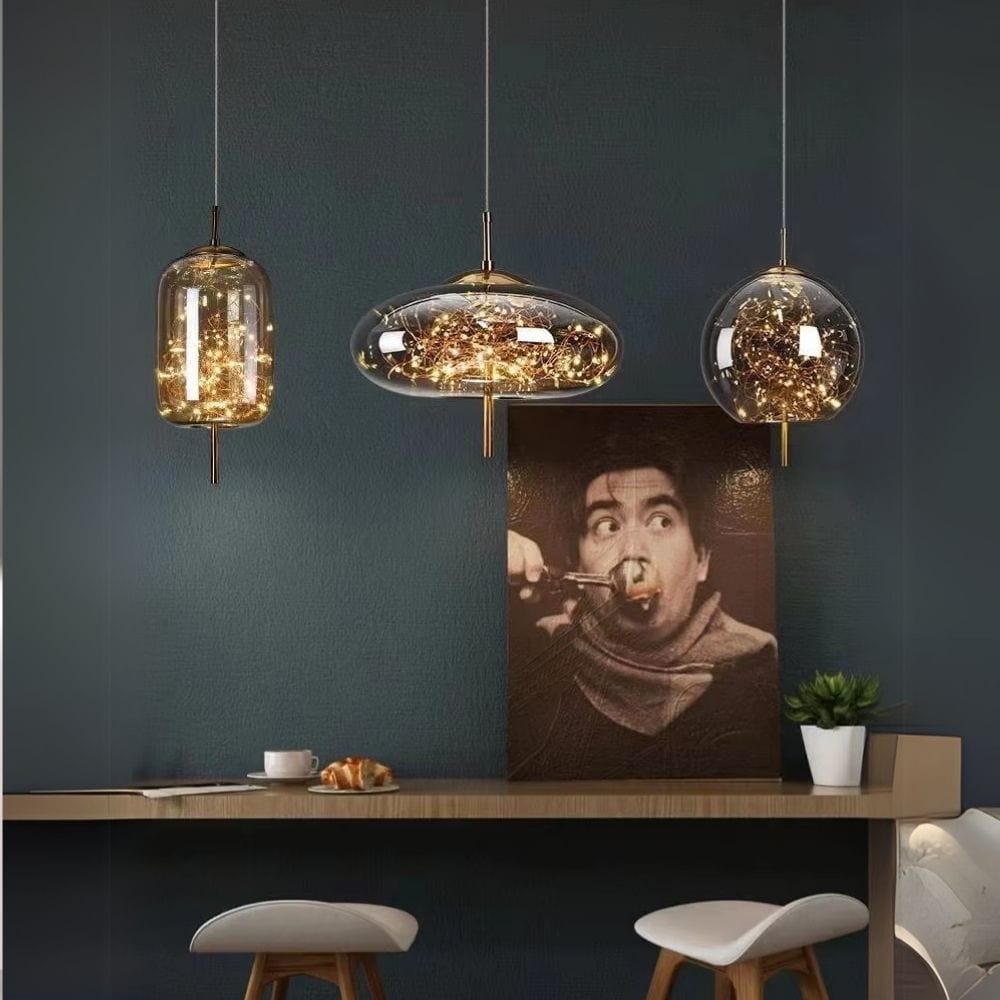
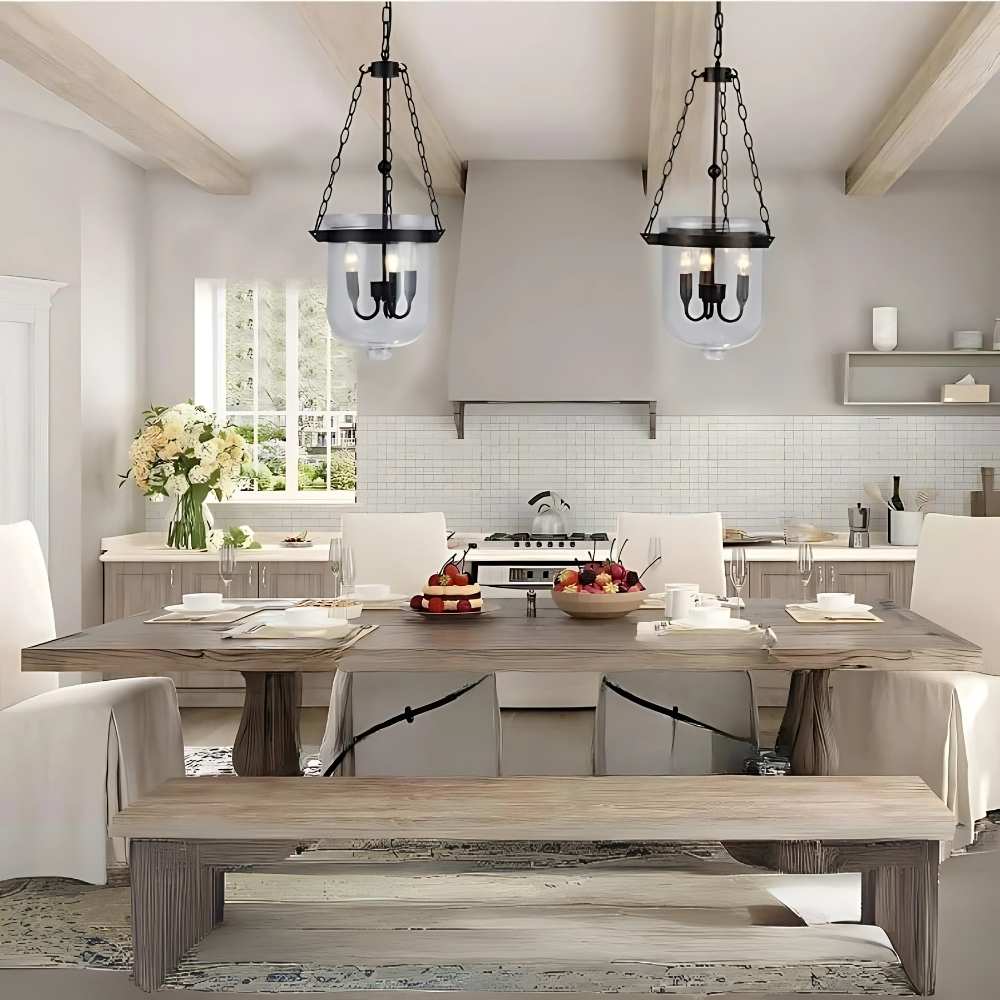
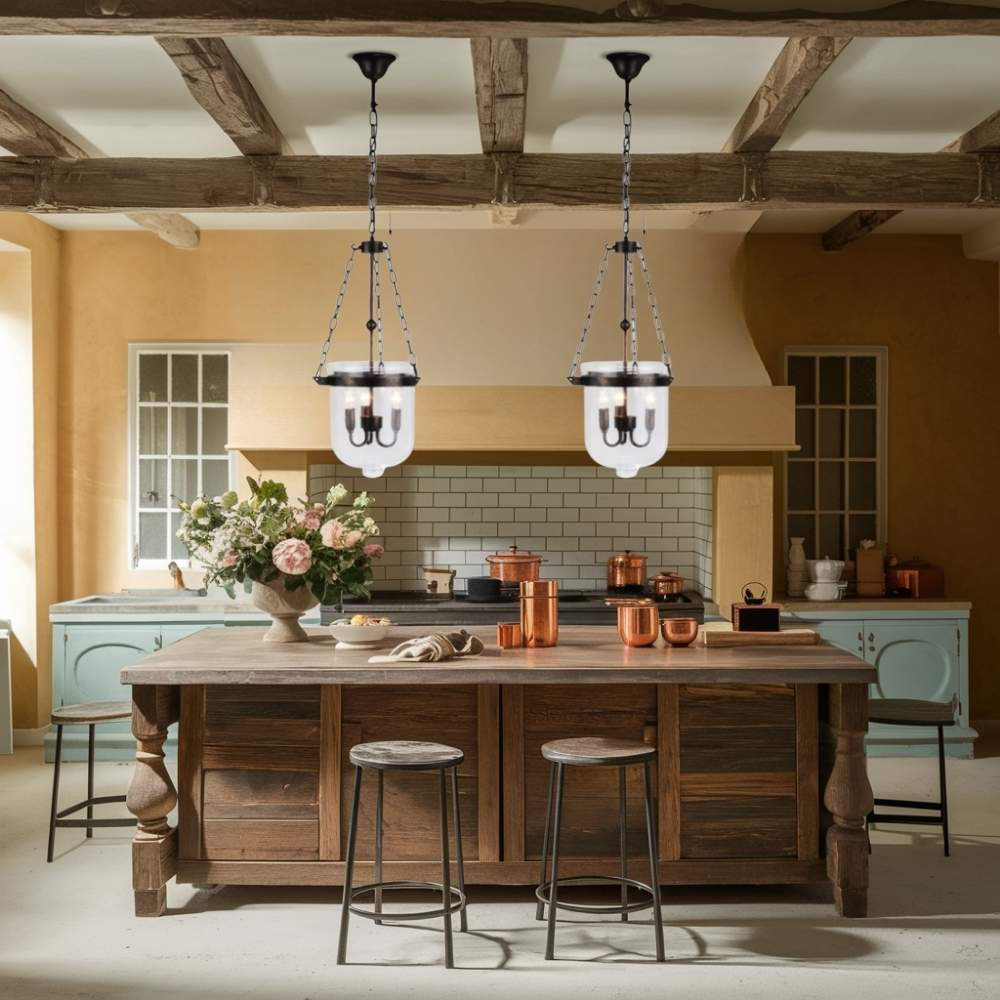
- Clear glass: maximum output, visible bulb, and the sharpest sparkle — correct above work surfaces and anywhere the lamp is chosen as part of the design. Pair with decorative filament LED, since the source is on show
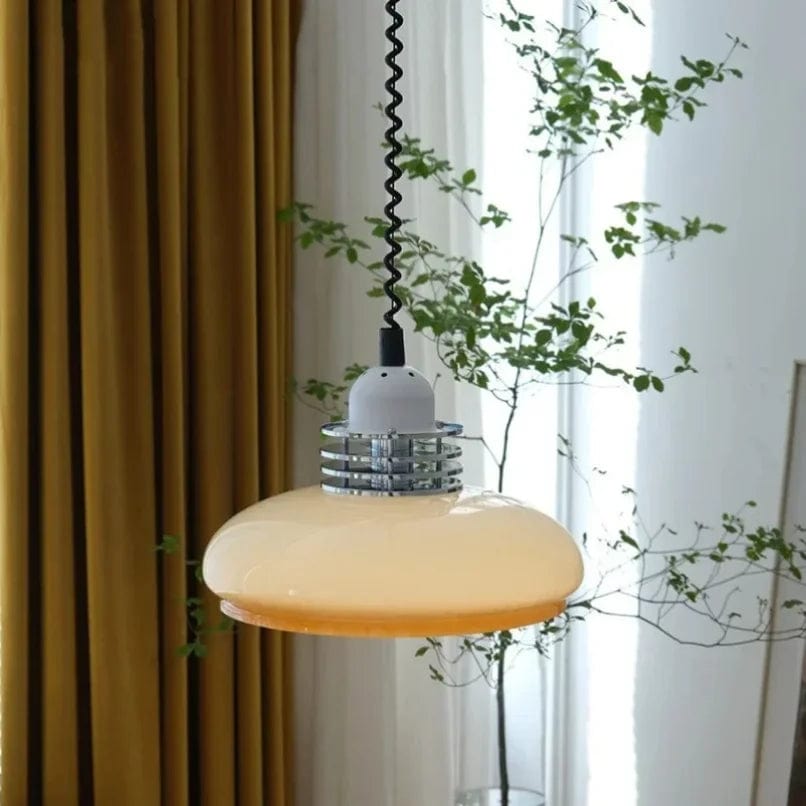
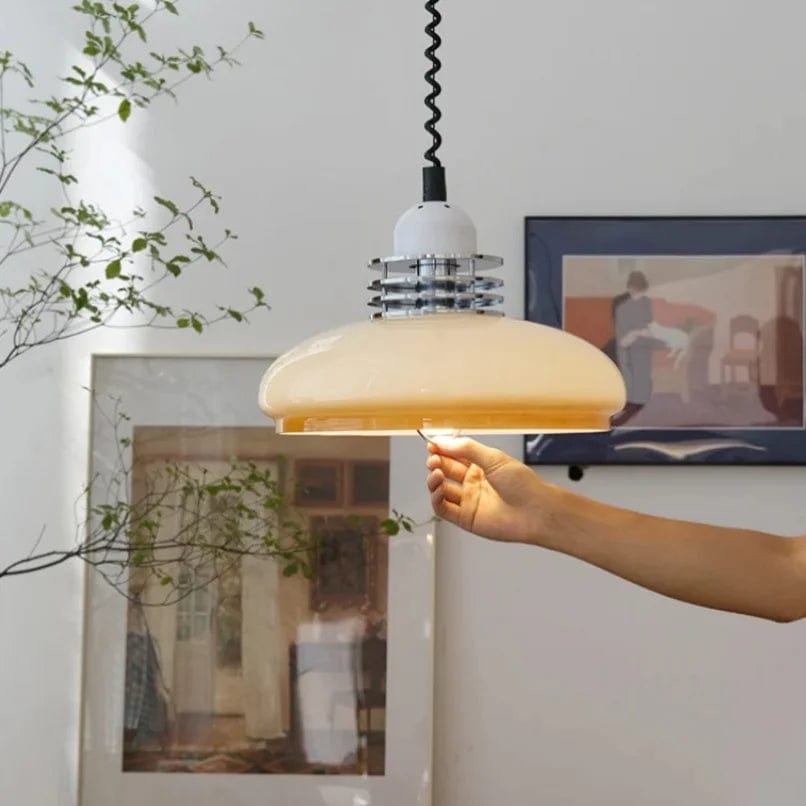
- Opal and milk glass: the source fully hidden behind an even white glow — the choice above seating, beside beds, and anywhere eyes meet the fixture directly
- Frosted and etched: the middle setting — shape and glow visible, filament softened to a haze
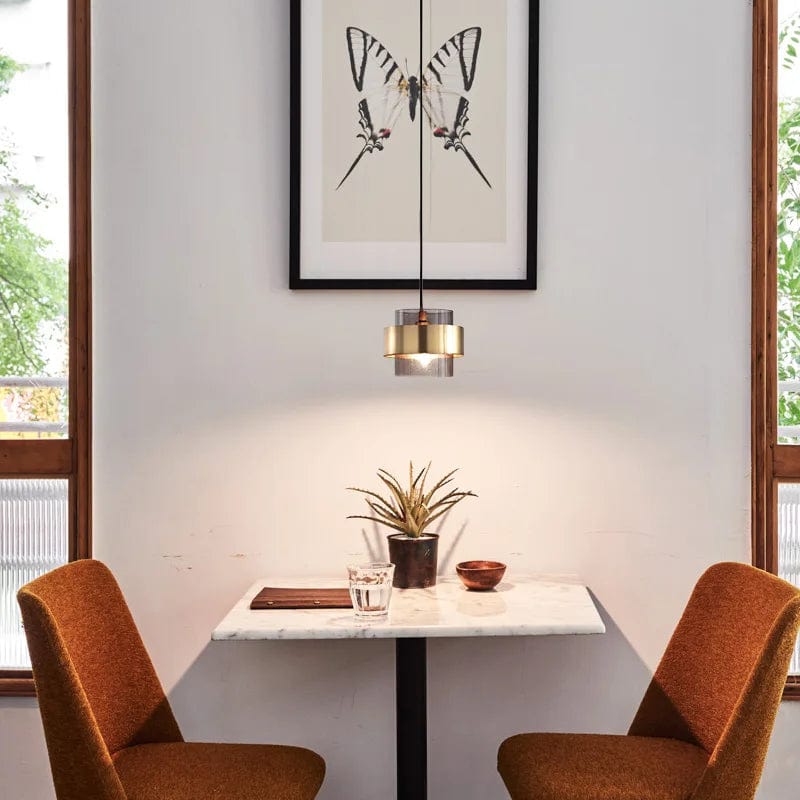
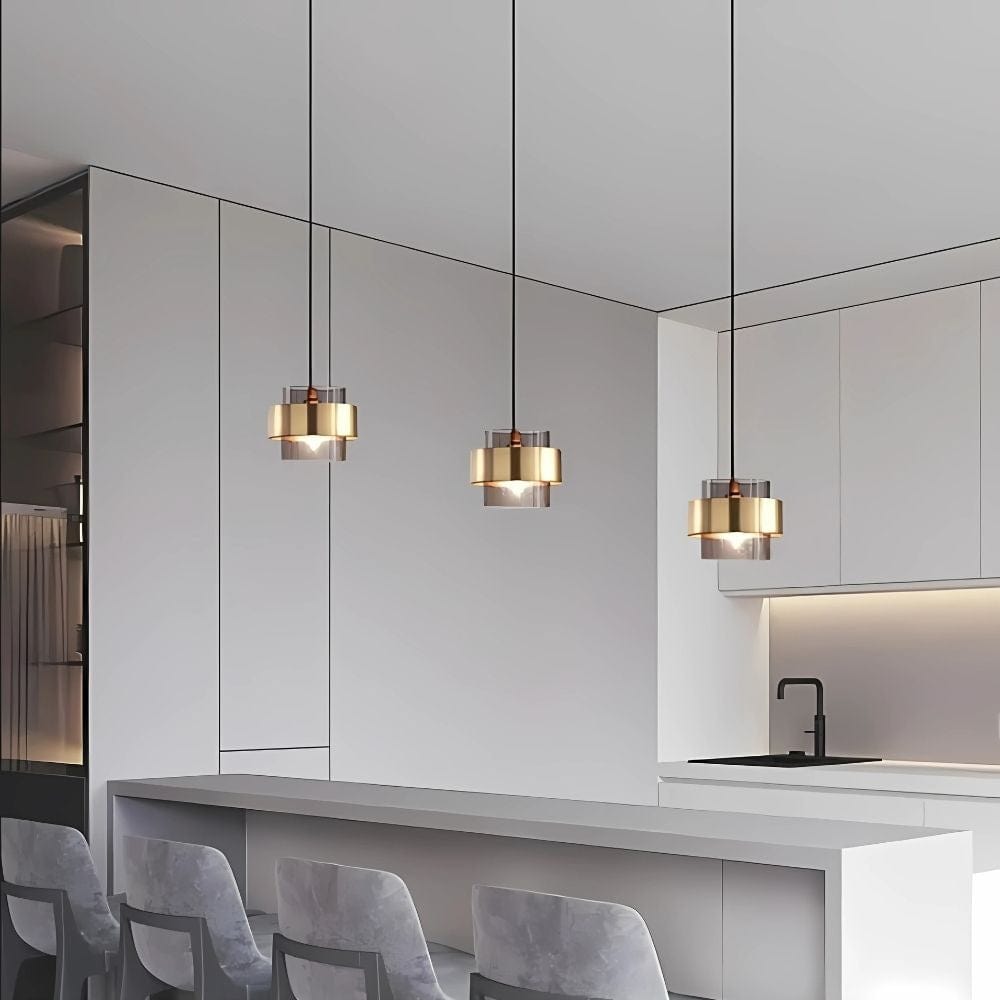
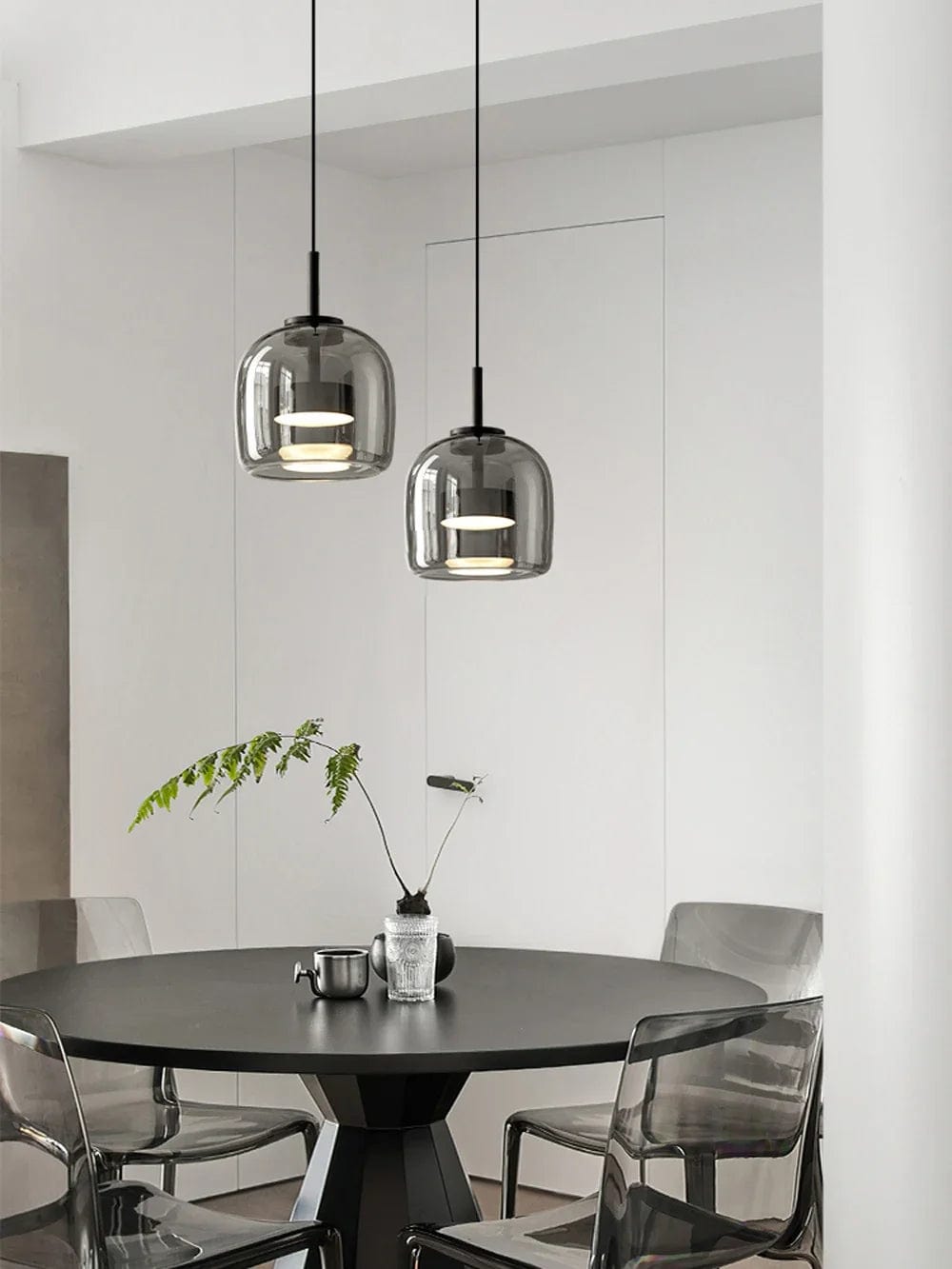
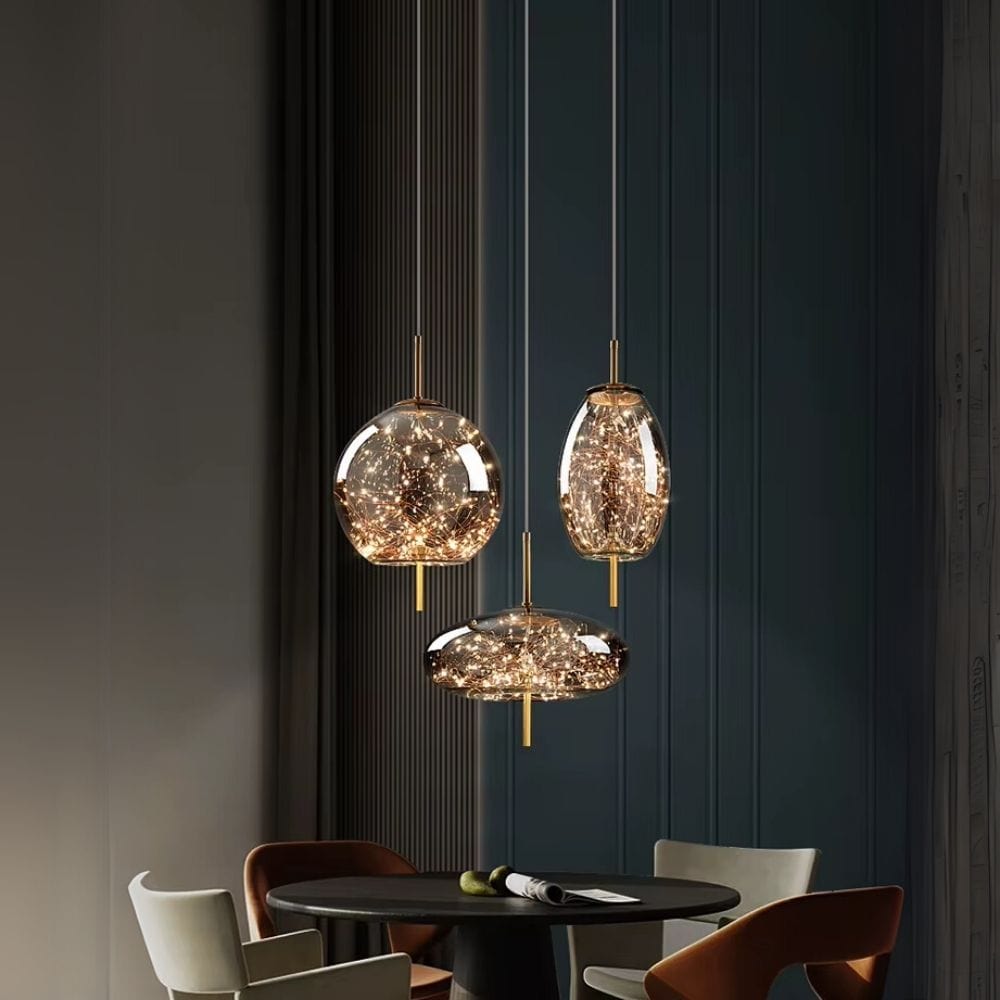
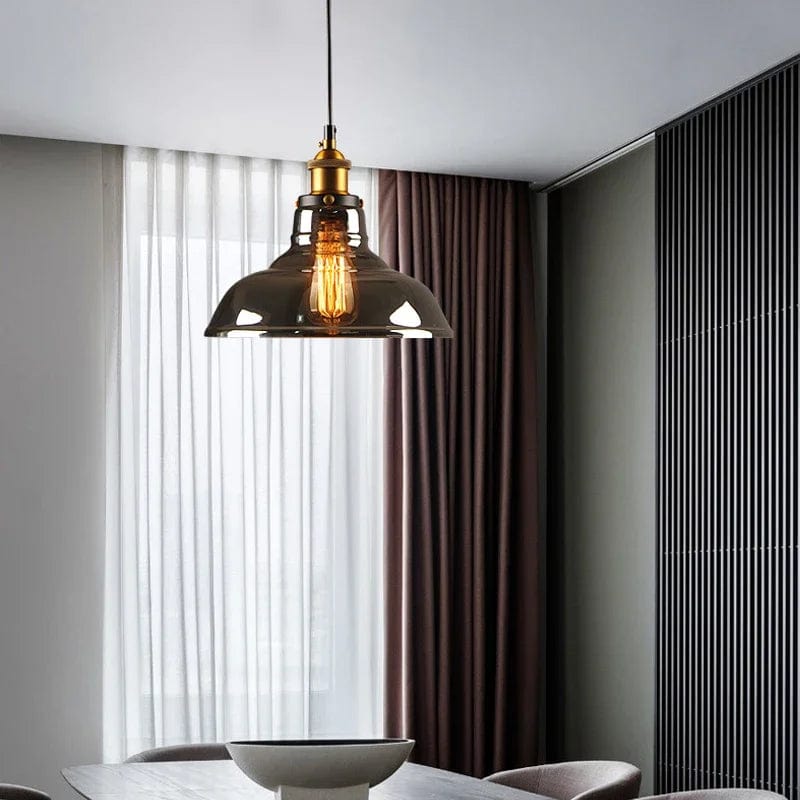
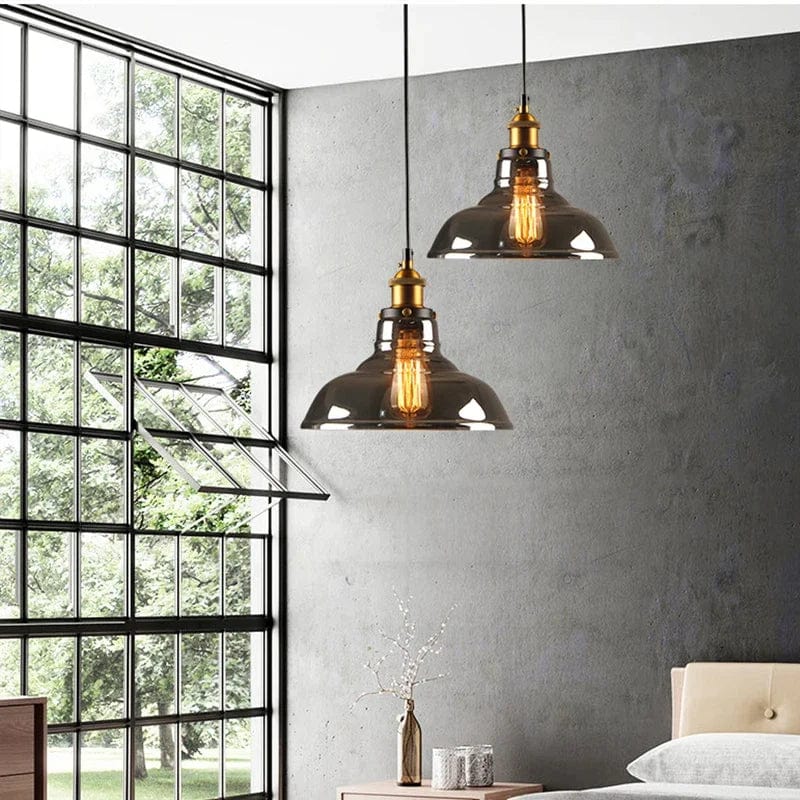
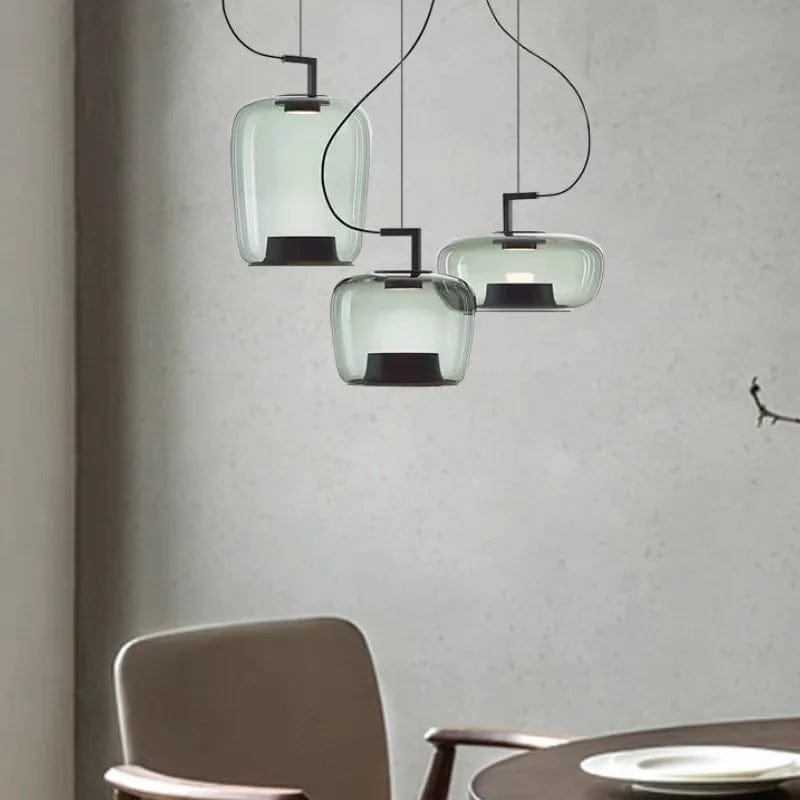
- Smoked and grey: the moody register, dimming the material's voice and reading as luxury restraint over dining tables
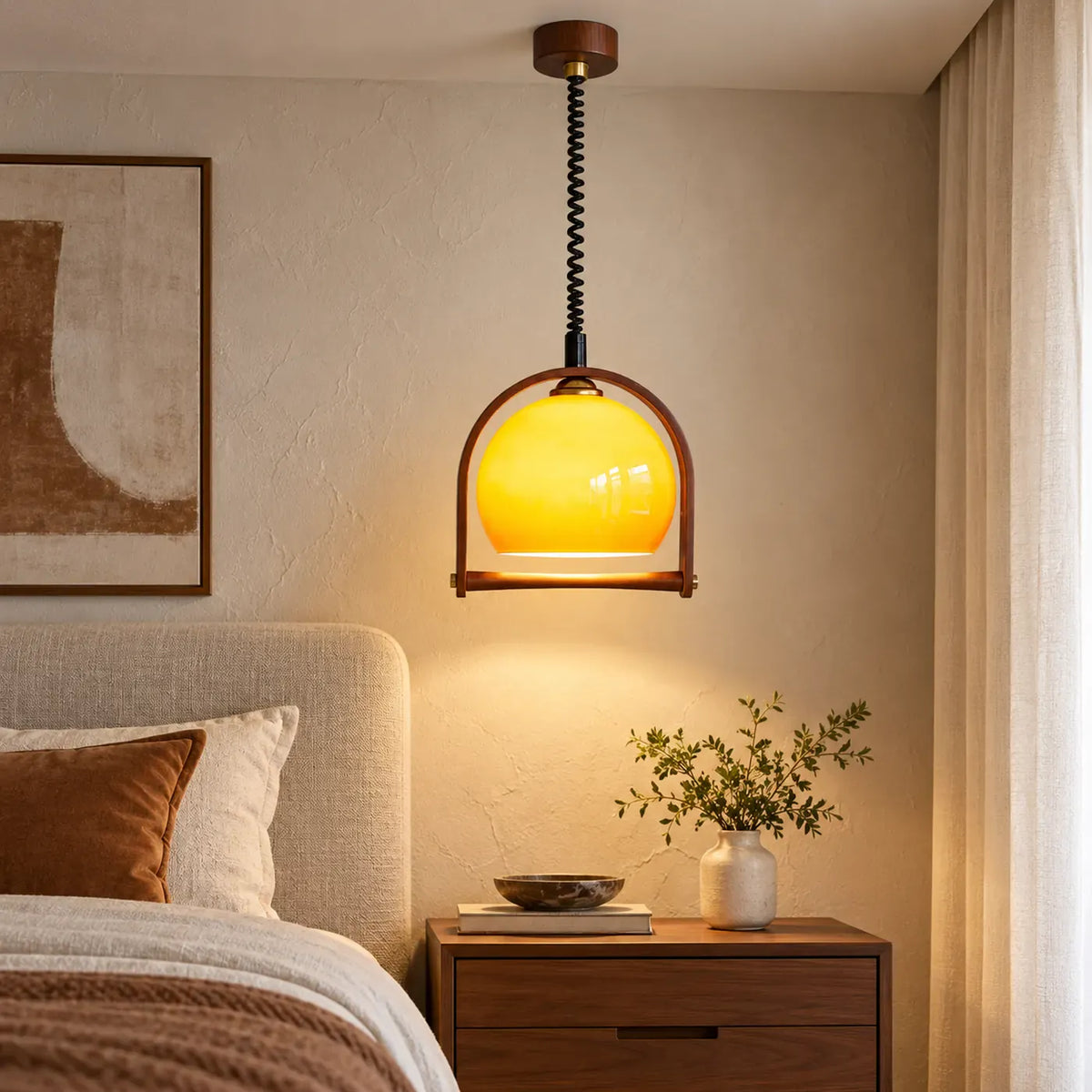
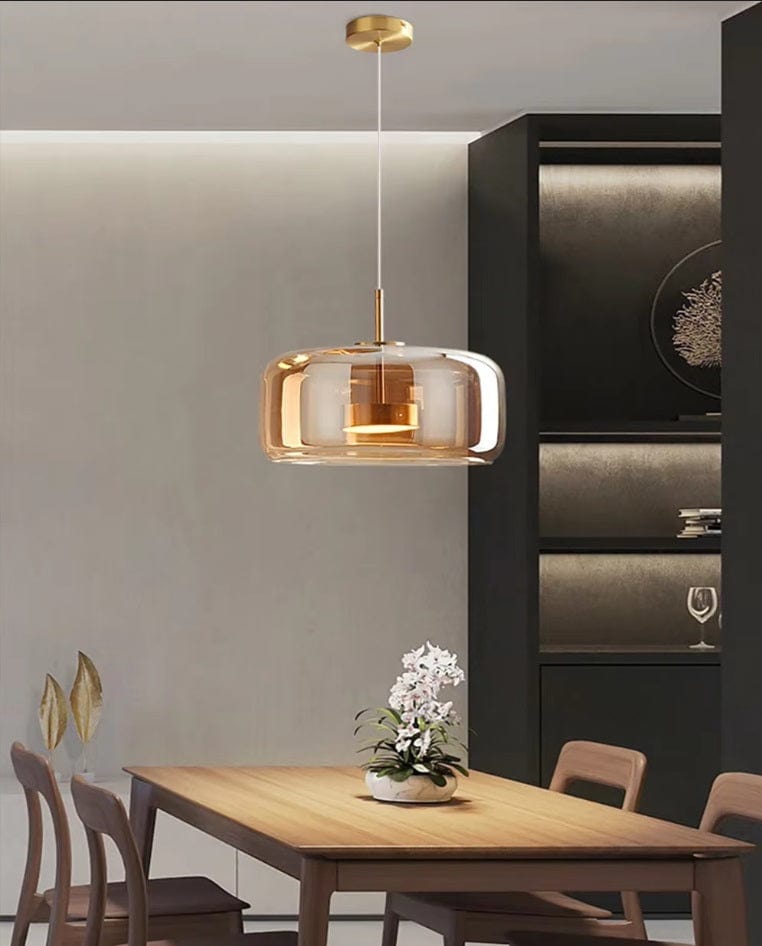
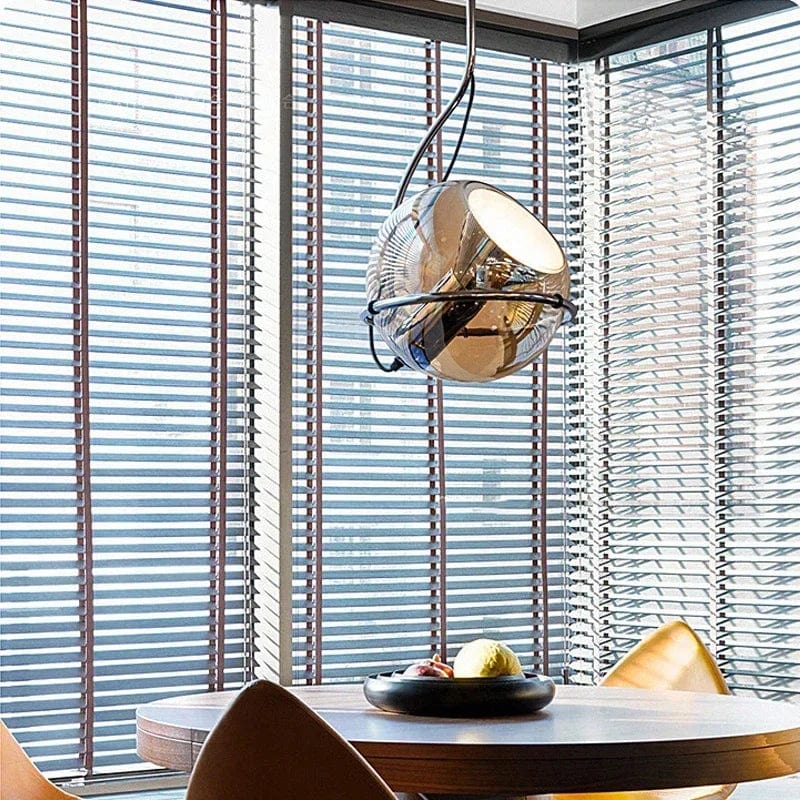
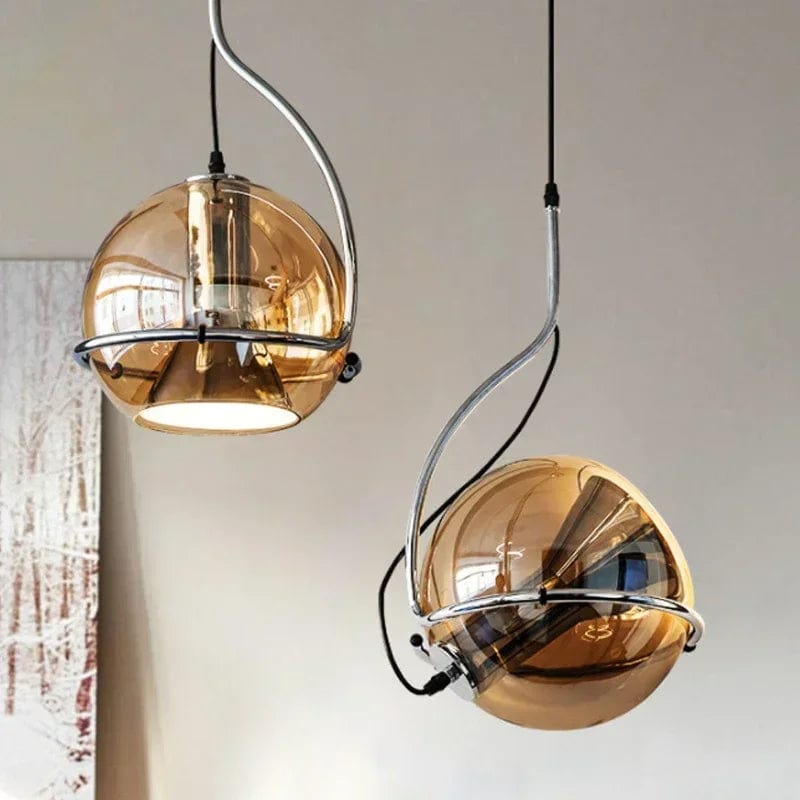
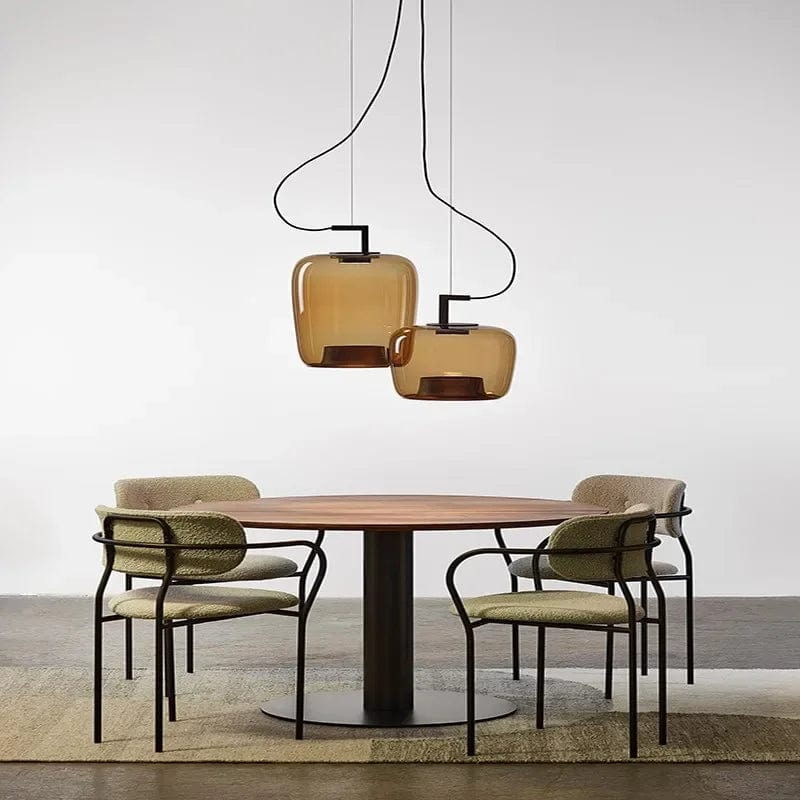
- Amber and warm-tinted: the current warm direction, pairing with brass frames and walnut furniture
The practical test: sit where people will sit and look at the fixture. If the bulb is visible in your direct line of sight for long periods, choose a more diffused body — no amount of dimming fixes a bare filament at eye level.
Globes, Clusters and Other Forms
- Single globes: the category's default — a sphere of light with no front or back, working equally from every approach
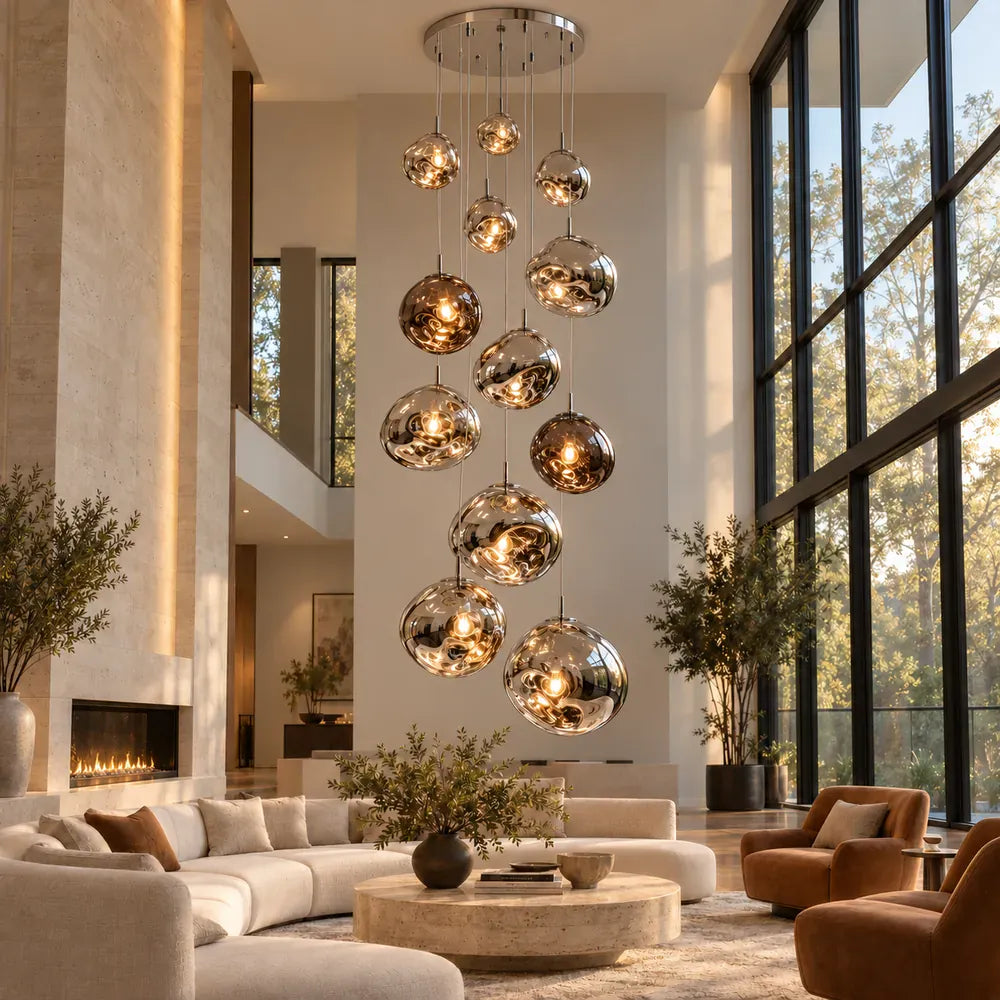
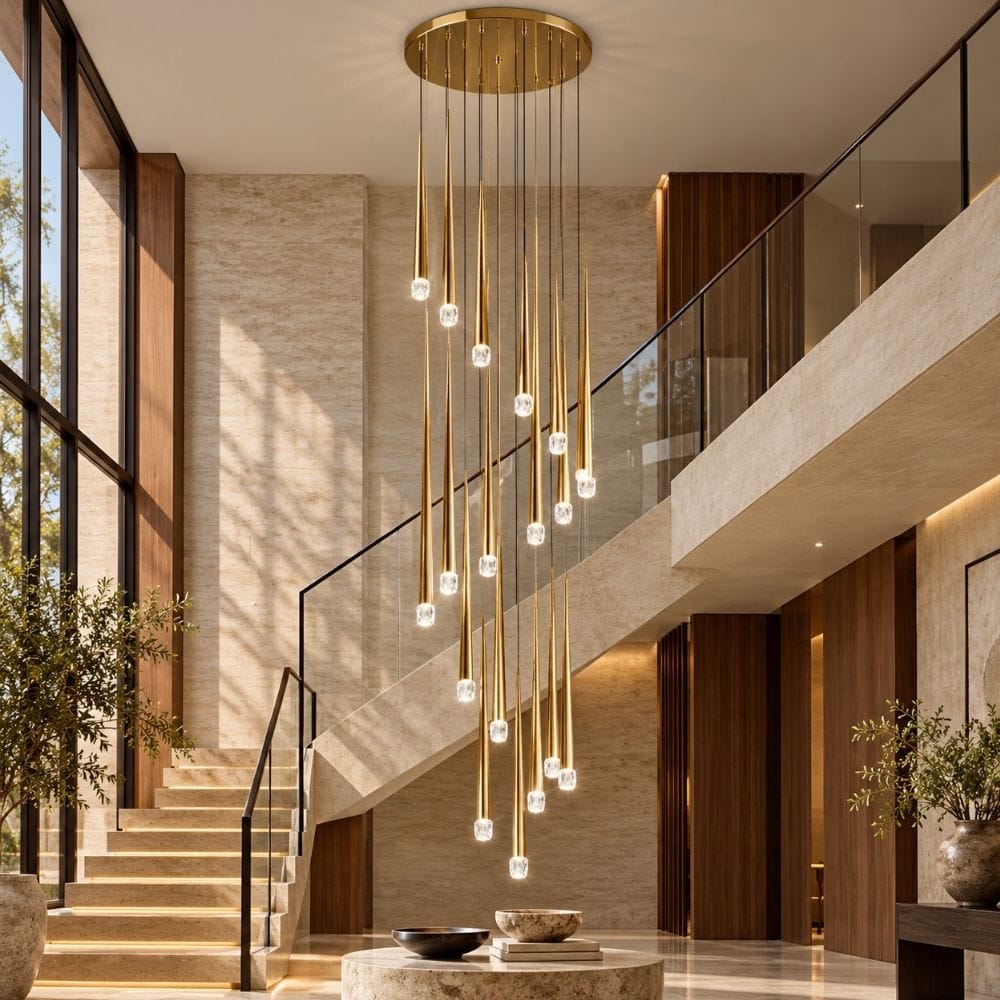
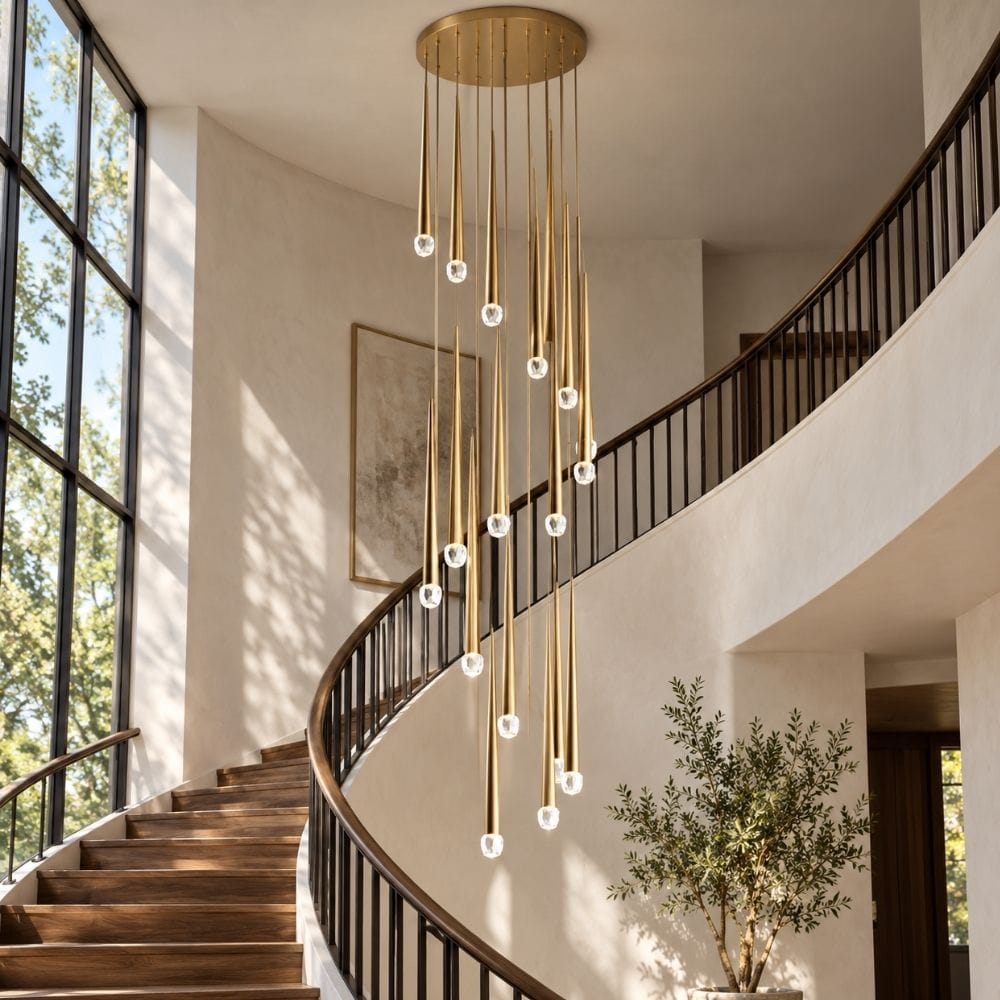
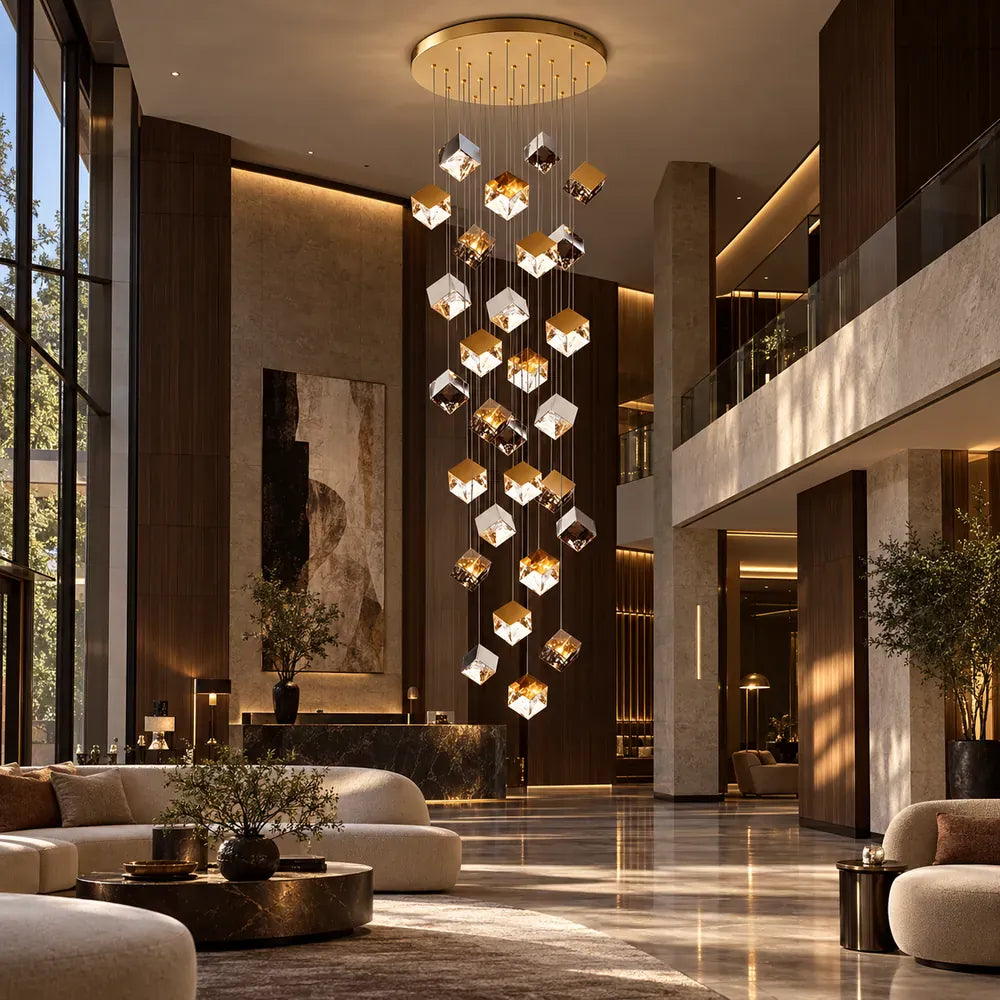
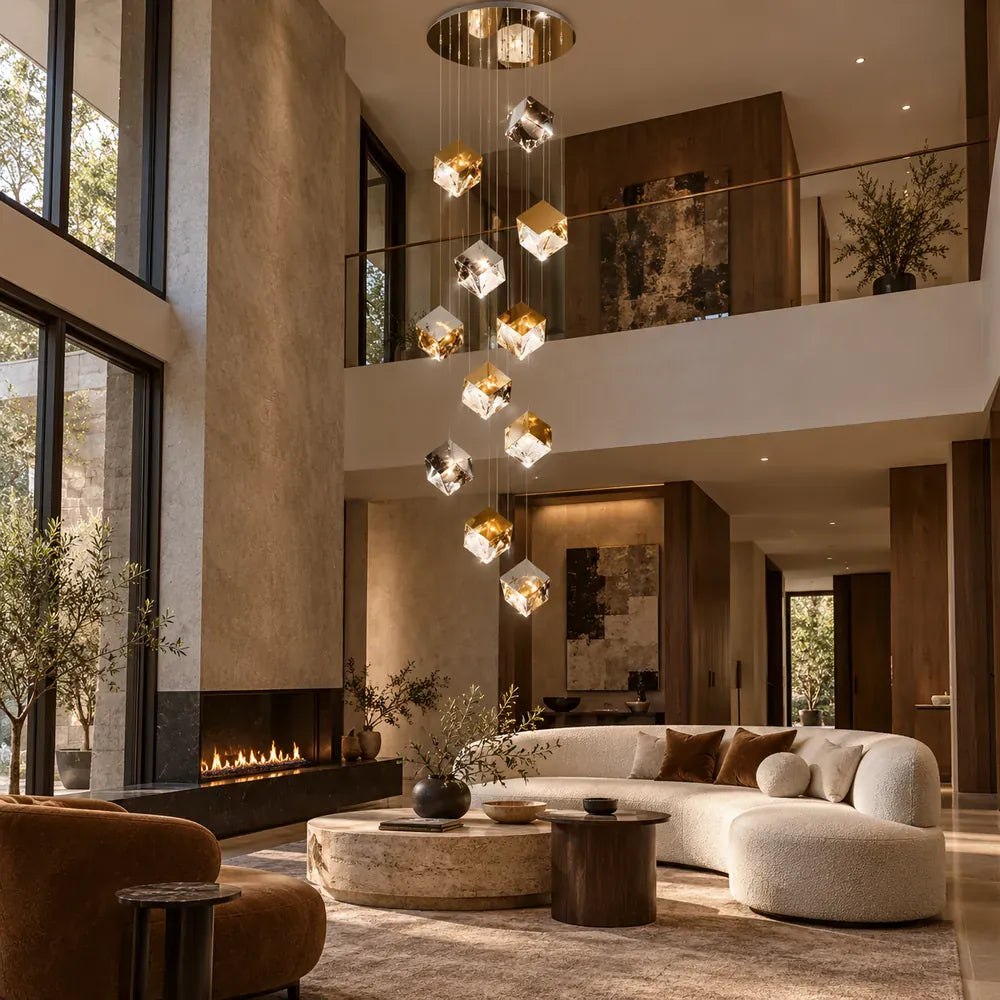
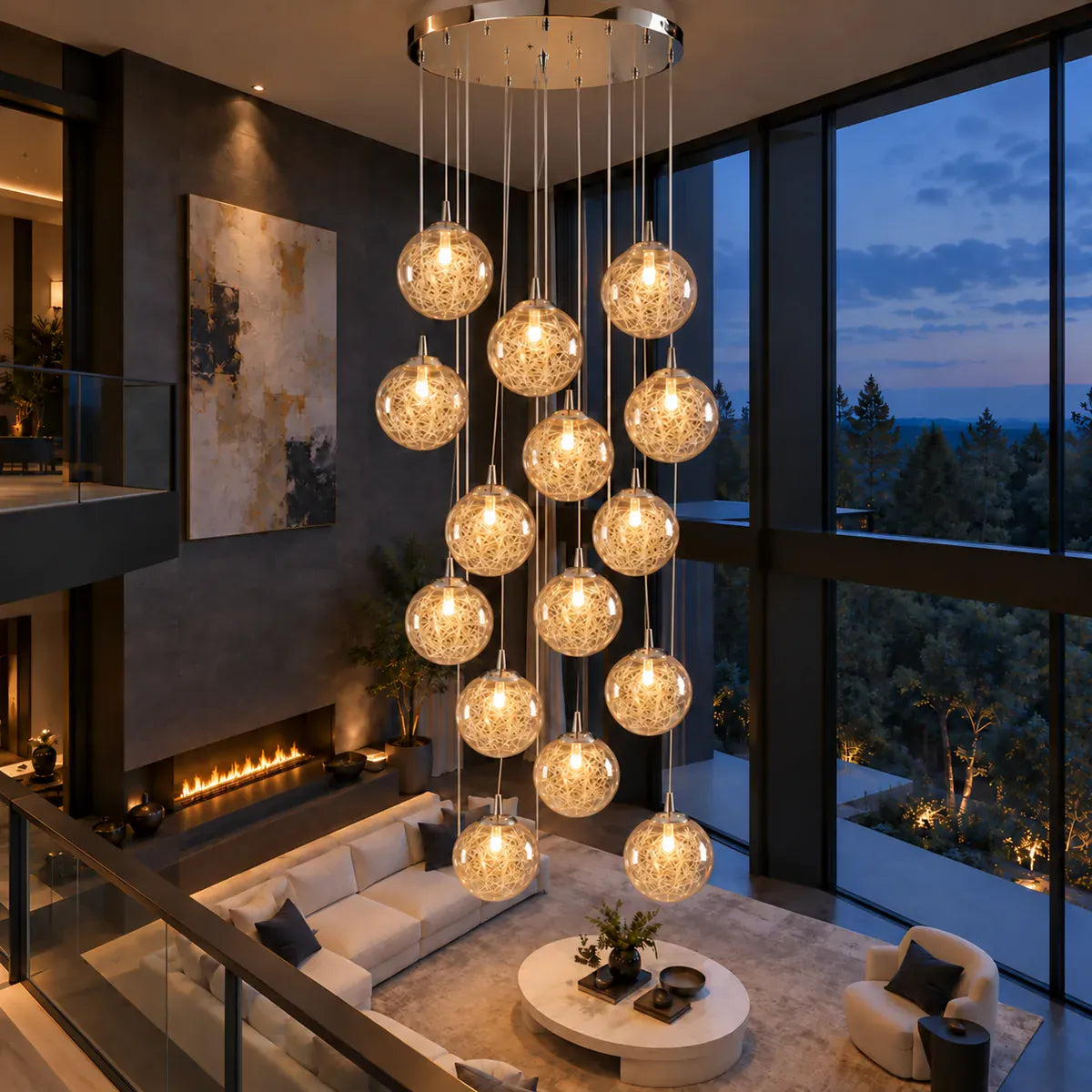
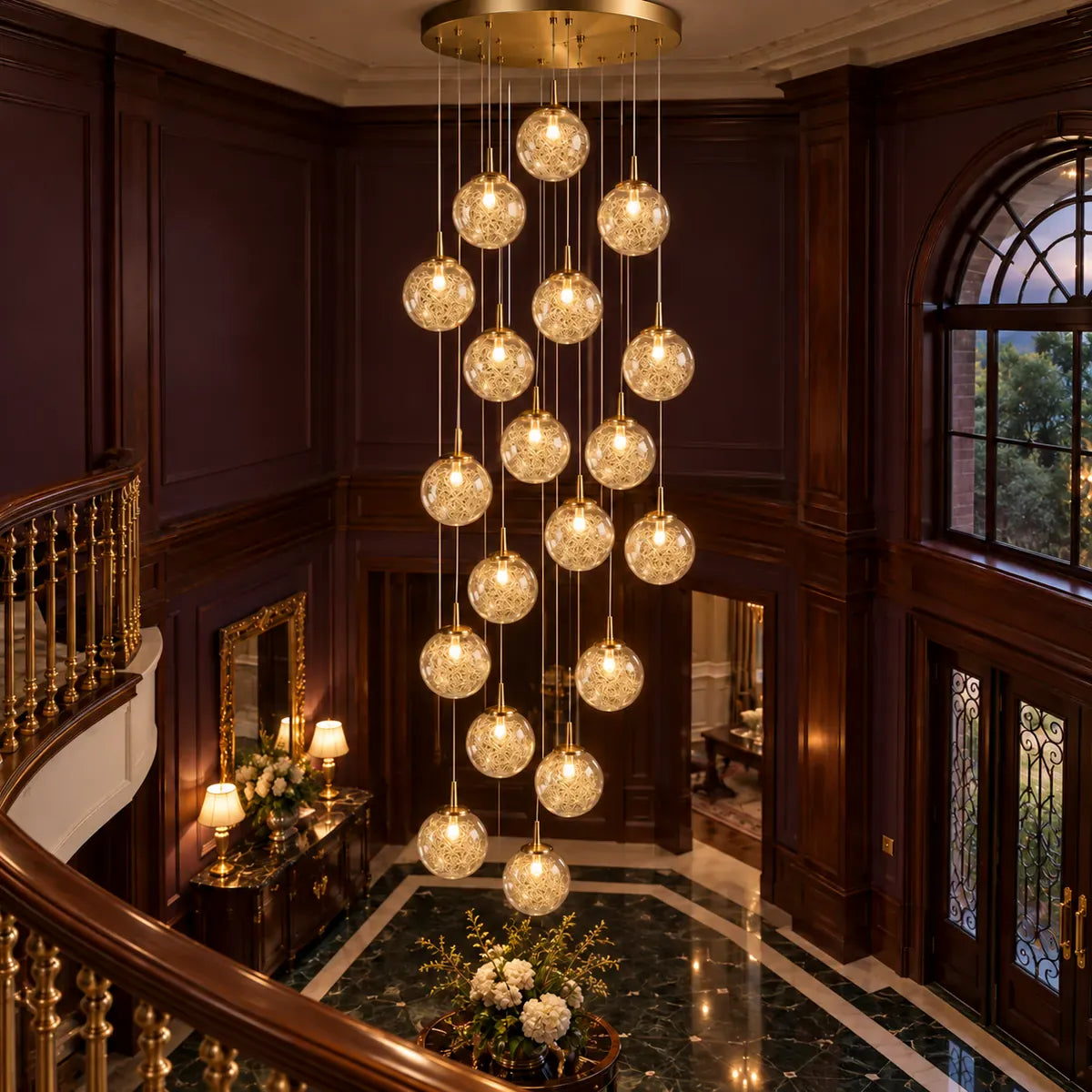
- Multi-globe clusters: several spheres on one canopy at staggered drops, reading as a gathered composition rather than a repeated row — the answer for stairwells and where one ceiling point must fill a volume
- Tapered and cone shades: directed downward light with the warmth glass gives it, effective over counters
- Fluted and ribbed bodies: vertical grooves catching light in fine parallel lines, the current architectural favourite
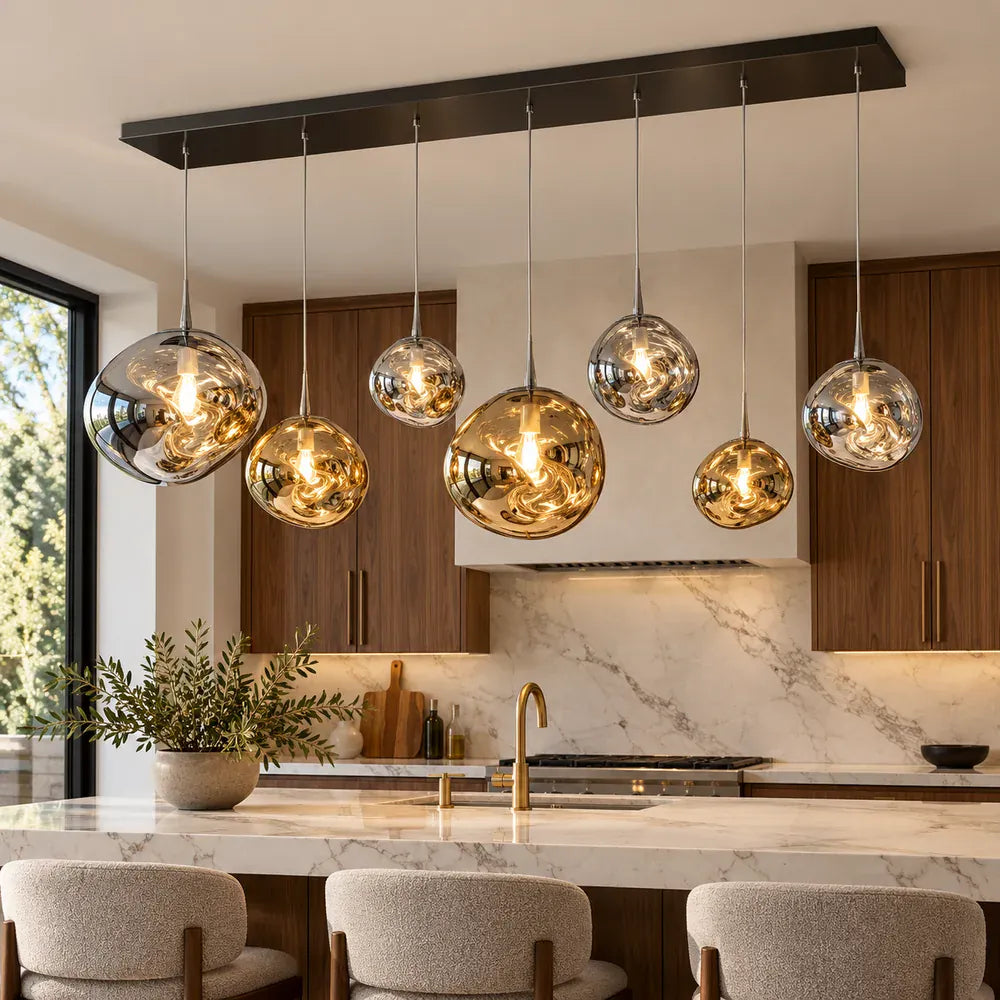
- Wavy and organic forms: hand-shaped bodies where the making is visible in the result
- Cylinders and columns: vertical emphasis for tall rooms and repeated runs
Where They Work Hardest
Kitchen Islands
The format's busiest address, and the one place clear glass earns its keep: a run of clear or lightly frosted globes above a counter delivers task light with the warmth a metal shade lacks. Space roughly one pendant per 24-30" (61-76 cm) of island length, hung 30-36" (76-91 cm) above the surface. Where the island faces a seating area, shift toward opal — the diners look straight at the run. The wider plan is in the kitchen lighting collection, with placement detail in our island height guide.
Dining Tables
A single globe above a round table, a matched pair above a rectangular one, or a multi-globe cluster where the table is generous — all at 30-36" from the tabletop. Smoked and amber bodies read particularly well here, since dining light runs warm and low.
Bedside and Bedrooms
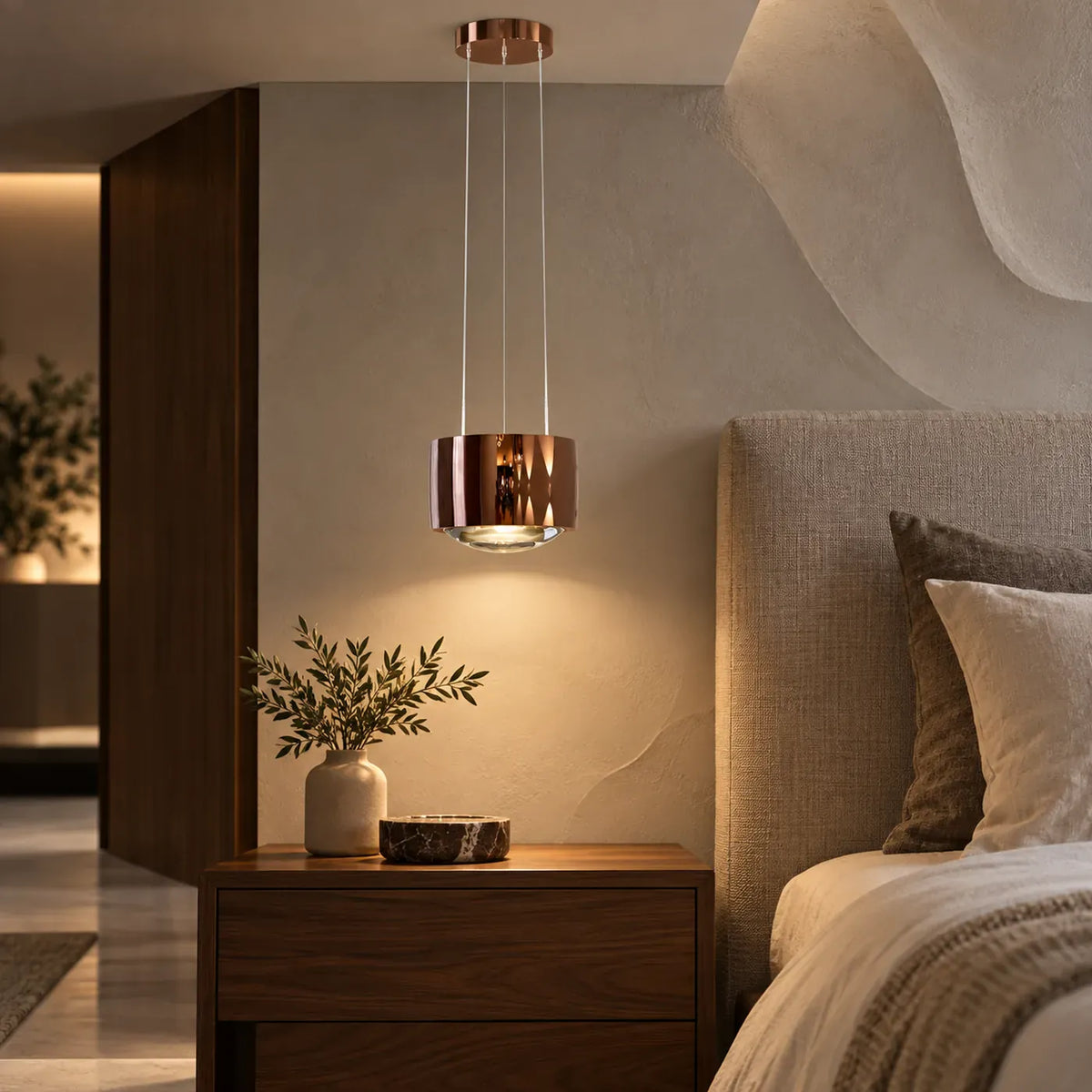
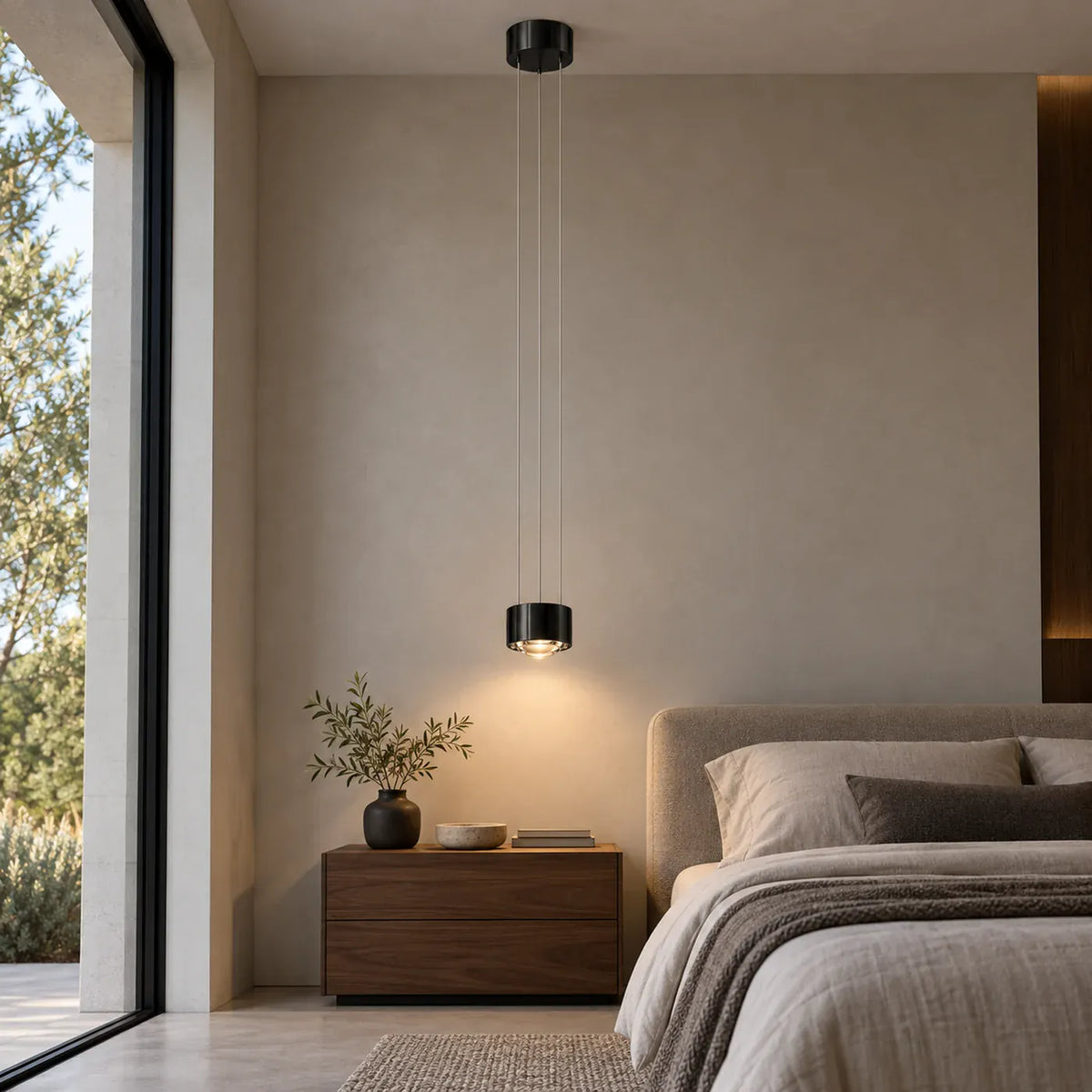
Hung glass pairs clear the nightstand and put light at a better reading angle than table lamps. This is opal territory: at roughly 18-24" (46-61 cm) above a nightstand, the fixture is directly beside a reclining head, and any visible filament becomes the room's brightest point.
Entries and Stairwells
Multi-globe clusters and staggered drops use the vertical volume these spaces offer, filling height that a single small fixture would leave empty. Larger stairwell-scale compositions live in the staircase chandeliers collection.
Judging Glass Quality
Three checks separate designer glass from production lookalikes. Hand-blown and mouth-blown bodies carry slight irregularities — subtle variation in wall thickness and curve — that catch light with a liveliness moulded glass never fakes; uniform perfection usually means a mould. Wall thickness shows at the rim and reads as substance rather than fragility. And the finish should be consistent across the whole body: on frosted and etched designs, patchy diffusion is visible the moment the fixture is lit. The complete material walkthrough is in our glass selection guide.
Sizing and Light
Size to the surface below rather than the room. Over an island, the fixtures together should span one-half to two-thirds of its length, with individual diameters typically 8-16" (20-41 cm) for globes in a run — smaller than metal shades, since glass reads visually lighter. Over a round table, a single pendant runs one-half to two-thirds of the table's width. Warm white 2700-3000K is the residential standard, moving to 3000-3500K over a working kitchen surface, and clear-glass designs deserve decorative filament LED lamps since the bulb is part of the composition. The full calculation set is in our pendant sizing guide.
Related Collections
Browse the wider suspended range at the pendant lights collection, the full material family at the glass chandeliers collection, and the clustered-globe direction at statement scale in the bubble chandeliers collection.
Frequently Asked Questions
Clear or opal glass — which should I choose?
Clear for maximum output above work surfaces, with a decorative filament lamp since the bulb is on show. Opal wherever people sit facing the fixture — above seating, beside beds, and across from an island. If the bulb sits in your line of sight for long periods, go more diffused.
What is a multi-globe pendant?
Several glass spheres suspended from one canopy at staggered drops, reading as a gathered composition rather than a repeated row. It fills vertical volume from a single ceiling point, which suits stairwells and double-height entries.
How many glass pendants over an island?
Roughly one per 24-30" (61-76 cm) of island length, hung 30-36" above the counter. Shift toward opal bodies where the run faces a seating area.
What size glass pendant should I choose?
Globes in a run typically measure 8-16" (20-41 cm) — smaller than metal shades, since glass reads visually lighter. Across the run, aim for one-half to two-thirds of the island's length.
How do I judge glass quality?
Look for hand-blown character — slight irregularity in wall and curve that catches light with liveliness — visible thickness at the rim, and even diffusion across the whole body. Uniform perfection usually means a mould.
Do glass pendants suit bedrooms?
Yes, in opal or frosted form. A hung pair clears the nightstand and improves the reading angle, but at that proximity a visible filament becomes the room's brightest point — diffusion matters more here than anywhere.