












How a Kitchen Actually Gets Lit
No single fixture lights a kitchen well, because the room runs three different shifts: precise task light over counters and the island while cooking, even ambient fill so the space reads bright and clean, and a warm low register for the evening hours when the kitchen becomes the place everyone stands around. The rooms that feel effortlessly well-lit run all three from separate sources on separate controls — which is why kitchen lighting is a plan before it is a purchase. The sections below build that plan layer by layer, from the ceiling down.
The Ceiling Layer: Ambient Coverage First
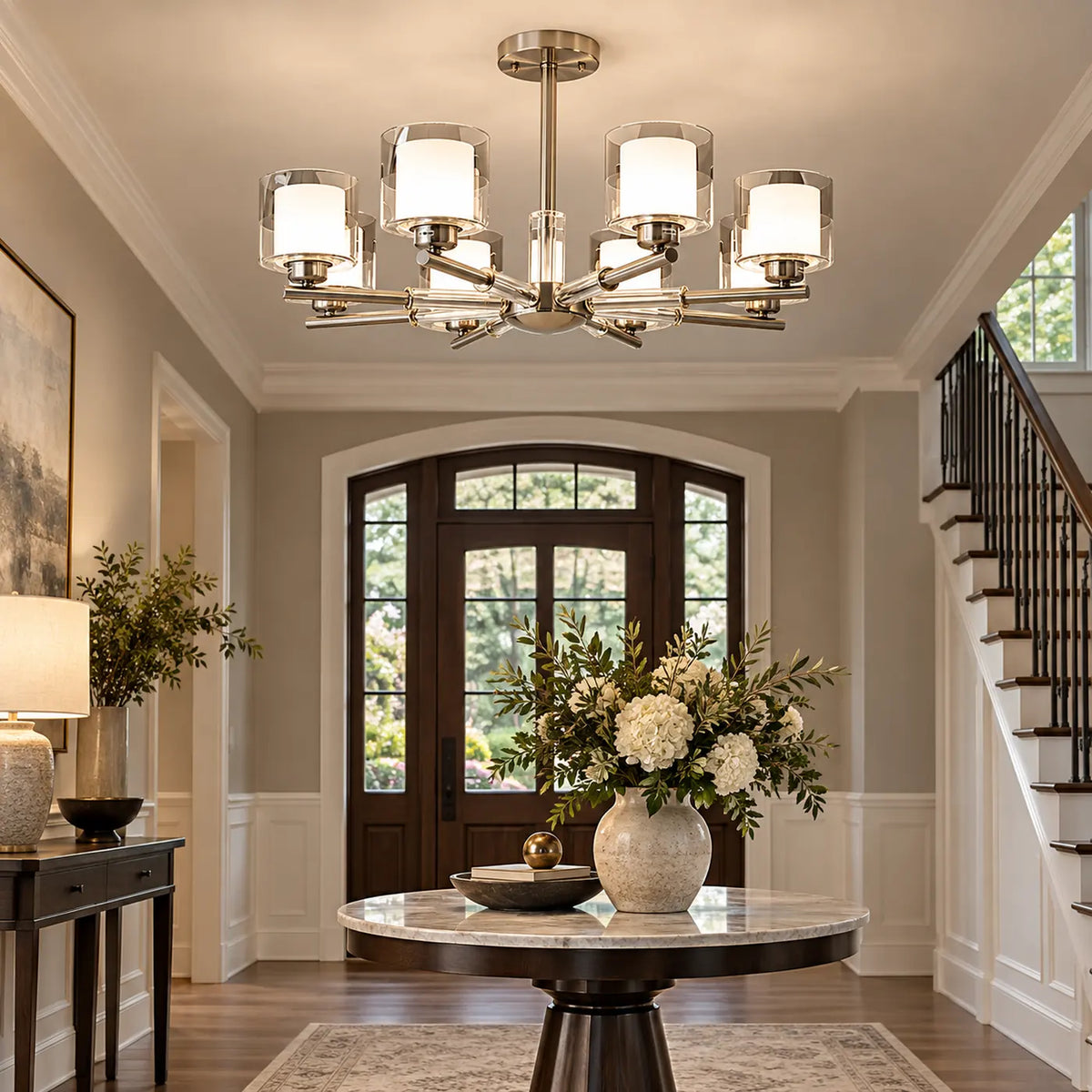
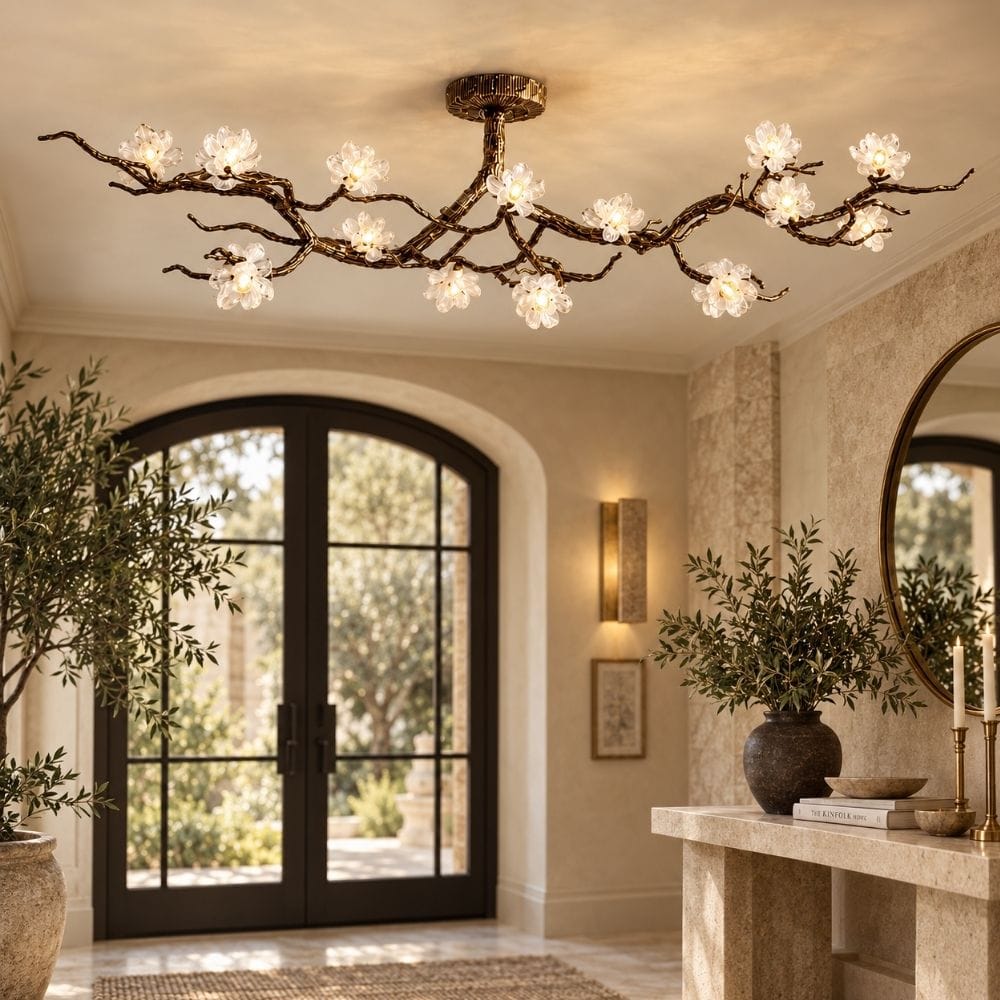
Ambient light is the room's base coat — the even fill that kills shadows between task zones. In most US kitchens it comes from flush and semi-flush ceiling fixtures or a grid of recessed cans, sized to the room rather than to any work surface: as a working figure, plan on roughly 70-80 lumens per square foot of total output across all layers, with ambient carrying about half. Choose ceiling fixtures with diffused output (frosted glass, fabric-free shades) so the fill stays glare-free on glossy counters, and put this layer on its own dimmer — it is the one you will run low in the evening while the rest of the room rests.
The Island and Counter Layer: Pendants in Series
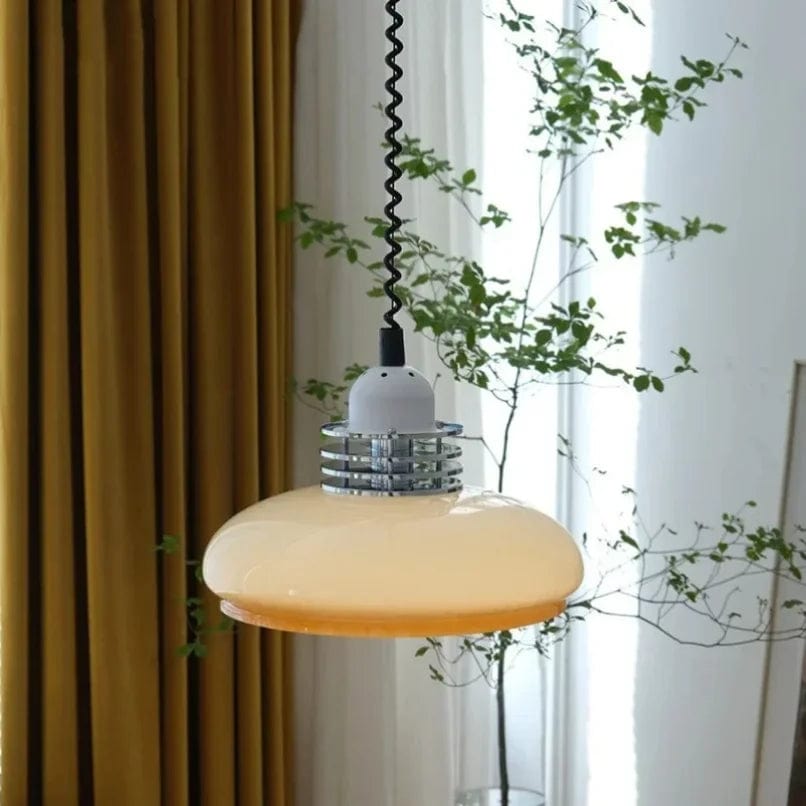
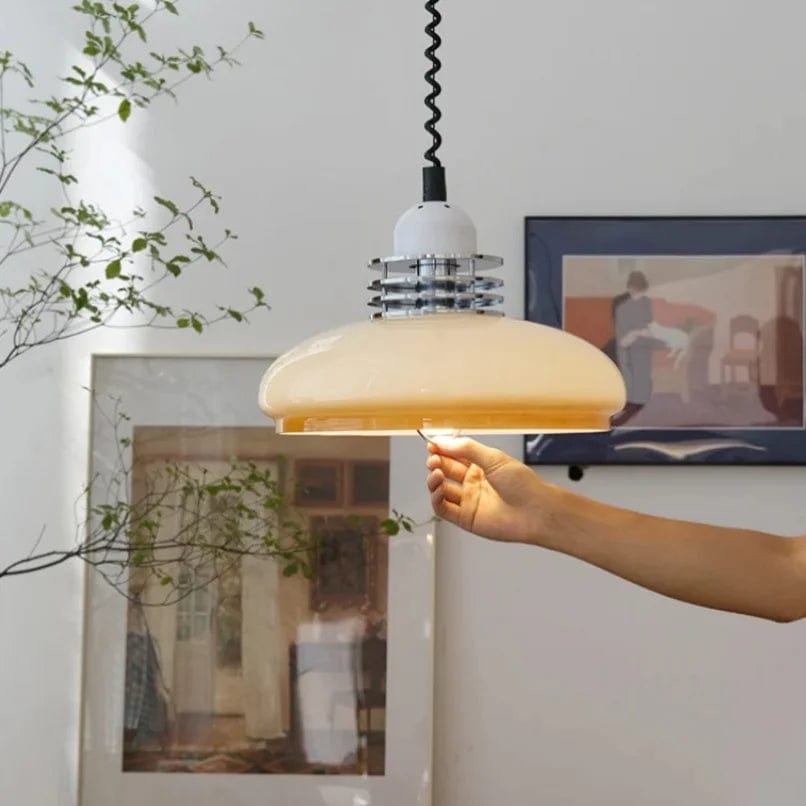
The island is the kitchen's stage, and a pendant series is its standard lighting: repeated fixtures spreading even task light along the prep surface. The working rules — 30-36" (76-91 cm) from countertop to pendant bottom, 24-30" (61-76 cm) between pendants, and an odd count where possible — are applied measurement by measurement in our island pendant height guide, with the fixtures themselves gathered in the pendant lights collection. Peninsulas and long counters follow the same series logic at the same heights; keep every pendant in one run identical — the repetition is the design.
The Statement Option: One Fixture Instead of a Series
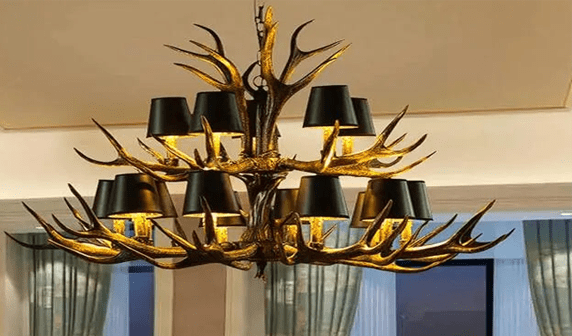
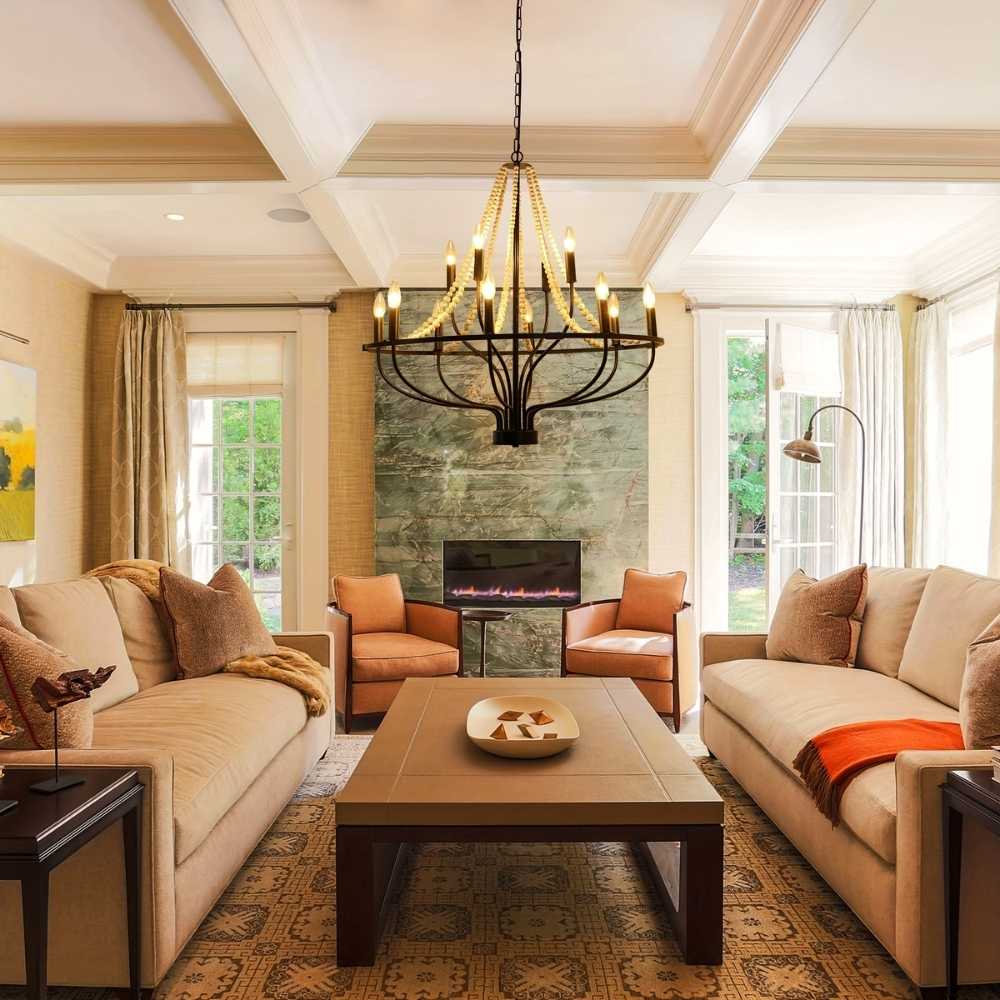
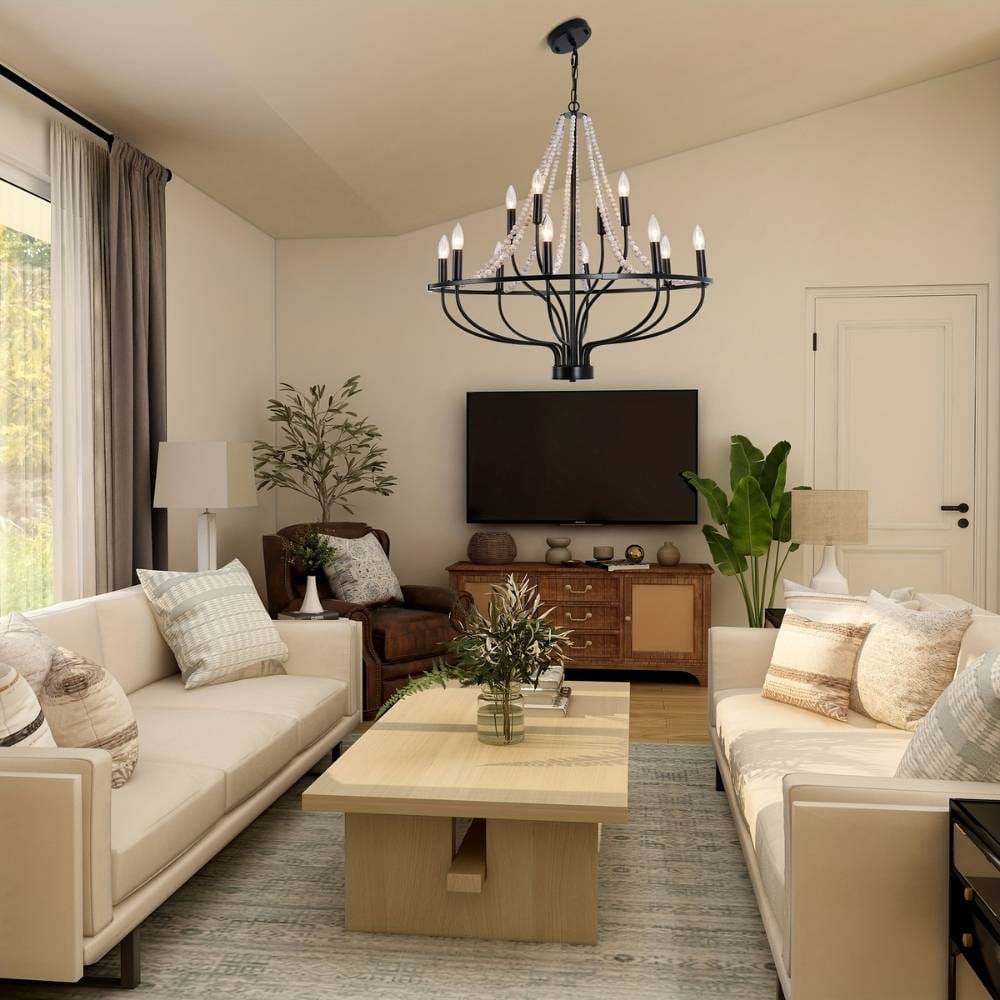
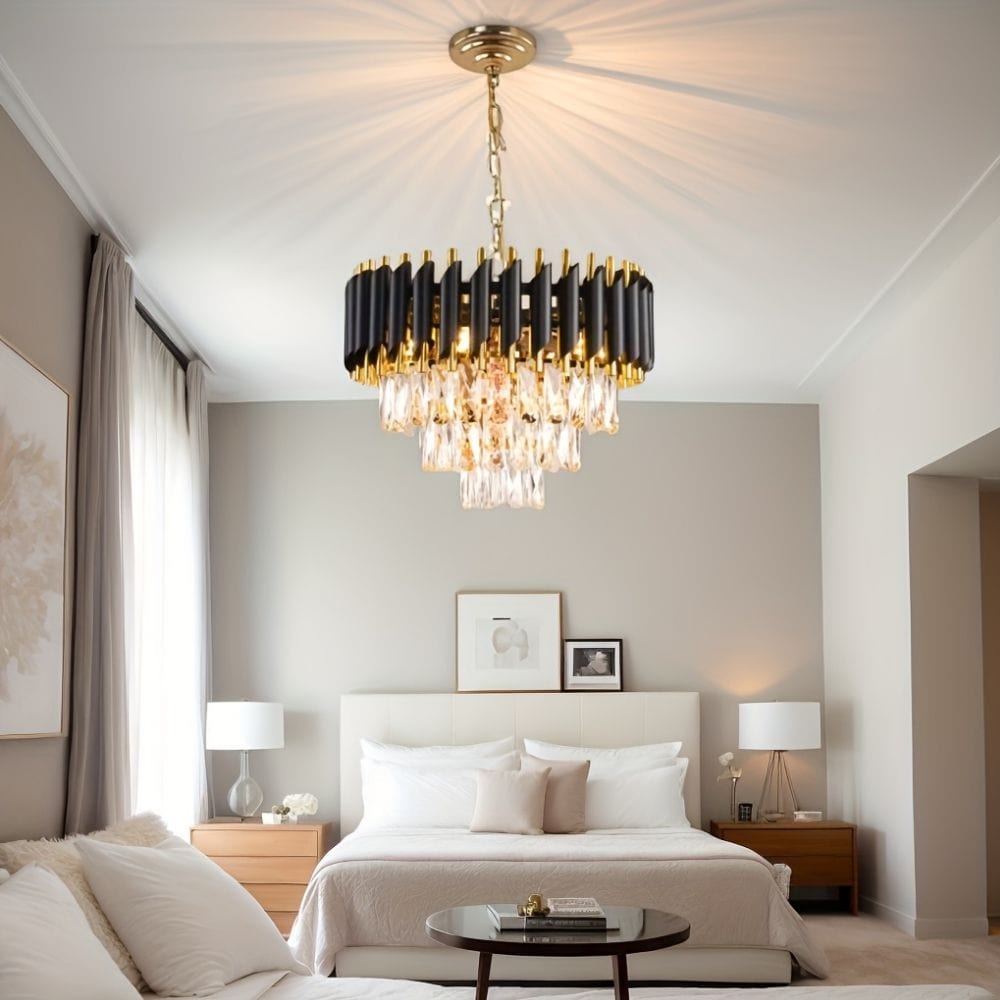
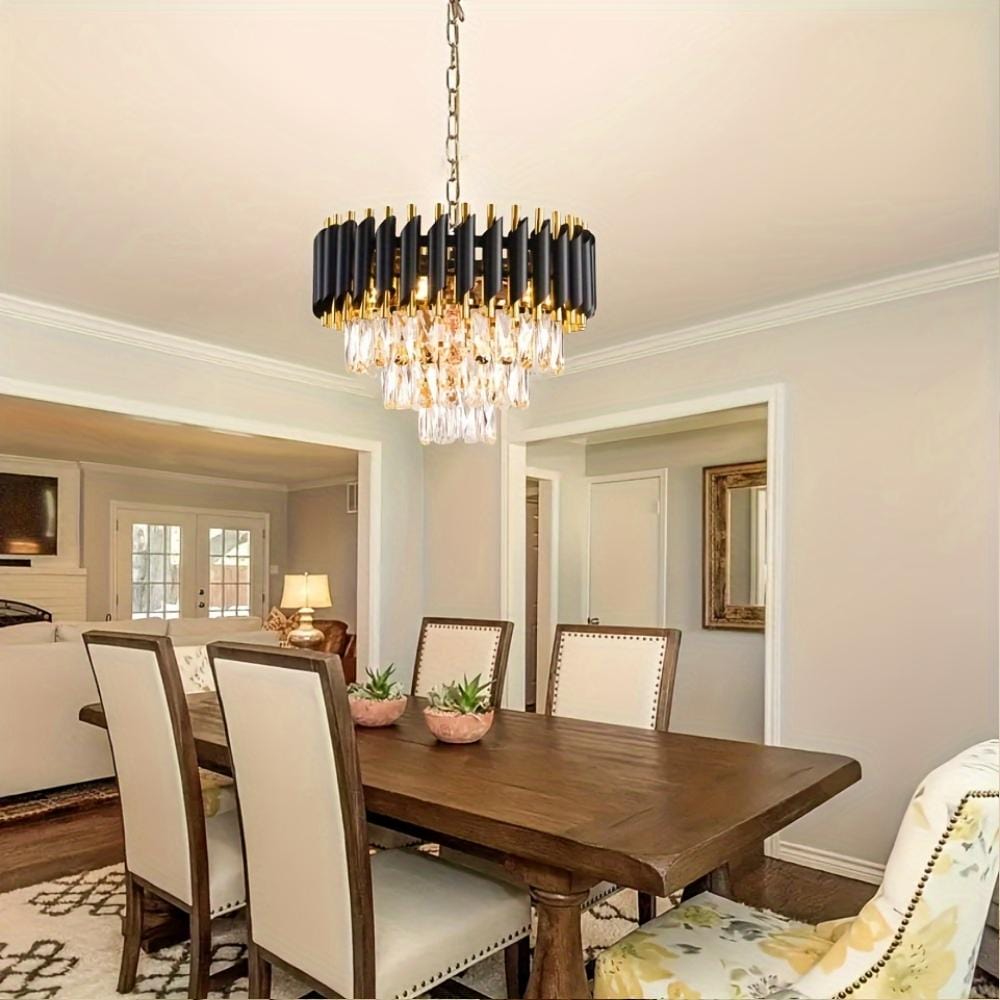
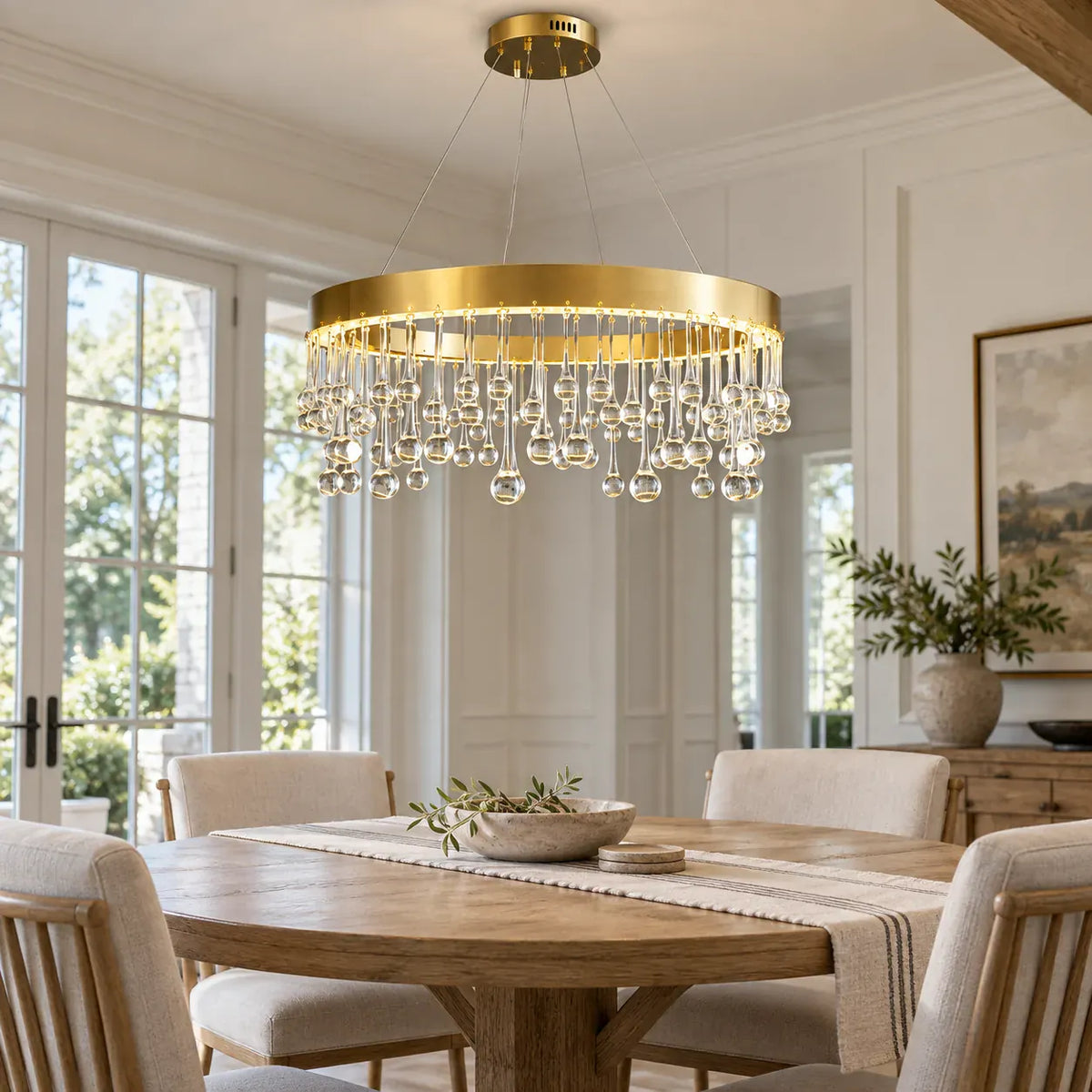
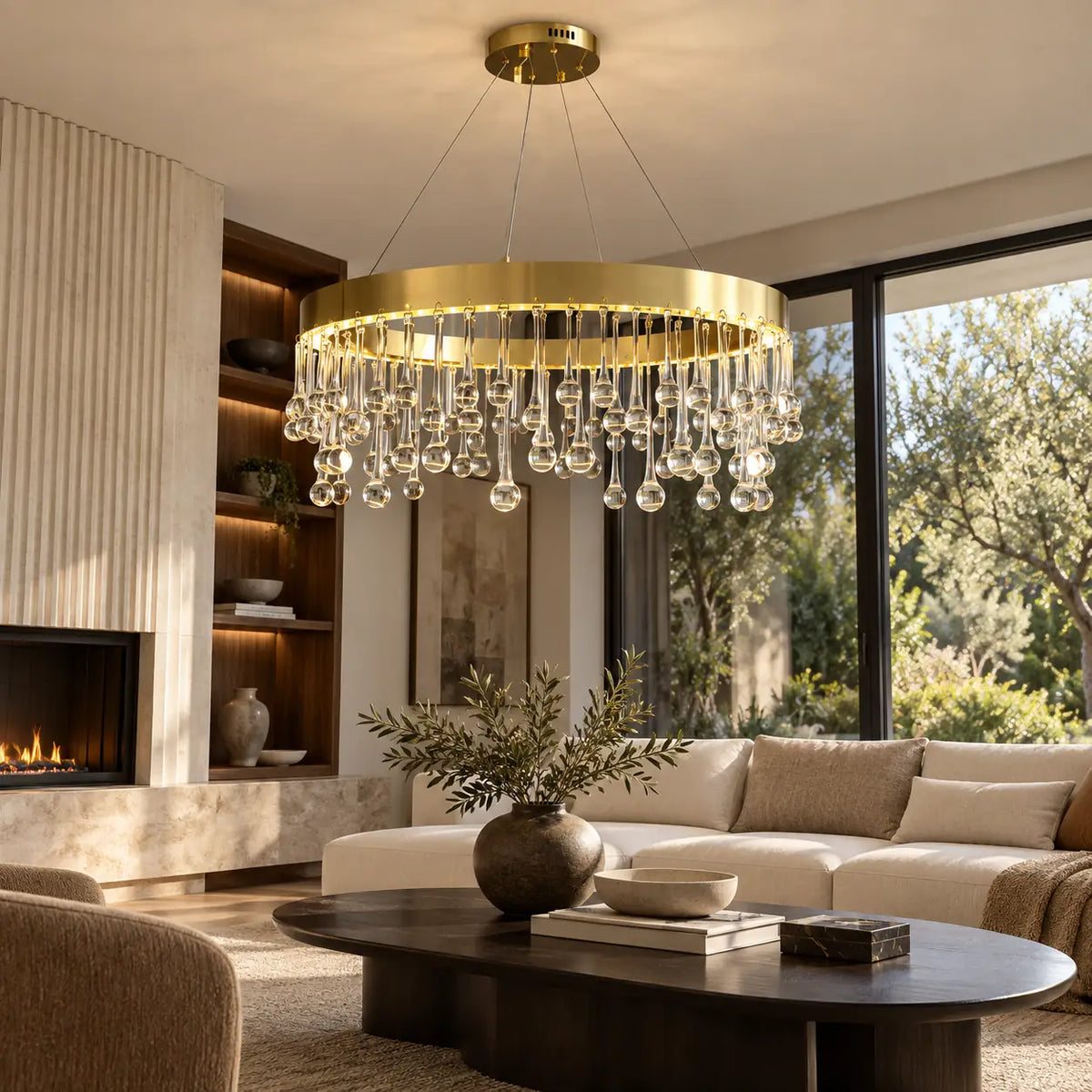
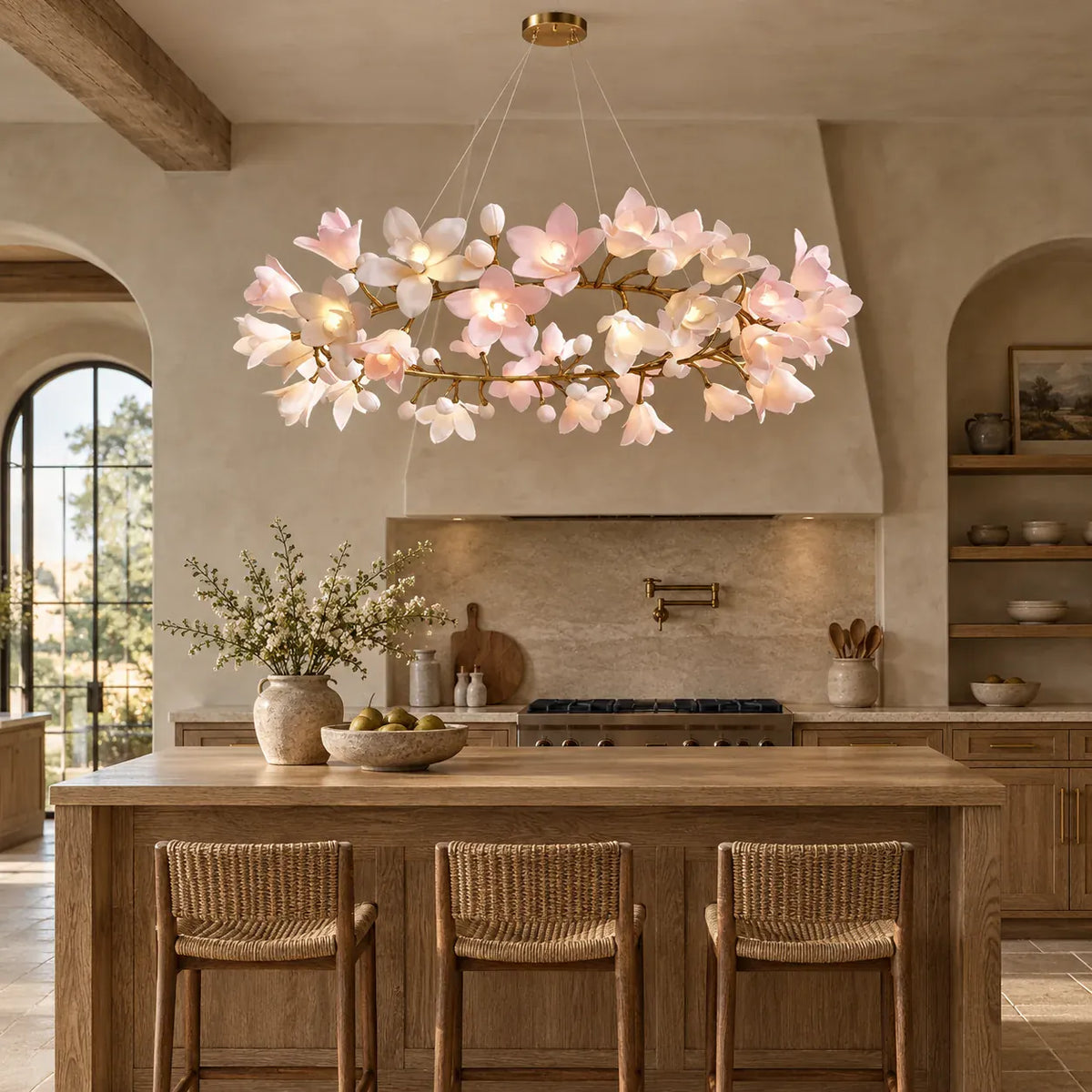
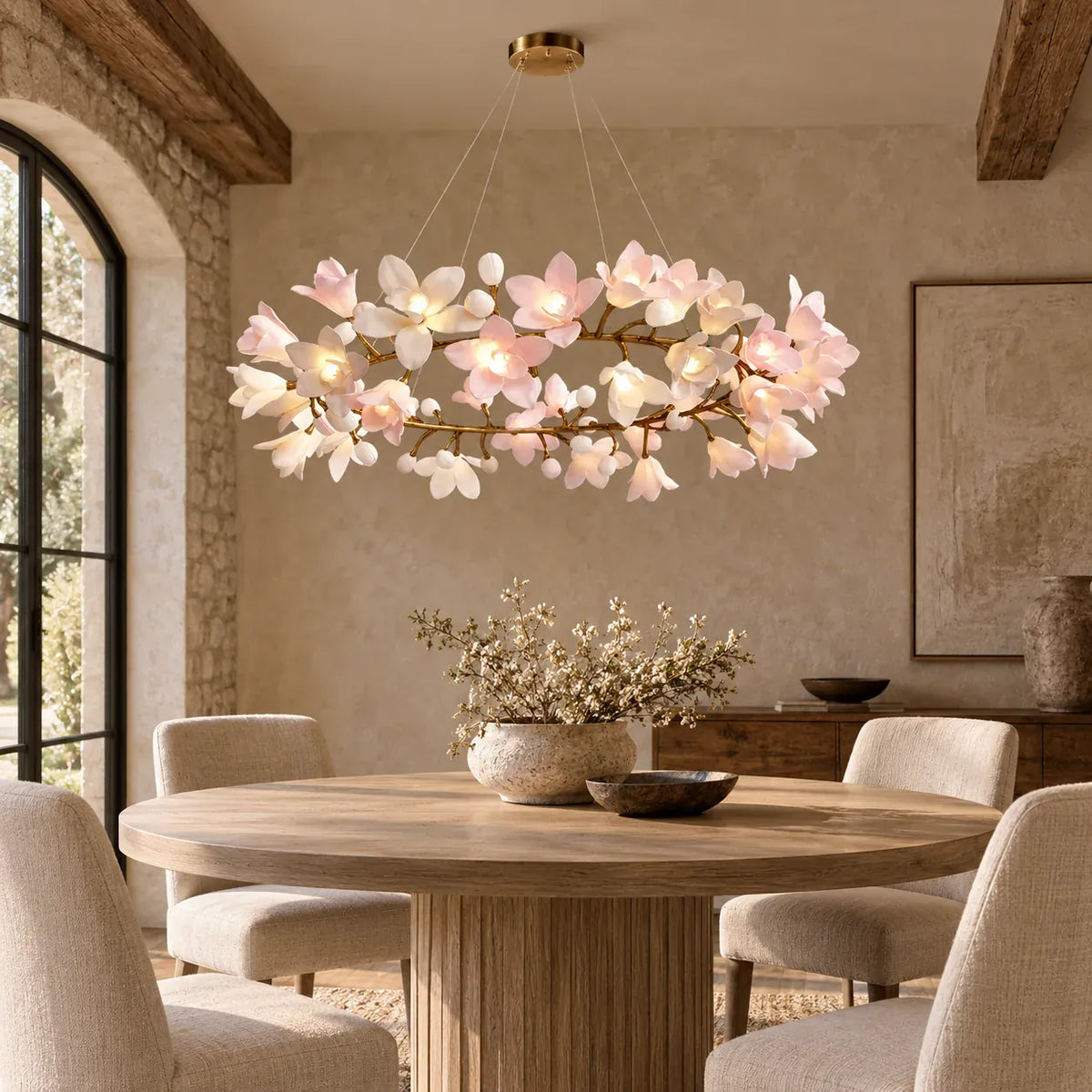
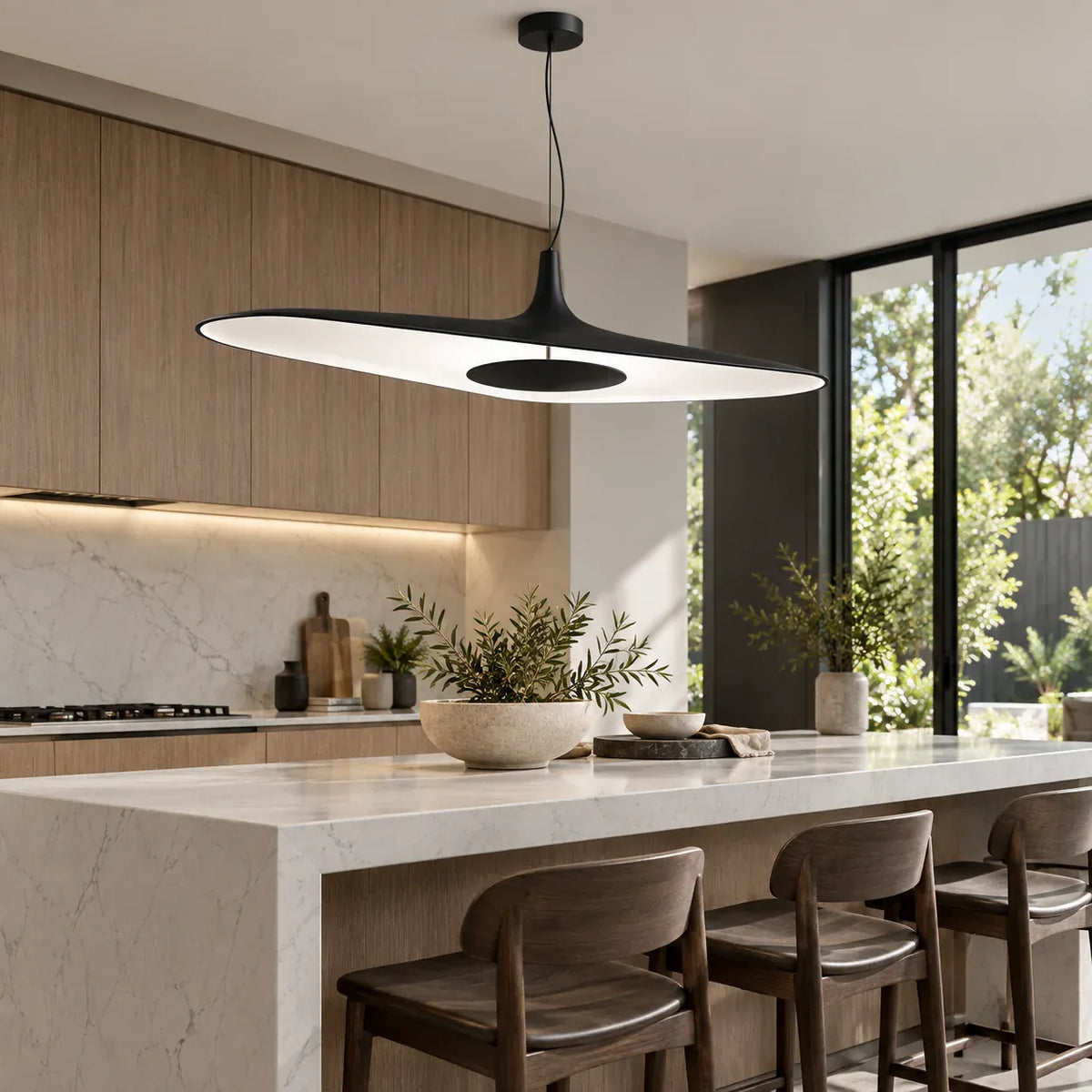
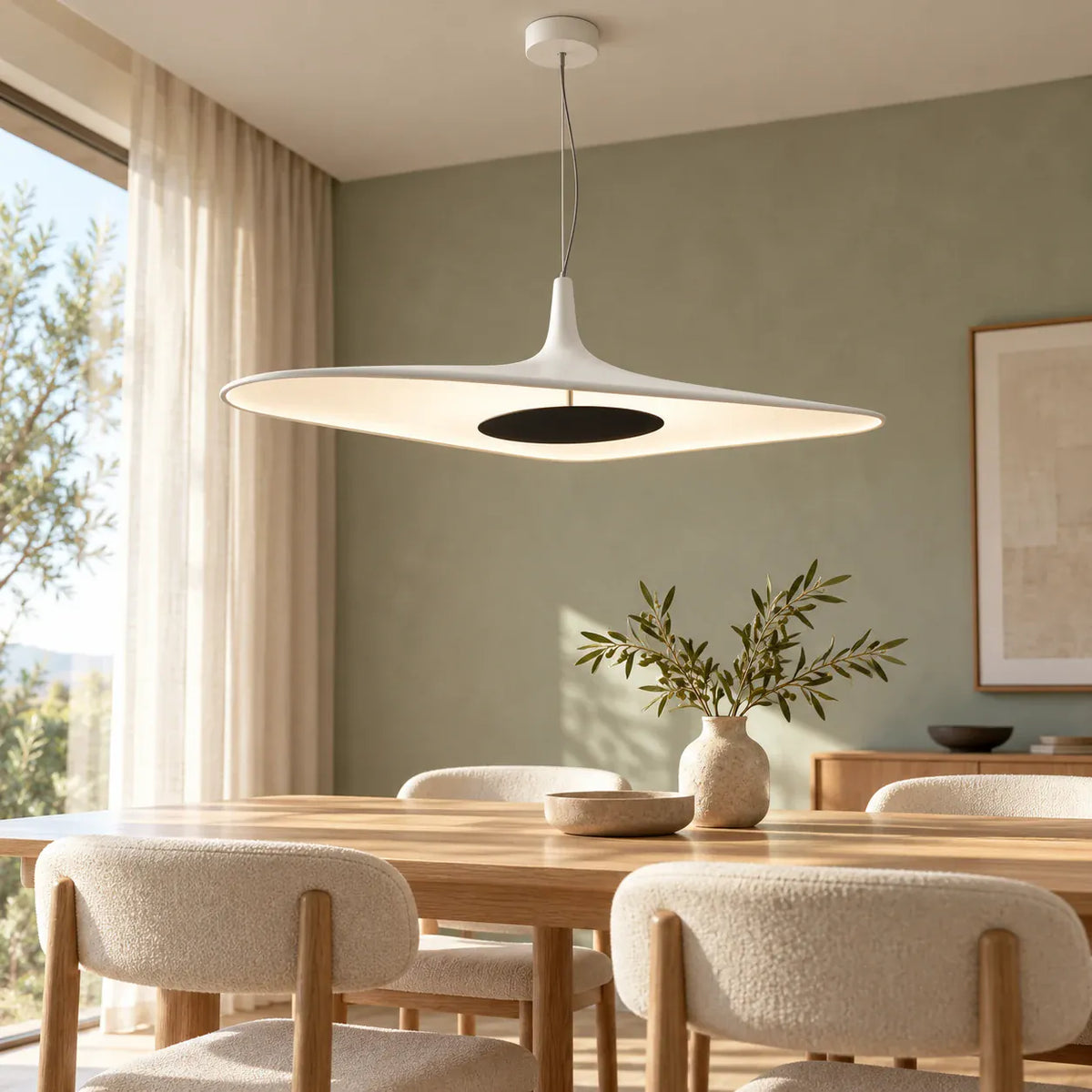
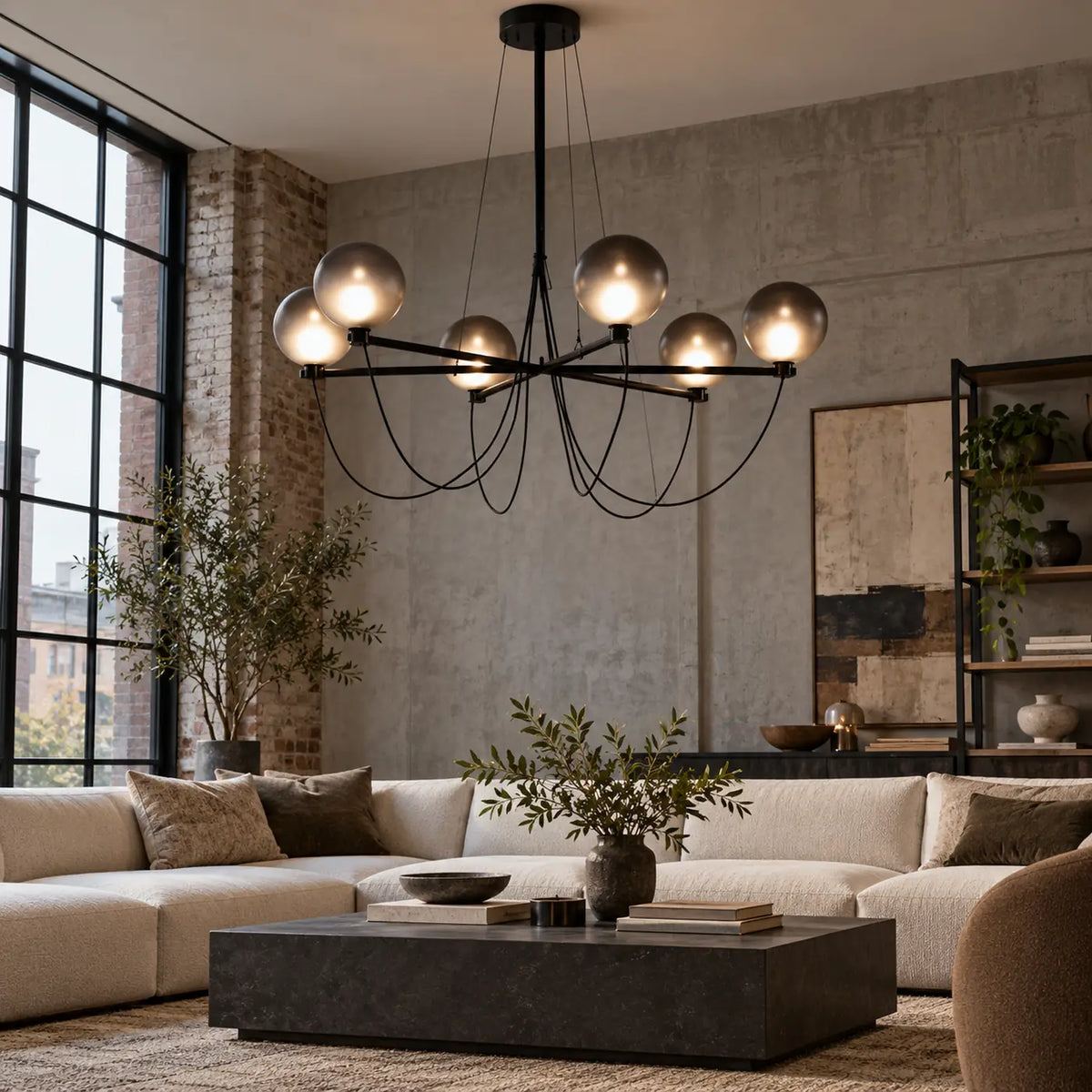
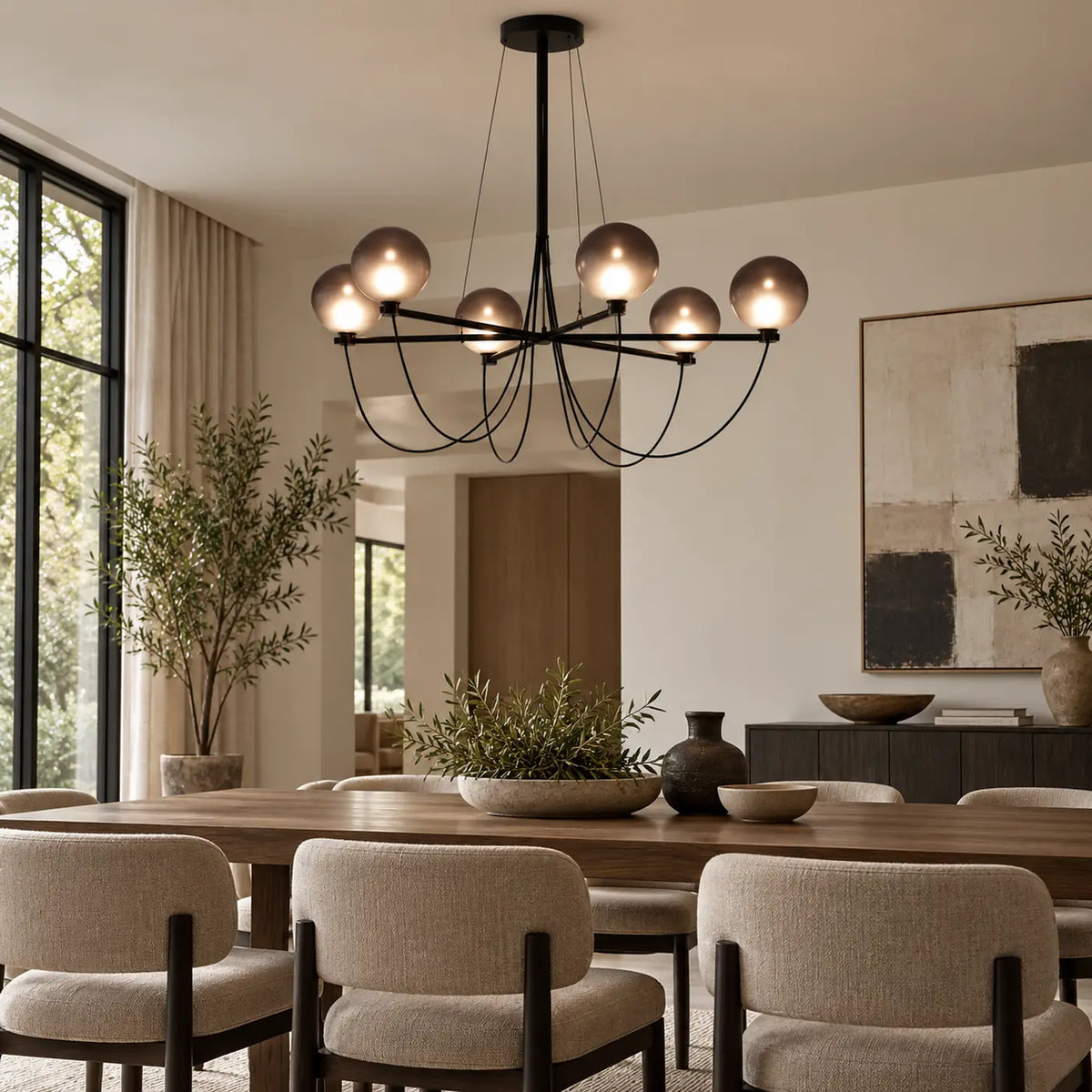
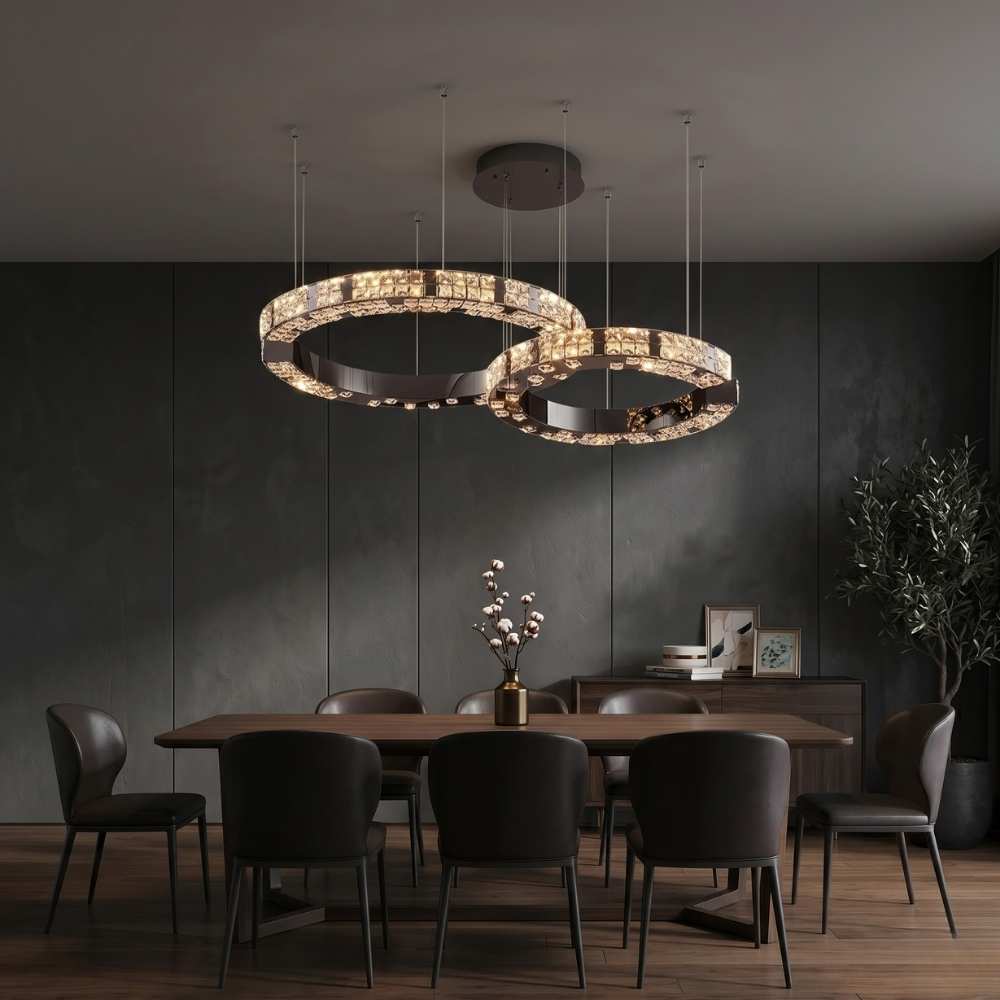
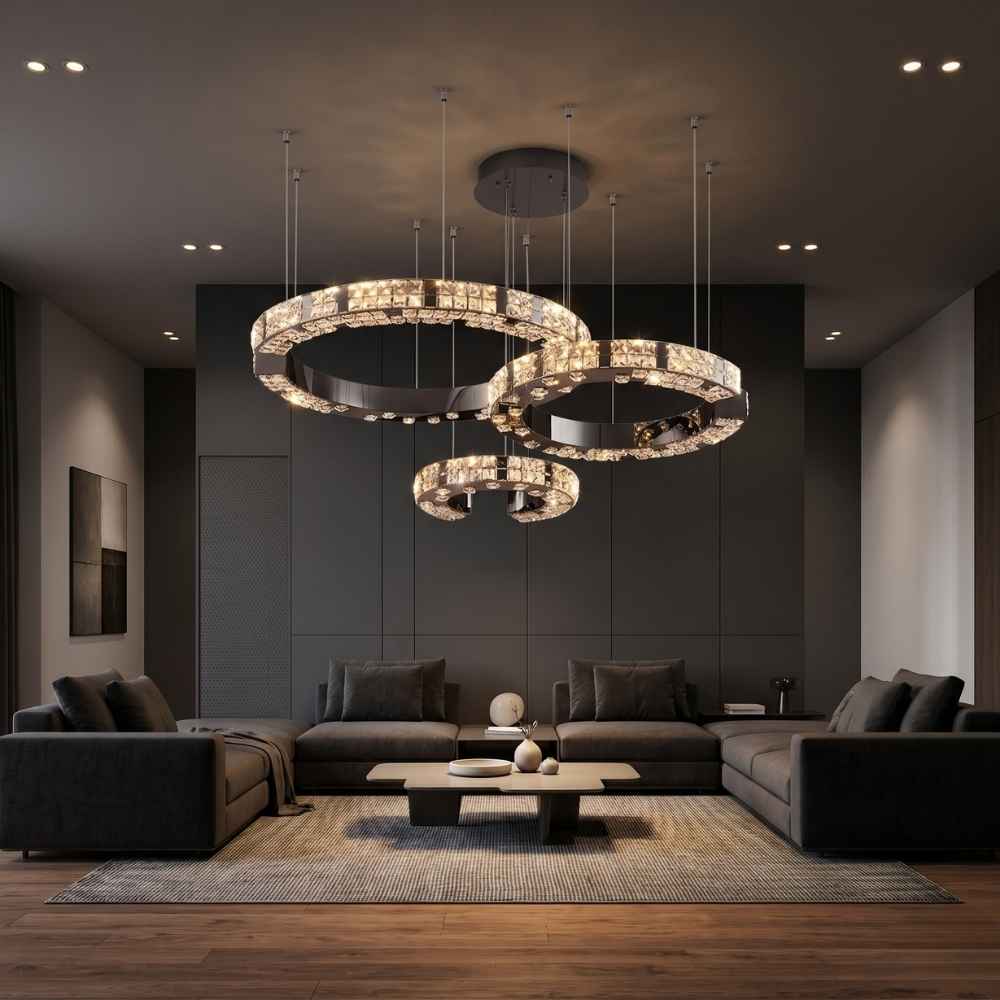
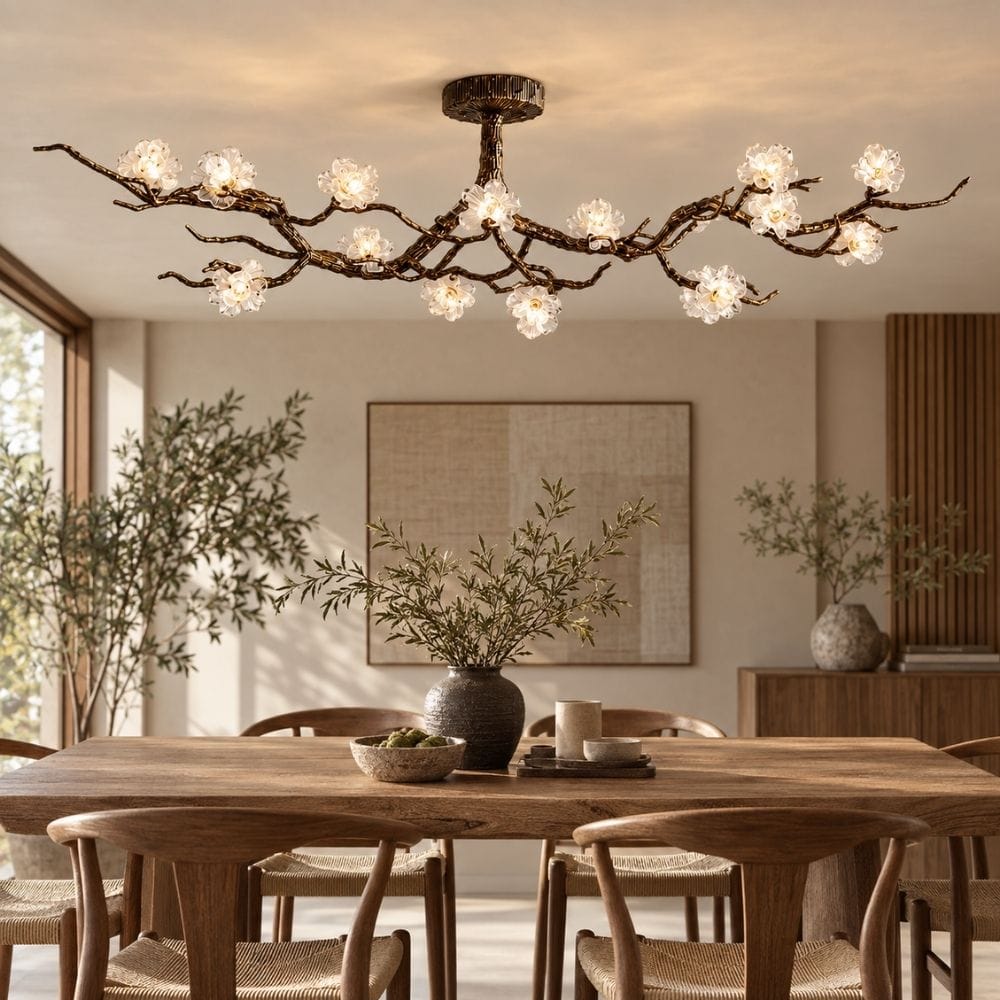
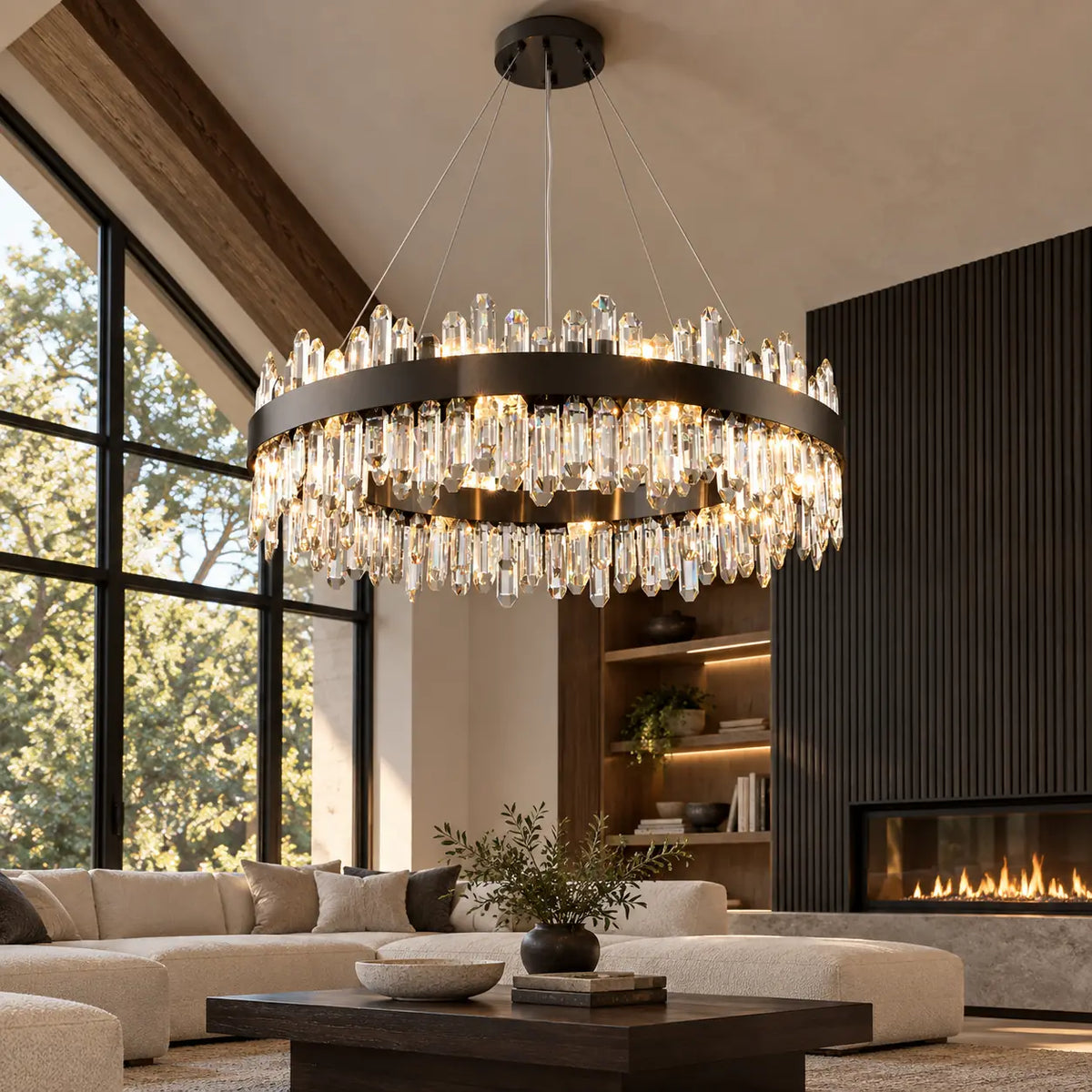
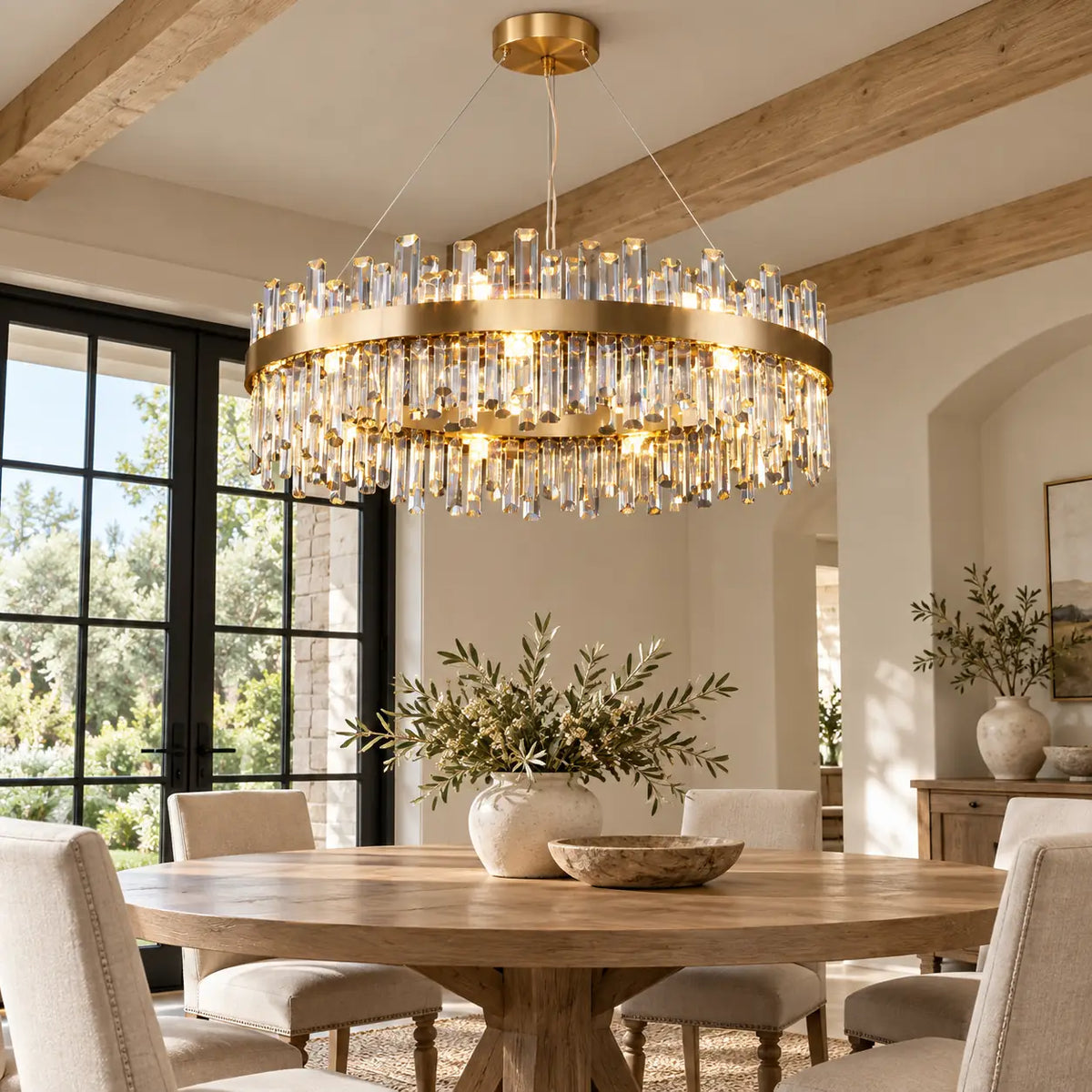
Open-plan kitchens increasingly replace the pendant run with a single statement fixture over the island or the eat-in table — one sculptural composition instead of repeated points, chosen when furniture presence matters more than spread task coverage. That single-fixture decision — island versus table placement, sizing, clearances, and kitchen-proof materials — is its own subject with its own collection: see our kitchen chandeliers collection for the full selection and guidance.
Task and Under-Cabinet: The Layer You Feel
Counters against the wall live in the shadow of the cabinets above them, and no ceiling fixture fixes that — under-cabinet strips do, washing the work surface from directly above the task. LED strip and puck systems dominate here for good reason: slim profiles, cool operation near food, and switching independent of the room. Add task attention wherever precision happens — over the sink (a dedicated ceiling point or short pendant) and over the range if the hood's built-in light is weak. This layer is the difference between a kitchen that photographs well and one that works well.
LED, Color Temperature and the Two-Shift Kitchen
- Color: warm white 2700-3000K across every layer — the band that keeps food, wood tones, and the evening mood right; avoid mixing temperatures between layers, which reads as a mistake even when each fixture is fine alone
- Accuracy: CRI 90+ matters more in the kitchen than anywhere in the home — it is the room where color is information
- Dimming: every layer on its own dimmer is the two-shift solution — full output for prep, low ambient plus island glow for the evening
- Integrated LED: slim modern fixtures with built-in output suit the kitchen's low-maintenance demands; verify the dimming protocol matches your wall controls
Fixtures for Small Kitchens
Compact kitchens run the same three layers at smaller scale: a single semi-flush ceiling fixture for ambient, two pendants (or one) over a short counter or peninsula, and under-cabinet strips doing the heaviest lifting. The instinct to shrink everything is half right — shrink the fixtures, not the light; a small kitchen needs the same lumens per square foot as a large one, and under-lighting is why small kitchens so often feel smaller than they are. Slim-profile and flush designs keep sightlines open, which matters most when the whole room is visible from one spot.
Styles: Modern and Contemporary Lead
Kitchen fixtures earn their place by agreeing with cabinetry, and cabinetry's language is line and plane — which is why modern and contemporary designs lead the room: cylinder and cone pendants, contemporary lamp forms, ring and linear LED compositions, flush geometric ceiling fixtures, and designer pieces in matte black, brass, and white. Transitional and classic kitchens take softer forms — shaded pendants, lantern silhouettes — in the same wipeable materials, and the single sculptural route for these styles lives in the kitchen chandeliers collection. Whatever the style, the kitchen test is constant: smooth, sealed surfaces that shrug off cooking air, and simple silhouettes without residue-trap detailing.
Related Collections
Complete the room with the kitchen chandeliers collection for the single-statement option, the pendant lights collection for island and counter series, and the dining room chandeliers where the formal table sits in its own room.
Frequently Asked Questions
How should a kitchen be lit?
In three layers on separate controls: ambient ceiling fill for even brightness, task light over the island and counters (pendant series plus under-cabinet strips), and dimming that takes the whole room from prep-bright to evening-warm.
How much light does a kitchen need?
Plan roughly 70-80 lumens per square foot of total output across all layers, with ambient carrying about half and task layers concentrating the rest over work surfaces.
How high should pendants hang over the island?
30-36" (76-91 cm) from countertop to the pendant's lowest point, spaced 24-30" apart in an identical series — the full measurement walkthrough is in our island pendant guide.
What is the difference between this collection and kitchen chandeliers?
This collection covers the room's full layered plan — ceiling fixtures, pendant series, task and LED lighting. The kitchen chandeliers collection covers the single-statement alternative: one sculptural fixture over the island or eat-in table instead of a repeated series.
What color temperature is best for kitchen lighting?
Warm white 2700-3000K across every layer, with CRI 90+ so food and materials read true. Keep all layers in the same temperature band — mixed temperatures read as a mistake.
How do I light a small kitchen well?
Same three layers at smaller scale: one semi-flush ambient fixture, one or two pendants over the counter, and under-cabinet strips doing the heavy lifting. Shrink the fixtures, not the lumens — under-lighting is what makes small kitchens feel smaller.