
Why Crystal Works Better at Pendant Height
Crystal has one requirement: proximity. Refraction is a close-range effect — the moving colour that separates real crystal from every imitation is visible from a few feet away and largely lost from twelve. A ceiling-mounted fixture at 9 ft puts its sparkle above conversation height, where the eye reads brightness rather than detail. A pendant hung 30-36" (76-91 cm) above a counter or table puts the same material inside the zone people actually occupy, which is why a modest crystal pendant often outperforms a much larger crystal fixture mounted higher. Hanging lamps in this collection are designed around that fact, with facet scale and drop density calibrated for near viewing, so a small fixture still reads sparkly rather than merely bright.
Formats Across the Collection
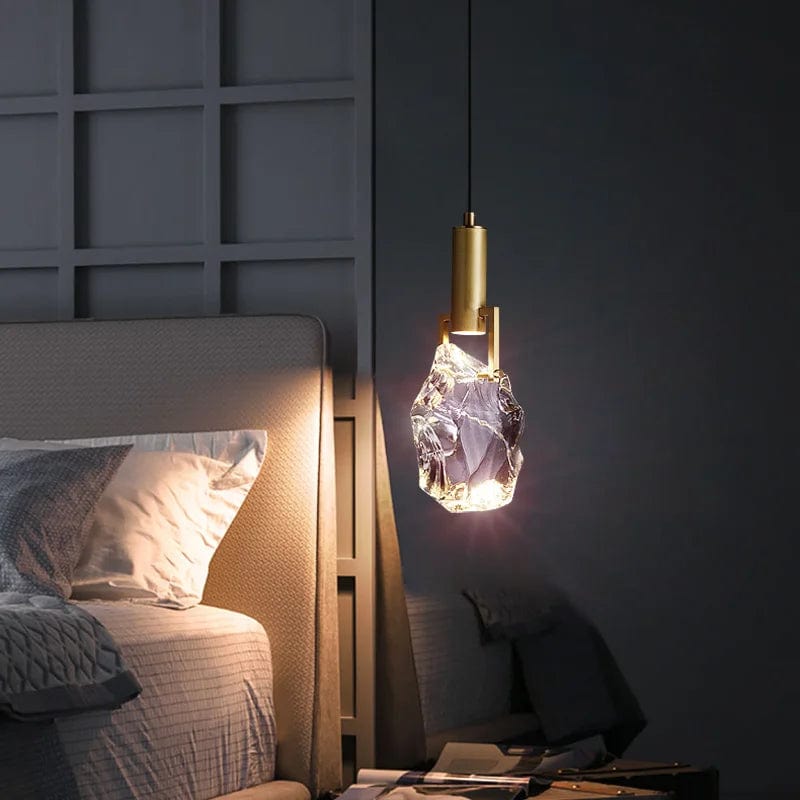
- Mini and small pendants: compact bodies for bedside pairs, kitchen runs, and powder rooms — the format where crystal reads as jewellery for a small ceiling
- Horizontal LED rod designs: crystal rods held in a linear metal frame with integrated LED behind them — the current architectural direction, available in single and multi-head configurations and lengths from roughly 25" to 60" (65-150 cm)
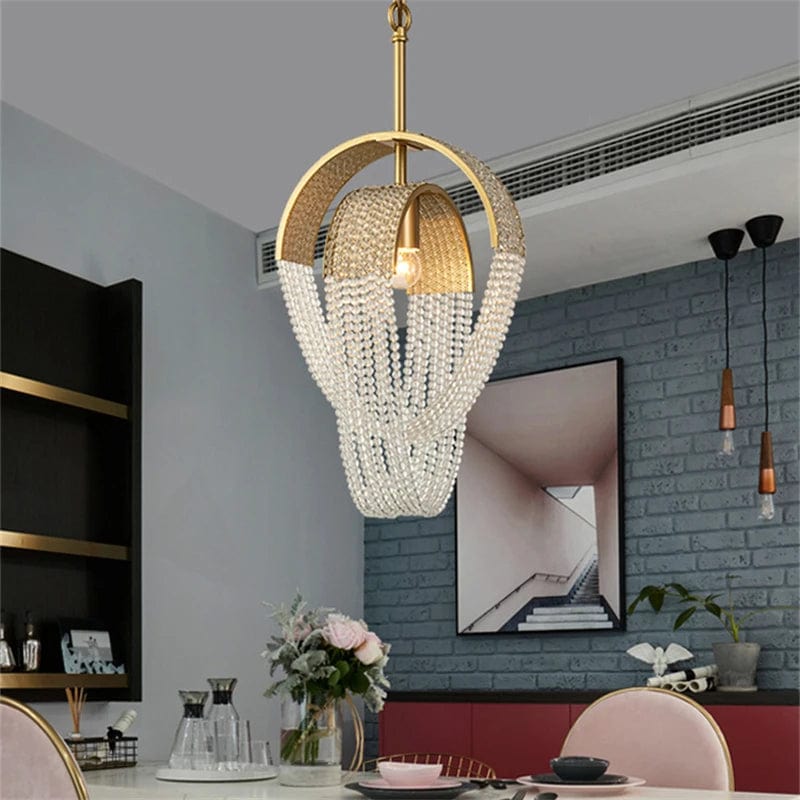
- Faceted drop bodies: traditional hanging-crystal language at pendant scale, cut elements catching light from every angle
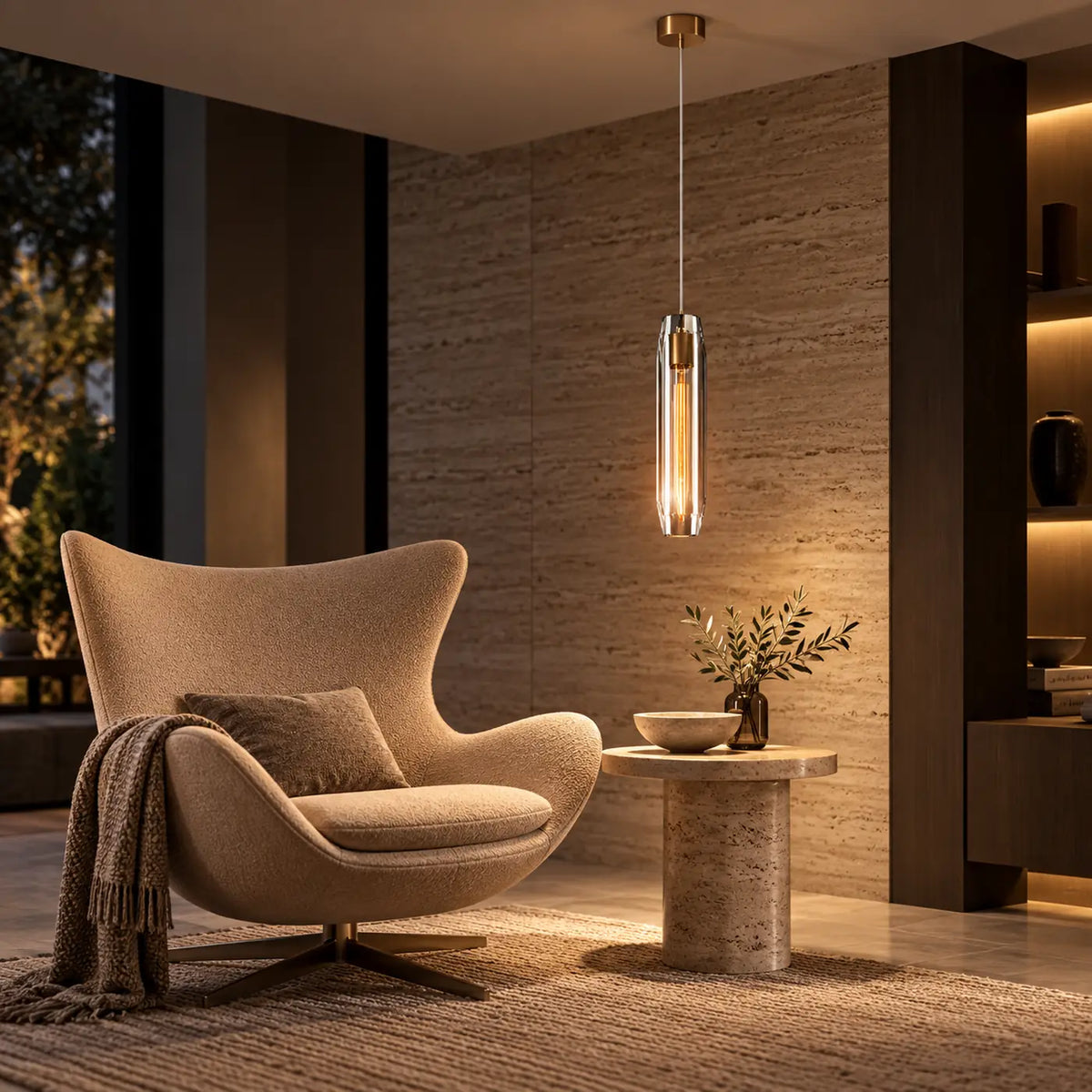
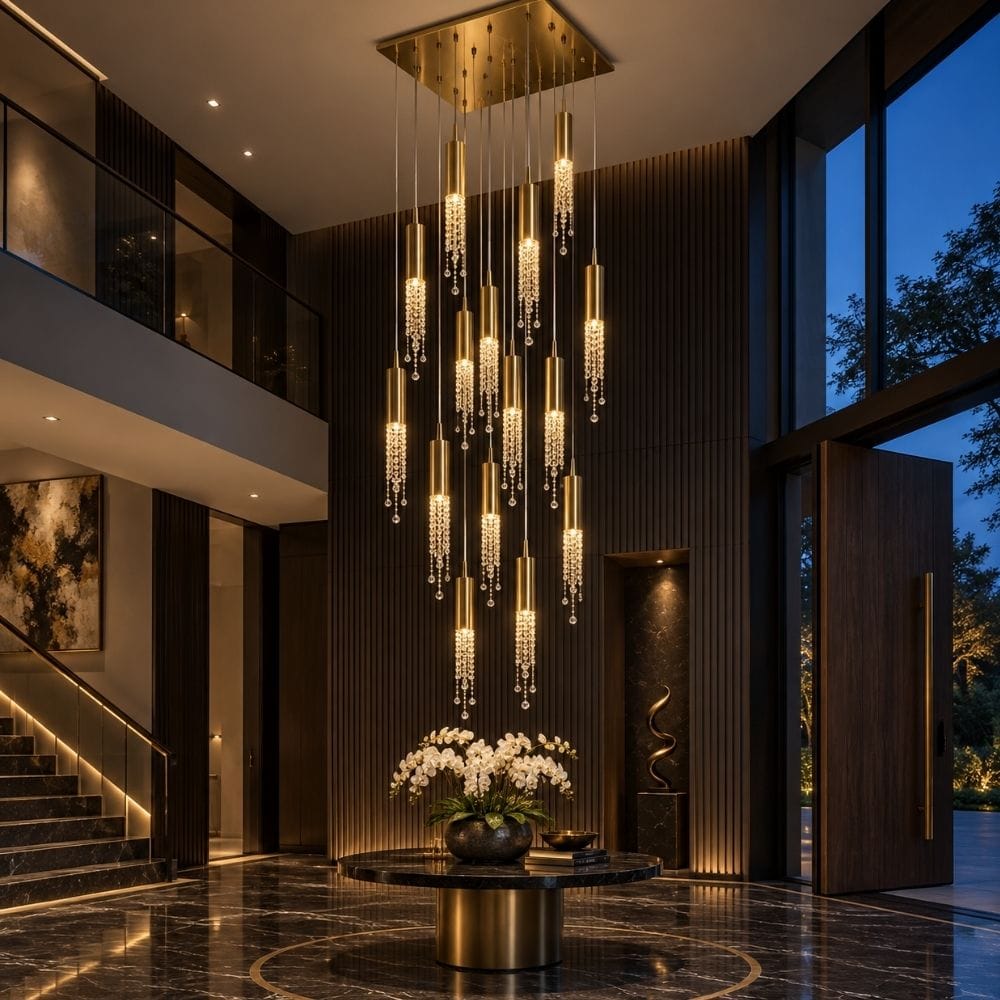
- Cylinders and columns: vertical crystal bodies that suit tall rooms and stairwell runs
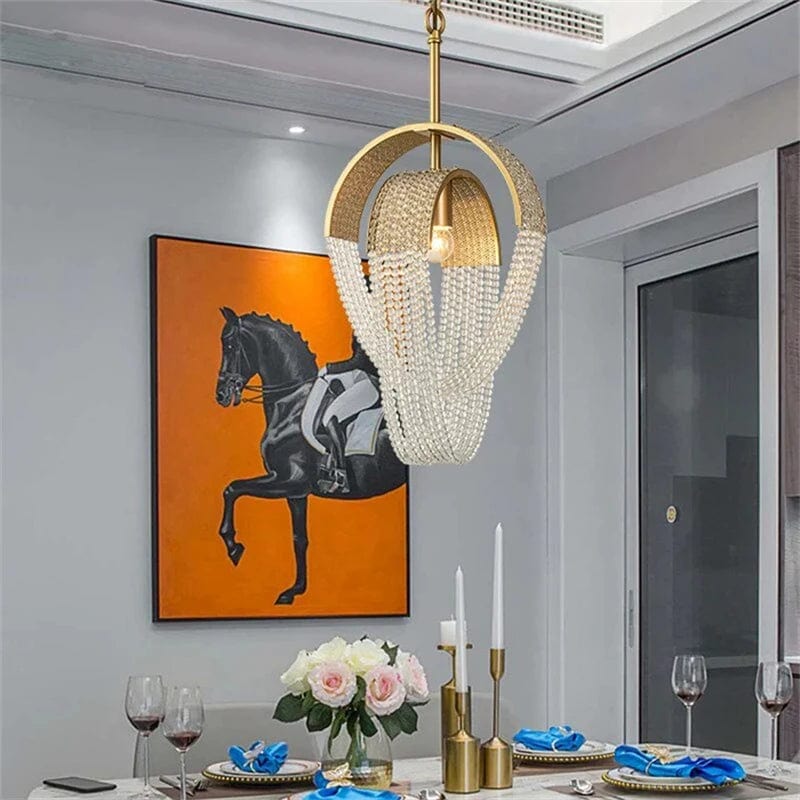
- Single statements: larger crystal pendants that carry a round dining table alone
- Glass and crystal combinations: smooth glass bodies carrying sparse crystal accents, for rooms wanting shine without full sparkle
LED Rod Pendants: The Current Direction
The horizontal rod format has become the category's fastest-moving design, and the reason is structural rather than decorative. Rather than suspending cut elements from a frame, these designs hold solid crystal rods in a slim metal channel with LED light entering from the ends — so the rod itself glows along its length while its faceted surface throws refraction outward. The result reads architectural rather than ornate, which suits kitchens and modern dining rooms that want crystal without the traditional reference. Things to check: rod transmittance quality (the clarity of the crystal determines how evenly the rod glows), head count against the surface length below, and dimming depth, since these designs live on integrated LED with no bulb to swap.
Where They Do Their Best Work
Kitchen Islands and Counters
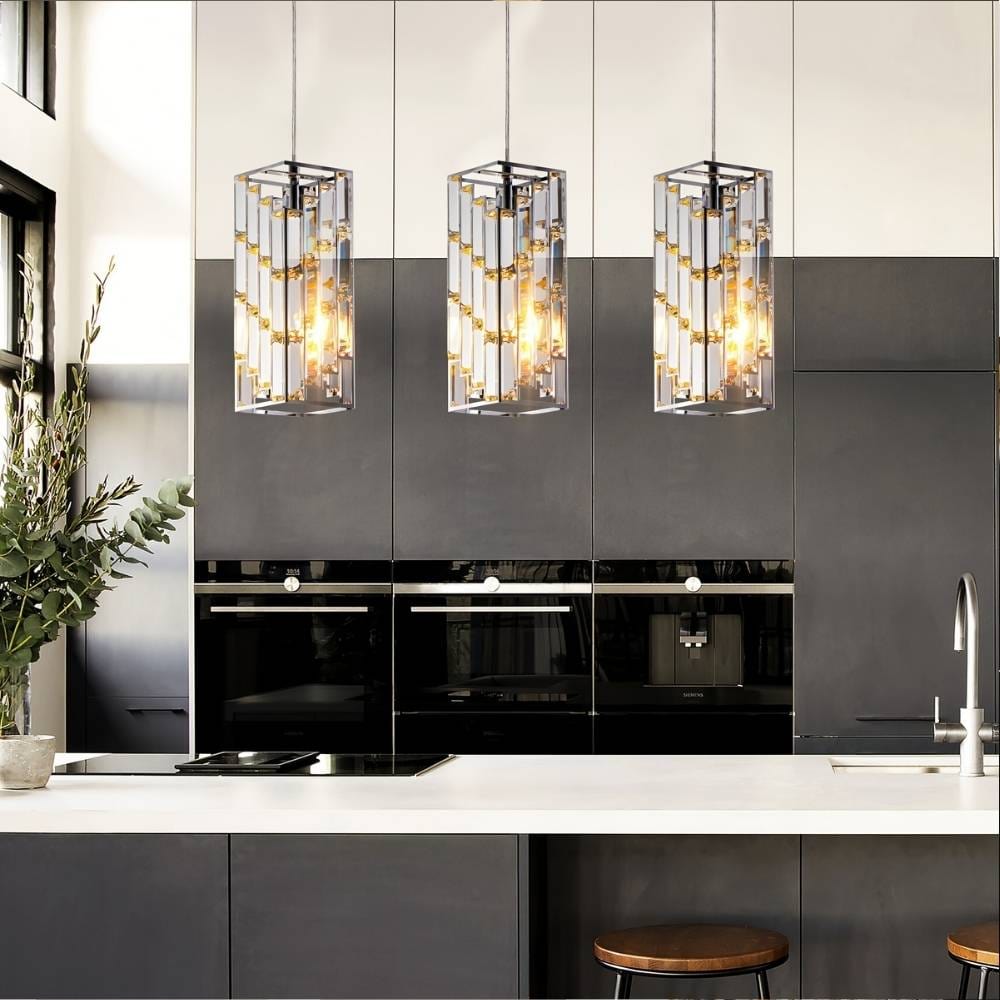
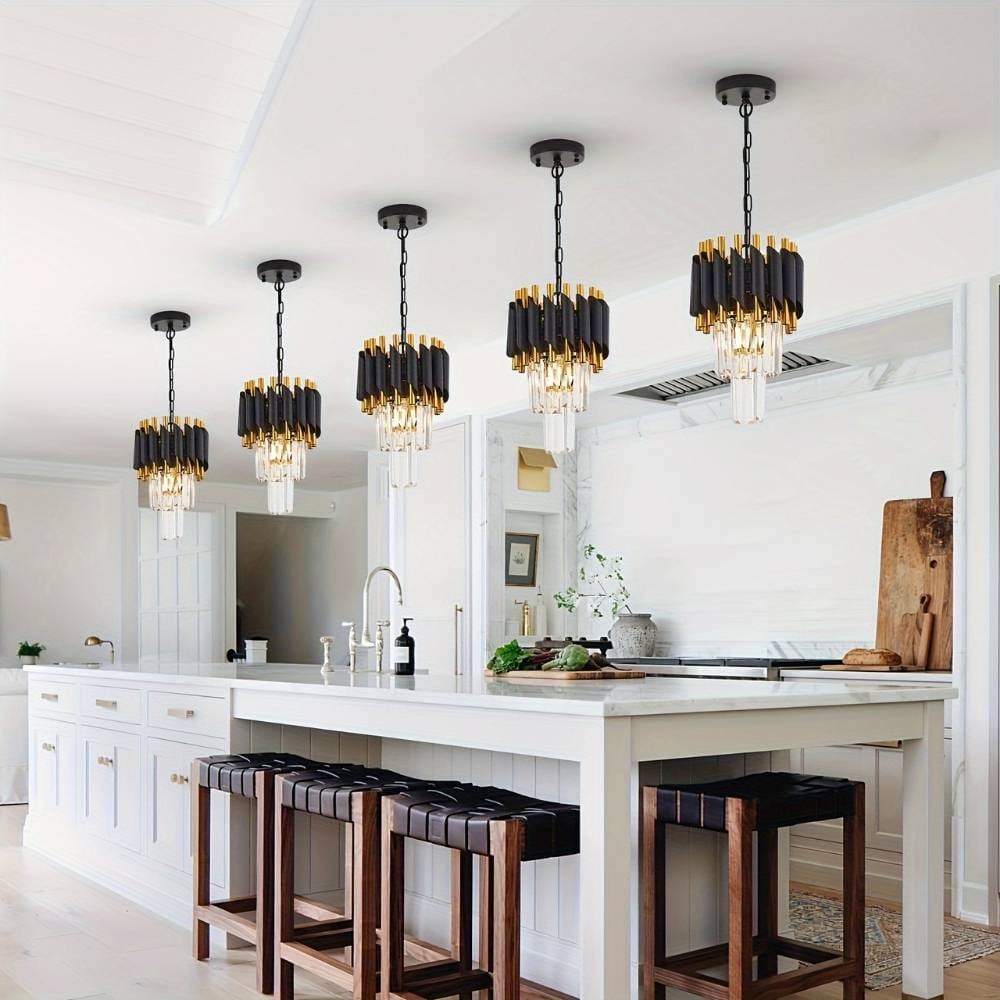
A run of small crystal pendants above an island is the collection's most-requested application, and it works because the fixtures sit at exactly the height where facets read. Space roughly one pendant per 24-30" (61-76 cm) of island length, hang 30-36" above the counter, and choose bodies with some diffusion where the run sits opposite a seating area. The wider kitchen plan is in the kitchen lighting collection, with placement numbers in our island height guide.
Dining Tables
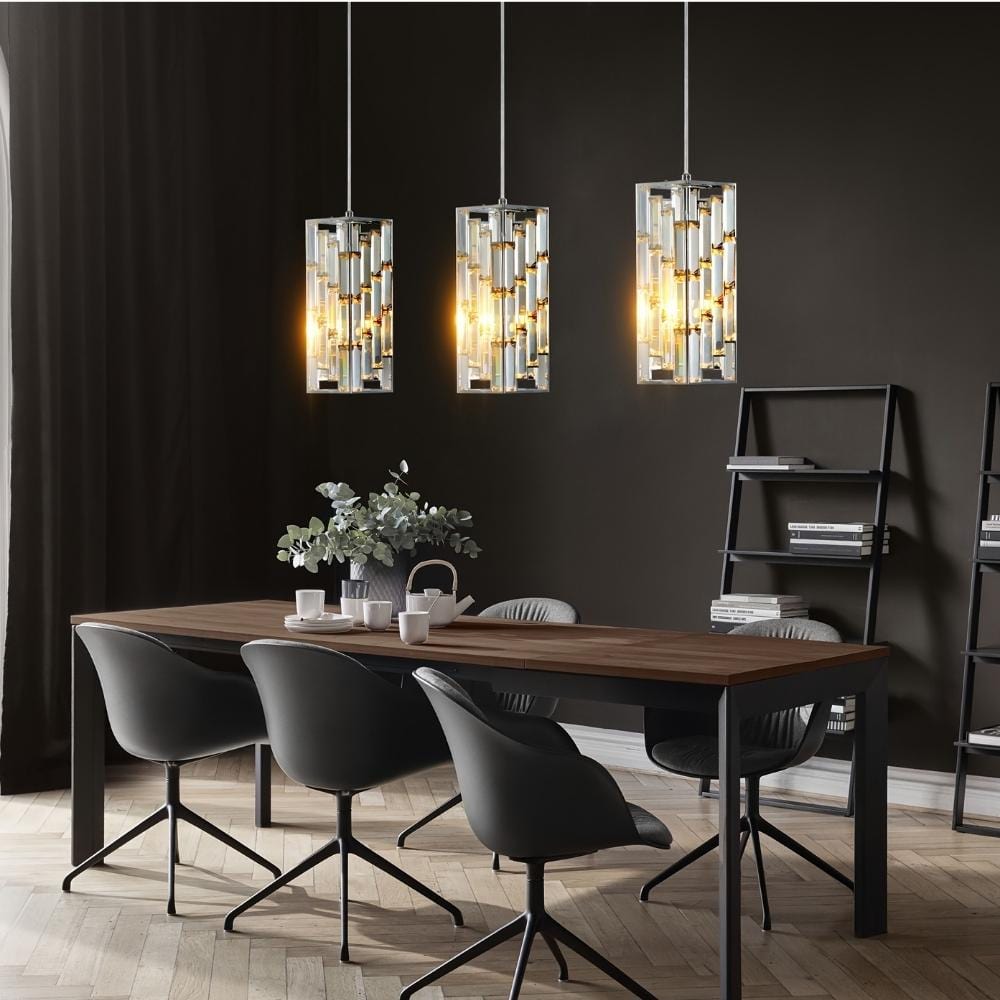
A single crystal pendant above a round table, a matched pair above a rectangular one, or a rod design running the table's length — all at 30-36" from the tabletop. Warm dimmable light is essential here: at 30-60% output the sparkle reads as depth, and at full brightness as glare.
Bedside and Bedrooms
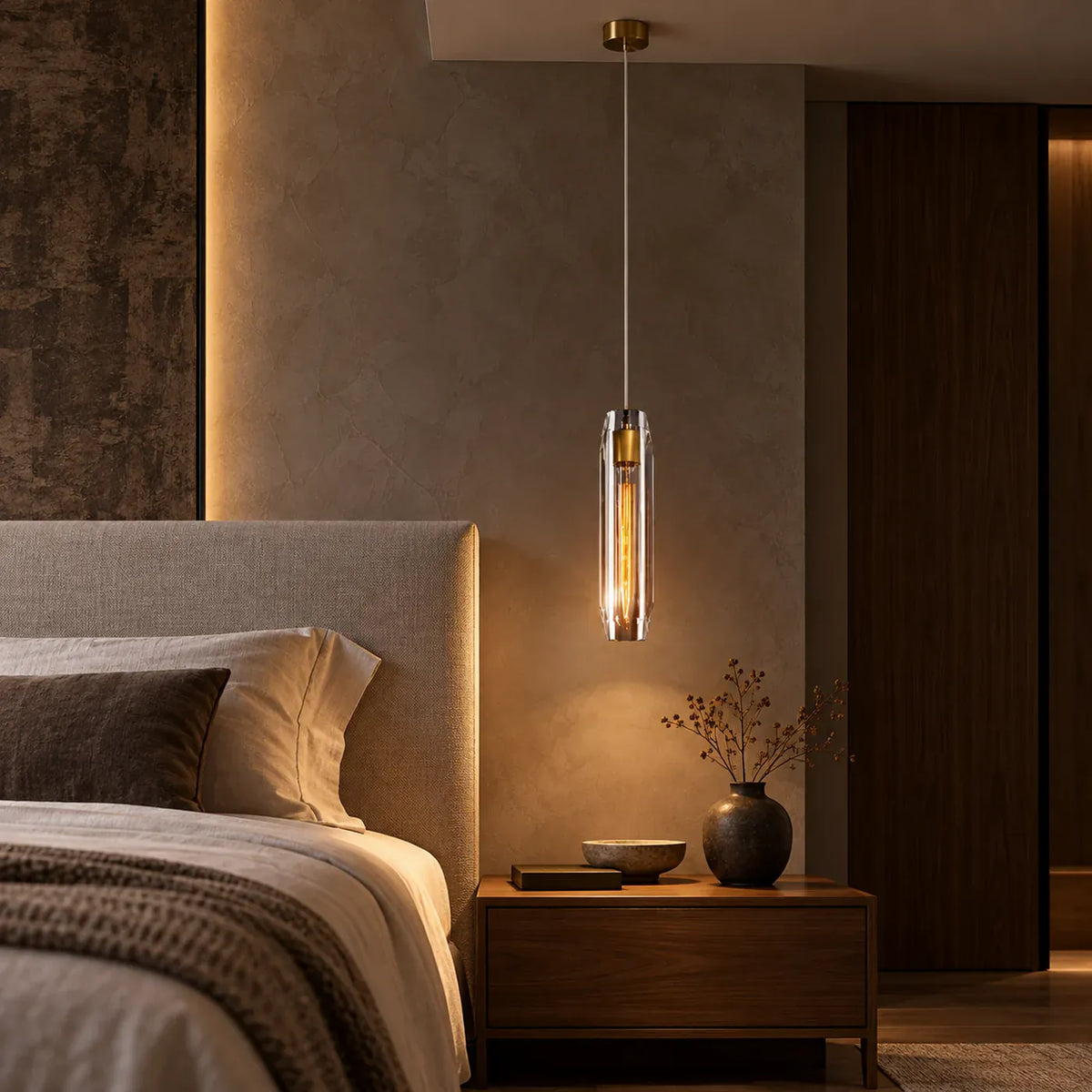
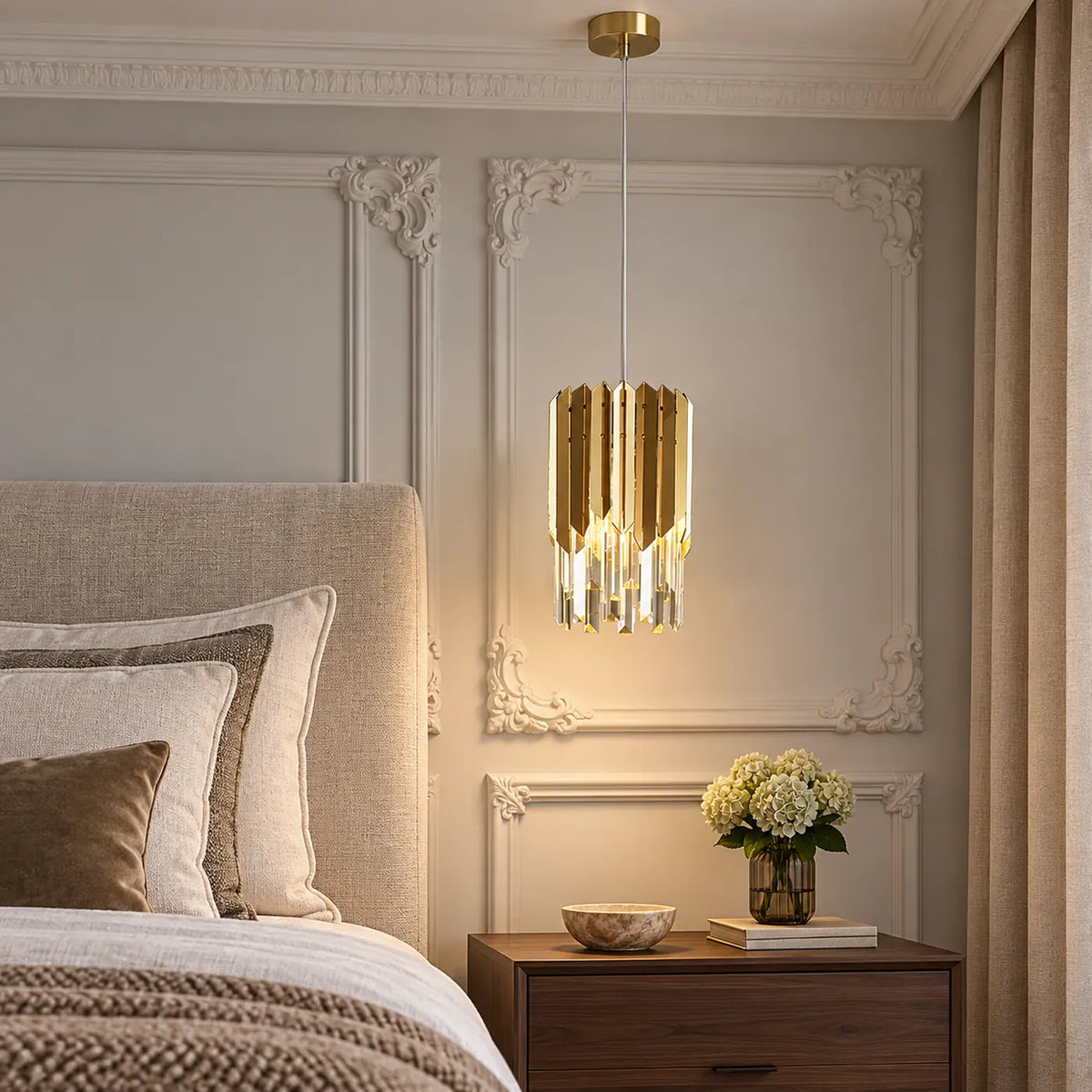
Hung crystal lamps in a pair beside a bed clear the nightstand entirely and put light at a better reading angle than table lamps. Choose diffused or lightly faceted bodies at this proximity, hang roughly 18-24" (46-61 cm) above the nightstand, and put the pair on switches reachable from bed.
Stairwells and Entries
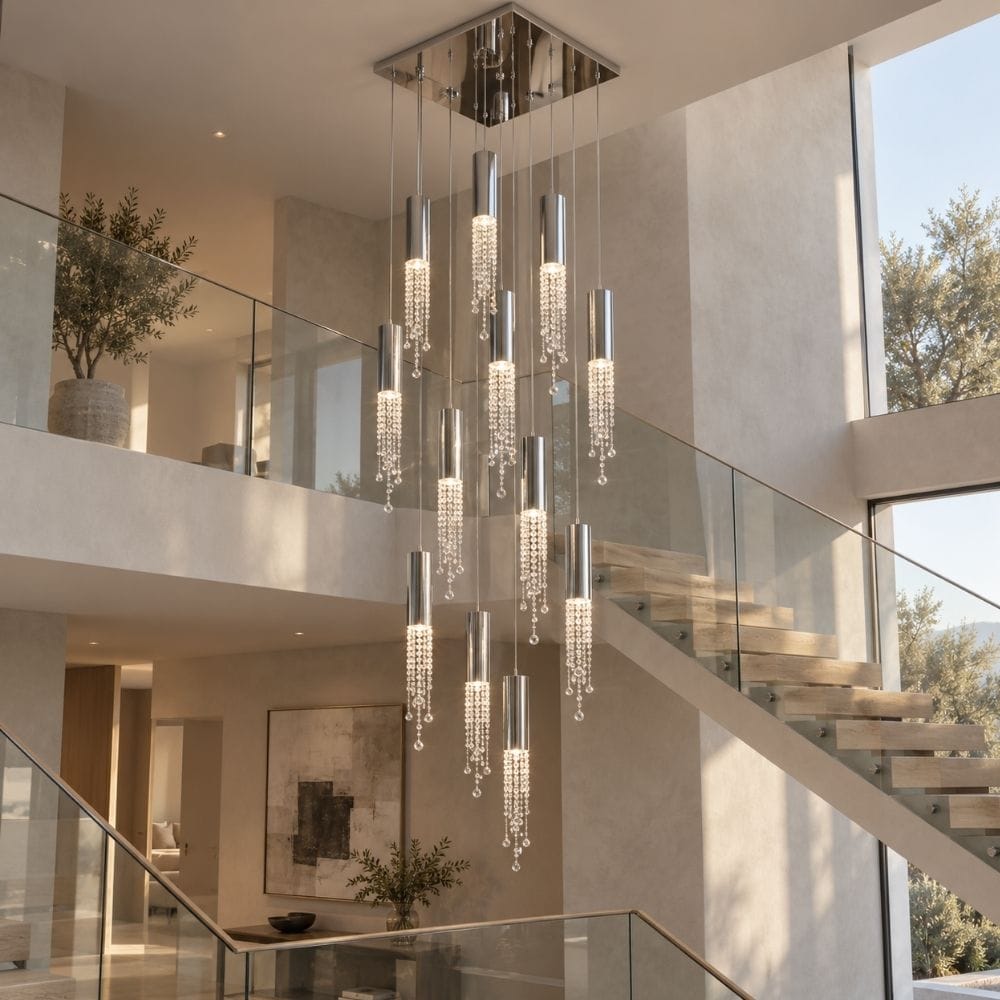
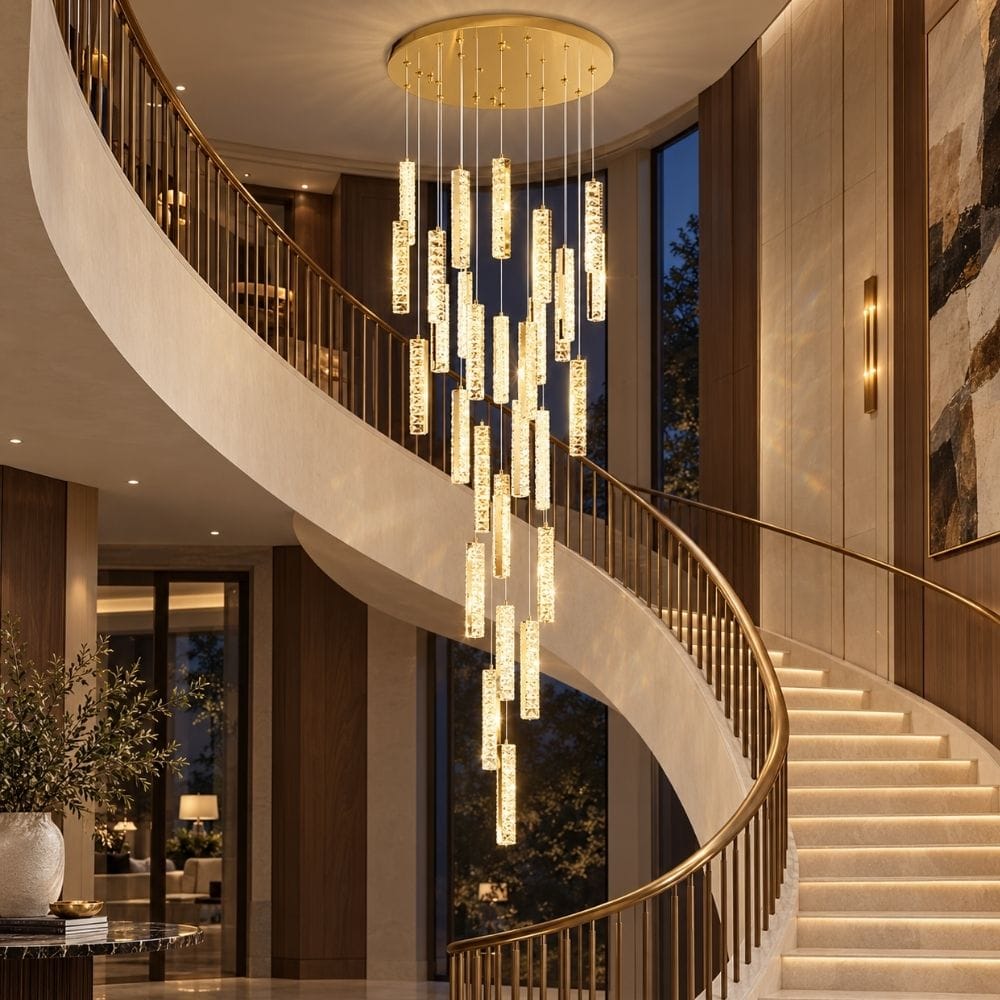
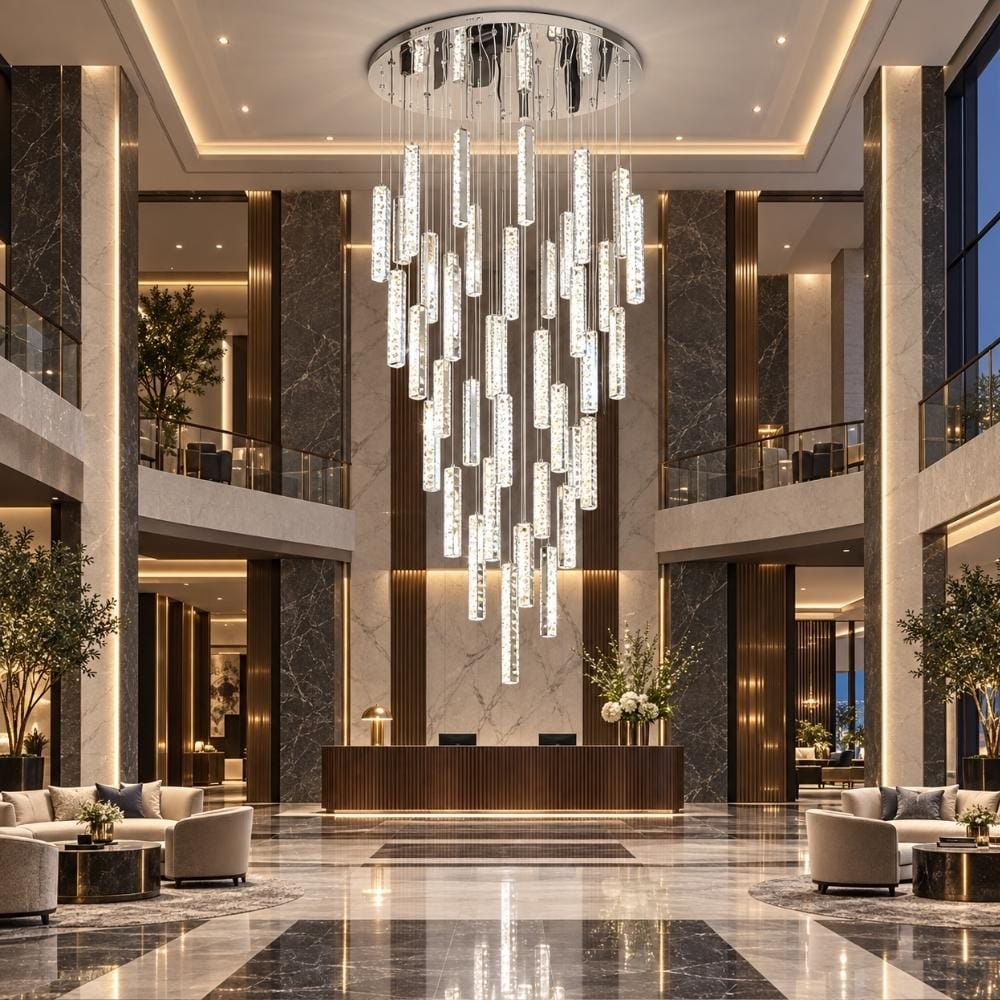
Vertical crystal columns and staggered clusters use the height these spaces offer, catching light along a full drop. Larger stairwell-scale compositions live in the staircase chandeliers collection.
Judging Crystal at Close Range
Proximity cuts both ways: at pendant height, quality differences that hide on a ceiling are visible in the hand. Real crystal runs heavier and colder to the touch than acrylic, carries crisp machine-cut facets rather than soft moulded seams, and throws prismatic colour in daylight where plastic throws plain white glare. K9 optical crystal is the modern designer standard. On rod designs, look at the rod's clarity and the evenness of its glow; on drop designs, check the attachment hardware — metal pins and closed loops last, open hooks let elements rotate out of alignment over the years. Material grades and cuts are covered in full in our crystal types and quality guide.
Finishes and Light
- Gold and brass frames: the warm pairing — metal and sparkle reflecting in the same amber band, the collection's most-requested finish combination
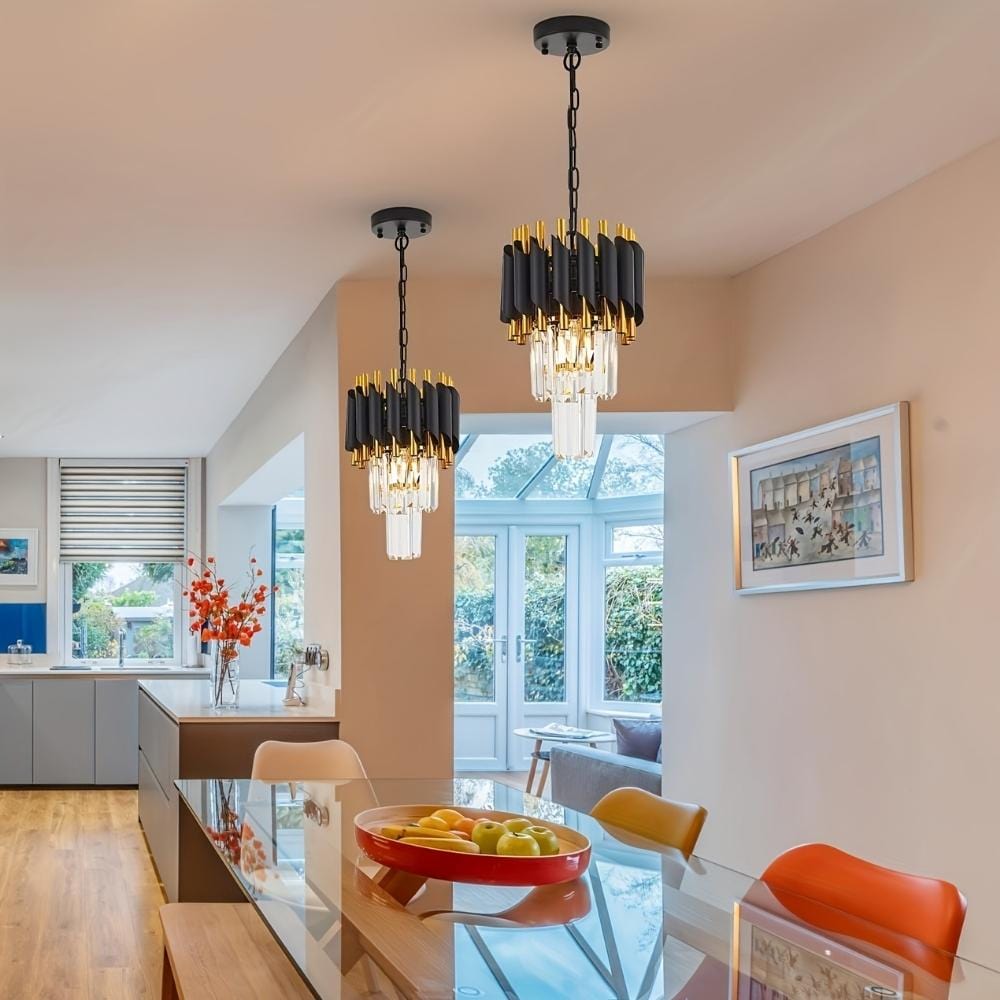
- Matte black: maximum contrast, making crystal read brighter against dark structure
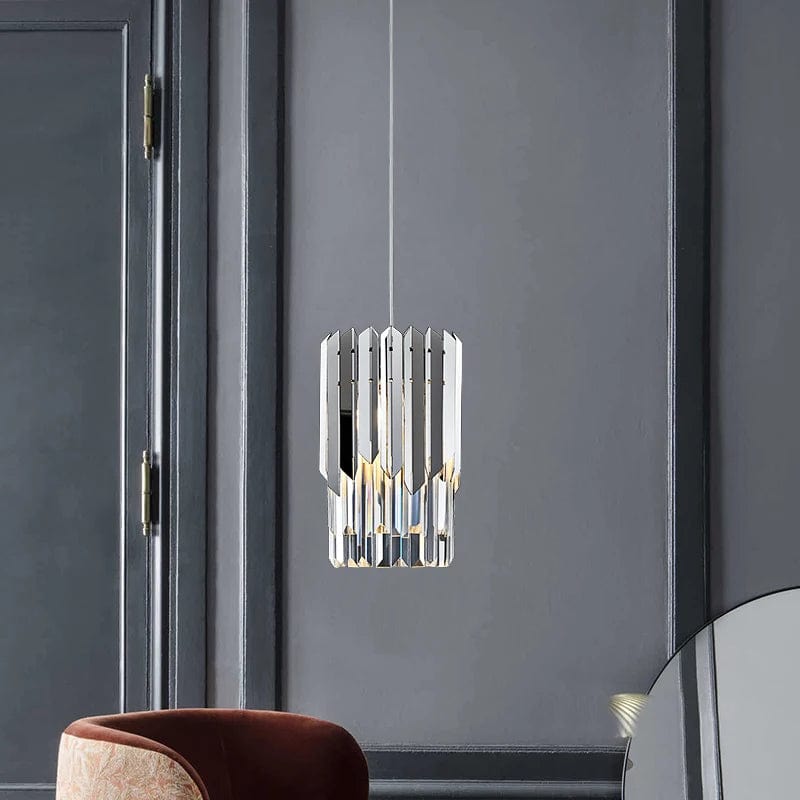
- Chrome and nickel: the cool mirror read, strongest in contemporary and monochrome rooms
- Colour temperature: warm white 2700-3000K everywhere crystal is decorative; up to 3000-3500K over a working kitchen surface
- Dimming: non-negotiable — crystal performs between 30% and 60% output, and integrated-LED designs need a matched flicker-free driver
Sizing the Sparkle
Size to the surface below rather than the room. Over an island, the fixtures together should span one-half to two-thirds of its length, with individual diameters typically 12-20" (30-51 cm) — or a single rod design at the same proportion of length. Over a round table, one pendant at one-half to two-thirds of the table's width. Mini designs at 6-10" (15-25 cm) suit bedside, powder rooms, and tight runs. Because a faceted body reads visually heavier than plain glass at the same diameter, take the smaller option when between sizes in a compact room — the opposite of the rule for open frames. Full calculations are in our pendant sizing guide.
Related Collections
Browse the wider suspended range at the pendant lights collection, the full material family at the crystal chandeliers collection, and step up in scale at the pendant chandeliers collection where one fixture carries a whole room.
Frequently Asked Questions
Why choose a crystal pendant over a ceiling fixture?
Proximity. Refraction is a close-range effect that fades with distance, so a pendant hung 30-36" above a surface puts facets inside the zone people occupy — often outperforming a larger crystal fixture mounted at ceiling height.
What is an LED crystal rod pendant?
A design holding solid crystal rods in a slim metal channel with LED entering from the ends, so each rod glows along its length while its faceted surface throws refraction outward. It reads architectural rather than ornate, and comes in single and multi-head lengths.
How many crystal pendants over a kitchen island?
Roughly one per 24-30" (61-76 cm) of island length, hung 30-36" above the counter. Choose bodies with some diffusion where the run faces a seating area.
How do I tell real crystal from acrylic?
Real crystal is heavier and colder to the touch, shows crisp machine-cut facets rather than moulded seams, and throws prismatic colour in daylight. At pendant height these differences are visible — one more reason quality matters more in this format.
What size crystal pendant should I choose?
Size to the surface below: one-half to two-thirds of an island's length across the run, or of a round table's width for a single fixture. Minis at 6-10" suit bedside and powder rooms. When between sizes in a compact room, take the smaller — crystal reads heavier than plain glass.
Do crystal pendants need a dimmer?
Effectively yes. Crystal performs best between 30% and 60% output, where refraction reads as depth rather than glare, and integrated-LED rod designs need a matched flicker-free driver.