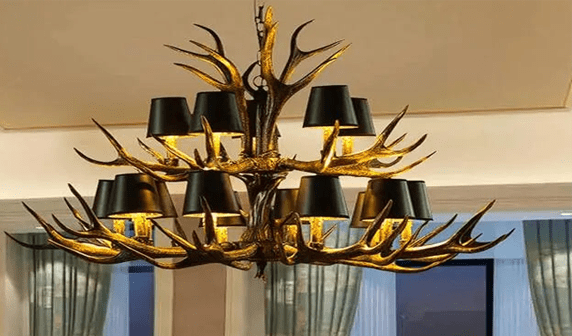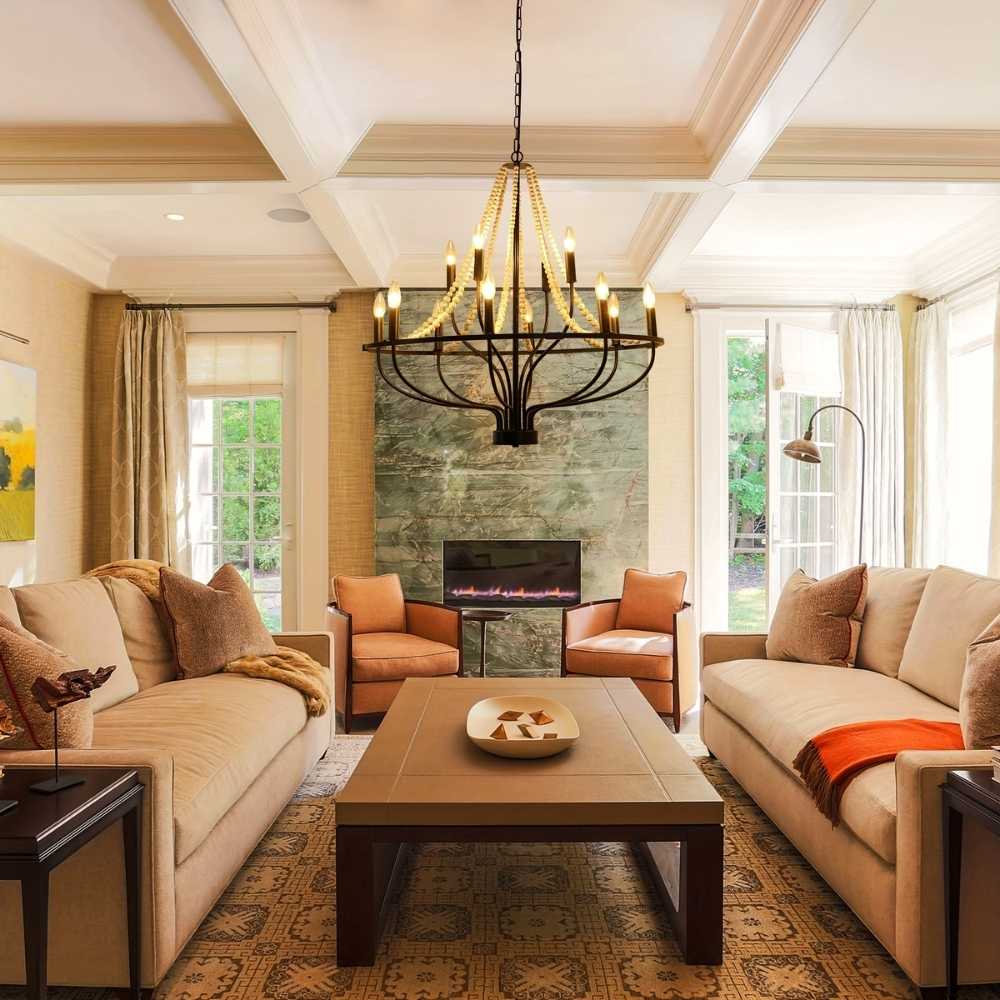
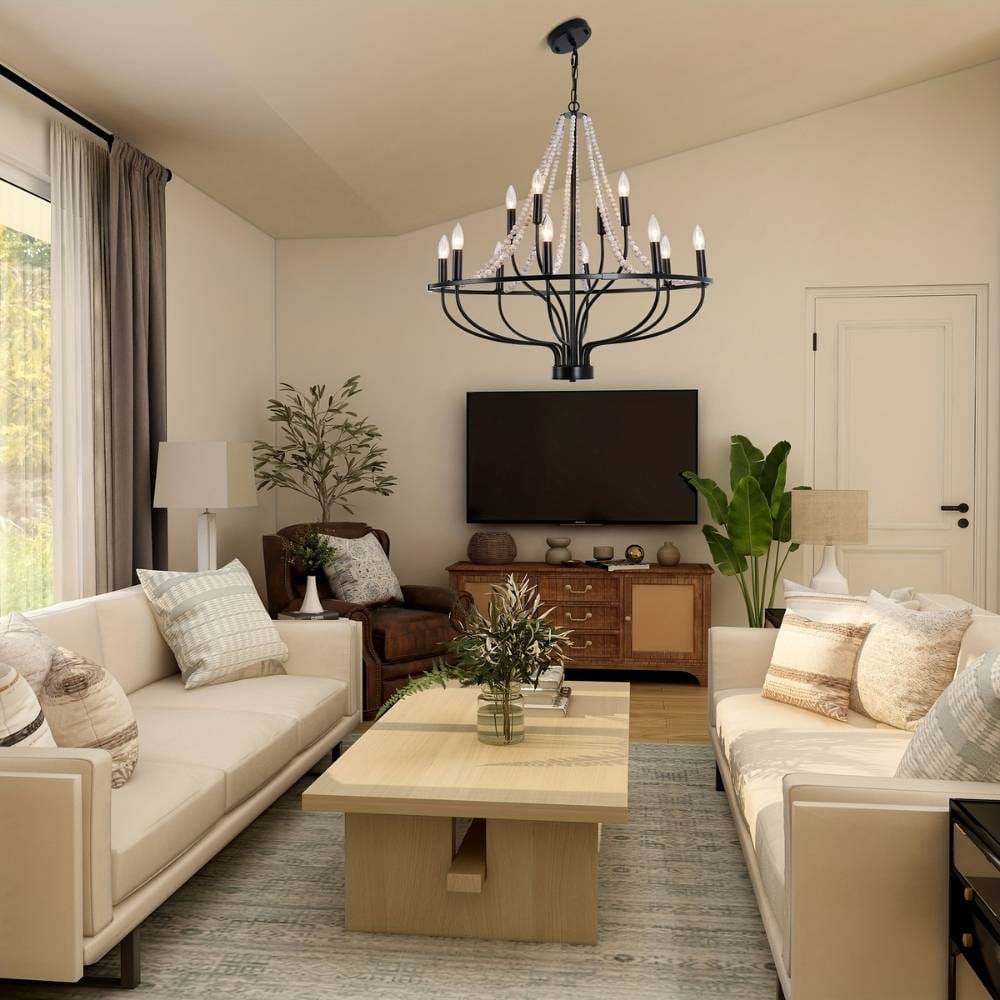
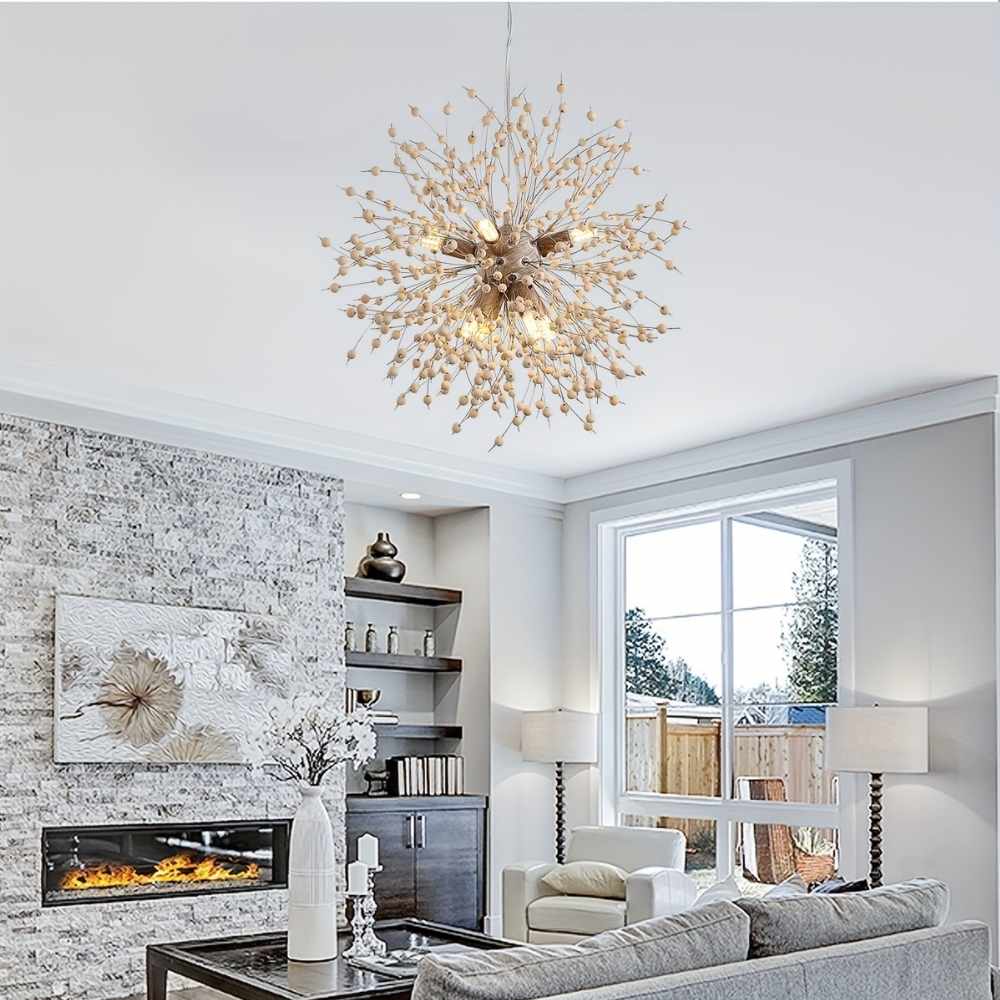









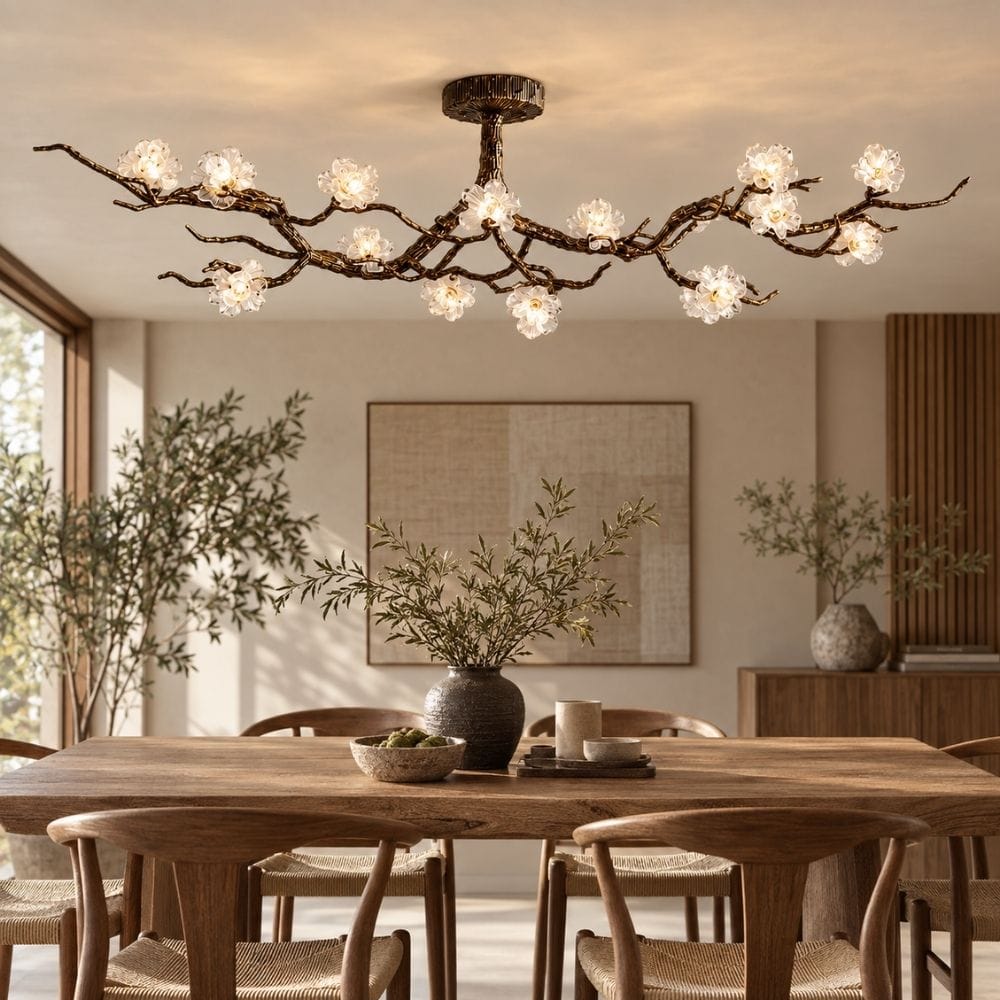
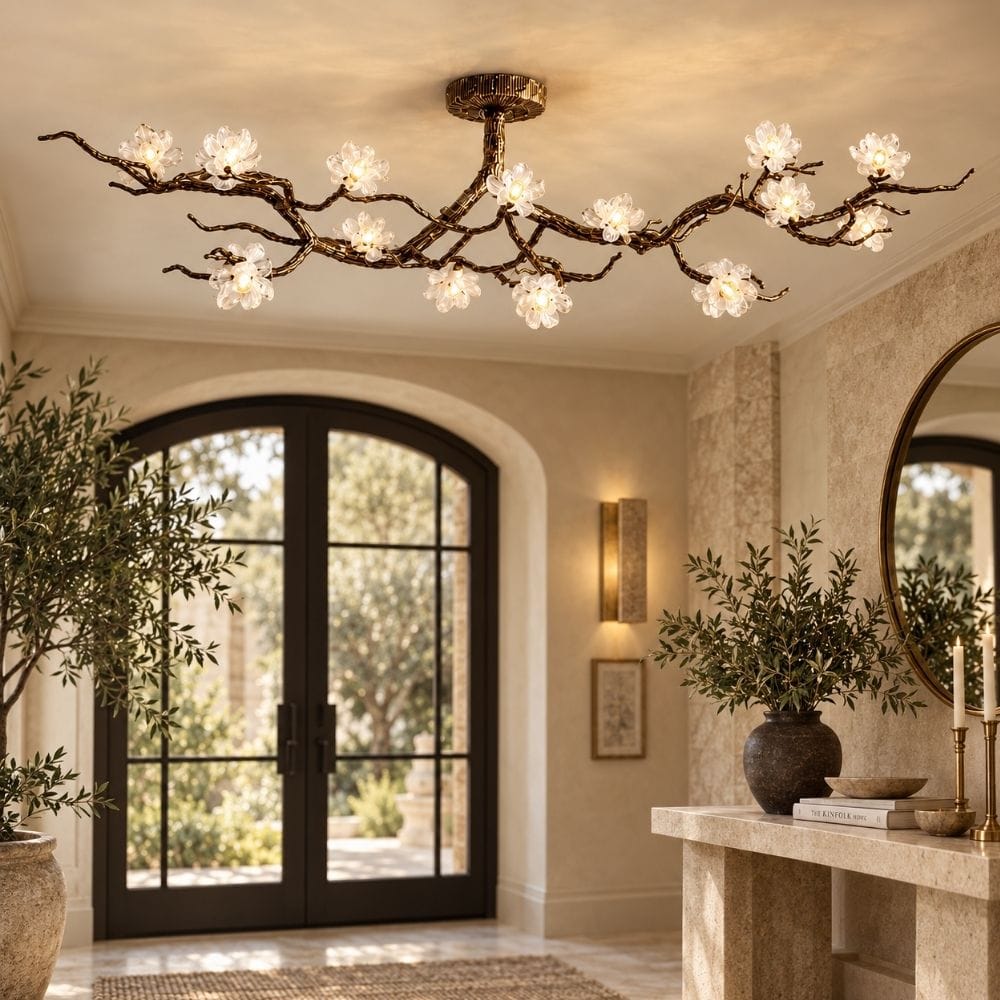
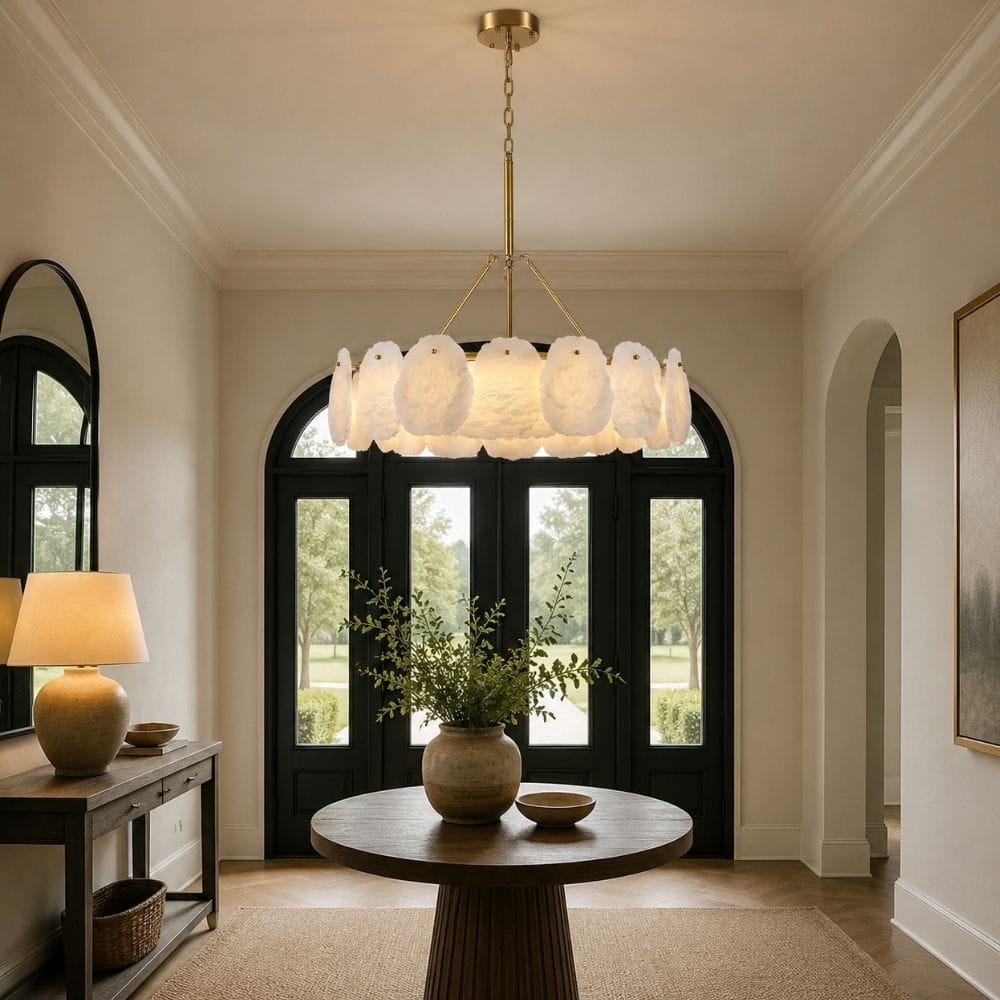
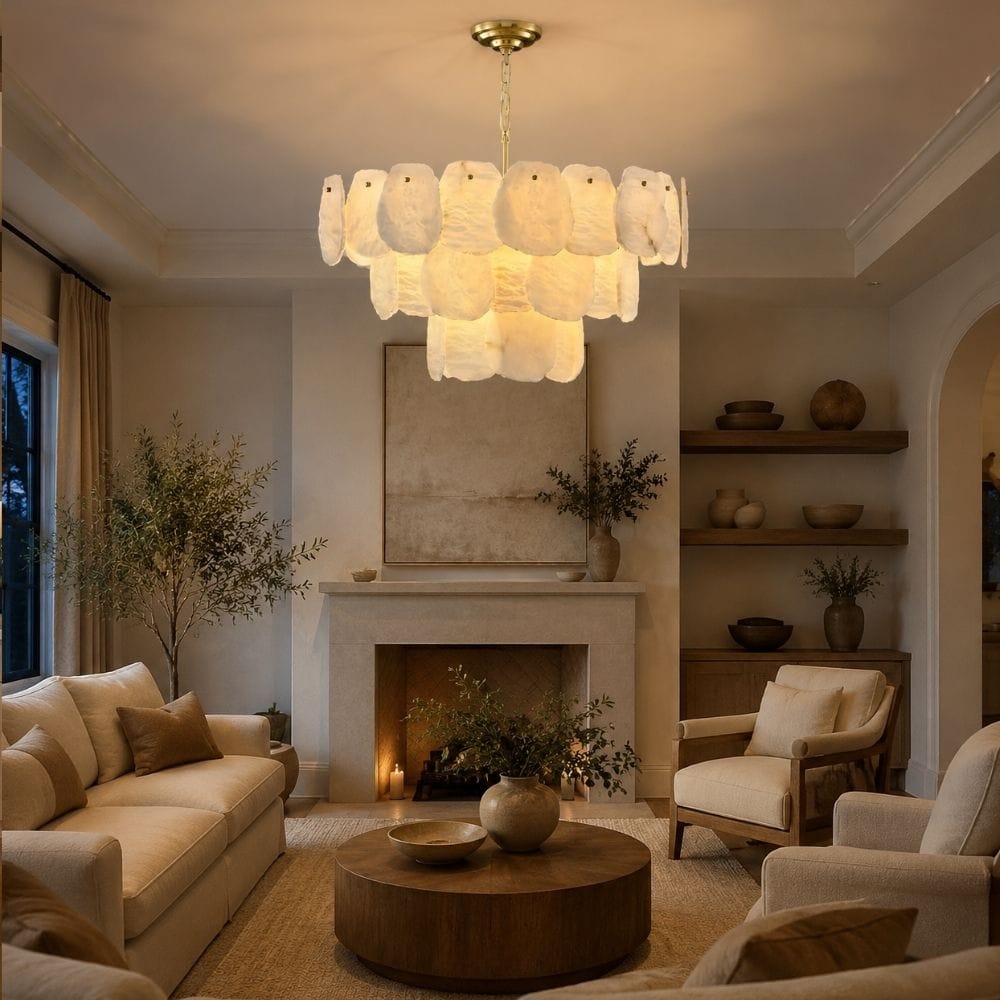
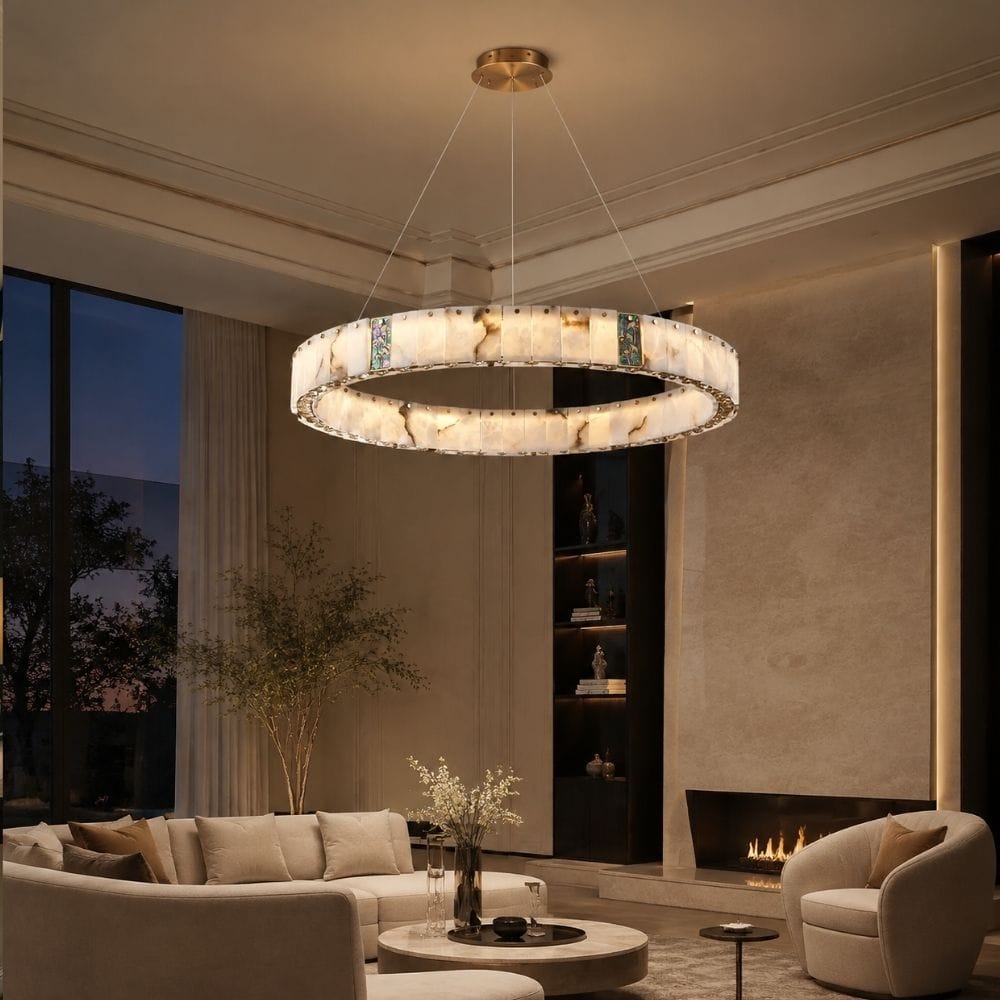
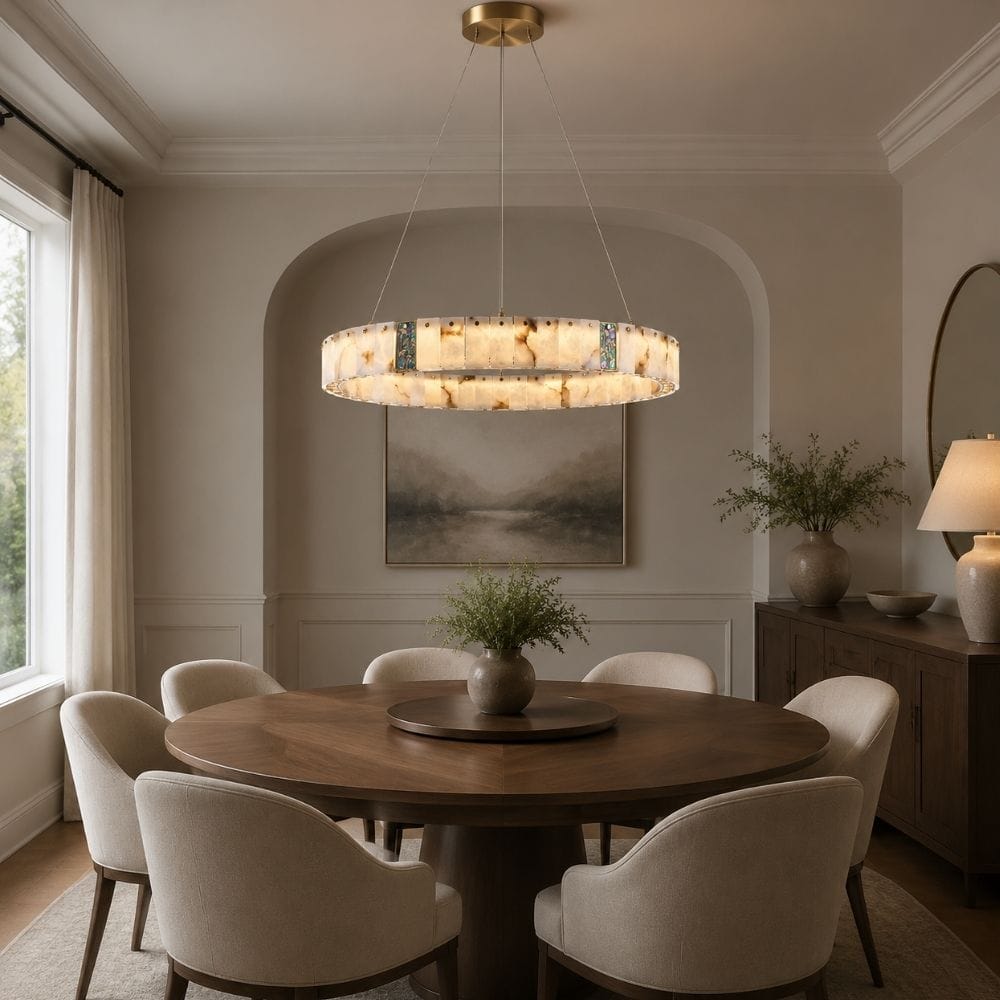



Why a Chandelier in the Kitchen
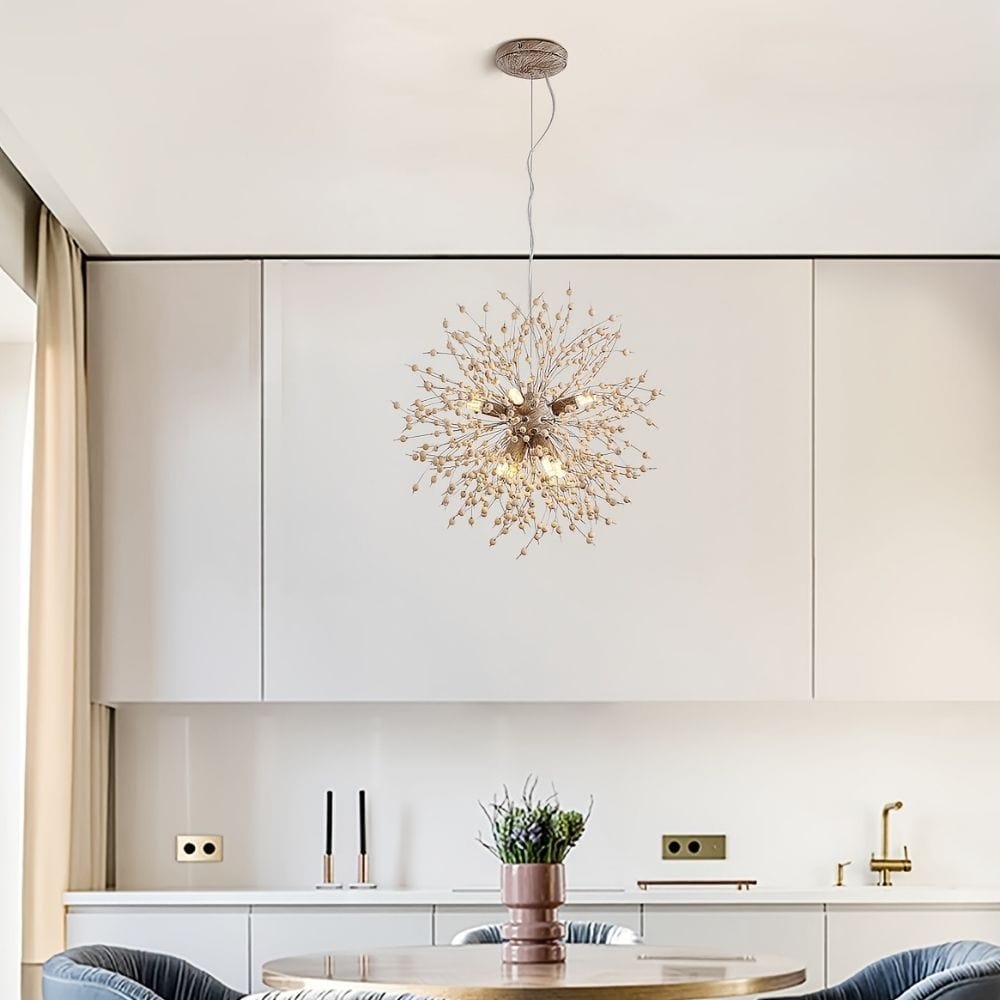
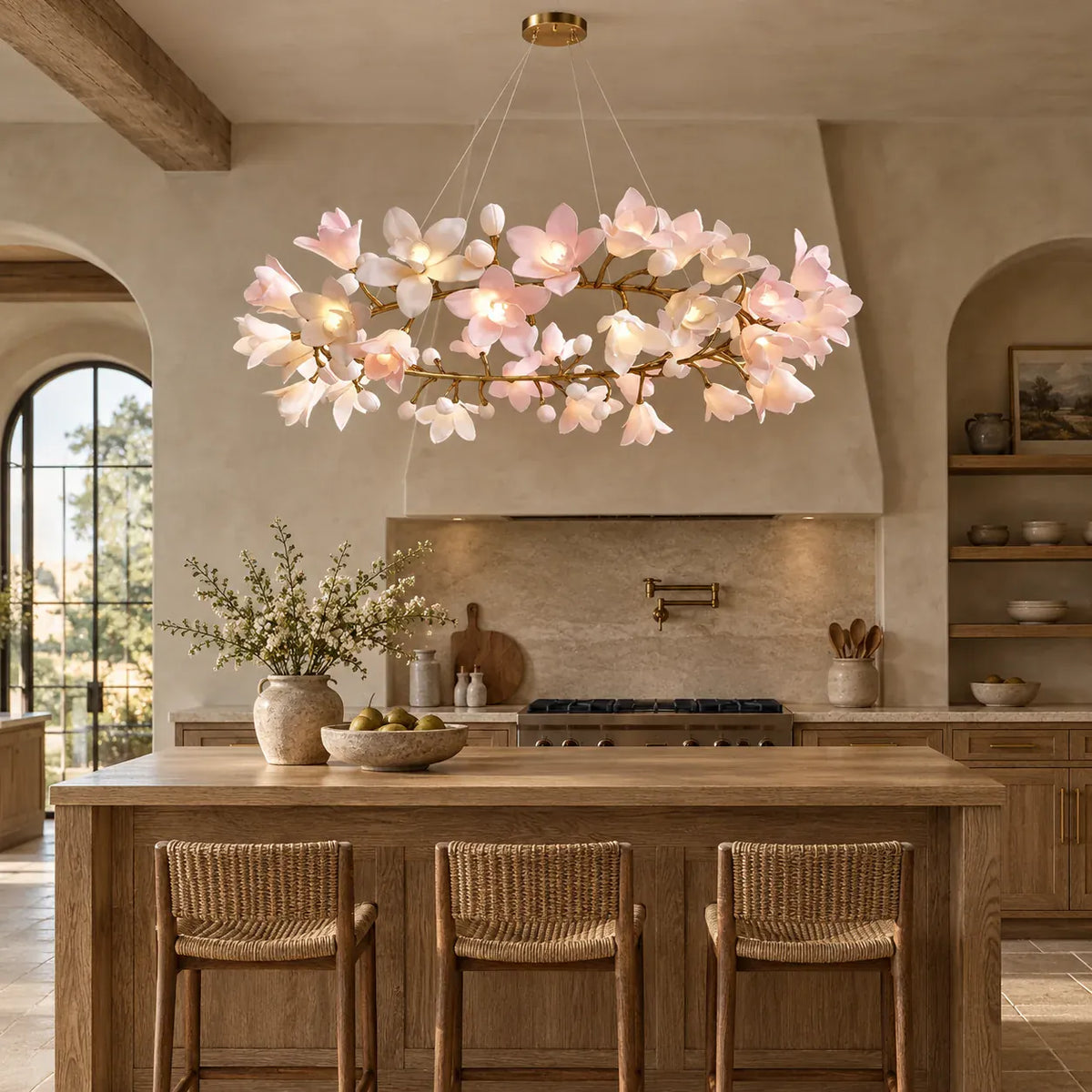
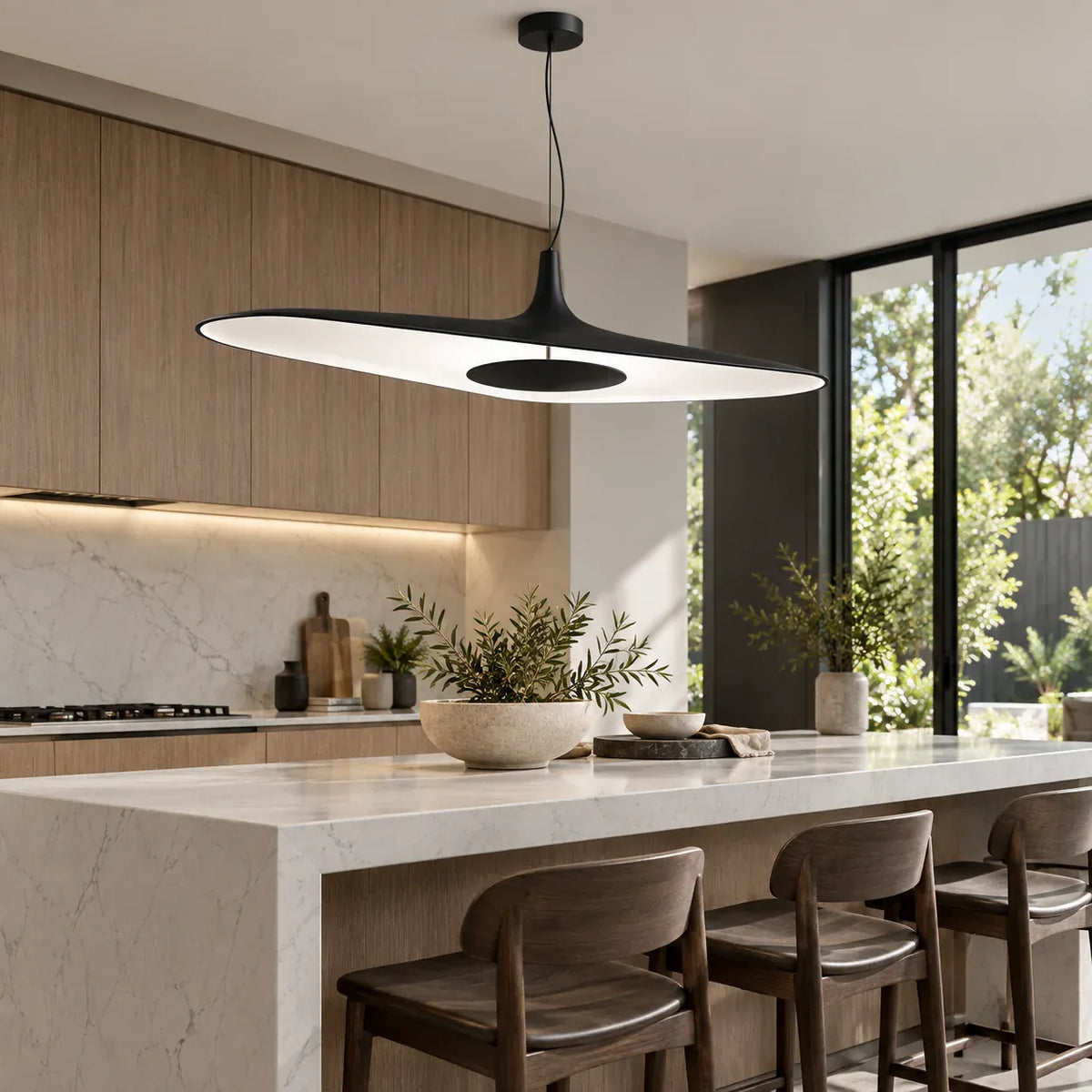
The kitchen earned its statement fixture the moment it became the house's real living room — open-plan layouts put the island in every sightline, and a chandelier is how that sightline gets a center. The design case is specific: repeated pendants read as task equipment, while a single composed fixture reads as furniture, giving the hardest-working room in the home the same decorative anchor a dining room has always had. This page covers that single-fixture decision in depth; the room's full light plan — task layers, under-cabinet strips, ceiling fixtures, and pendant runs — is its own subject, covered across our kitchen lighting collection.
Chandelier or Pendant Series Over the Island
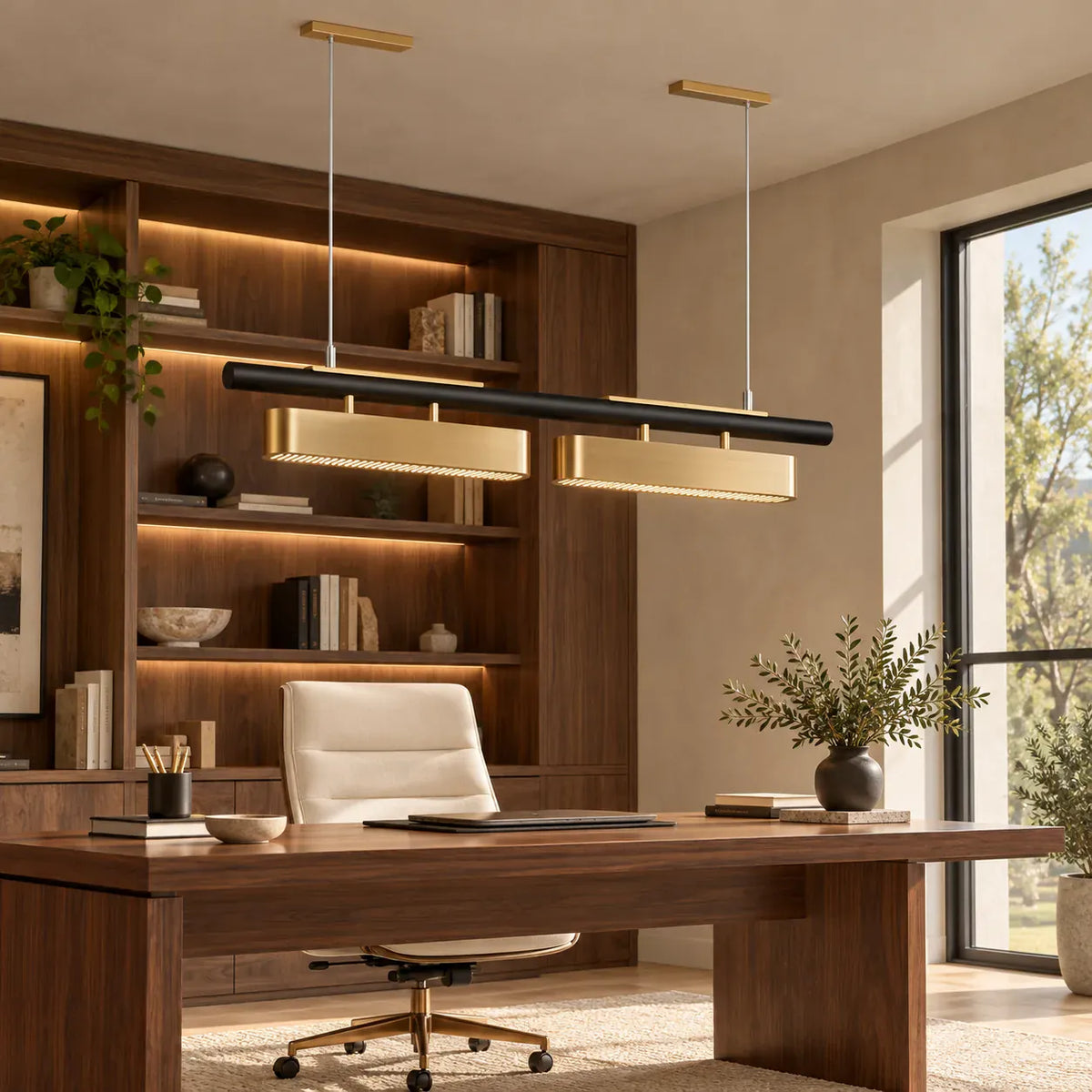
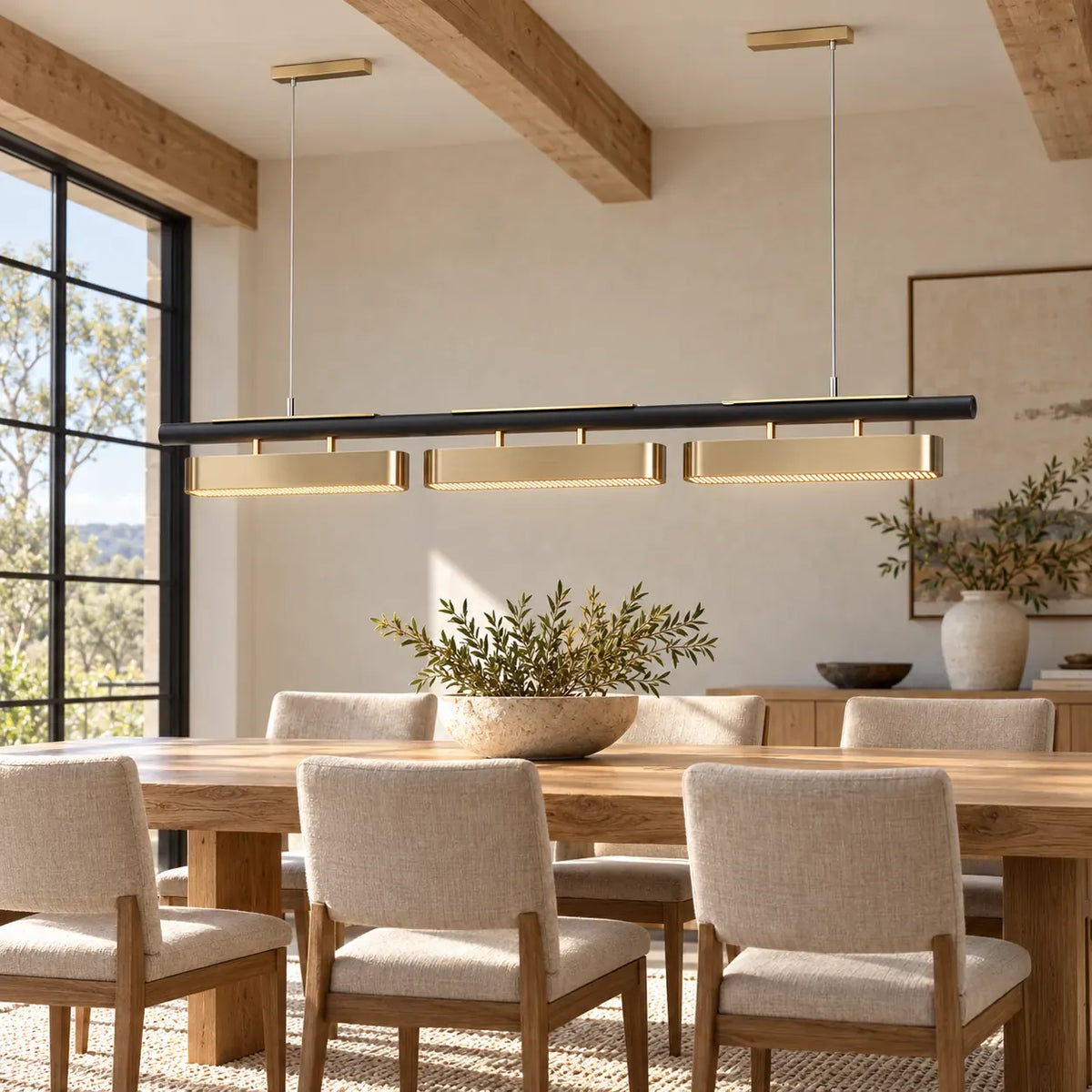
- Choose the chandelier when the island is the room's visual center: one linear design sized to one-half to two-thirds of the island's length reads as a single sculptural gesture and removes the spacing math of multiples
- Choose the pendant series when task lighting leads: repeated points spread even light across a long prep surface — the spacing and height rules live in our island pendant height guide
- The tiebreaker: open-plan rooms visible from the sofa favor the chandelier's furniture presence; closed working kitchens favor the pendant run's task coverage
Getting Size and Clearance Right
Over the Island
- Height: 30-36" (76-91 cm) from countertop to the fixture's lowest point — low enough to relate to the surface, high enough to keep sightlines and faces clear
- Linear length: one-half to two-thirds of the island's length, centered on the island — never on the room; large islands over 8 ft (244 cm) carry correspondingly longer compositions
- Width check: keep the fixture's width comfortably inside the countertop's footprint so heads and cabinet doors clear it
Over the Eat-In Table or Nook
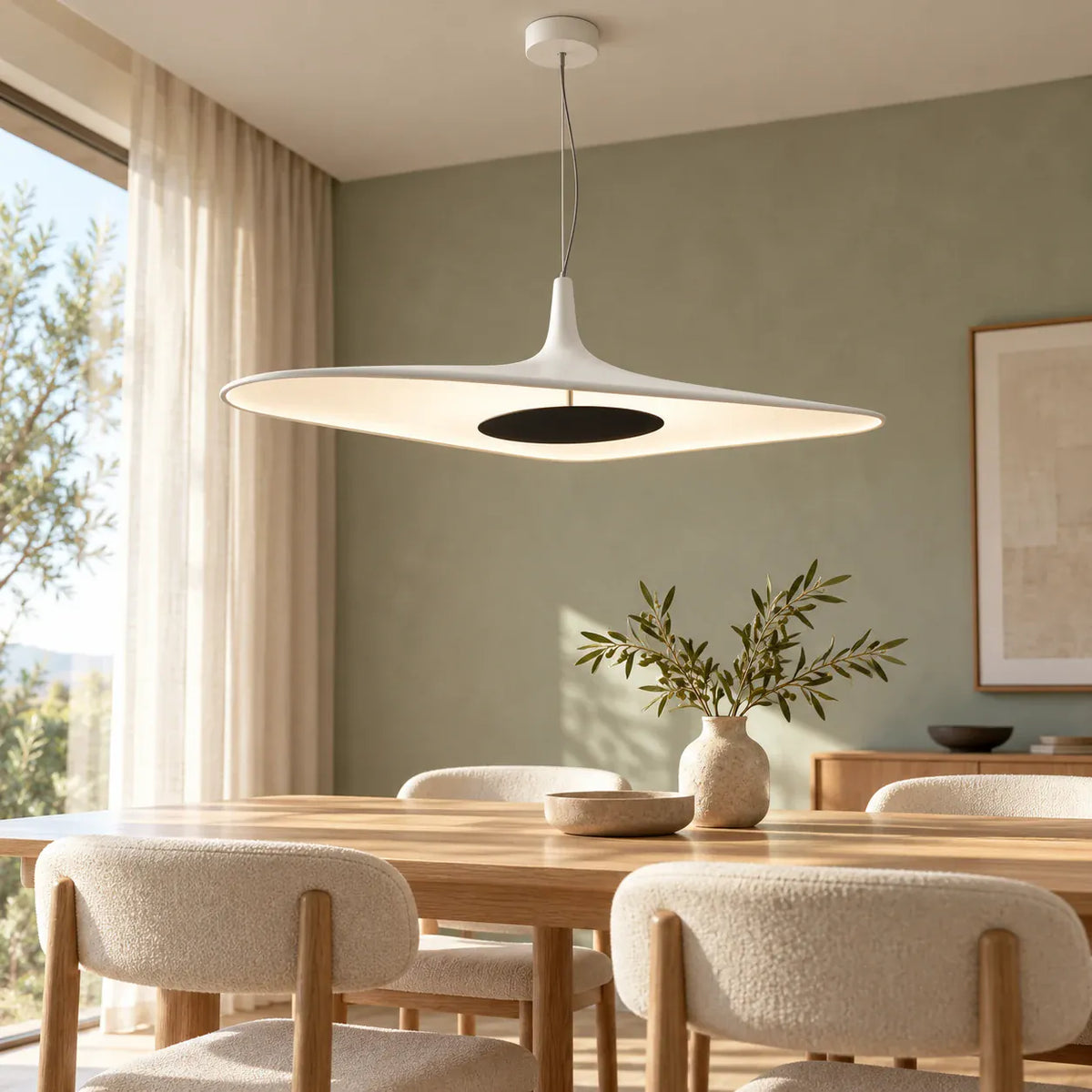
- Height: 30-36" (76-91 cm) above the tabletop, the same band as a dining room
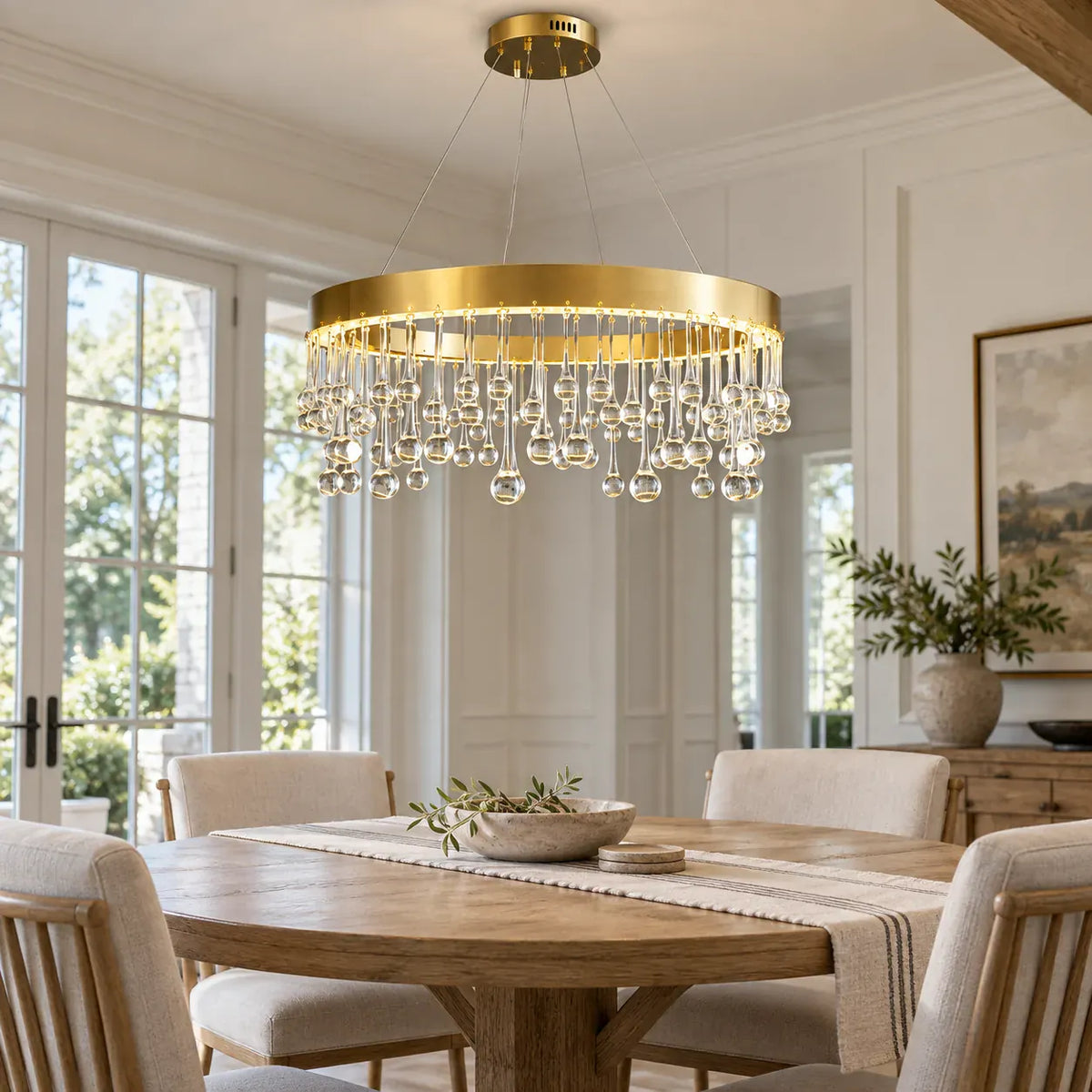
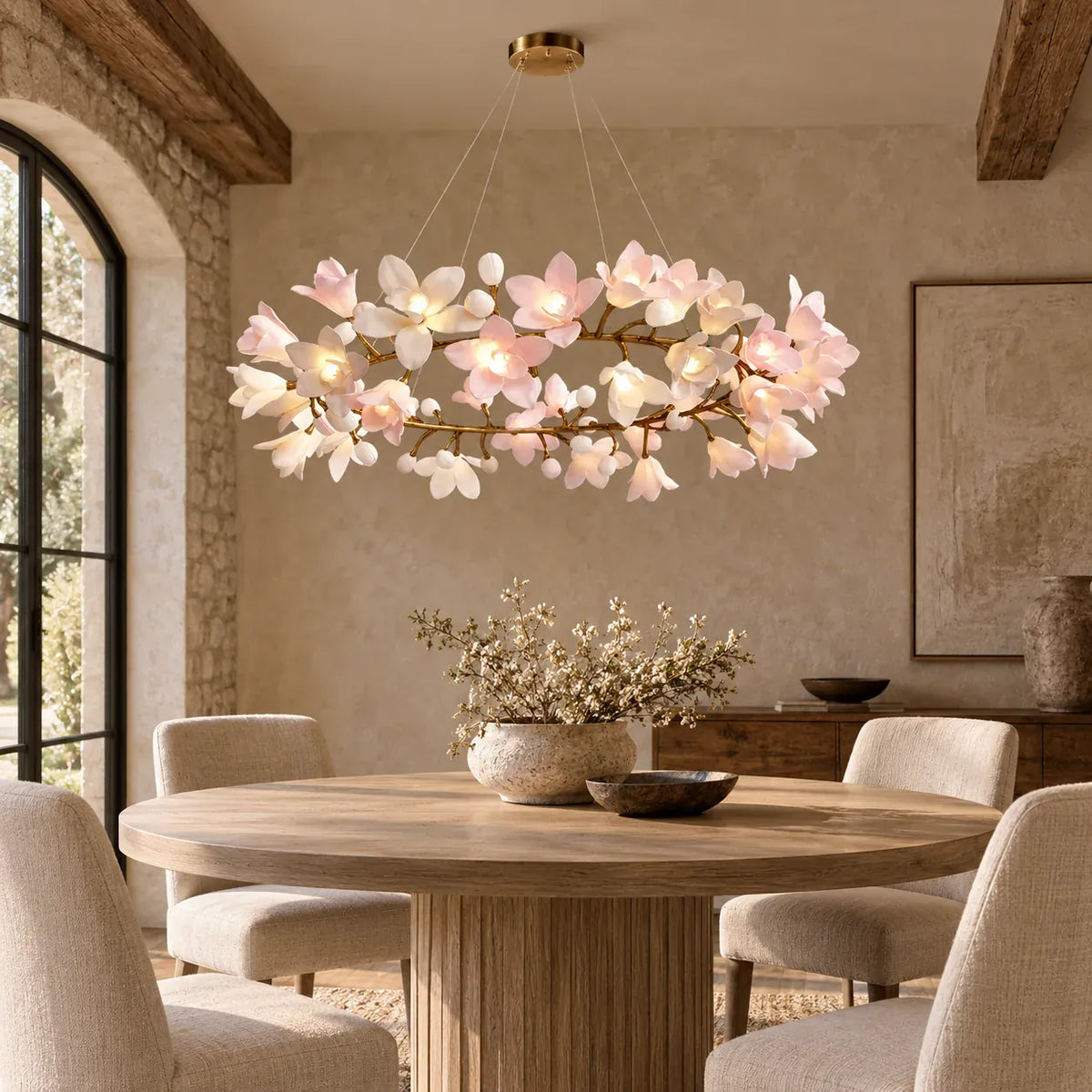
- Diameter: one-half to two-thirds of the table's width for round designs; a compact 20-30" (51-76 cm) fixture suits most breakfast nooks
- Nook note: banquette seating lets the fixture hang lower and more intimately, since no one walks beneath it
Formal dining happens in its own room with its own scale logic — that selection lives in the dining room chandeliers collection.
Kitchen-Proof Materials and Finishes
No other room asks a decorative fixture to live in cooking air. Steam, airborne grease, and daily temperature swings settle on every surface above a working kitchen, so materials matter differently here: sealed metals, glass, and smooth crystal wipe back to new with a microfiber pass, while fabric shades, raw woods, and intricate filigree hold residue and dull within a season. The practical shortlist — smooth glass or crystal elements, powder-coated or plated metal frames, and simple silhouettes without dust-trap detailing — is not a style constraint; it maps neatly onto exactly the modern and contemporary directions the room favors anyway. Whatever the material, plan a twice-yearly wipe-down; a kitchen fixture cleaned on schedule stays a showpiece, one ignored goes matte.
Styles That Work Above a Kitchen
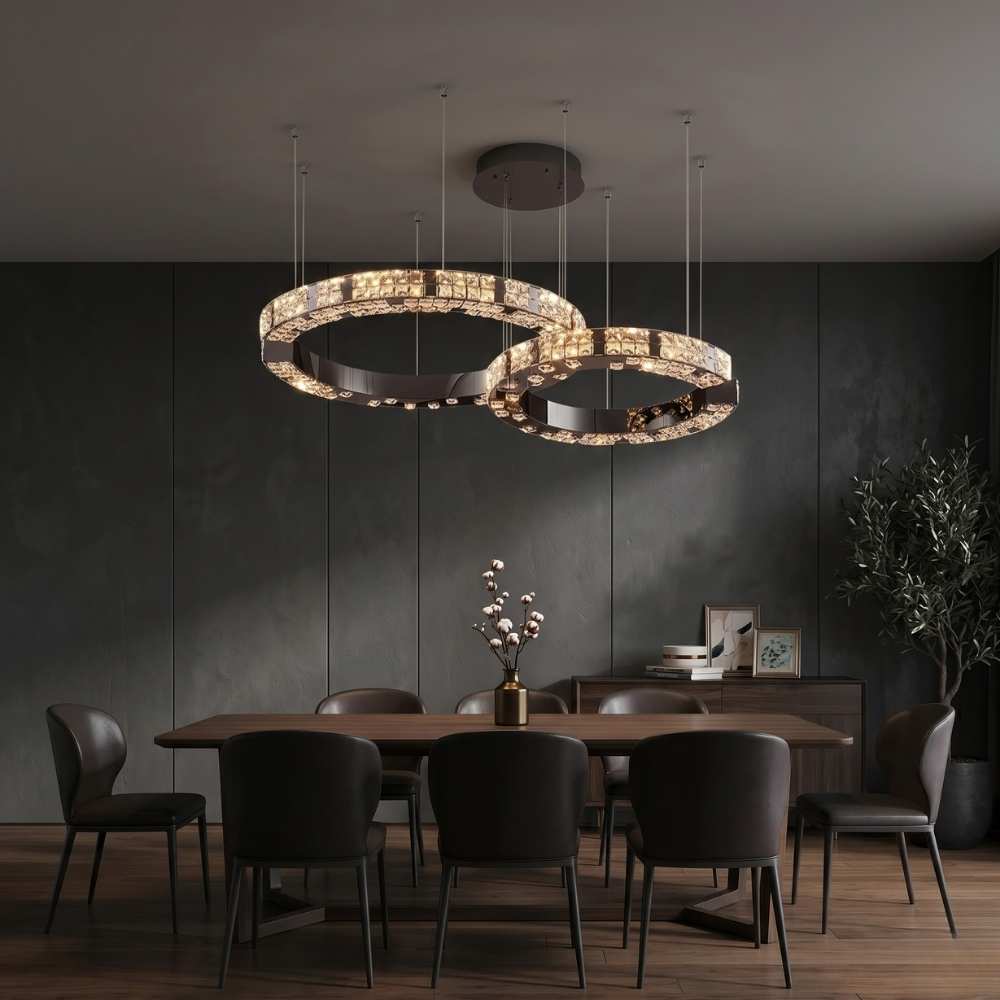
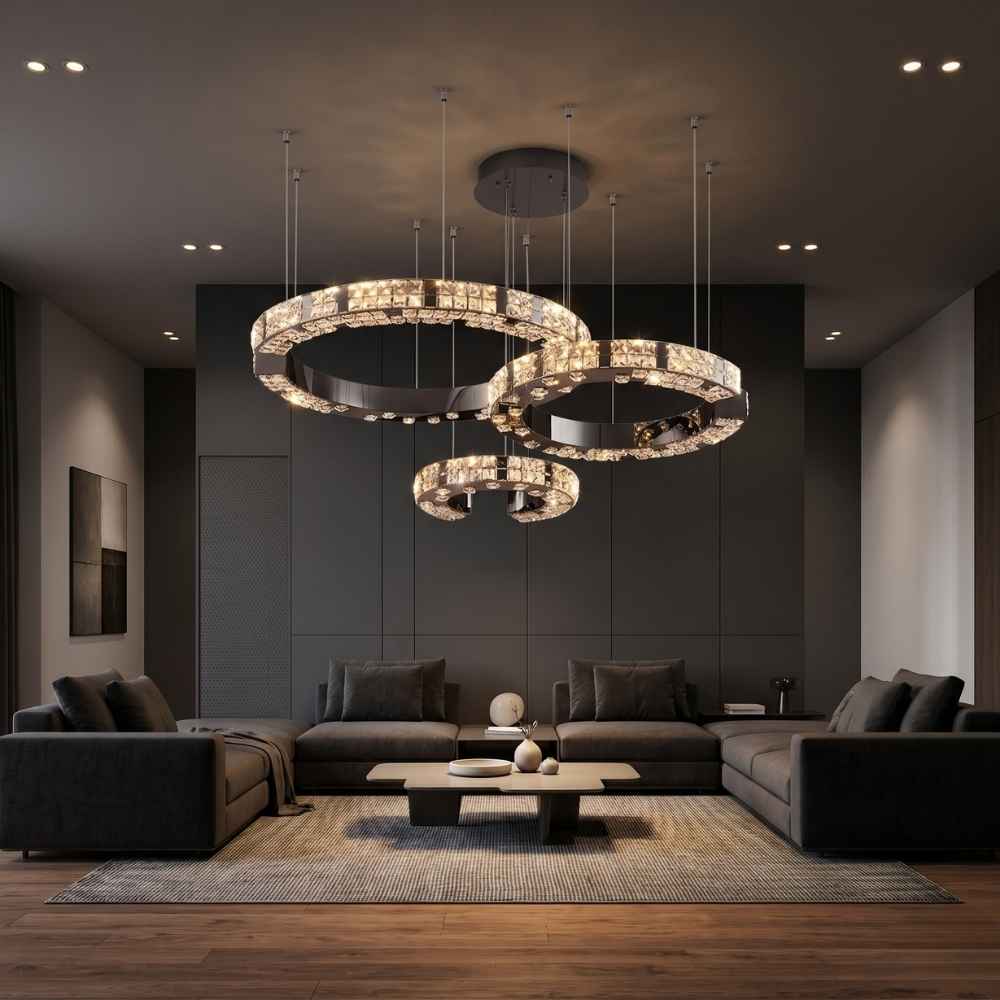
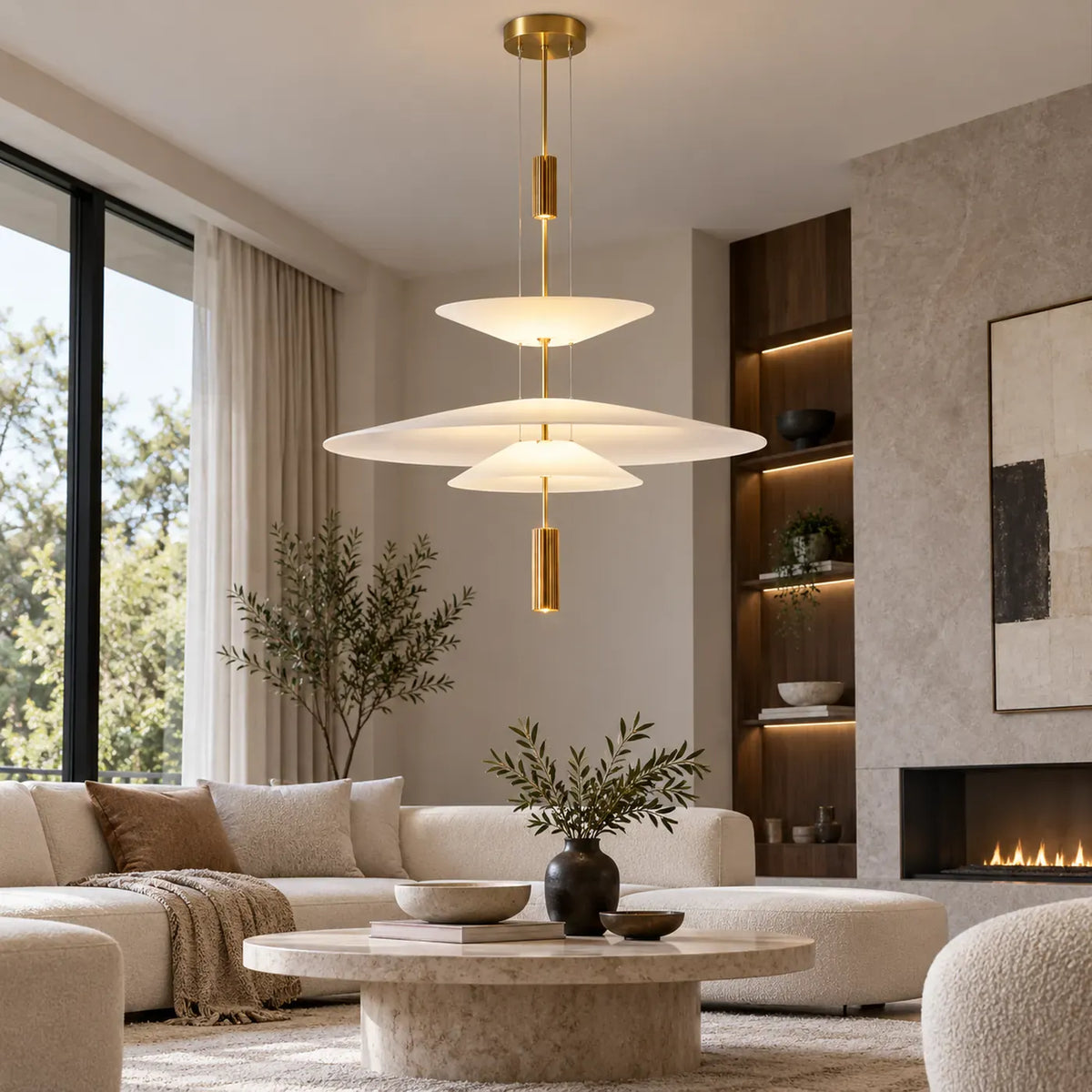
- Modern and contemporary: the category's core — clean linear compositions, ring forms, and geometric designs that match cabinetry's straight lines
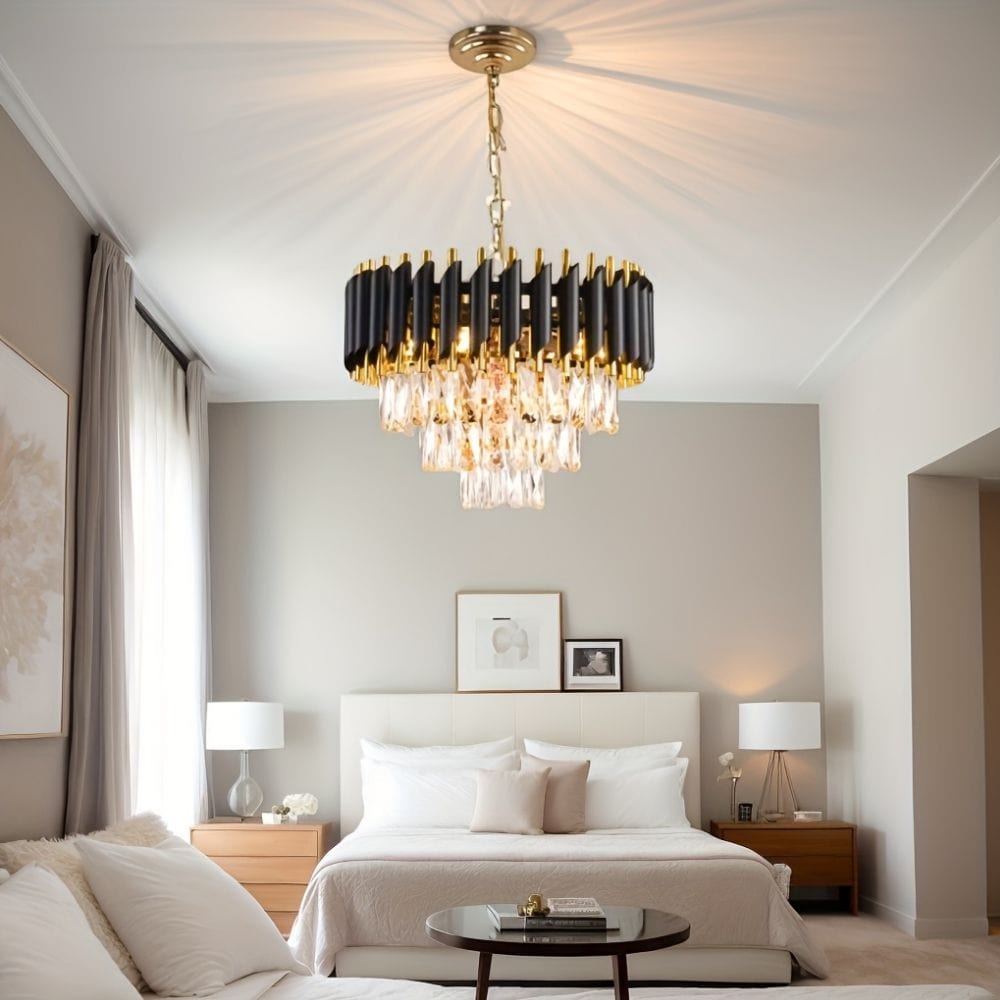
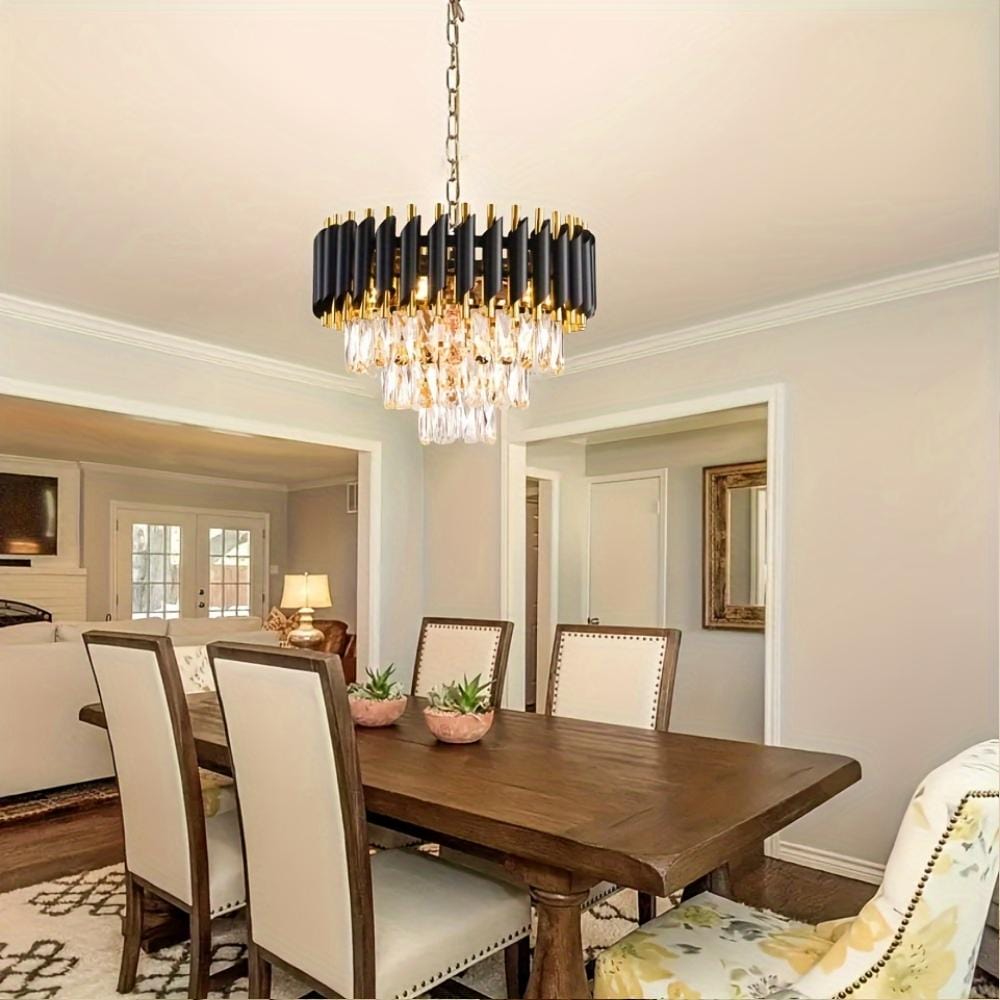
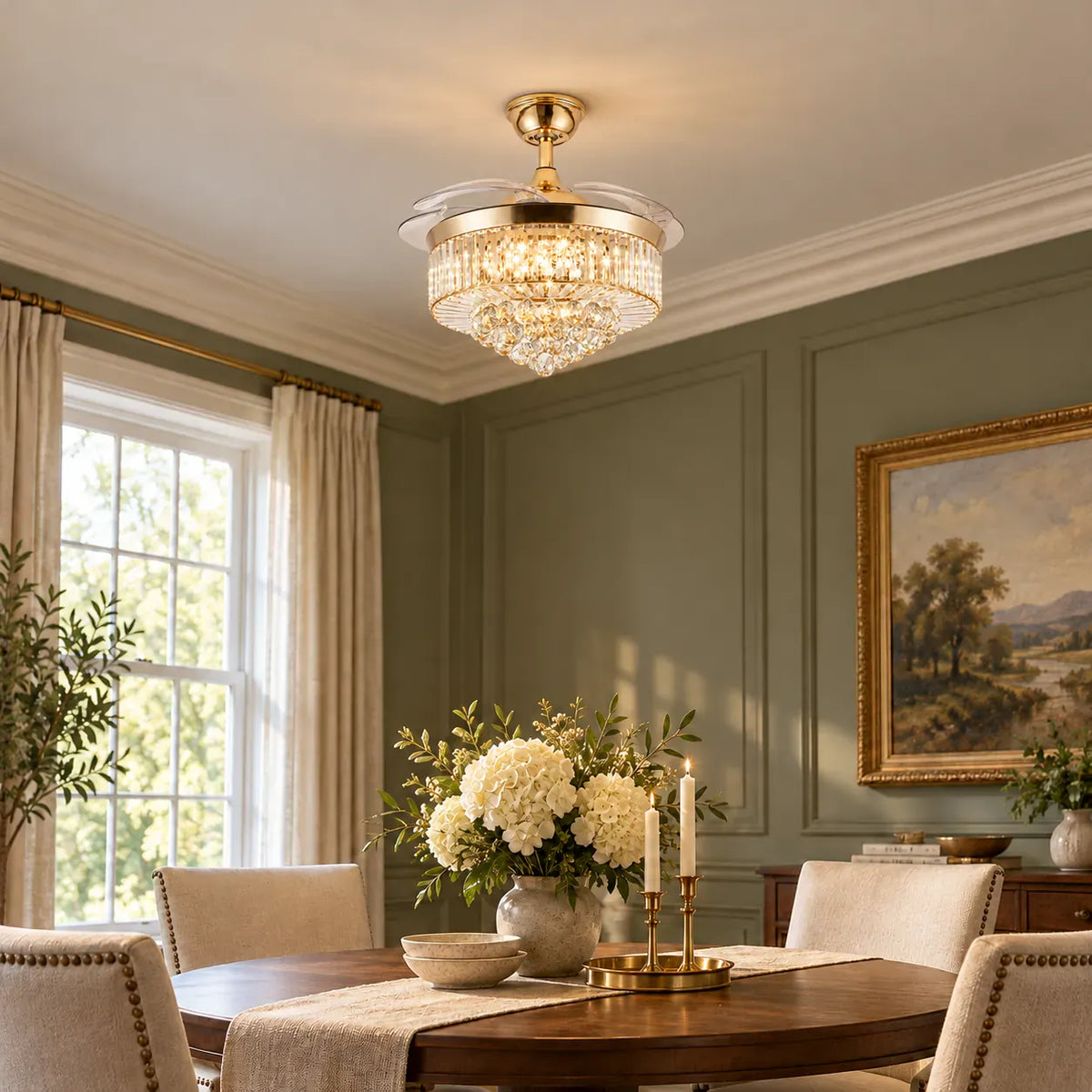
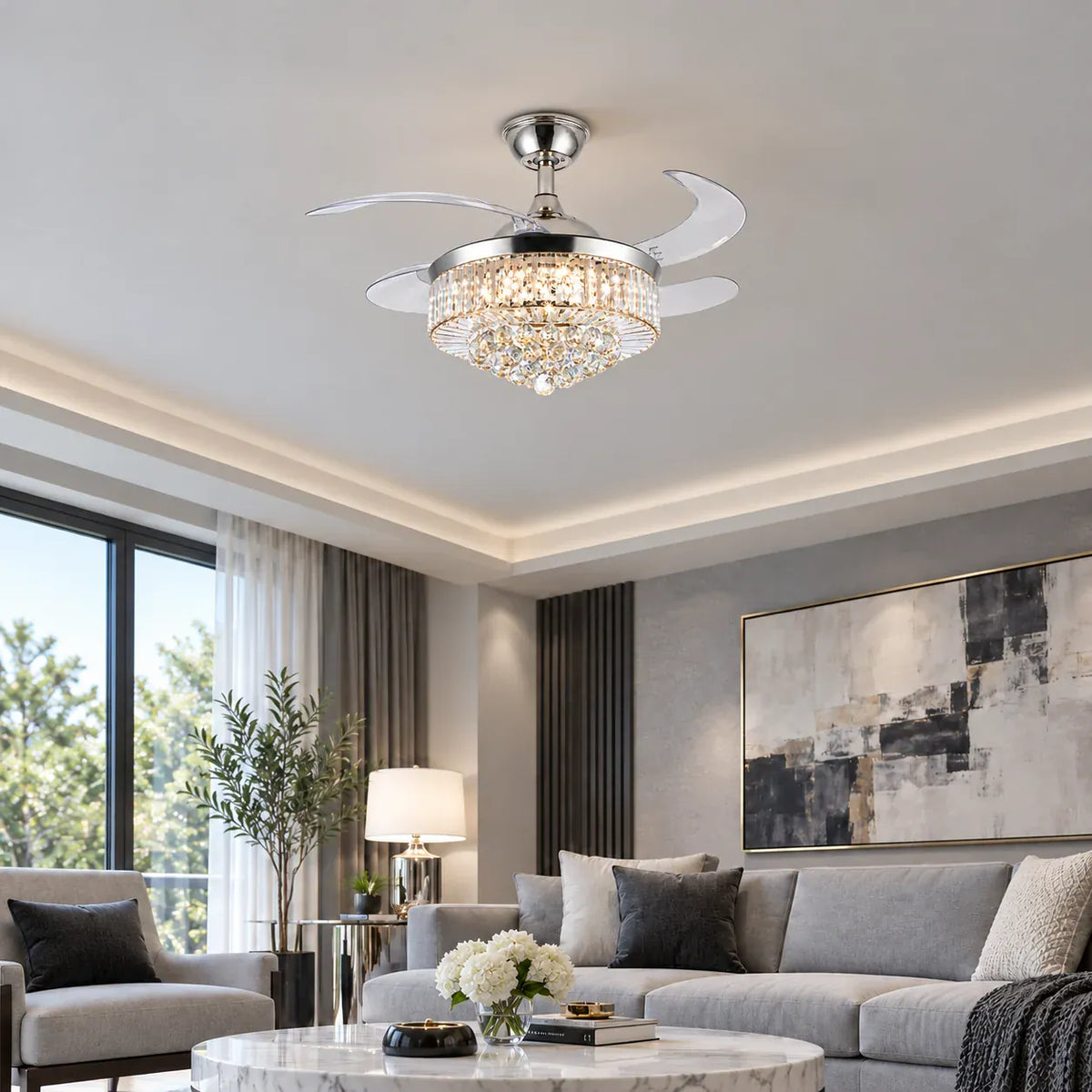
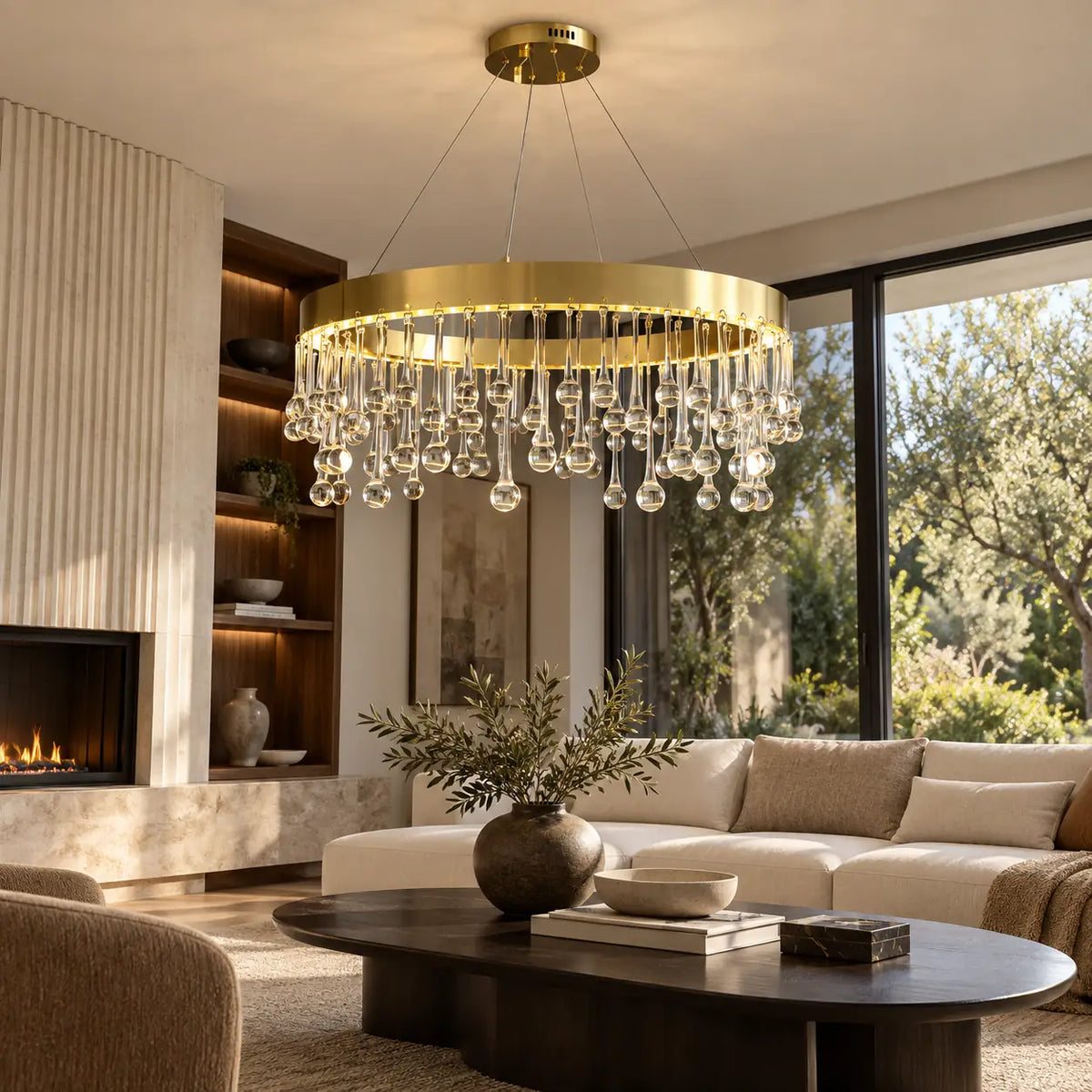
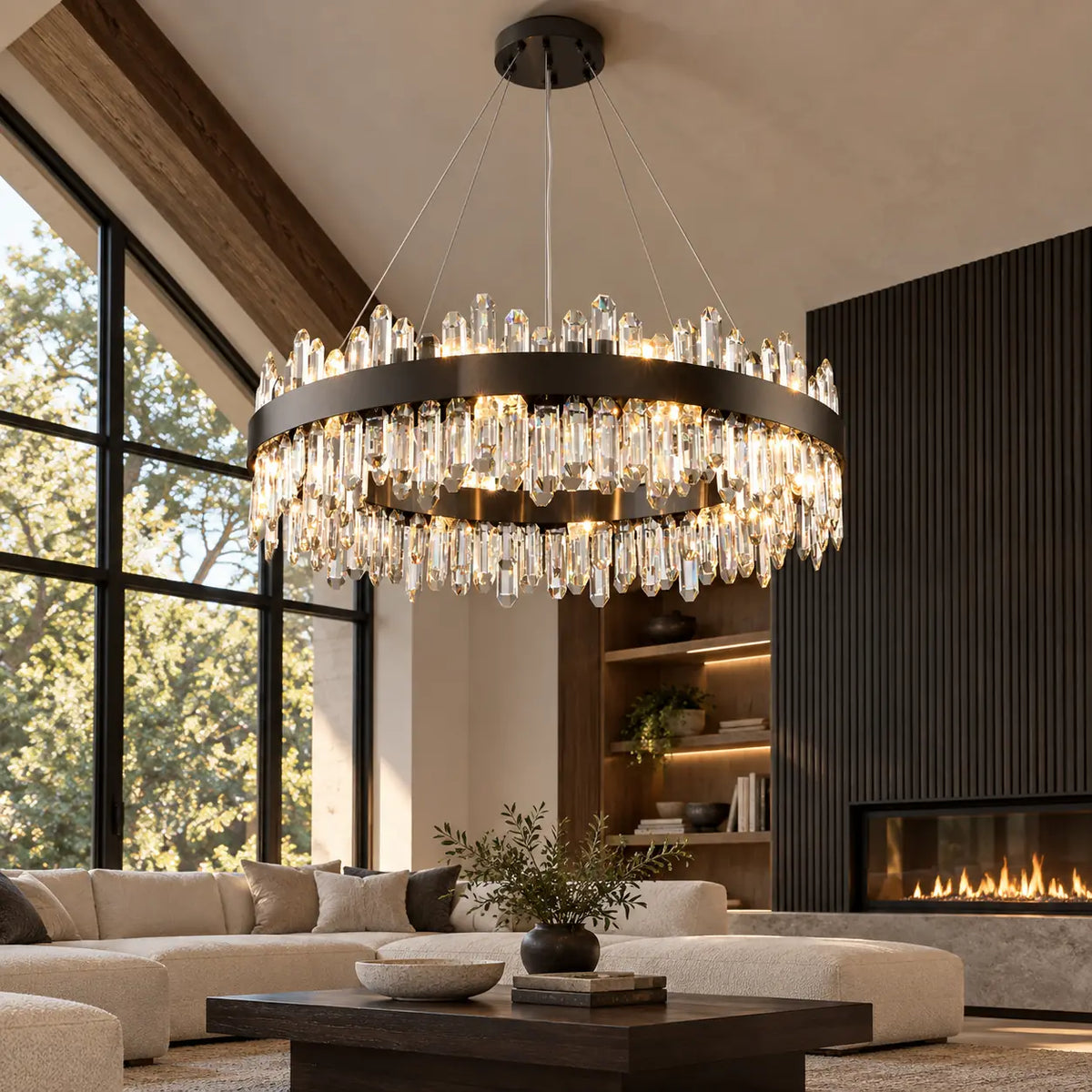
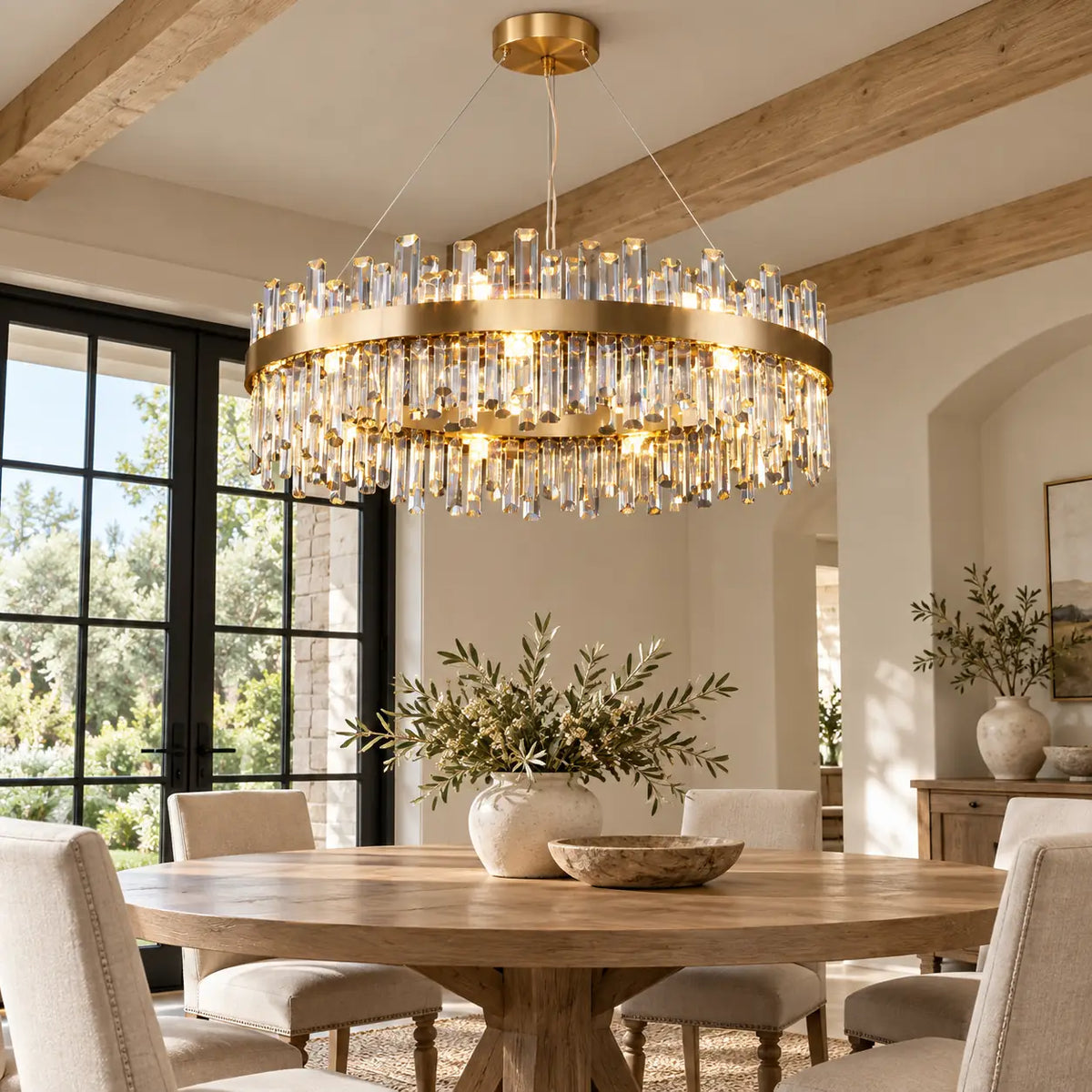
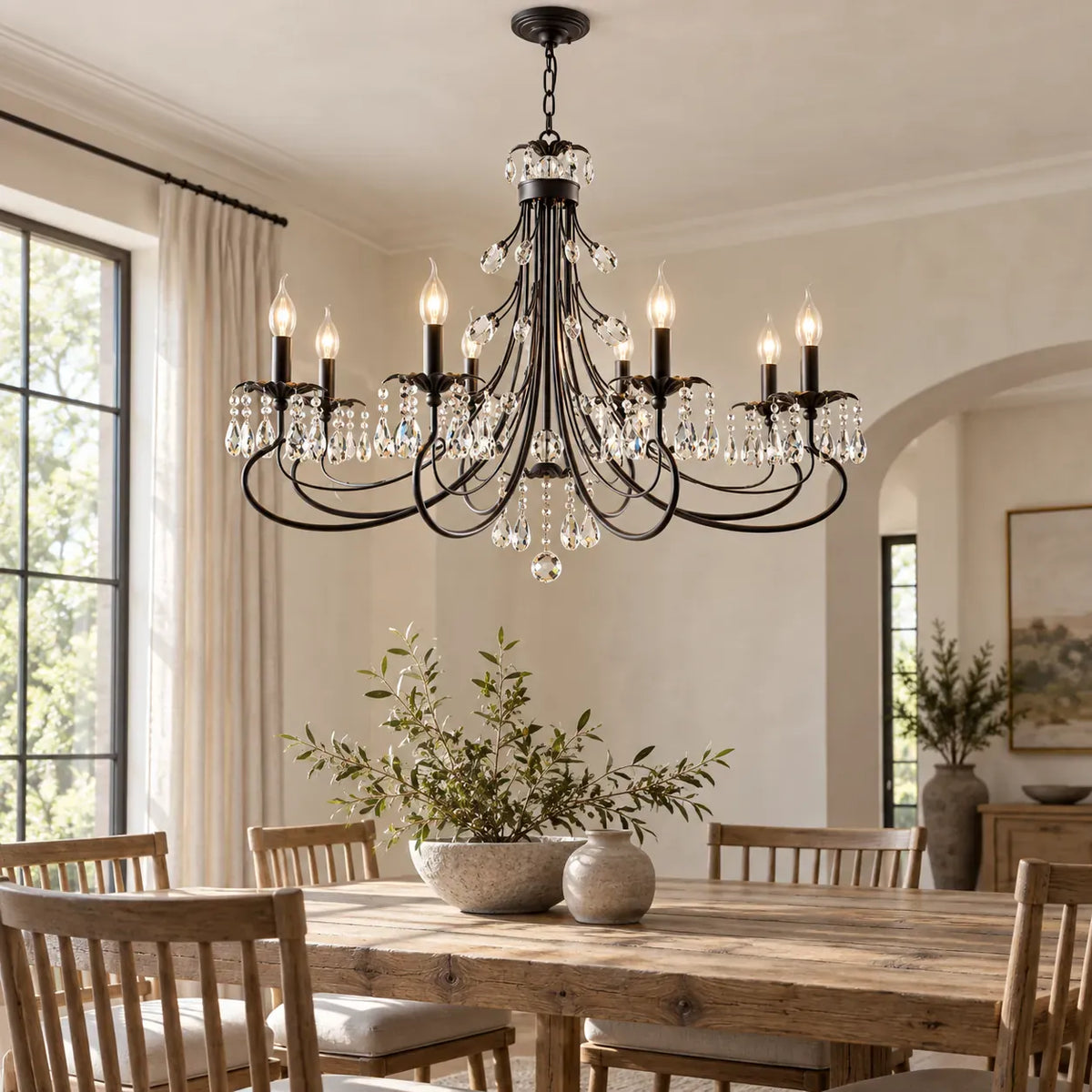
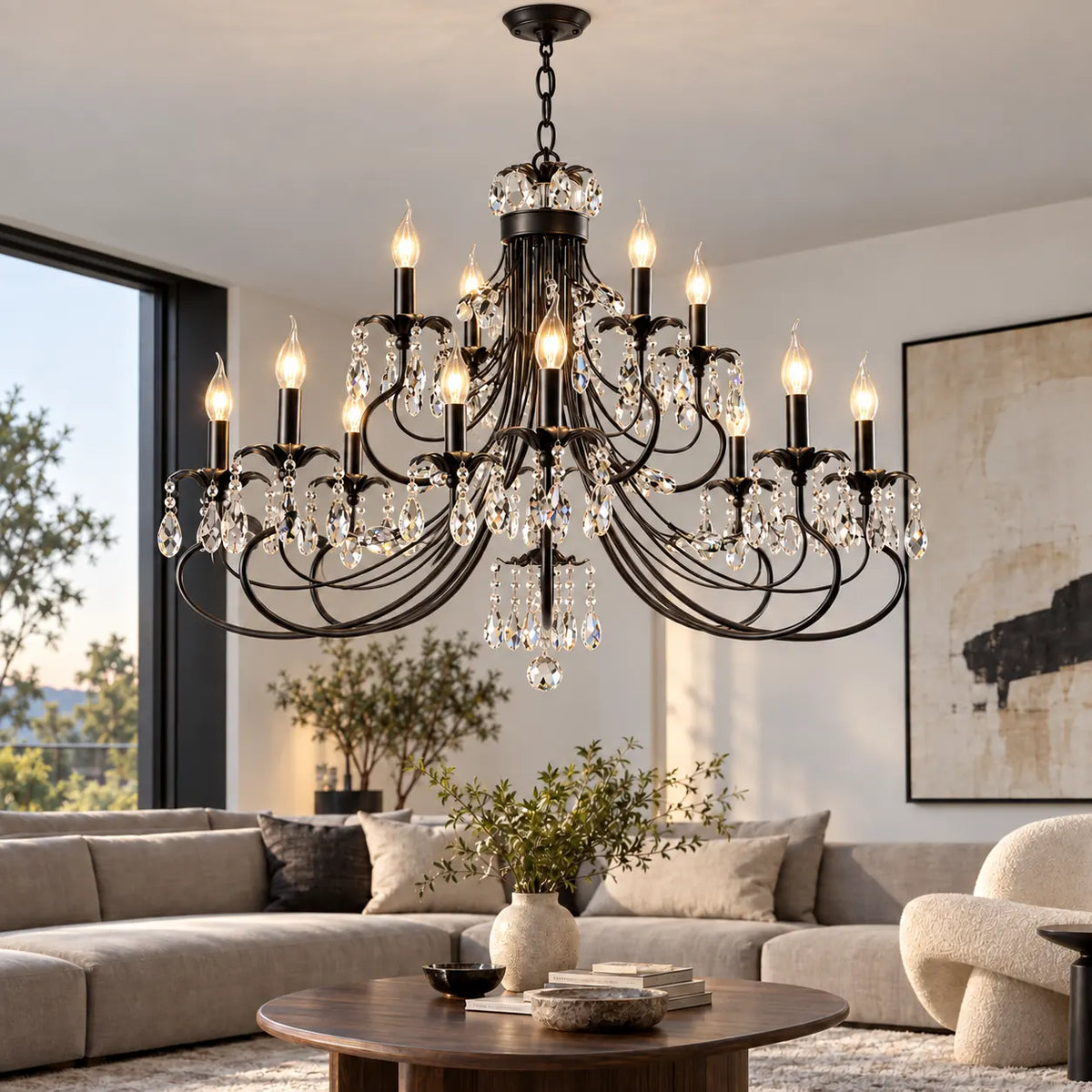
- Crystal: smooth-drop crystal brings sparkle that survives the wipe-down test — strongest over eat-in tables and islands in open-plan rooms
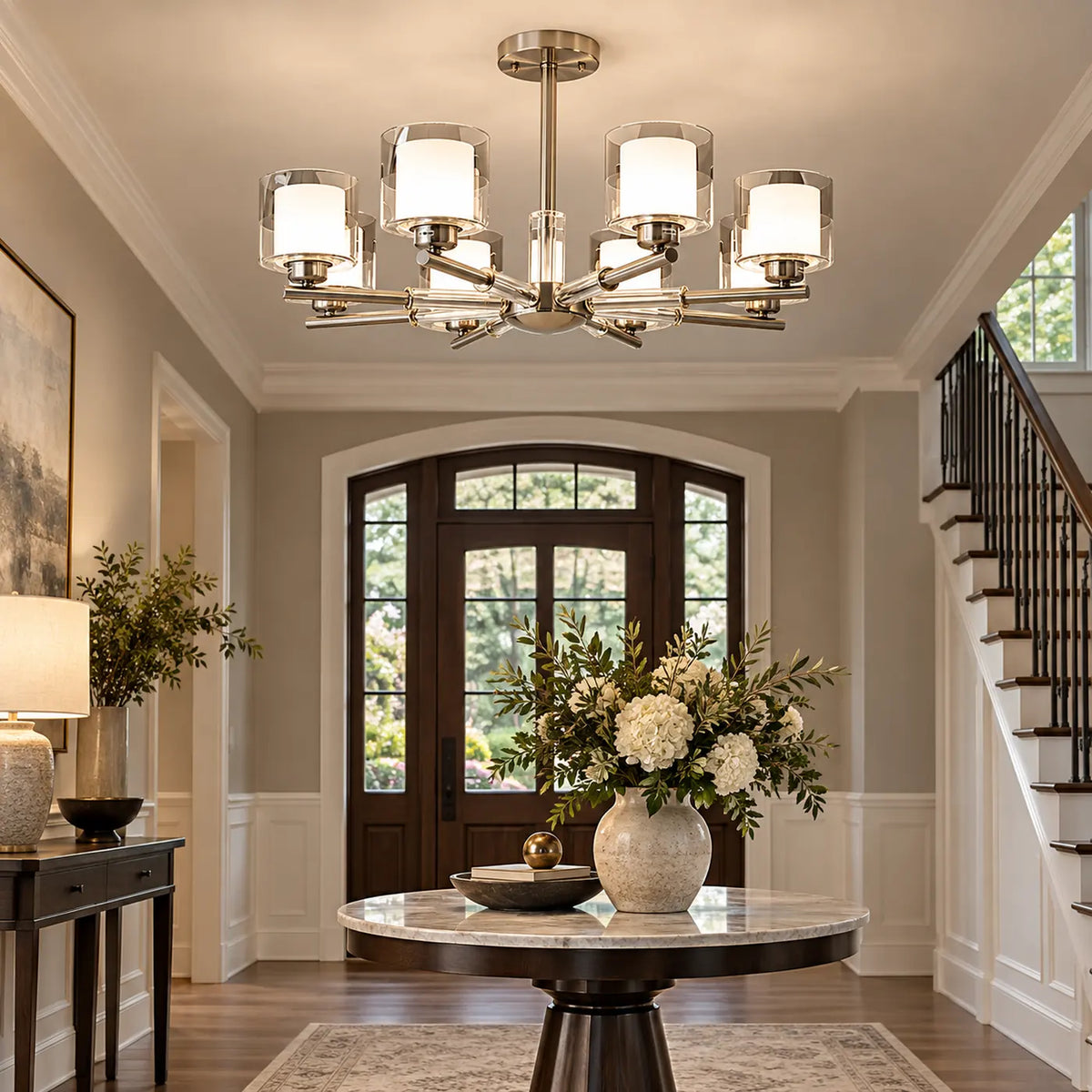
- Traditional: candle-arm and classic forms for period and transitional kitchens — scaled down from dining-room versions to respect lower working sightlines
- Integrated LED: slim profiles with light built into the form — the low-maintenance choice above a busy island, dimmable from prep-bright to dinner-warm
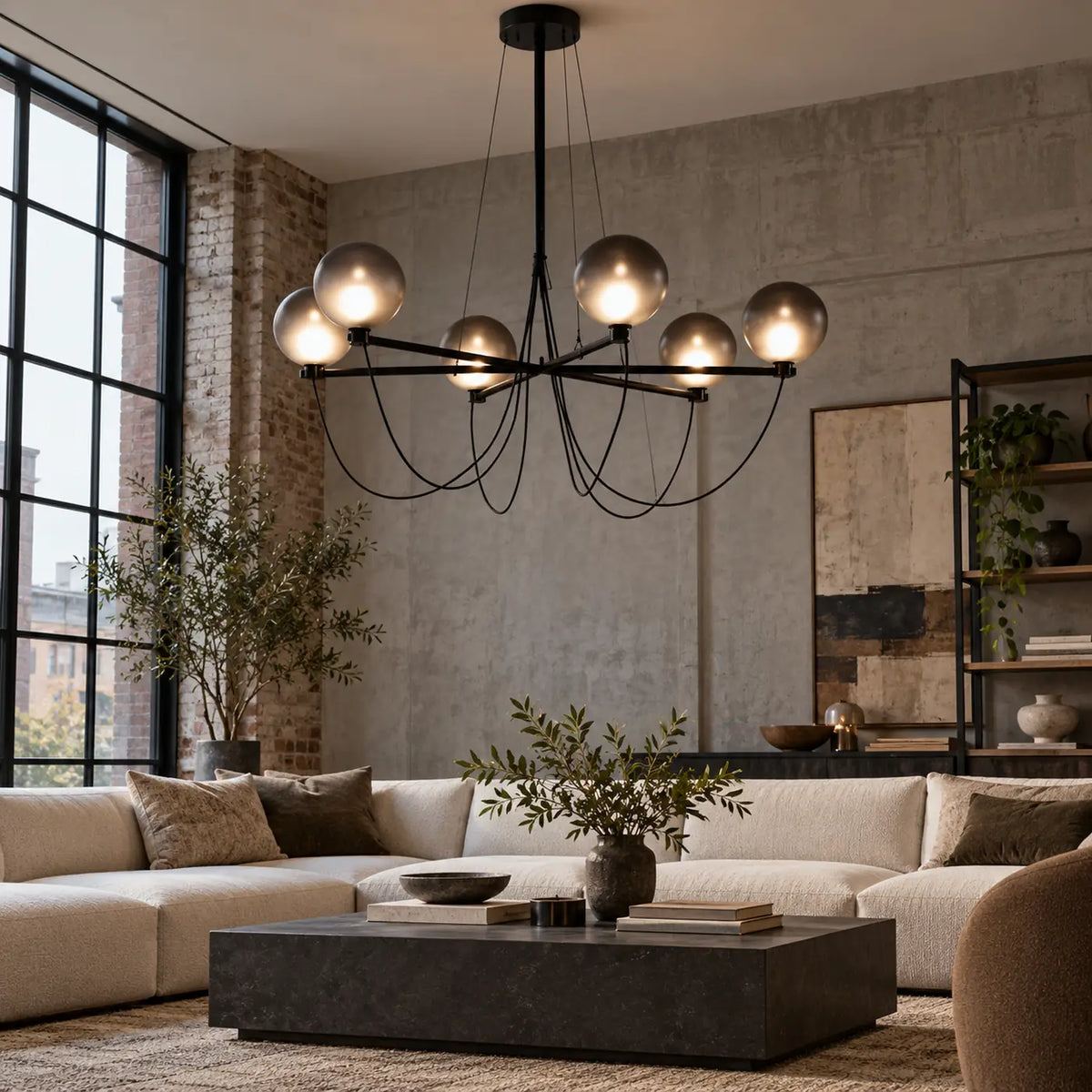
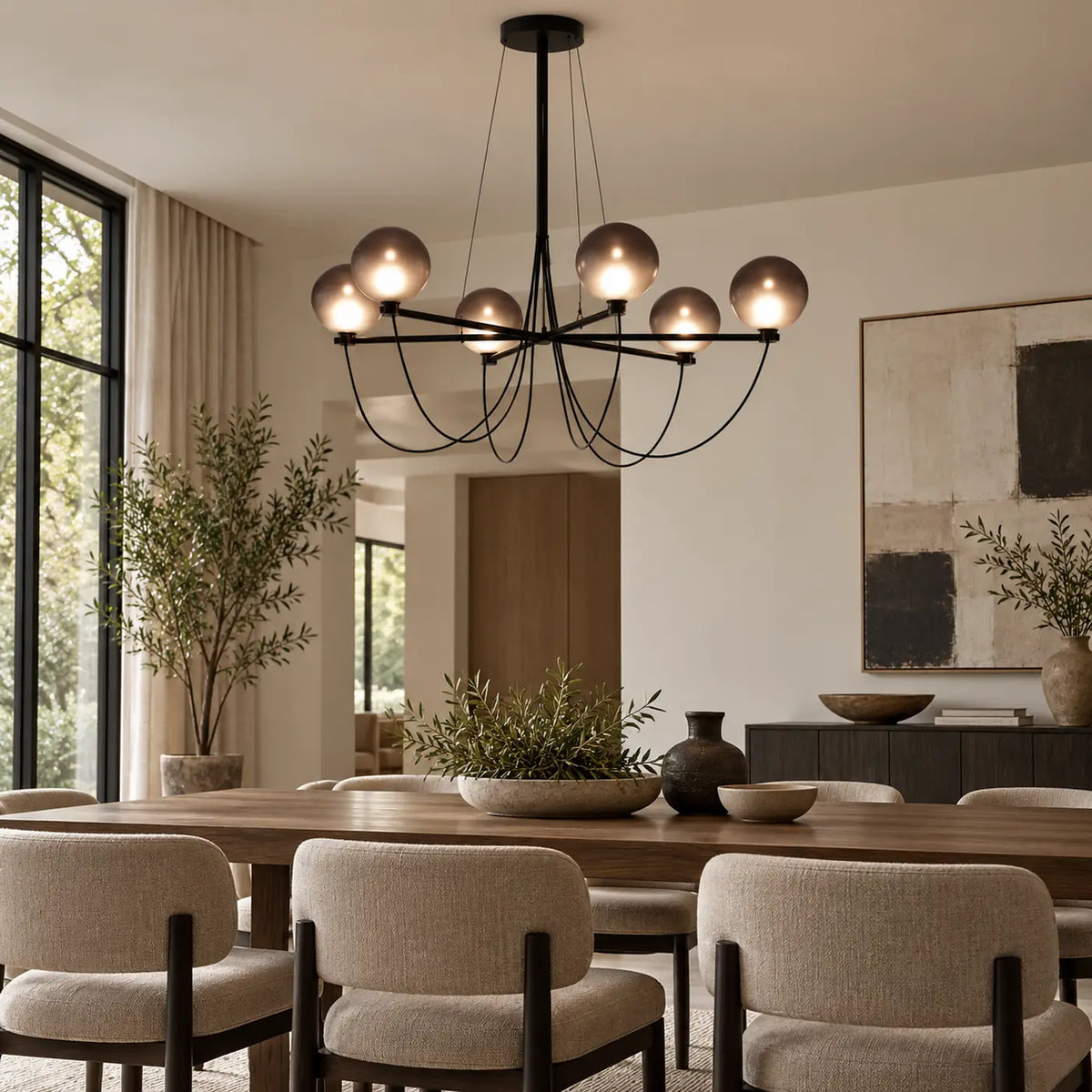
- Mid-century: brass arms and globe shades bridging wood-toned cabinetry and modern counters
Bulbs, Dimming & Everyday Use
The kitchen fixture works two shifts: bright enough for prep by day, warm enough for the table by night. A dimmer is the whole answer — run warm white (2700-3000K) bulbs or integrated LED at full output while cooking and low for eating, and the one fixture covers both. High-CRI (90+) output earns its keep here more than any room, keeping food, wood tones, and countertop materials true. Damp-rated construction is unnecessary in a ventilated kitchen, but confirm the range hood actually vents — a fixture directly in an unvented steam path ages on fast-forward.
Related Collections
Complete the room across our kitchen lighting collection for the full layered plan, the pendant lights collection for island series and repeated runs, and the dining room chandeliers when the formal table sits in its own room.
Frequently Asked Questions
Can you put a chandelier over a kitchen island?
Yes — it is the current statement move in open-plan kitchens. Hang it 30-36" above the countertop, size linear designs to one-half to two-thirds of the island's length, and keep the fixture's width inside the counter's footprint.
Chandelier or pendants over the island — which is better?
Chandelier when the island is the room's visual center and furniture presence matters; pendant series when task coverage across a long prep surface leads. Open-plan rooms usually favor the chandelier.
What size fits an eat-in table or breakfast nook?
One-half to two-thirds of the table's width, hung 30-36" above the top. Most nooks take a compact 20-30" design, and banquette seating allows a lower, more intimate hang.
How do kitchen fixtures handle grease and steam?
Choose smooth, sealed surfaces — glass, crystal drops, plated or powder-coated metal — and wipe twice yearly. Fabric shades and intricate filigree hold cooking residue and are best kept out of the kitchen.
Do traditional chandeliers work in kitchens?
Yes, in period and transitional kitchens — scaled slightly smaller than their dining-room versions and specified in wipeable materials rather than fabric.
What bulbs suit a kitchen chandelier?
Warm white 2700-3000K with CRI 90+, always on a dimmer — full output for prep, low for the table. Integrated-LED designs cover the same range with the least maintenance.