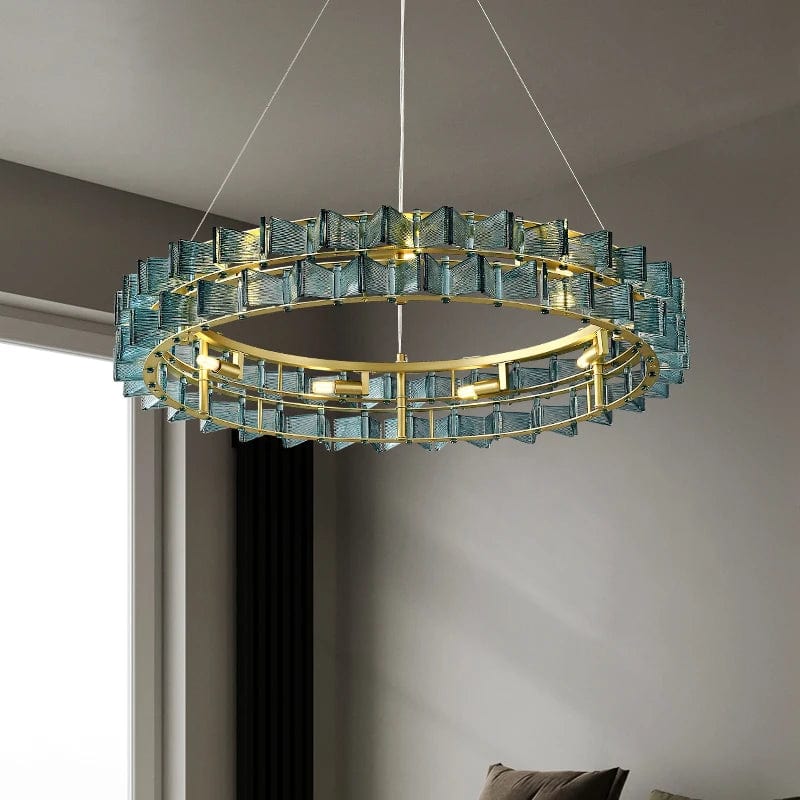

Why Rectangles Need the Line
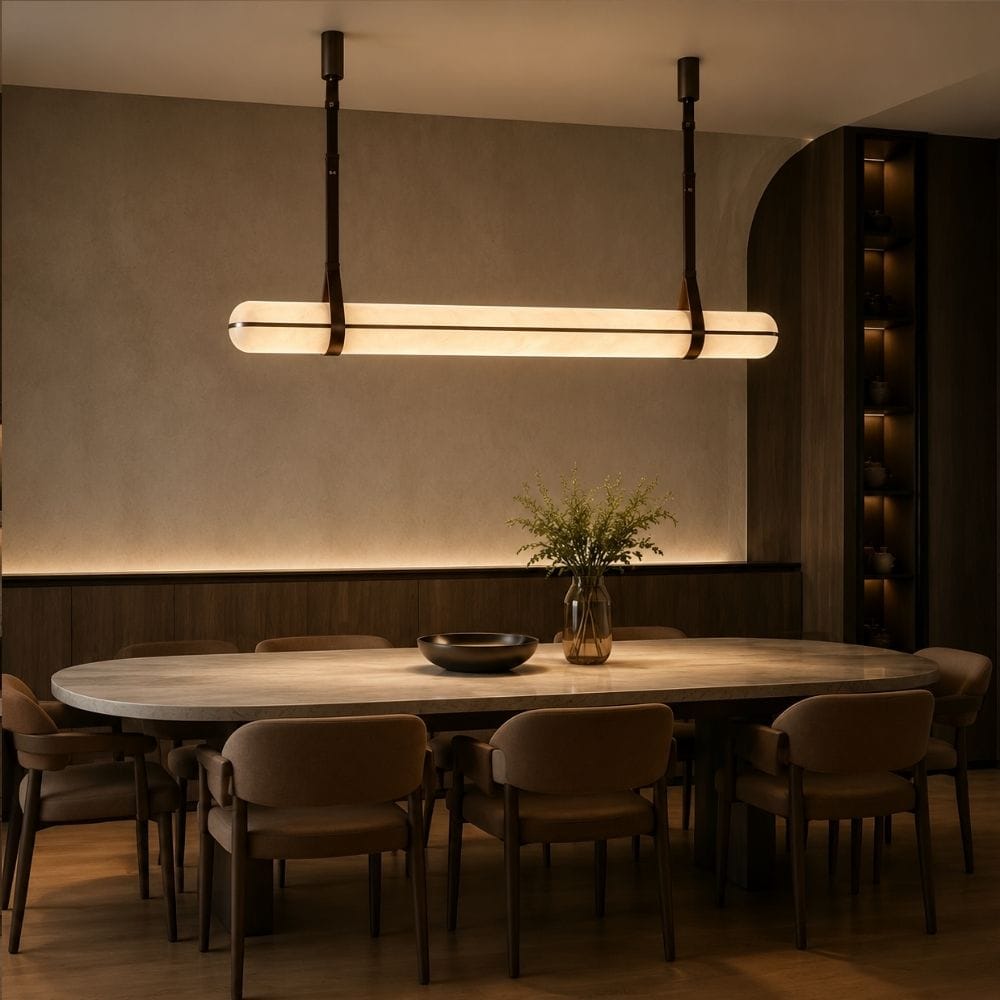
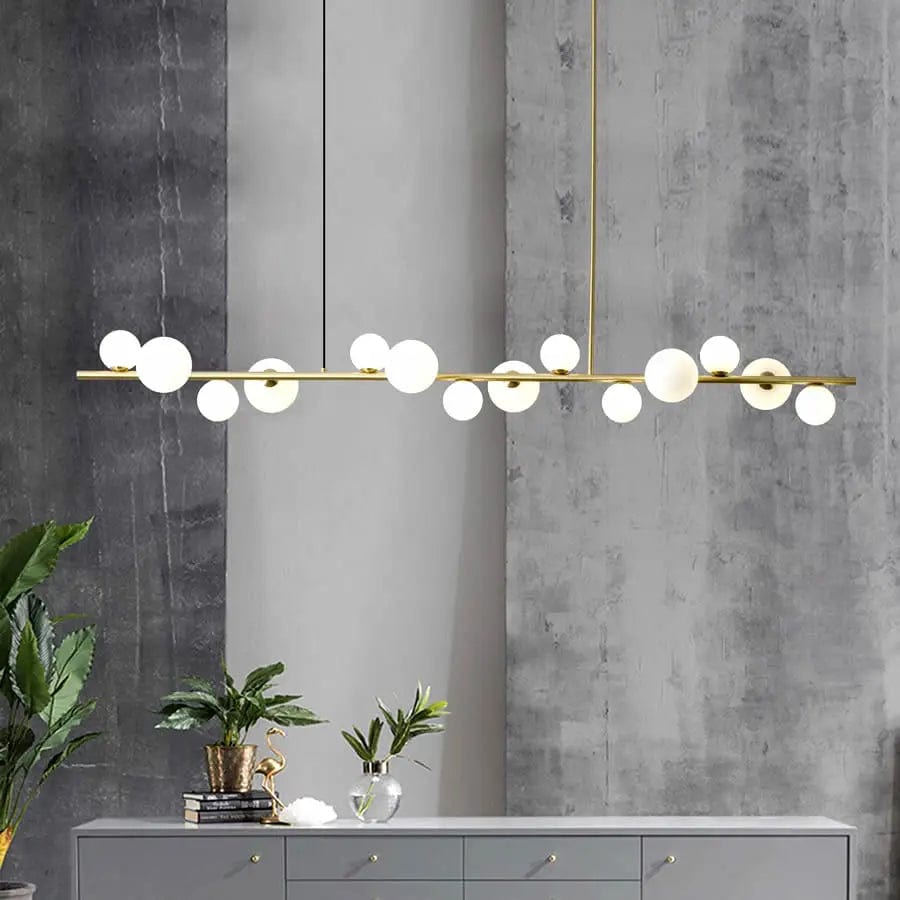
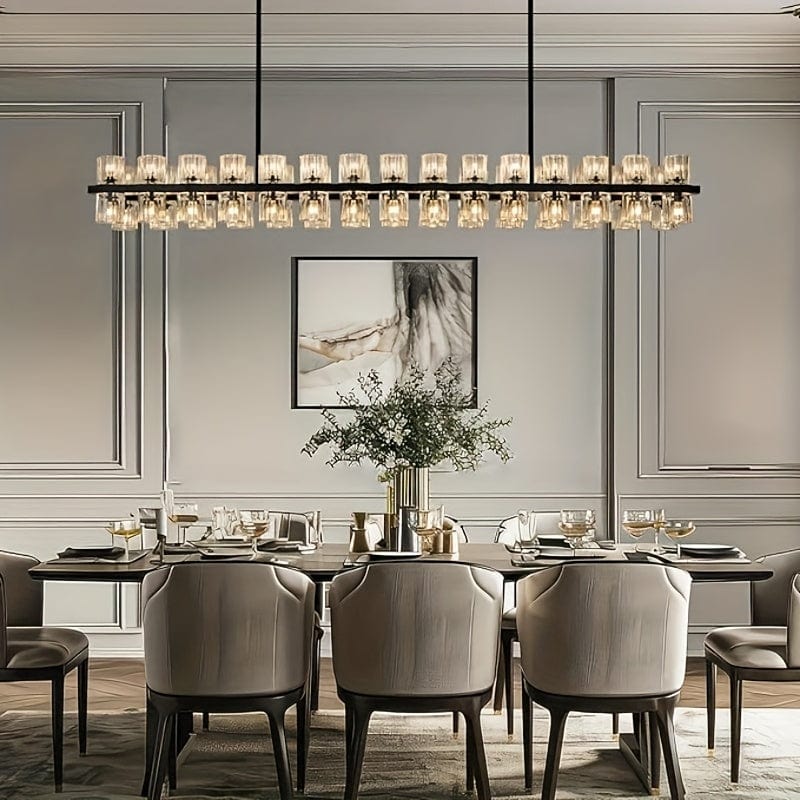
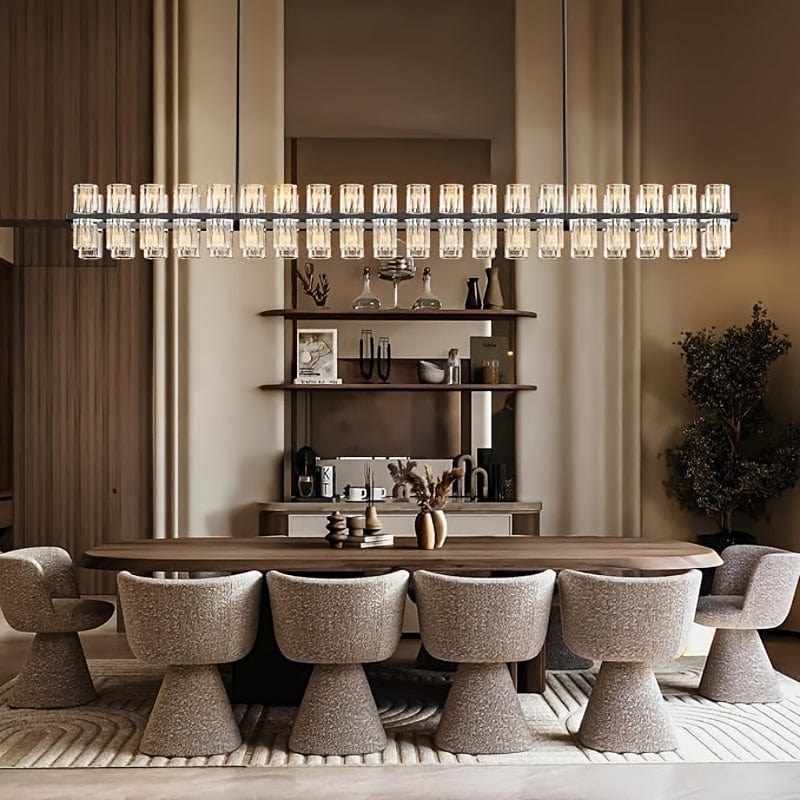
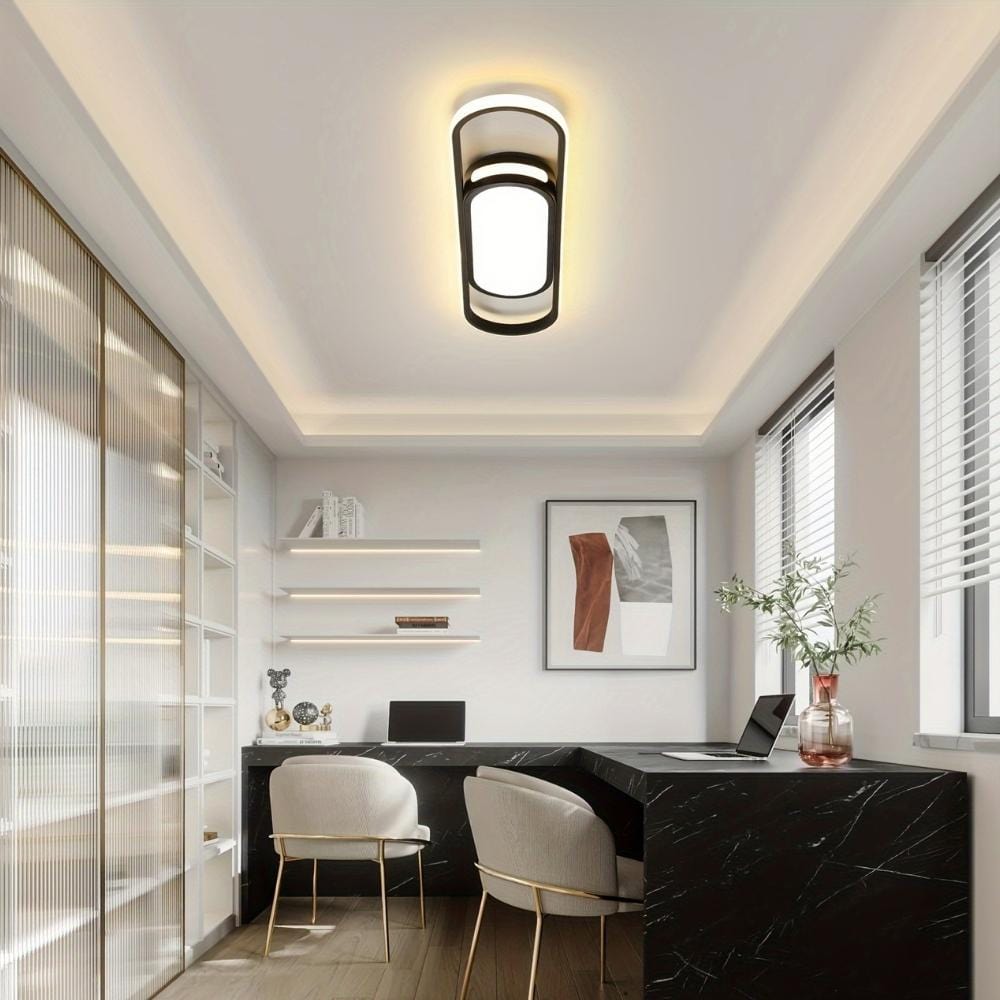
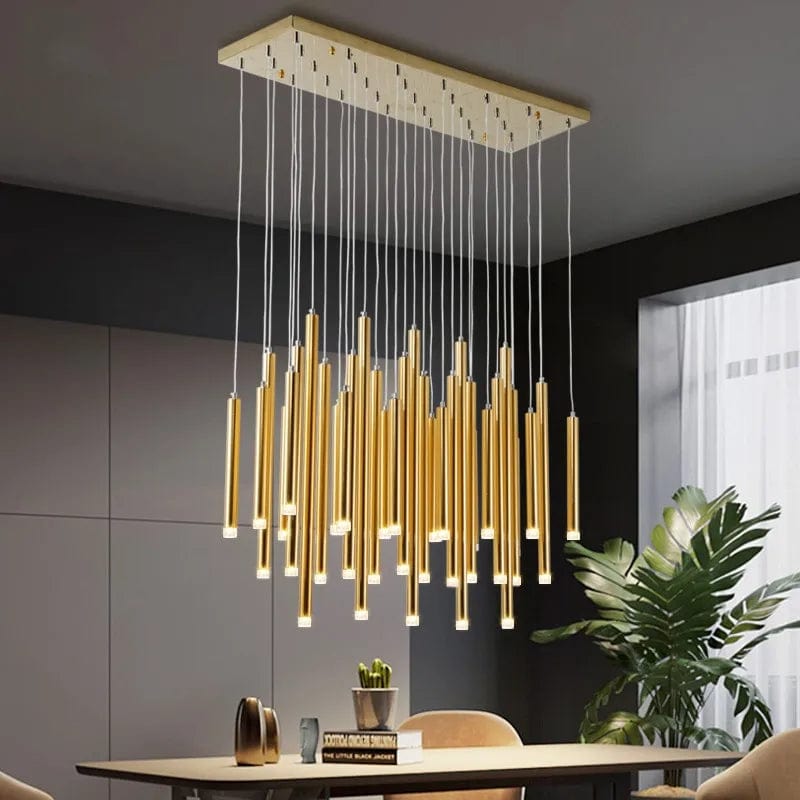
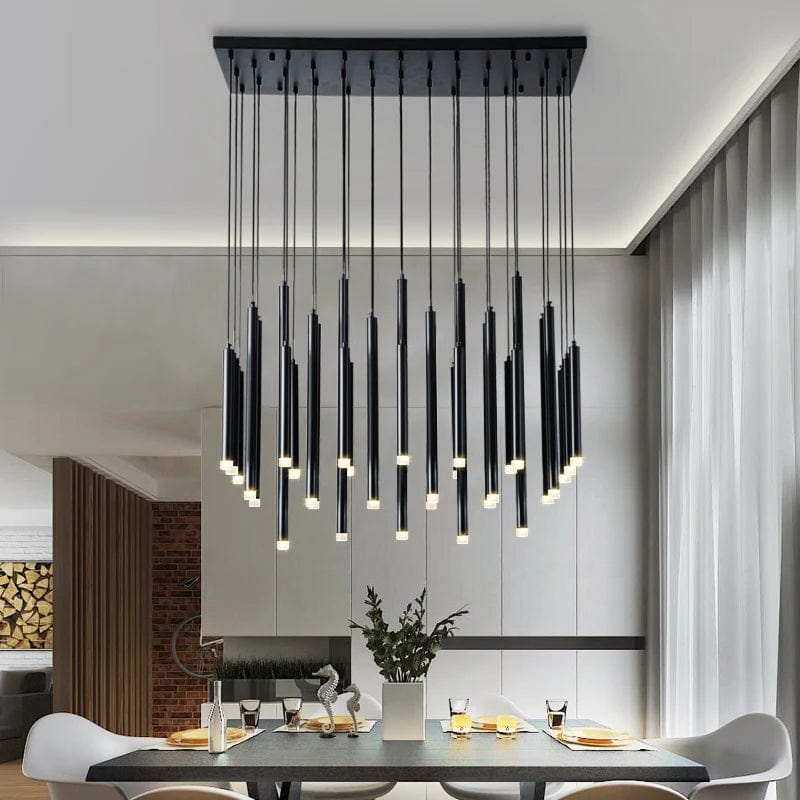
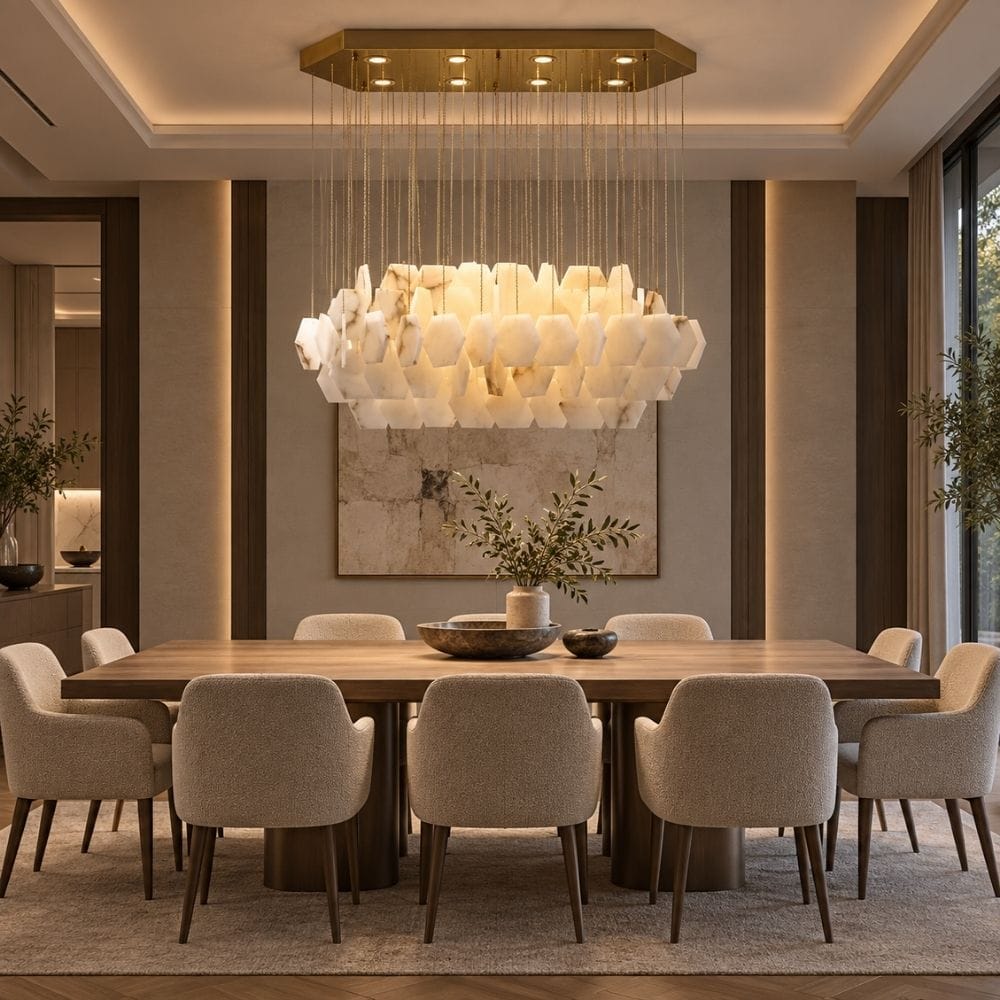
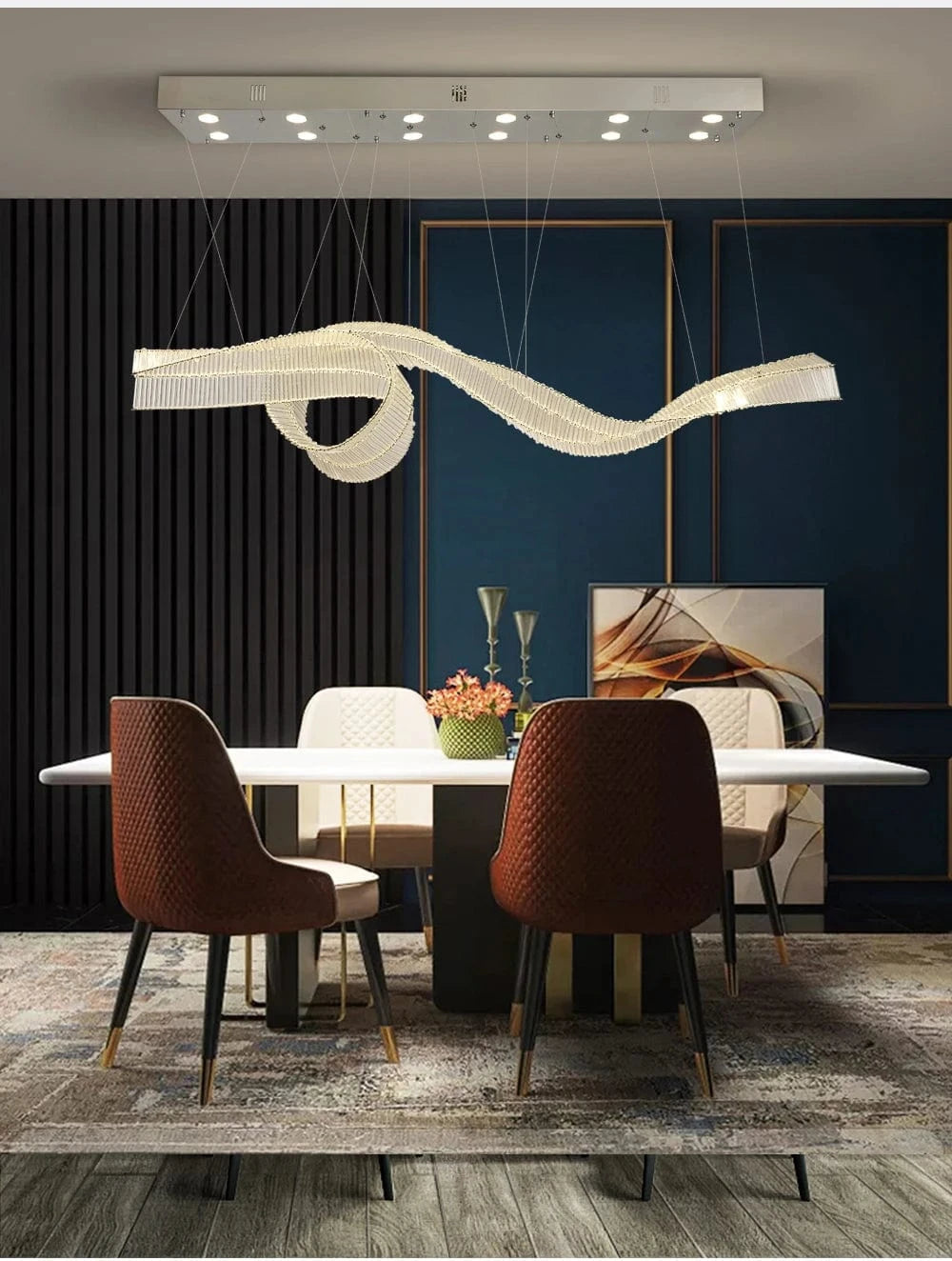
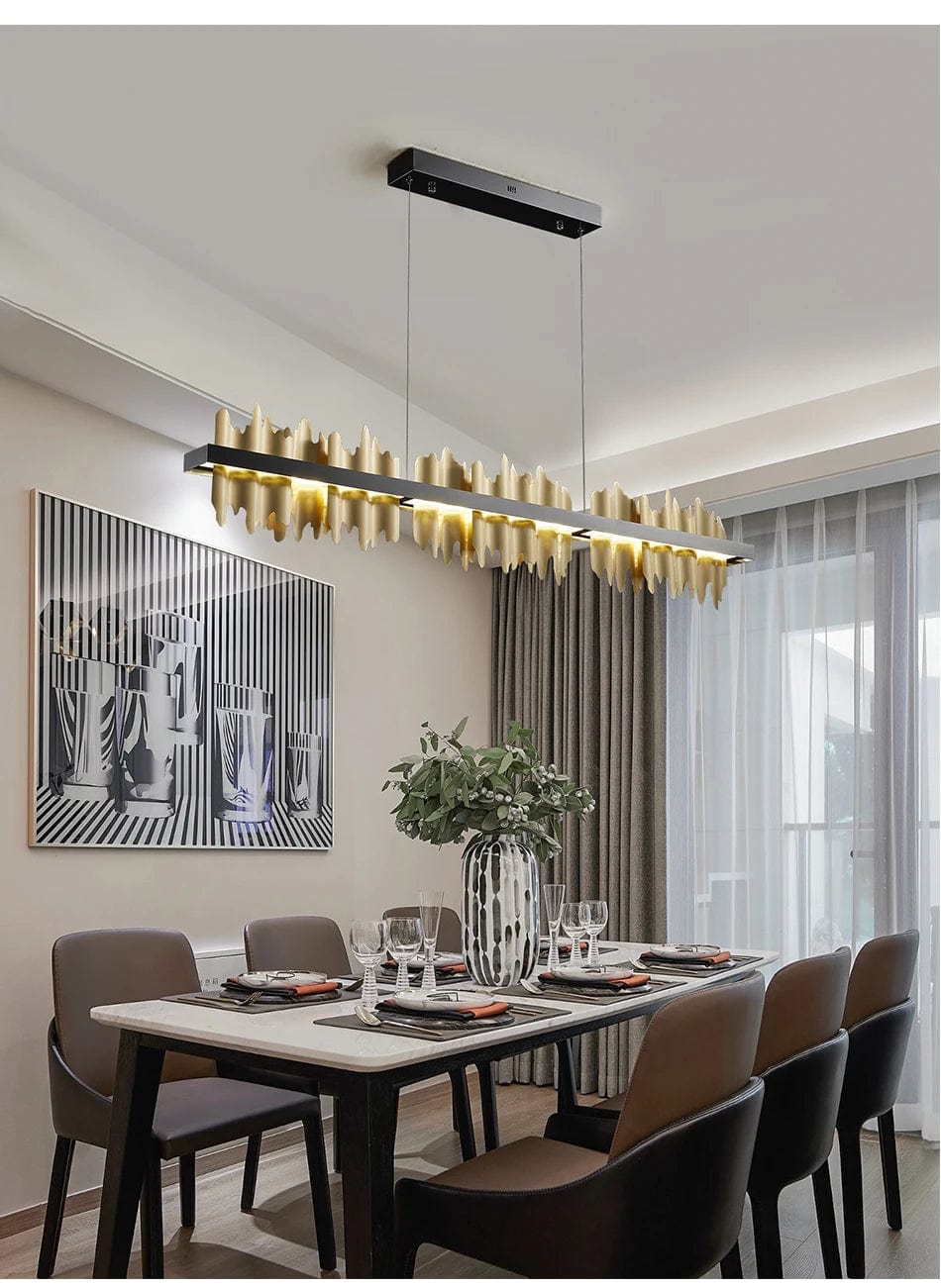
Hang a round fixture over an eight-seat rectangular table and the geometry fails politely but completely: the middle two seats dine in light while the heads of the table sit in dusk, and the fixture's circle floats meaninglessly against the table's long edges. A linear design solves both failures at once — light lands evenly from end to end, and the fixture's proportions echo the surface below it, which is the quiet rule behind every good ceiling-to-furniture pairing. So yes, to the question shoppers increasingly ask outright: linear chandeliers are better for rectangles — not stylistically, structurally.
Linear, Rectangular, Long: One Format
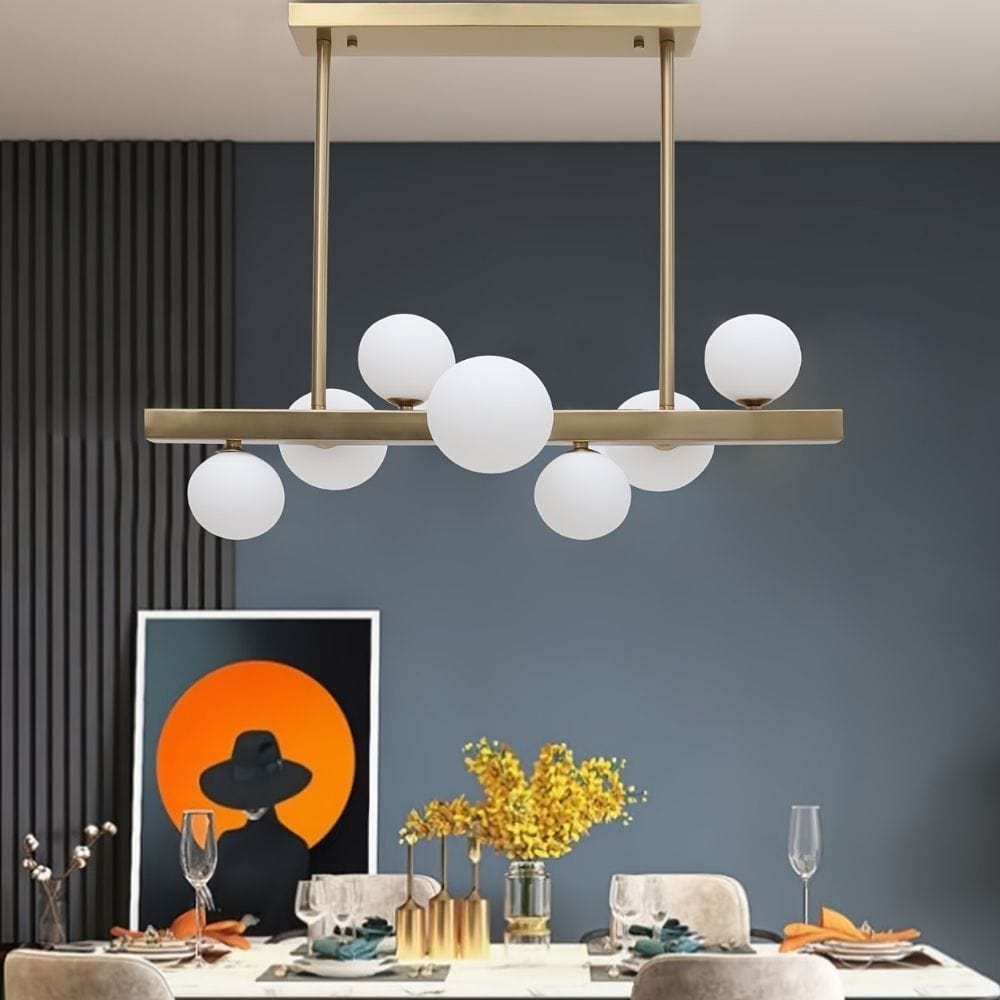
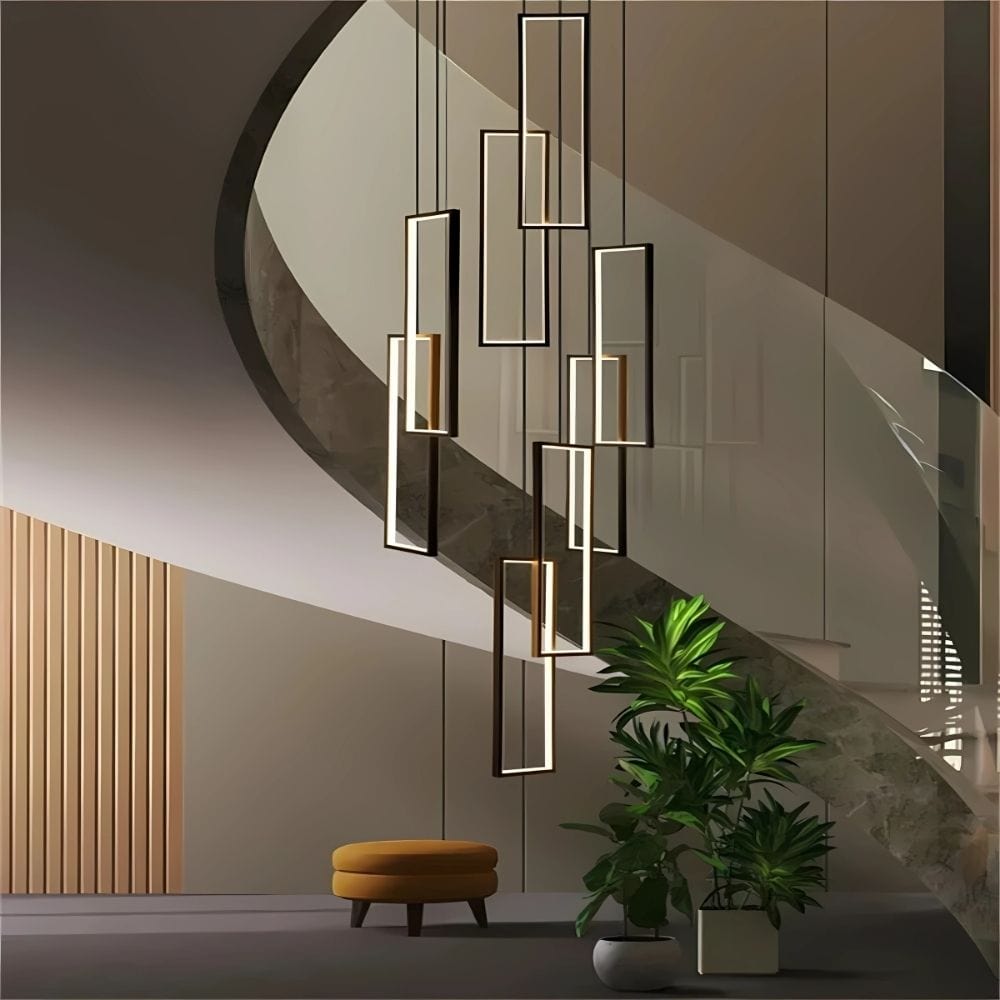
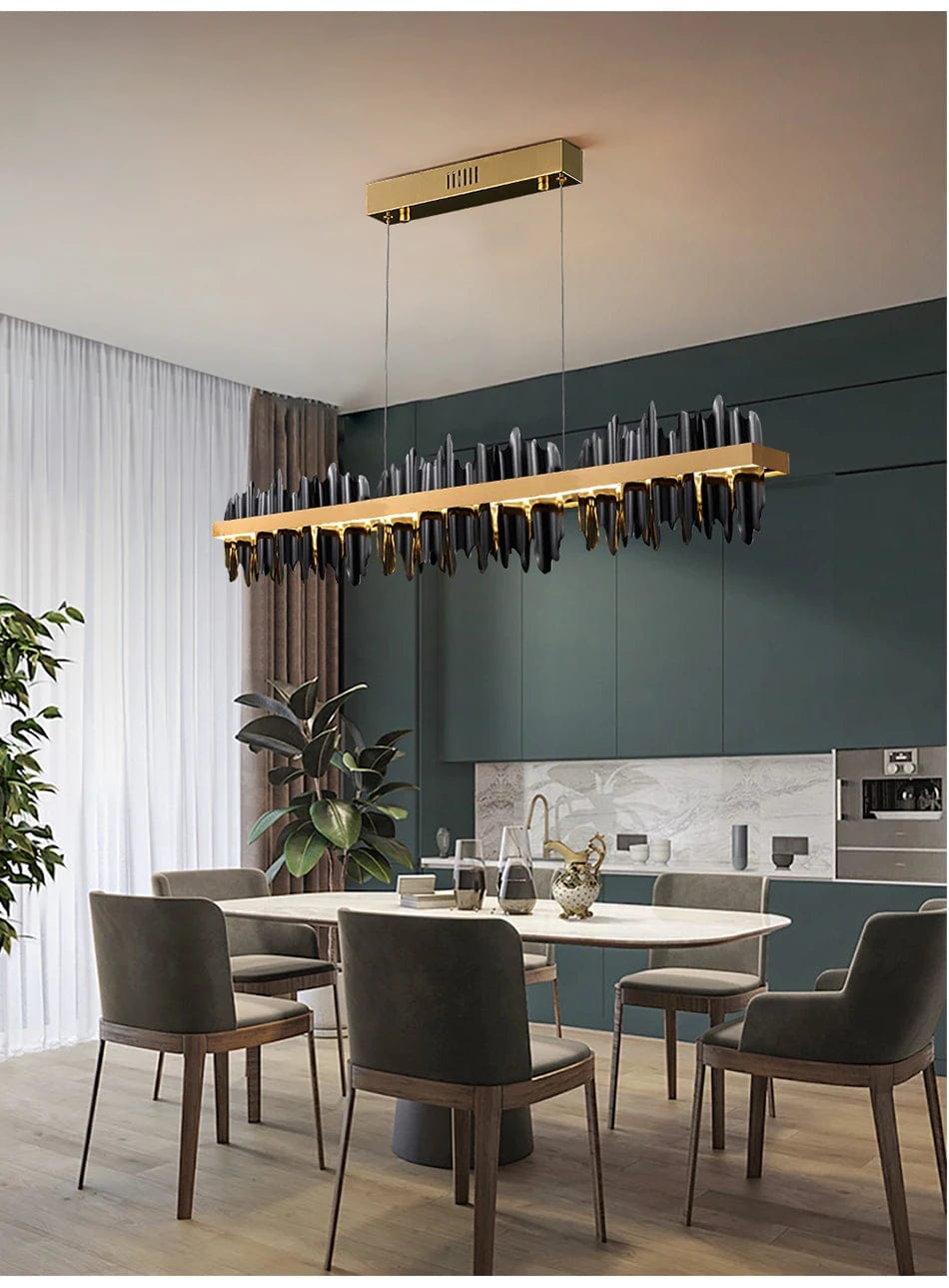
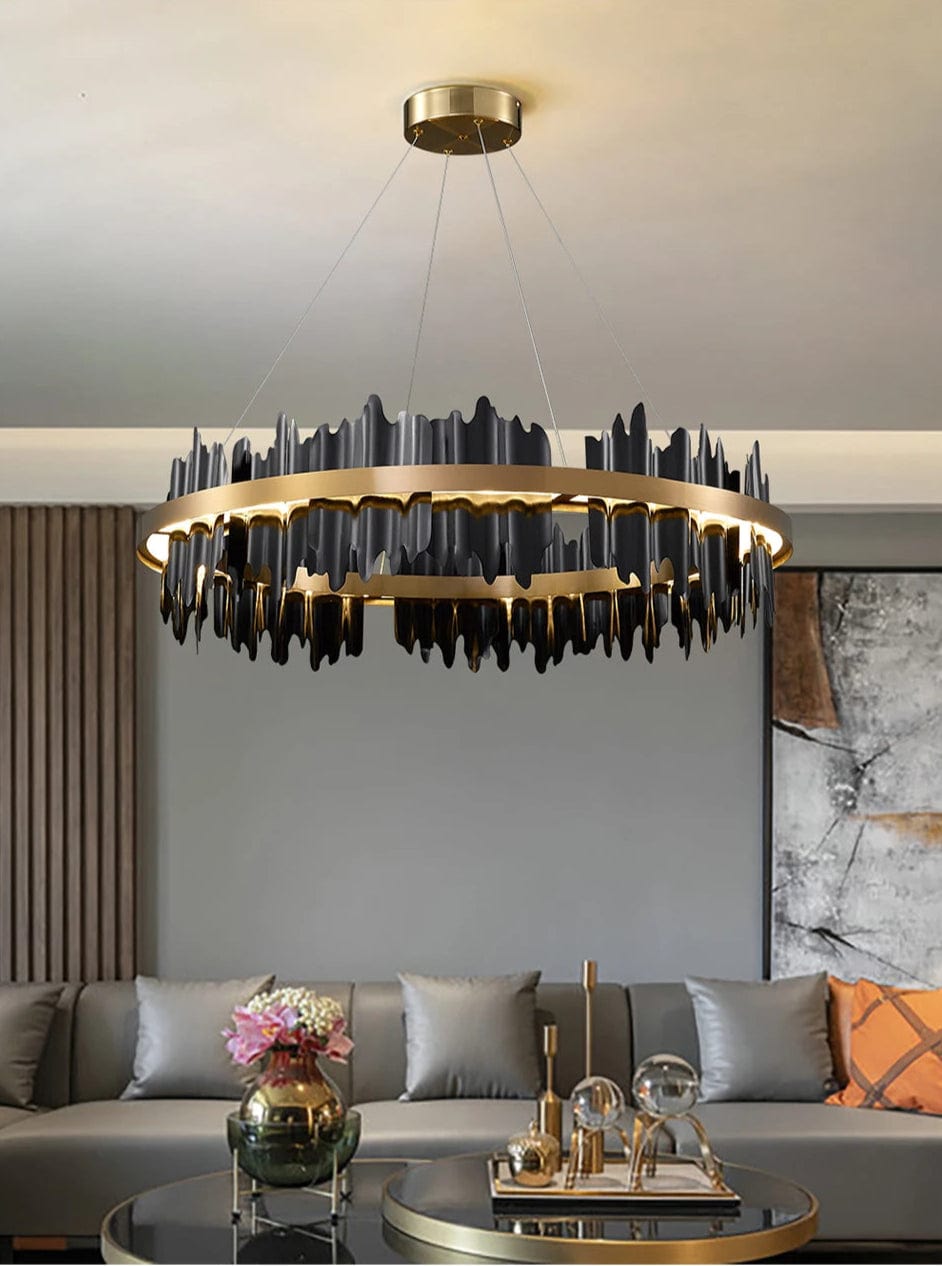
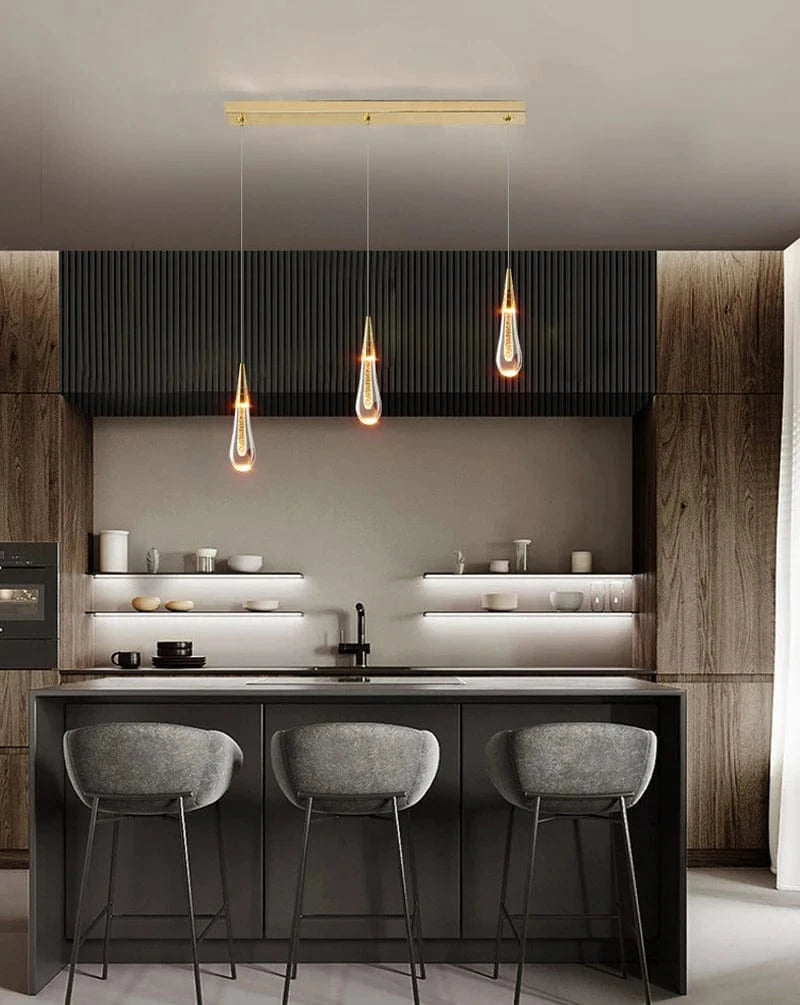
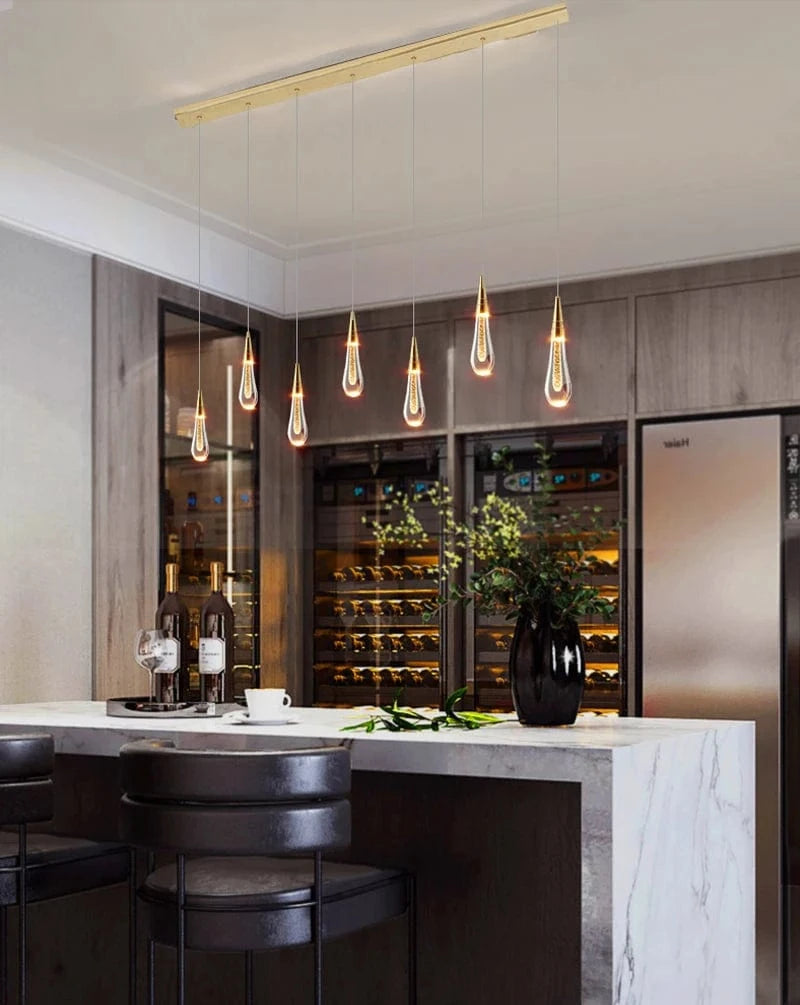
The format travels under several names — linear chandelier, rectangular chandelier, long or horizontal chandelier — with soft distinctions: "rectangular" often implies a framed perimeter shape, "linear" the broader stretched family including open rows and bars, and "long" simply the proportion. Everything here shares the defining trait: length as the design's first dimension. If the room actually needs a long narrow series of separate lights rather than one continuous fixture, that job belongs to pendant runs instead — a distinction worth one honest sentence, because the single linear statement and the pendant series read very differently over the same island.
Sizing the Line: Table-First Math
- Length: one-half to two-thirds of the table's length — a 72" (183 cm) table takes a 36-48" (91-122 cm) fixture; size to the everyday length on extension tables, not the holiday leaf
- Height: 30-36" (76-91 cm) from tabletop to the fixture's lowest point, raised roughly 3" per foot of ceiling above 9 ft
- Width restraint: the line should stay visually narrower than the table — one-third of table width or less keeps the proportions calm
- Centering: on the table's long axis, ends equidistant from the table's ends — an off-axis line is the format's one unforgivable install error
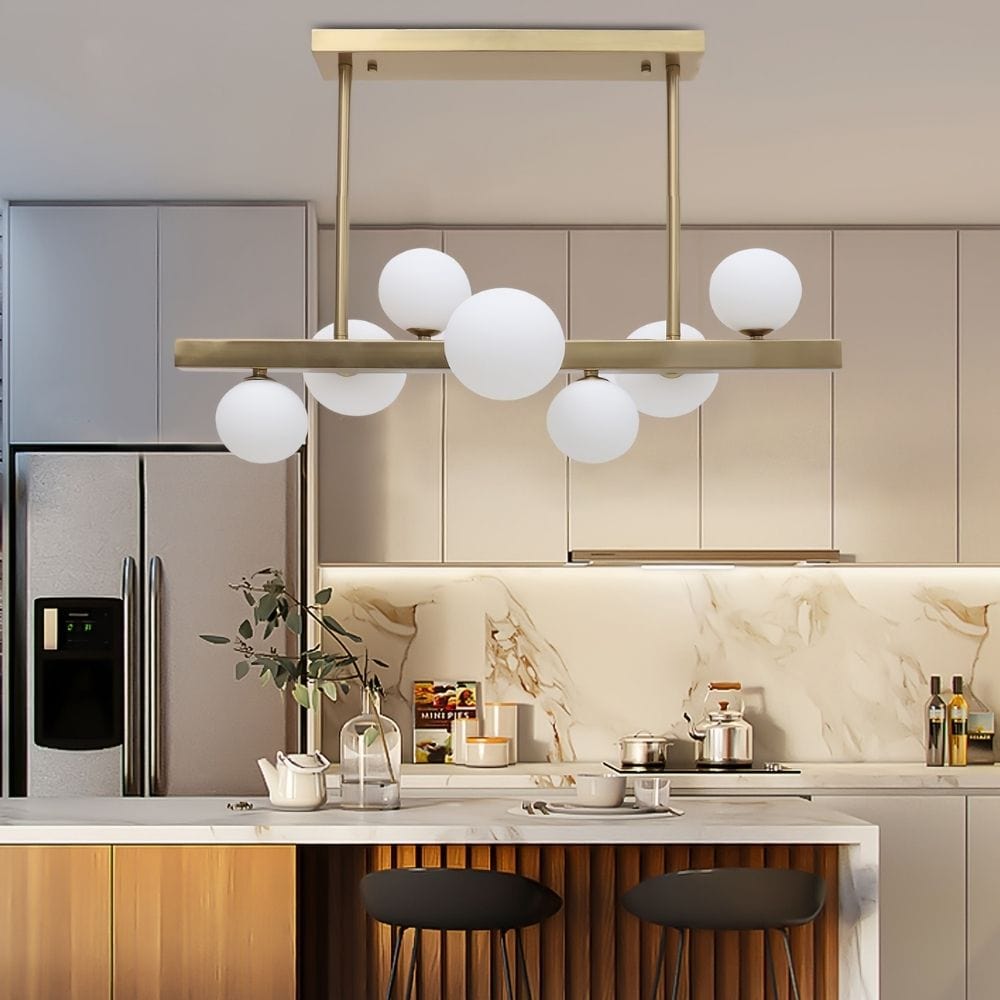
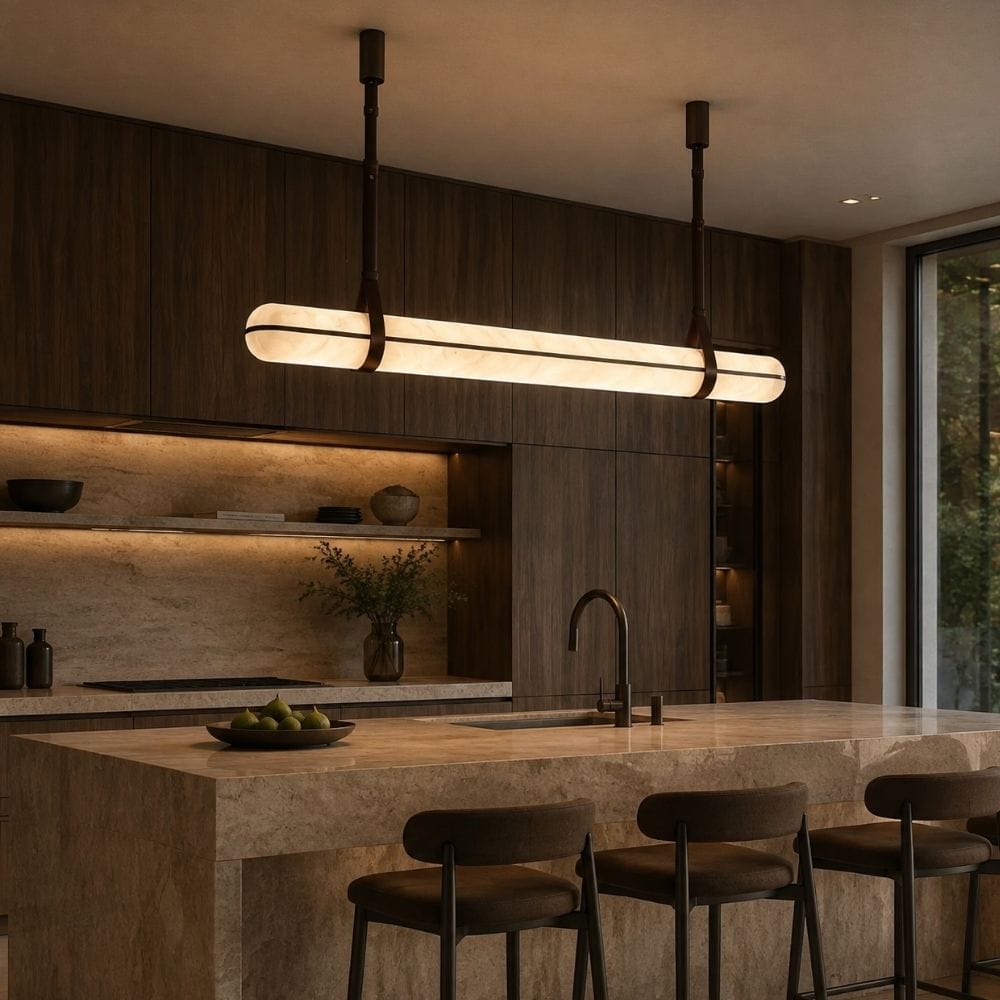
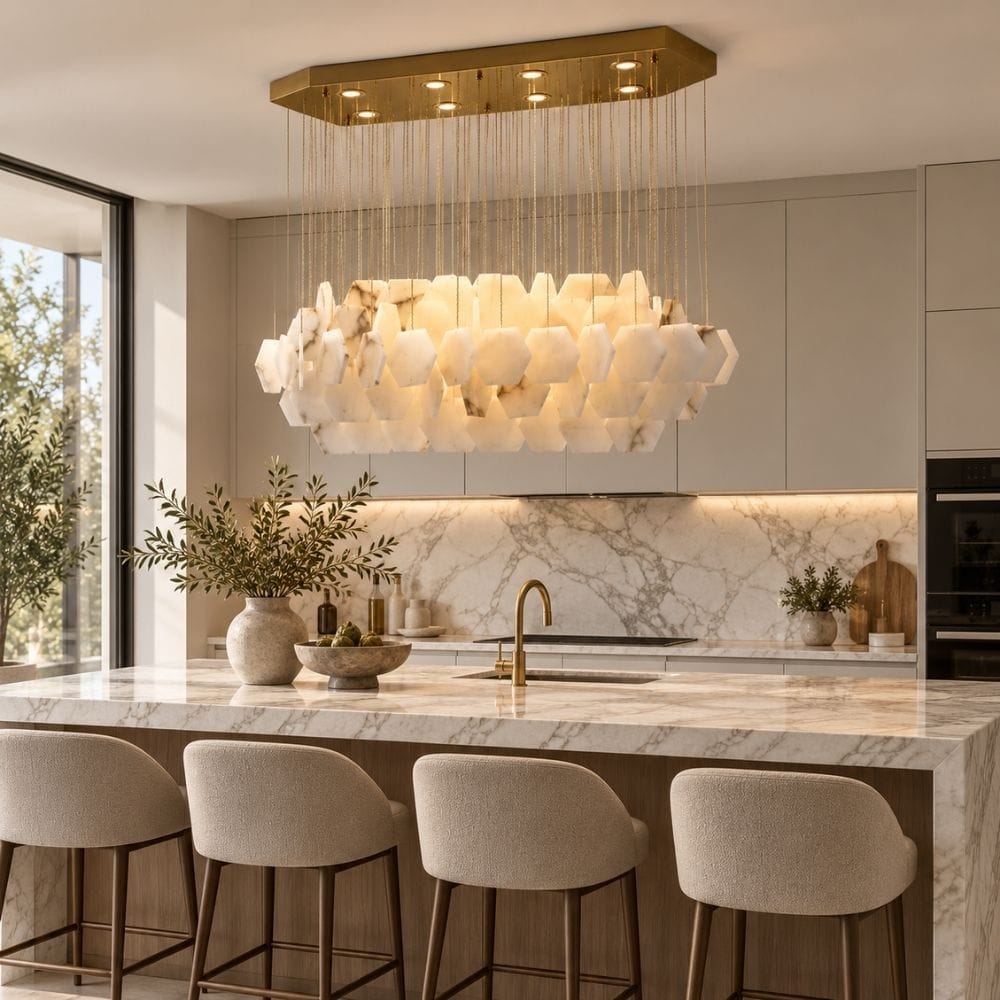
Kitchen islands follow the same logic with task-height nuances — the complete numbers are in our island height guide and the chandelier size calculator.
Materials Along the Line
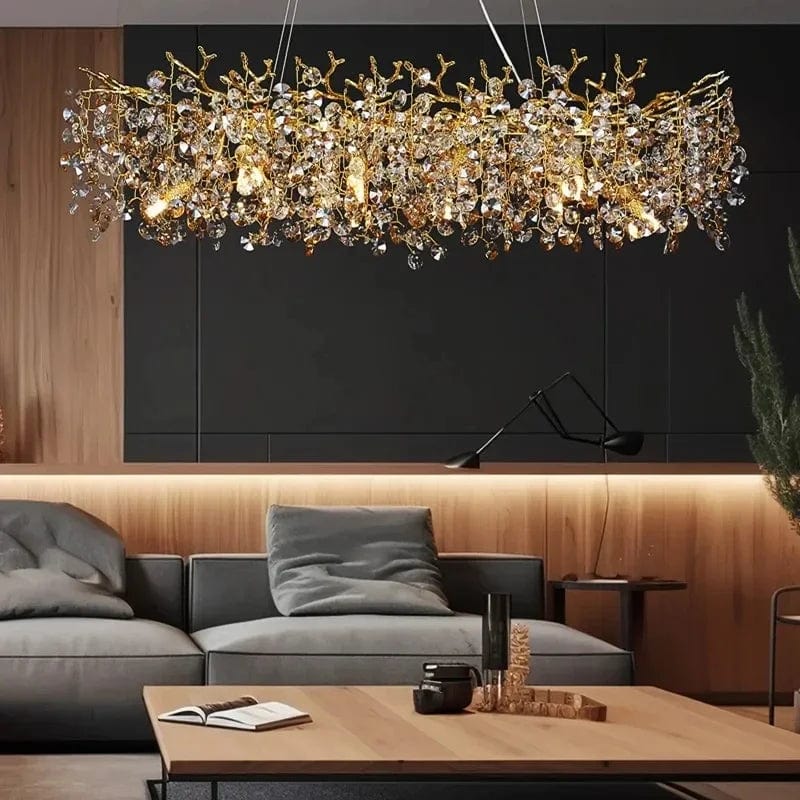
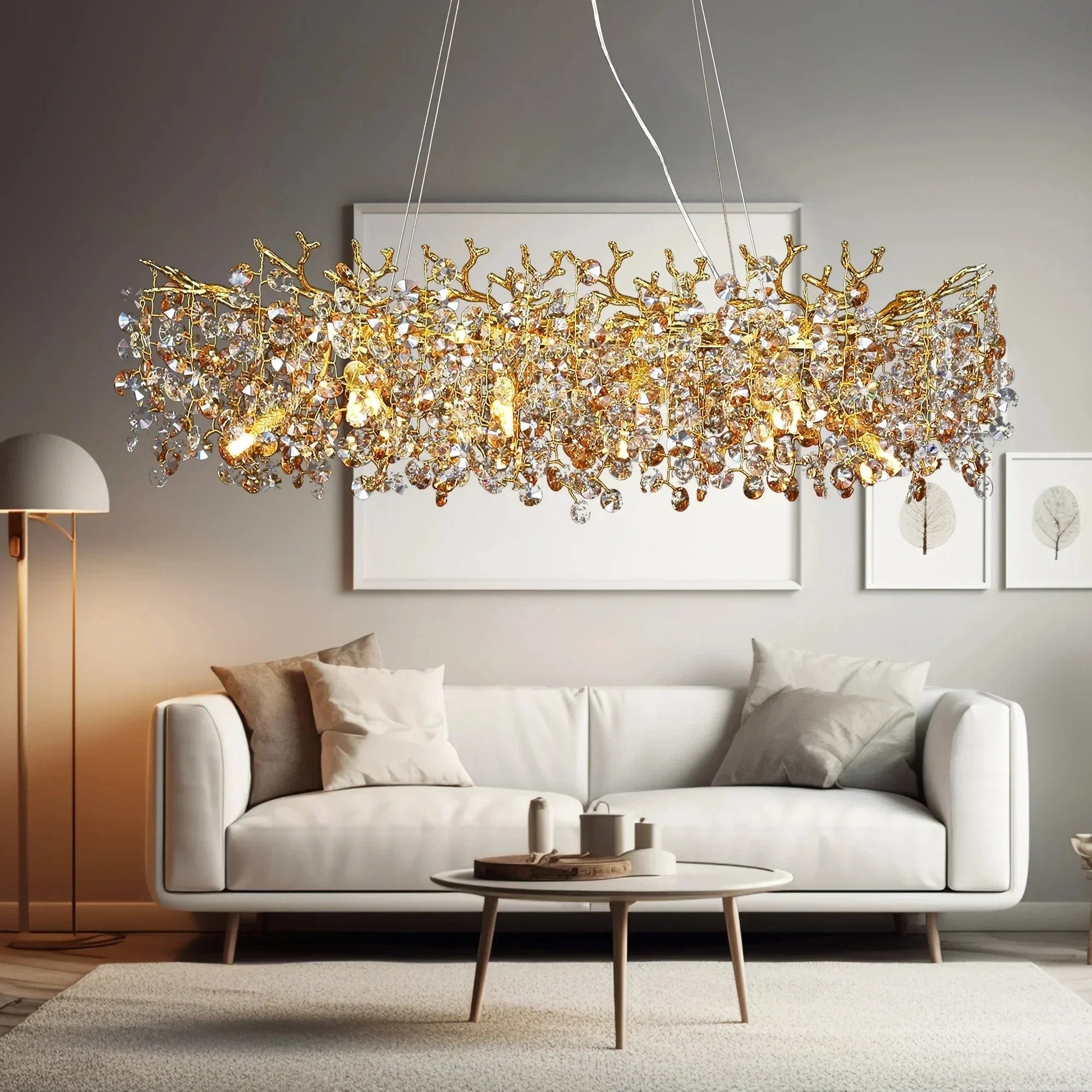
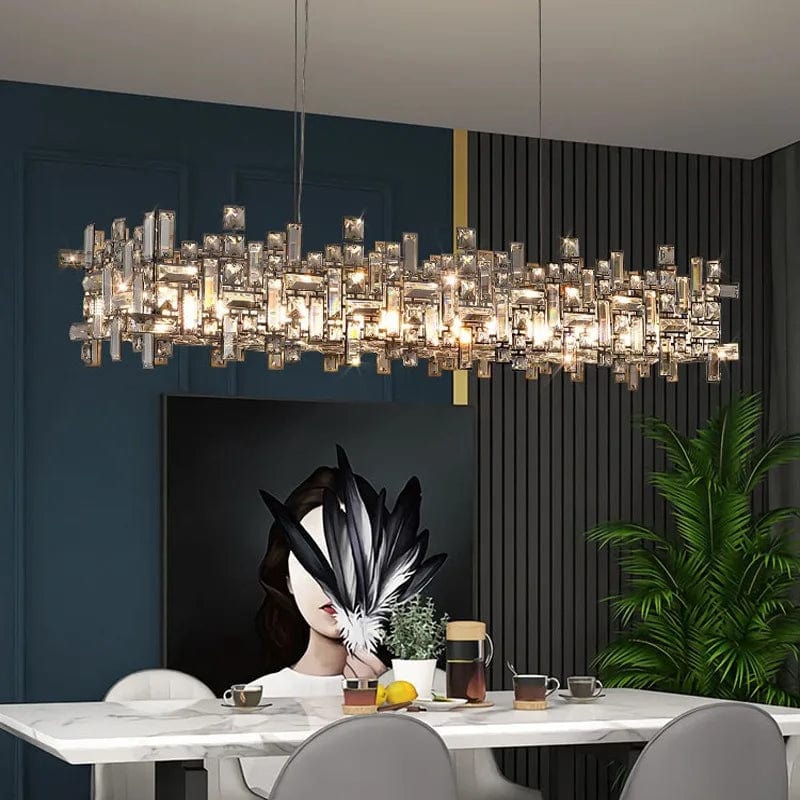
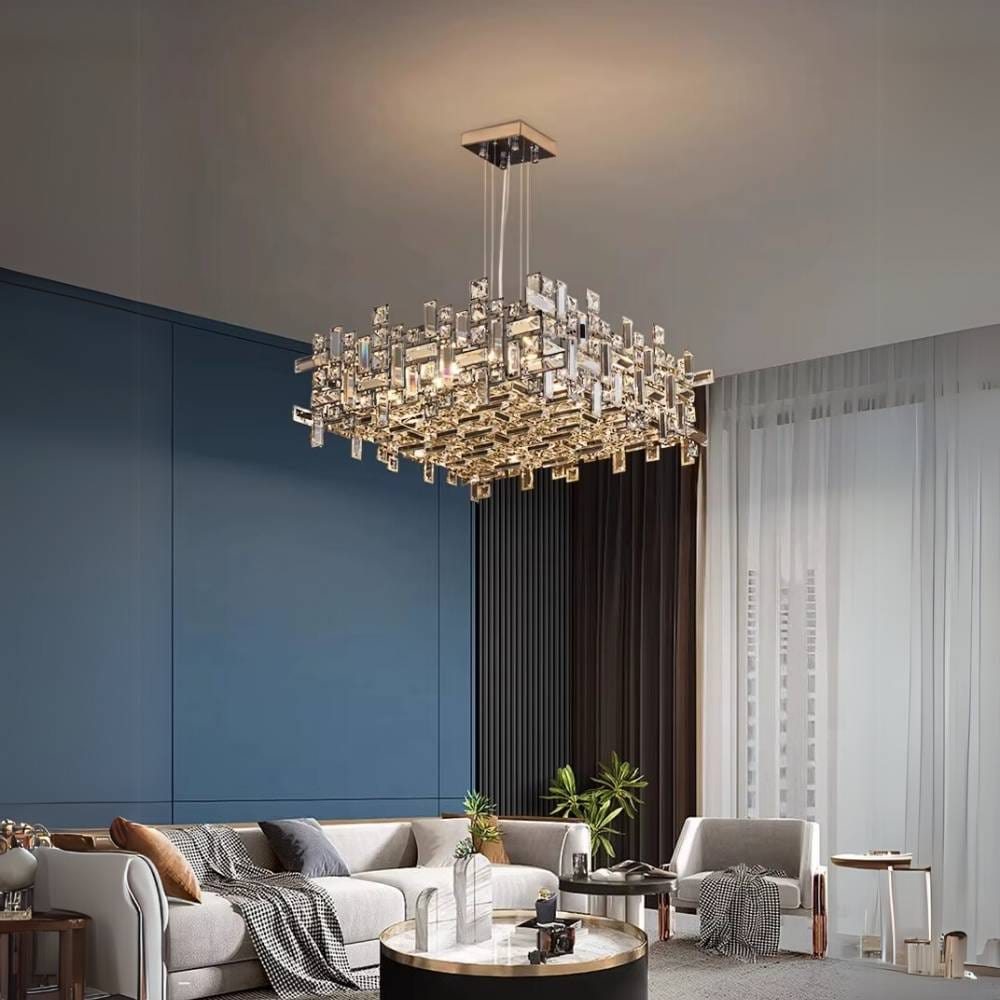
- Linear crystal: the format's luxury signature — drops and beads carried along a bar, sparkle distributed the table's full length; the material family continues in the crystal chandeliers collection
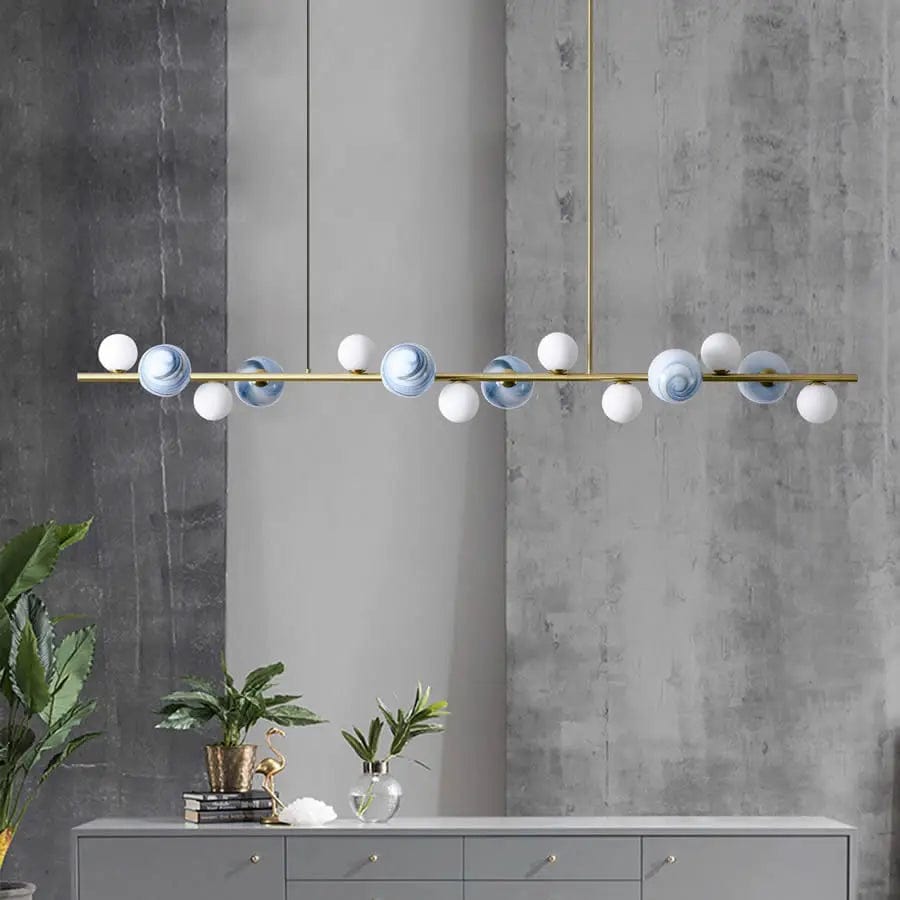
- Glass compositions: globes, panels, and sculpted elements in a row — including large-format statements in clear and smoked glass
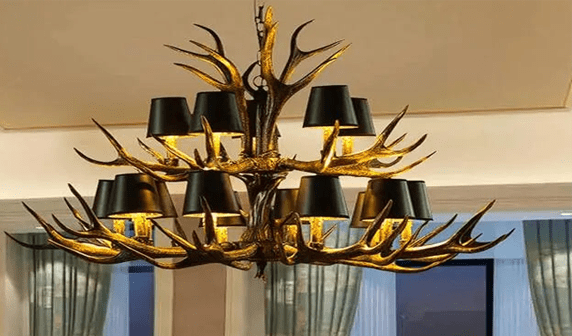
- Wood and iron: beams and forged bars for rustic, farmhouse, and organic rooms — the grounded end of the range
- Candle-style rows: traditional candelabra language stretched linear — the period-room answer to a long table
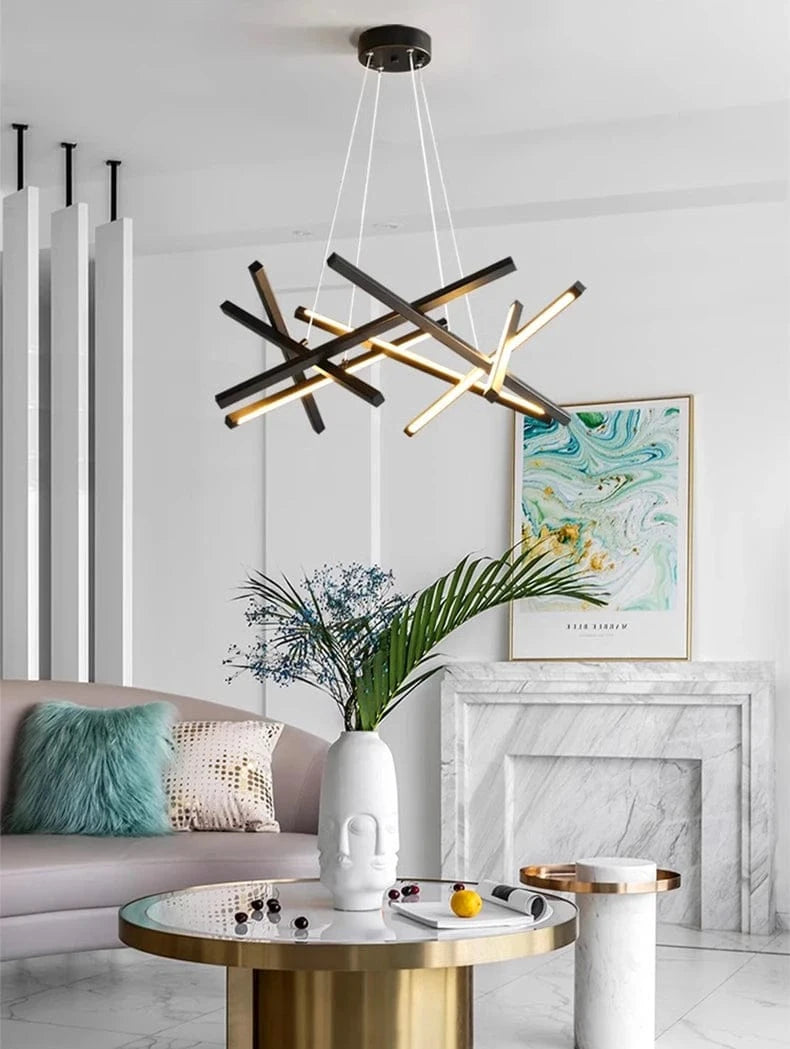
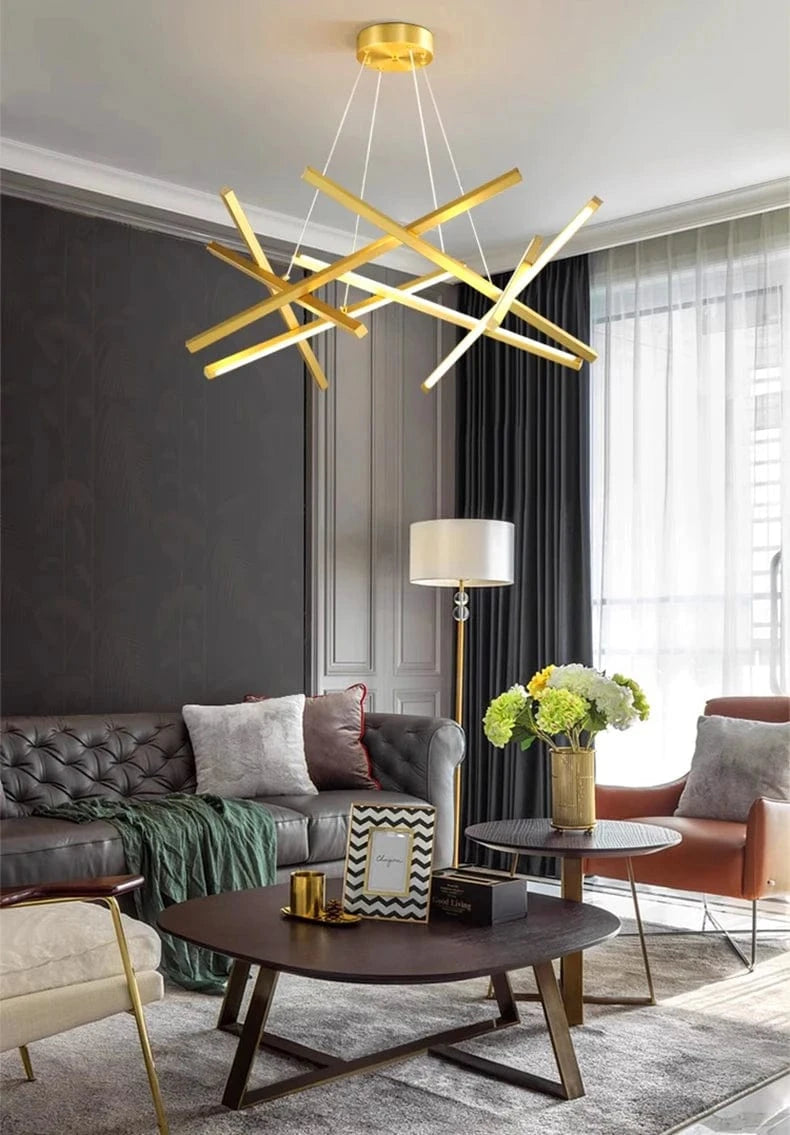
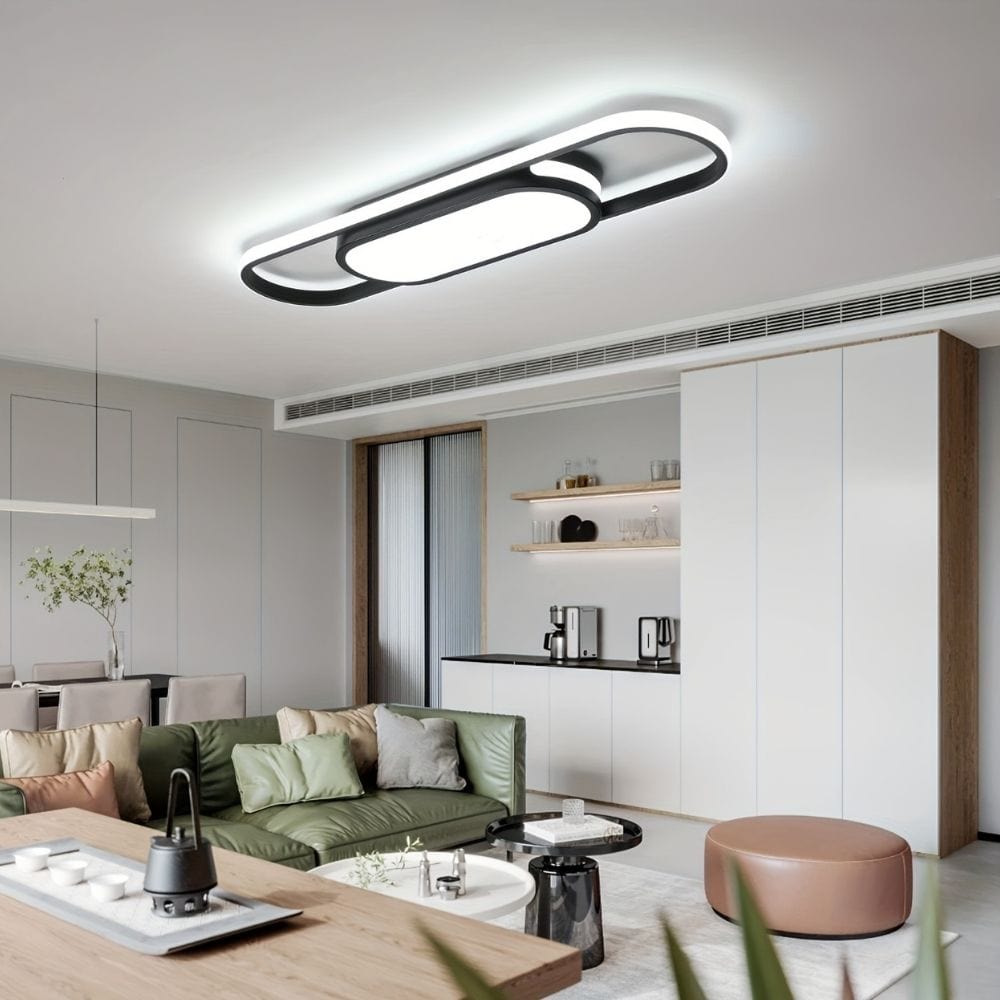
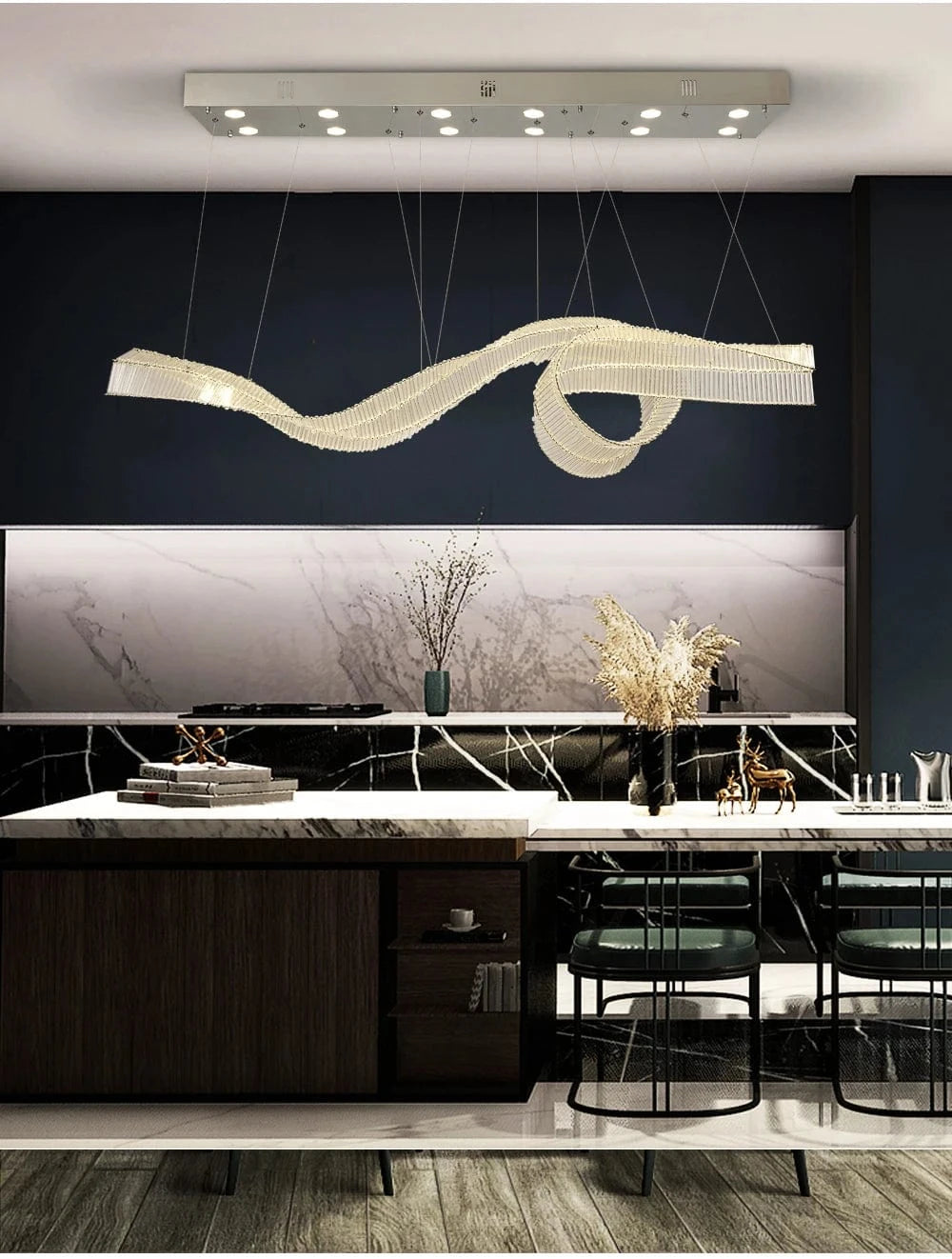
- Integrated LED bars: the minimalist extreme — a single drawn line of light, dimmable and shadow-free
The Branched Line
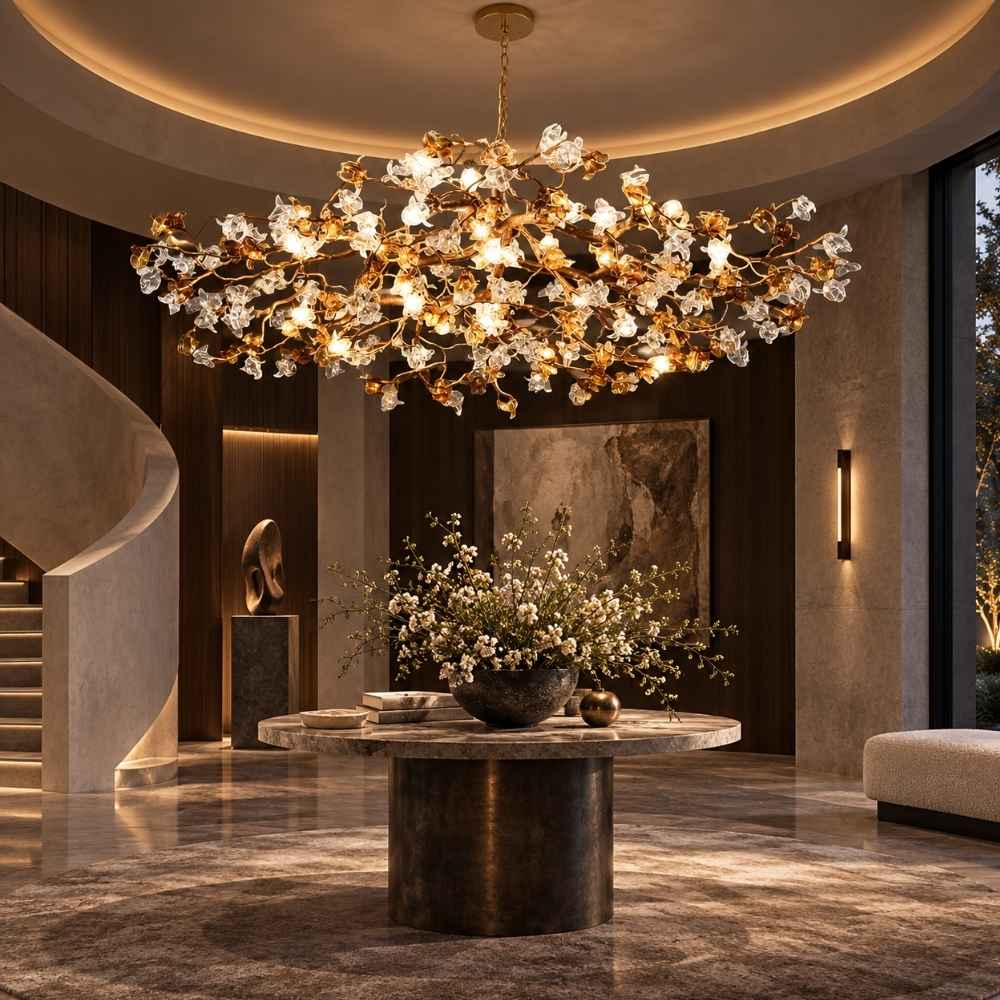
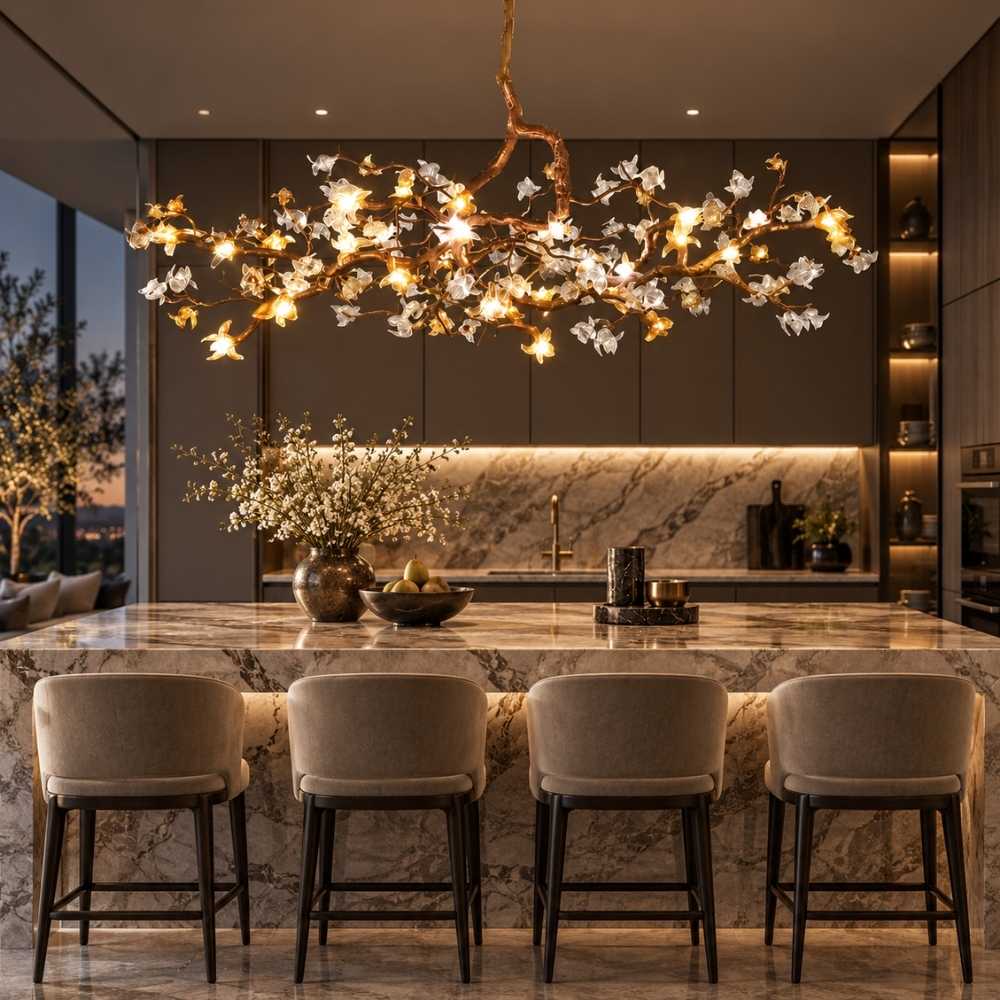
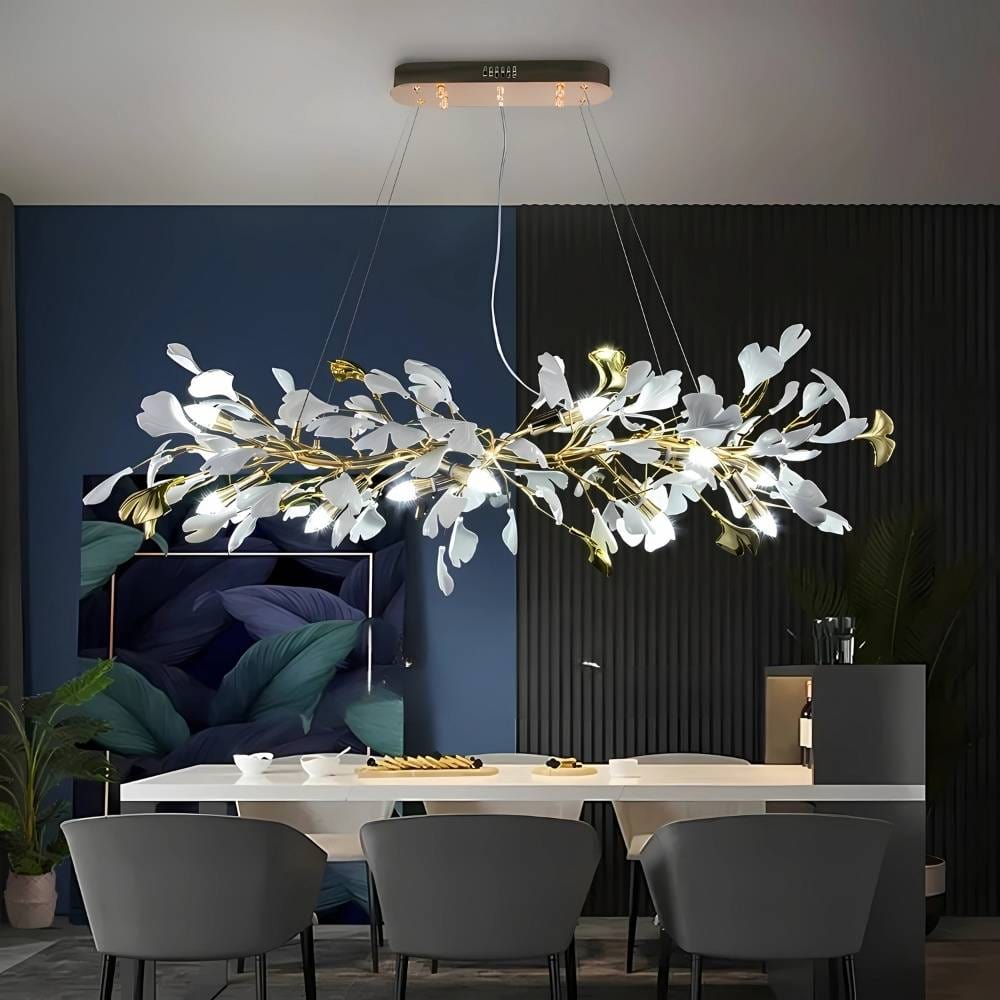
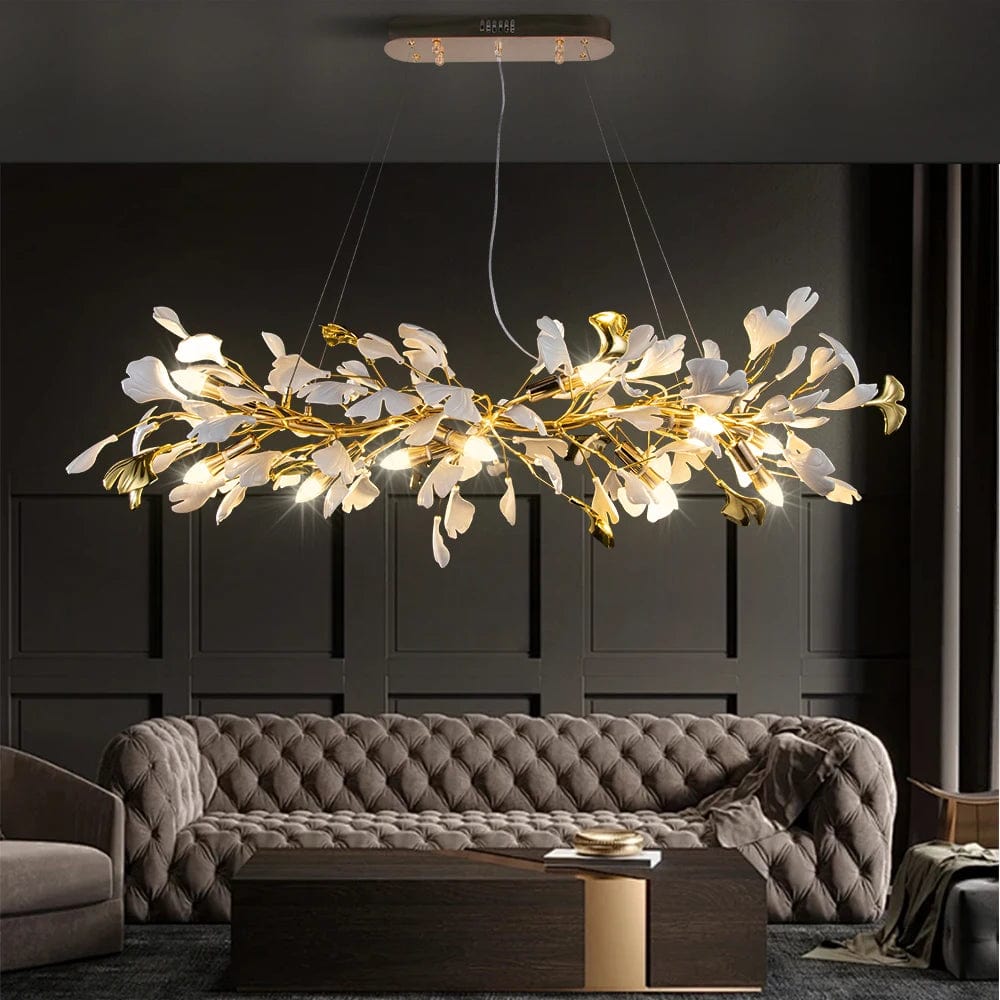
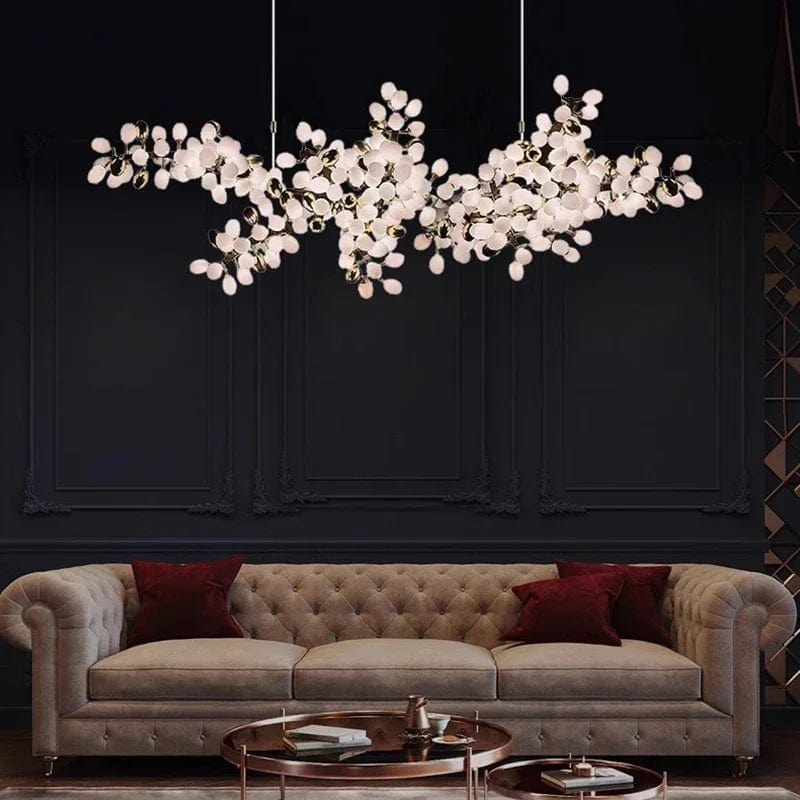
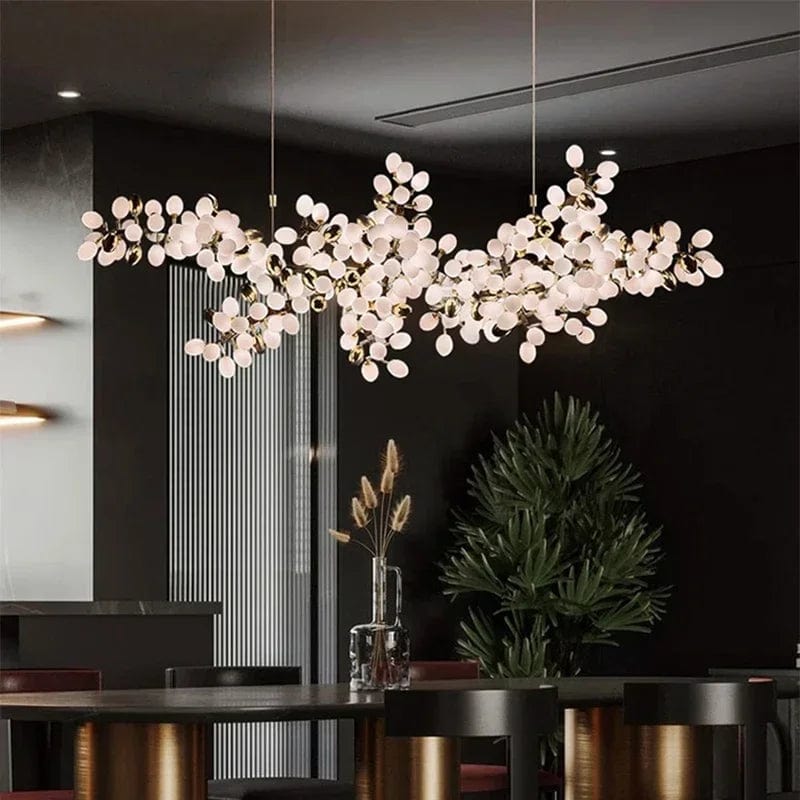
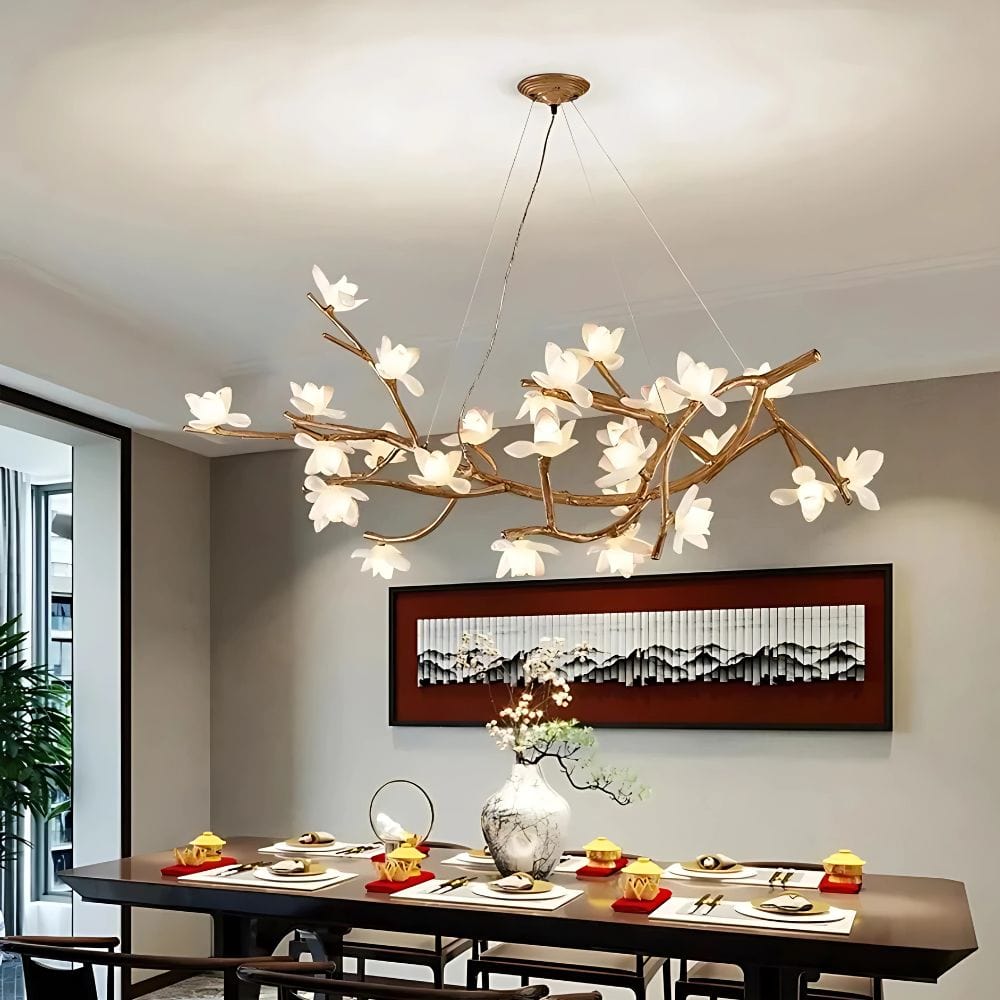
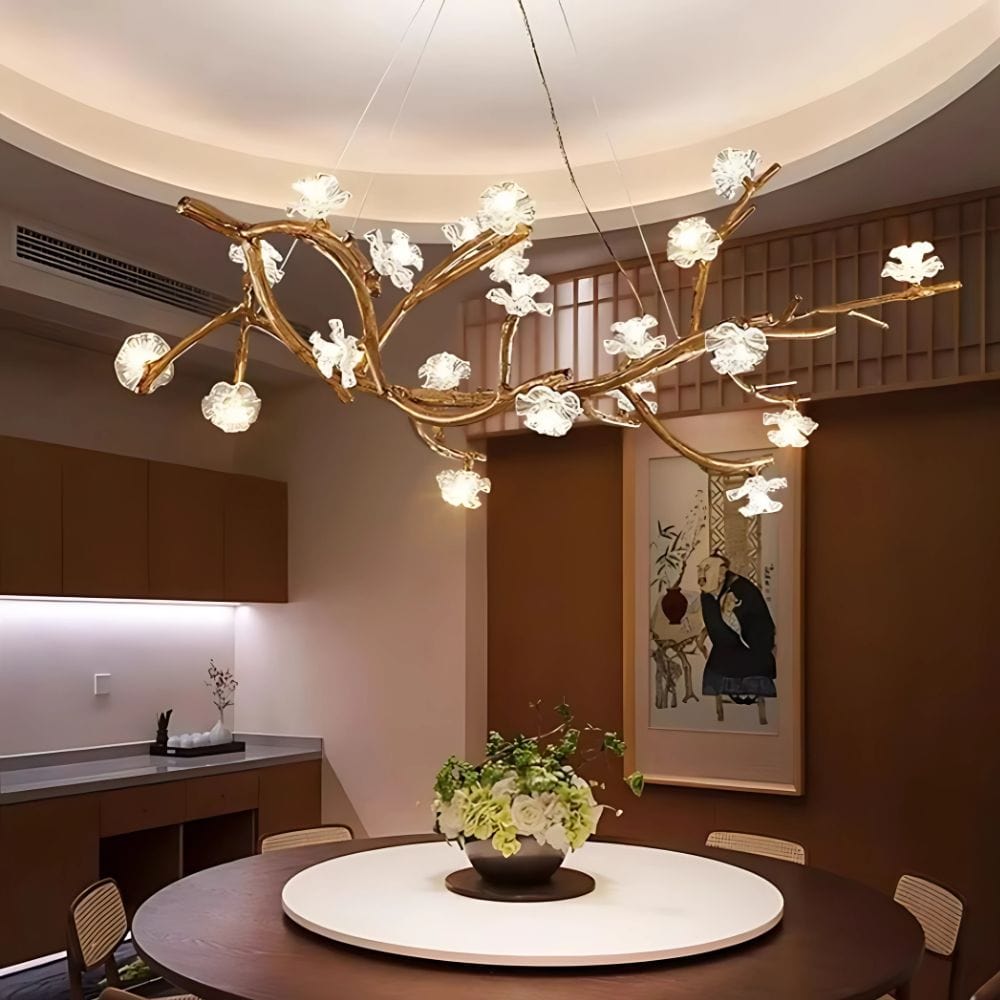
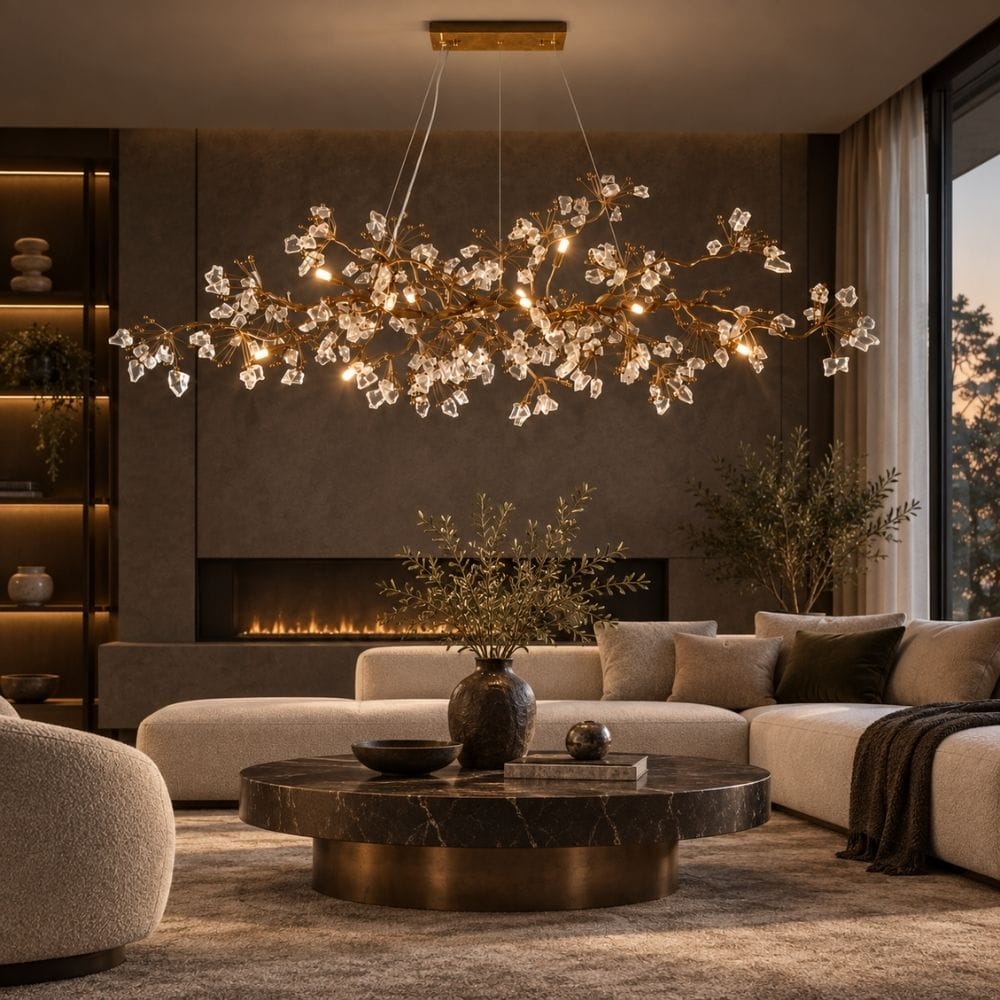
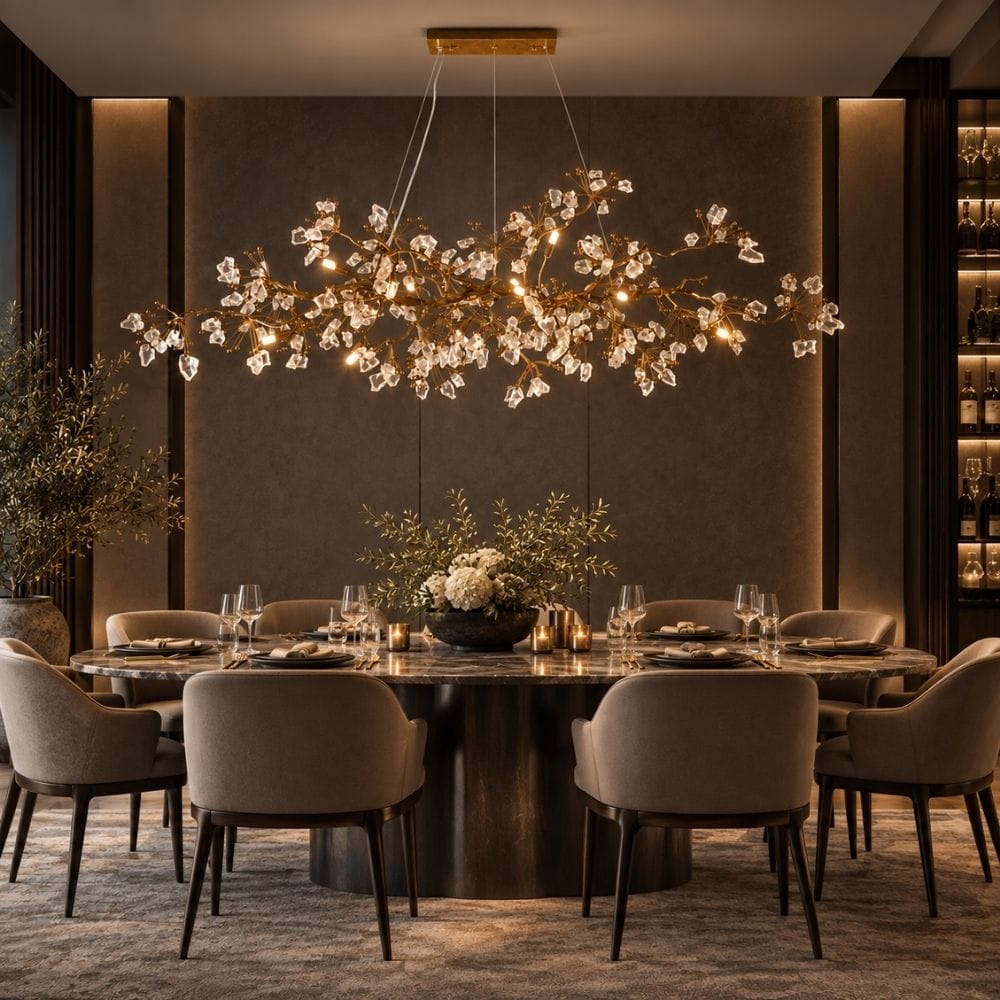
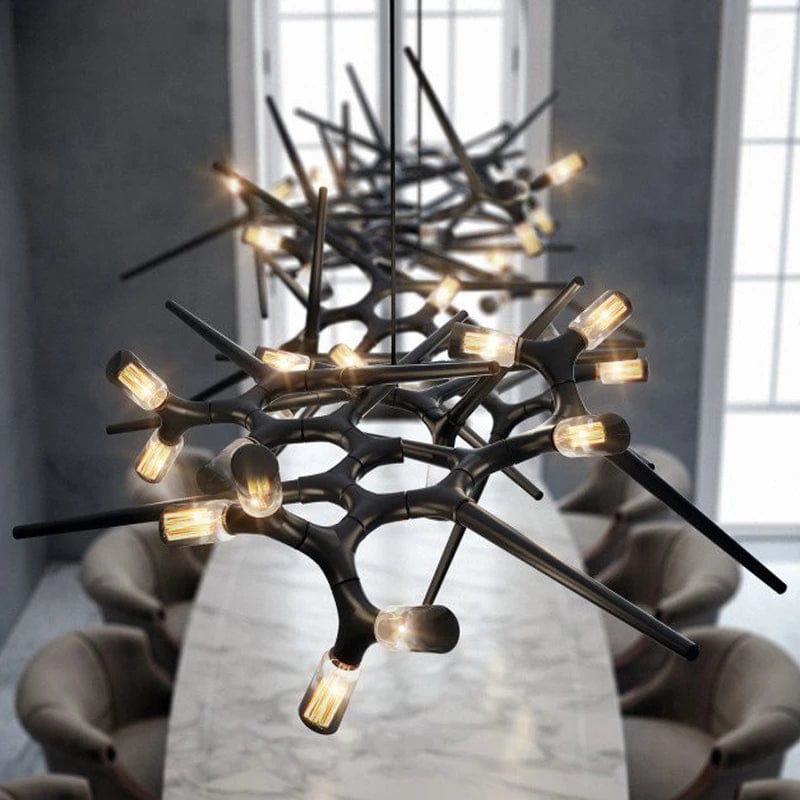
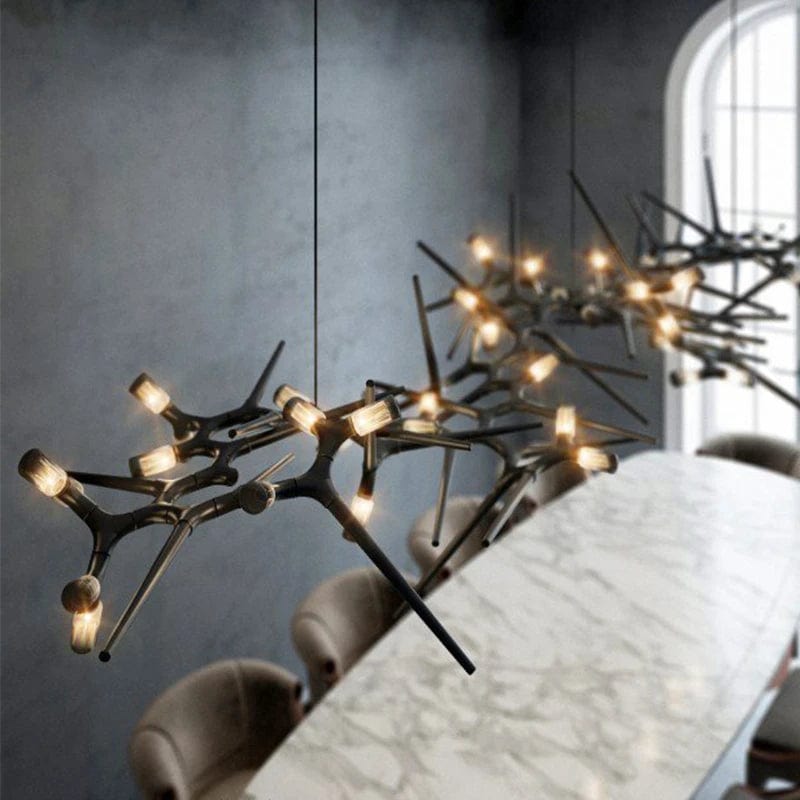
Between the strict bar and the sculptural tree sits the branched linear format — a horizontal axis carrying organic arms, crystal florets, or glass elements along its run. It keeps linear's table-matching logic while adding the movement a plain bar lacks, which makes it the format's favorite designer direction; the full organic family lives in the branch chandeliers collection.
Rooms Built on the Long Axis
The dining room is the format's home — the range built for it lives across the dining room chandeliers collection — with the kitchen island as its hardest-working second address via the kitchen chandeliers collection. Beyond those two: long living rooms take the line over a rectangular coffee-table grouping, entry halls and corridors take it along their run, and pool tables, kitchen peninsulas, and console walls all follow the same principle — where the furniture runs, the light should run with it. Style-wise the format spans the whole vocabulary, modern and contemporary leading, with traditional, rustic, coastal, and farmhouse takes extending it to every interior.
Related Collections
Pair the line with the dining room chandeliers collection for the room it serves best, the branch chandeliers for the organic direction, and the full chandelier catalog for the complete range. Buying checks and picks are in our linear chandelier buying guide.
Frequently Asked Questions
What is a linear chandelier?
A statement fixture designed along a horizontal axis — length as its first dimension — distributing light evenly across long tables, islands, and rectangular spaces. Rectangular, long, and horizontal chandelier name the same format.
Are linear chandeliers better for rectangles?
Structurally yes — over a rectangular table, a linear design lights every seat where a round fixture lights only the middle two, and its proportions echo the surface below. The match is geometric, not stylistic.
What size linear chandelier for my dining table?
One-half to two-thirds of the table's length — a 72" table takes a 36-48" fixture — hung 30-36" above the top, centered on the table's long axis.
Can I hang one over a kitchen island?
Yes — it is the format's second home. Same length logic against the island's run, with height set for task work; the island guide covers the exact numbers.
Do linear chandeliers come in crystal?
Linear crystal is the format's luxury signature — drops and beads distributed along the bar, giving a long table sparkle across its full length instead of one center burst.
Linear chandelier or a row of pendants?
One continuous fixture reads as a single statement and installs on fewer points; a pendant series reads rhythmic and suits task runs. Formal tables lean linear; working islands take either.