

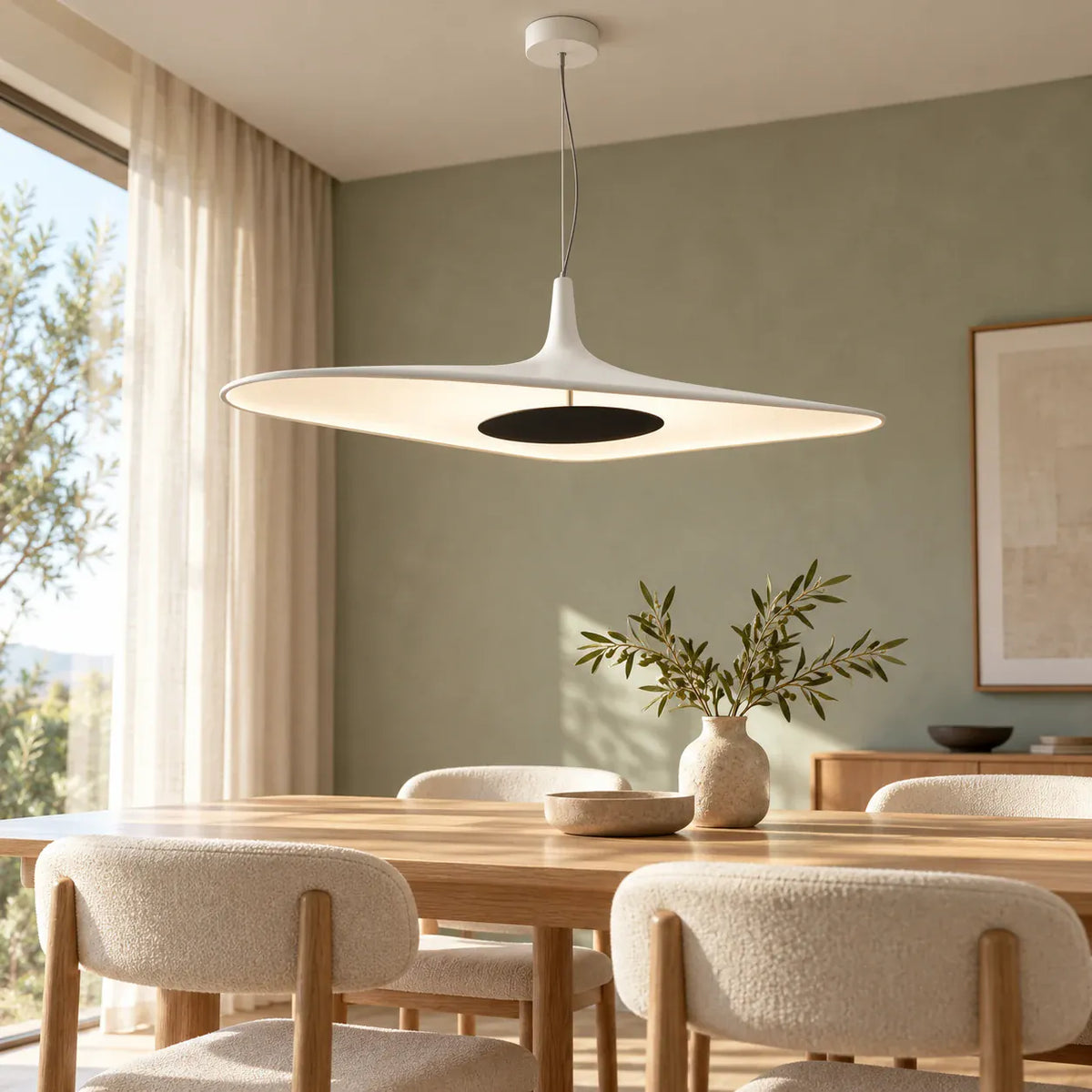
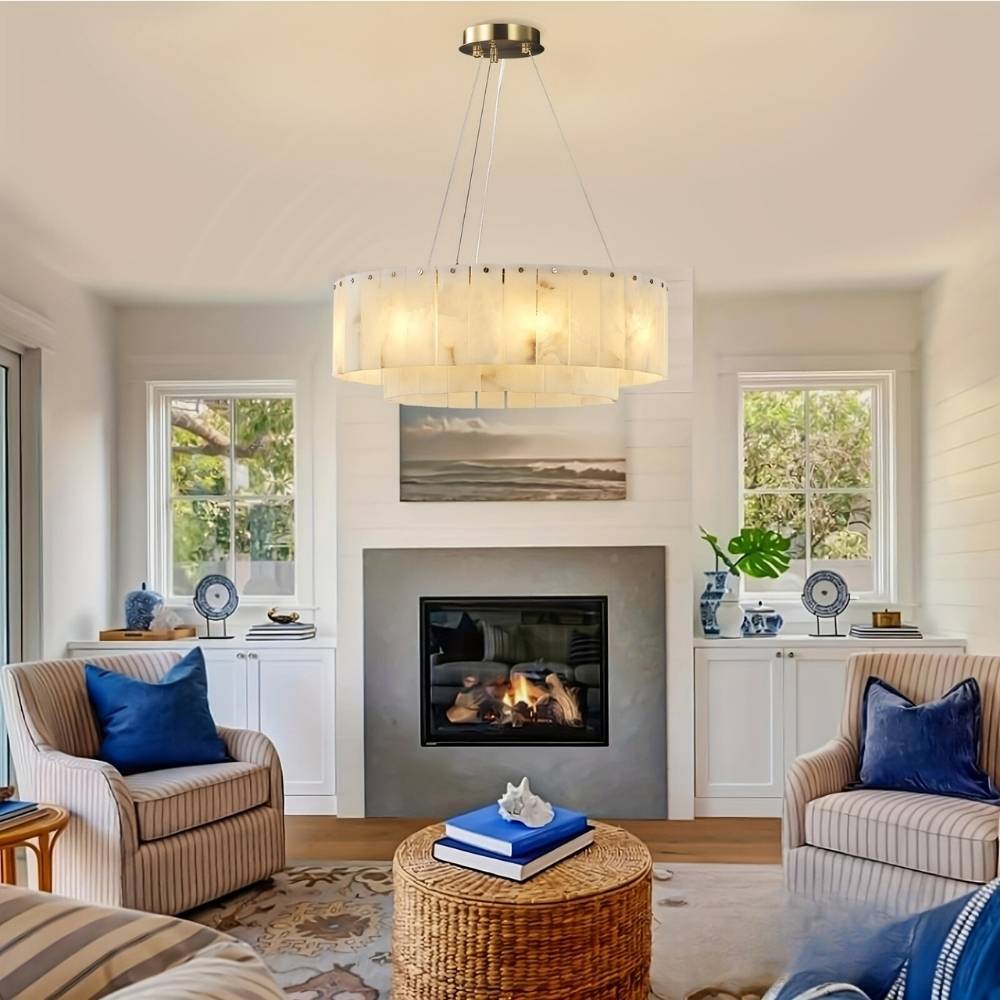
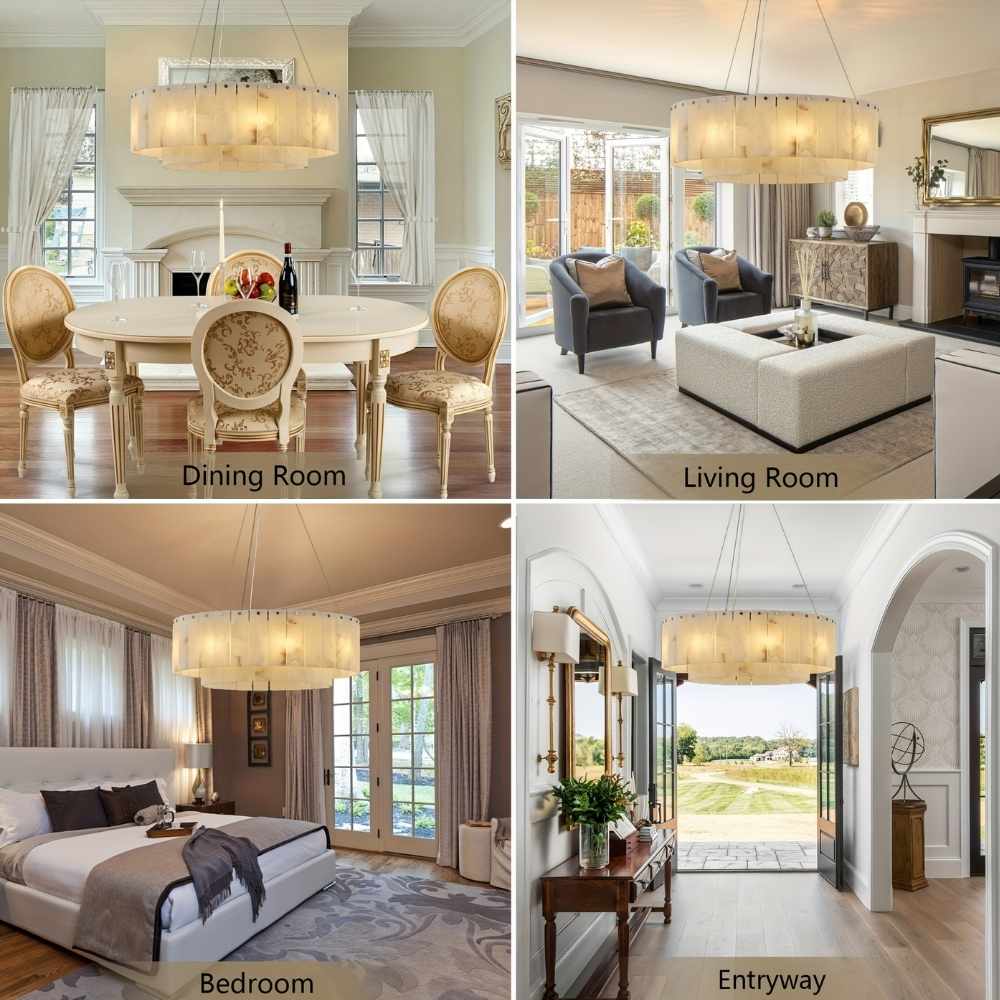


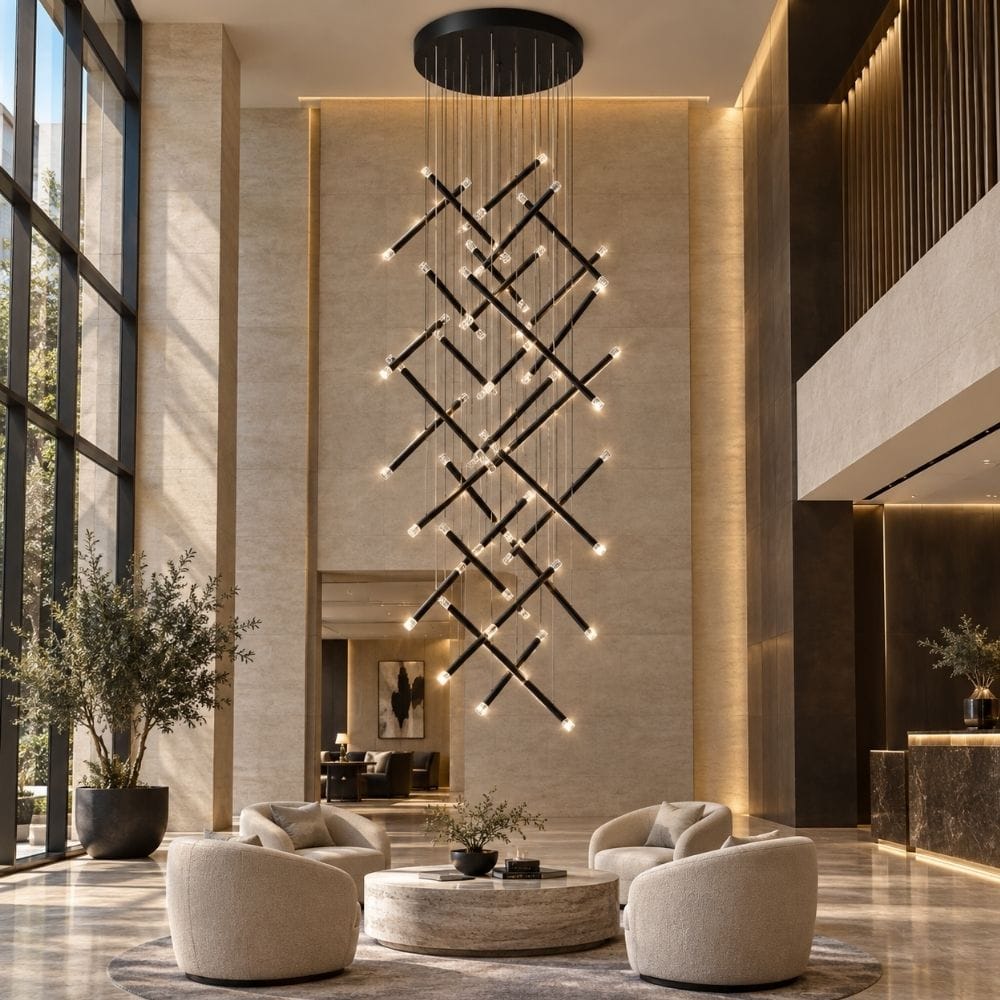
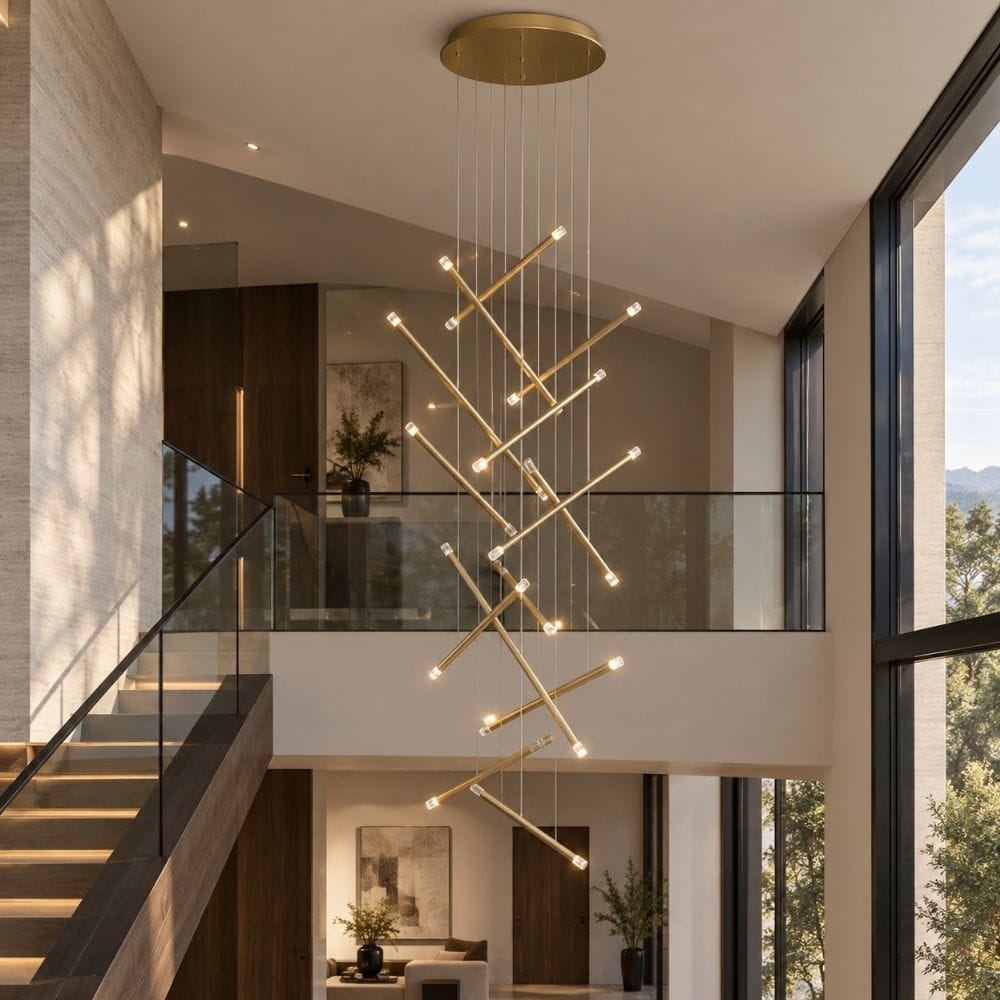


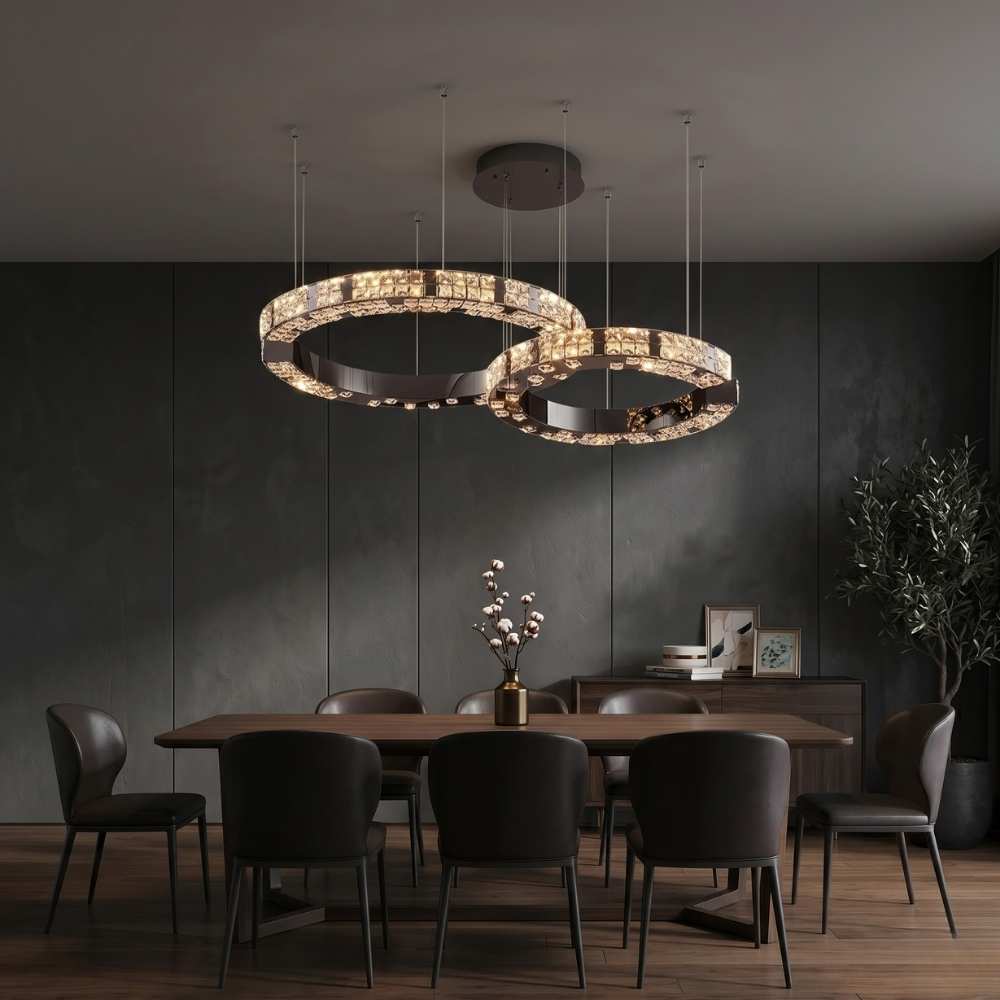
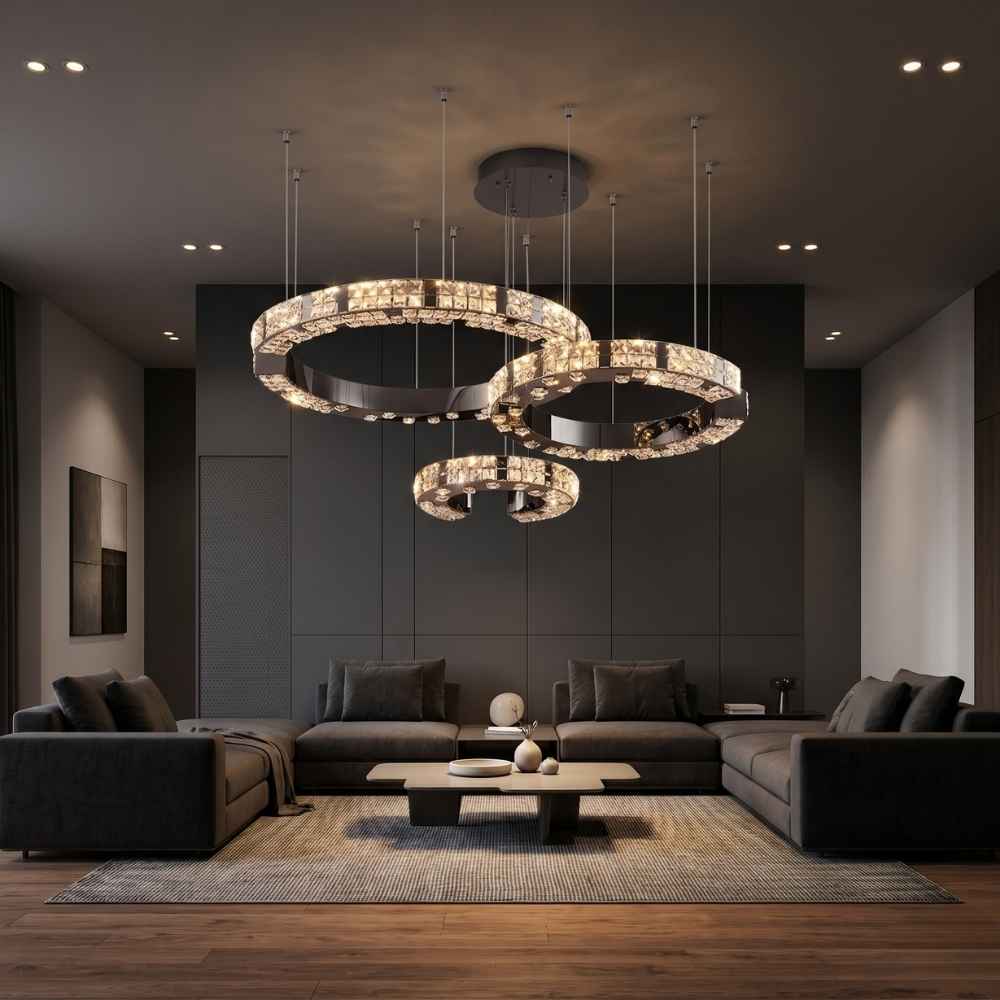


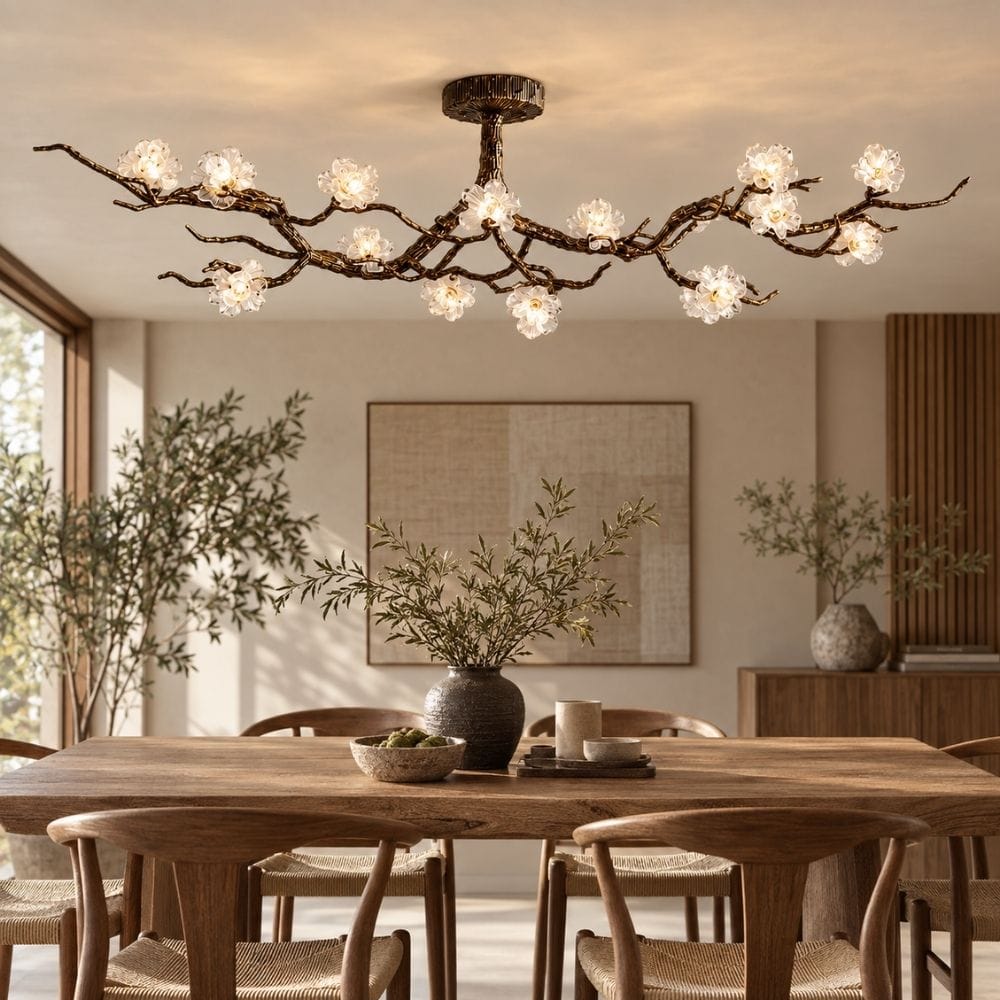



Why the Dining Room Is the Chandelier's Home Room
Every other room adopted the chandelier; the dining room invented the job. A table gathers people at one fixed point, facing each other, for the one activity where light quality is felt directly — and a single fixture centered above that point solves the whole room: it anchors the table visually, lights faces and food warmly from above, and gives the space its ceremonial center whether the dinner is Tuesday pasta or a holiday. That fixed-point logic is also why dining fixtures are the easiest in the home to buy correctly: the table, not the room, makes every sizing decision for you.
Sizing From the Table, Not the Room
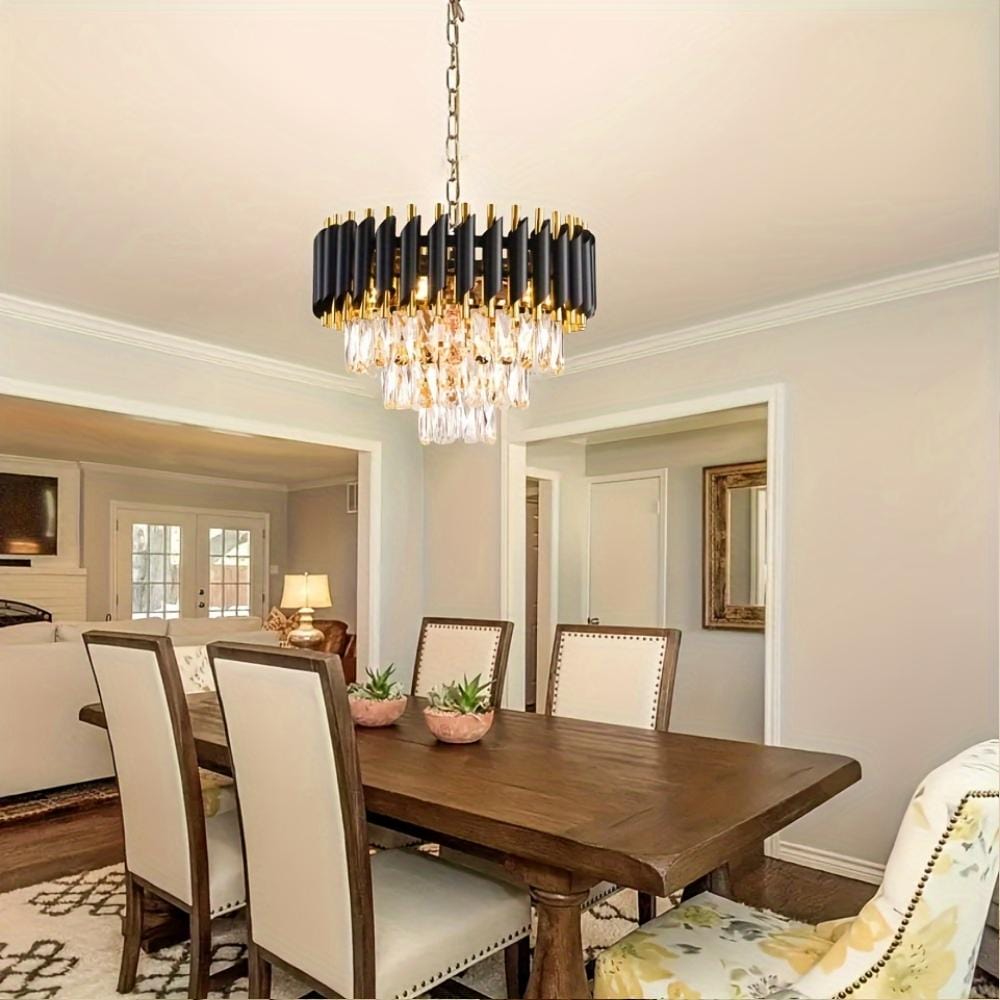
- Diameter: one-half to two-thirds of the table's width for round and square designs — a 42" (107 cm) wide table takes a 21-28" (53-71 cm) fixture
- Hanging height: 30-36" (76-91 cm) from tabletop to the fixture's lowest point — low enough to gather the table, high enough to keep sightlines open across it
- Centering: center on the table, not the room's midpoint — an off-center ceiling box is solved with a swag or relocated box, never by sliding the fixture off the table
- Ceiling height bonus: rooms over 9 ft (2.74 m) raise the fixture roughly 3" per extra foot, keeping proportion with the taller volume
The complete walkthrough — every table size, room dimension, and edge case — is in our modern dining room chandelier guide and the chandelier size calculator.
Matching the Fixture to the Table's Shape
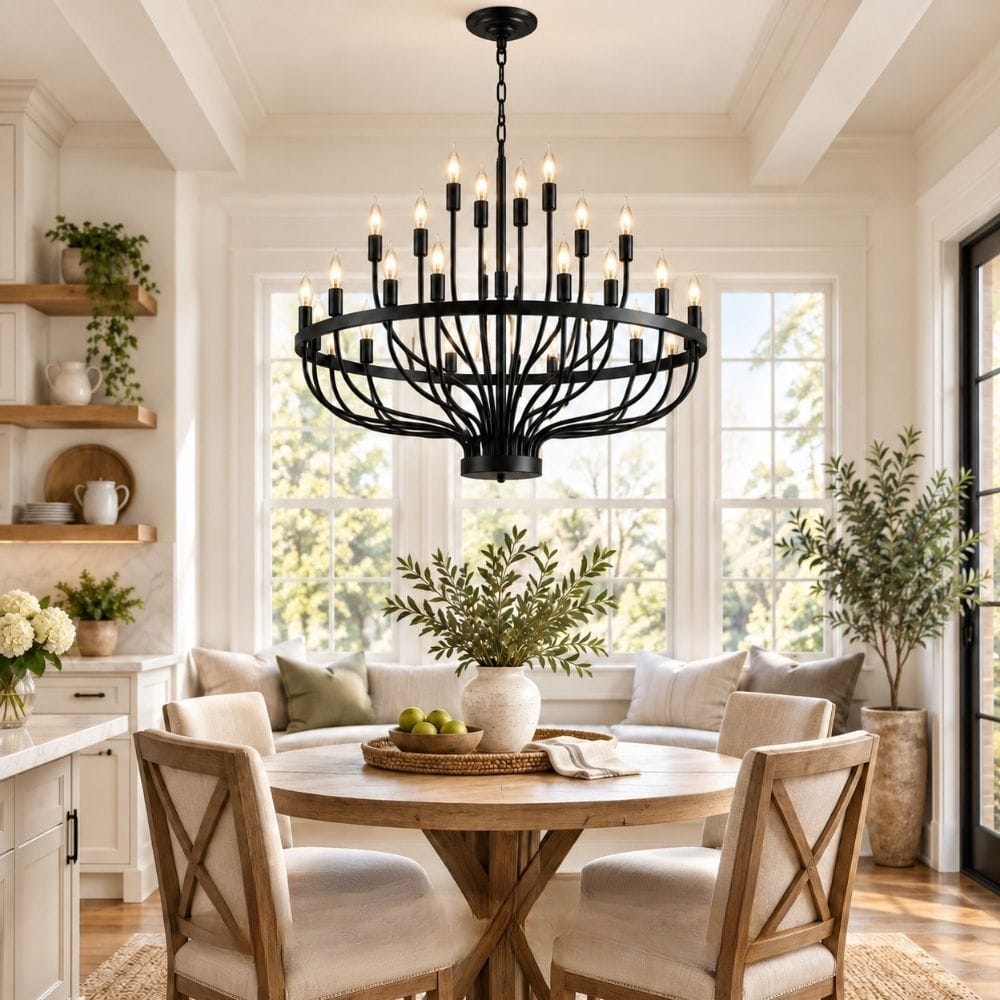
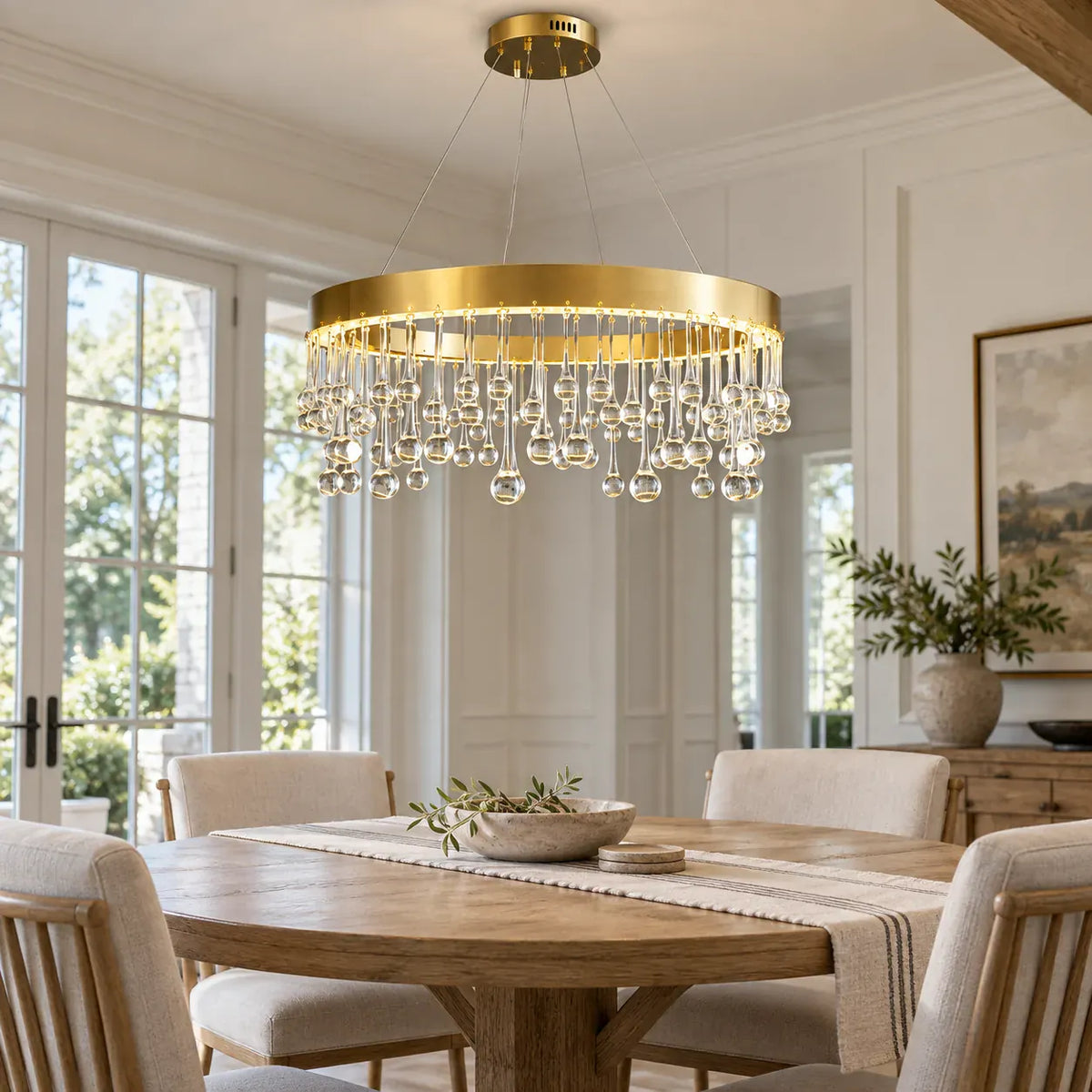
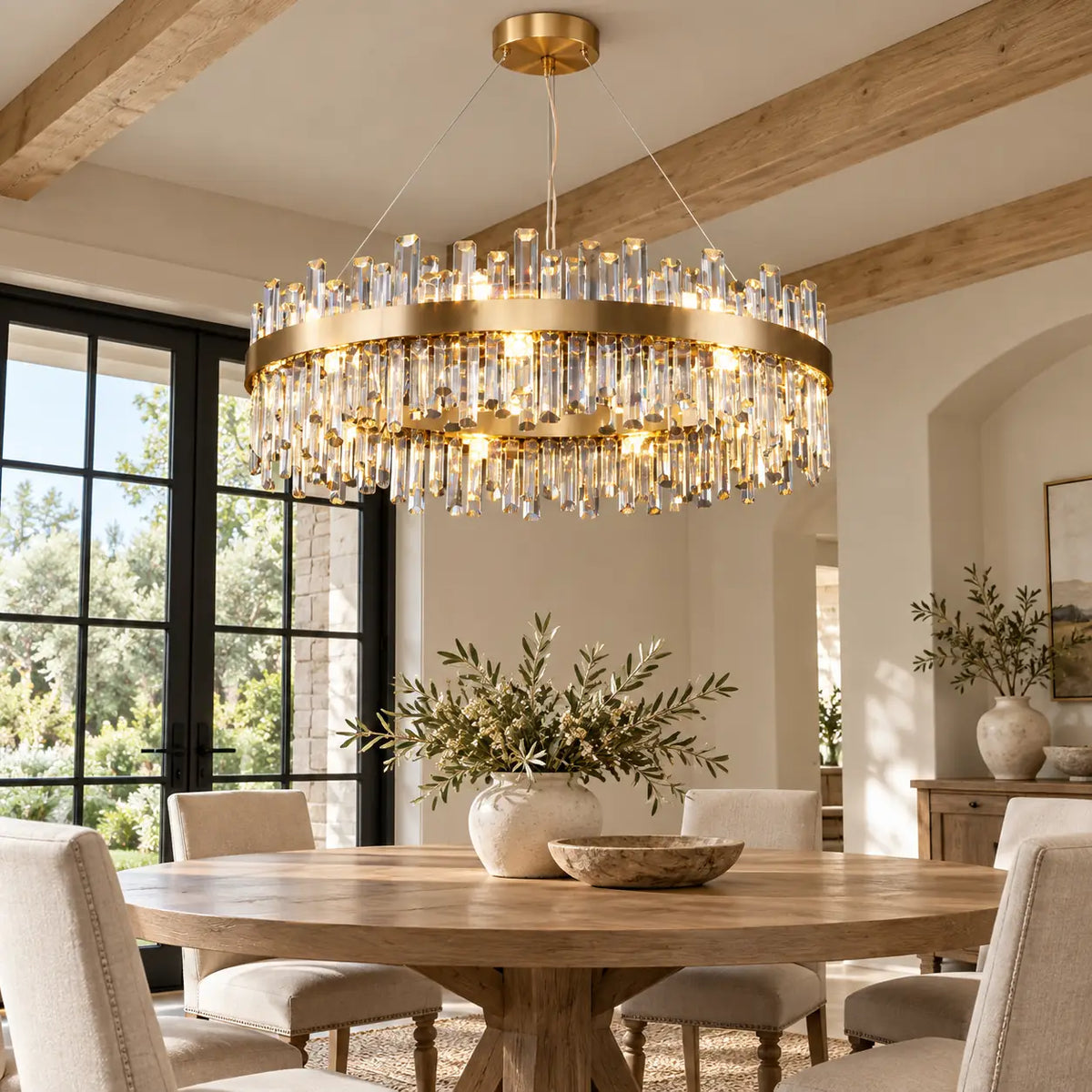
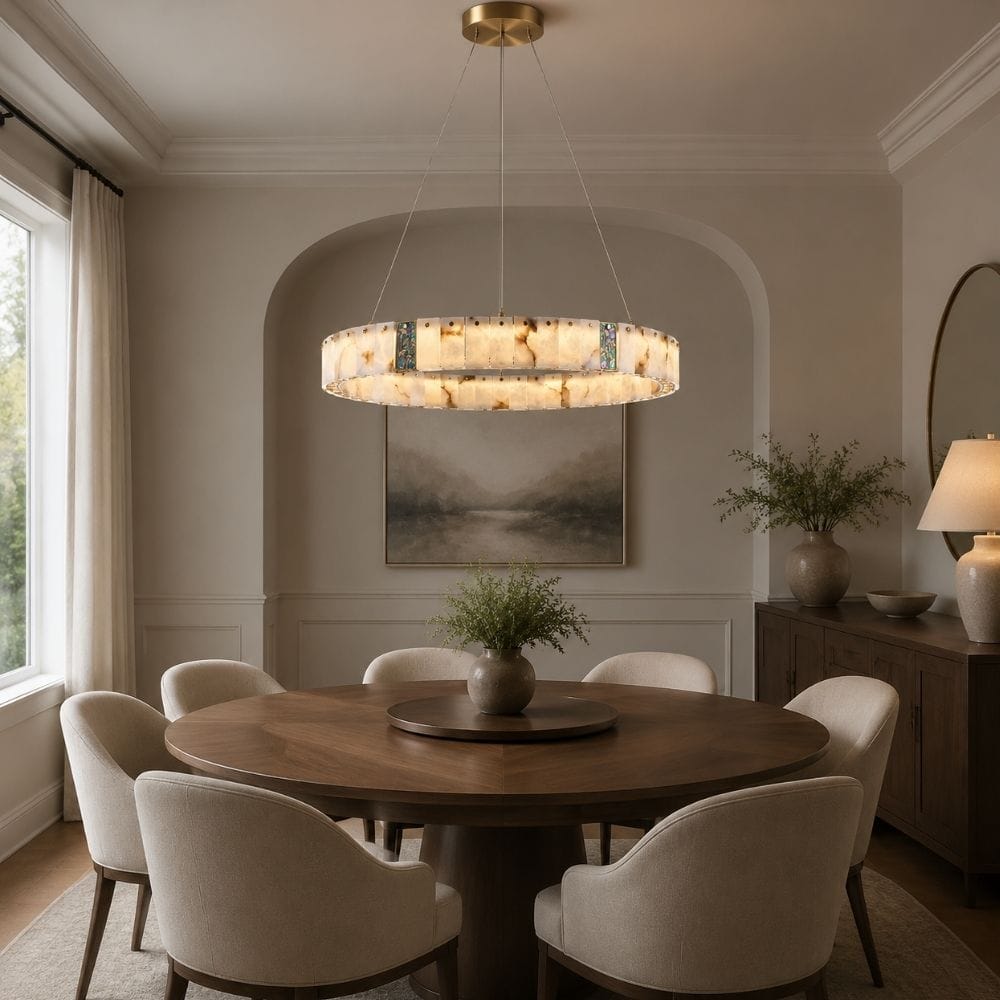
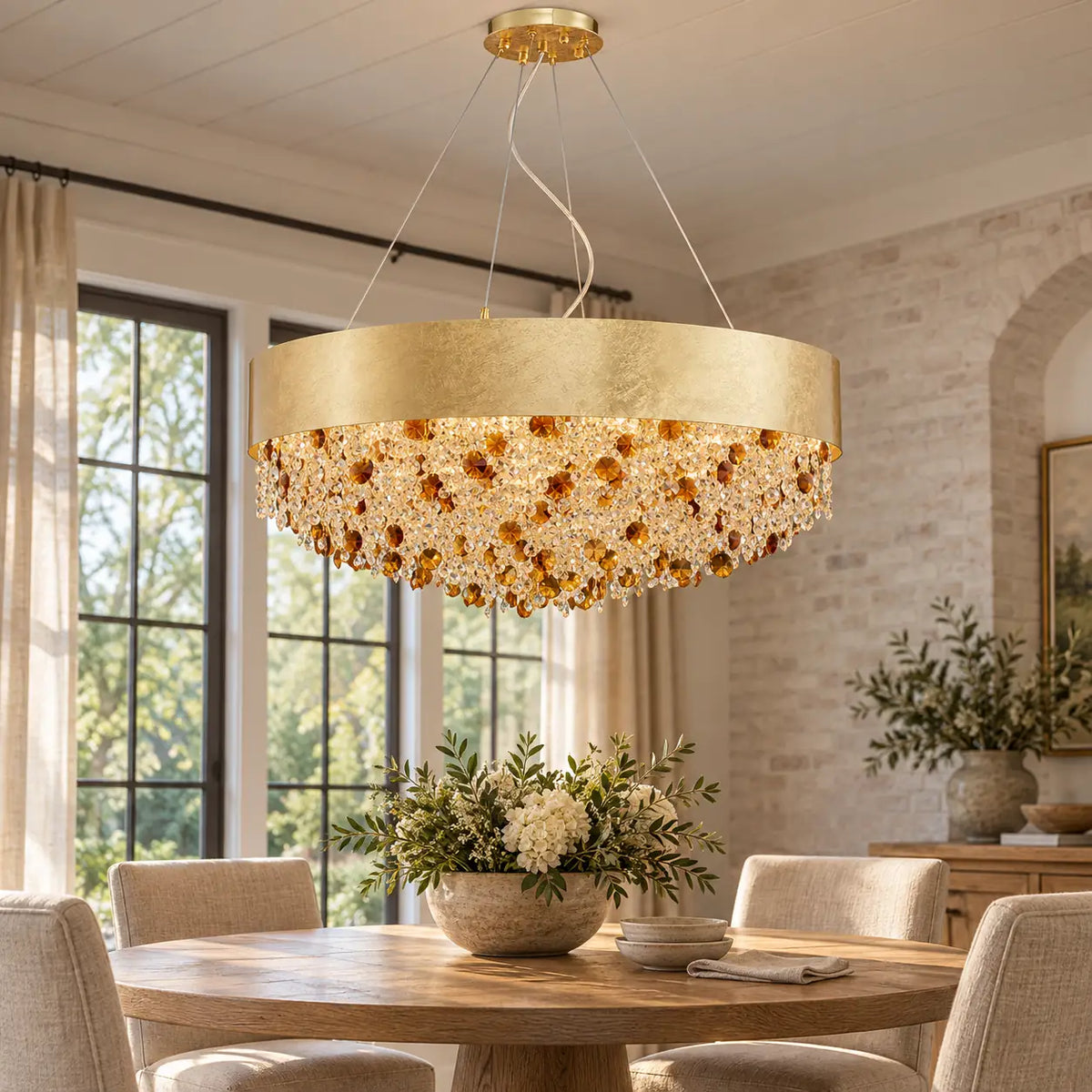
- Round and square tables: round, drum, and tiered designs echo the footprint — one center, one fixture
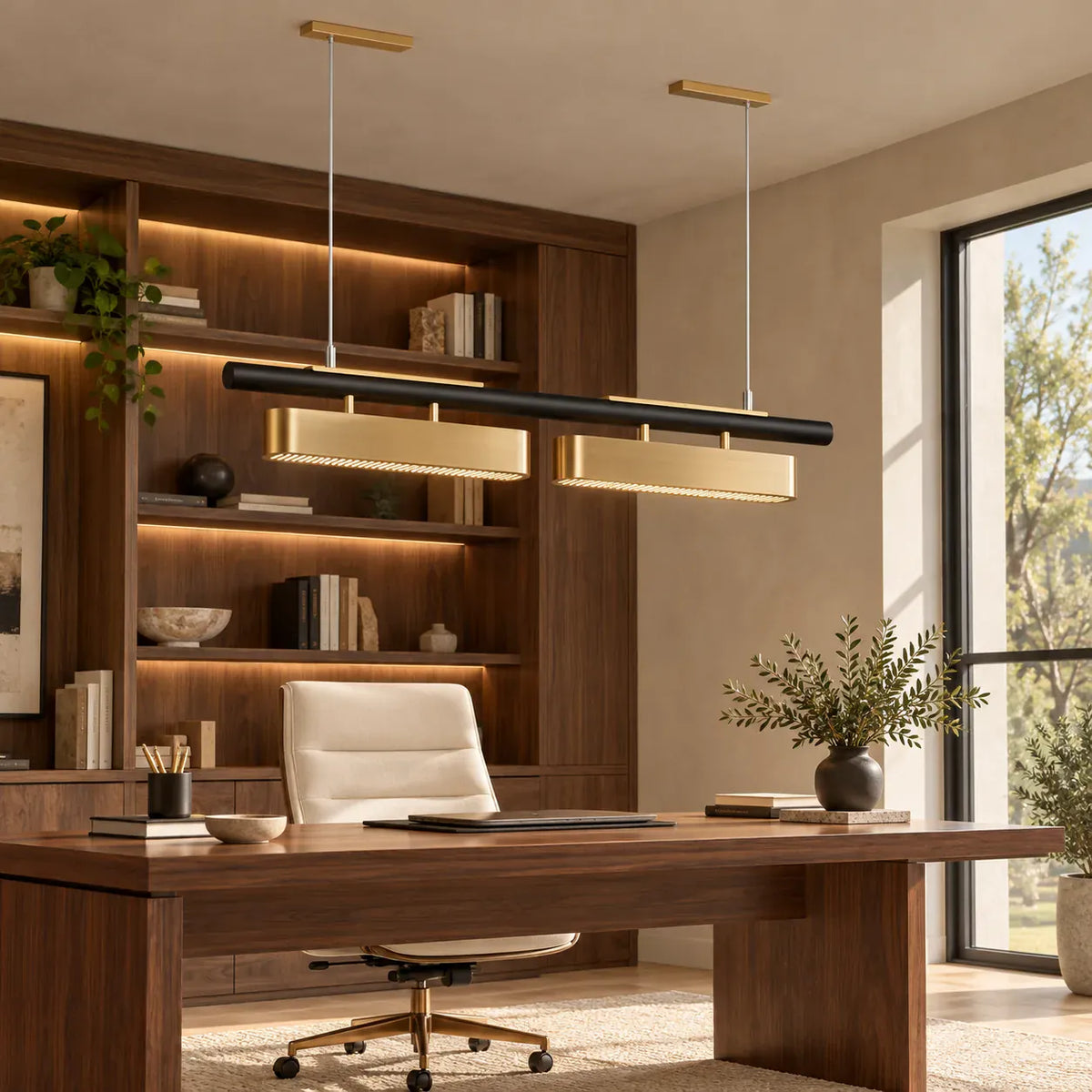
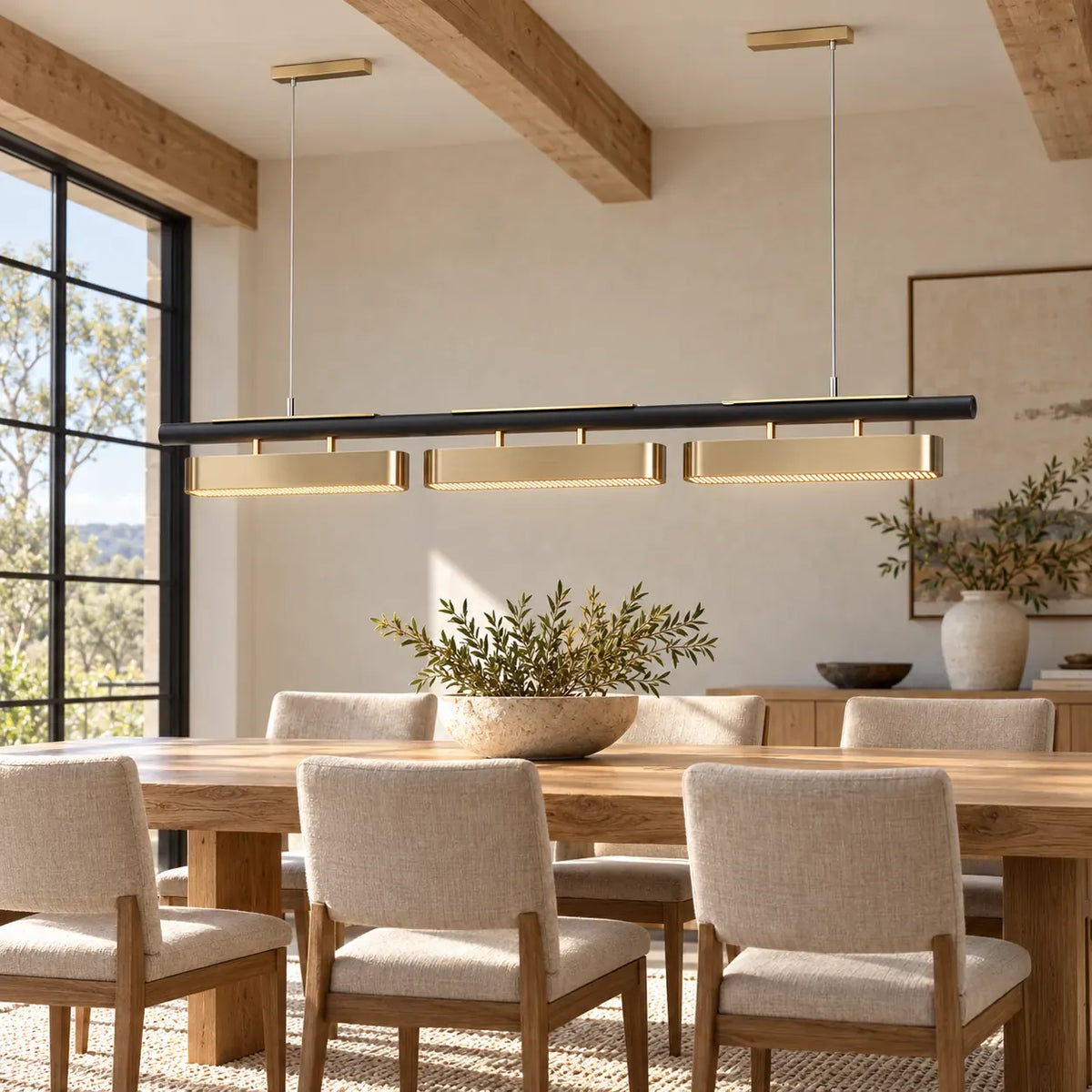
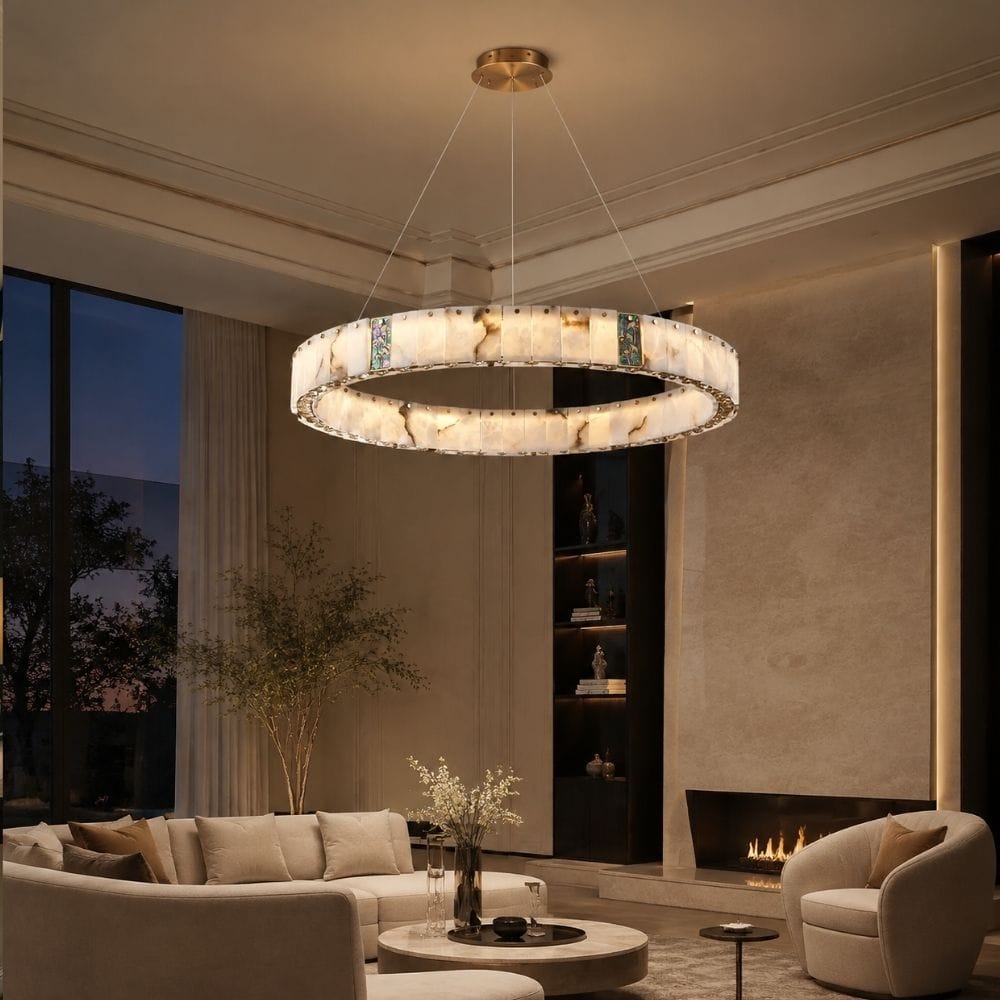
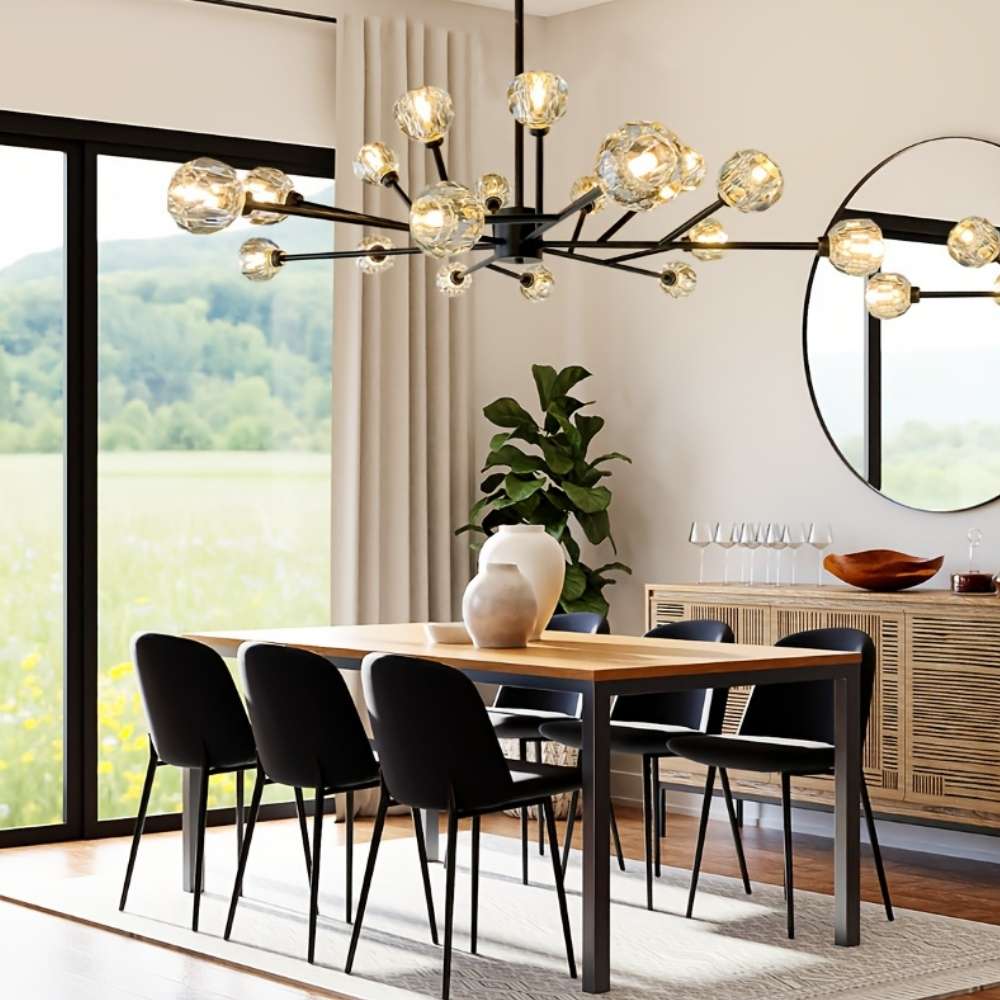
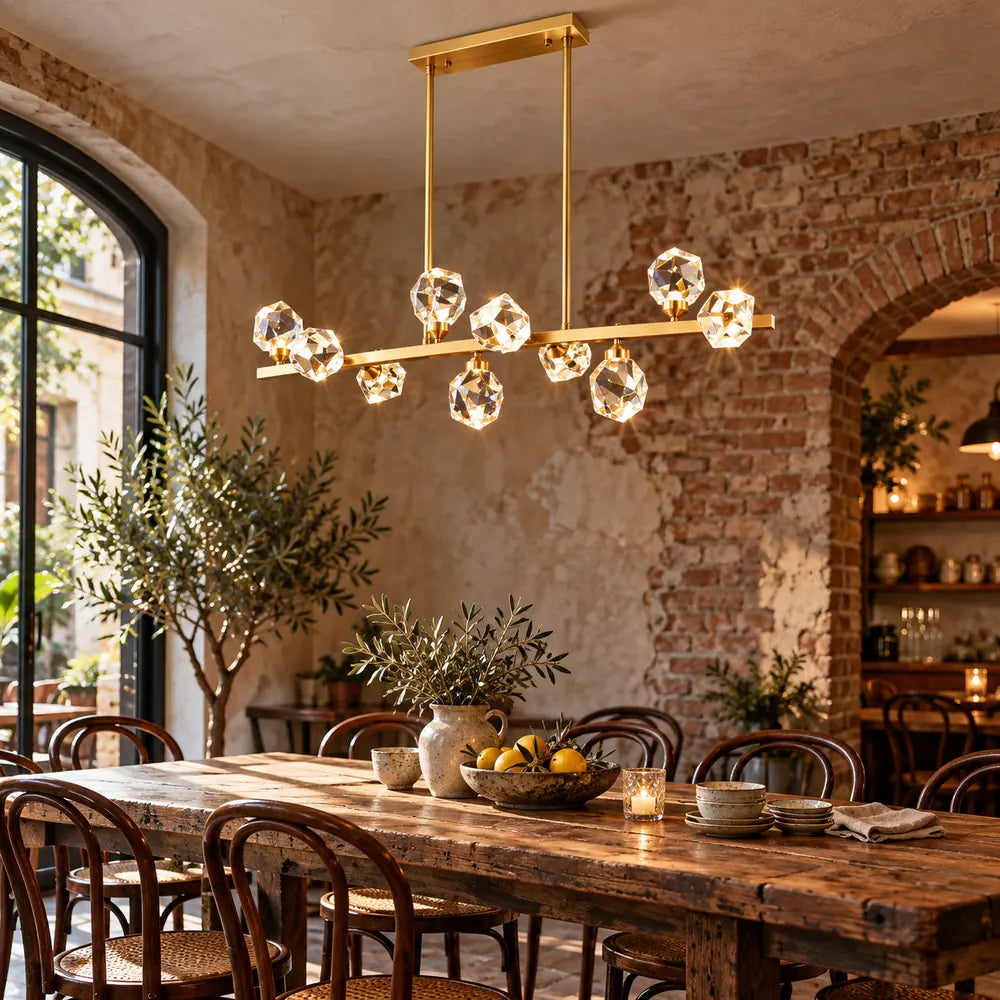
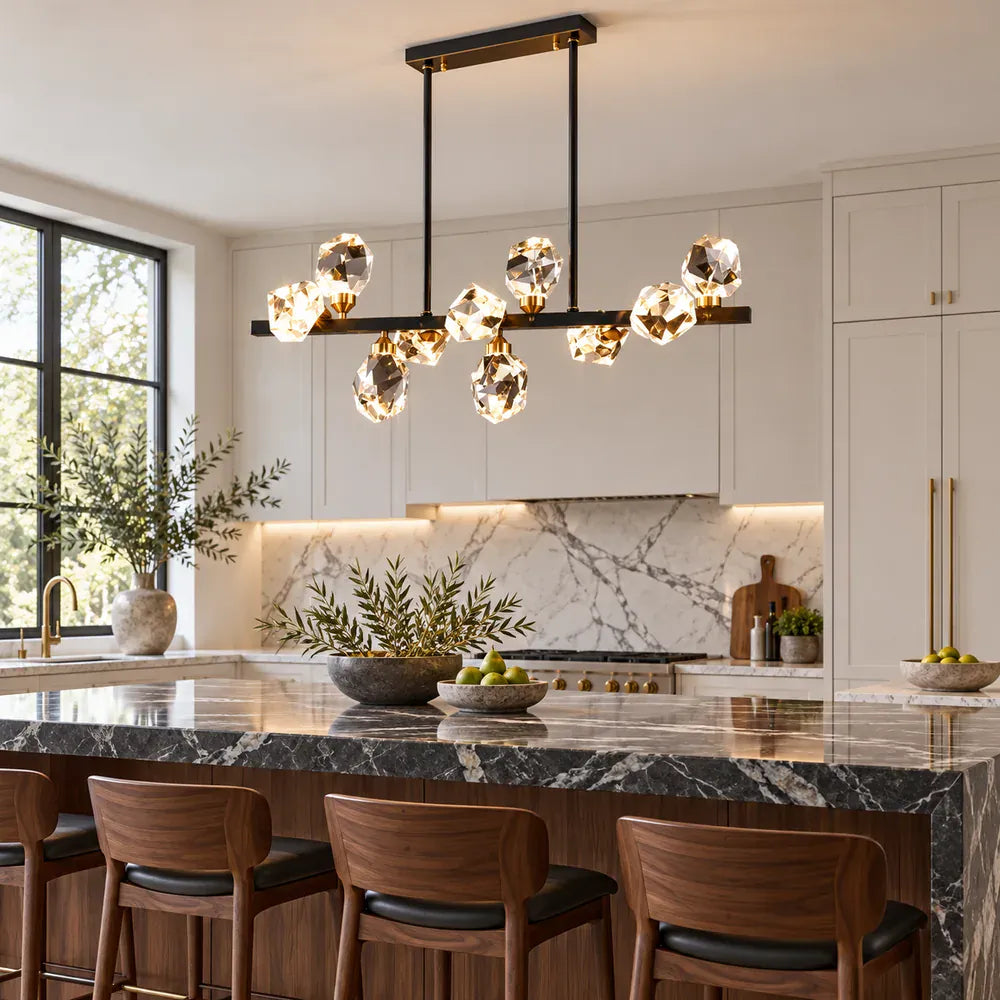
- Rectangular and long tables: linear and oval compositions sized to one-half to two-thirds of the table's length — the format that lights every seat instead of the middle two; the dedicated range lives in the linear chandeliers collection
- Oval tables: oval and soft-linear designs split the difference, following the curve without hard corners
- Extension tables: size to the everyday length, not the holiday leaf — the fixture lives with the table's daily state
Which Style Direction Fits Your Dining Room
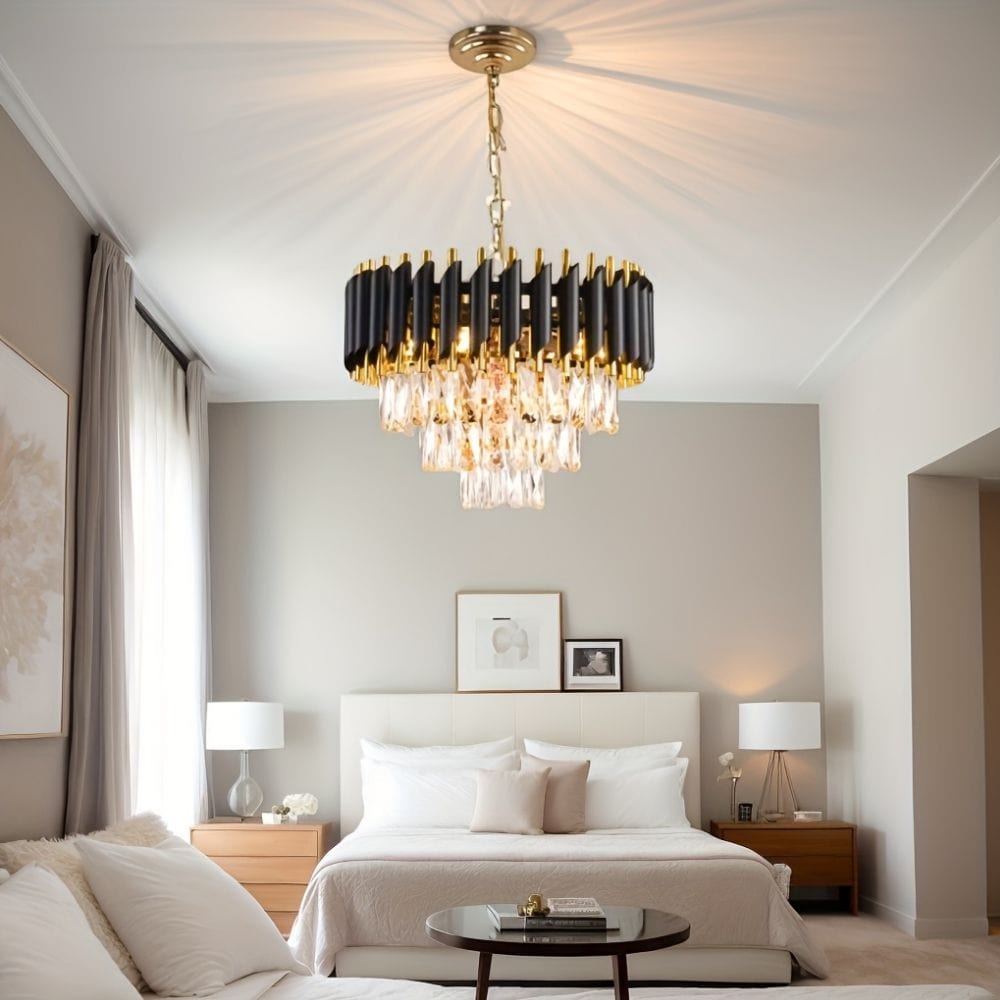
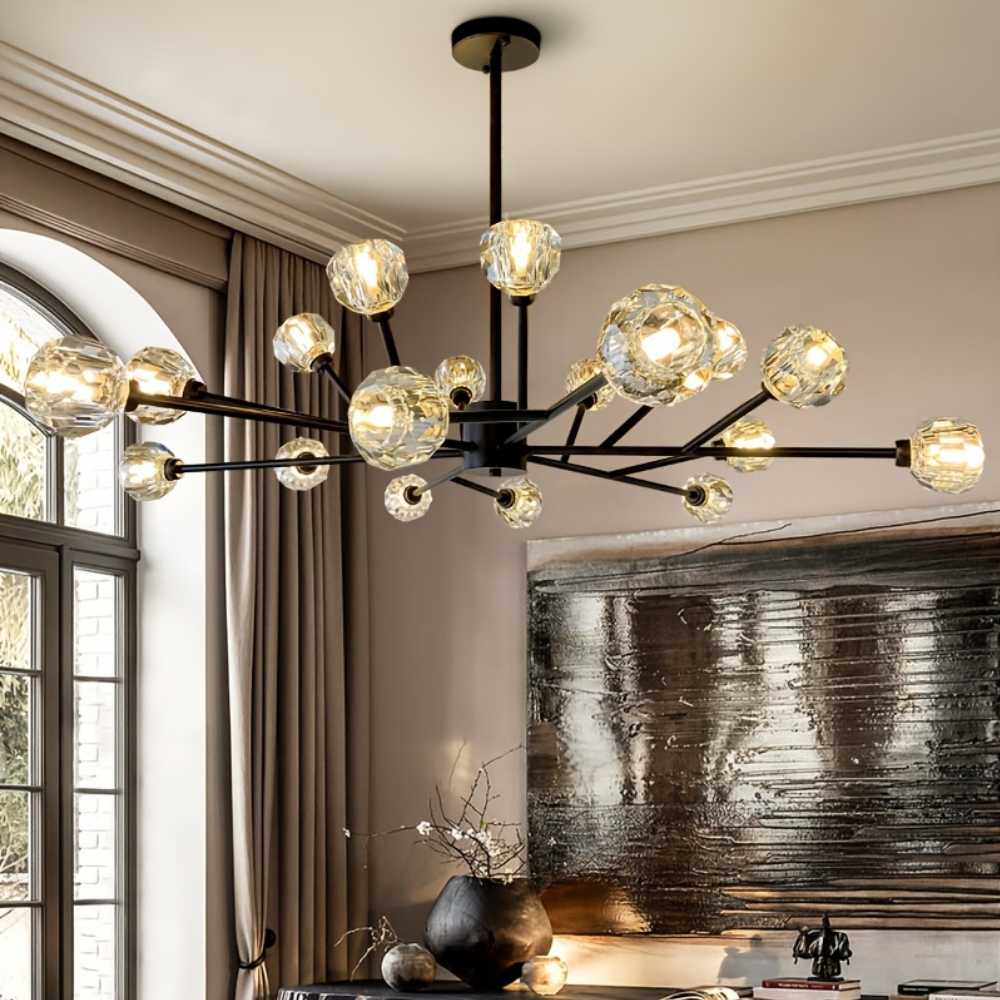
- Modern and contemporary: the collection's lead — ring, linear, and geometric compositions whose clean lines let materials and light do the talking
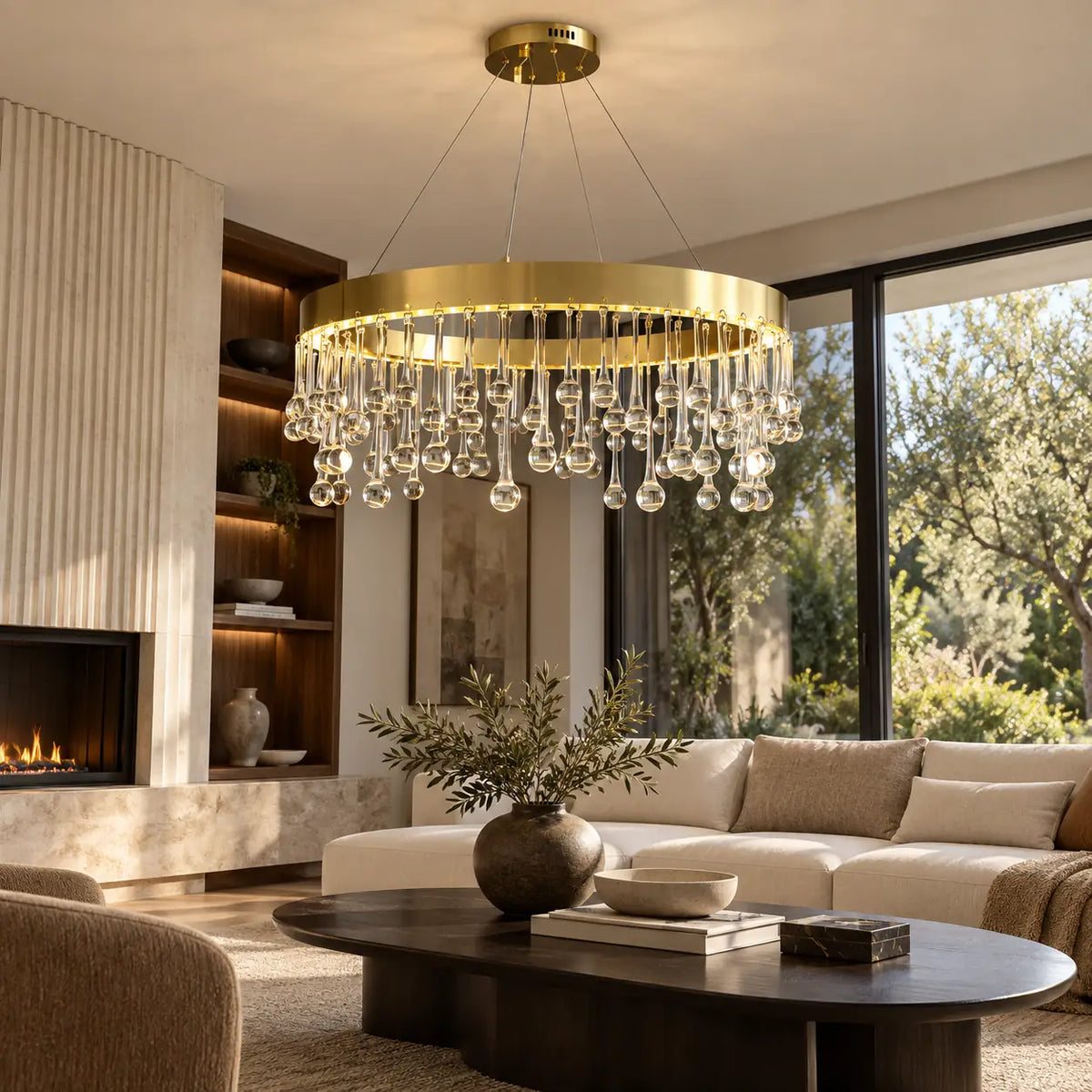
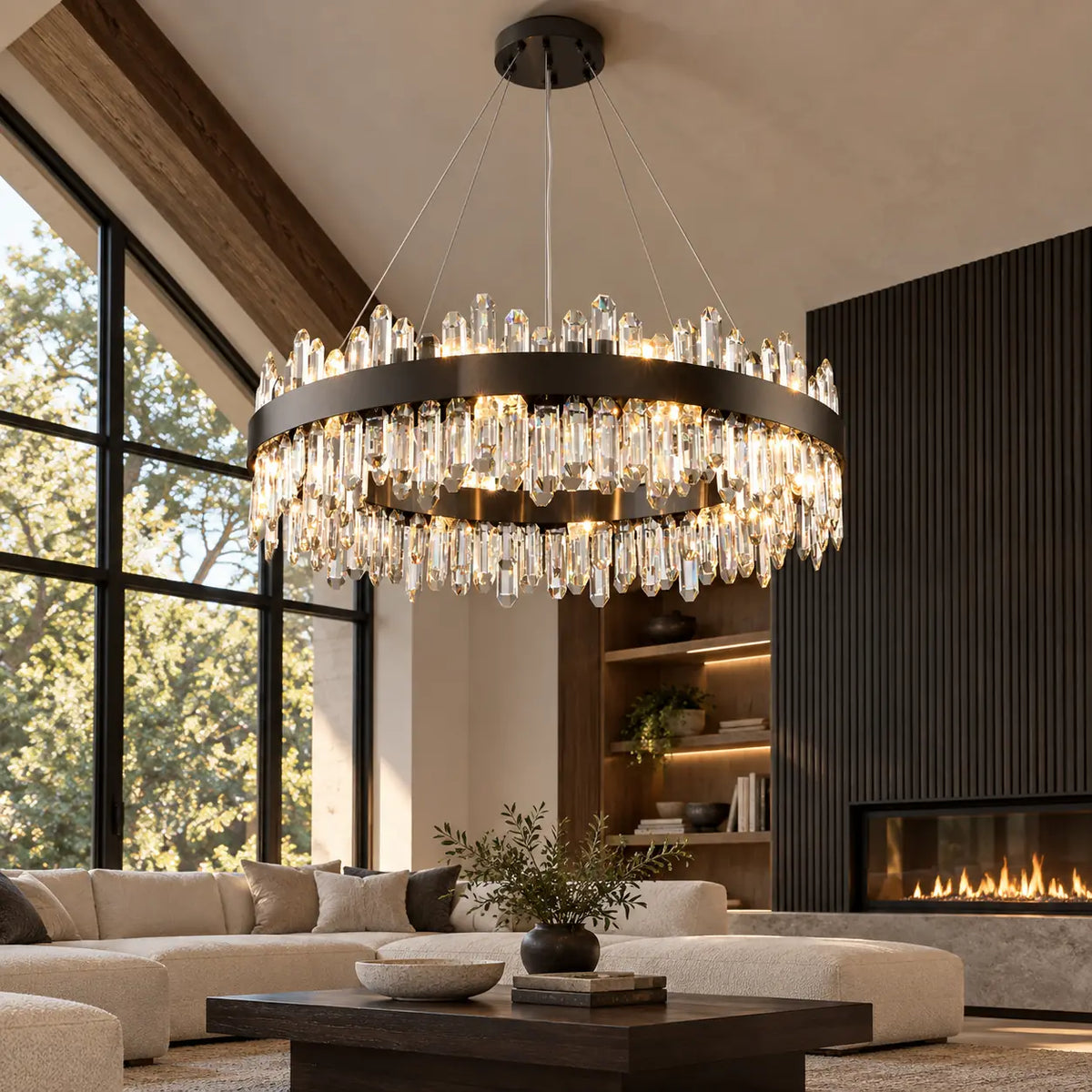
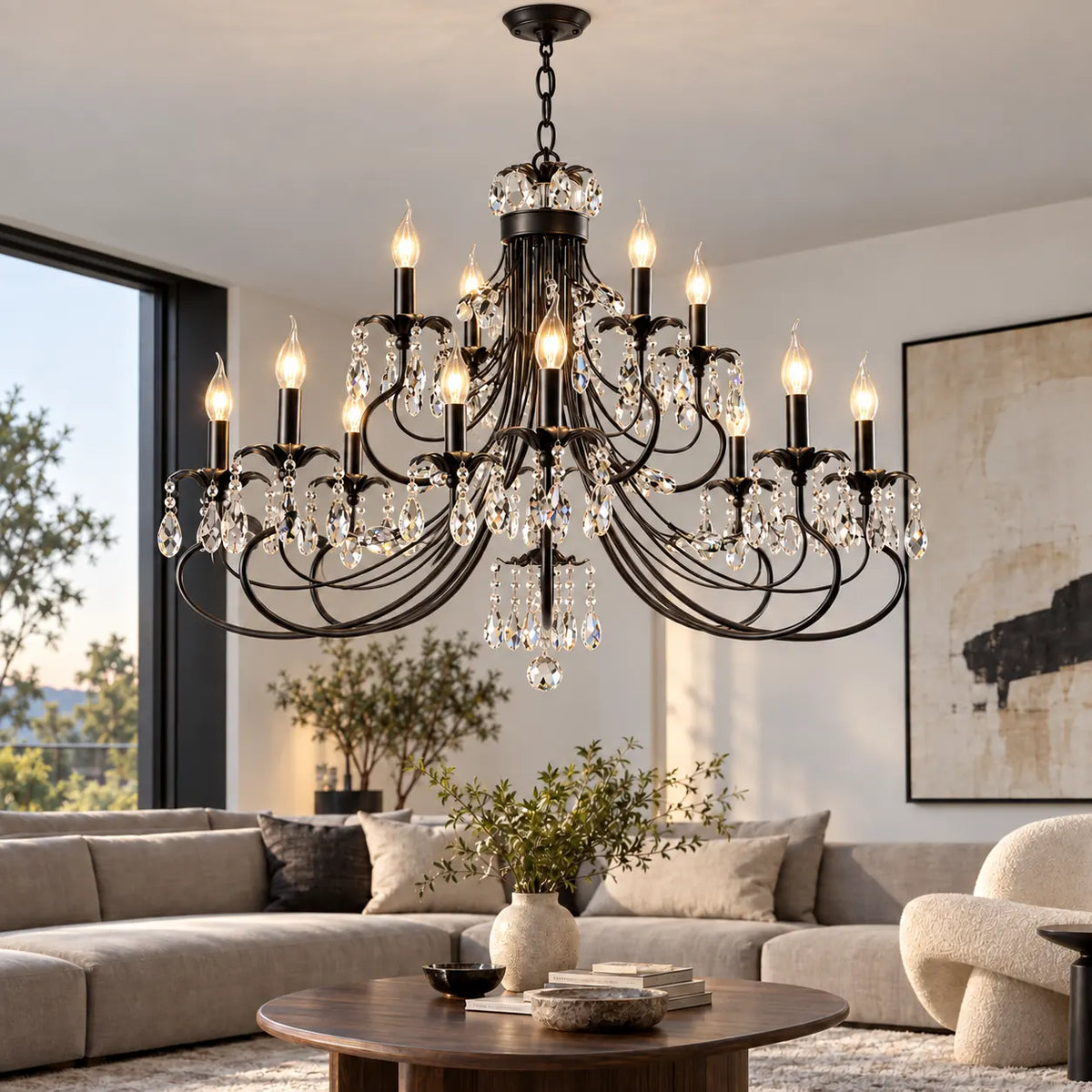
- Crystal: the formal room's classic, from full traditional sparkle to sparse modern crystal — the material range is in the crystal chandeliers collection
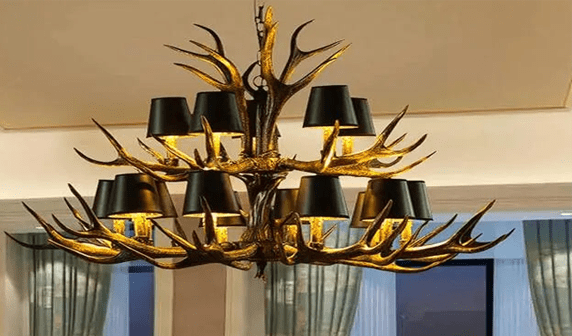
- Mid-century modern: brass arms, globe shades, and sputnik-adjacent spreads — the direction for walnut tables and MCM interiors, and one of the room's fastest-growing requests
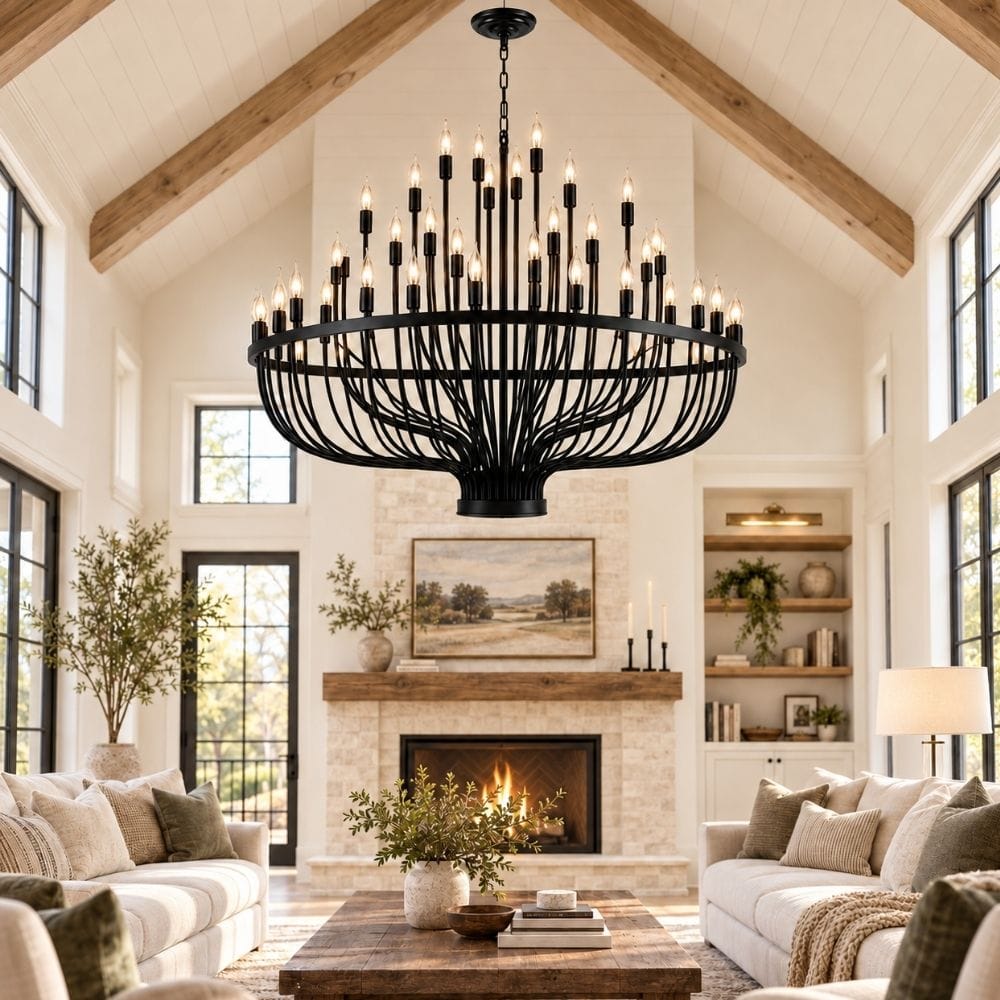
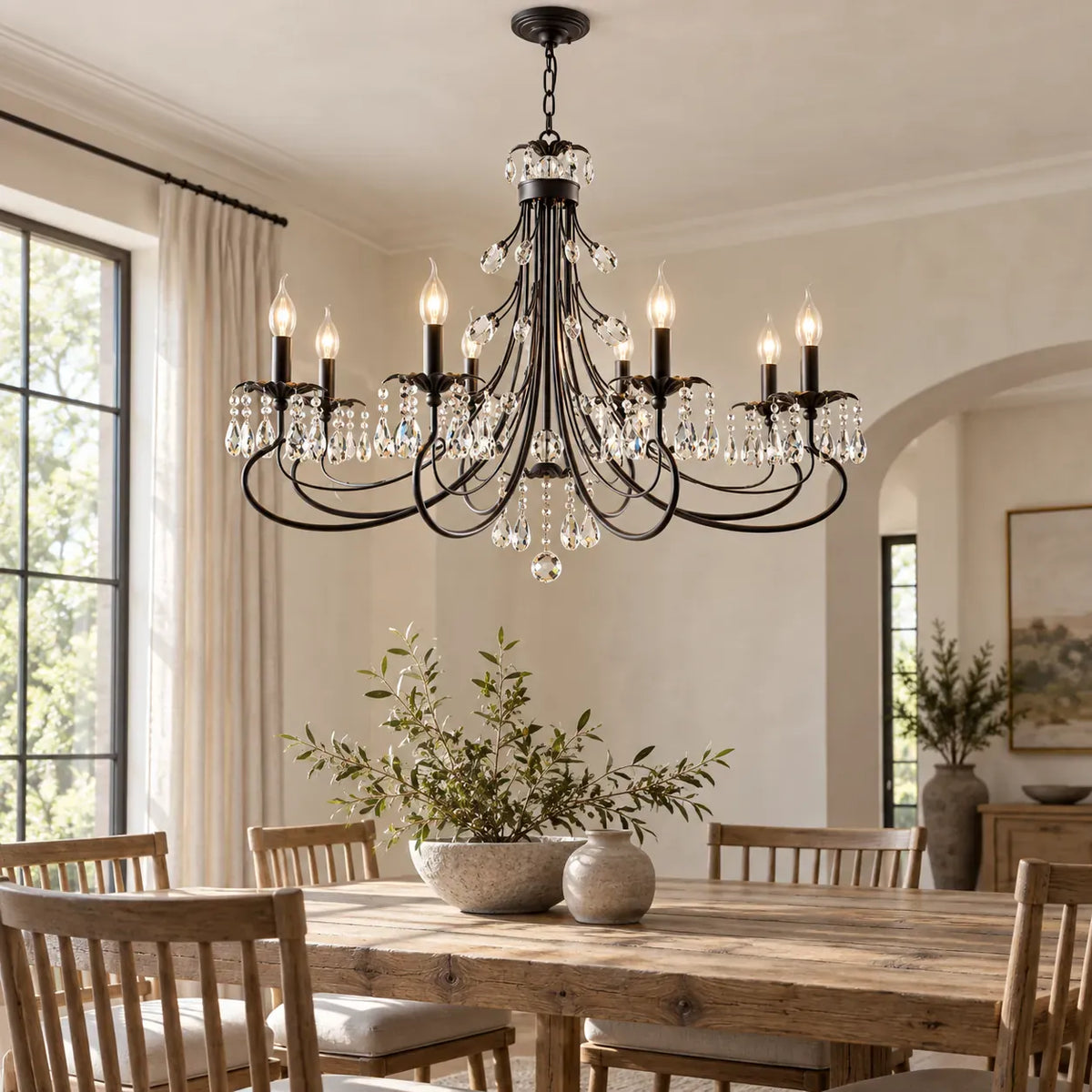
- Traditional and transitional: candle-arm and classic silhouettes for period homes — timeless forms that read refined rather than dated when scaled correctly
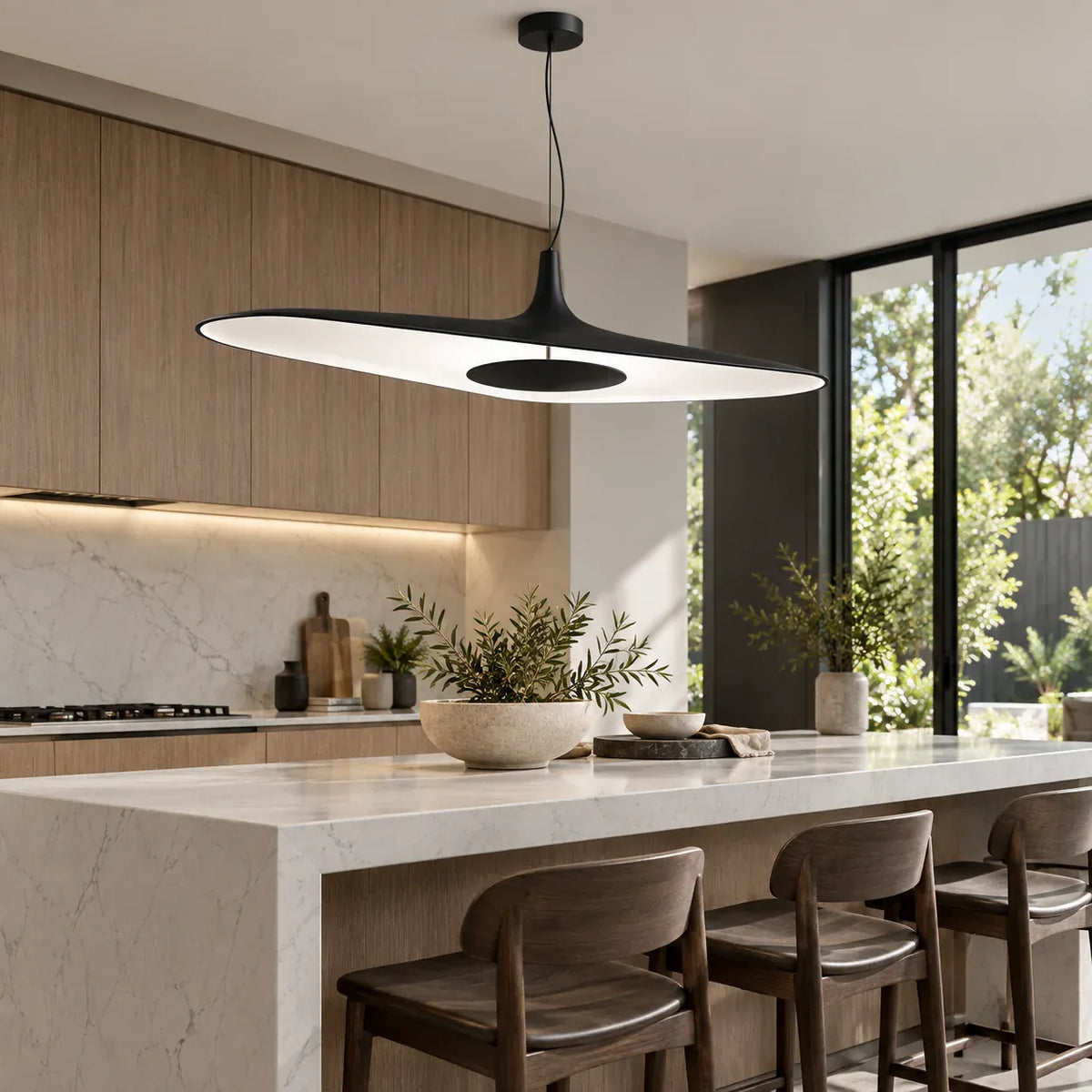
- LED and minimalist: slim integrated-LED rings and lines for strict-modern rooms, dimming from bright to candlelight in one fixture
What Makes a Dining Chandelier "Unique"
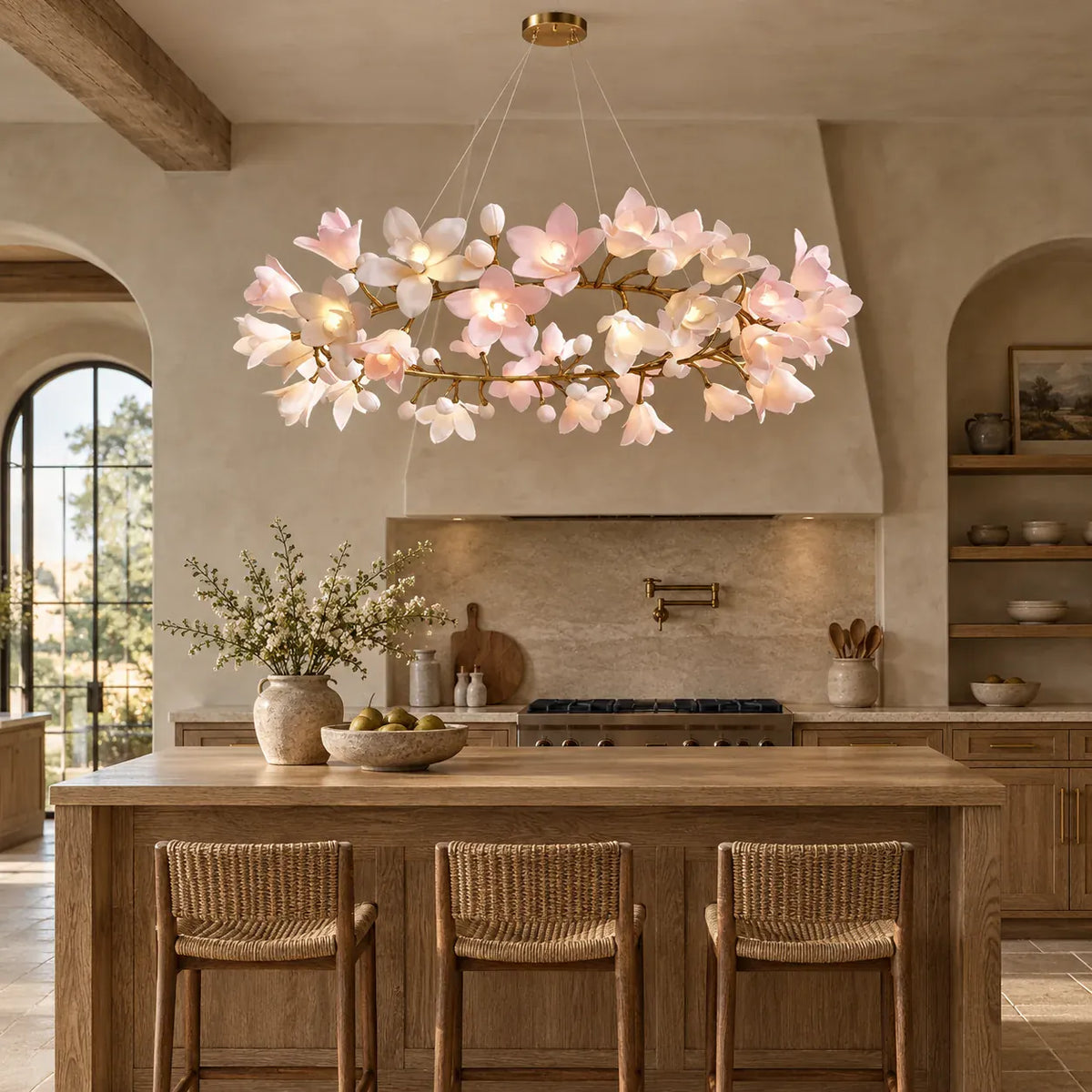
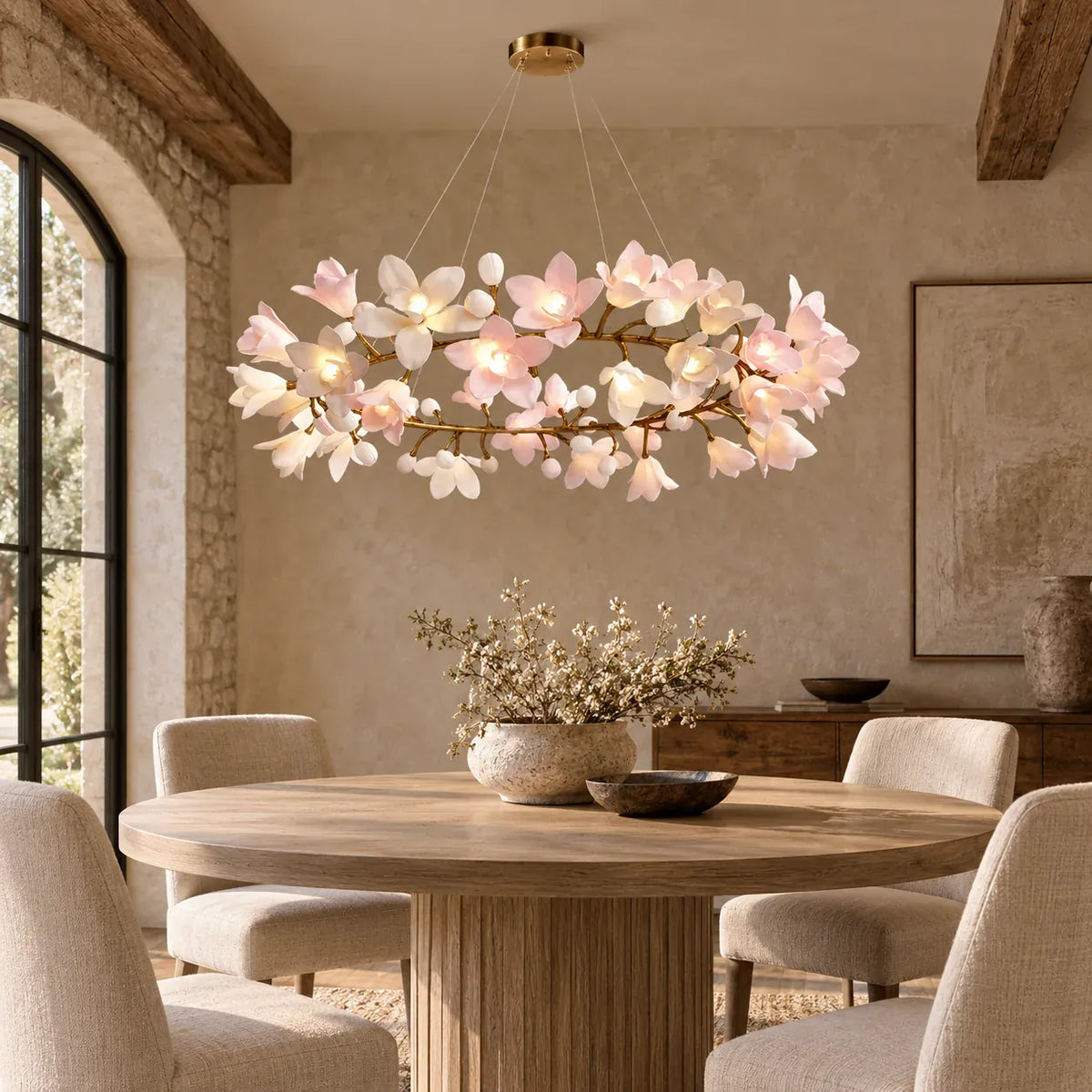
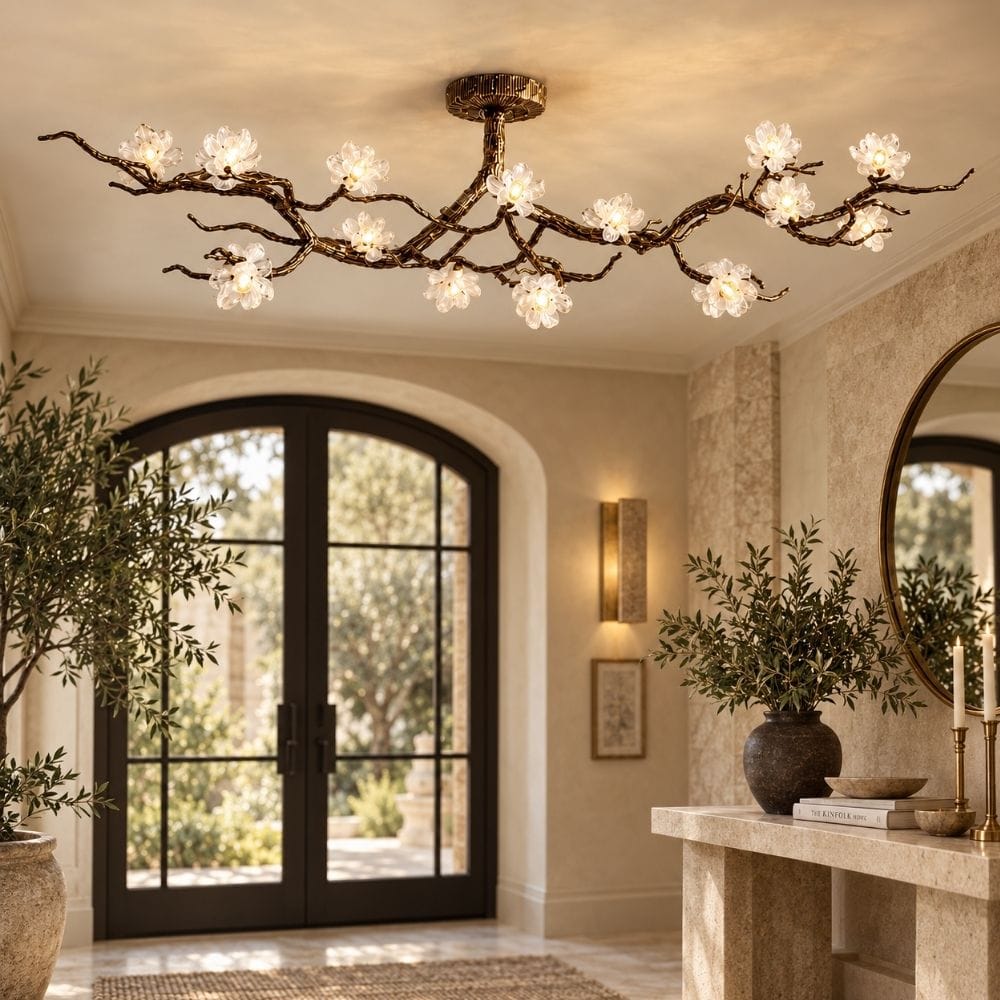
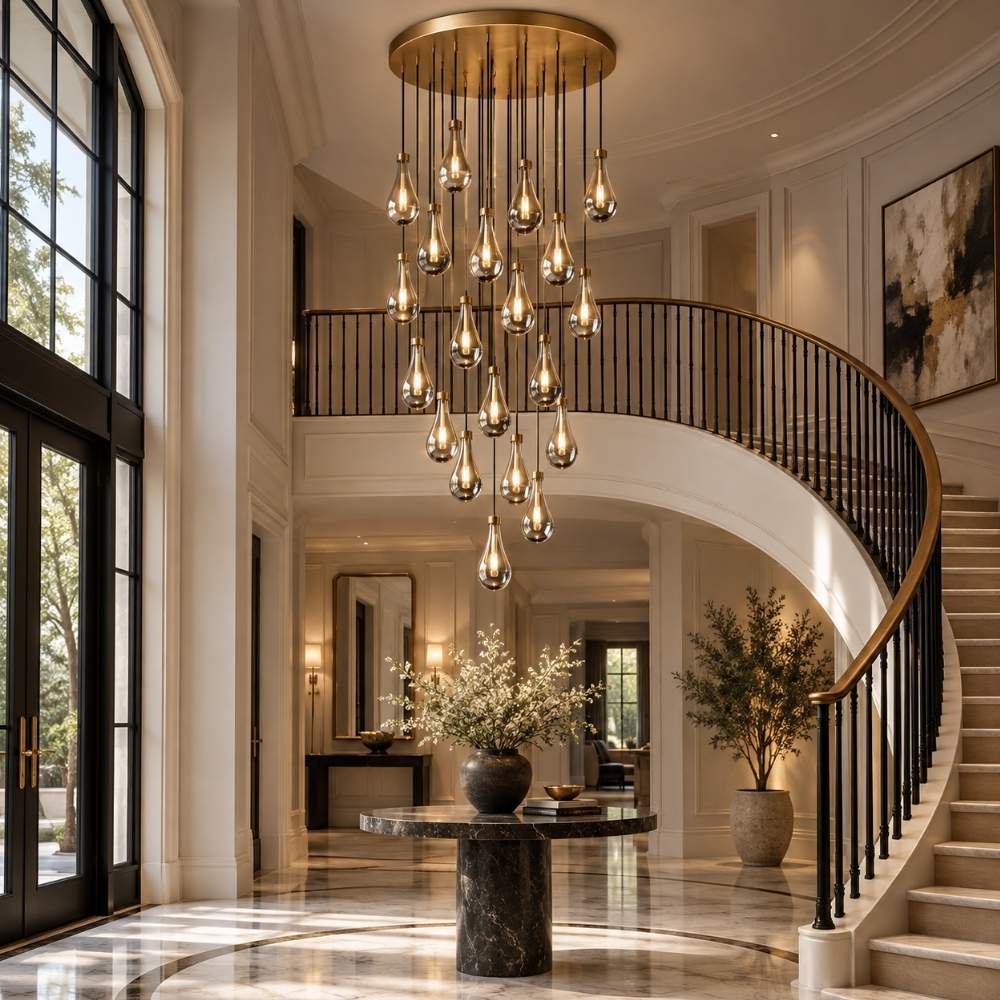
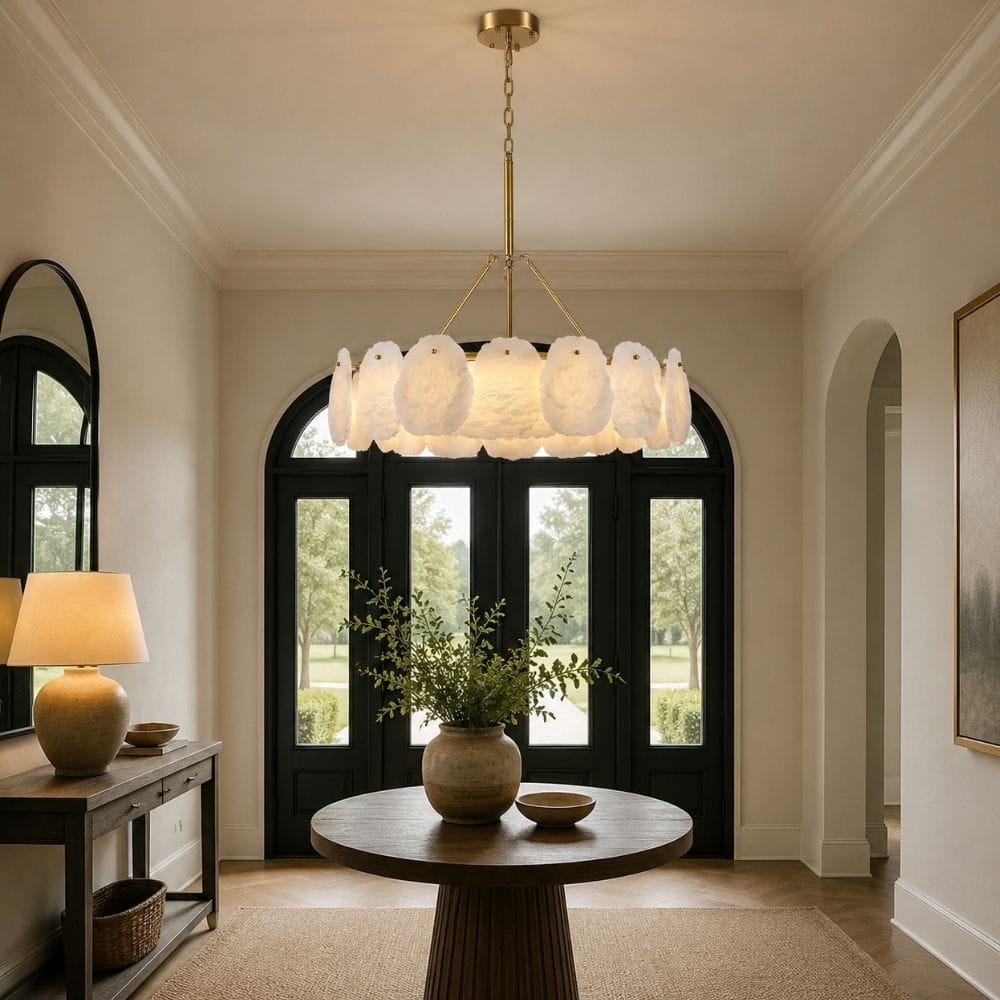
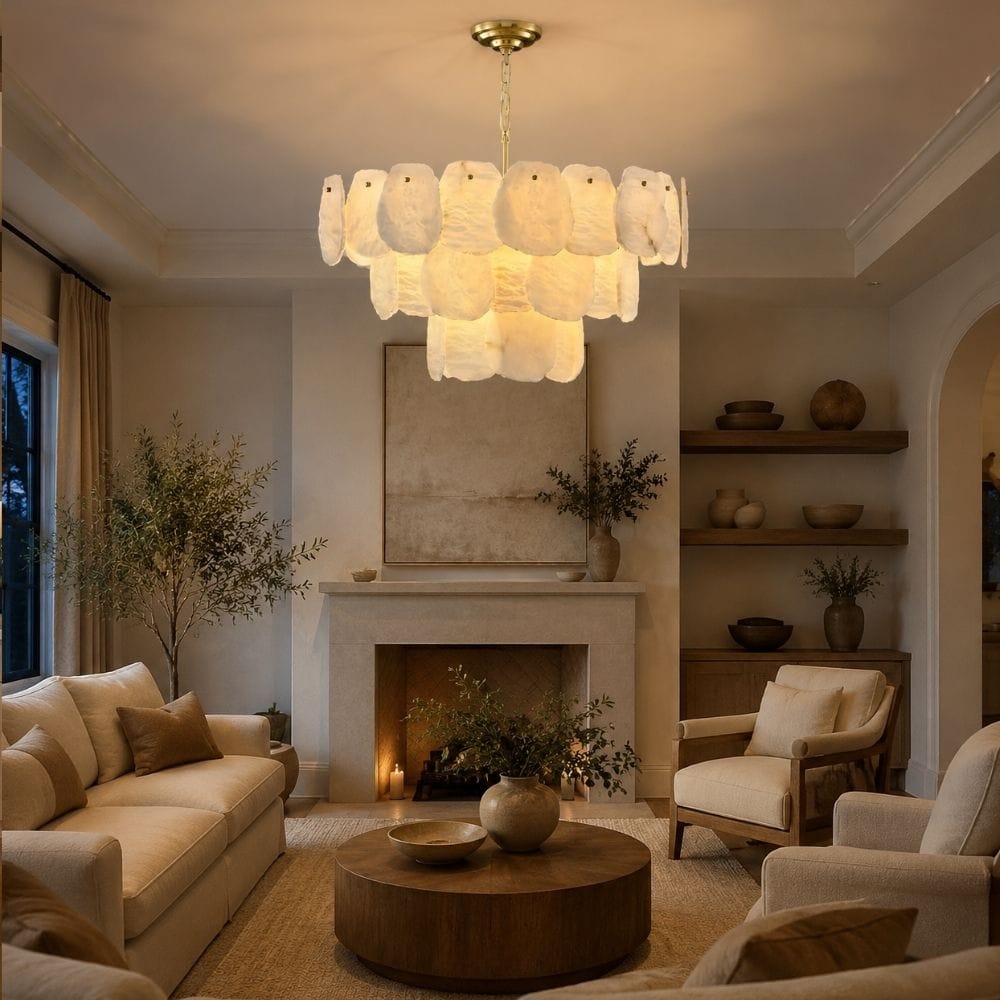
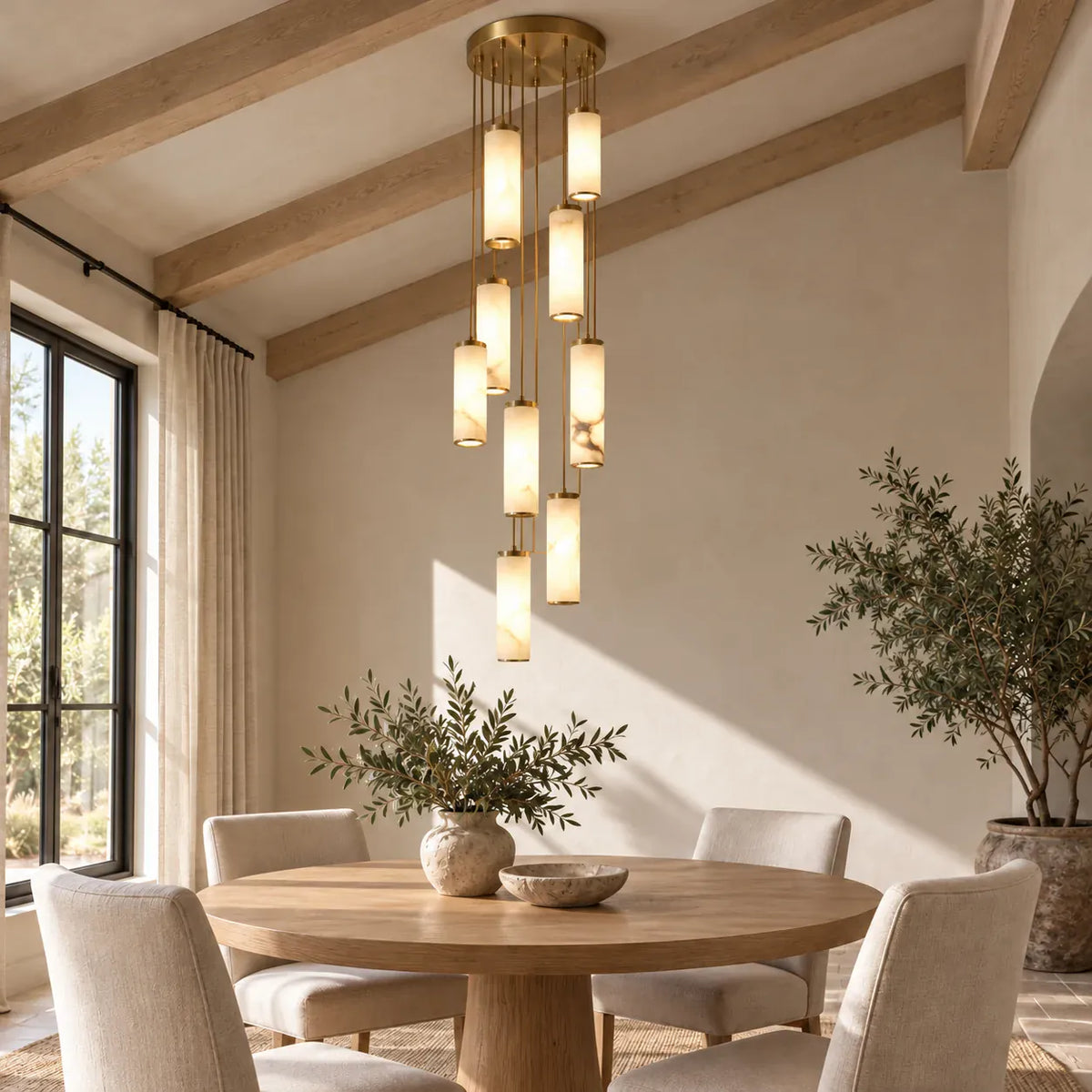
The most-searched adjective in this category is also the most misused. A unique dining fixture is not a strange one — it is a design with a singular idea executed confidently: a sculptural spread instead of a symmetric frame, an unexpected material (stone, wood, bubble glass) in a familiar silhouette, or statement scale where convention would shrink. The test is longevity: a genuinely distinctive design surprises on first sight and still resolves calmly above a thousand dinners, while a merely odd one exhausts its trick in a month. This collection curates toward the first kind — designer pieces whose novelty is structural, not decorative.
Small Dining Areas and Large Formal Rooms
Compact dining areas follow the same table-first math at smaller numbers — a 36" (91 cm) café-scale table takes an 18-24" (46-61 cm) fixture, and semi-flush designs keep presence without crowding an 8 ft ceiling. Large formal rooms scale the other way: statement diameters, tiered and long compositions for tables seating eight or more, and the confidence to round the formula result up rather than down — in a big room, the undersized fixture is the visible mistake. Eat-in kitchen tables and breakfast nooks are their own placement with their own steam-and-cleaning rules, covered in the kitchen chandeliers collection.
Dimming: The Non-Negotiable
A dining fixture without a dimmer is half a fixture. The room runs two registers — homework-and-bills bright, dinner-warm low — and one wall control covers both. Specify warm white (2700-3000K) bulbs with CRI 90+ so food and wood tones read true, choose dimmable integrated-LED designs where the fixture includes its source, and set the dinner level once: most rooms land between 20-40% output, the band where the fixture's material — crystal, brass, glass — does its best work.
Related Collections
Complete the space with the full chandelier catalog for statement and designer range, the linear chandeliers for rectangular tables, and the gold chandeliers for the warm finish family leading current dining design.
Frequently Asked Questions
What size chandelier for a dining room table?
One-half to two-thirds of the table's width for round designs — a 42" wide table takes a 21-28" fixture. For rectangular tables, use one-half to two-thirds of the table's length with a linear design.
How high should it hang above the table?
30-36" (76-91 cm) from tabletop to the fixture's lowest point, raised roughly 3" per foot of ceiling height above 9 ft.
What works over a long rectangular table?
A linear or oval composition sized to one-half to two-thirds of the table's length — it lights every seat where a single round fixture lights only the middle two.
Can a modern chandelier work in a traditional dining room?
Yes — the current transitional formula pairs clean modern forms with warm finishes (brass, bronze) so the fixture bridges period architecture and contemporary furniture. Scale and finish do the diplomacy.
What makes a dining room chandelier unique?
A singular design idea executed confidently — sculptural asymmetry, unexpected materials, or statement scale — that surprises on first sight and still resolves calmly above daily dinners. Novelty that is structural, not decorative.
Do I need a dimmer for a dining chandelier?
Effectively yes — the room runs both bright-task and dinner-warm registers, and one dimmer covers both. Most dinner settings land at 20-40% output in warm white 2700-3000K.