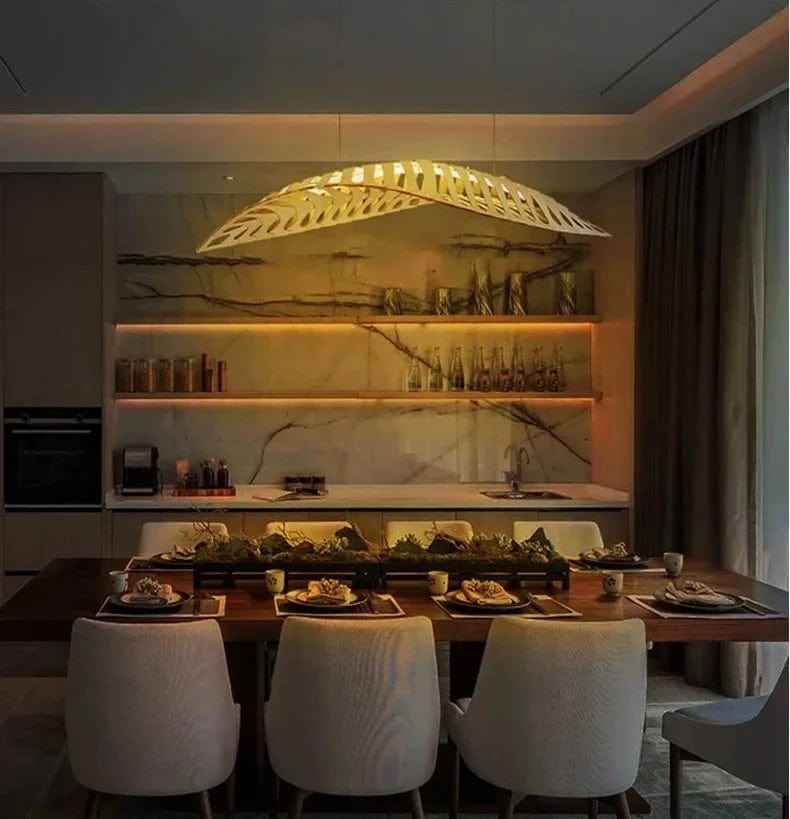


Why Wood Reads Warm Before It Reads Lit
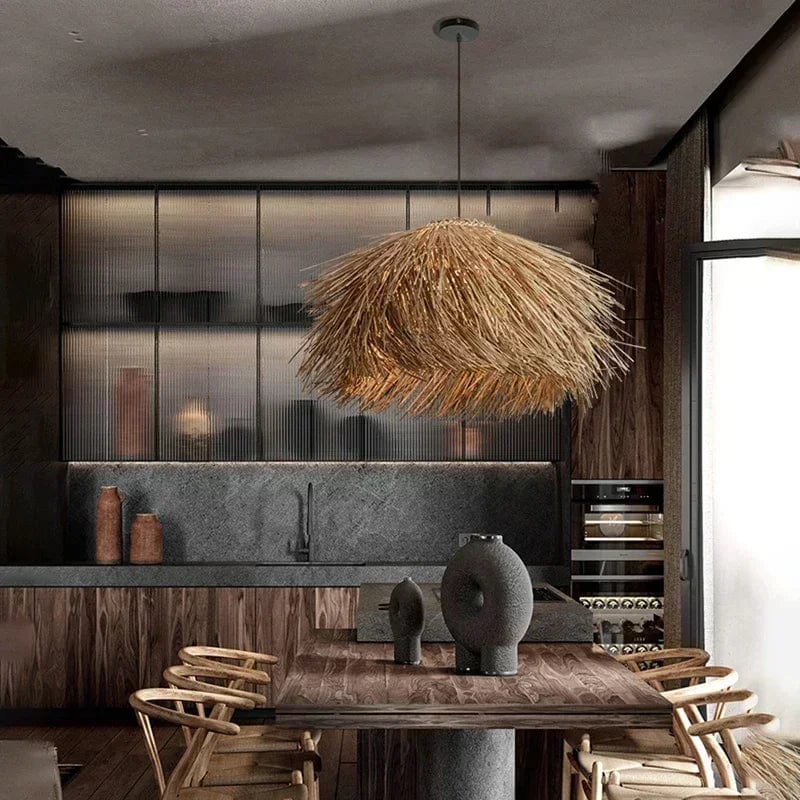
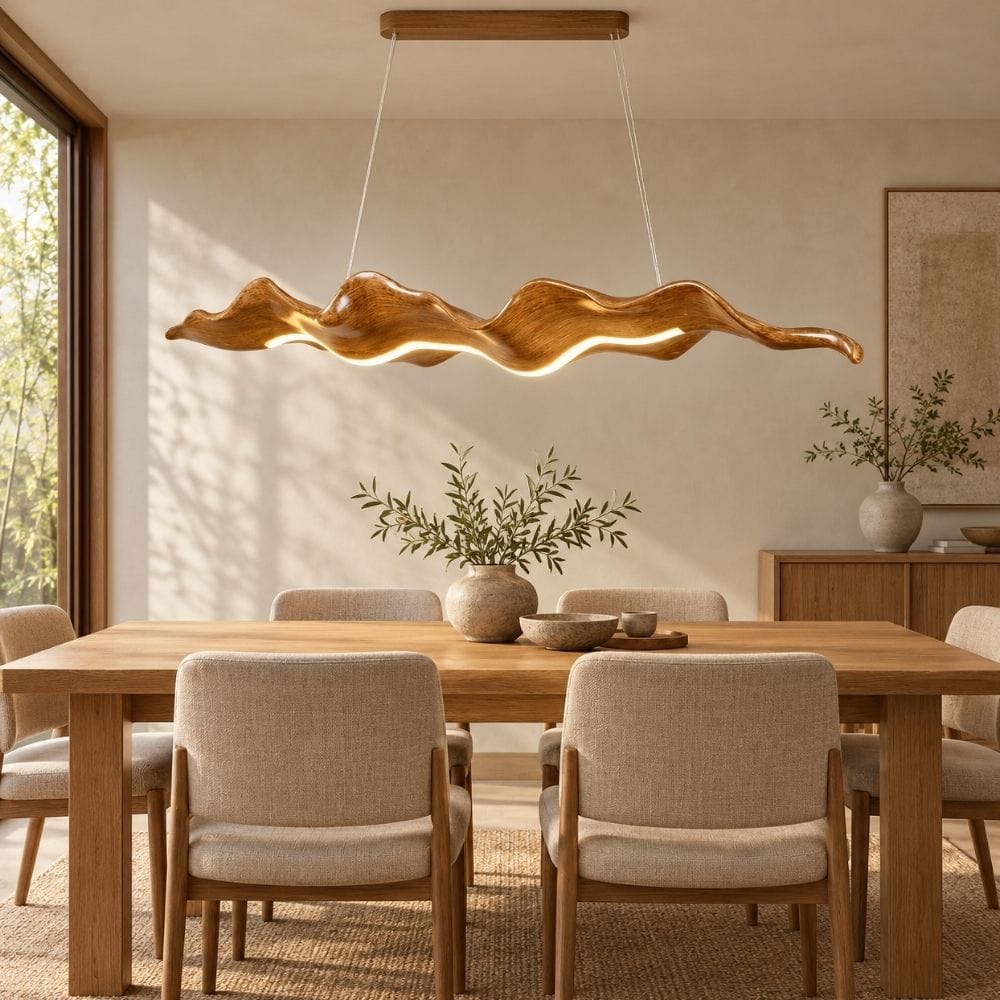
Every other chandelier material waits for the switch. Wood does not — grain, tone, and surface texture register the moment someone walks in, which makes a wood fixture the rare ceiling piece that earns its place during daylight hours as much as after dark. It also carries something metals cannot manufacture: variation. No two pieces share a grain pattern, so a wood chandelier is closer to furniture than to hardware, and rooms respond to it the way they respond to a good table. That is the whole argument for the category, and it explains why the style has crossed from rustic architecture into modern interiors that own nothing else made of timber.
Tone Decides More Than Style
- Natural and light: oak, ash, and pale finishes that keep a room feeling open — the Scandinavian and coastal register, and the direction that suits smaller rooms best
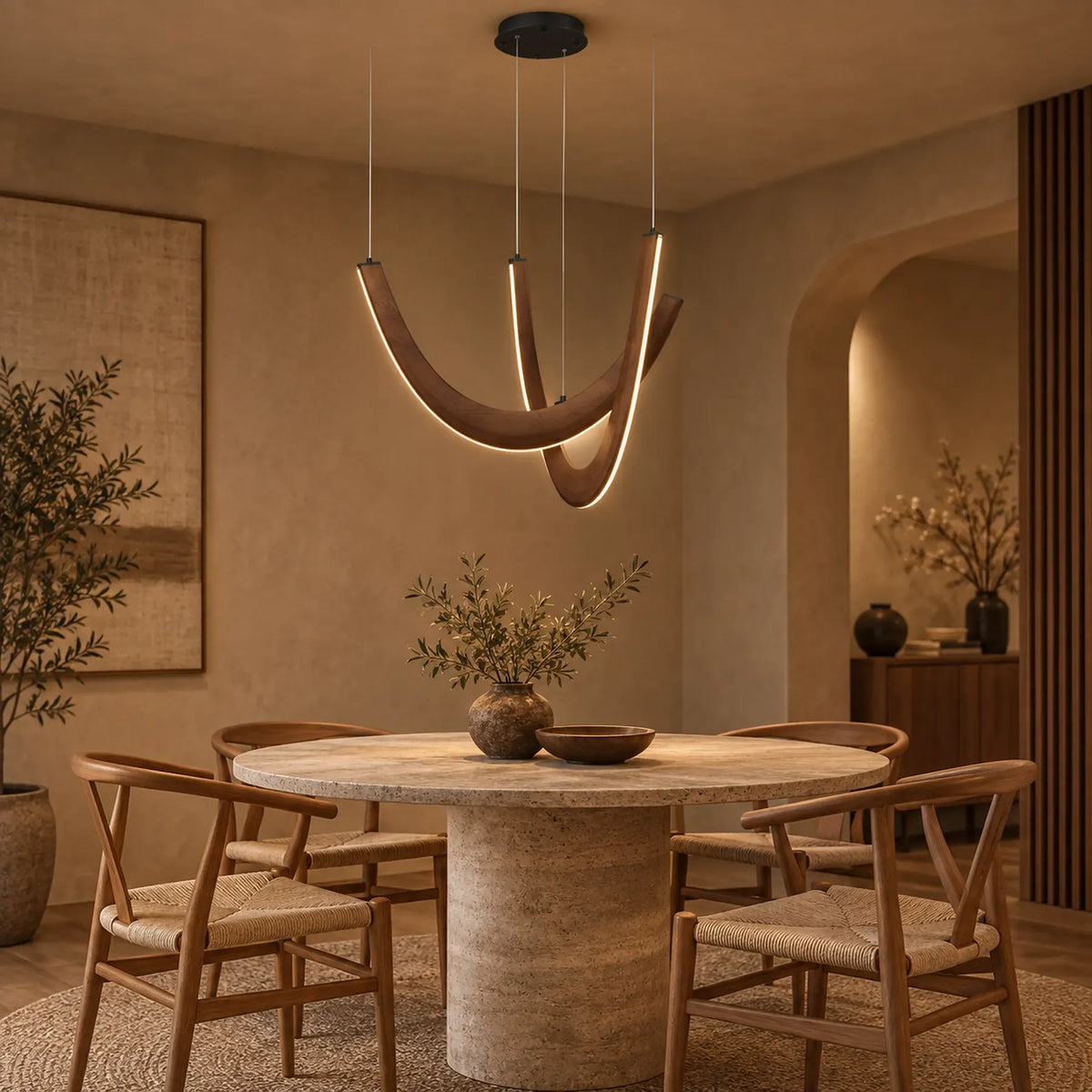
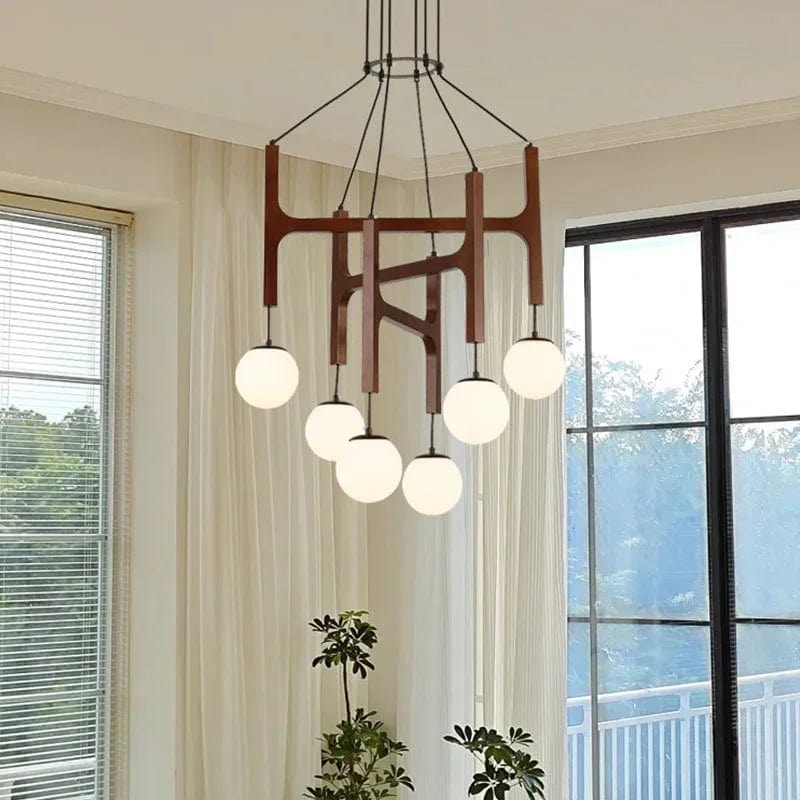
- Mid-tone walnut and teak: the mid-century inheritance — warm brown depth that pairs with brass, leather, and wool without argument
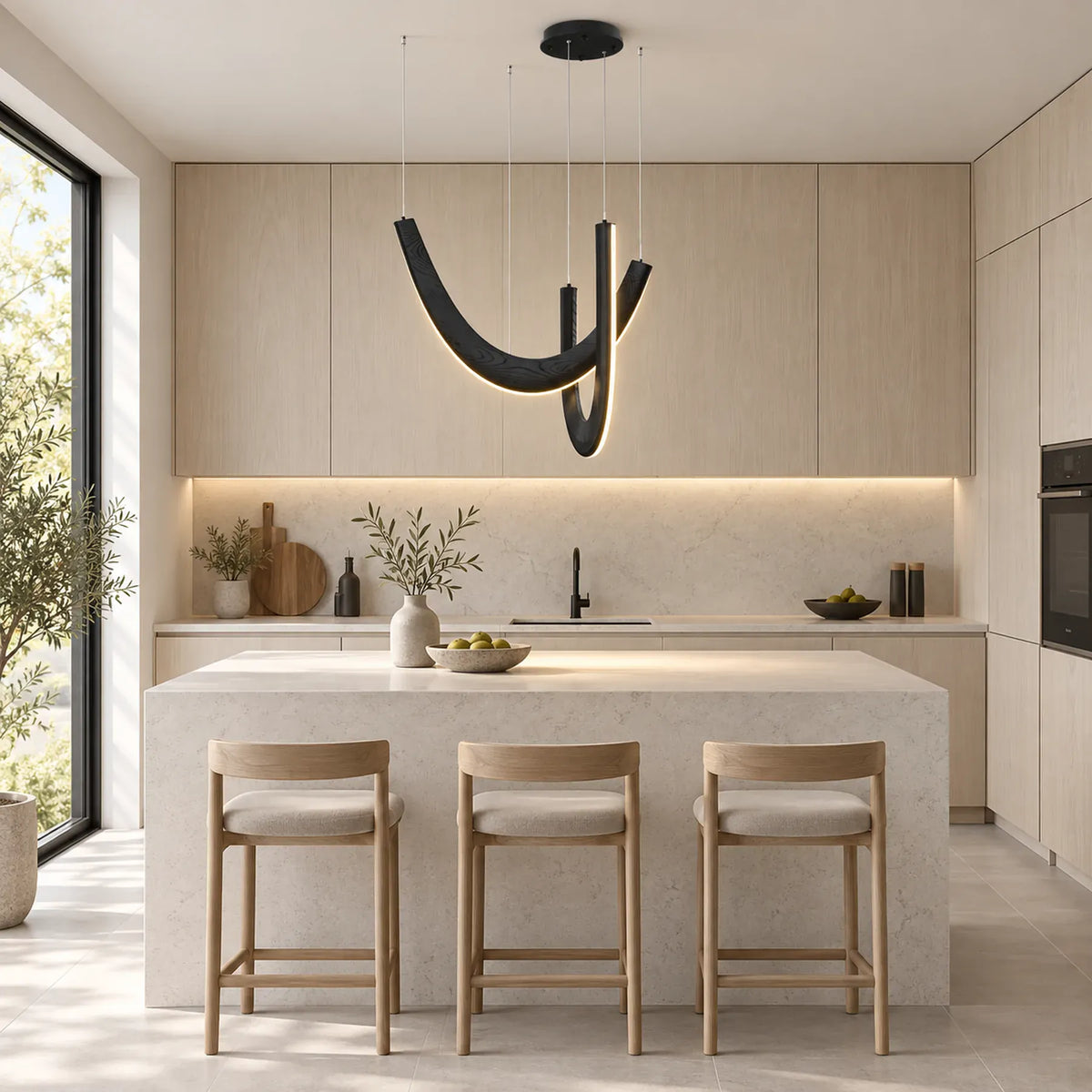
- Dark and espresso: the graphic end, where wood behaves like matte black but warmer — strongest against pale walls and in rooms with generous light
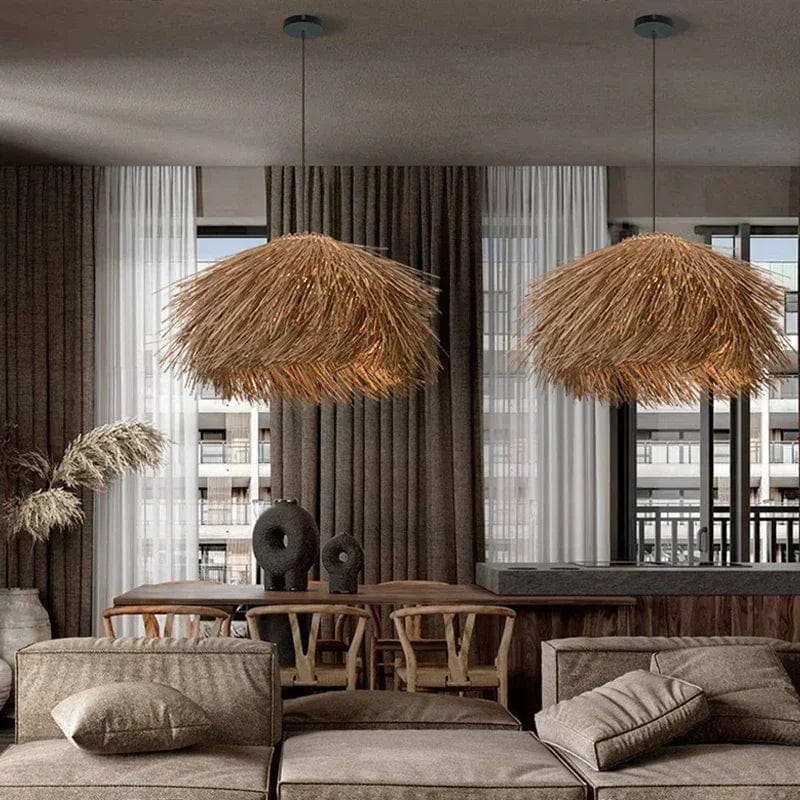
- Distressed and weathered: deliberately aged surfaces with visible wear and grey-driftwood undertones — the character finish for farmhouse, coastal, and collected interiors
- Grey and whitewashed: the cooled register that bridges wood warmth with contemporary grey palettes
The practical rule: match tone to the room's existing wood — flooring, table, beams — either closely or with deliberate contrast, never almost. A fixture two shades off the floor reads as a mistake, while a clear contrast reads as a decision.
Wood and Metal: The Category's Signature Pairing
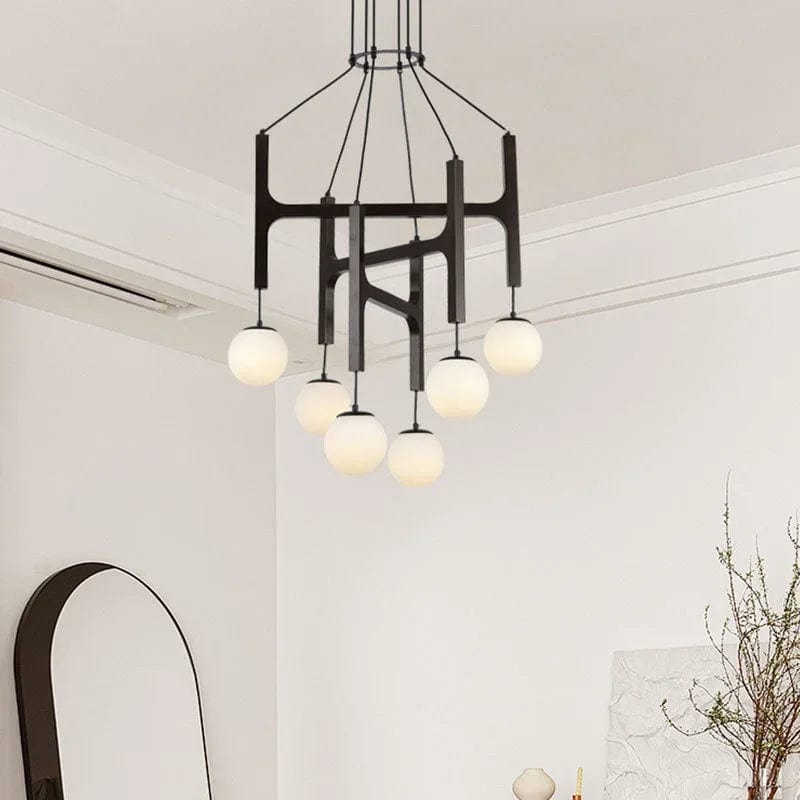
Most designs here are not pure timber, and that is a structural fact rather than a compromise. Wood carries warmth but not tension; metal carries load in thin sections. Combined, the metal frame holds the geometry — a true circle, a straight beam, a rigid square — while the wood supplies the surface the eye actually reads. The pairing also sets the style dial: wood with blackened iron reads rustic and industrial, wood with brass reads mid-century and warm-luxury, wood with matte white or nickel reads Scandinavian and coastal. The metal side of the equation continues in the iron chandeliers collection and the copper & brass chandeliers collection.
Forms Wood Takes Well
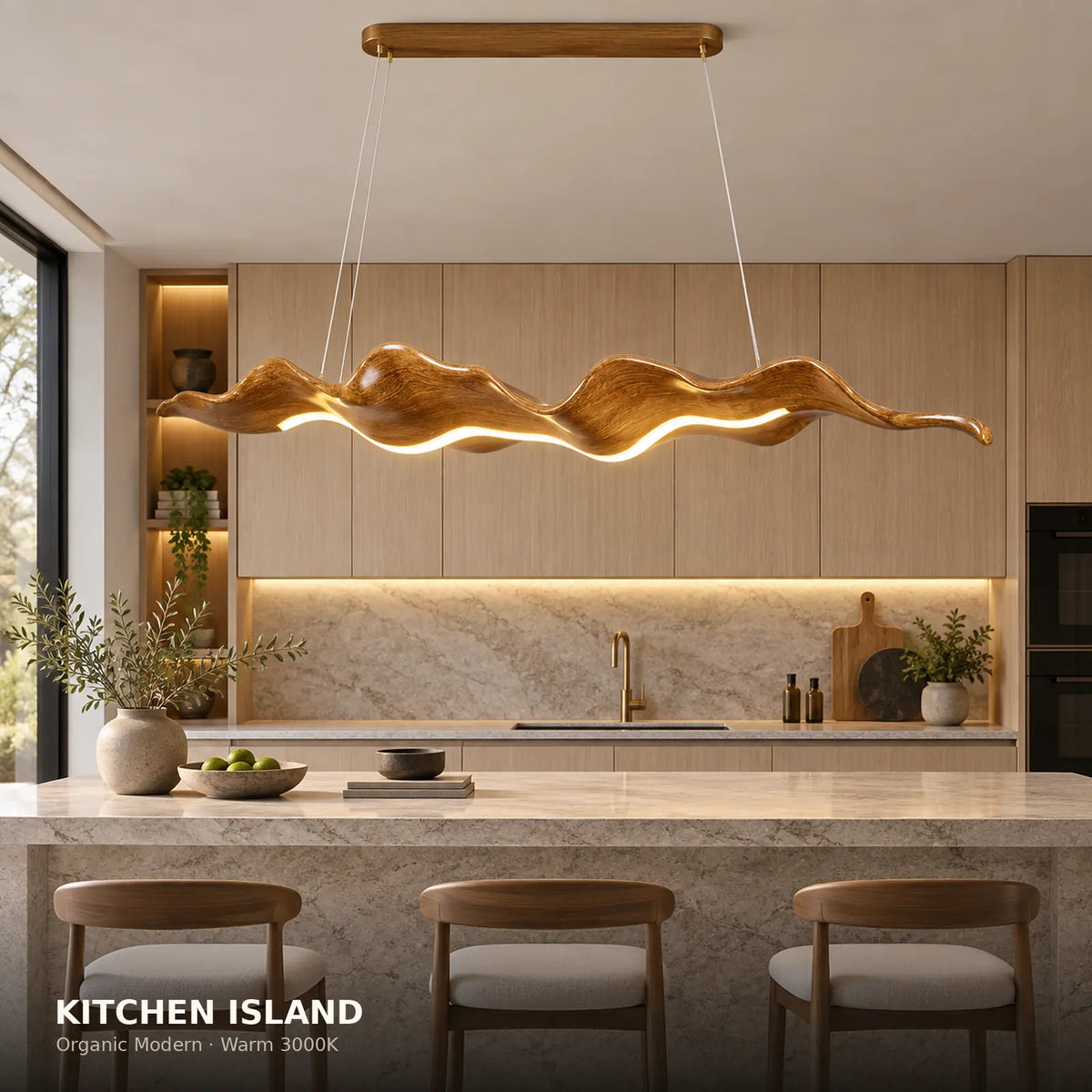
- Beams and linear bars: a single timber run over a long table — the format that suits rectangular dining and kitchen islands, extended in the linear chandeliers collection
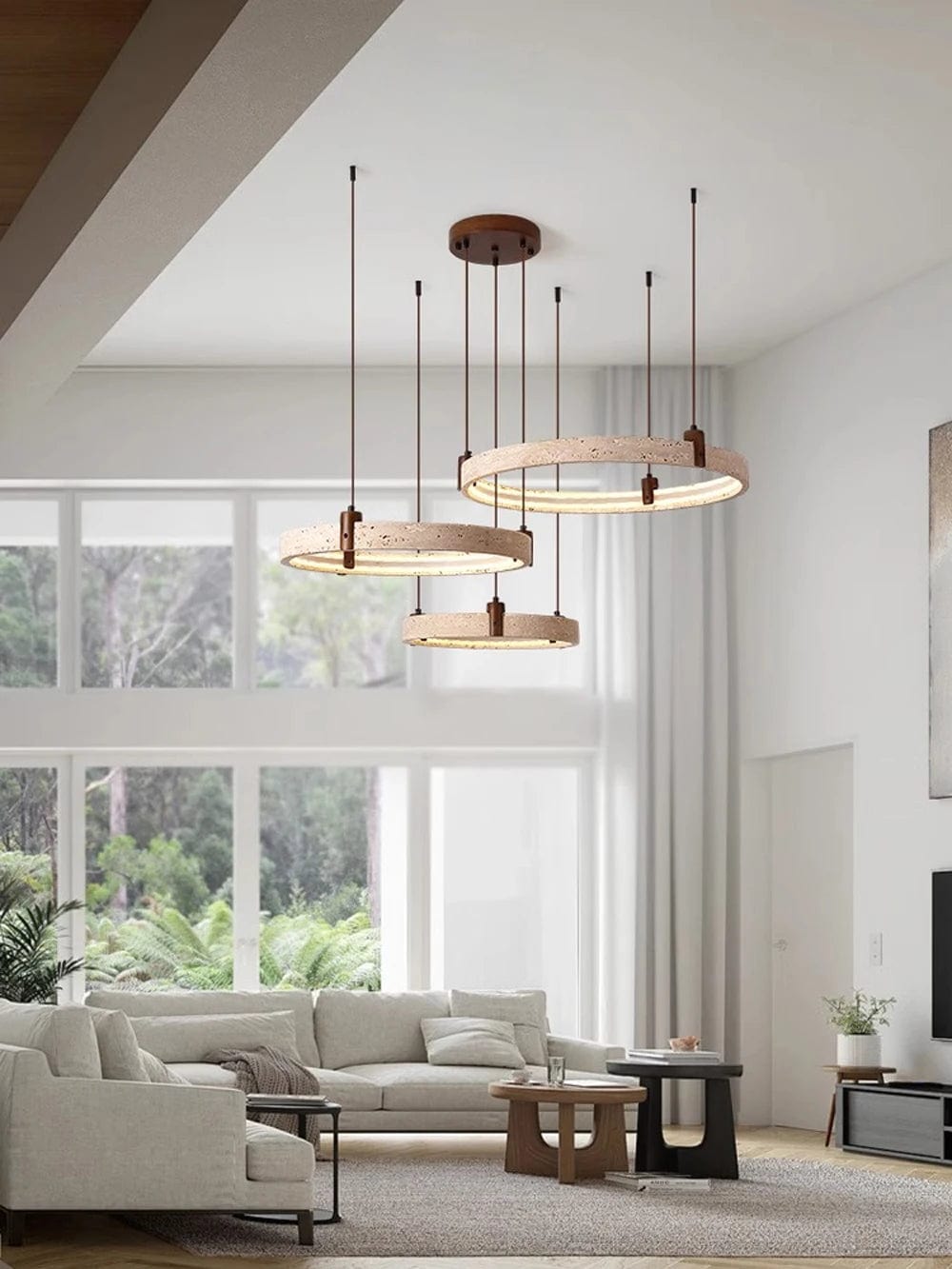
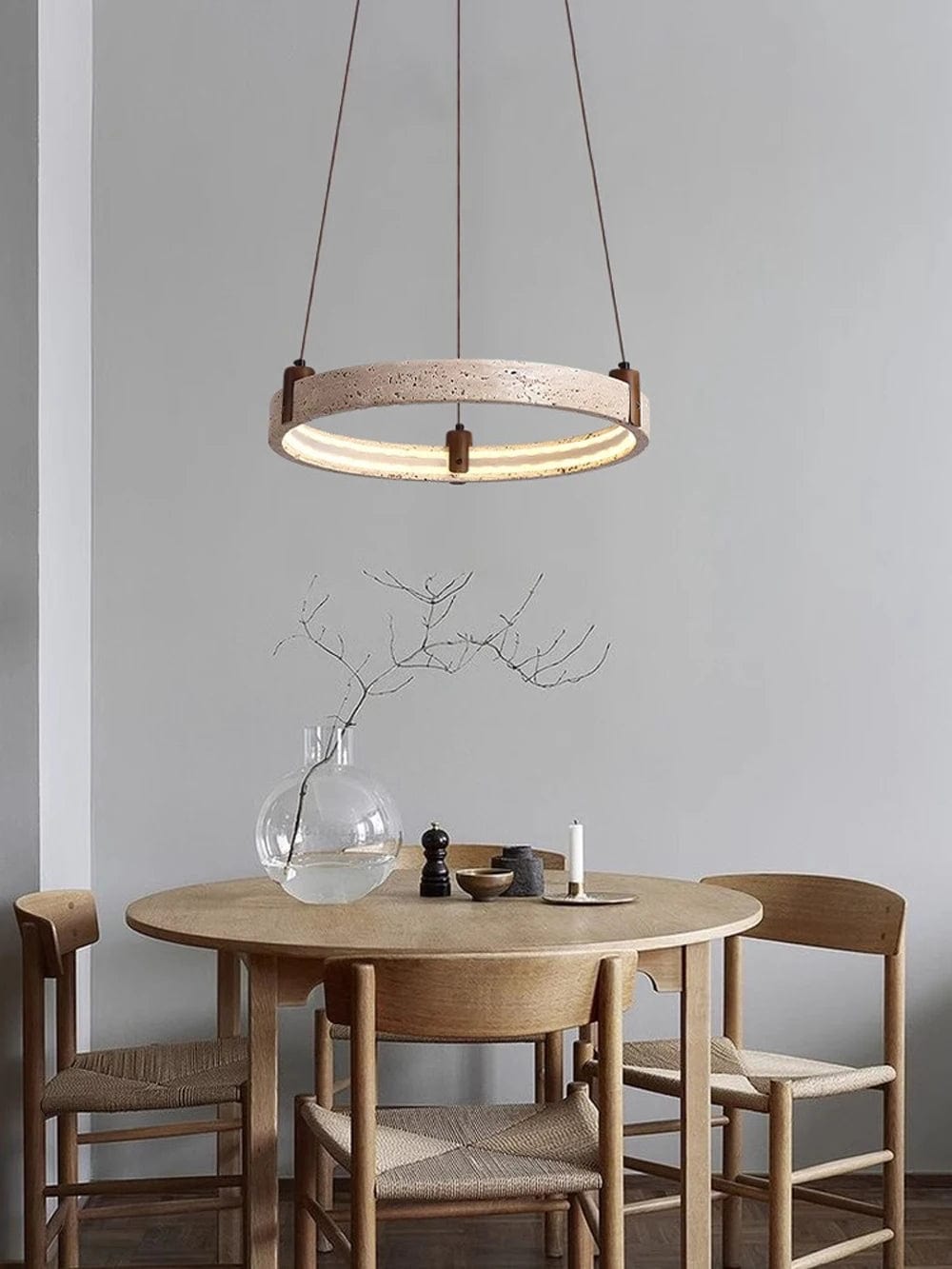
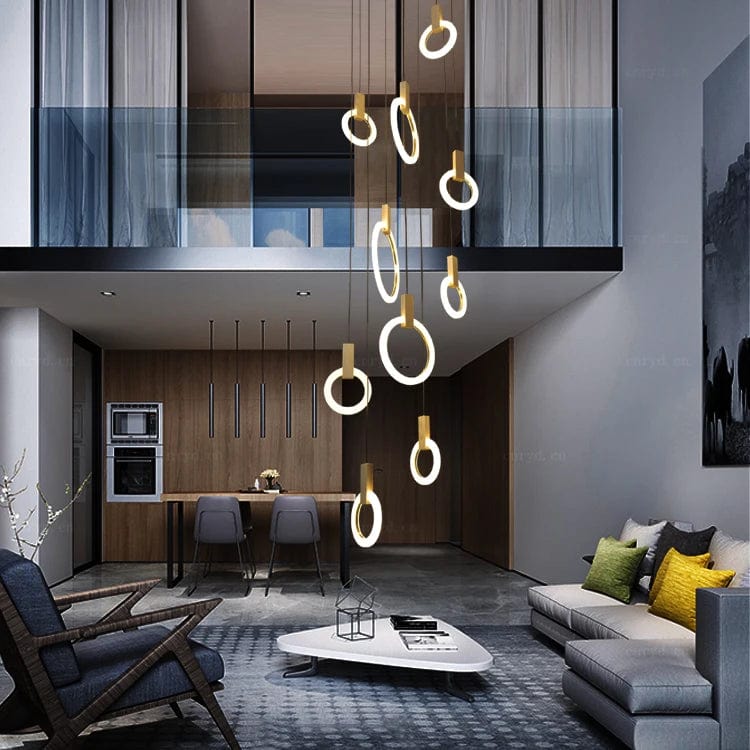
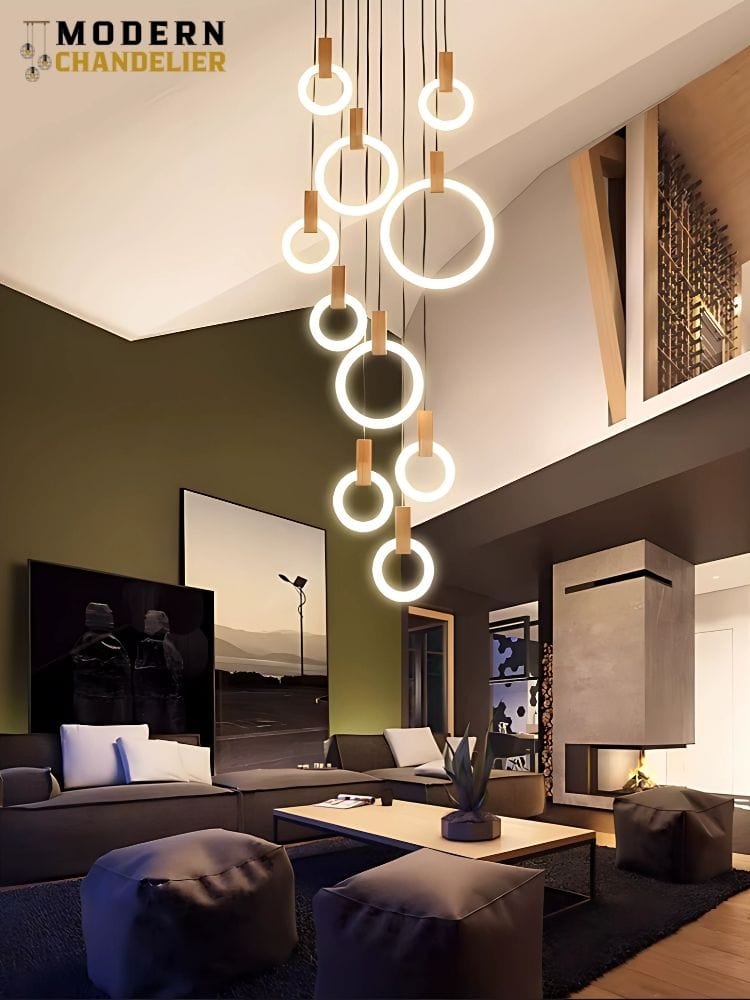
- Circles and rings: steam-bent or segmented rounds, often on a metal frame — the modern default over round tables and seating groups
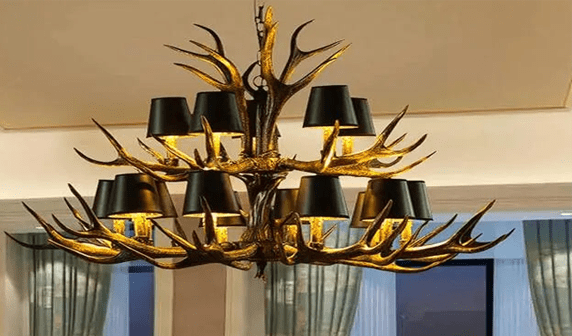
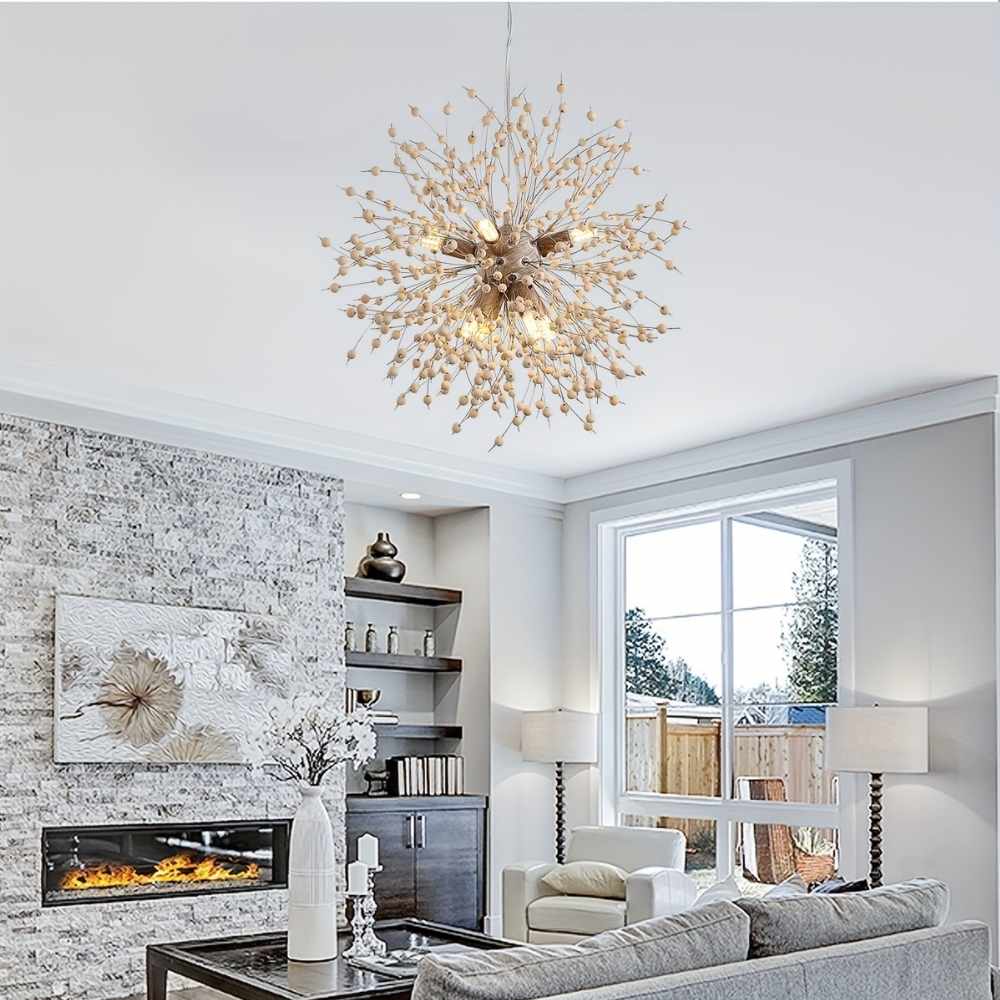
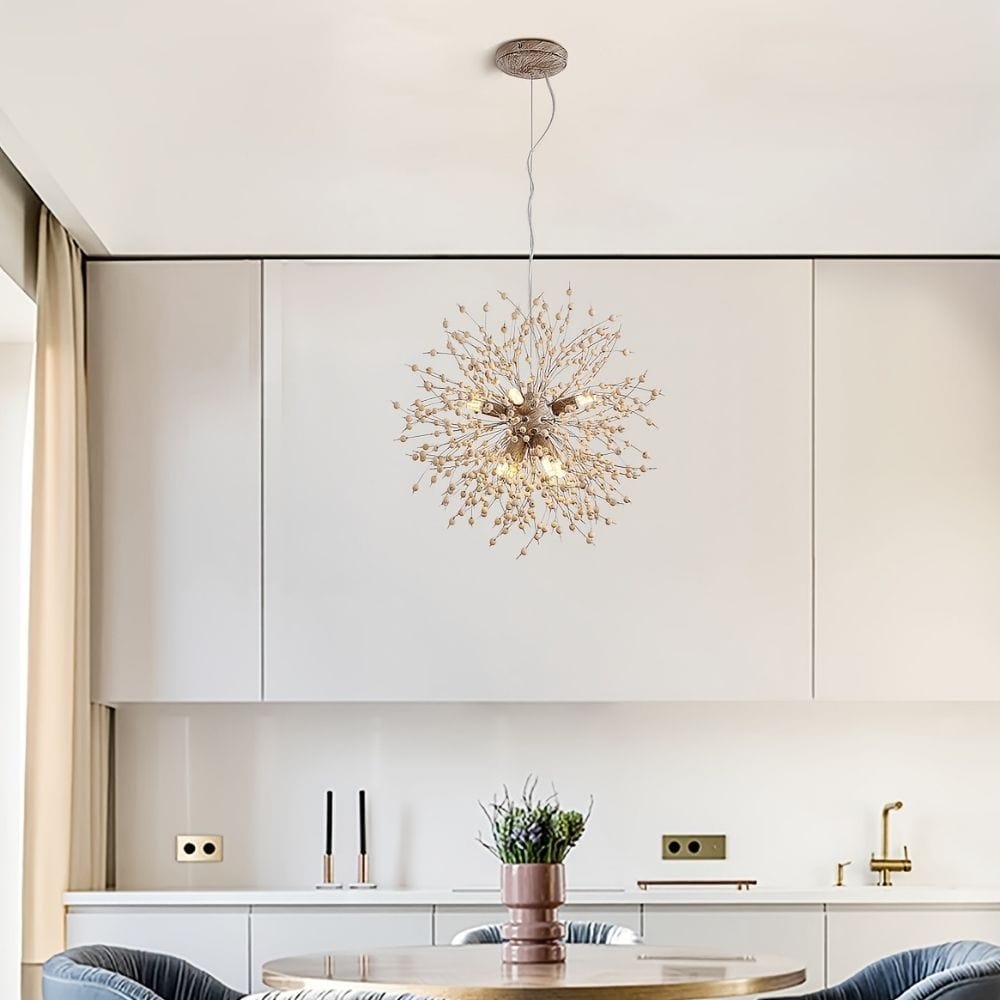
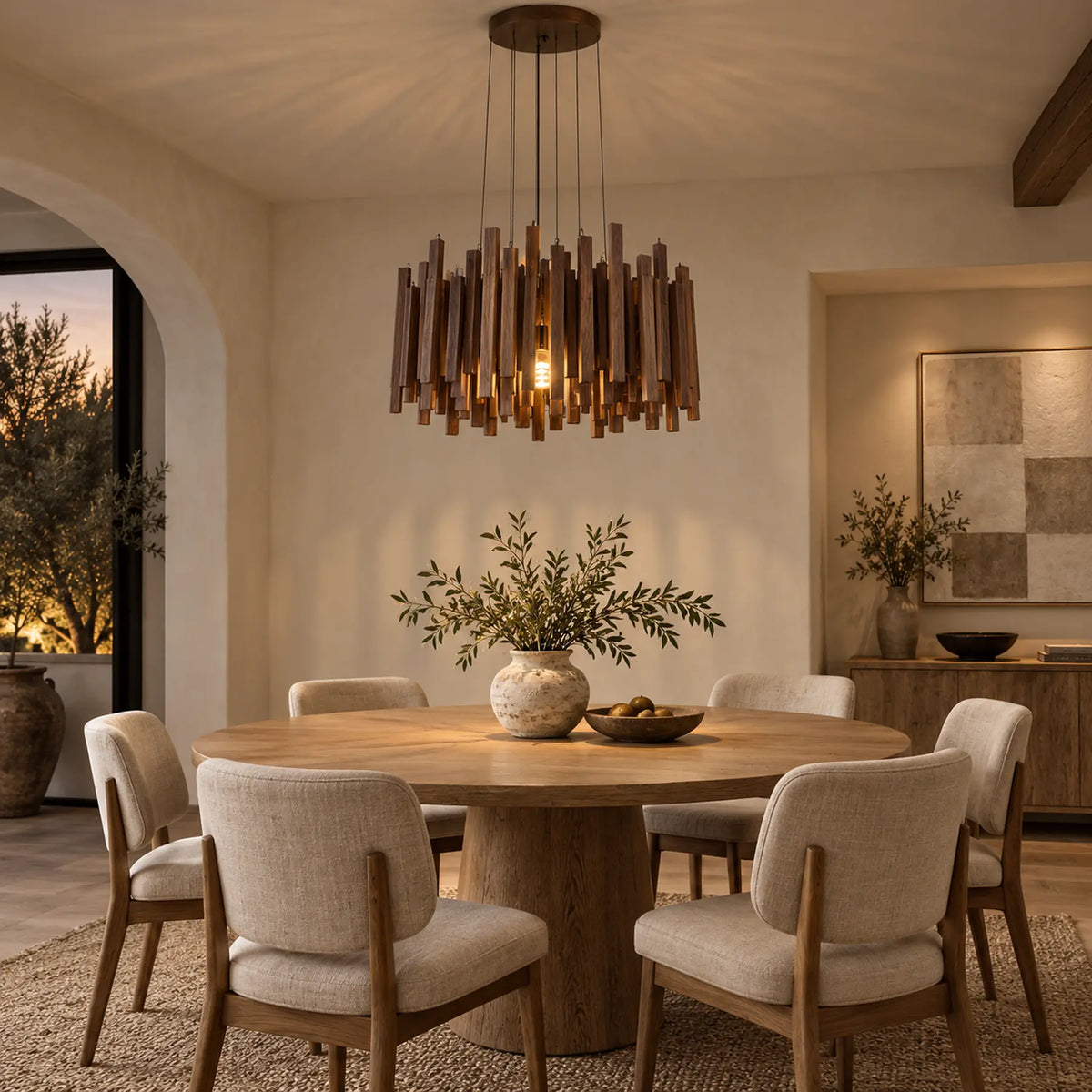
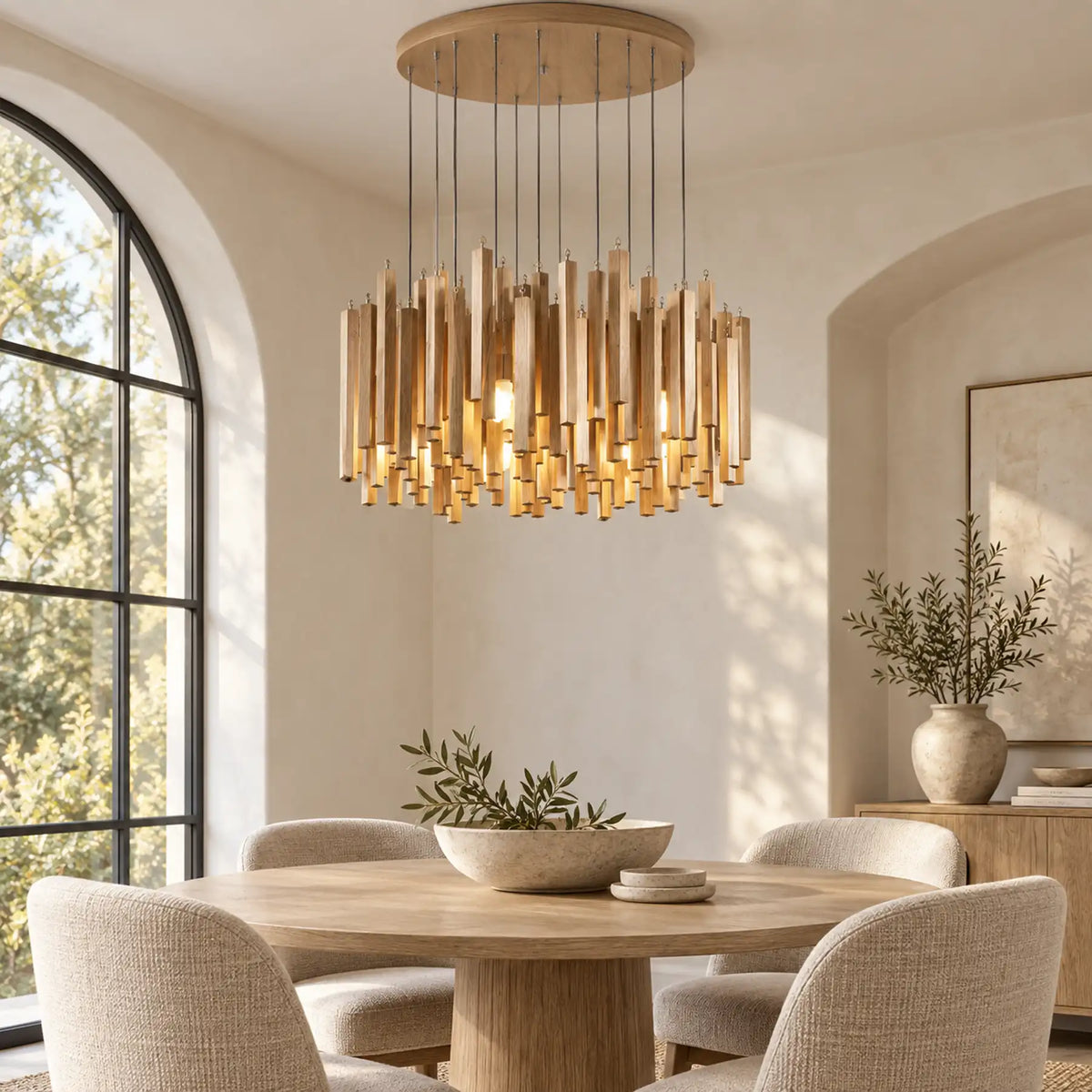
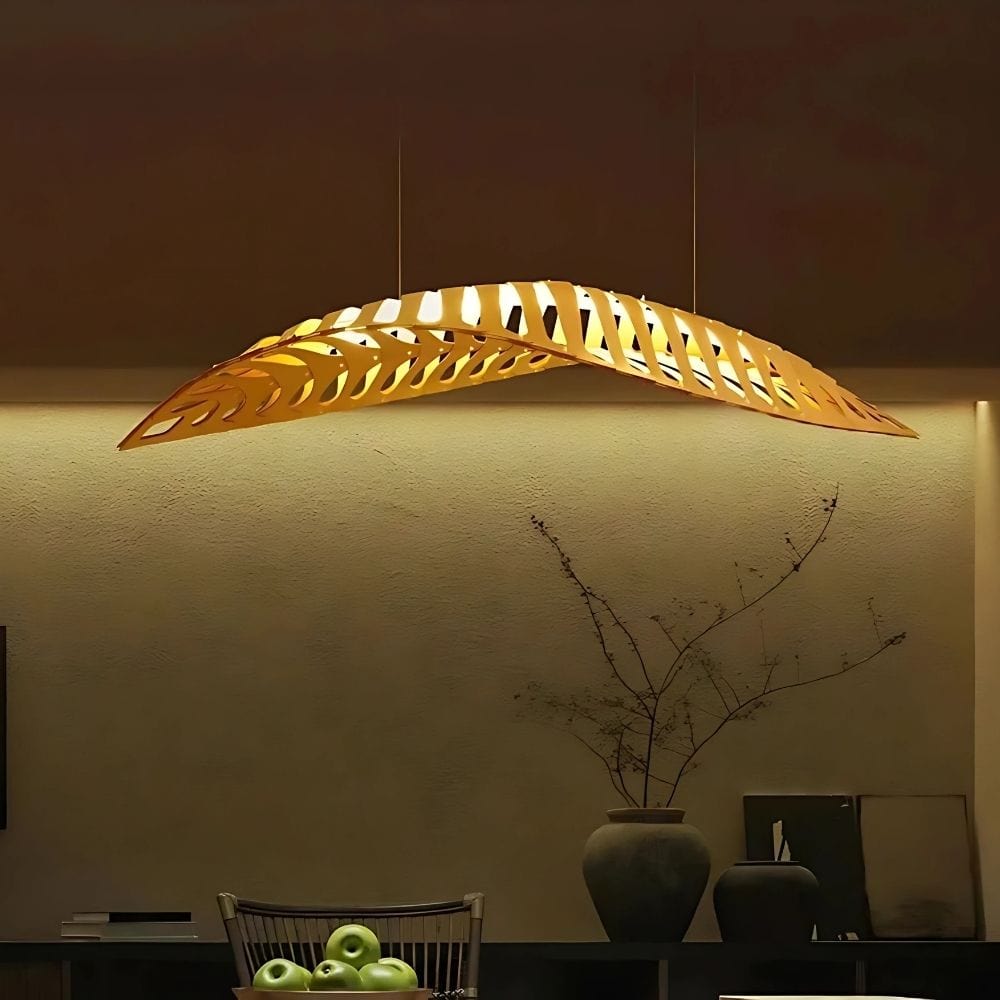
- Slats and sticks: repeated thin elements creating rhythm and shadow — the sculptural direction that reads architectural rather than rustic
- Squares and rectangles: framed geometry where wood's warmth softens hard corners
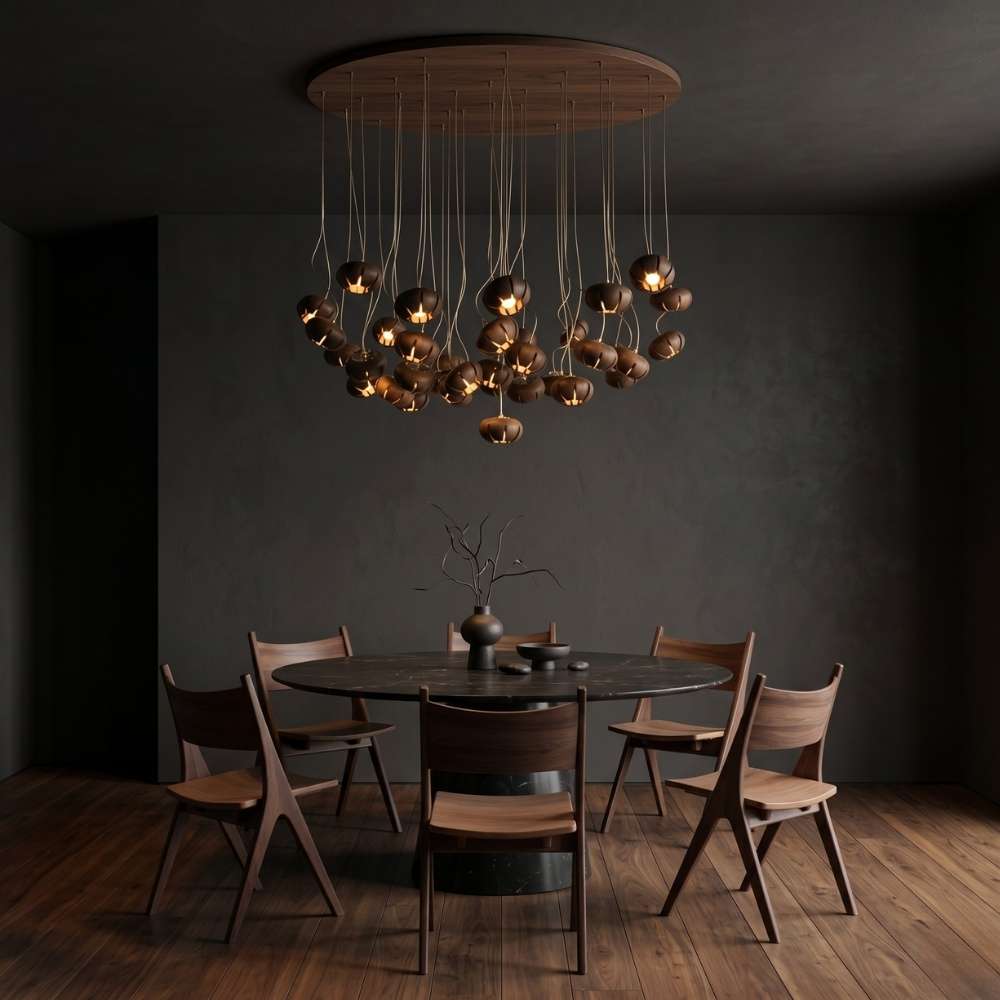
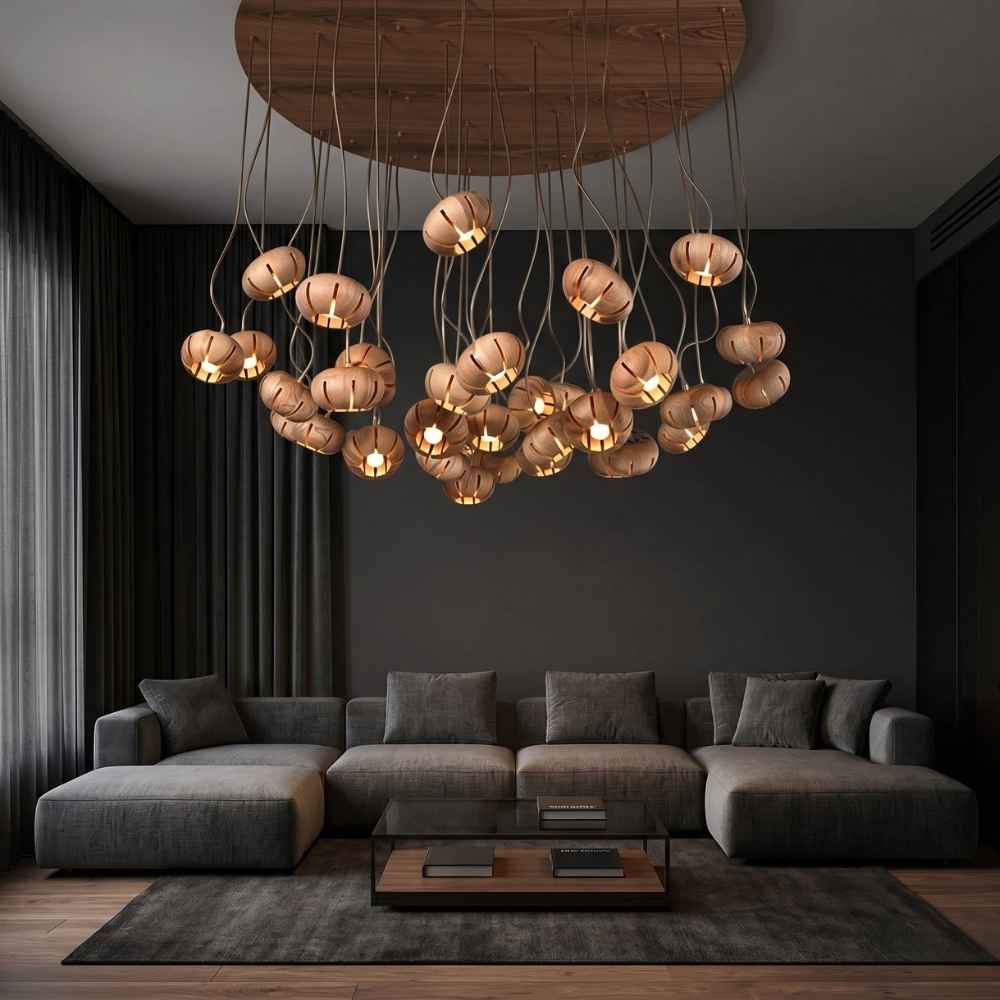
- Bowls and shades: turned or carved volumes directing light downward — the warmest read in the collection
- Candle and cage forms: traditional silhouettes in timber, the farmhouse and cottage register
Rooms Wood Suits Best
Dining rooms lead — timber above a table returns warmth to the surface it most belongs on, and wood tones flatter food and faces the way warm metals do. Living rooms take circle and slat forms centred over the seating group, kitchens take beams and linear runs above islands, and bedrooms take the compact, softer-toned end. Entries and great rooms open the extra large class, where a 40"+ (102 cm+) timber statement carries volume that a metal frame of the same size would leave feeling thin. One environment needs care: covered outdoor spaces suit only fixtures built and rated for exterior exposure, since untreated timber and weather are a short partnership — that range lives in the outdoor lighting collection.
Style Directions Across the Collection
- Modern and contemporary: the lead — clean circles, slats, and beams where timber is the only ornament
- Mid-century modern: walnut tones, tapered forms, and brass detailing — the era wood lighting was built for
- Rustic and farmhouse: heavier timber, distressed finishes, and forged hardware; the deeper range is in the rustic chandeliers collection and farmhouse chandeliers collection
- Transitional and traditional: carved detailing and candle silhouettes for period rooms that want warmth over sparkle
- Coastal and cottage: driftwood tones, whitewashed surfaces, and light open frames
Current looks, finishes, and picks by direction are walked through in our wood chandelier design guide.
Sizing, Weight and Living With Timber
Size by the standard formula — room length plus width in feet equals diameter in inches — and round up: wood reads visually lighter than its mass suggests, and an undersized timber piece disappears against a ceiling rather than anchoring it. Two ownership notes follow from the material itself. Solid timber responds to humidity, so avoid hanging directly above a heat source or in unventilated steam, and expect minor seasonal movement in wide solid pieces — a feature of real wood rather than a defect. And weight climbs quickly with span: large solid designs pass 50 lb (23 kg), the threshold where a listed heavy-fixture brace box replaces the standard one. Care is simple: dry dusting only, since liquid cleaners lift oiled and waxed finishes; the full routine is in our chandelier care guide.
Related Collections
Continue the natural material story at the rustic chandeliers collection, pair the metal frame at the iron chandeliers collection, and browse the full chandelier catalog for the complete designer range.
Frequently Asked Questions
Are wood chandeliers still in style?
More than ever — the material moved from rustic architecture into modern interiors because it delivers warmth and daylight presence no metal can. Current designs pair timber with clean geometry rather than heavy country detailing.
What wood tone should I choose?
Match the room's existing wood closely or contrast it clearly — never almost. Light and natural tones open small rooms; walnut suits mid-century interiors; dark tones read graphic; distressed finishes suit farmhouse and coastal.
Why are most wood chandeliers combined with metal?
Structure. Metal holds geometry in thin sections — a true circle, a straight beam — while wood supplies the surface the eye reads. The metal choice also sets the style: iron for rustic, brass for mid-century, white or nickel for coastal.
What size wood chandelier do I need?
Room length plus width in feet equals diameter in inches — and round up, since timber reads lighter than its mass suggests. Over a dining table, use one-half to two-thirds of the table's width, hung 30-36" above.
Can a wood chandelier hang outdoors?
Only if built and rated for exterior exposure. Untreated timber and weather are a short partnership; covered porches need designs specified for damp or wet locations.
Does wood crack or warp over time?
Solid timber responds to humidity, and minor seasonal movement in wide pieces is normal rather than a defect. Avoid hanging directly above heat sources or in unventilated steam, and clean with dry dusting rather than liquid.