




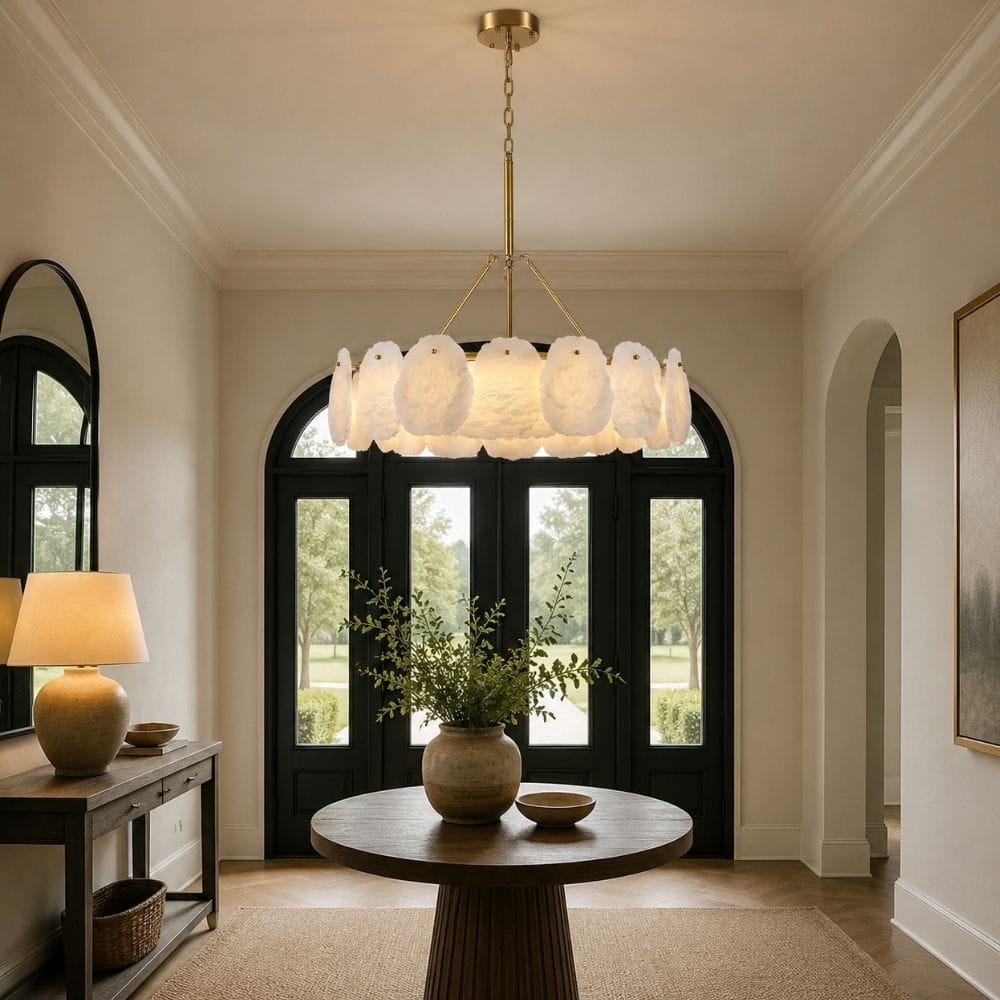
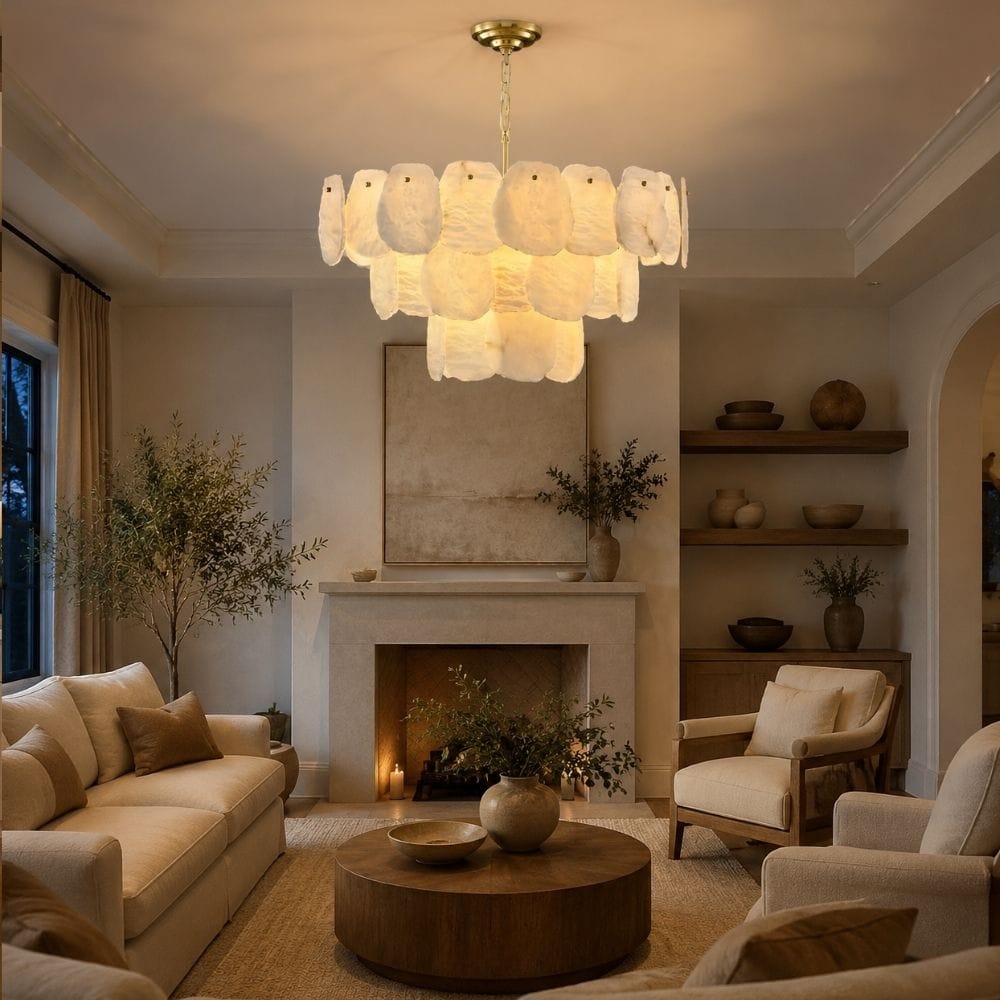
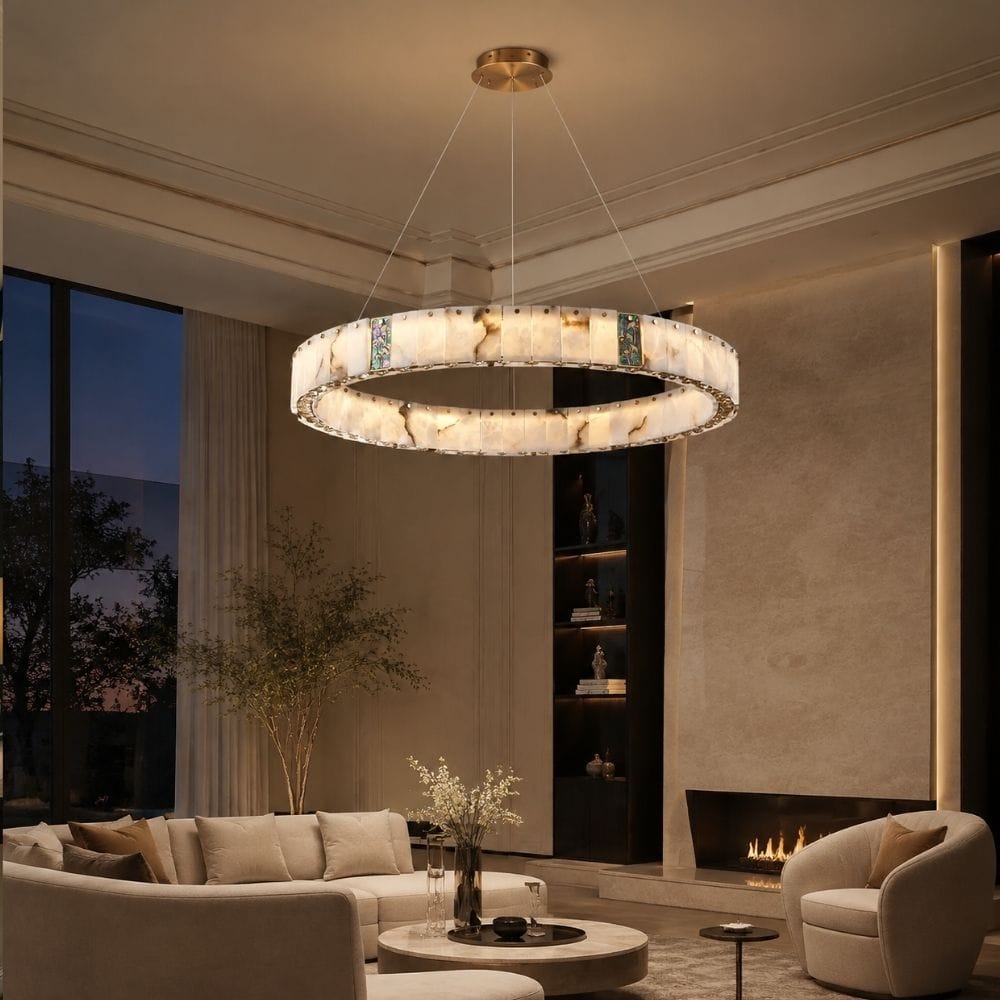
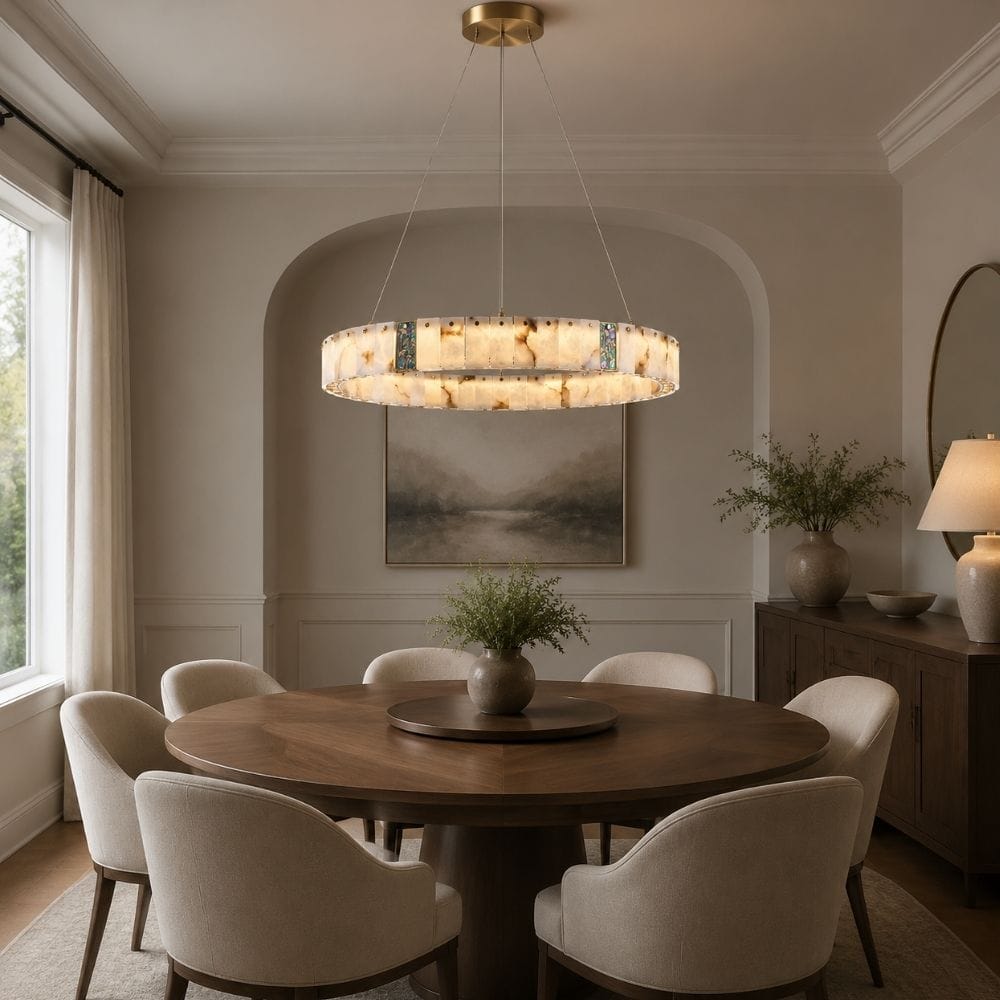



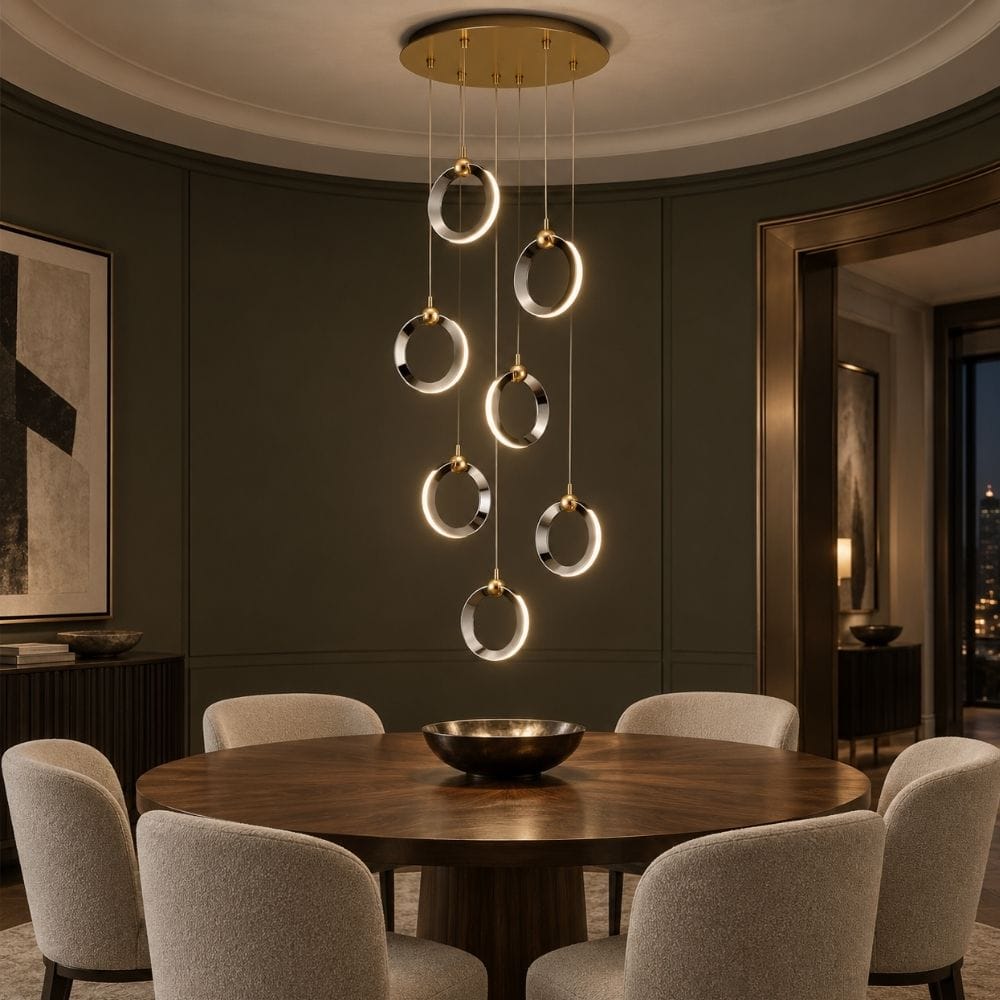
Sculptural Form: What This Collection Does Best
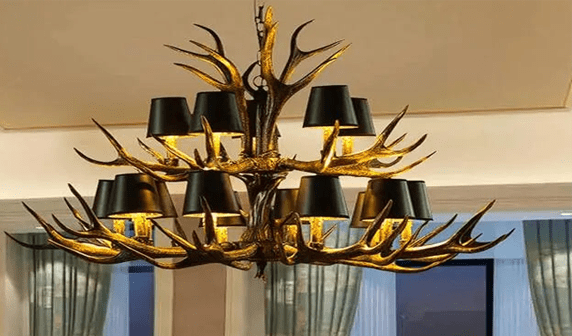
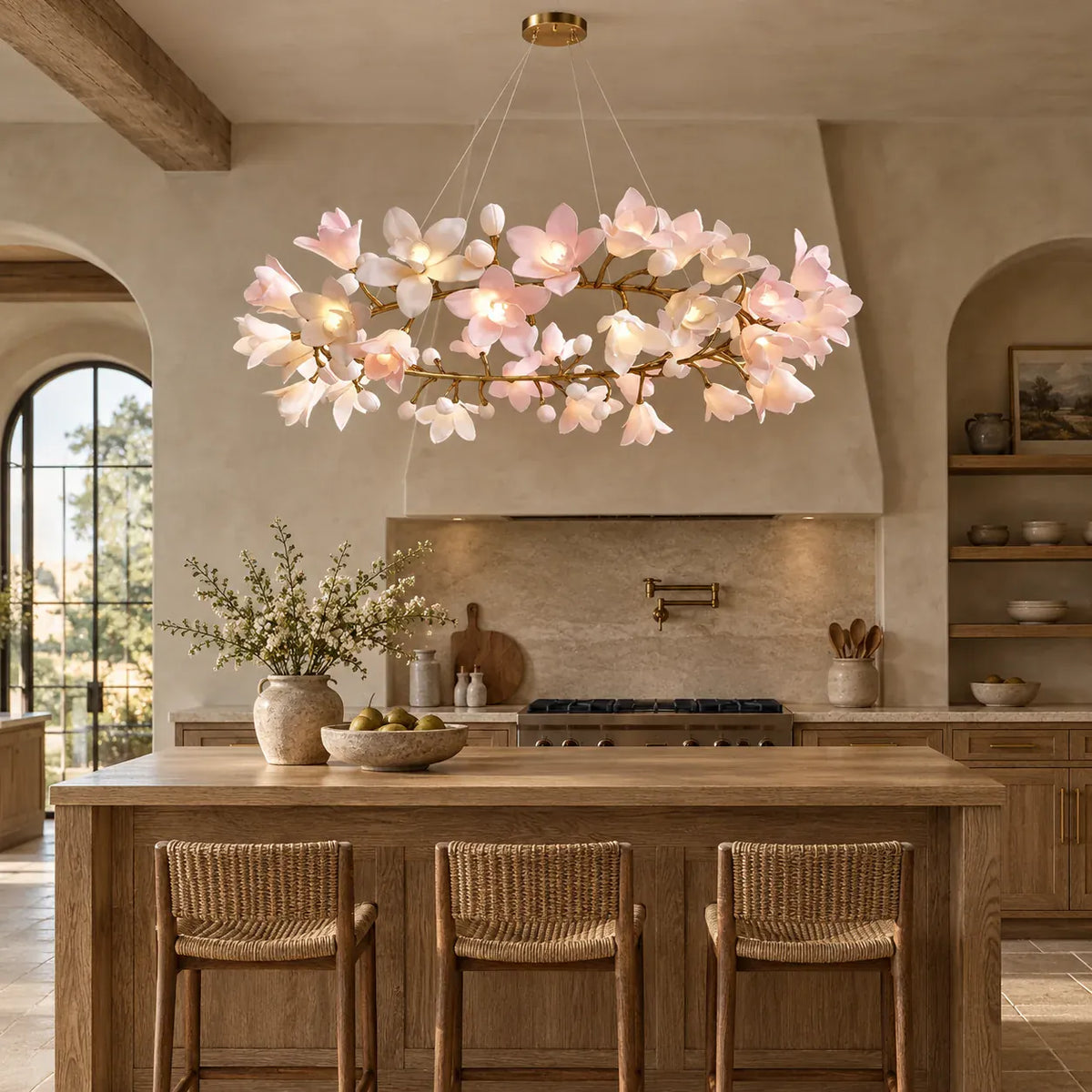
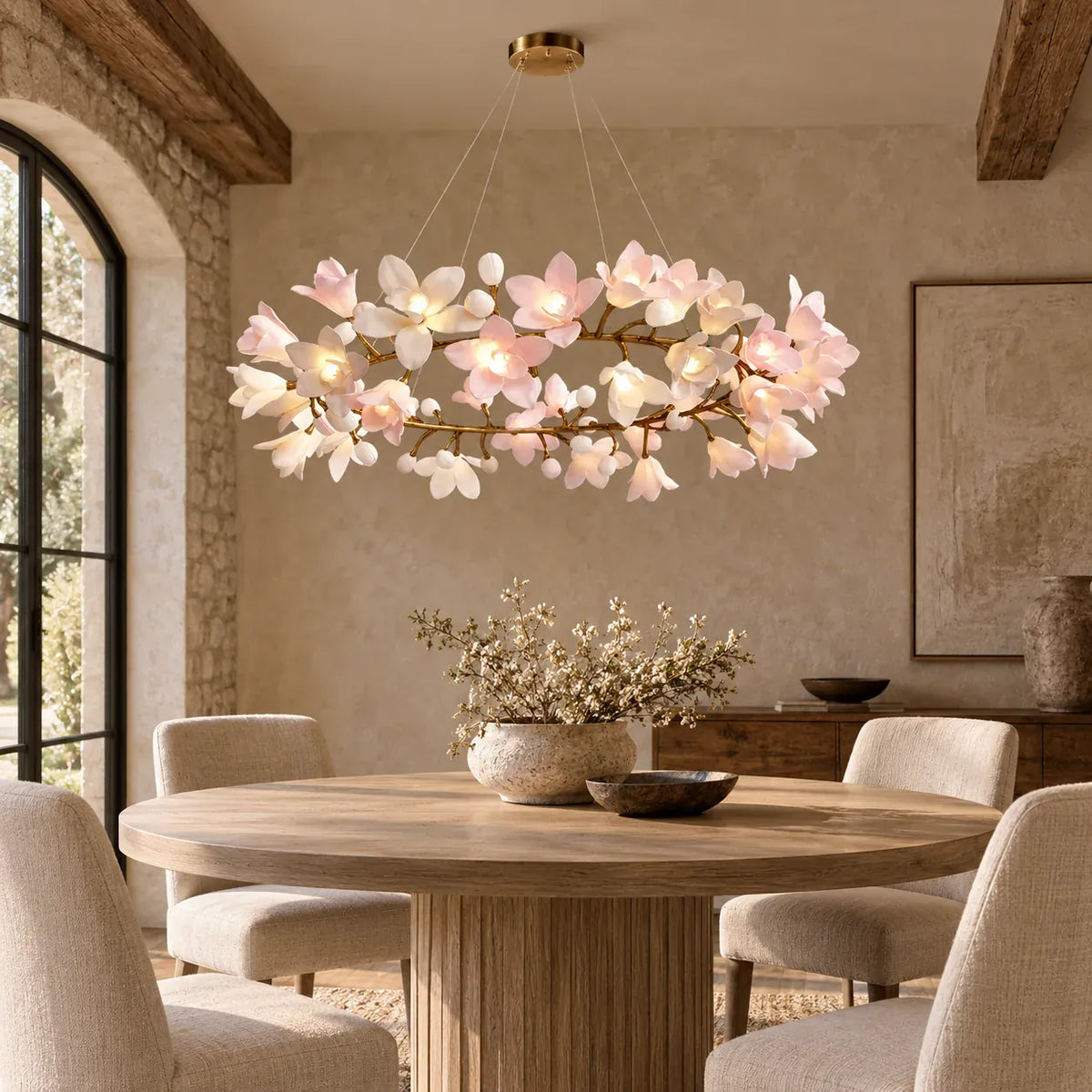
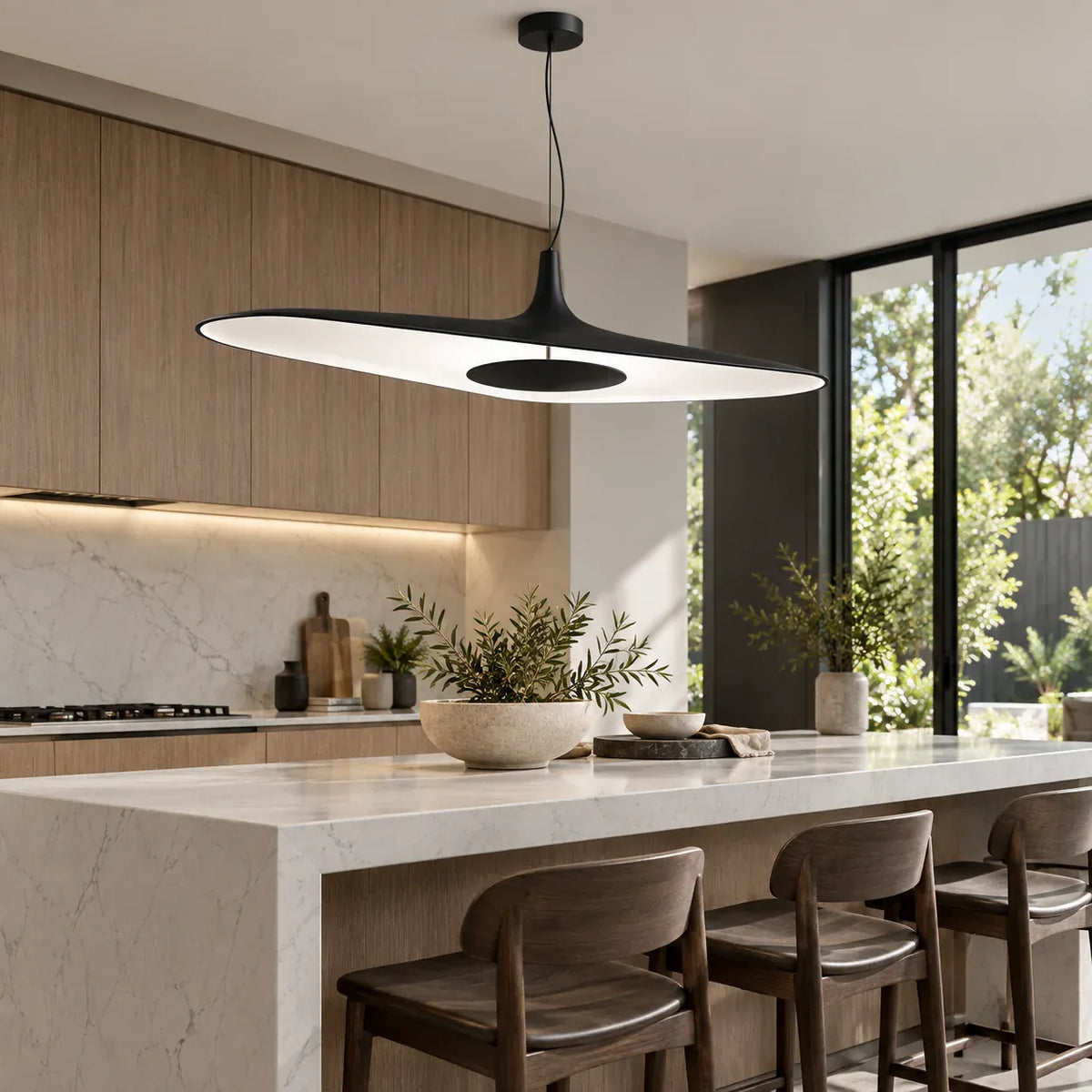
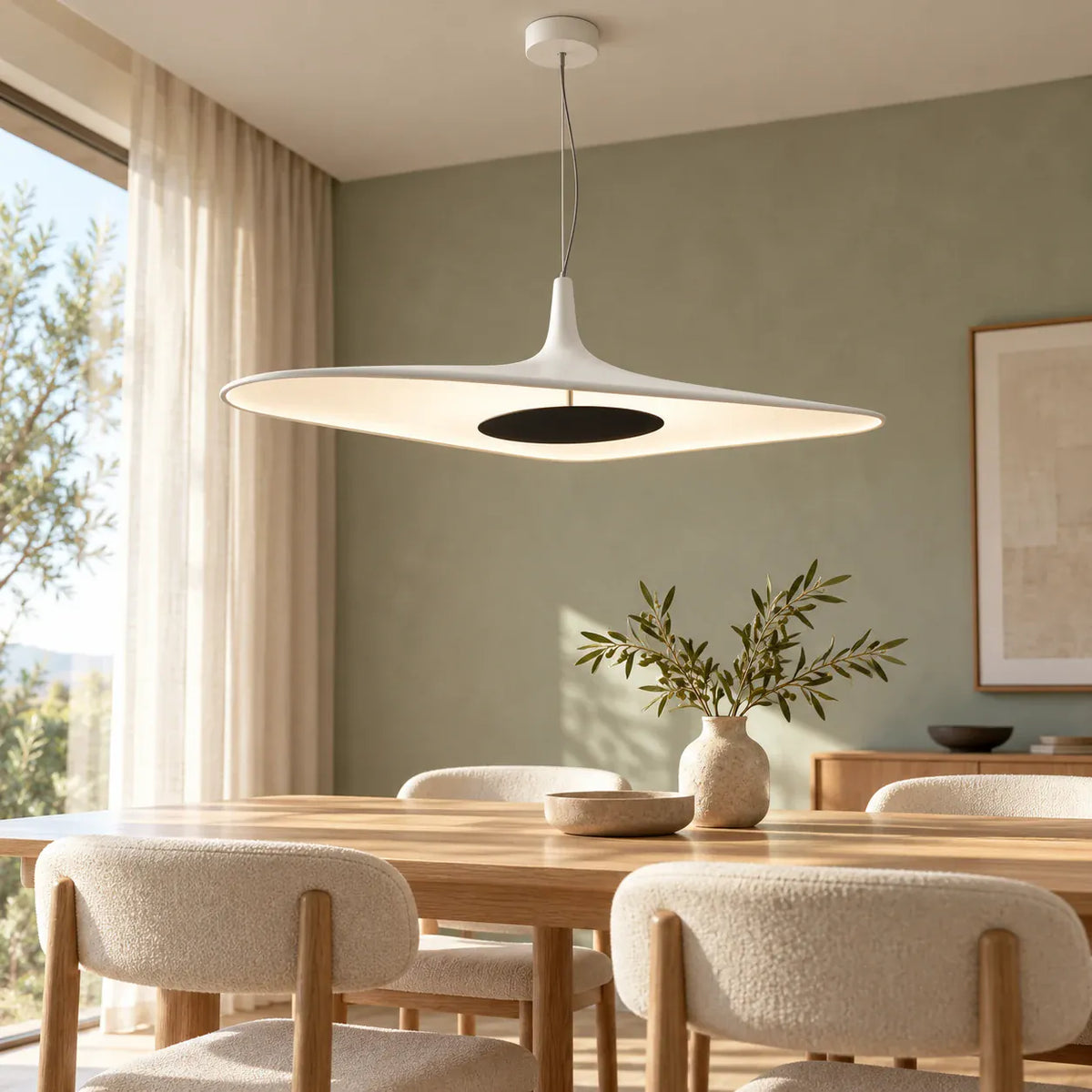
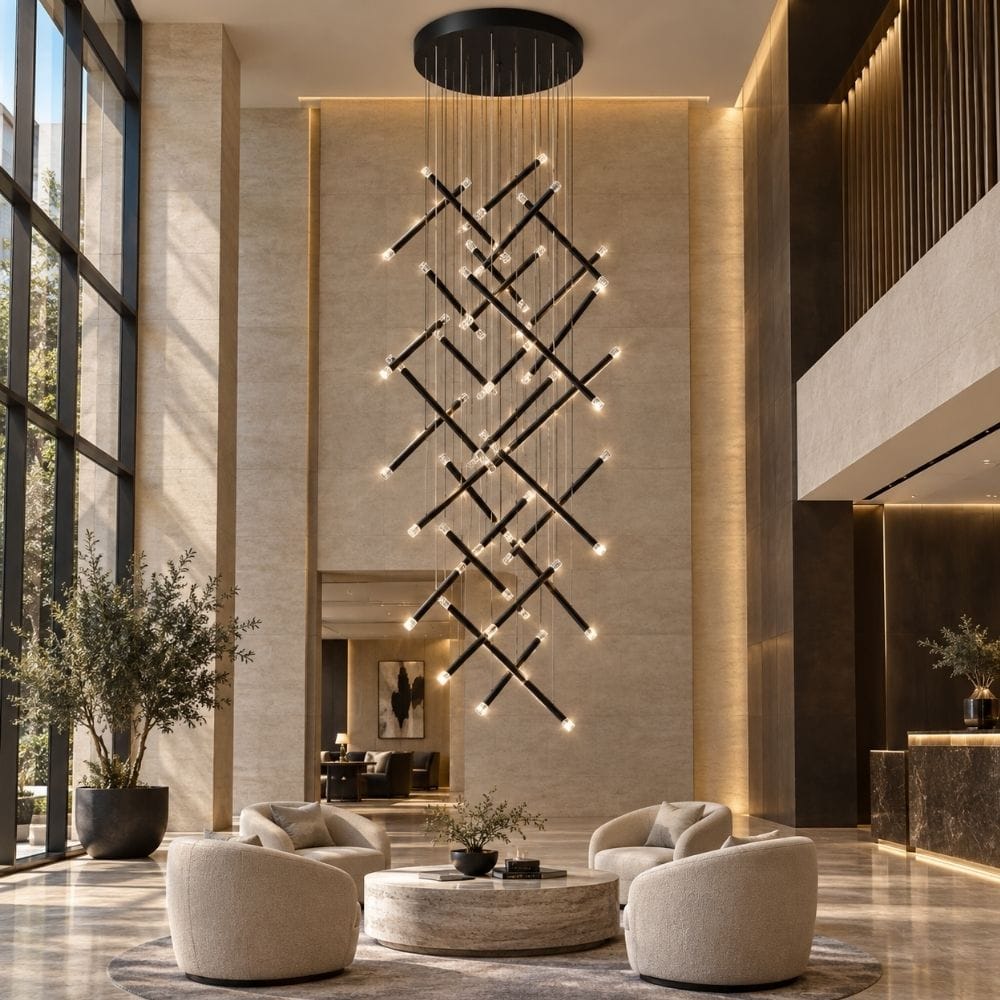
The strongest fixtures here read as objects before they read as lighting. A sculptural chandelier holds its shape when the room is bright and the fixture is off — which is the practical test, since that is how it is seen for most of the day.
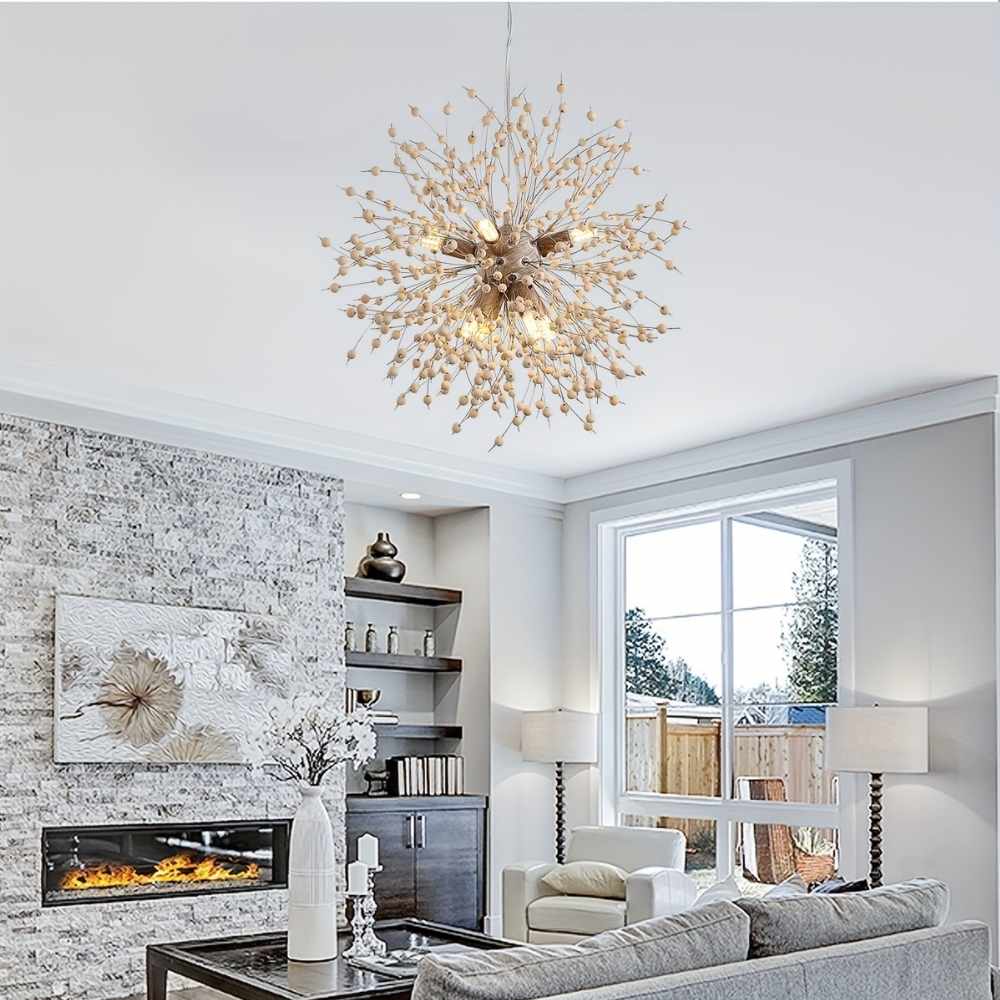
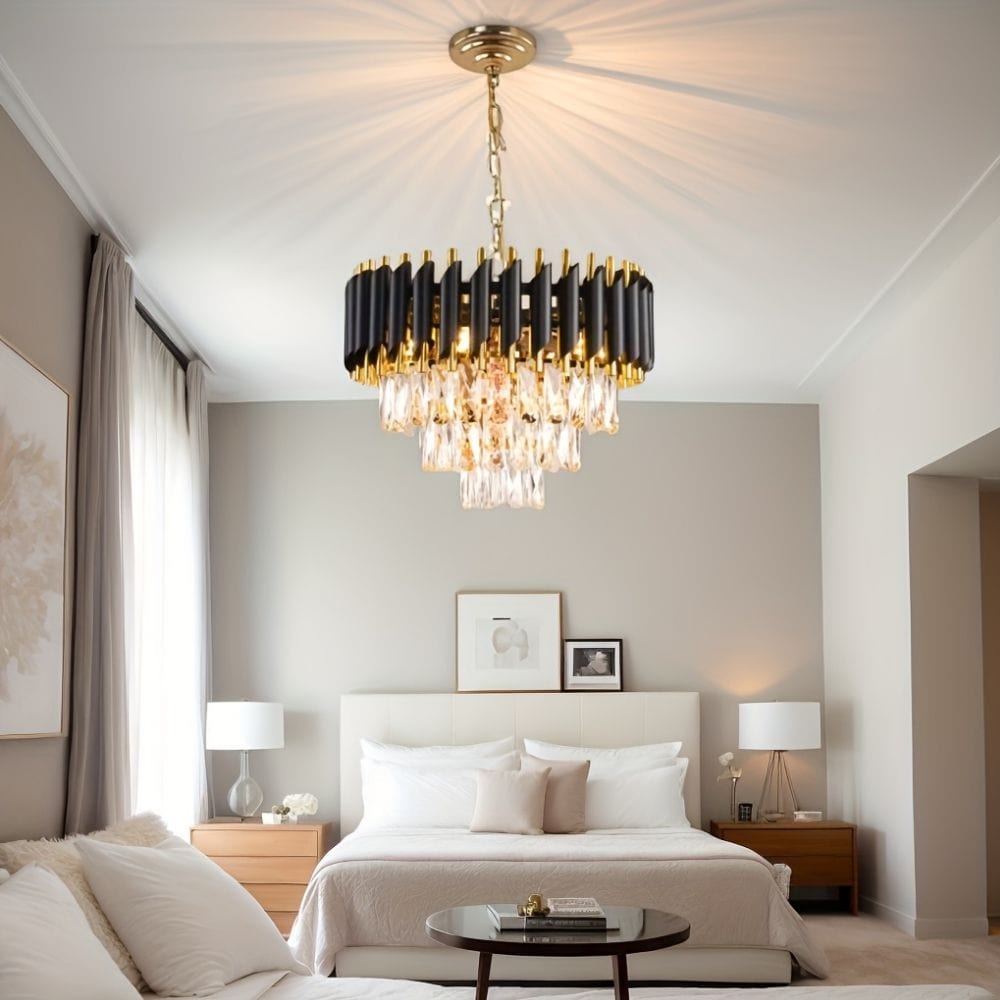
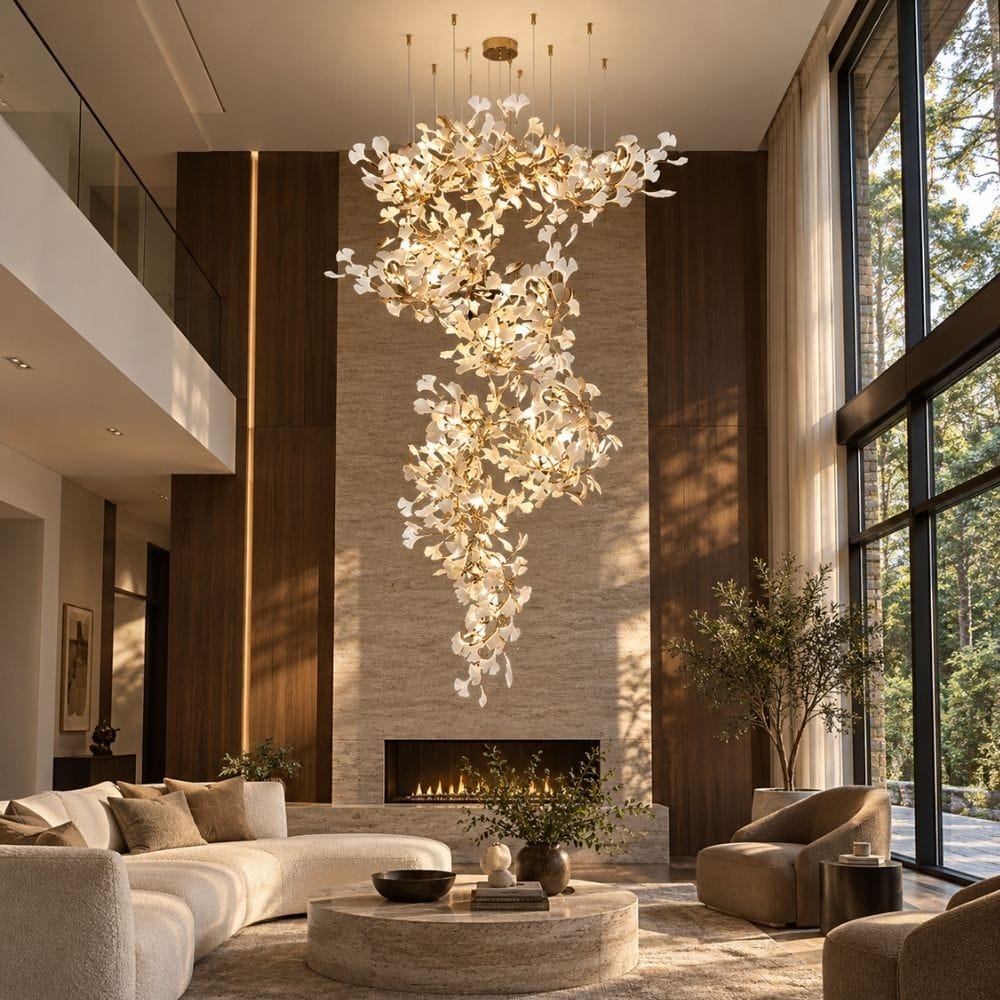
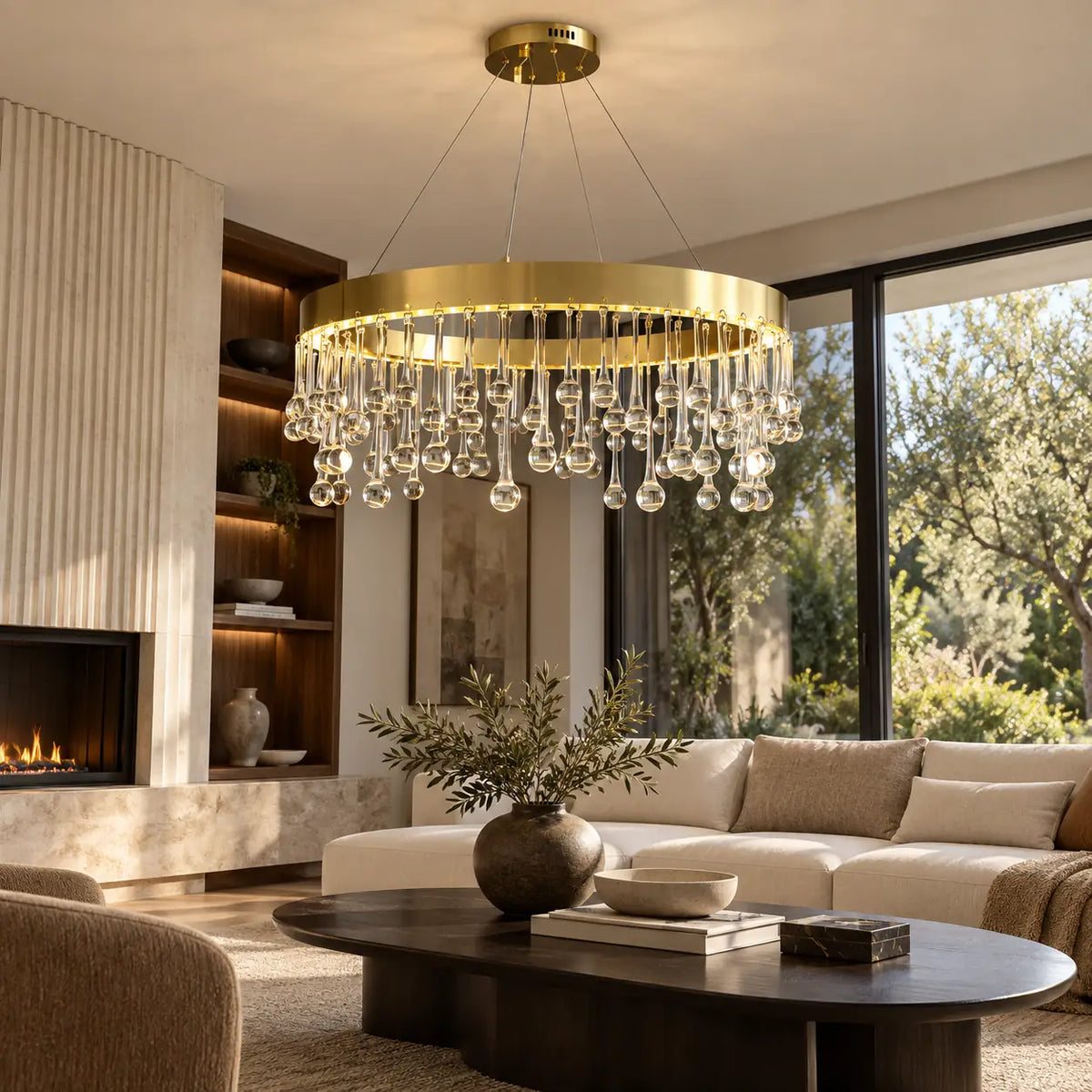
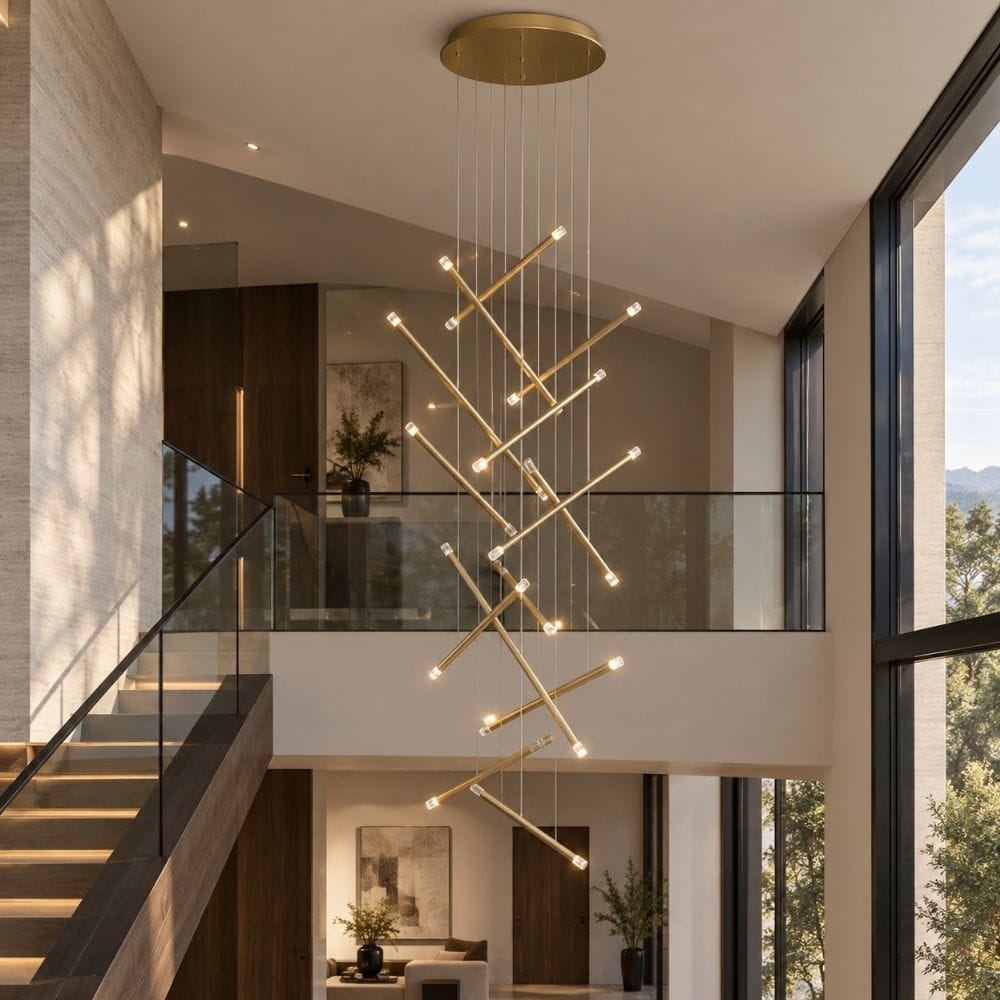
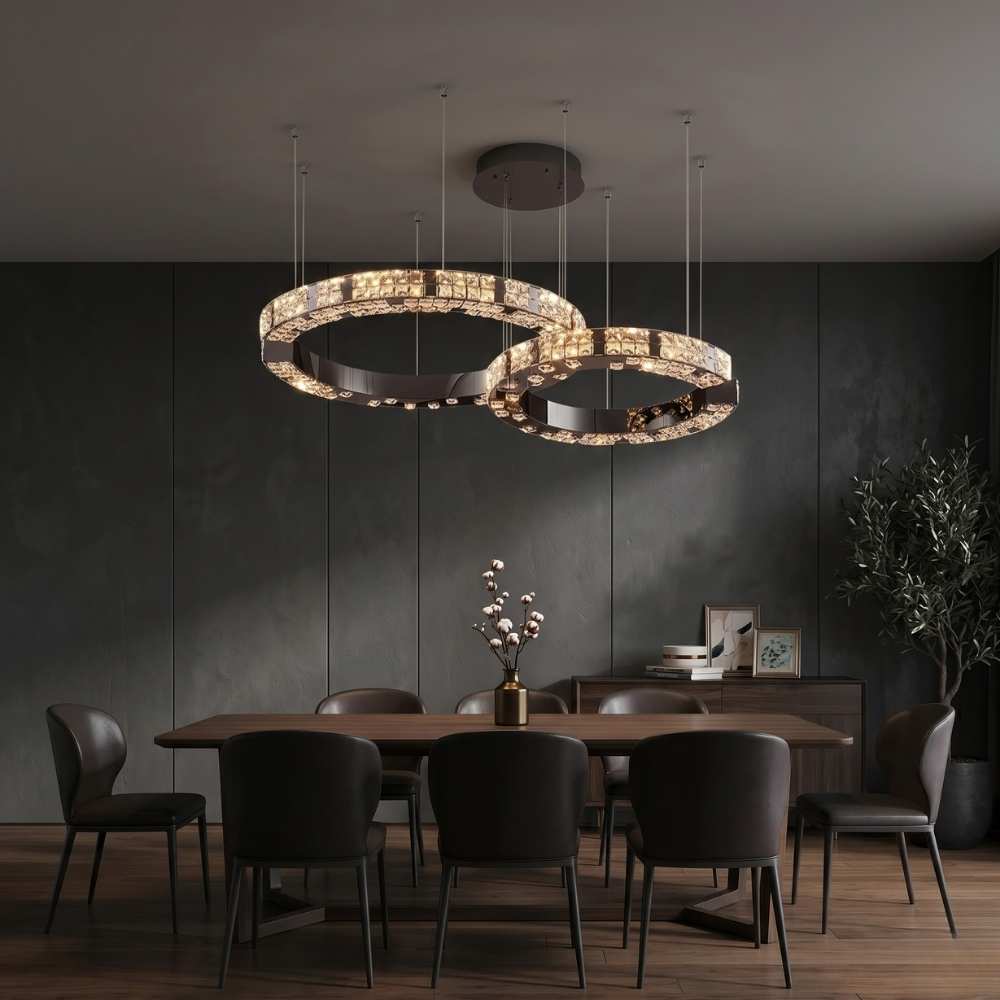
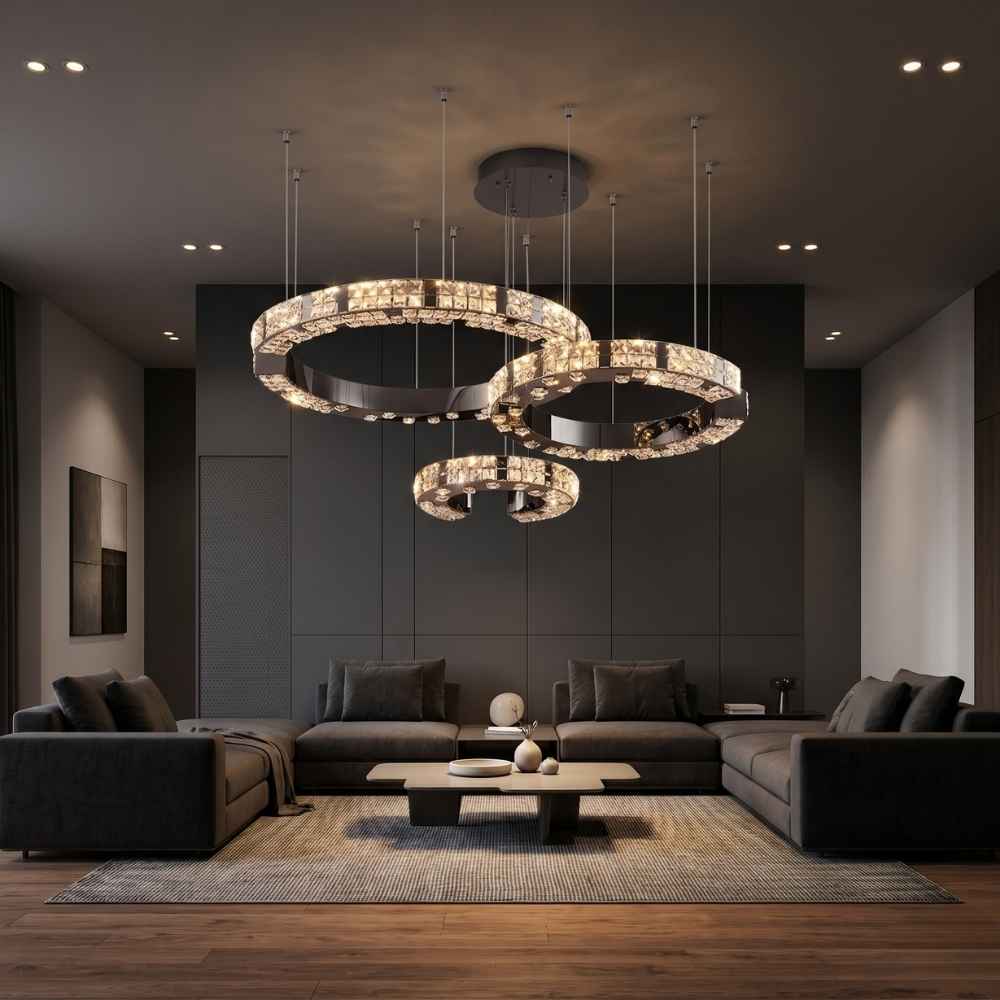
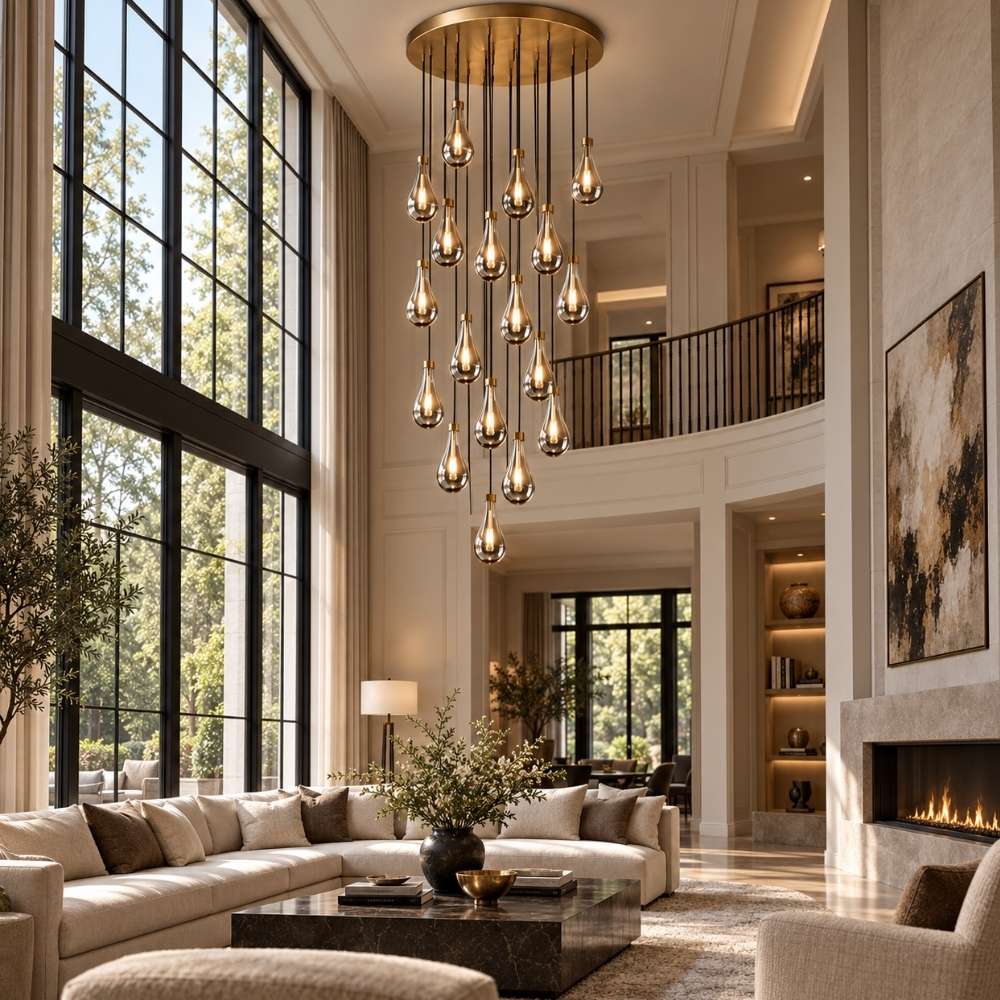
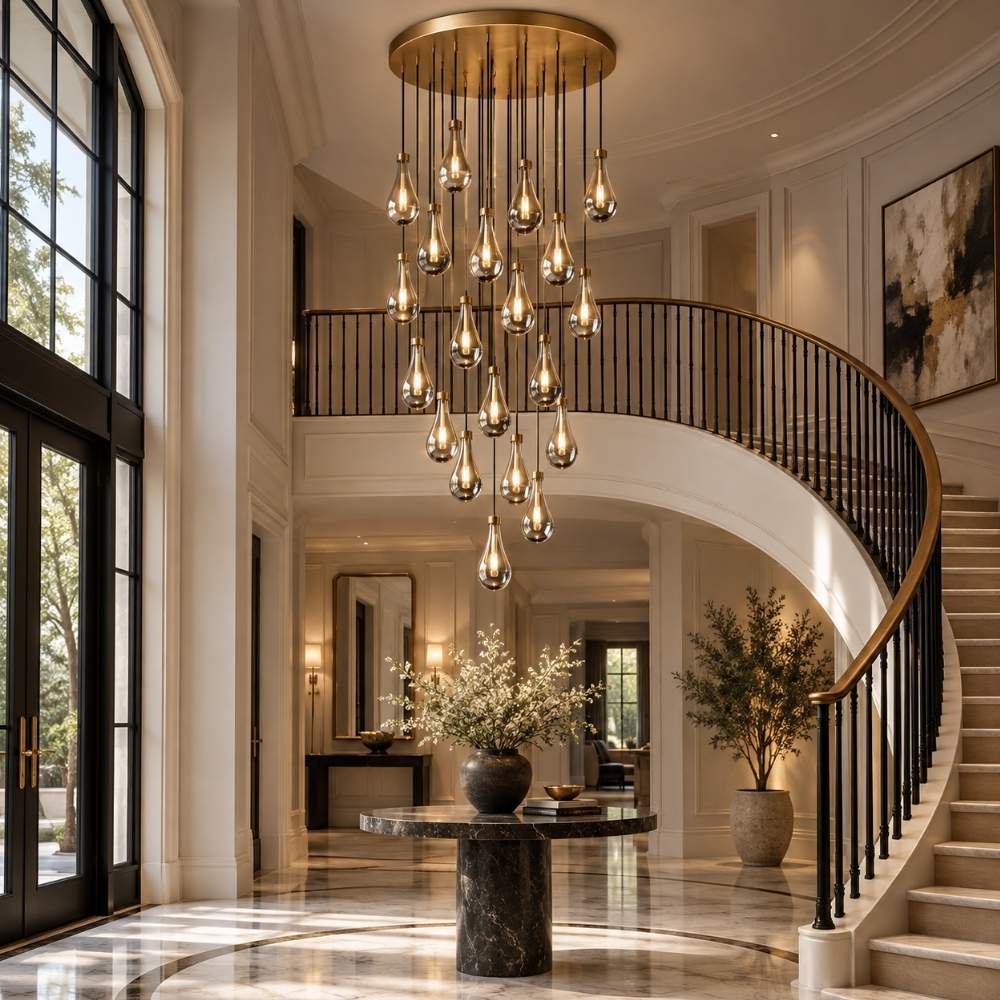
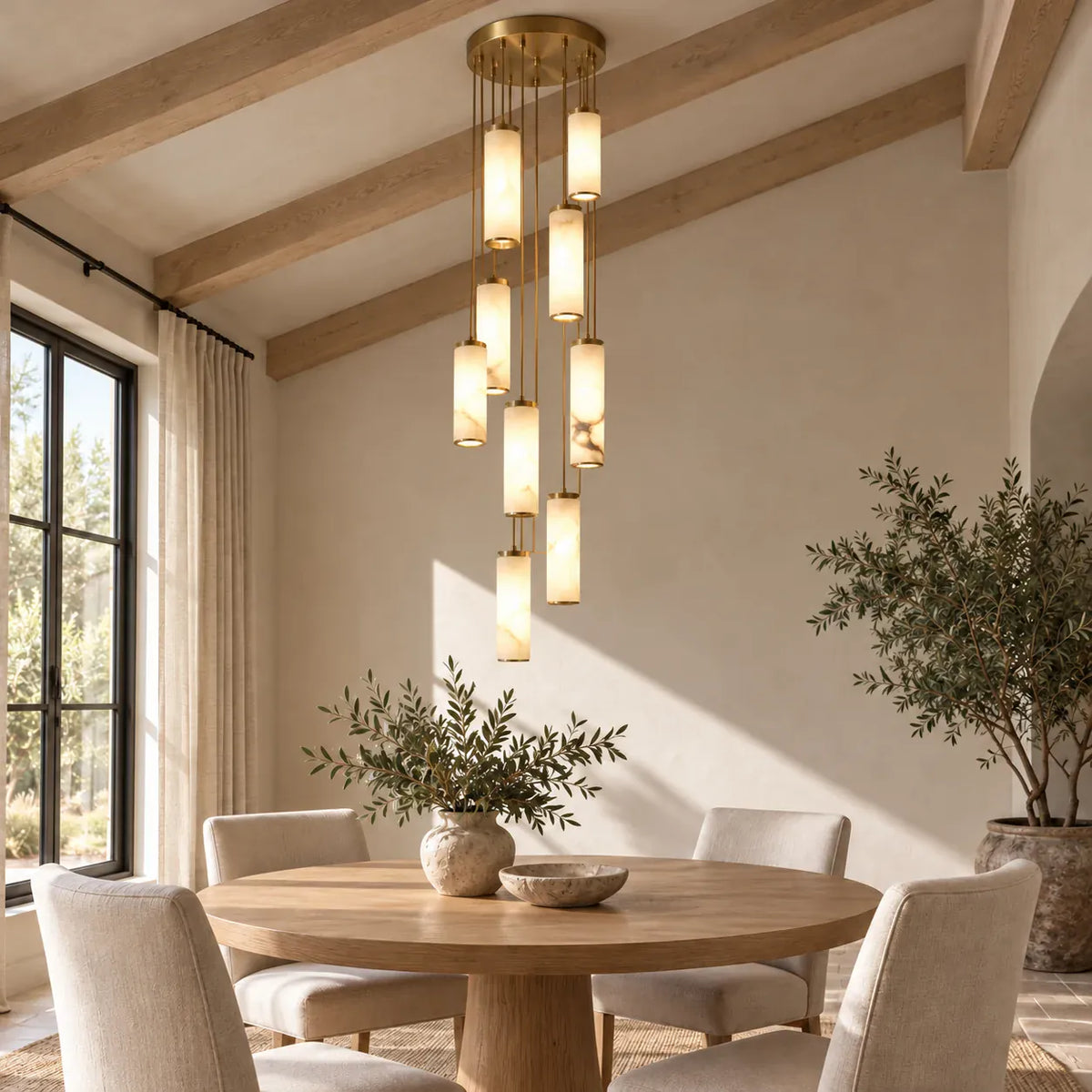
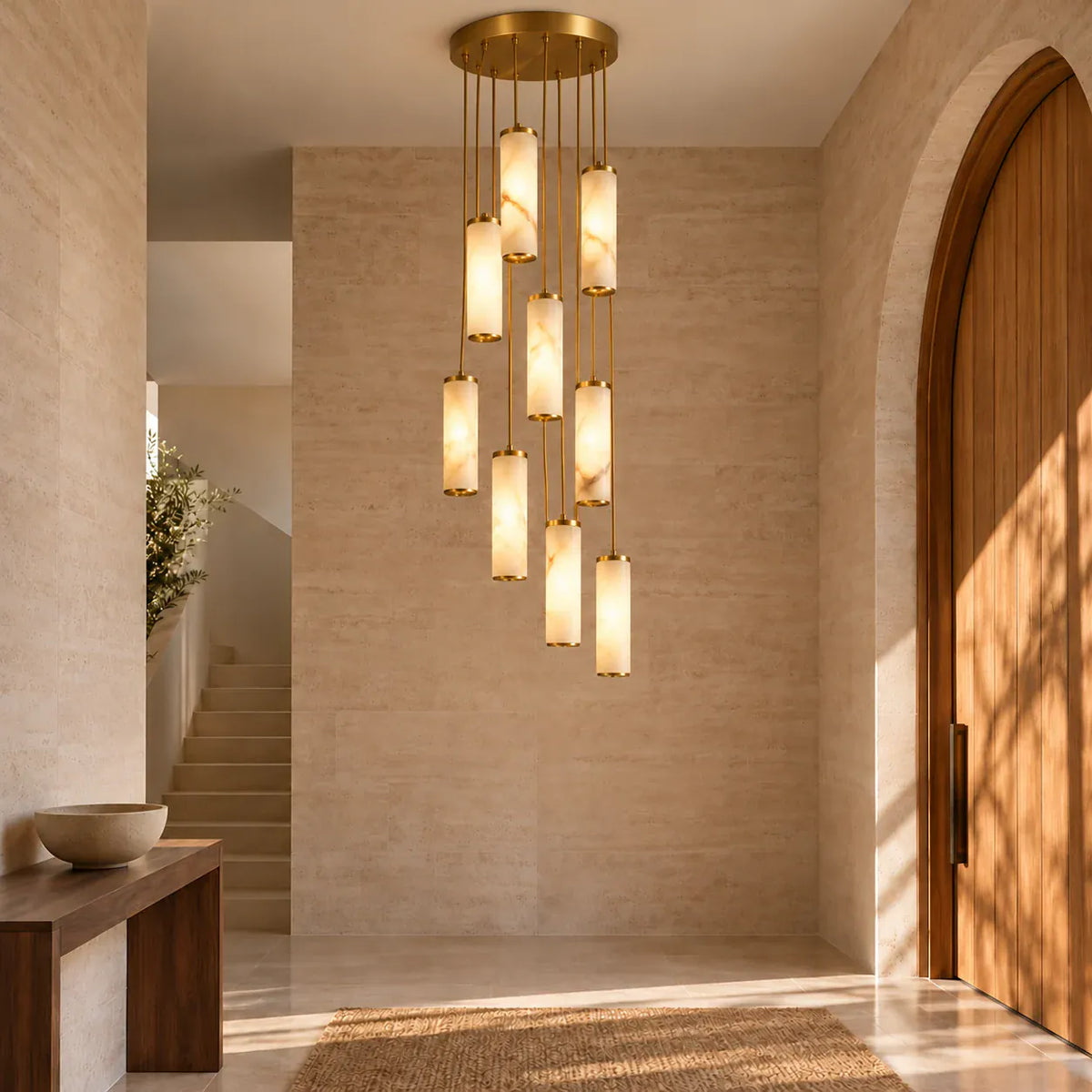
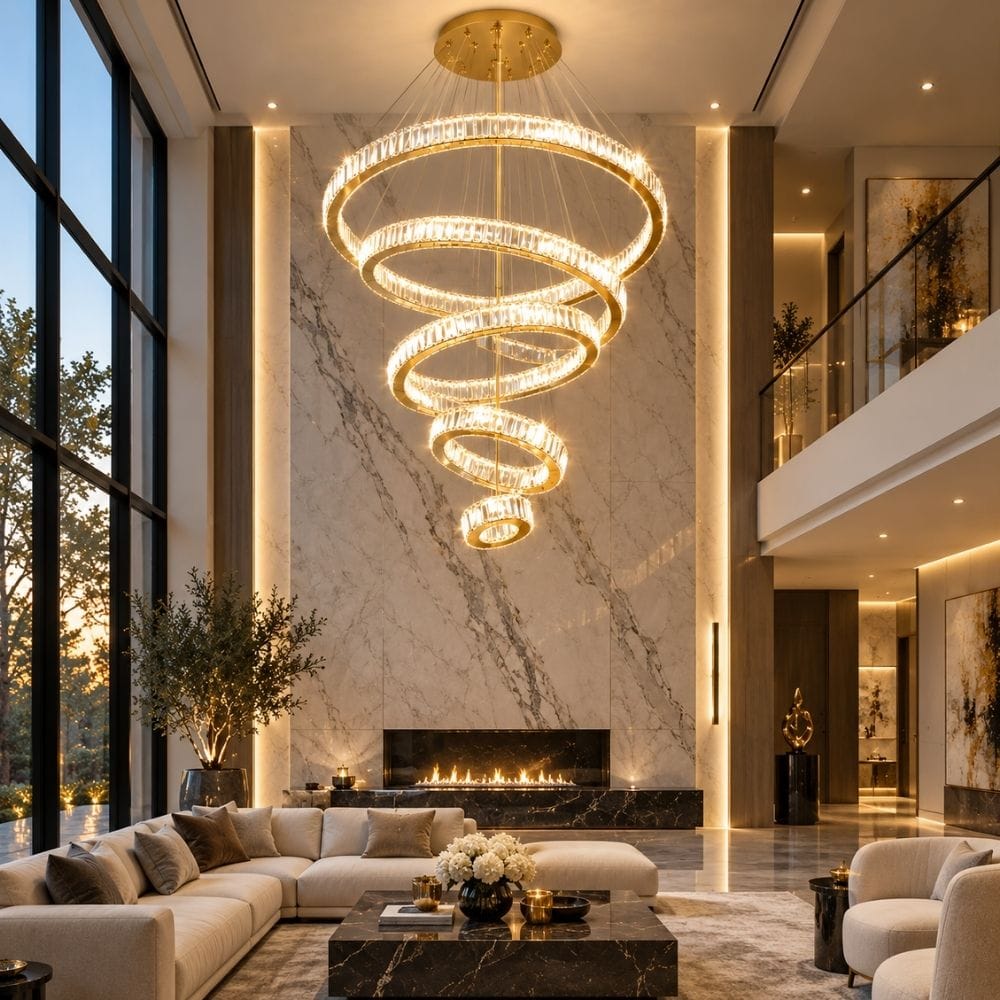
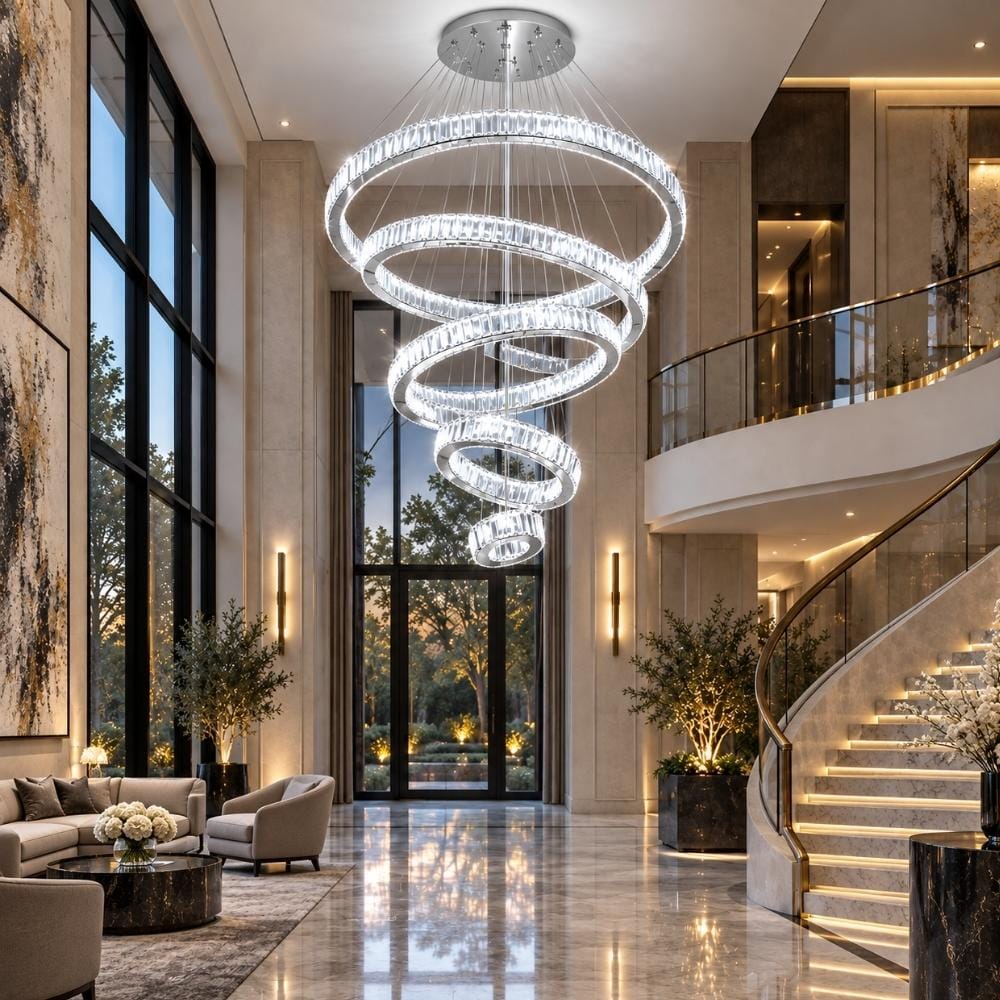
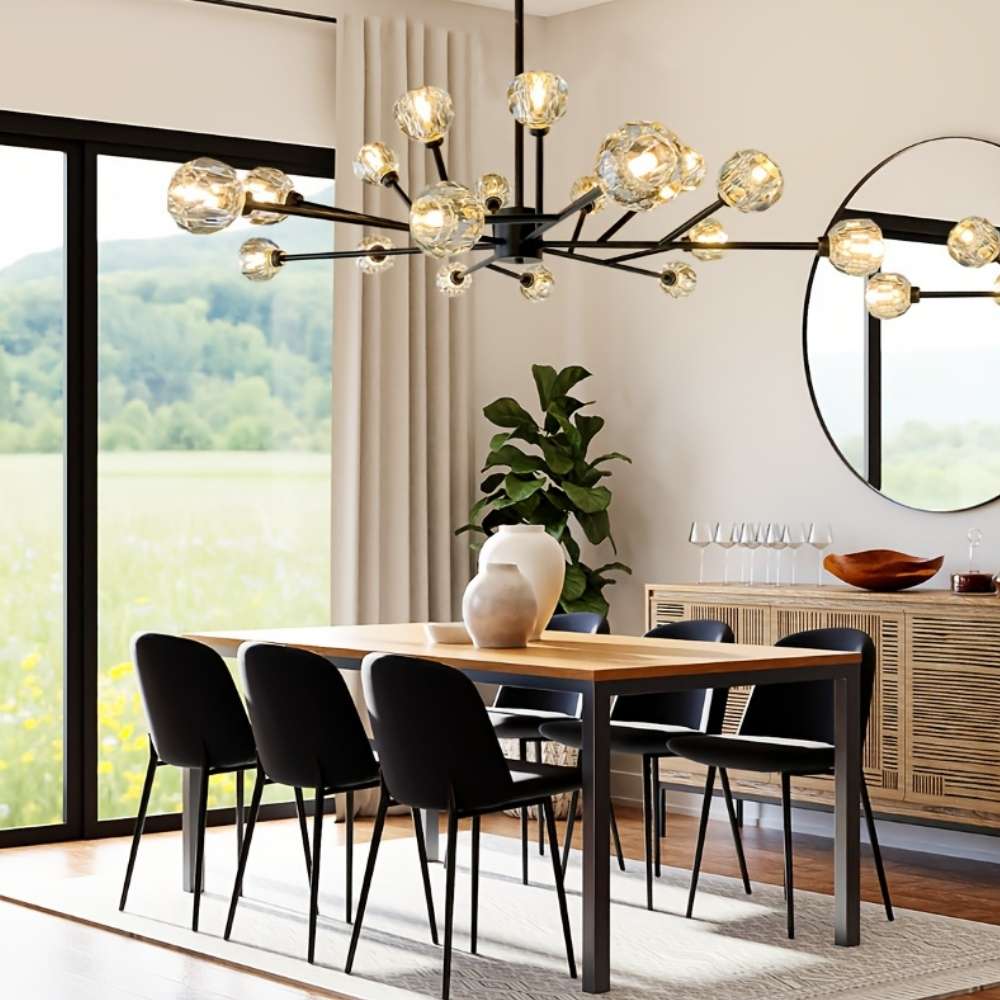
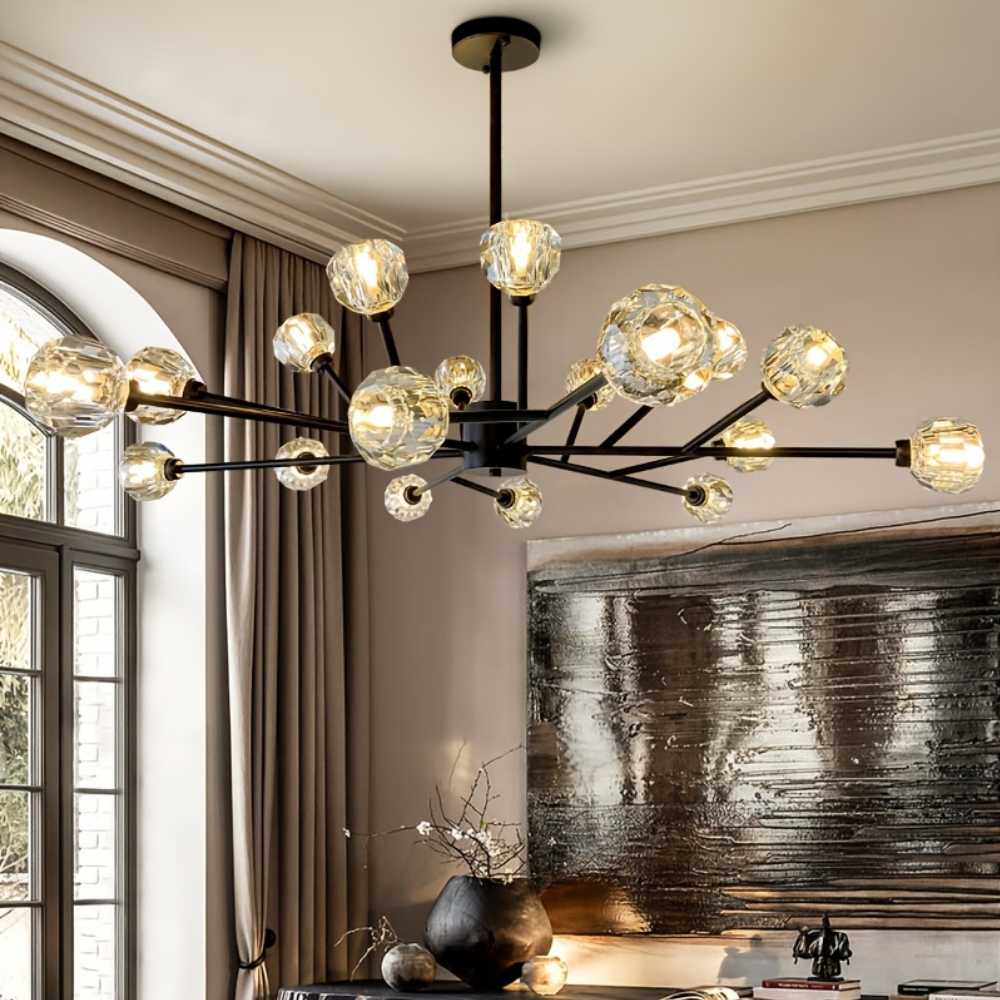
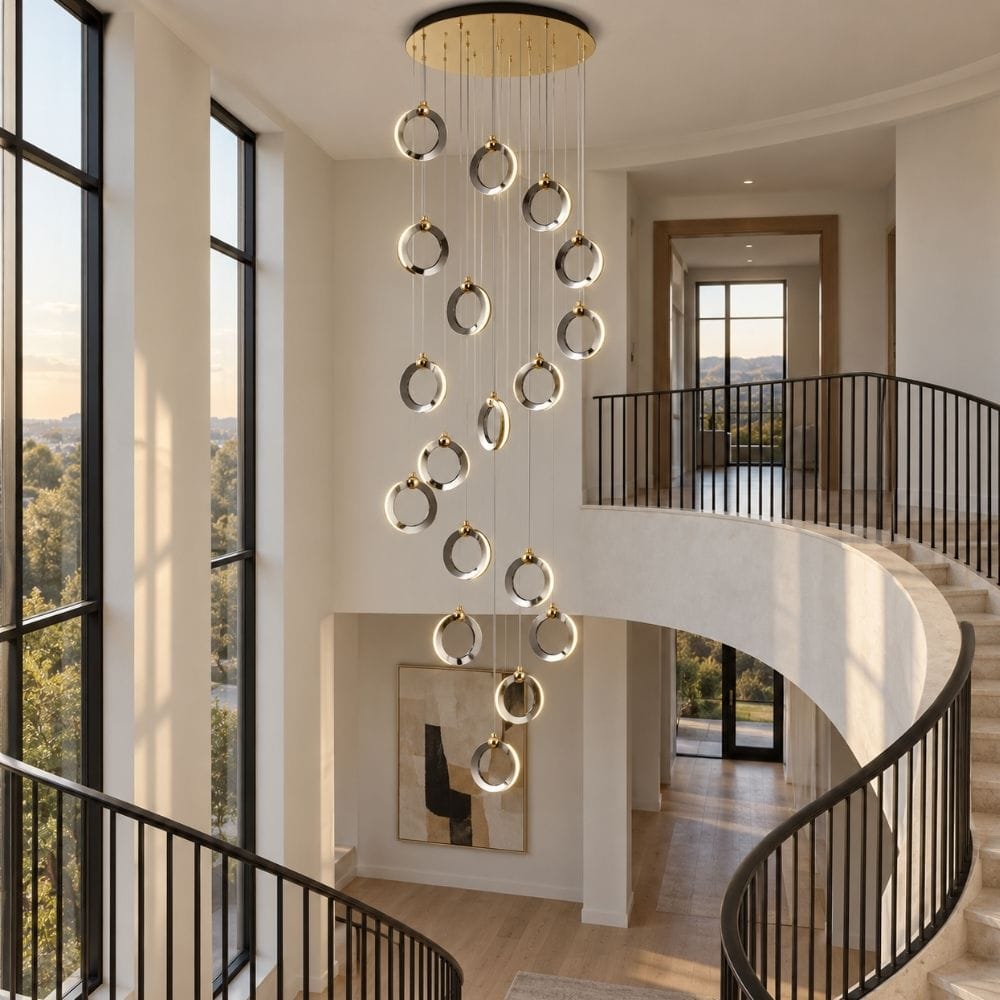
Three families dominate. Asymmetric and branching compositions reach unequally and draw the eye upward, working best in rooms with restraint elsewhere. Layered and stacked forms build depth through repeated elements at varying heights, filling volume in taller spaces. Continuous-line designs — rings, halos, ribbons — read as a single drawn gesture, and are the most architectural direction in the collection. Sculptural work also exposes execution: joints, taper and proportion are fully visible when there is no ornament to hide behind, which is why this class rewards build quality more than any other.
Finishes: Gray, Chrome, Black and Warm Metal
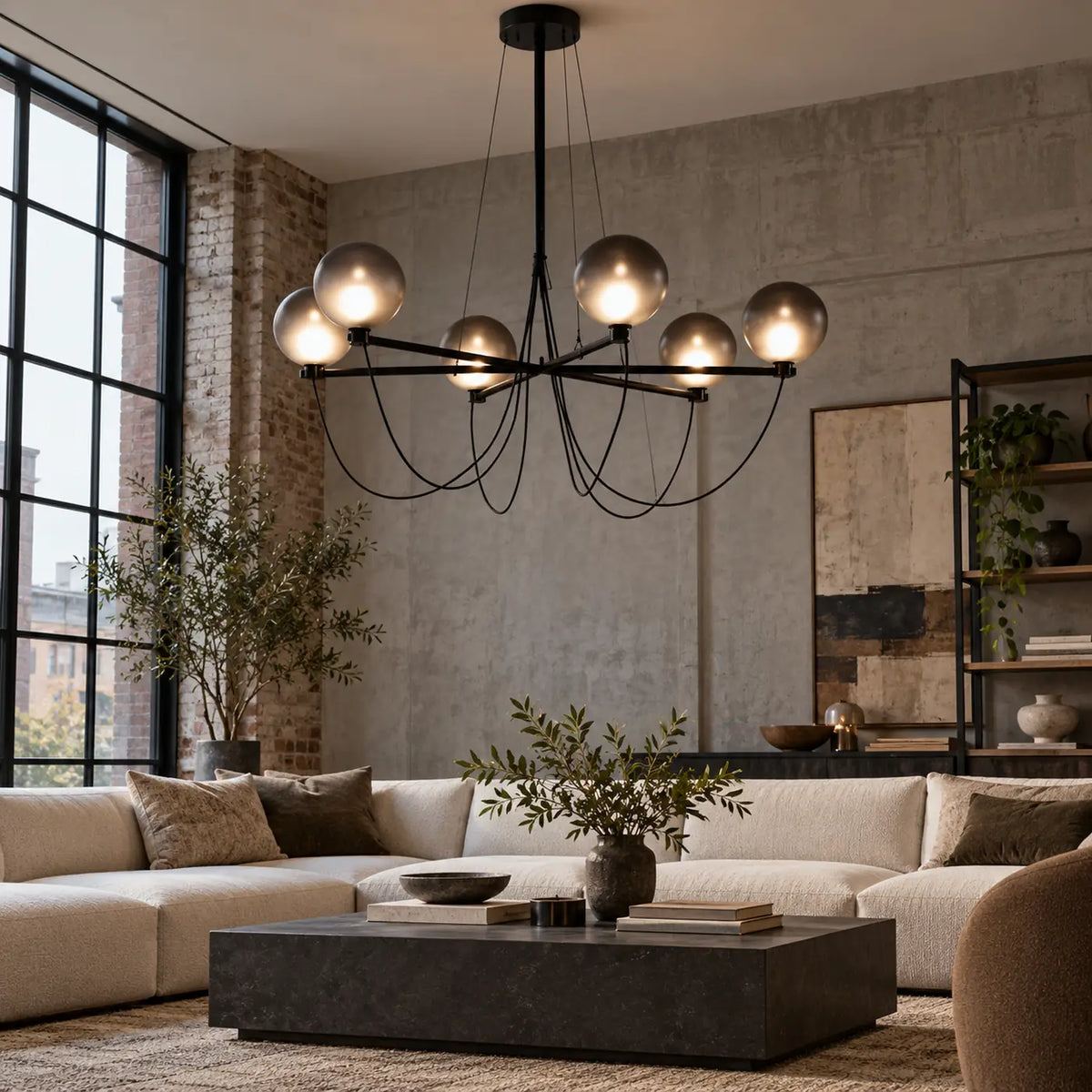
- Gray and graphite: the quietest contemporary finish — cool-toned and neutral, sitting between black's contrast and silver's shine. It suits rooms already carrying pattern or colour, where a strong finish would compete
- Chrome and polished silver: mirror reflection that multiplies whatever surrounds it, strongest in monochrome and glass-heavy interiors
- Matte black: maximum graphic contrast against pale ceilings, and the widest room tolerance in the catalog — see the black chandeliers collection
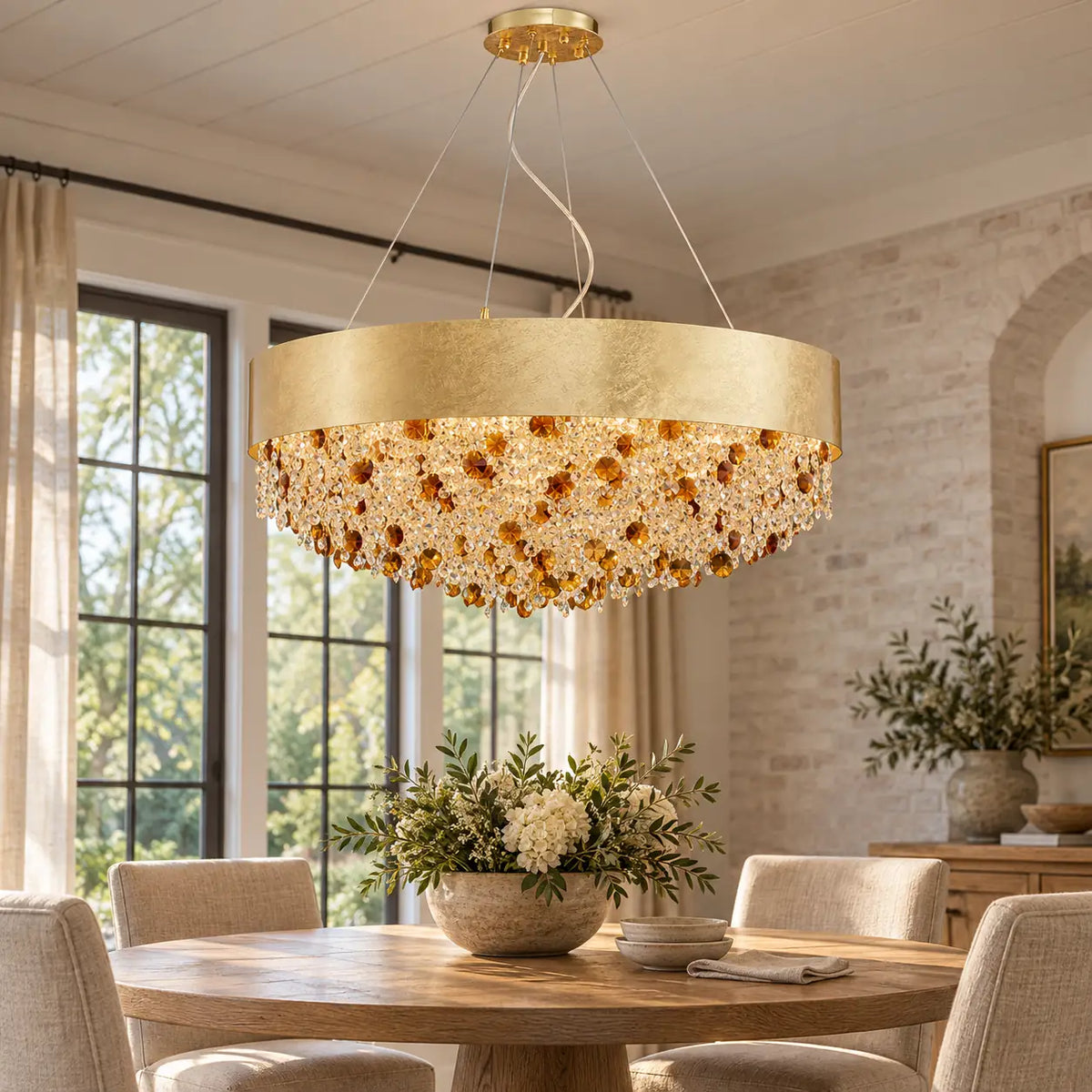
- Brass and gold: reflection in the amber band, warming a room before the lamps are considered — the gold chandeliers collection covers the range
- Mixed metals: two finishes in one fixture, which works when one clearly leads and the other supports
Match the fixture to the room's dominant hardware rather than to the wall. Where a room already has two metals in play, the chandelier should join one of them rather than introducing a third.
Unique and Designer: What Separates Them
Two words get used interchangeably in shopping and mean different things here. Unique describes the form — a silhouette you have not seen in a showroom, usually asymmetric or abstract, chosen because it makes the room specific. Designer describes the execution — proportion resolved, joints considered, materials genuine rather than imitated, and a finish that holds up at close range.
The two do not always arrive together. A striking shape in poor materials disappoints in person; a beautifully made fixture in a familiar shape reads considered rather than memorable. In a room where the chandelier is the only decorative event overhead, look for both.
Choosing by Space and Use
- Architectural homes: continuous-line and ring forms that echo the building's own geometry, rather than competing with it
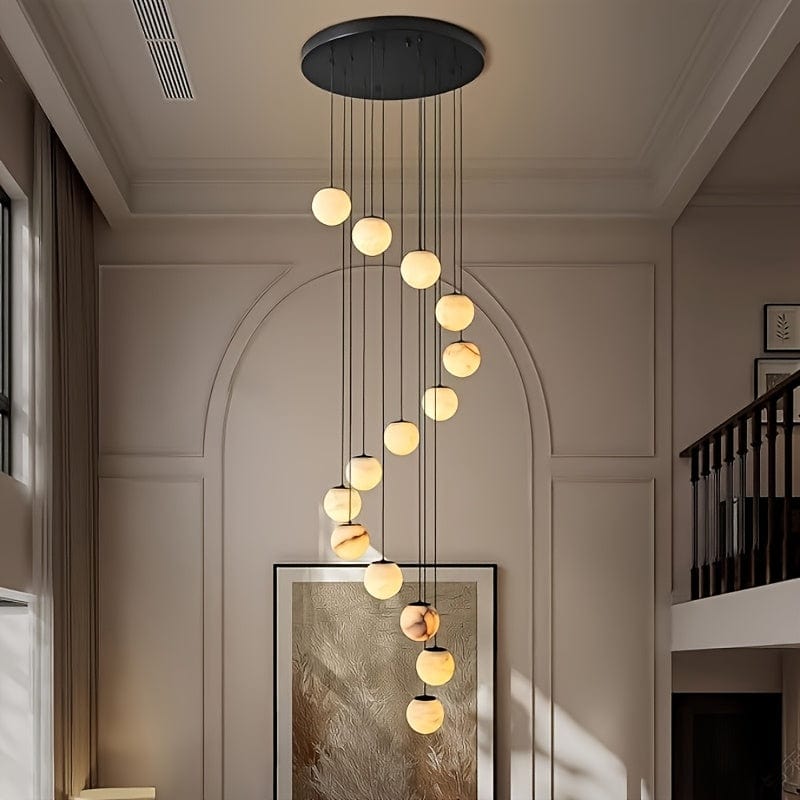
- Lofts and open plans: vertical or layered compositions that occupy height, since a wide flat fixture leaves the volume empty
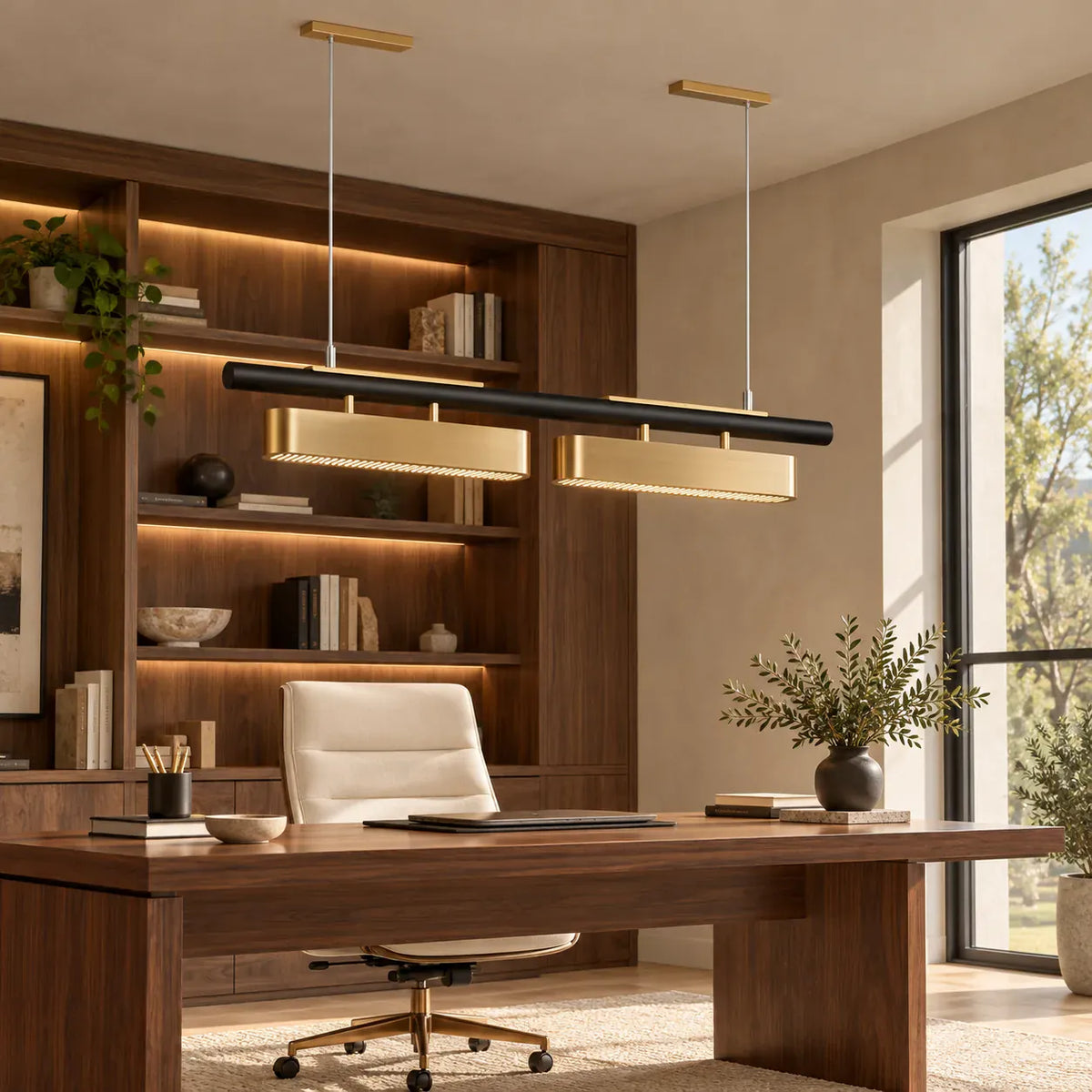
- Creative workspaces and studios: sculptural presence with even, glare-free output — the fixture is seen for hours, so light quality matters as much as shape
- Penthouses and designed interiors: statement scale, where the ceiling is part of the composition and the fixture is expected to lead it
- Minimalist rooms: one expressive fixture against restraint everywhere else, which is the arrangement sculptural design was built for
Room by Room
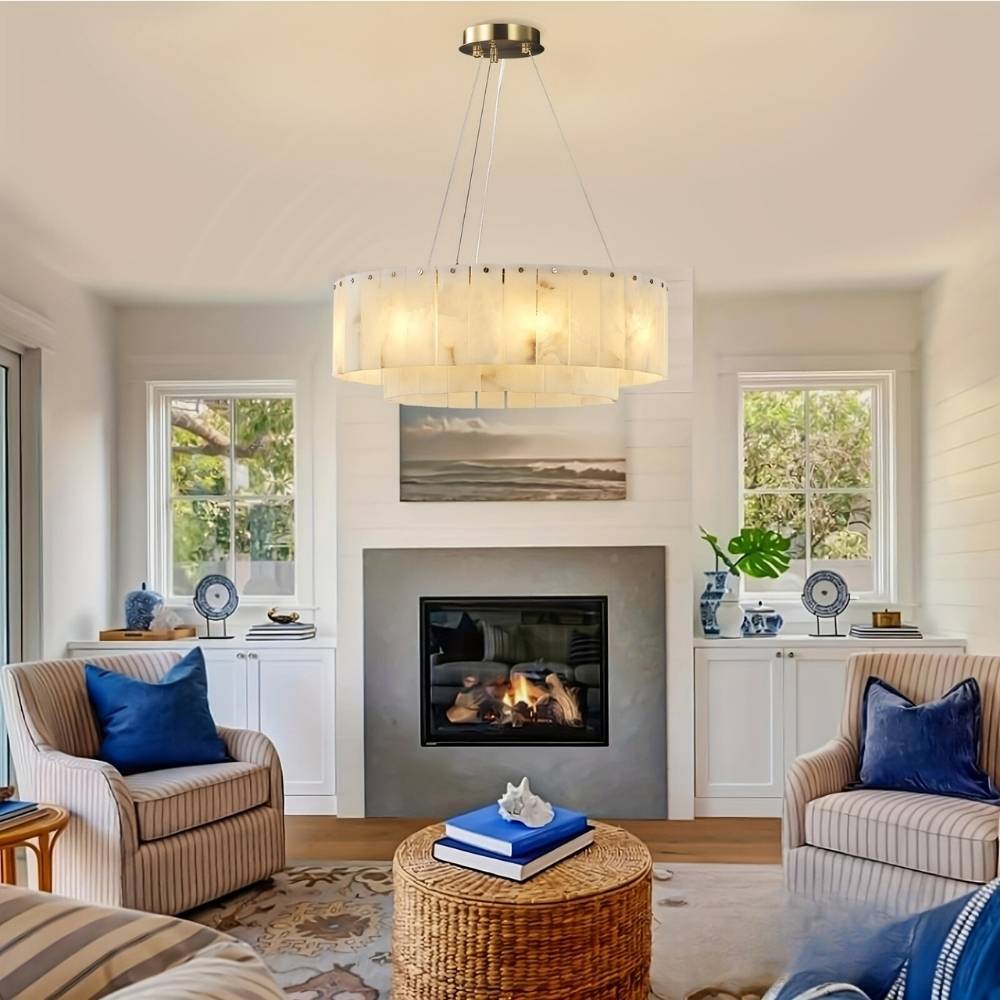
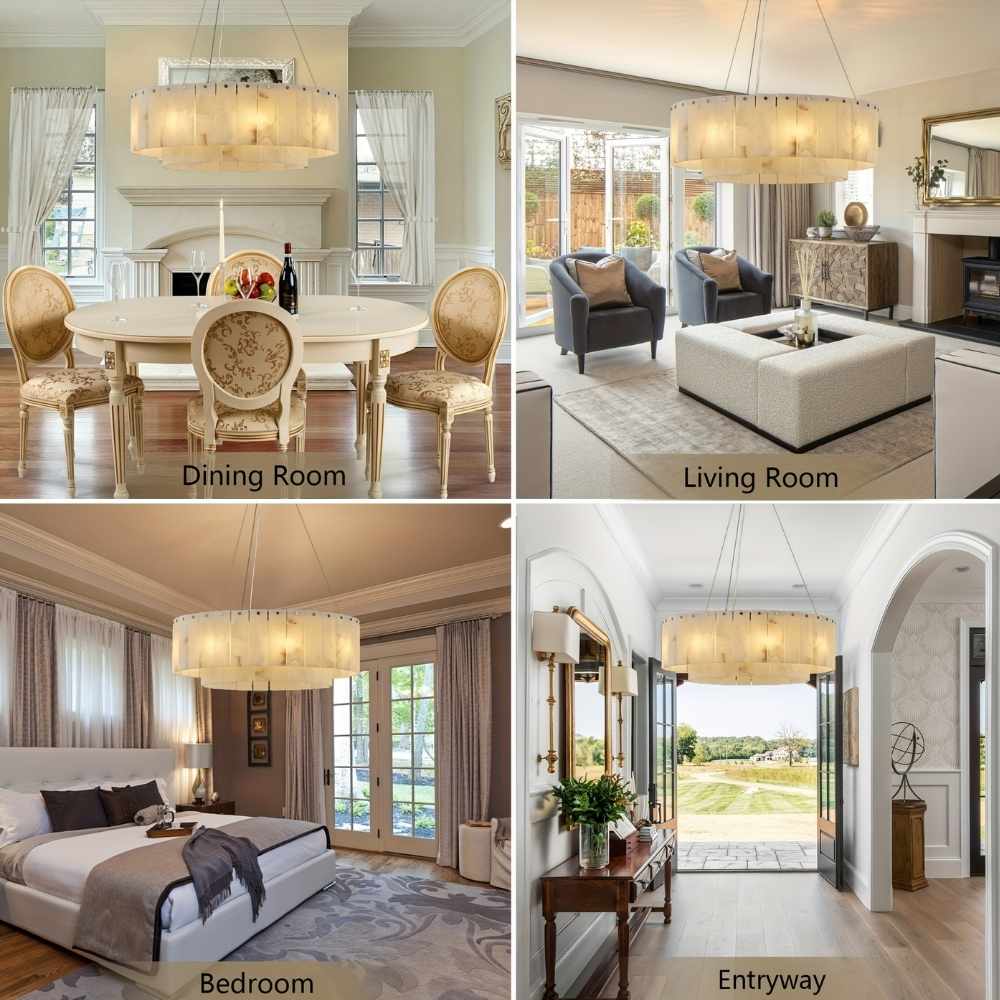
Living rooms are the collection's largest application. Centre the fixture on the seating group rather than the room's outline when the two differ, and keep 84" (213 cm) of clearance wherever people walk. The layered plan for the whole room sits in the living room lighting collection.
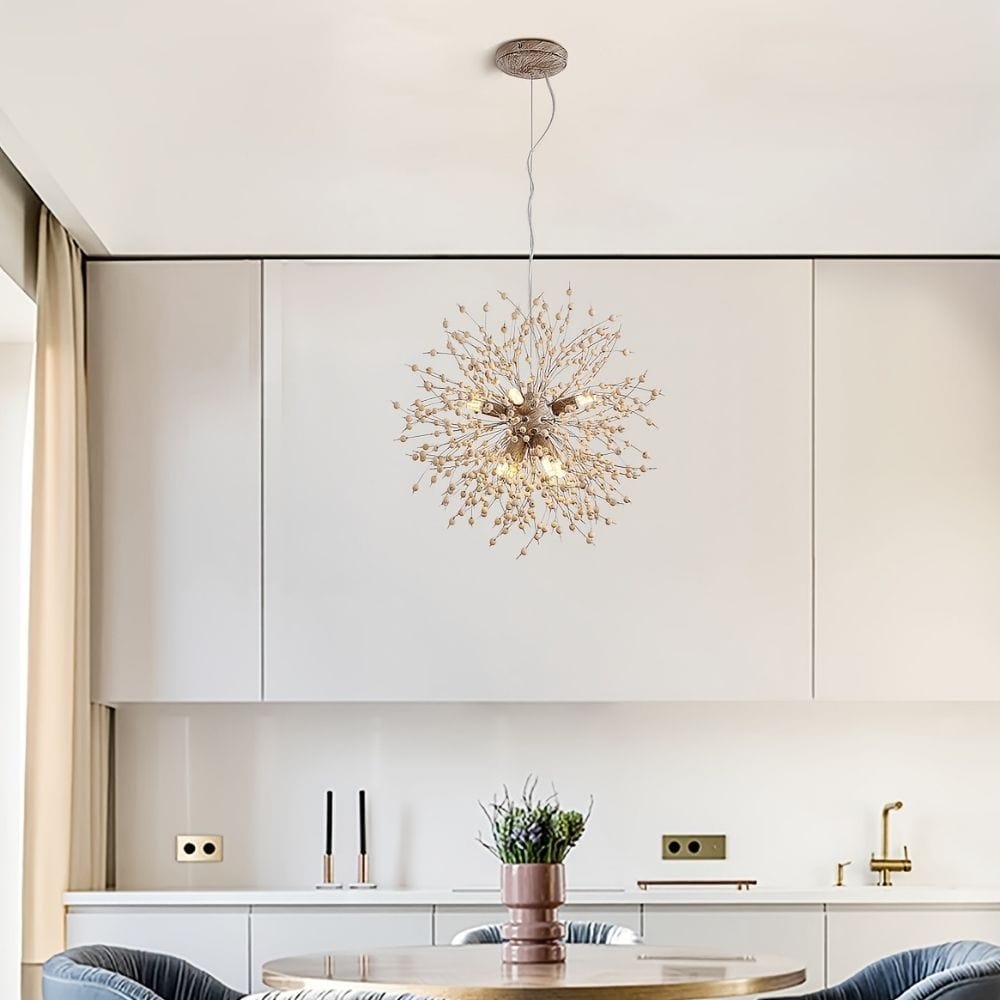
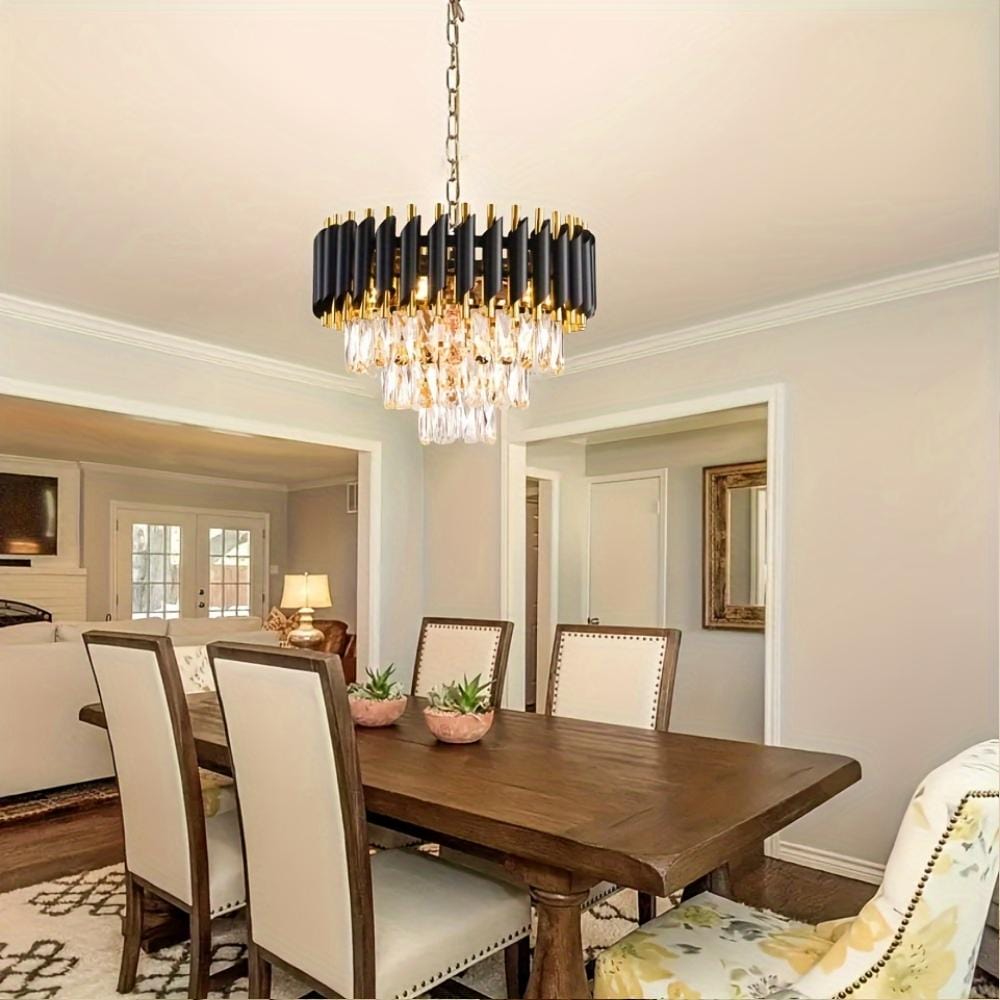
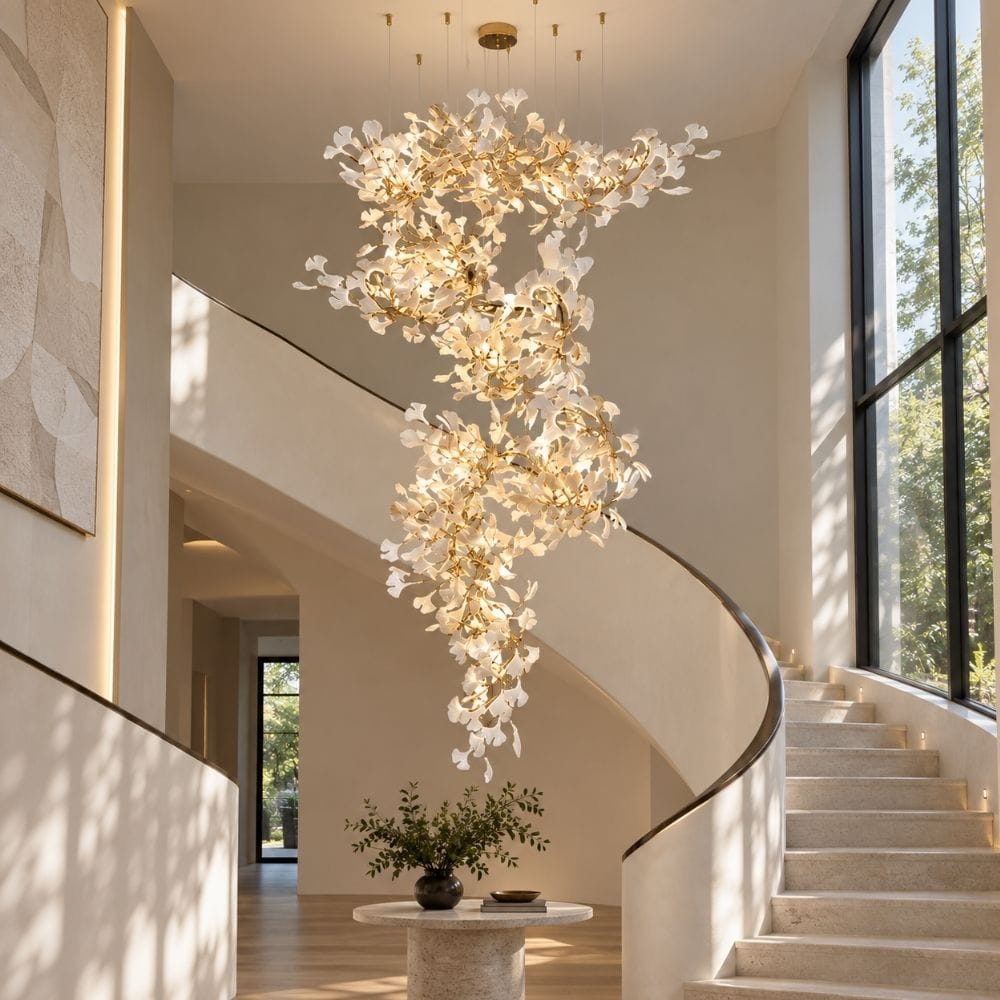
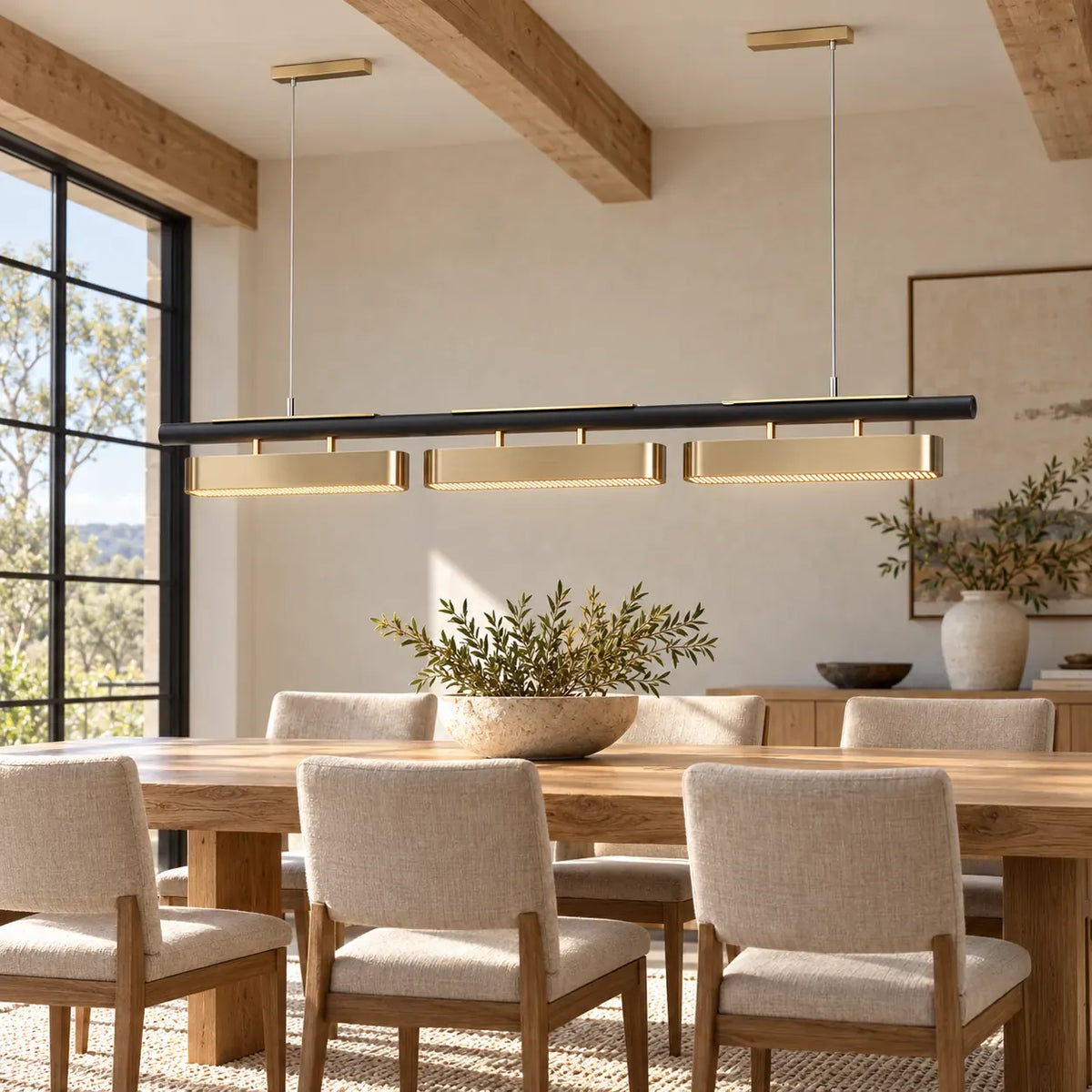
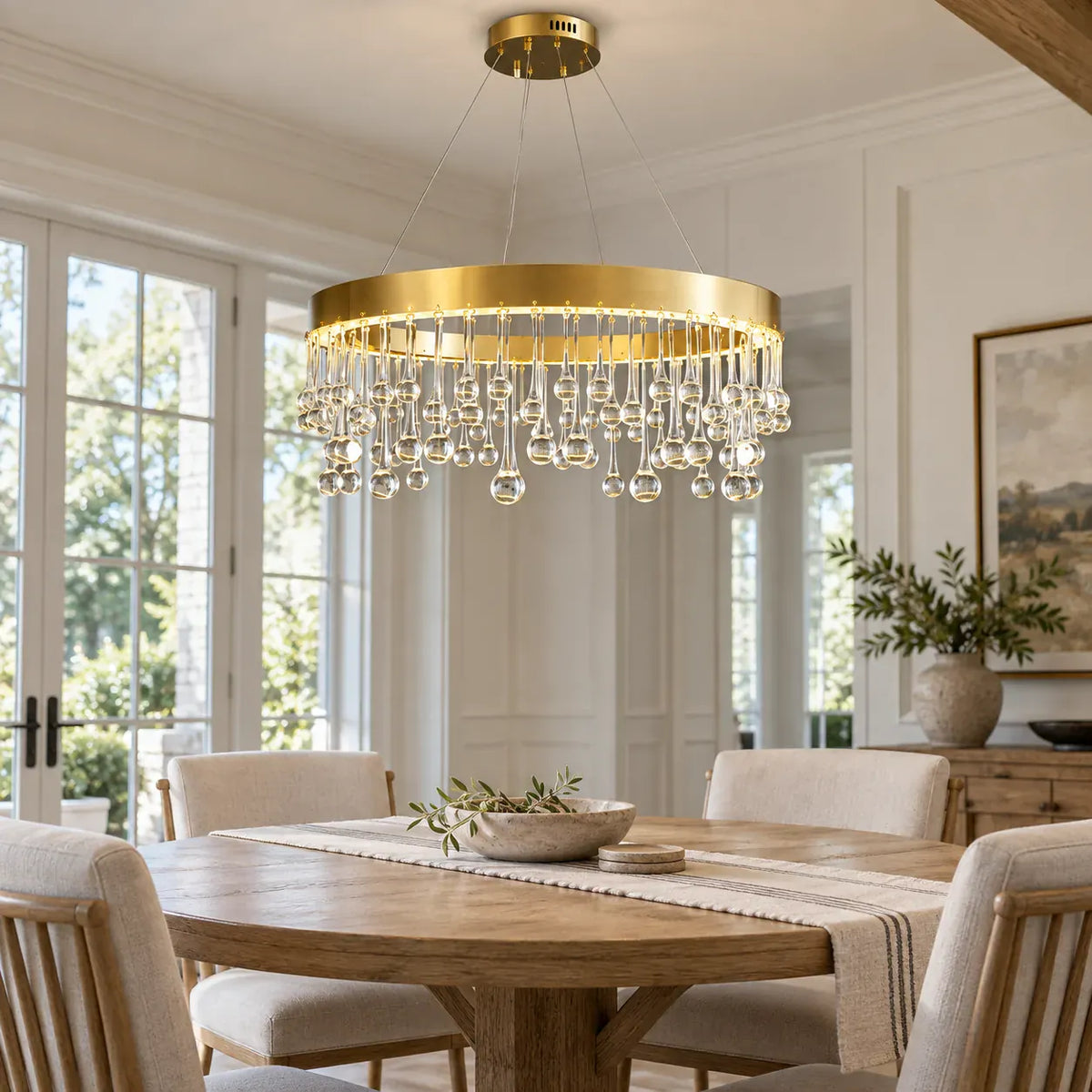
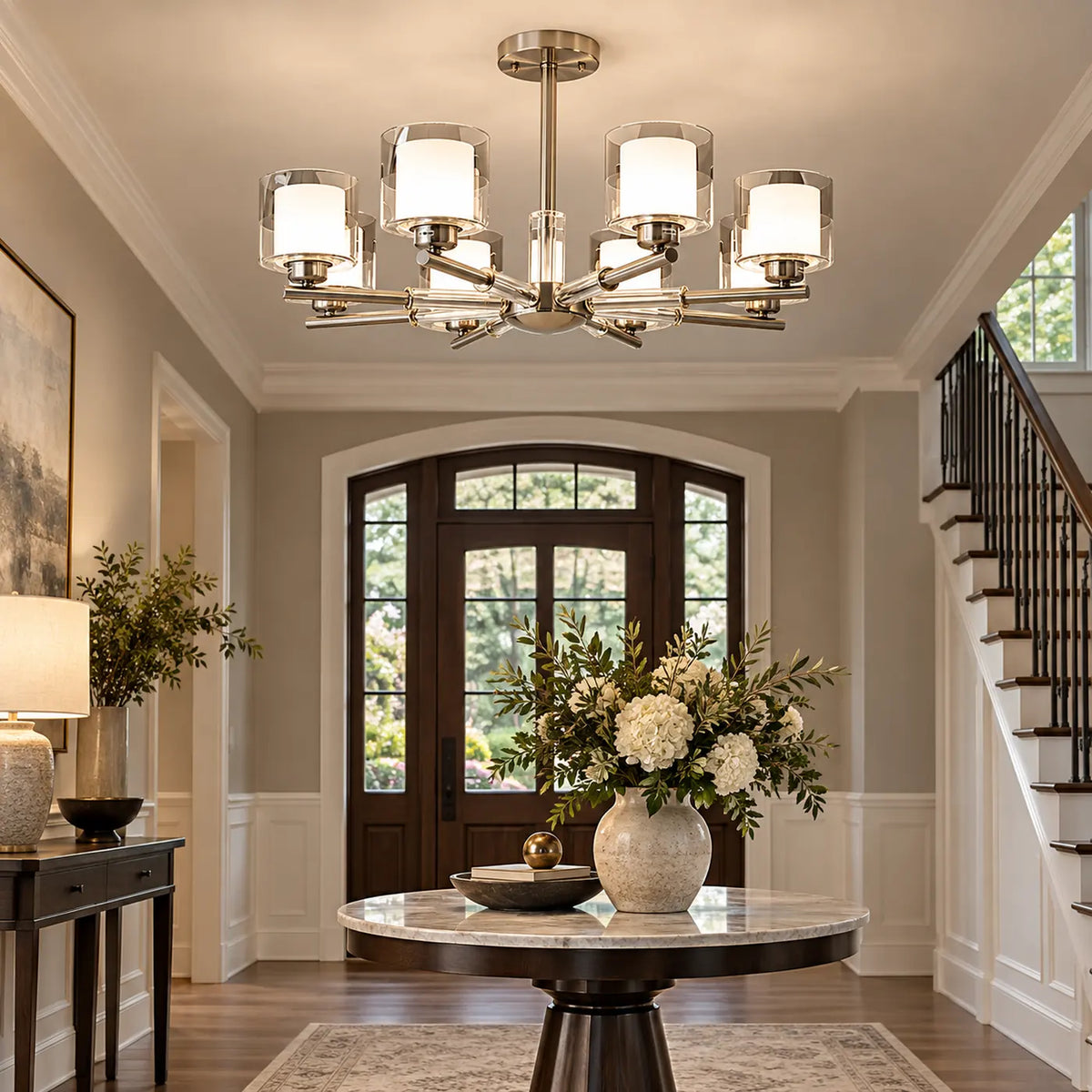
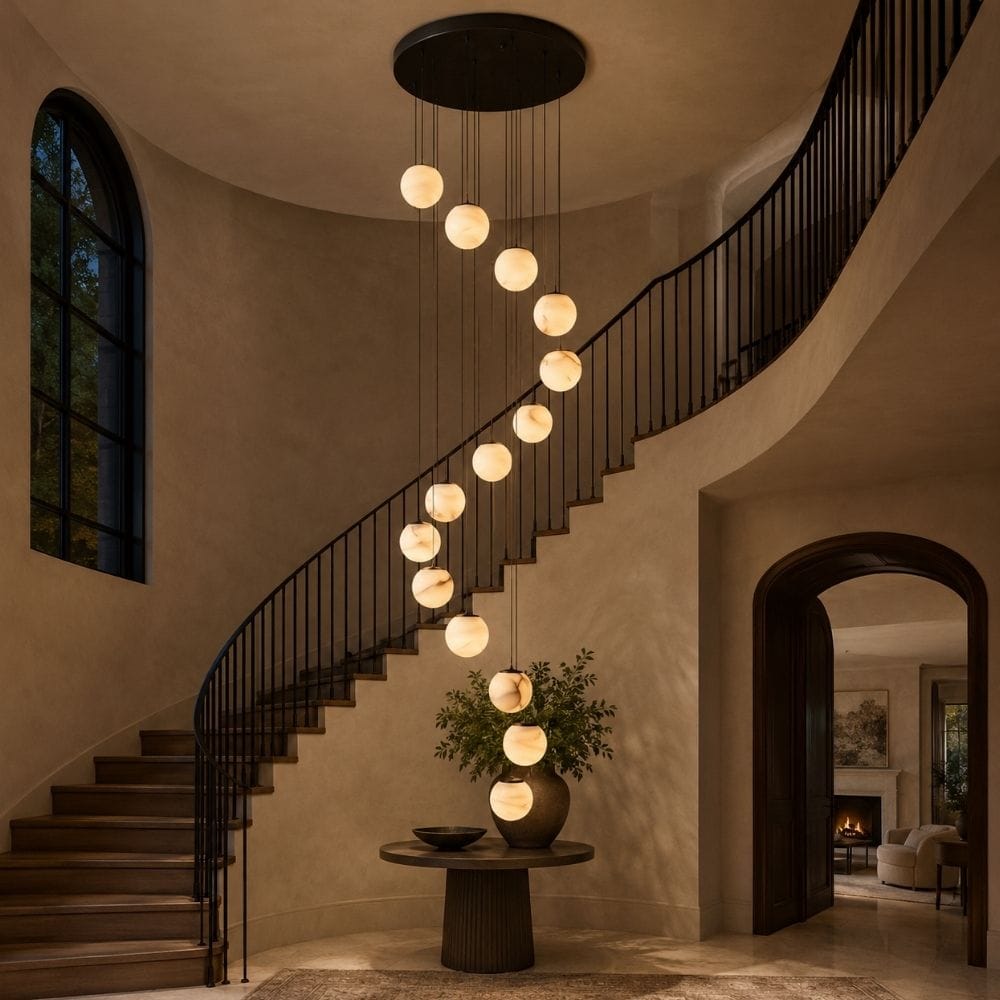
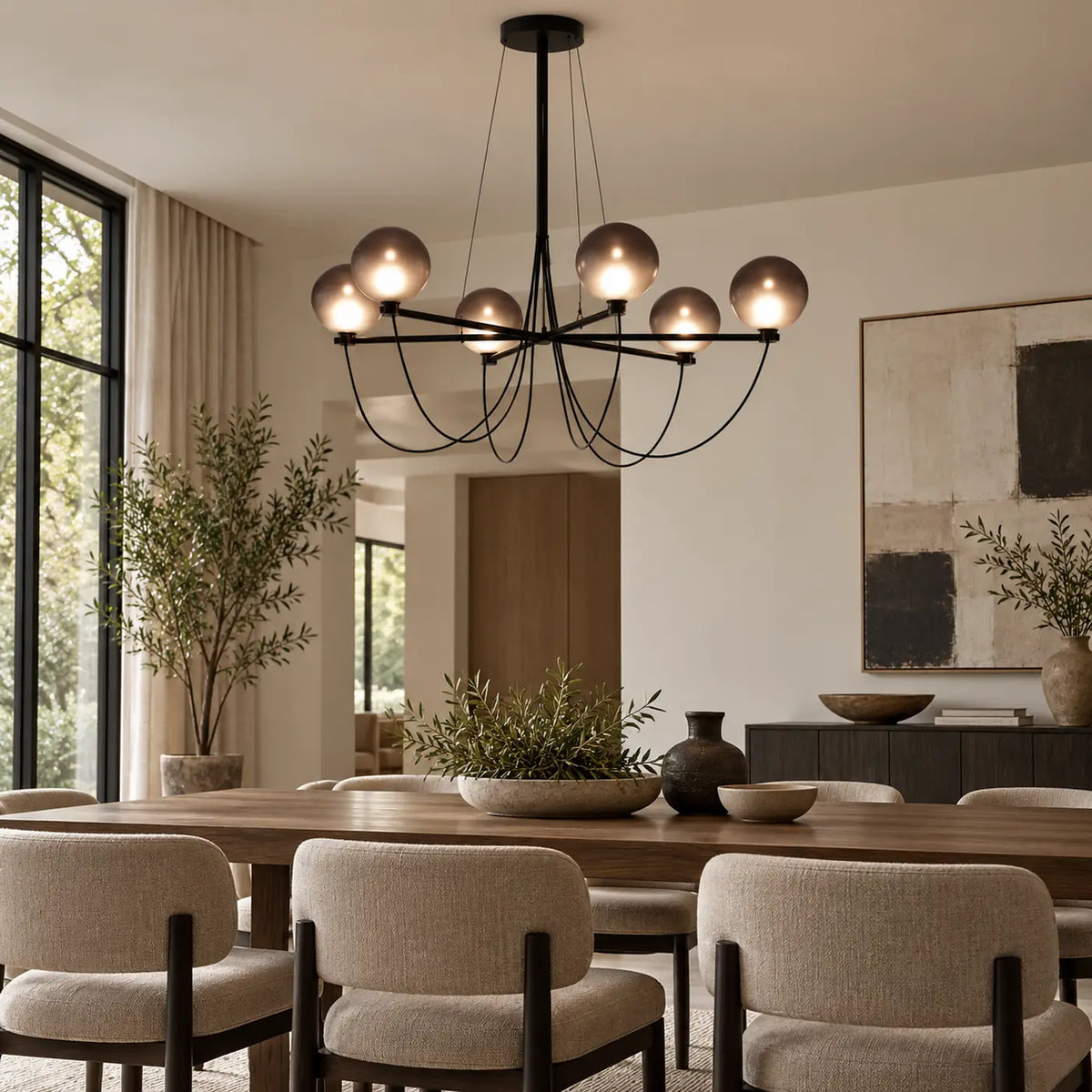
Dining rooms take a fixture sized to the table rather than the room, hung 30-36" (76-91 cm) above the tabletop — the dining room chandeliers collection narrows to that placement. Foyers and stairwells take longer drops and vertical compositions, since the space is read from more than one level; see foyer & entryway and staircase chandeliers. For long tables and islands, straight-line formats live in the linear chandeliers collection.
Sizing: One Set of Numbers
- No table below: add the room's length and width in feet; the sum in inches gives the target diameter. A 16 x 20 ft room points to roughly 36"
- Round or square table: one-half to two-thirds of the table's width
- Long table or island: a linear fixture spanning one-half to two-thirds of the table's length, kept under one-third of its width
- Hanging height: 30-36" (76-91 cm) above a tabletop; 84" (213 cm) of clearance in walking areas
- Tall ceilings: add roughly 3" of diameter for every foot above 9 ft
Visual density adjusts the result. A slim ring or open globe reads lighter than its diameter suggests, so round up; clustered glass and layered forms read heavier, so take the smaller option when between sizes. Full calculations by room are in our chandelier size calculator.
Contemporary or Modern: Which Page to Use
The categories overlap and the distinction is worth making before shopping, because it decides which page will have what you want.
Modern points to a design lineage — the mid-century and Bauhaus inheritance, with disciplined line, classical proportion and forms that have been in production for decades. If the priority is restraint and a fixture that will read the same in ten years, the modern chandeliers collection is the page.
Contemporary means what is being designed now, with more freedom in silhouette, material mix and expression. A contemporary fixture can be clean, but it can equally be fluid, asymmetric or sculptural. If the room needs personality overhead rather than quiet geometry, this is the stronger starting point.
Light Quality Worth Checking
Warm white 2700-3000K on a dimmer suits every direction here; cooler light flattens glass and makes metal read clinical. Colour rendering at CRI 90 or better keeps materials and food true, which matters most above a dining table. Where a design uses integrated LED rather than replaceable lamps, check the dimming depth and whether the driver is serviceable — the emitters last decades, but the driver is the part that eventually fails, and access matters on a fixture hung high.
Related Collections
Compare the more restrained direction at modern chandeliers, browse the full range at the chandelier catalog, or narrow by form at branch, bubble and ring chandeliers.
Frequently Asked Questions
What makes a chandelier contemporary rather than modern?
Modern points to the mid-century and Bauhaus lineage — disciplined line and classical proportion. Contemporary means what is being designed now, with more freedom in silhouette and material mix. A contemporary fixture can be clean, but it can equally be fluid, asymmetric or sculptural.
What is a sculptural chandelier?
One that reads as an object before it reads as lighting, holding its shape when the room is bright and the fixture is off. Three families lead: asymmetric and branching, layered and stacked, and continuous-line forms such as rings and ribbons.
What size contemporary chandelier do I need?
With no table below, add the room's length and width in feet and read the total in inches as the target diameter. Over a round table, one-half to two-thirds of its width; over a long table, a linear fixture at one-half to two-thirds of its length.
How high should it hang?
30-36" (76-91 cm) above a tabletop, and at least 84" (213 cm) of clearance anywhere people walk. In foyers and stairwells seen from two levels, position the composition's centre at or just below the second-floor line.
Which finish suits a room that already has colour or pattern?
Gray or graphite. It sits between black's contrast and chrome's shine, so it adds form without competing. Matte black is the choice where the room is quiet and the fixture should be graphic.
Do contemporary chandeliers suit small rooms?
Yes, in slim ring, compact globe and linear forms. Size to the room formula rather than scaling down a large design, and favour open frames over clustered ones, which read heavier than their measurement.
Can they work in a traditional home?
They can, as deliberate contrast. Transitional silhouettes and warm metal finishes bridge most easily; a highly abstract form in a period room reads as a decision rather than an accident only when the rest of the room supports it.
How much maintenance do they need?
Less than traditional crystal. Dry dusting every two to three months covers most designs. Integrated-LED fixtures have no lamps to change for decades, though the driver is the component that eventually needs replacing — worth checking that it is accessible before buying for a high ceiling.
Are ring and globe styles contemporary?
Yes. Ring forms, globe clusters, layered glass and mixed-material sculptural fixtures are all current directions, and together they account for most of what is being specified in new residential interiors.