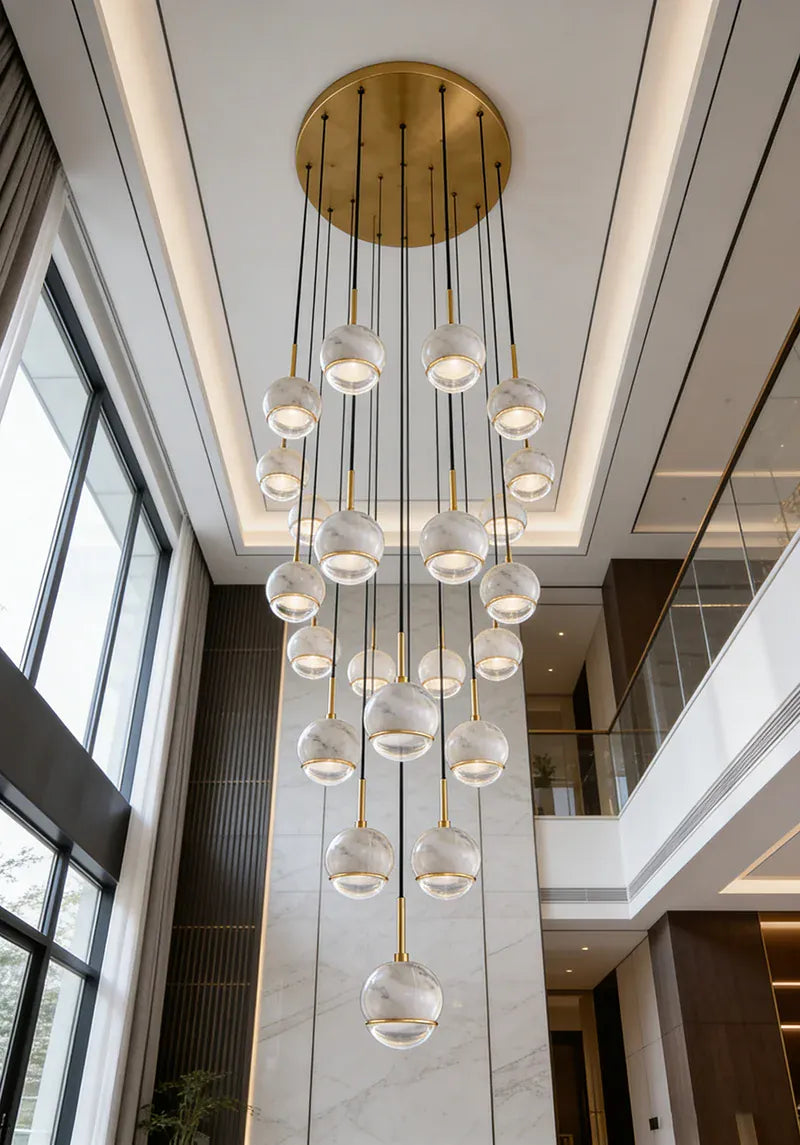
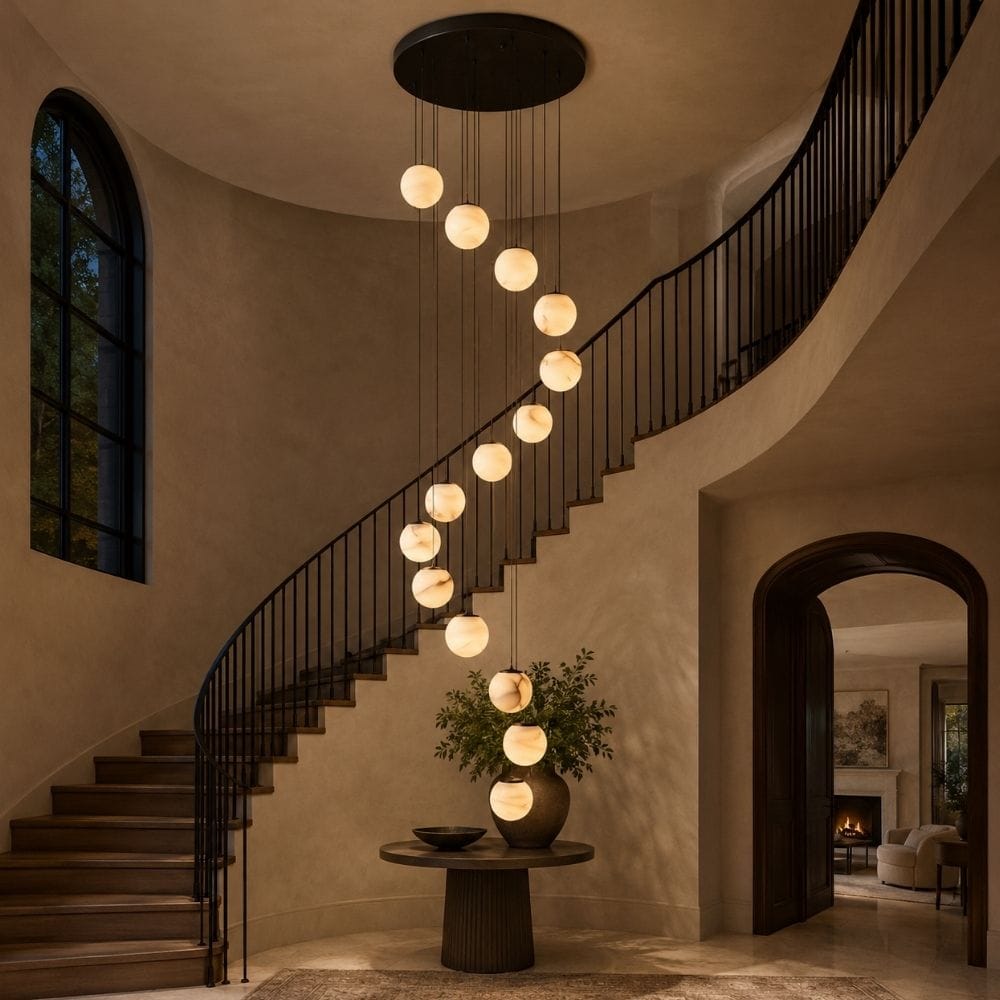
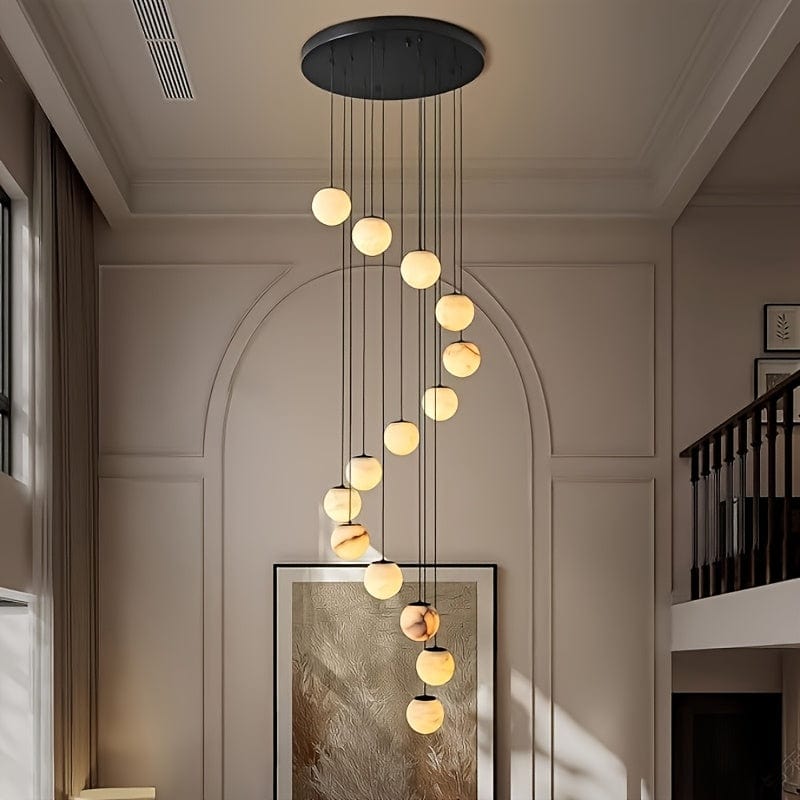
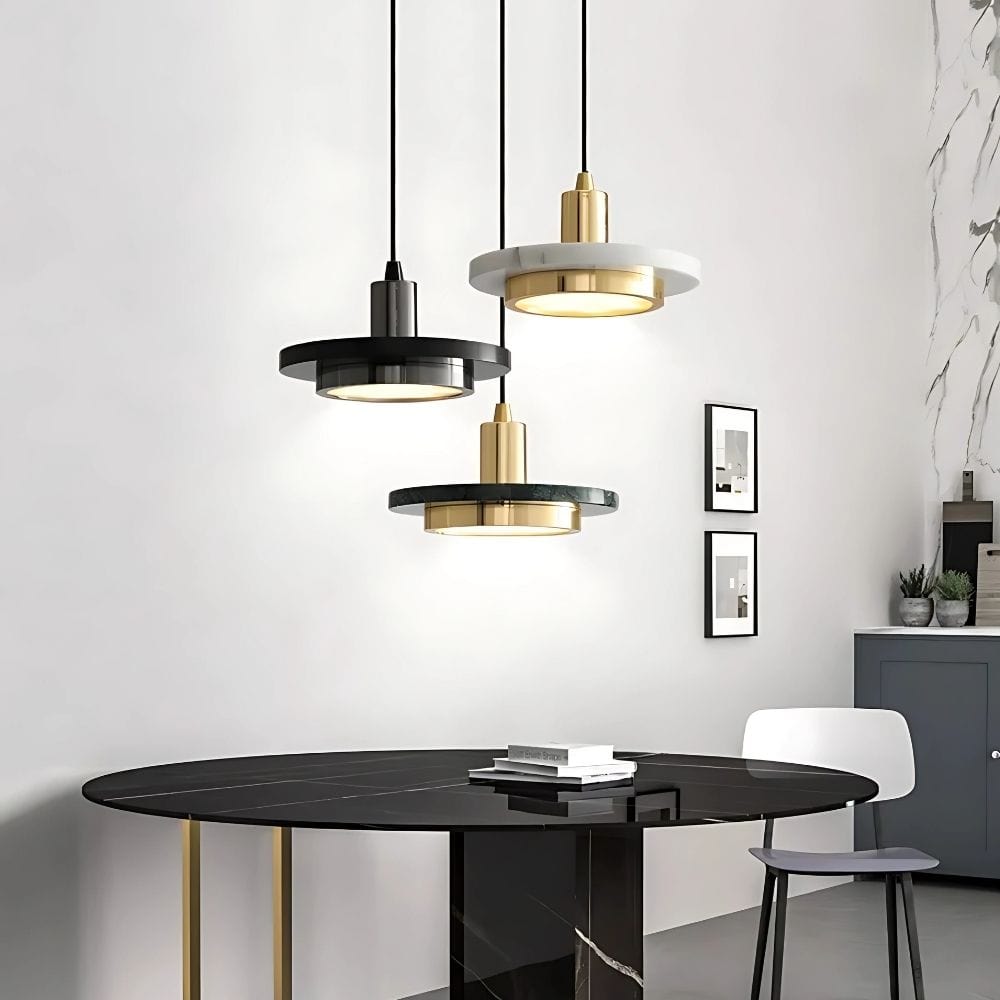
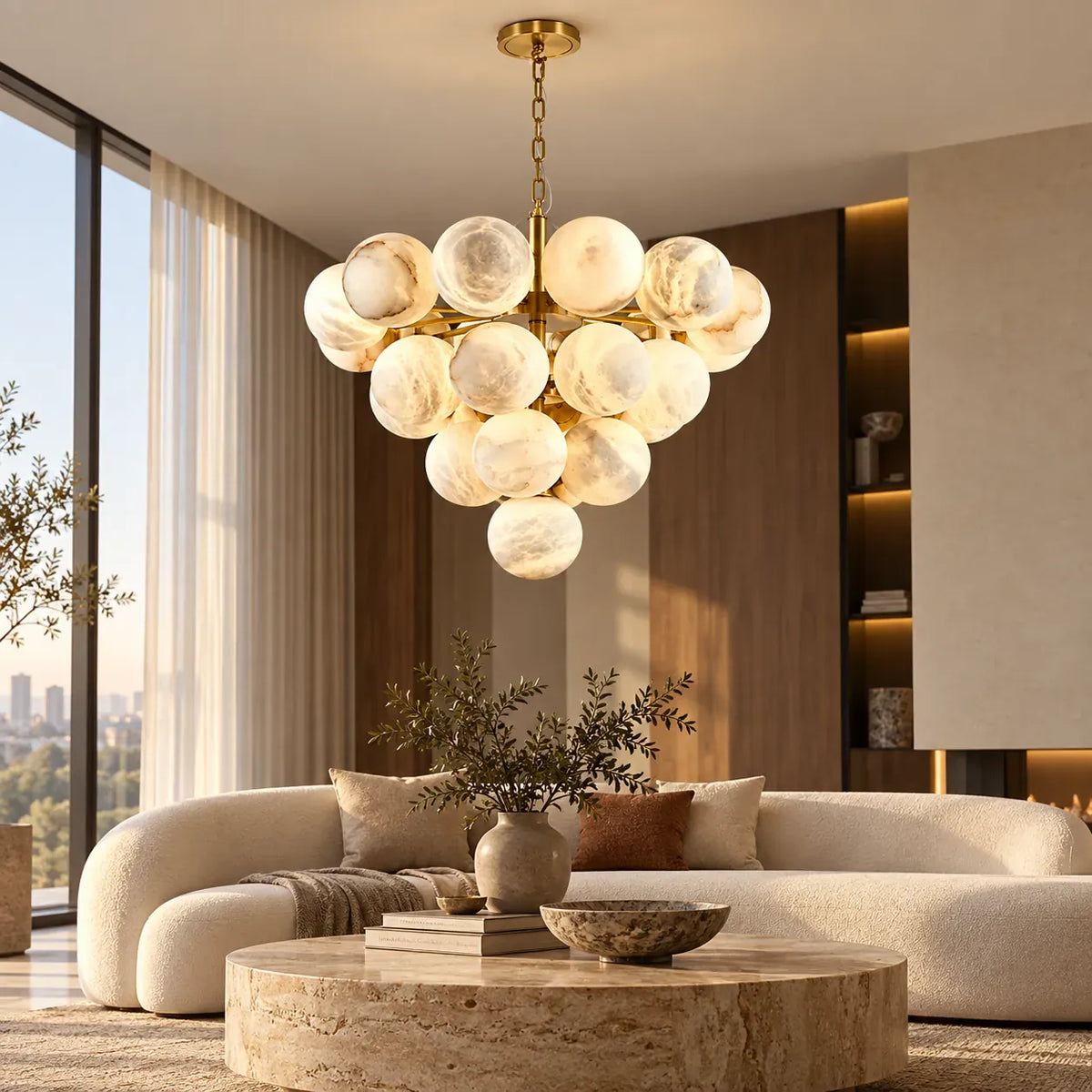
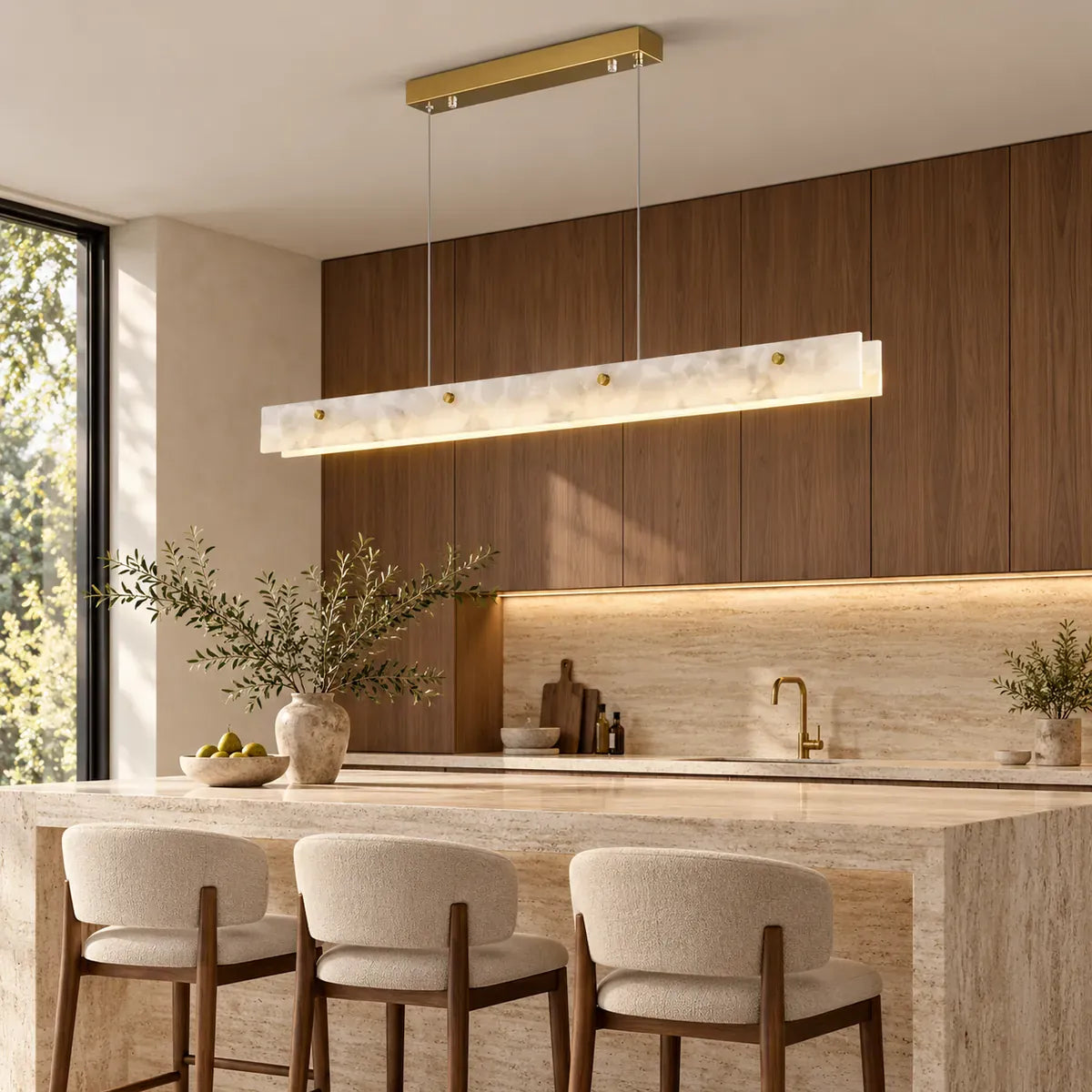

Alabaster or Marble: Not the Same Stone
The two are sold together and often described interchangeably — listings across the market use phrases like "alabaster marble" as though it were one material. It is not, and the difference decides what the fixture does.
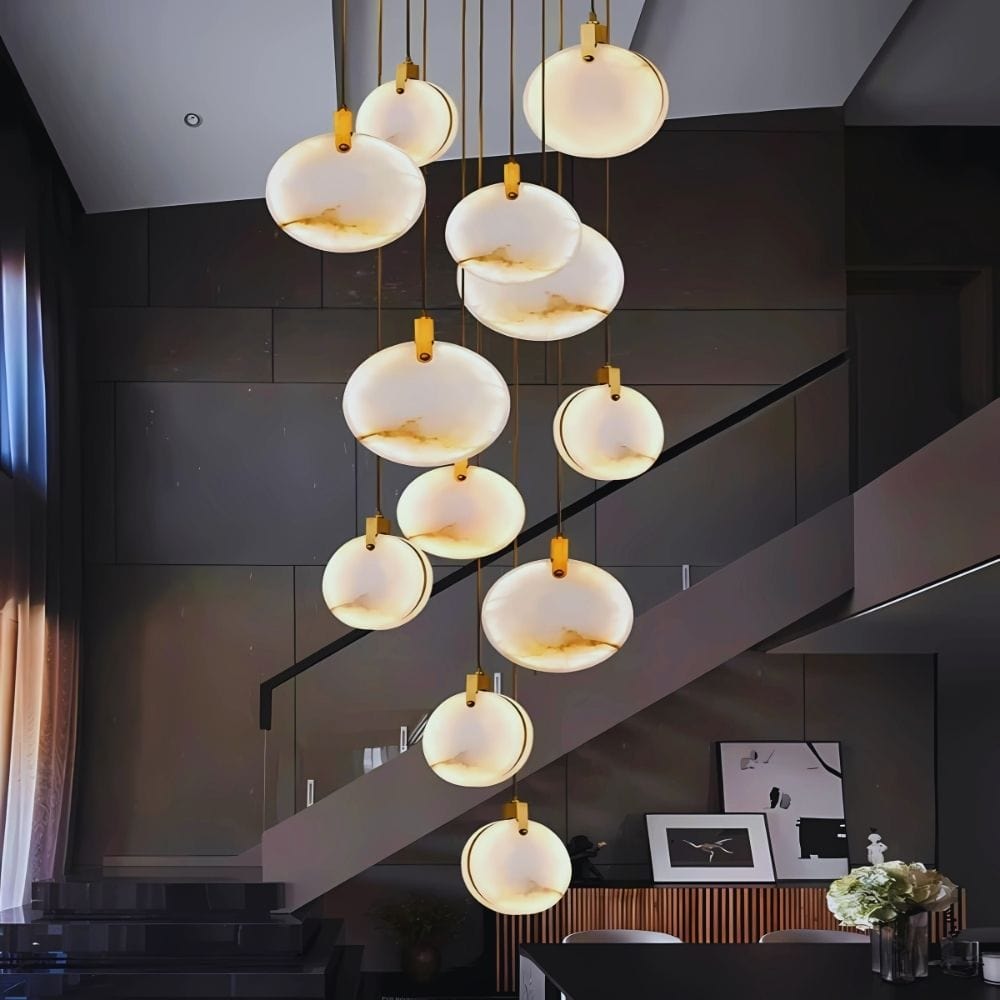
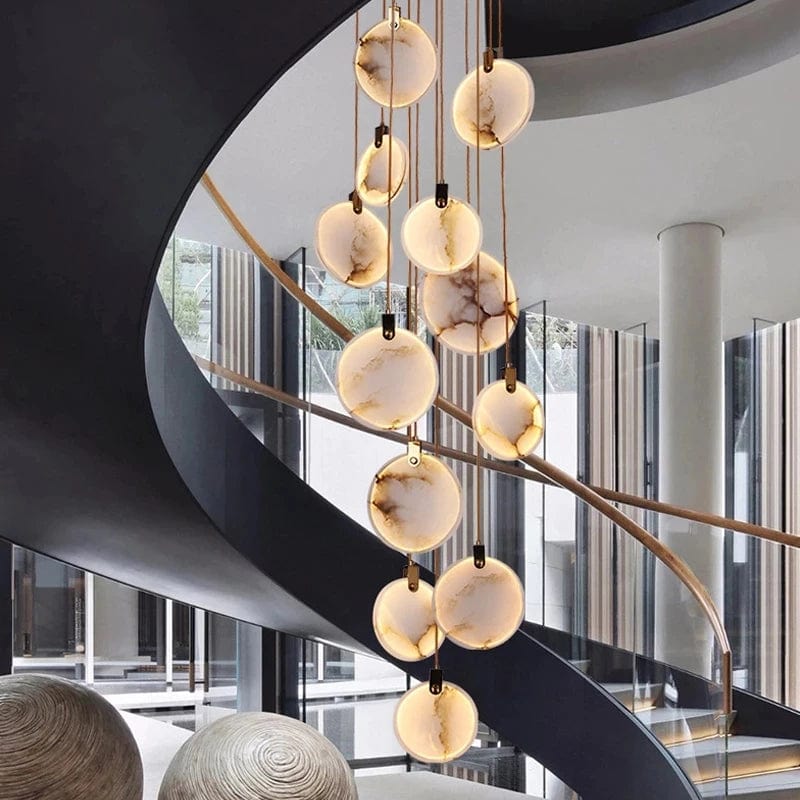
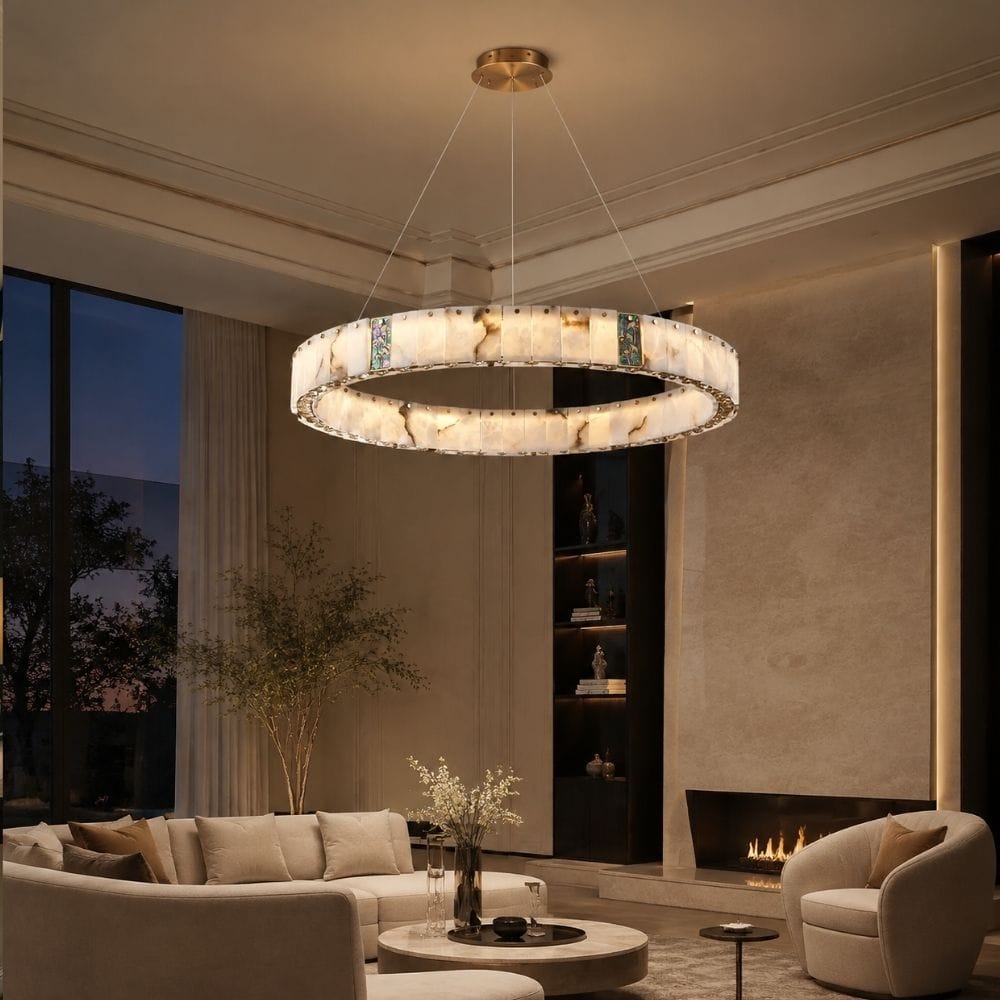
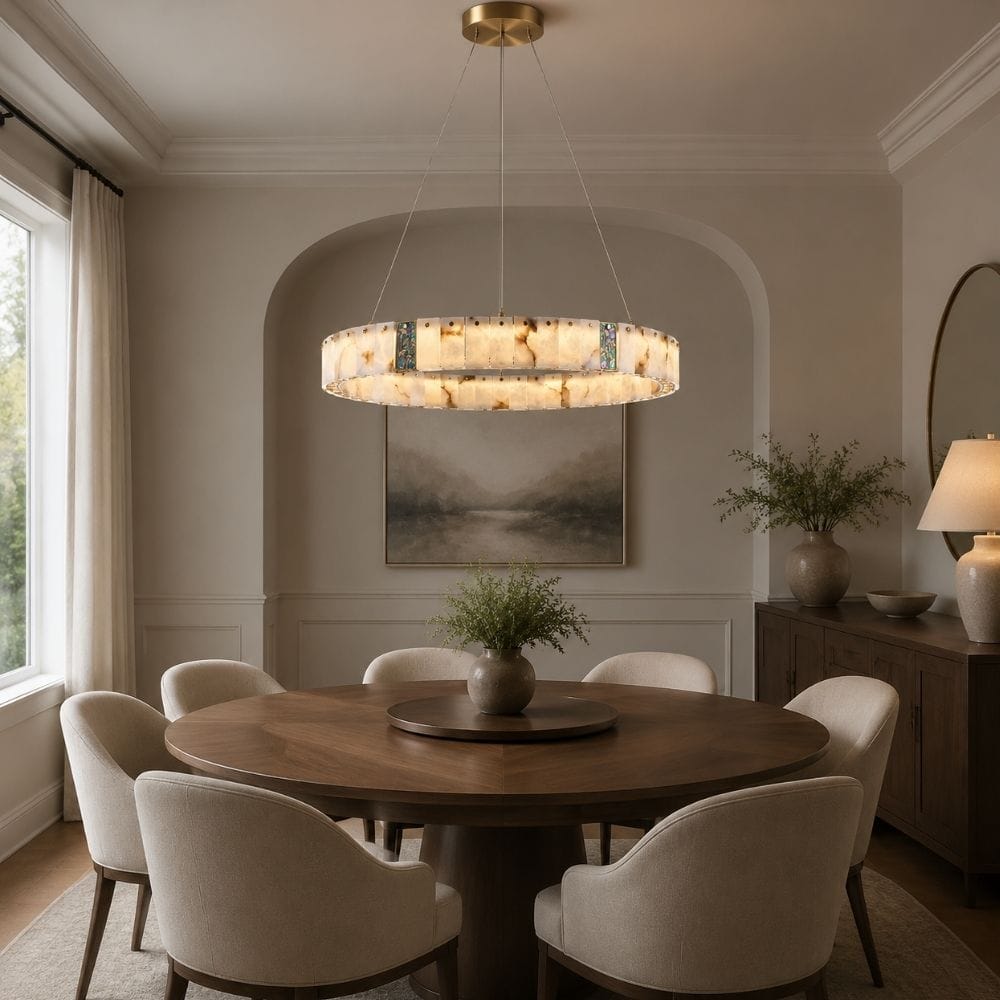
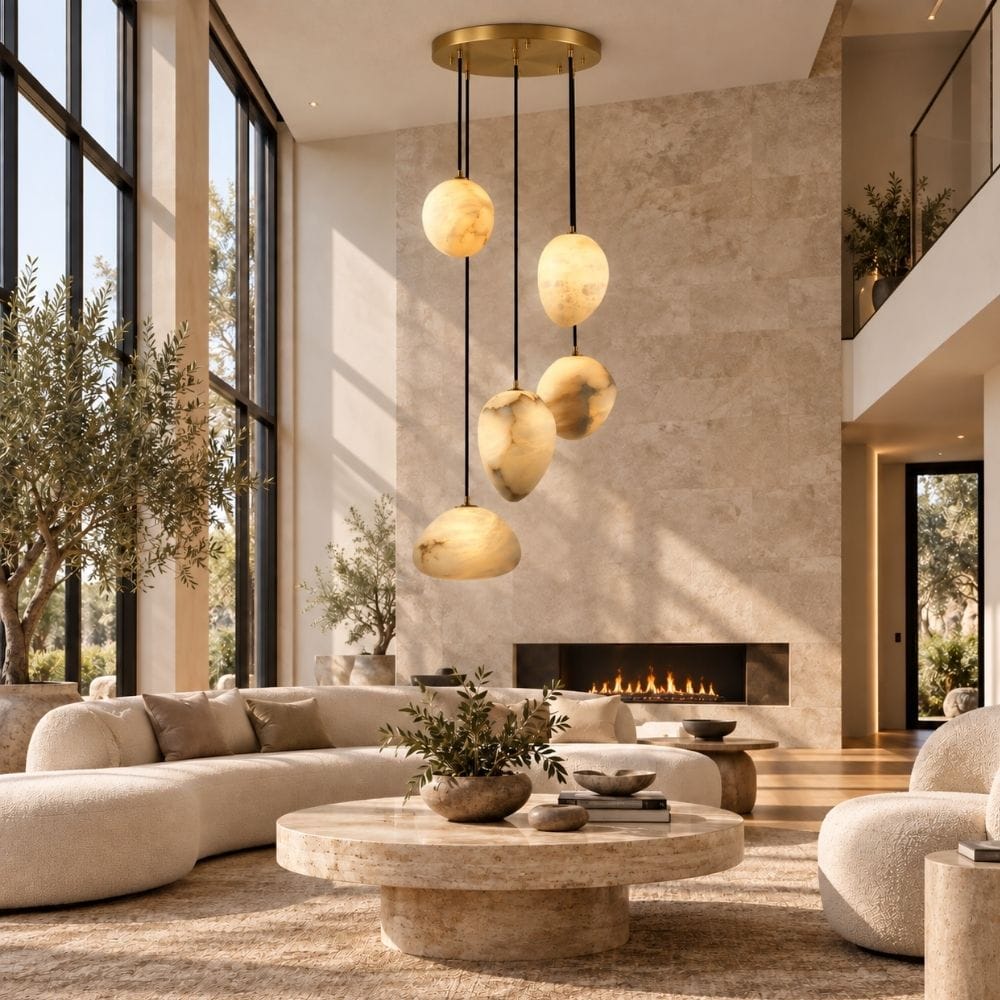
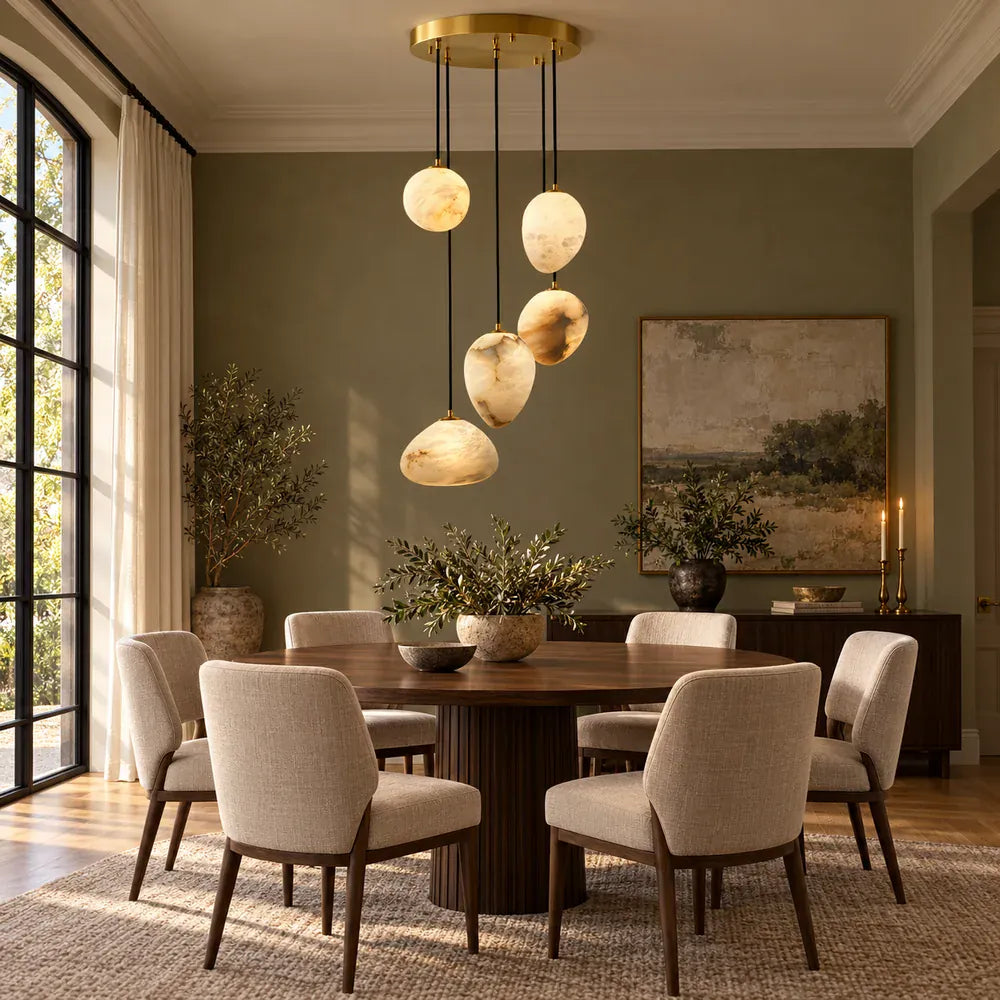
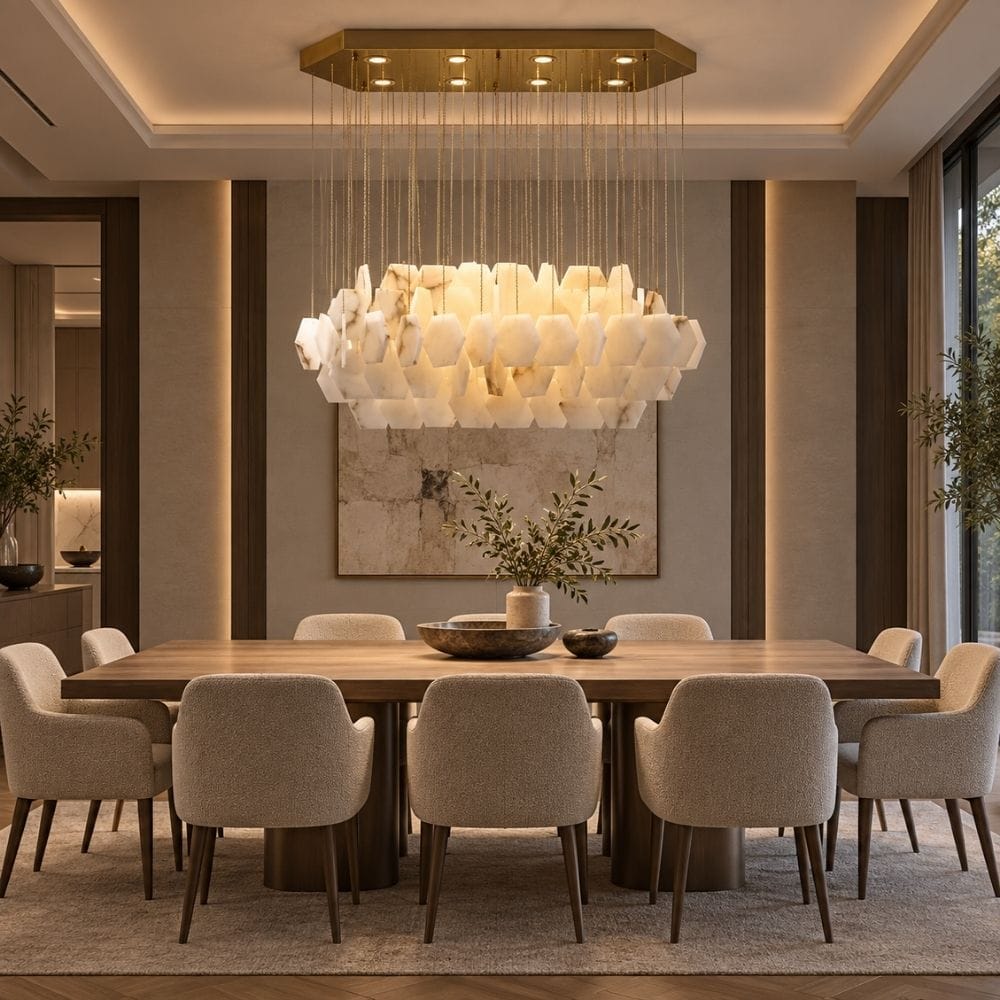
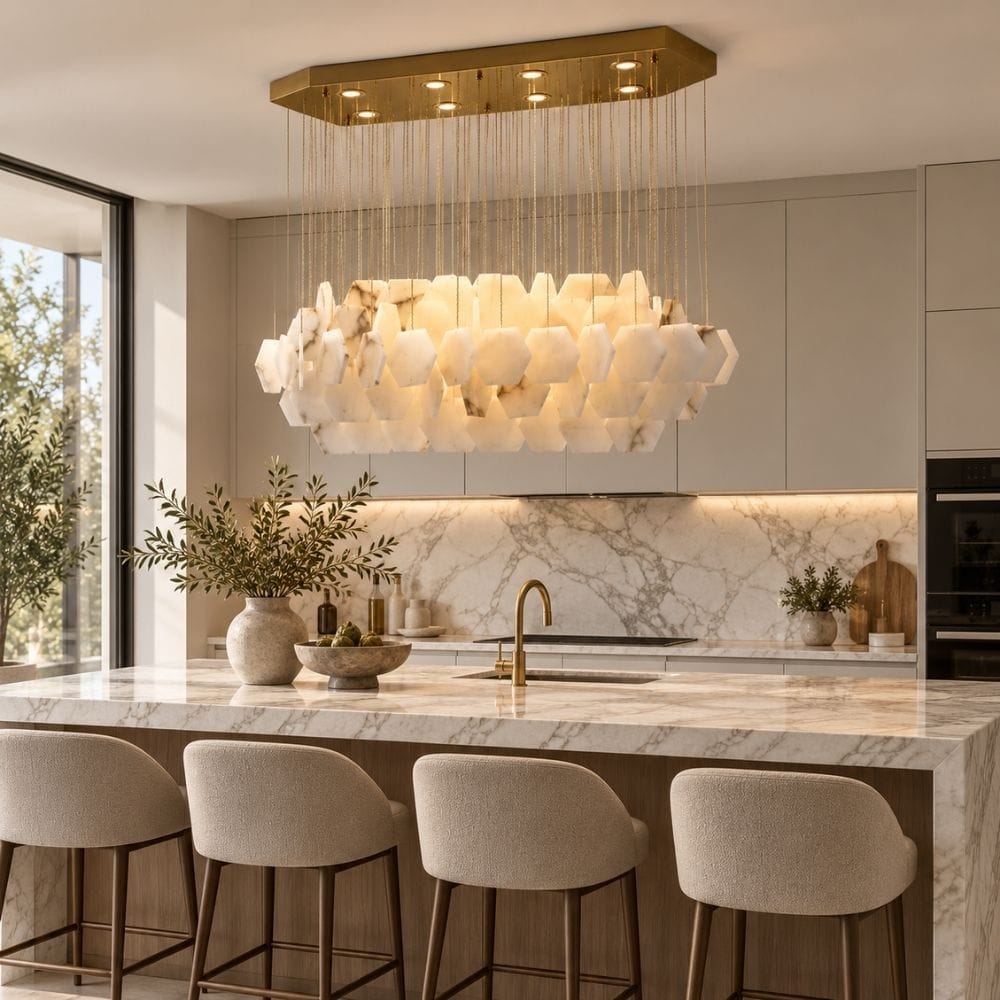
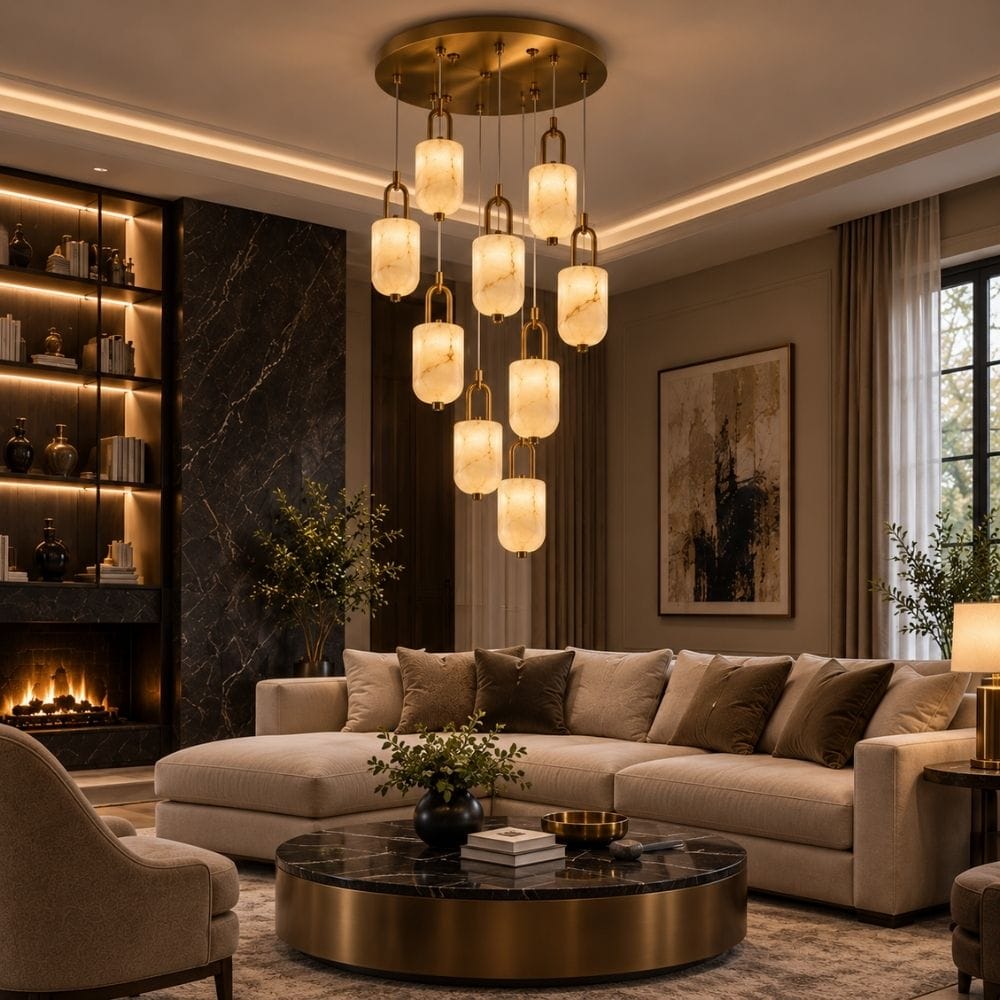
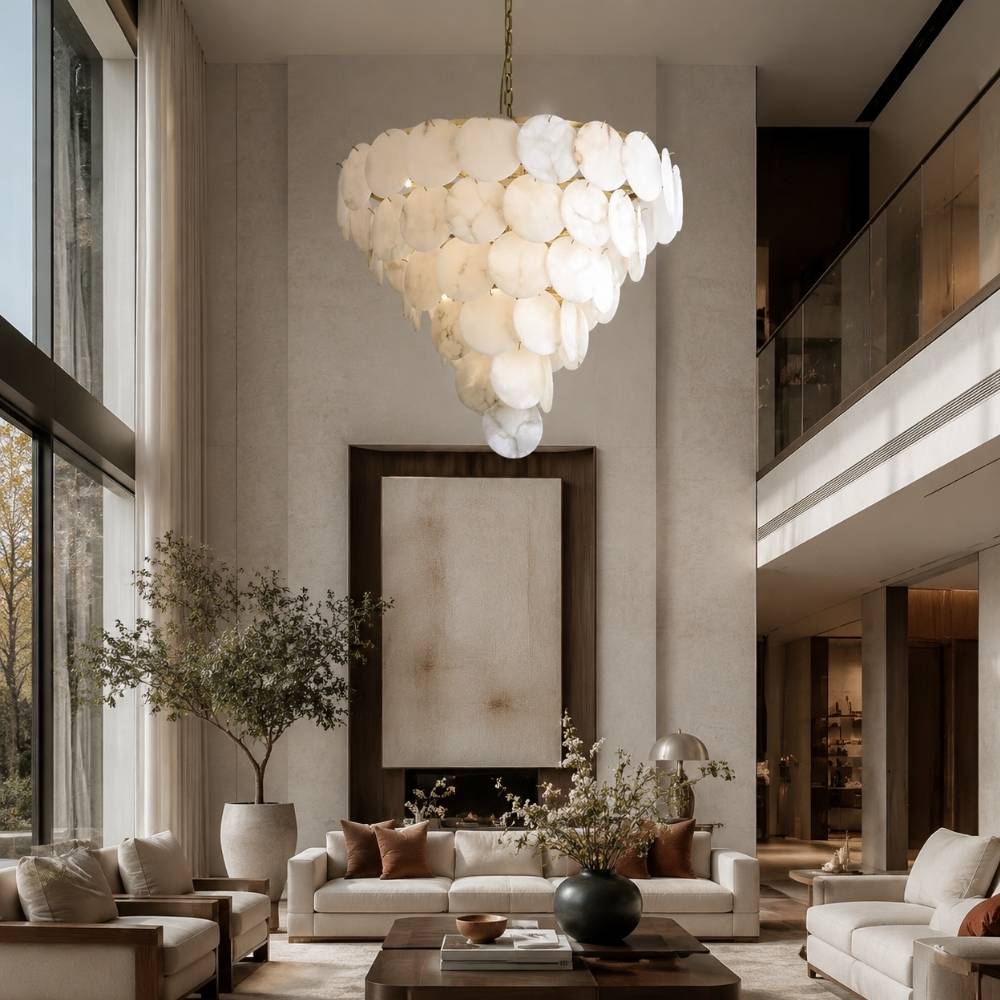
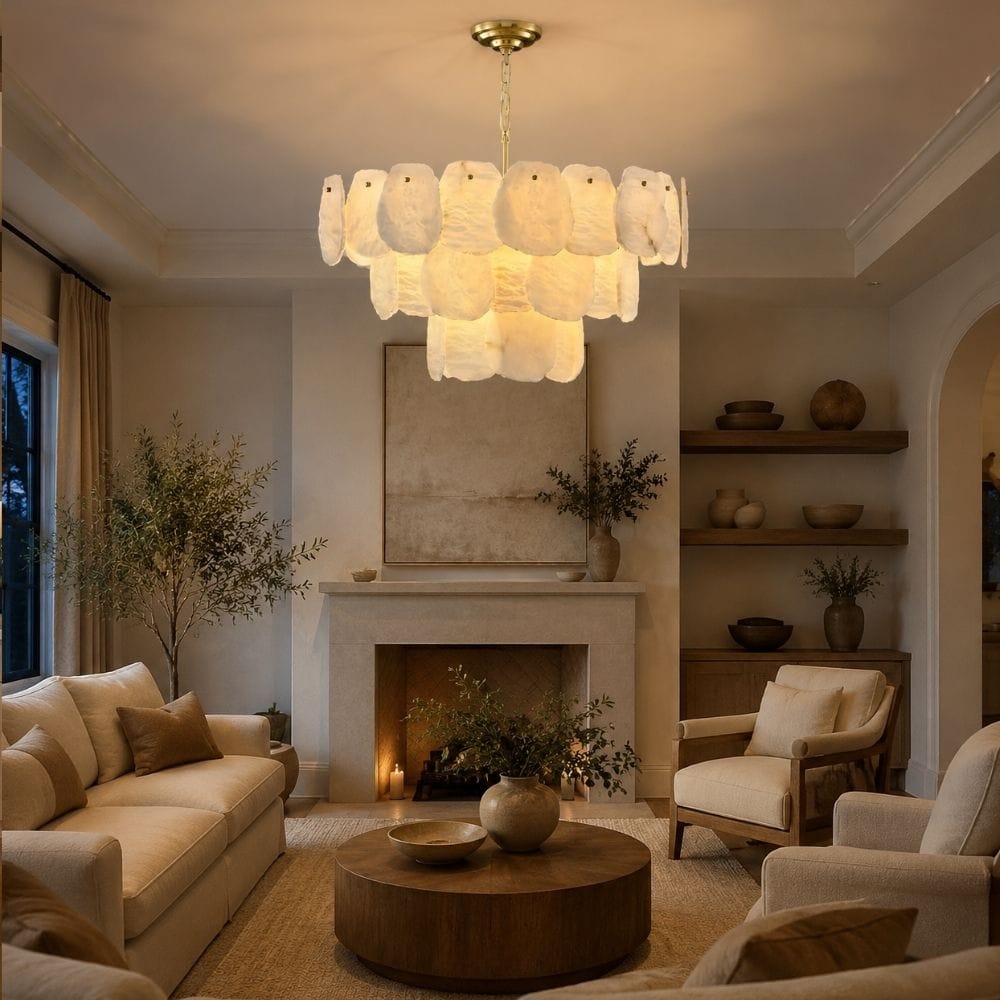
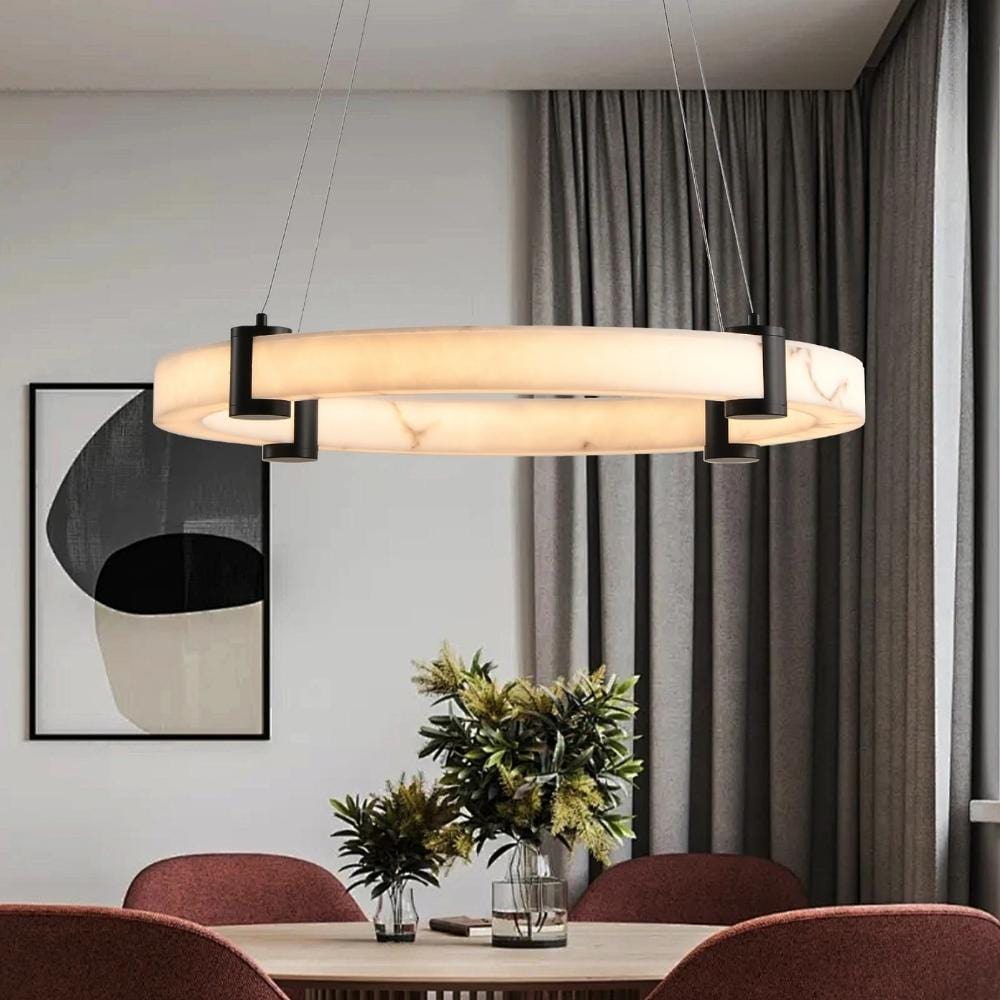
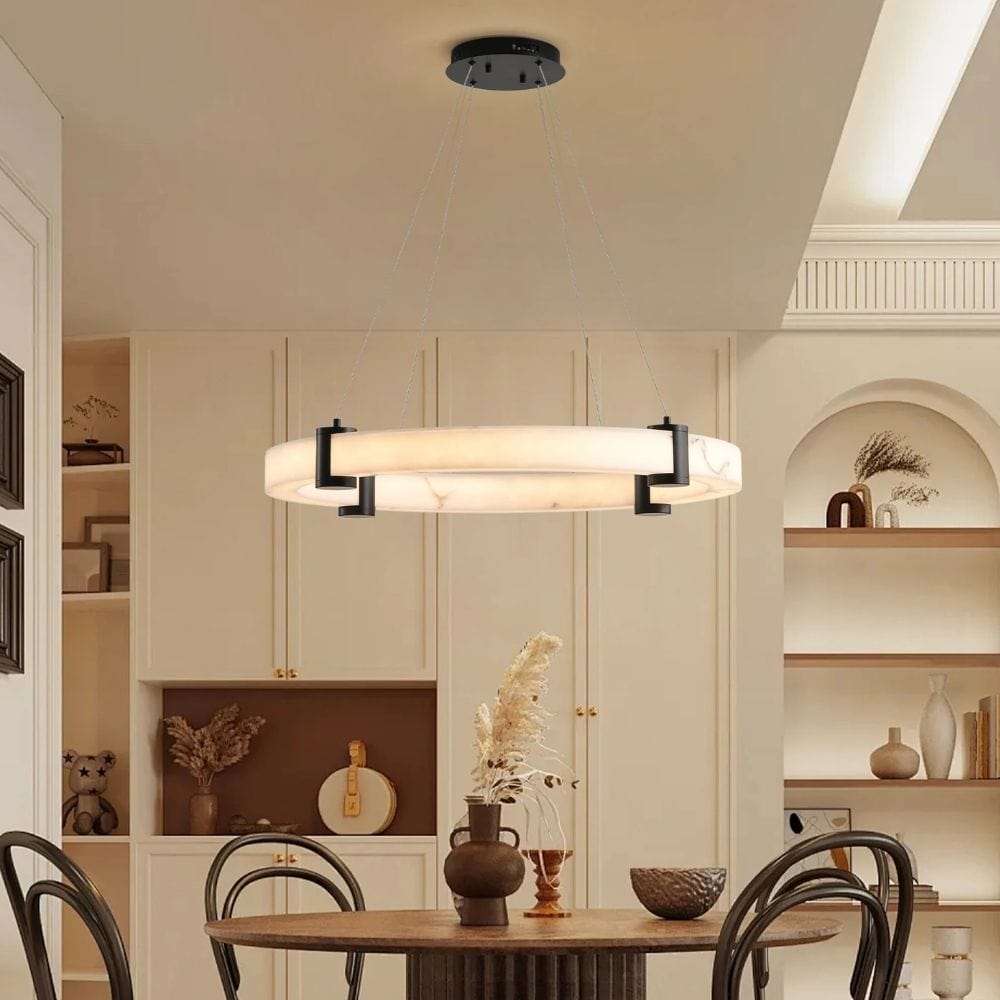
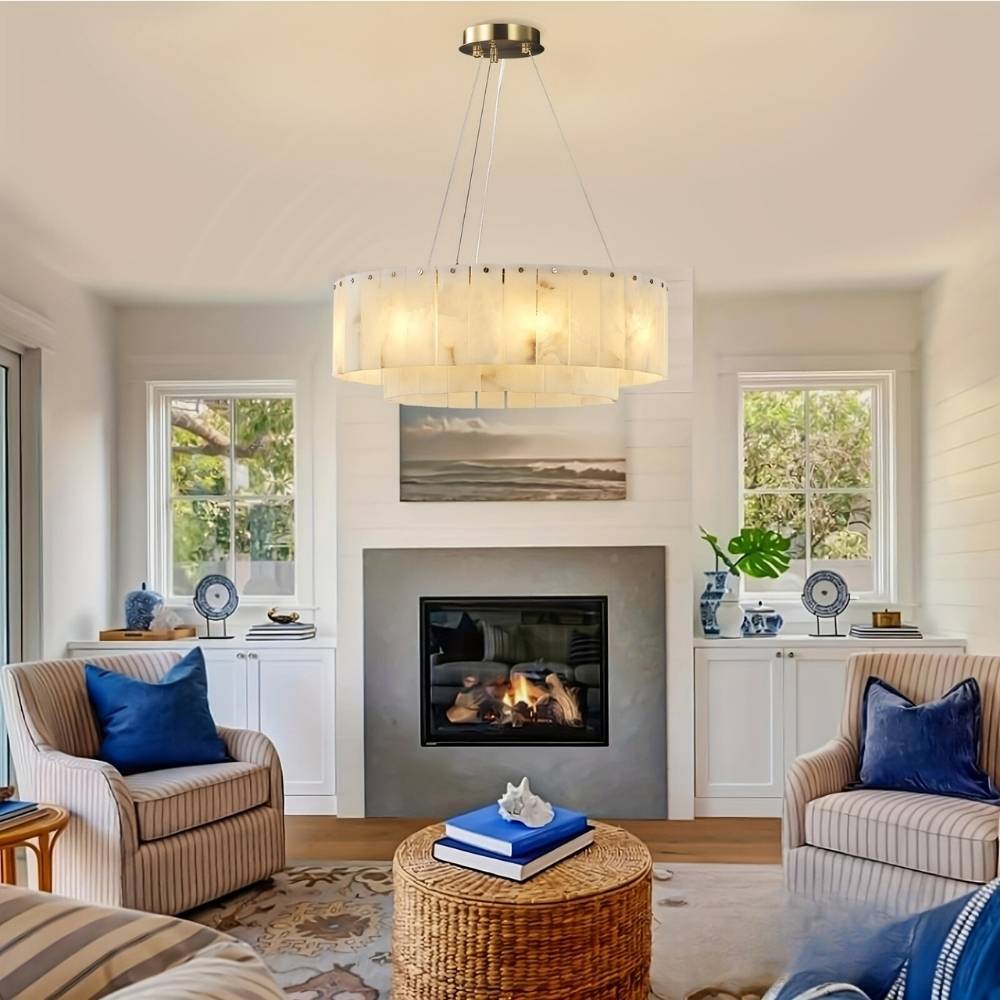
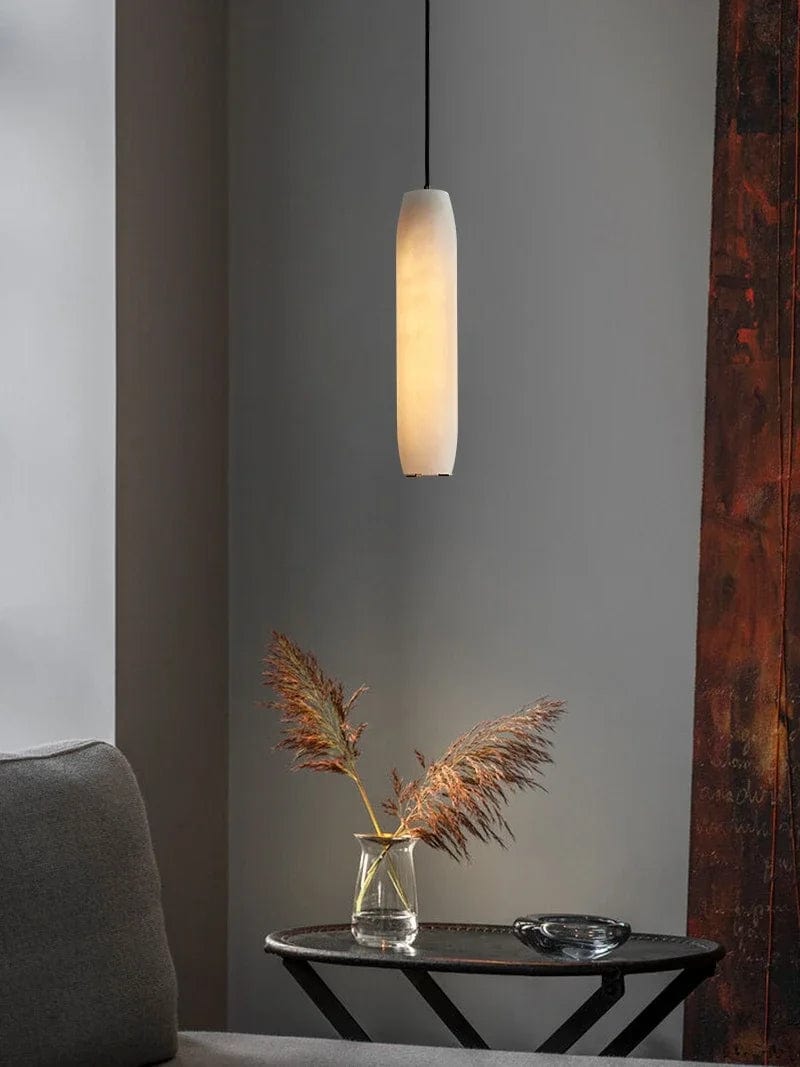
- Alabaster is translucent. Light passes through it, so the stone itself is the diffuser. Veining is largely invisible unlit and emerges when the fixture is switched on — two different faces, which no glass or metal design offers
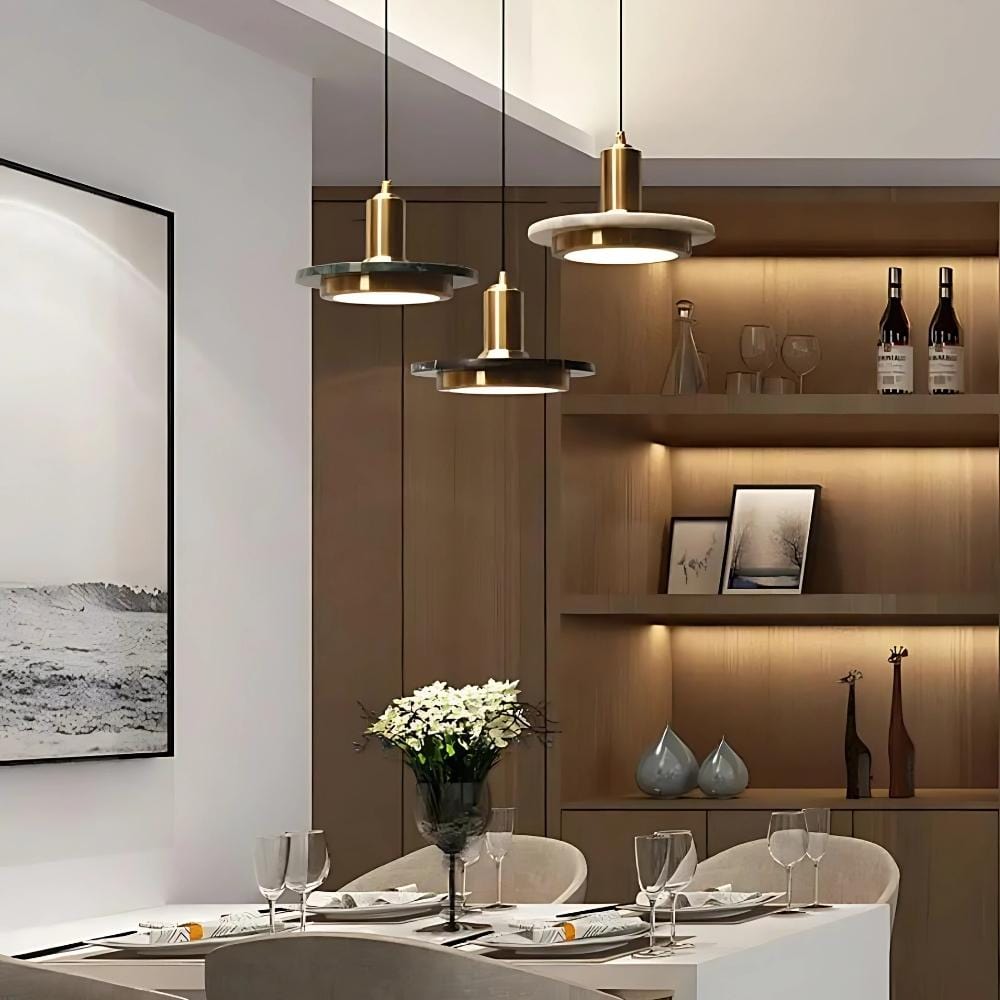
- Marble is dense and effectively opaque at lighting thicknesses. It reflects rather than transmits, working as sculptural surface or structure while the light comes from around or beneath it
- Alabaster is softer — closer to gypsum than granite — which is why it can be cut thin enough to glow, and why it needs more care
- Marble is harder and more durable, tolerating handling and cleaning that alabaster does not
In practice: choose alabaster when the glow is the point, marble when the pattern and weight are. Many designs combine both, using alabaster for light and marble for structure.
Why Stone Softens Light Differently
Frosted glass scatters light at its surface. Alabaster does something else: light enters the stone, travels through mineral layers of varying density, and leaves warmed and unevenly softened — a glow with depth rather than a flat lit panel. Two consequences follow. It produces almost no glare, which makes it comfortable at close range beside a bed or above a table. And it reduces total output, so a stone fixture is an atmosphere layer rather than a task light; plan recessed lighting or lamps where working brightness is needed.
Real Stone Against Resin Lookalikes
The material's popularity has produced a large market in alabaster-effect resin, and the substitution is convincing in photographs. Four checks separate them in person.
- Variation between pieces. Real stone differs panel to panel and unit to unit. Resin repeats one pattern, which reads flat once noticed
- Lit against unlit. Alabaster changes character when switched on, veining emerging from what looked plain. Resin looks much the same either way
- Weight. A 30" stone fixture commonly runs 40 lb (18 kg) or more; a resin equivalent is a fraction of that. The listed weight is the quickest tell before purchase
- Temperature. Stone is cool to the touch and stays cool; resin warms in the hand
Resin is not automatically wrong — it keeps large compositions light enough for standard mounting. But it should be a decision rather than a discovery, and priced as one. The wider question is in our designer-grade guide.
Metal Frames and How They Change the Reading
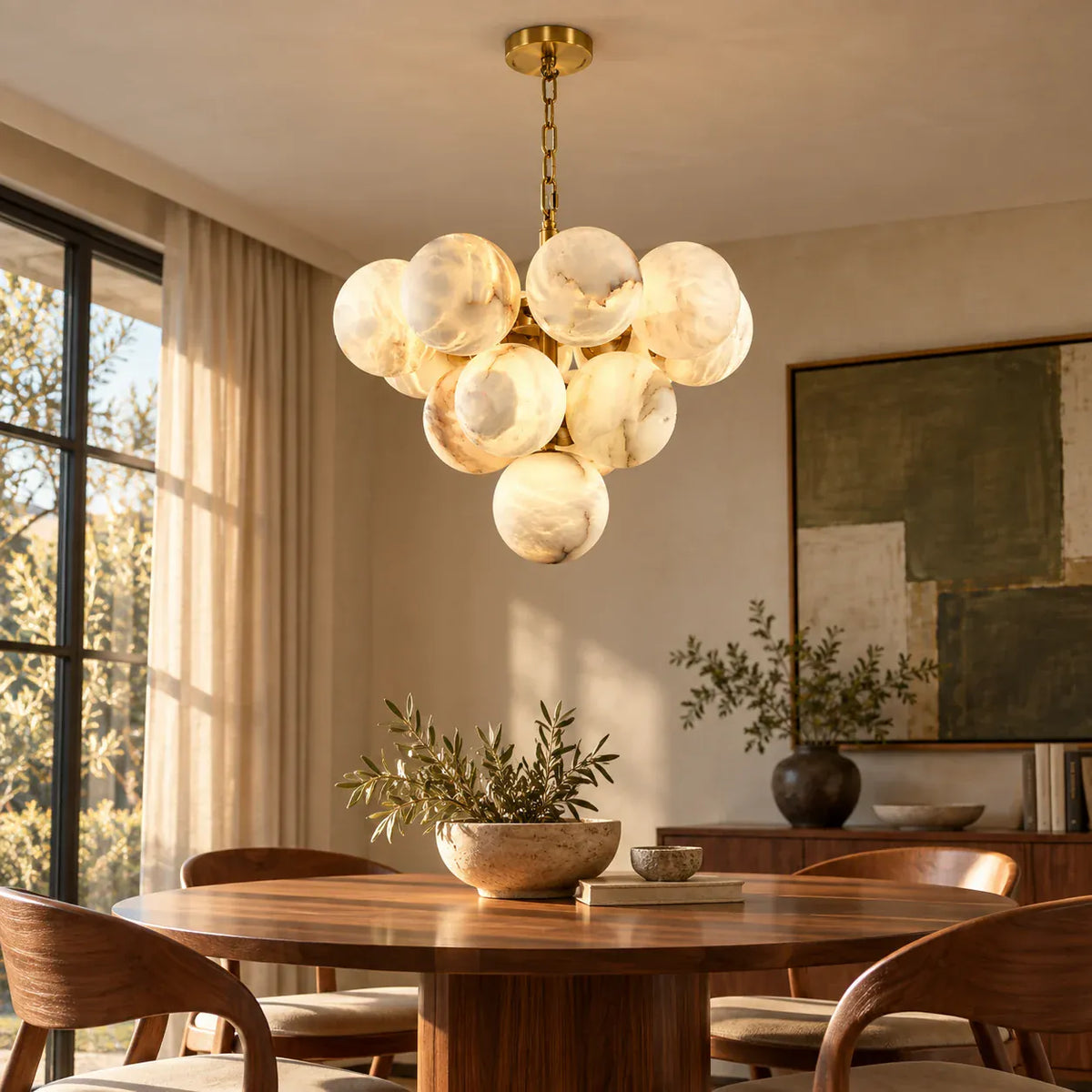
- Brass and warm gold: the most common pairing — warm metal and warm stone sit in the same amber band, so the fixture reads as one story. See gold chandeliers
- Bronze and aged finishes: deeper and more naturalistic, suiting timber and stone-heavy interiors
- Matte black: maximum contrast — stone glowing against a graphic frame, for rooms with pale ceilings. See black chandeliers
- Brushed nickel and chrome: correct where the room's hardware is already cool-toned
Match the frame to the room's dominant hardware rather than to the stone — the stone is warm regardless, so the metal is where the fixture joins the room.
Room by Room
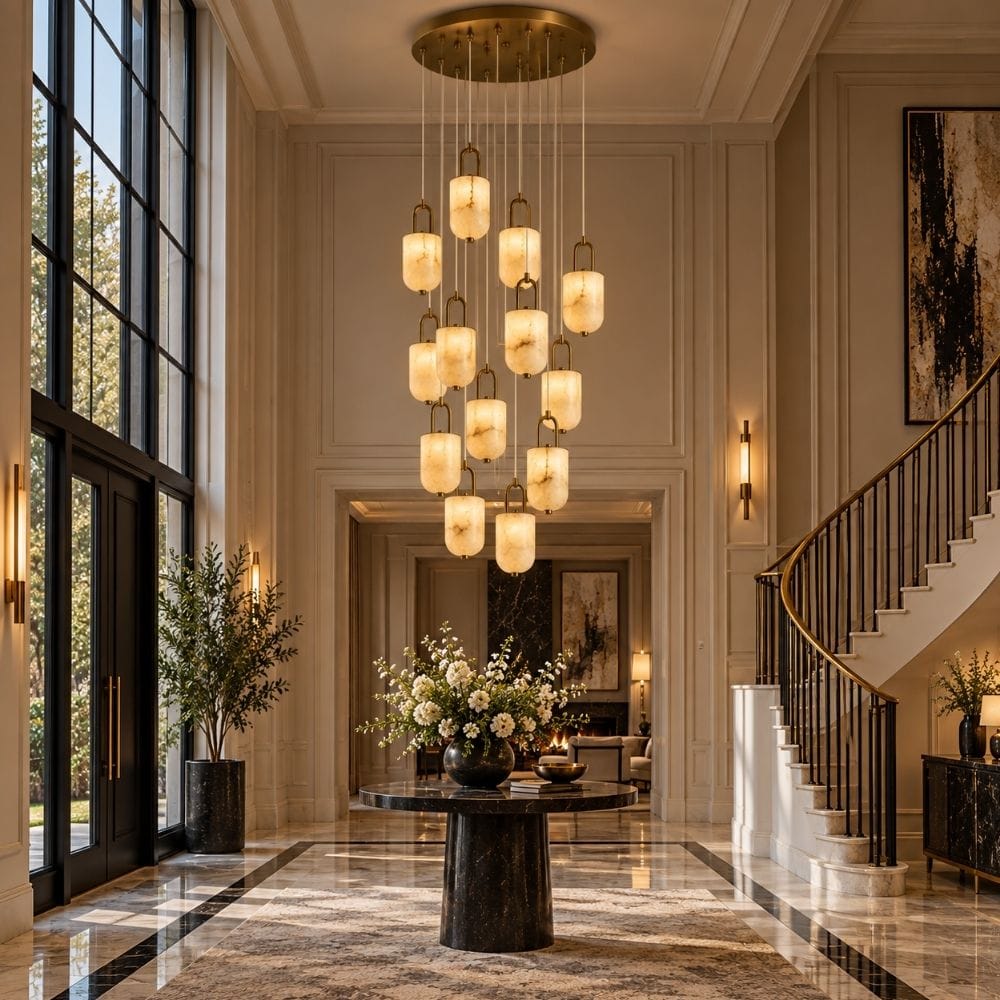
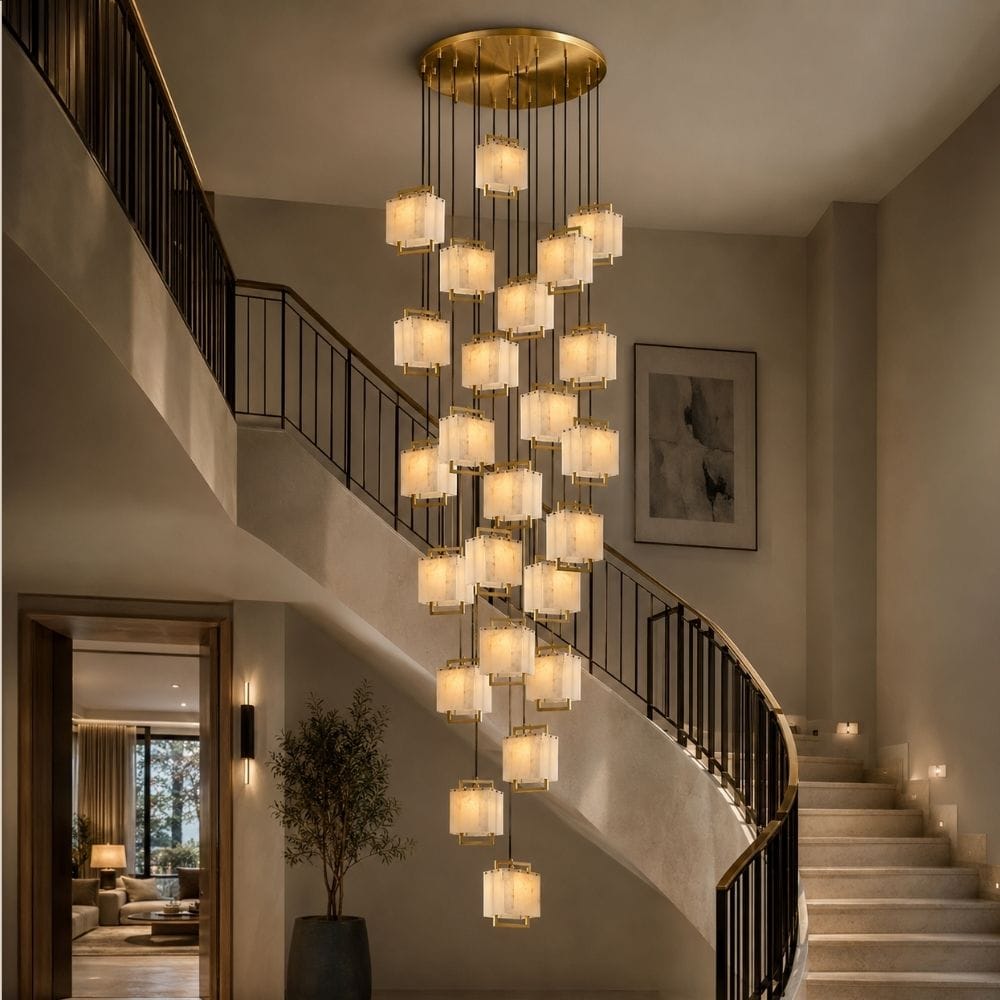
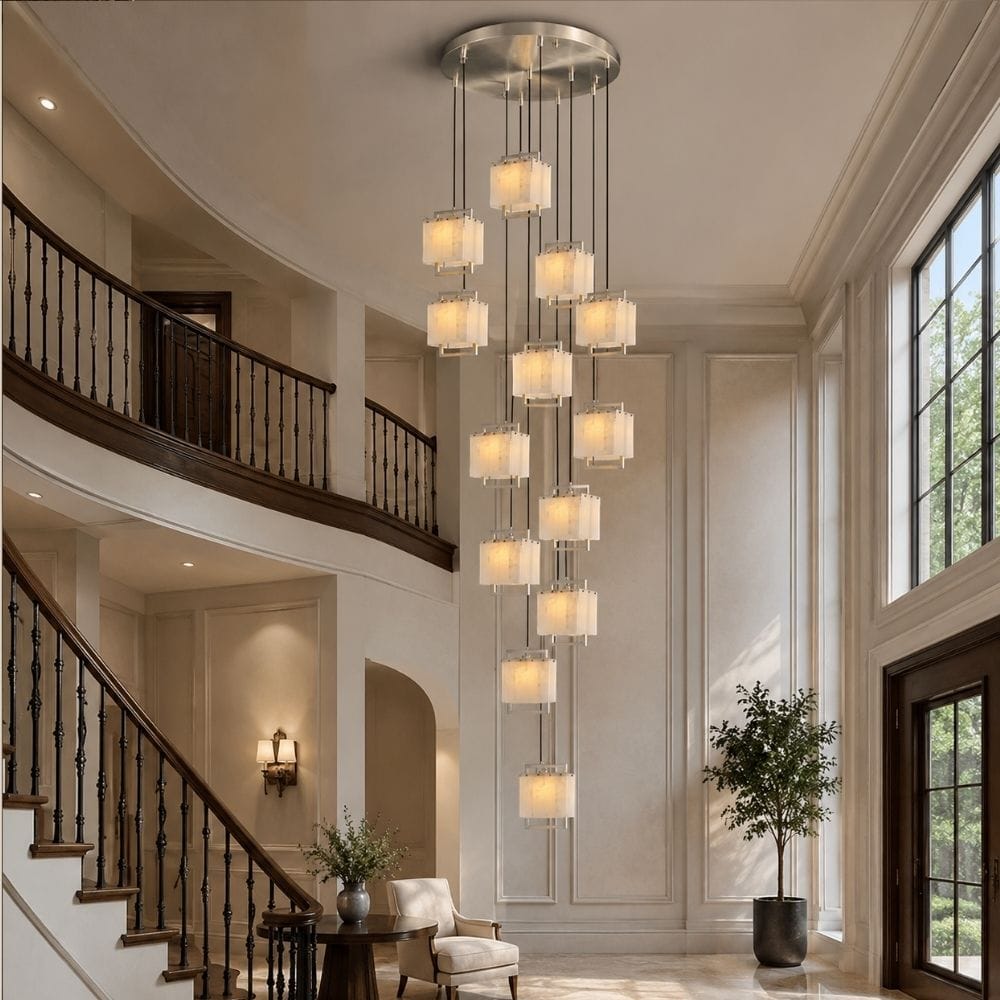
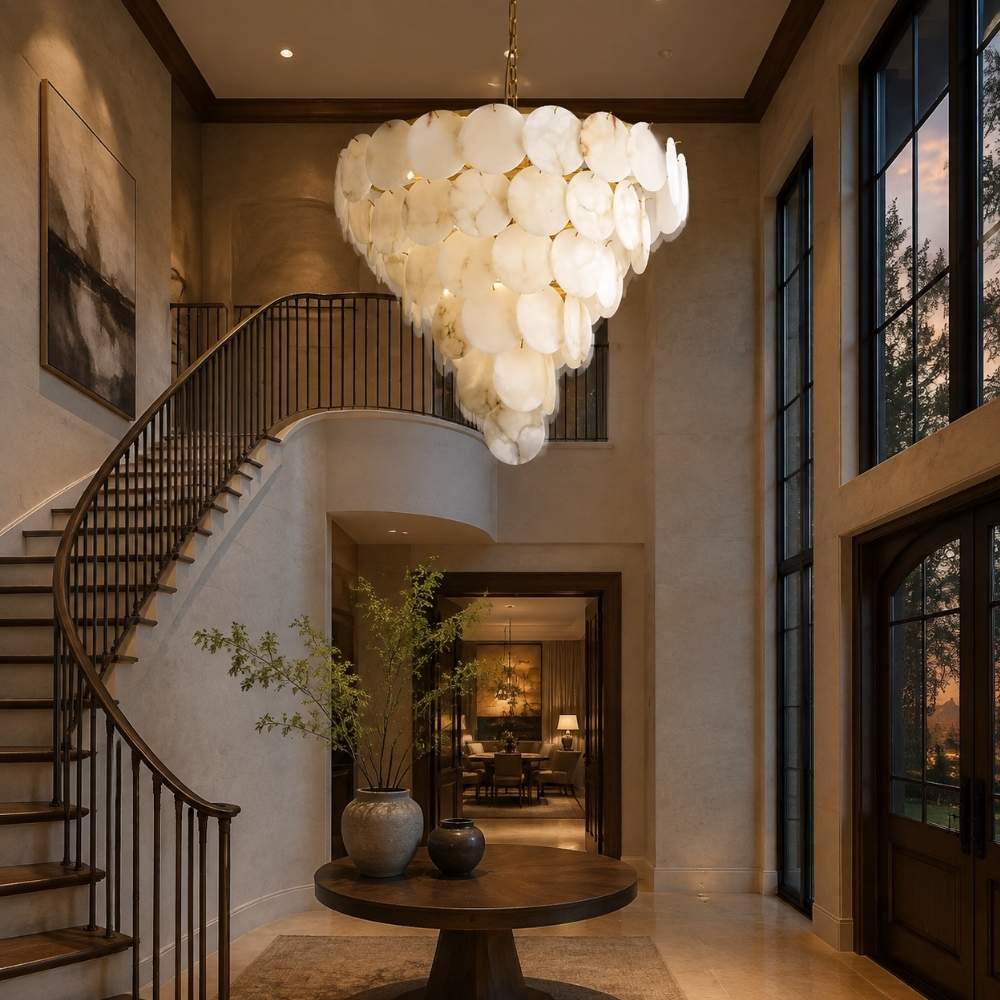
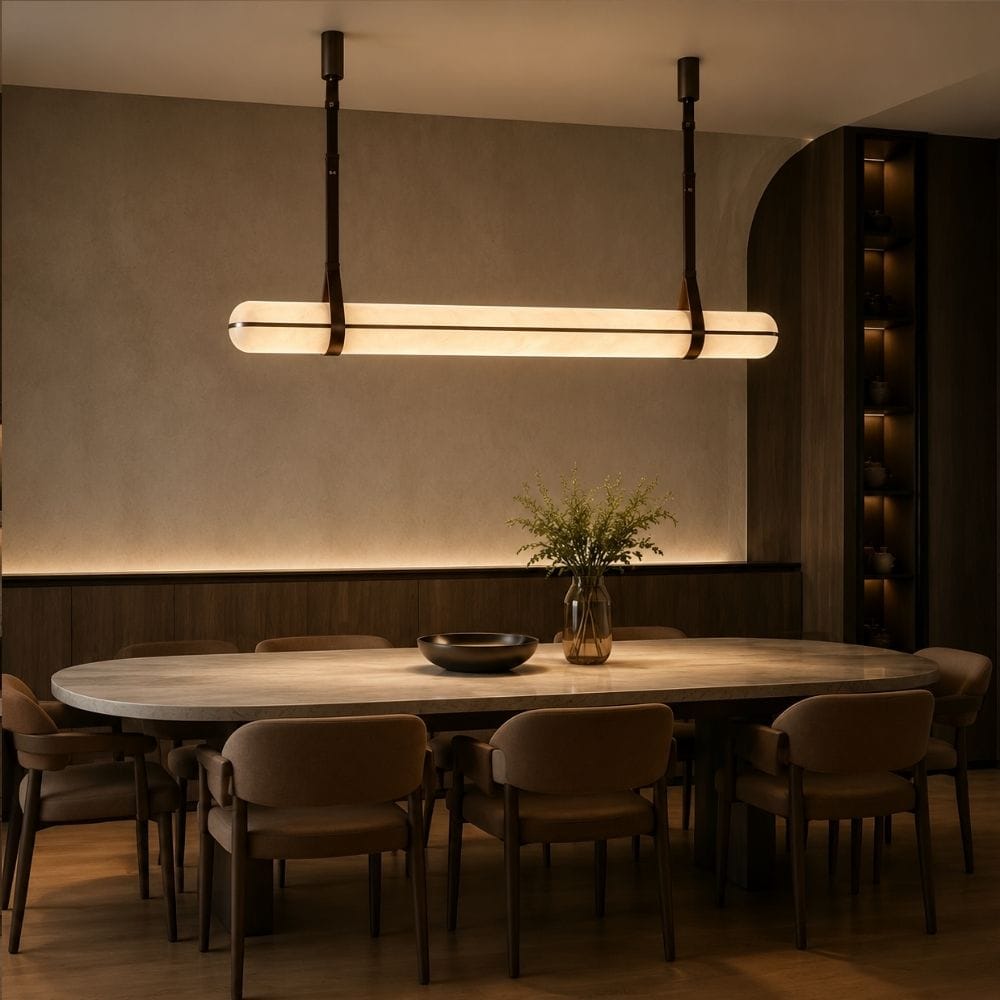
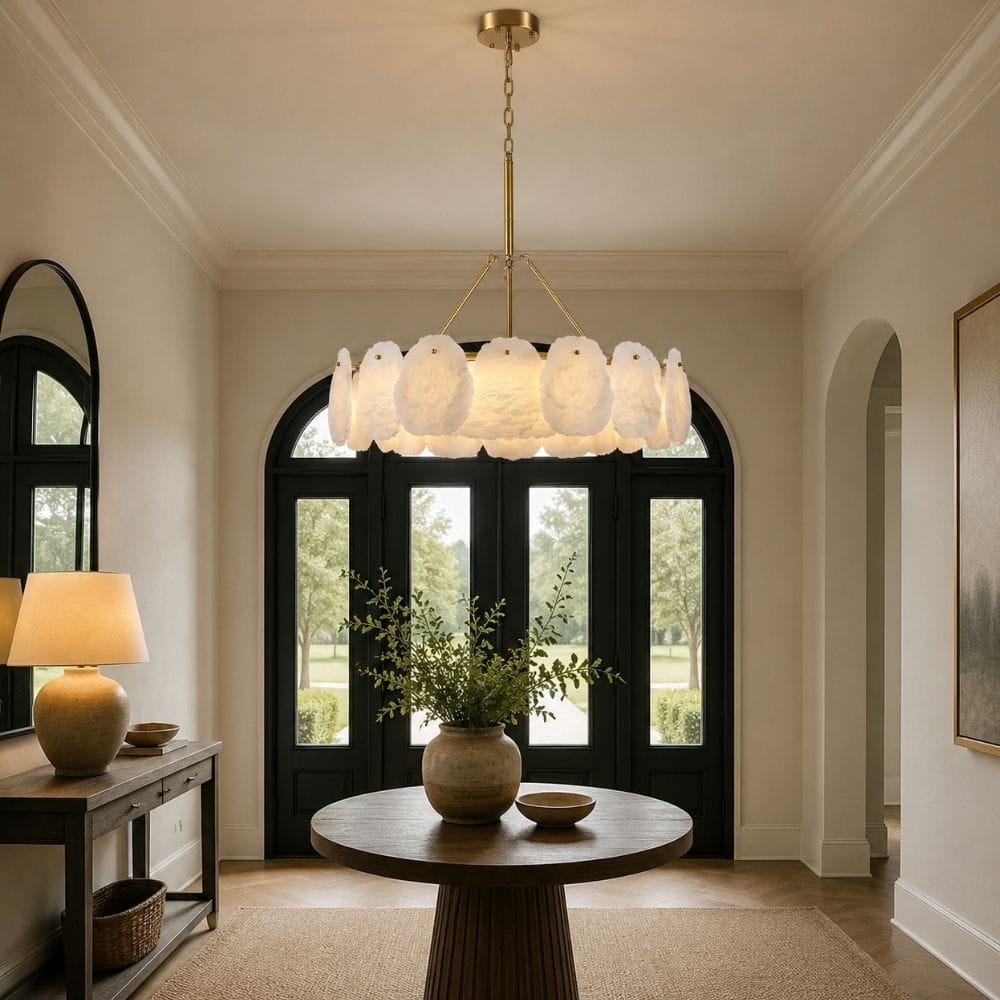
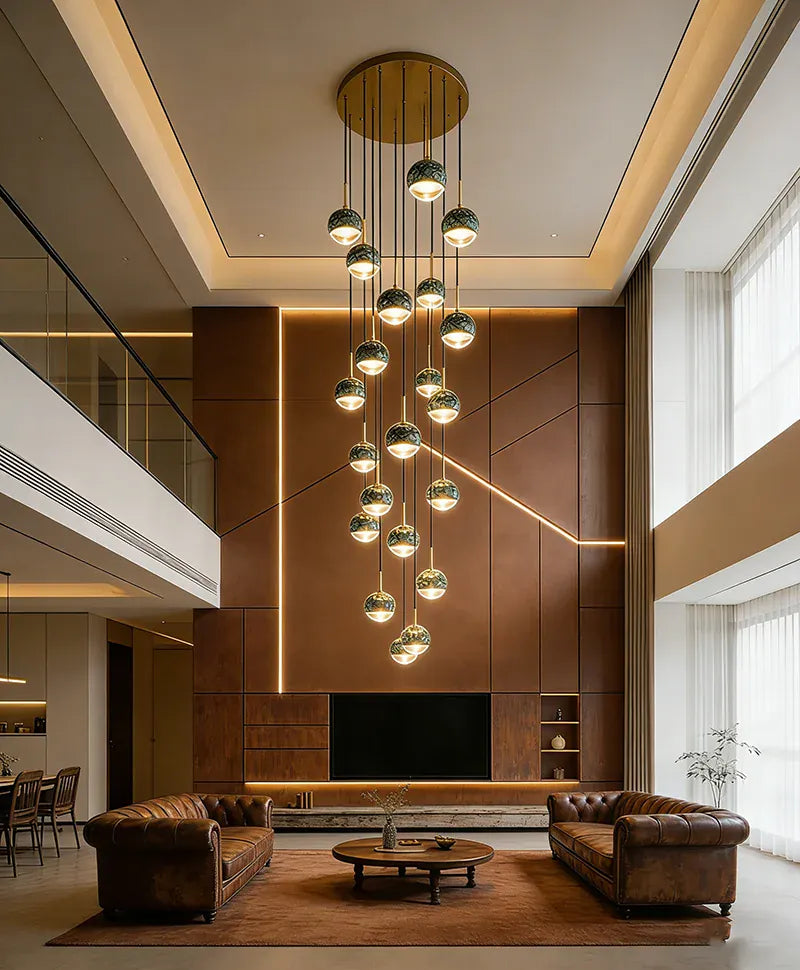
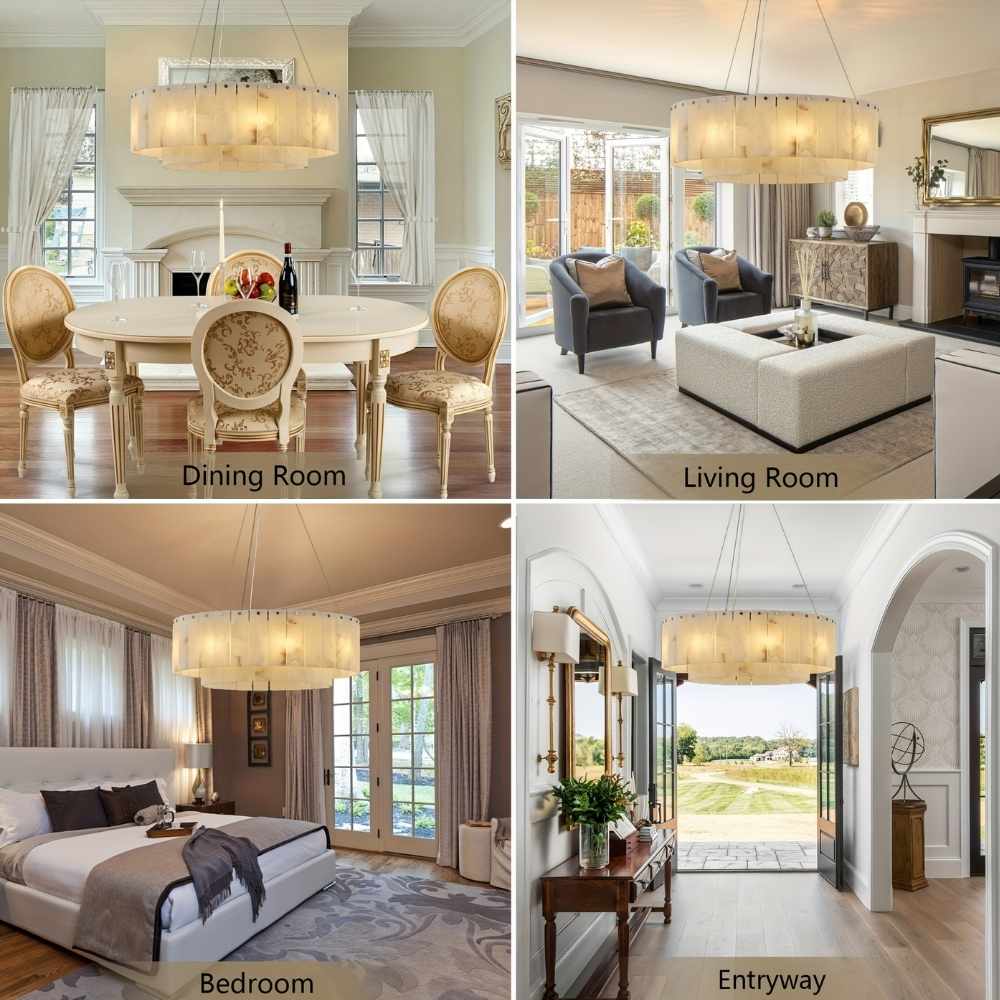
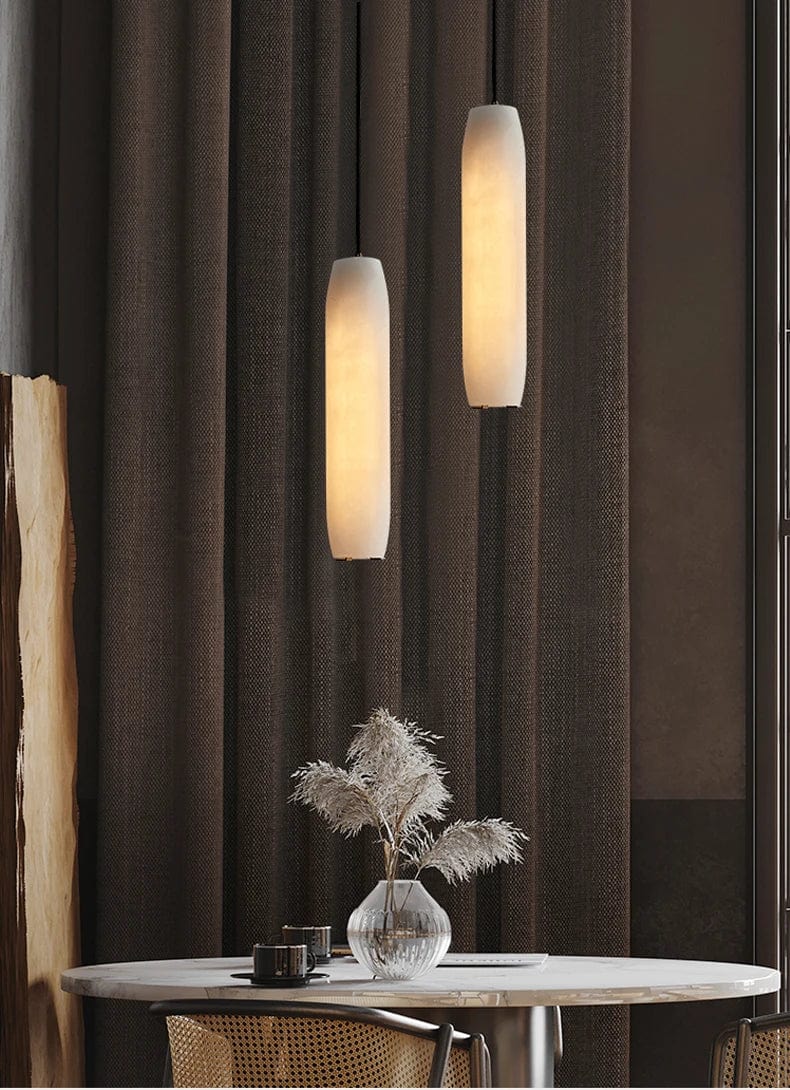
Dining rooms suit stone better than almost any material: soft light on faces and food, at the close distance where veining reads — see dining room chandeliers. Bedrooms take the glare-free quality directly, including hung pairs replacing bedside lamps (bedroom lighting). Entries and stairwells use the daylight effect — a translucent fixture near a window works while switched off: staircase and foyer applications.
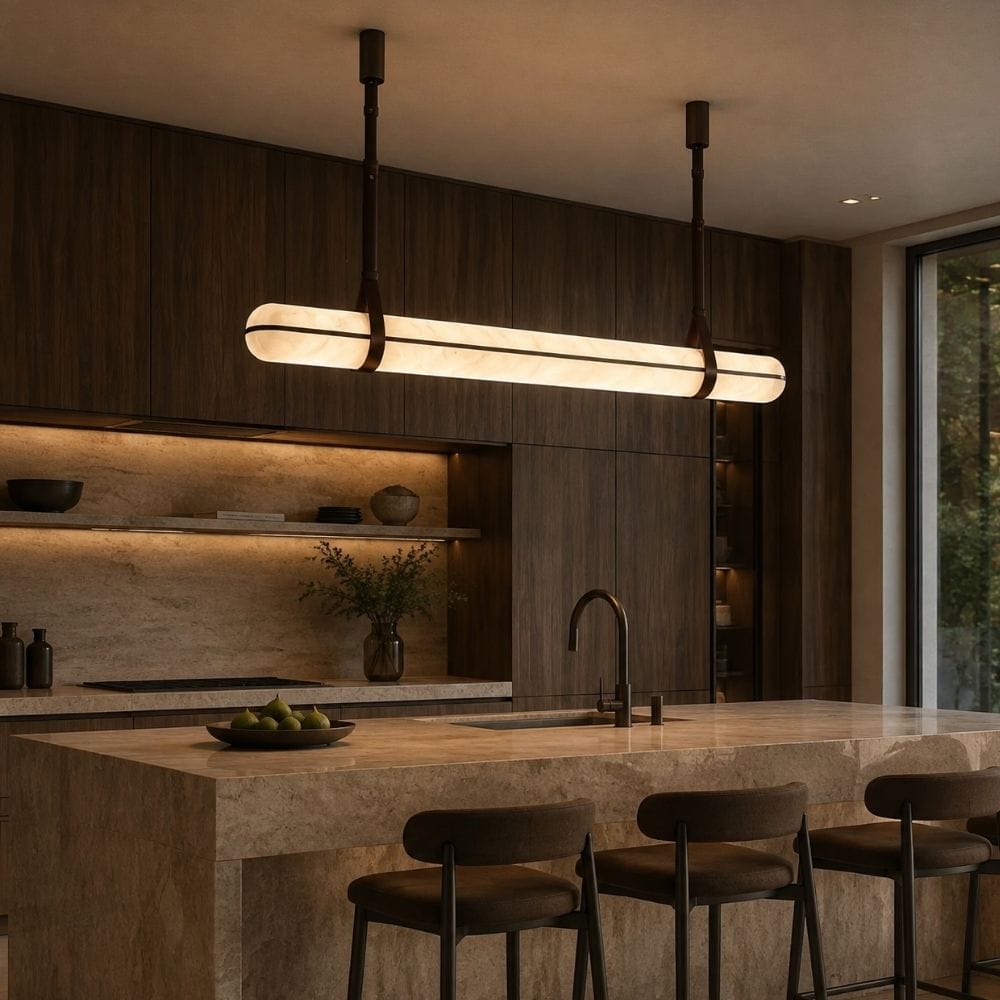
Two rooms need caution. Kitchens work if the fixture is clear of cooking vapour, since grease is harder to remove from stone than from glass. Bathrooms are harder still — alabaster is moisture-sensitive, so only damp-rated designs belong there, clear of steam zones.
Weight, Mounting and Care
Stone is the heaviest material here by volume, and the weight arrives before the visual scale suggests it. A 30" fixture at 40 lb (18 kg) or more is normal, and larger compositions pass 50 lb — the threshold where a listed heavy-fixture brace box replaces a standard junction box. Check the listed weight against your box's marked rating before ordering.
Care is short: dry dusting with soft microfiber is the whole routine. Liquid cleaners and water do not belong on unsealed stone — alabaster is soft enough to mark and porous enough to stain. Skip polish, which removes surface rather than cleaning it. And because natural stone varies between batches, order matched pairs in one transaction.
Sizing and Light
Size to the surface below where one exists — one-half to two-thirds of a round table's width, or of a long table's length for a linear design, hung 30-36" (76-91 cm) above the top. With no table, room length + width in feet gives the target diameter in inches, plus roughly 3" per foot of ceiling above 9 ft; full calculations are in our chandelier size calculator. Warm white at 2700K is the standard here rather than the usual 3000K, because it matches the amber the stone already adds, and a dimmer matters more than usual — stone reaches its best register at partial output.
Related Collections
Compare other diffusing materials at glass chandeliers, the sparkle alternative at crystal chandeliers, and the wider direction at contemporary chandeliers or the full catalog.