






What Makes a Chandelier Rustic
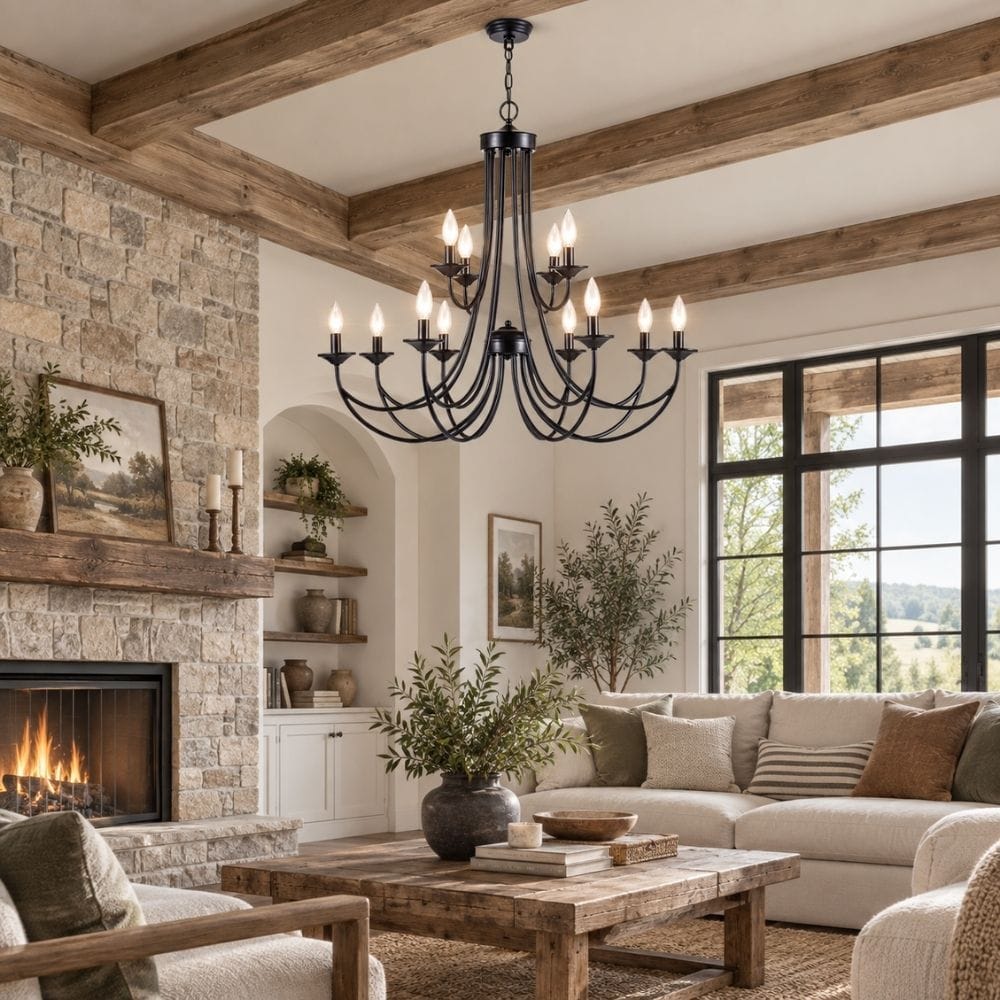
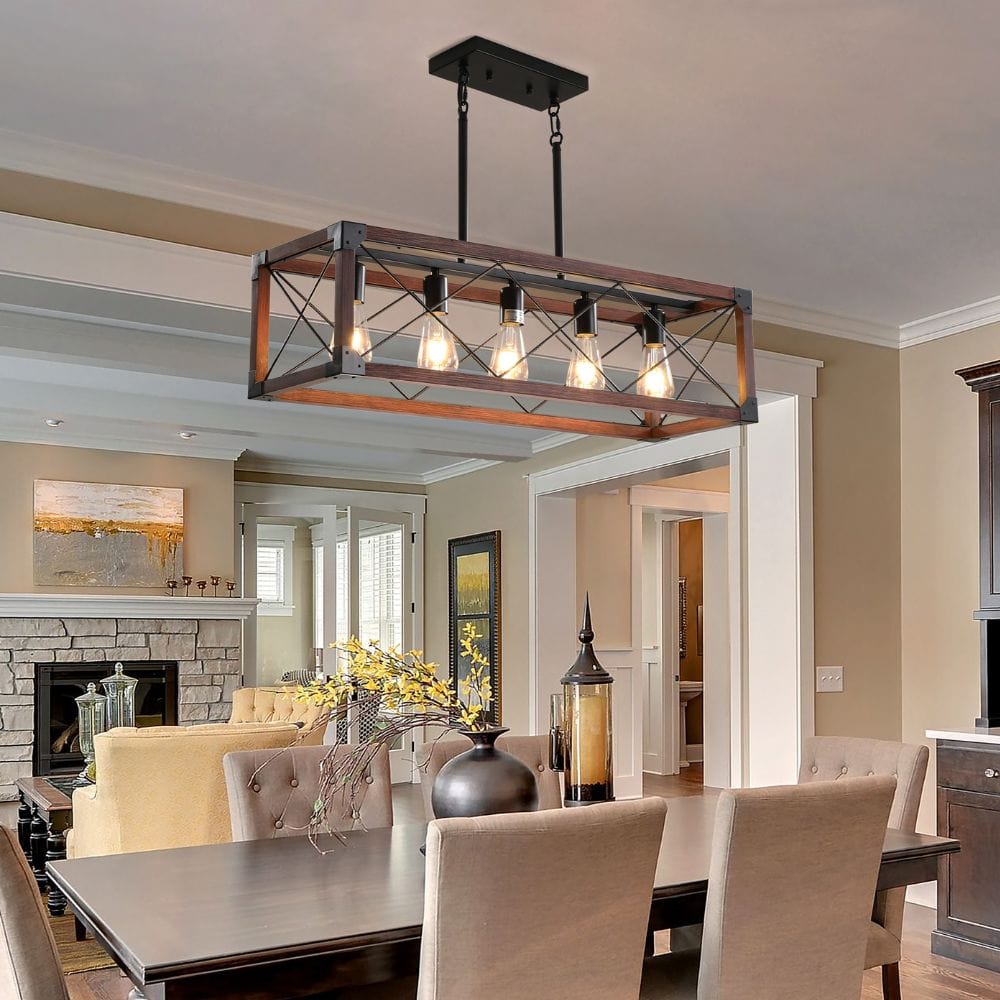
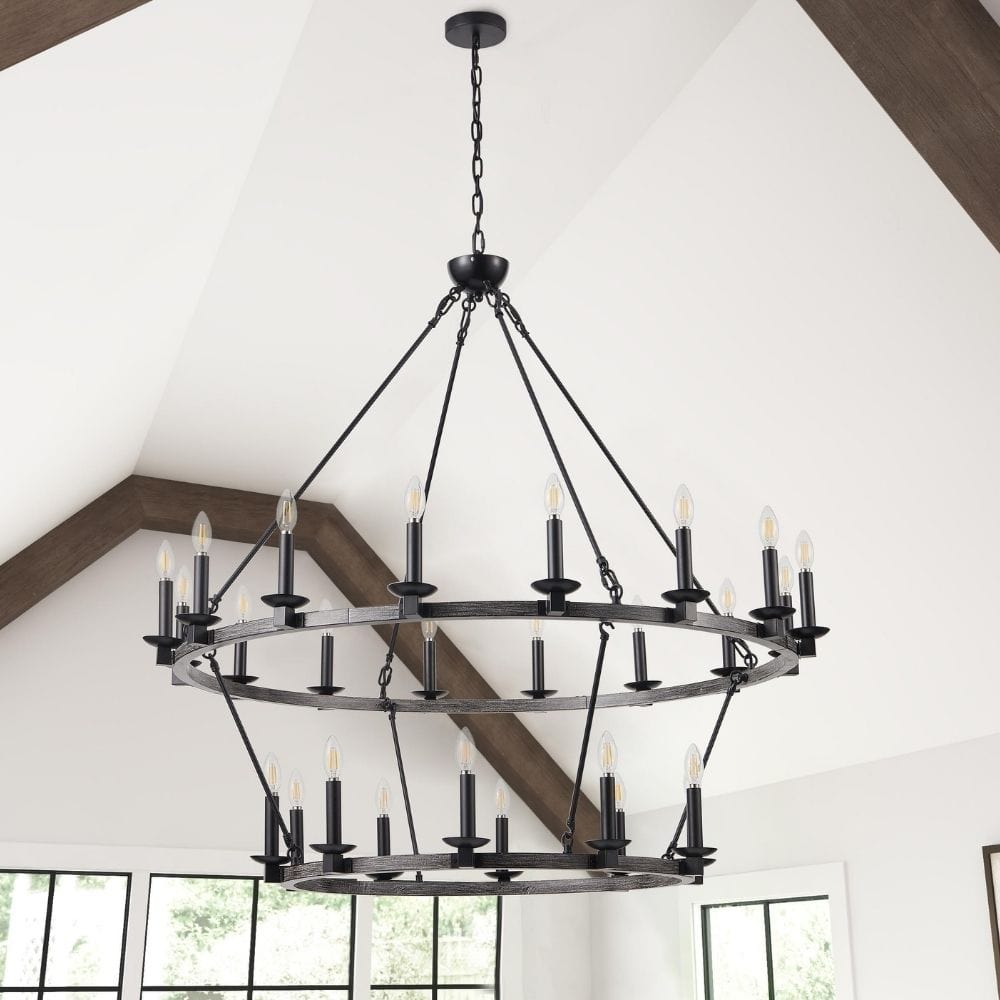
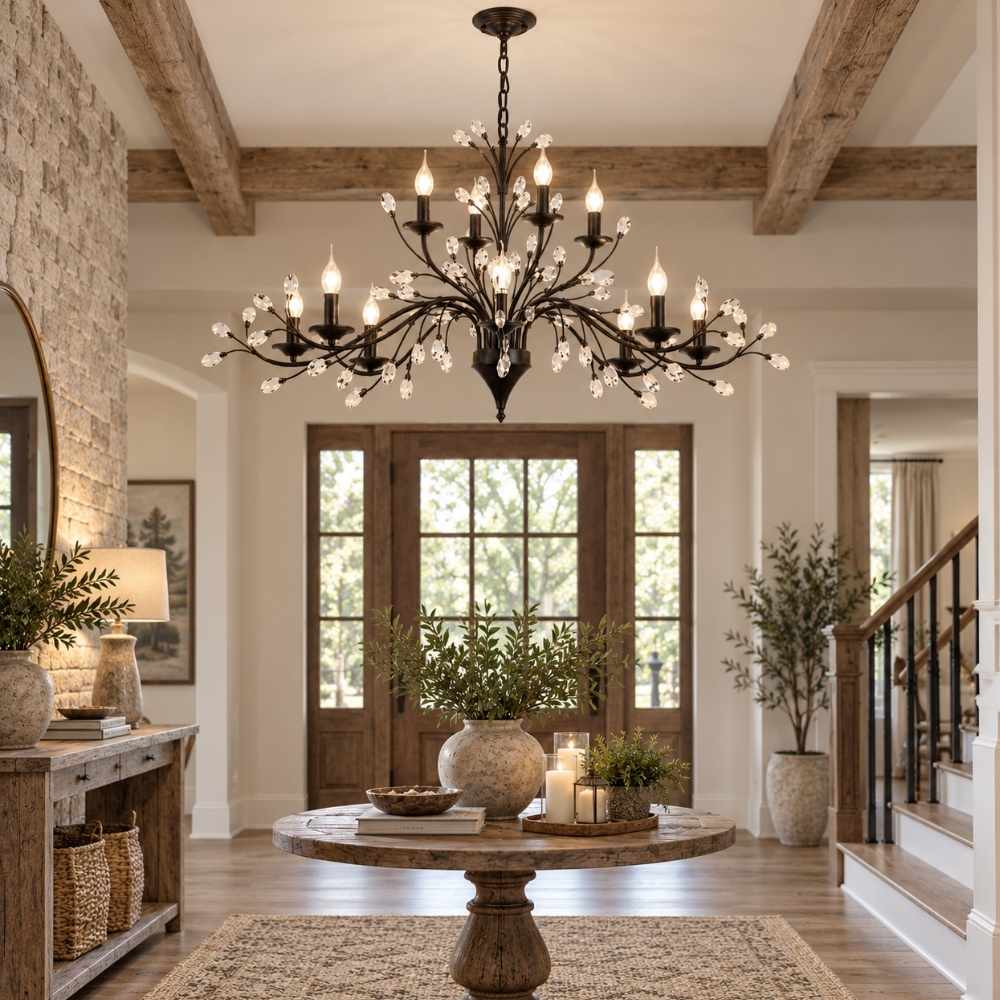
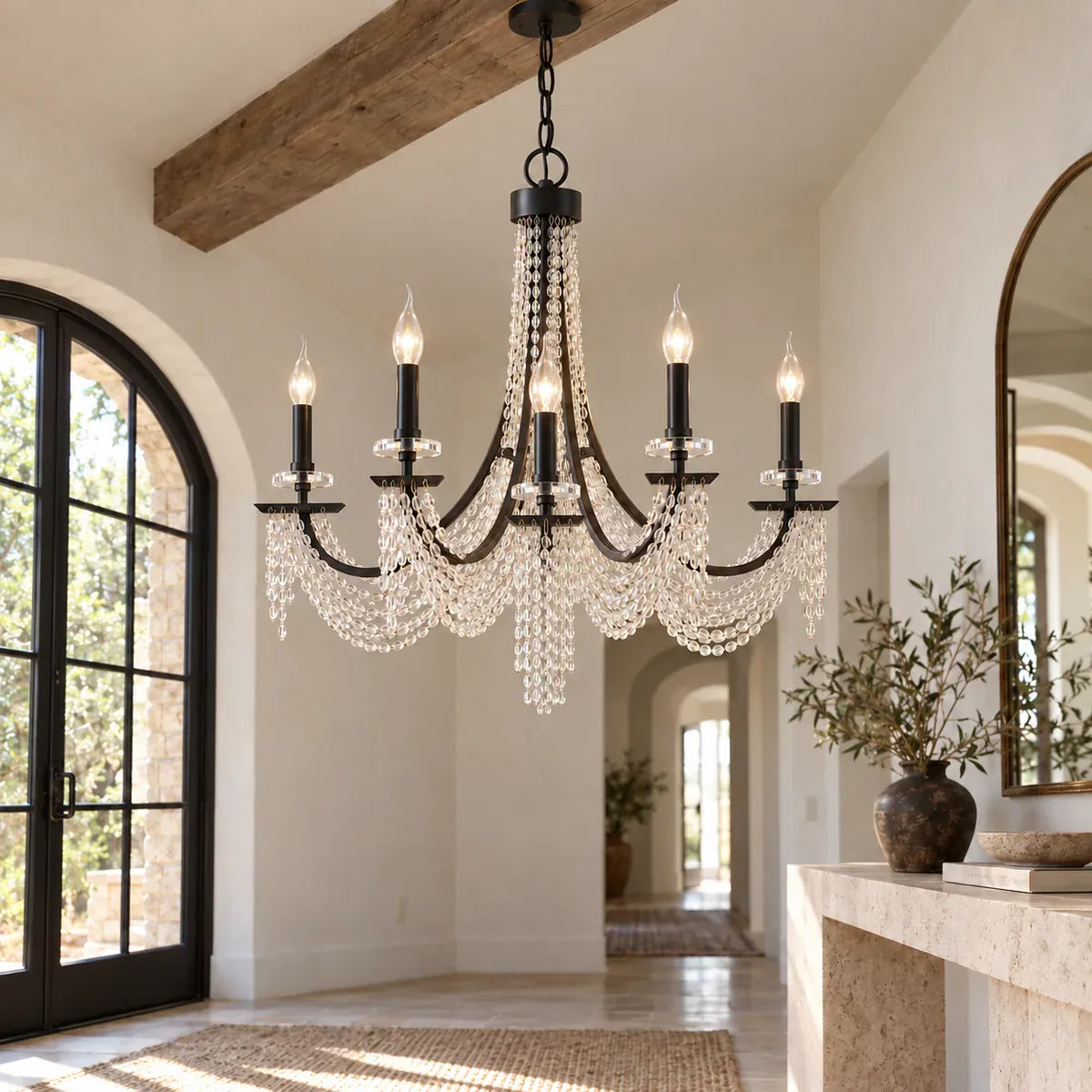
Rustic is the one style defined by material honesty. Where other directions hide their construction, a rustic fixture displays it: wood grain left visible, forge marks kept in the iron, joinery and hardware presented rather than concealed, and an earthy palette — tan, brown, grey, aged black — that reads as found rather than finished. The effect is weight and warmth at once, which is why the style owns rooms built around stone, timber, and fire, and why it has migrated so successfully into city homes that want one grounded, tactile object against clean walls.
Modern Rustic: The Hybrid That Leads the Category
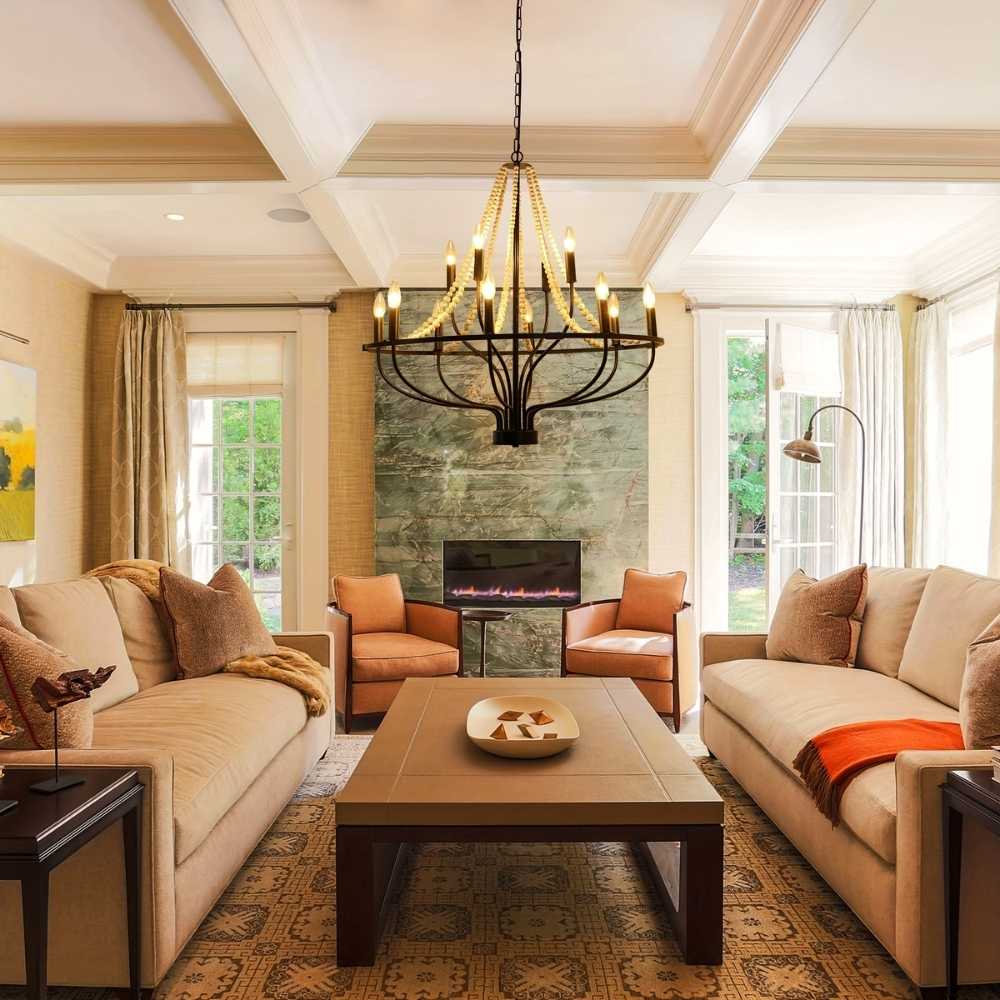
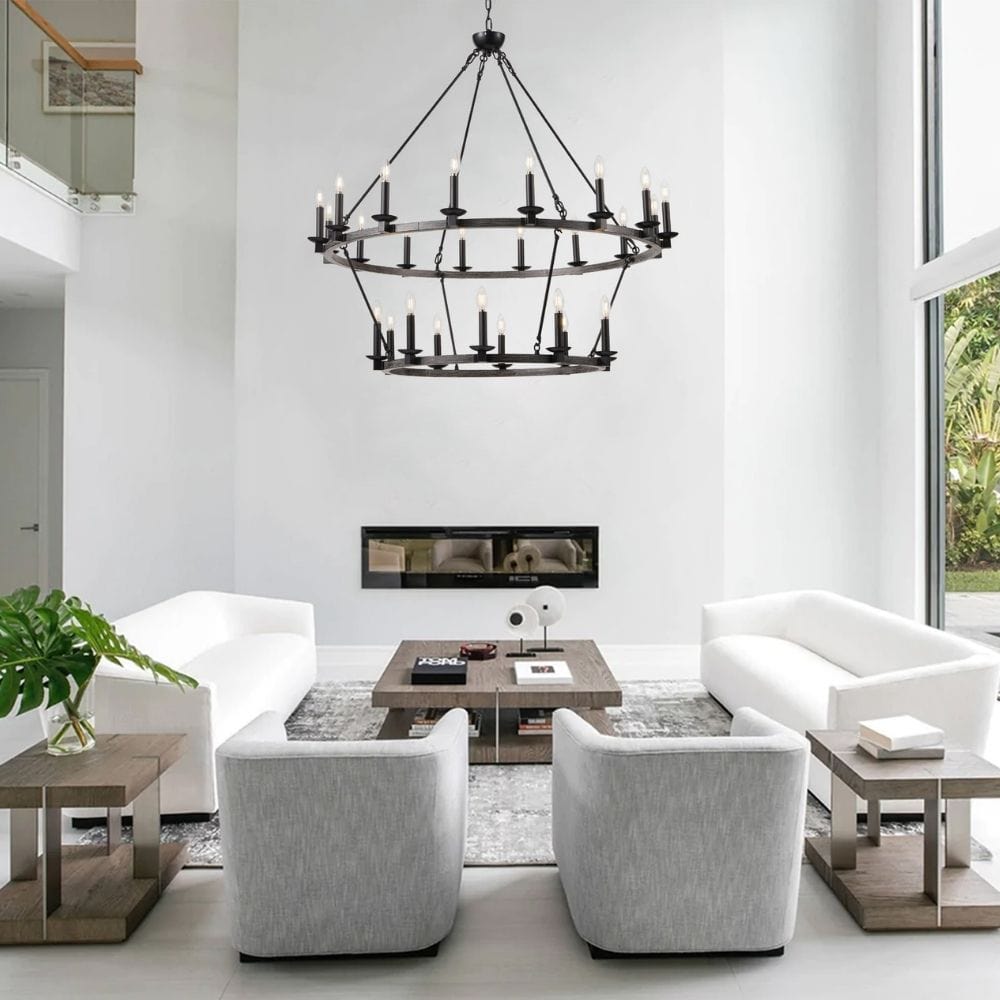
The most-searched phrase in this category names a deliberate balance: modern rustic keeps the raw materials and drops the ornament. Silhouettes simplify — clean rings, linear bars, and geometric frames executed in wood and iron rather than carved and curled — so the fixture reads current in line and cabin in substance. It is the direction that lets a rustic piece hang in a renovated loft as convincingly as a lodge: the material does the character work while the form stays disciplined. The full styling logic — cabin, lodge, and country directions compared, with picks — is in our modern rustic chandelier guide.
Wood, Iron, and the Marriage of the Two
- Wood-led designs: beams, rings, and sculpted forms where grain is the surface — in tones from pale tan through walnut brown to weathered grey; the full material range lives in the wood chandeliers collection
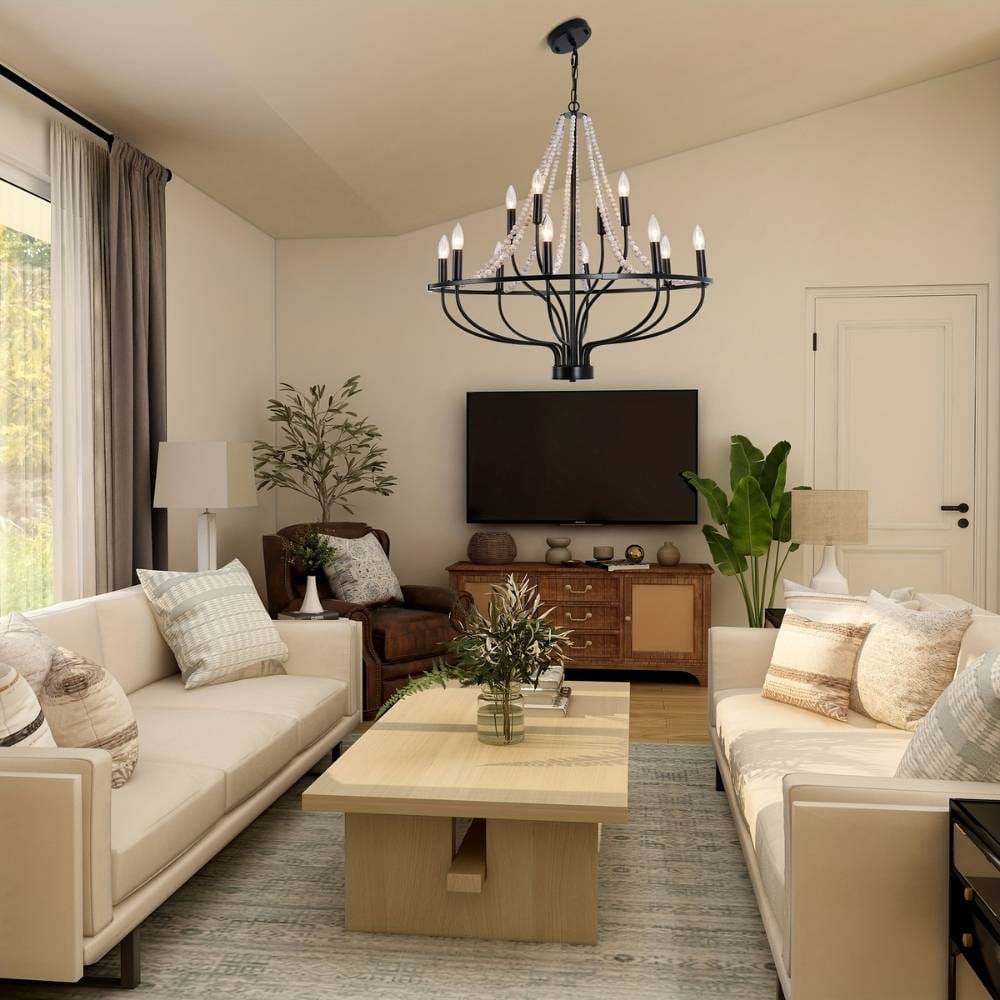
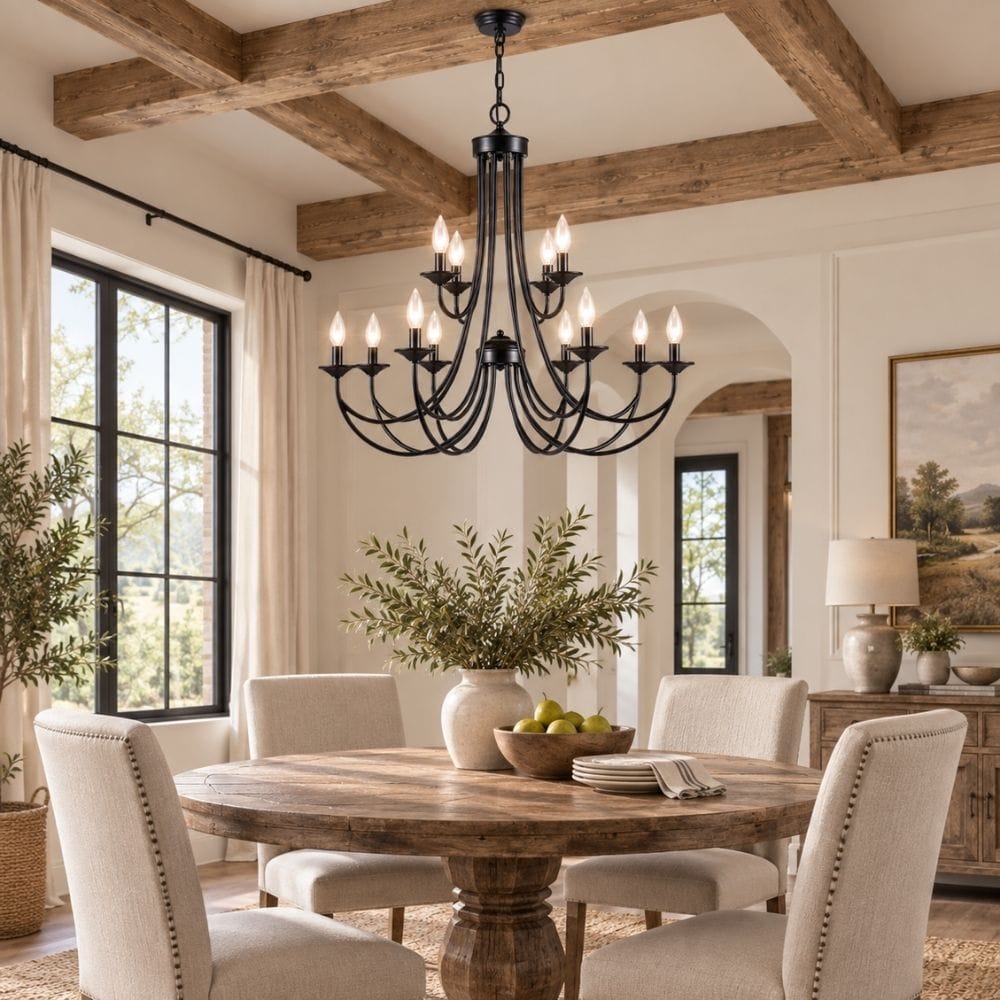
- Iron-led designs: wrought and forged frames, matte and aged black finishes, candle-style and cage silhouettes — the style's structural backbone, deepened across the iron chandeliers collection
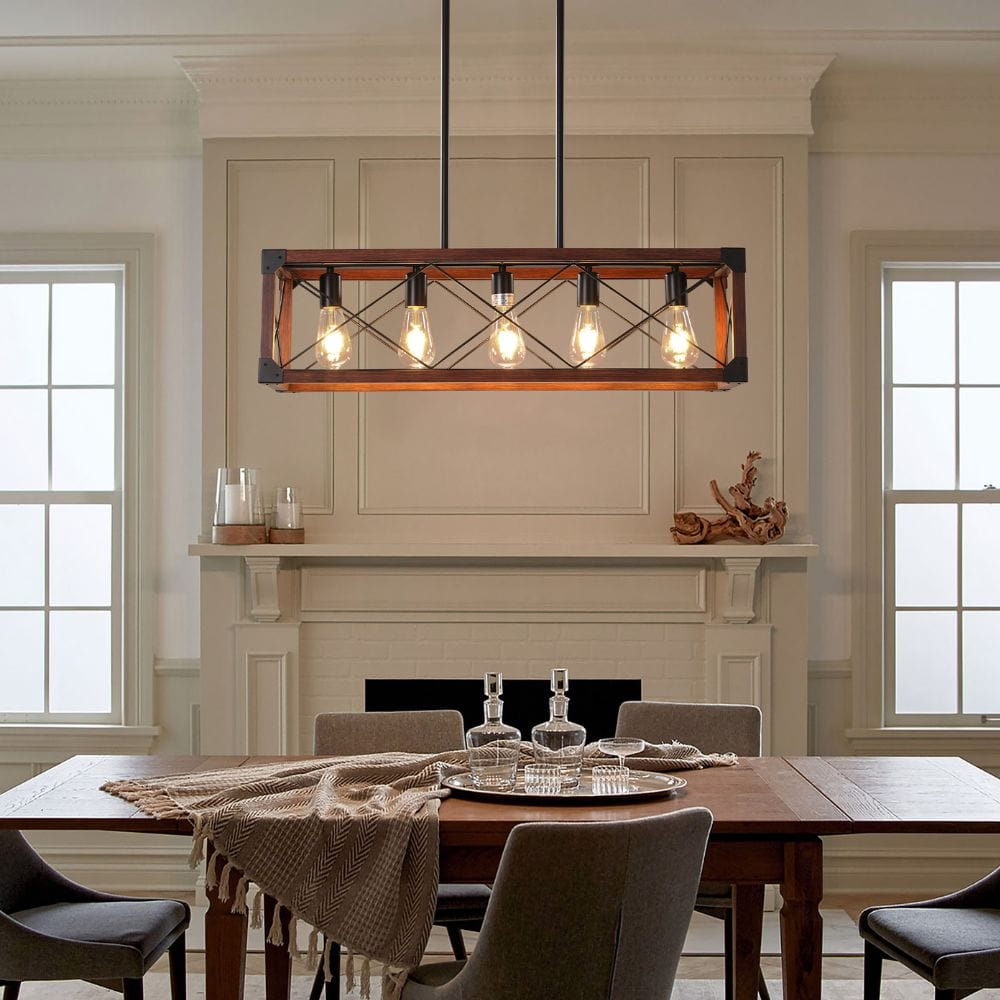
- Wood-and-iron combinations: the category's signature — timber carried by ironwork, each material doing what it does best: wood the warmth, iron the strength and line
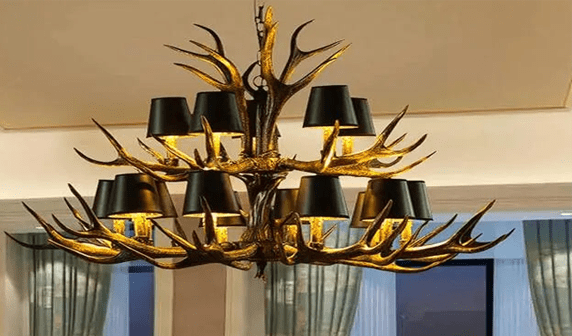
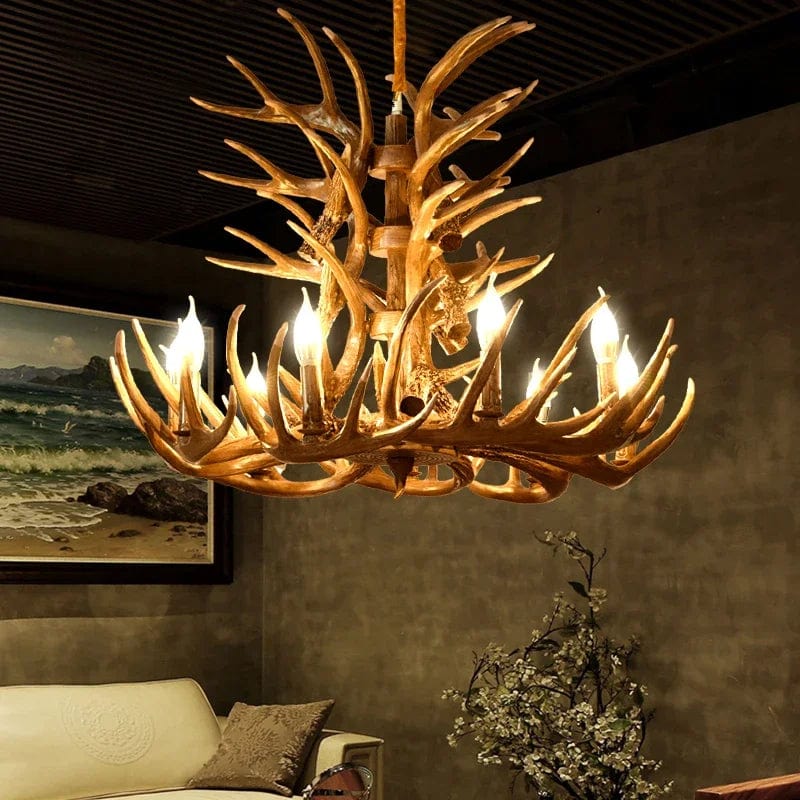
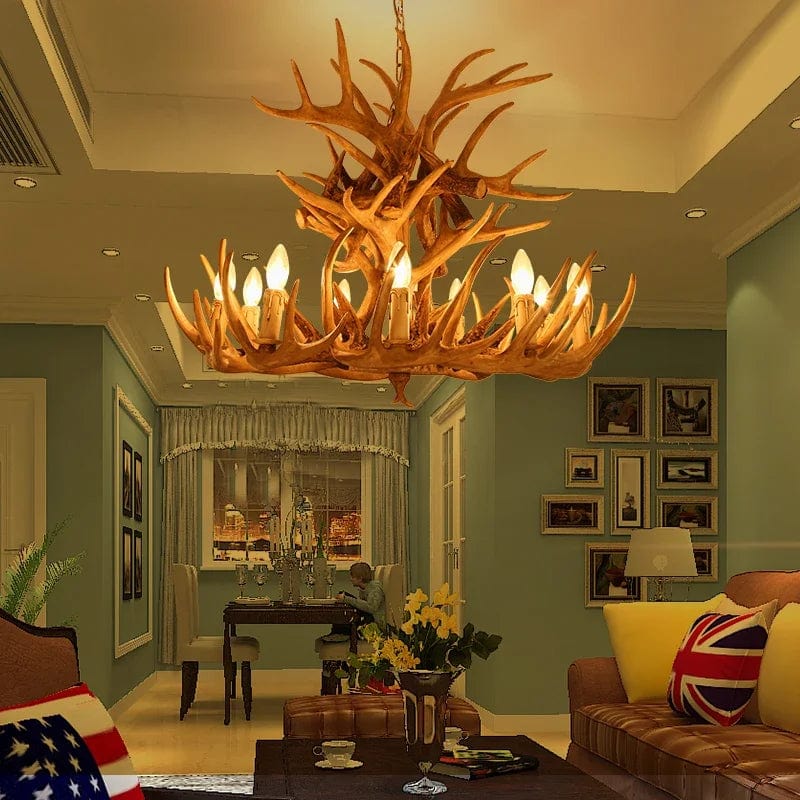
- Accents: seeded glass, rope detailing, and antler-adjacent organic forms extend the vocabulary without leaving it
Large and Extra Large: Built for Big Rooms
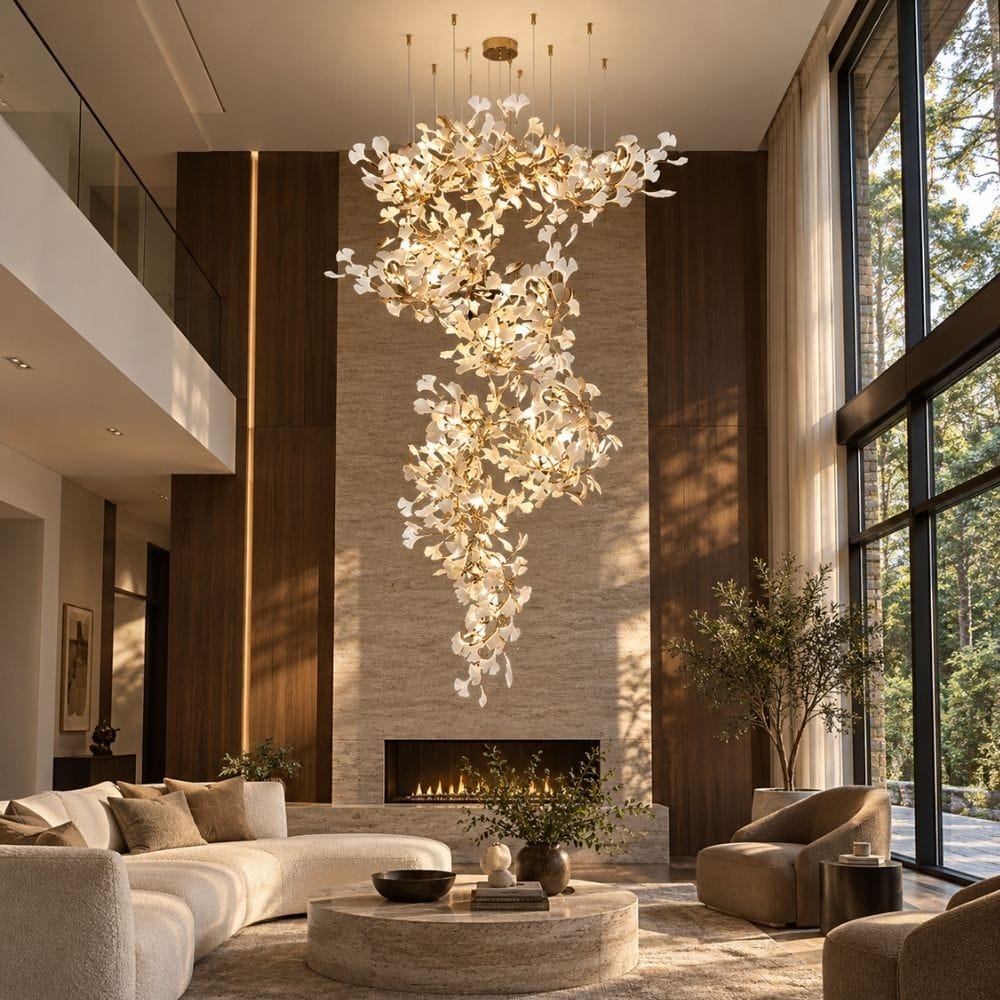
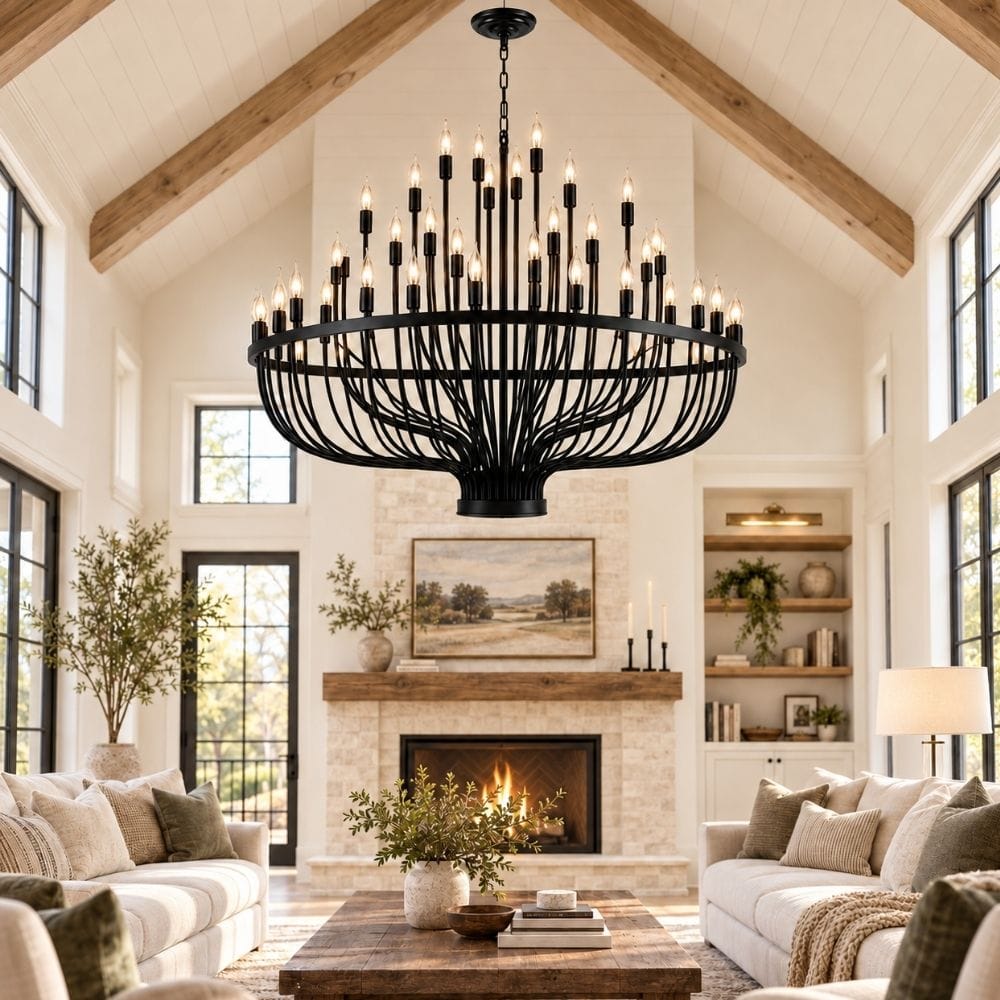
Rustic architecture runs big — great rooms, vaulted ceilings, two-story cabins — and the collection scales with it. Size by the standard formula (room length plus width in feet equals diameter in inches) and round up: in a large timber-framed volume, the undersized fixture is the visible mistake, and rustic materials carry scale more gracefully than any other style because weight is native to the look. Extra large designs over 40" (102 cm), linear formats for long tables, and multi-tier statements for double-height spaces all live here, with mounting notes — reinforced boxes above 50 lb (23 kg), professional installs for two-story drops — on each listing.
Rustic or Farmhouse? A One-Paragraph Answer
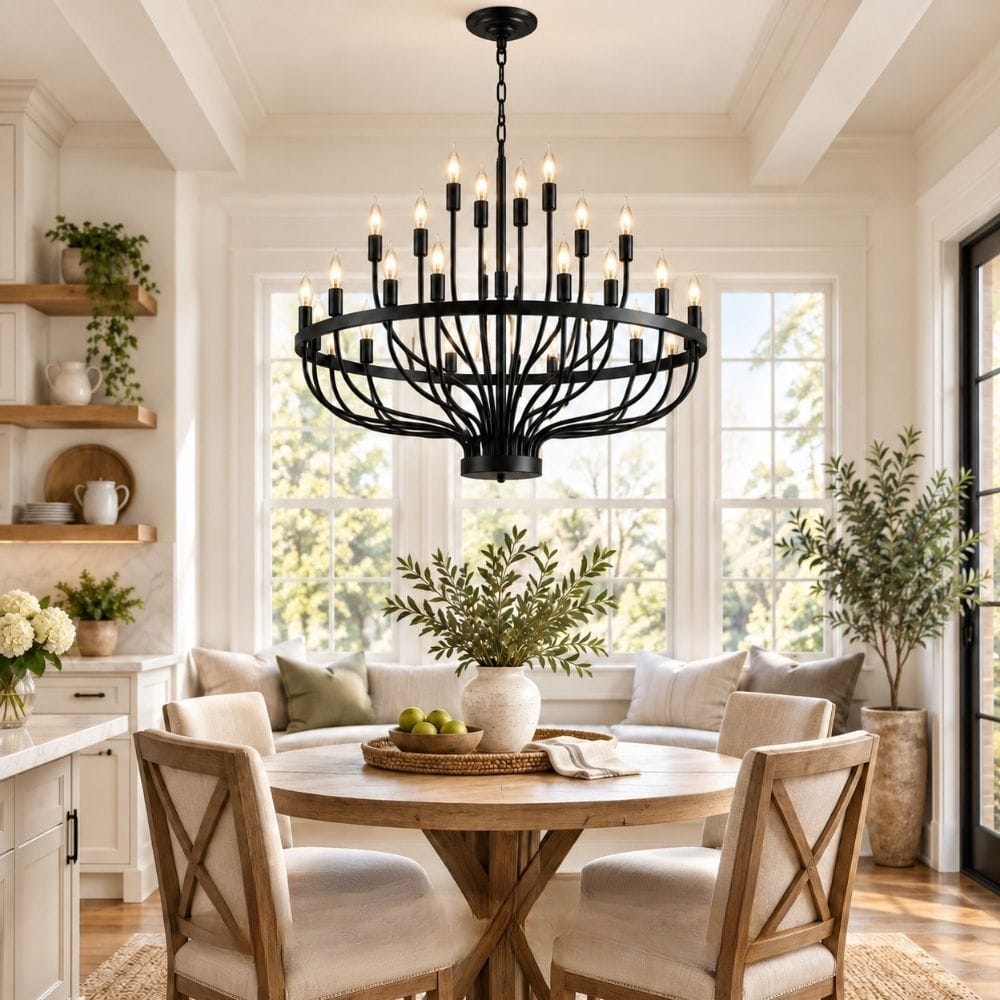
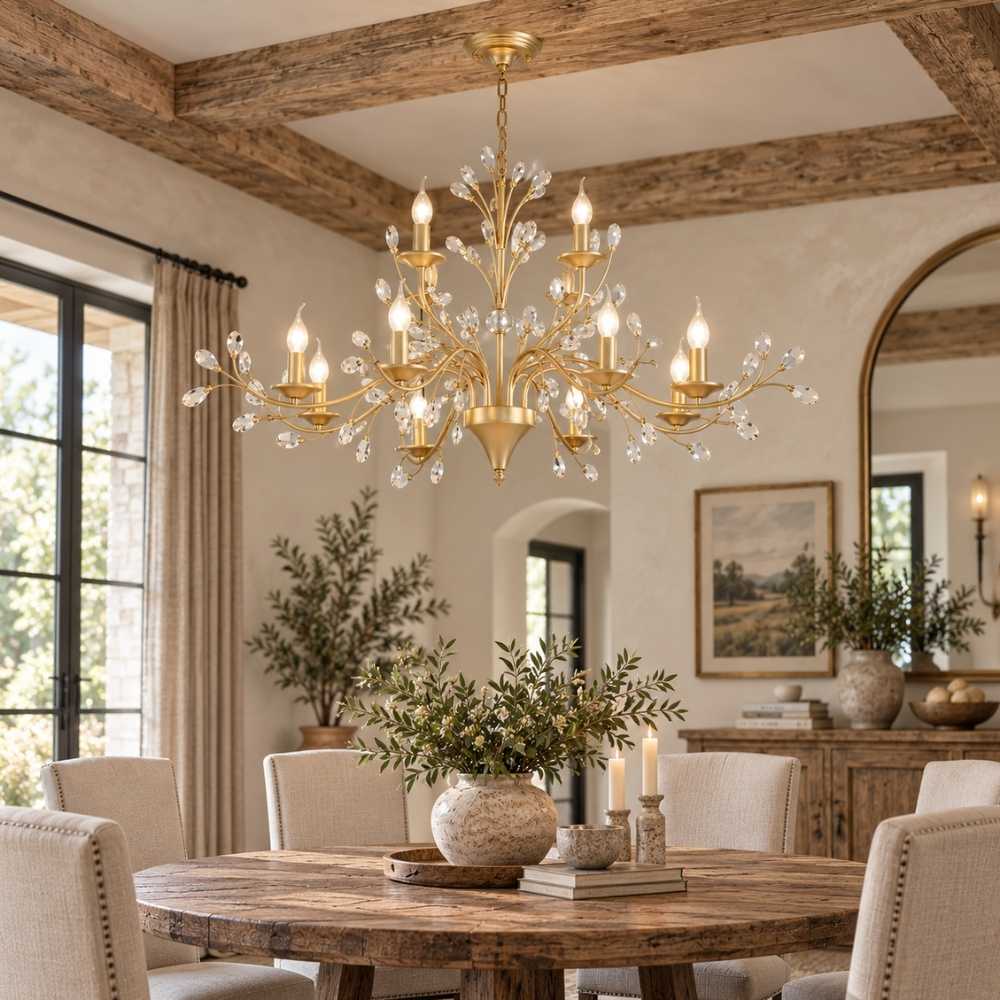
The styles are neighbors, not twins. Rustic is the rawer sibling — heavier timber, darker iron, materials presented as found, at home in cabins and lodges. Farmhouse is the domesticated one — painted and whitewashed finishes, lighter visual weight, country-house rather than backcountry. If the room says stone fireplace and exposed beams, shop here; if it says shiplap and painted cabinets, the farmhouse chandeliers collection is the address, and the full comparison lives in our farmhouse style guide.
Rooms and Shapes
Living rooms and great rooms take the round and tiered statements over the seating group; dining rooms take rectangular and linear designs sized to one-half to two-thirds of the table's length — the straight-line range continues in the linear chandeliers collection. Bedrooms take the compact end in softer wood tones, and entries introduce the house's material story at the door. Whatever the room, warm dimmable light — 2700-3000K — is the style's native register: rustic materials are firelight materials, and warm LED is how they show best. For rooms wanting the look with more polish, the rustic chic direction pairs the raw frame with refined details — the balance that reads finished without losing the grain.
Related Collections
Continue the material story with the wood chandeliers and iron chandeliers collections, cross the style border at the farmhouse chandeliers collection, and browse the full chandelier catalog for the complete designer range.
Frequently Asked Questions
What makes a chandelier rustic?
Material honesty — visible wood grain, forge-marked iron, exposed joinery, and an earthy palette presented as found rather than finished. Weight and warmth together.
What is a modern rustic chandelier?
The current hybrid: raw materials in disciplined modern forms — clean rings, linear bars, and geometric frames in wood and iron. Cabin substance, current line.
What is the difference between rustic and farmhouse chandeliers?
Rustic is rawer — heavy timber, dark iron, lodge character. Farmhouse is lighter and domesticated — painted finishes and country-house softness. Stone-and-beam rooms are rustic; shiplap rooms are farmhouse.
What size for a great room or cabin?
Room length plus width in feet equals diameter in inches — and round up: rustic materials carry scale gracefully, and the undersized fixture is the visible mistake in a big timber volume. Extra large designs run 40"+ with reinforced mounting.
Wood or iron — which should I choose?
Wood leads for warmth, iron for structure and line, and the wood-and-iron combination is the category's signature — each material doing what it does best.
Do rustic chandeliers work in modern homes?
The modern rustic direction was built for exactly that — one grounded, tactile statement against clean architecture. Keep the form disciplined and let the material carry the character.