

What Makes an Exterior Fixture Different
An outdoor wall light does two jobs no indoor fixture faces: it survives weather, and it represents the house before anyone steps inside. The survival part is regulated — UL wet and damp ratings, sealed housings, gaskets, and materials that shrug off rain, UV, and temperature swings. The representation part is design: these fixtures are seen unlit in daylight far more than they are seen glowing, so silhouette, finish, and proportion against the wall matter as much as light output. Every product page here lists the rating and materials up front, so both jobs can be checked before ordering.
Choosing by Placement
Front Entry & Porch
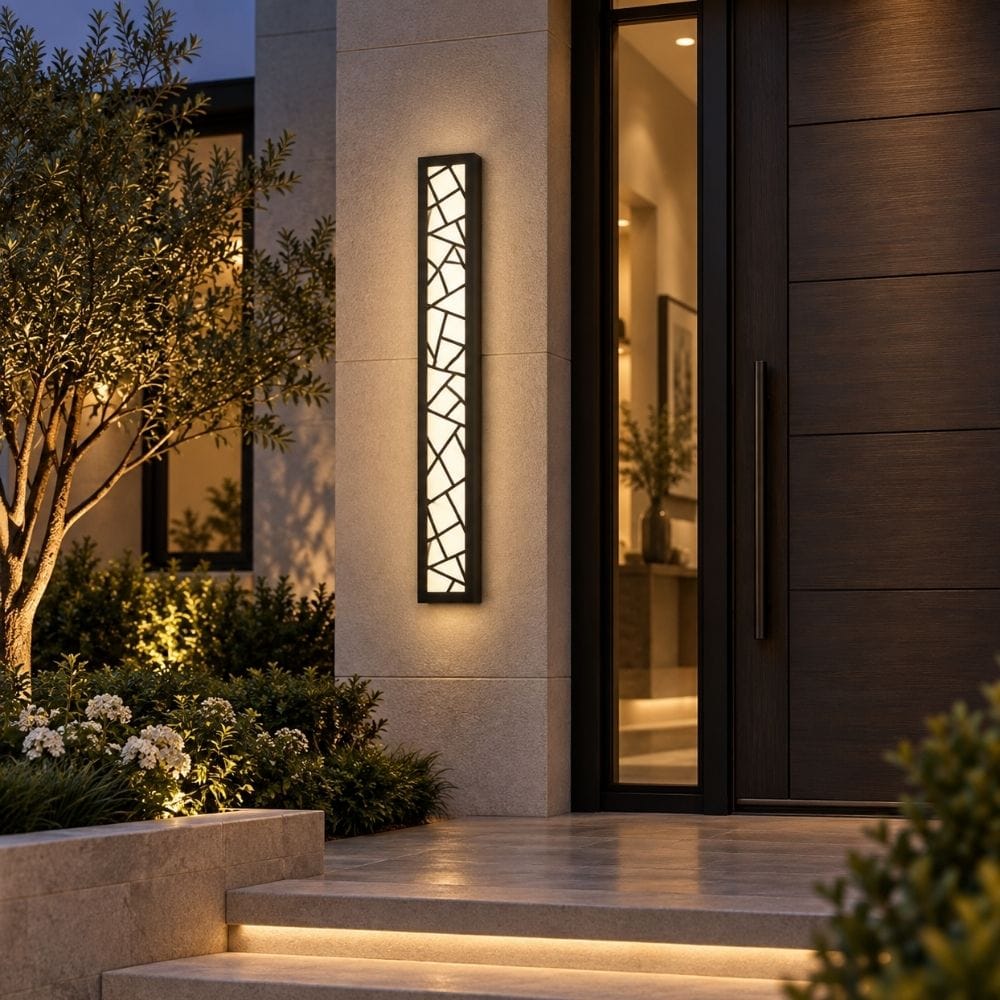
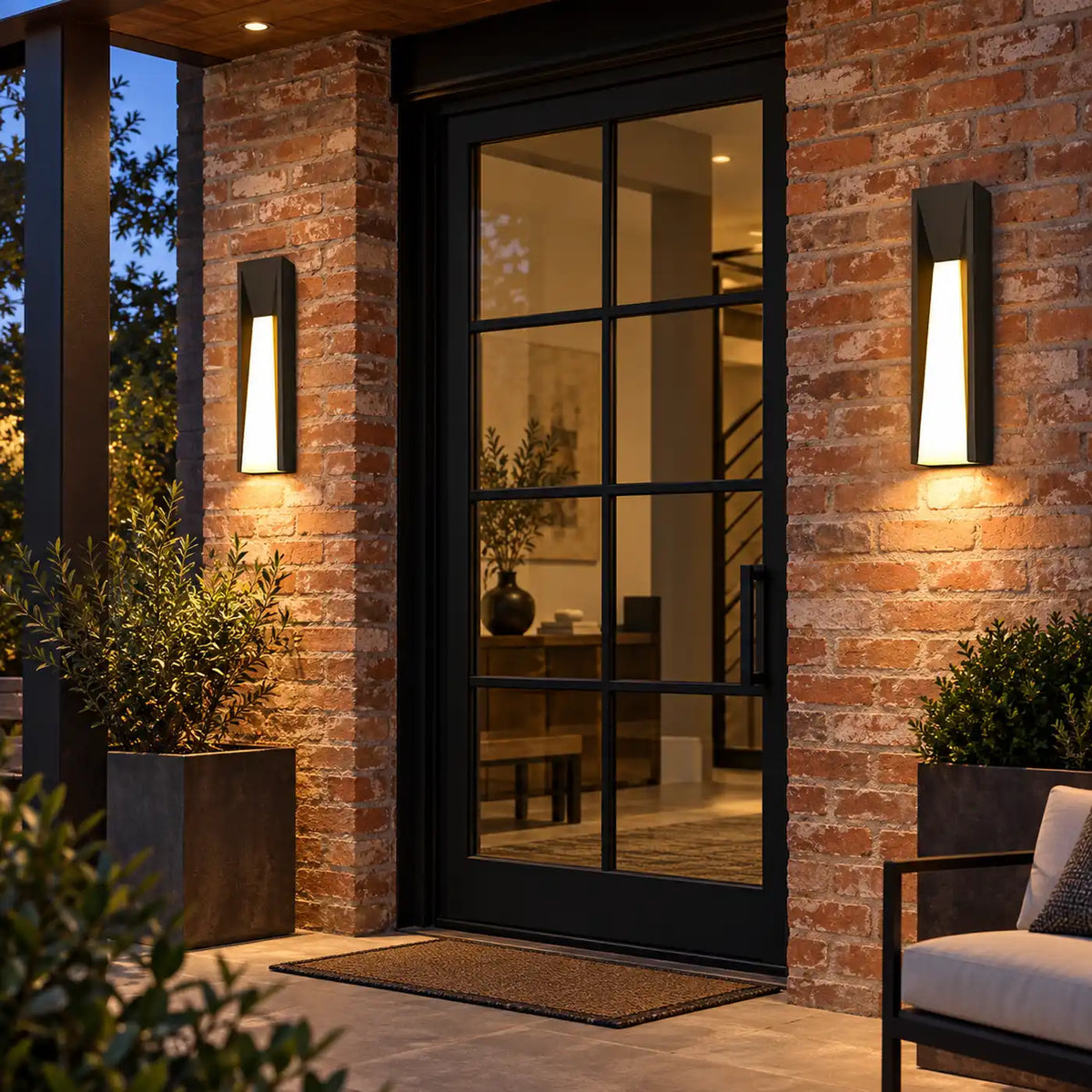
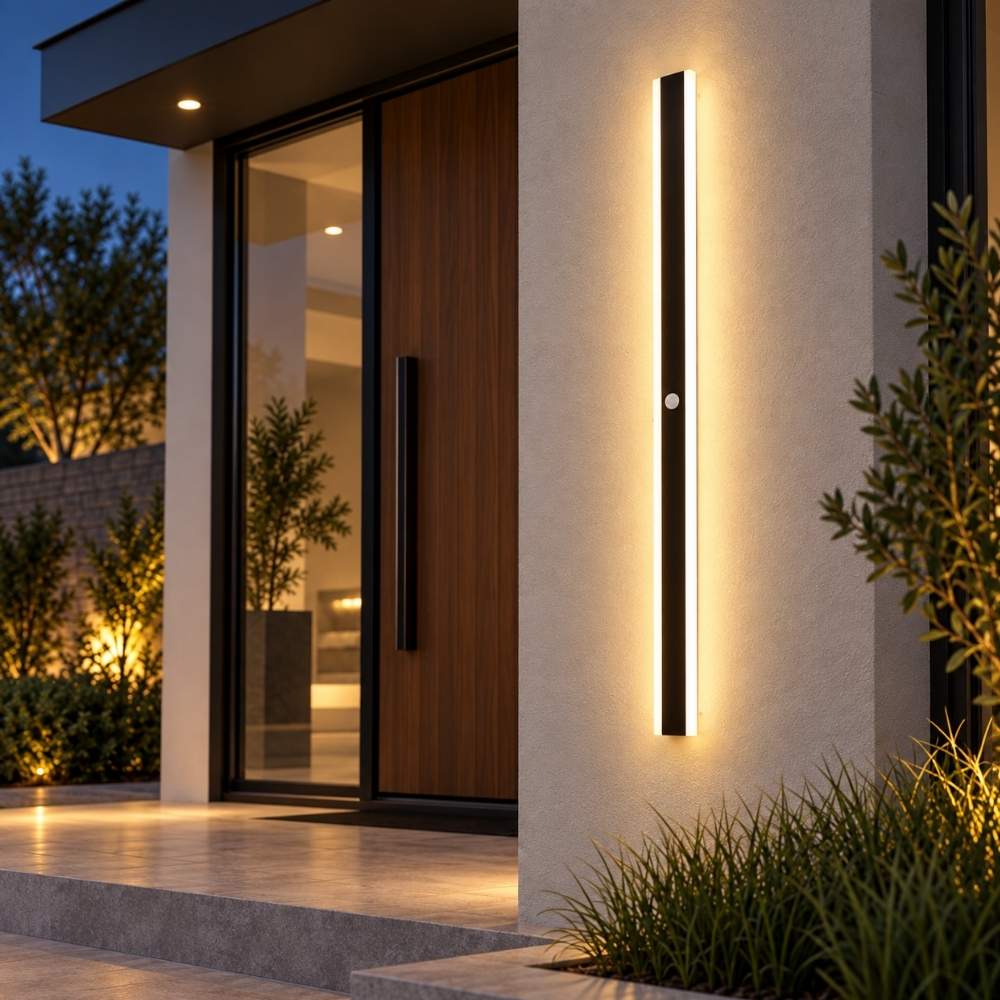
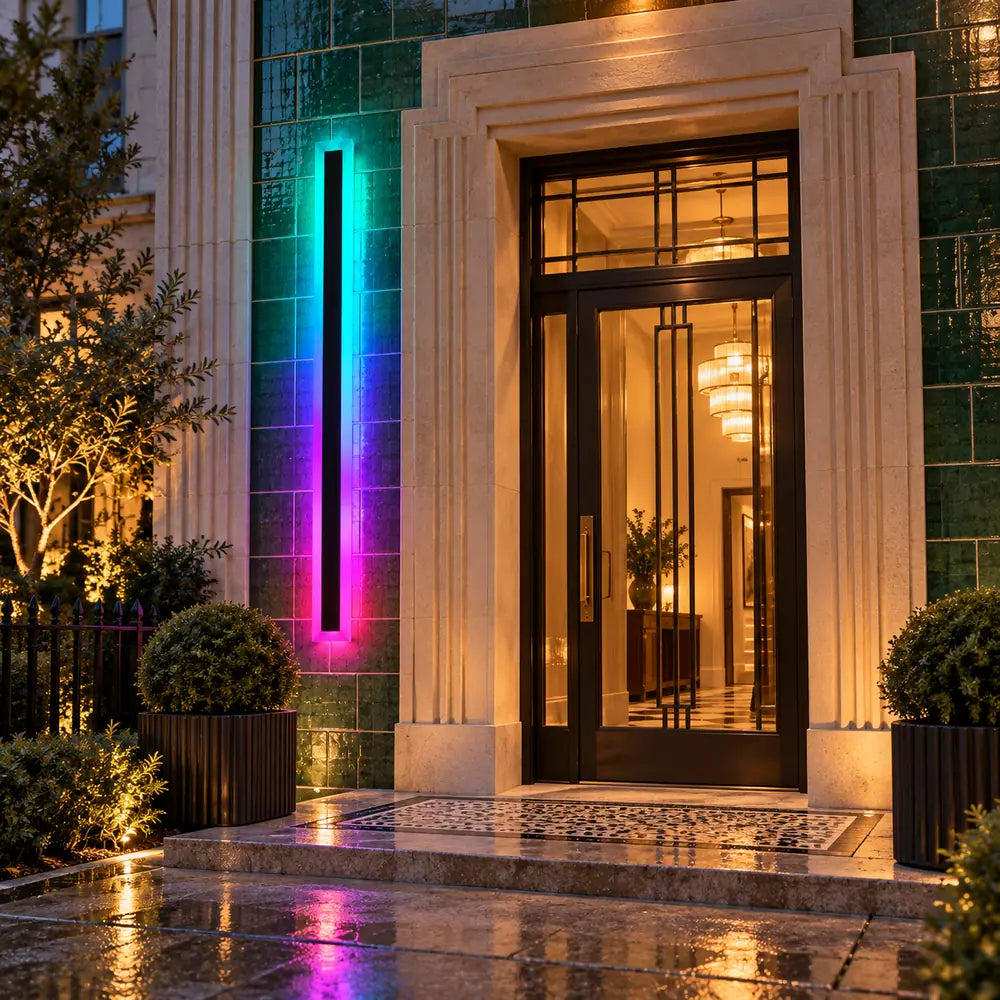
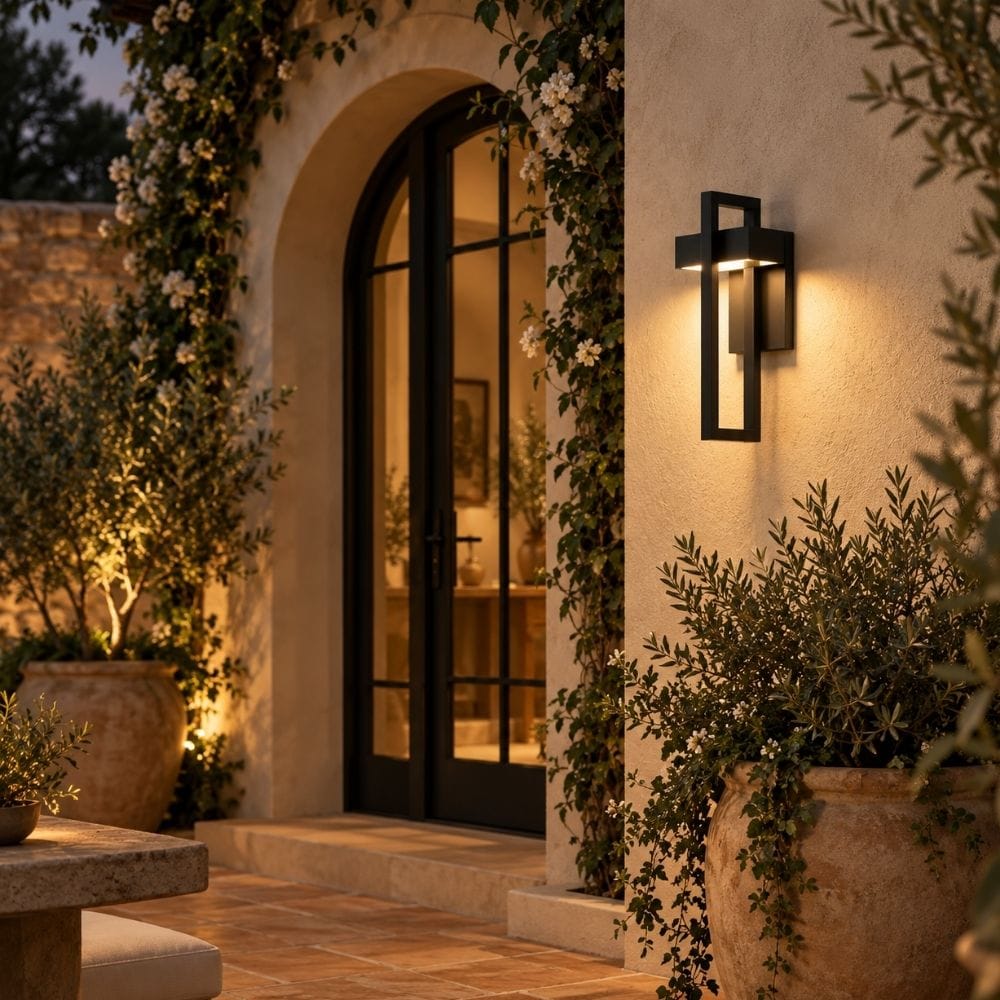
The entry fixture is the handshake of the house. Mount sconces beside the door with their center at roughly 66" (168 cm) above the standing surface — about eye level — and sized to roughly one-quarter to one-third of the door's height. A pair flanking the door reads formal and balanced; a single fixture on the latch side works on compact entries. Covered porches allow damp-rated designs; an exposed door front needs a wet rating.
Garage & Driveway Walls
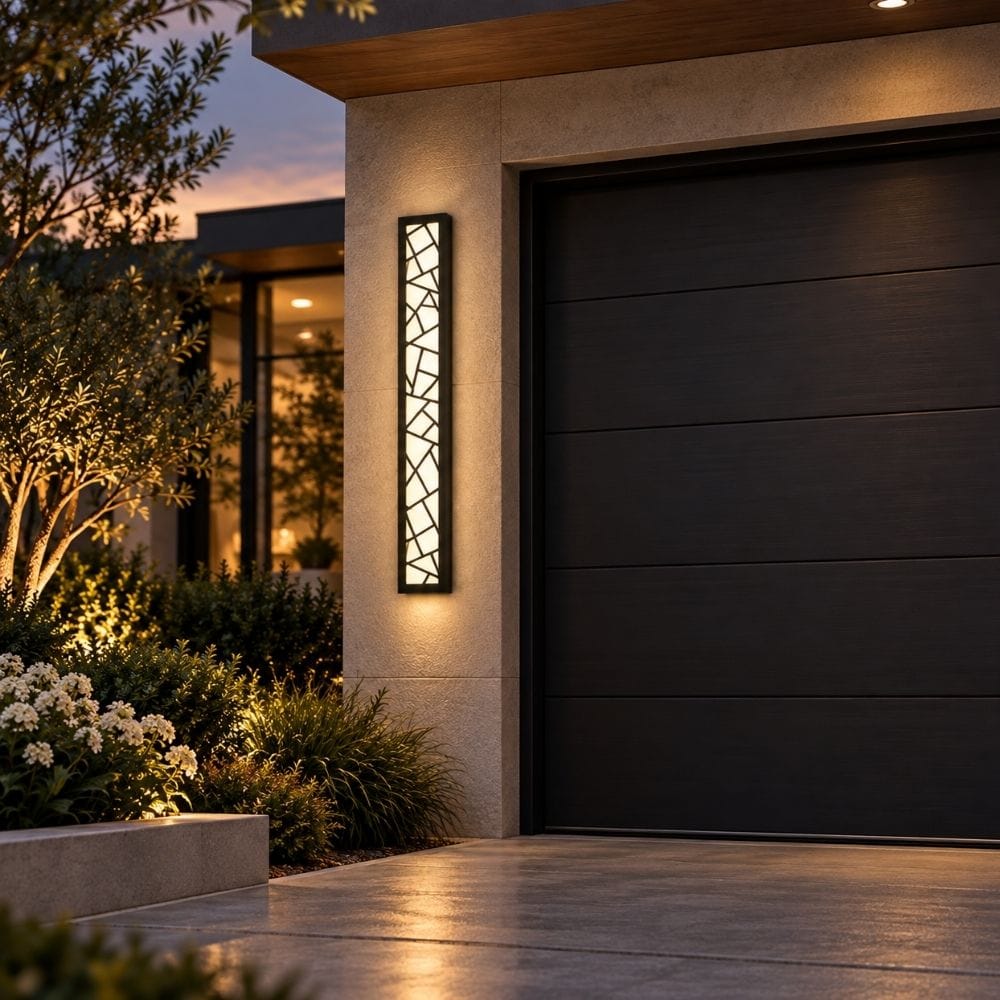
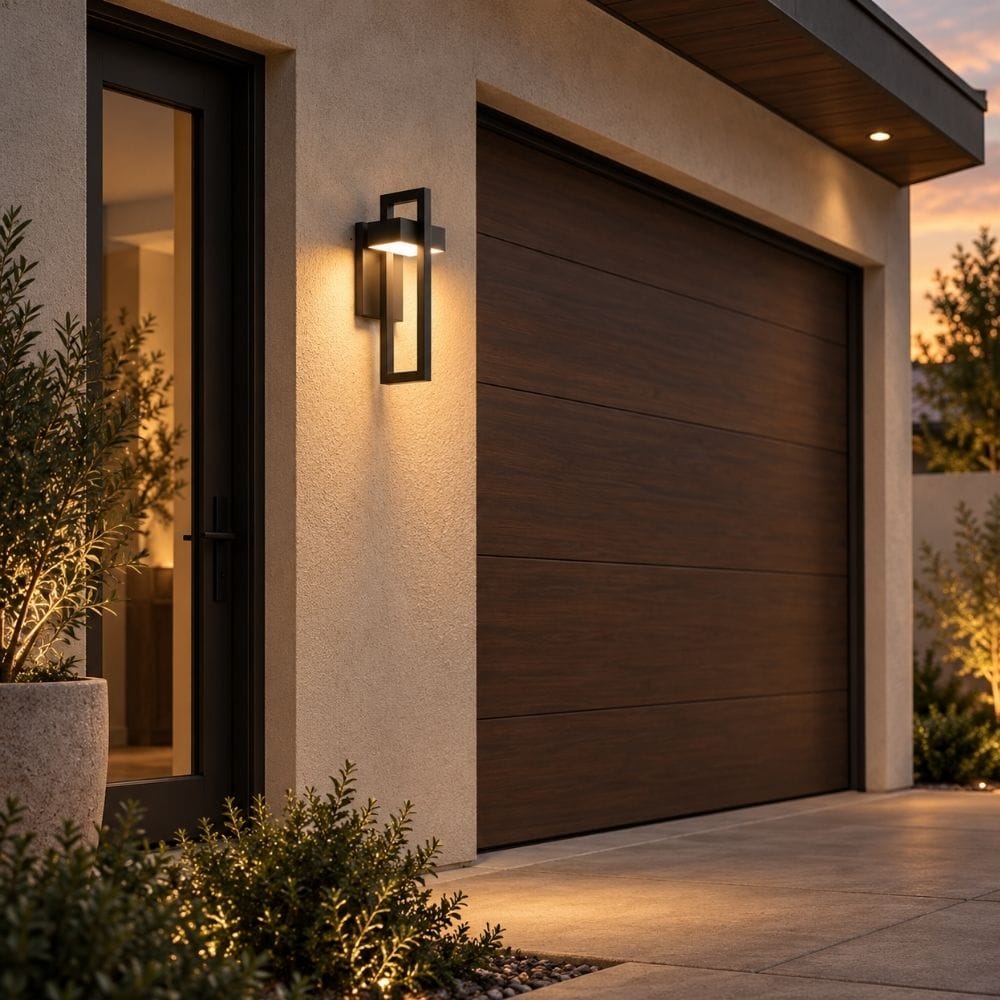
Flank the garage door with fixtures mounted just above the door frame's shoulder height — typically 66-72" (168-183 cm) to center — one on each side for double doors, sized slightly smaller than the entry fixtures so the garage supports rather than competes with the entry. Motion or dusk-to-dawn control earns its keep here more than anywhere else on the house.
Façade & Architectural Walls
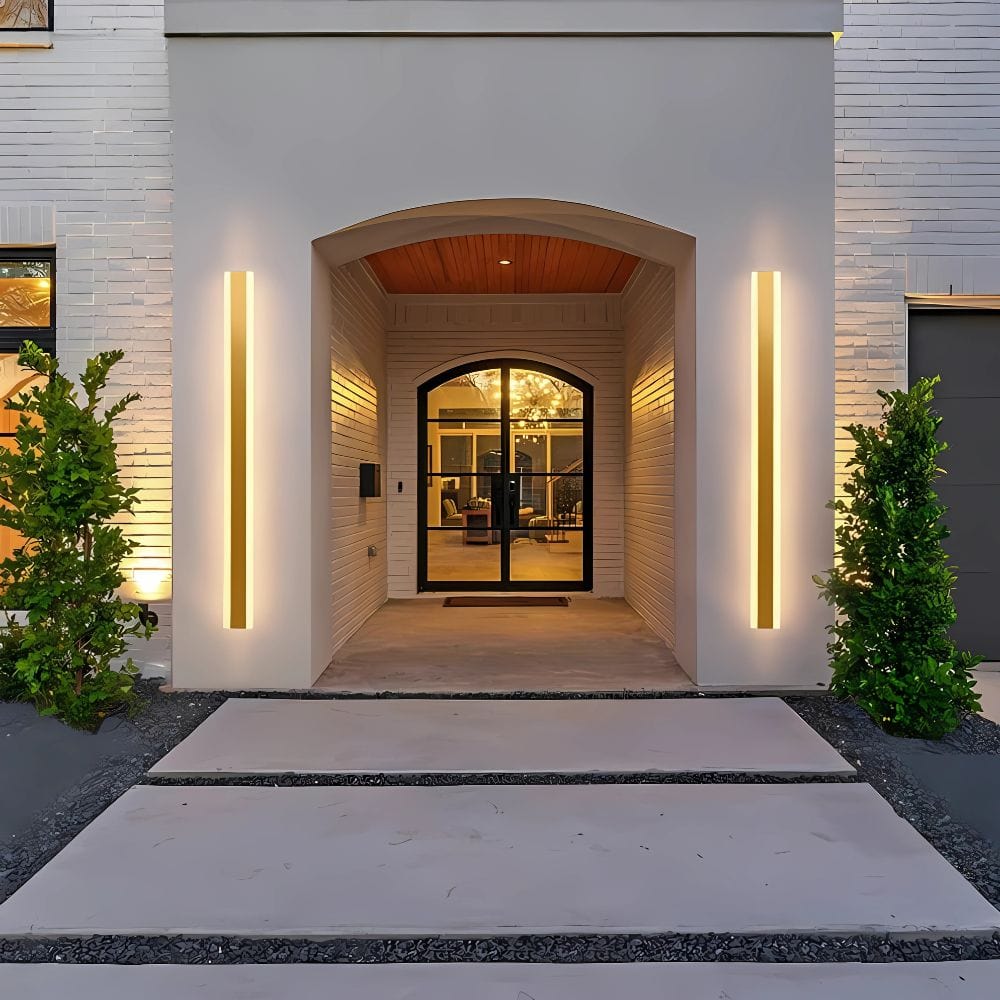
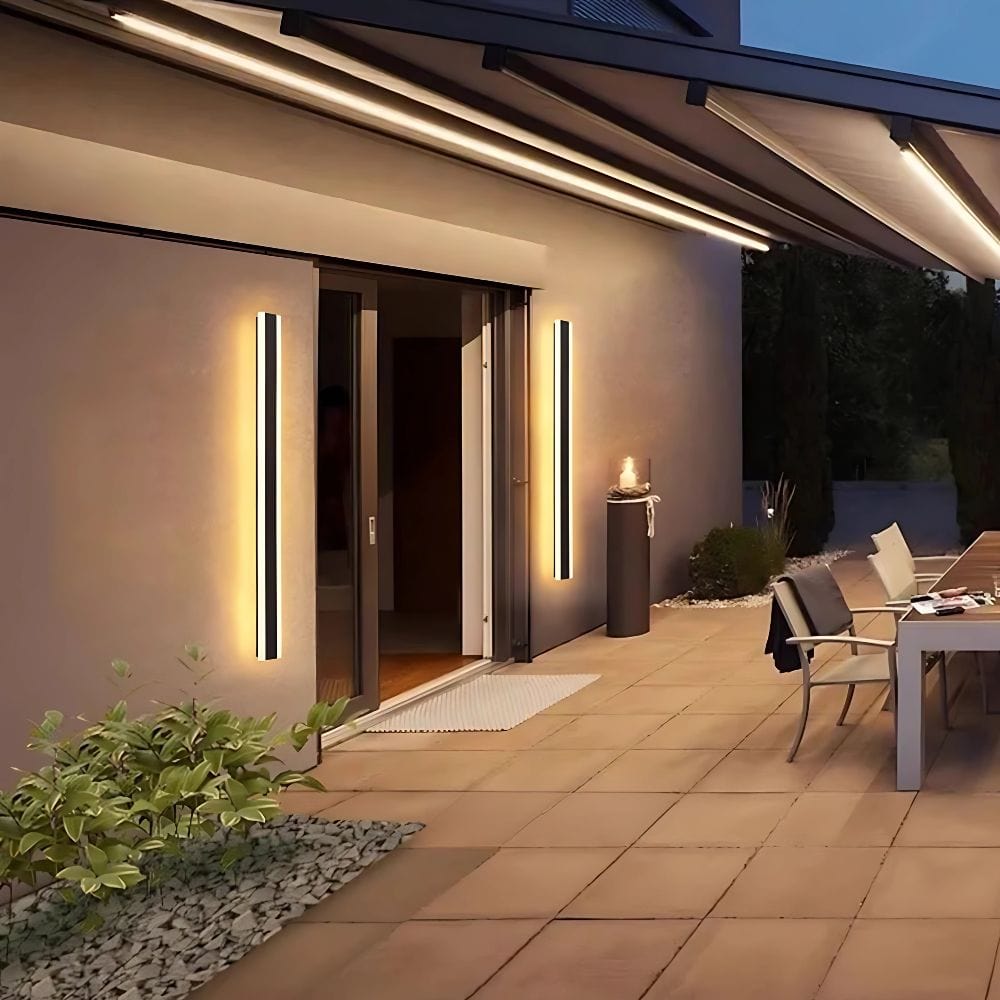
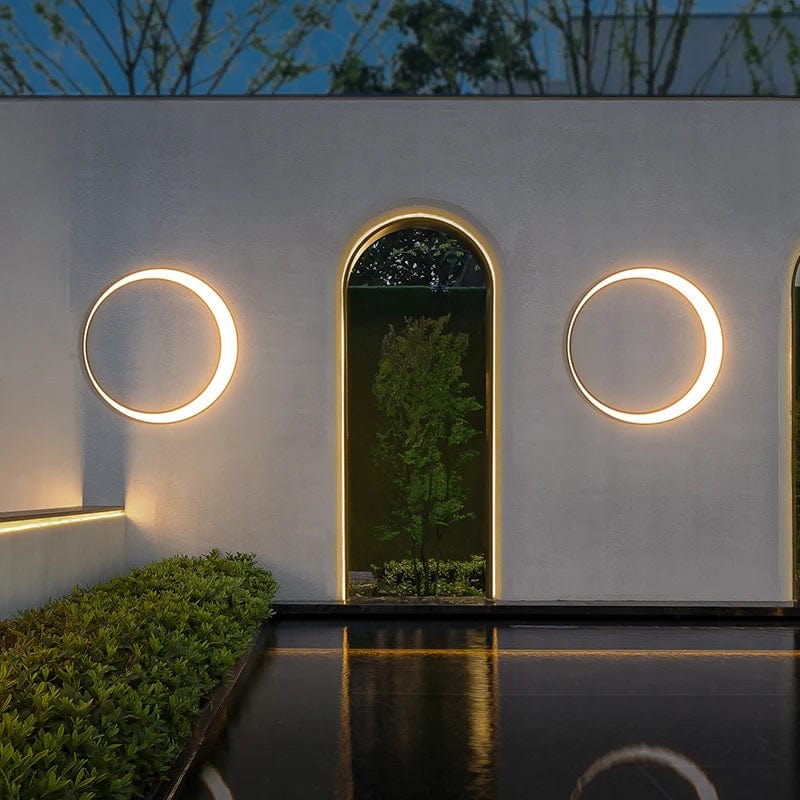
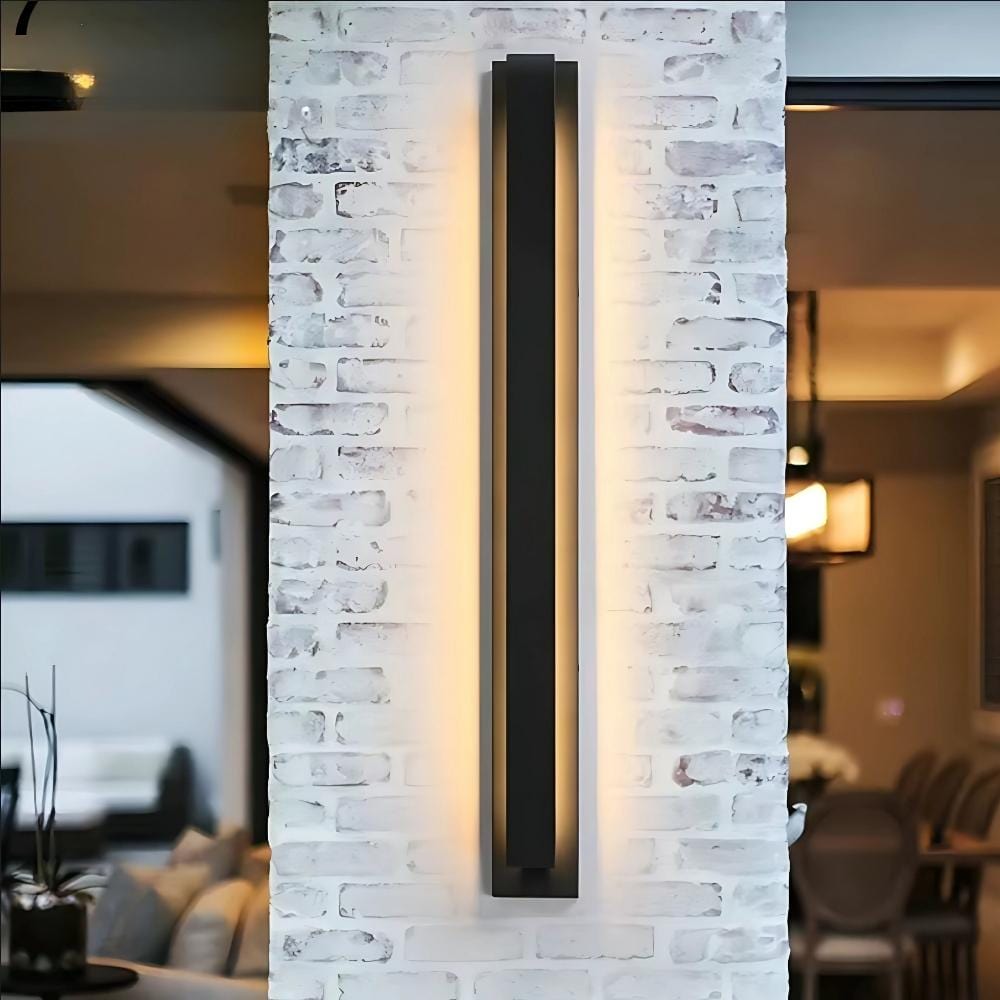
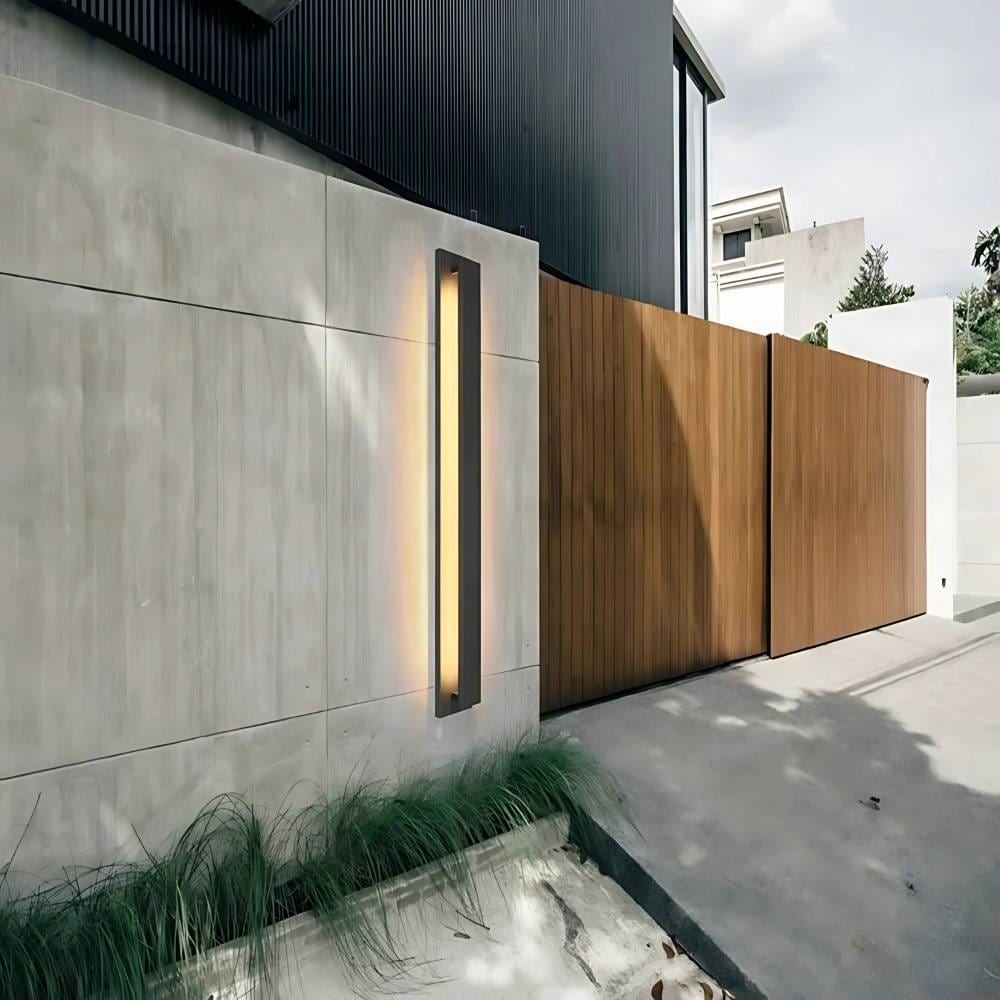
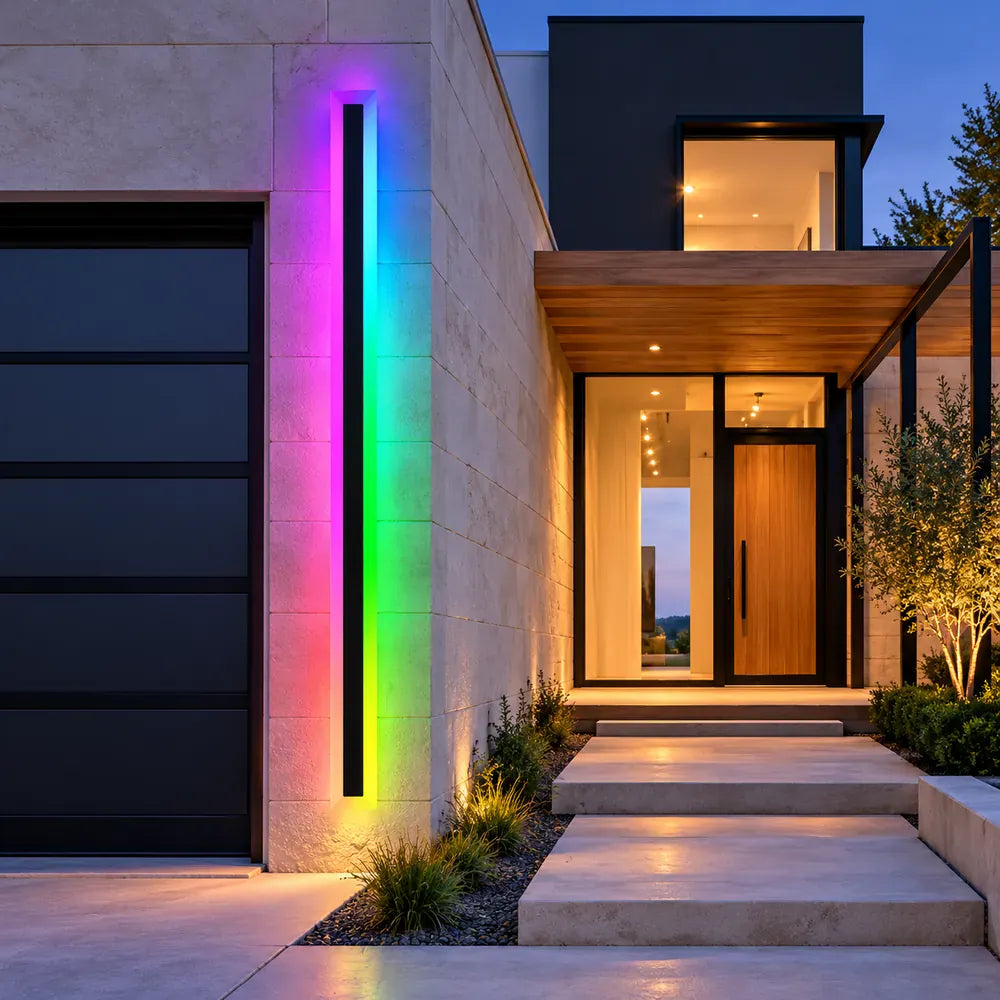
Up/down cylinder and grazing designs turn a blank exterior wall into architecture after dark — light washes up and down the surface, articulating texture and rhythm. Space repeating fixtures evenly (commonly 6-8 ft / 1.8-2.4 m apart) and keep every unit at the same mounting height; the repeated line is the effect.
Patio, Garden & Seating Walls
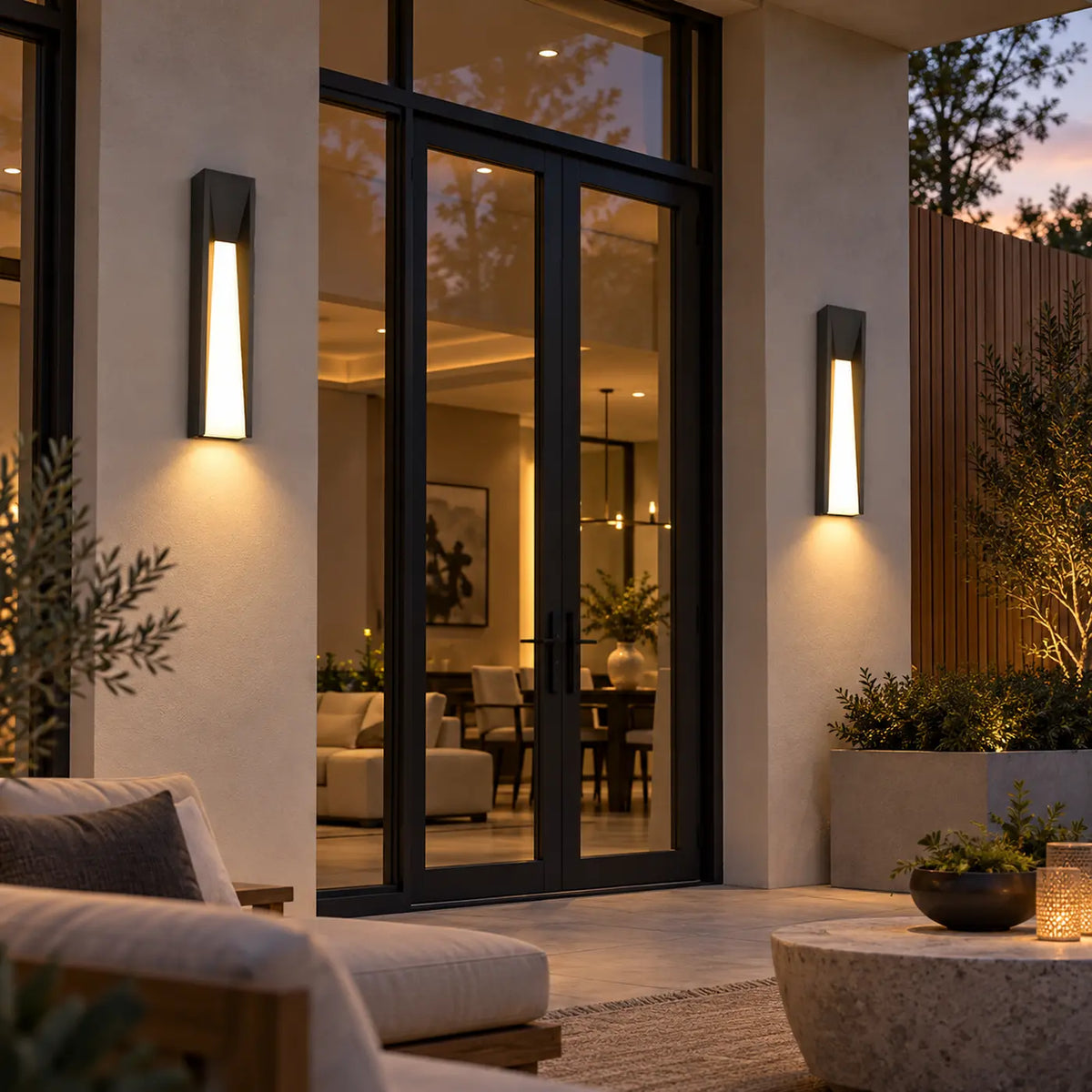
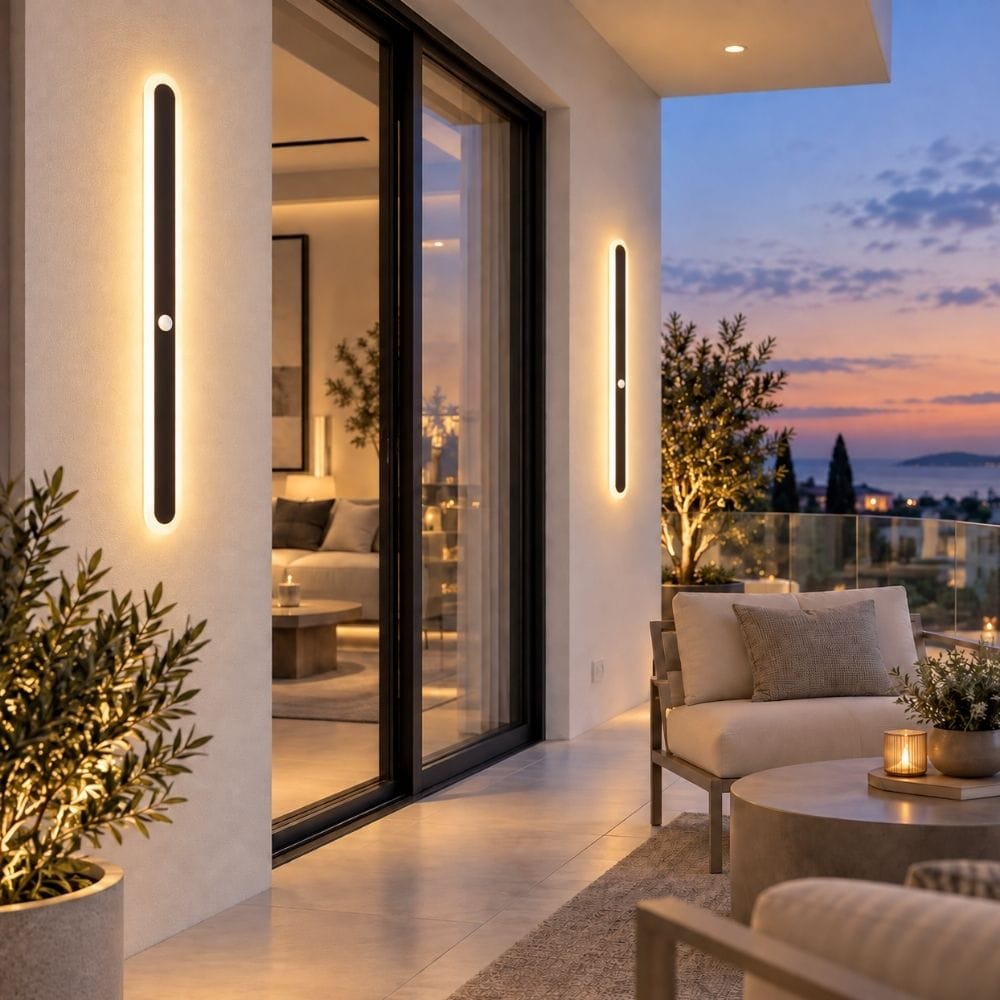
Around outdoor seating, drop the brightness and the mounting height: 60-66" (152-168 cm) to center, warm output, and shielded or downward designs that light the zone without glaring at seated eye level. These are the fixtures that make an outdoor room usable after dark.
Wet-Rated vs Damp-Rated: Reading the Label
- Wet-rated (UL Wet): built for direct rain and snow exposure — required on open façades, uncovered entries, garage walls, and any surface weather reaches
- Damp-rated (UL Damp): built for humidity and indirect moisture — sufficient under covered porches, deep eaves, and roofed patios where rain never lands on the fixture
- The test: stand at the fixture's position in the rain — if you get wet, the fixture needs a wet rating
- When unsure: choose wet-rated; it works in every outdoor position, while damp-rated in an exposed spot fails early and voids coverage
Styles, Materials & Finishes That Survive Outside
Modern & Contemporary Directions
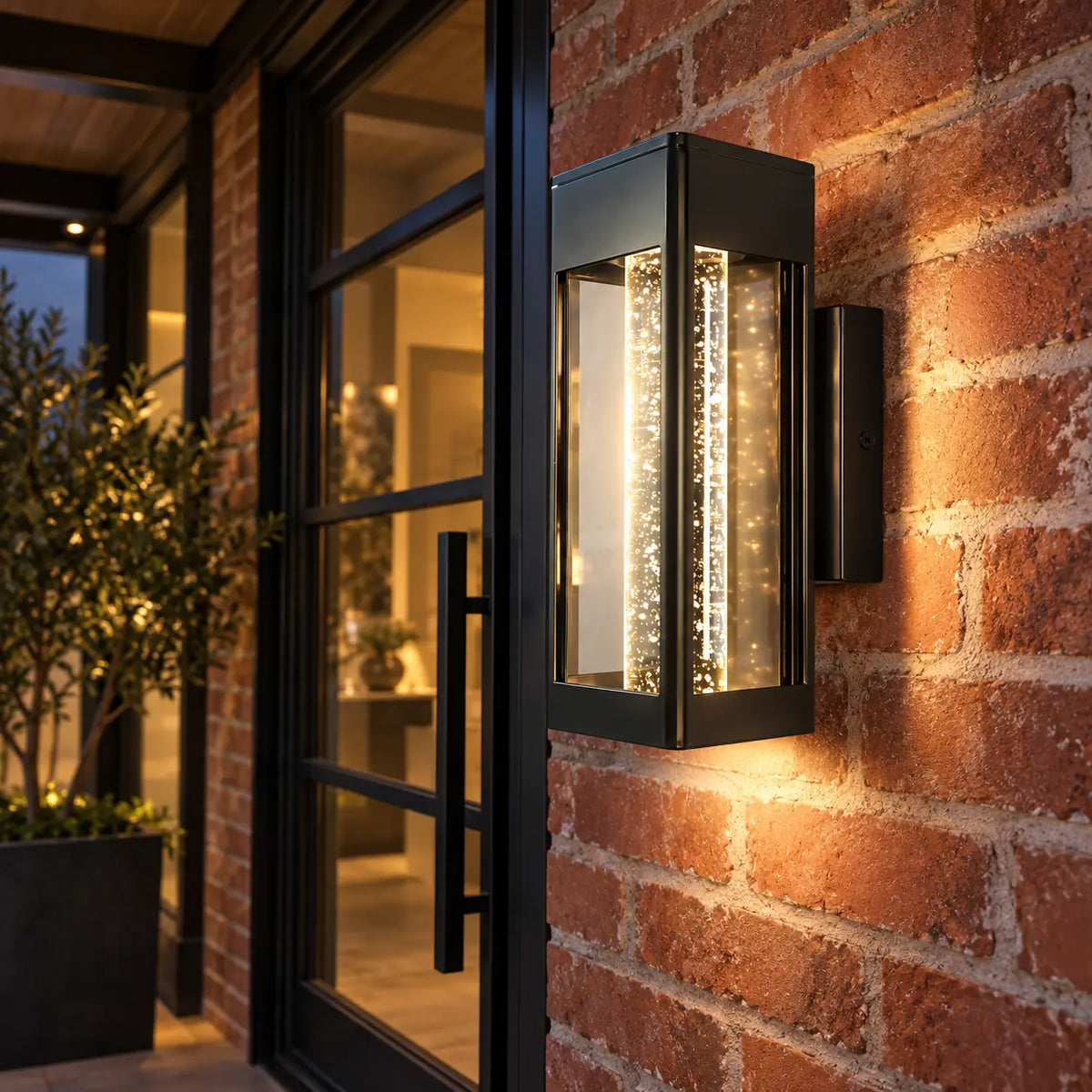
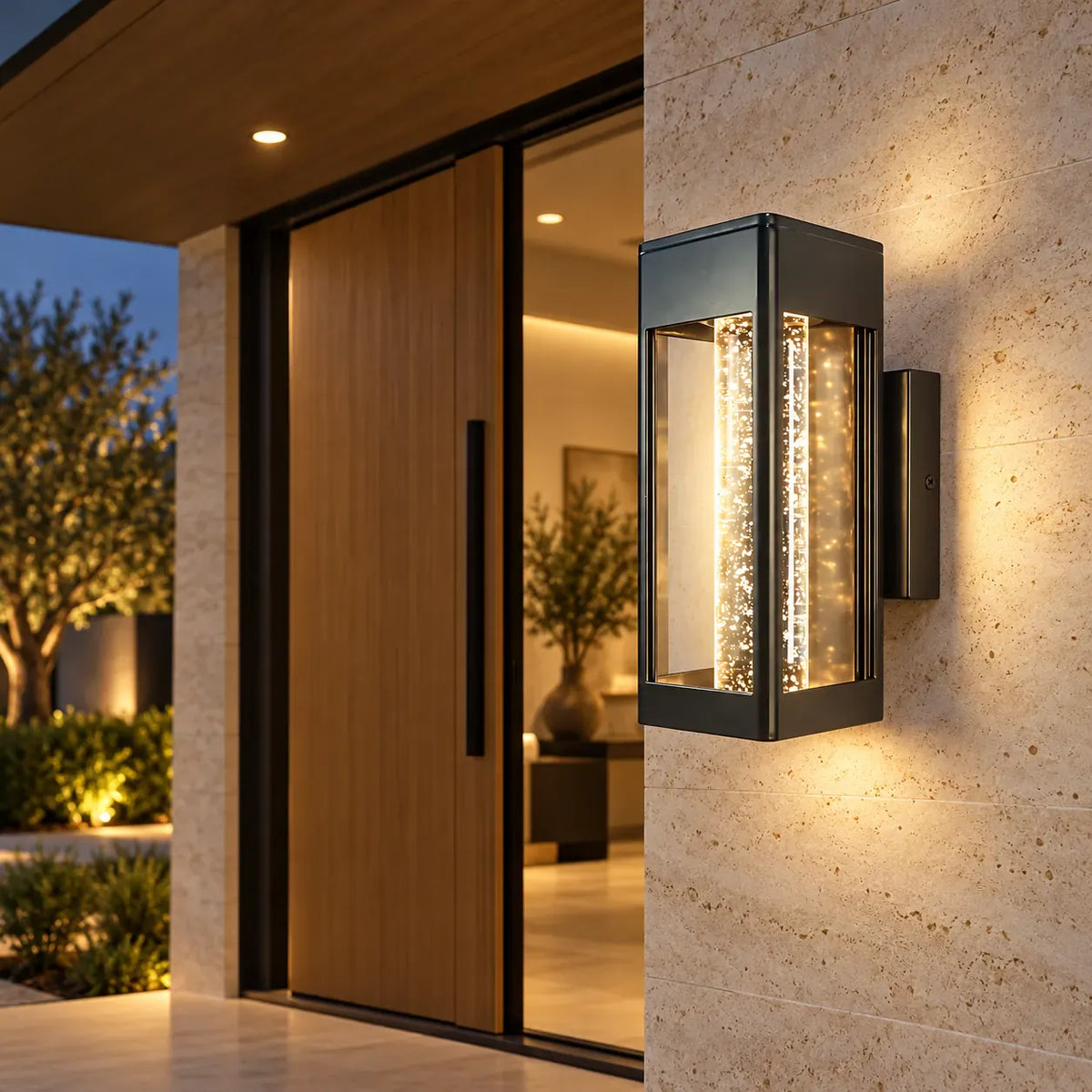
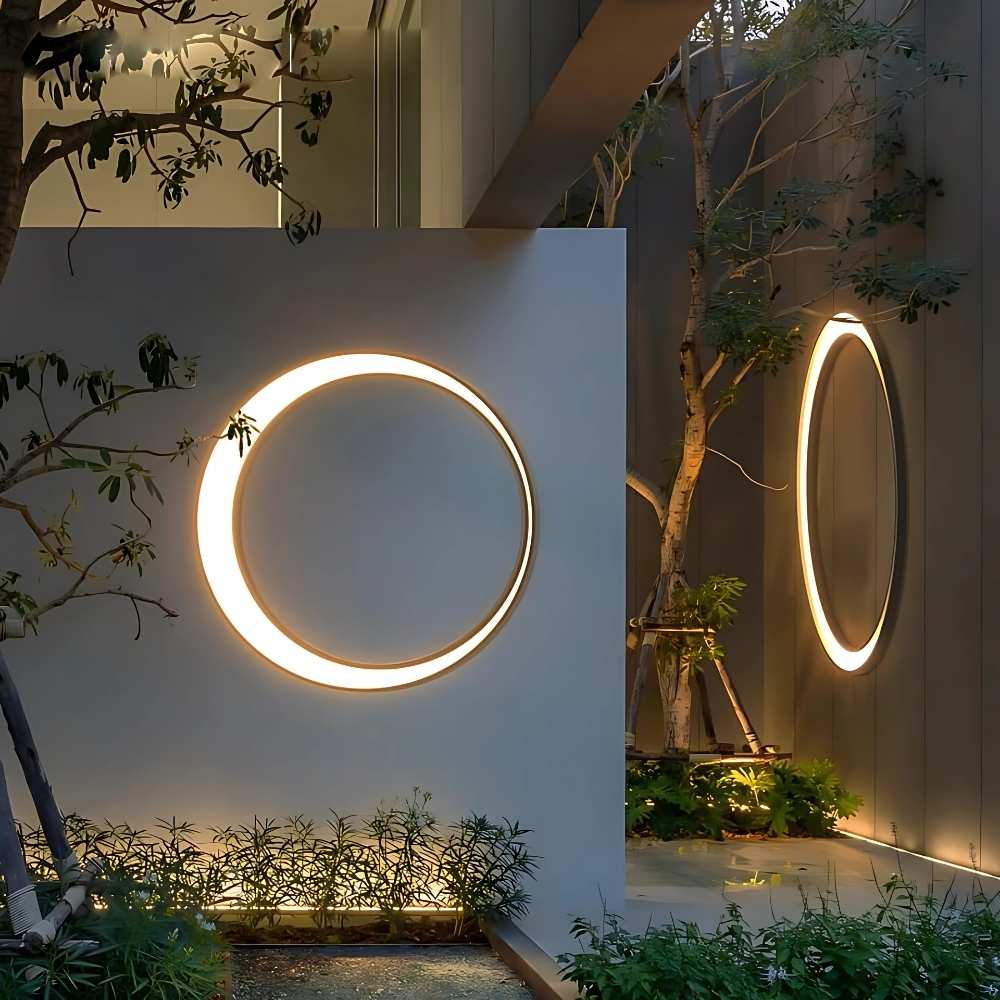
Modern exterior design favors geometric clarity — cylinders, rectangles, and slim vertical bars with clean lines that read architectural against siding, stucco, and stone. Contemporary variants add warmth through materials: brass detailing, wood-look accents, and frosted diffusers that soften the output. Lantern-inspired forms and traditional wall lamp silhouettes in matte black bridge modern farmhouse exteriors. Whichever direction fits the house, keep every exterior fixture in one family — the outside of a home is seen in a single glance, and mixed styles read as accumulation rather than design.
Materials Built for Weather
- Powder-coated aluminum: the workhorse — light, rust-free, and stable in every climate; the standard for matte black designs
- Stainless steel and brass: the coastal answer — salt air corrodes standard finishes, while marine-grade steel and solid brass weather to a stable patina
- Frosted and seeded glass: diffuses LED output, hides water spotting, and keeps the lit fixture glare-free at eye level
- Finish note: matte black leads current exterior direction; brass warms traditional and transitional façades; white disappears into pale render for a light-only effect
LED, Brightness & Color Temperature Outdoors
Warm white (2700-3000K) is the residential exterior standard — it flatters brick, wood, and warm render, and it reads welcoming where cooler light reads commercial. Brightness scales by job: entry and garage fixtures typically run 400-800 lumens per unit, façade washes less, security zones more. Integrated-LED designs dominate the category for good reason — sealed optics outlast bulb sockets in weather — but check the listed lifespan and whether the driver is replaceable. Downward-shielded and dark-sky-friendly designs keep light on the house instead of the night sky, a requirement in a growing number of US municipalities and a good-neighbor default everywhere else.
Mounting & Installation Notes
- Heights at a glance: entry sconces 66" (168 cm) to center; garage 66-72" (168-183 cm); patio seating walls 60-66" (152-168 cm); repeated façade units all at one height
- Junction box: exterior fixtures mount to a weatherproof box with a gasket seal against the wall — replace cracked gaskets during any swap
- Uneven siding: lap siding needs a mounting block so the fixture sits plumb against a flat surface
- Pairs and runs: matched heights are the whole effect — measure from the same reference surface for every unit, not from stepped ground
Related Collections & Guides
For the complete selection walkthrough — façade compositions, patio zoning, and wet-rating scenarios pick by pick — see our modern outdoor wall lighting guide. Indoors, the same wall-mounted logic continues in the wall sconces collection, and sconce placement rules room by room are covered in the wall sconce placement guide.
Frequently Asked Questions
How high should outdoor wall lights be mounted?
Entry sconces: 66" (168 cm) to the fixture's center — roughly eye level. Garage walls: 66-72" (168-183 cm). Patio seating zones: 60-66" (152-168 cm) with shielded output. Repeated façade fixtures all mount at one identical height.
What is the difference between wet-rated and damp-rated?
Wet-rated fixtures handle direct rain and belong on exposed walls and uncovered entries. Damp-rated fixtures handle humidity only and belong under covered porches and eaves. If rain can touch the fixture, it needs the wet rating.
One light or two beside the front door?
A pair flanking the door reads balanced and formal and suits standard and wide entries. A single fixture on the latch side works on compact entries — sized to roughly one-quarter to one-third of the door's height either way.
What color temperature is best outside a home?
Warm white, 2700-3000K. It flatters brick, wood, and warm render and reads welcoming; cooler temperatures read commercial or security-grade on a residence.
Are black or brass fixtures better for a modern exterior?
Matte black leads modern and contemporary façades and holds its finish in powder-coated aluminum. Brass suits transitional homes and coastal settings, where solid brass weathers to a stable patina instead of corroding.
Do integrated LED outdoor fixtures last?
Sealed LED optics generally outlast bulb sockets in weather — check the listed lifespan (commonly 25,000-50,000 hours) and whether the driver is replaceable, and keep warm 2700-3000K output for residential exteriors.