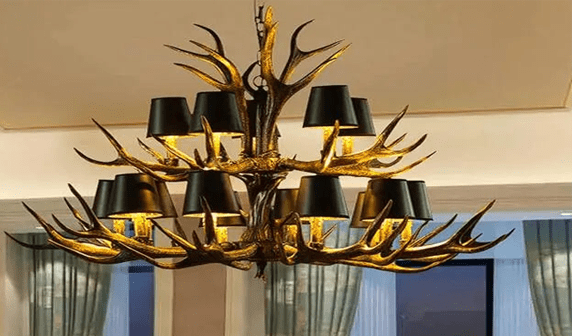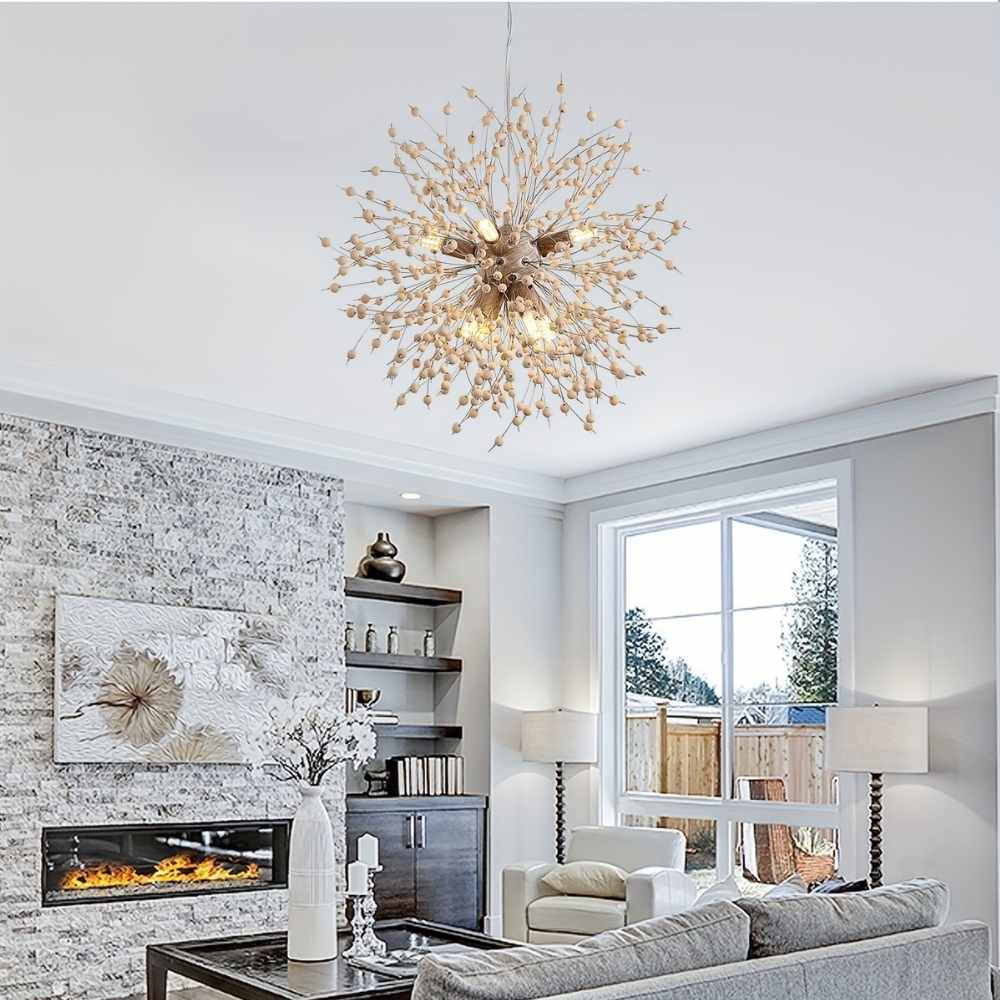
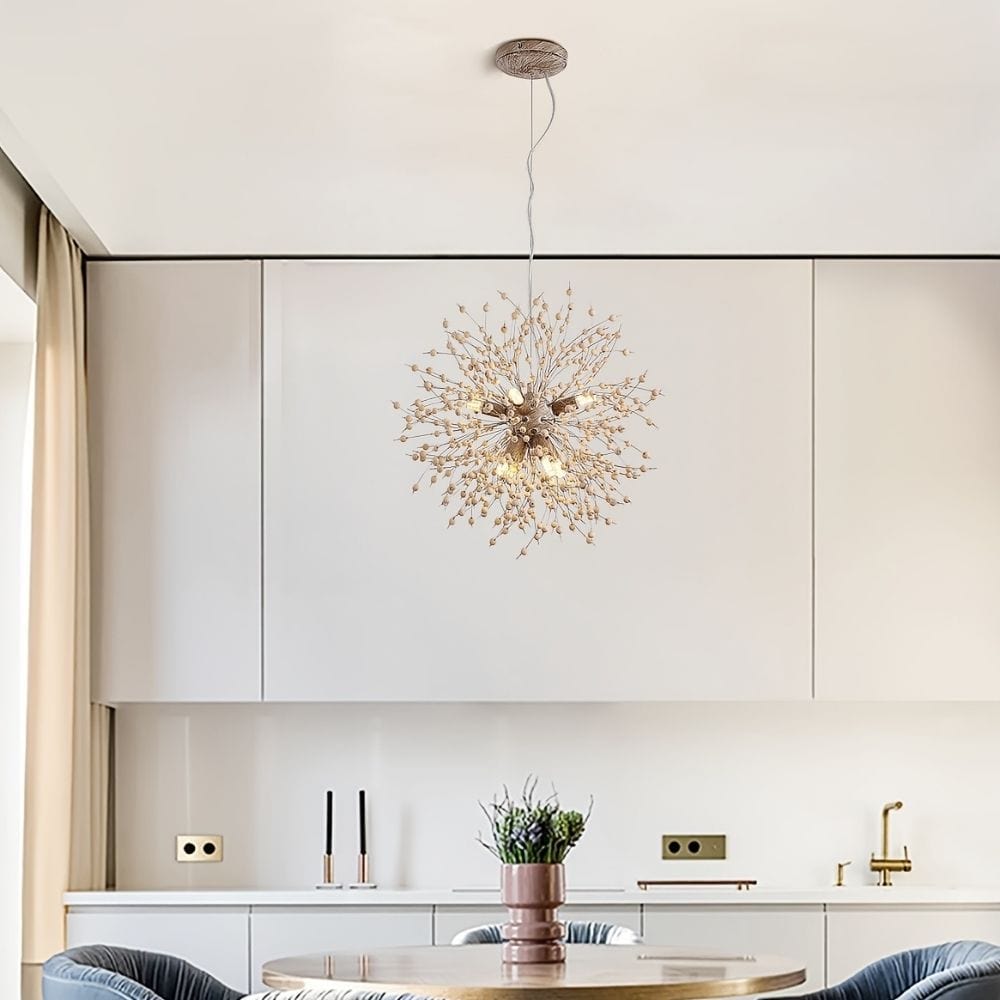


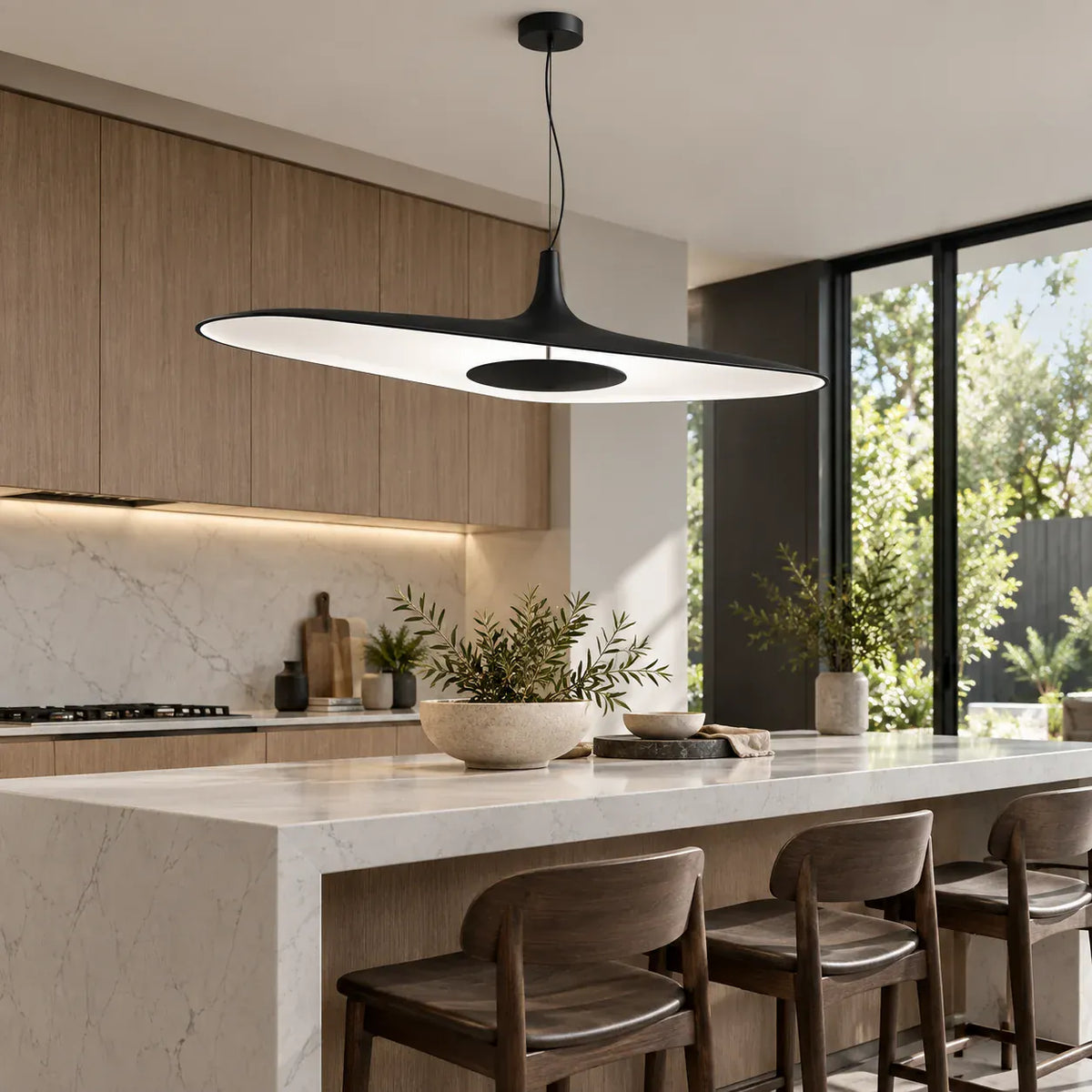




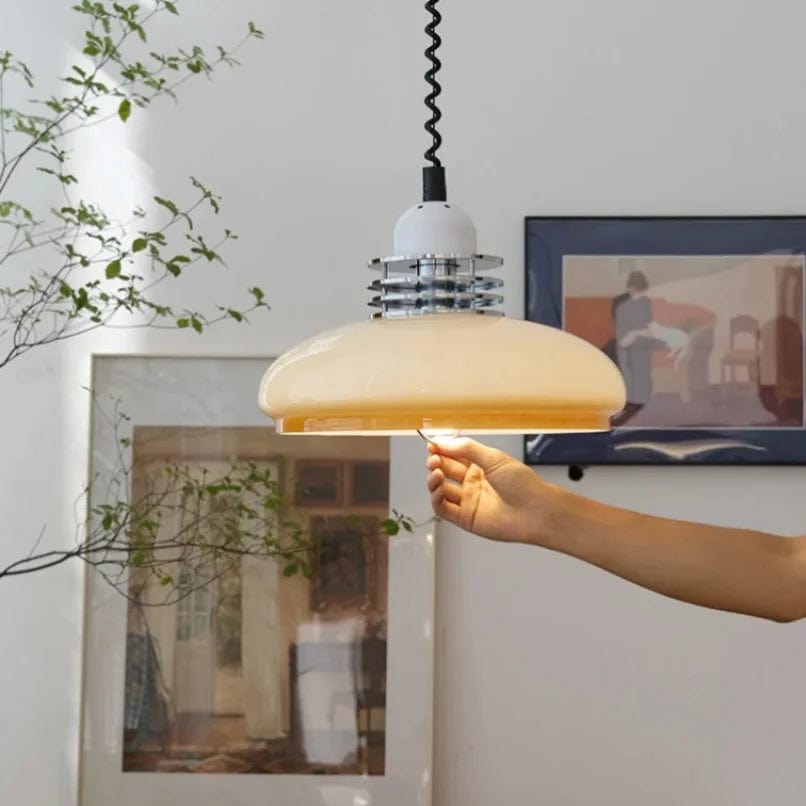
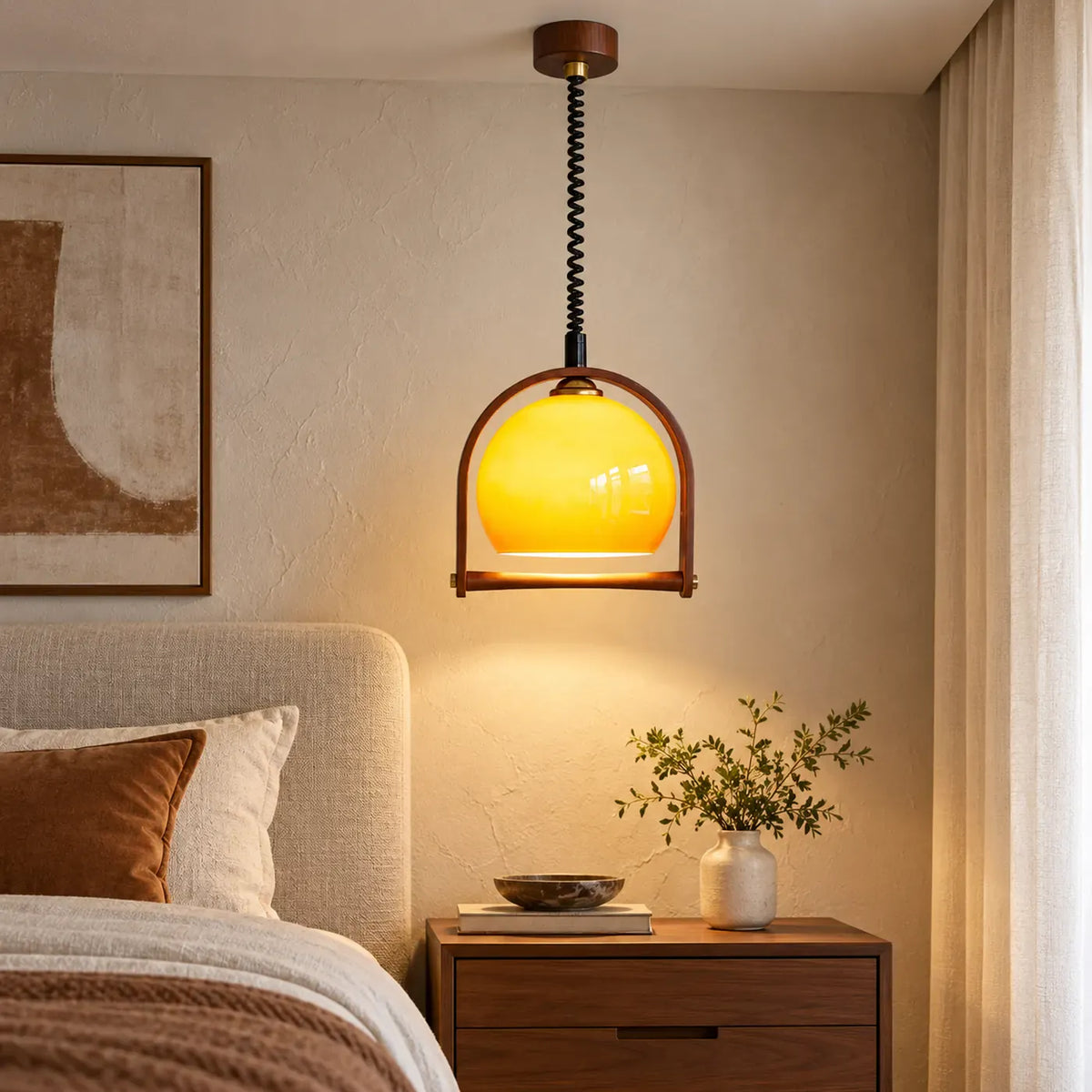


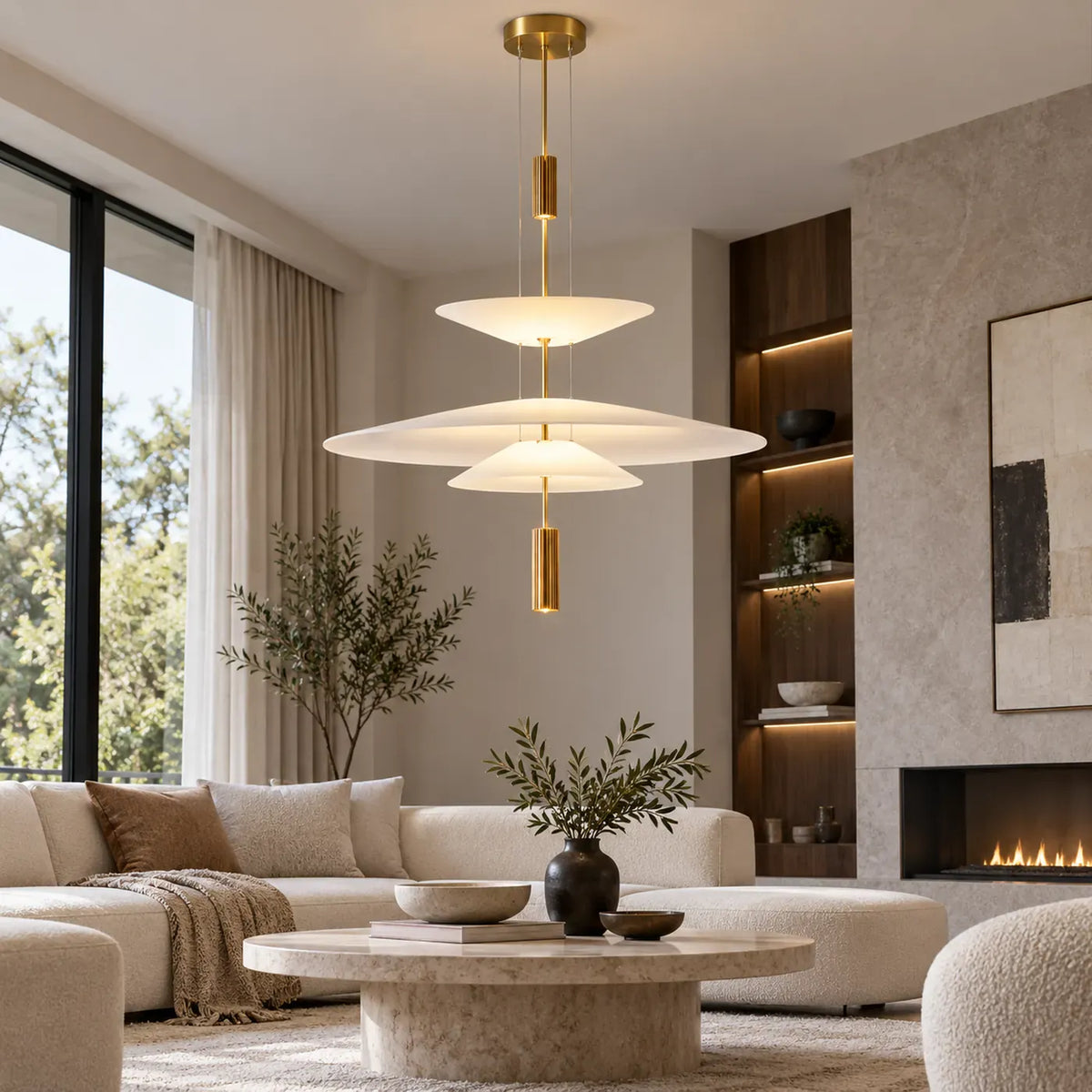
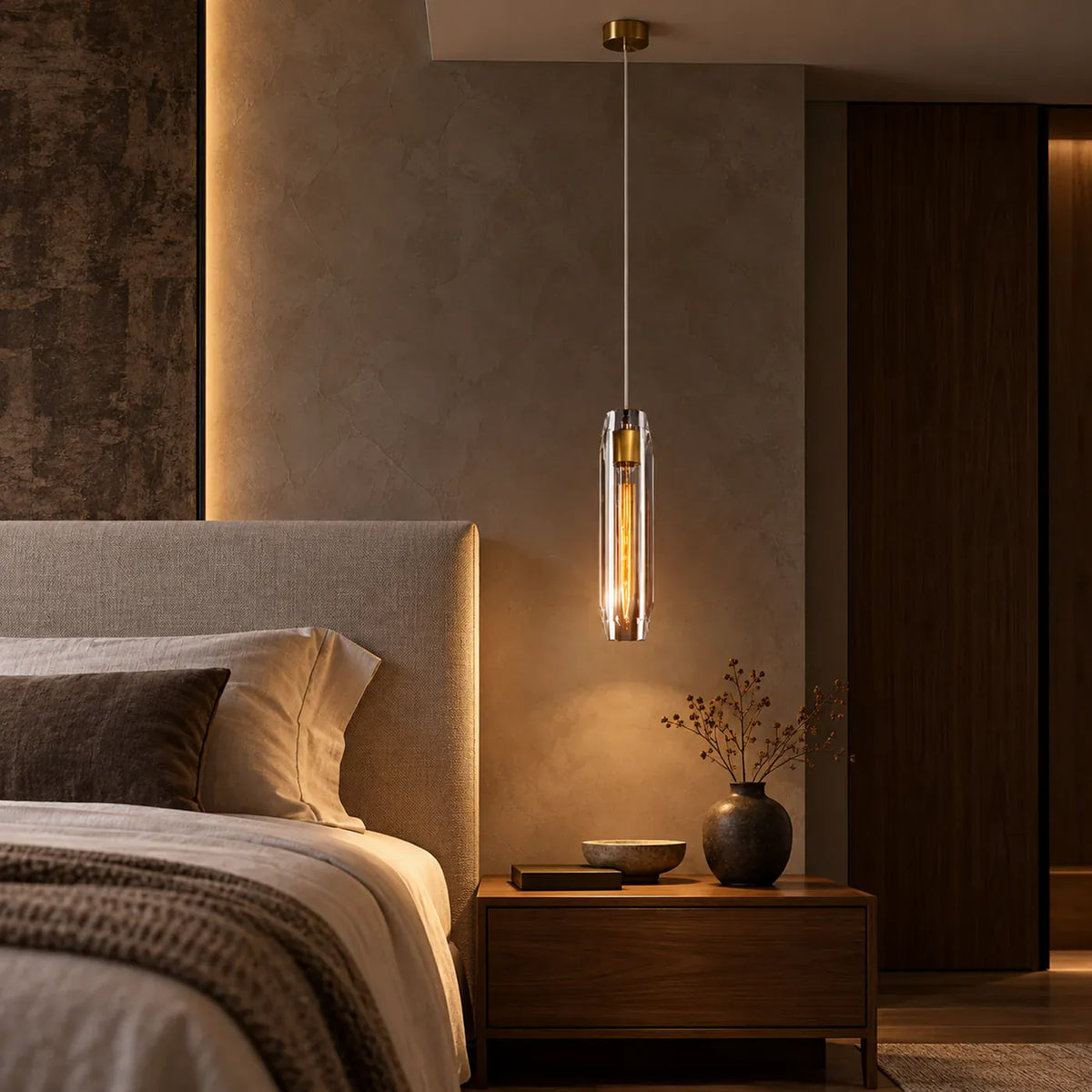
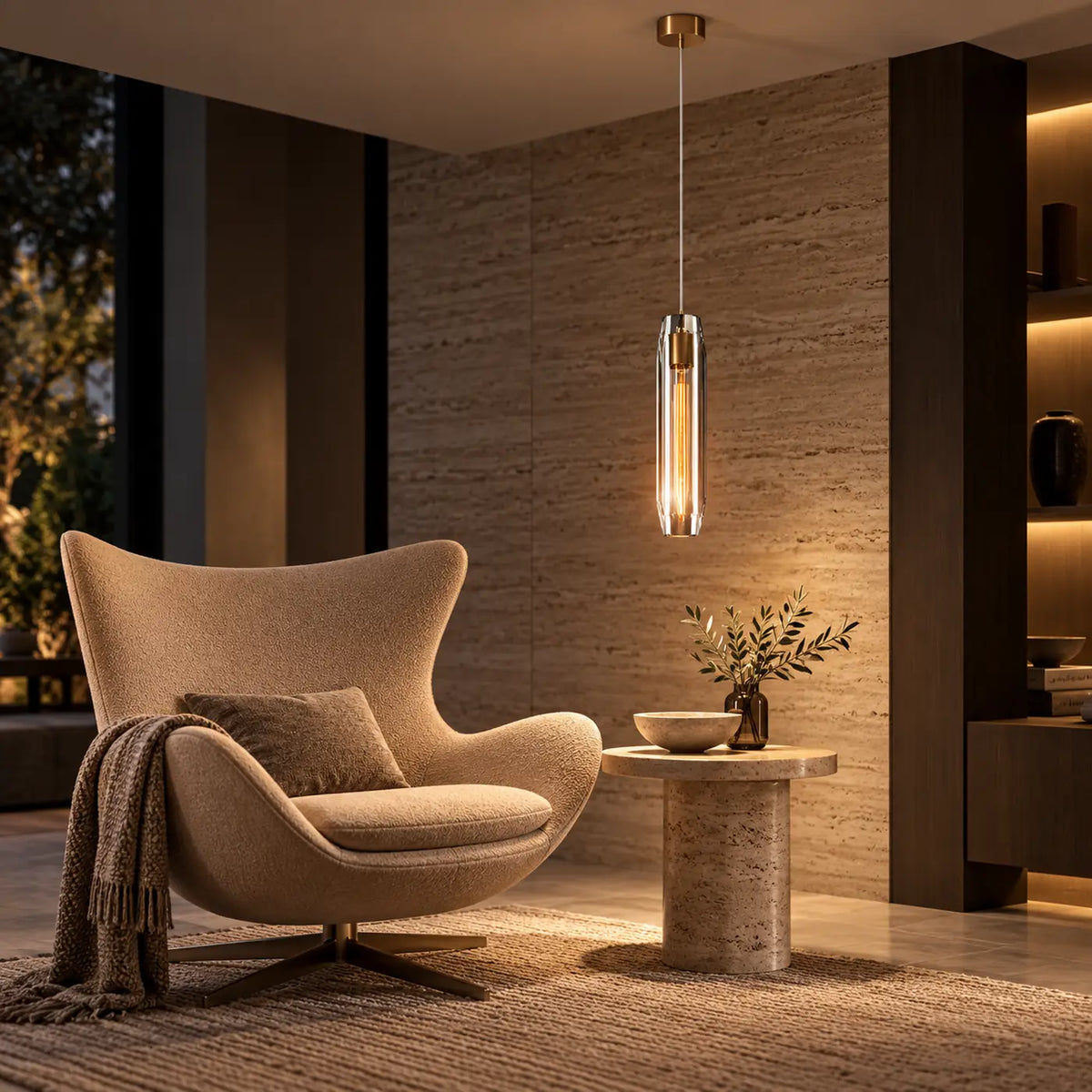
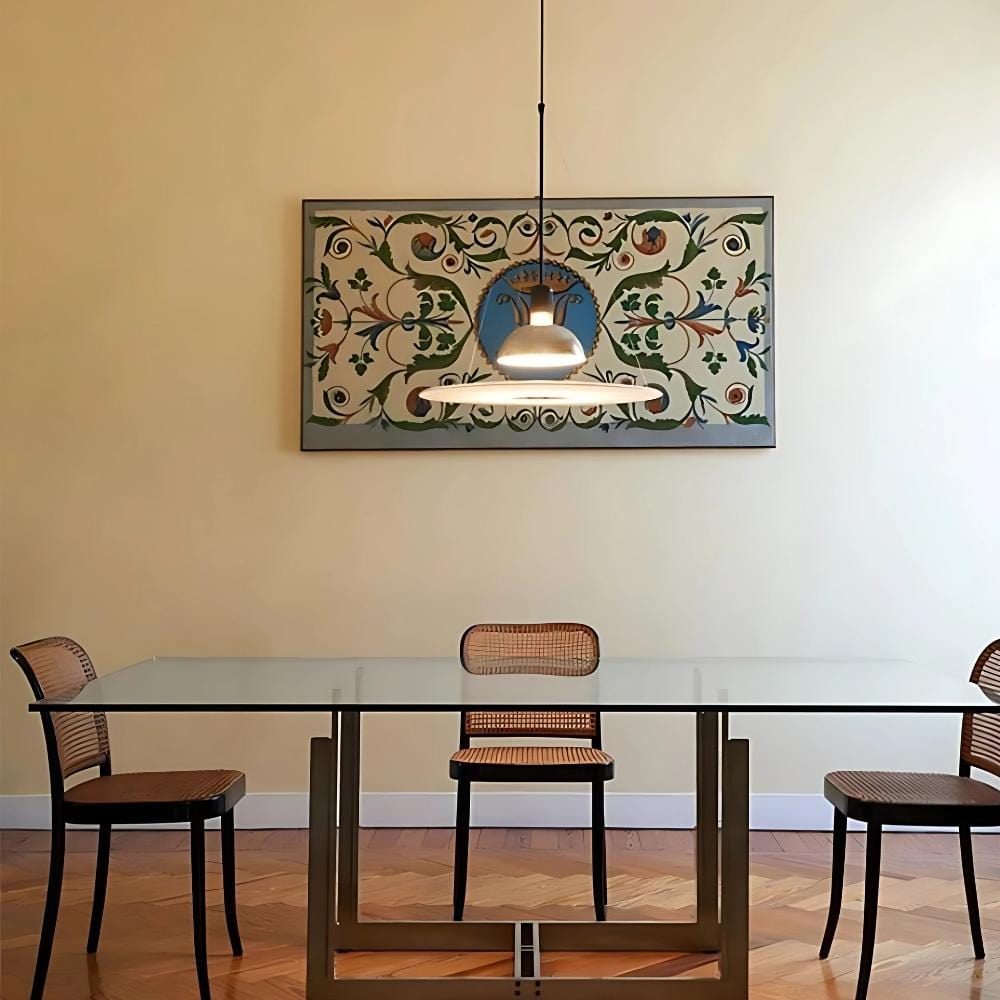
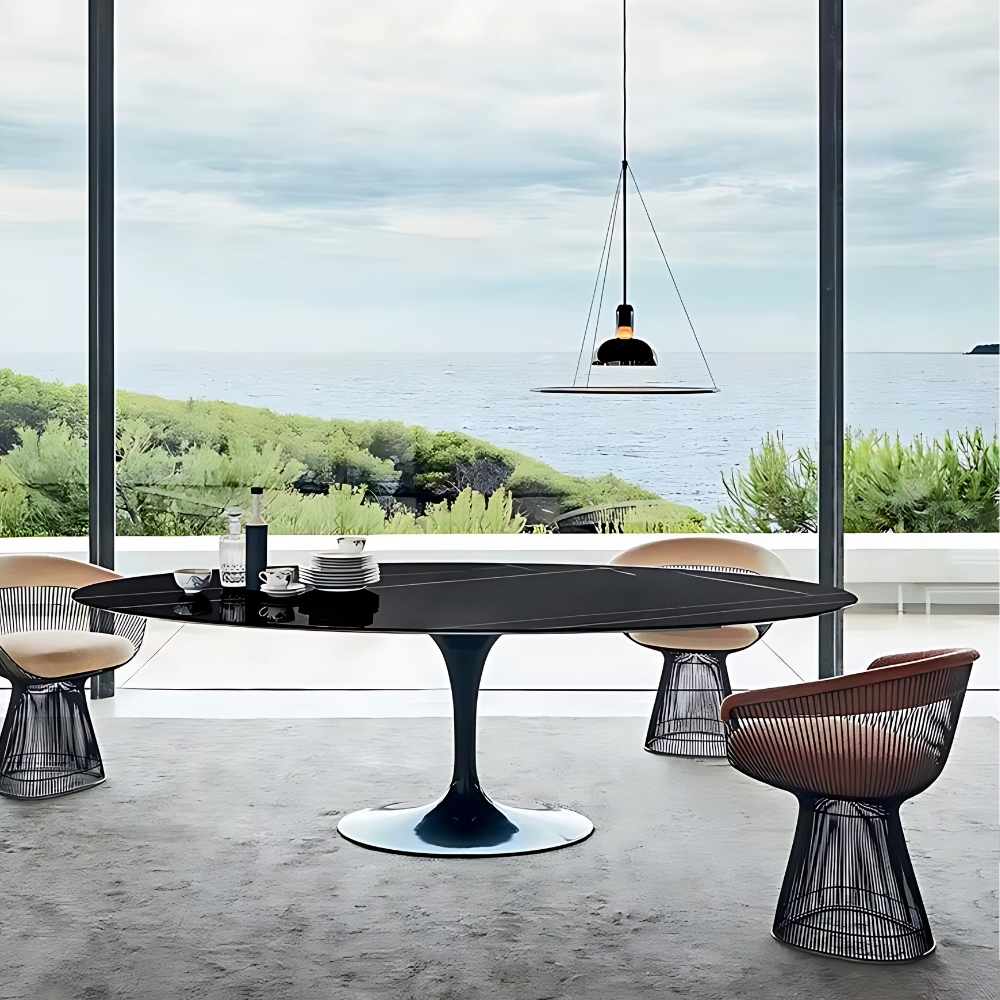
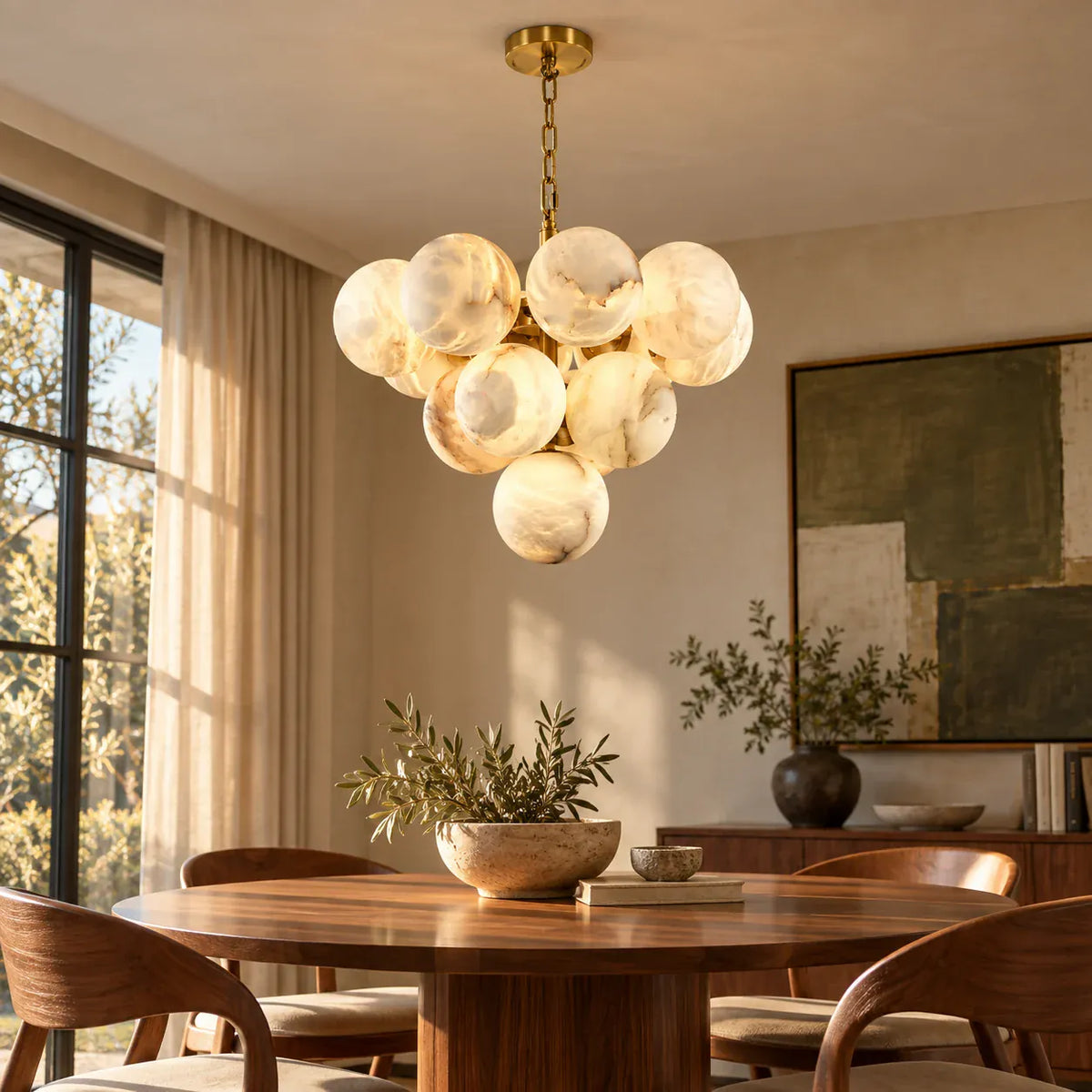
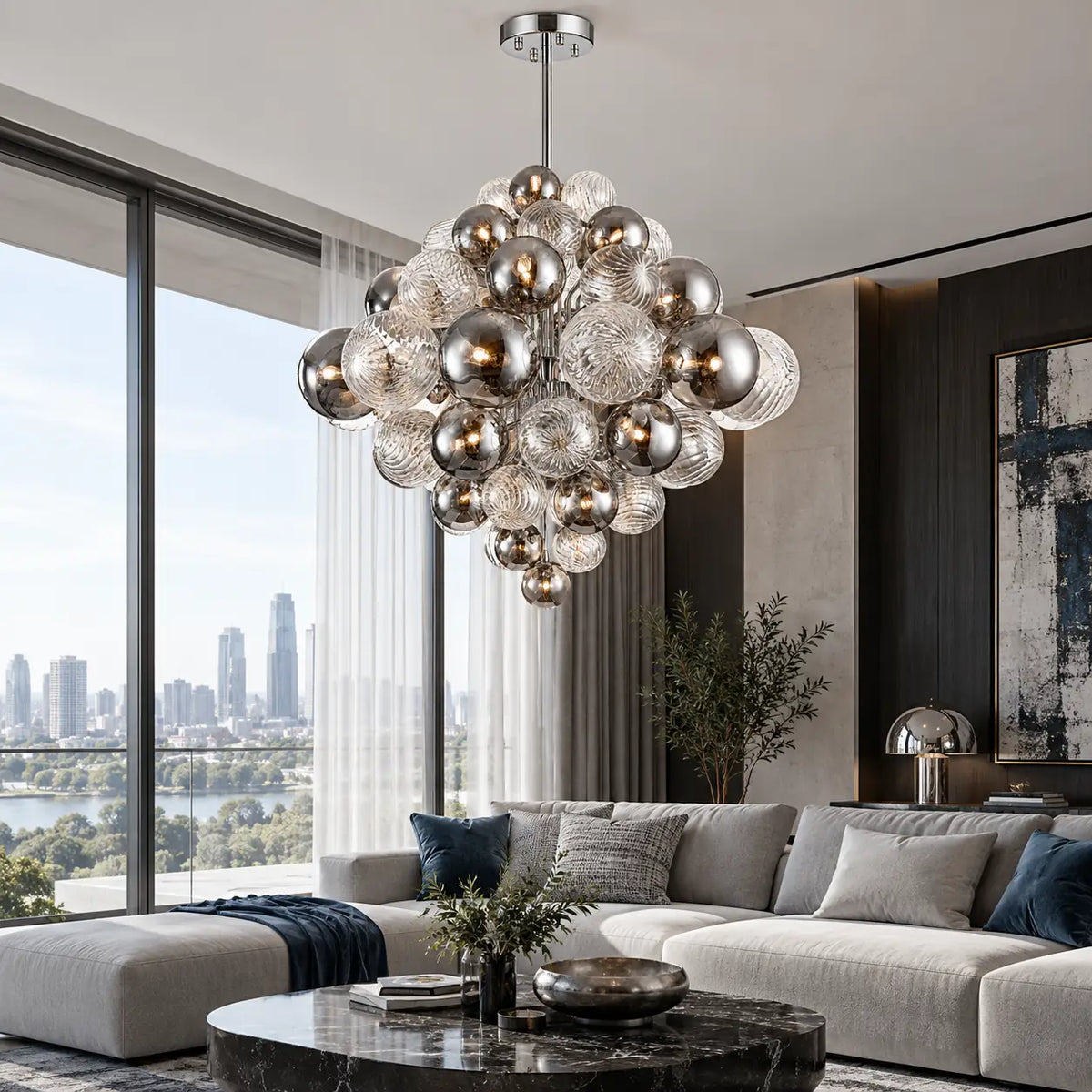
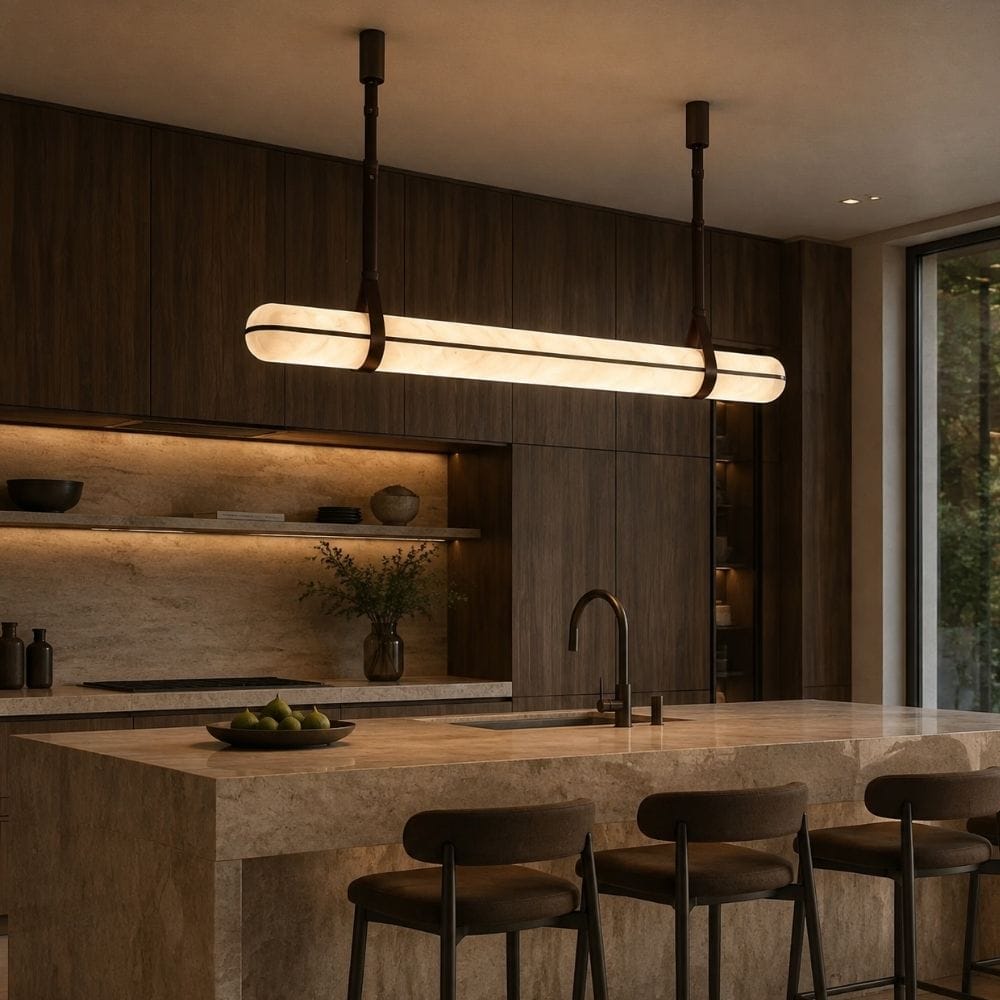
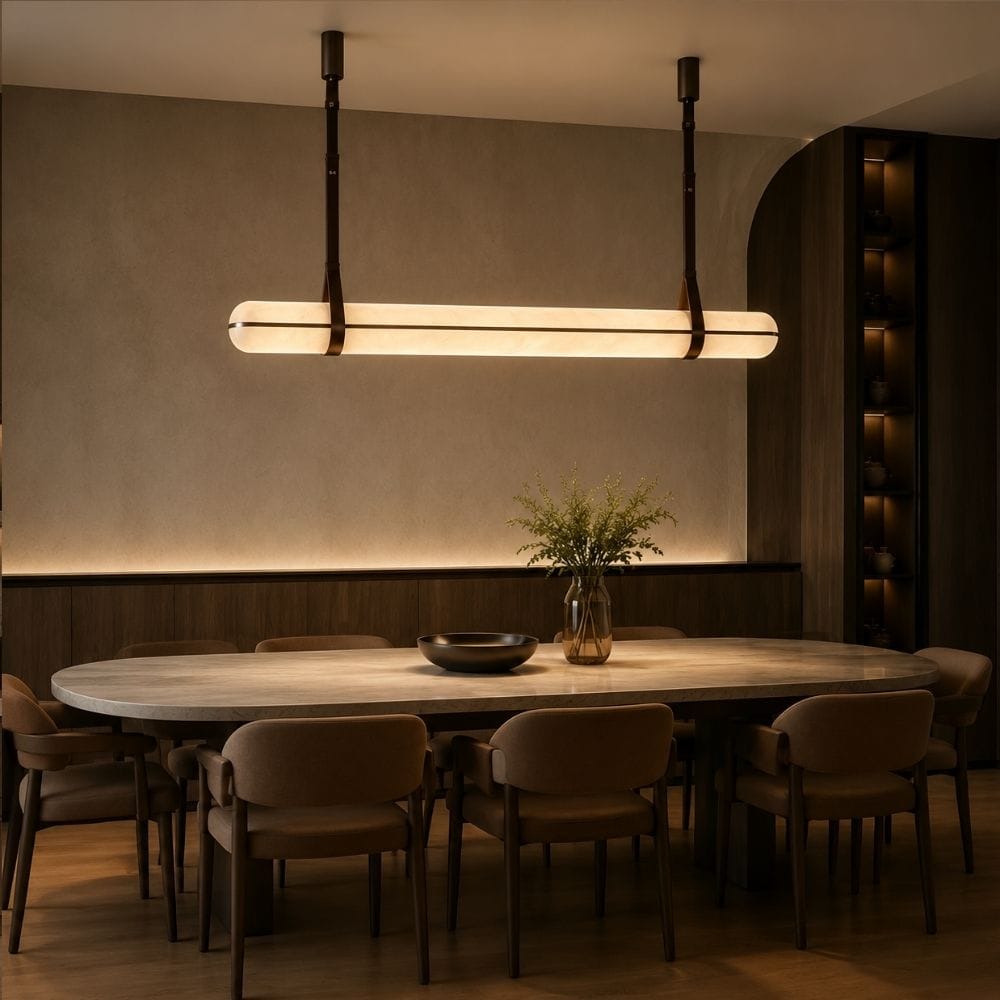
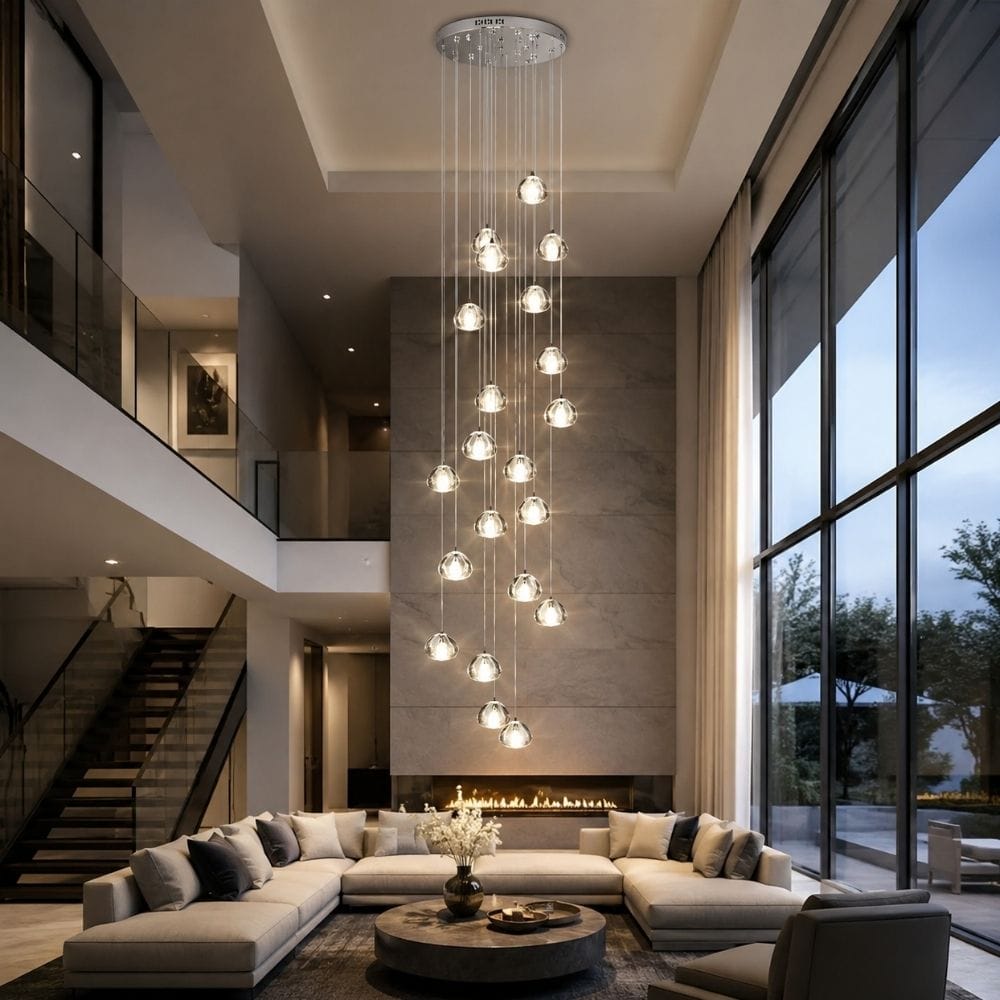

Browse by Style Direction
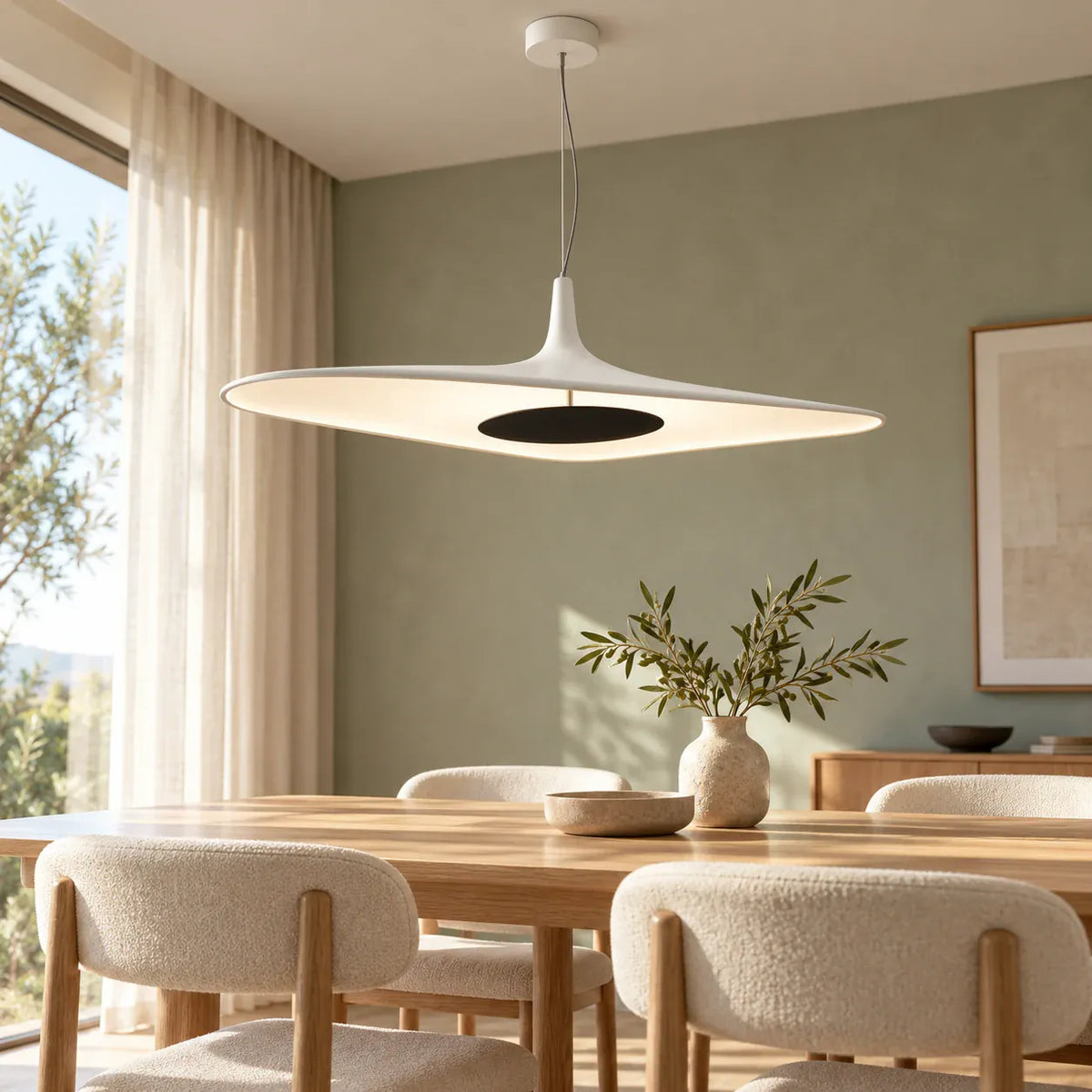
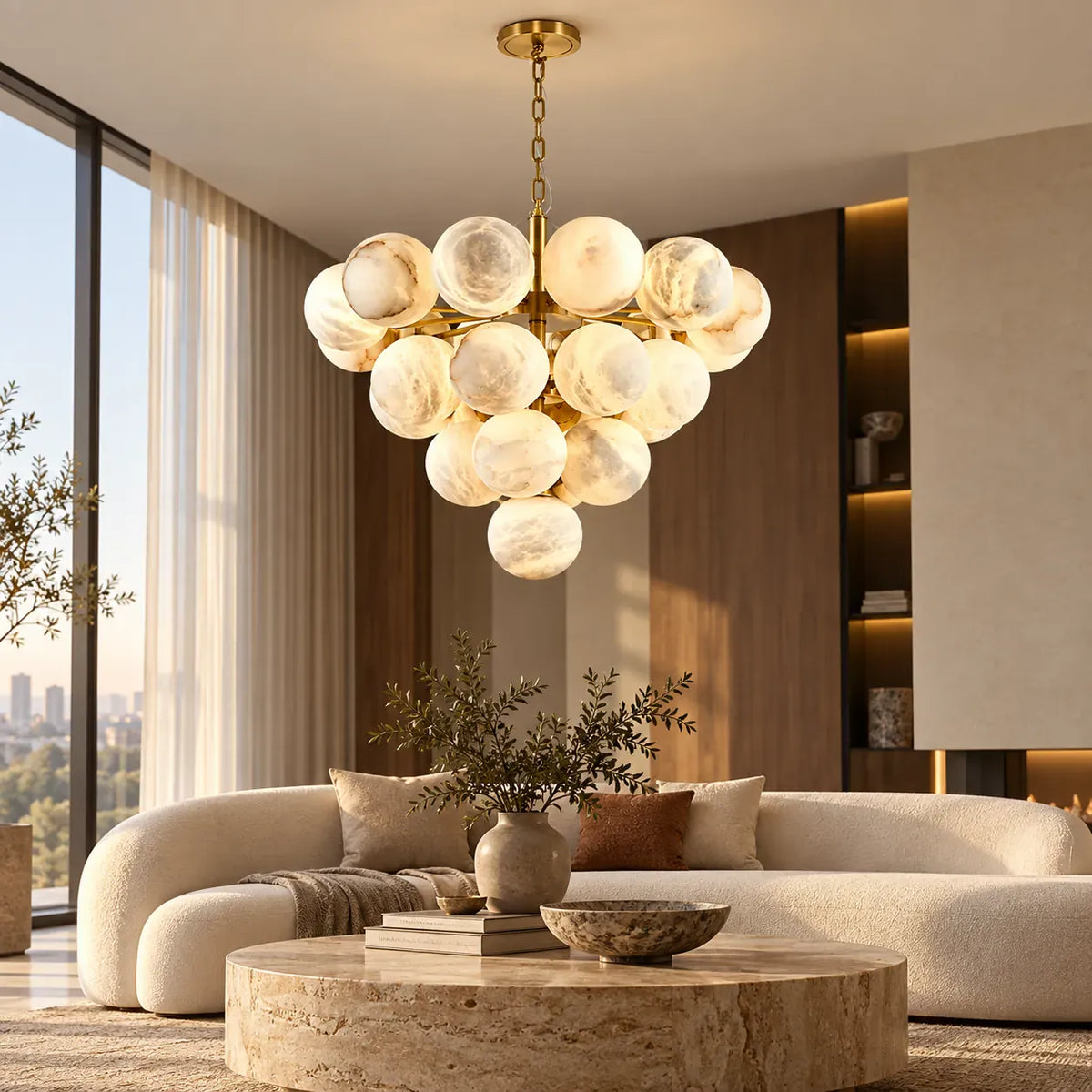
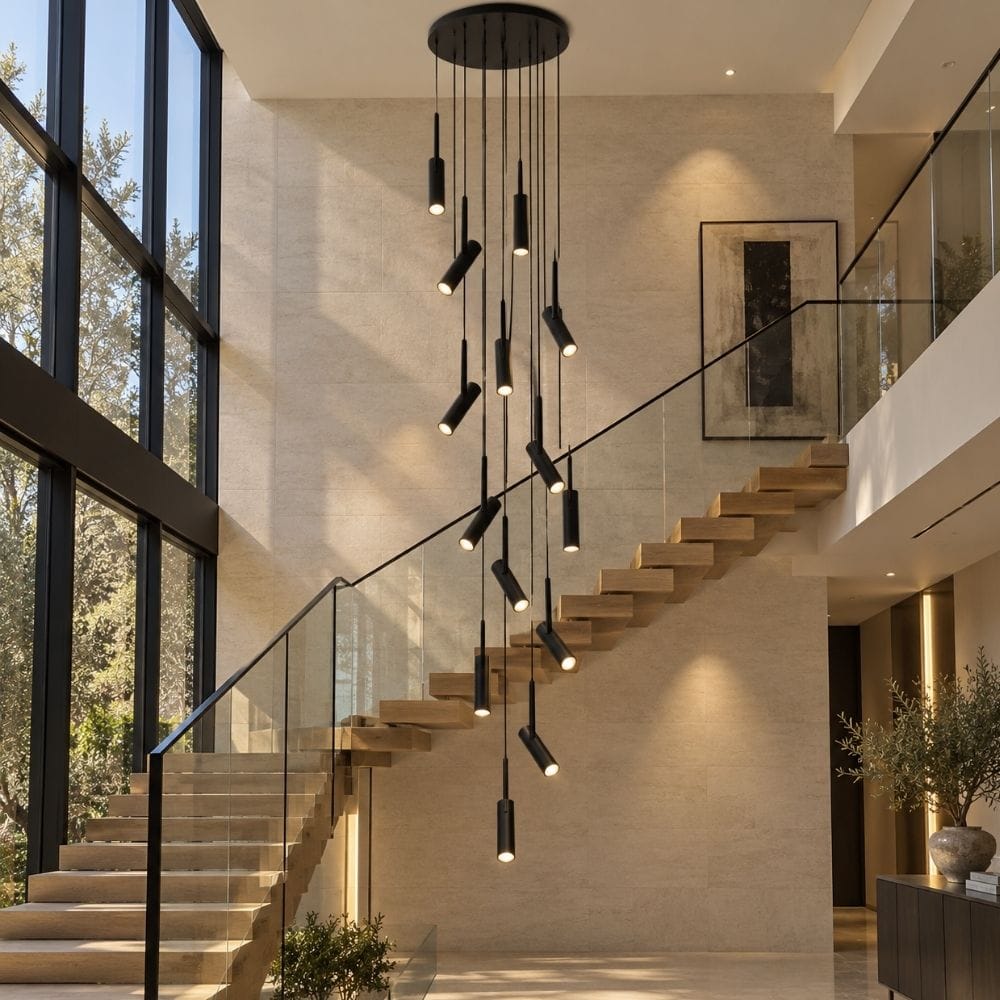
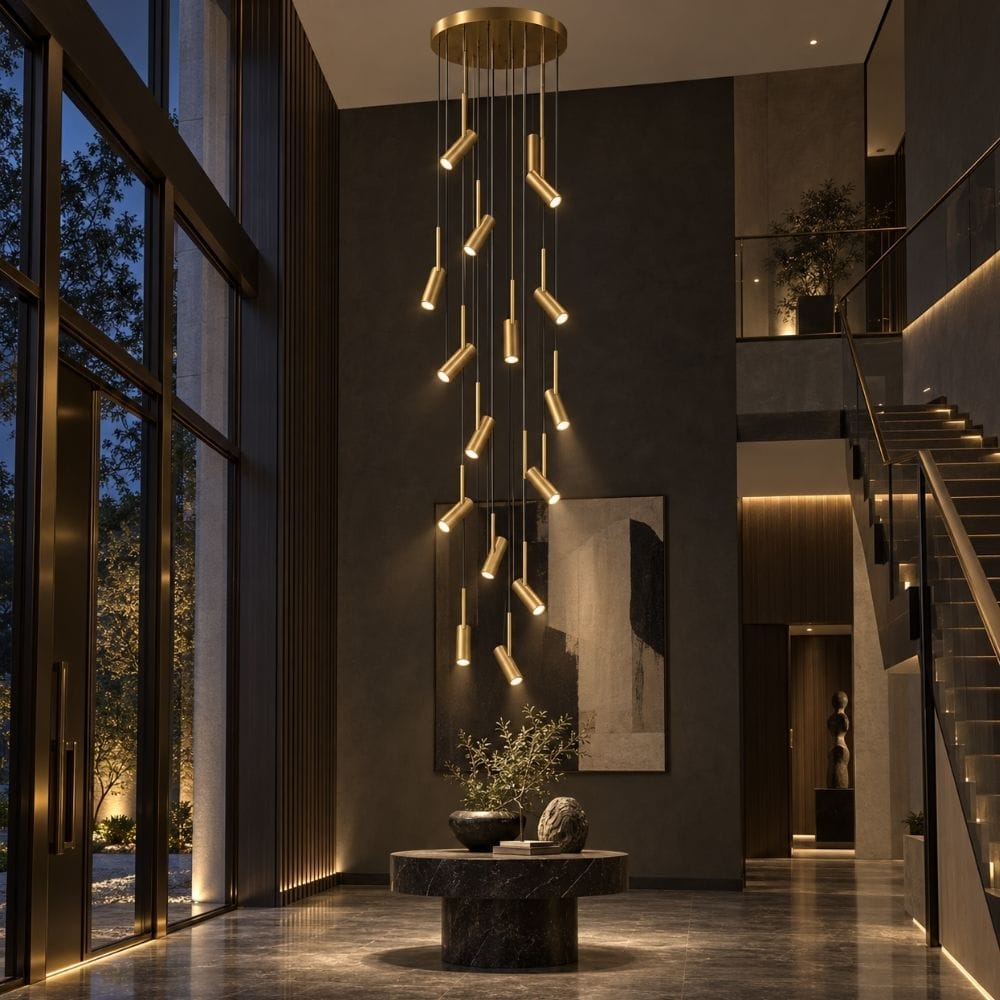
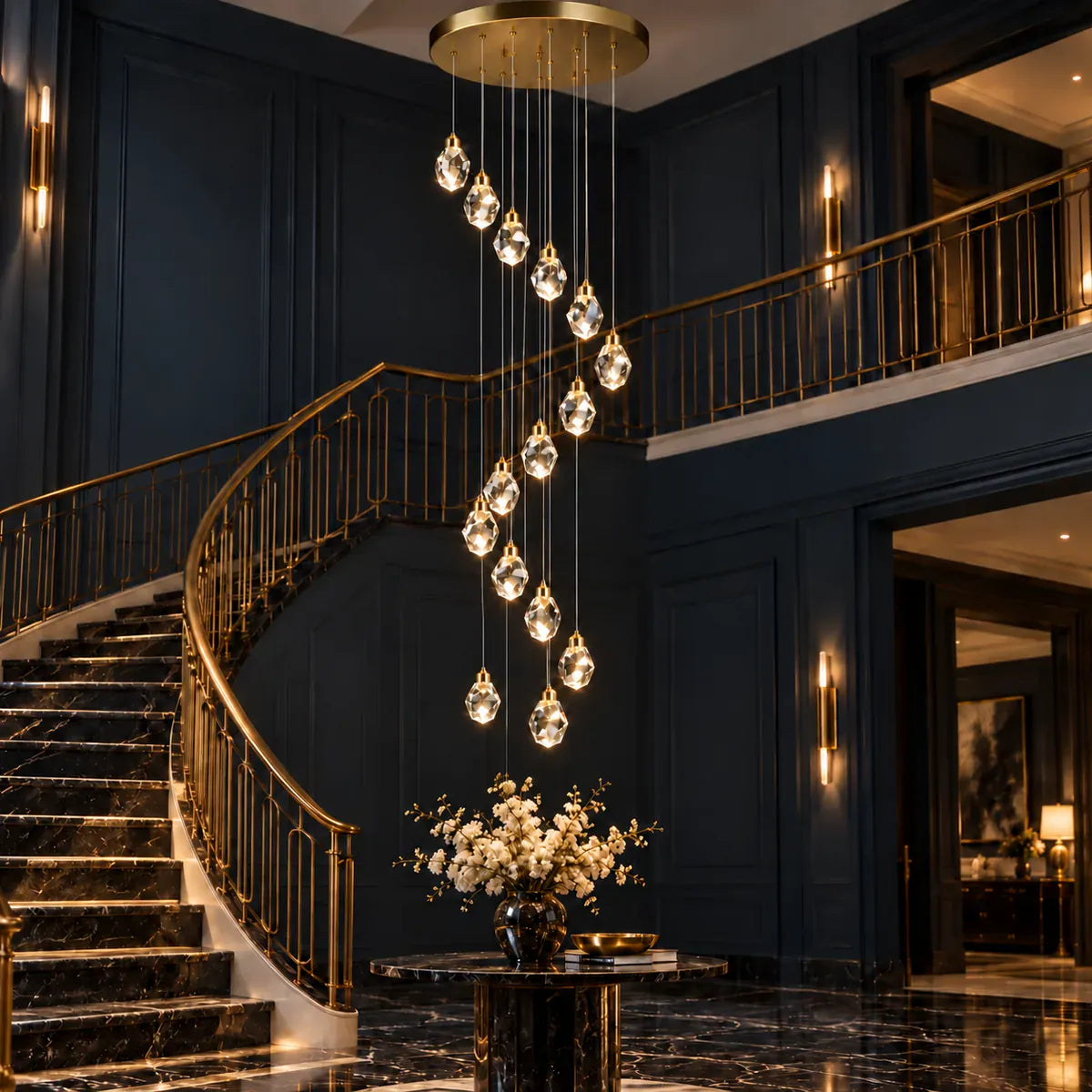
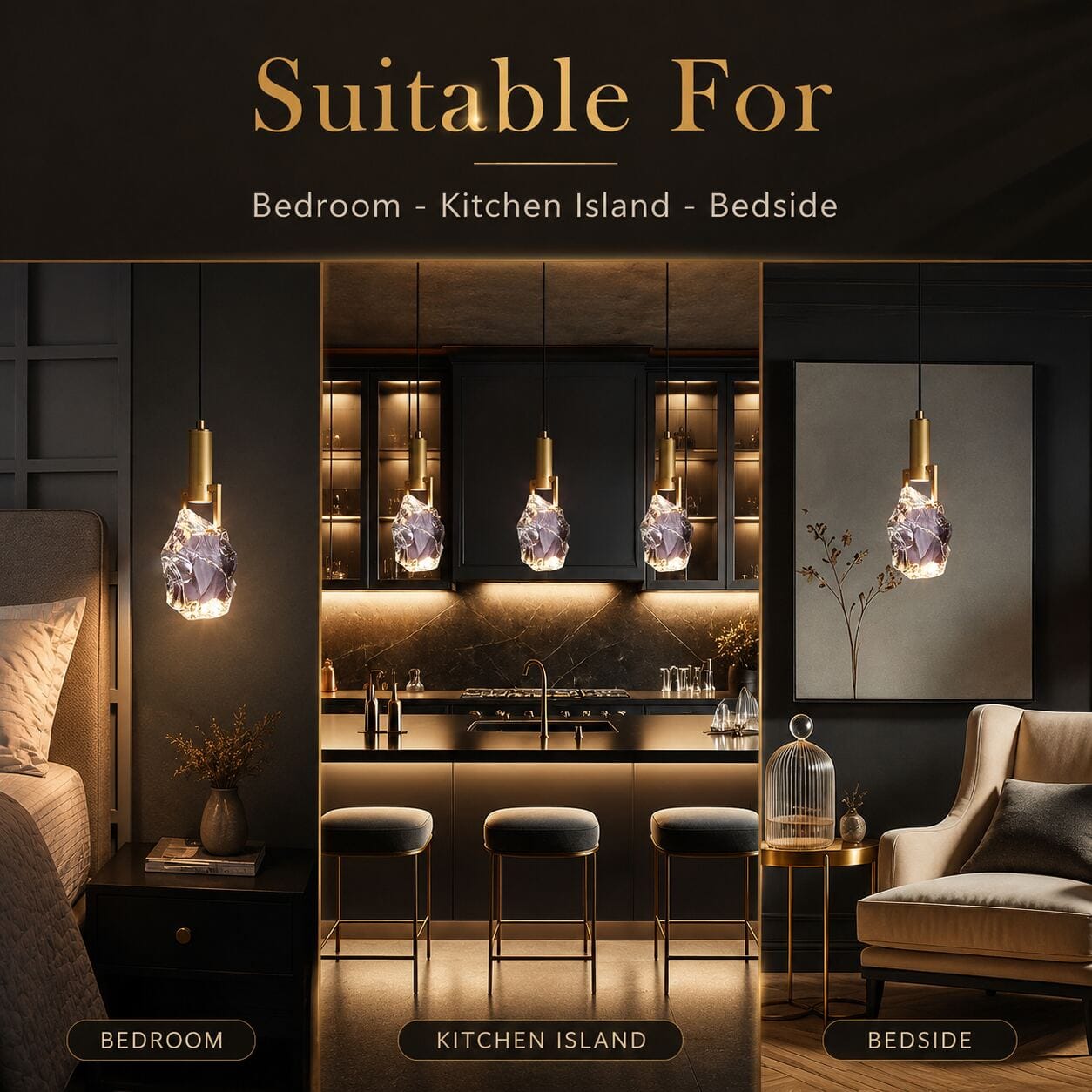
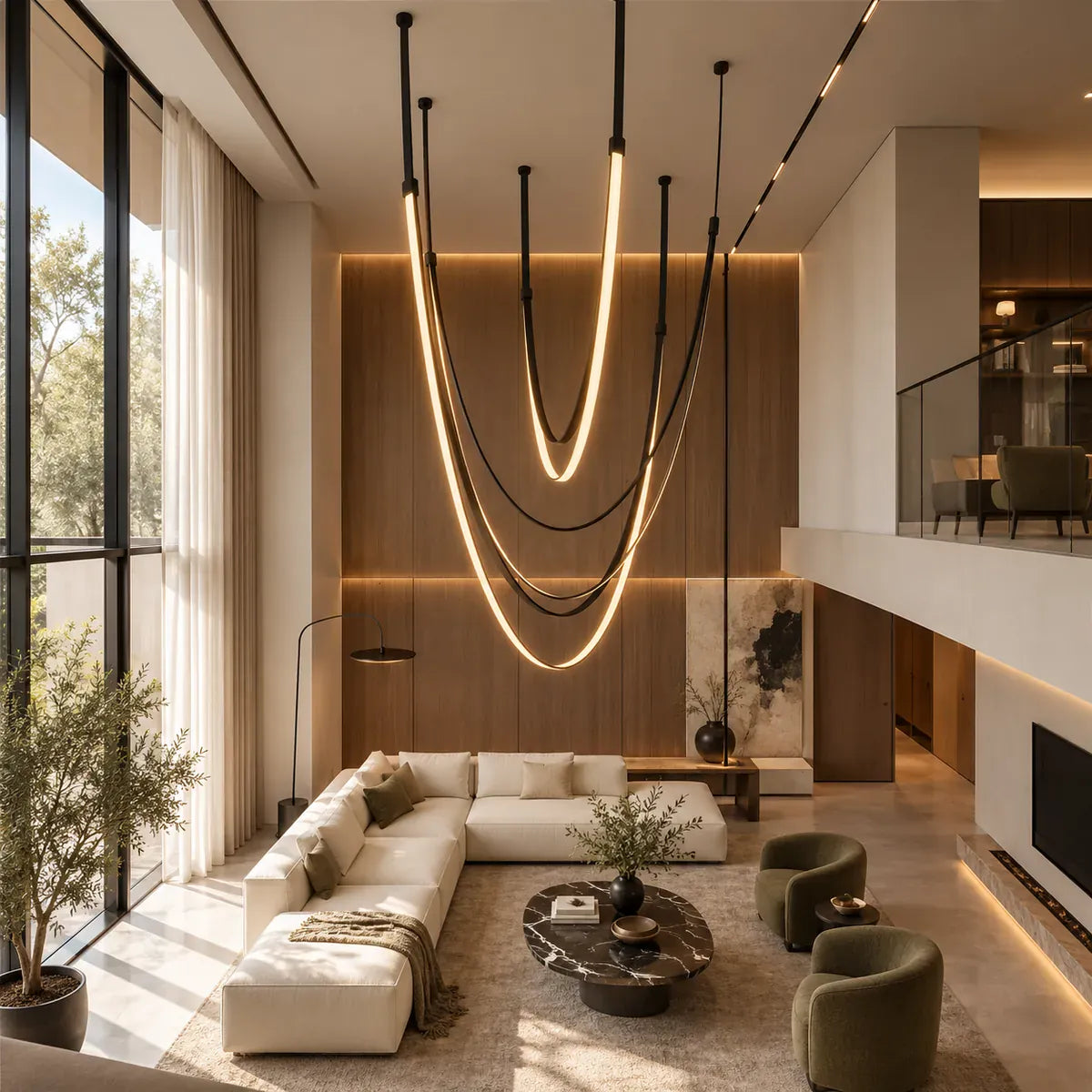
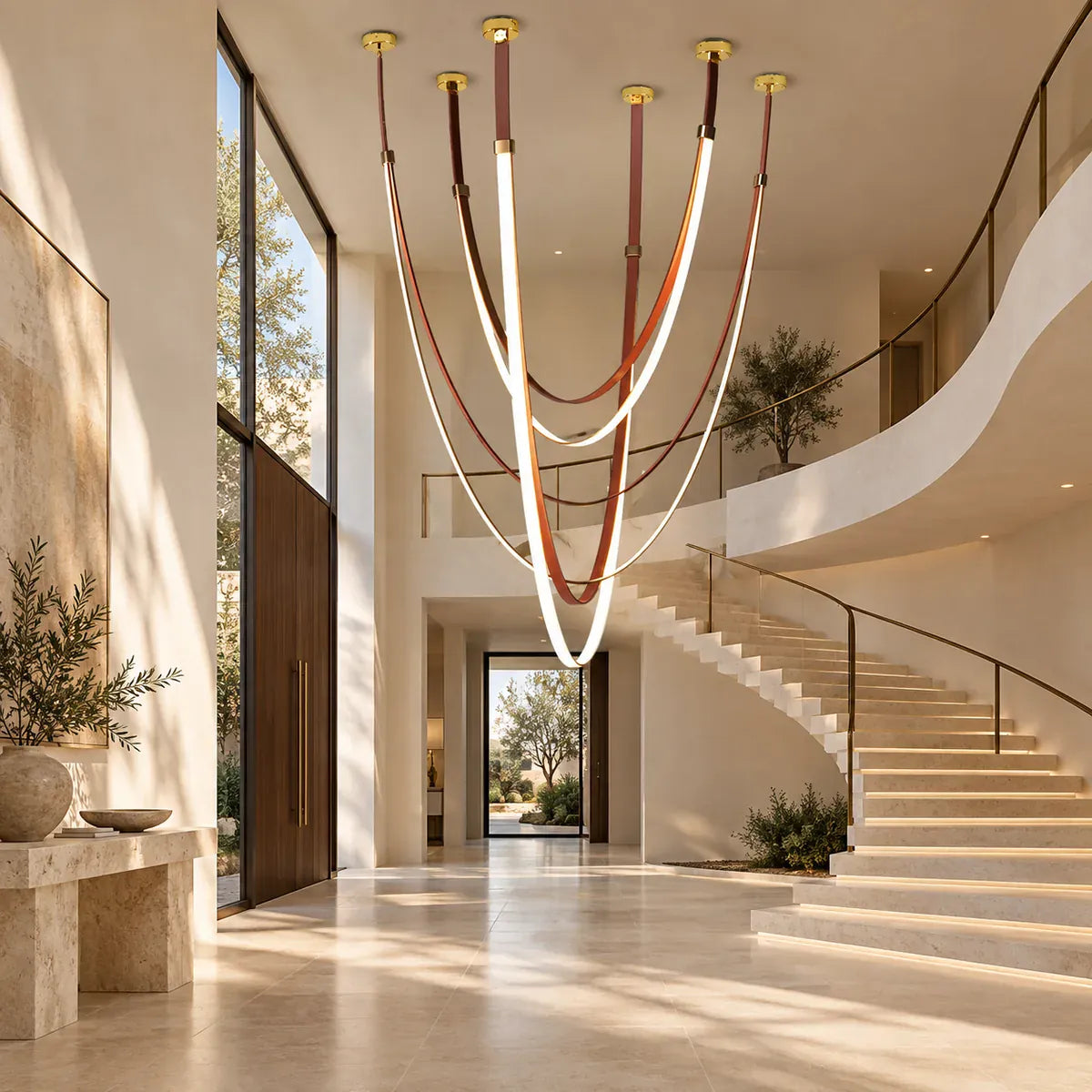
- Modern pendant lights: clean geometry, minimal profiles, and integrated LED — the largest direction and the natural fit for contemporary kitchens and open plans
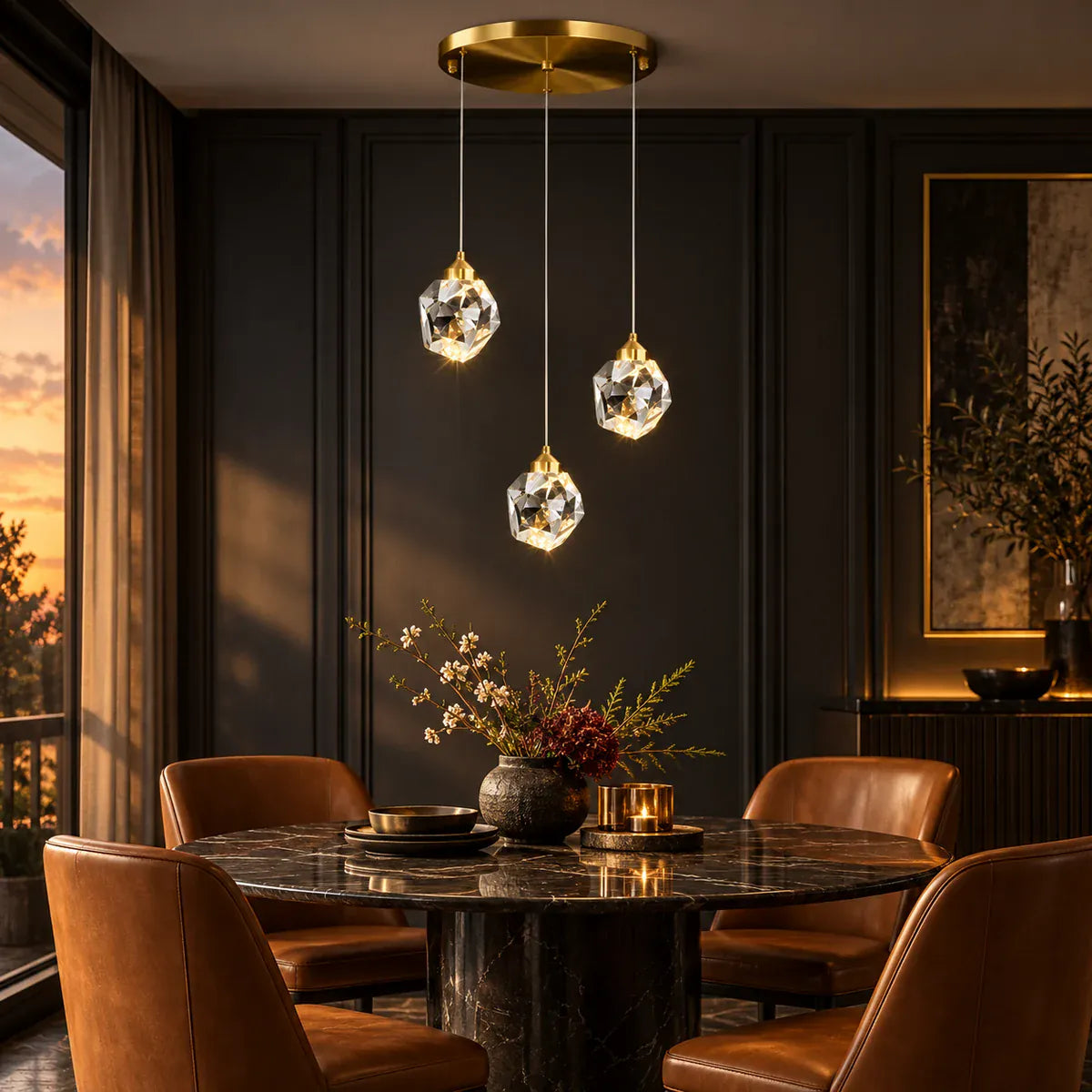
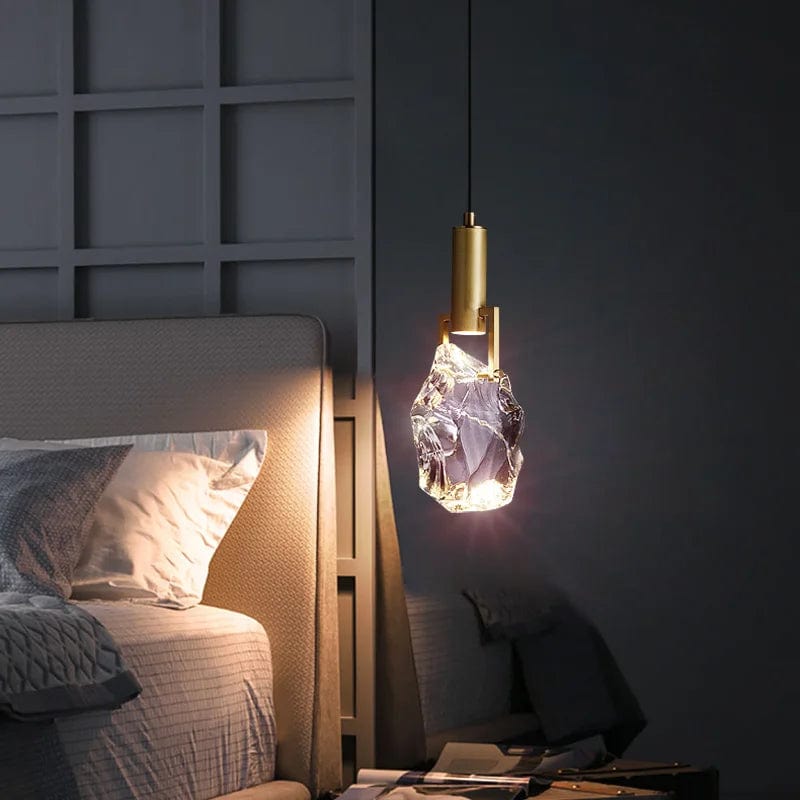
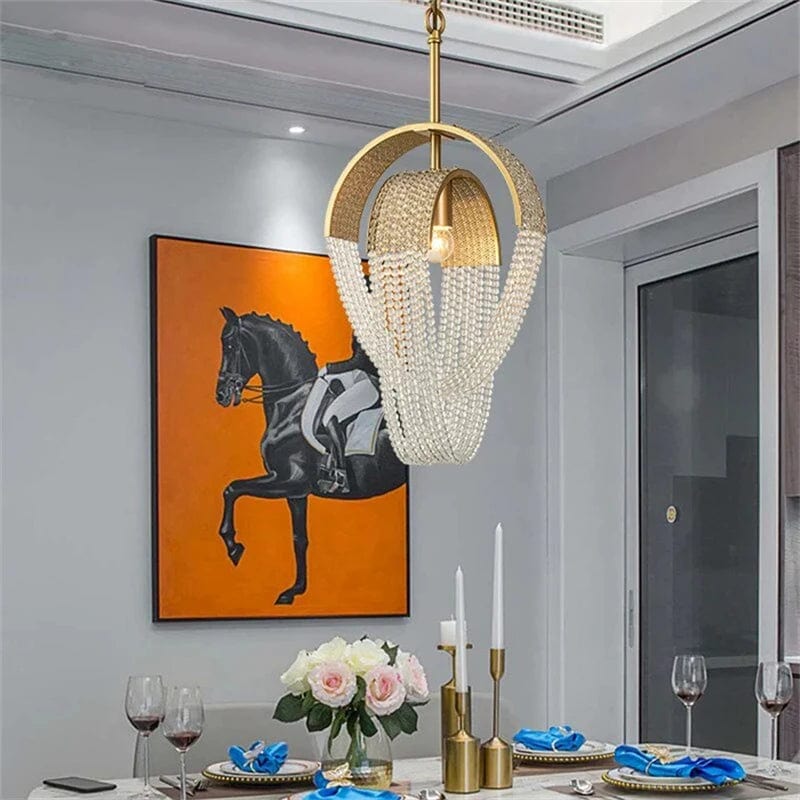
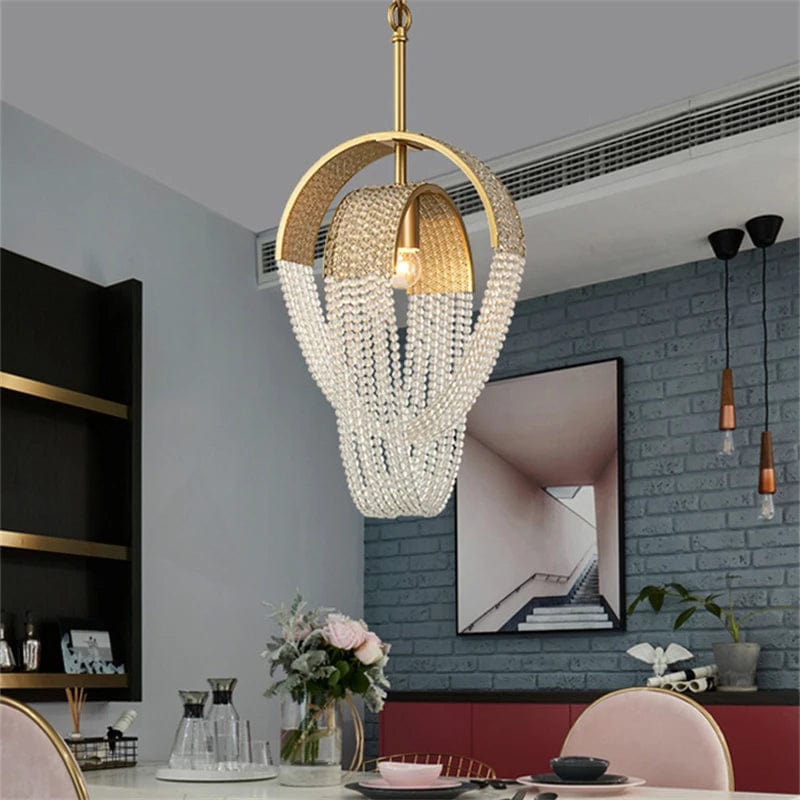
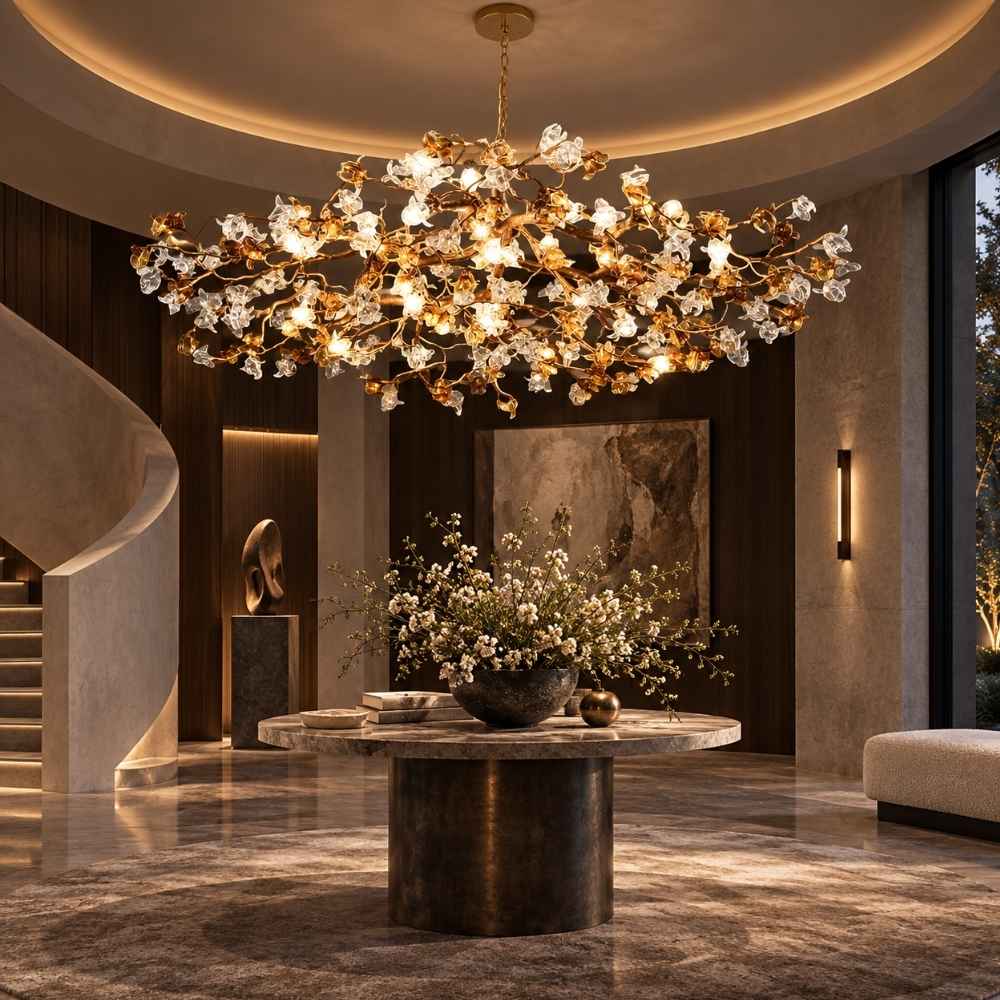
- Crystal pendant lights: refraction and sparkle in compact suspended form, for dining tables and spaces that want occasion at a smaller scale
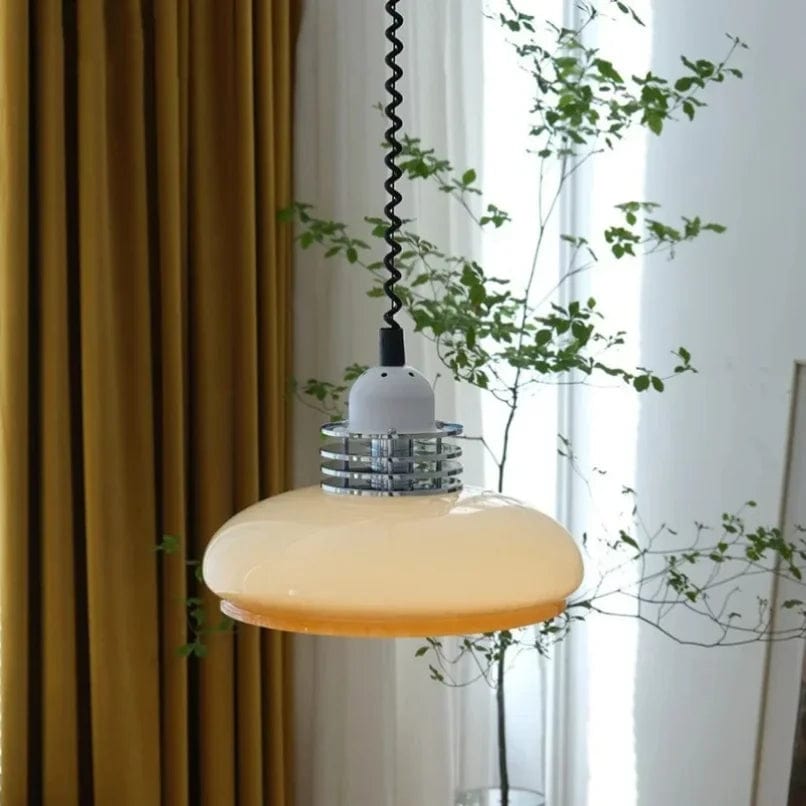
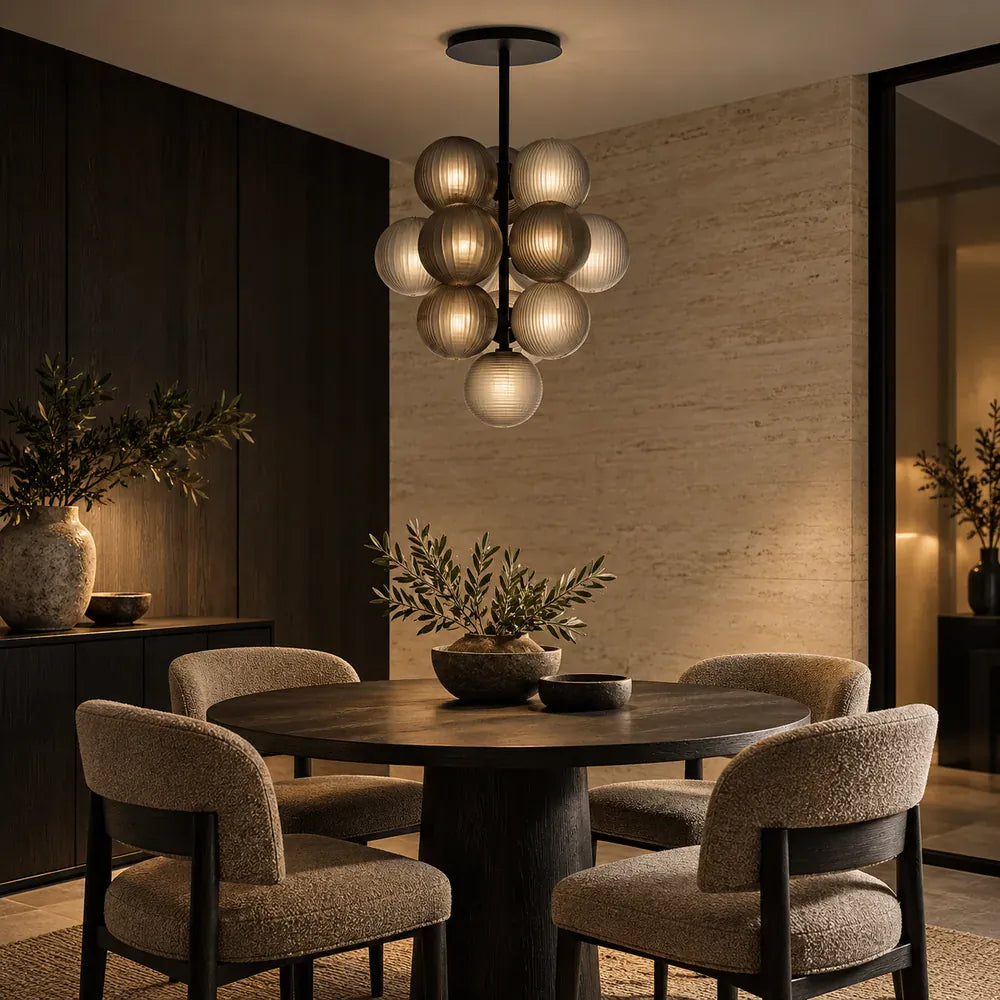
- Glass pendant lights: clear, smoked, fluted, and opal bodies where the glow lives inside the fixture — the island and breakfast-nook favourite
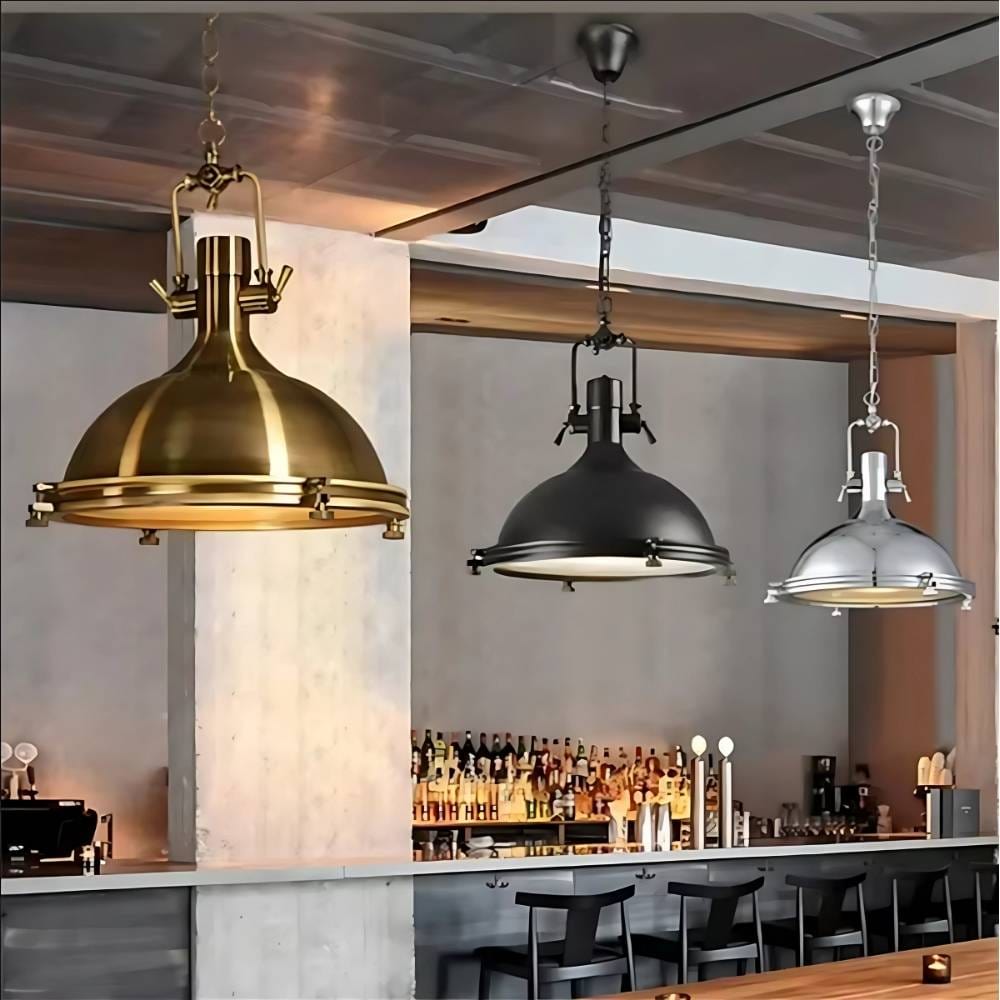
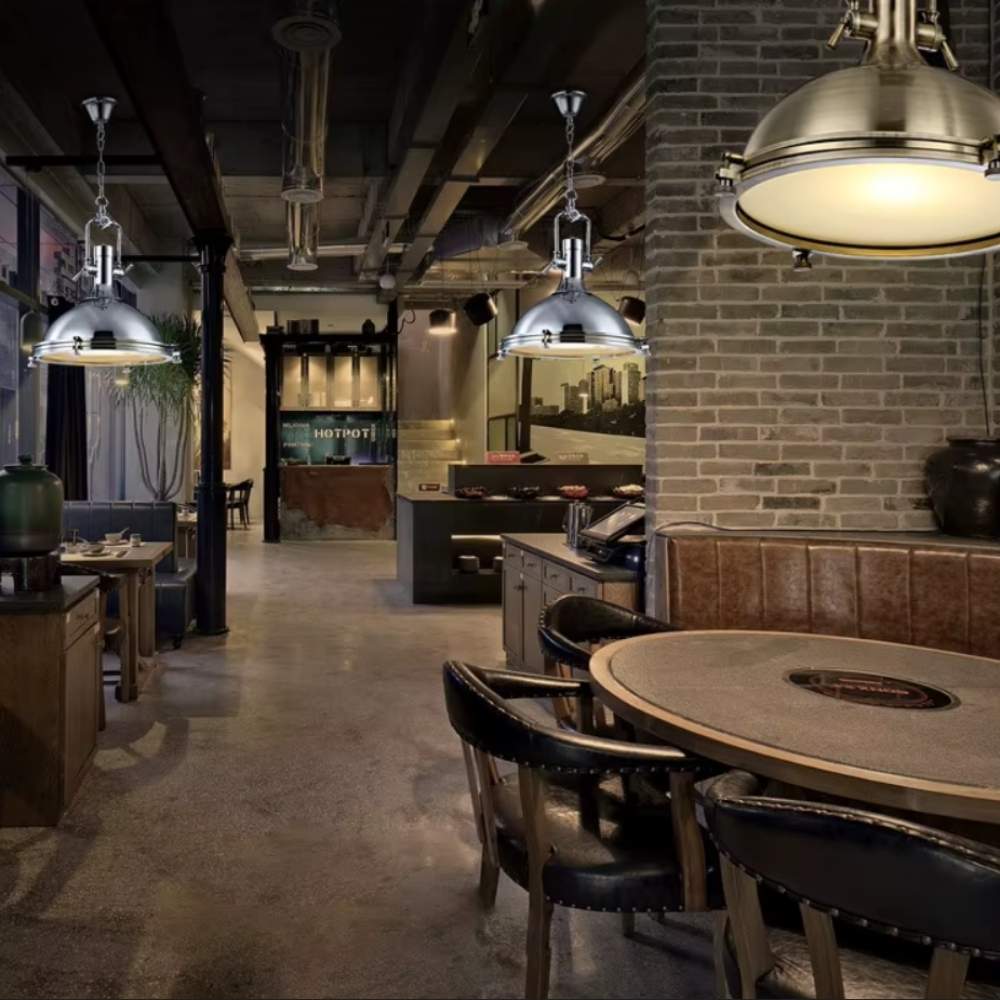
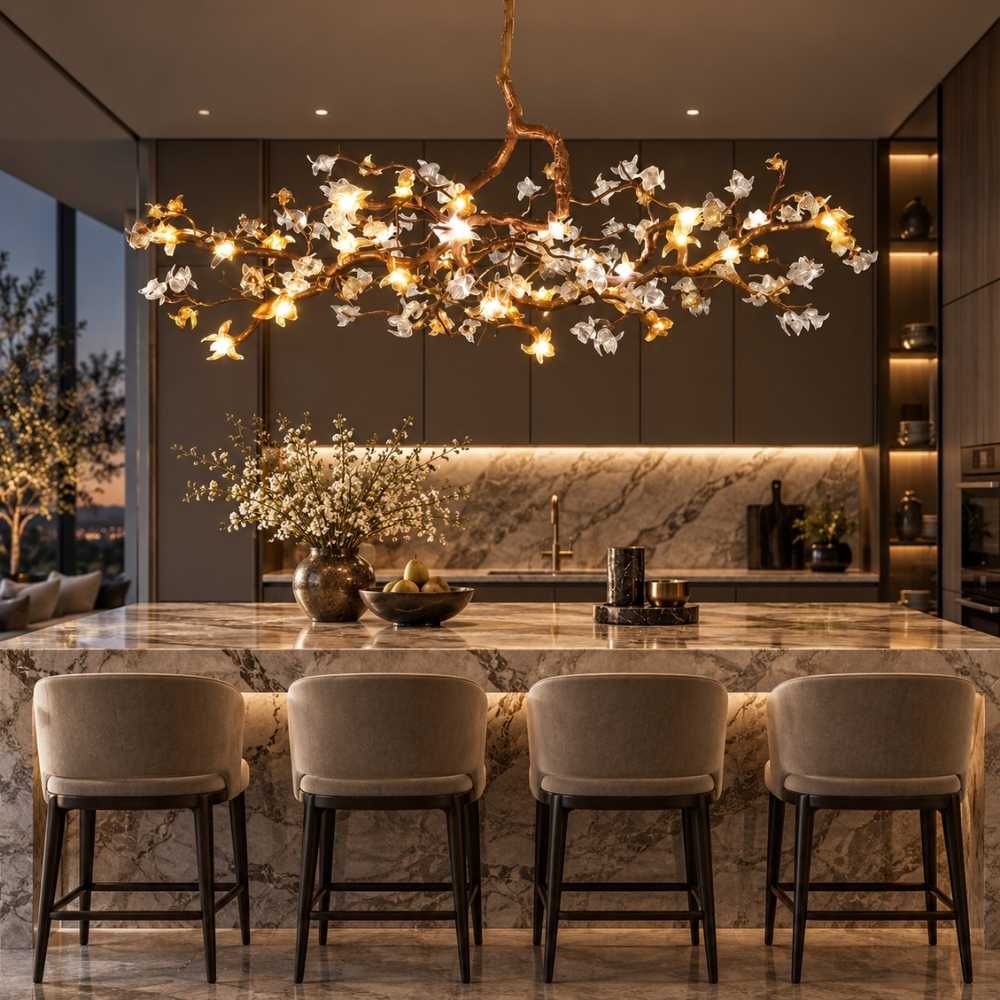
- Rustic pendant lights: aged metal, timber, and industrial shades for farmhouse kitchens and rooms built around natural materials
What a Pendant Does That a Ceiling Fixture Cannot
A flush or semi-flush fixture lights a room evenly and anonymously. A pendant does something more specific: it drops the light source closer to the surface that needs it, which concentrates output where work happens and leaves the rest of the room softer. That proximity is why pendants own kitchen islands, prep counters, and reading corners. The second difference is vertical: a suspended fixture occupies the room's air, giving a flat ceiling a point of interest and a wall-less open plan a way to declare zones without walls.
One Pendant, or a Row?
- Single pendant: above a round table, a breakfast nook, a bedside, or a sink — one focal point where the surface has one centre
- Pairs: over a compact island or flanking a range hood; the arrangement that reads deliberate rather than sparse
- Rows of three or more: the standard island treatment — space fixtures evenly along the run with roughly 24-30" (61-76 cm) between centres, keeping the outer fixtures inset from the island's ends
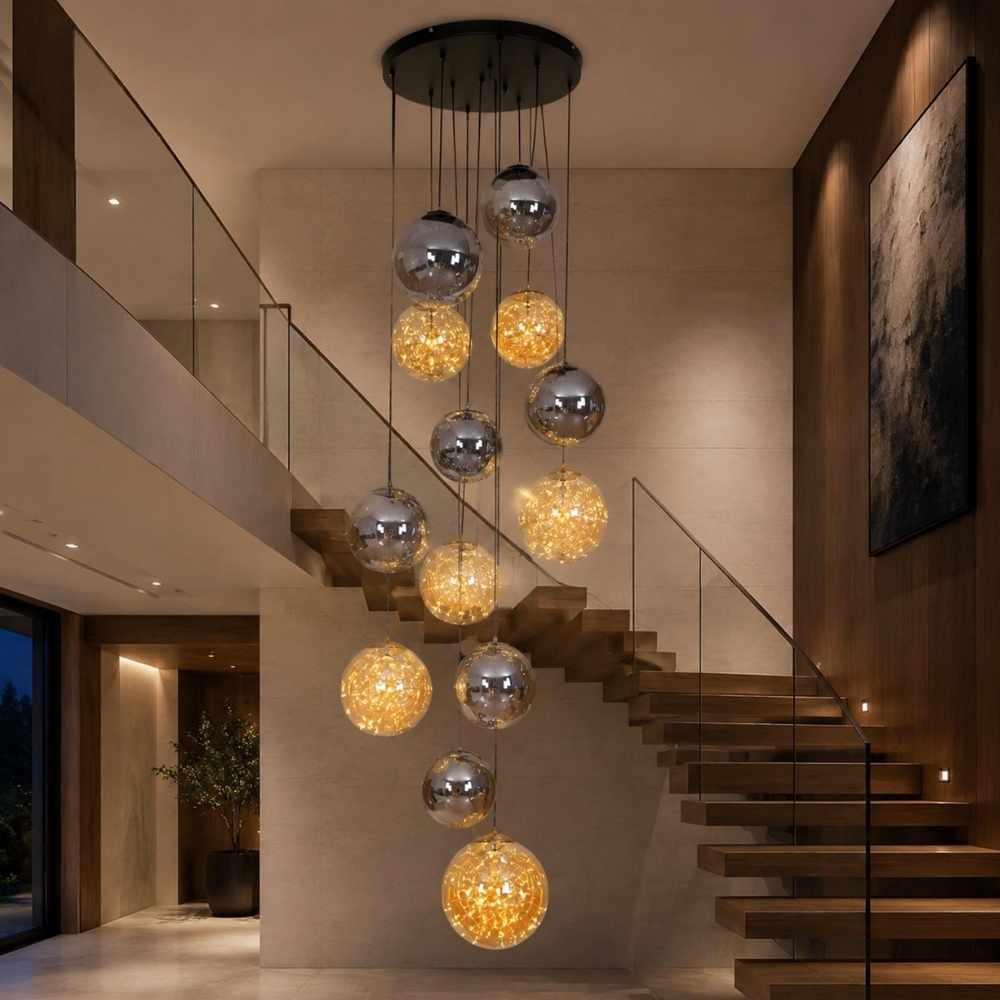
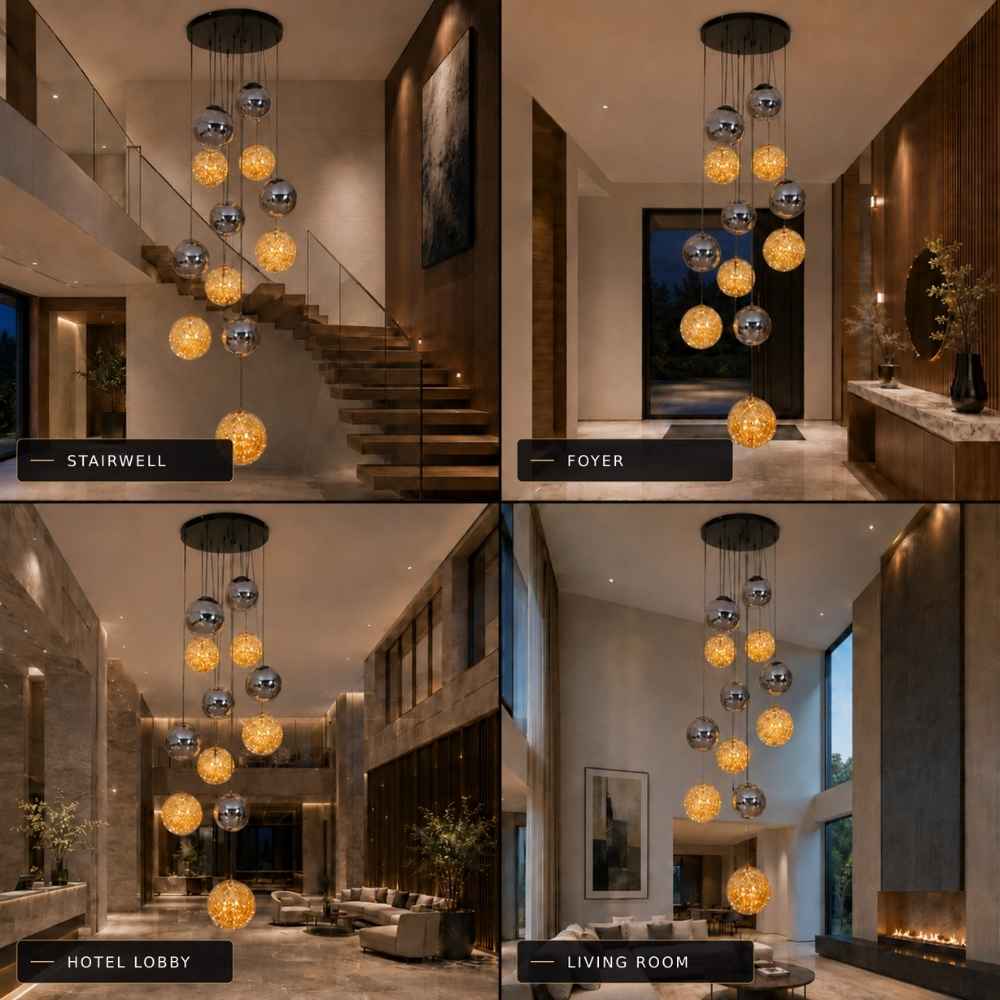
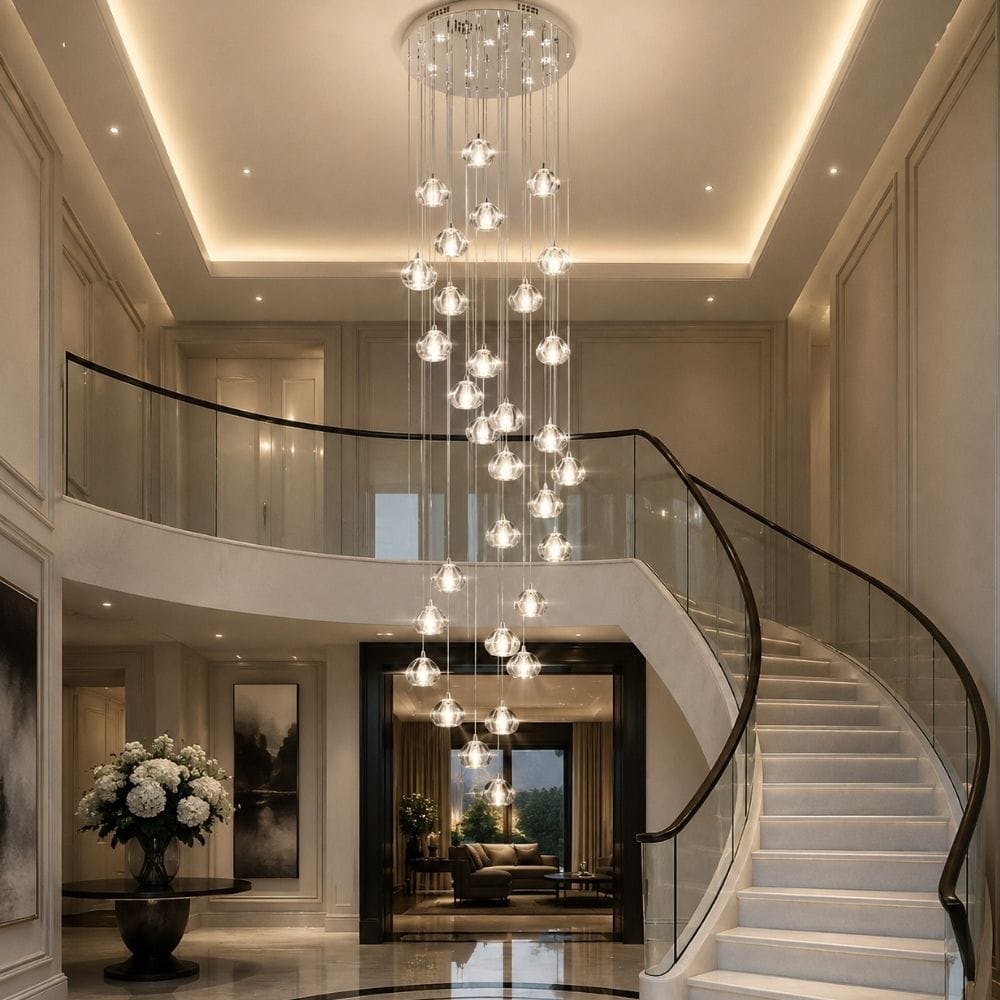
- Clusters: multiple pendants on one canopy or at staggered drops, for stairwells and double-height spaces where a single fixture would look lost
The rule of thumb for counting: over an island, one pendant per 24-30" of length, then adjust so the spacing looks even from the room's main sightline rather than measuring perfectly on paper.
Heights That Make Pendants Work
Placement is where most pendant installations succeed or fail. Over a kitchen island or bar, hang the fixture's lowest point 30-36" (76-91 cm) above the counter — high enough to clear sightlines across the room, low enough to keep the light on the surface. Over a dining table, the same 30-36" range applies from the tabletop. In walking zones and entries, 84" (213 cm) of clearance is the floor. Above a sink, aim for 30-40" (76-102 cm) from the basin, adjusted so the fixture does not block the window behind it. The complete numbers, room by room, are in our pendant height guide, with island-specific detail in the island height guide.
Sizing by Surface
Pendants are sized against what sits beneath them rather than the room. Over an island, the combined width of the fixtures should occupy roughly one-half to two-thirds of the island's length, with each pendant's diameter typically 12-20" (30-51 cm) depending on how many are in the run. Over a round table, a single pendant runs one-half to two-thirds of the table's width. Larger statement pendants — 24" (61 cm) and up — work alone above generous tables and in entries where scale is the point. The full calculation set is in our pendant sizing guide.
Materials, Finishes and Light Quality
- Clear glass: maximum light and visible bulbs — pair with decorative filament lamps, since the source is part of the design
- Opal, frosted and fluted glass: diffused, glare-free output — the choice above seating and anywhere eyes meet the fixture directly
- Metal shades: directed downward light with no spill, strongest over work surfaces; matte black, brass, and aged finishes lead current design
- Crystal and faceted elements: refraction at compact scale, for dining and formal placements
- Natural materials: timber, rattan, and stone shades that bring texture into kitchens and casual spaces
Whatever the material, warm white 2700-3000K on a dimmer is the residential standard; kitchens working long hours may prefer 3000-3500K over the prep zone with the dining pendants kept warmer.
Where Pendants Do Their Best Work
Kitchens lead — islands, peninsulas, sinks, and breakfast bars all suit directed suspended light, coordinated with the wider plan in the kitchen lighting collection. Dining rooms take single statements above round tables or matched pairs above rectangular ones. Bedrooms increasingly replace bedside table lamps with hanging pairs, clearing the nightstand and improving the reading angle. Entries, hallways, and stairwells take clusters and repeated runs, and living rooms use them to define a reading corner or frame a fireplace wall without a floor lamp's footprint.
Looking for a Larger Statement?
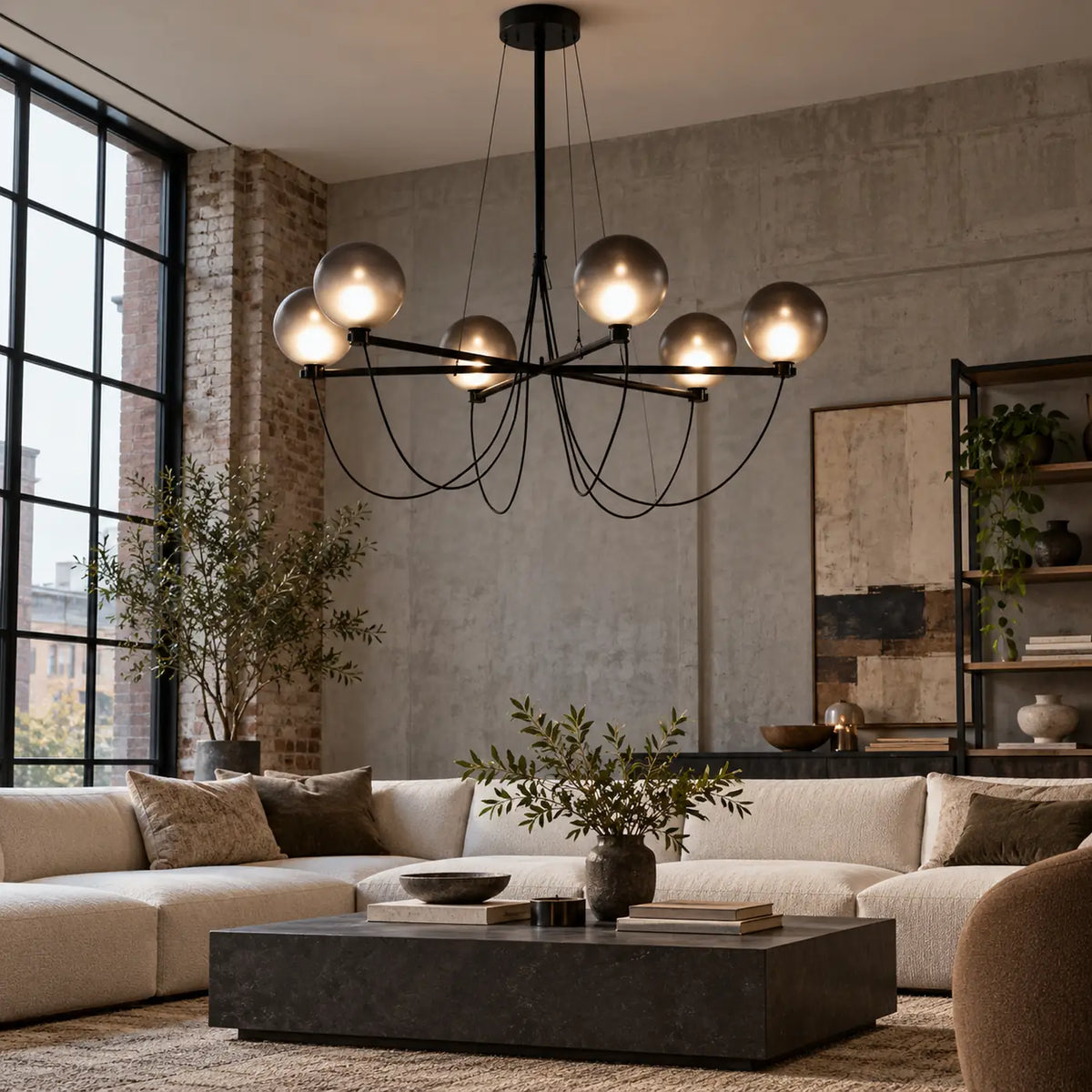
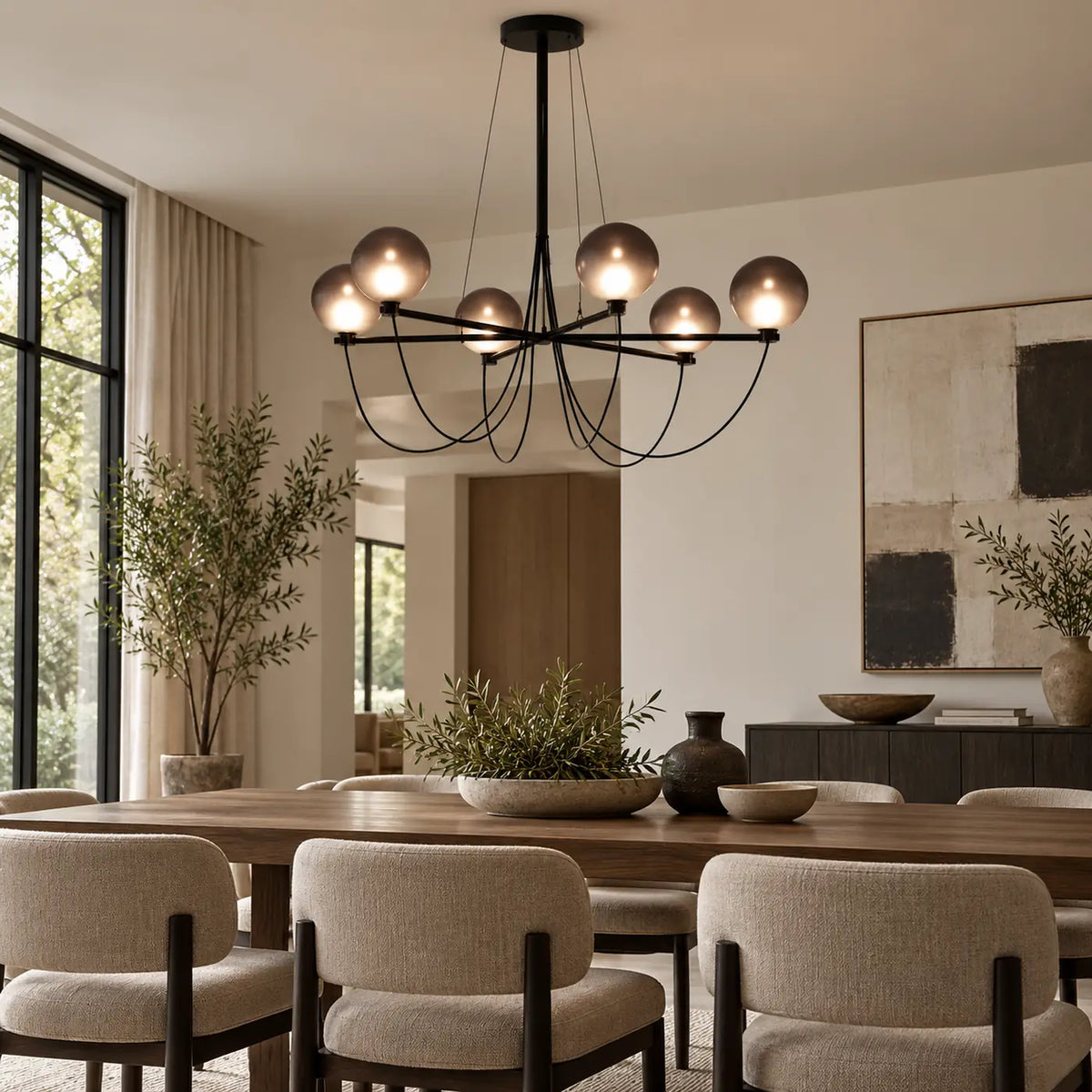
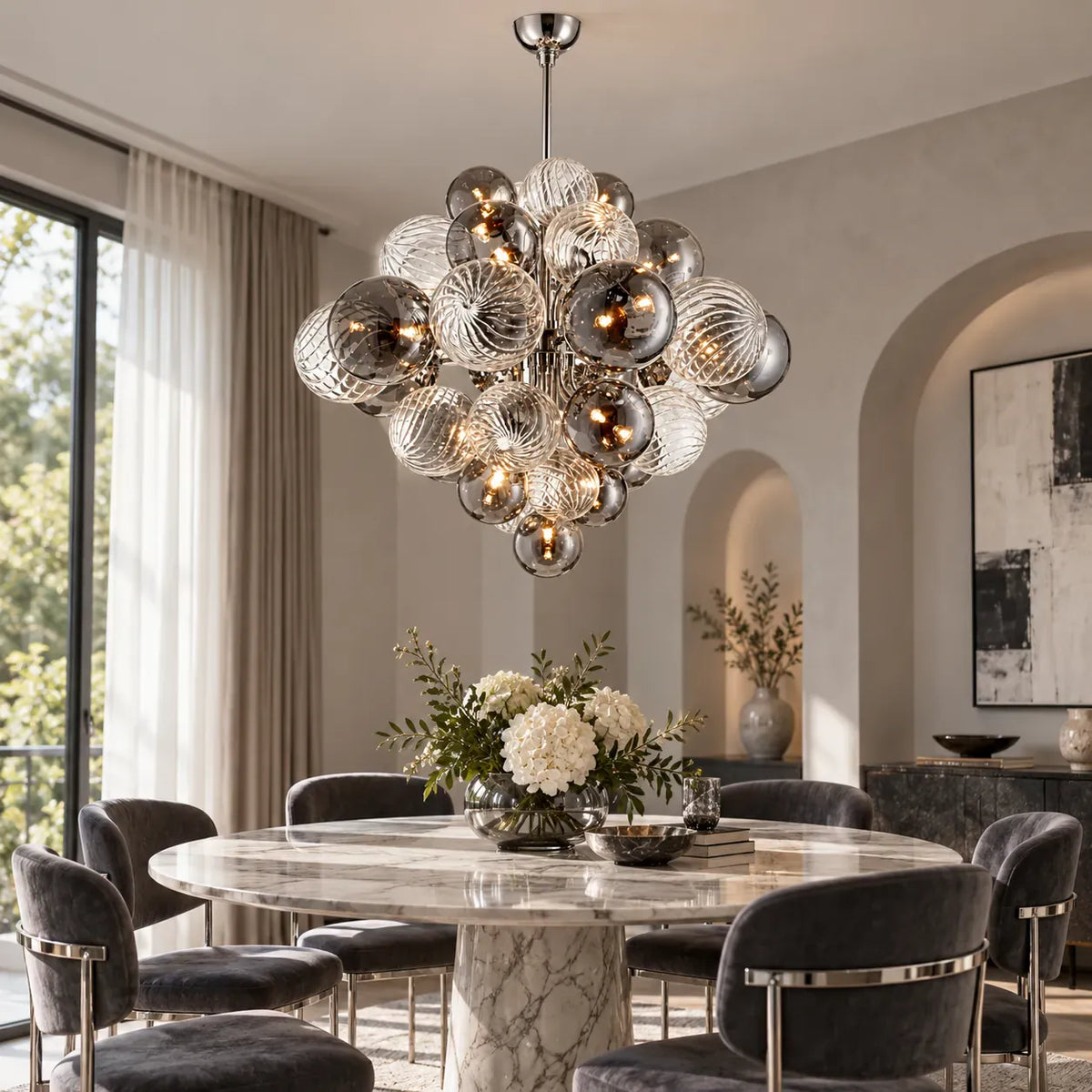
Where a single suspended fixture needs to carry a whole room rather than light a surface, the statement-scale class is its own collection: bigger bodies, richer compositions, one focal point. That range lives in the pendant chandeliers collection, with the full multi-arm range in the chandelier catalog.
Related Collections
Continue with the kitchen lighting collection for the room pendants serve most, linear chandeliers when one continuous fixture suits a long surface better than a row, and the full chandelier catalog for statement scale.
Frequently Asked Questions
How many pendant lights do I need over an island?
Roughly one per 24-30" (61-76 cm) of island length — two for most standard islands, three for long ones. Keep the outer fixtures inset from the ends rather than aligned with them.
How high should pendant lights hang?
30-36" (76-91 cm) above an island counter or tabletop, 30-40" above a sink basin, and at least 84" (213 cm) of clearance in walking areas.
What size pendant should I choose?
Over an island, the fixtures together should span one-half to two-thirds of its length, with individual diameters usually 12-20". Over a round table, a single pendant runs one-half to two-thirds of the table's width.
Should pendants be clear or frosted glass?
Clear gives maximum light with visible bulbs and suits decorative filament lamps; frosted and opal diffuse the output and are the better choice where people sit facing the fixture.
Can pendant lights work in a dining room?
Yes — a single pendant above a round table, or a matched pair above a rectangular one. Where one continuous fixture suits the table better, a linear design is the alternative.
What is the difference between a pendant light and a larger suspended statement piece?
Scale and role. A pendant is a compact fixture, often installed in series, that lights a surface. A statement suspended piece is a larger composition installed alone as the room's focal point — a separate collection with its own sizing rules.