



What Makes a Sputnik Chandelier Unique
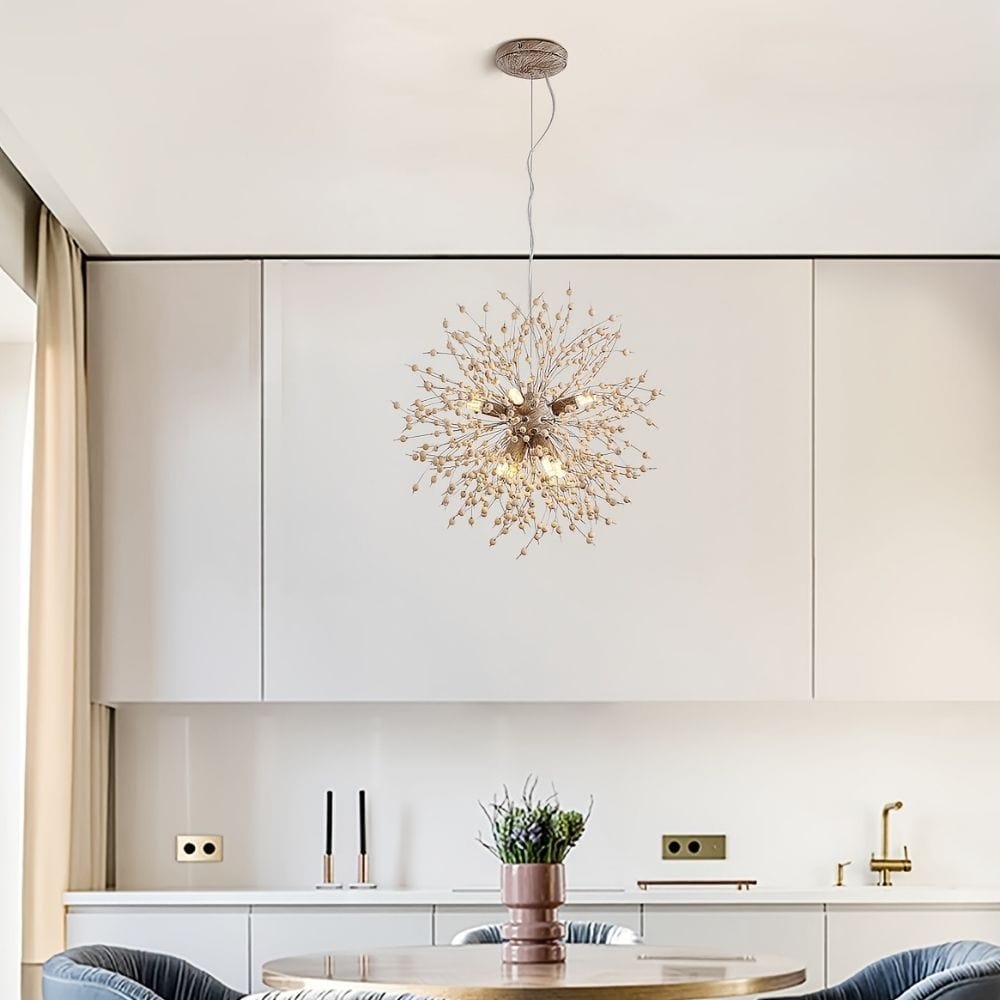
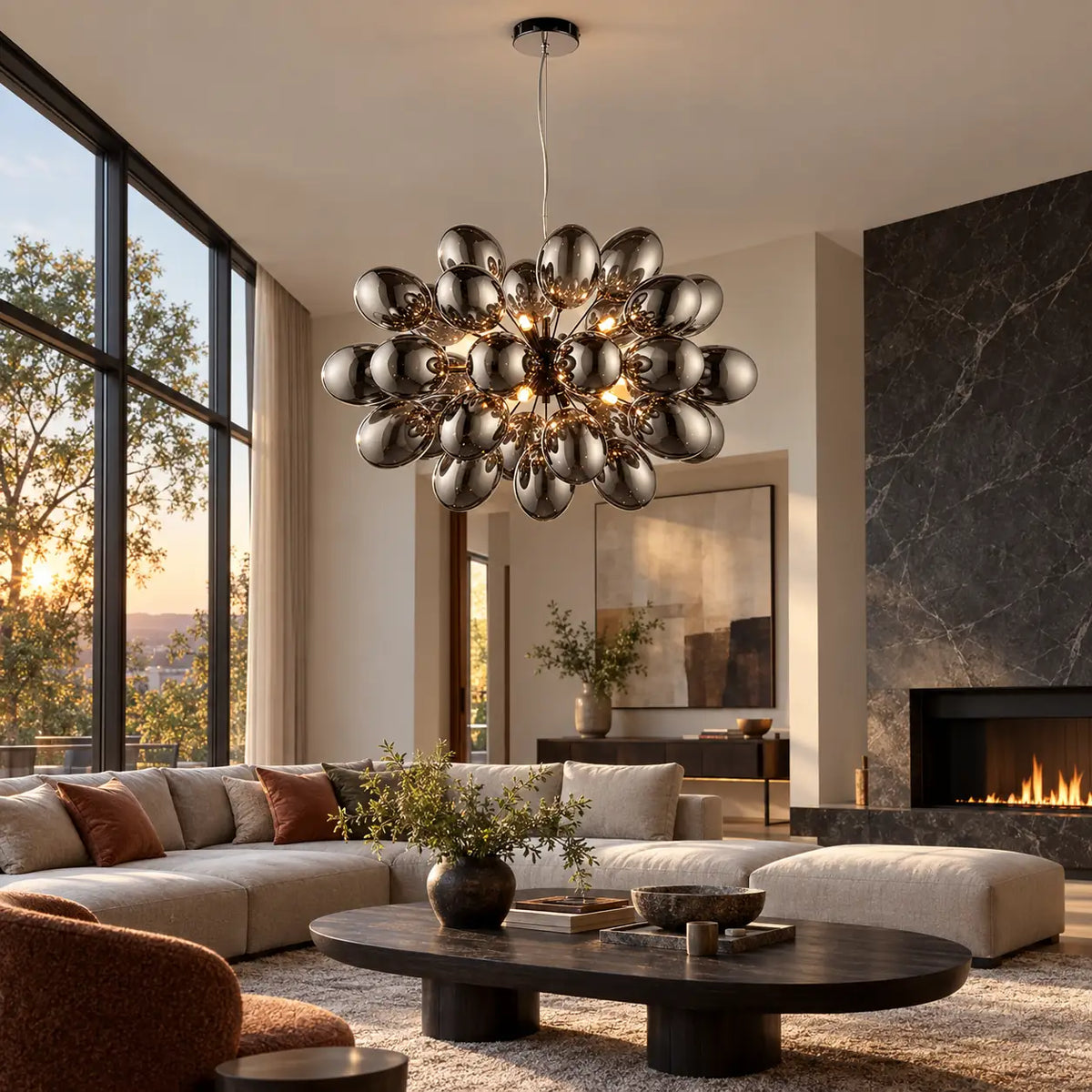
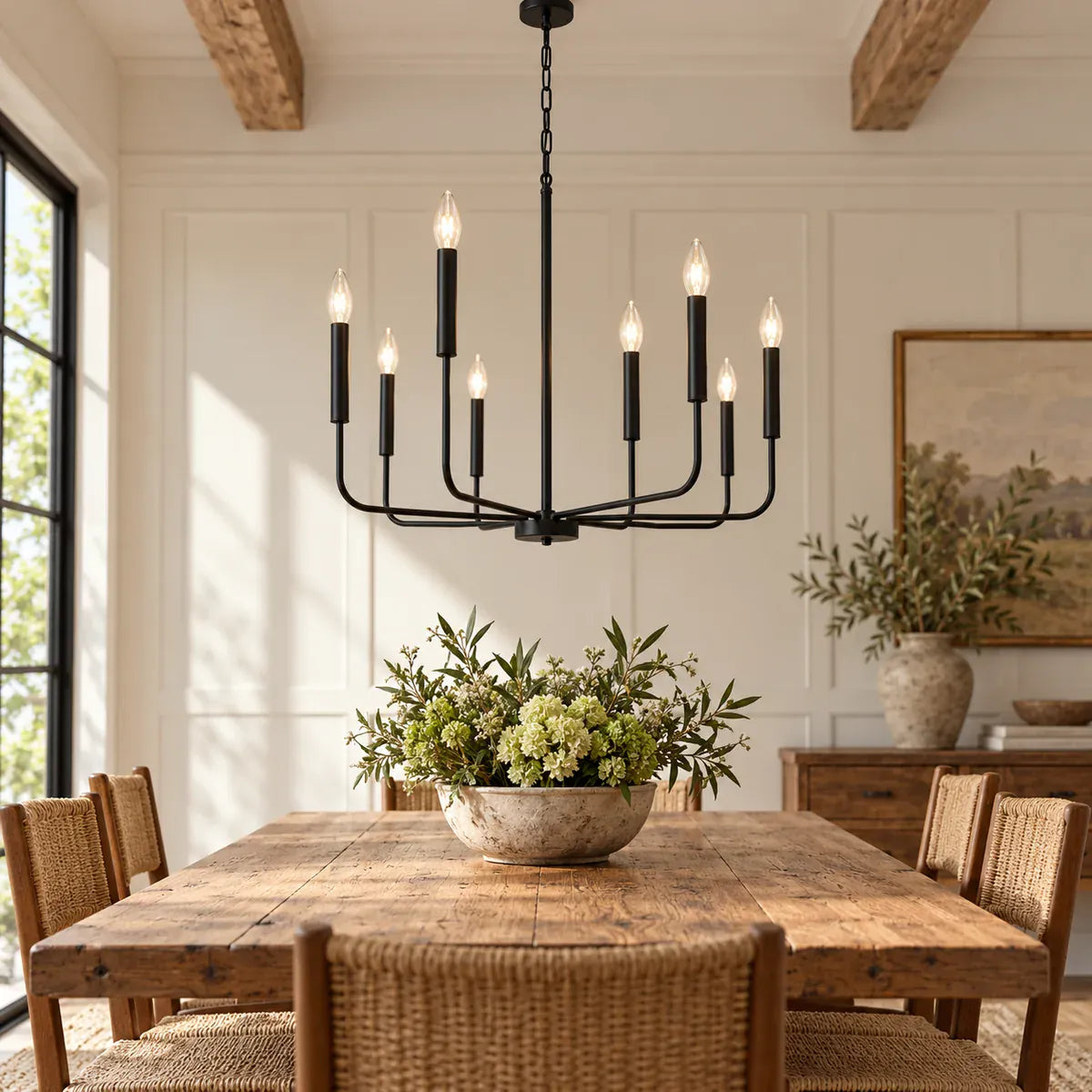
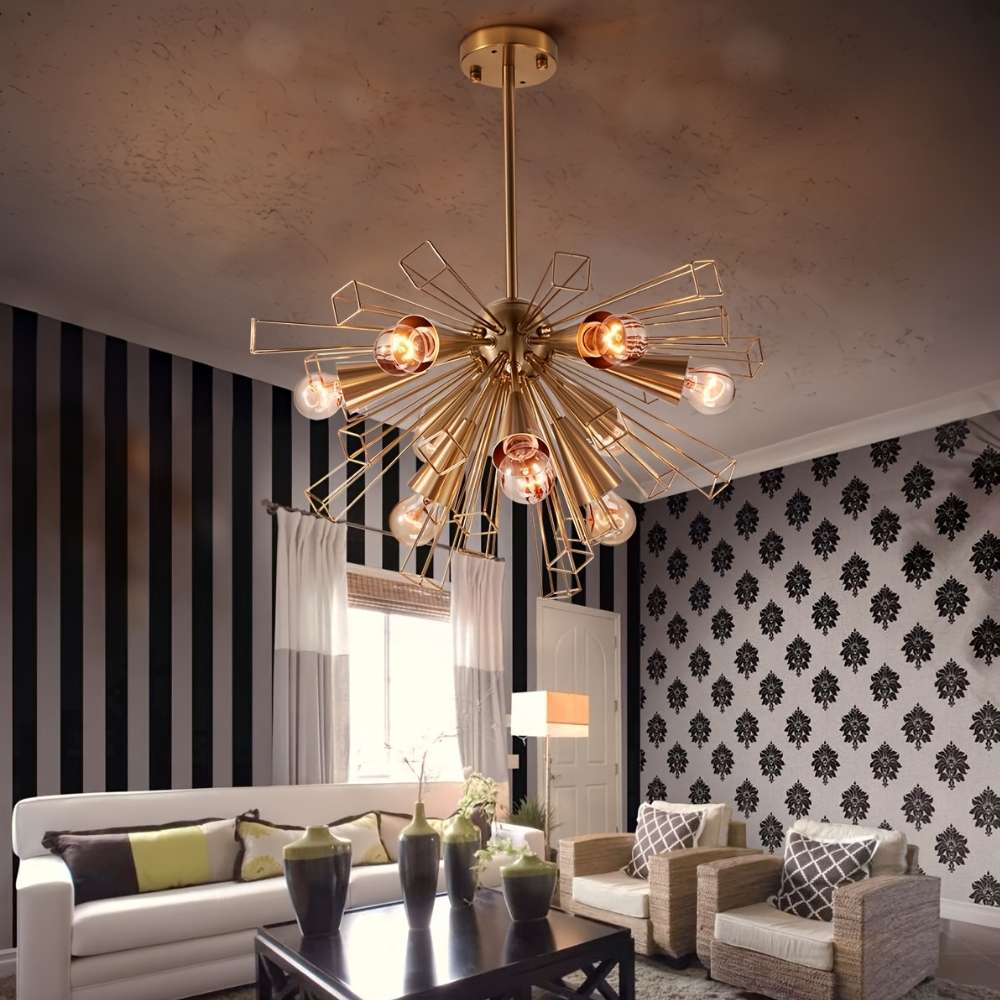
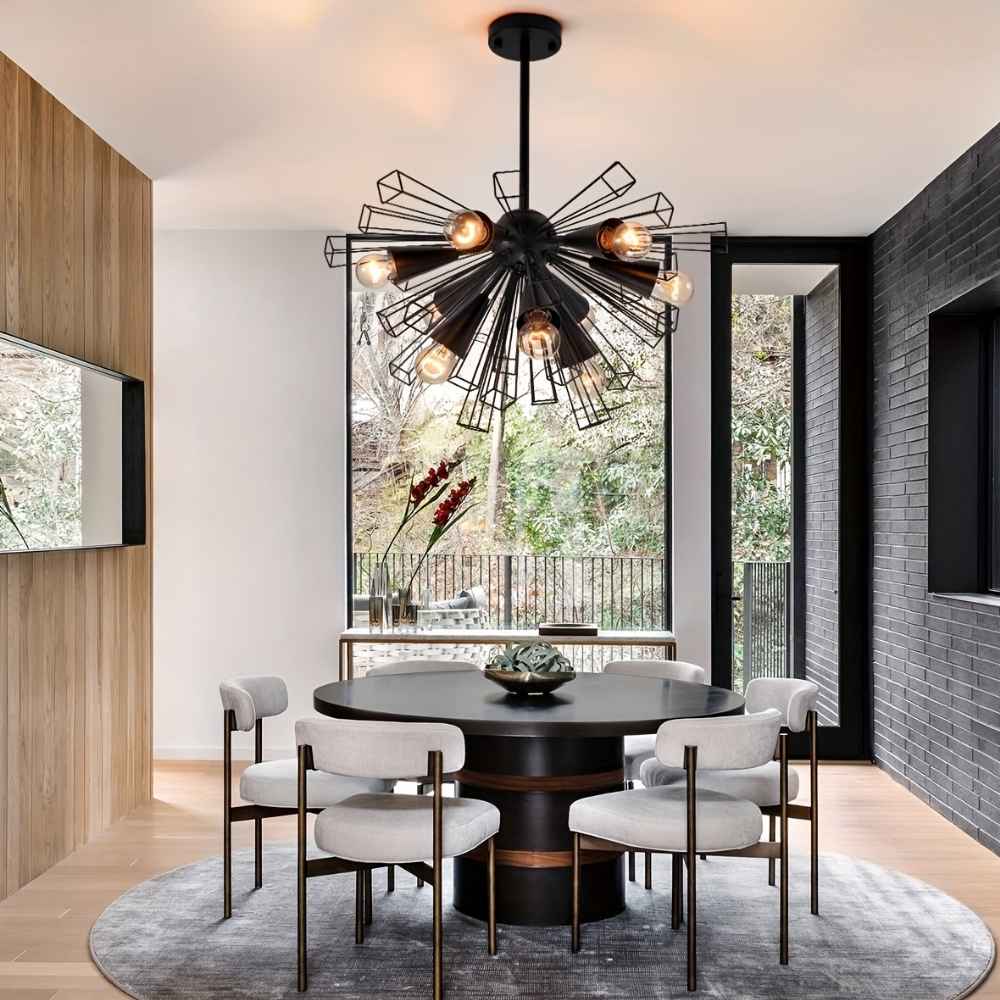
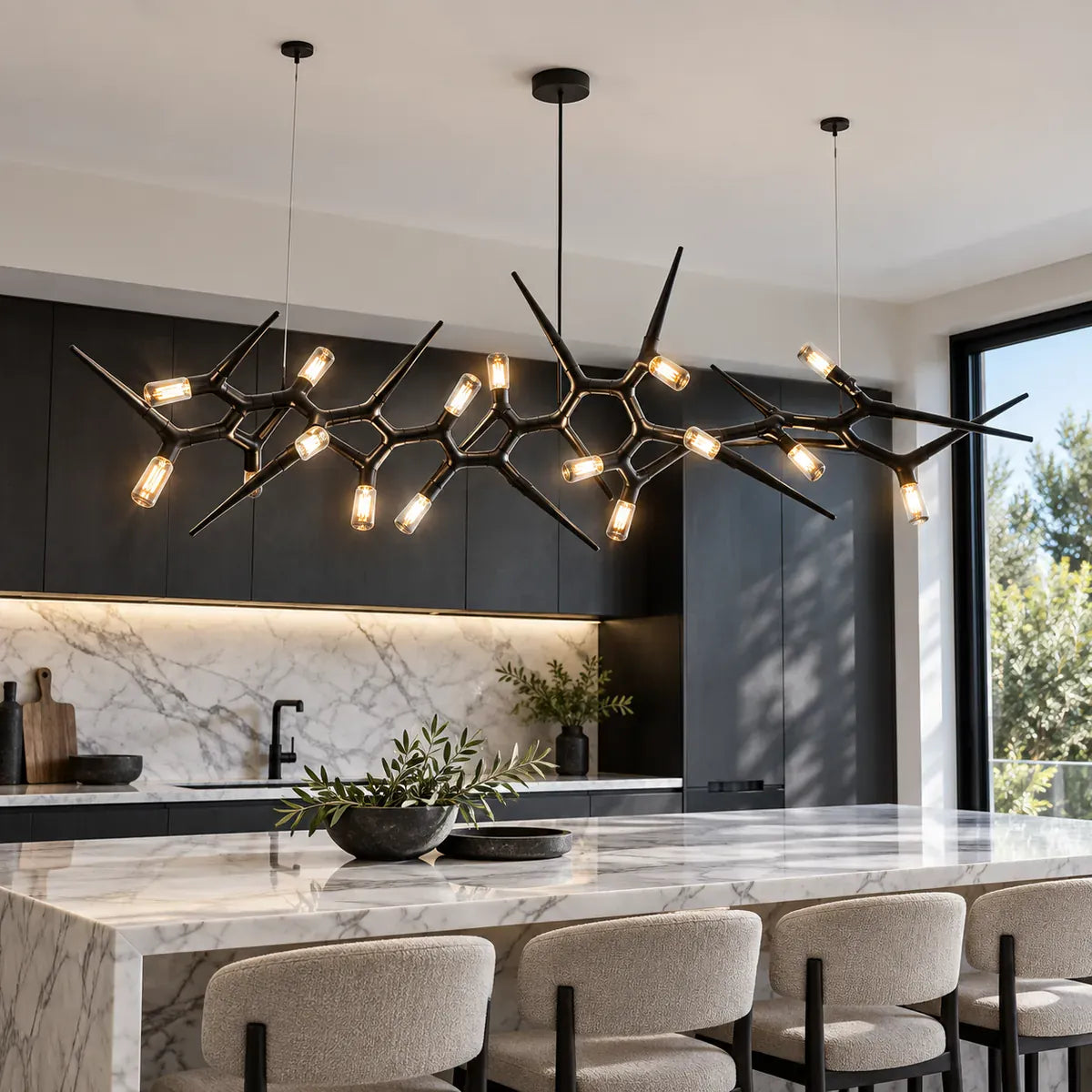
Three design decisions, made together, define the form and nothing else in lighting shares all three. Radial geometry: arms project from a single central hub in every direction, so the fixture has no front, no back, and no bad angle. Exposed bulbs as the design: each arm ends in a visible lamp — the light source is the ornament, not something to be shaded away. And negative space: most of a sputnik is air, which lets a large-diameter statement carry a room without visual weight. The combination reads instantly — energy frozen mid-burst — and it is why the silhouette survived seventy years while most of its era's designs became period pieces.
Sputnik or Starburst? One Family, Two Names
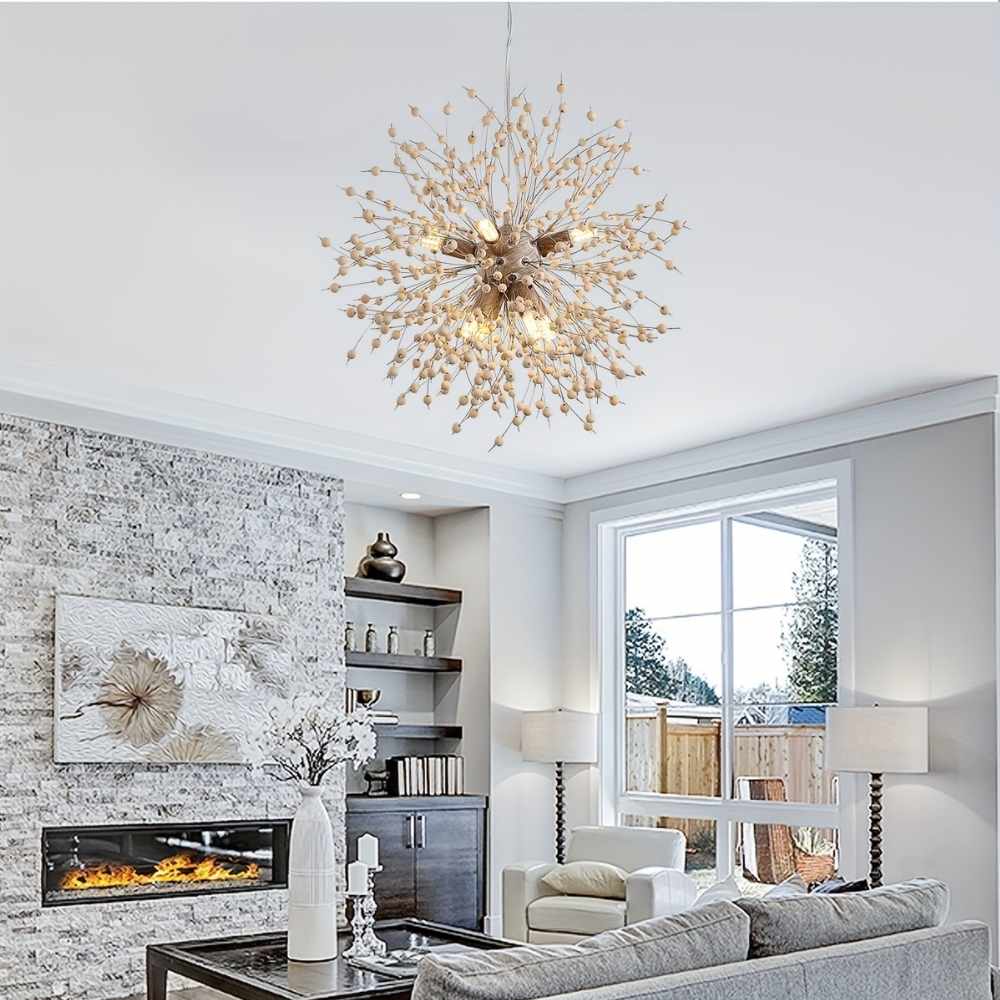
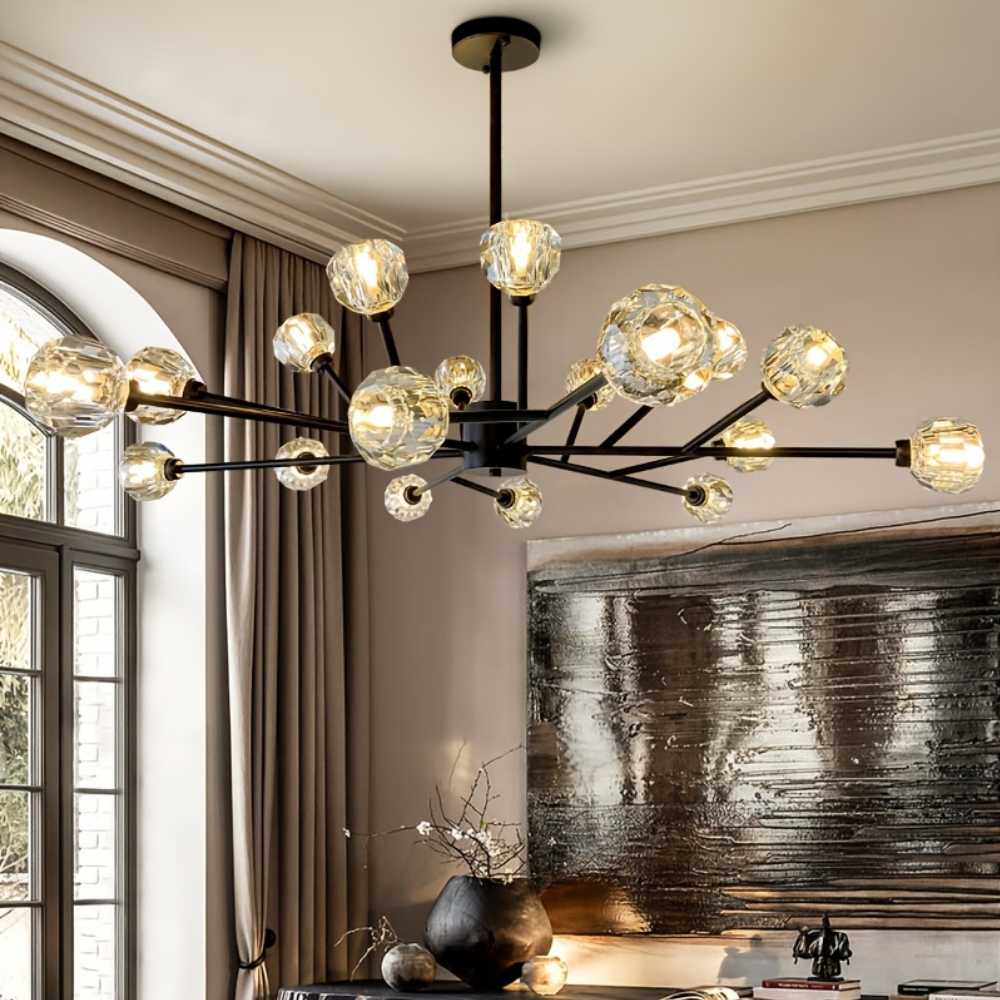
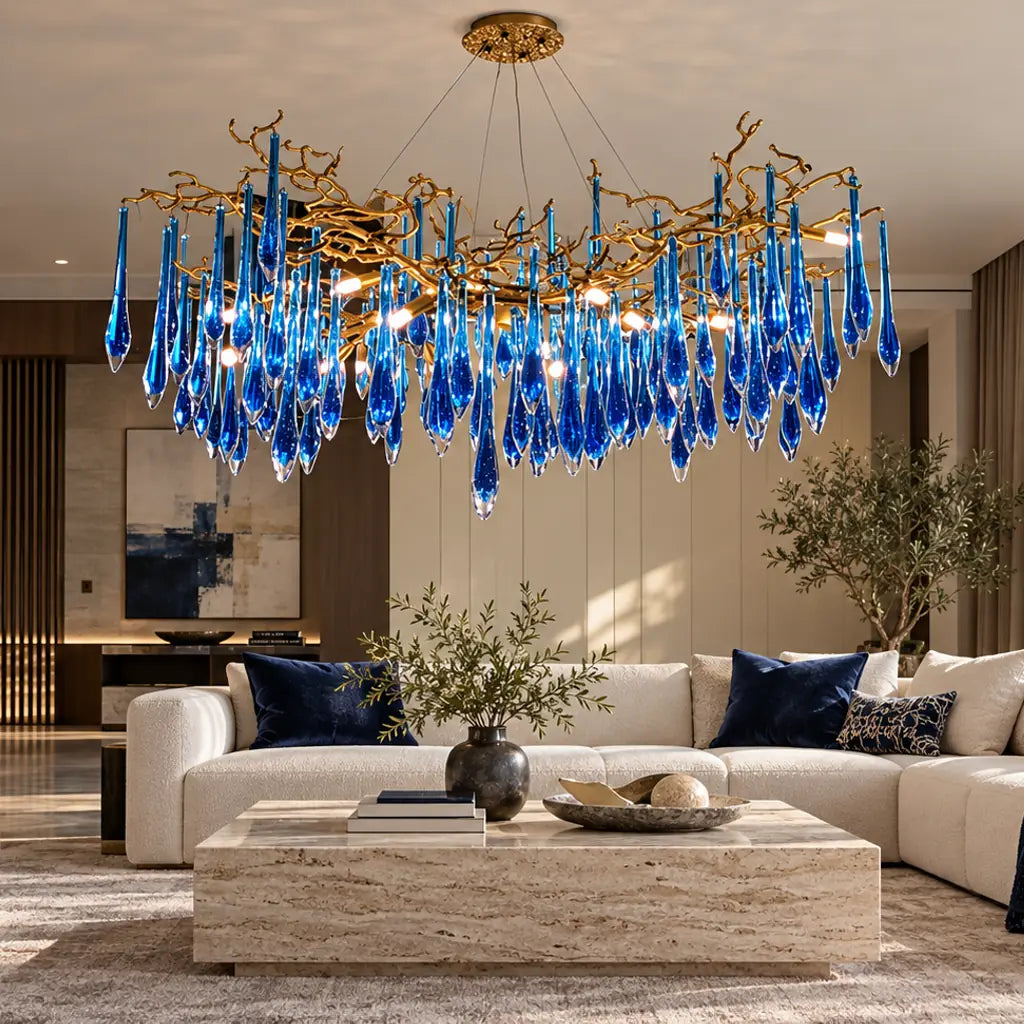
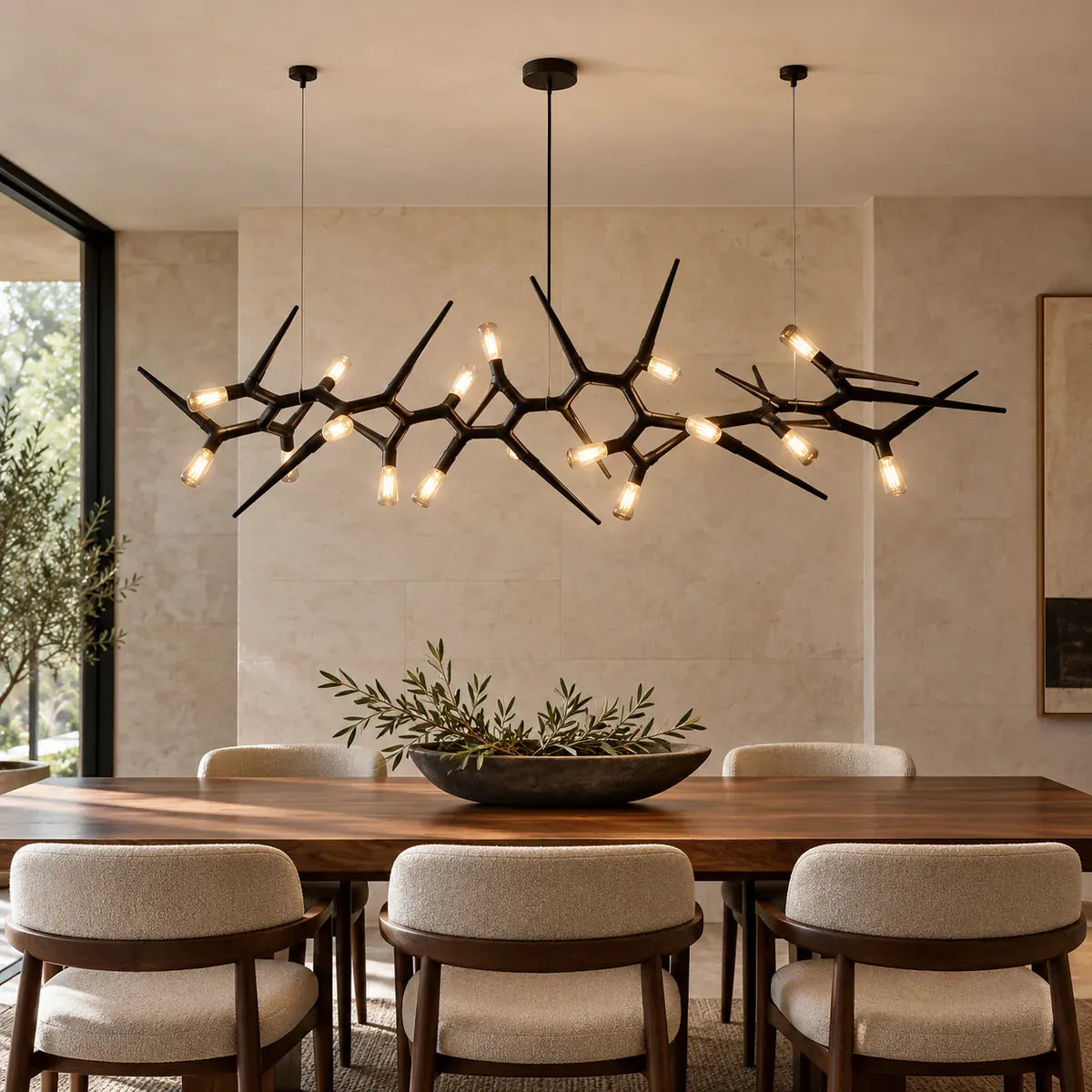
The names travel together and overlap almost completely. Sputnik is the specific mid-century original — straight radial arms, bulb at each tip, named for the 1957 satellite whose antennae it echoed. Starburst is the broader family: everything radiating from a center, including crystal-spiked versions, mixed-length sunburst arms, and contemporary sculptural takes that trade bare bulbs for glass or crystal points. Every design here belongs to the family; filter by material and tip style to move between the strict original and its starburst descendants.
Are Sputnik Chandeliers Still in Style?
Emphatically — with an evolution. The revival that began with mid-century furniture never receded, but the current versions have moved past reproduction: mixed and matte finishes instead of uniform polished brass, LED filament bulbs that keep the exposed-lamp look at a fraction of the glare, linear and flush variants that fit rooms the original never met, and crystal and glass hybrids that soften the atomic edge. The silhouette now functions the way iconic forms do — as a permanent vocabulary item rather than a trend — and the full revival story, styling logic, and picks are in our sputnik revival guide.
The Mid-Century Story in One Paragraph
In October 1957 a polished sphere with four trailing antennae became the most famous object above Earth, and within two years its silhouette was hanging in American dining rooms — the space race translated into brass and optimism. The form carried everything mid-century design believed: technology as beauty, structure as ornament, the future as something to furnish. That heritage is why a sputnik pairs so naturally with walnut, leather, and wool today — it is the ceiling's native mid-century word — and why the wider era's range lives alongside it in our vintage chandeliers collection.
Modern Versions Across the Collection
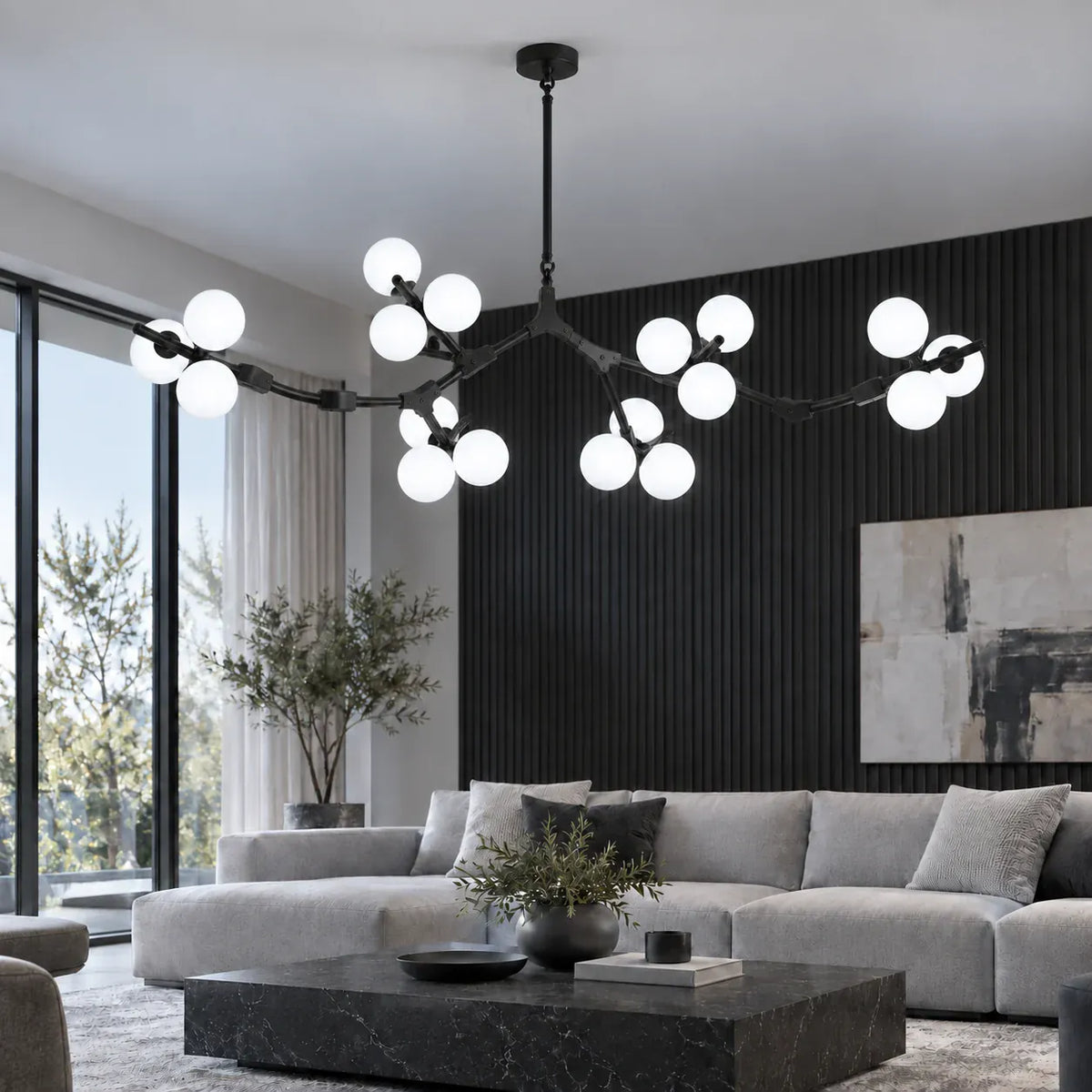
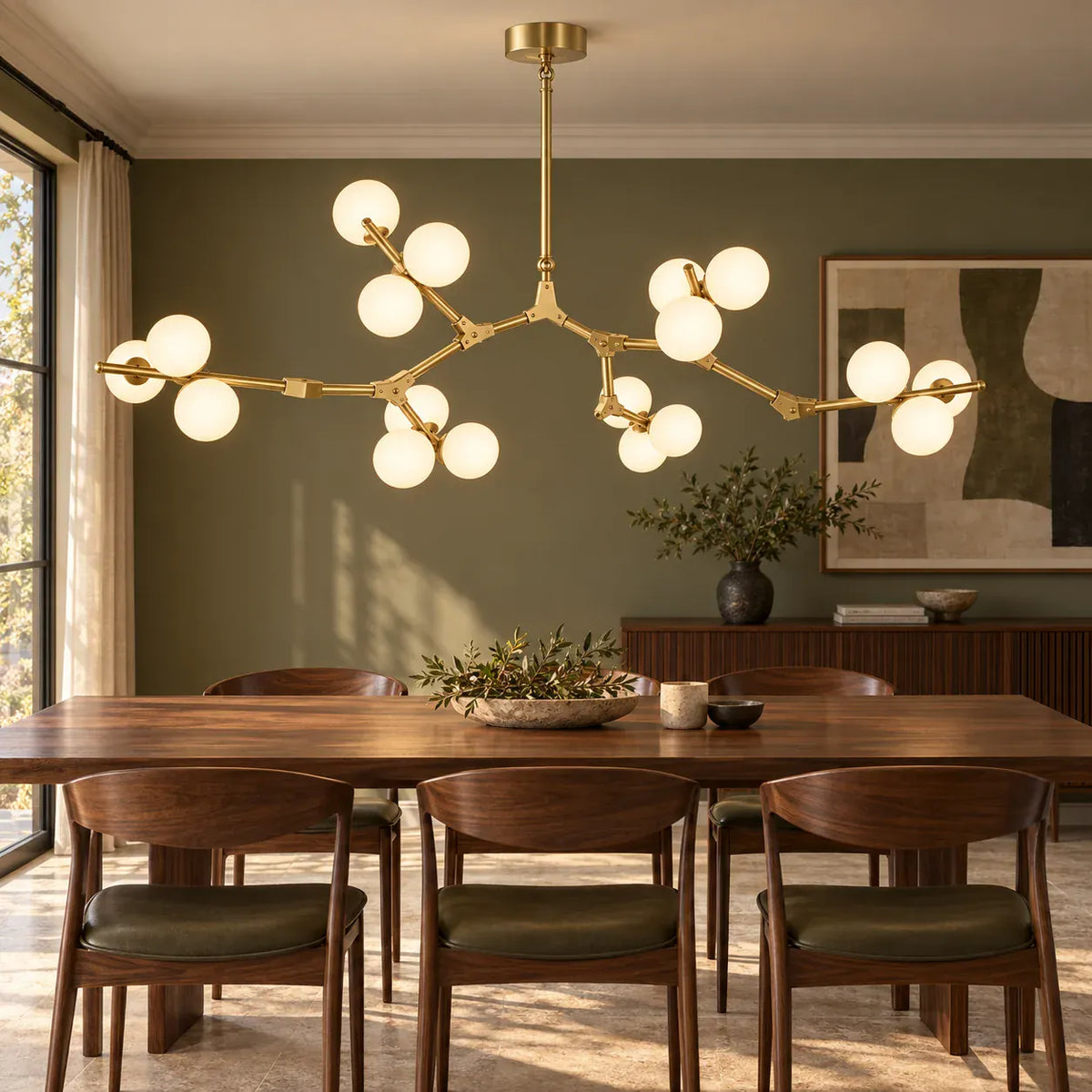
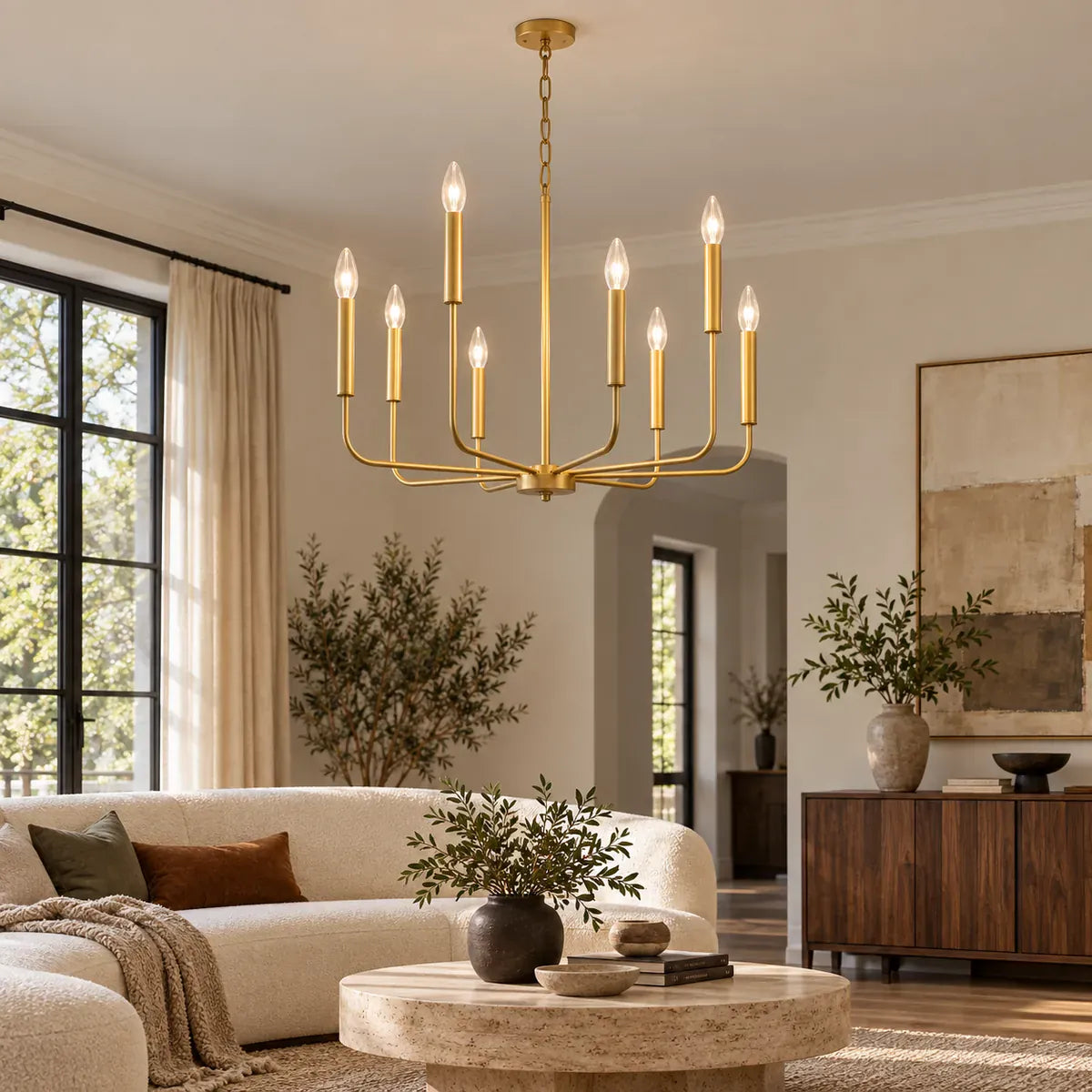
- Classic radials: the original grammar — brass or black arms, globe hub, eight to twenty-four lights, scaled by the count
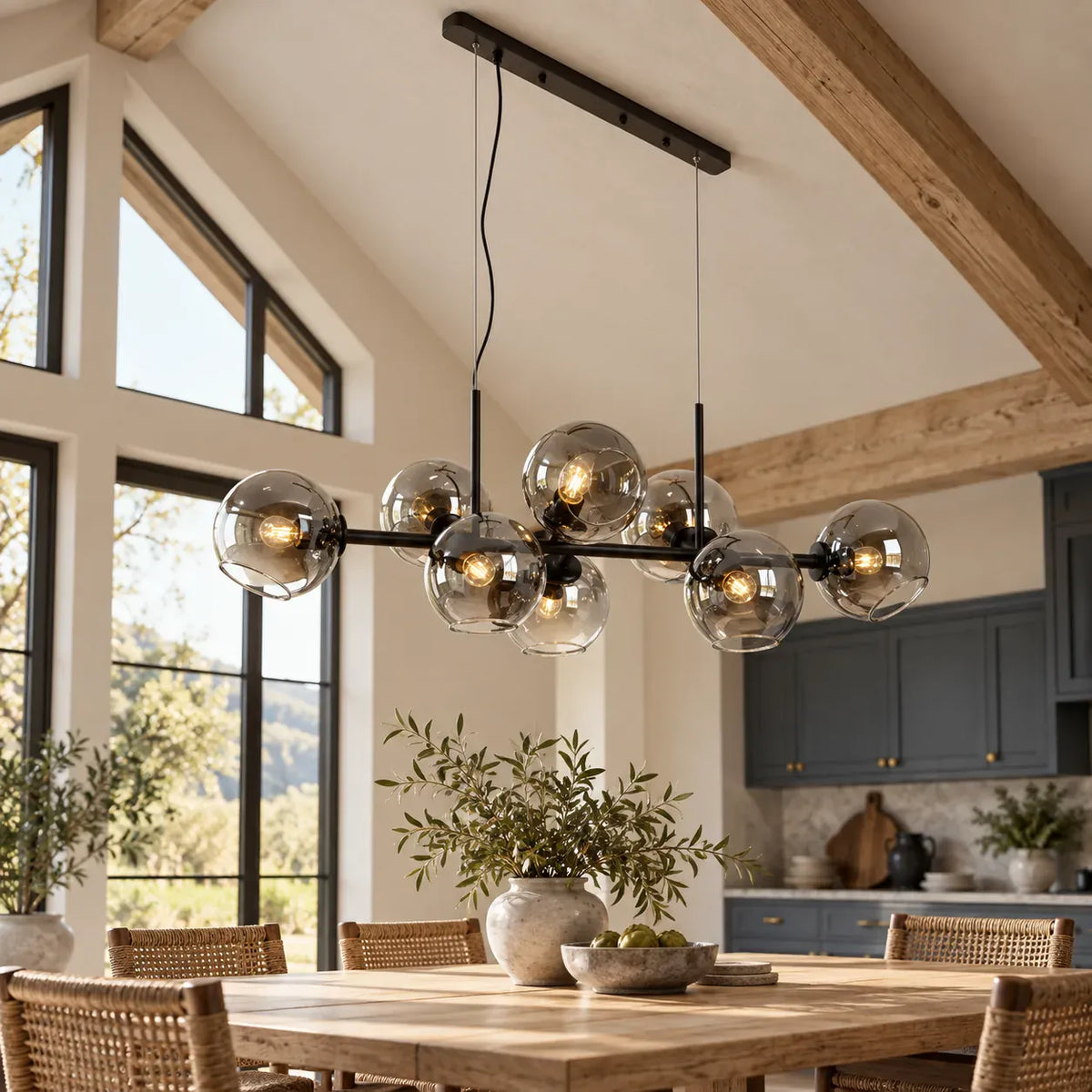
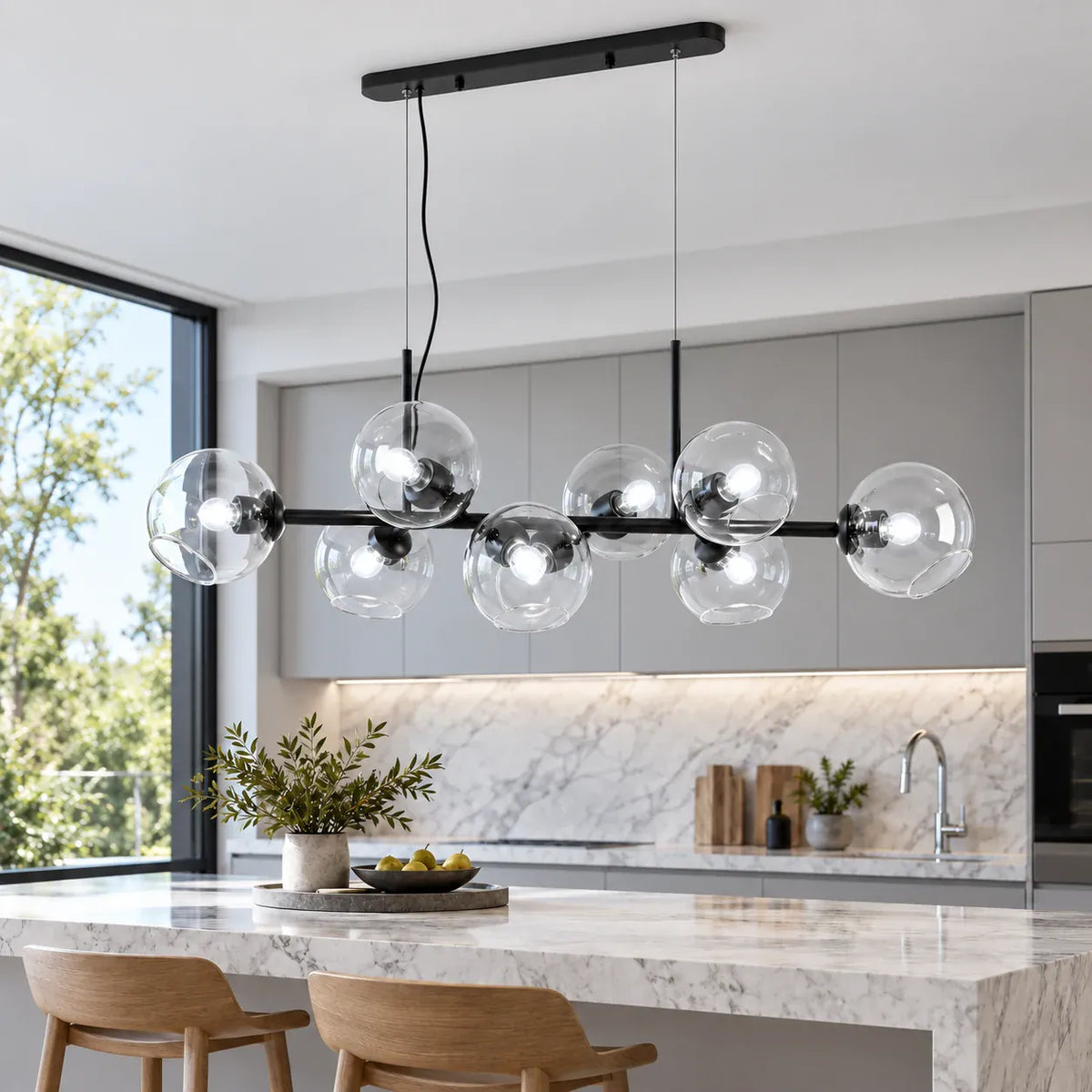
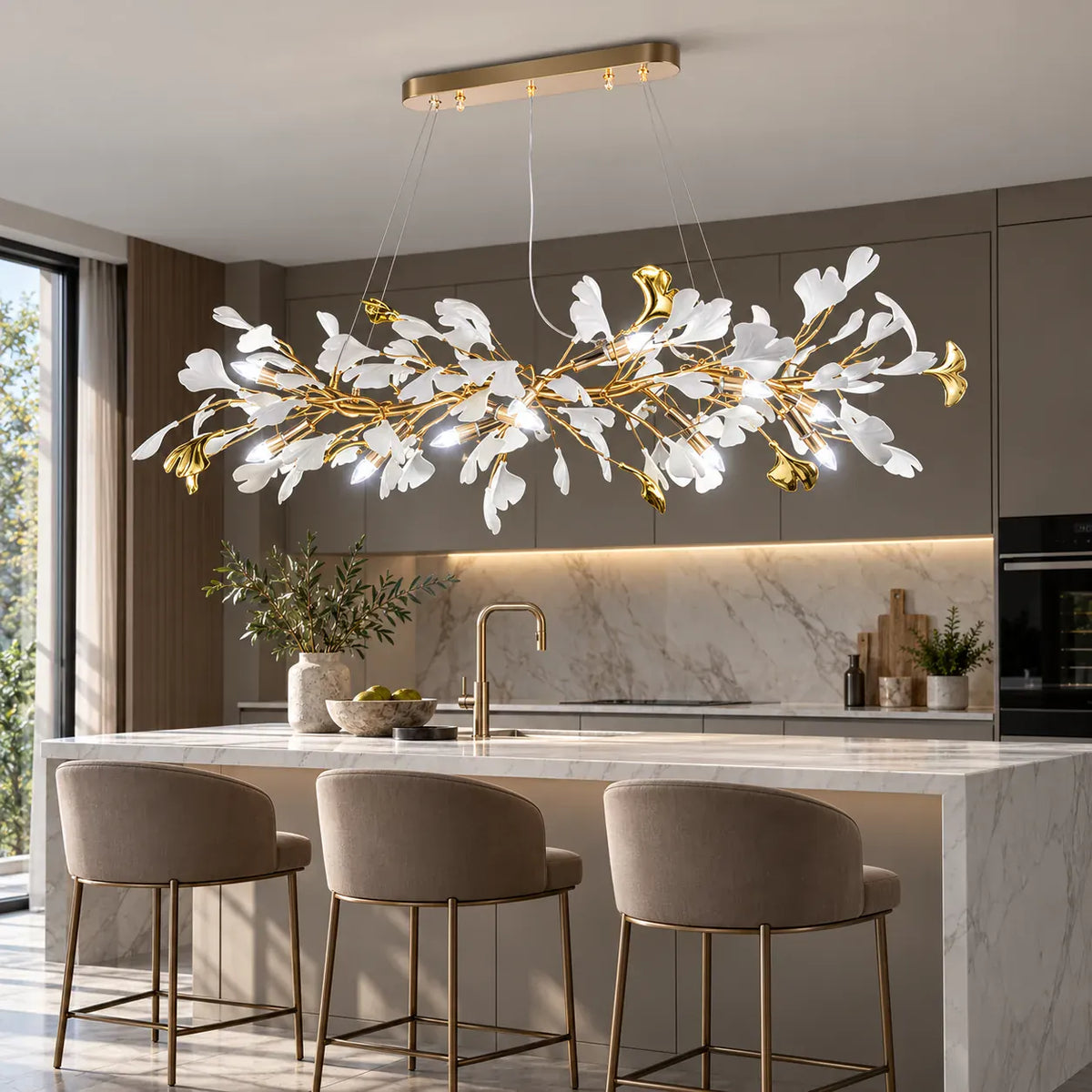
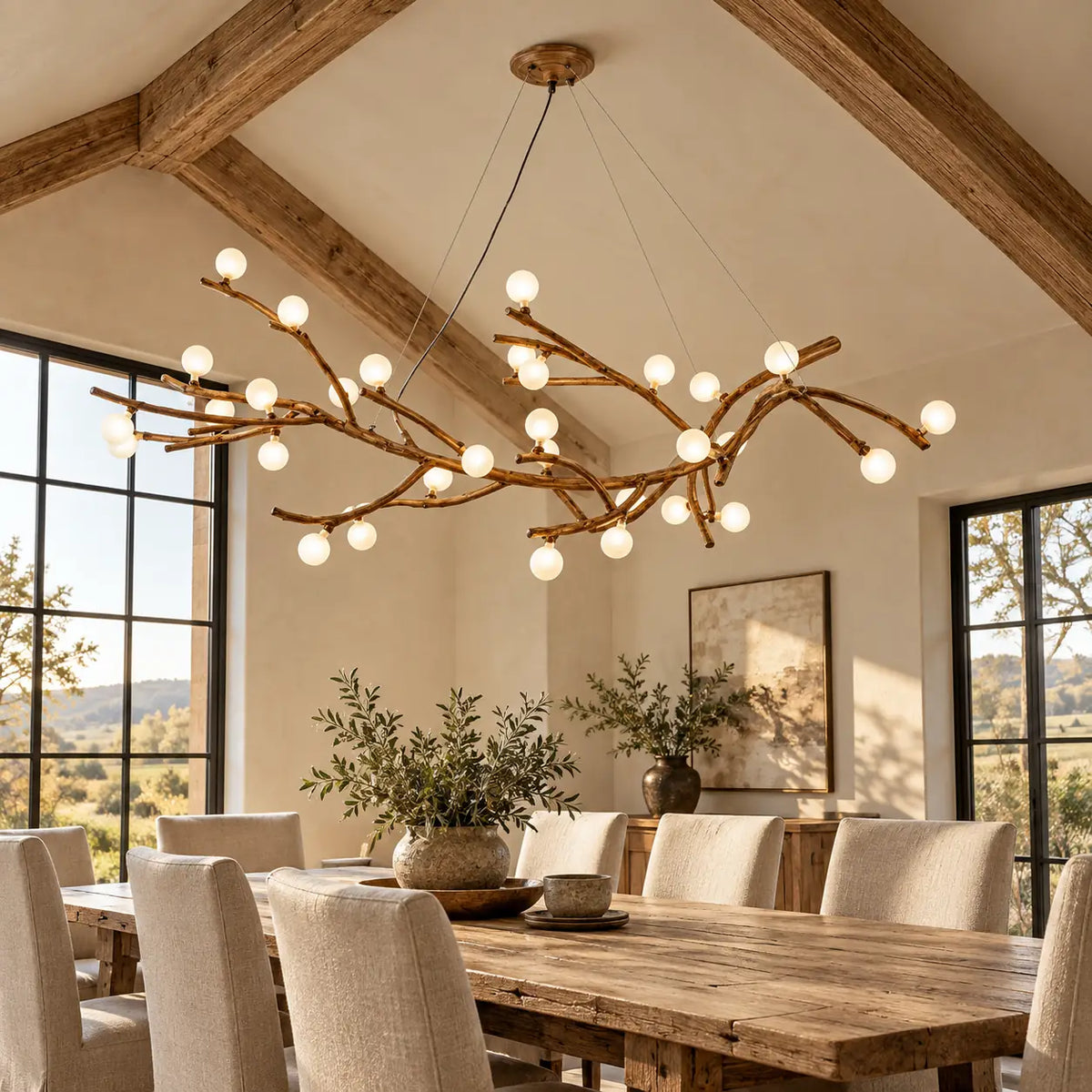
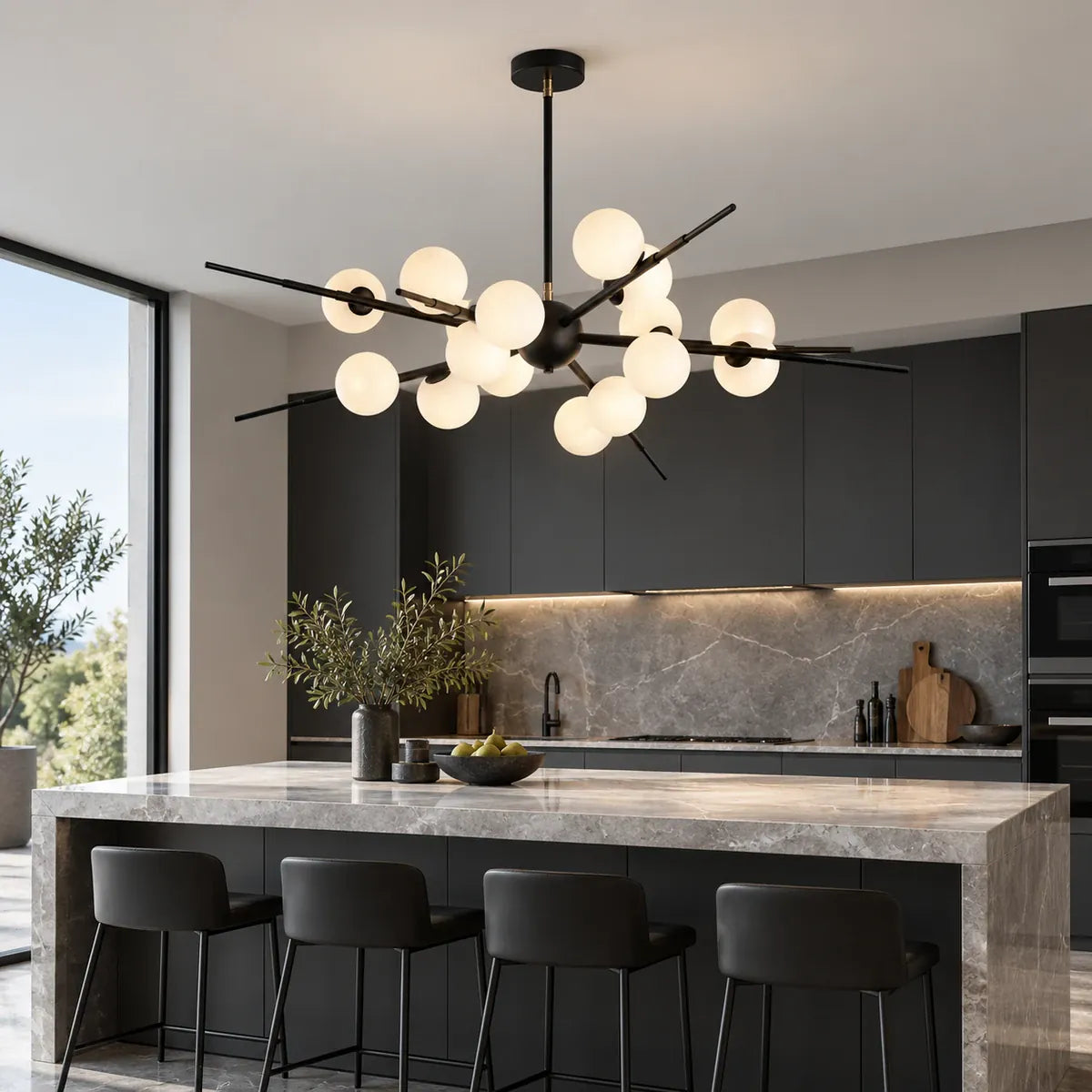
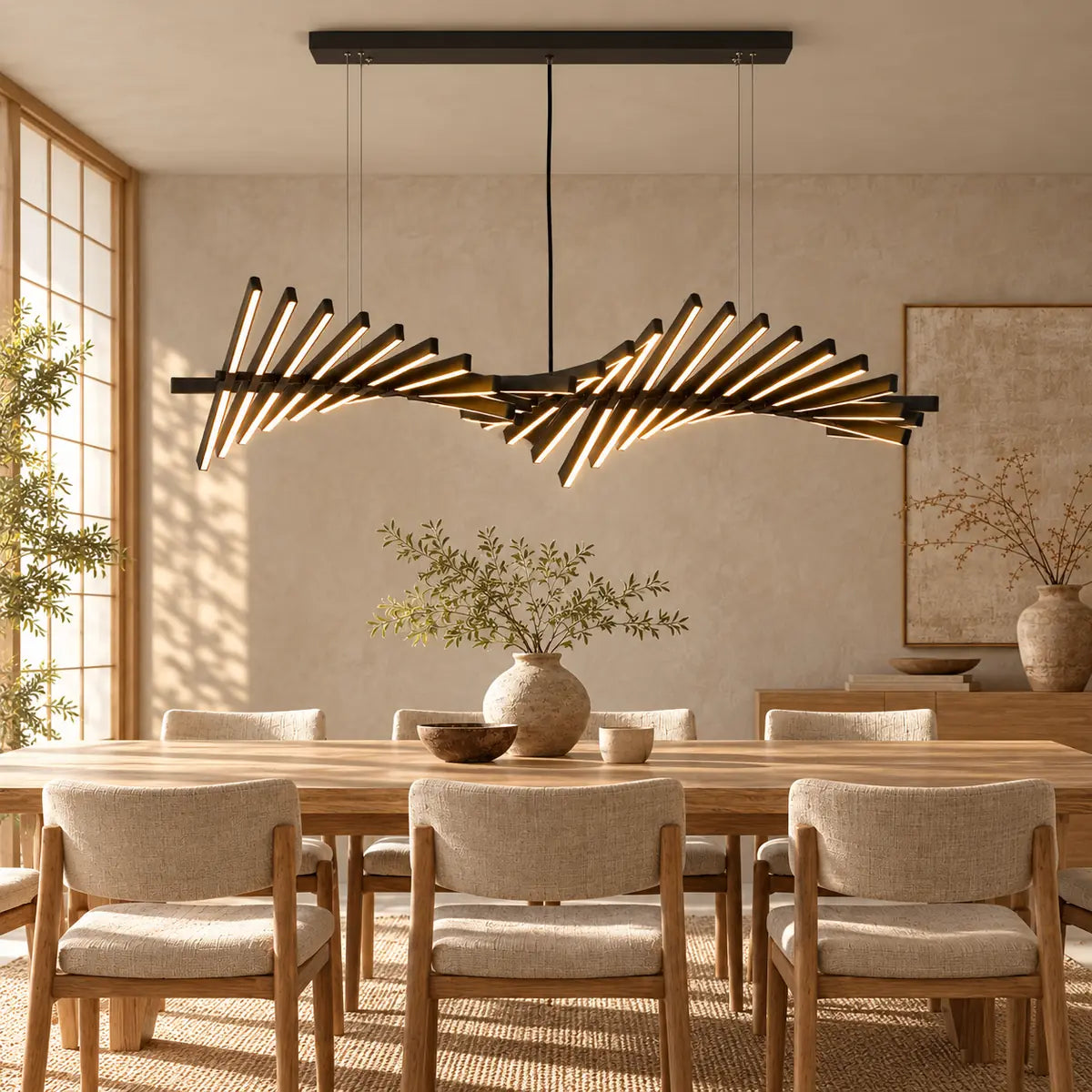
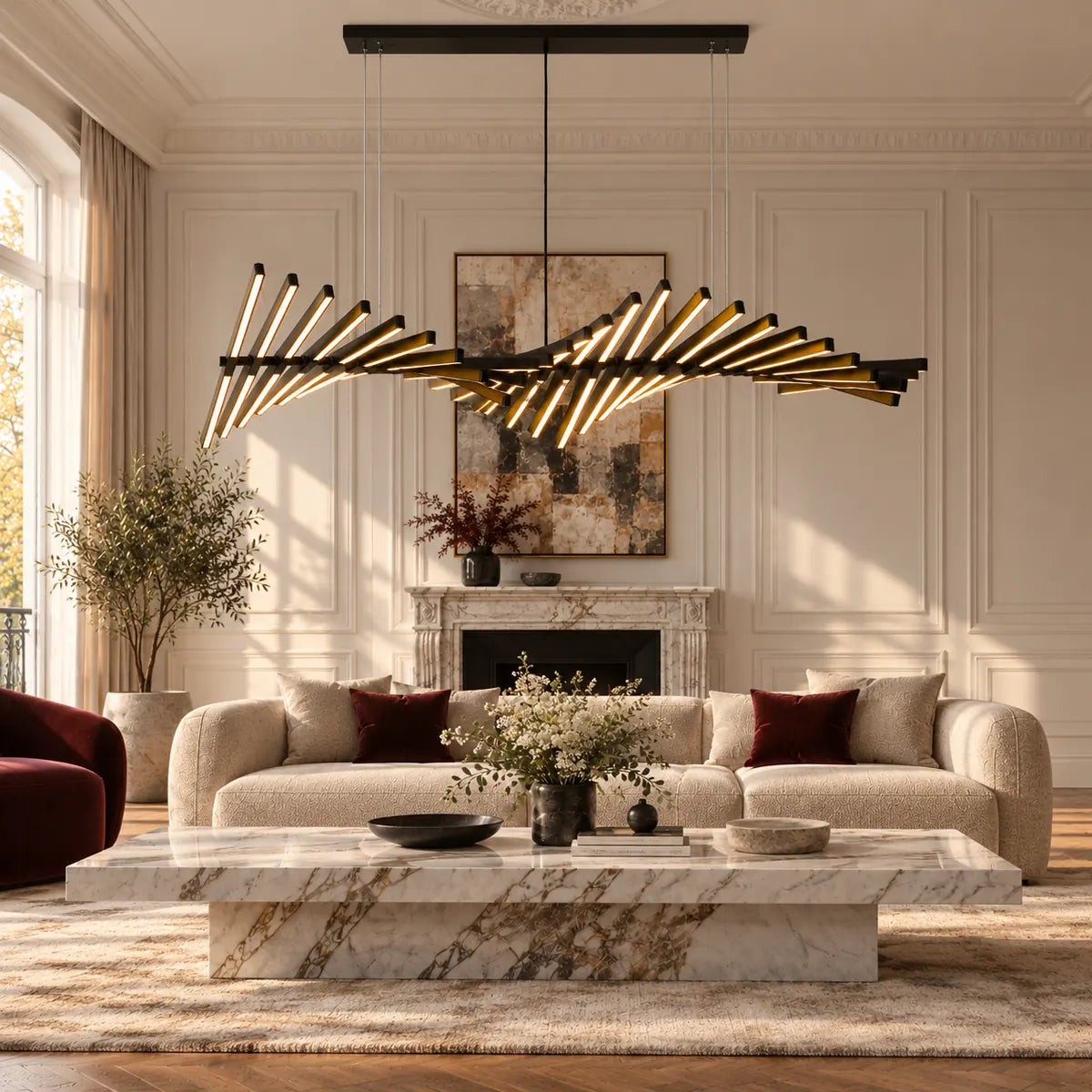
- Linear sputnik: the burst stretched along an axis — the format for rectangular dining tables and kitchen islands, where radial symmetry meets straight-line placement
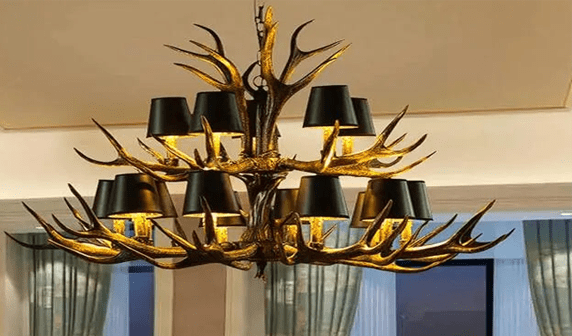
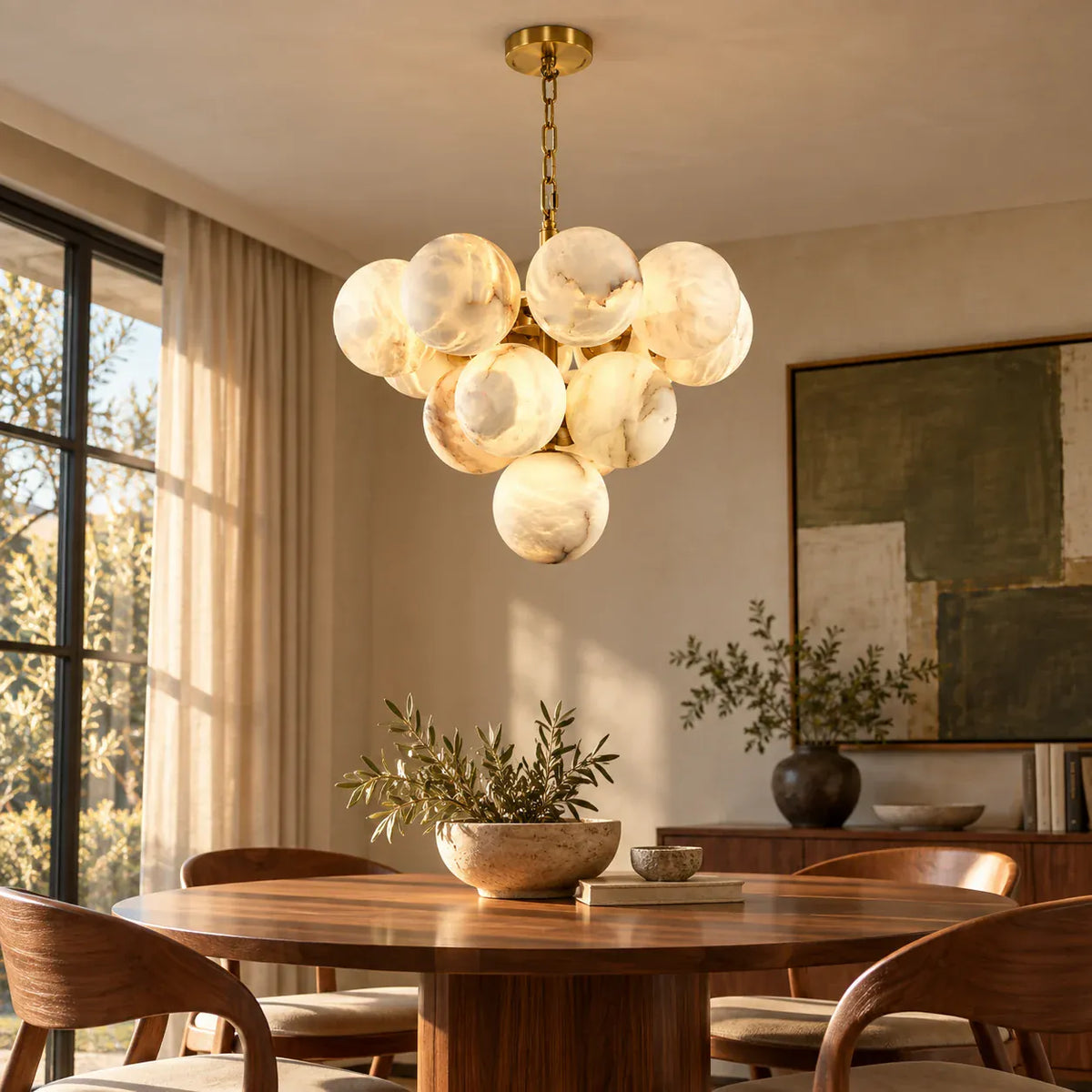
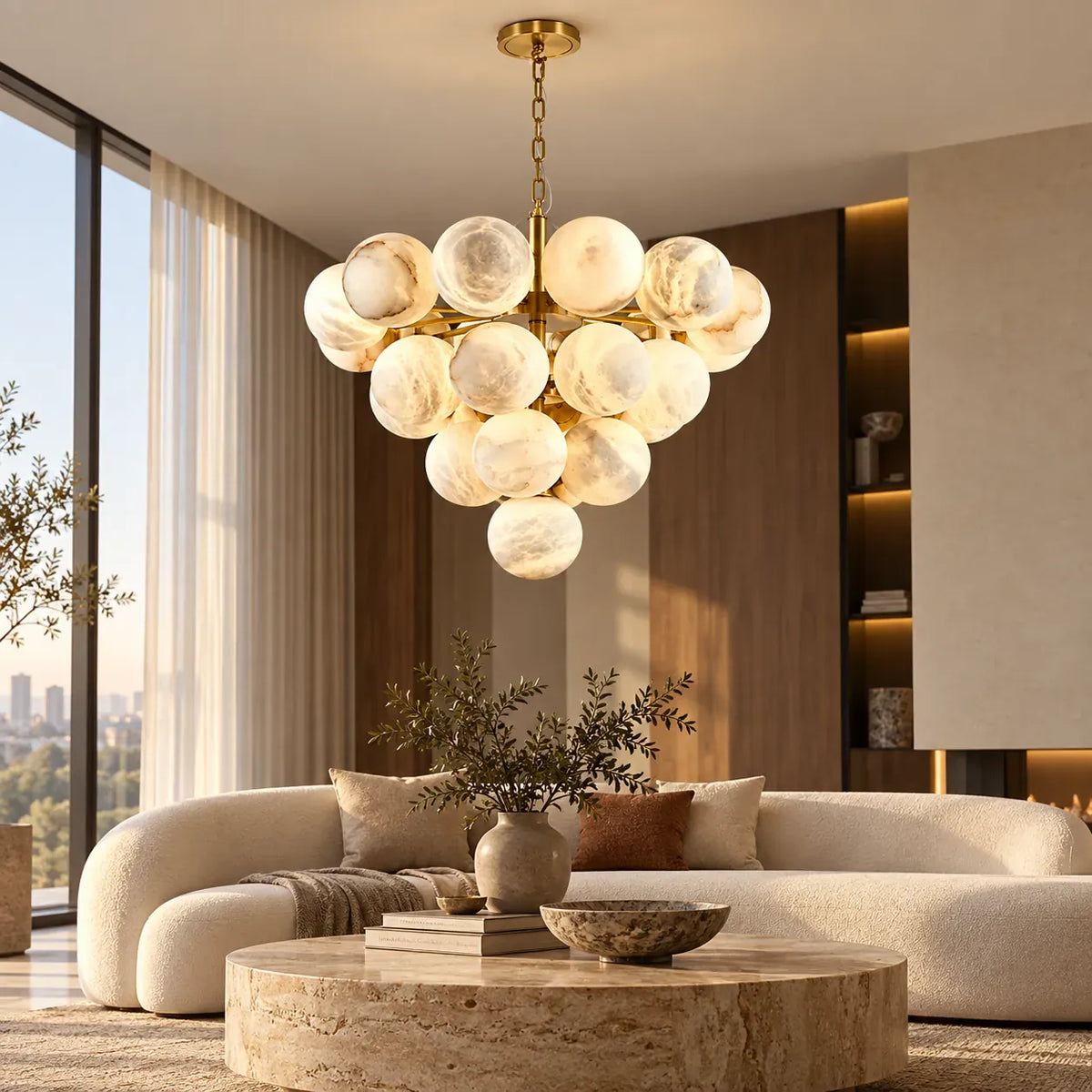
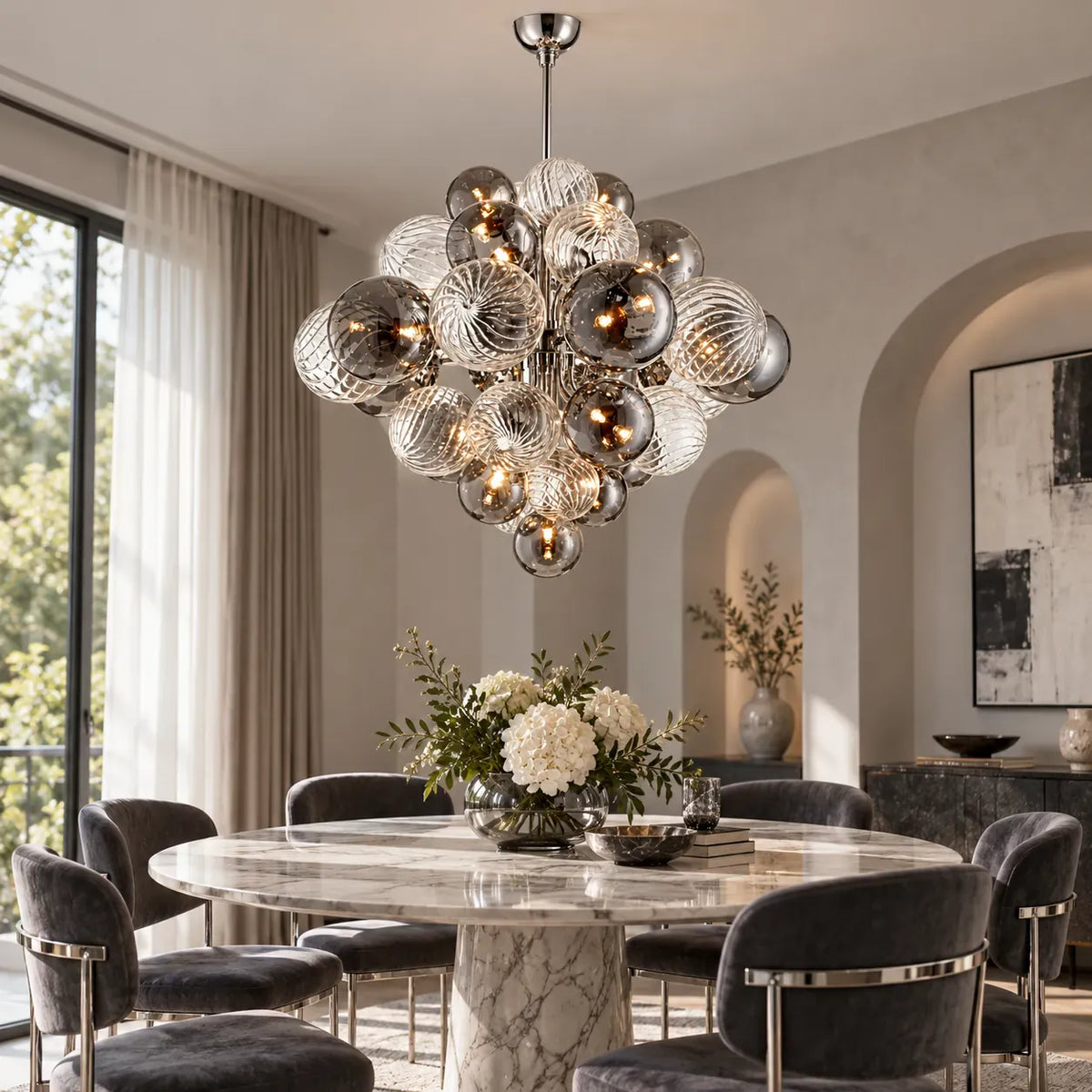
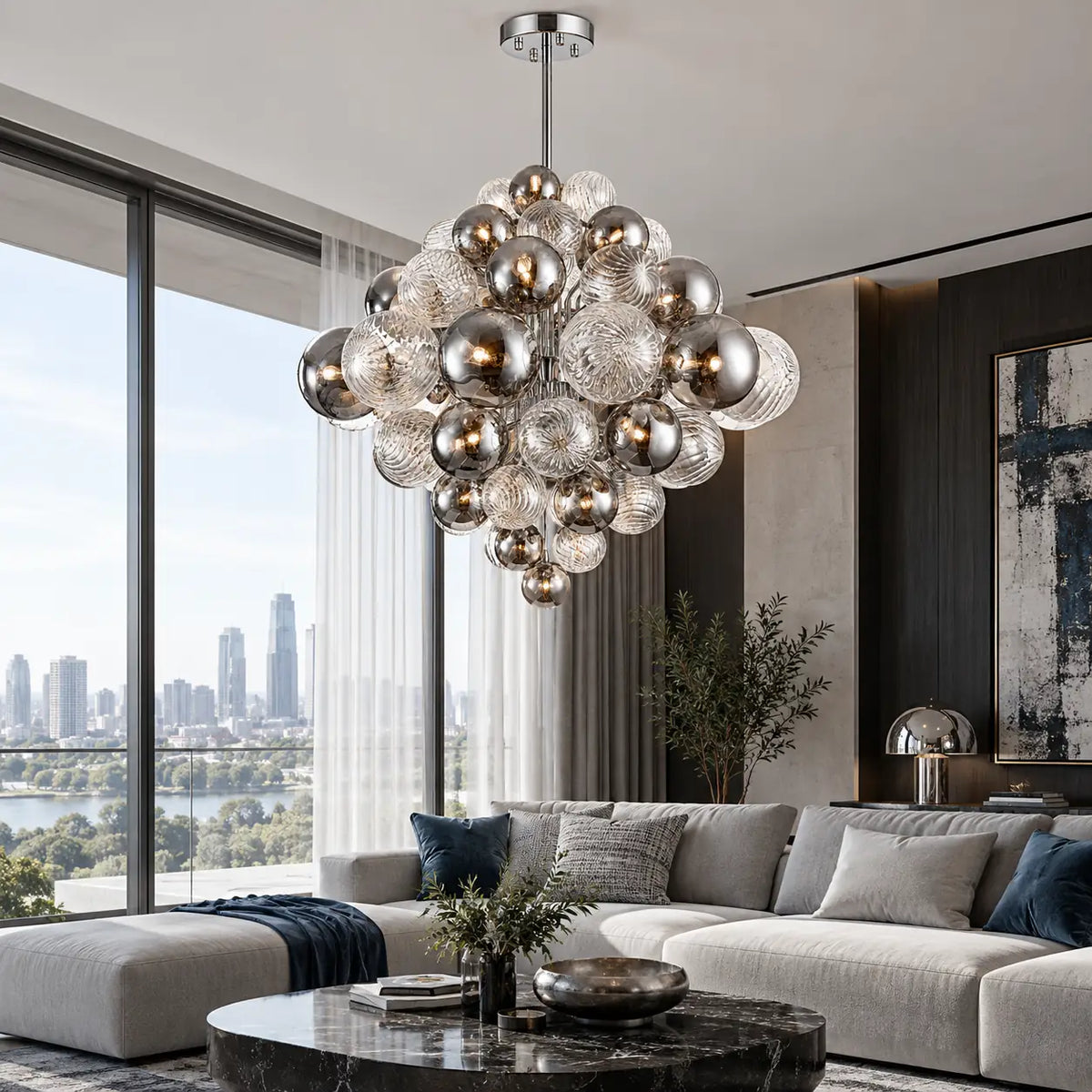
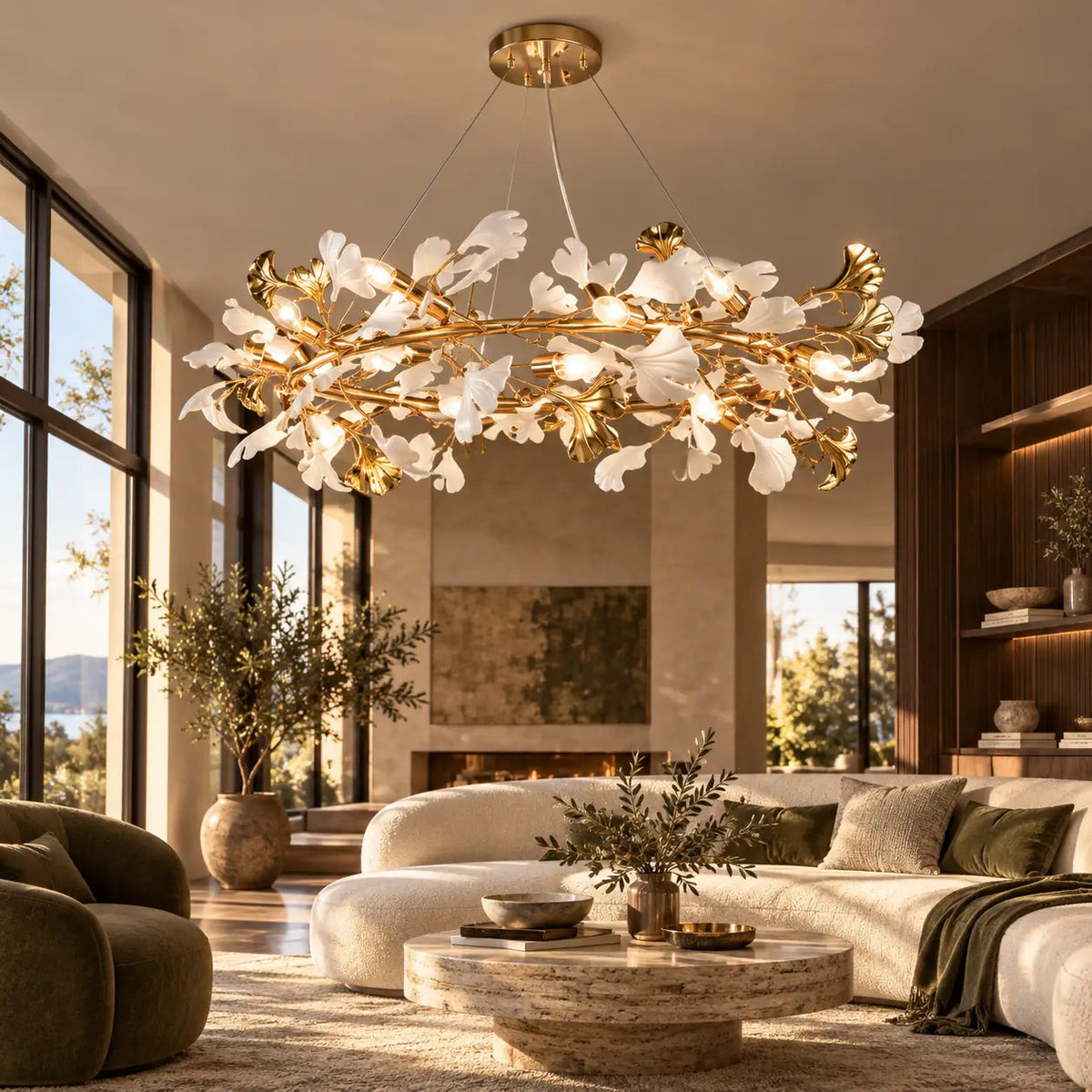
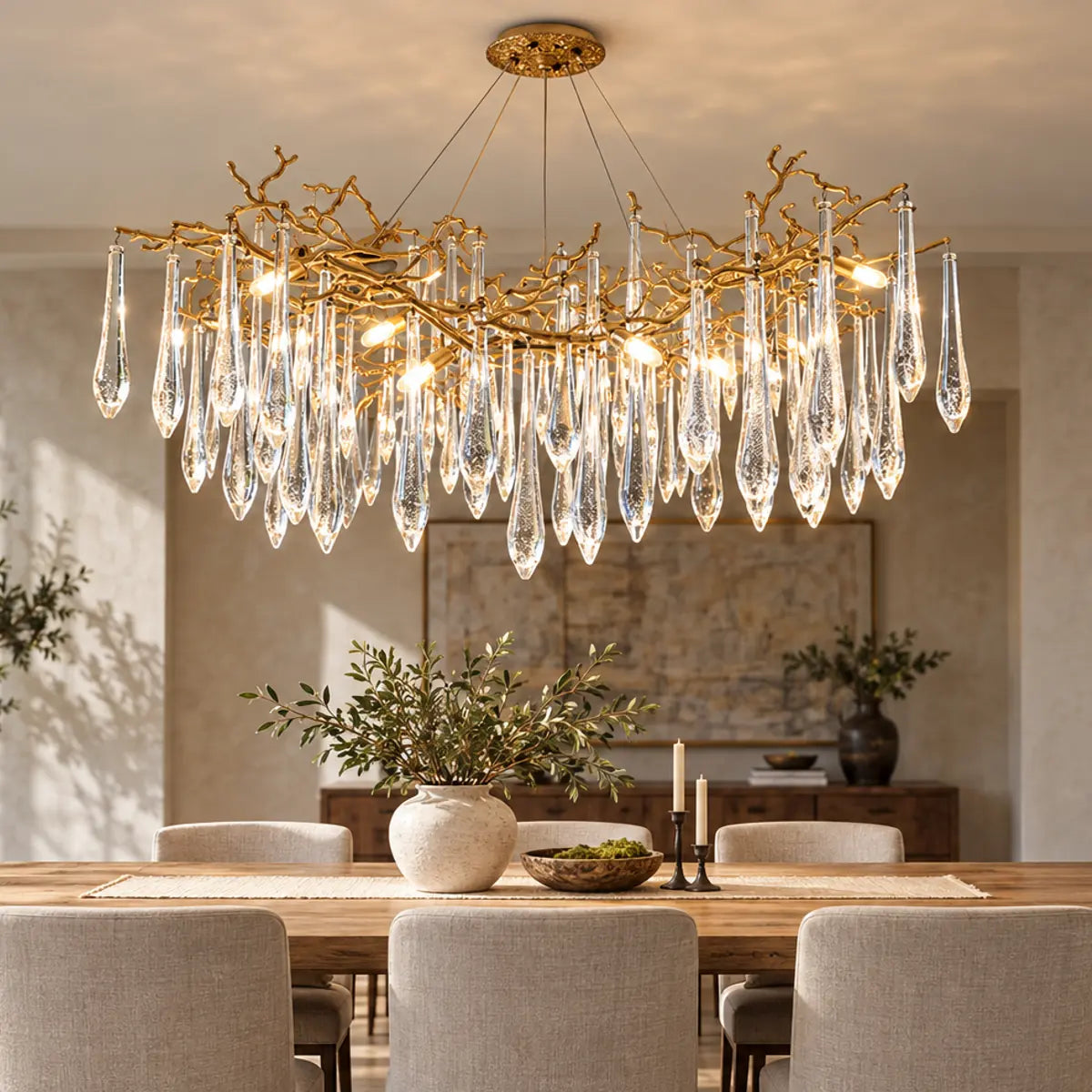
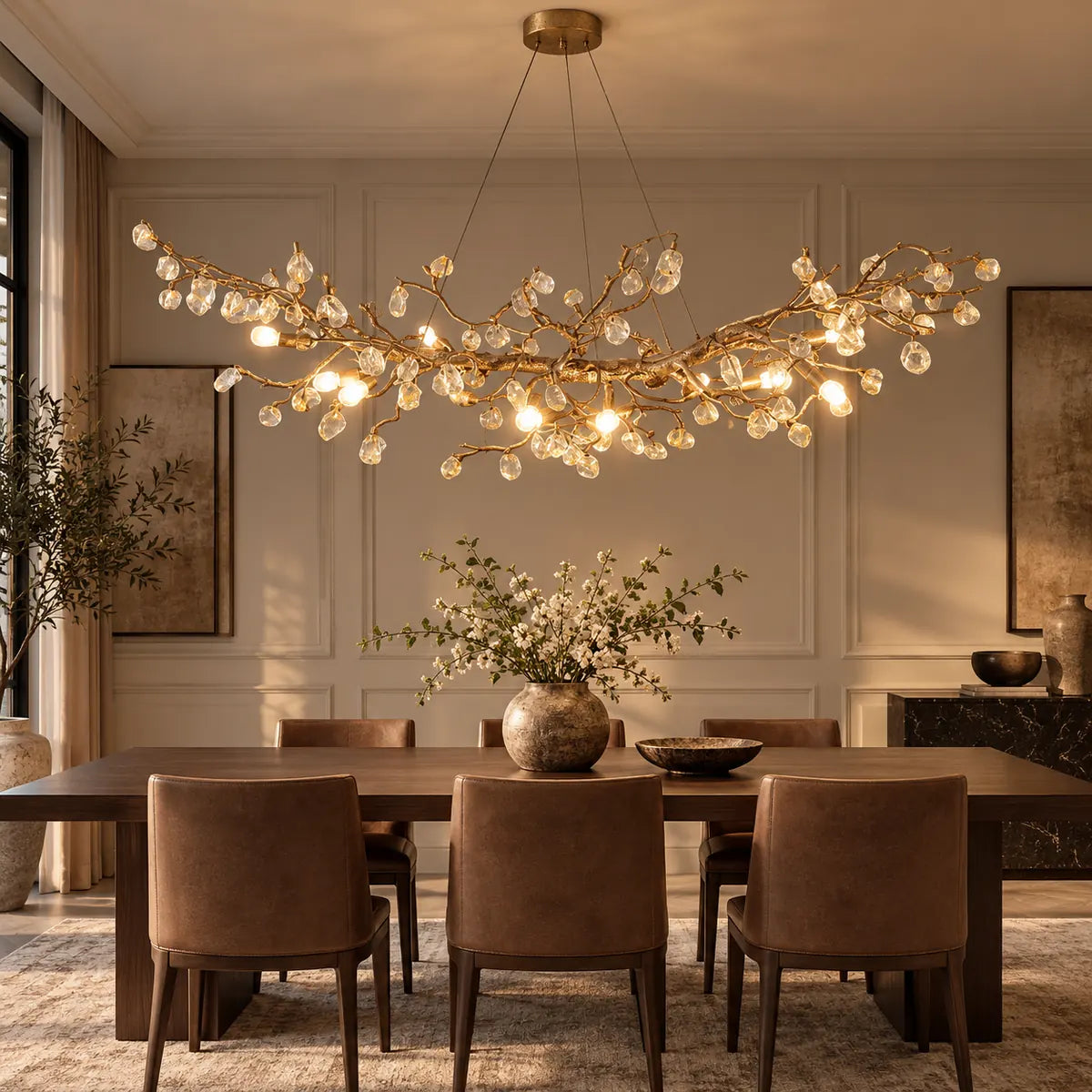
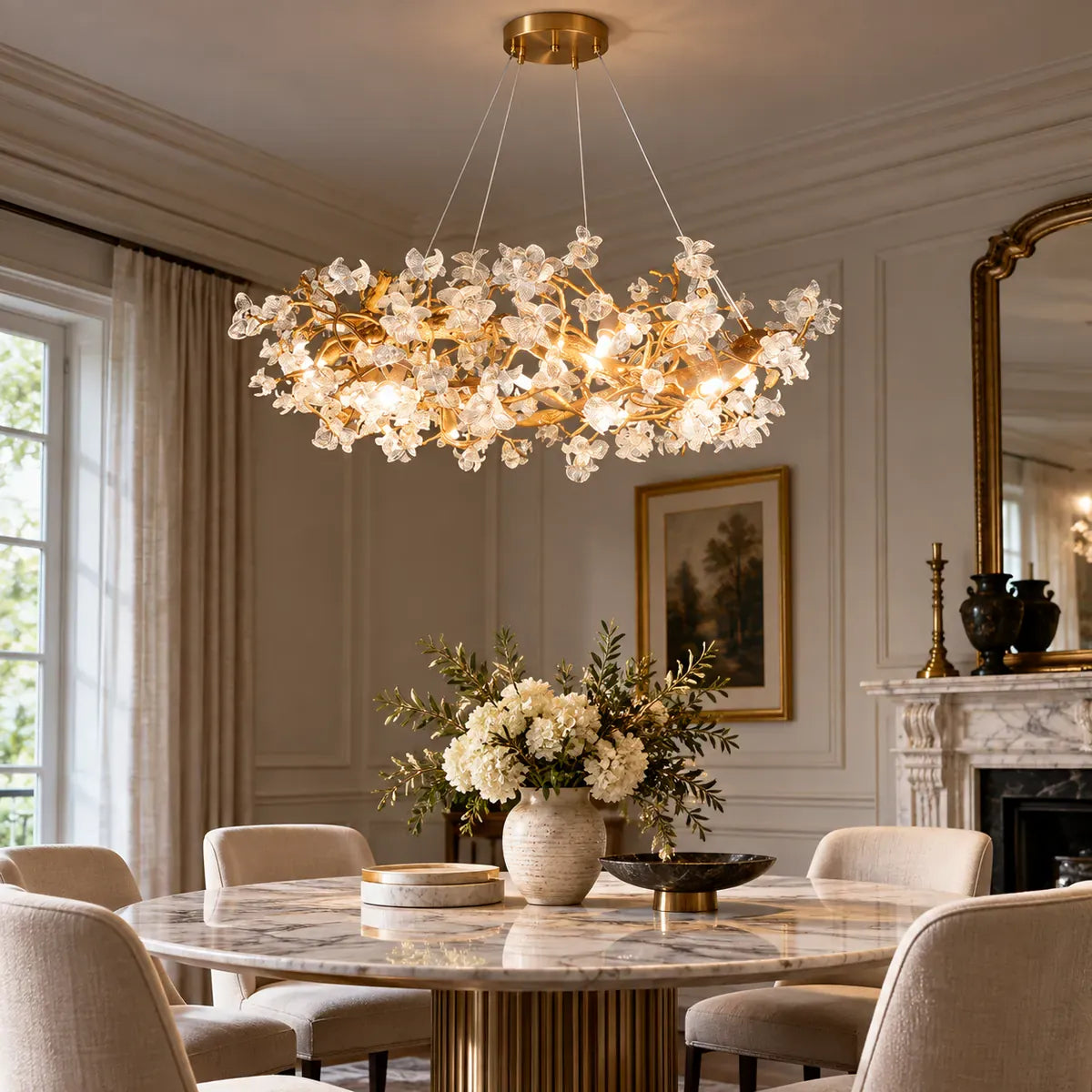
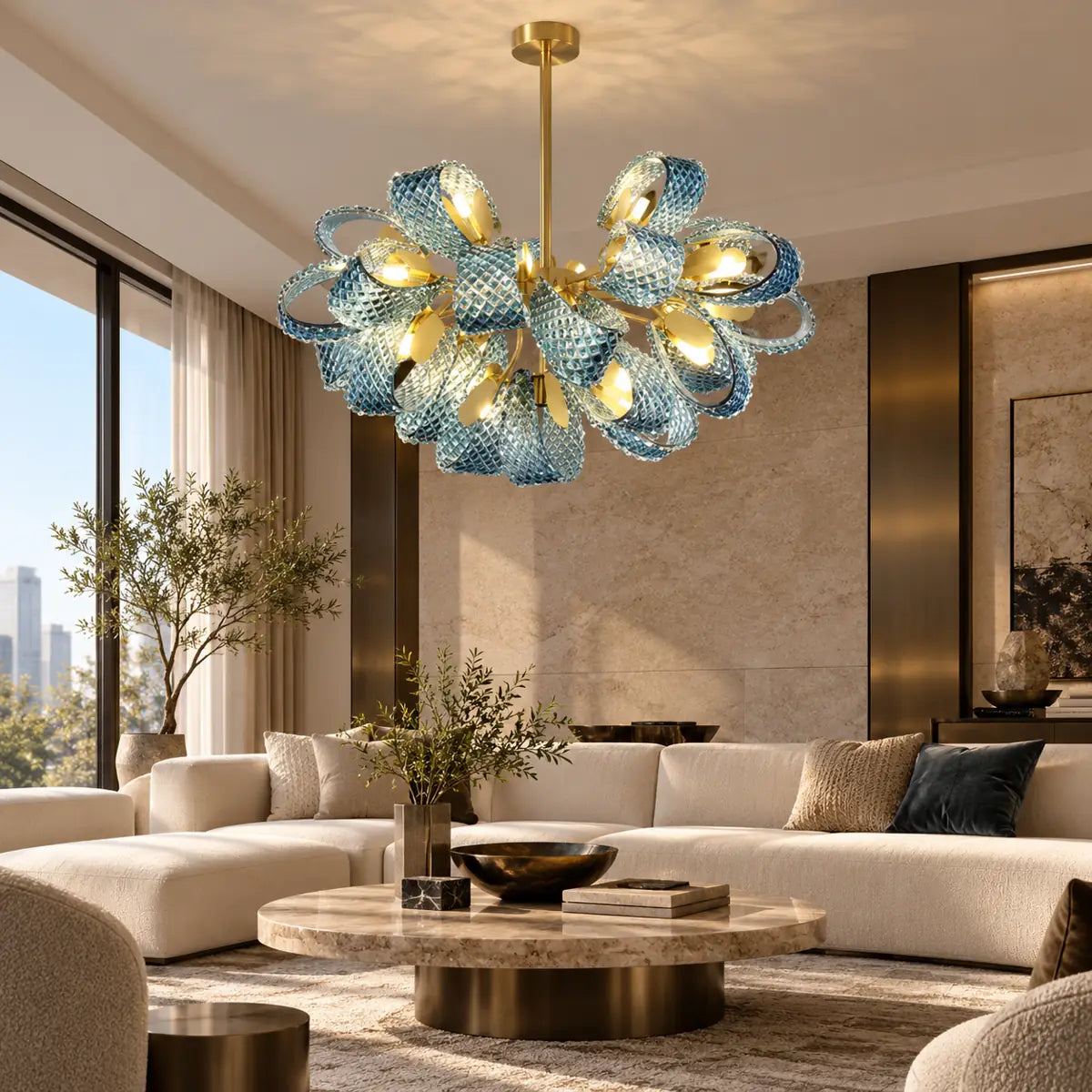
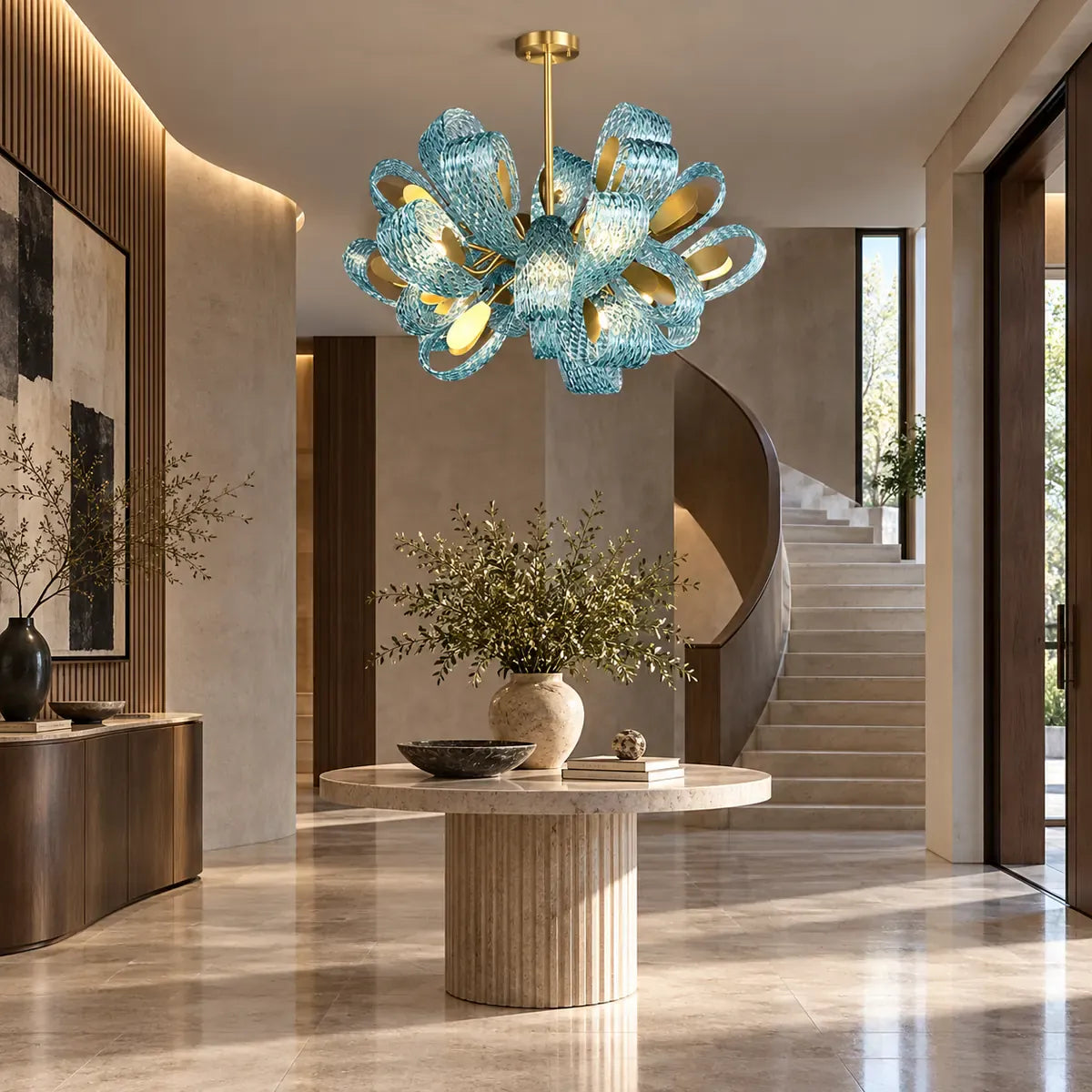
- Crystal and glass-tipped: starburst descendants carrying crystal points or glass globes at the arm ends — the softened, formal-room direction, with the material family in the crystal chandeliers collection
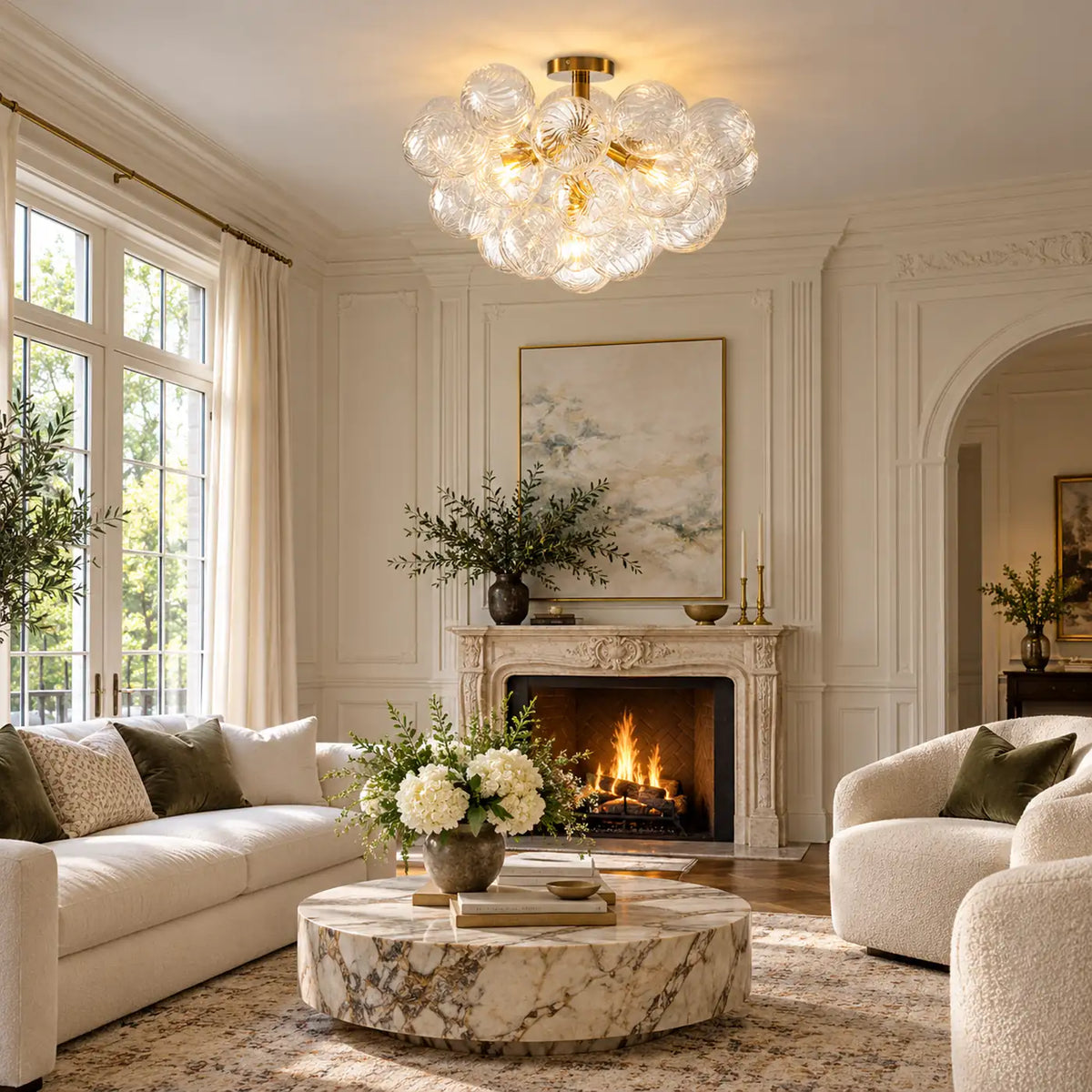
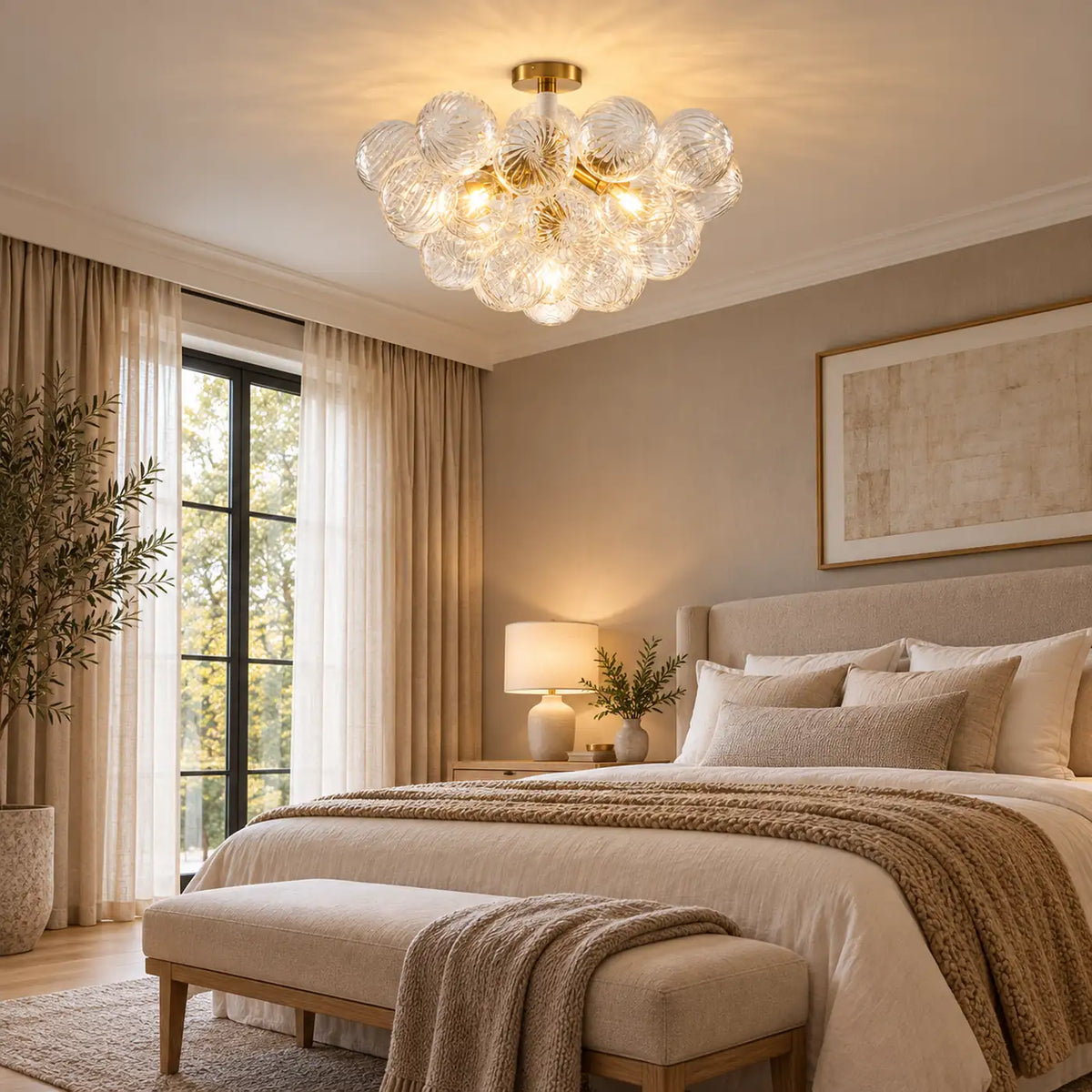
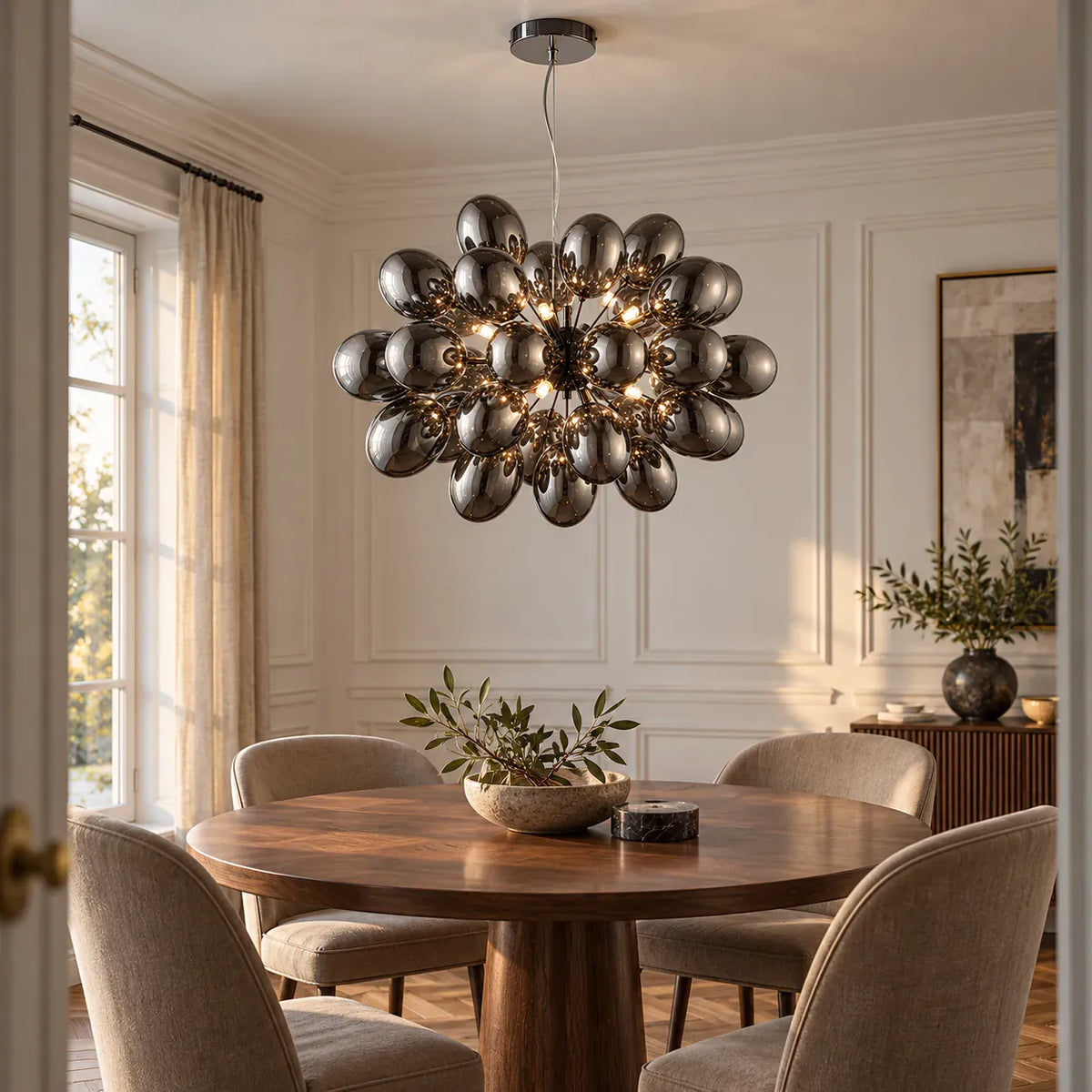
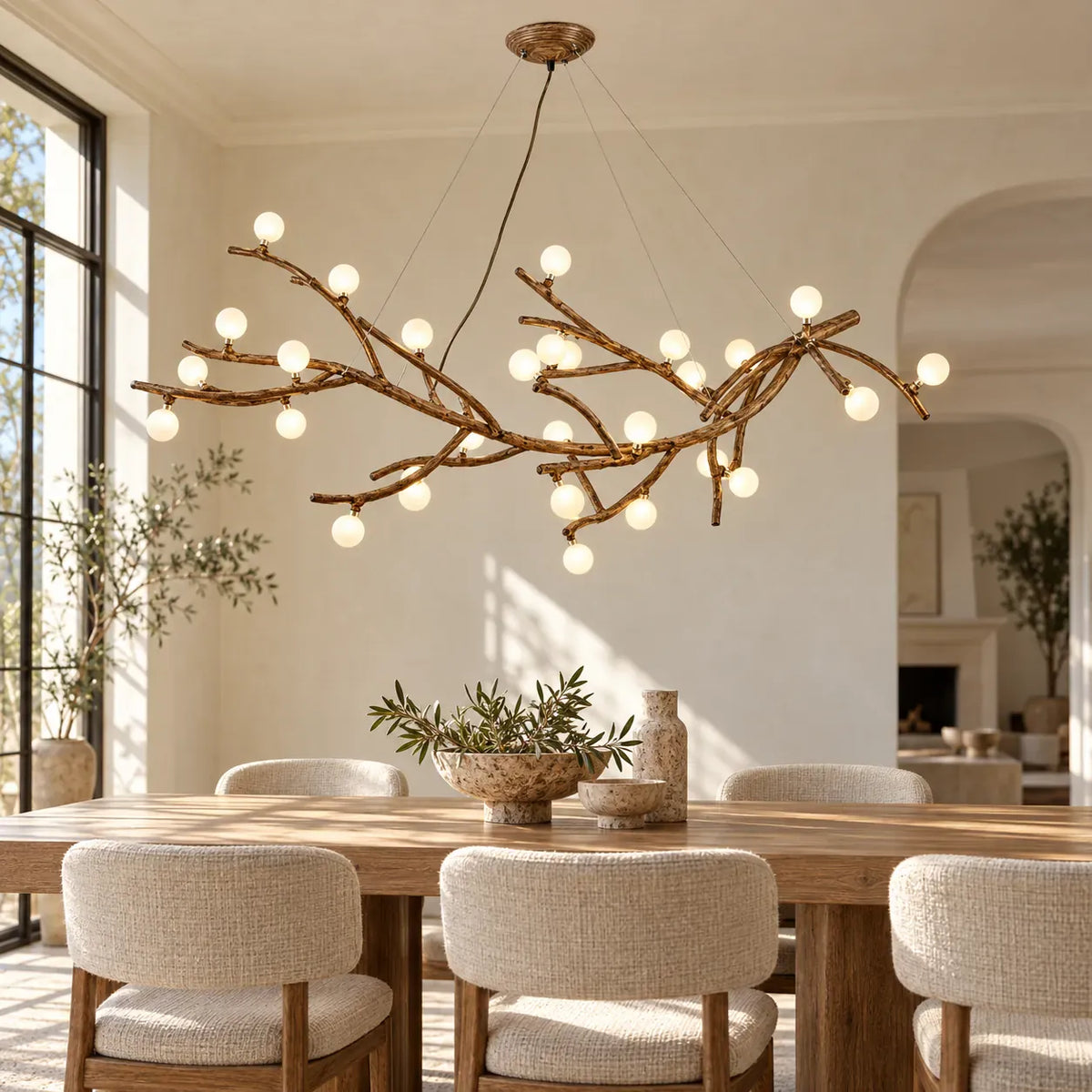
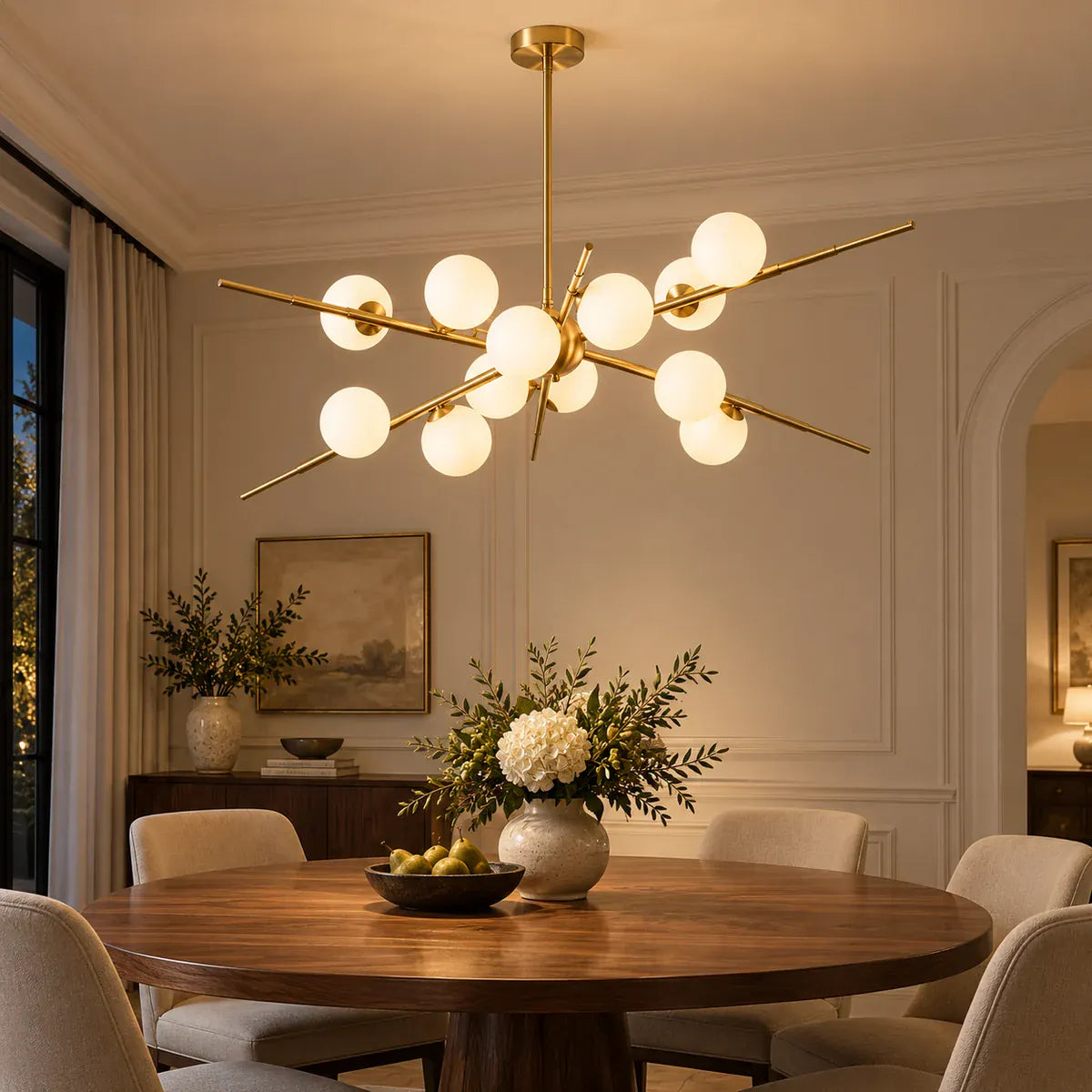
- Bubble-glass hybrids: radial arms carrying glass spheres — where this family meets the bubble chandeliers collection
- Finishes: aged brass and gold lead; matte black, silver and brushed nickel, white, grey, and the colorful accent end extend the range across interiors
Beyond the Dining Room
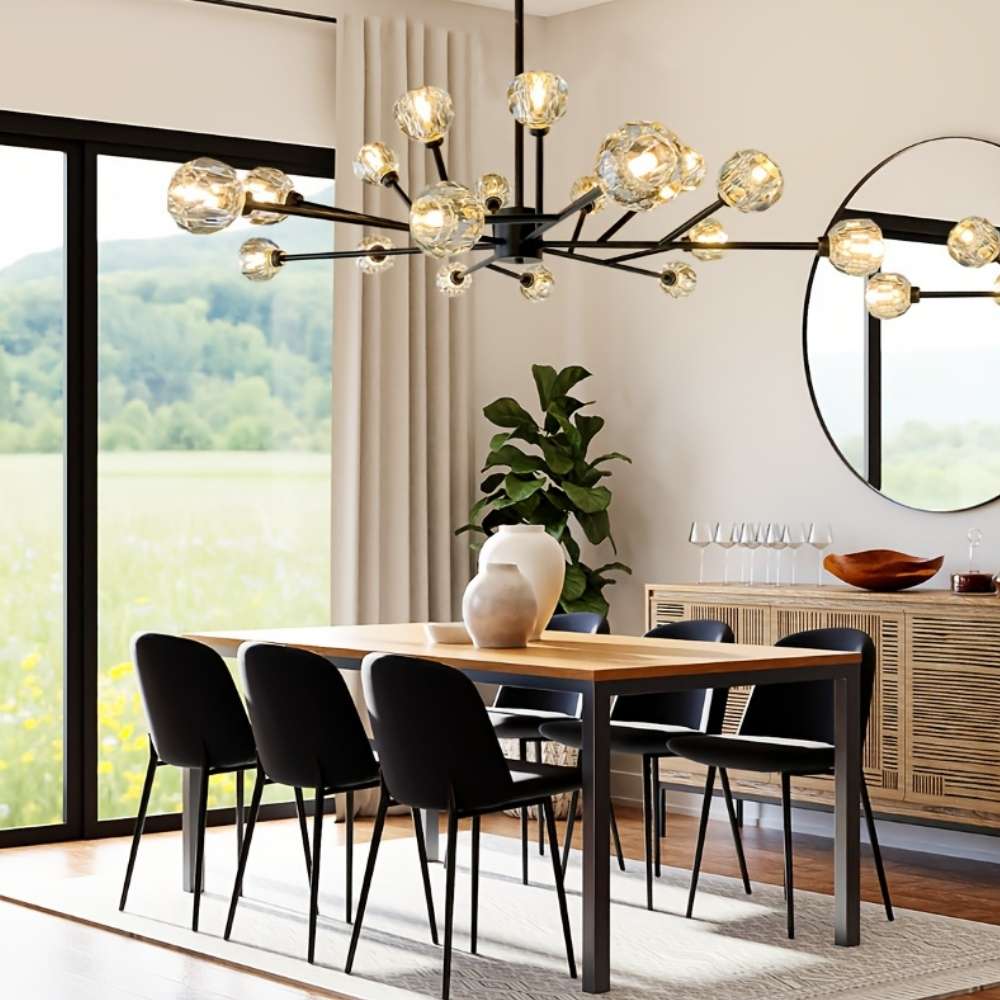
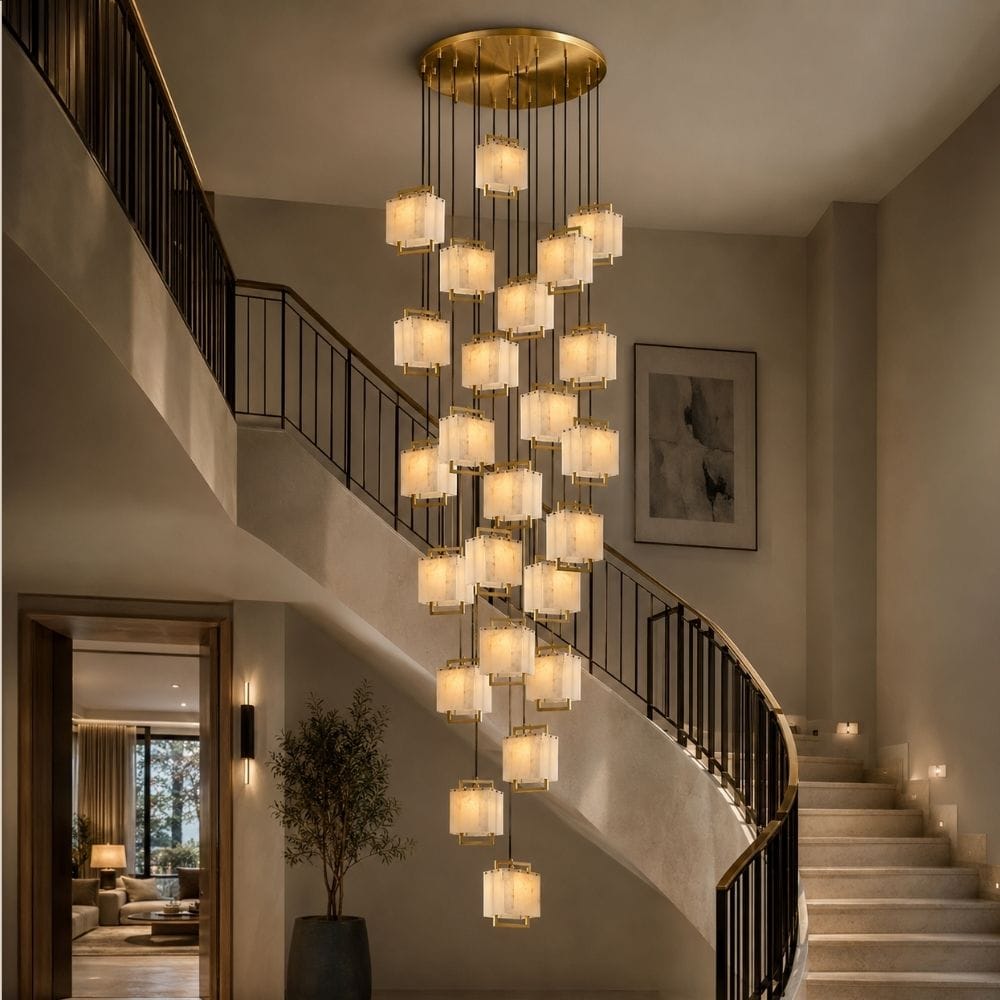
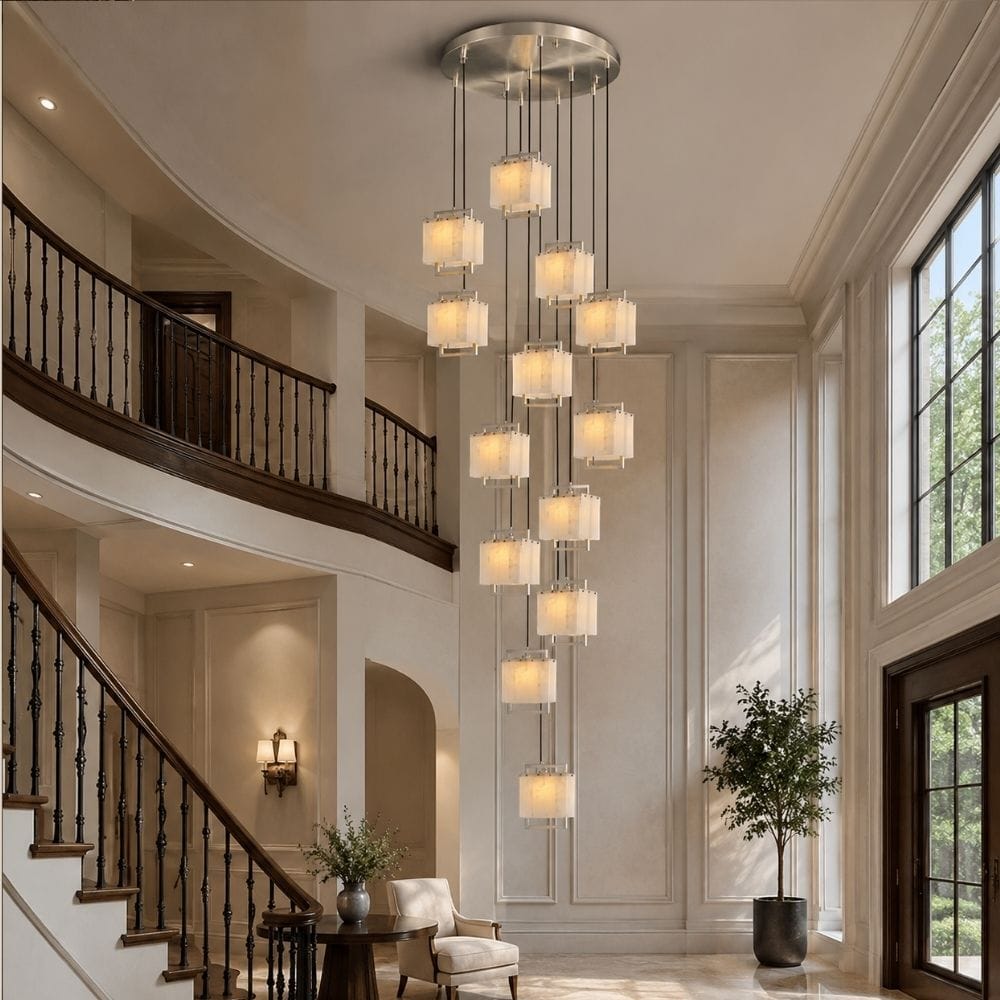
The form's radial symmetry makes it the rare statement that works from every seat, which frees it from its dining-room origins. Loft and open-plan interiors take large-diameter versions as the space's central event; living rooms center them over the seating group; entries and stairwells use the no-bad-angle geometry where fixtures are seen in the round; bedrooms take compact eight-light versions as the mid-century accent. The commercial world discovered the same virtues — cafes, restaurants, and studios specify the silhouette because it photographs identically from every table. Size by the standard formula (room length plus width in feet equals diameter in inches), and remember the negative-space advantage: a sputnik a size up still reads lighter than a solid fixture a size down.
Bulbs, Dimming and the Exposed-Lamp Question
Because the lamps are the design, specify them like a finish: LED filament globes in warm white (2700K) keep the period look at comfortable brightness, and a dimmer is non-negotiable — twelve to twenty-four exposed points at full output is a runway, dimmed to 30-50% it is the atomic-age glow the form was born for. Check the socket count and type on each listing (light counts run 8 to 24+), and confirm total diameter against ceiling height: standard rooms suit 24-32" (61-81 cm) versions, while great rooms and lofts open the 40"+ (102 cm+) class.
Related Collections
Continue the era at the vintage chandeliers collection, cross into adjacent forms at the bubble chandeliers collection, and browse the full chandelier catalog for the complete designer range.
Frequently Asked Questions
What is a sputnik chandelier?
A fixture with radial arms projecting from a central hub, a visible lamp at each tip — the mid-century starburst icon named for the 1957 satellite. The light sources are the ornament, and the mostly-air structure carries statement scale without visual weight.
What makes a sputnik chandelier unique in design?
Three traits together: radial geometry with no front or back, exposed bulbs as the design element itself, and negative space that lets large diameters read weightless. No other lighting form shares all three.
Are sputnik chandeliers still in style?
Yes — the silhouette has graduated from trend to permanent vocabulary. Current versions evolve it with matte and mixed finishes, LED filament bulbs, linear formats, and crystal or glass tips.
What is the difference between sputnik and starburst?
Sputnik is the strict original — straight arms, bare bulb at each tip. Starburst is the broader radiating family, including crystal-spiked and sunburst variants. Every sputnik is a starburst; not every starburst is a sputnik.
Do sputnik chandeliers work in rooms other than dining areas?
Better than most statements — the radial form has no bad angle, so lofts, living rooms, entries, stairwells, bedrooms, and cafes all take it naturally. Size by the room formula and round up; the open structure forgives scale.
How many lights should mine have?
Count scales with diameter: 8-12 lights suit compact 24-32" versions for standard rooms; 16-24+ lights carry the 40"+ statements in great rooms and lofts. Warm LED filament bulbs on a dimmer complete the look.