





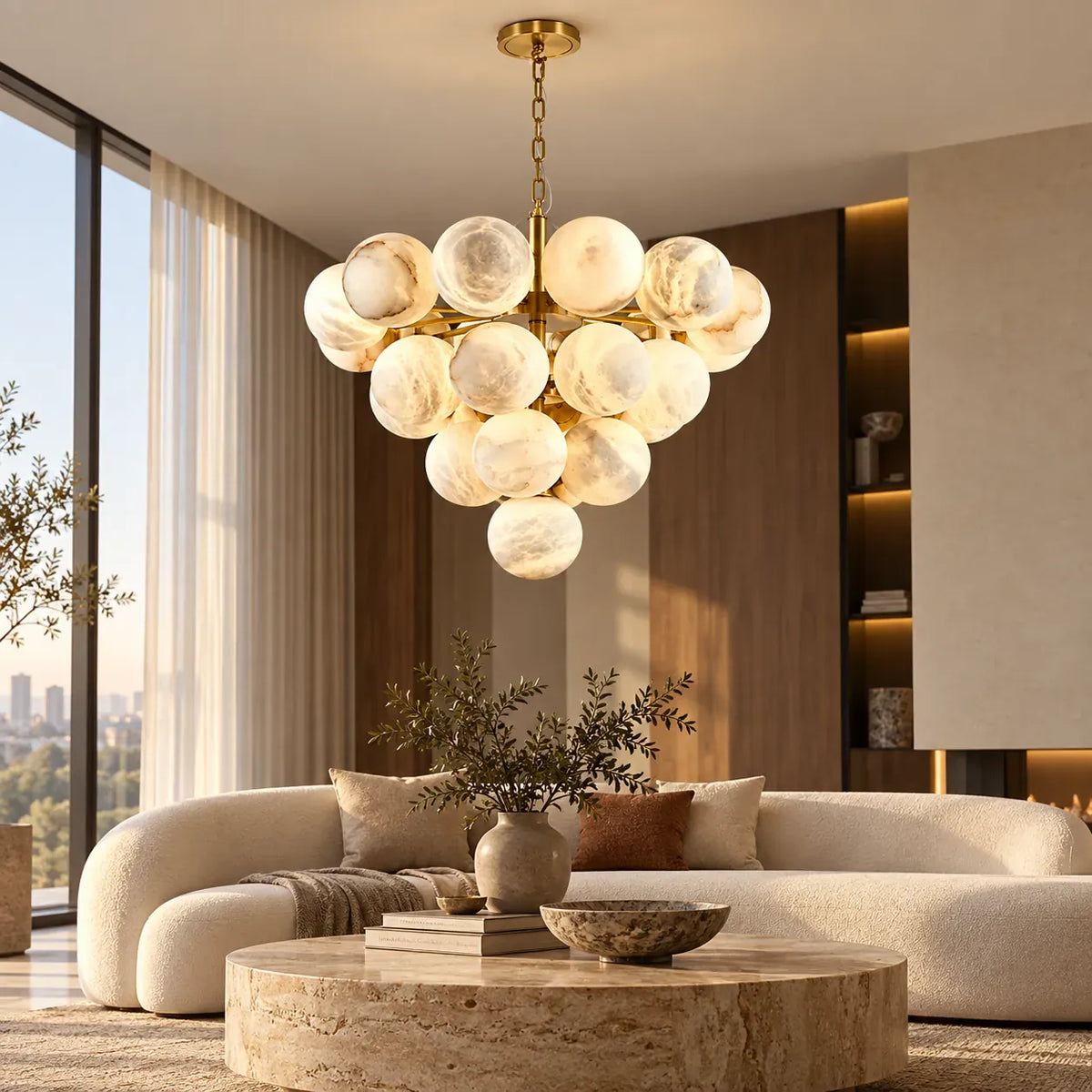
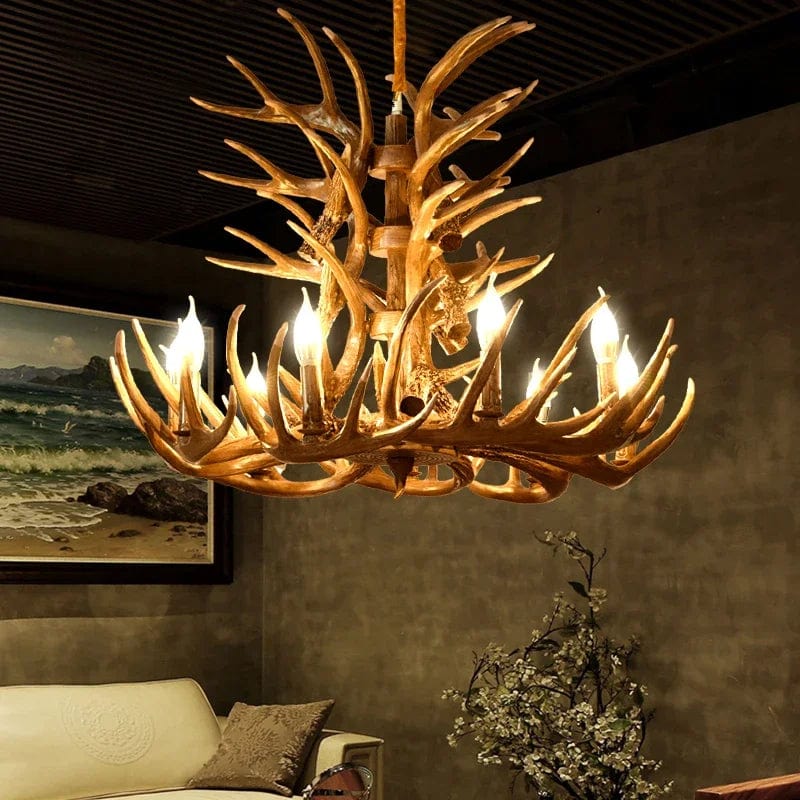
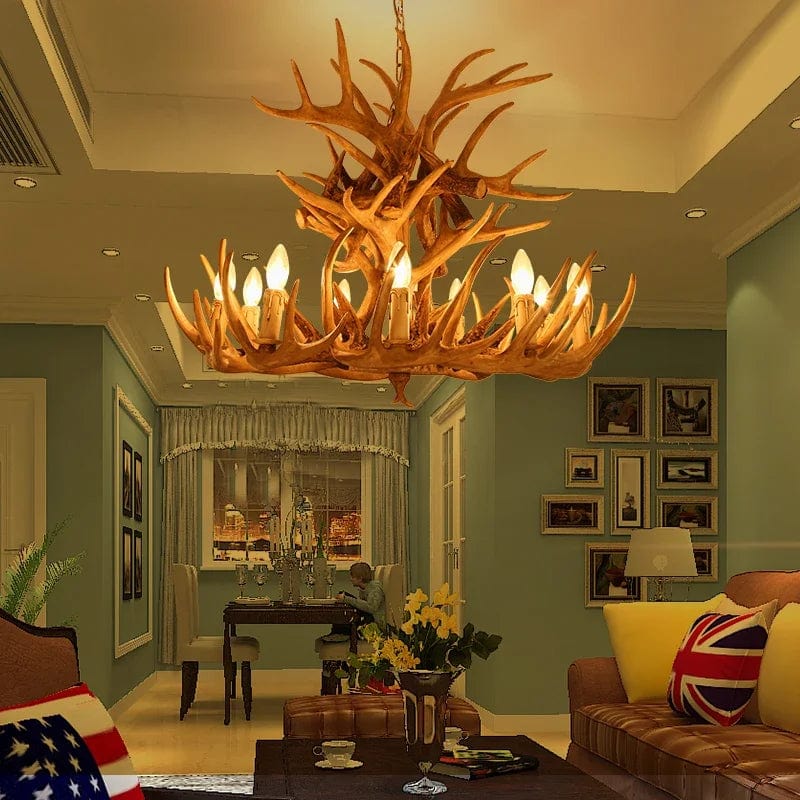
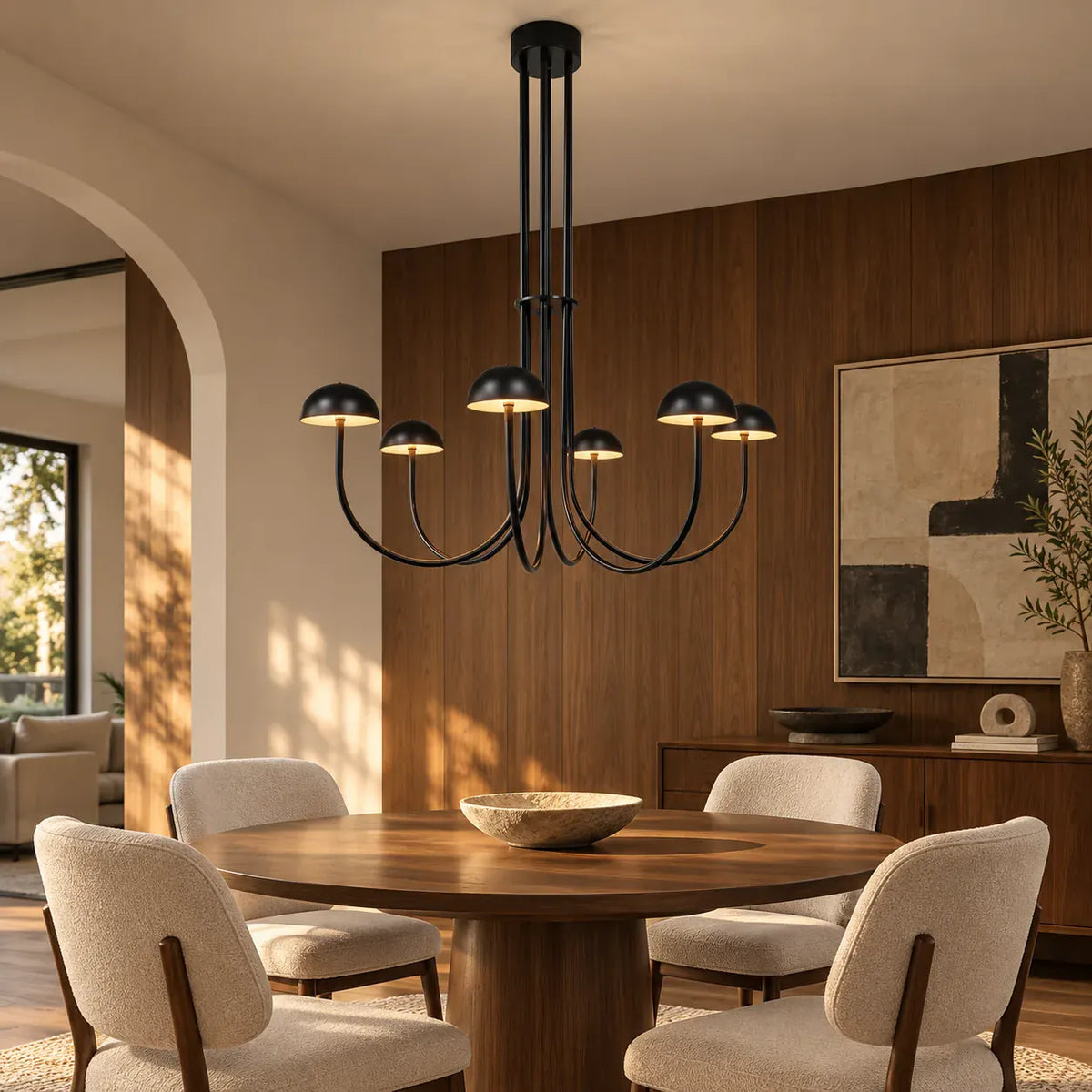


What Separates Farmhouse from Rustic
The two styles are neighbours, and the line between them is one word: finish. Rustic presents materials as found — raw timber, dark forged iron, weight and texture left on show. Farmhouse domesticates the same materials: painted and whitewashed surfaces, lighter wood tones, thinner frames, and a lower visual weight overall. It is the country-house register rather than the backcountry one, which is why a farmhouse fixture reads comfortable in a suburban dining room where a lodge-scale rustic piece would read like a costume.
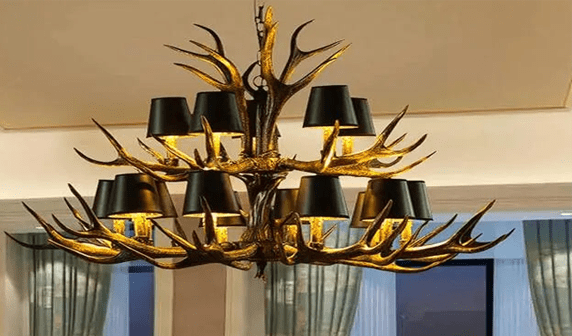
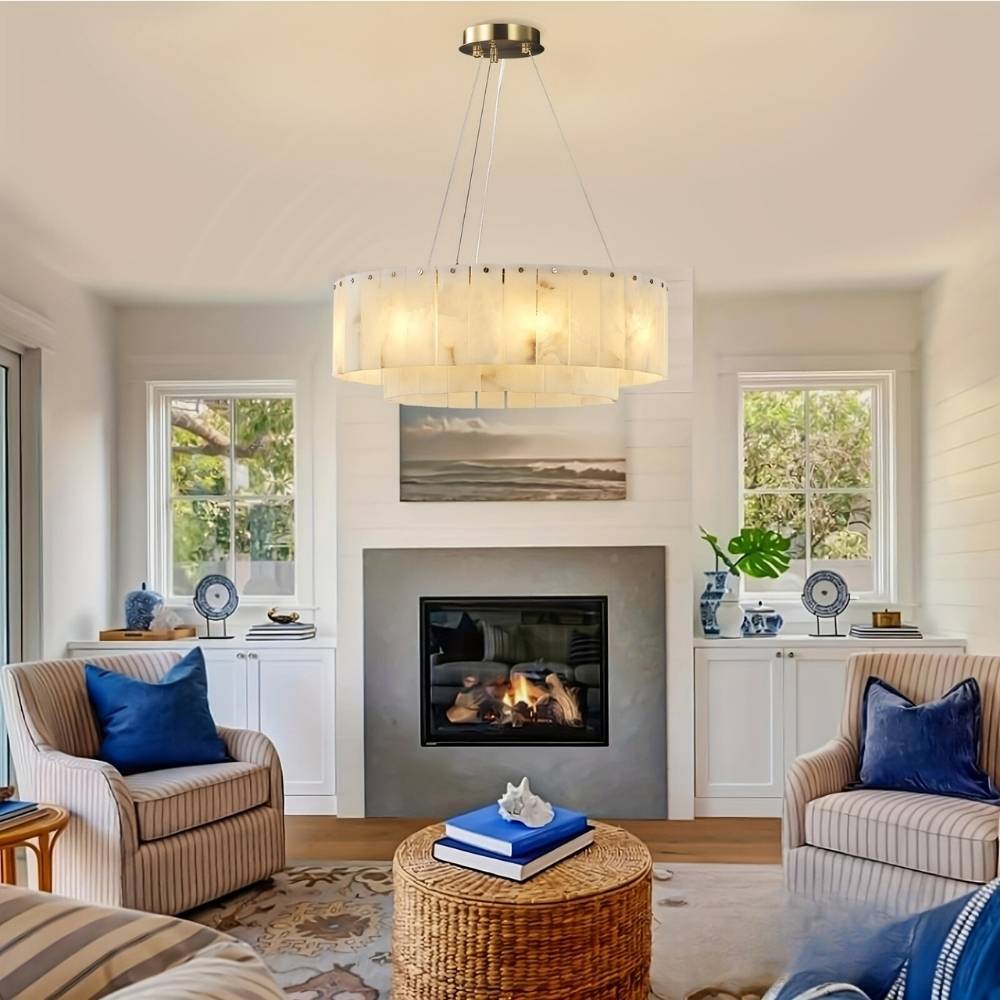
The test takes one look at the room: shiplap and painted cabinetry point here, stone fireplaces and exposed beams point to the rustic chandeliers collection. Full comparison in our farmhouse style guide.
Two Directions Within the Style
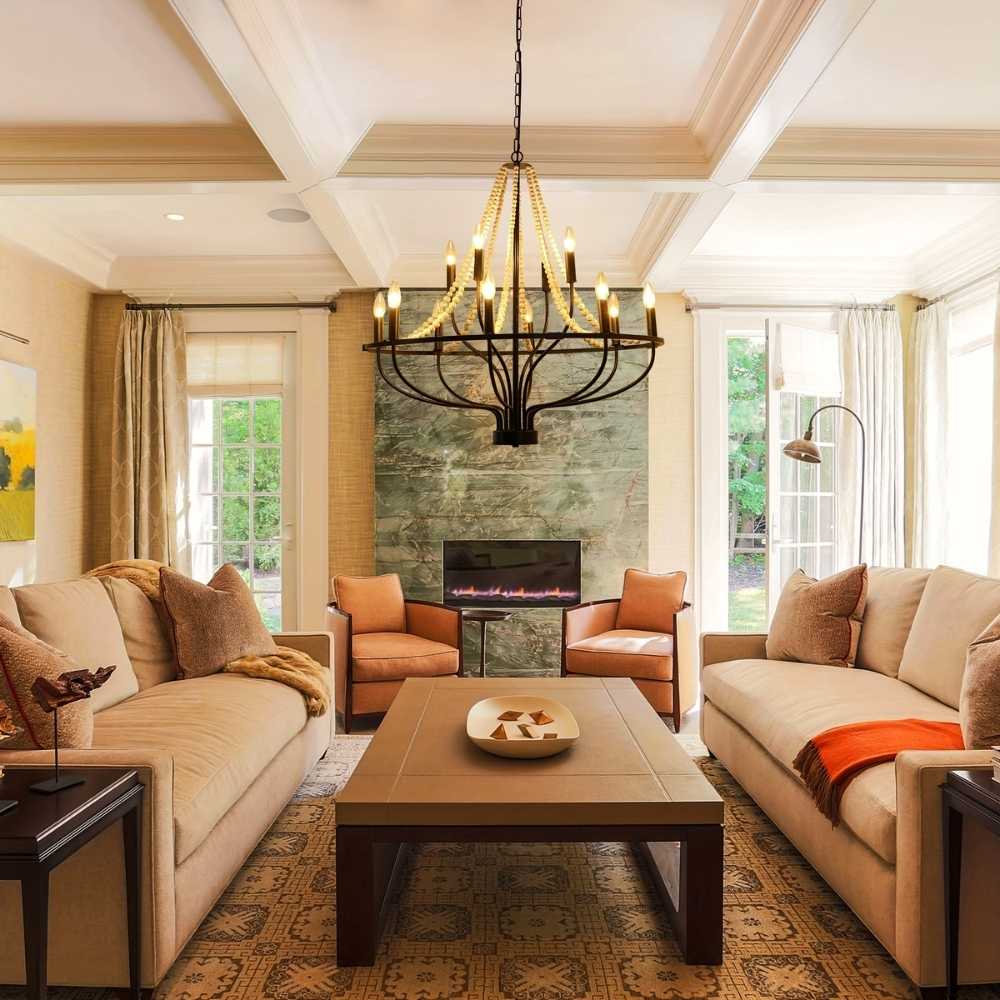
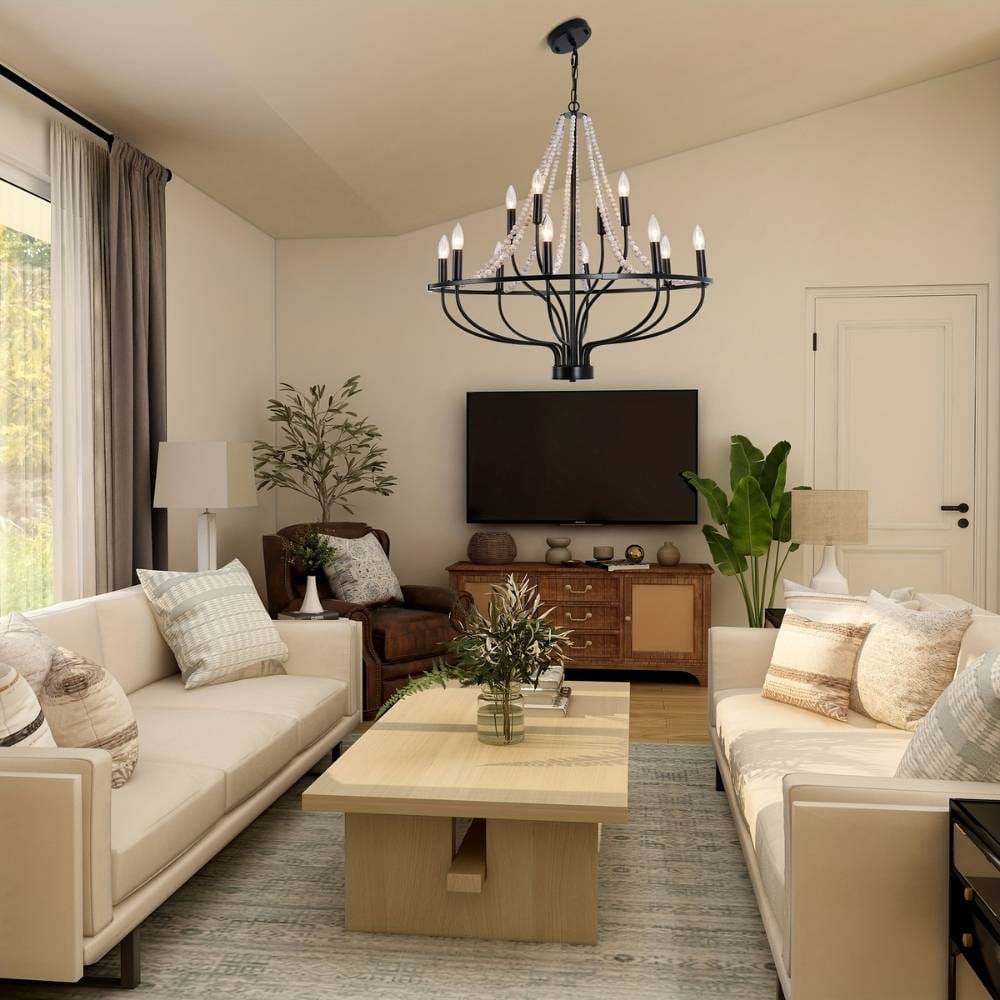
- Modern farmhouse: the collection's leading direction — matte black iron, light and grey-washed wood, clean geometry and restrained detail. Built to sit beside contemporary furniture without pulling a room toward a theme
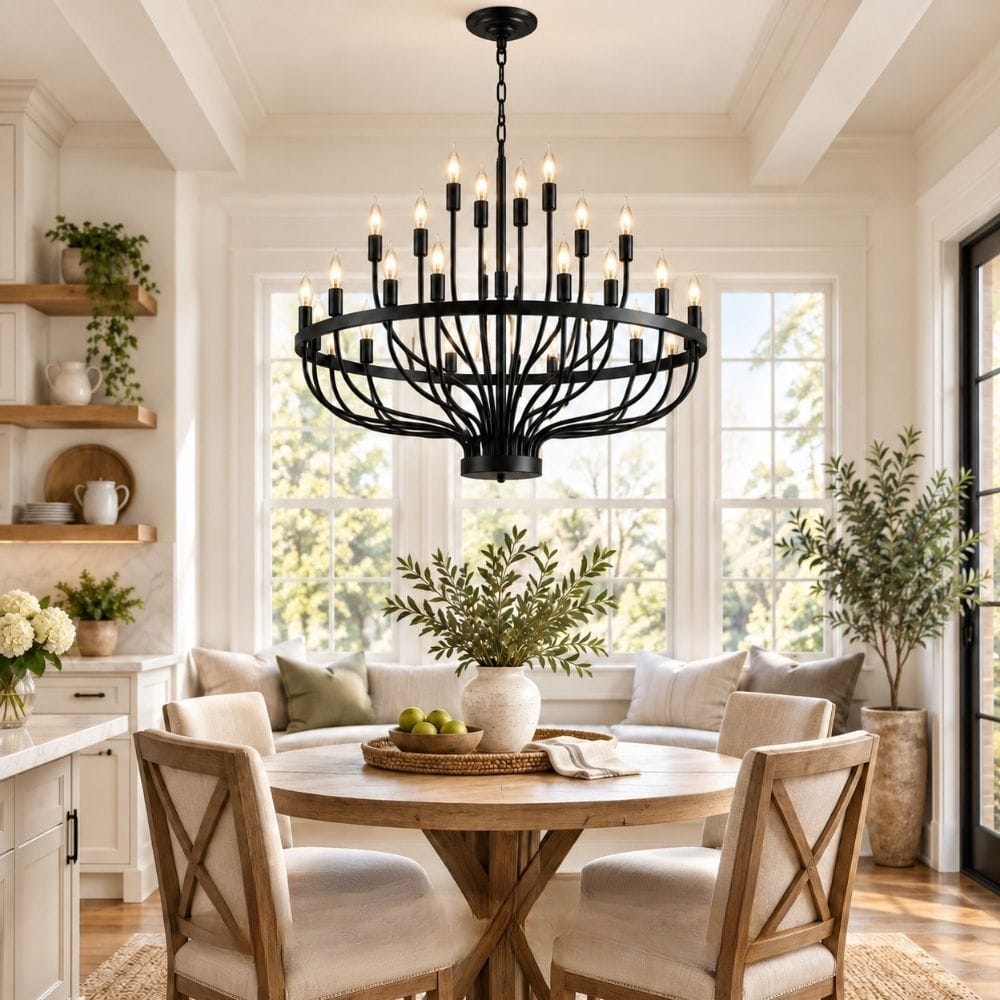
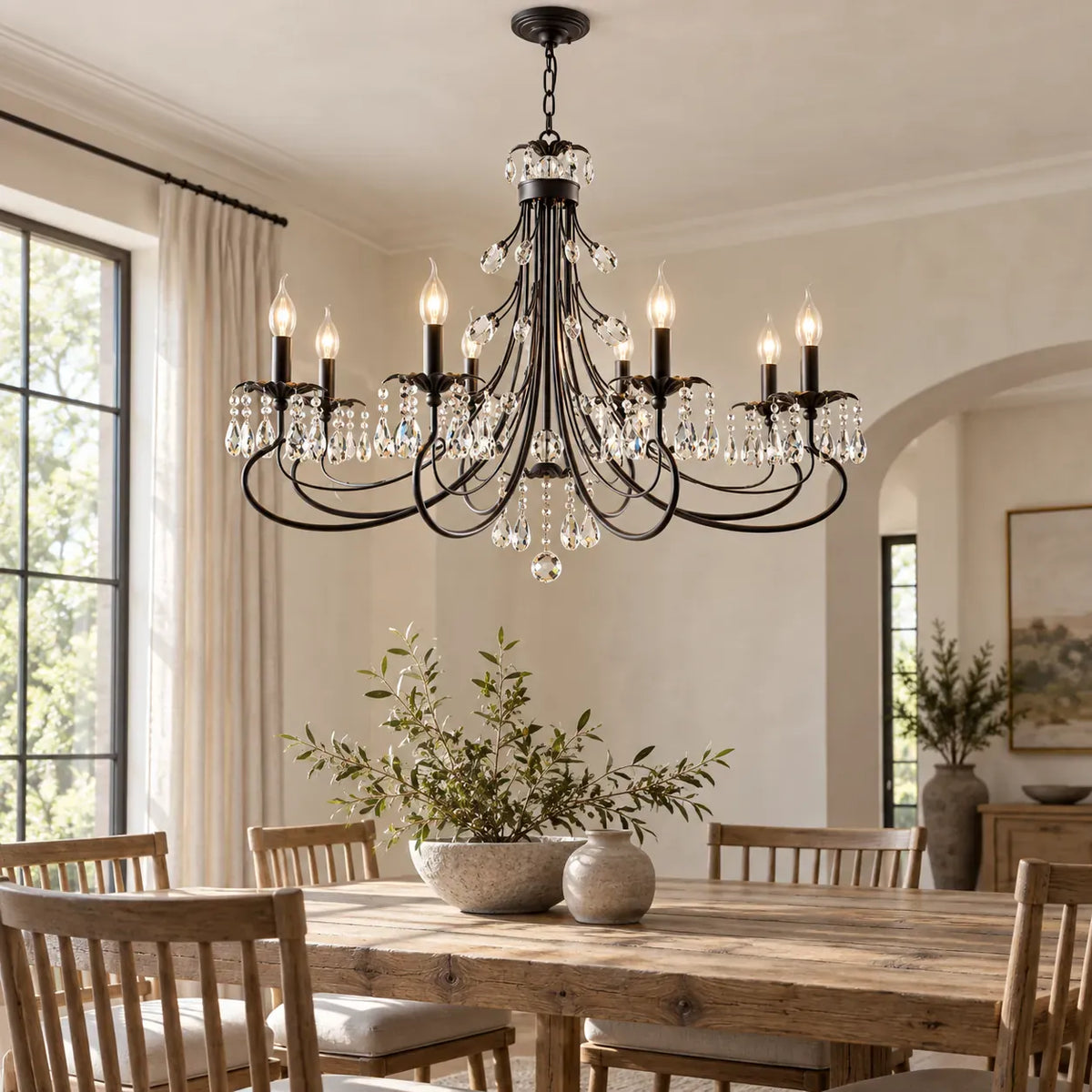
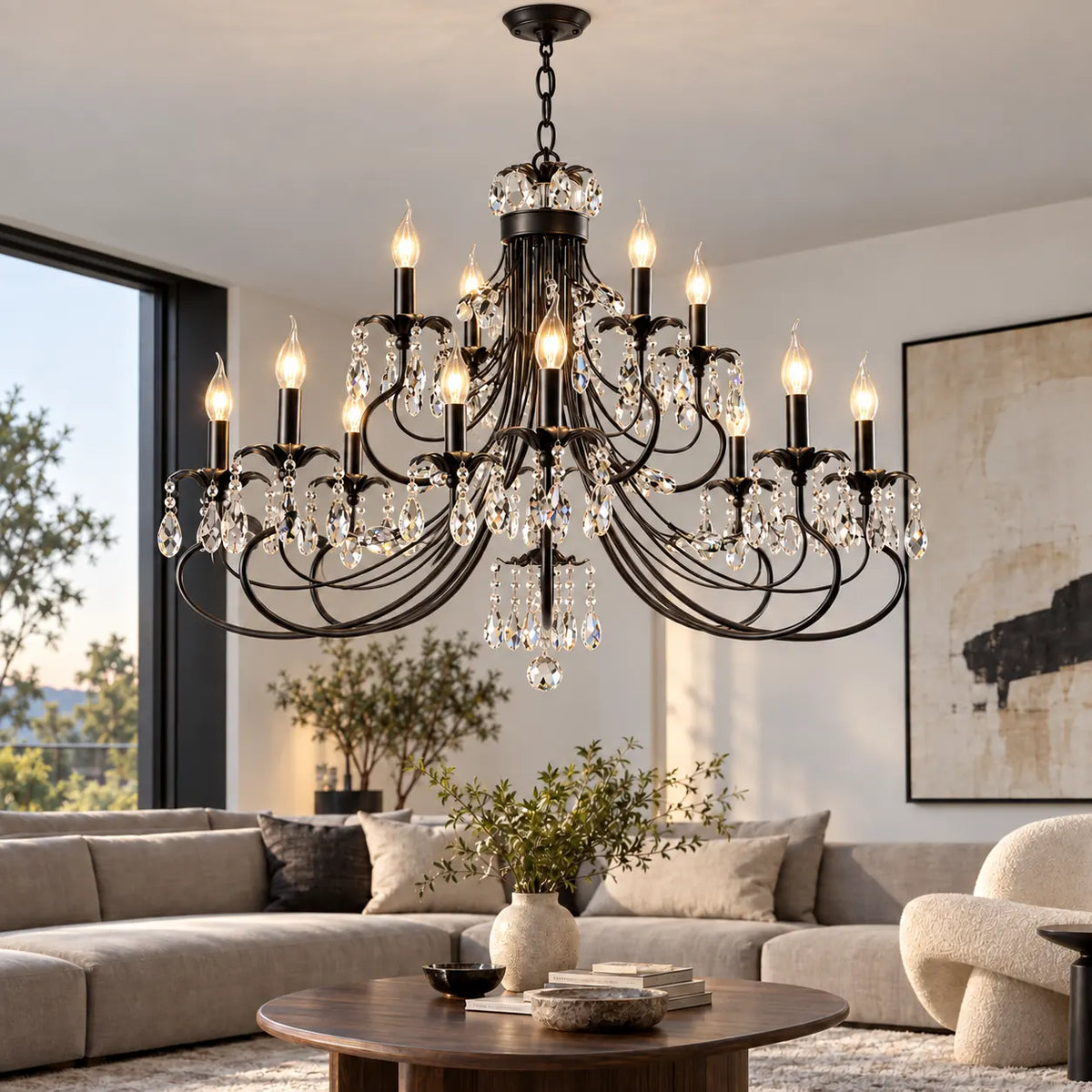
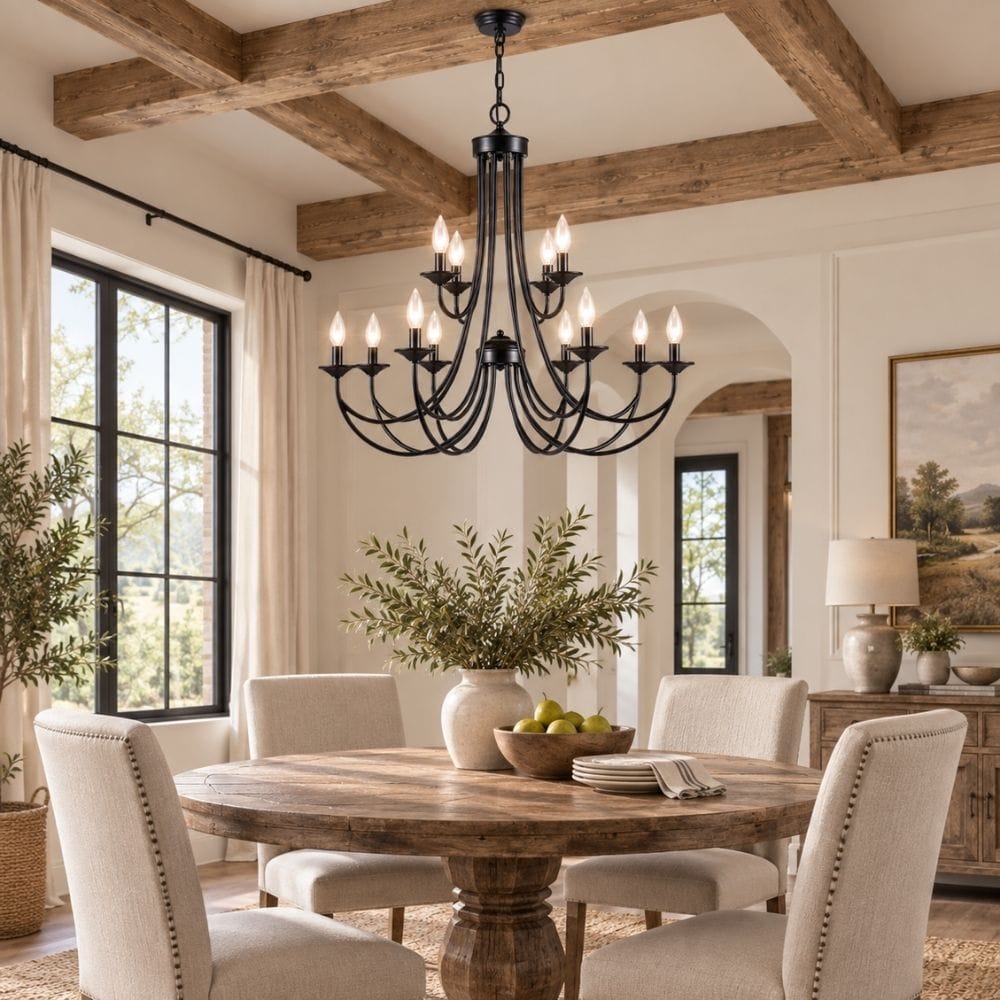
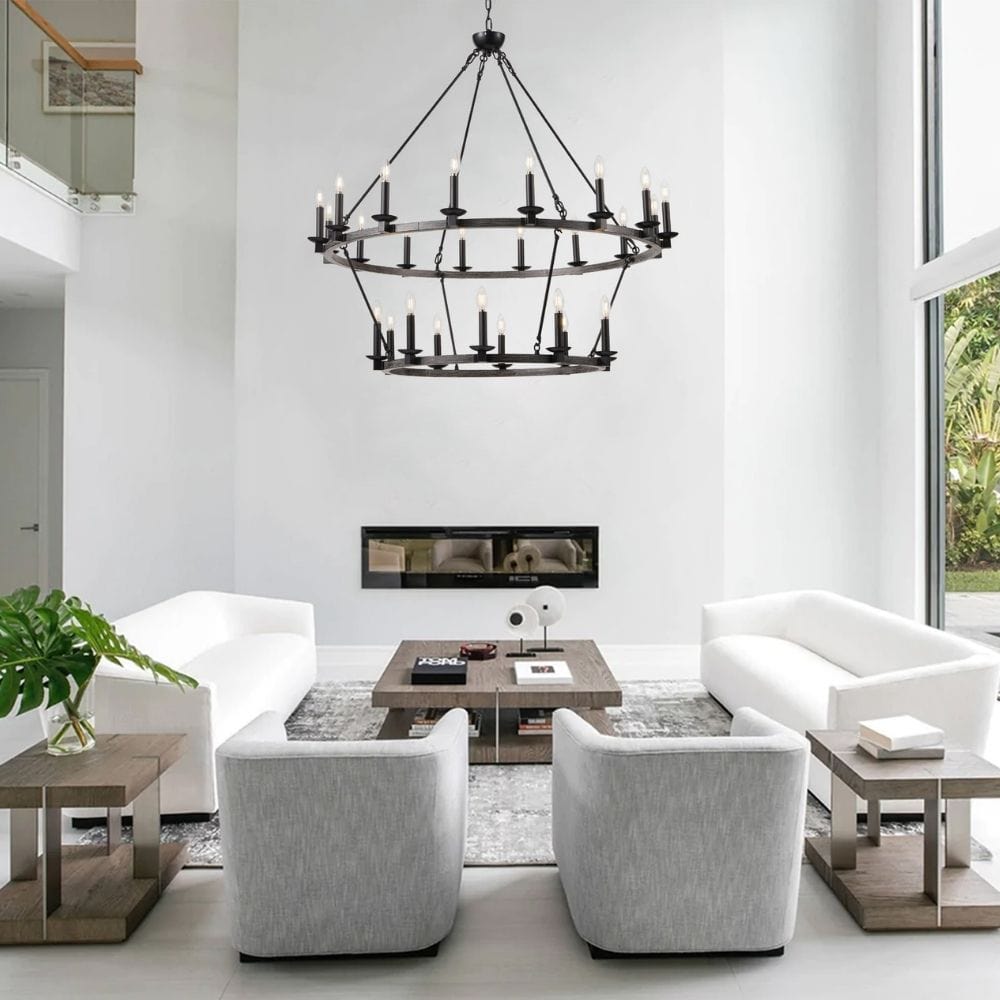
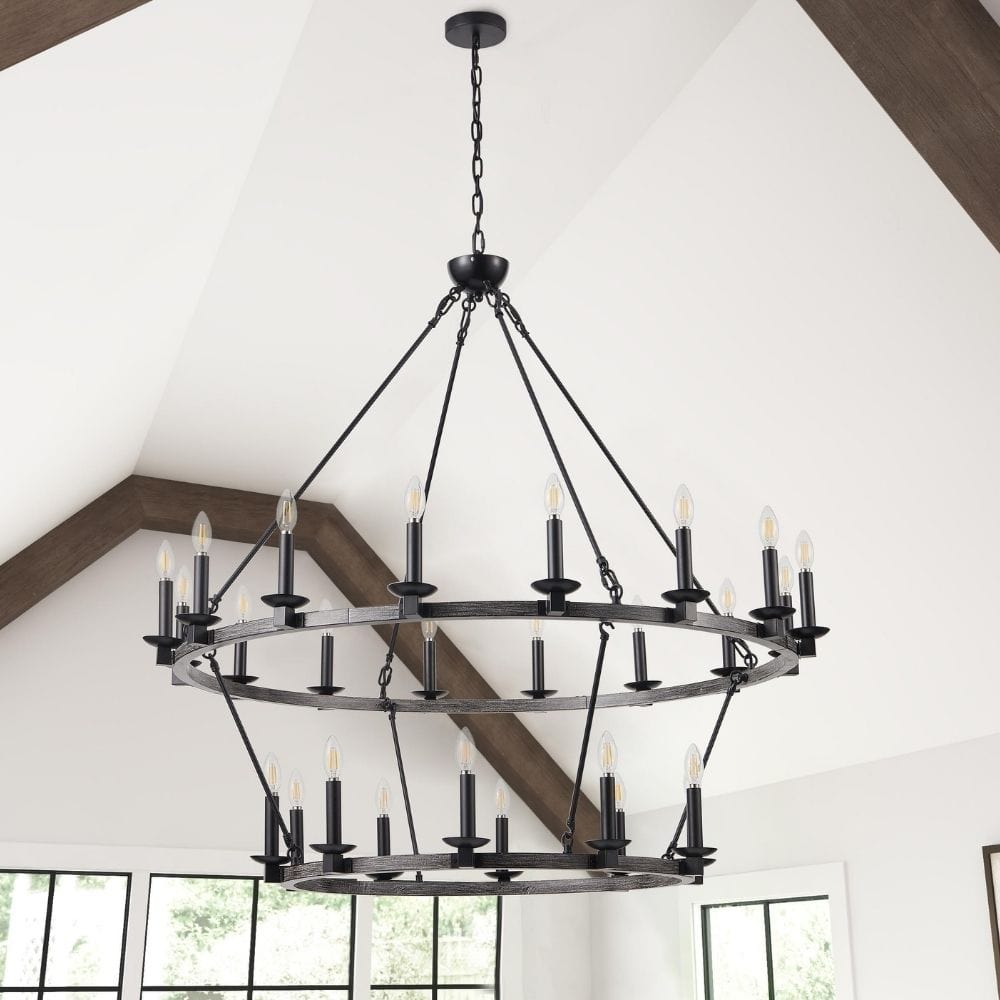
- Rustic farmhouse: the same formula with more texture — aged and darker wood, heavier ironwork, candle-style arms, and forms that reference barns and older country houses
The difference is attitude rather than category, and both stay casual. Room-by-room picks in the modern direction are covered in our modern farmhouse chandelier guide.
How the Metal and Wood Choice Changes the Look
- Black iron frames: maximum contrast against pale ceilings, the finish that most defines the modern farmhouse look, and the most forgiving in daily use
- Wood and wood-tone elements: the warmth half of the formula, from light oak through mid-brown to grey-washed — deeper range in the wood chandeliers collection
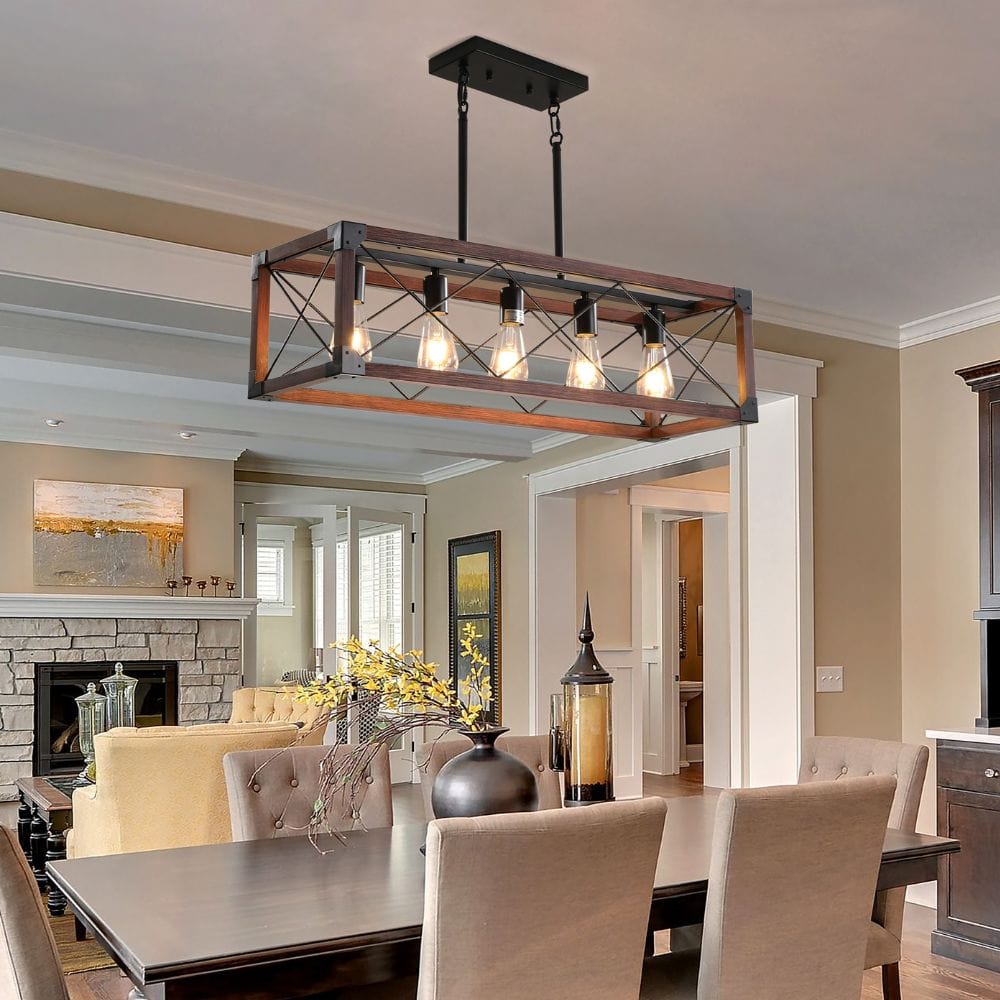
- Wood-and-metal combinations: the category's signature, with the metal carrying structure and the timber carrying surface
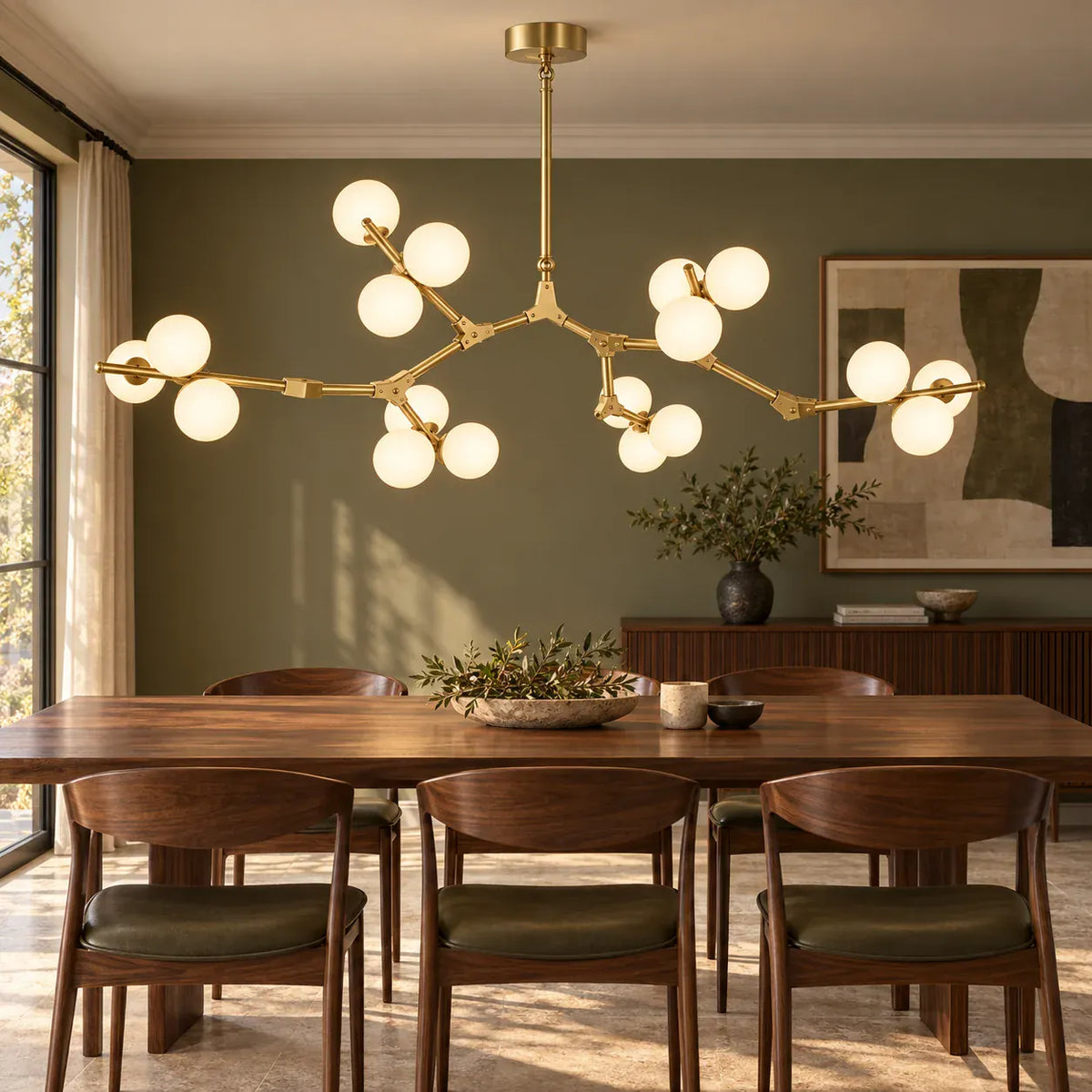
- Brass accents: a secondary layer adding depth without leaving the style
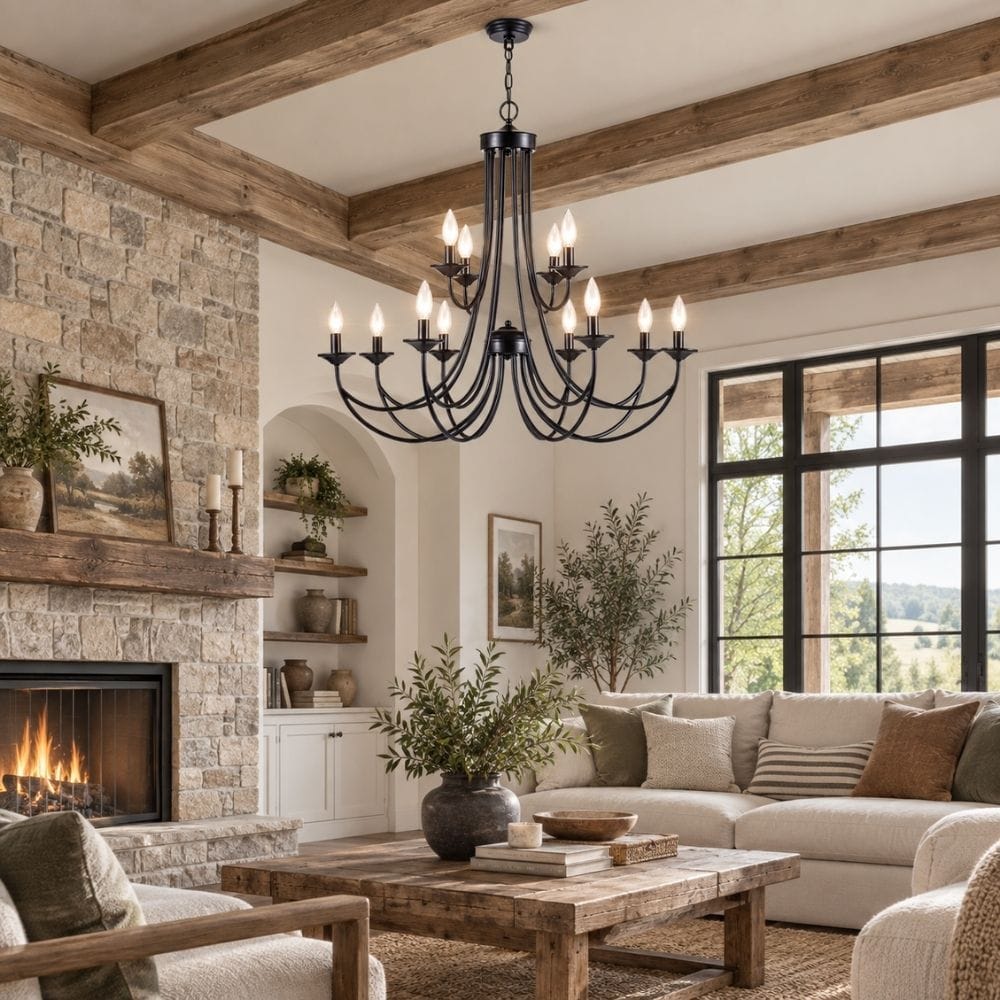
- Candle-style arms: the most traditional reading, closest to the barn and country-house reference
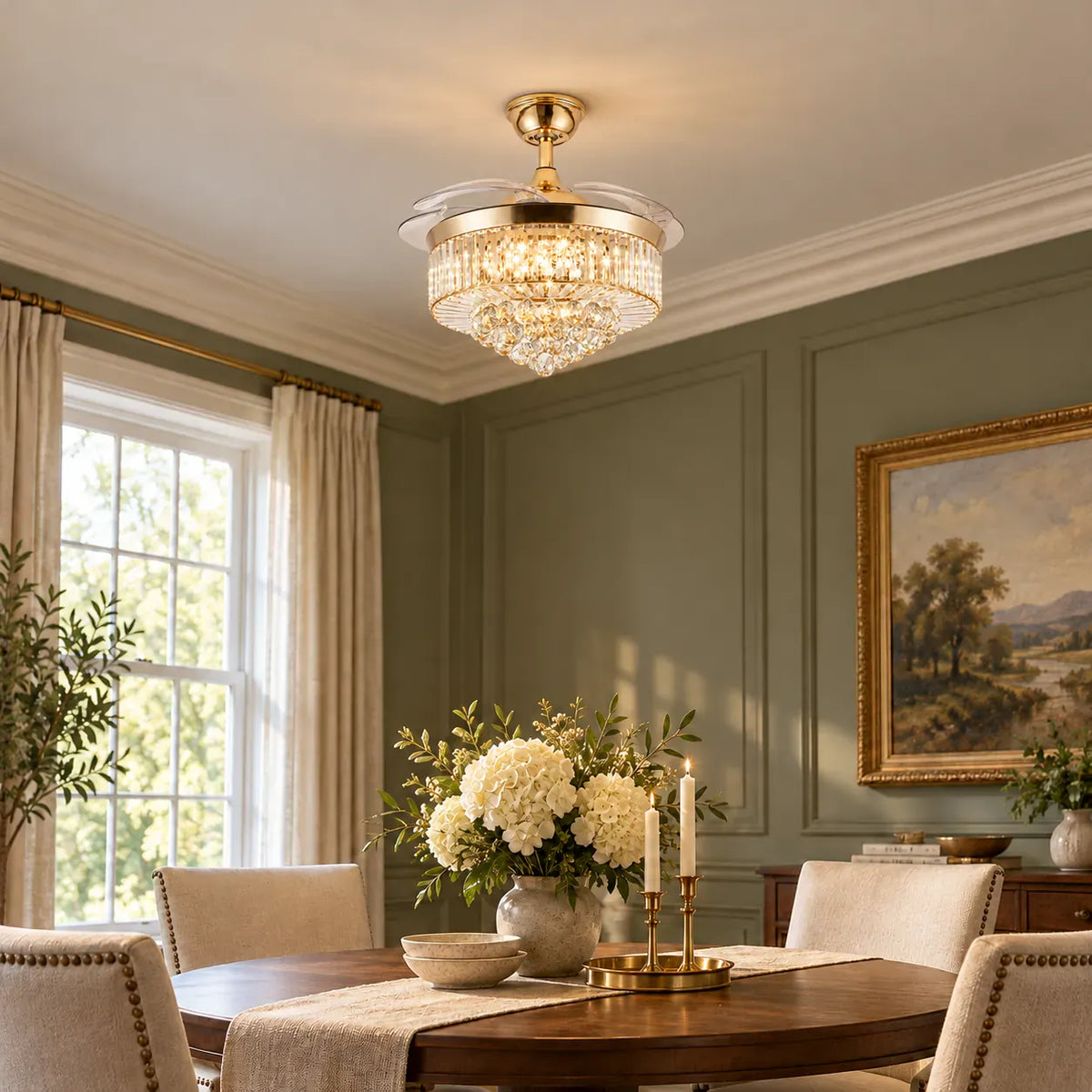
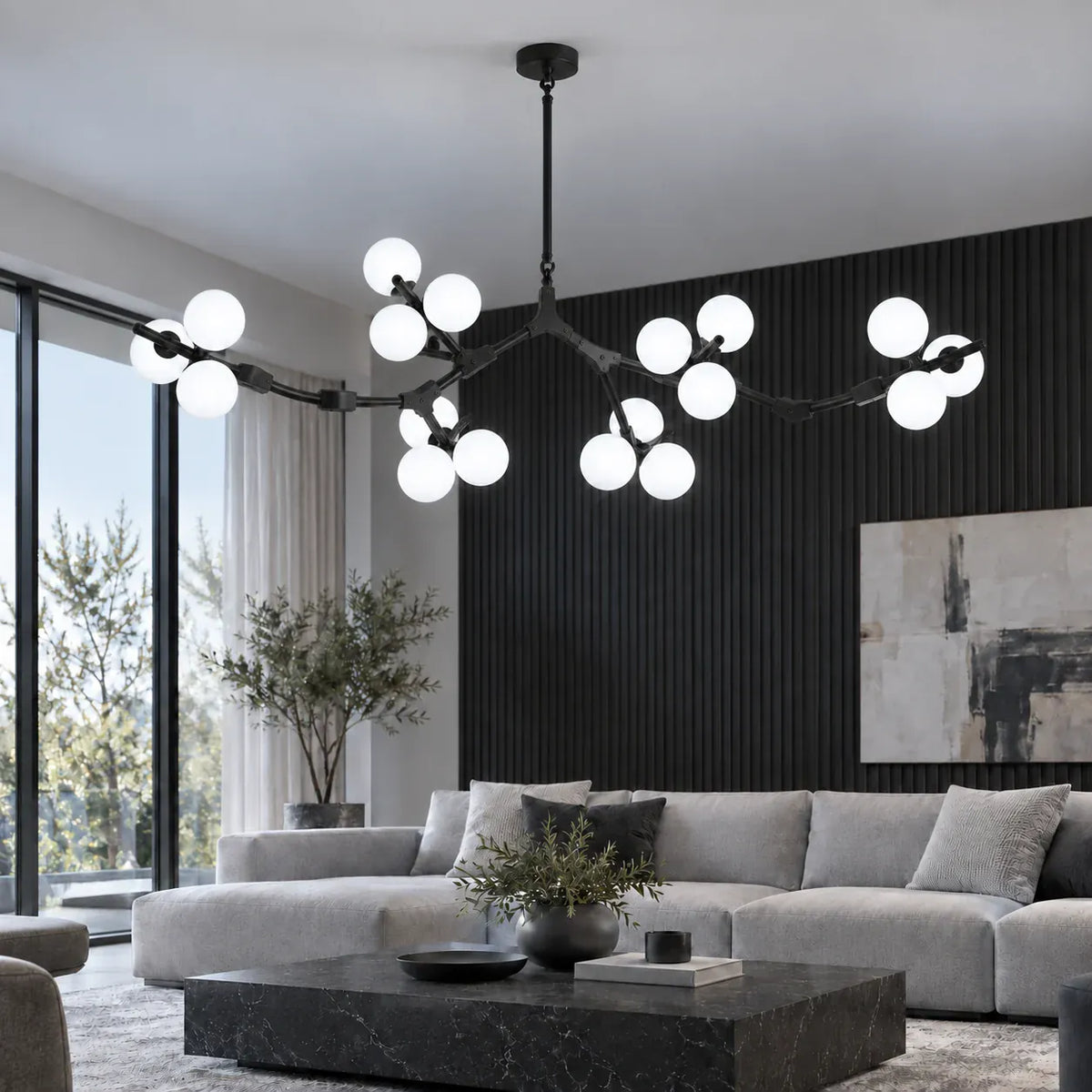
- Glass shades: lighten the fixture and soften output where the ceiling should stay quiet
Where the metal frame is the priority rather than the style, the iron chandeliers collection is the deeper page for that material.
Rectangular Formats for Long Tables and Islands
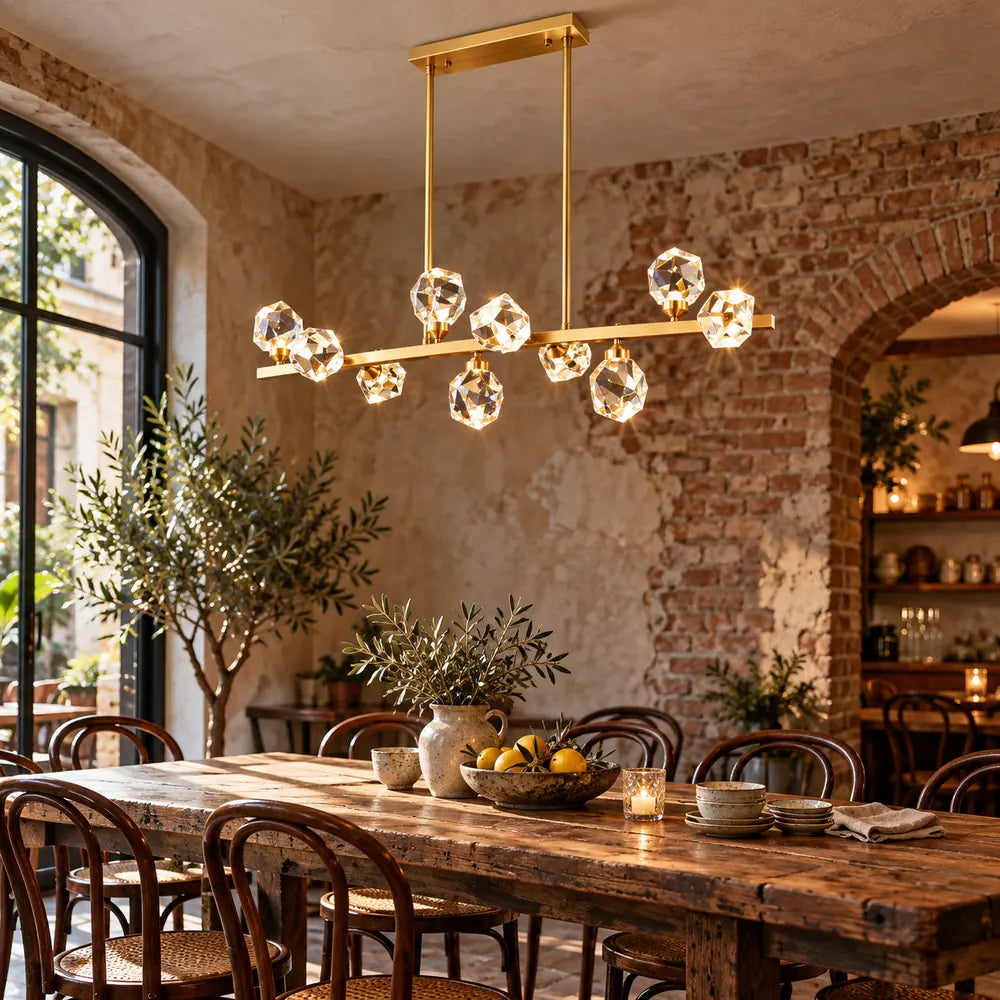
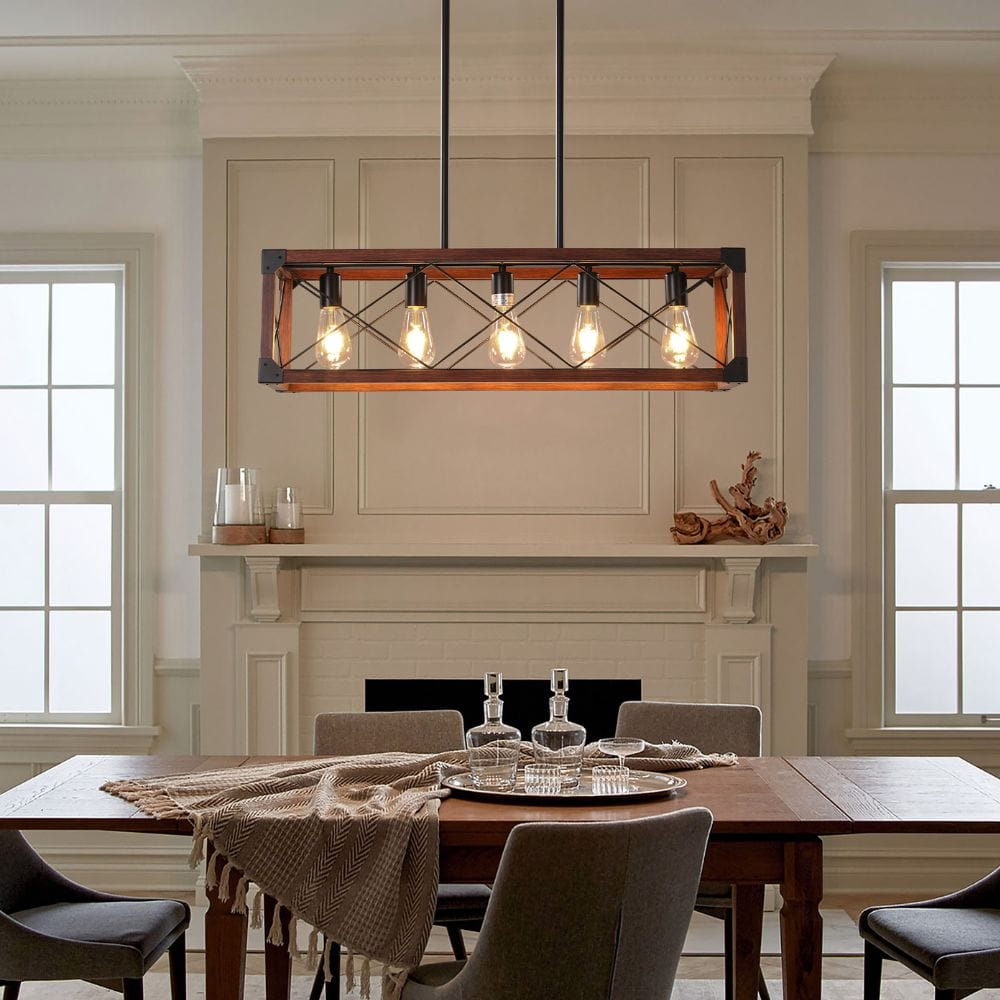
Farmhouse tables run long, which makes the rectangular format one of the most-requested shapes in this collection. A round fixture above a long table lights the middle seats and leaves the ends dim; a rectangular or linear composition distributes light along the table's axis so every place setting sits under it.
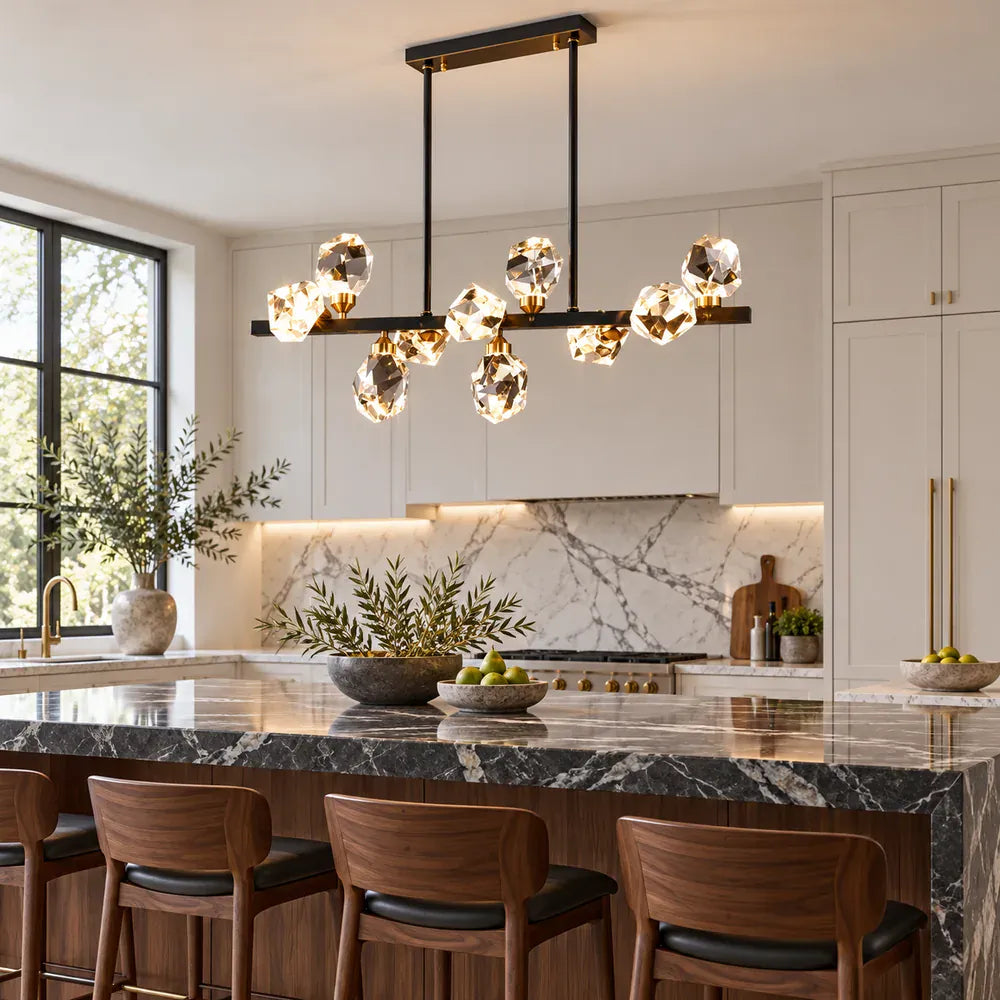
Size to the table rather than the room: one-half to two-thirds of its length, kept visually narrower than the table, hung 30-36" (76-91 cm) above the surface. The same format serves kitchen islands, staying inside the counter's footprint. Straight-line designs across every style live in the linear chandeliers collection.
Sizing, Large Formats and Room Fit
For rooms without a table, add the room's length and width in feet and read the total in inches as a target diameter — a 14 x 16 ft living room points to roughly 30". Open frames can run slightly larger than dense ones, while heavy wood-and-iron fixtures look best one size below the maximum. Above 9 ft ceilings, add roughly 3" per additional foot.
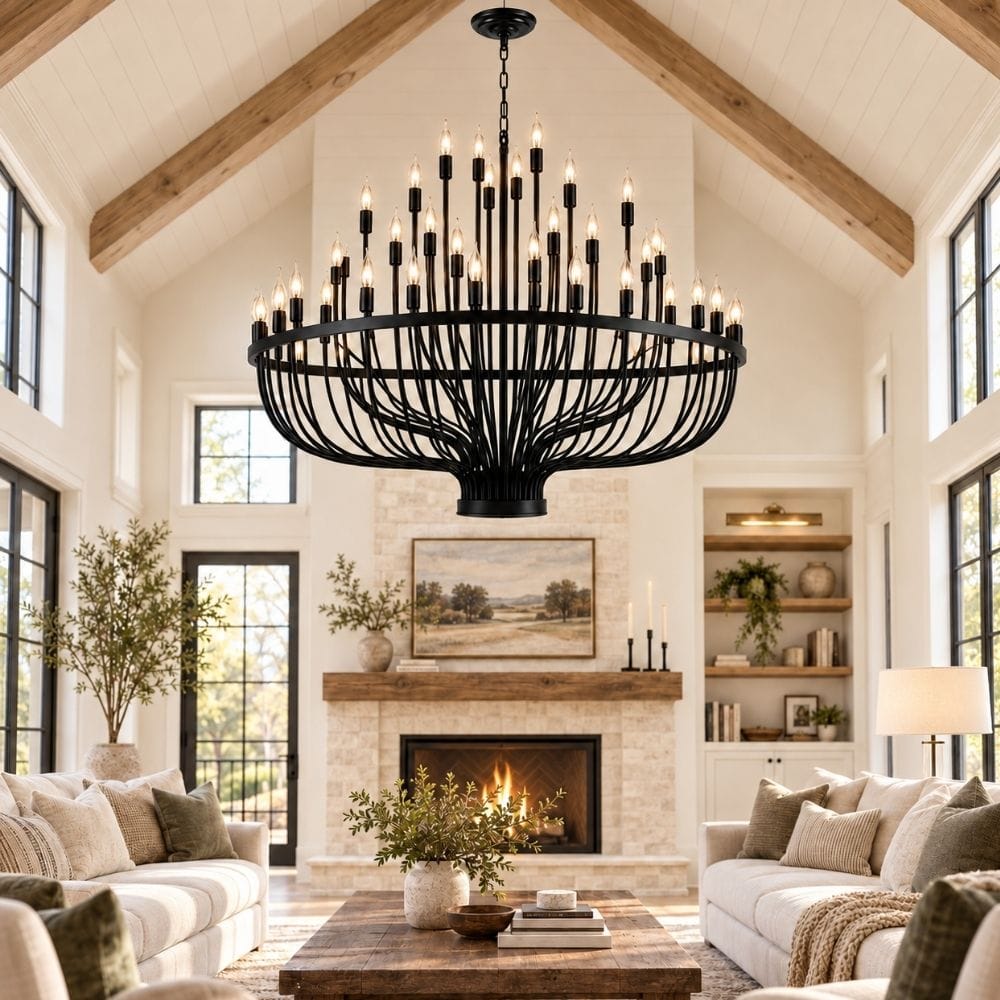
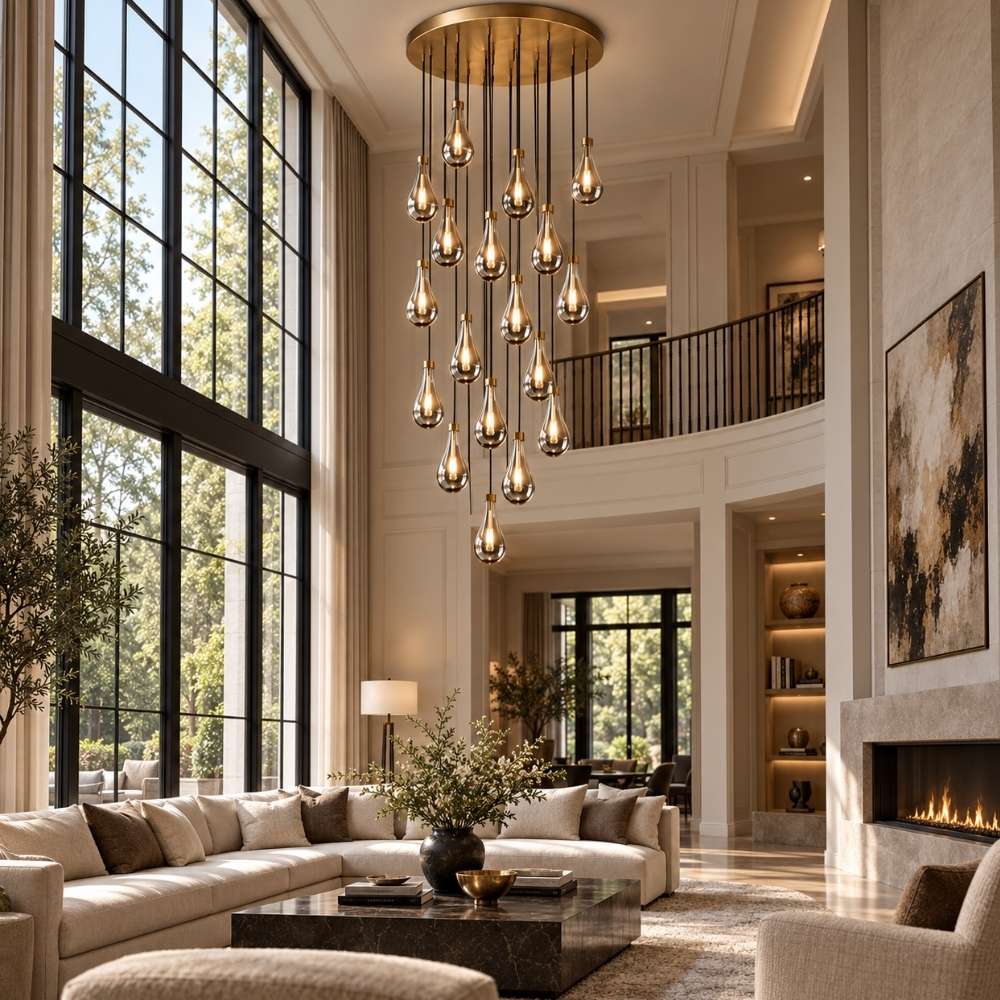
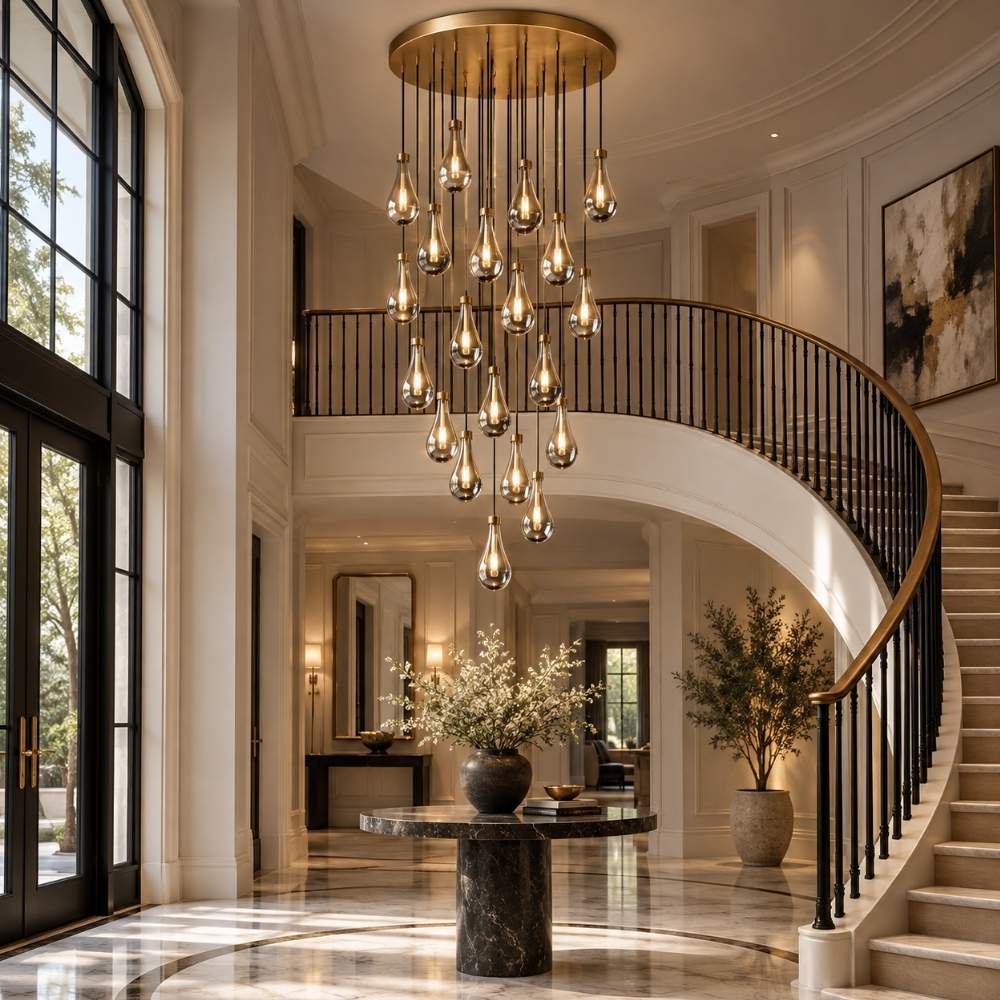
Large formats earn their place in great rooms, two-story entries and above oversized islands, where a standard fixture reads lost. Past 8 ft of table length, a wide rectangular design or a matched pair generally reads better than one oversized round form. Note the weight as well as the width: solid wood-and-iron compositions frequently pass 50 lb (23 kg), which calls for a listed heavy-fixture brace box rather than a standard junction box.
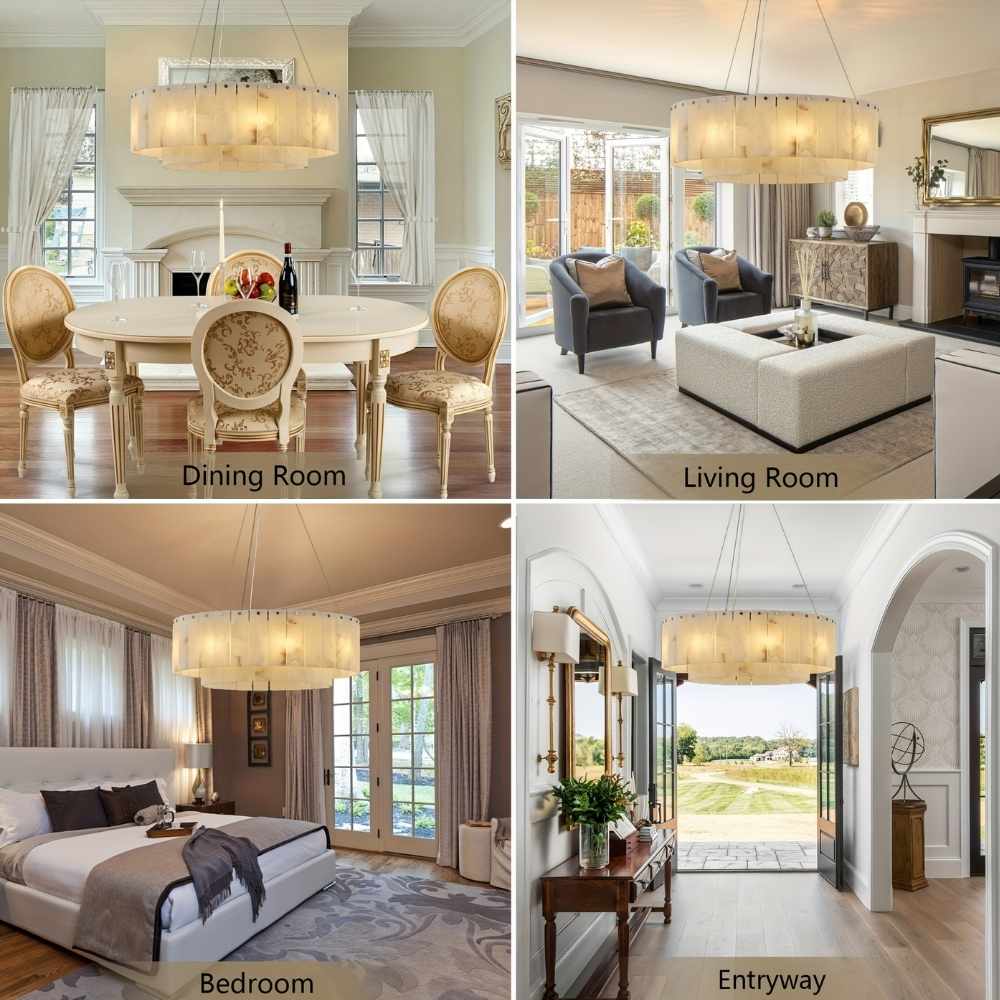
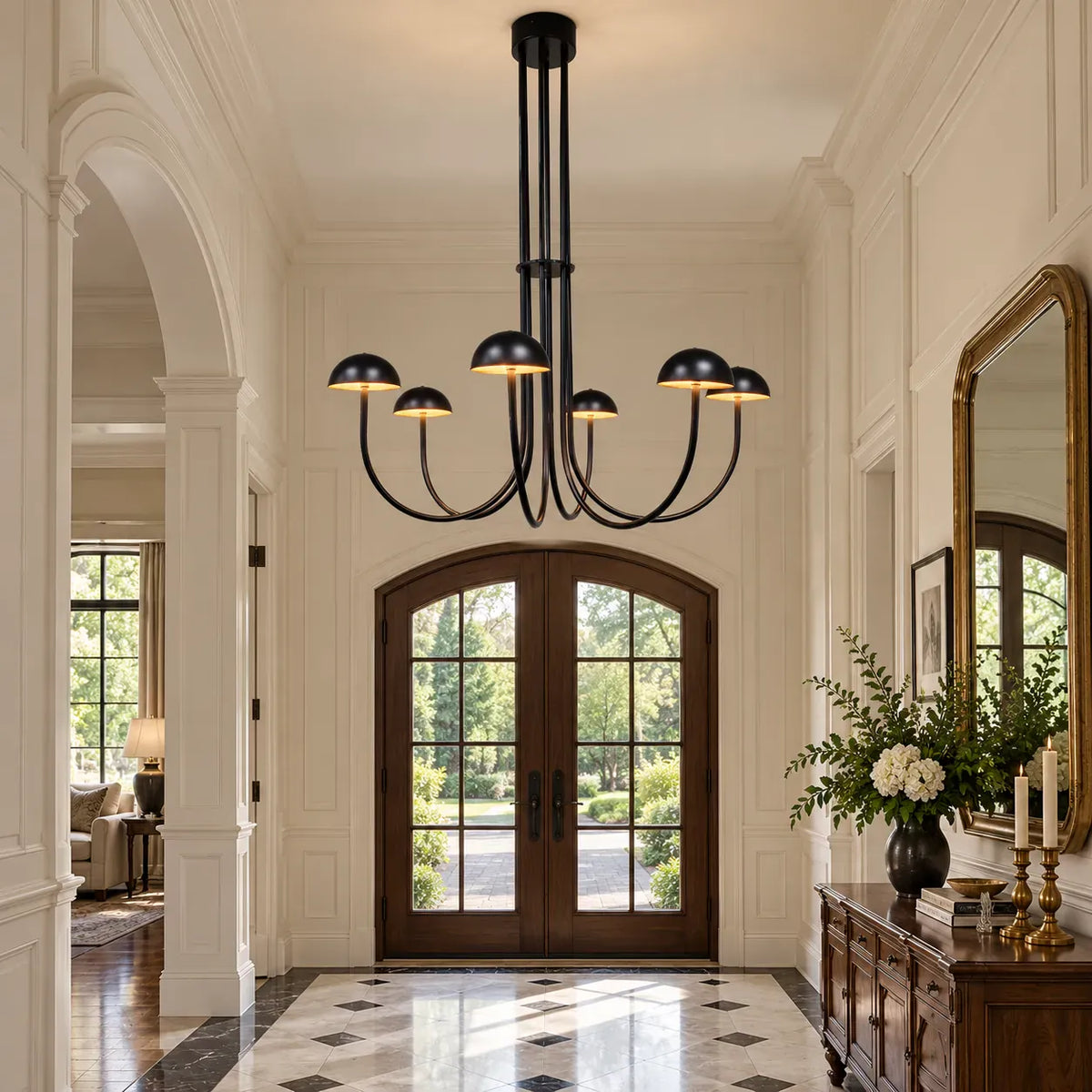
Room by room: dining rooms and kitchens take rectangular formats; living rooms take round and open-frame designs centred on the seating group rather than the room outline; entries introduce the material story at the door. Warm white 2700-3000K on a dimmer throughout.
Related Collections
Compare the rawer neighbour at rustic chandeliers, follow the material to wood and iron chandeliers, shop by room at dining room chandeliers, or browse the full catalog.
Frequently Asked Questions
What is a farmhouse style chandelier?
A casual, country-leaning fixture built on wood tones with black iron or metal framing, open structure and simple detail. It reads warmer than a modern fixture and less ornate than a traditional one, which suits everyday kitchens, dining rooms and living rooms.
What is the difference between farmhouse and rustic chandeliers?
Finish. Rustic presents materials as found — raw timber, dark forged iron, heavy visual weight. Farmhouse domesticates them with painted and whitewashed surfaces, lighter wood and thinner frames. Shiplap and painted cabinetry point to farmhouse; stone and exposed beams point to rustic.
What size farmhouse chandelier do I need?
Add the room's length and width in feet and read the total in inches as the target diameter. Over a dining table, size to the table instead: one-half to two-thirds of its width for a round fixture, or of its length for a rectangular one, hung 30-36" above the tabletop.
Why choose a rectangular farmhouse chandelier?
Because farmhouse tables run long. A round fixture above a long table lights the middle seats while the ends stay dim, whereas a rectangular design distributes light along the table's axis so every seat sits under it. The same format suits kitchen islands.
Do farmhouse chandeliers work in modern homes?
The modern farmhouse direction was built for exactly that — matte black frames and lighter wood tones in clean silhouettes that add warmth beside updated furniture without pulling a room into a themed country look.
What finishes are most popular?
Black iron and matte black lead, usually paired with natural, brown or grey-washed wood. Brass and warmer metals work as a secondary layer, while glass shades and candle-style arms adjust how current or traditional the fixture reads.
What bulbs suit farmhouse fixtures?
Warm white LED at 2700-3000K on a dimmer. Where candle sleeves or open frames leave lamps visible, decorative filament LEDs are part of the composition rather than a hidden consumable.