

Quick Answer
Unique and designer are different claims. Unique describes the form — a silhouette you have not seen elsewhere. Designer describes the execution — proportion resolved, joints considered, materials genuine rather than imitated. A striking shape in poor materials disappoints in person; a well-made fixture in a familiar shape reads considered rather than memorable.
Price mostly buys four things: real materials instead of lookalikes, hand-work instead of repeated casting, hardware and electronics that outlast the warranty, and finish depth that survives close viewing.
Five checks separate the tiers, and all of them work in a listing photo or in the hand: material weight, joint quality, taper and proportion, variation versus repetition, and whether the specifications are published at all.
Paying more is not always right. In rooms seen from a distance, in rentals, and in fixtures likely to be replaced within a few years, mid-tier build is the rational purchase.
Chandeliers in the same catalog can run from under $200 to over $10,000, and very little in the listings explains the gap. Some of it is genuine — real crystal weighs and costs more than acrylic, hand-formed metal takes hours that casting does not — and some of it is positioning. This guide covers what price actually buys, the five checks that identify build quality before you commit, how to tell real materials from convincing imitations, and the situations where spending less is the correct decision rather than a compromise.
On this page
- Unique and Designer Are Different Claims
- Where the Money Actually Goes
- Five Checks That Identify Build Quality
- Real Against Convincing Imitations
- What Each Price Tier Buys
- Designer-Tier Picks
- Well-Built Value Picks
- When Paying More Is Not Worth It
- The Specifications Nobody Advertises
- Common Mistakes
- Frequently Asked Questions
Unique and Designer Are Different Claims
The two words are used interchangeably in shopping, and separating them makes the whole category easier to navigate.
Unique is about form. A unique fixture has a silhouette you have not seen in three other showrooms — asymmetric, abstract, unexpectedly proportioned. It makes a room specific rather than furnished. Unique is a design decision, and it can be executed at any price.
Designer is about execution. A designer-grade fixture has resolved proportions, joints that read continuous rather than assembled, materials that are what they claim to be, and a finish that holds up when someone stands under it. Designer is a manufacturing decision, and it costs money regardless of how ordinary or unusual the shape is.
Where the Money Actually Goes
Four cost drivers explain most of the gap between tiers. None of them is visible in a thumbnail, which is why price differences look arbitrary until you know what to look for.
The four cost drivers, and what the lower tier substitutes for each
A fifth factor is design itself — the hours spent resolving a form rather than adapting an existing one. It is real, harder to verify, and shows up indirectly: fixtures whose proportions look inevitable usually took longer to design than fixtures that look assembled.
Five Checks That Identify Build Quality
- 1. Weight against size. Real materials weigh. A 40" fixture listed at 18 lb is mostly acrylic and thin tube; the same size at 55 lb is solid glass, crystal or metal. The listed weight is the single most informative number on most product pages, and it is rarely presented as a quality signal.
- 2. Joints and junctions. Zoom into where arms meet the body. Welded and ground joins read continuous; bolted collars and slip-on sleeves interrupt the line. On open forms there is nowhere for that interruption to hide, which is why sculptural and branch designs expose build quality faster than shaded ones.
- 3. Taper and proportion. Quality metalwork narrows where narrowing is structurally honest — arms taper toward their tips, supports thicken toward load. Uniform tubing throughout is the most common tell that a form was adapted rather than designed.
- 4. Variation against repetition. On anything claiming hand-work, count how many elements share an identical shape. Genuine hand-forming produces slight differences; four identical limbs at even intervals means a cast frame. Cast can still be a good fixture — but it should be priced as one.
- 5. Whether the specifications exist at all. Weight, material by component, colour temperature, CRI, dimming protocol, driver serviceability. A listing that publishes all of these is telling you the manufacturer expects the numbers to survive scrutiny. A listing that publishes none is telling you something too.
Real Against Convincing Imitations
| Material | The real thing | The substitute, and how it shows |
|---|---|---|
| Crystal | Heavier, colder to the touch, prismatic colour in daylight; K9 is the modern designer standard | Acrylic: lighter, room-temperature, plain white glare, faint mould seams, scratches over a decade of cleaning |
| Glass | Hand-blown irregularity in wall and curve; visible thickness at the rim | Moulded uniformity, which reads flat in person while photographing cleanly |
| Aged metal | Tonal variation across the piece and between units — the variation is the product | Printed or sprayed pattern that repeats identically; reads flat under direct light |
| Wood | Grain continues around edges; finished at every joint | Veneer or printed grain: pattern stops at the edge, repeats across panels |
| Stone and marble | Veining differs between pieces; changes character when lit | Resin composite: identical between units, does not transmit light the same way |
One important qualification: substitutes are not automatically wrong. Acrylic exists in large compositions because a thirty-globe cluster in real glass can pass 50 lb and require a listed heavy-fixture brace box. That is an engineering trade, and a legitimate one. What matters is that it is a decision you made rather than a surprise on delivery.
What Each Price Tier Buys
| Tier | Typically | Right for |
|---|---|---|
| Entry | Acrylic or thin glass, cast repeated elements, sprayed finish, basic driver | Rentals, secondary rooms, fixtures likely replaced within a few years |
| Mid | Real glass or partial crystal, mixed cast and formed work, decent driver, published specs | Most residential applications — the tier where value is highest |
| Upper-mid | Full real materials, formed metalwork, finish depth, serviceable hardware | Primary rooms, fixtures intended to stay through a renovation |
| Designer | Hand-work throughout, specialty materials, resolved proportion, replaceable components | Statement positions, high ceilings where replacement is expensive, long-horizon rooms |
The value curve is not linear. The step from entry to mid buys more visible improvement than any other, because it is where real materials replace substitutes. The step from upper-mid to designer buys refinement — proportion, hand-work, specialty materials — which matters most where the fixture is examined closely or expected to last decades.
Designer-Tier Picks (4 Designs)
Fixtures where hand-work, specialty materials or resolved proportion justify the tier. Worth the step in statement positions and in high ceilings, where replacing a fixture later costs far more than the price difference.

1Velar Handmade Brass Branch Chandelier
Hand-Formed · Variation VisibleThe clearest illustration of check four. Hand-formed limbs vary in thickness, angle and curve the way growth does; a cast branch frame repeats one limb around a hub, which the eye reads as pattern rather than nature. At scale that difference is unmissable, which is why hand-work costs what it does in this class specifically.
Verify: Count identical limbs — genuine work has none
Material: Solid brass, warm reflection band
Best for: Statement positions, long-horizon rooms
Related: Branch chandeliers

2Elori Natural Stone Flower Brass Chandelier
Real Stone · Piece-to-Piece VariationNatural stone is the material where the real-versus-substitute question answers itself: veining differs between pieces and changes character when the fixture is lit, neither of which resin reproduces. It also means ordering matched pairs together, since two units bought months apart will not carry the same veining.
Verify: Veining differs unit to unit; changes when lit
Frame: Warm brass
Note: Order matched pairs in one transaction
Sizes: Five, from L47.24" (120 cm)

3Aureli Crystal Spiral Chandelier
Real Crystal · Labour at AssemblyTwo cost drivers at once: genuine crystal rather than acrylic, and a composition assembled element by element on site — hours of skilled labour that a single-piece fixture does not require. The weight that comes with real crystal is also why this class needs its mounting checked before ordering rather than after.
Verify: Weight, coldness in the hand, daylight prismatics
Install: Elements added after the frame is hung
Check first: Junction box rating against listed weight
Related: Crystal chandeliers

4Gale Leather Belt Chandelier
Specialty Material · Ages Rather Than WearsSpecialty materials are the clearest designer signal because they cannot be faked cheaply — leather develops patina, changes with handling, and looks different at three years than at three months. That behaviour is the argument for the tier: materials that improve rather than degrade are what separate an investment from a purchase.
Behaviour: Develops patina; improves with age
Best for: Eclectic and industrial-luxury interiors
Pairs with: Leather upholstery, warm metal hardware
Care: Dry dusting; no liquid cleaners
Well-Built Value Picks (4 Designs)
The mid tier, where real materials replace substitutes and the value curve is steepest. These are the right purchase for most rooms — and for anywhere a fixture may be changed within a decade.

5Asty Modern Ring LED Chandelier
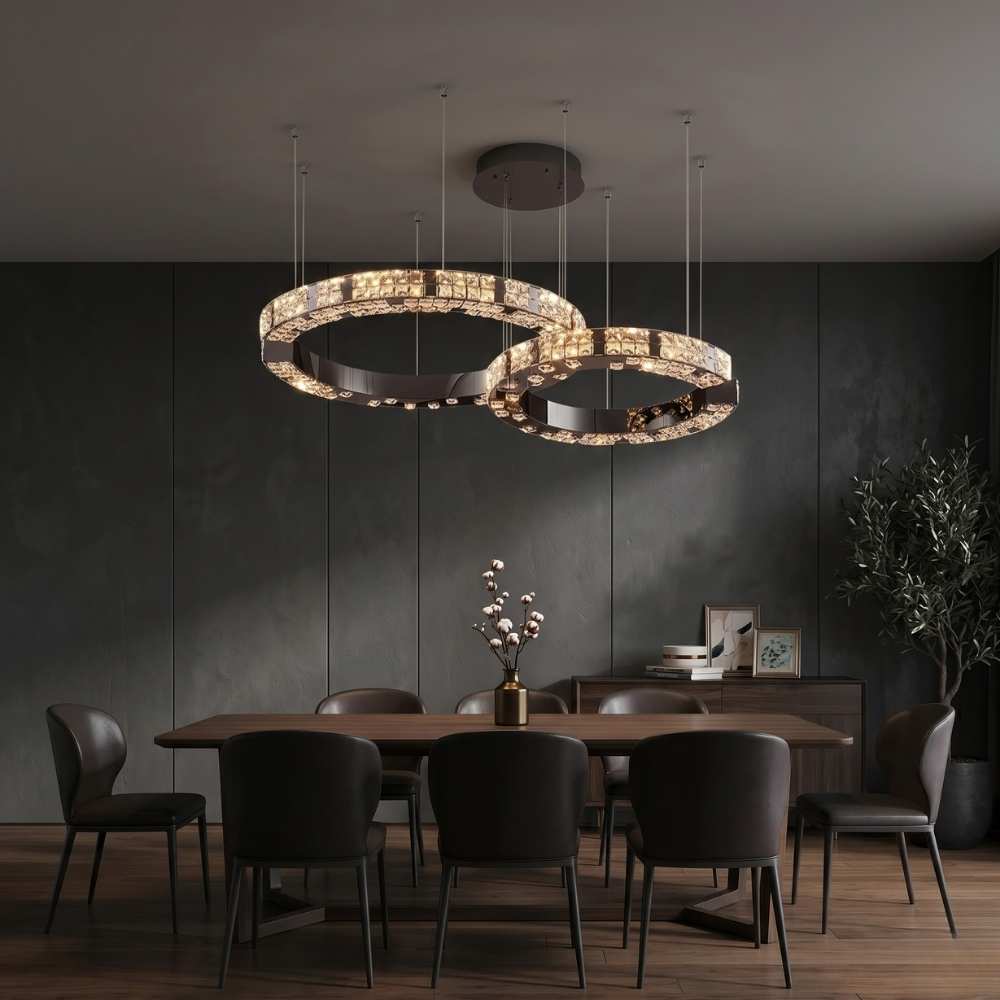
Published Specs · Hardware TierA useful demonstration of check five: designs that publish colour temperature, dimming behaviour and LED lifespan are signalling that the numbers survive scrutiny. On integrated-LED fixtures this matters more than on any other type, because the light source cannot be swapped later — the driver quality you buy is the driver quality you keep.
Why it matters here: Integrated source cannot be swapped
Check: Dimming depth and driver serviceability
Finishes: Black, gold, brown
Related: Integrated LED guide
6Angie Alabaster Round Chandelier
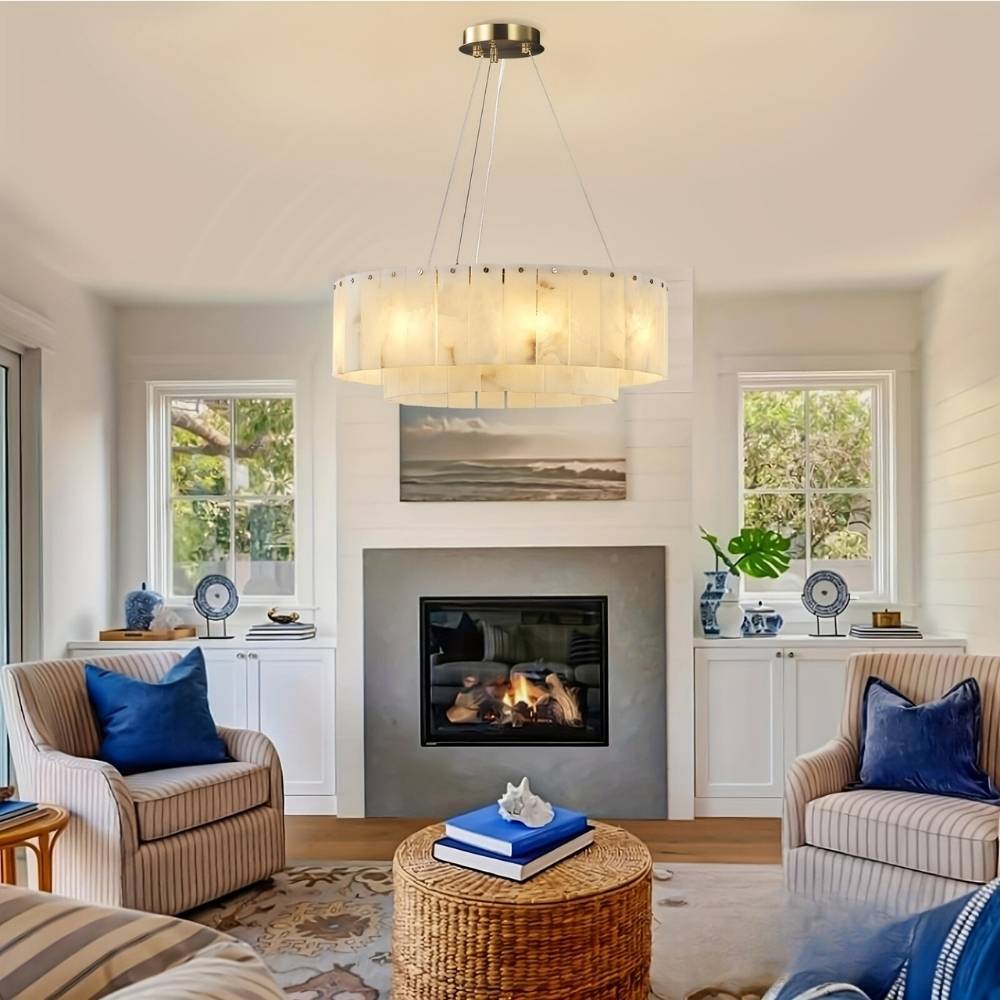
Real Stone at Mid TierAlabaster is where the entry-to-mid step is most visible. Real stone transmits light with a depth resin cannot reproduce, and it changes character when lit — the same tell as marble. Getting genuine material at mid-tier pricing is the definition of where the value curve is steepest.
Verify: Light transmission depth; changes when lit
Best rooms: Dining, bedroom, cool-toned interiors
Care: Dry dusting only
Output: Softest diffusion available
7Arven Modern Crystal Ring Chandelier
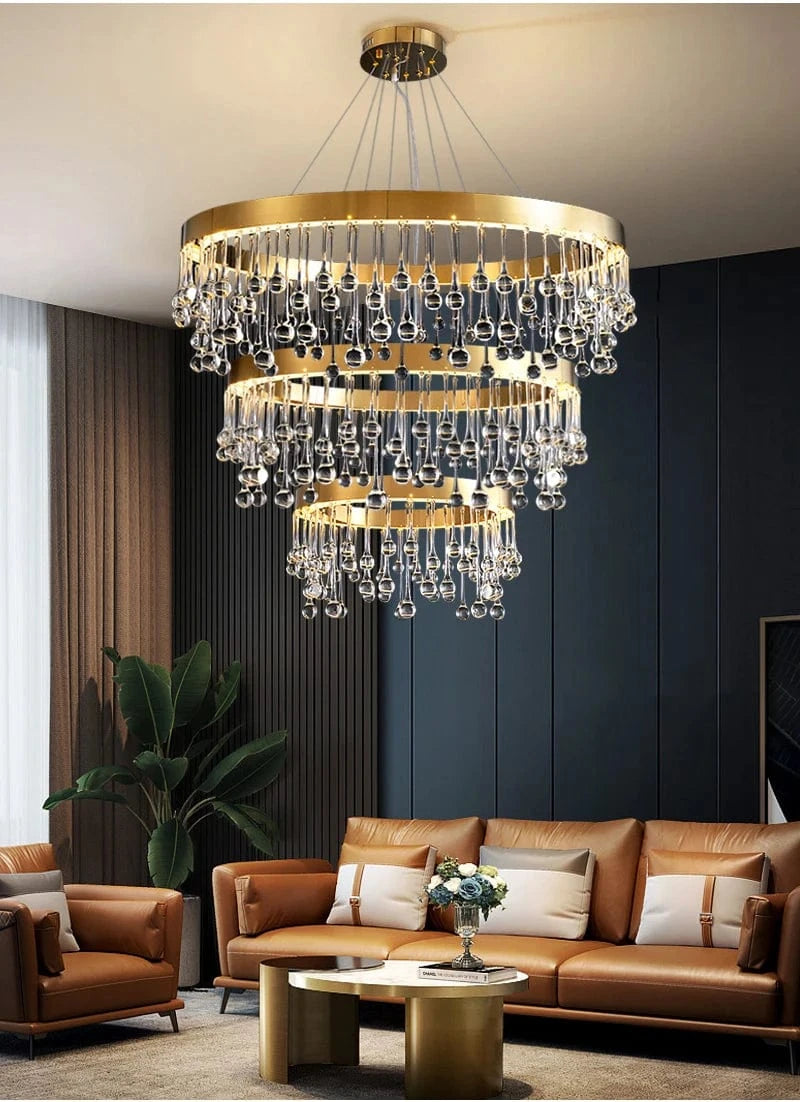
Real Crystal · Edited QuantityThe efficient route to genuine crystal: sparse real elements on a resolved frame rather than dense acrylic dressing. Fewer pieces of the real material outperform many pieces of the substitute, because at close range the difference between crystal and acrylic is visible and the difference between twenty pieces and forty is not.
Verify: Weight and coldness of individual pieces
Colour: Warm white 2700K
Dimmer: Essential — crystal reads best at 30-60%
Sizes: Small and medium
8Alvin Gold Ring Chandelier
Six Sizes · Buy the FitAn underrated value signal: a design offered across six sizes lets you buy the fixture that fits rather than adapting the room to what exists. Wrong scale is the most common reason a room reads off, and it has nothing to do with build quality — so a correctly sized mid-tier fixture beats an incorrectly sized designer one every time.
Sizing: Room length + width in feet = diameter in inches
Configurations: One to three rings
Finish: Warm gold
Related: Ring chandeliers
Browse across tiers
Designer-grade and well-built value fixtures across the catalog.
Contemporary Chandeliers → Crystal → All Chandeliers →When Paying More Is Not Worth It
A guide about build quality that never says "spend less" is a sales page. Four situations where the mid tier is the rational purchase:
- Rentals and short-horizon rooms. If the fixture leaves with you or gets replaced in three years, the durability premium never pays back.
- Fixtures seen only from a distance. Hand-work, finish depth and material honesty are close-range qualities. In a high hallway or a rarely-used formal room seen from the door, they contribute less than scale does.
- Rooms whose direction is unsettled. A fixture bought before the furniture and palette are decided is a fixture with a real chance of being wrong. Spend when the room is known.
- When the size is right at mid tier and wrong at designer tier. Correct scale beats build quality in visible impact. A well-proportioned mid-tier fixture reads better than an oversized expensive one, every time.
The inverse is also worth stating. Spend more where the fixture is examined closely — over a dining table, at a bedside, in an entry people pass within arm's reach — and where replacing it later is genuinely expensive, which in practice means anything hung above about 14 ft.
The Specifications Nobody Advertises
- Listed weight. The most informative number on the page, and the one that also decides your mounting hardware. Under 35 lb takes a standard box; 50-90 lb needs a listed heavy-fixture brace box.
- Driver serviceability. On integrated-LED fixtures, the emitters outlast the driver. A design with an accessible driver is repairable; a sealed one becomes a replacement.
- Touch-up finish availability. Ask at purchase, not years later — hand-applied finishes vary between production runs, and the original batch may not exist when you need it.
- Replacement element supply. On crystal and glass compositions, whether individual elements can be bought separately decides whether one breakage is a repair or a write-off.
- Maximum drop. Shortening rod or cable on site is routine; extending needs hardware that may not exist for that design. A fixture that cannot reach your target height is the wrong fixture regardless of quality.
- Batch matching. For pairs and runs, order in one transaction. Hand-applied finishes and natural materials differ between batches, and two fixtures bought months apart will not match over the same table.
Common Mistakes
- Reading price as quality. Price includes positioning, distribution and marketing. The five checks read build directly.
- Judging materials from a thumbnail. Moulded glass and printed finishes photograph well; that is what they are optimised for. Zoom in, and read the listed weight.
- Confusing unique with designer. A striking shape in thin materials disappoints in person. Execution ages better than novelty.
- Ignoring the weight figure. It signals material honesty and decides the mounting hardware. Two numbers in one.
- Paying for close-range quality in a far-range position. Hand-work in a high hallway contributes less than correct scale does.
- Buying before the room is settled. A fixture chosen ahead of the palette and furniture has a real chance of being wrong regardless of tier.
- Ordering pairs separately. Hand-applied finishes and natural materials vary between production runs. Order together.
- Assuming substitutes are always wrong. Acrylic exists in large compositions for weight reasons — a legitimate engineering trade, provided it is a decision rather than a surprise.
Frequently Asked Questions
What makes a chandelier designer-grade?
Execution rather than shape: resolved proportion, joints that read continuous rather than assembled, materials that are what they claim to be, and finish depth that holds up at close range. Designer is a manufacturing decision; unique is a design one.
What is the difference between unique and designer chandeliers?
Unique describes the form — a silhouette you have not seen elsewhere. Designer describes the build. They do not always arrive together, and where you can only have one, execution ages better than novelty.
Why are some chandeliers so expensive?
Four drivers: real materials instead of lookalikes, hand-work instead of repeated casting, hardware and electronics that outlast the warranty, and finish depth that survives close viewing. Design hours are a fifth, harder to verify.
How can I tell if a chandelier is good quality before buying?
Five checks: weight against size, joint and junction quality, taper and proportion, variation against repetition on anything claiming hand-work, and whether specifications are published at all.
How do I tell real crystal from acrylic?
Real crystal is heavier and colder to the touch, shows crisp machine-cut facets rather than moulded seams, and throws prismatic colour in daylight. Acrylic shows faint mould seams and scratches over years of cleaning.
Is a more expensive chandelier always better?
No. In rentals, short-horizon rooms, fixtures seen only from a distance, and rooms whose direction is unsettled, mid tier is the rational purchase. Correct scale also beats build quality in visible impact.
Which price tier gives the best value?
Mid. The step from entry to mid buys more visible improvement than any other, because it is where real materials replace substitutes. The step from upper-mid to designer buys refinement that matters mainly at close range.
Does the listed weight matter?
It is the most informative number on most product pages. It signals material honesty — real materials weigh — and it decides your mounting: under 35 lb takes a standard box, 50-90 lb needs a listed heavy-fixture brace box.
Is acrylic always a downgrade?
Not always. A thirty-globe cluster in real glass can pass 50 lb and require ceiling work, so acrylic keeps large compositions installable. It is a legitimate engineering trade — provided it is a decision rather than a surprise.
What should I ask before buying a high-end fixture?
Listed weight, driver serviceability, touch-up finish availability, whether individual elements can be replaced, maximum drop, and — for pairs — whether both come from the same production batch.
Why do two identical fixtures look slightly different?
Hand-applied finishes and natural materials vary between production runs, and that variation is what distinguishes genuine work from a printed pattern. Order pairs in one transaction so both come from the same batch.
Where is it worth spending more?
Where the fixture is examined closely — over a dining table, at a bedside, in an entry people pass within arm's reach — and where replacing it later is genuinely expensive, which in practice means anything hung above about 14 ft.
Check the Build, Not the Price
Weight against size, joints and junctions, taper and proportion, variation against repetition, and whether the specifications are published — five checks that read build directly rather than through price. Apply them and the tiers become legible, which is what makes it possible to spend deliberately: more where the fixture is seen closely or hard to replace, less where scale matters more than craft.
Browse the range: contemporary chandeliers, crystal chandeliers, branch chandeliers, all chandeliers.


