Light color directly affects mood, sleep, focus, and even heart rate. A warm 2700K bulb reads as evening candlelight and triggers relaxation. A cool 5000K bulb mimics midday daylight and sharpens alertness. This guide covers how every light color affects how you feel, what Kelvin values match which moods, and how to use LED color options to set the right atmosphere in each room.
Key Takeaways
- Warm light (2700–3000K) relaxes, slows heart rate, and signals the body to produce melatonin — ideal for evenings, bedrooms, and dining.
- Cool light (4000–5000K) sharpens focus and mimics daylight — ideal for kitchens, home offices, and bathrooms.
- Daylight (5500–6500K) is alerting and suppresses melatonin — use only during daytime work, never in the hour before sleep.
- Red light is the only color that does not disrupt melatonin production — ideal for night lights and bedroom lamps.
- Blue light boosts alertness and reaction time but interferes with sleep when used after sunset.
- Green light supports calm focus — best for home offices and reading nooks.
- CRI 90+ is the minimum for residential spaces — lower CRI distorts how skin, food, and furnishings appear.
- Smart RGB bulbs let you shift color temperature and hue by time of day, matching your body's natural circadian rhythm.
On this page
- Color Temperature Explained (Kelvin Scale)
- The Science: How Light Affects the Brain
- Warm vs. Cool Light Psychology
- Every Light Color and Its Mood Effect
- LED Colors for Different Moods
- Room-by-Room Color Recommendations
- Circadian Rhythm & Smart Lighting
- Seasonal Lighting Adjustments
- Choosing Fixtures by Mood
- Common Mistakes
- Frequently Asked Questions
Color Temperature Explained (Kelvin Scale)
Color temperature is measured in Kelvin (K). Lower values produce warmer, yellower light; higher values produce cooler, bluer light. The Kelvin scale maps directly to how the light makes a room feel and how your brain interprets it.
| Kelvin Range | Appearance | Common Name | Best For |
|---|---|---|---|
| 1800–2400K | Deep amber, candlelight | Incandescent / Candle | Dim evening, romantic dining, sleep prep |
| 2700K | Warm yellow-white | Warm White | Bedroom, dining, living room, evening use |
| 3000K | Crisp warm white | Soft White | Most residential rooms, modern interiors |
| 3500K | Neutral white | Neutral White | Transitional — hallways, closets |
| 4000K | Slightly cool white | Cool White | Kitchen task lighting, bathrooms, laundry |
| 5000K | Crisp bright white | Daylight | Home offices, garages, detail work |
| 6000–6500K | Cool blue-white | Overcast / Cool Daylight | Commercial, medical, rarely residential |
The Science: How Light Affects the Brain
Light enters the eye and triggers two parallel responses. The first is visual — the photoreceptors (rods and three types of cones) interpret the scene. The second is non-visual and runs through a separate pathway to the suprachiasmatic nucleus, the body's master clock. This second pathway is why light color affects mood, alertness, and sleep even when you are not consciously paying attention to it.
The Melatonin Response
Blue-enriched light (wavelengths around 480 nm, common in cool 4000K+ bulbs) suppresses melatonin production. Warm light below 3000K does not. This is why evening exposure to cool LED or smartphone light delays sleep — and why warm dim light at night supports natural sleep onset.
The Cortisol Response
Bright cool-white light in the morning raises cortisol, the alertness hormone. This supports why daylight-mimicking bulbs work well in home offices and kitchens during productive hours but create tension in bedrooms or evening spaces.
Heart Rate and Color Perception
Red light increases heart rate slightly and raises perceived urgency — which is why red is used in warning signals and why restaurants use warm red-toned light to encourage quicker turnover. Blue light decreases heart rate and extends perceived time — which is why hospitals and spas often use blue-tinted interiors.
Warm vs. Cool Light Psychology
The warm-versus-cool distinction is the single most practical concept in lighting psychology. Every other decision — color choice, bulb selection, dimming strategy — flows from it.
Warm Light (2700–3000K)
- Psychological effect: Relaxes, calms, slows perceived time
- Body response: Supports melatonin production
- Feels like: Sunset, candlelight, fireplace glow
- Best rooms: Bedroom, dining, living room, evening use
- Makes: Skin tones flattering, wood warmer, reds richer
- Avoid for: Detailed visual tasks, kitchen prep, work desks
Cool Light (4000–5000K)
- Psychological effect: Alerts, sharpens focus, speeds reaction time
- Body response: Suppresses melatonin, raises cortisol
- Feels like: Morning daylight, overcast noon
- Best rooms: Kitchen, bathroom, office, garage
- Makes: Details crisp, whites brighter, contrasts sharper
- Avoid for: Bedrooms, evening relaxation, dining tables
Every Light Color and Its Mood Effect
Beyond white light variations, colored light — typically produced by RGB or RGBW LED bulbs — creates distinct psychological responses. Each color below is tied to specific use cases backed by consistent research findings.
🔴 Red Light: Warmth, Energy, Sleep Support
Red light (roughly 620–750 nm wavelength) has one unique property: it does not suppress melatonin. NASA famously uses red light in spacecraft cabins during sleep periods for this reason. In home use, red is the only color you can use before bed without disrupting your circadian rhythm.
Best uses: Bedroom night lights, dining accent lighting, cozy evening rooms
Caution: Bright red in offices or kitchens can cause perceived stress
🟠 Orange Light: Social Warmth, Appetite
Orange sits between red and yellow — it produces the warmest social atmosphere of any hue. Orange is the color most associated with appetite stimulation, which is why many restaurants use orange-toned ambient lighting.
Best uses: Dining rooms, entryways, casual gathering spaces
Caution: Heavy orange in bedrooms can feel overwhelming
🟡 Yellow Light: Optimism, Creativity
Yellow produces the highest-perceived brightness per lumen of any color, making spaces feel larger and more cheerful. It is consistently associated with optimism and creative thinking in color-psychology research.
Best uses: Kitchens, breakfast nooks, brainstorming or craft rooms
Caution: Prolonged exposure to saturated yellow can increase anxiety
🟢 Green Light: Balance, Focus, Stress Reduction
Green is the color the human eye perceives with the least visual effort — which is why it reduces eye strain and supports sustained focus. Green wavelengths are centrally located in the visible spectrum and the retina processes them efficiently.
Best uses: Home offices, reading nooks, study areas, meditation rooms
Pairs well with: Plants, natural wood, biophilic interiors
🔵 Blue Light: Alertness, Trust, Productivity
Blue boosts cognitive performance and reaction time more than any other color — which is why many offices use blue-toned LED lighting. But the same mechanism that makes blue useful during the day makes it disruptive at night: blue wavelengths strongly suppress melatonin.
Best uses: Home offices during daytime, bathrooms, task lighting
Critical warning: Never use blue-enriched light in bedrooms within 2 hours of sleep
🟣 Purple Light: Creativity, Luxury, Drama
Purple combines the alerting effect of blue with the warmth of red. In smart lighting, purple is often used as accent rather than primary lighting — it adds atmospheric depth without demanding attention.
Best uses: Entertainment rooms, accent lighting behind headboards or shelves
Caution: Poor color-rendering for faces and food
⚪ White Light: Clarity and Flexibility
White is not a single color — it ranges from deeply warm (2700K) to cool daylight (6500K). The version of white you choose determines the psychological response more than any other lighting decision in a room.
Neutral white (3500K): Versatile, balanced
Cool white (4000K): Alerting, task-friendly
Daylight (5000–6500K): Highly alerting, detail-sharp
LED Colors for Different Moods
Smart RGB and RGBW LED bulbs let you shift color across the entire spectrum on demand. This makes a single fixture capable of supporting morning alertness, afternoon focus, and evening relaxation. Below is a practical mood-to-LED mapping.
| Mood / Goal | Recommended LED Color | Kelvin (for white LEDs) | Notes |
|---|---|---|---|
| Relaxation / Unwind | Amber, warm red, soft orange | 2200–2700K | Dim to 30–50% brightness |
| Sleep preparation | Red, deep amber | <2000K | Only red does not disrupt melatonin |
| Romantic dining | Warm amber, soft pink | 2400–2700K | Dim lighting, candle-warm |
| Social gatherings | Warm white, soft orange | 2700–3000K | Encourages conversation and warmth |
| Morning energy boost | Cool white, bright blue-white | 4500–5500K | Mimics sunrise |
| Focus / Study / Work | Cool white with slight green tint | 4000–5000K | Reduces eye strain for long sessions |
| Creative work | Yellow, warm neutral | 3000–3500K | Supports divergent thinking |
| Entertainment / Gaming | RGB accent colors (blue, purple, cyan) | N/A — color hue | Use as accent, not primary lighting |
| Meditation / Yoga | Soft green, pale blue | 3000K | Encourages calm focus |
| Party / High-energy | Saturated red, magenta, orange | N/A — color hue | Elevates heart rate, energy |
Room-by-Room Color Temperature Recommendations
Different rooms serve different activities and benefit from different color temperatures. The table below reflects the consensus recommendation for each room in a US residential setting.
| Room | Primary Kelvin | Dimming Target | Secondary Color Option |
|---|---|---|---|
| Bedroom | 2700K | 10–100% dim range | Red night light for pre-sleep |
| Living Room | 2700–3000K | 20–100% dim range | RGB accent for mood variation |
| Dining Room | 2700–3000K | 20–100% dim range | Warm amber for intimate meals |
| Kitchen (ambient) | 3000K | 50–100% dim range | Cool 4000K for task areas |
| Kitchen (task / island) | 3500–4000K | Full brightness | Under-cabinet 4000K |
| Bathroom (vanity) | 3000–4000K | Full brightness | CRI 90+ essential for makeup |
| Bathroom (ambient) | 2700–3000K | 20–100% | Warm for relaxation / baths |
| Home Office | 4000–5000K | Full brightness daytime | Warmer 3000K for evening work |
| Hallway / Entryway | 3000K | Consistent brightness | Warm for welcome feel |
| Laundry / Garage | 4000–5000K | Full brightness | Cool for detail work |
| Nursery | 2700K | 5–100% dim range | Red night light for feedings |
| Reading Nook | 3000K | Full for reading | Supports sustained focus |
Circadian Rhythm & Smart Lighting
The body's internal clock runs on an approximately 24-hour cycle, regulated primarily by light exposure. Matching your home's light color to the time of day — cooler in the morning, warmer in the evening — supports natural alertness and sleep quality. Smart bulbs that adjust color temperature automatically throughout the day make this effortless.
Blue Light and Sleep
Blue-enriched light within 2 hours of bedtime delays sleep onset by an average of 30–60 minutes and reduces REM sleep quality. This applies to cool-white LEDs, smartphone screens, and laptop displays. The fix is not to eliminate screens but to shift bedroom lighting to warm or red at least 90 minutes before sleep.
Smart Bulb Recommendations
Look for smart bulbs that support three key features: adjustable color temperature (2200K–6500K range), RGB color options (for mood lighting), and scheduled automation (to shift gradually throughout the day). Many modern fixtures accept E26 and E14 base smart bulbs without changing the fixture itself.
Seasonal Lighting Adjustments
Natural light changes dramatically across seasons, particularly at latitudes above 40° — which includes much of the US. Adjusting artificial lighting to compensate supports mood stability and can help reduce symptoms of Seasonal Affective Disorder (SAD).
🍂 Winter Lighting
Days are shorter and cooler natural light is limited. Compensate with:
- Brighter morning light (5000K within 30 minutes of waking)
- Warm 2700K bulbs for evening rooms
- Increased total lumens in main living areas
- Light therapy (10,000 lux, 5000K) for 20–30 minutes in the morning if SAD symptoms present
☀️ Summer Lighting
Natural light is abundant; artificial light should stay flexible:
- Reduce morning cool-white exposure (natural daylight covers it)
- Keep evening lighting warm to support sleep despite late sunset
- Use dimmers aggressively — bright artificial light competes with ambient daylight
- Consider RGB accents for entertainment and outdoor seasons
Choosing Fixtures by Mood Intent
The fixture itself shapes how light reaches the room. Bulb choice determines the color; the fixture determines how the color is distributed, diffused, and reflected.

For Neutral, Clear Light: Vita Crystal Flush Mount
Crystal fixtures refract warm white light into subtle rainbow accents, creating a calm but visually interesting atmosphere. Works well in entryways, dining rooms, and bedrooms where you want presence without visual weight.
Best mood: Refined warmth, hospitality
Rooms: Entryway, dining room, living room

For Warm, Red-Adjacent Mood: Iris Gold Glass Pendant
The amber glass naturally shifts the emitted light toward the warm end of the spectrum, producing a glow closer to candlelight. Ideal for dining rooms, cozy corners, and spaces where you want evening-style warmth throughout the day.
Best mood: Cozy, intimate, welcoming
Rooms: Dining, breakfast nook, reading corner
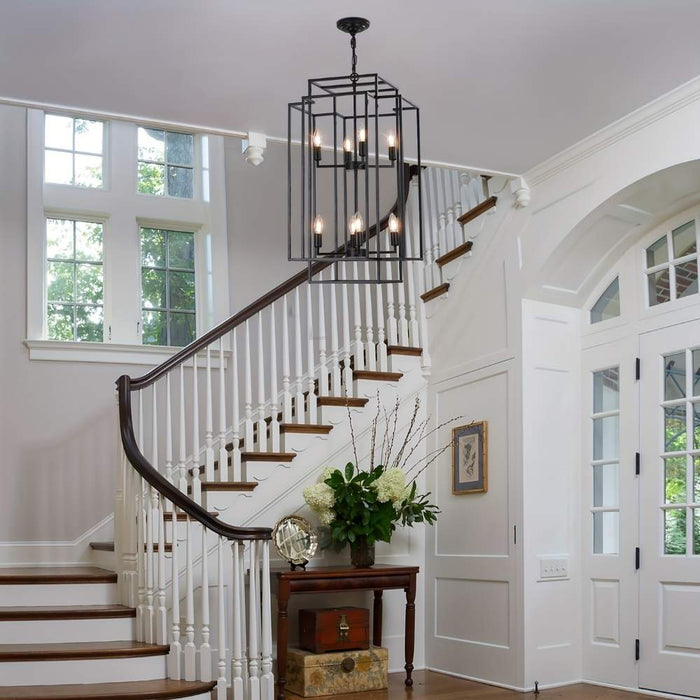
For Seasonal Warmth: Tyra Lantern Pendant
The brass finish reflects warm tones, amplifying the psychological warmth of 2700K bulbs. Especially effective during winter months when natural light is cooler and shorter.
Best mood: Cozy, grounded, seasonal
Rooms: Entry, dining, hallway

For Adjustable Focus Light: Justin Modern Floor Lamp
A directional floor lamp with adjustable positioning — pair with a smart RGBW bulb to shift color temperature by task. Cool white for daytime work, warm for evening reading, dim amber before bed.
Best mood: Flexible — shifts from alert to relaxed
Rooms: Home office, reading corner, bedside
Common Light Psychology Mistakes
- Using 4000K+ bulbs in bedrooms. Cool light suppresses melatonin and delays sleep. Keep bedroom primary lighting at 2700K.
- Using 2700K in kitchen task zones. Warm light distorts food color and makes knife-work less safe. Task areas need 3500–4000K minimum.
- Installing high-CRI bulbs in one room and low-CRI in the next. The difference in how skin and surfaces render becomes jarring as you walk through the home. Use 90+ CRI throughout.
- Forgetting the dimmer. A fixed-brightness fixture is locked into one mood. Add dimming to every dining, bedroom, and living room fixture.
- Using blue or cool-white accent lighting in bedrooms. Even decorative strips matter — blue wavelengths near the bed disrupt sleep.
- Ignoring morning cool light. Without 20–30 minutes of cool-white exposure in the morning, the body's circadian rhythm drifts. A 5000K task lamp at breakfast fixes this.
- Treating all "white" bulbs as interchangeable. 2700K warm white and 4000K cool white feel radically different in the same fixture.
Frequently Asked Questions
How does light color affect mood?
Warm light (2700–3000K) relaxes and signals the body to produce melatonin. Cool light (4000K+) alerts the brain and suppresses melatonin. Colored LEDs have more specific effects: red supports sleep, green supports focus, yellow supports creativity, blue supports alertness.
What color light makes you happy?
Warm yellow light in the 2700–3000K range is consistently associated with happiness and optimism in color-psychology research. Bright natural daylight (~5500K) during morning hours also supports positive mood, which is why morning sunlight exposure is so effective for seasonal depression.
What are the best LED light colors for different moods?
Red and amber for relaxation and sleep. Warm yellow (2700–3000K) for social gatherings. Cool white (4000–5000K) for focus and morning energy. Green for sustained study or meditation. Blue for daytime productivity but never within 2 hours of bed. Purple and magenta for creative or entertainment accents.
Is red light good for sleep?
Yes. Red is the only visible light color that does not suppress melatonin production. A red night light lets you navigate during the night without disrupting your circadian rhythm. NASA uses red light in spacecraft during sleep cycles for the same reason.
What color light is best for a bedroom?
Warm 2700K primary lighting with dimming capability down to 10% for evening use. Add a red or deep-amber night light for late-night navigation without melatonin disruption.
What color light is best for focus and productivity?
Cool white in the 4000–5000K range during daytime work. For sustained focus without eye strain, a slight green tint or high-CRI 4000K lighting performs best.
What is the difference between warm and cool light psychology?
Warm light (2700–3000K) produces relaxation, slowed heart rate, and melatonin production — the body's "wind down" response. Cool light (4000K+) produces alertness, faster reaction time, and cortisol release — the body's "wake up" response.
How does color temperature affect mood?
Lower Kelvin values (2700K warm) feel intimate and relaxing. Higher Kelvin values (5000K daylight) feel alert and productive. The body's circadian system uses this signal to regulate sleep, hormone release, and energy levels throughout the day.
What color light is best for a home office?
4000–5000K cool white during primary work hours. Reduce to 3000K in late afternoon to help transition toward evening without a sudden light shift.
Can light color affect heart rate?
Yes. Red light slightly elevates heart rate and blood pressure. Blue light modestly lowers heart rate in low-intensity exposure but raises alertness and cognitive load. These are measurable but typically small effects.
What color light helps with anxiety?
Soft warm white (2700K) at reduced brightness, or dim green accent light. Avoid bright blue or cool-white lighting, which can elevate stress responses in sensitive individuals.
Does yellow light help creativity?
Research on light and creative performance suggests warm yellow light (2700–3000K) supports divergent thinking and idea generation. Cool blue light supports analytical work. Use warm for brainstorming, cool for execution.
What does green light mean in psychology?
Green is associated with balance, refreshment, and calm focus. The eye processes green wavelengths with the least visual effort, which is why green light environments tend to reduce eye strain during long tasks.
Why should blue light be avoided at night?
Blue wavelengths (around 480 nm) strongly suppress melatonin, the hormone that signals sleep. Evening exposure to blue-enriched light delays sleep onset by 30–60 minutes and reduces sleep quality.
What is the psychology of white light?
White light psychology depends entirely on its Kelvin temperature. Warm white (2700K) feels cozy and intimate. Neutral white (3500K) feels balanced and versatile. Cool white (4000K) feels alert. Daylight (5000K+) feels productive but can feel clinical in residential settings.
Designing with Light and Color
Good lighting design is not about a single correct color — it is about matching the color and intensity of the light to the moment. The same room benefits from different lighting at 9 AM, 2 PM, 7 PM, and 10 PM. Smart bulbs, dimmers, and layered fixtures make this transition seamless. Once you start designing with circadian rhythm in mind, every room becomes more comfortable, and sleep quality often improves within weeks.
Ready to shop by mood? Explore our modern chandeliers, crystal chandeliers, pendant lights, and floor and table lamps collections.