



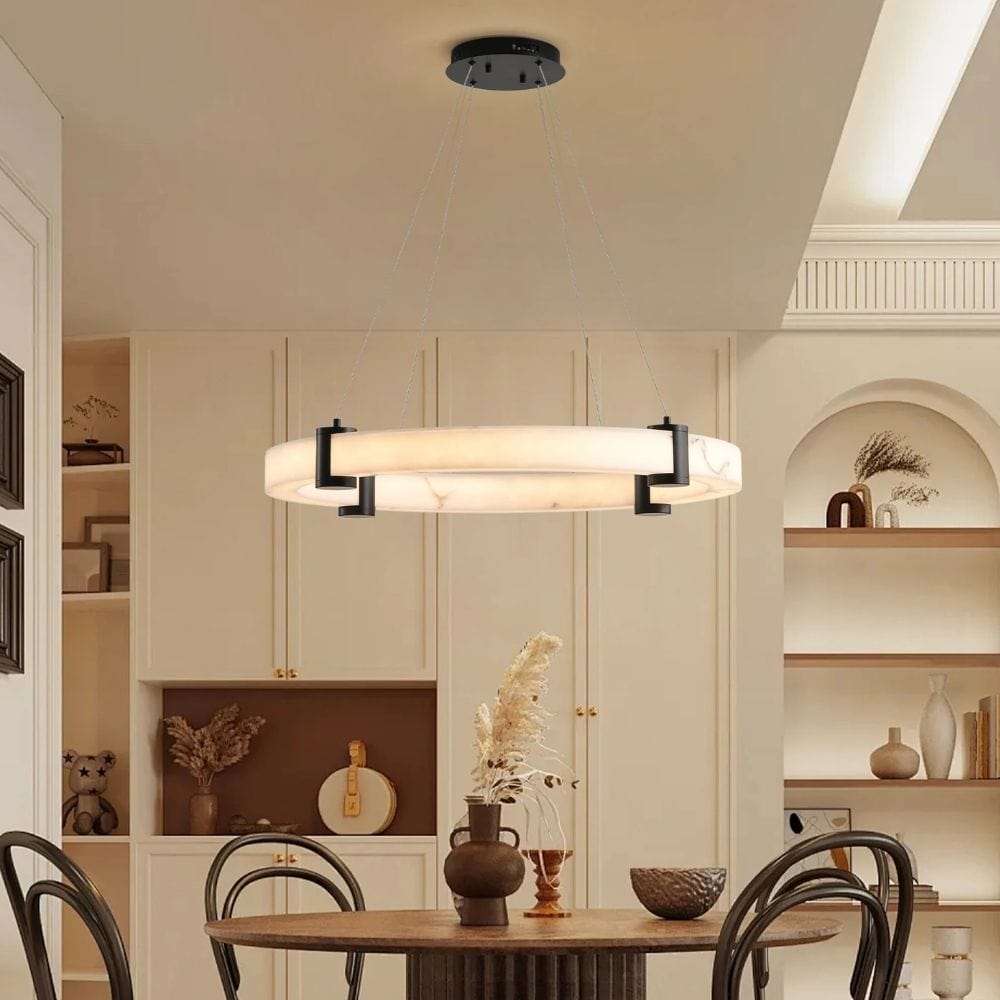
What Makes a Pendant Read Modern
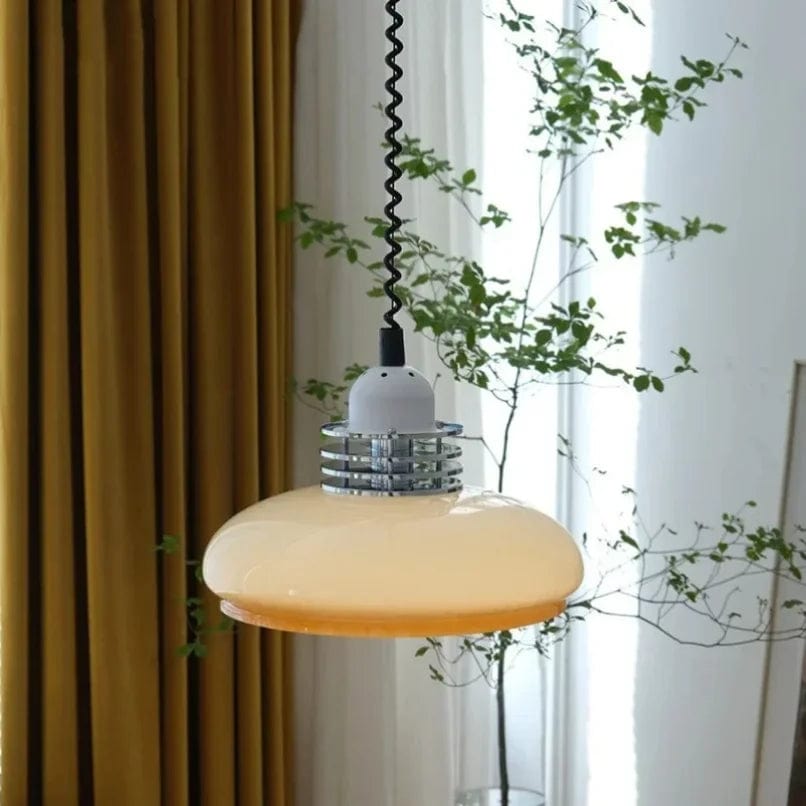
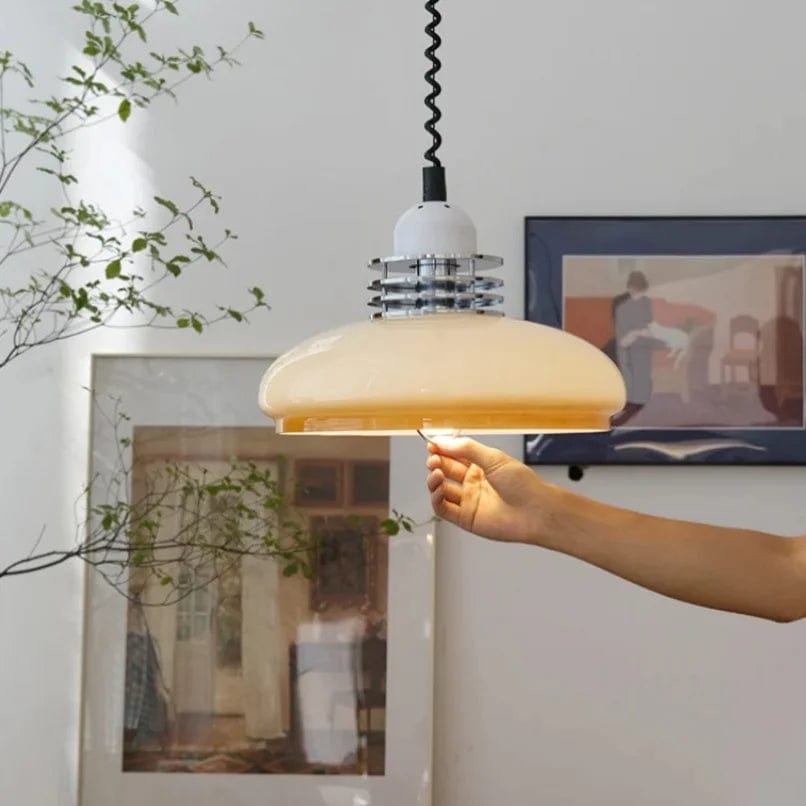
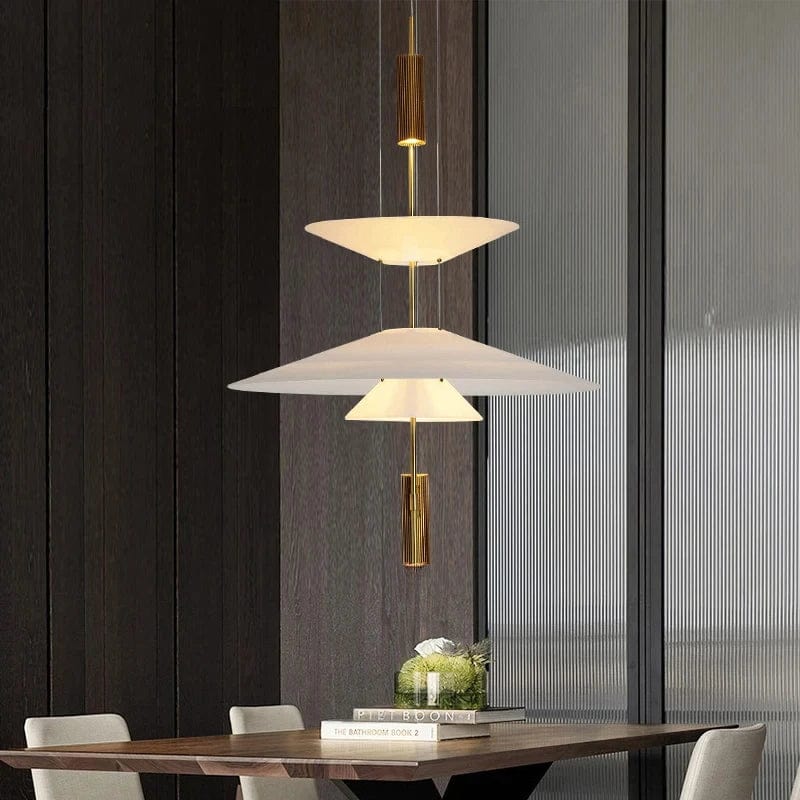
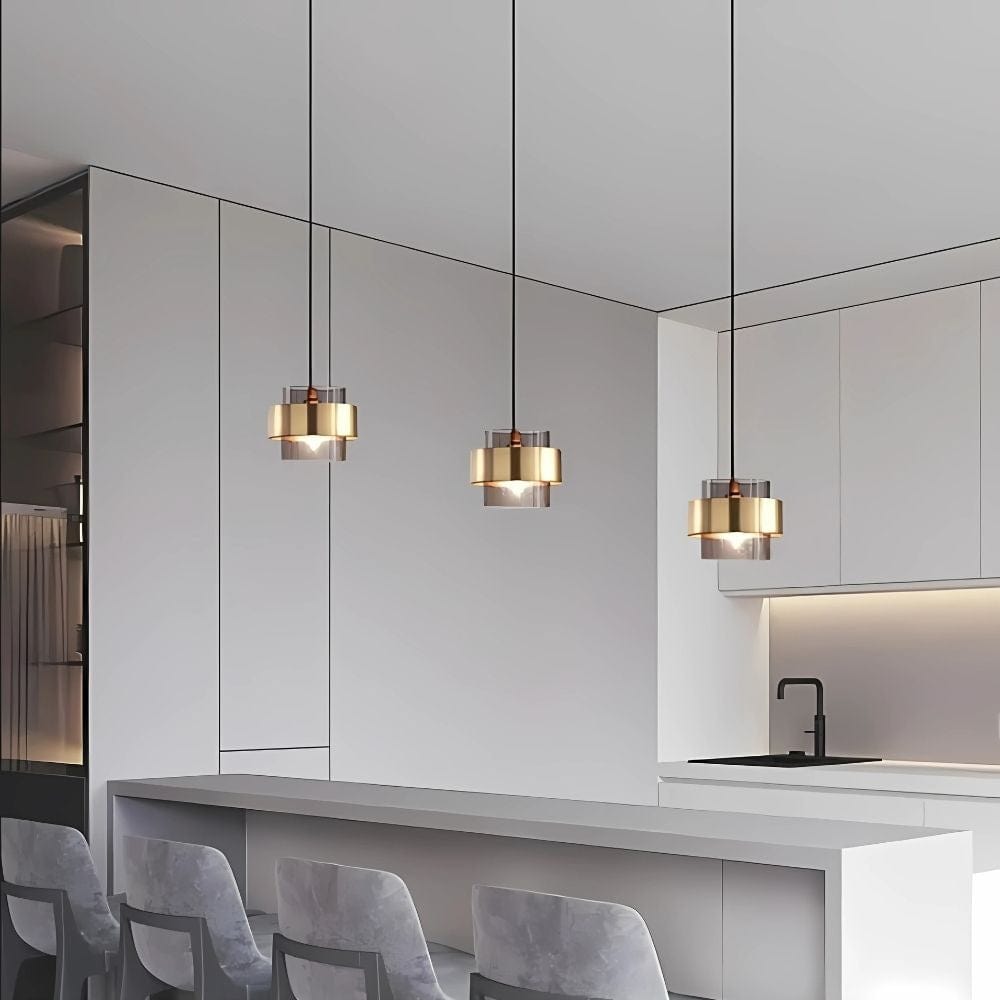
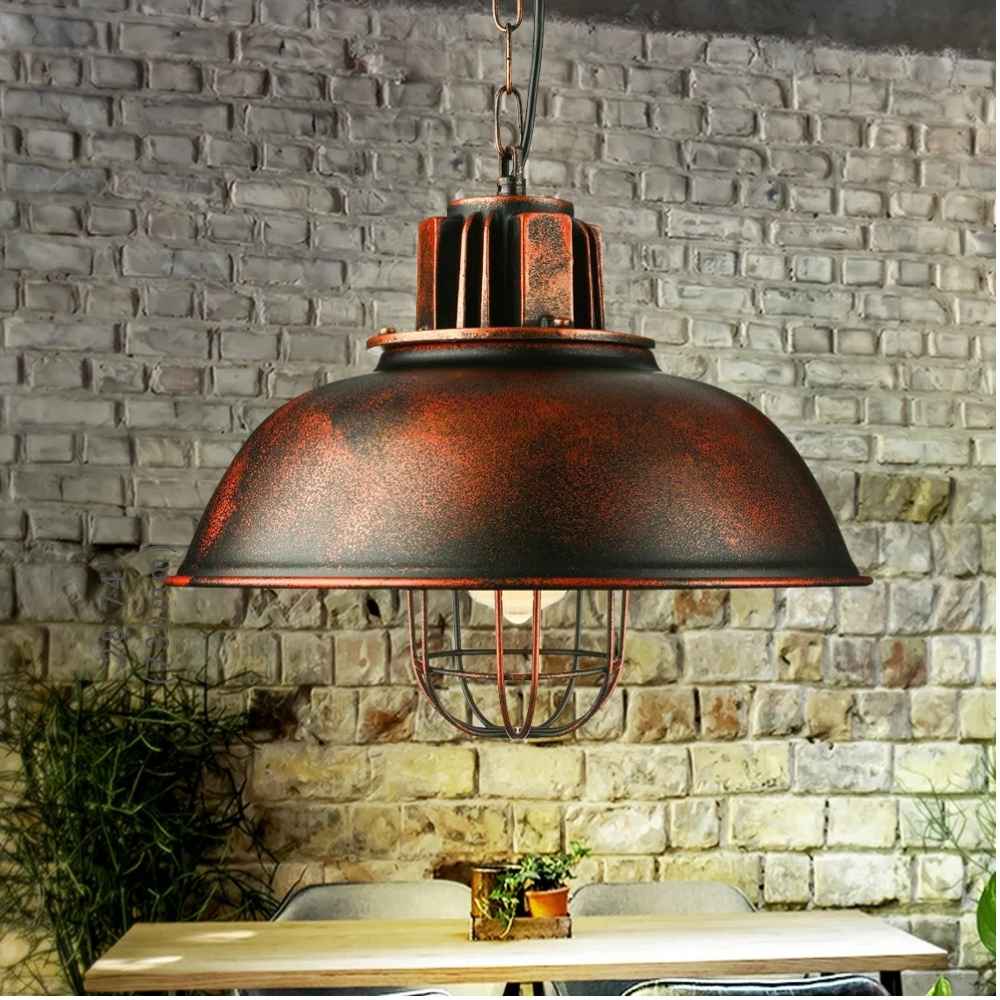
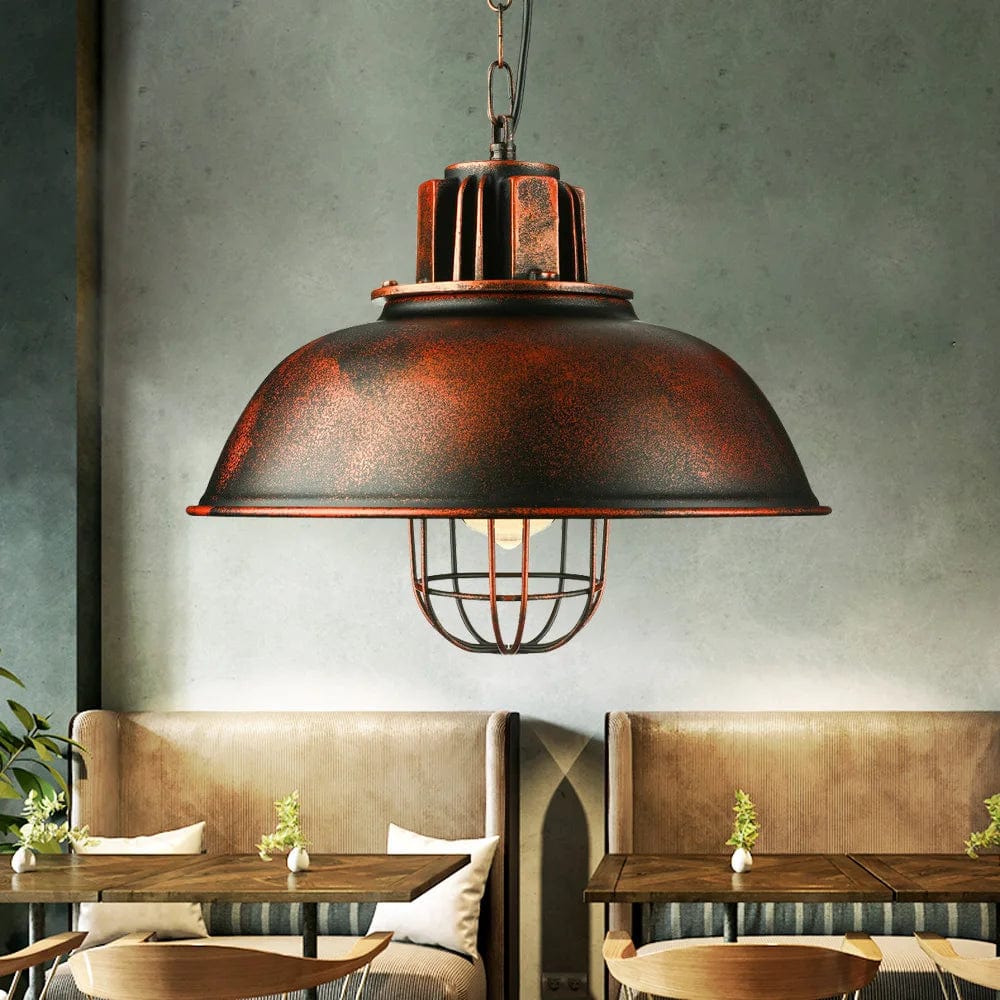
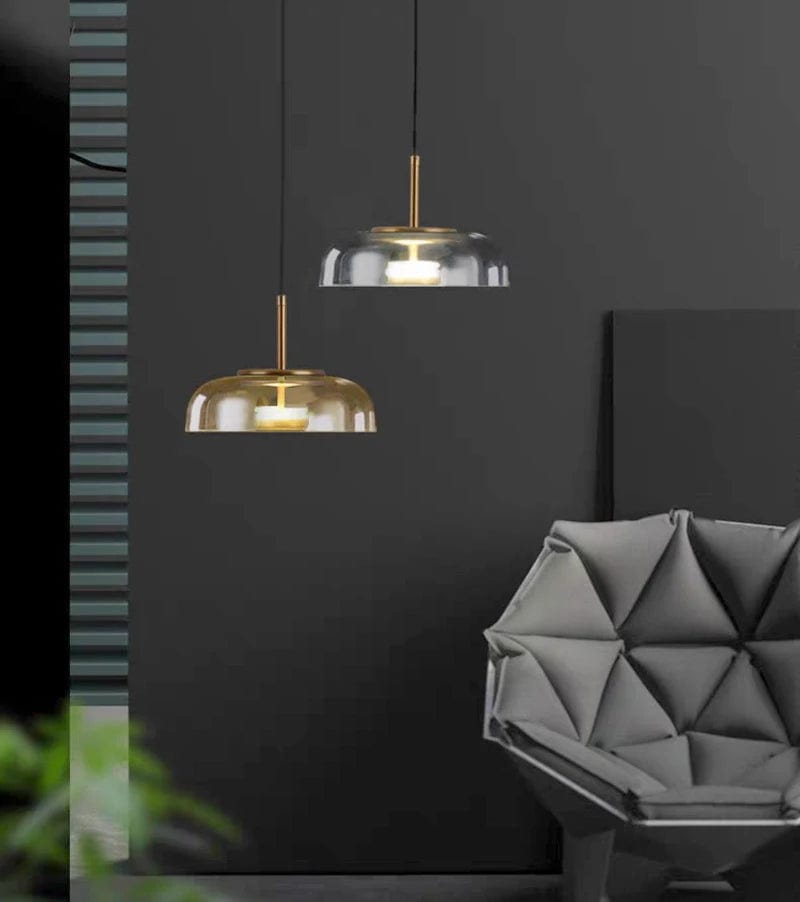
Four things, and none of them are the bulb. Geometry that can be described in one word — cone, dome, globe, cylinder, disc. Uninterrupted surfaces, with joints, screws, and hardware kept out of sight. Restrained finish palettes: matte black, brushed brass, white, and smoked or opal glass rather than mixed decorative detailing. And honest light — either a visible source treated as part of the design, or a fully diffused body with no hotspot at all. Strip a fixture to those four decisions and it reads modern regardless of era; add ornament back and it moves toward transitional, however clean the shape underneath.
Modern or Contemporary: A Useful Distinction
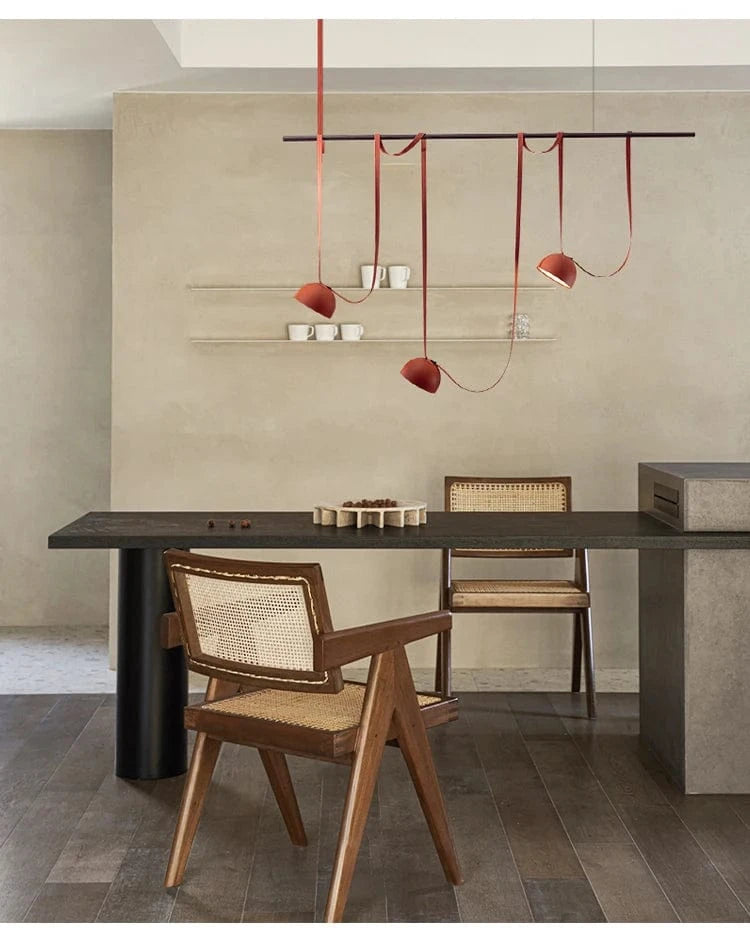
The terms are used interchangeably in shopping, and this collection covers both, but they describe different things. Modern points to a specific design lineage — the mid-century and Bauhaus inheritance, with forms that have been in production for decades and have proven durable. Contemporary means simply what is being designed now: current proportions, current finishes, current technology. In practice the overlap is large and the practical difference is small: modern designs tend to be quieter and more classical in proportion, contemporary ones more sculptural and more willing to make the fixture the room's event. The wider style comparison lives in our modern vs contemporary guide.
LED and the Minimalist Profile
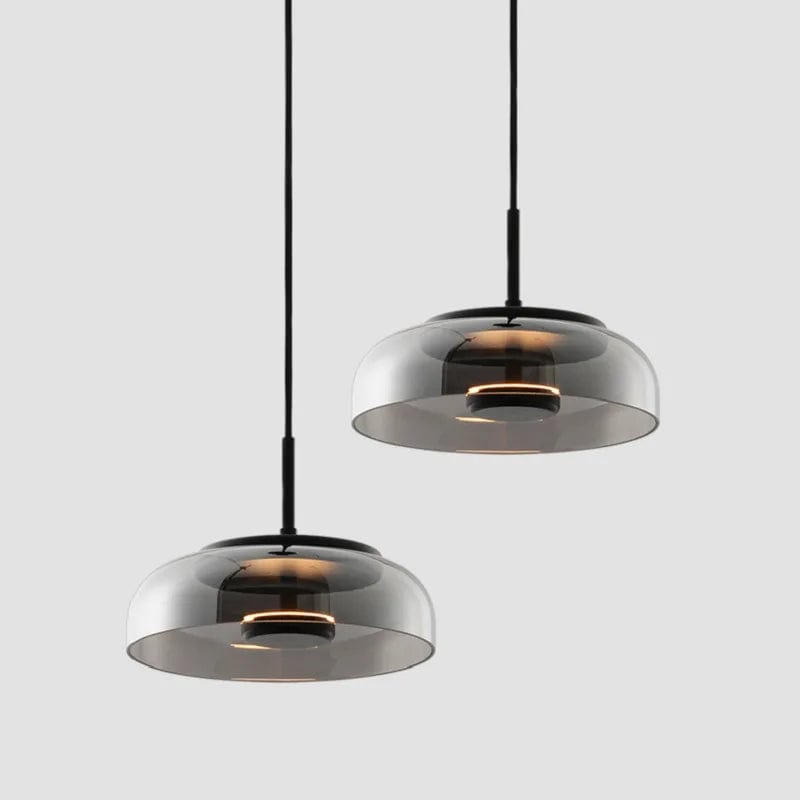
Integrated LED is what made the current generation of slim pendants possible. Without a socket and bulb to house, a fixture body can shrink to a disc, a thin bar, or a ring of light — proportions no bulb-based design can reach. The specs worth checking: dimming depth and driver quality (flicker-free matters more in a fixture hanging at eye level than one on a ceiling), color temperature at 2700-3000K for living spaces and up to 3500K over work surfaces, and CRI 90+ so materials and food read true. Well-built integrated designs run 30,000-50,000 hours, and the best listings note whether the driver is serviceable. Bulb-based modern designs remain equally valid, with the advantage that the light source can be upgraded later without replacing the fixture.
Choosing by Room
Kitchens and Islands
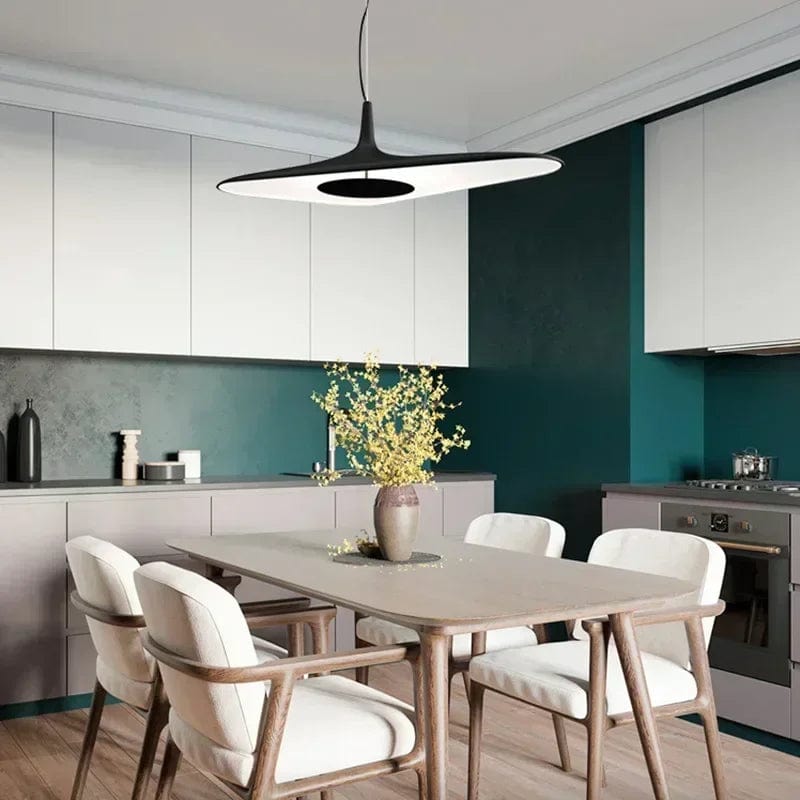
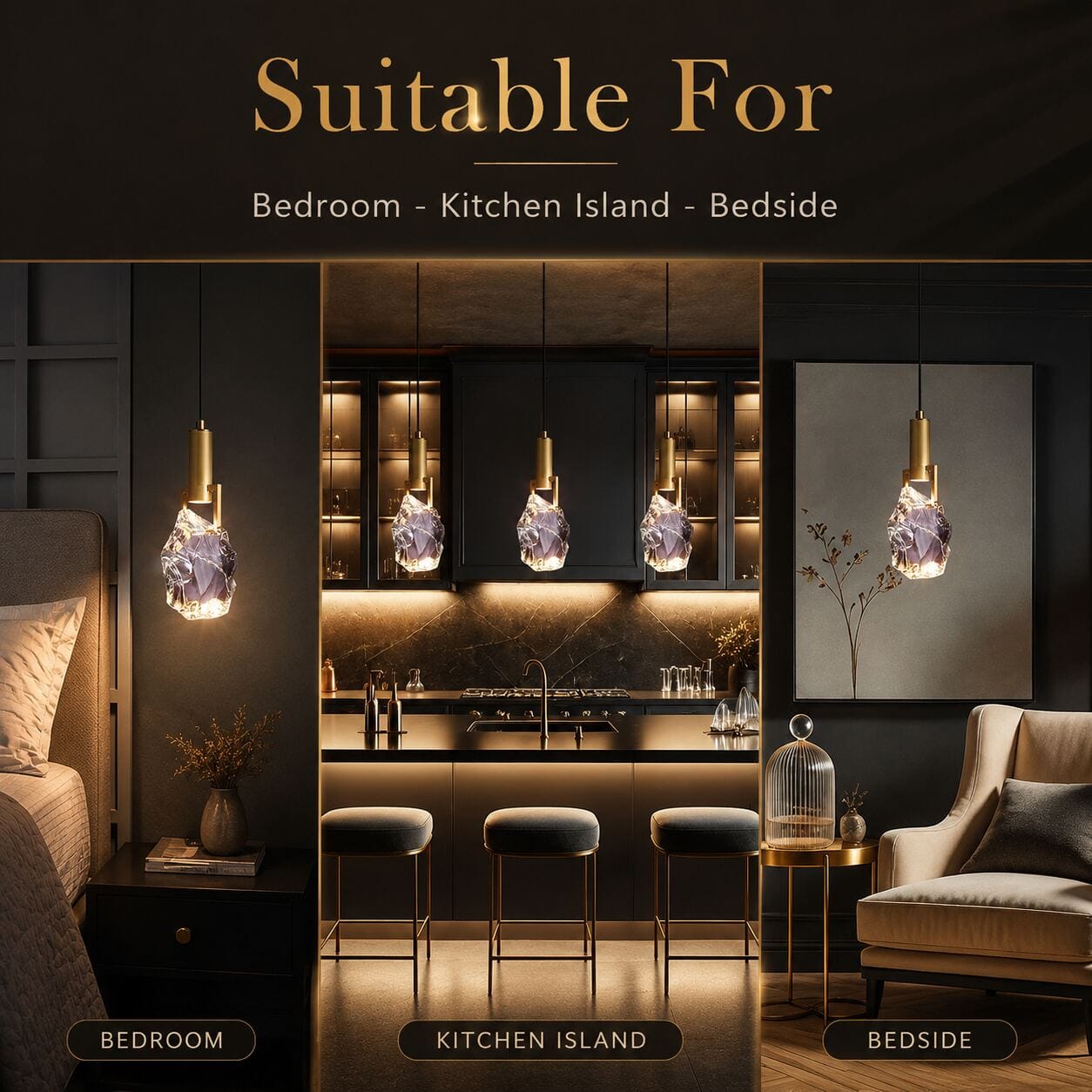
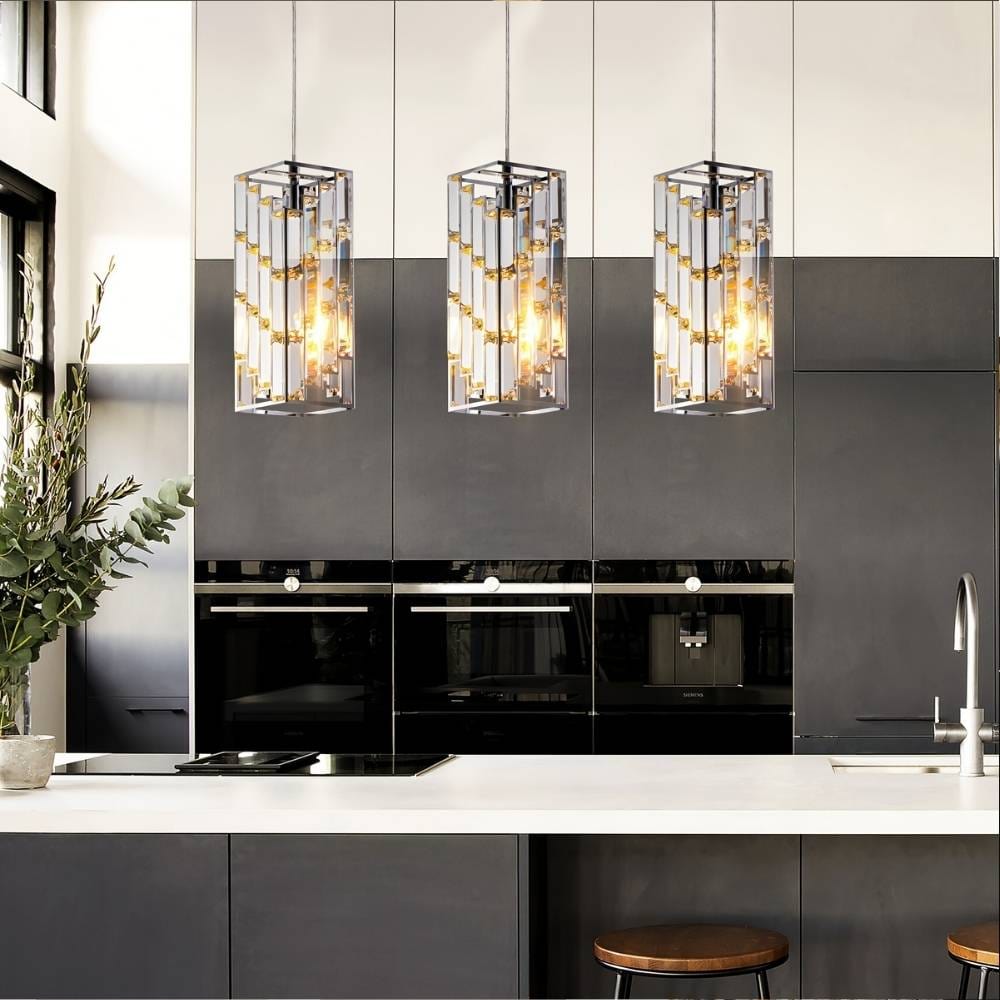
The direction's busiest address. Metal and opal shades direct light downward without spill, hung 30-36" (76-91 cm) above the counter, spaced roughly one fixture per 24-30" (61-76 cm) of island length. The full plan sits within the kitchen lighting collection, with placement numbers in our island height guide.
Living Rooms
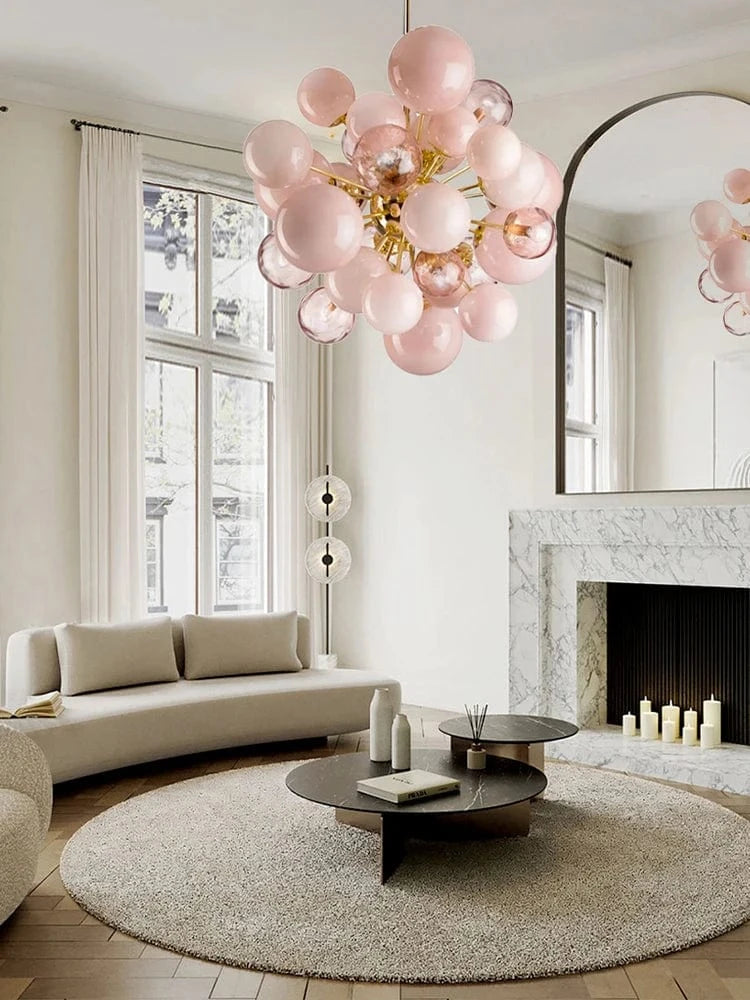
Modern pendants earn their place in living rooms by doing what a floor lamp cannot: defining a zone without occupying floor area. A single sculptural pendant over a reading corner, a pair flanking a fireplace, or a cluster above a coffee table all give an open-plan seating group a declared centre — with 84" (213 cm) of clearance wherever people walk.
Bedrooms
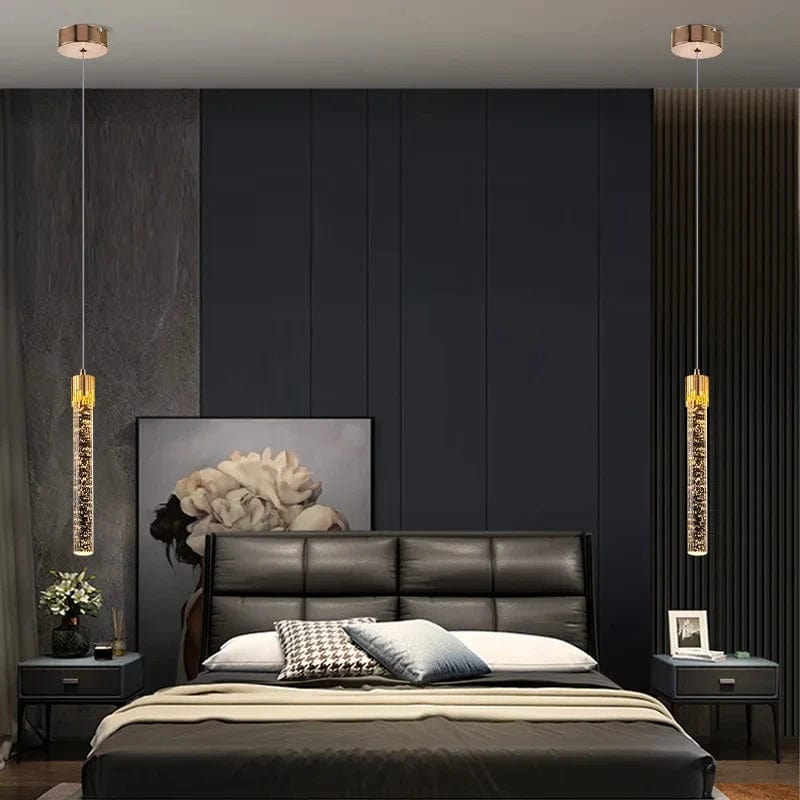
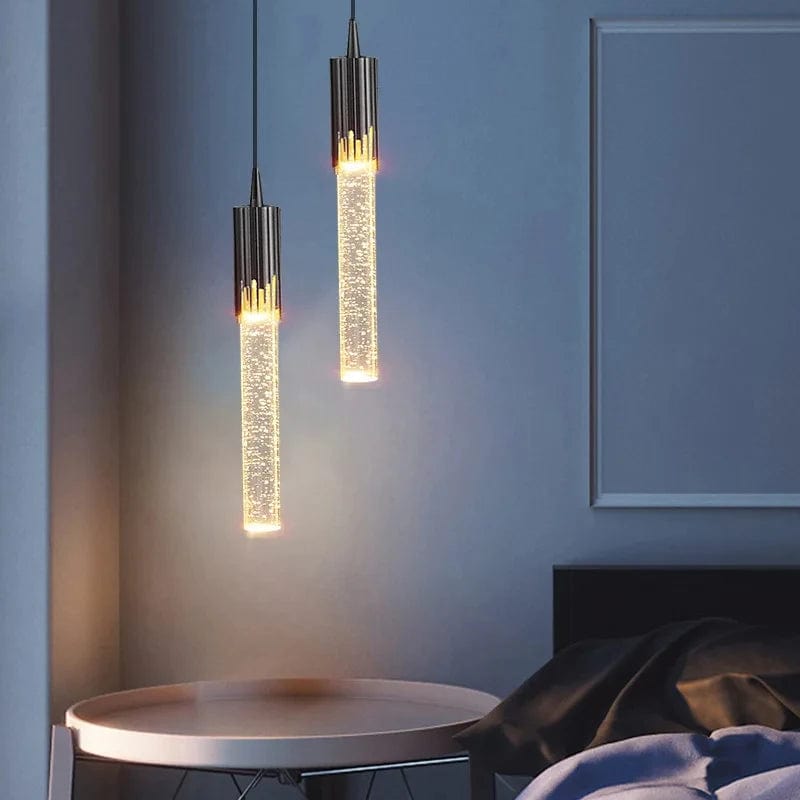
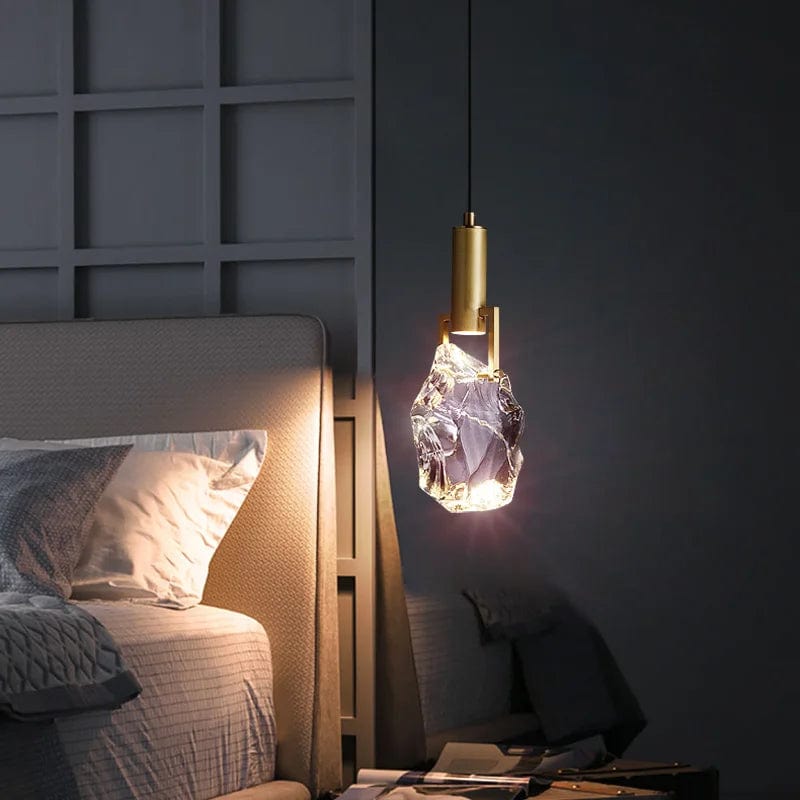
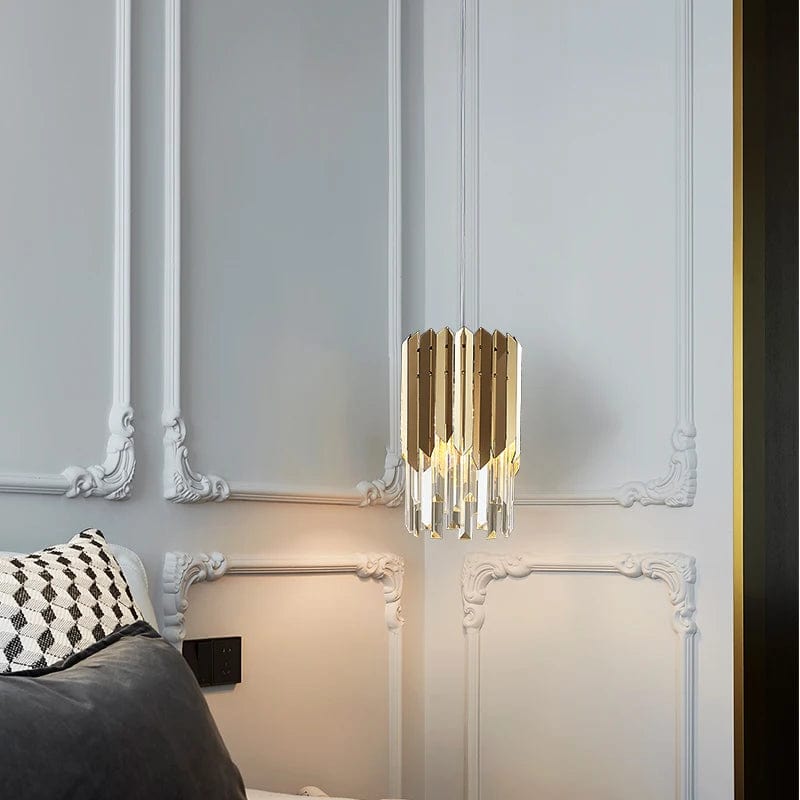
The fastest-growing bedside alternative: a compact pendant hung on each side of the bed at roughly 18-24" (46-61 cm) above the nightstand clears the surface completely and puts light at a better reading angle than a table lamp. Choose diffused bodies rather than clear glass at this proximity, and put the pair on switches reachable from bed.
Dining Tables
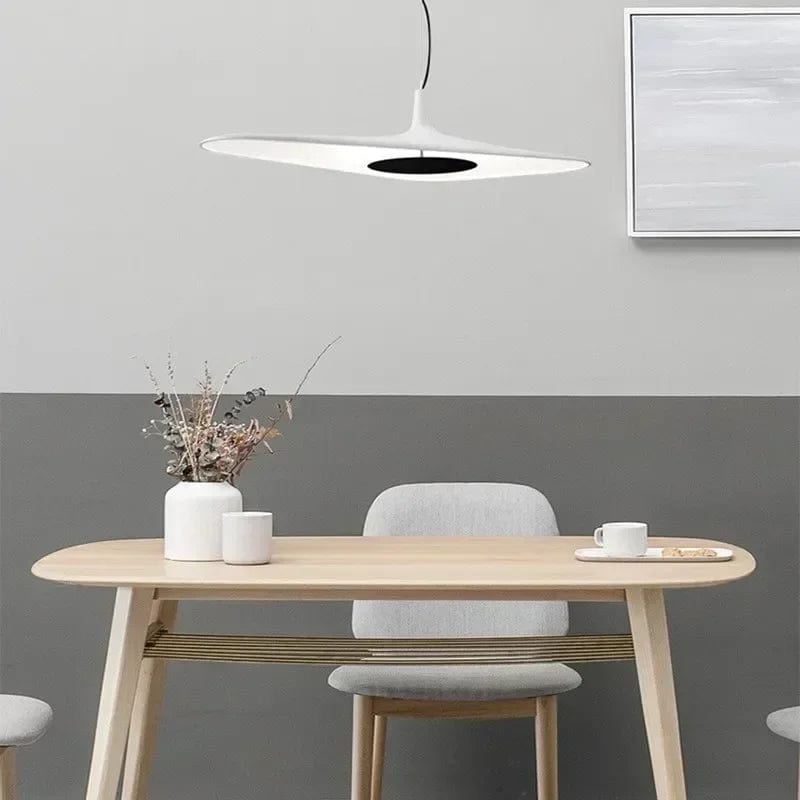
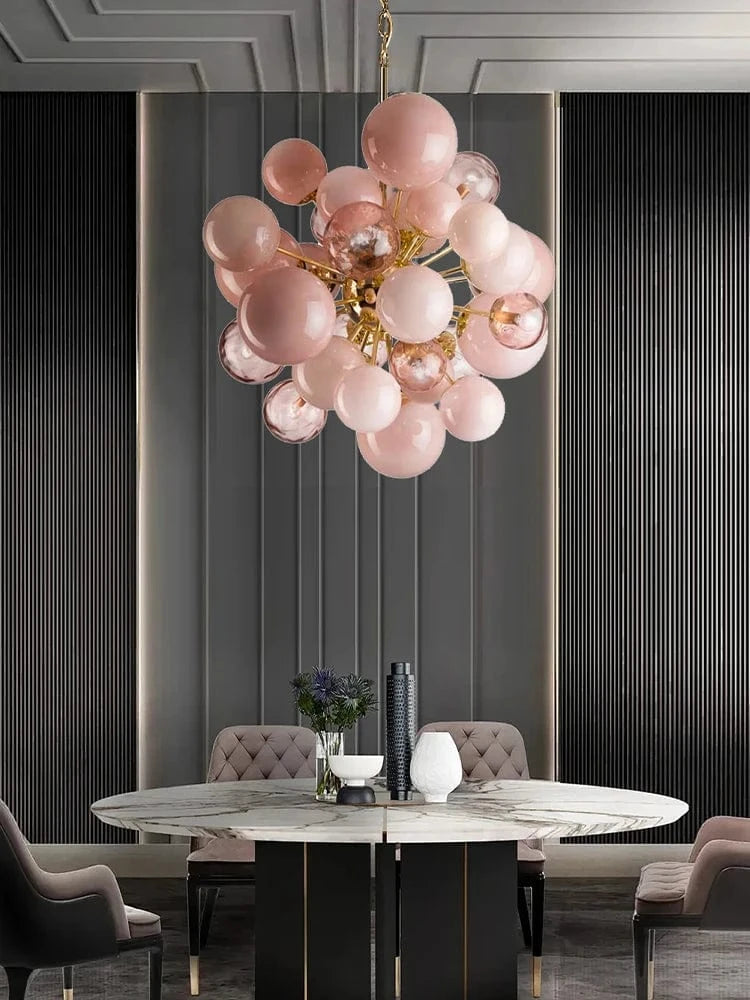
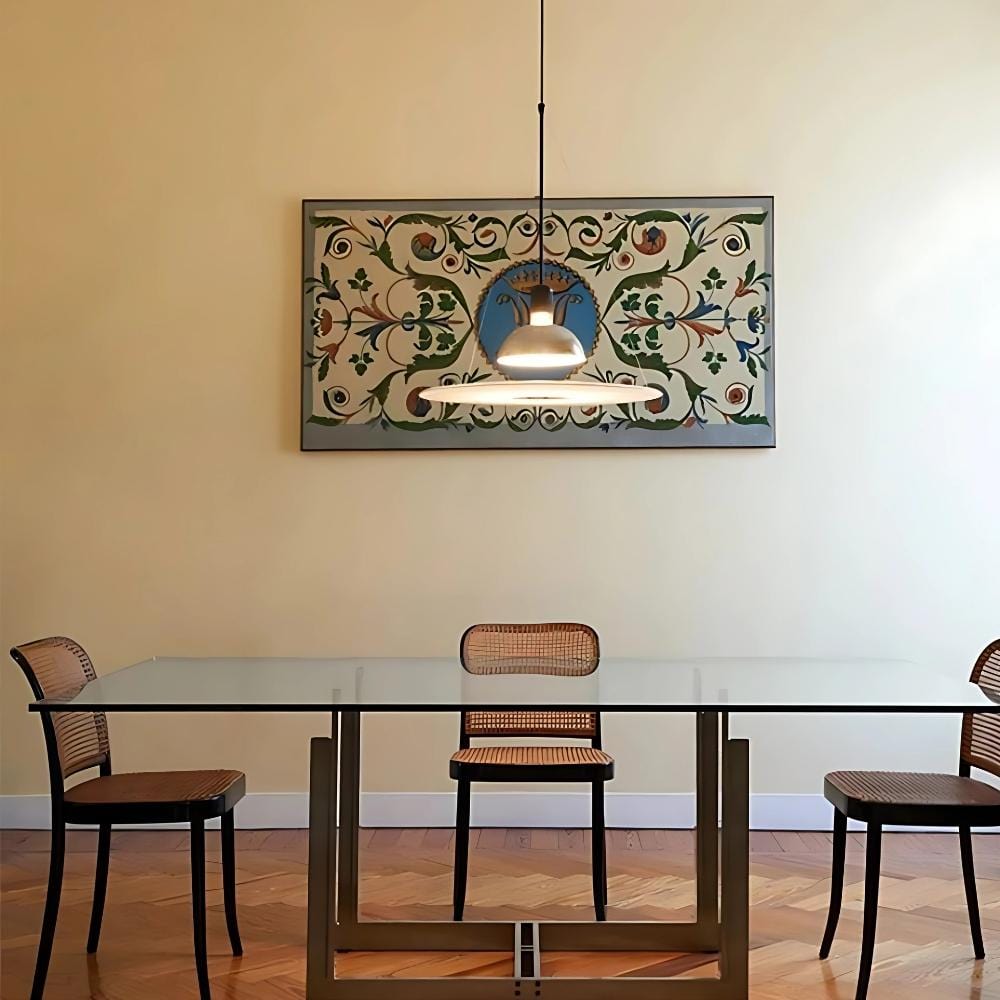
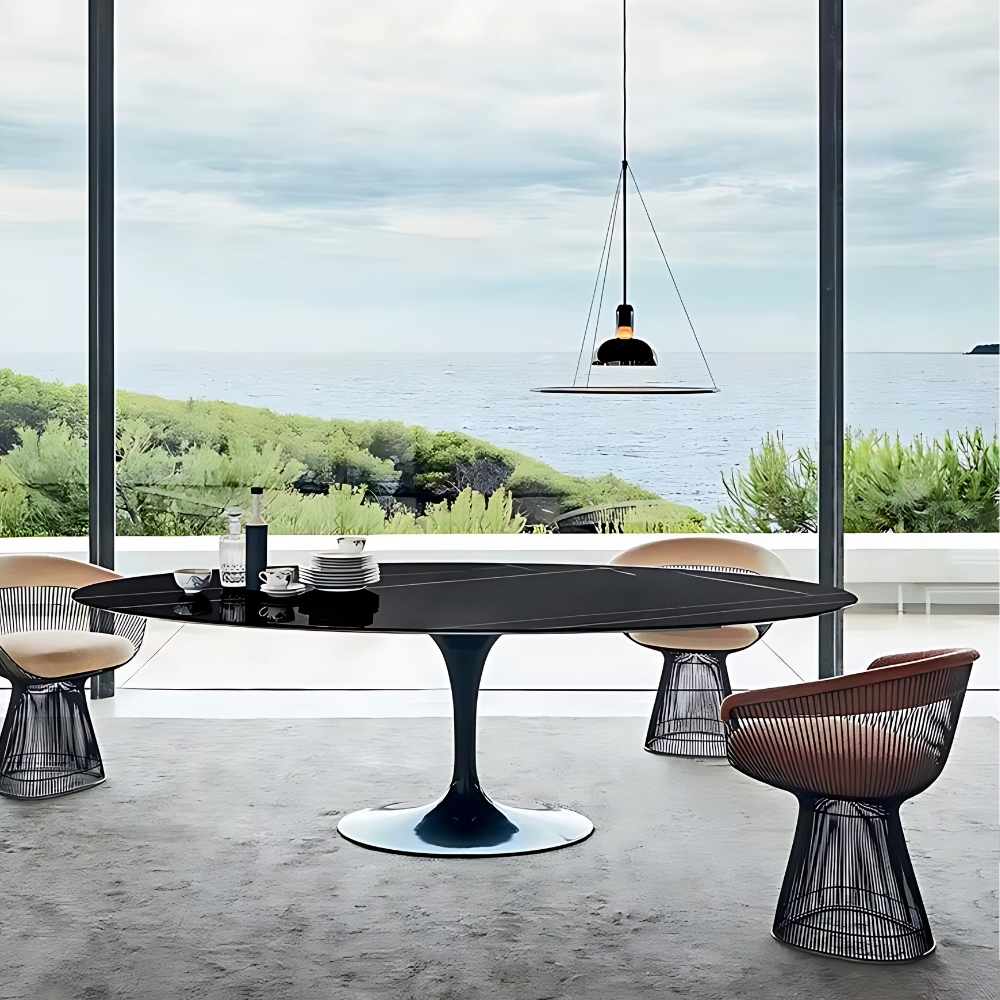
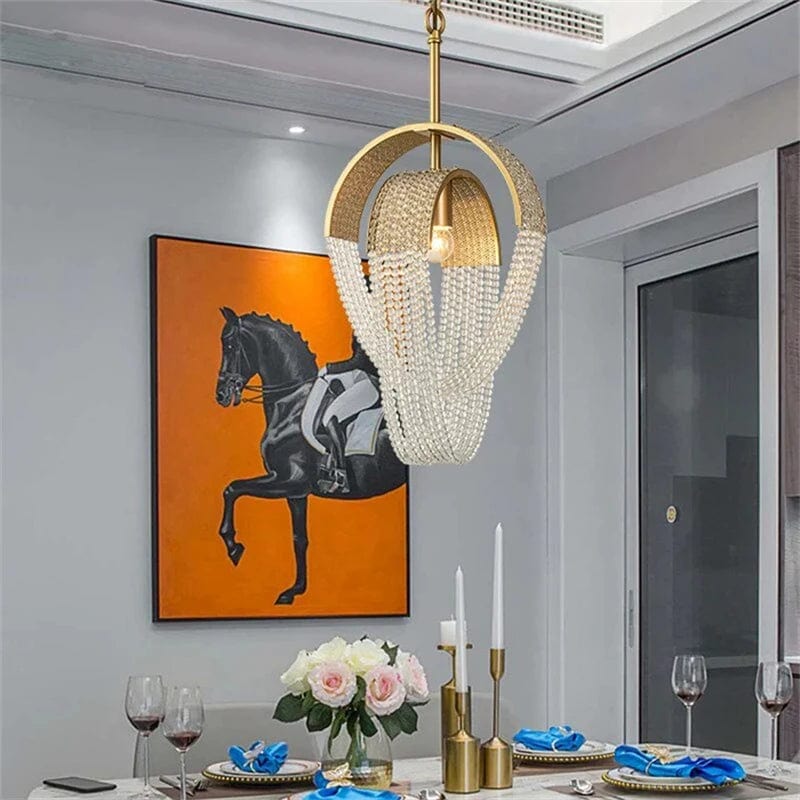
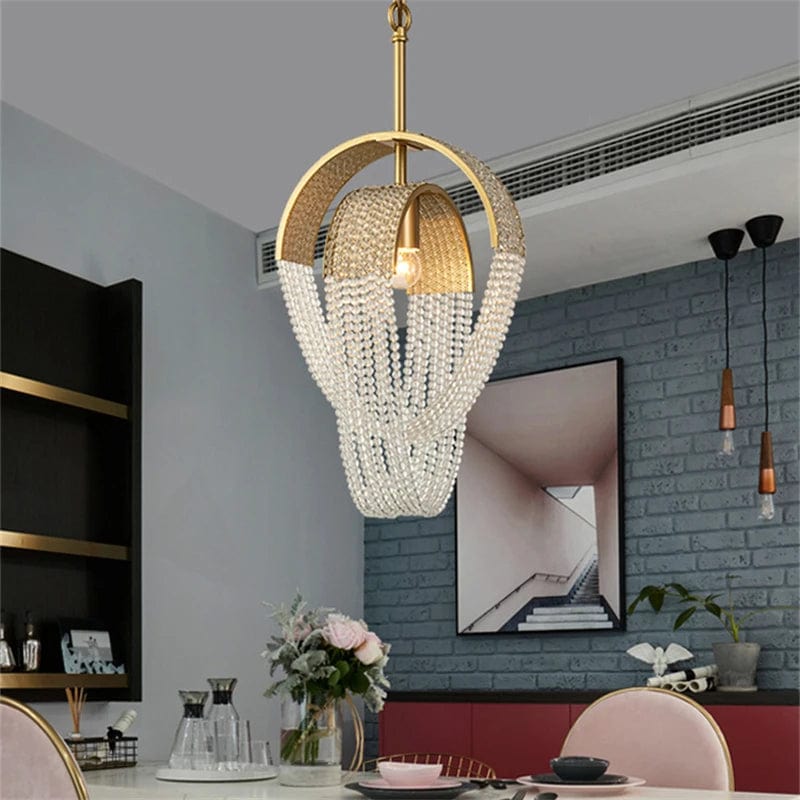
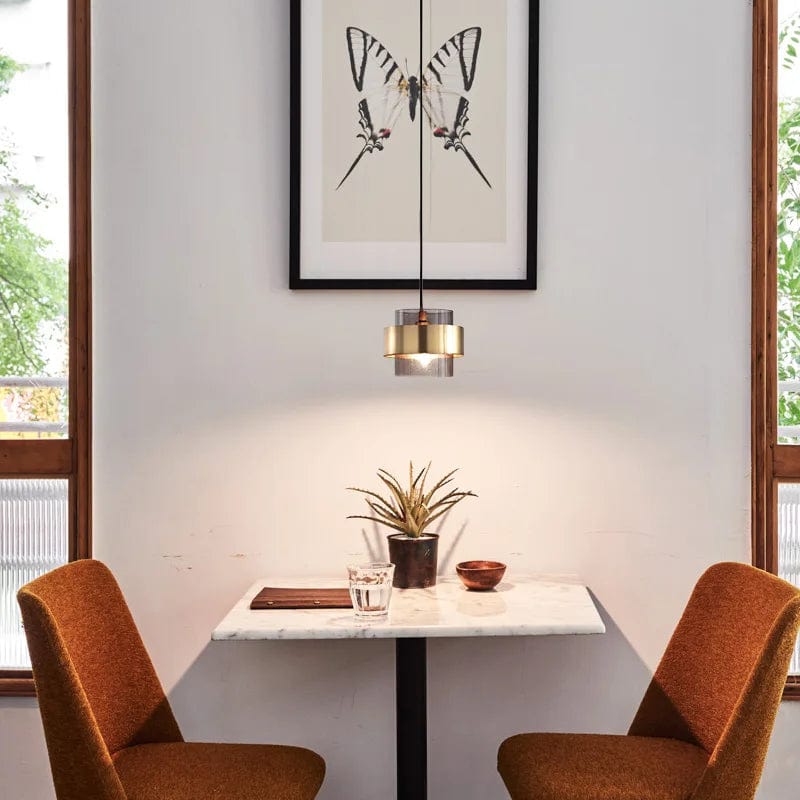
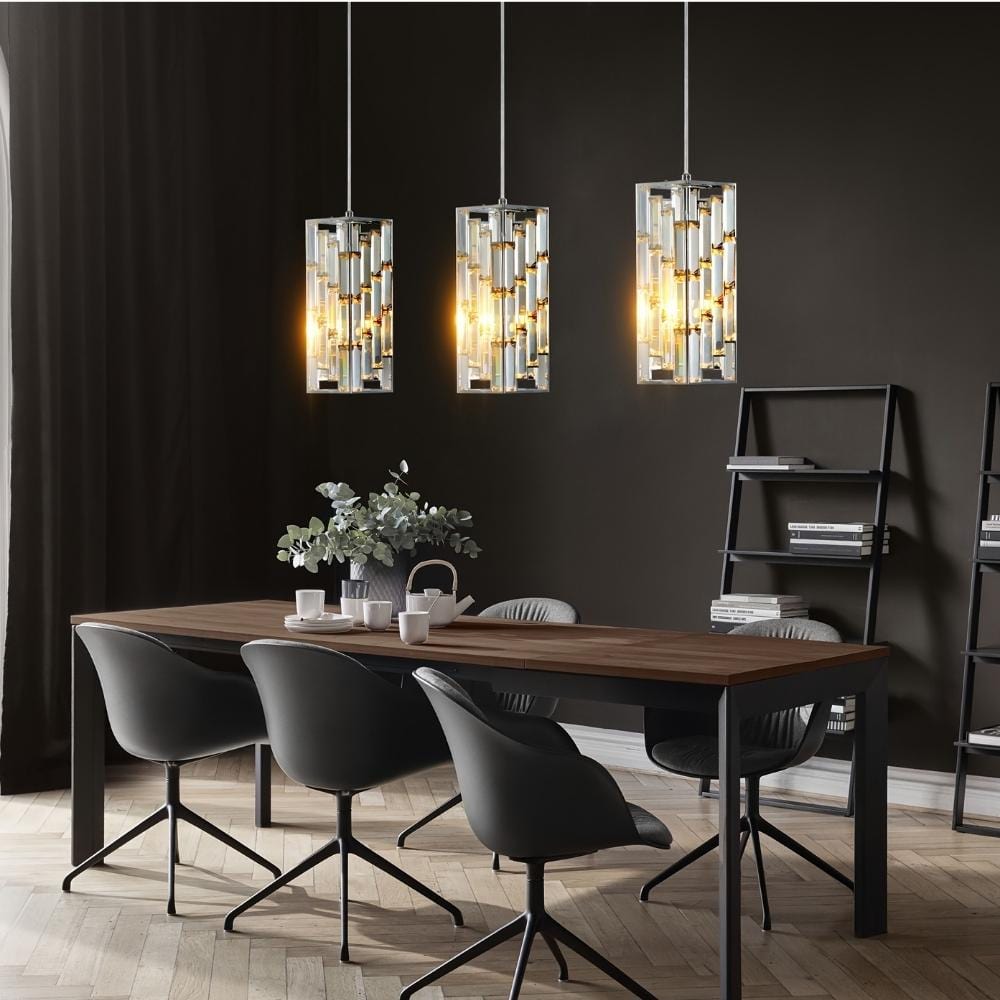
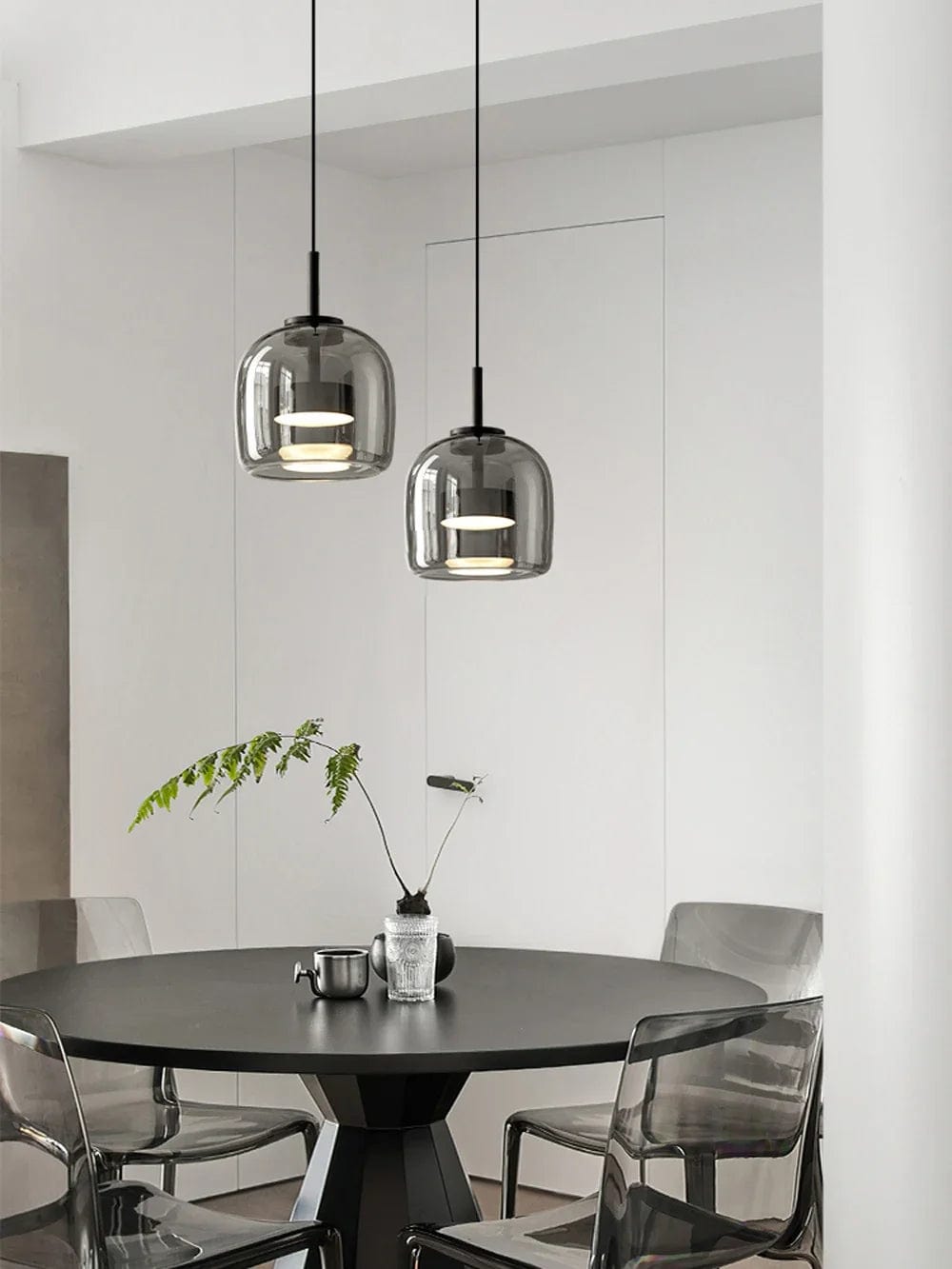
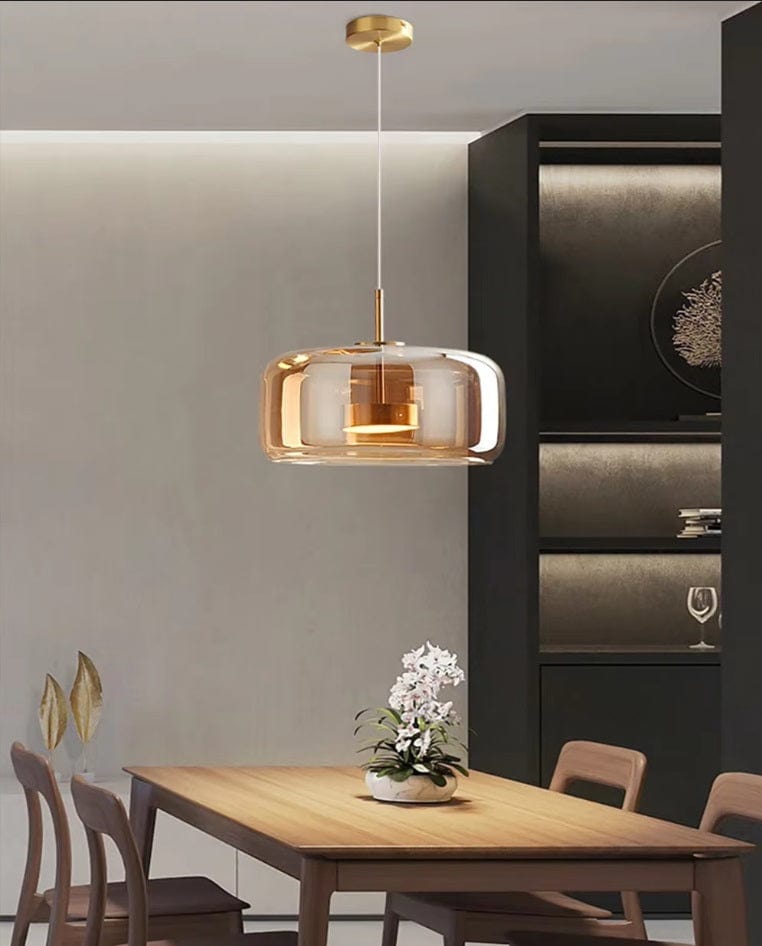
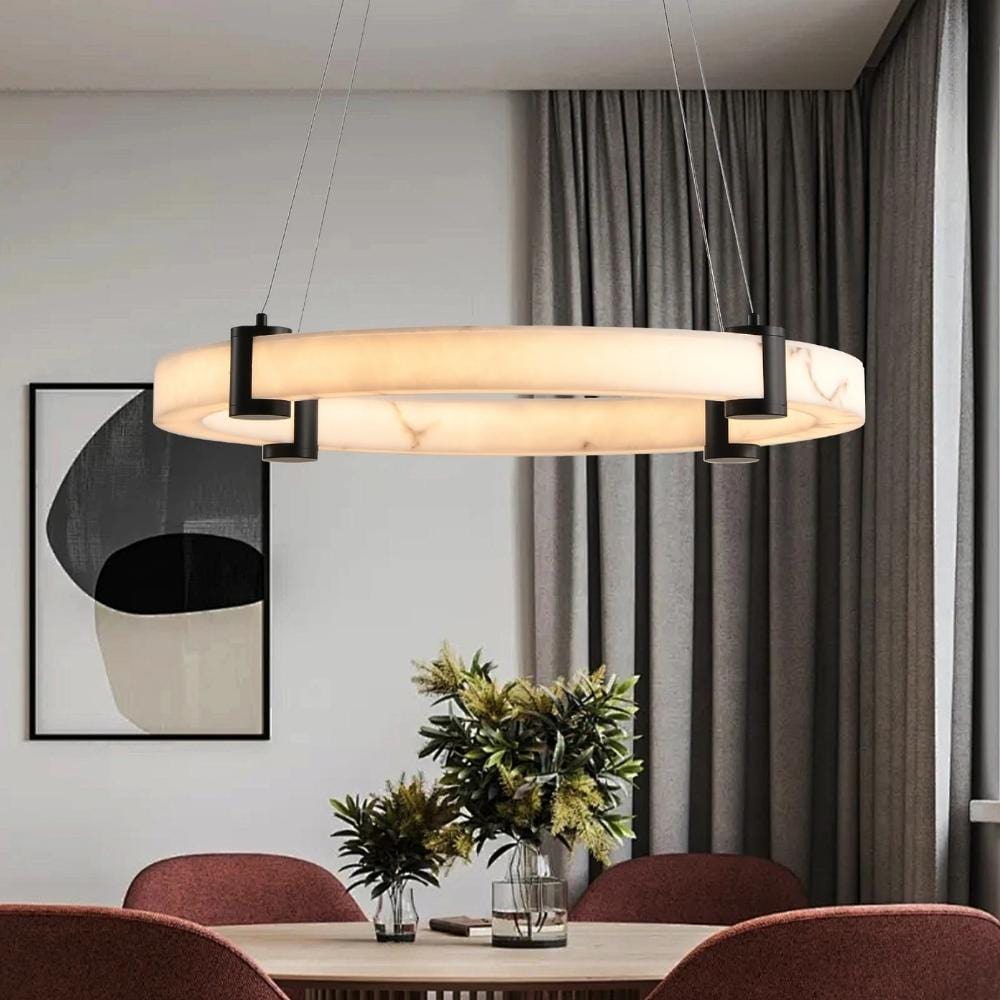
A single pendant above a round table, or a matched pair above a rectangular one, at 30-36" from the tabletop. Where one continuous fixture suits the table better than a row, the linear chandeliers collection covers that format.
Forms and Materials Across the Collection
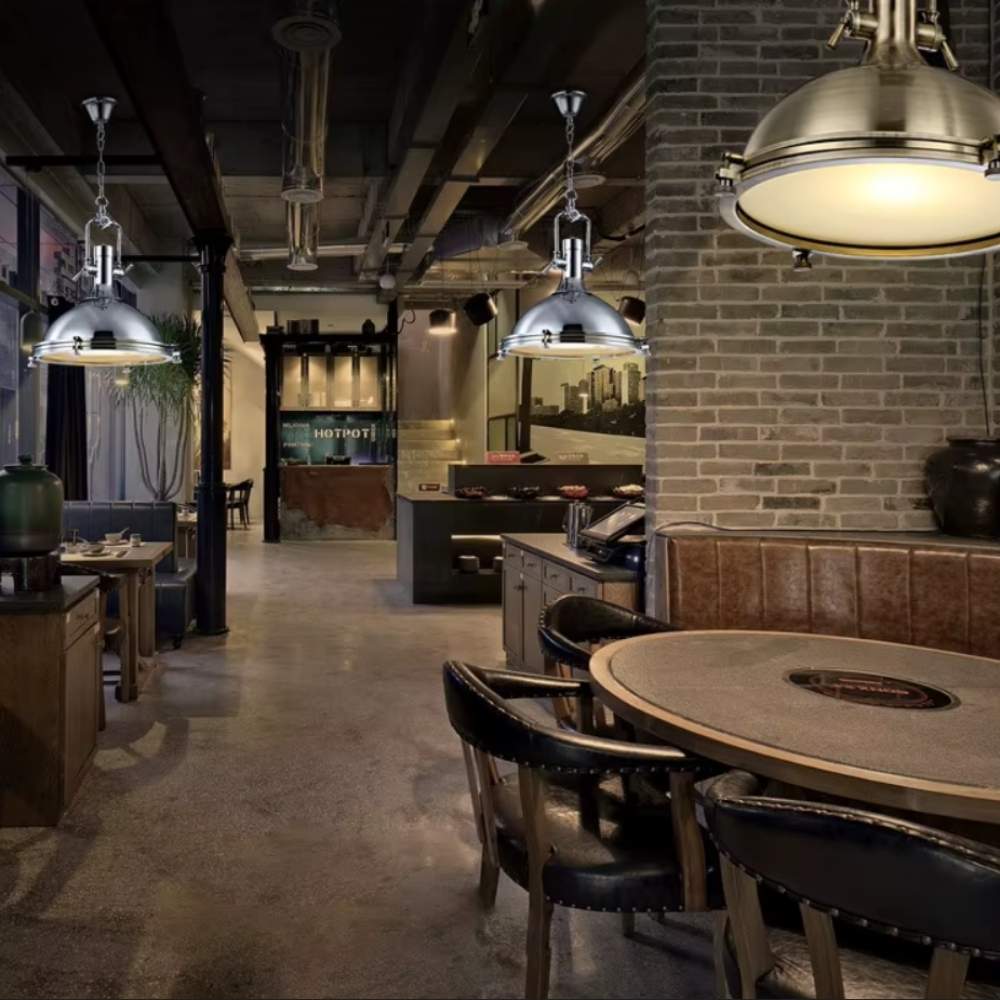
- Cone and dome shades: the workhorse — directed downward light, strongest over counters and tables
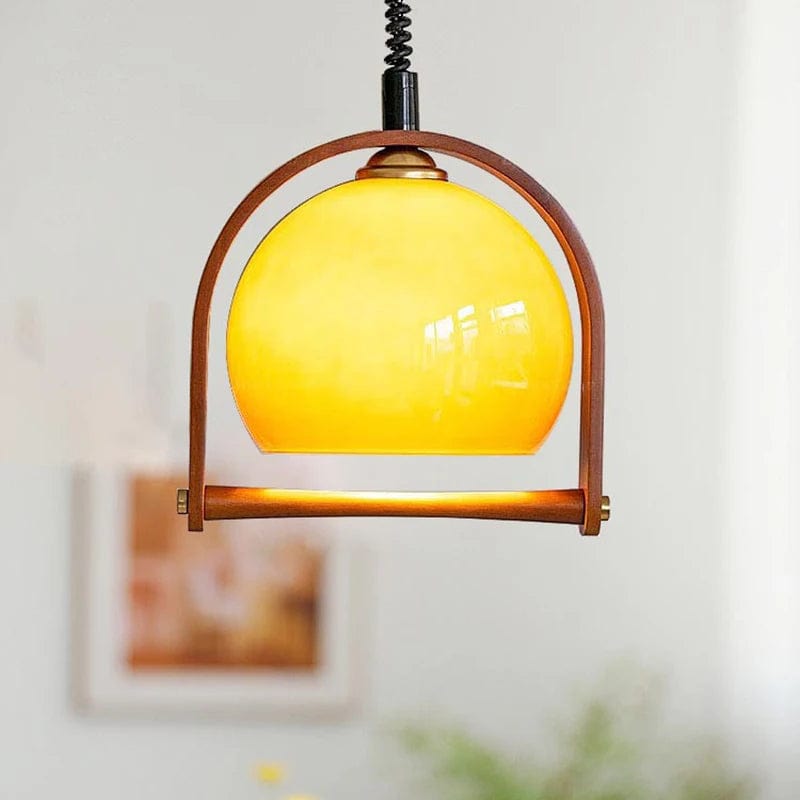
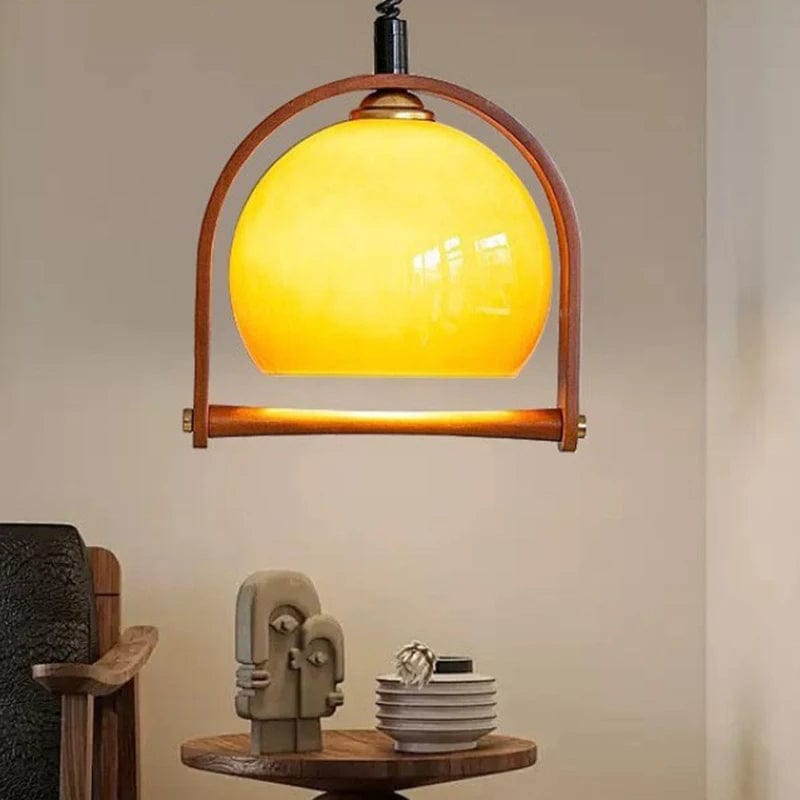
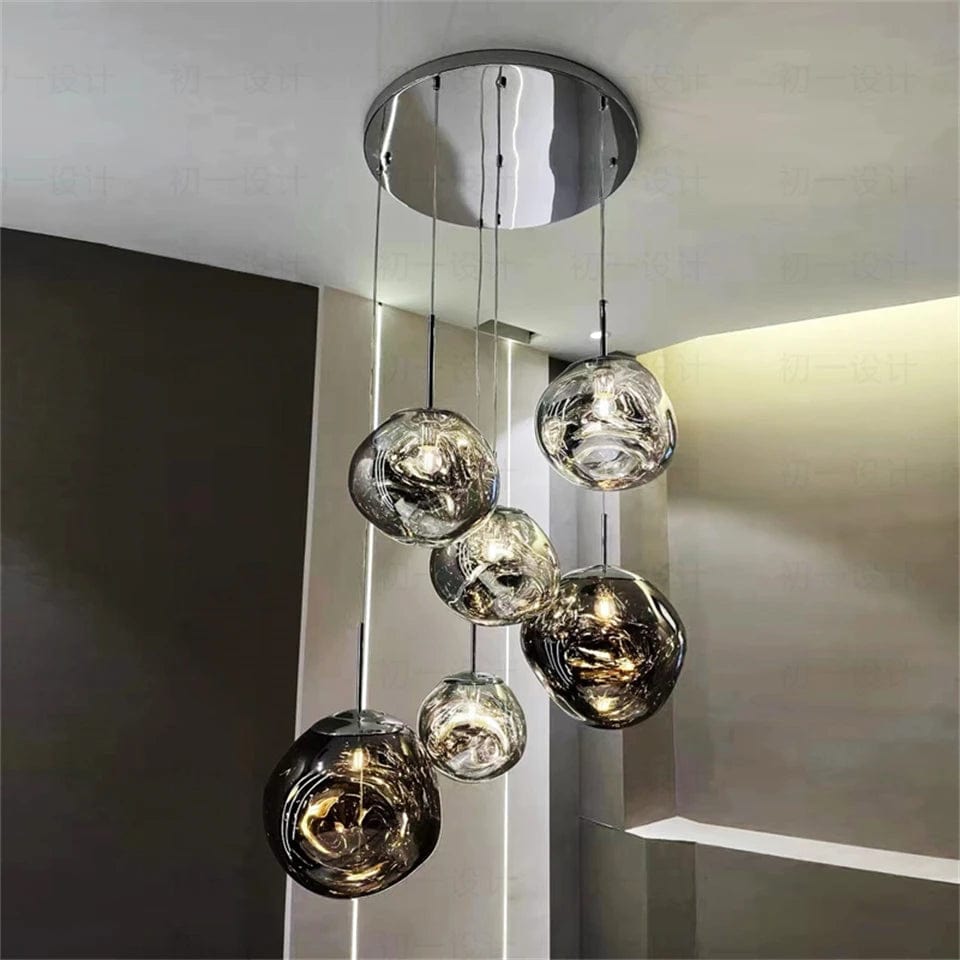
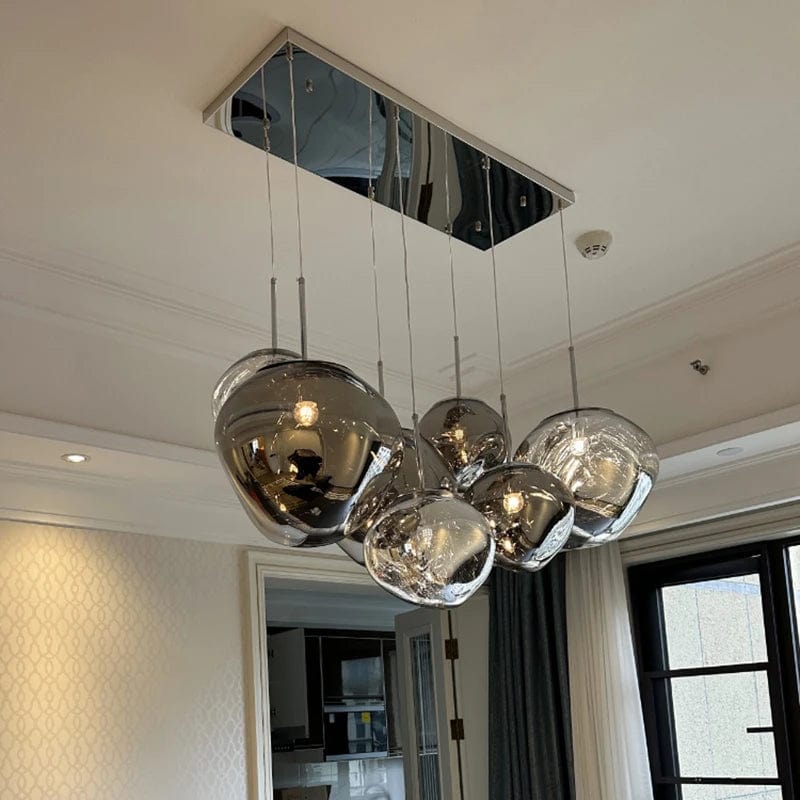
- Globes and spheres: light in all directions, the softest read; opal versions are glare-free at eye level
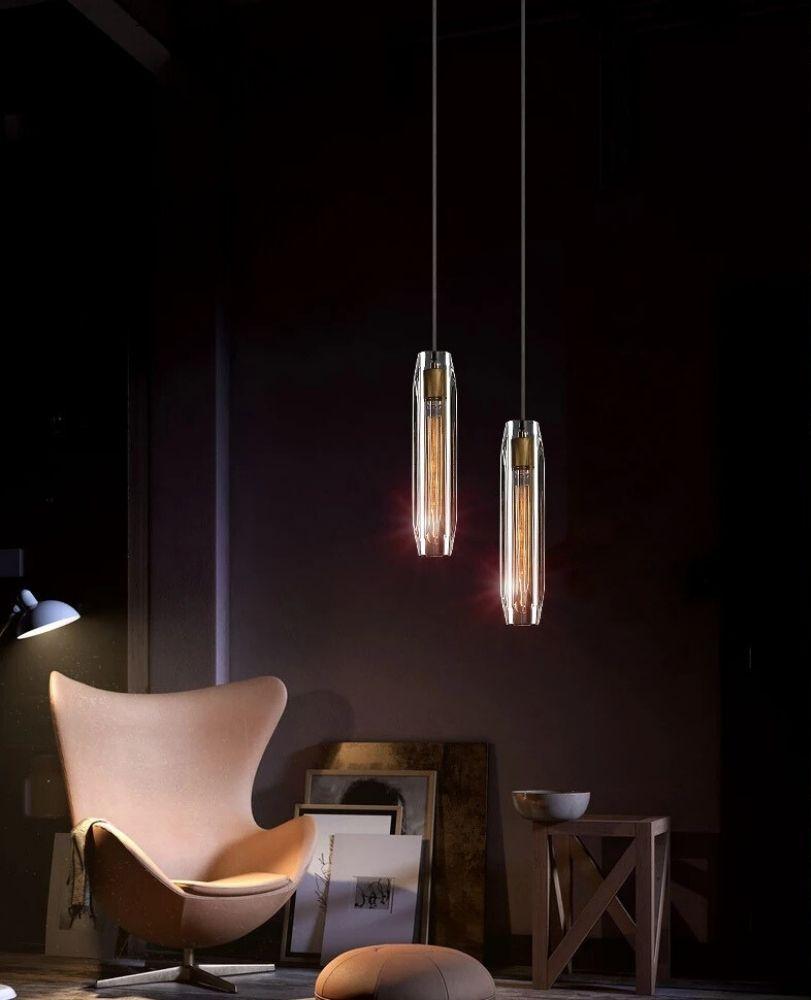
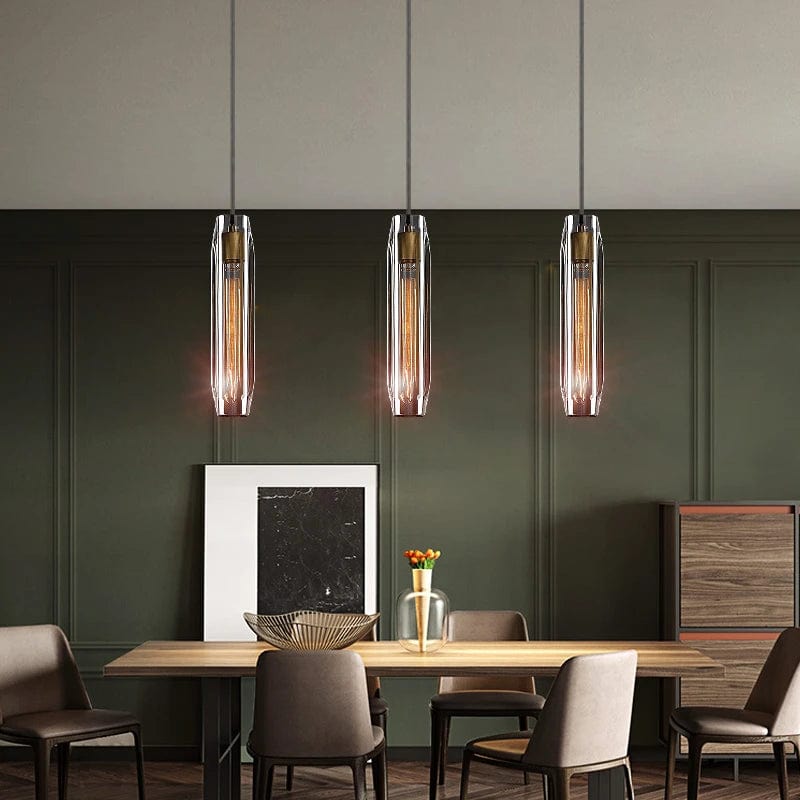
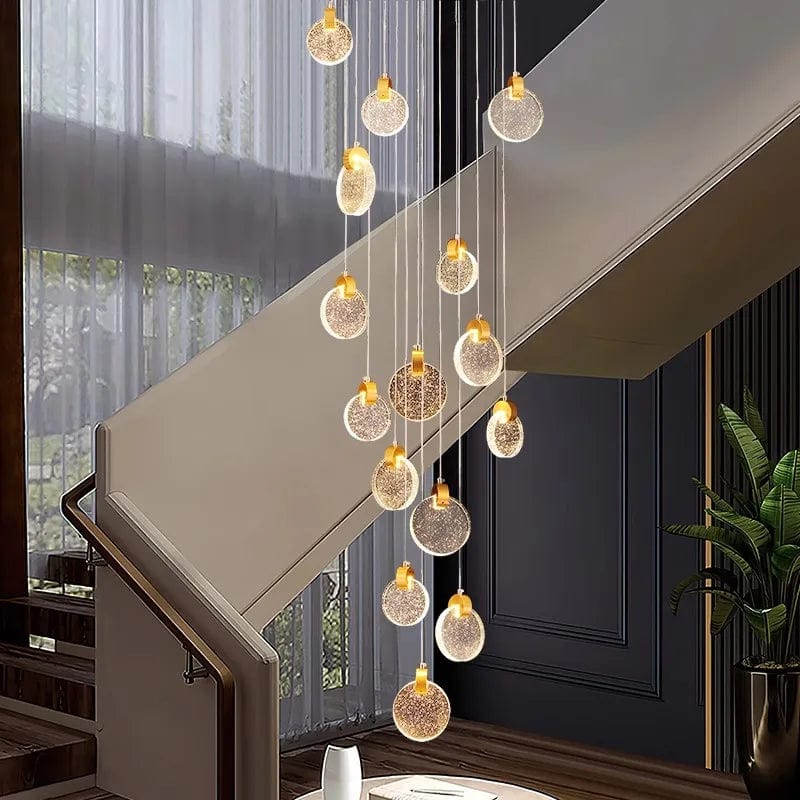
- Cylinders and tubes: narrow beams and vertical emphasis, effective in rows and in tall rooms
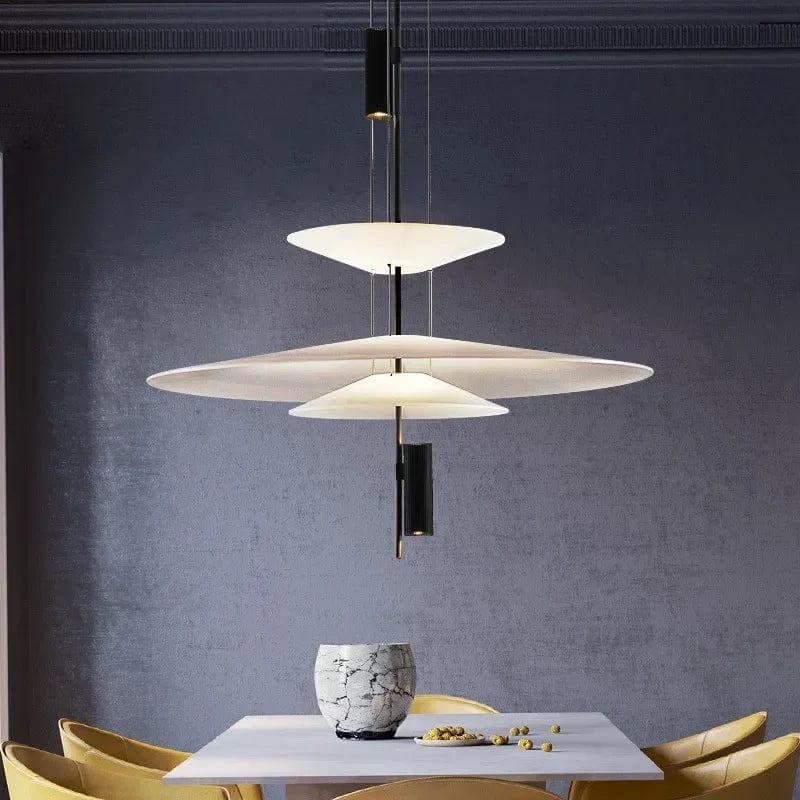
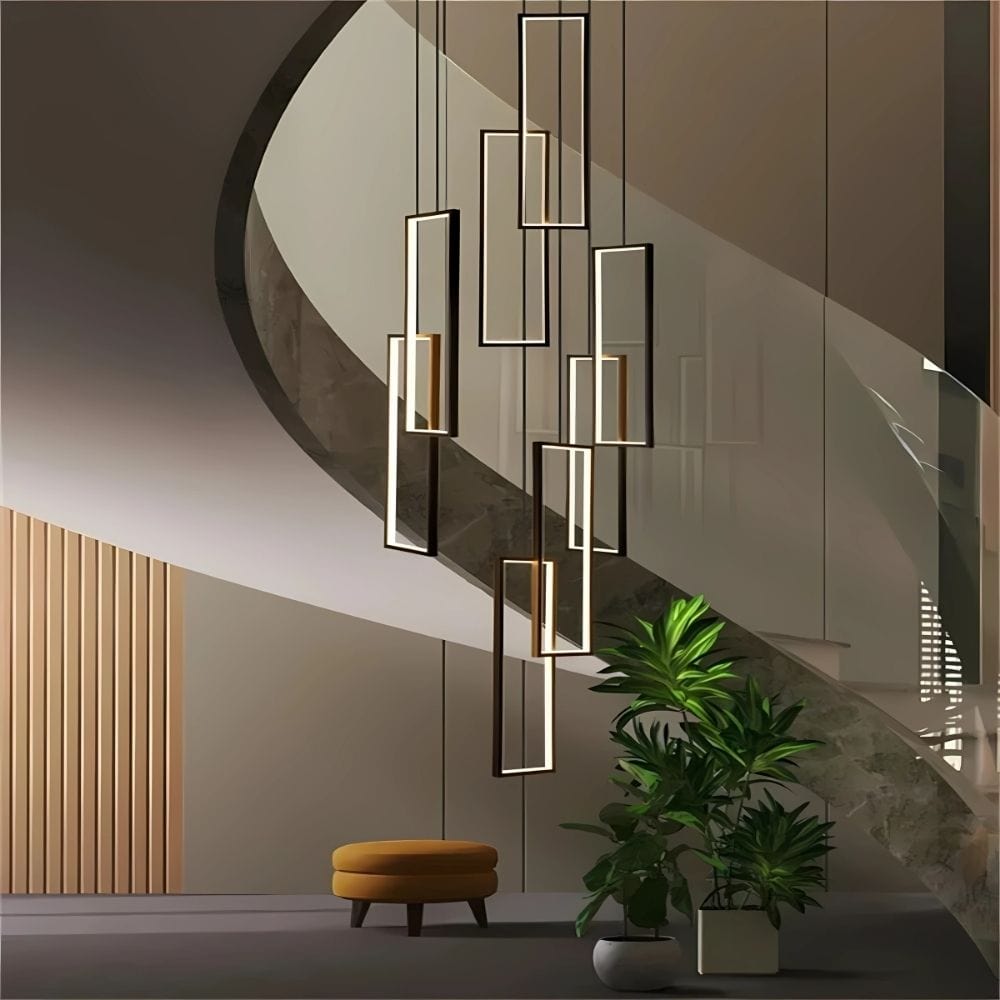
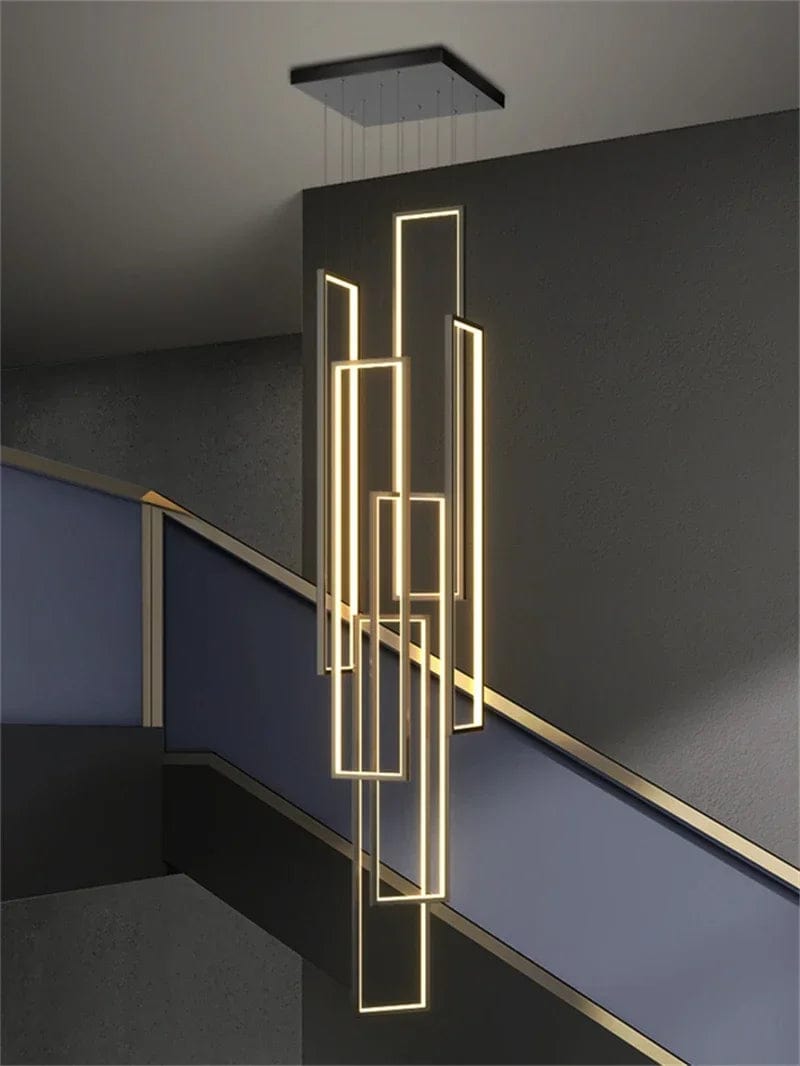
- Discs and rings: the integrated-LED specialities — slim profiles that read as drawn lines rather than objects
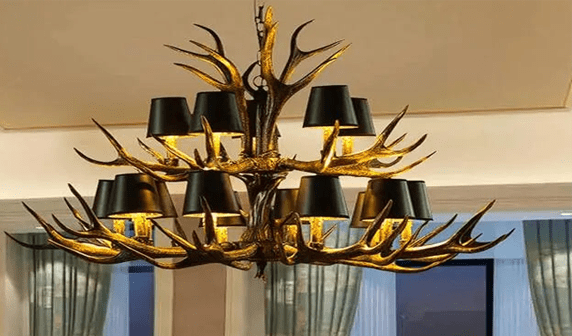
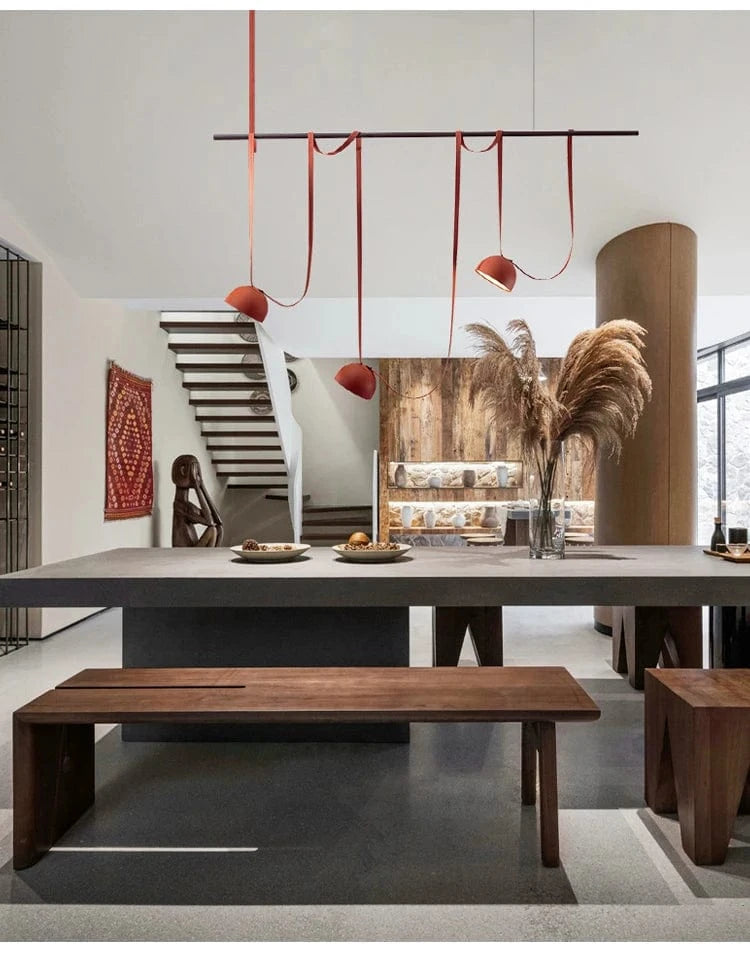
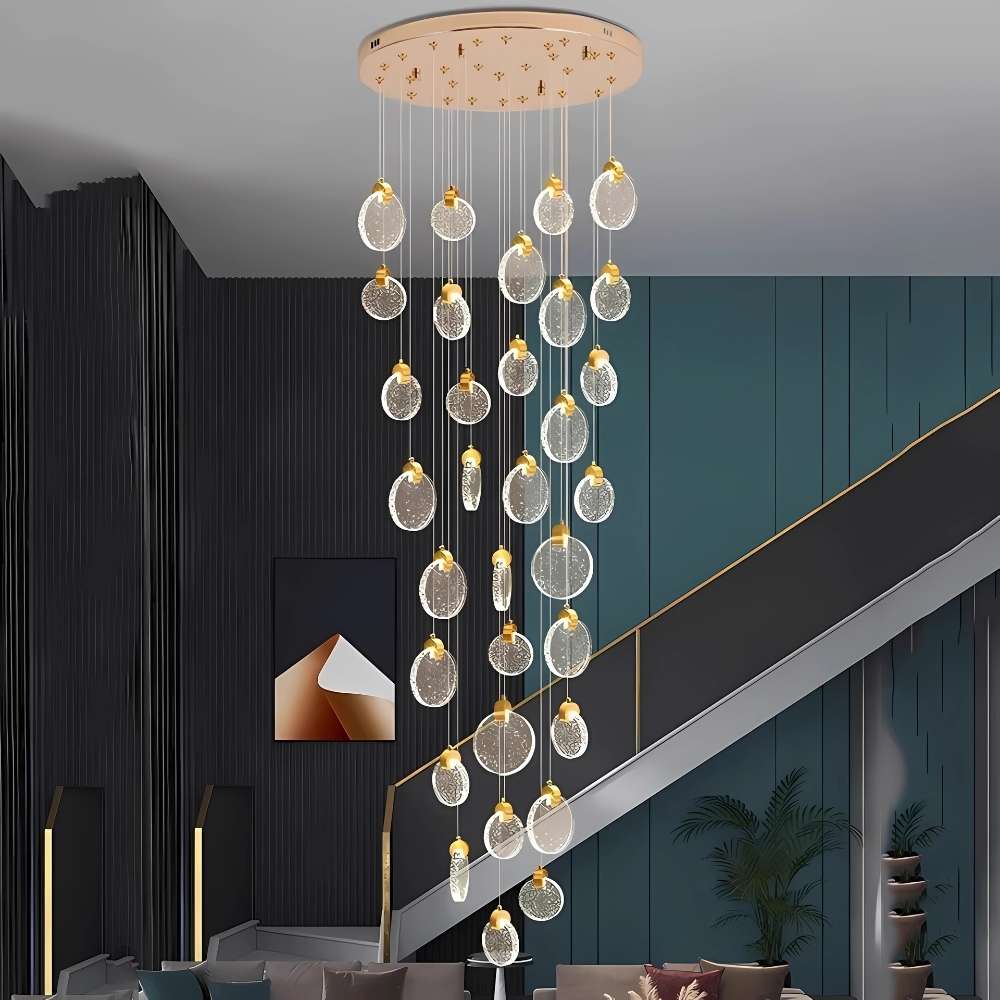
- Sculptural and asymmetric: the contemporary end, where the fixture is the room's event rather than its utility
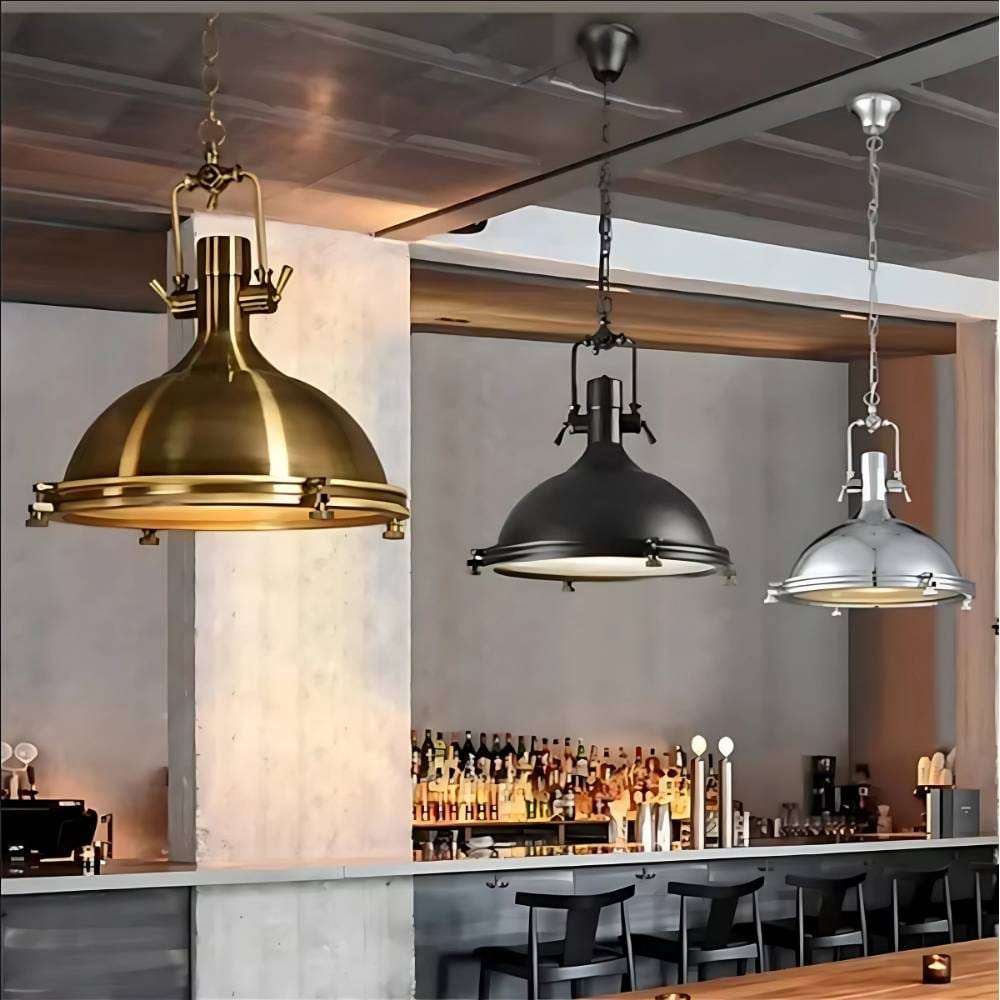
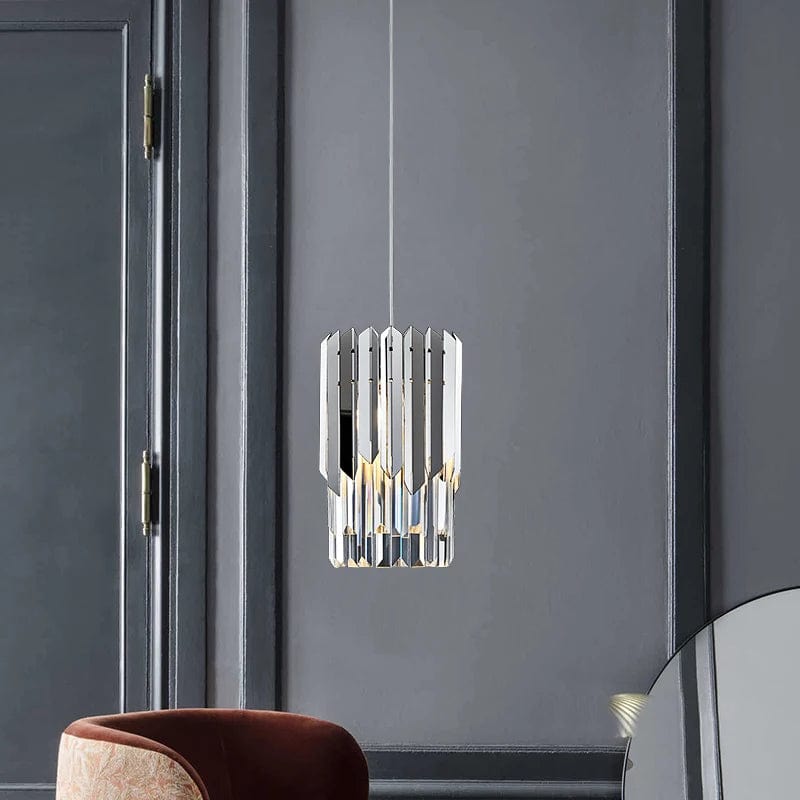
- Finishes: matte black for graphic contrast, brushed brass and gold for warmth, white and nickel for a quiet read, smoked and opal glass for atmosphere
Sizing and Hanging
Pendants are sized against the surface below them rather than the room. Over an island, the fixtures together should occupy one-half to two-thirds of its length, with individual diameters typically 12-20" (30-51 cm). Over a round table, a single pendant runs one-half to two-thirds of the table's width. Larger statement pendants at 24" (61 cm) and up work alone above generous tables and in entries where scale is the point. Every design here ships with adjustable rod or cable suspension, so confirm the listed maximum drop covers your measured ceiling-to-target distance before ordering — shortening on site is routine, extending needs added hardware. The complete calculation set is in our pendant sizing guide.
Related Collections
Browse the wider suspended range at the pendant lights collection, take the material direction to the glass pendant lights collection, and step up in scale at the pendant chandeliers collection where a single fixture needs to carry a whole room.
Frequently Asked Questions
What makes a pendant light modern?
Simple describable geometry, uninterrupted surfaces with hardware concealed, a restrained finish palette, and honest light — either a visible source treated as design or a fully diffused body. Ornament moves a fixture toward transitional.
What is the difference between modern and contemporary pendants?
Modern points to the mid-century and Bauhaus lineage — quieter, classically proportioned. Contemporary means what is being designed now: more sculptural, more willing to be the room's event. The overlap is large and this collection covers both.
Are LED pendants better than bulb-based designs?
They allow slimmer profiles no bulb-based design can reach, with 30,000-50,000 hour lifespans. Bulb-based designs let you upgrade the light source later. Check dimming quality either way — flicker matters more at eye level.
How high should a modern pendant hang?
30-36" (76-91 cm) above an island counter or tabletop, roughly 18-24" above a nightstand, and at least 84" (213 cm) of clearance in walking areas.
What size pendant should I choose?
Size to the surface below: over an island the fixtures together span one-half to two-thirds of its length, with individual diameters usually 12-20". Over a round table, one pendant at one-half to two-thirds of the table's width.
Can modern pendants work in a living room or bedroom?
Both are growing applications. In living rooms they define a zone without occupying floor space; in bedrooms a hung pair replaces table lamps, clearing the nightstand and improving the reading angle.