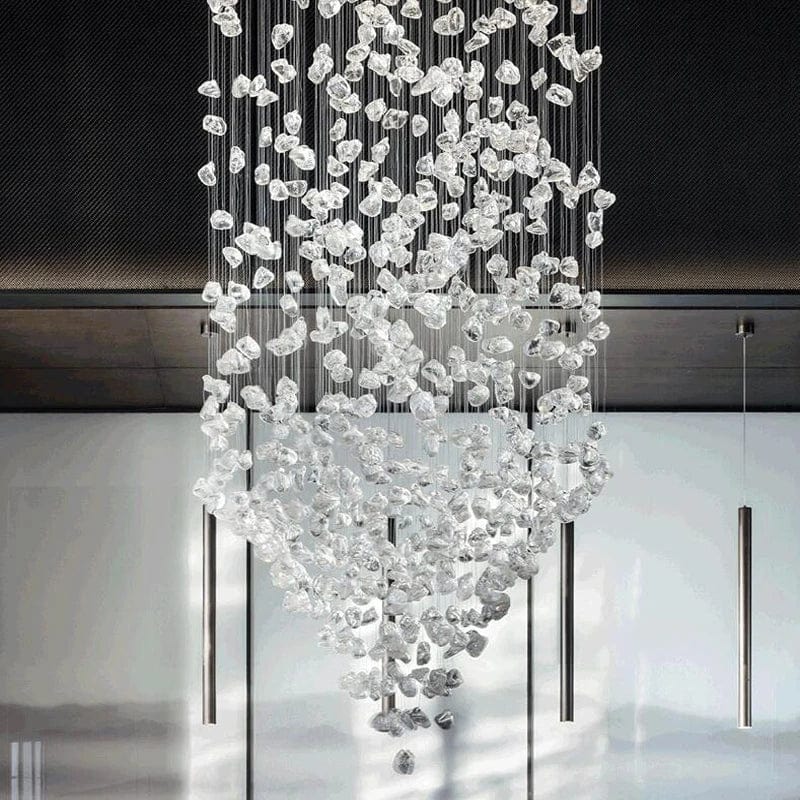


Why Stairwell Lighting Is Its Own Category
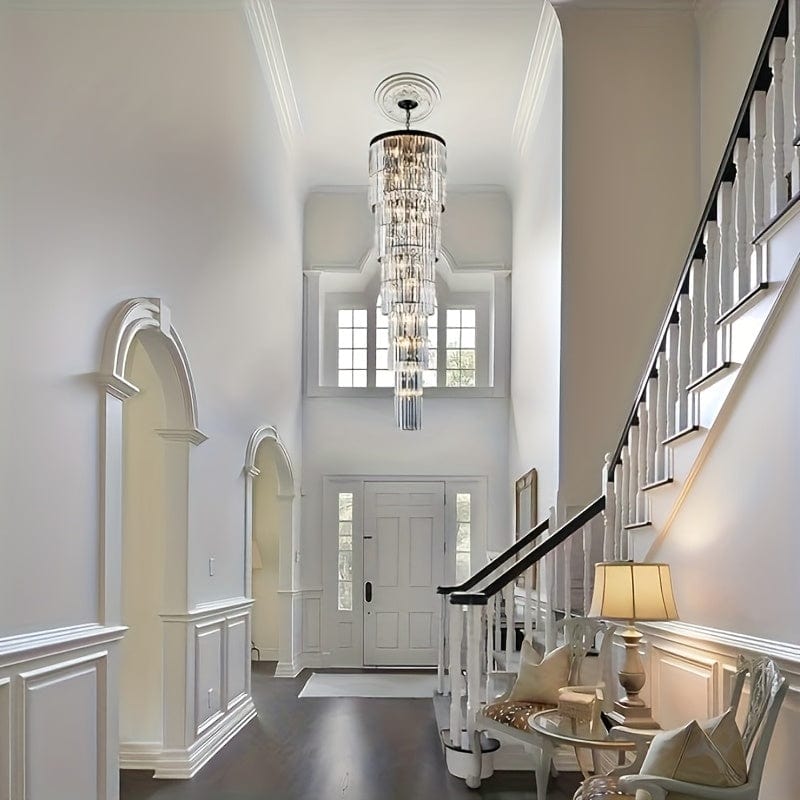
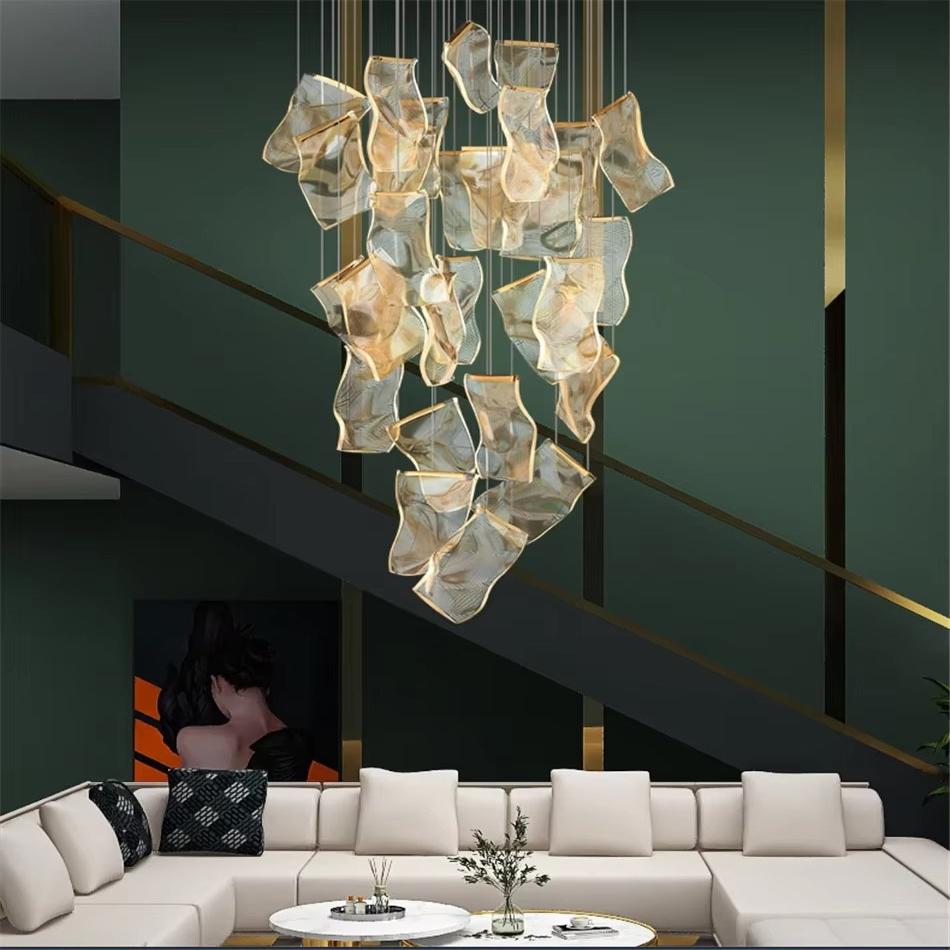
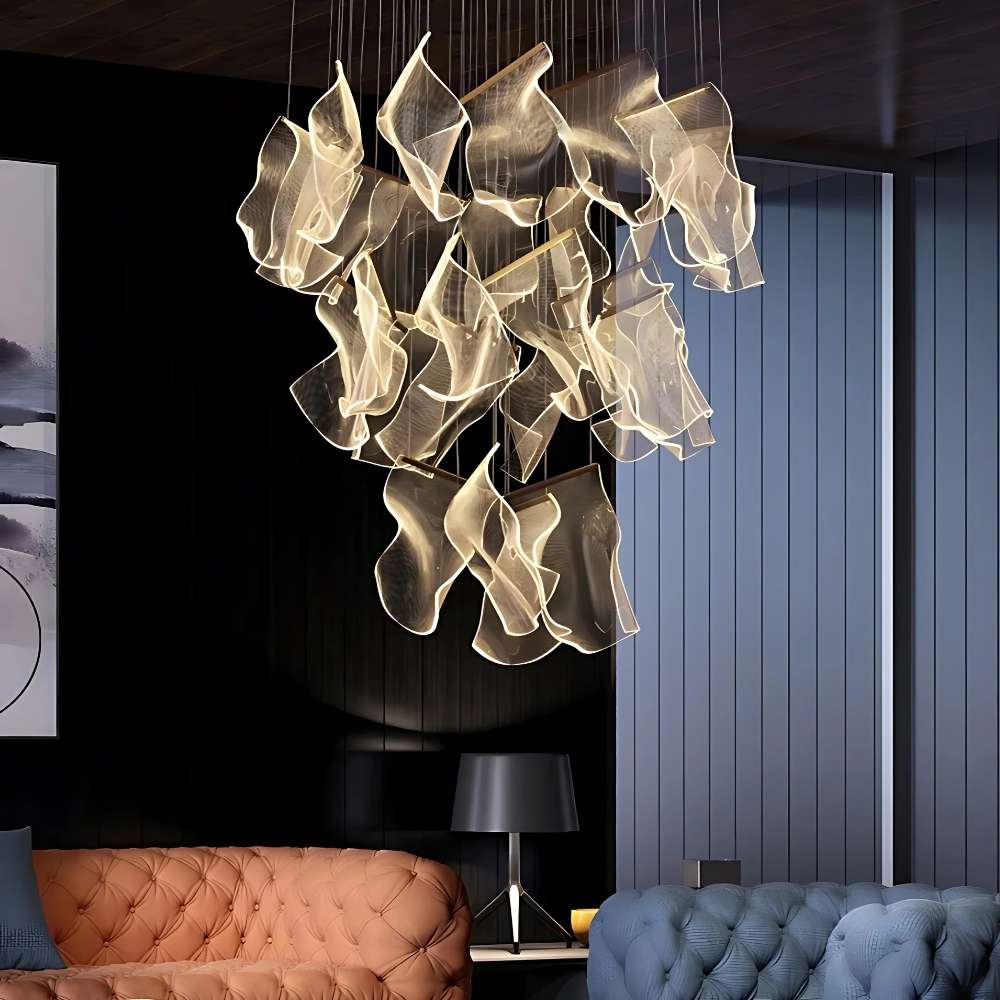
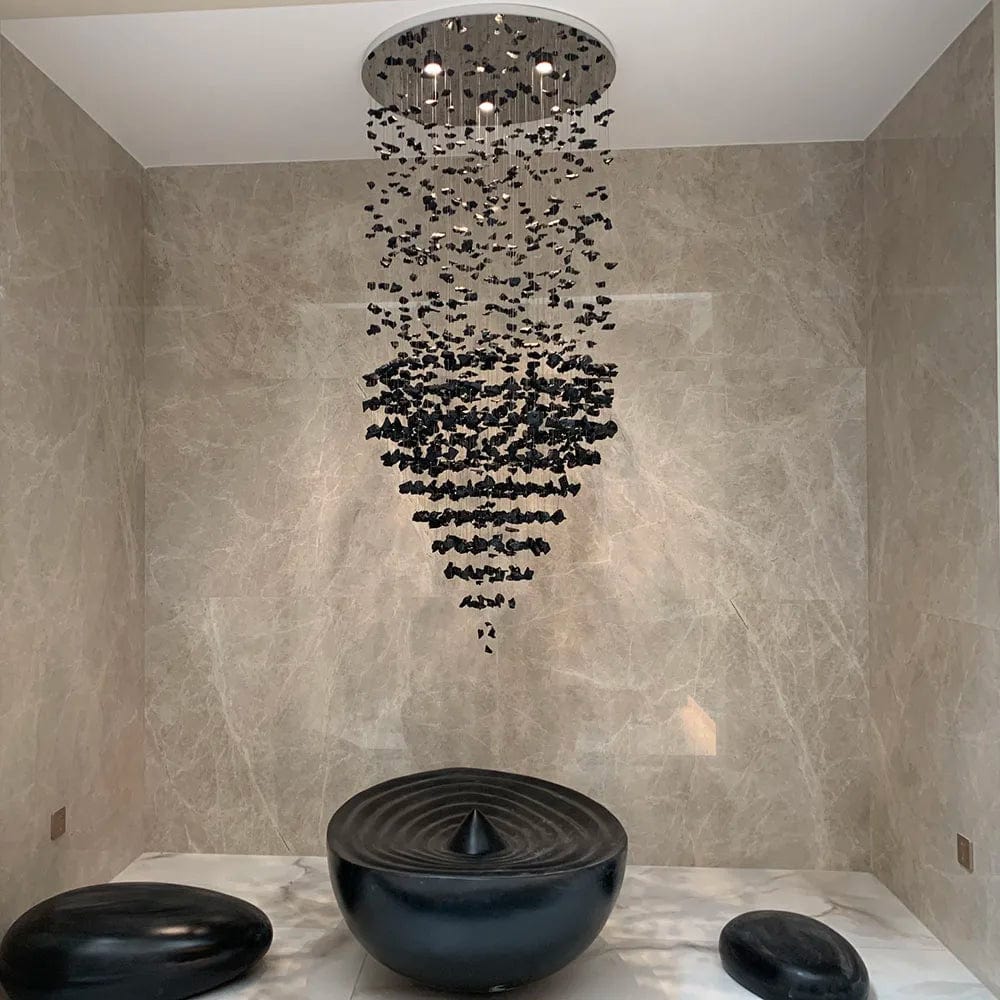
No other fixture in the home is viewed the way a staircase chandelier is. A dining fixture is seen from one seated height; a stairwell fixture is seen from the floor below, at eye level from the treads, and from above at the landing — all in a single climb. That three-angle exposure is why flat, single-tier designs that look complete in a living room can look unfinished over stairs, and why the strongest stairwell designs are vertical compositions: cascades, tiered rings, and spirals that present a deliberate silhouette at every height. Add the practical reality — the fixture hangs in the home's tallest open volume, often beside a window — and the stairwell becomes the one place where a chandelier works hardest and shows most.
Getting Drop Length and Size Right
- Two-story drop formula: total stairwell height minus 84" (7 ft) of clearance above the highest tread or landing the fixture hangs over — the remainder is your maximum fixture-plus-suspension length
- Diameter: stairwell length + width in feet = target inches, same as any room; narrow wells favor slimmer, taller compositions over wide ones
- Placement: center the fixture in the open well, not over the treads — the well is the display volume, the treads are the walking zone
- Landing fixtures: treat a landing like a small room — compact designs with 84" floor clearance if the landing is walked across
The complete measurement walkthrough lives in our staircase chandelier size guide, and drop-length selection by ceiling height is covered pick-by-pick in the long chandeliers for staircases guide.
Matching the Fixture to Your Staircase Shape
- Spiral and curved stairs: helix and spiral compositions echo the curve — centered in the well so the fixture turns with the stair
- Straight single flights: linear designs or a short pendant series follow the run's direction
- L-shaped and switchback stairs: the corner landing is the natural anchor — square and tiered fixtures sit cleanly in the corner volume
- Grand and double staircases: one oversized statement centered on the axis of symmetry outperforms multiple smaller fixtures
Shape is the most overlooked decision in stairwell lighting — our chandelier by staircase shape guide matches fixture geometry to spiral, straight, L-shaped, and grand layouts in depth.
Styles That Lead in Stairwells
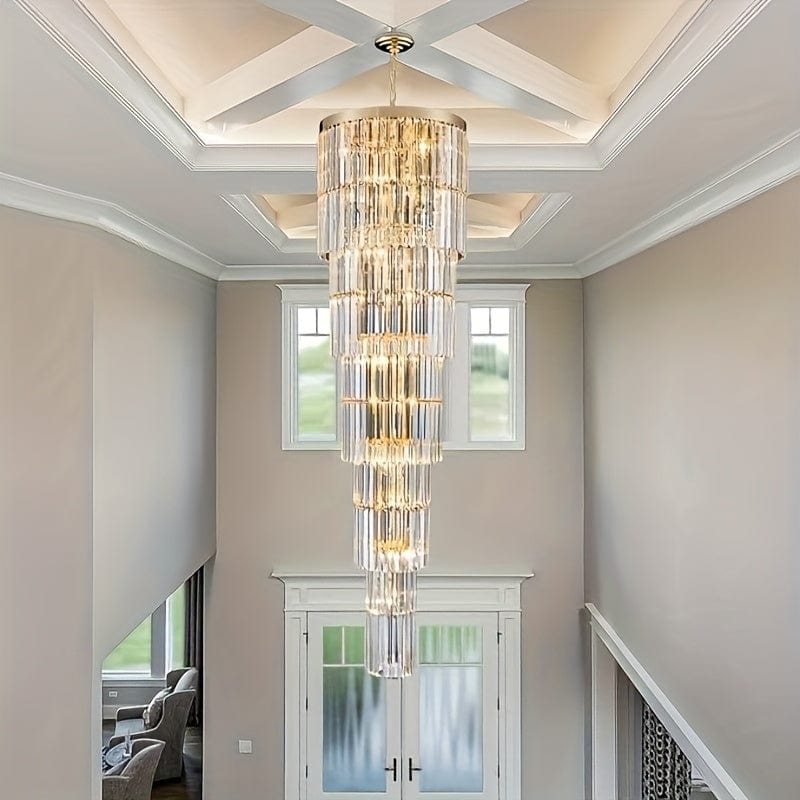
- Crystal: the stairwell's signature material — vertical crystal multiplies daylight from stair windows and reads brilliant from every level; the full case is in our crystal staircase chandelier guide
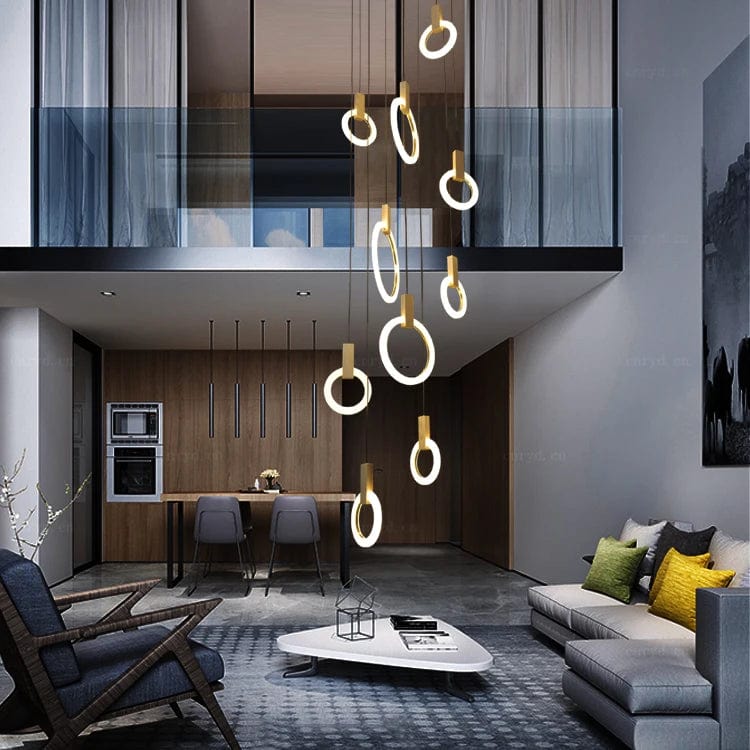
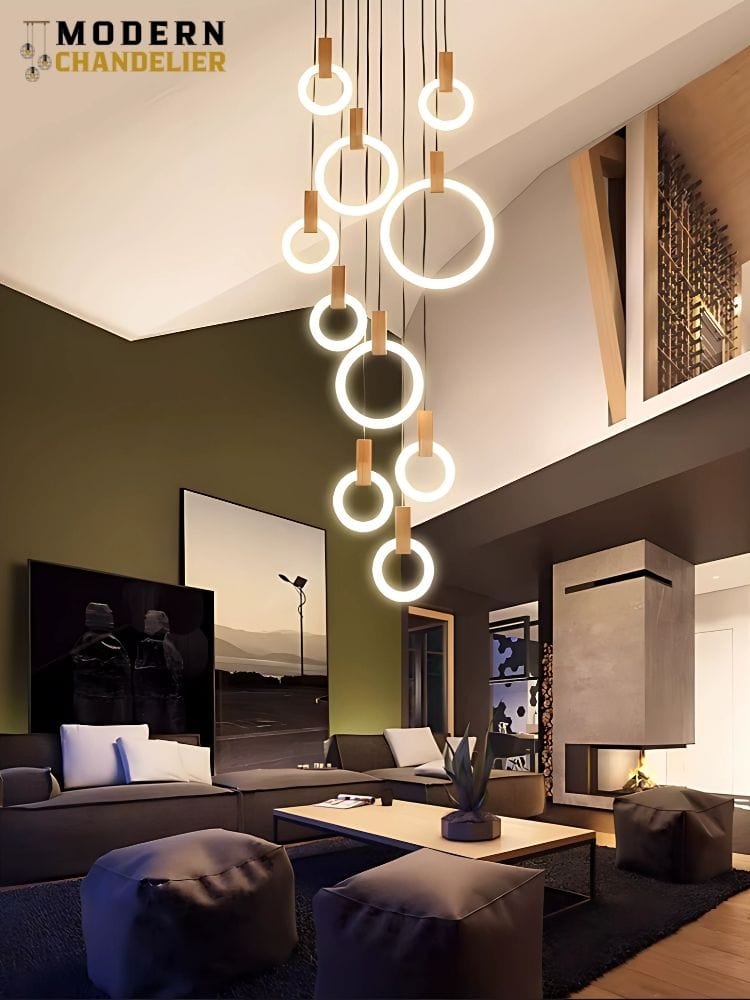
- Modern and minimalist: ring stacks, LED integration, and clean cascades — curated picks in the modern staircase chandelier guide
- Black iron: graphic silhouettes that read strongly against white stairwell walls — modern farmhouse and contemporary direction
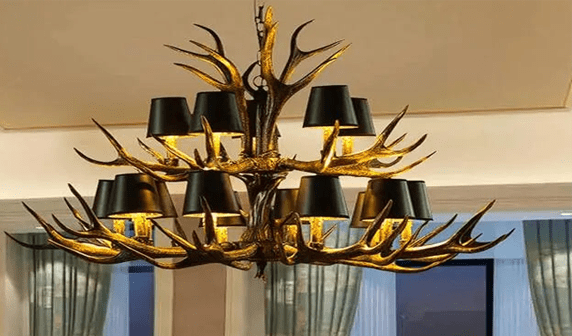
- Farmhouse: wood, cage, and lantern forms scaled up for two-story entries with rustic character
- Alabaster and stone: the material glows rather than sparkles — the low-glare luxury direction for warm minimalist stairwells
- Traditional: candle-arm and classic crystal forms for formal, period, and transitional homes
What to Check Before Installation
Mounting Over a Stairwell
Stairwell installation is the most demanding in the home: the junction box sits at the ceiling of a two-story volume, the fixture often exceeds 50 lb (requiring a reinforced, fan-rated box), and safe access needs scaffolding or a platform ladder rather than an extension ladder on the treads. Plan on professional installation for any two-story drop, and confirm the suspension's maximum length covers your measured distance before ordering — extending after the fact requires additional hardware.
Bulbs, LED & Dimming
Warm white (2700-3000K) keeps the stairwell consistent with the rooms it connects. Because bulb access is difficult at height, integrated-LED designs or long-life LED bulbs earn their premium here more than anywhere else — fewer changes at the top of a scaffold. Put the fixture on a dimmer reachable from both floors (a 3-way circuit), so the stairwell can run low as a nightlight path after dark.
Sloped & Angled Ceilings
Stairwell ceilings frequently slope with the stair itself. A sloped-ceiling adapter (swivel canopy) lets the fixture hang plumb from the angled surface; measure your drop from the actual mounting point, and position the fixture so its visual center sits in the open well when viewed from the entry below.
Related Collections
Stairwell shoppers most often cross-shop the high ceiling chandeliers for the full extended-drop range, foyer and entryway chandeliers when the stair opens onto the entry, and crystal chandeliers for the material family that defines the category.
Frequently Asked Questions
How long should a staircase chandelier hang?
Measure total stairwell height, subtract 84" (7 ft) of clearance above the highest tread or landing beneath the fixture — the remainder is your maximum fixture-plus-suspension length. Two-story wells typically carry 50-80" of fixture body.
Where exactly should it hang — over the stairs or the well?
Centered in the open well, not over the treads. The well is the display volume seen from every level; the treads are the walking zone that needs clearance.
Is crystal a good choice for a stairwell?
It is the category's signature material — vertical crystal compositions multiply daylight from stair windows and read brilliant from below, beside, and above. Choose smooth-drop designs if easy cleaning matters at height.
What about a spiral staircase?
Match the geometry: helix and spiral fixtures centered in the curve echo the stair's own motion. A straight linear fixture fights a curved stair visually.
Do I need one fixture or two on an L-shaped stair?
Usually one, anchored at the corner landing — the natural visual center of an L-shaped run. Very long switchbacks can add a compact second fixture over the lower flight, kept clearly subordinate.
Can I install a two-story fixture myself?
Plan on a professional: reinforced junction box for 50 lb+ designs, scaffold-level access, and often a relocated box to center the well. Single-flight and landing fixtures at normal height install like standard ceiling fixtures.