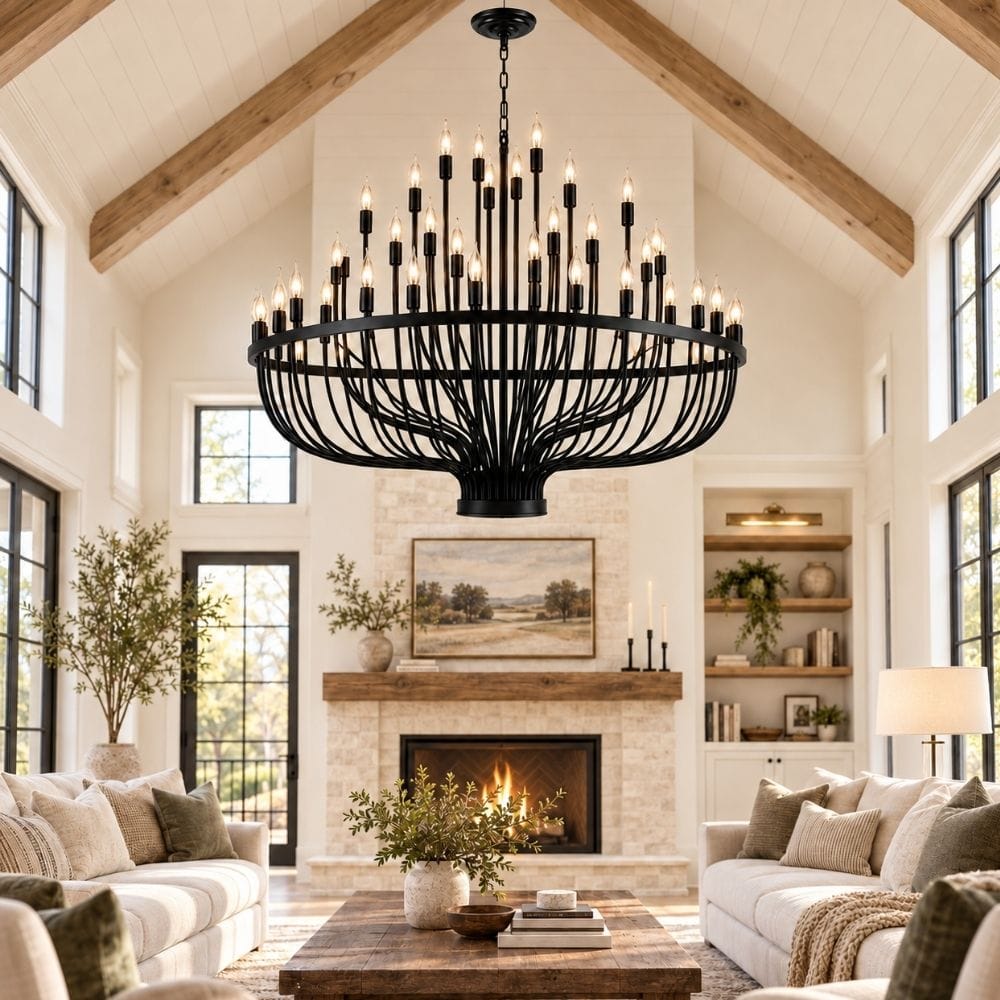
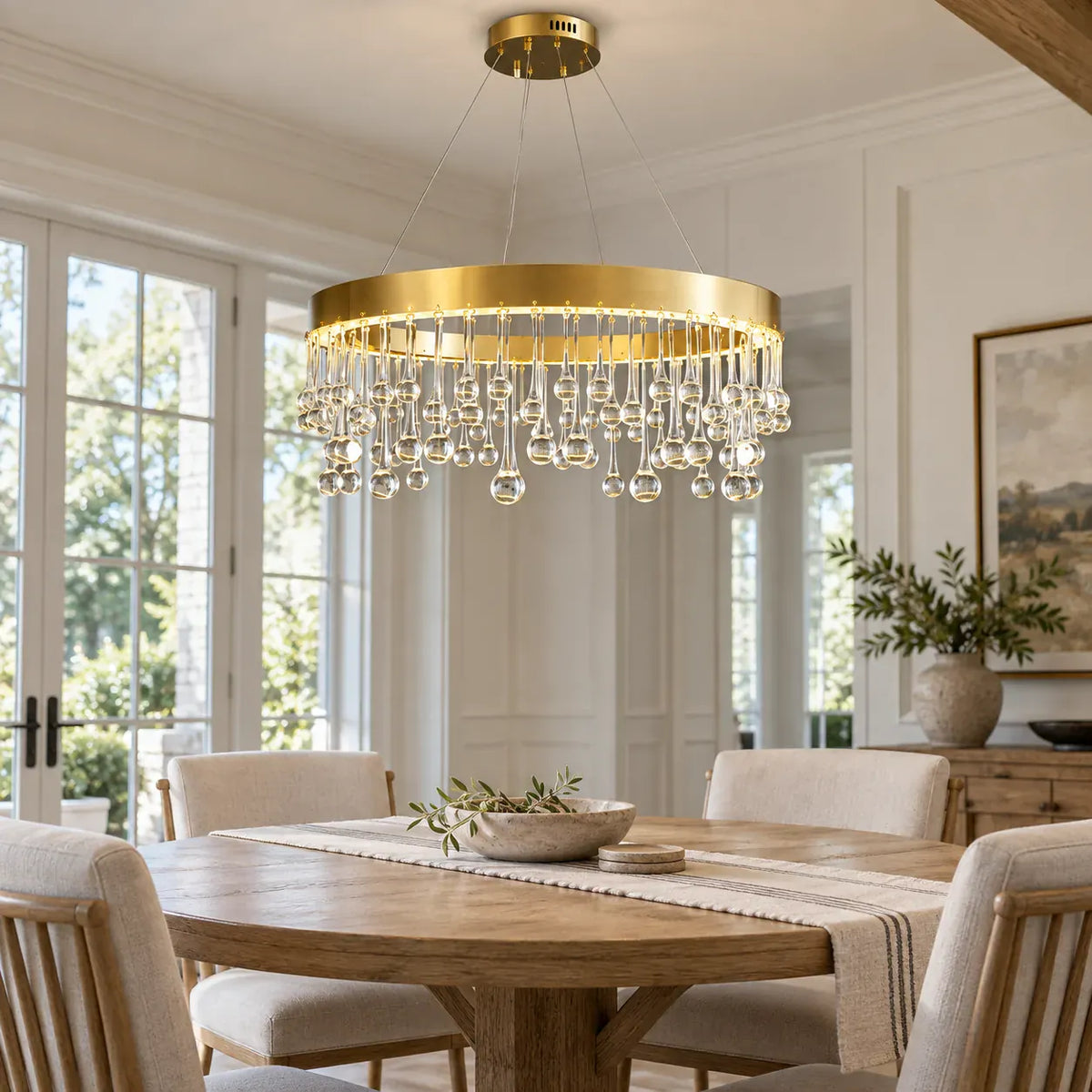
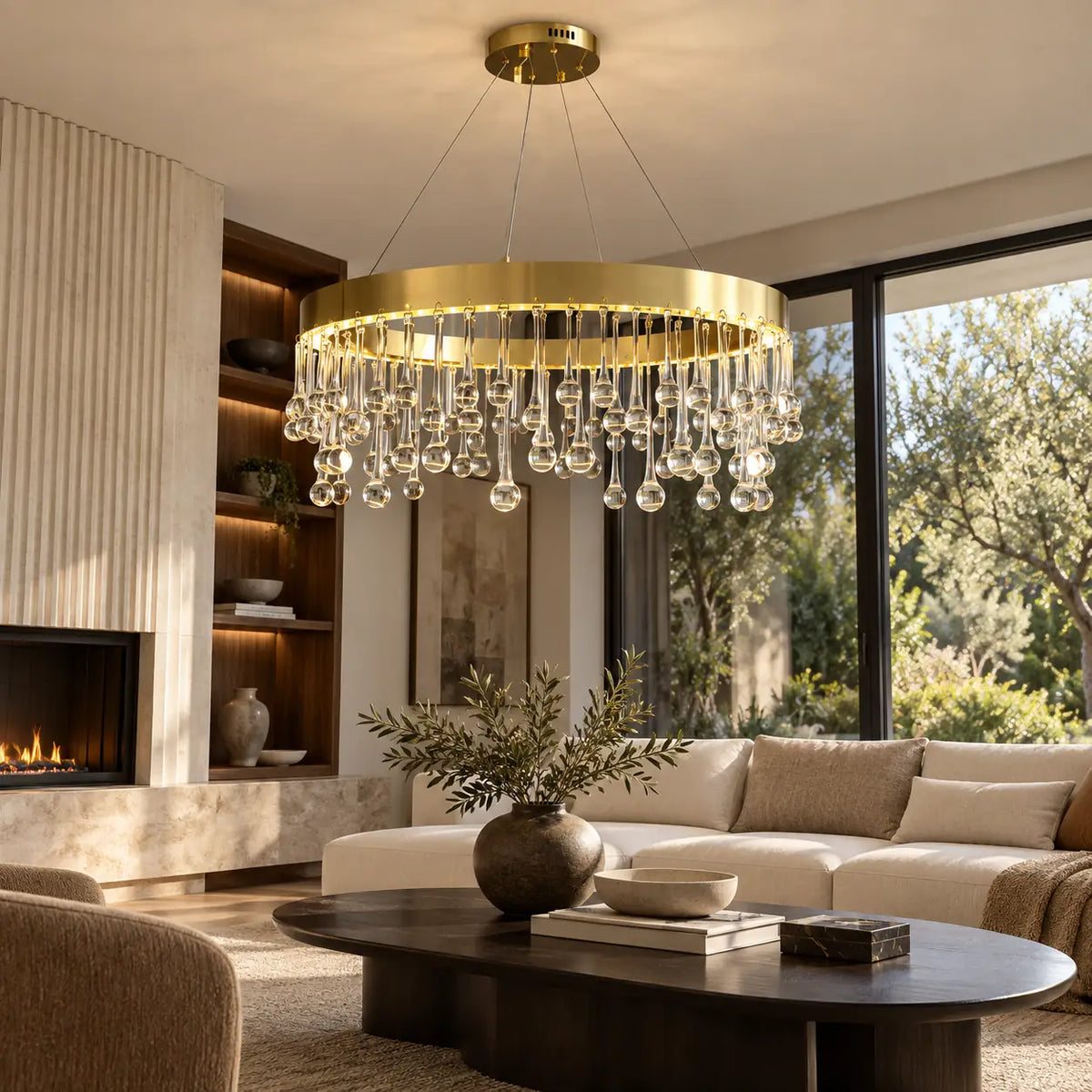
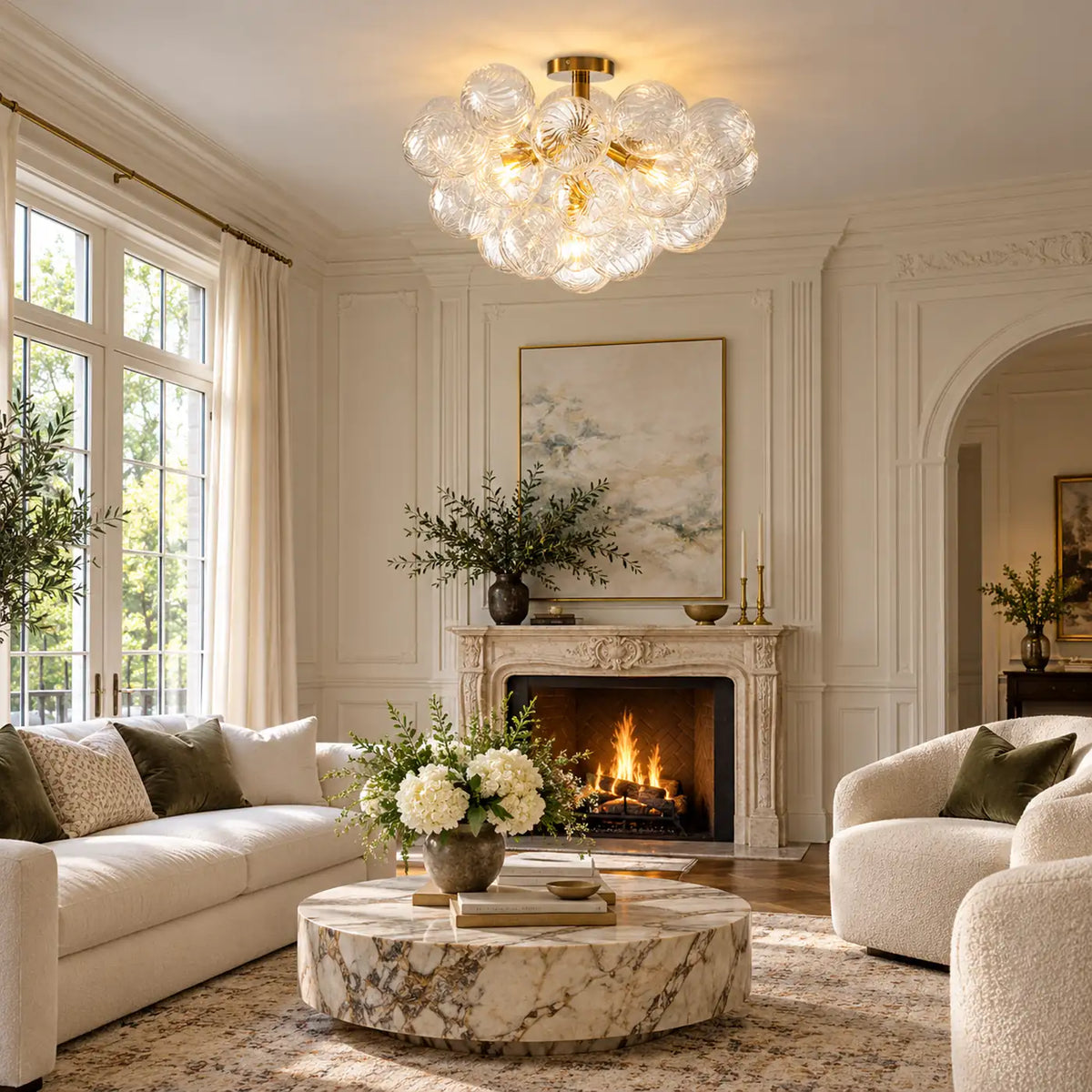
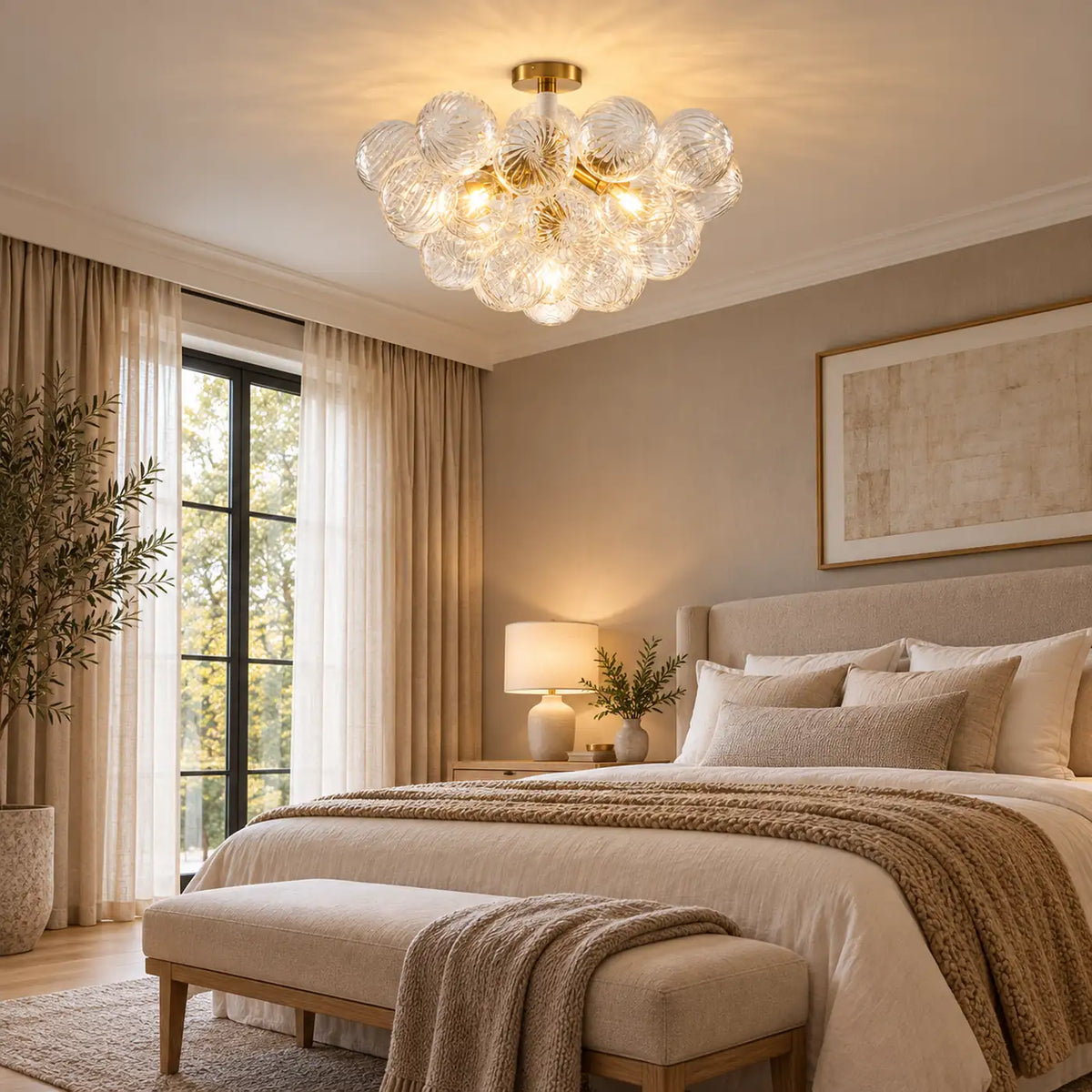

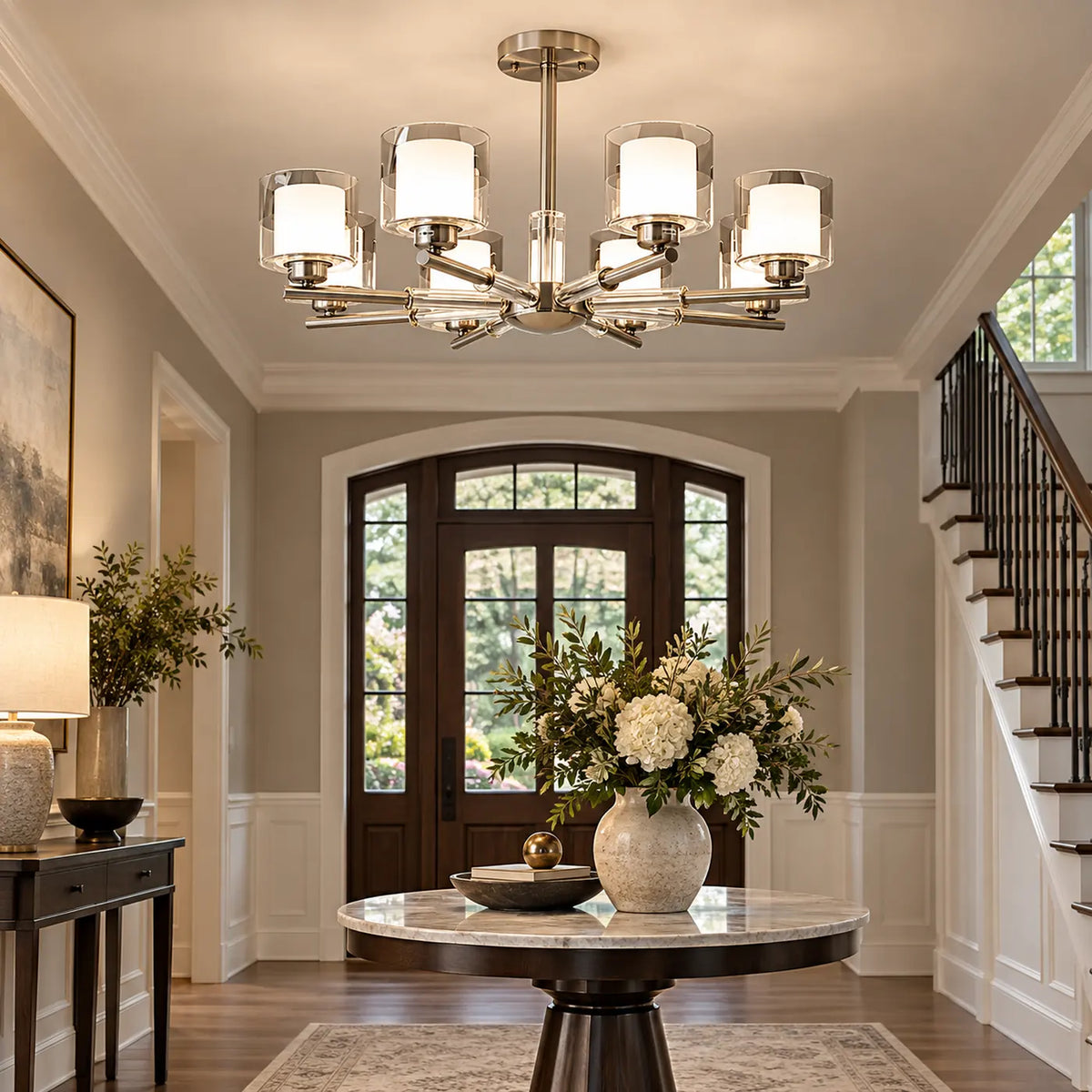
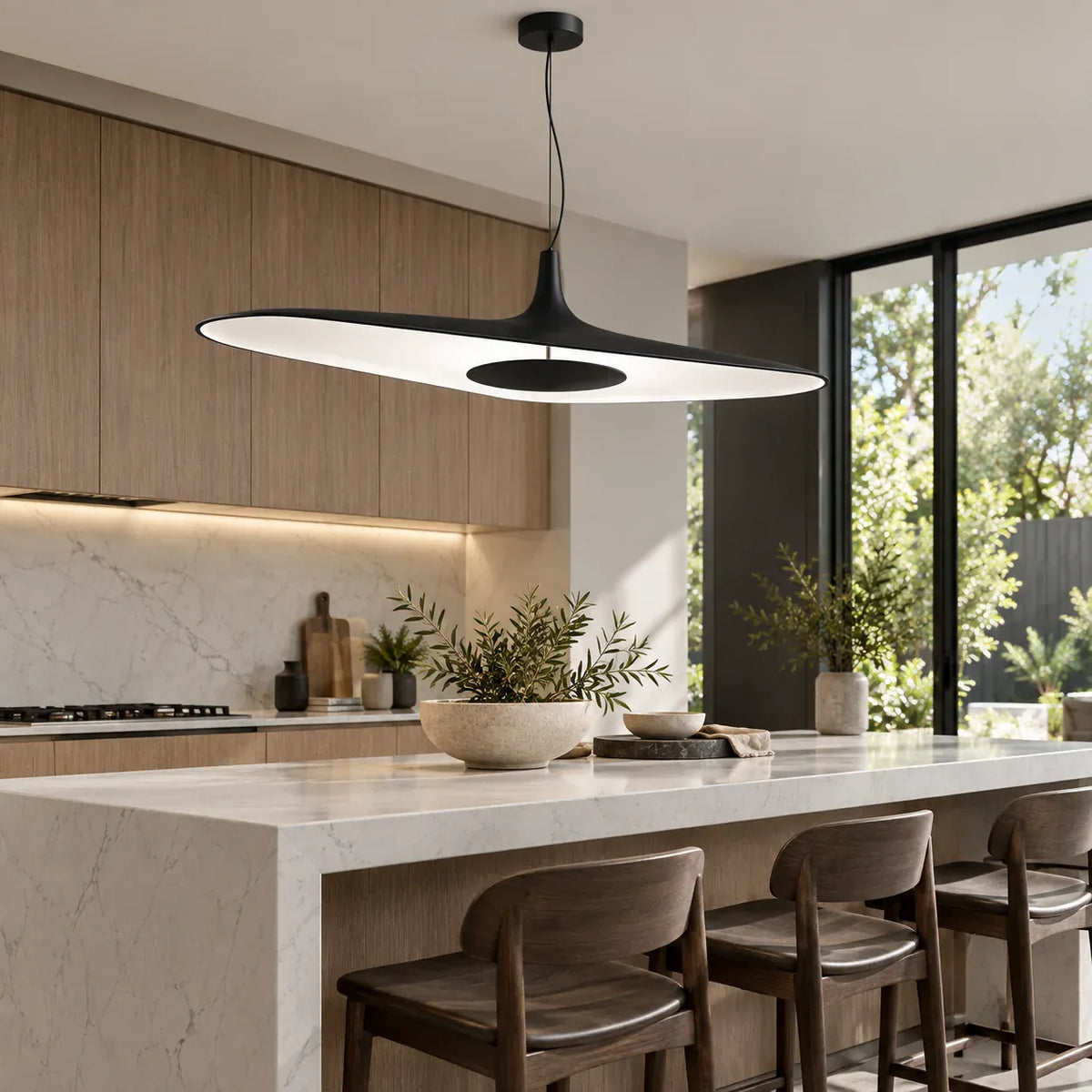
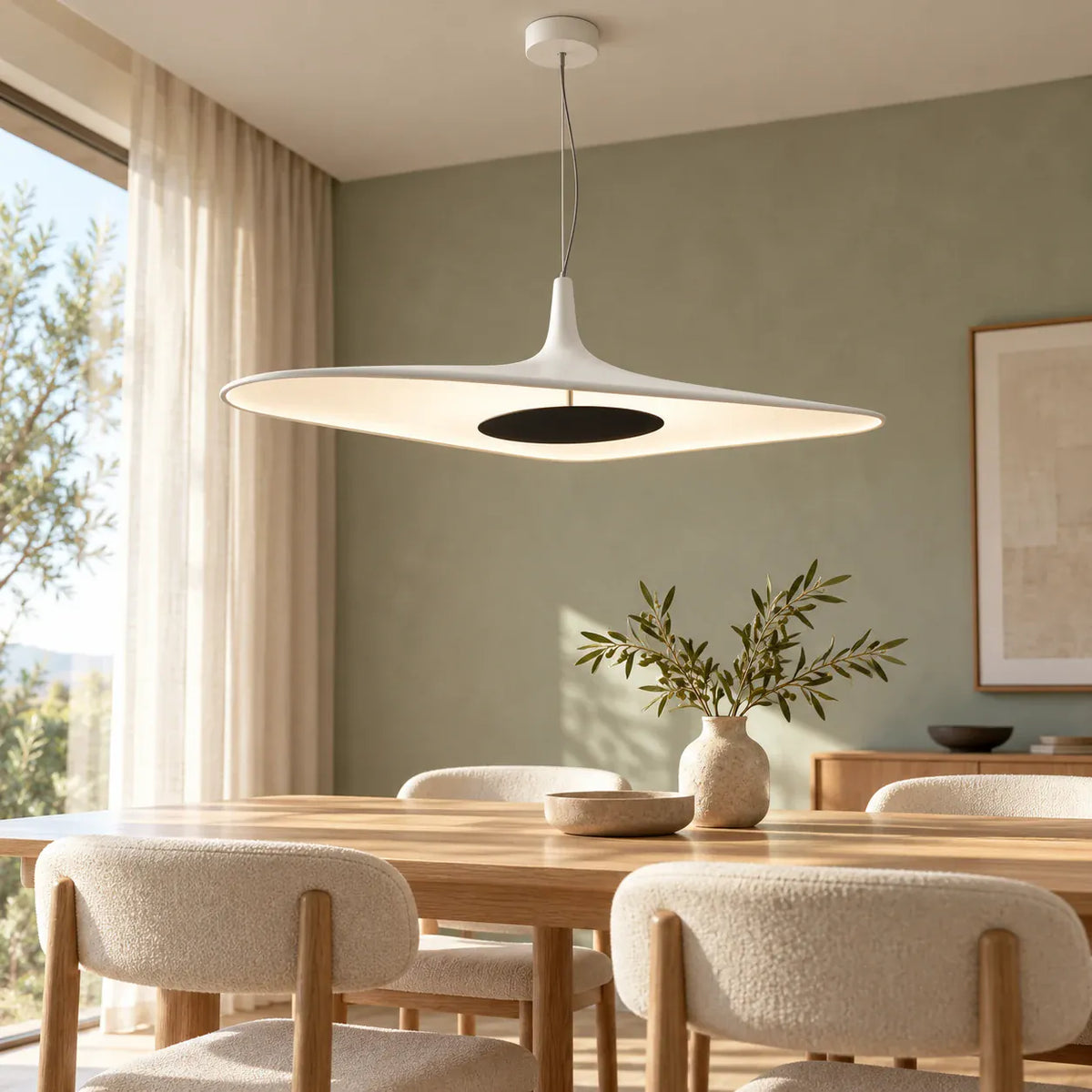
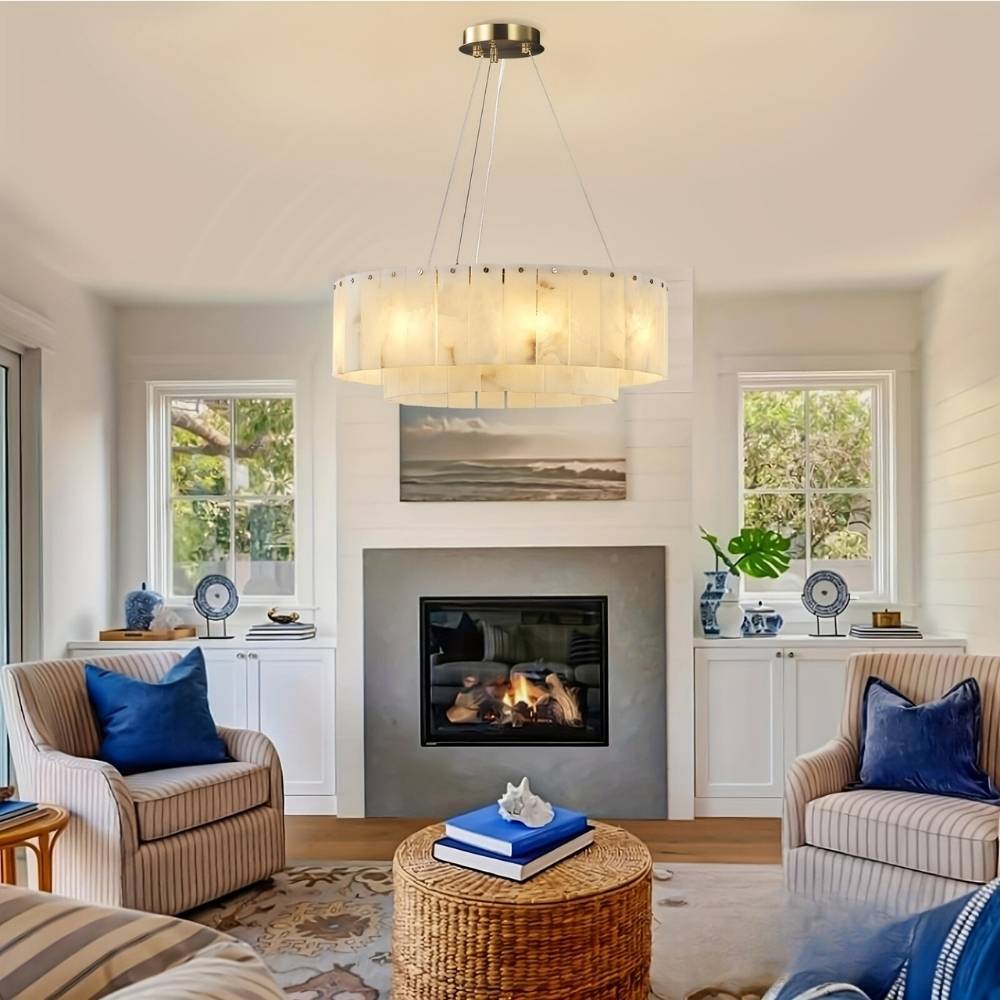
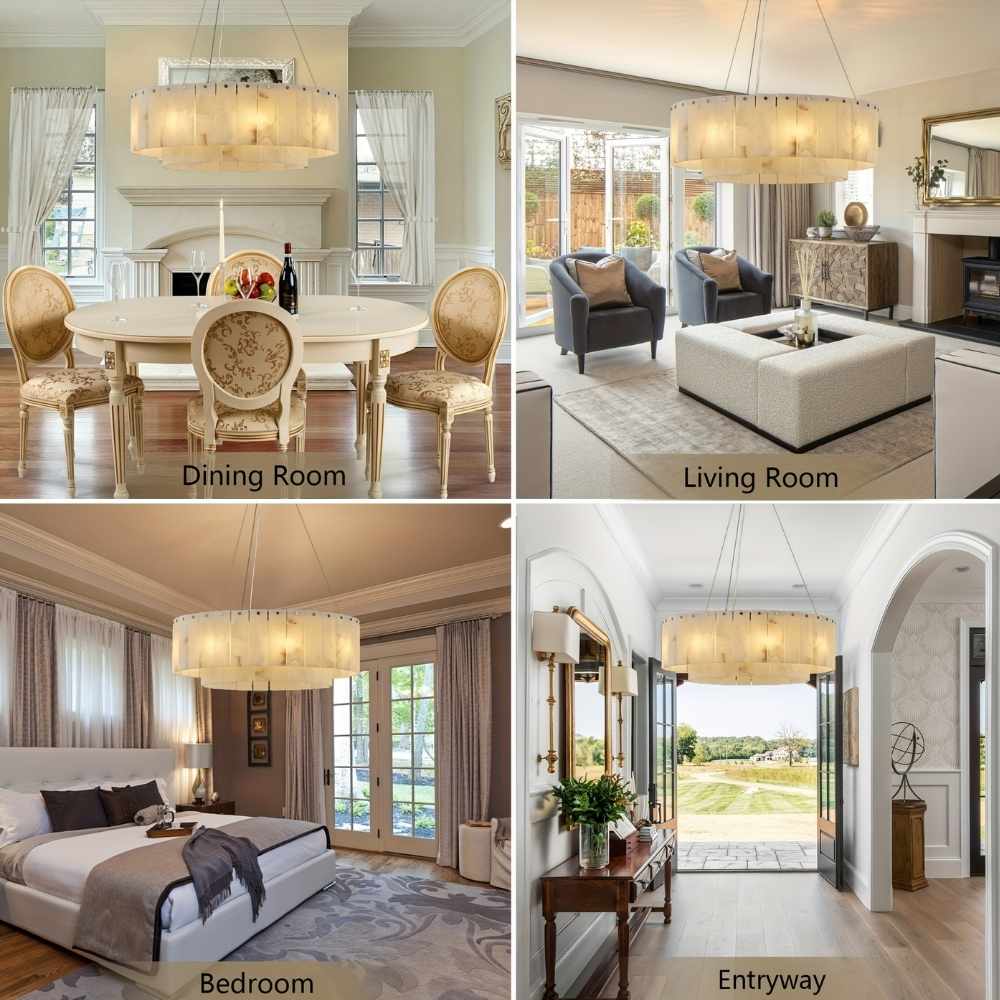
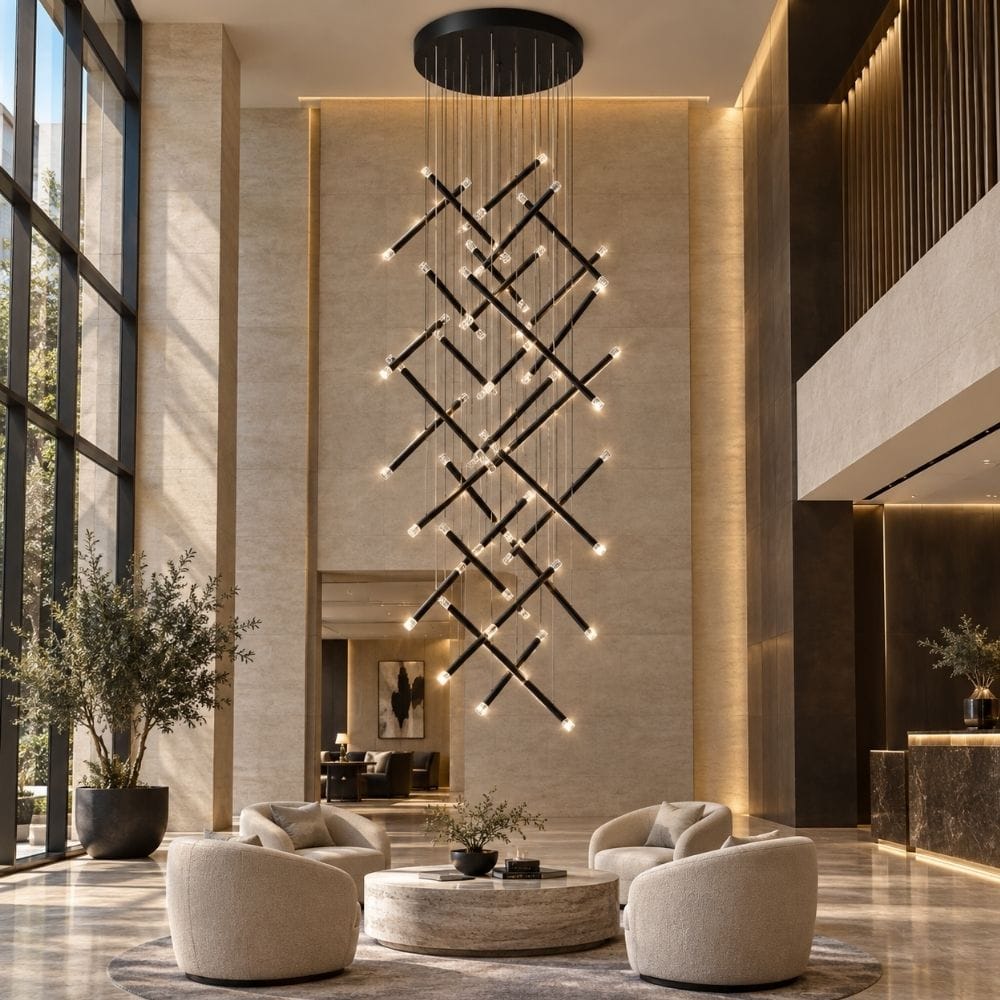
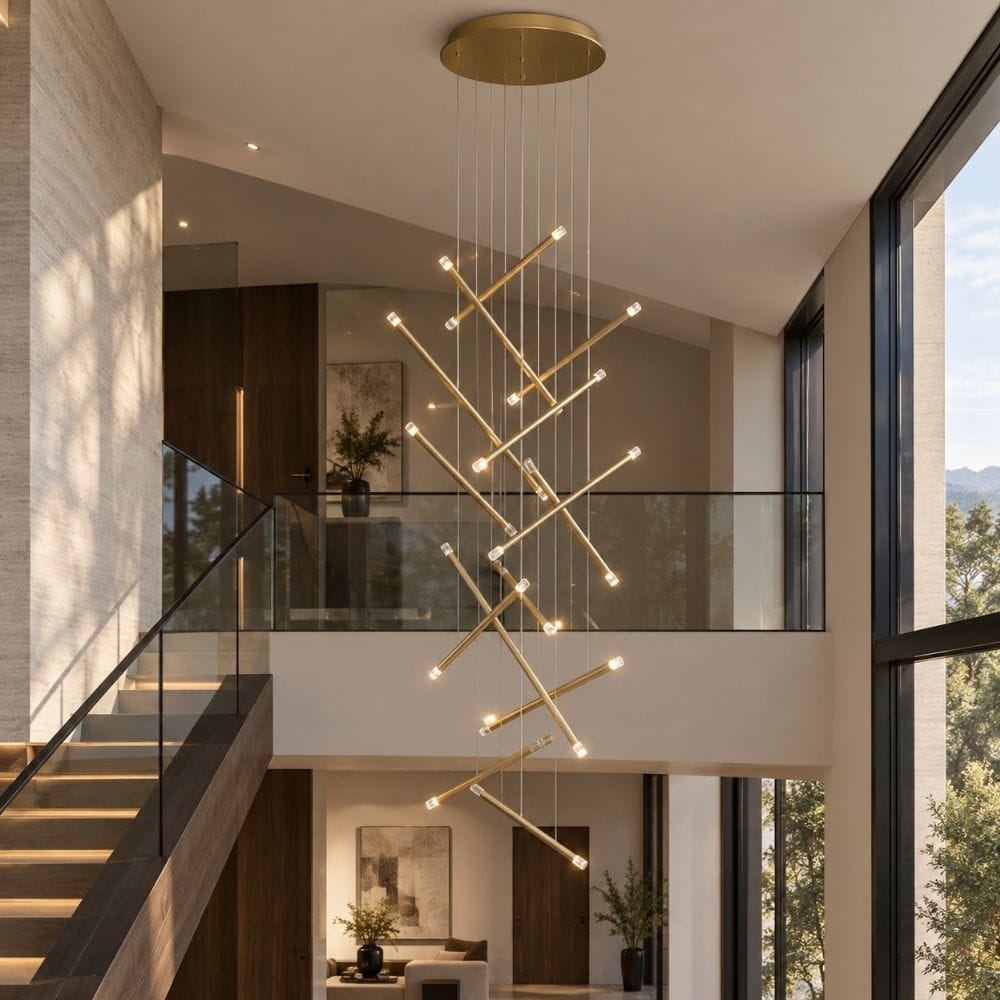
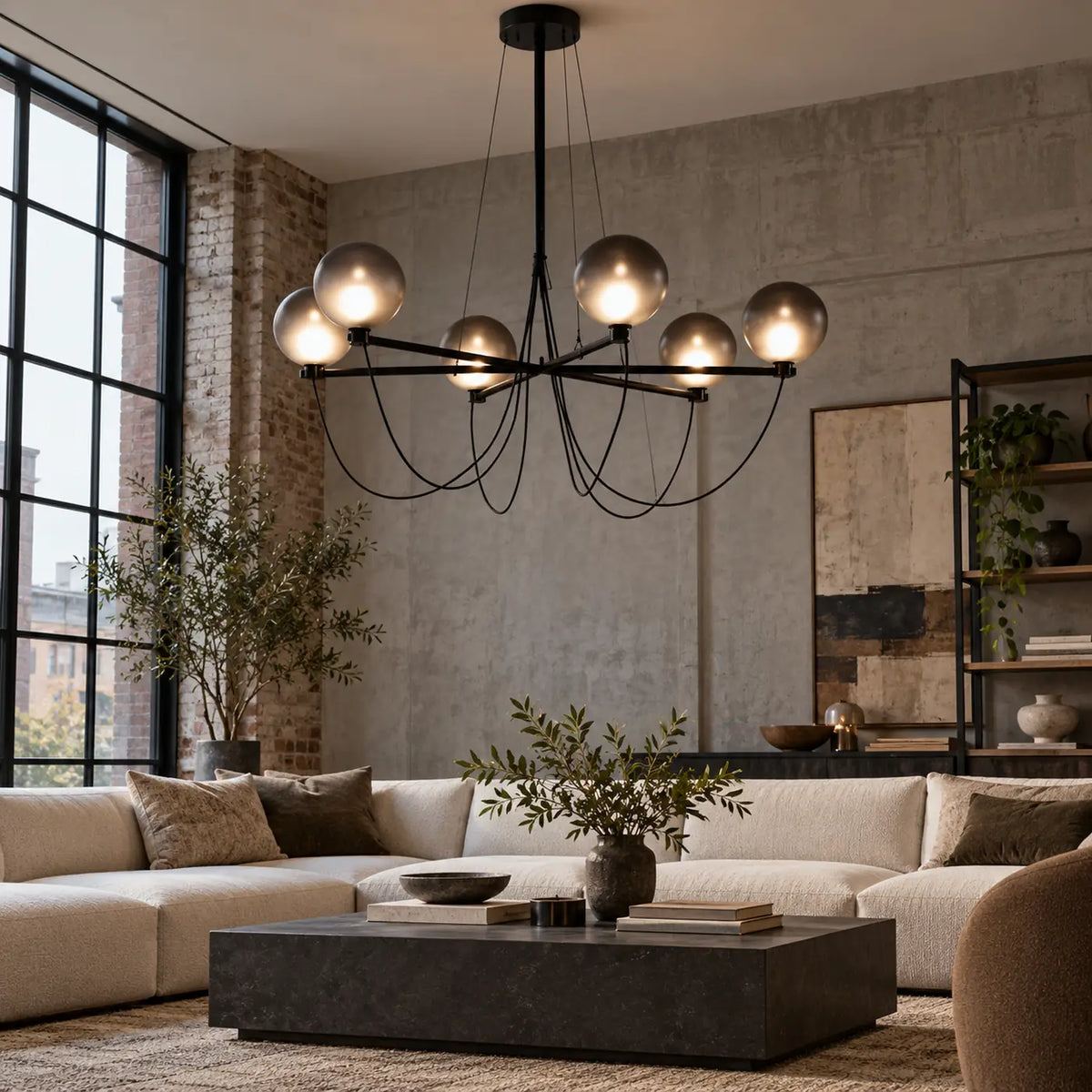
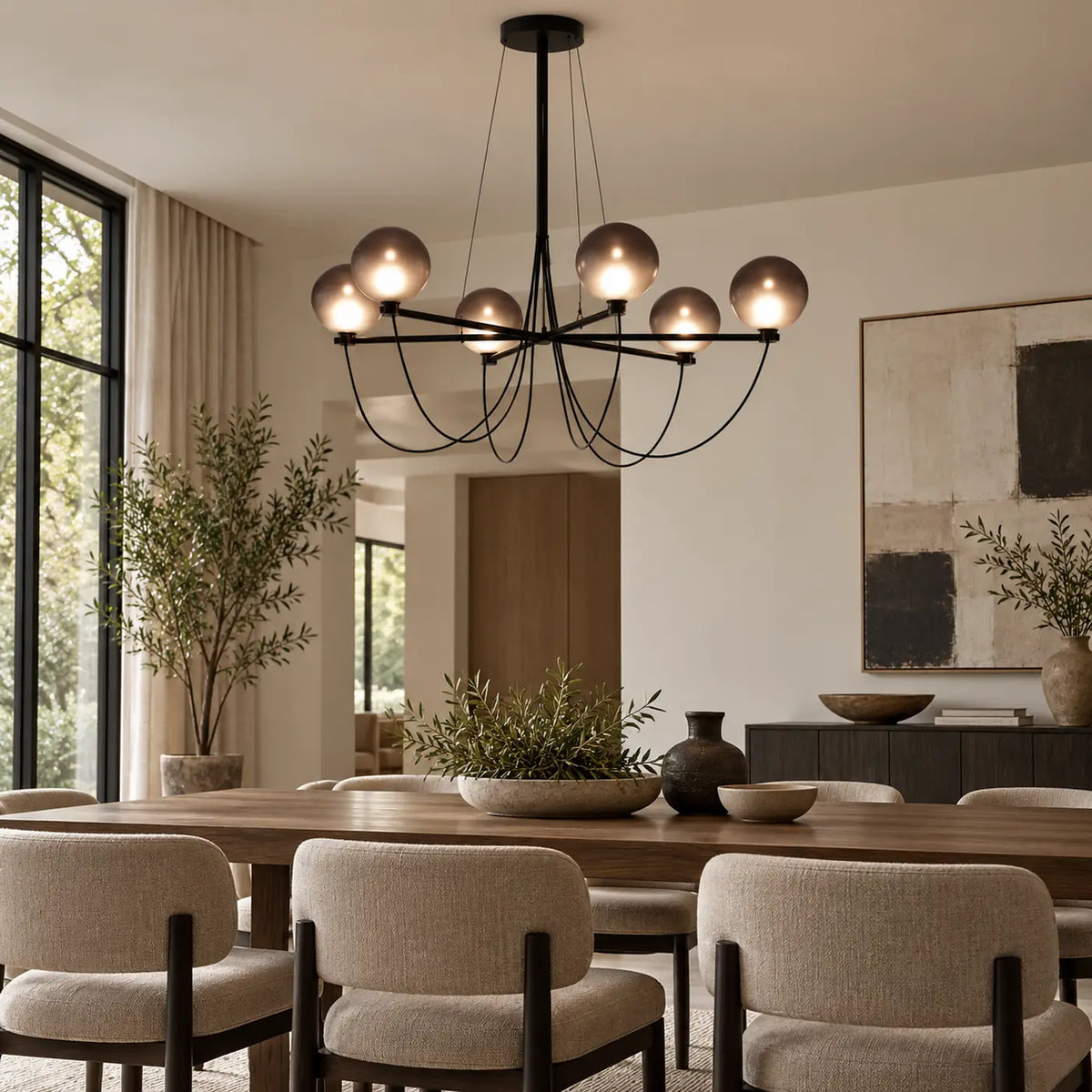





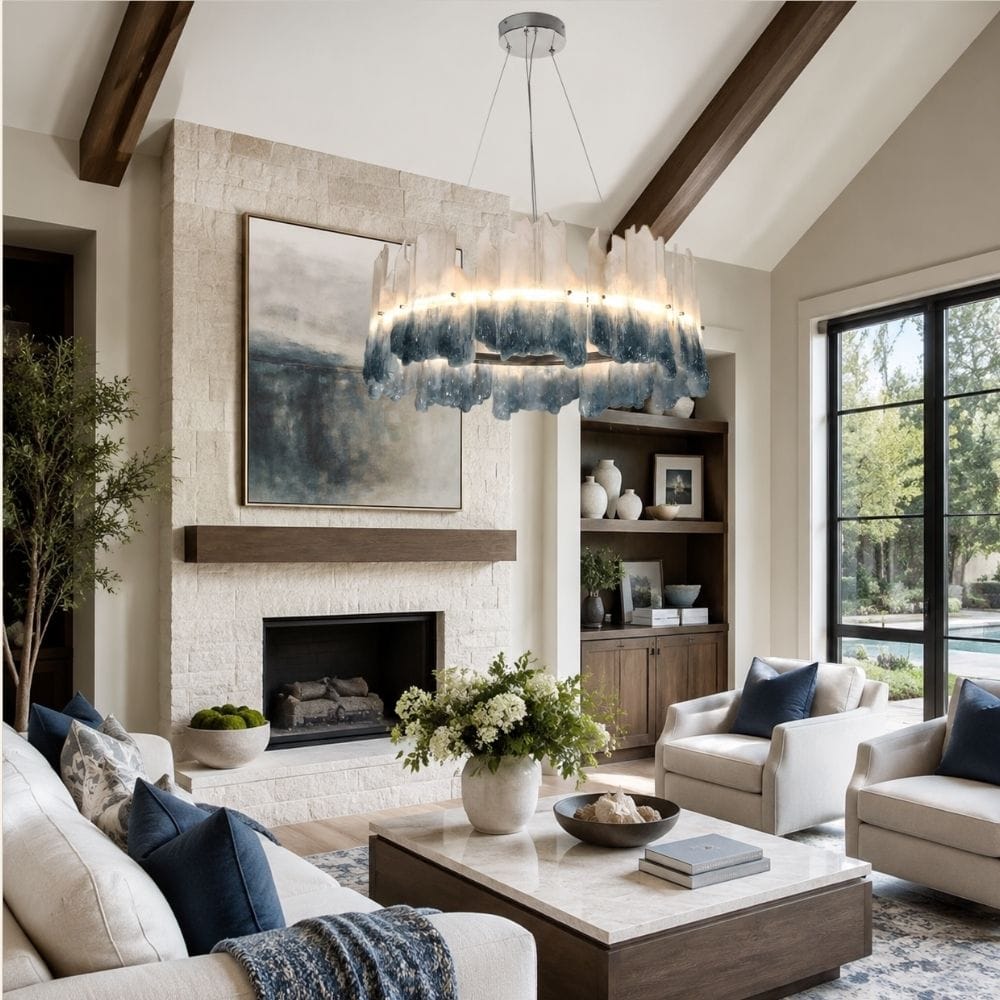
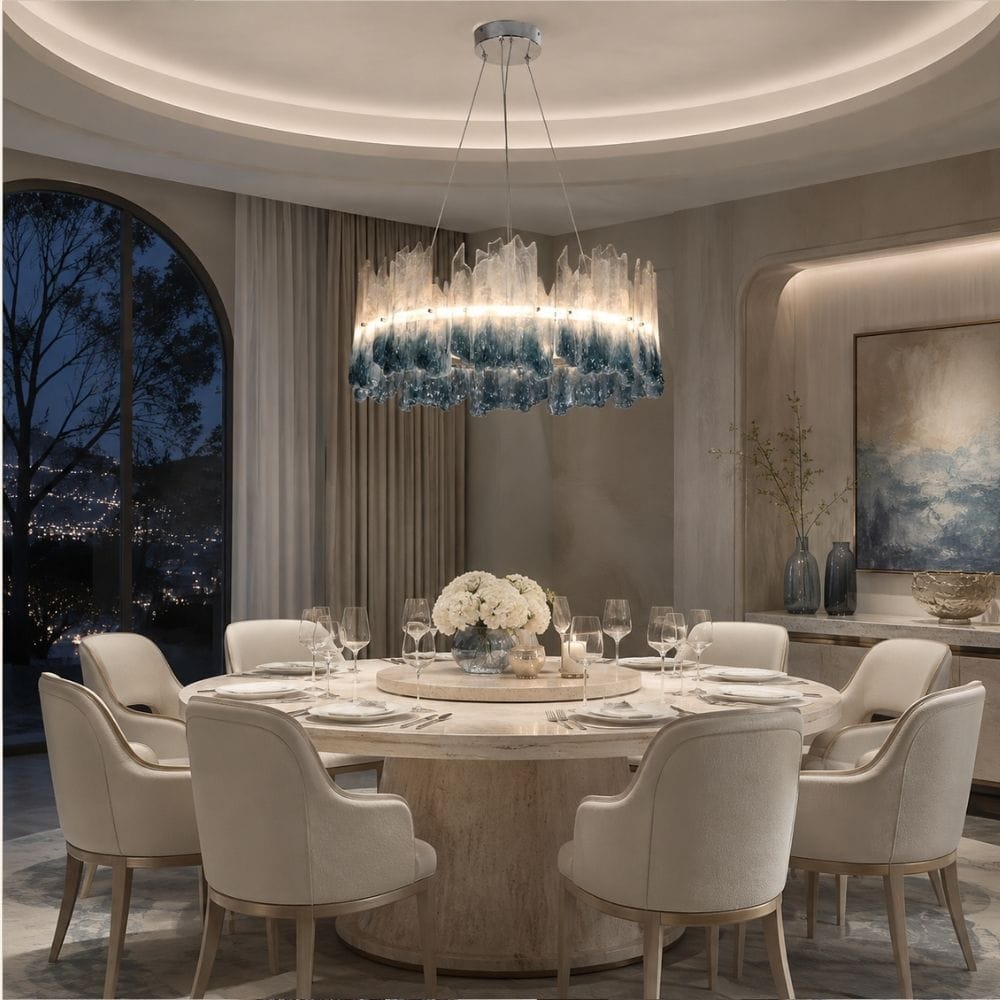
Hanging or Flush: The Two Mounting Families
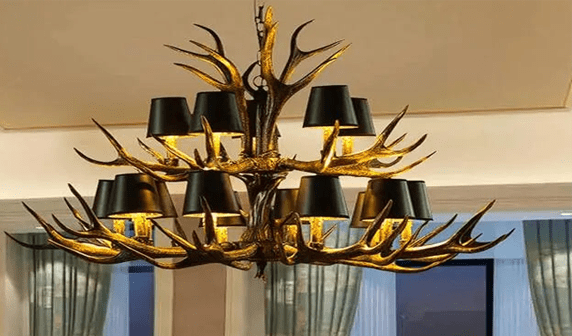
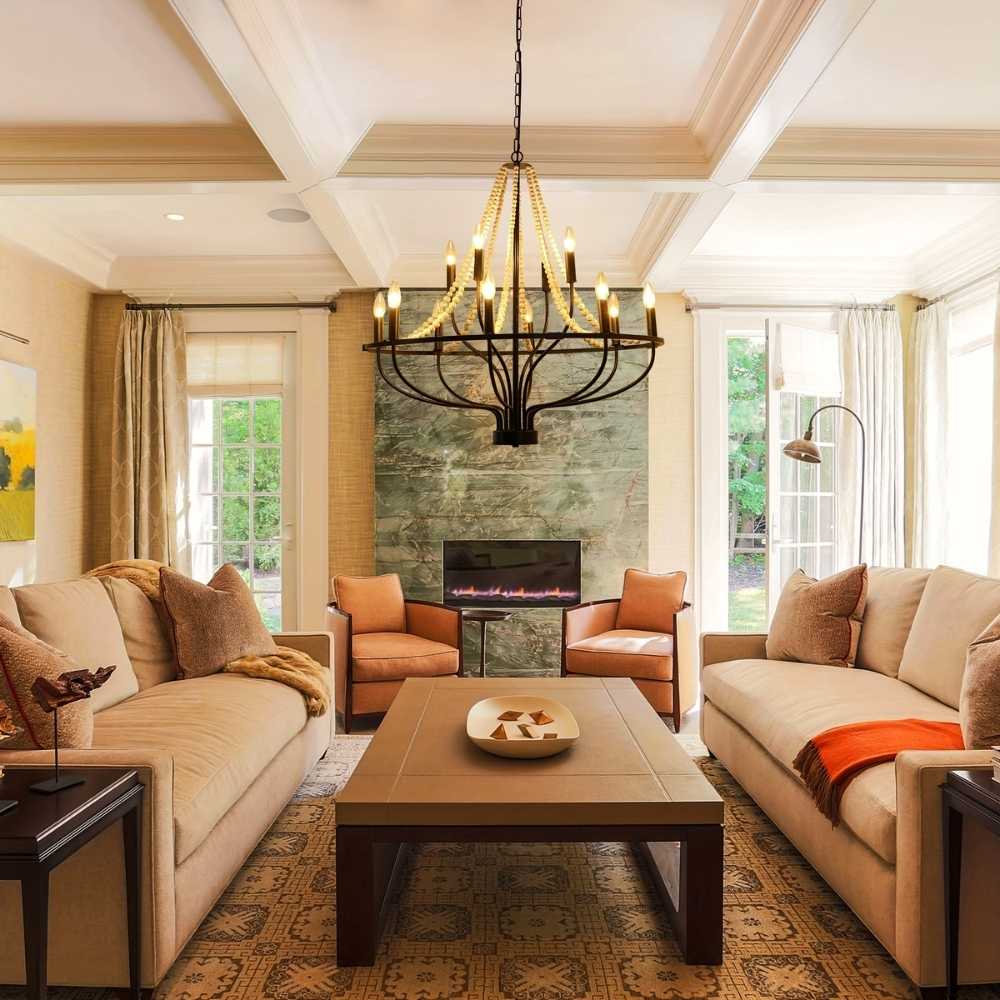
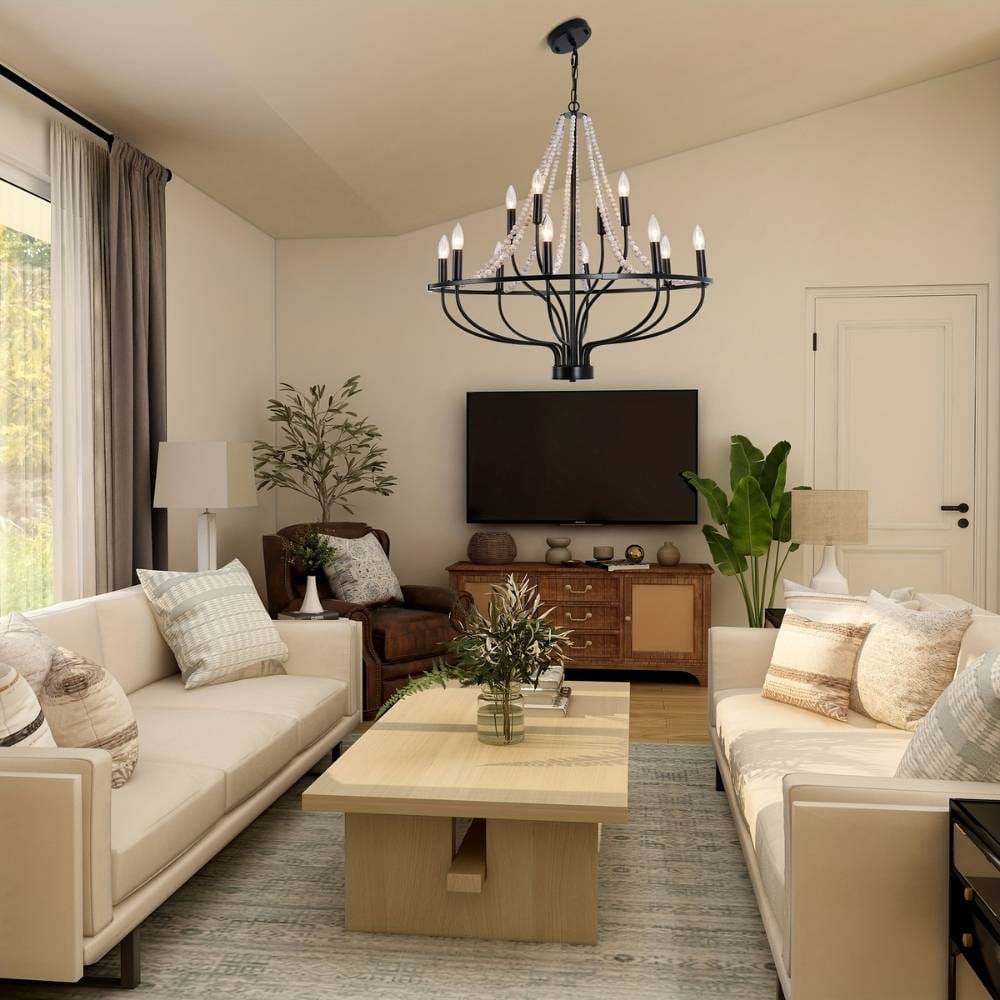
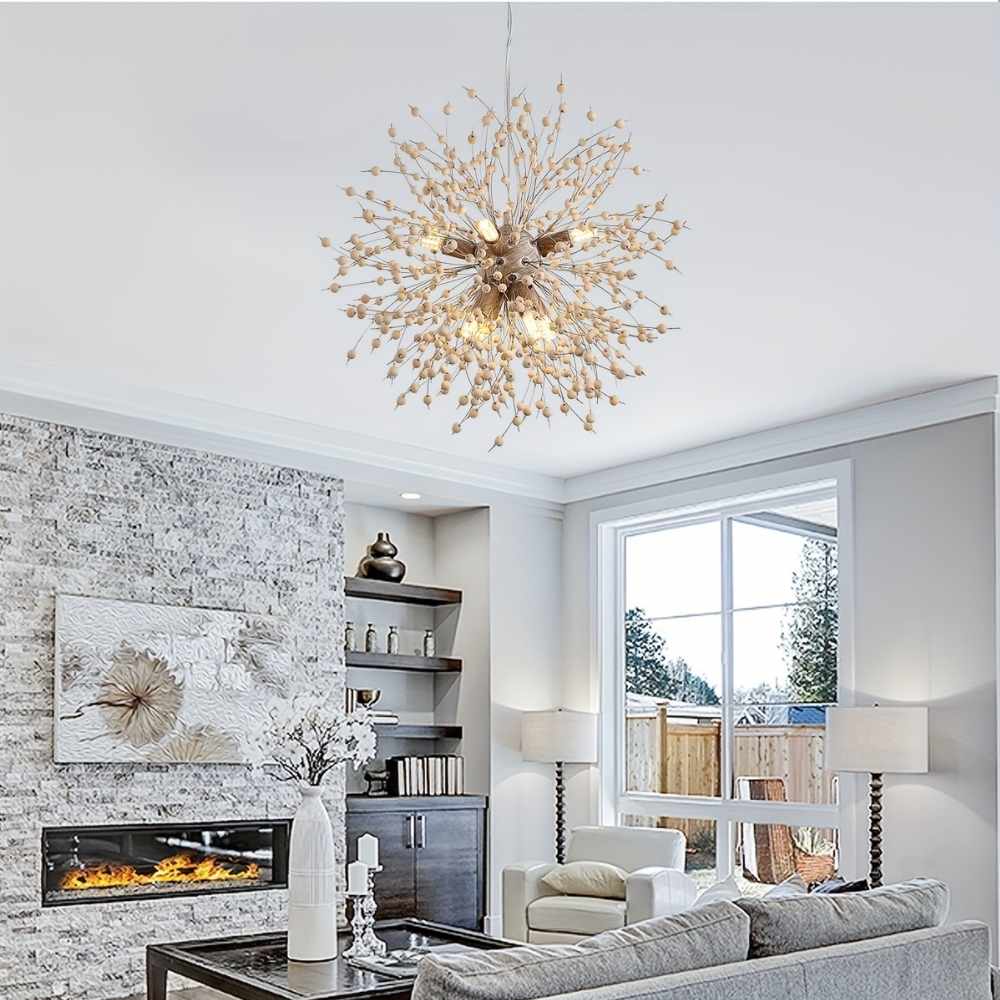
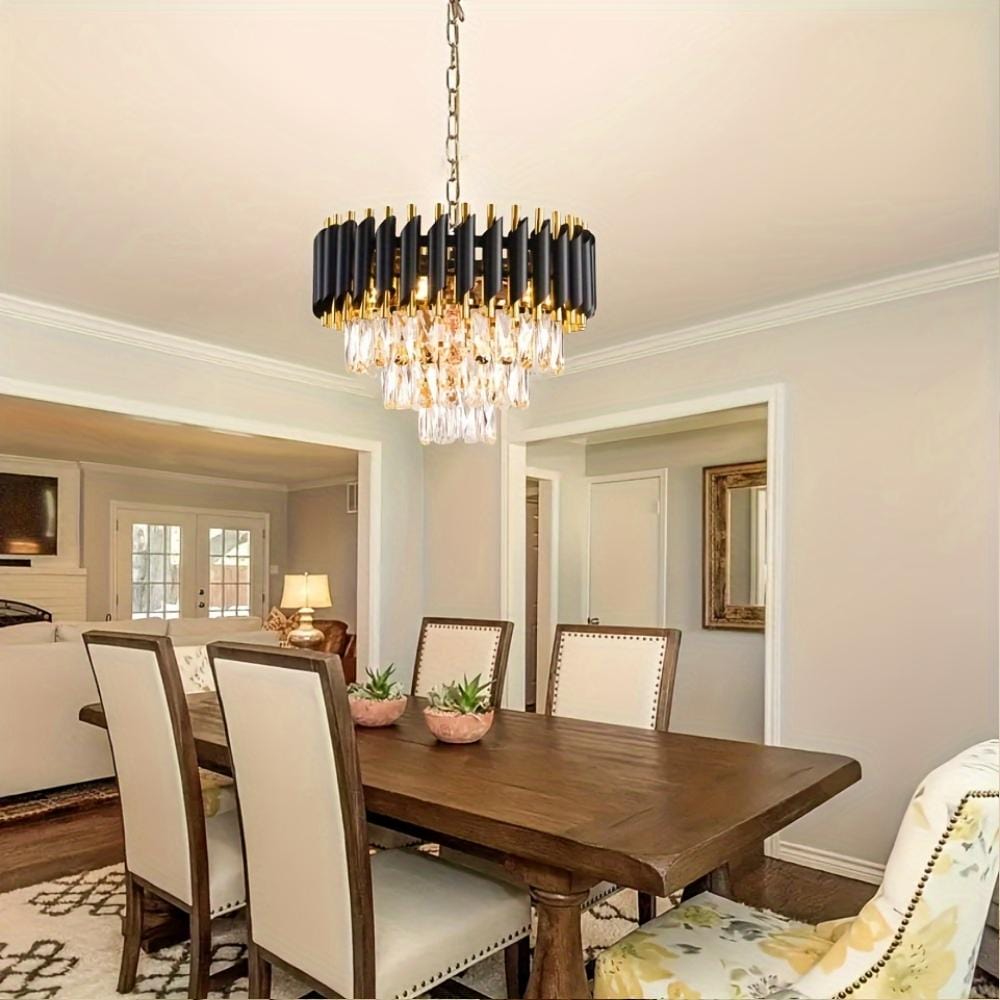
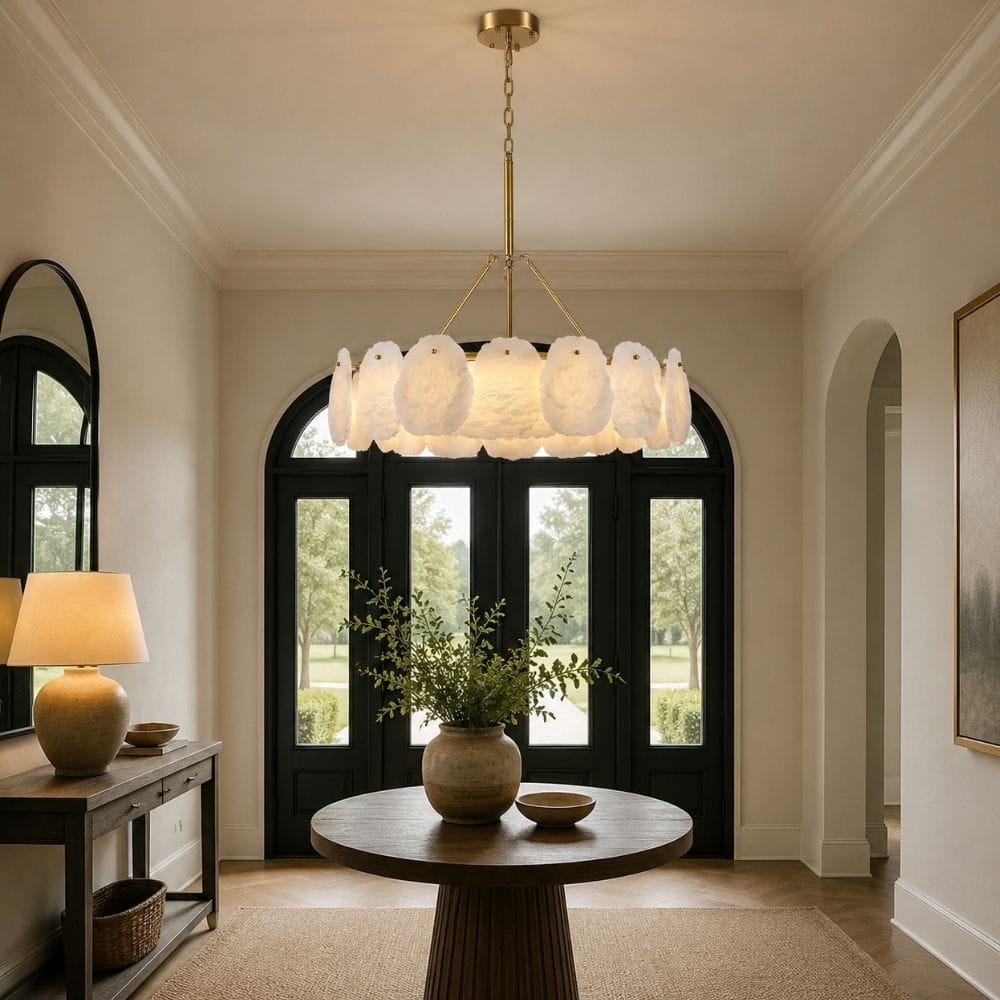
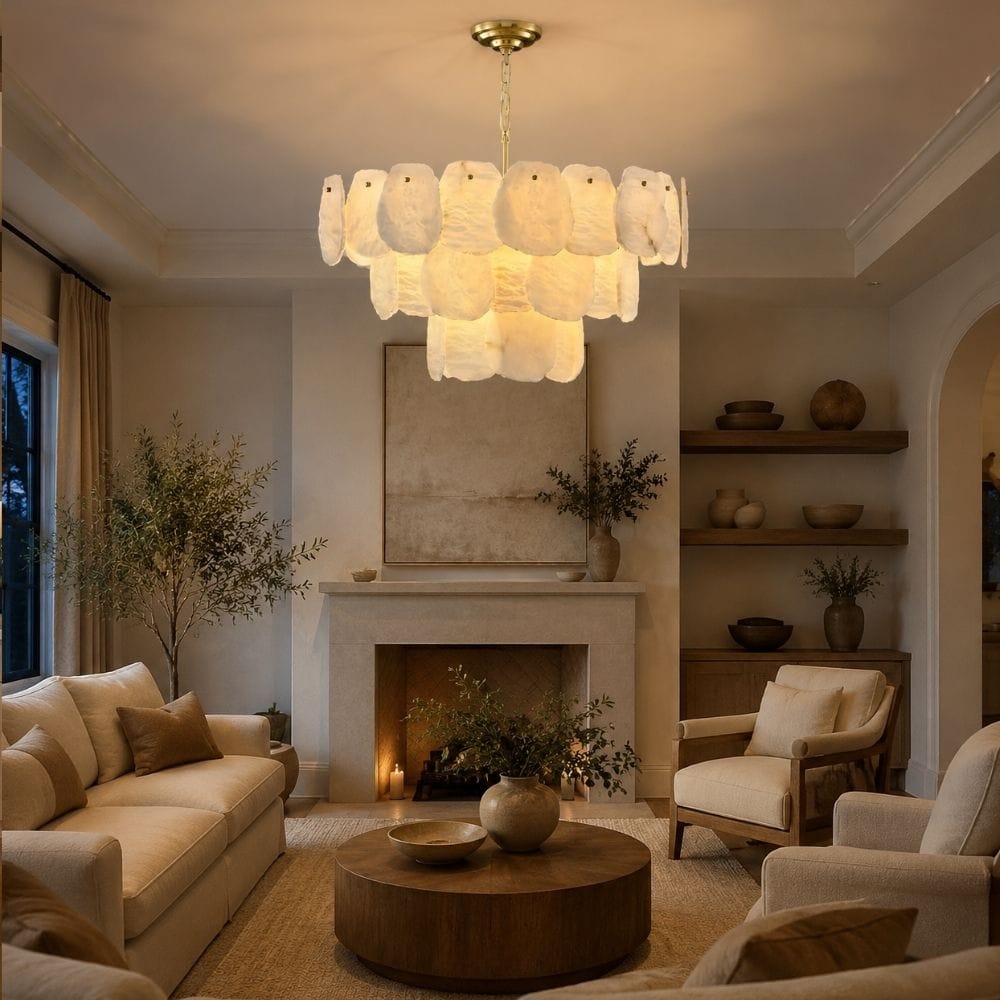
Every ceiling fixture belongs to one of two families, and the choice is made by arithmetic before style. A hanging chandelier suspends its body into the room — buying presence, dimension, and adjustability — and spends vertical space to do it. A flush design holds the ceiling line and spends nothing. The decider is the clearance budget: ceiling height minus 84" (213 cm) over walking areas. At 8 ft the budget is 12" and the flush mount chandeliers collection is the address; at 9 ft suspension opens over tables and beds; at 10 ft+ the full hanging range is yours everywhere. This collection is the suspended side of that ledger.
What Suspension Buys You
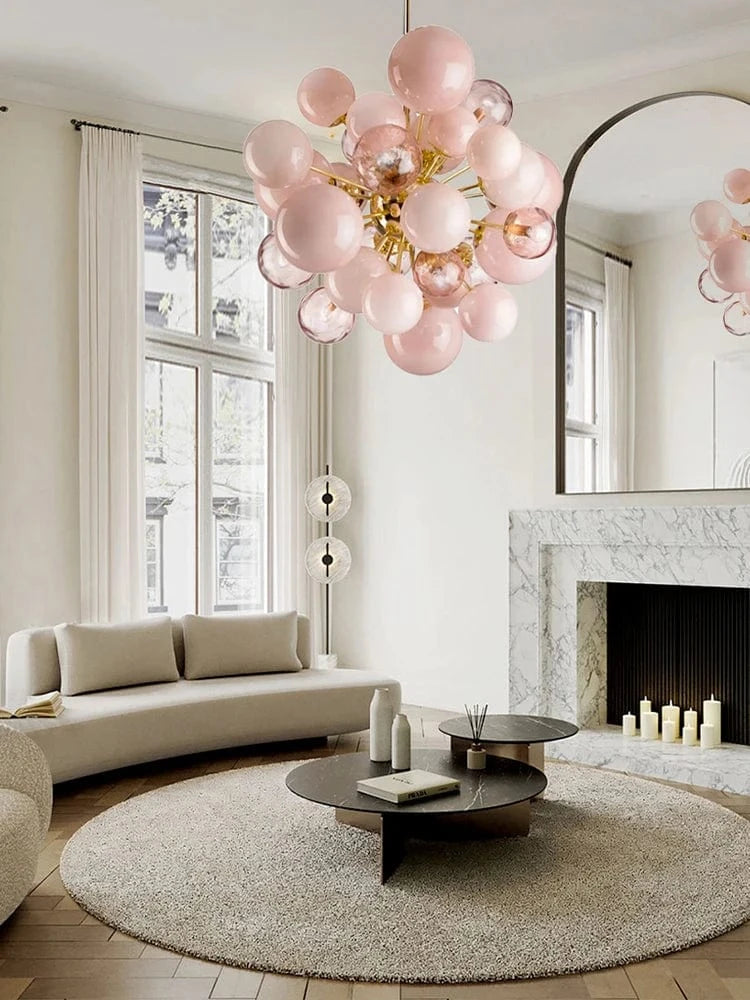
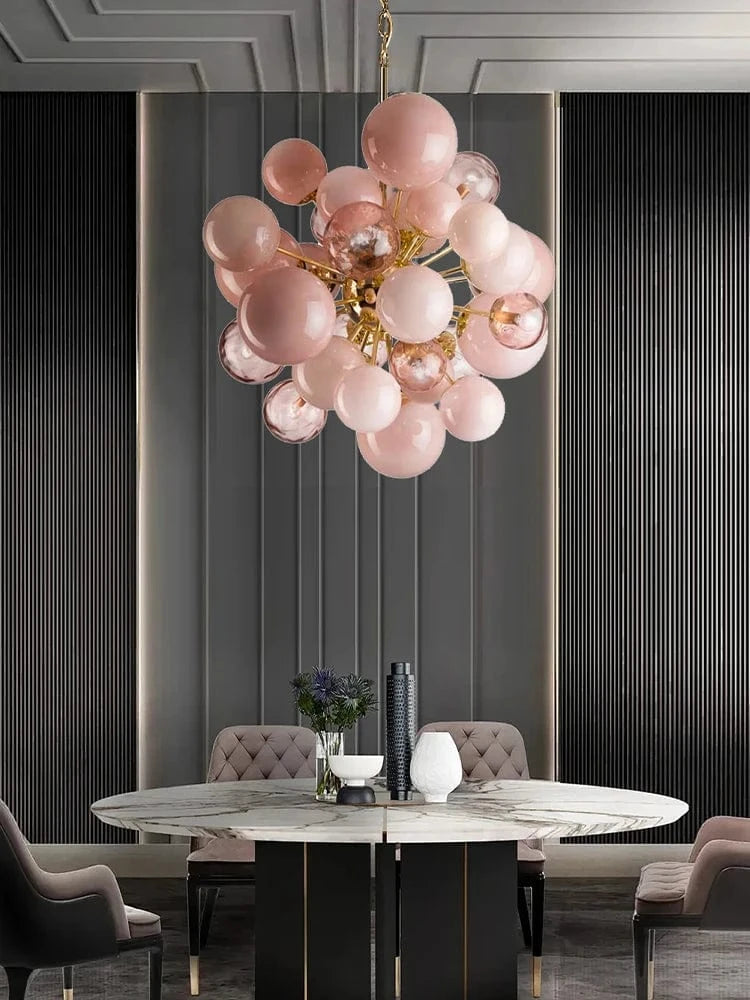
- Presence in the volume: a suspended fixture occupies the room's air, reading as a floating object rather than ceiling trim — the difference between wearing the statement and painting it on
- Adjustable height: rods section down and cables field-cut, so one design serves a 9 ft dining room and an 11 ft living room at their correct heights
- Scale without surgery: the drop lets large diameters and multi-tier bodies exist at comfortable sightlines — statement scale no flush profile can carry
- The classic read: chandeliers were born hanging; the suspended silhouette is the form's native state, and rooms register it instantly
Rod, Cable or Chain: The Hardware Under the Statement
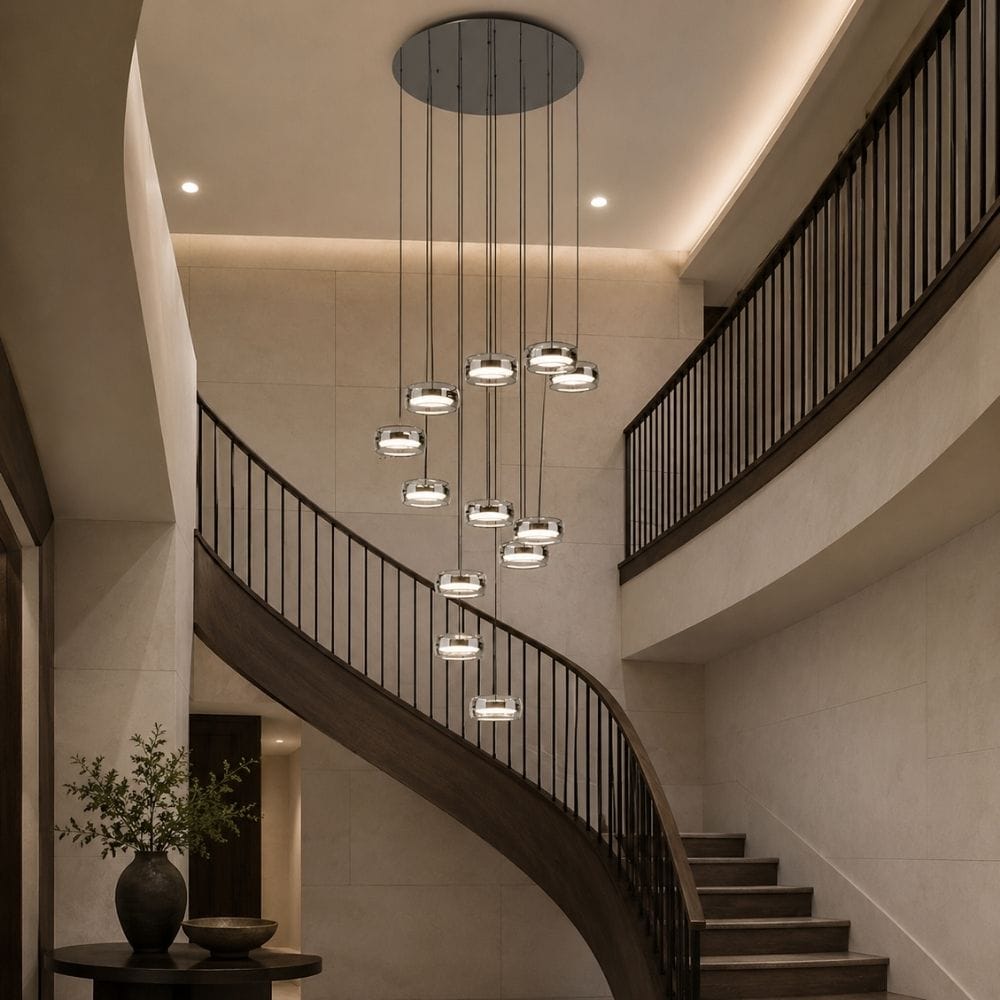
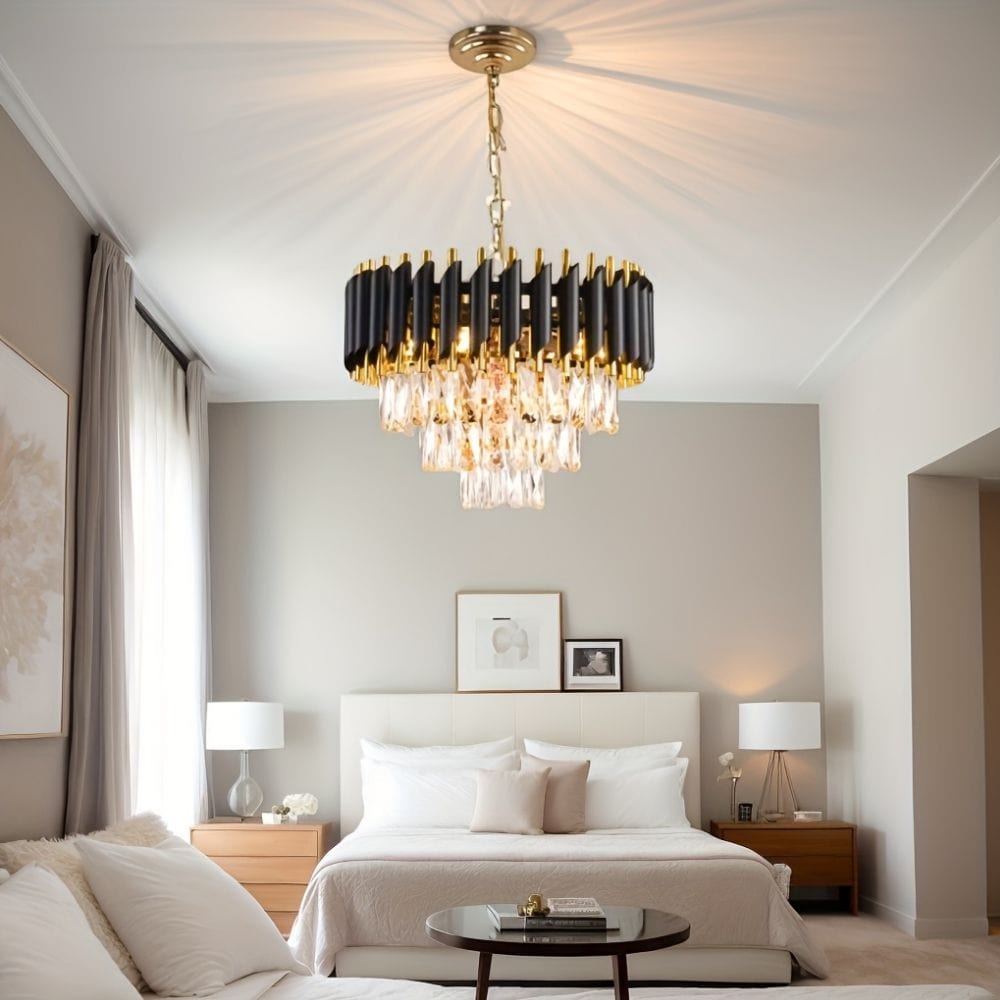
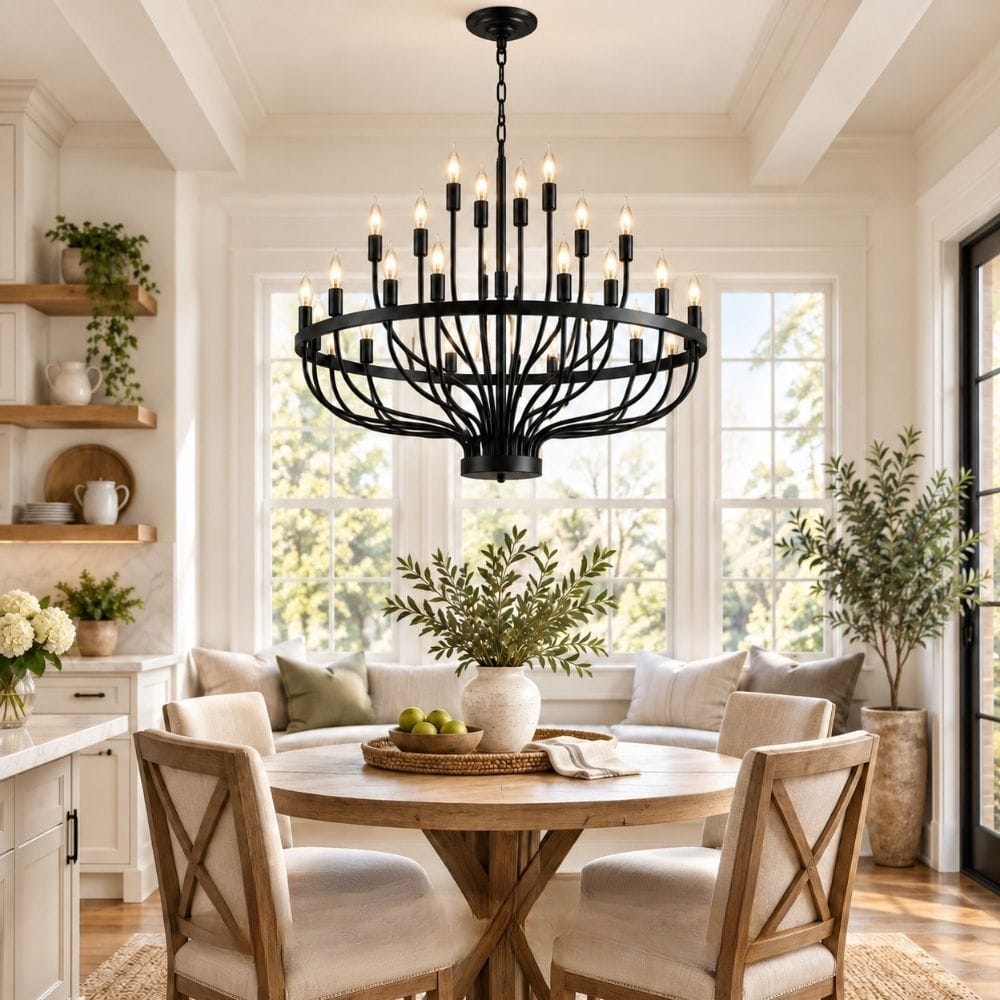
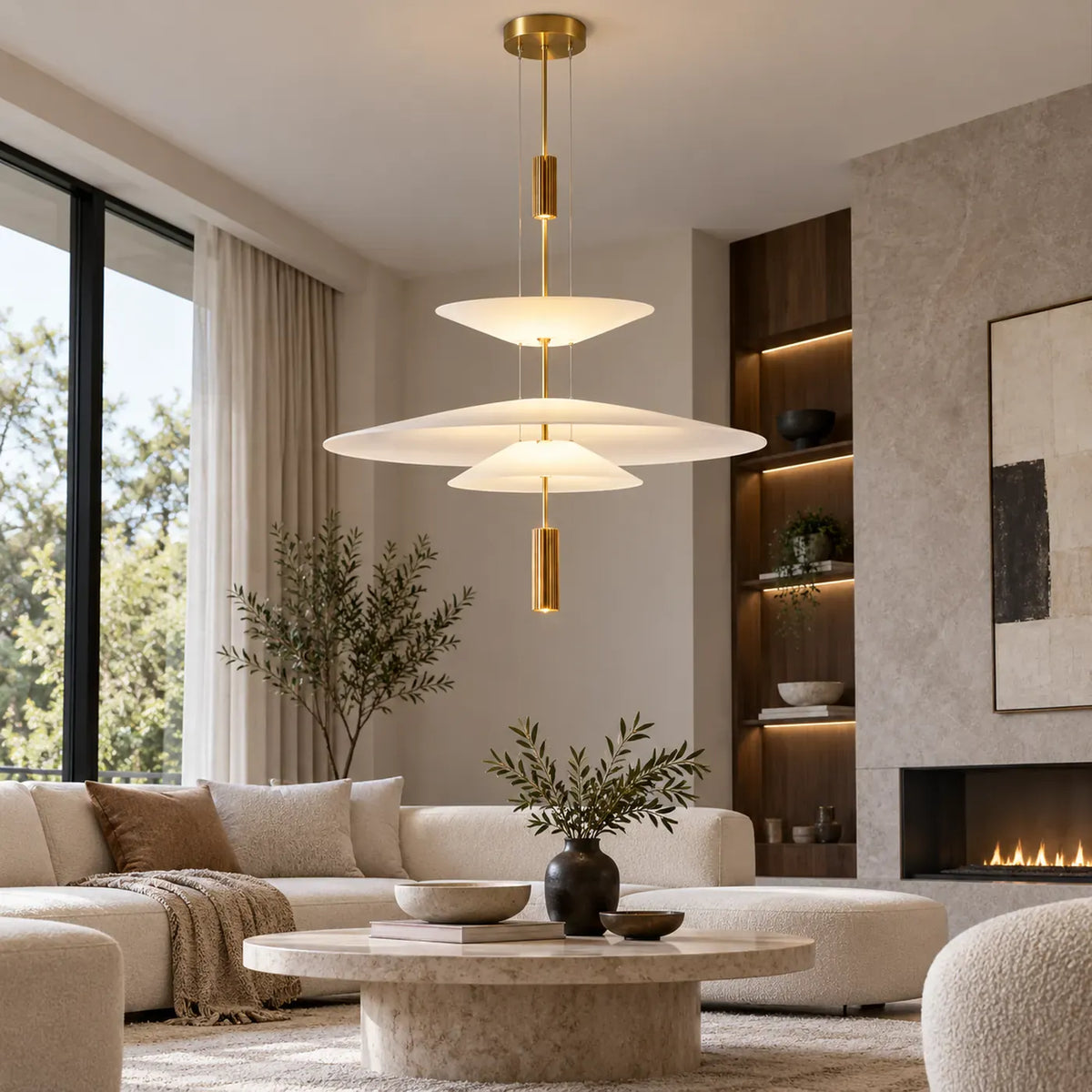
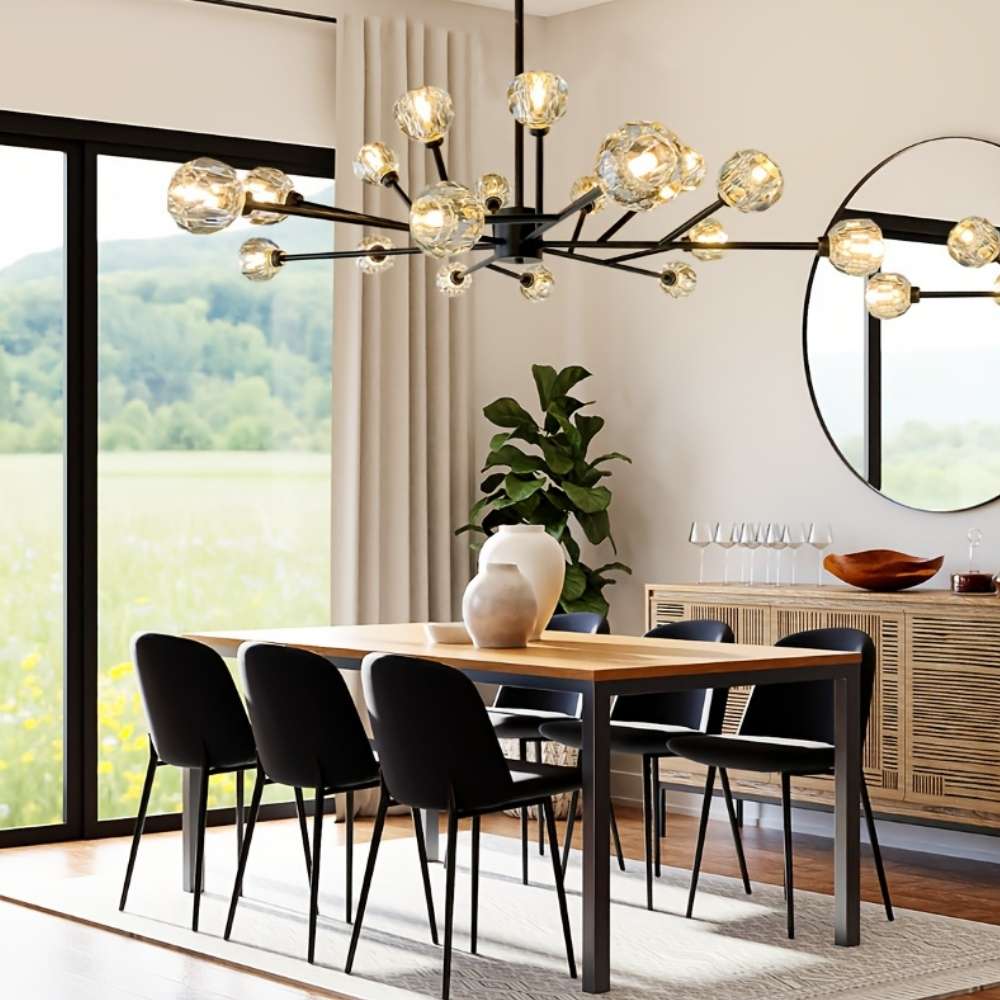
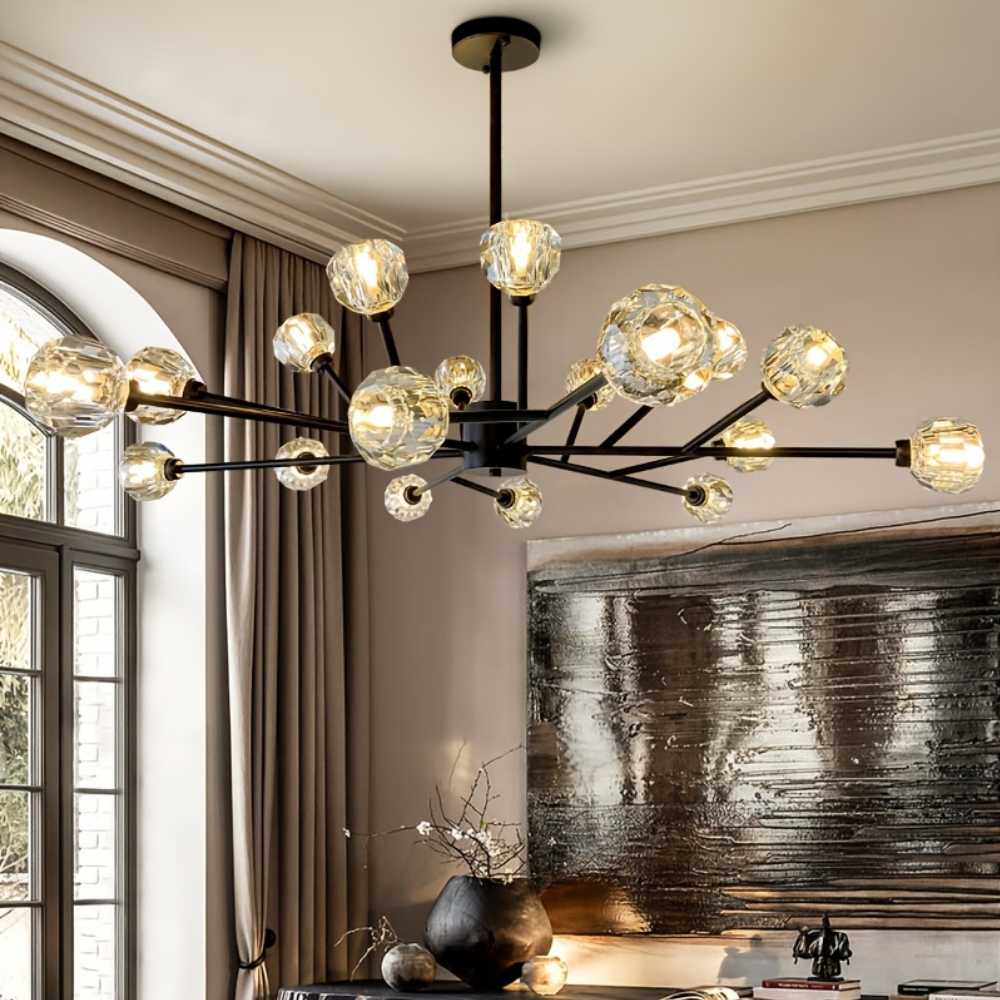
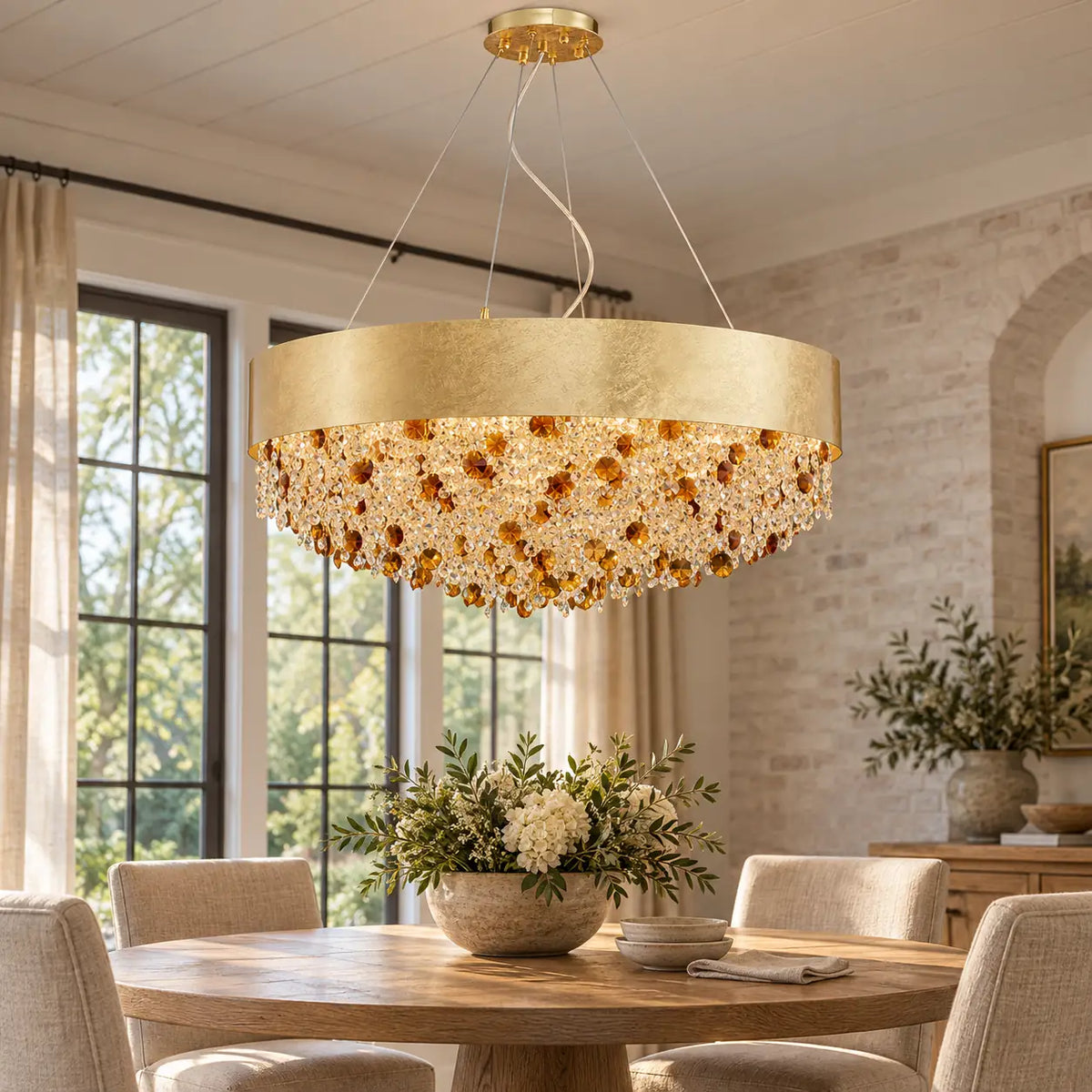
Three suspension systems carry the collection, each with a personality. Rods (downrods) hang rigid and level — the modern default, sectioned in lengths, immune to drafts, and the right carrier for rings and geometric bodies that must hang perfectly true. Cables are the minimalist's choice — near-invisible, field-cuttable to exact height, standard on LED and cascade designs. Chains carry the traditional and rustic end — adjustable link by link, with the visual weight that period silhouettes expect. Whichever the system, confirm the listed maximum drop covers your measured ceiling-to-target distance: shortening on site is routine, lengthening means ordering extension hardware.
How to Hang a Chandelier: The Short Version
- 1. Kill the circuit at the breaker — and verify with a tester, not the switch
- 2. Check the box rating: fixtures over 50 lb (23 kg) need a listed fan/heavy-fixture brace box, not a standard plastic one — the single rule that prevents the worst outcome
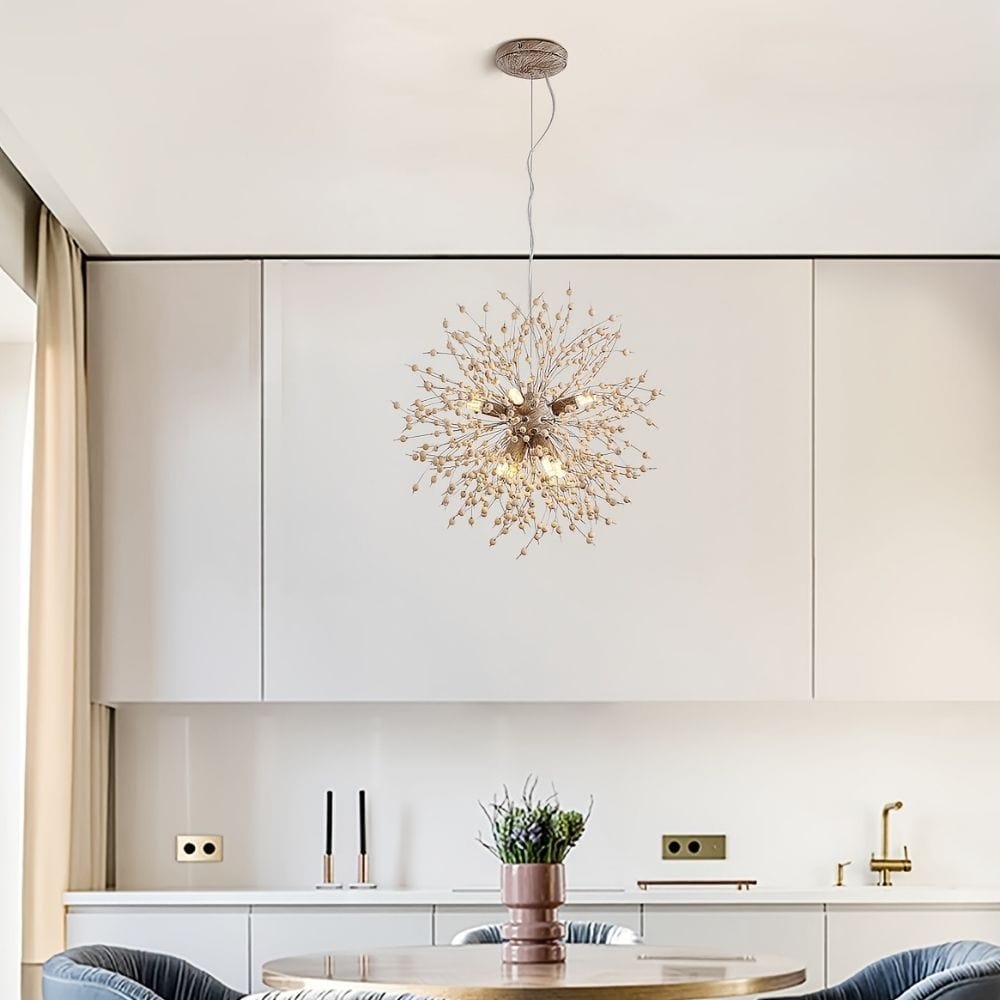
- 3. Set the drop before mounting: 30-36" (76-91 cm) above tables, 84" (213 cm) over walking areas, 6-7 ft (183-213 cm) over beds — cut cable or remove rod sections on the ground, not on the ladder
- 4. Hang, wire, level: support the fixture's weight while connecting (a second person for anything substantial), then check level before tightening the canopy
- 5. Two-story drops are professional installs — scaffolding height plus fixture weight is not a homeowner combination
The complete walkthrough — wiring, boxes, dimmers, and safety — is in our chandelier installation guide, with every room's target height in the fixture height chart.
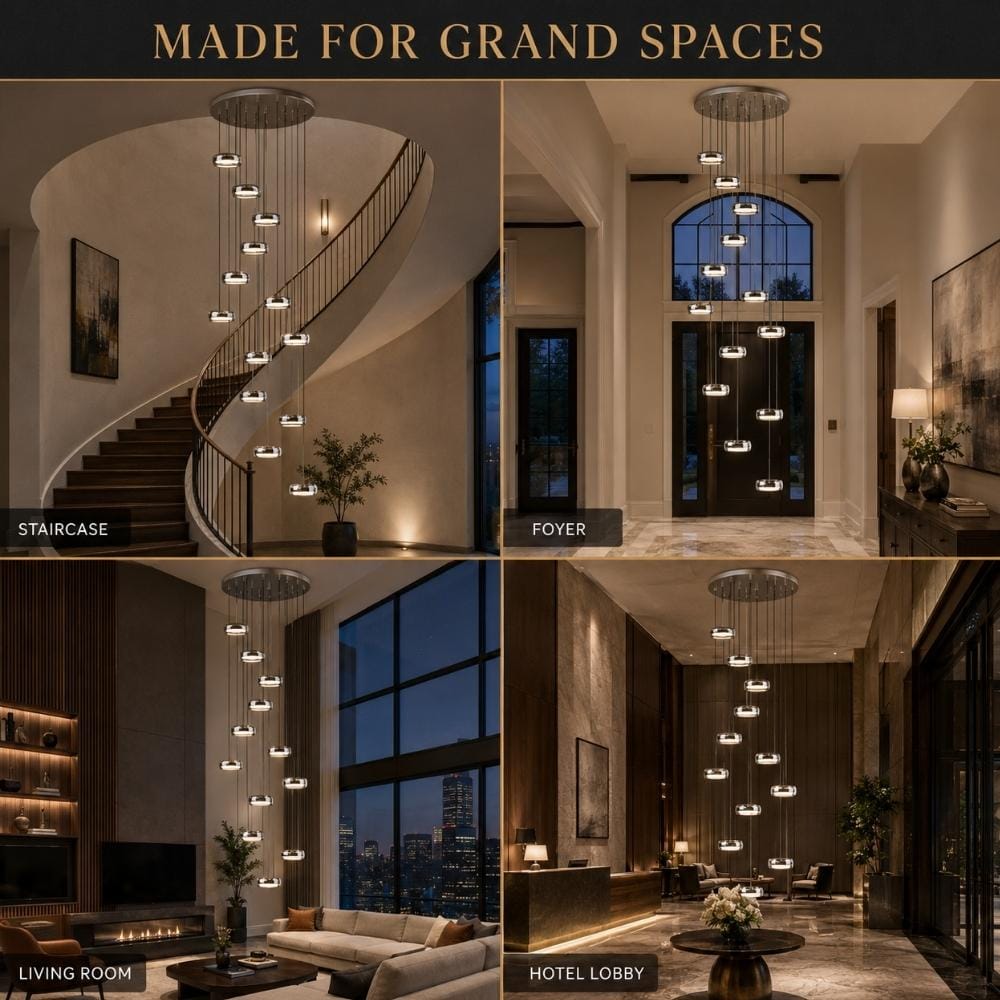
Long and Vertical: The Extended Drop Class
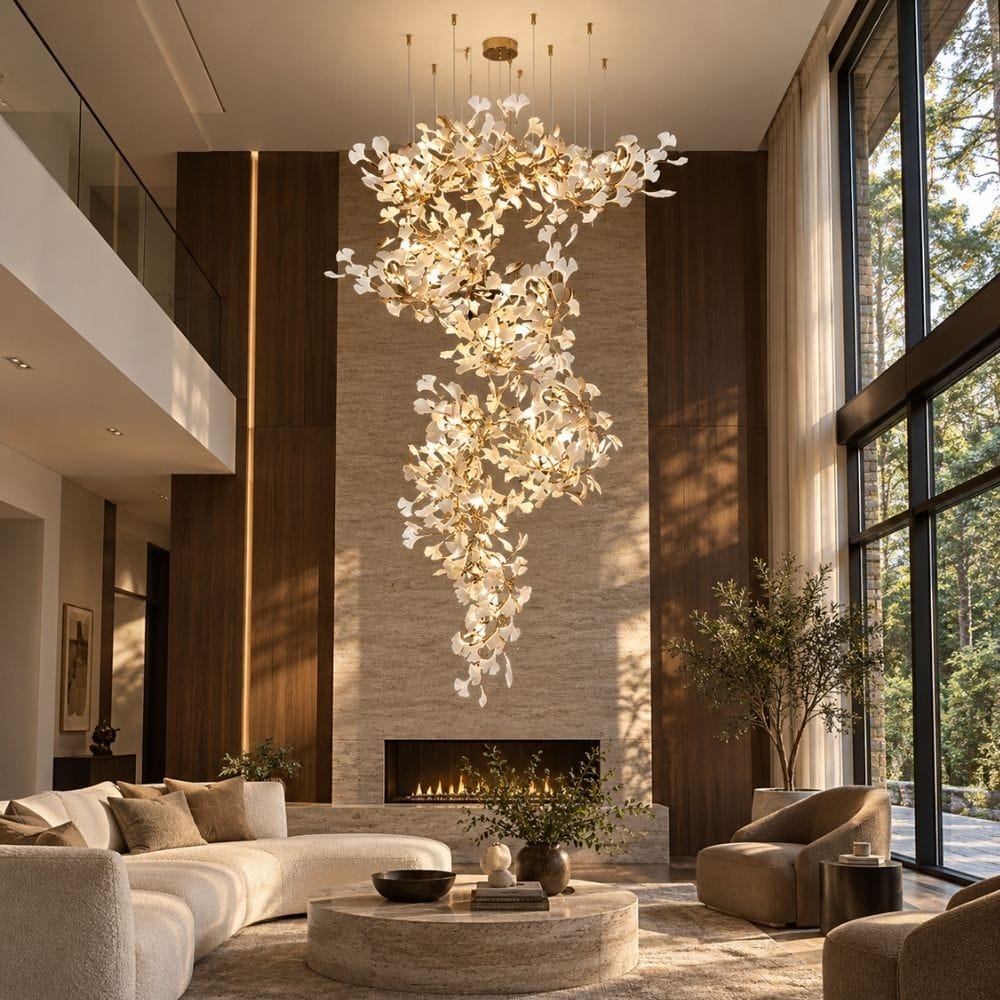
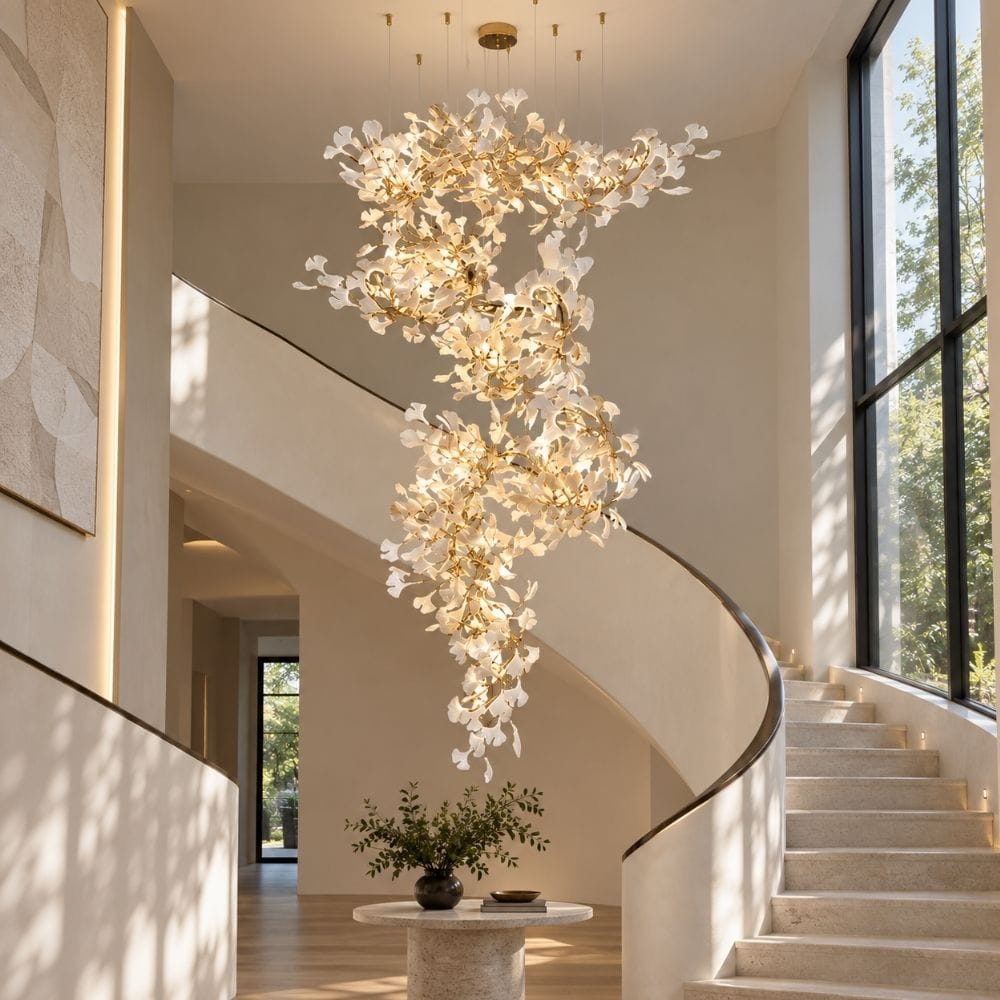
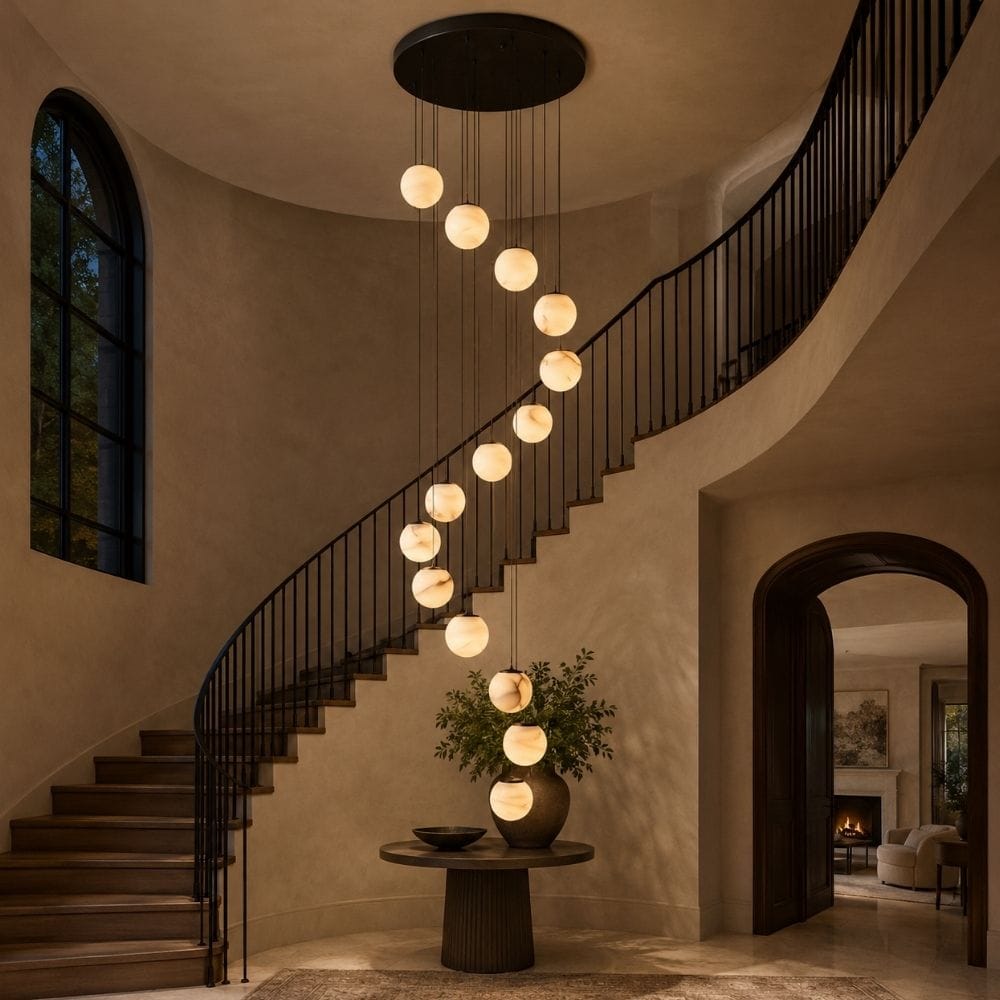
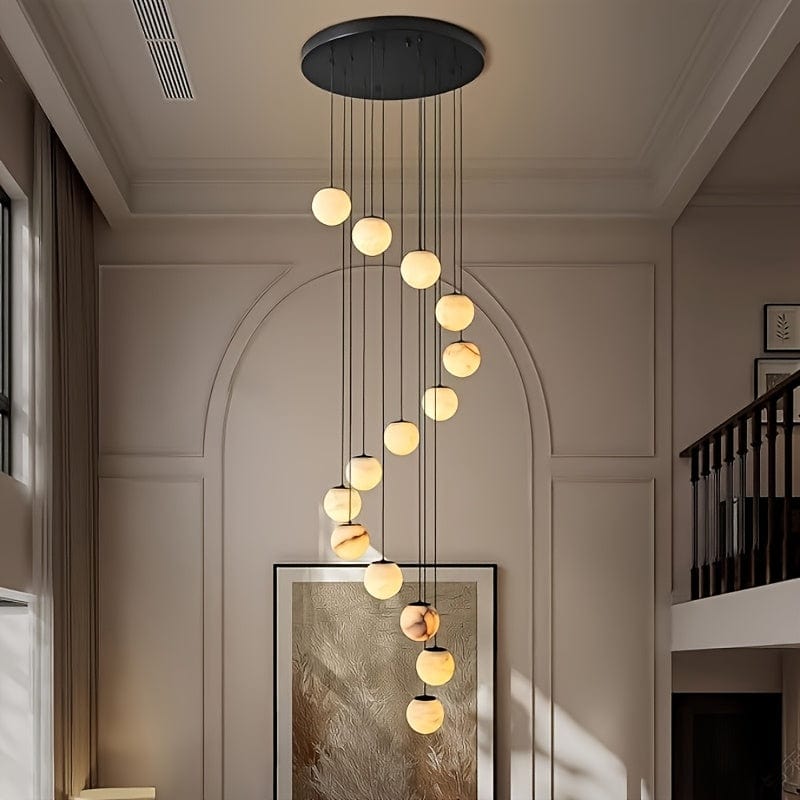
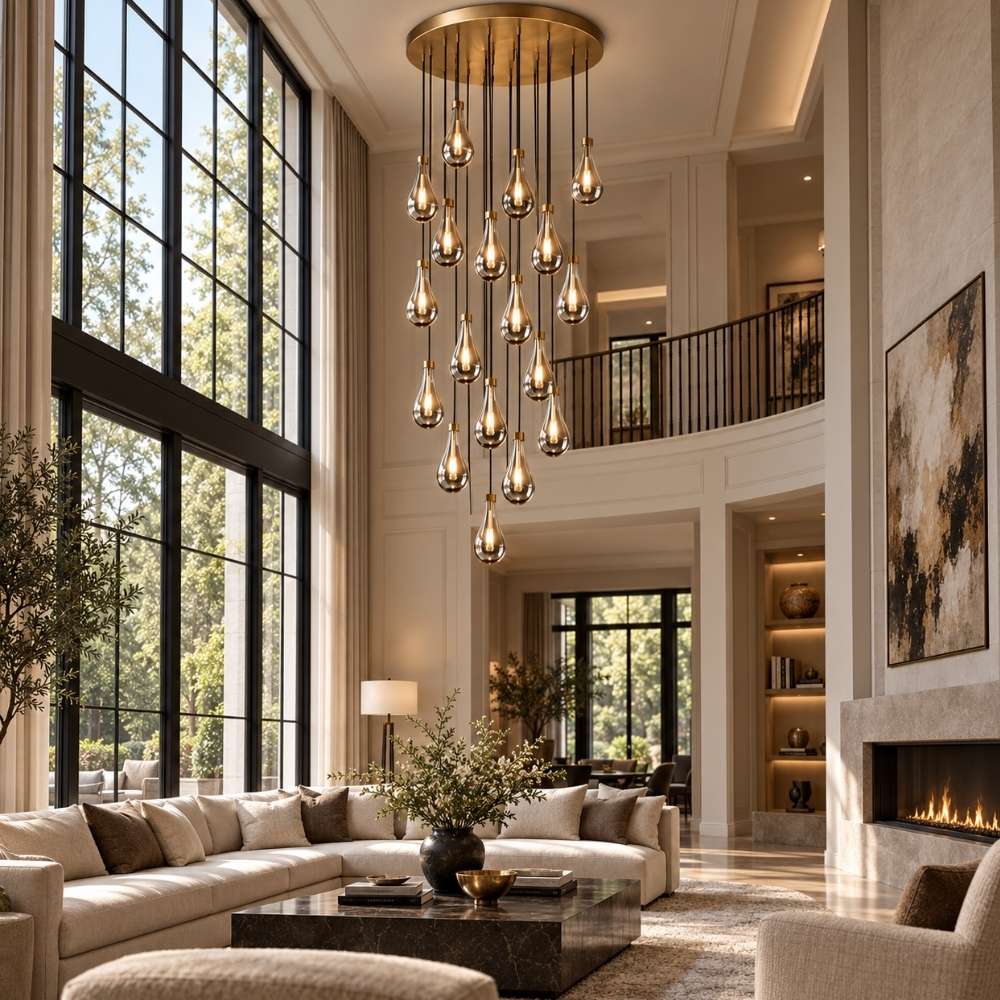
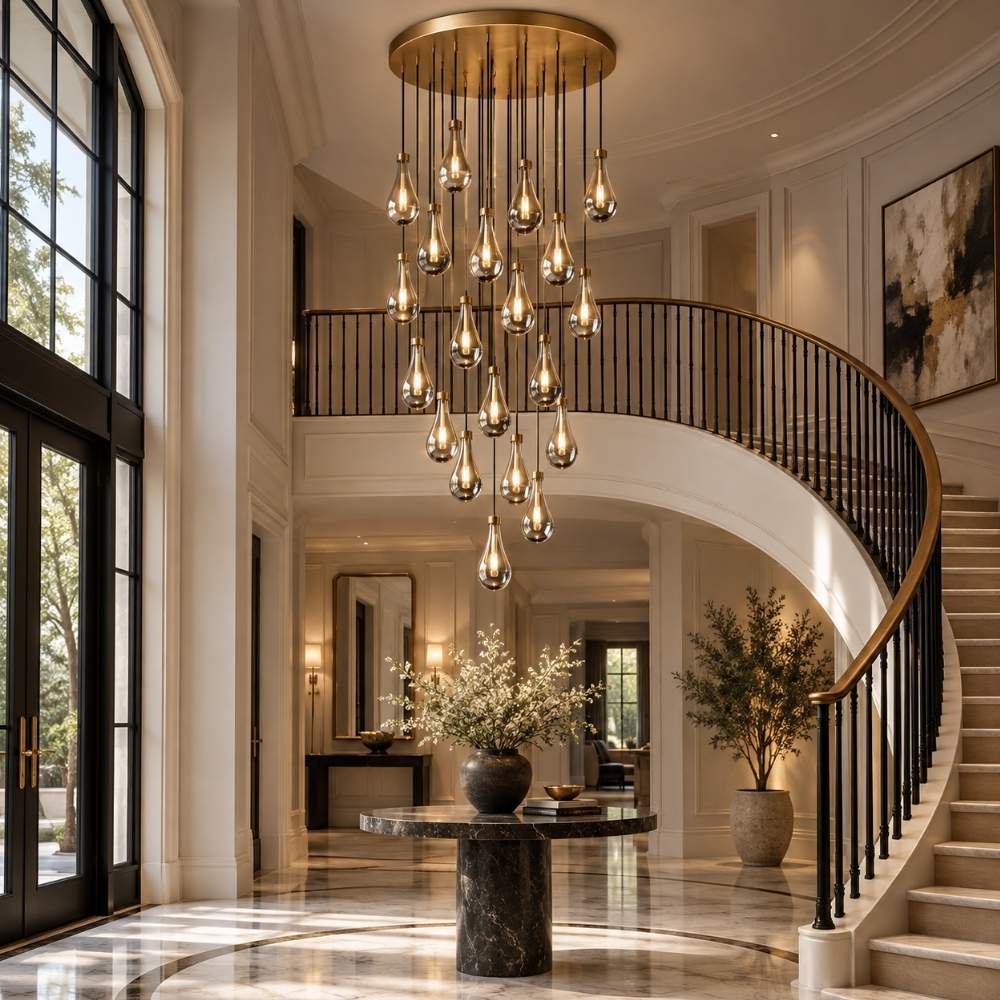
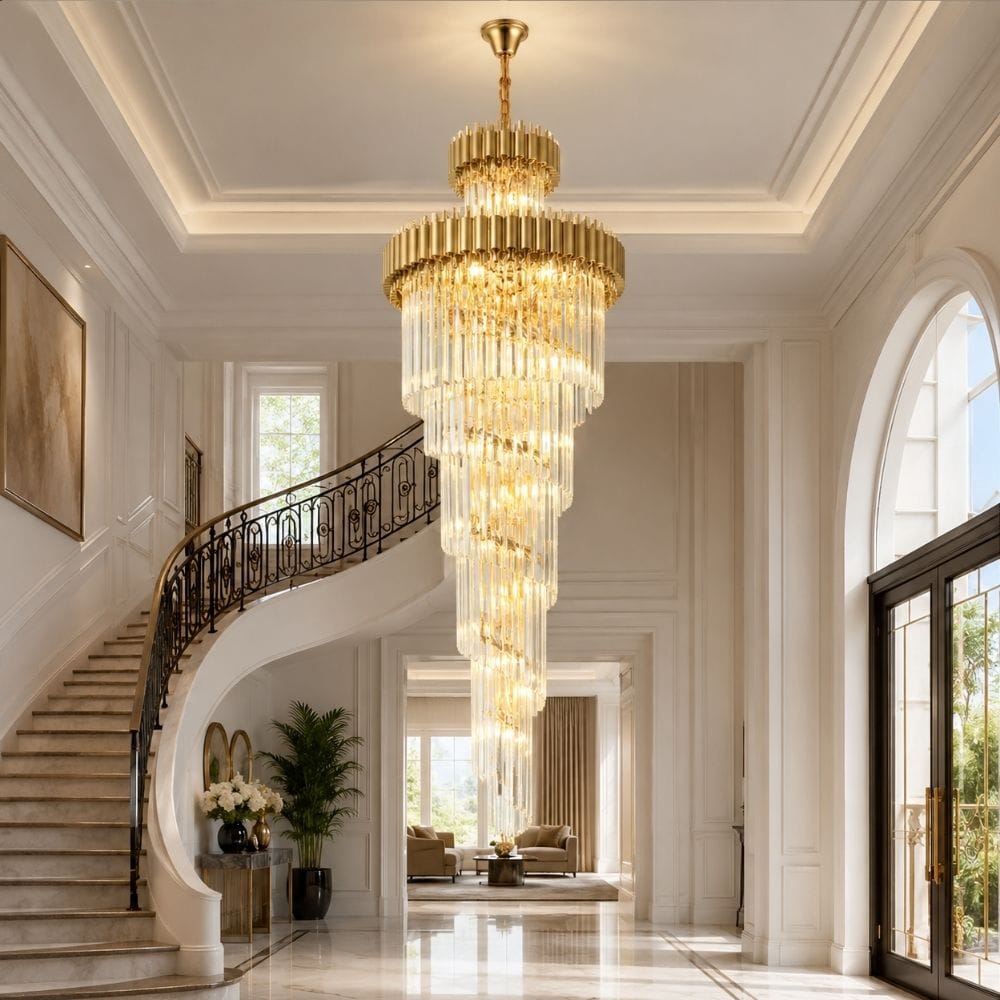
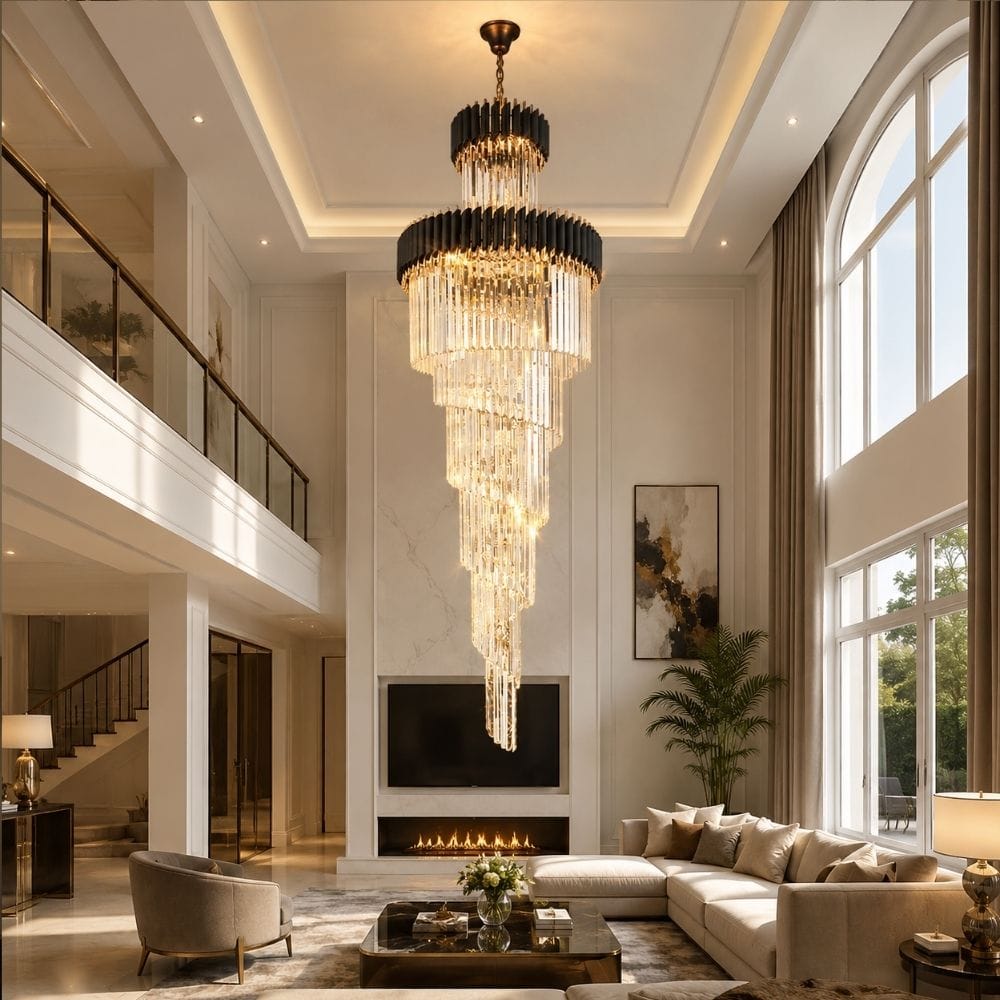
The hanging family's furthest reach is the long vertical design — cascades, tiered columns, and extended-suspension statements built to fall through open volume. Stairwells and two-story foyers are their native placements, where the drop itself is the design and the fixture is seen along its full length from two floors; that specialized range, with its own drop math, lives in the staircase chandeliers collection.
One Boundary Note
Within the suspended family, single-stem statement designs — one canopy, one drop, one gathered composition — are their own class with their own logic, curated separately in the pendant chandeliers collection. This page is the family home; that one is the single-suspension specialist.
Related Collections
Cross to the other mounting family at the flush mount chandeliers collection, take the extended drop to the staircase chandeliers, and browse the full chandelier catalog for the complete designer range.
Frequently Asked Questions
What is a hanging chandelier?
A chandelier suspended into the room on a rod, cable, or chain — the mounting family opposite flush designs, with adjustable drop height and the form's classic floating presence.
Hanging or flush mount — which should I choose?
By clearance budget: ceiling height minus 84" over walking areas. 8 ft ceilings point to flush; 9 ft opens suspension over tables and beds; 10 ft+ takes the hanging range everywhere.
How do you hang a chandelier?
Power off at the breaker and verify; confirm the junction box rating; set the drop length on the ground (30-36" over tables, 84" in walking zones); hang, wire, and level before tightening the canopy. Full steps are in our installation guide.
How do I hang a heavy chandelier?
Anything over 50 lb needs a listed heavy-fixture brace box — not a standard plastic box — and a second person or professional for the lift. Two-story installs are professional jobs, full stop.
Can the hanging height be adjusted?
Yes — rods remove in sections, cables field-cut, chains adjust by the link. Confirm the maximum listed drop covers your measured distance; shortening is routine, extending needs added hardware.
How low should a hanging chandelier hang?
30-36" above tables, 6-7 ft above beds, and 84" of clearance anywhere feet travel — raised roughly 3" per foot of ceiling above 9 ft.