






Why the Ring Leads Modern Lighting
Every era's lighting has a signature silhouette, and the ring is this one's. The reasons are structural. A circle is the one statement form with no front or back — it reads identically from every seat, which suits open-plan rooms where fixtures are seen from all sides. It carries scale without bulk: a 40" (102 cm) ring commands a room while staying visually weightless, all edge and no mass. And it is honest about its technology — no candle arms pretending, no shades hiding sockets, just light itself bent into geometry. That combination is why the form migrated from design showrooms to the mainstream in under a decade, and why it now anchors living rooms, dining tables, bedrooms, and stairwells alike.
LED and the Ring: A Form Born for the Technology
This is the first major fixture form invented for LED rather than adapted to it. A continuous circle of even light is physically impossible with bulbs — only a flexible LED strip sealed inside a diffused channel produces the unbroken glow that defines the form, which is why every true design in the family is integrated LED by nature. That origin sets the buying checks: confirm the color temperature (2700-3000K for living spaces; some designs offer switchable white tones), verify the dimming protocol matches your wall control (TRIAC, 0-10V, or remote — a mismatch flickers), and read the rated lifespan against nightly use, since the strip is the fixture. Well-built examples run 30,000-50,000 hours — decades of evenings — and the best listings note whether the LED driver is serviceable.
Ring, Circle, Halo, Round: One Family, Many Names
Shoppers reach this form under half a dozen names — ring chandelier, circle chandelier, circular chandelier, round LED fixture, halo light — and they describe the same family with soft distinctions: "halo" usually implies a single thin floating ring, "circle" and "circular" the broader geometry, "round" sometimes drifting toward drum and globe shapes that are round in plan but solid in body. Everything here is the true open form: hollow geometry that the eye and light pass through. If the solid-bodied round direction is what the room needs, drum and globe designs live in the modern chandeliers collection.
How Many Rings: From Single Halo to Six-Ring Stacks
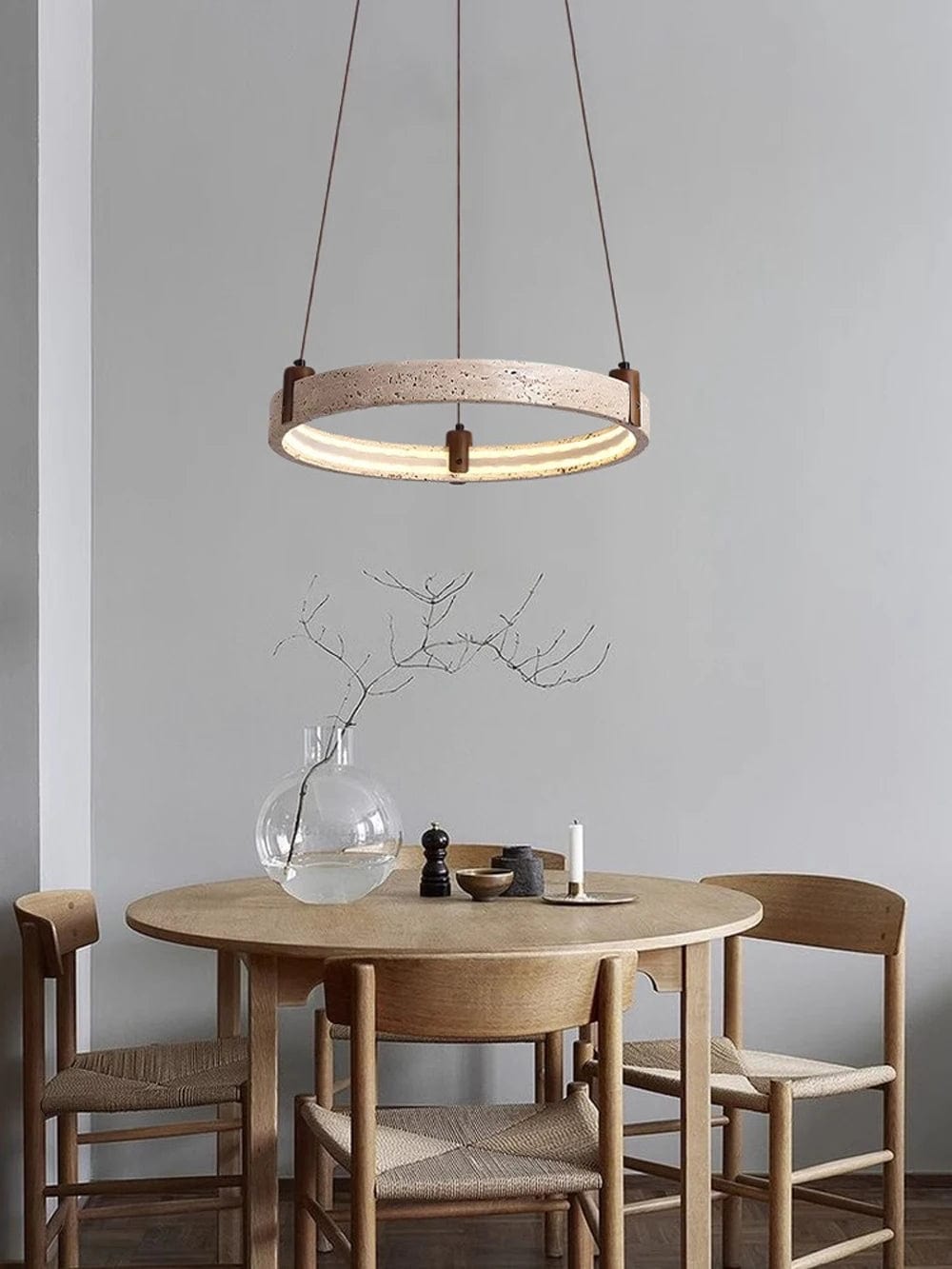
- Single: the minimalist statement — one drawn circle for bedrooms, offices, and refined living rooms
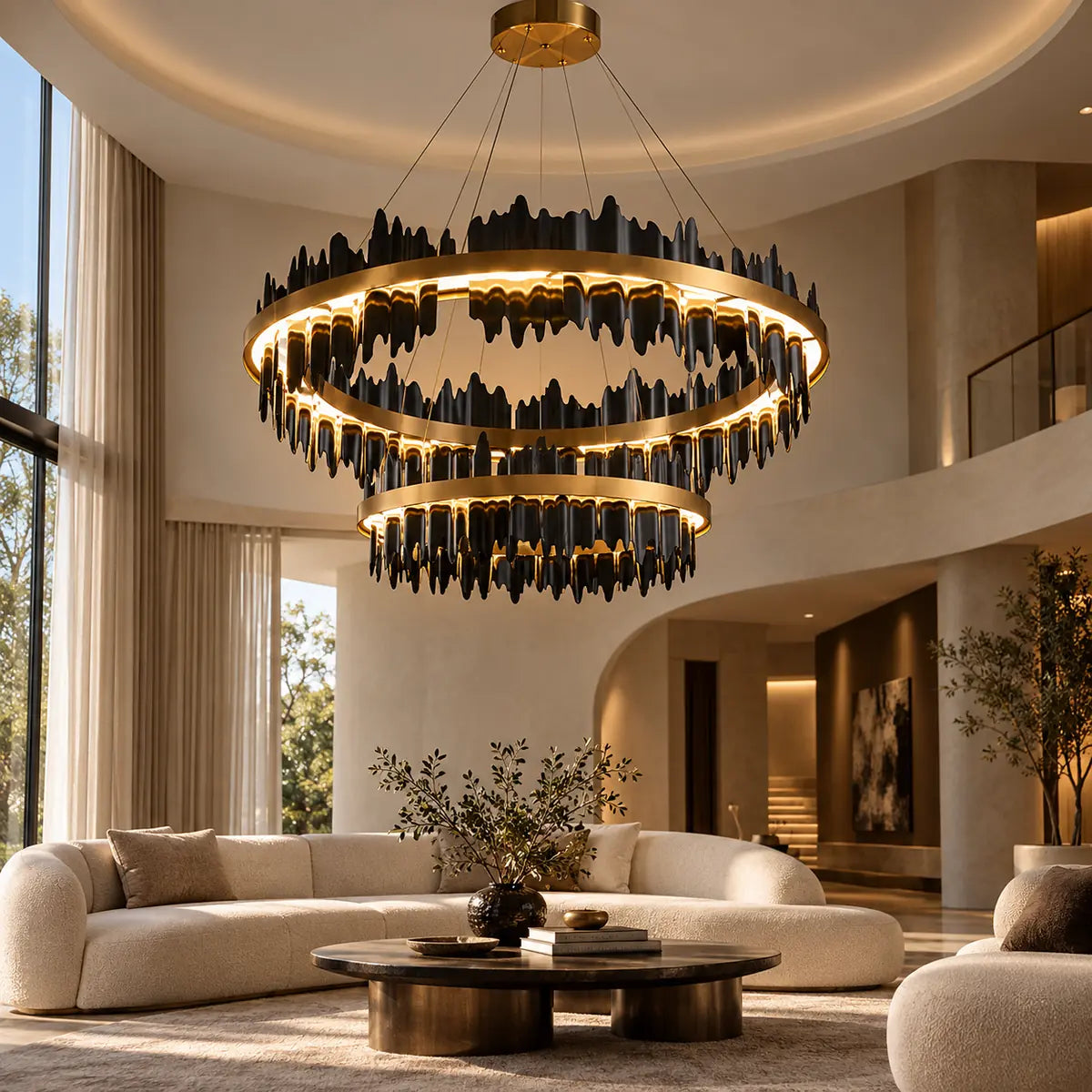
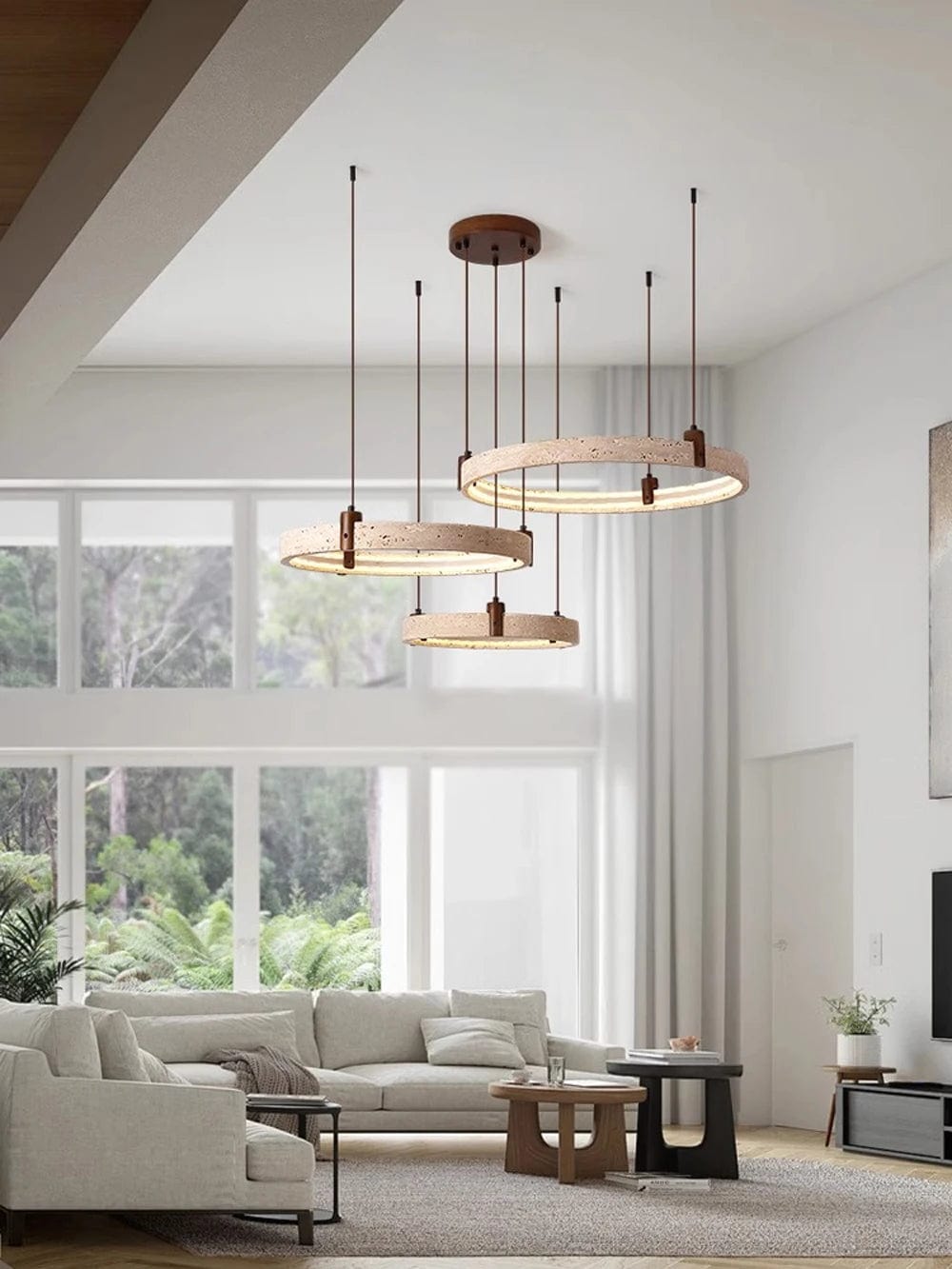
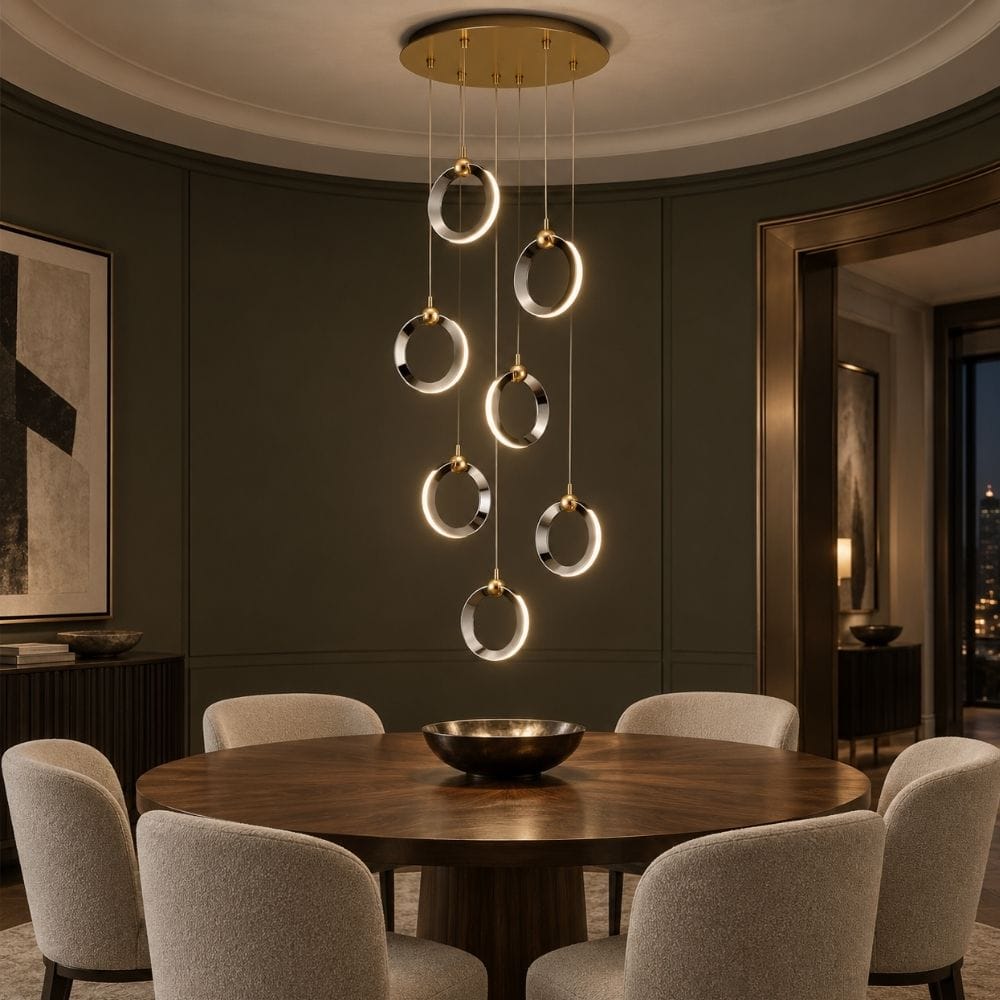
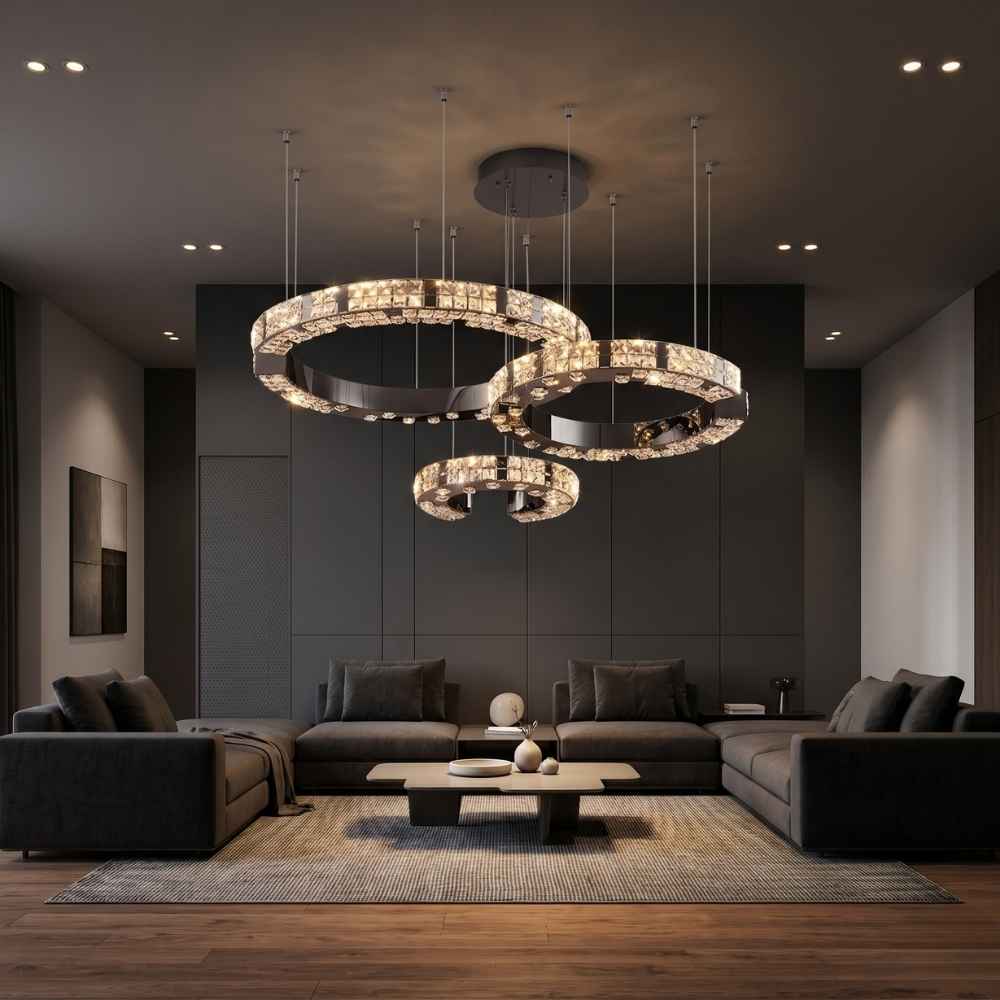
- 2-3 tiers: concentric or staggered — the versatile center of the range, scaling to most living and dining rooms
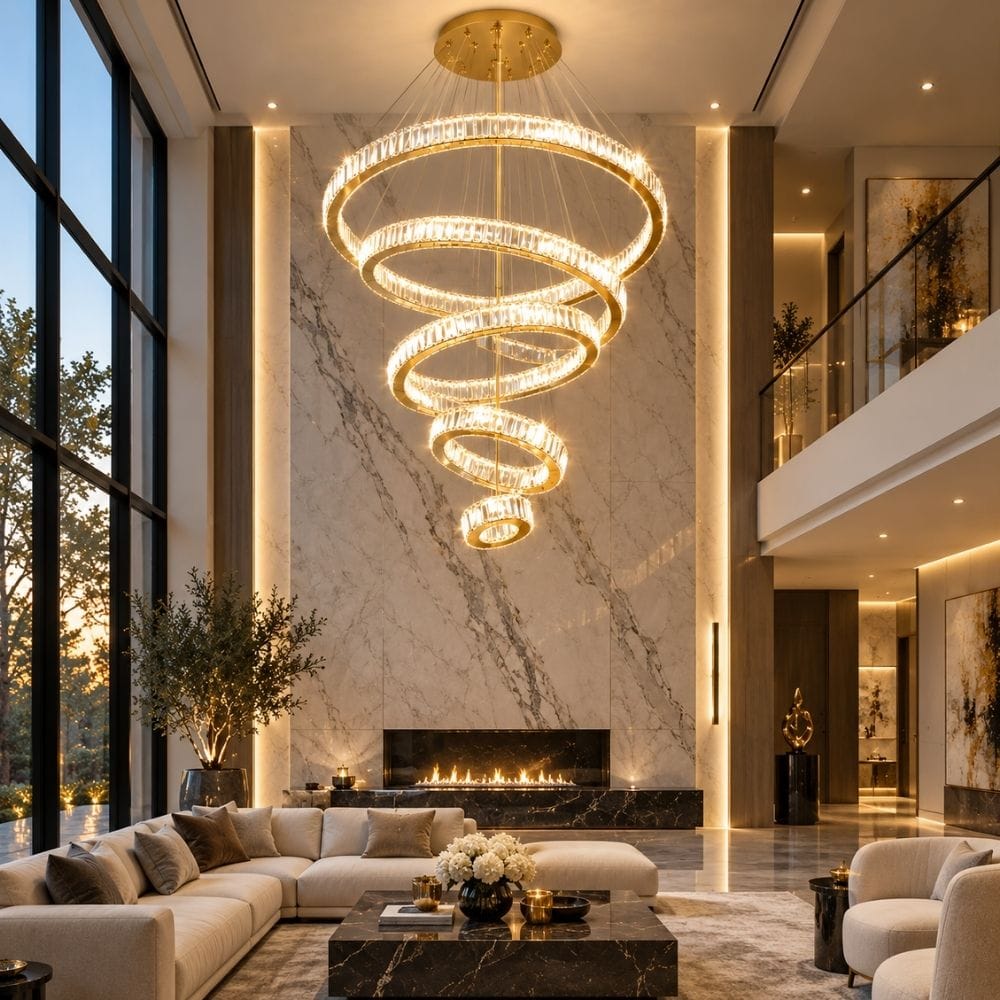
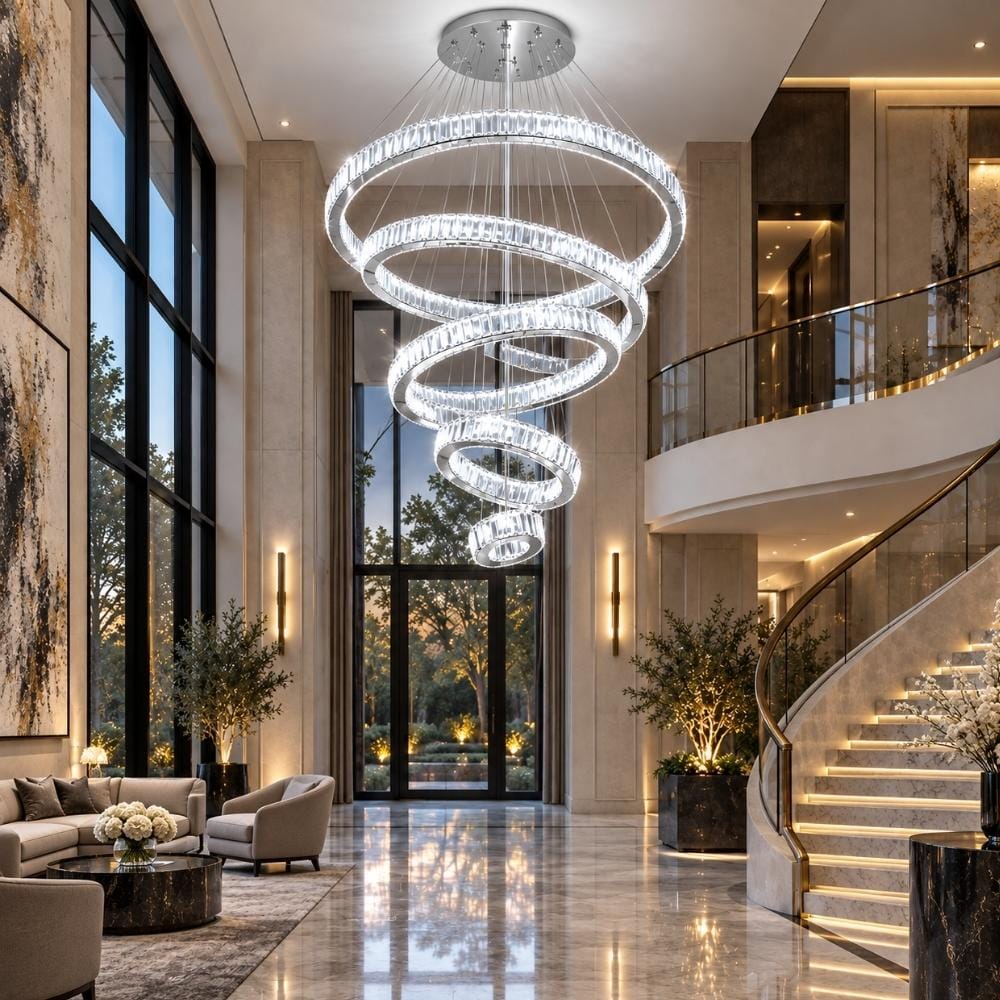
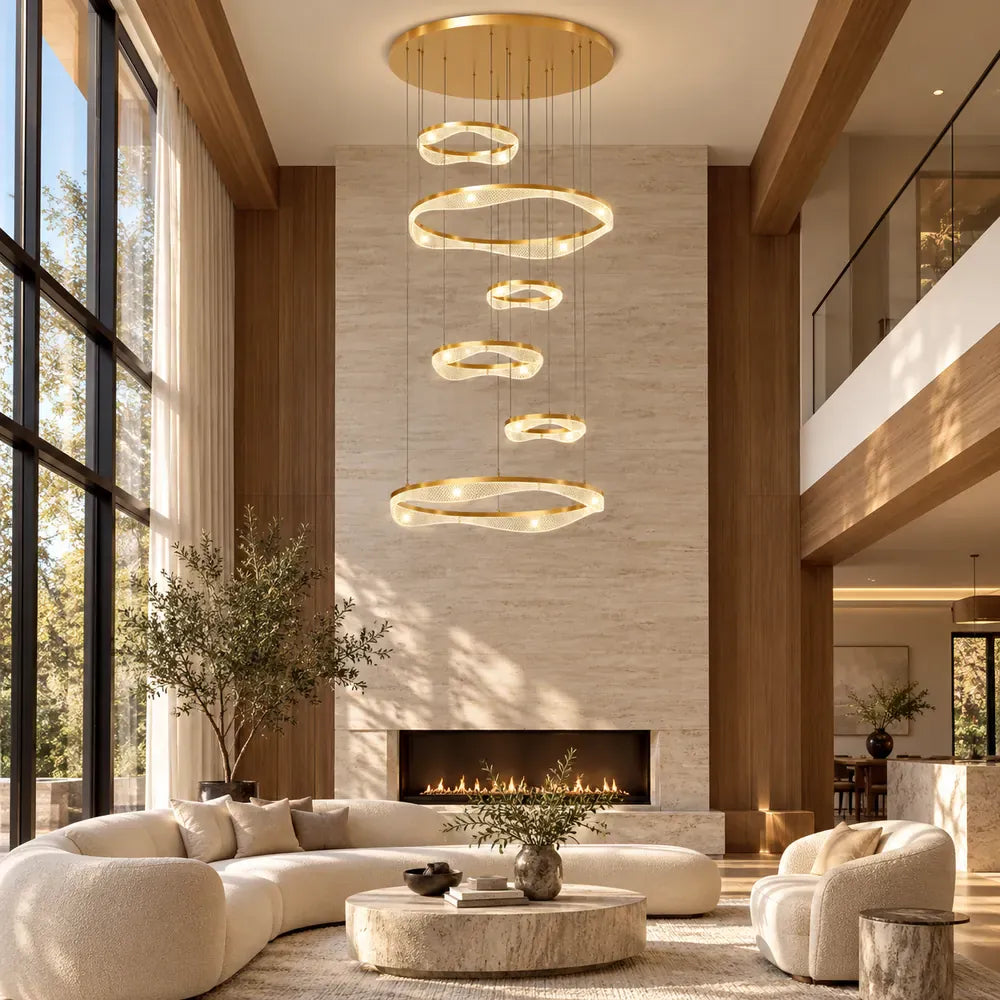
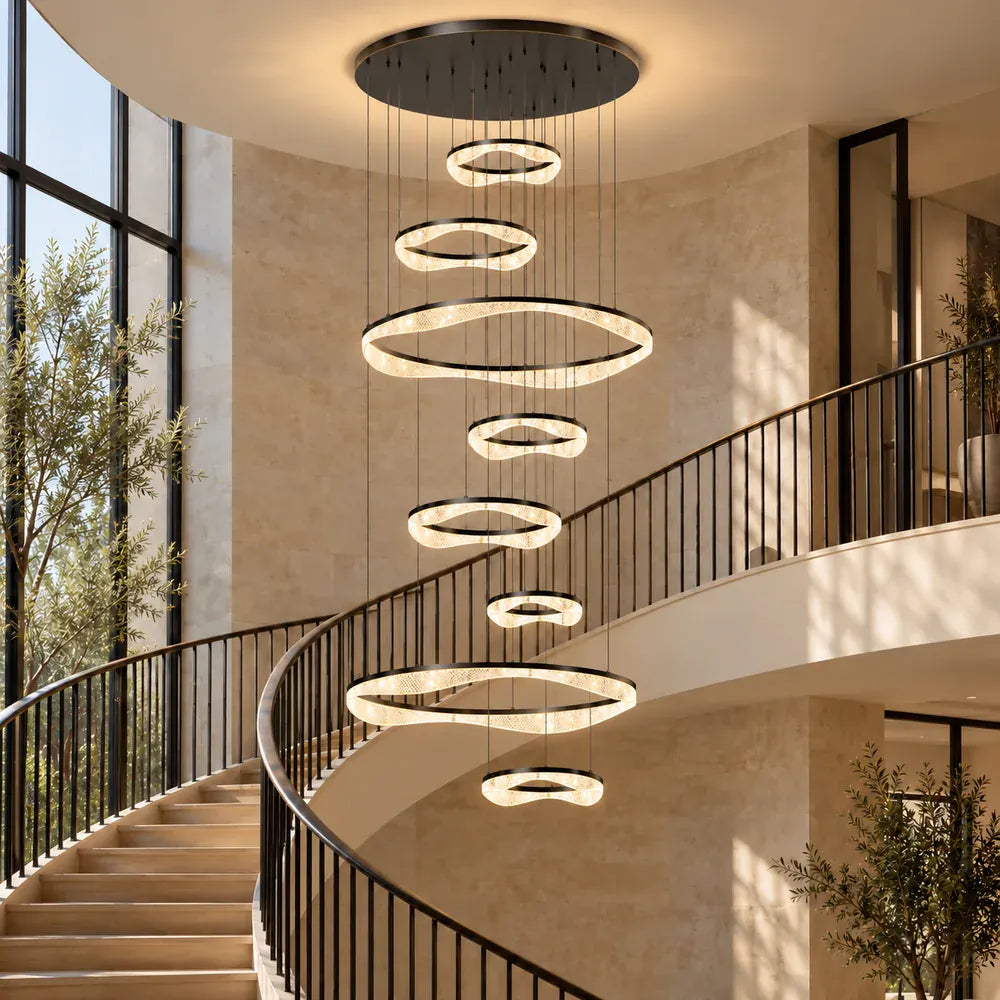
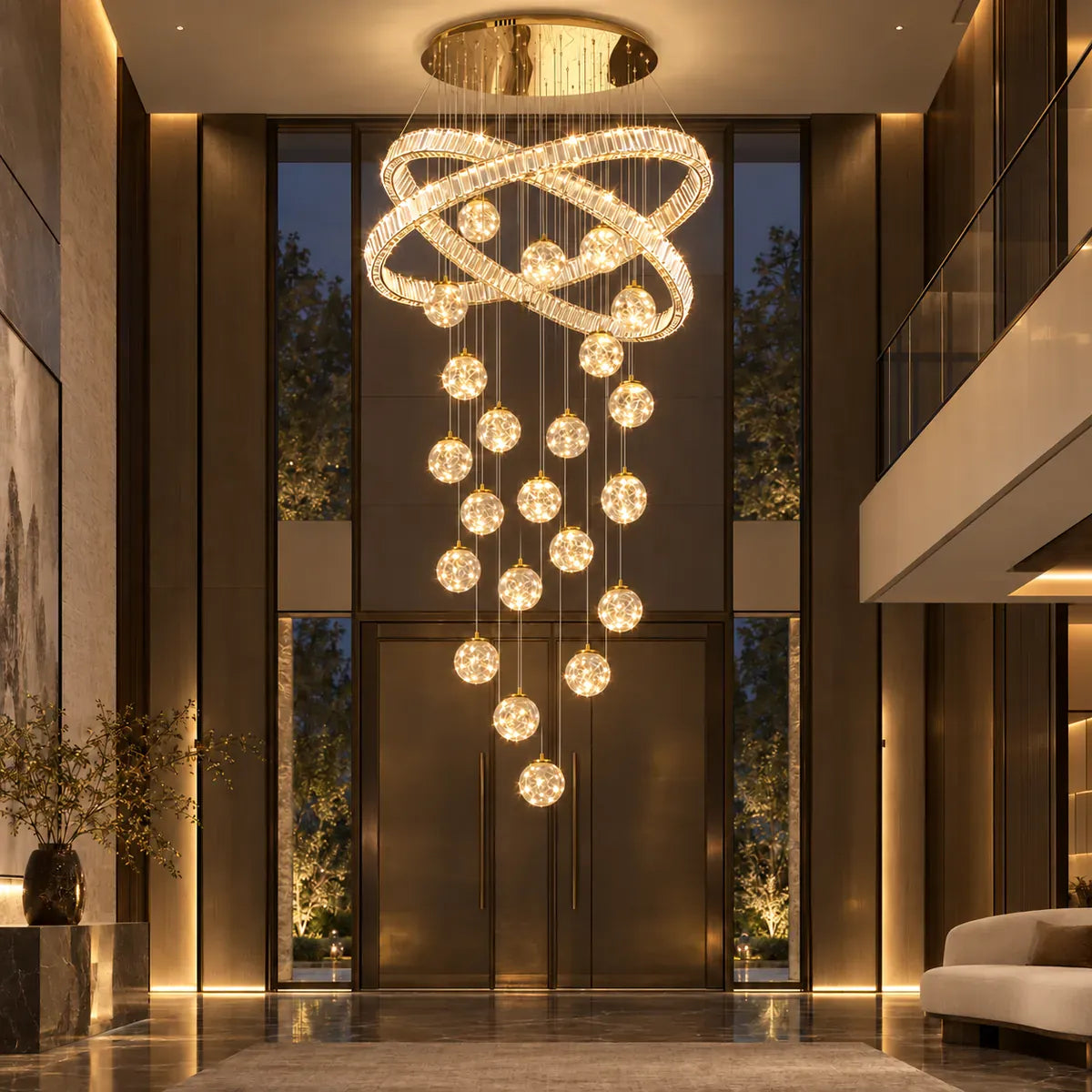
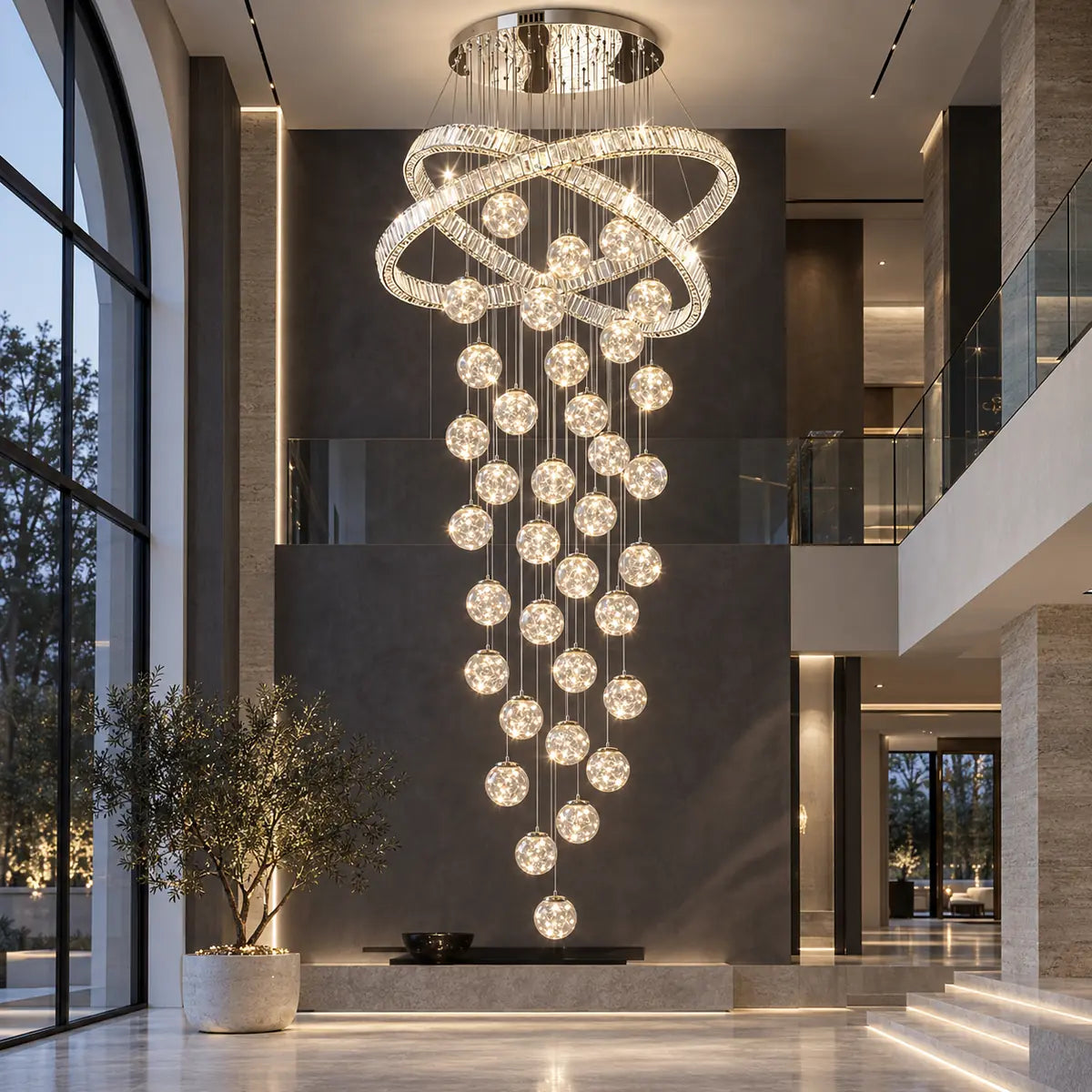
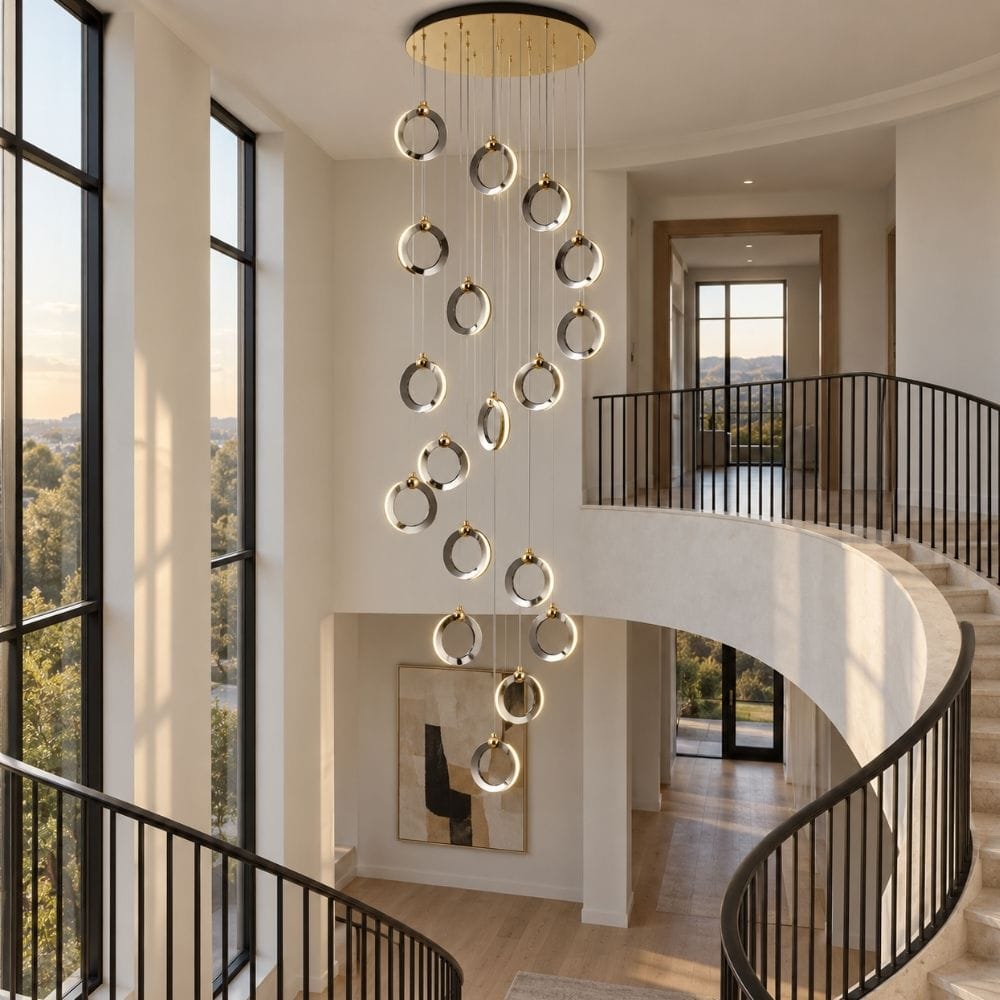
- 4-6+ tiers: cascading vertical compositions — statement scale for two-story spaces, stairwells, and great rooms
Choosing the count is its own decision — vertical drop, visual density, and room pairing count by count — walked through completely in our multi-ring chandelier buying guide.
Materials Beyond the Metal Ring
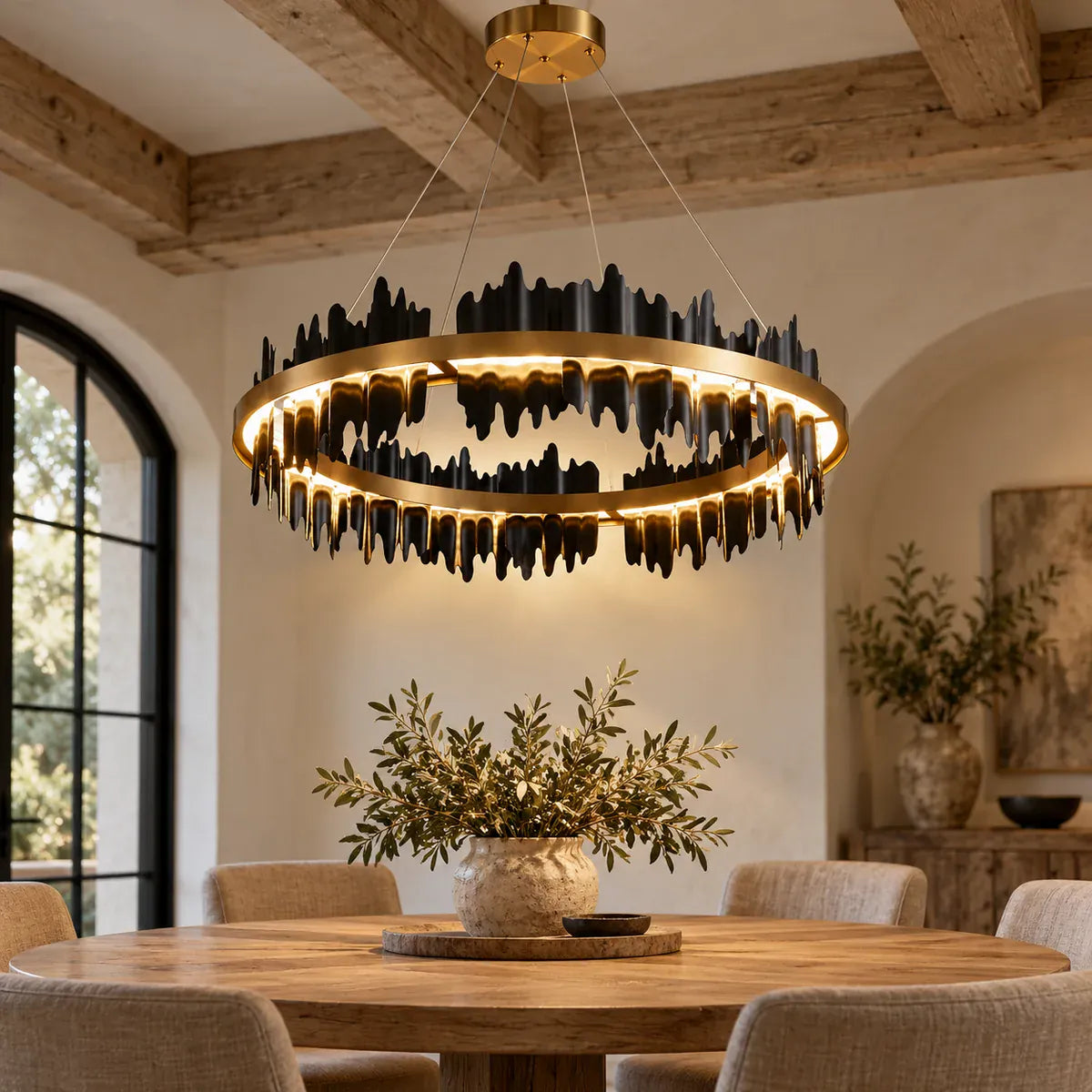
- Matte black: the graphic default — the hoop as drawn line, strongest against pale ceilings
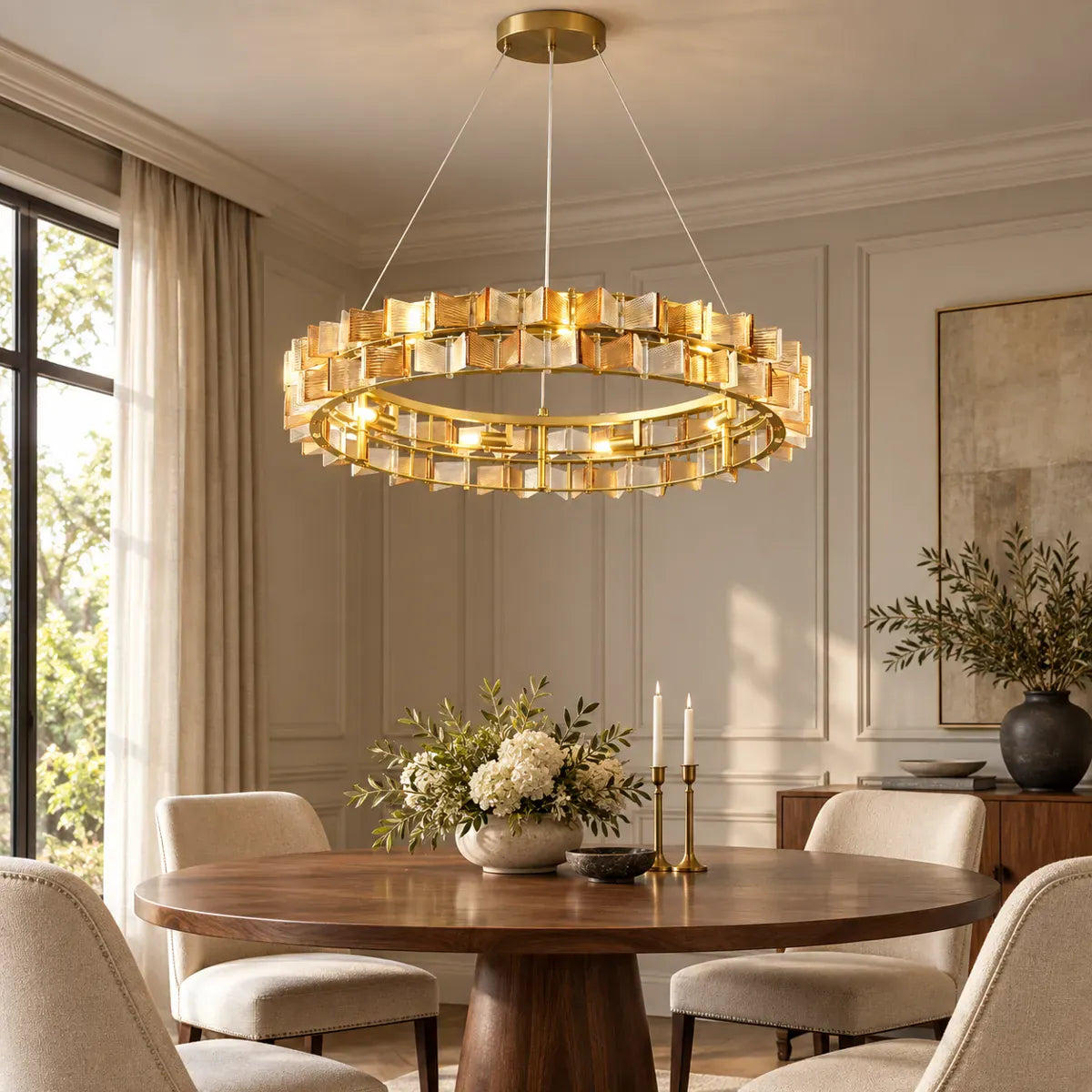
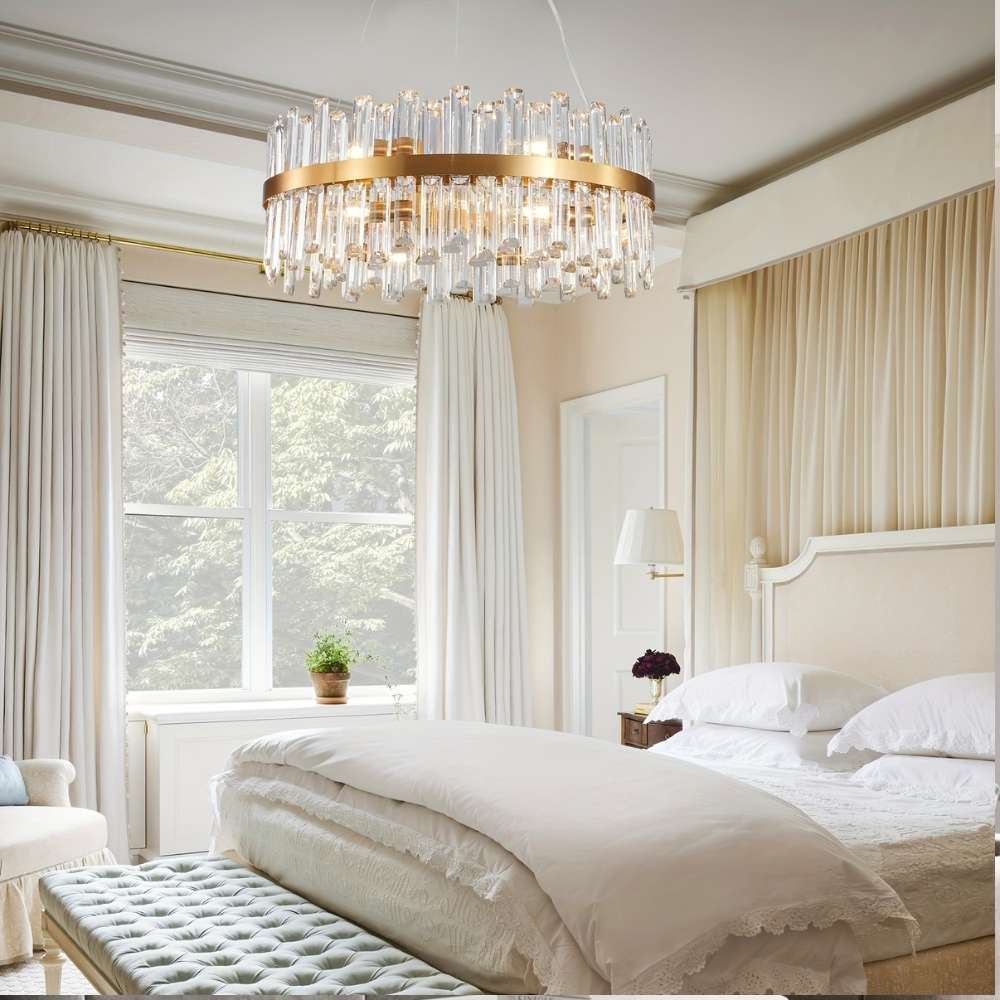
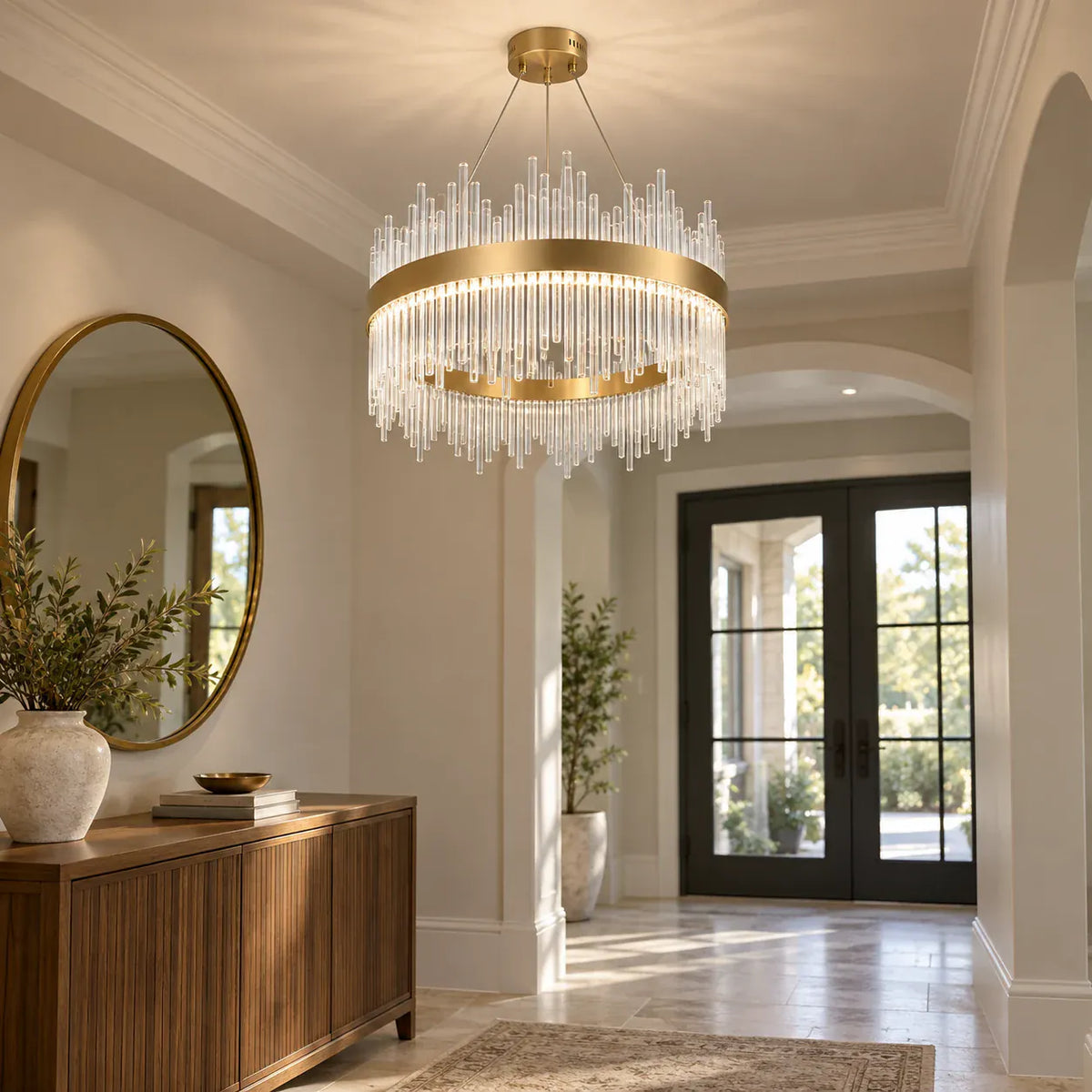
- Brass and gold: the warm luxury direction, softening the geometry for transitional rooms
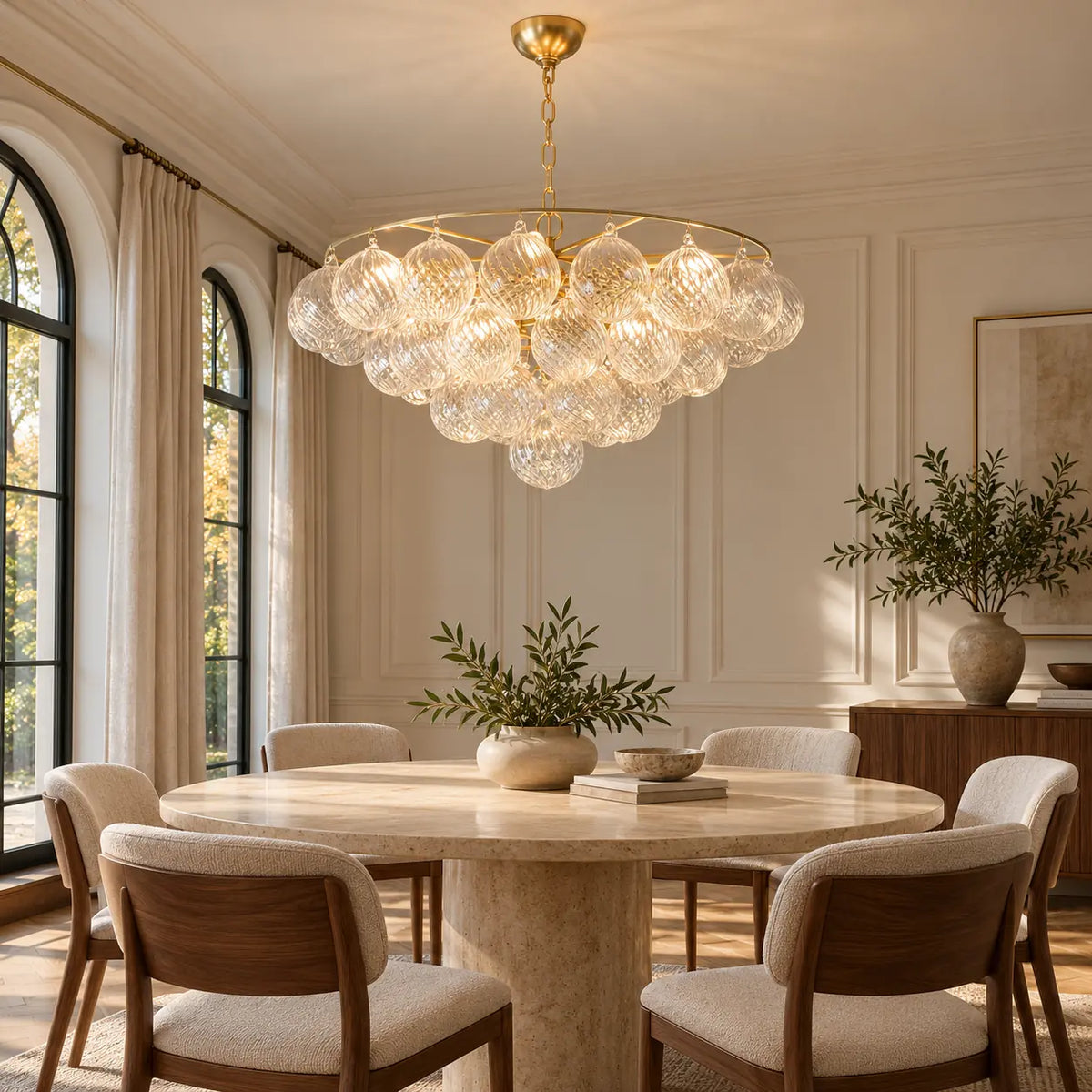
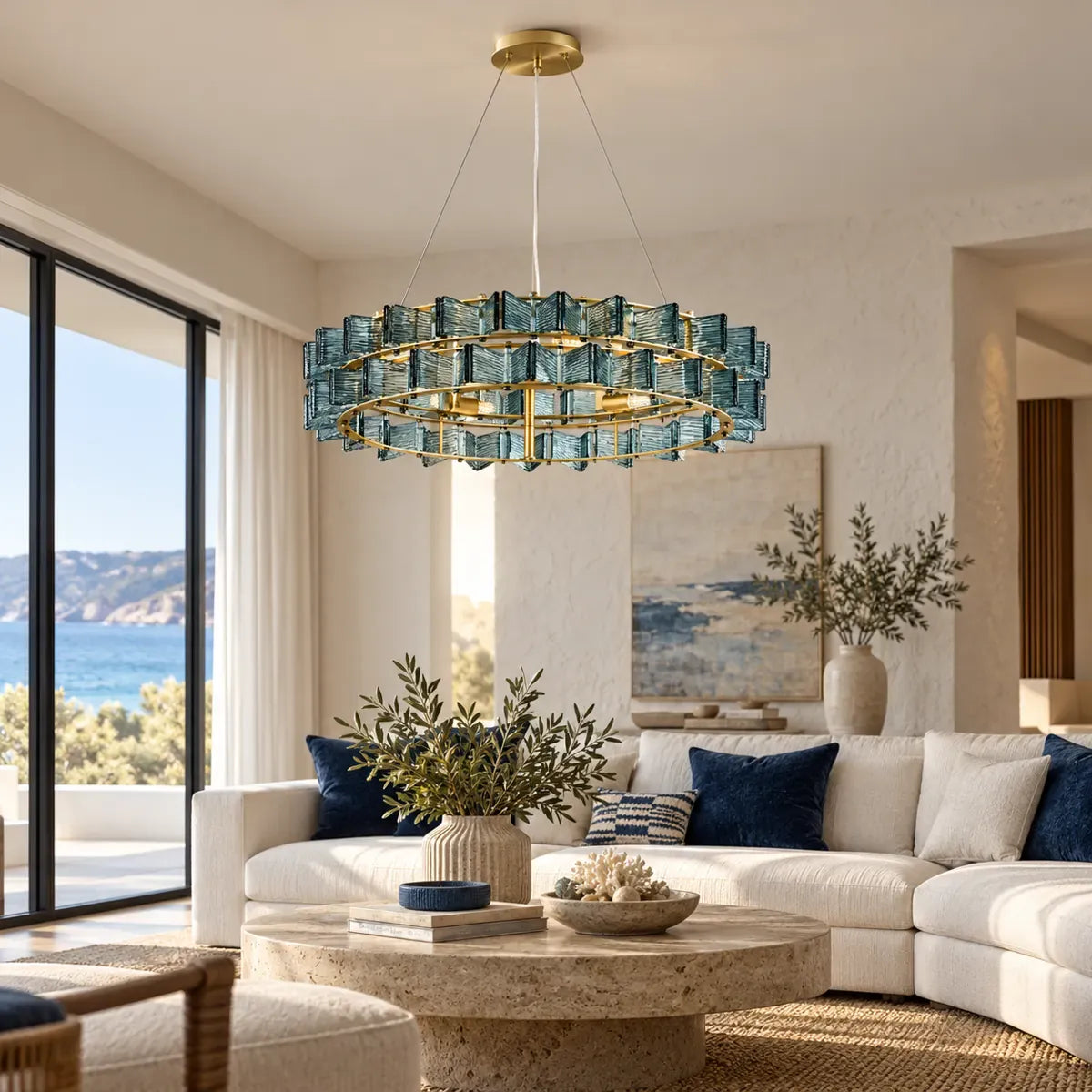
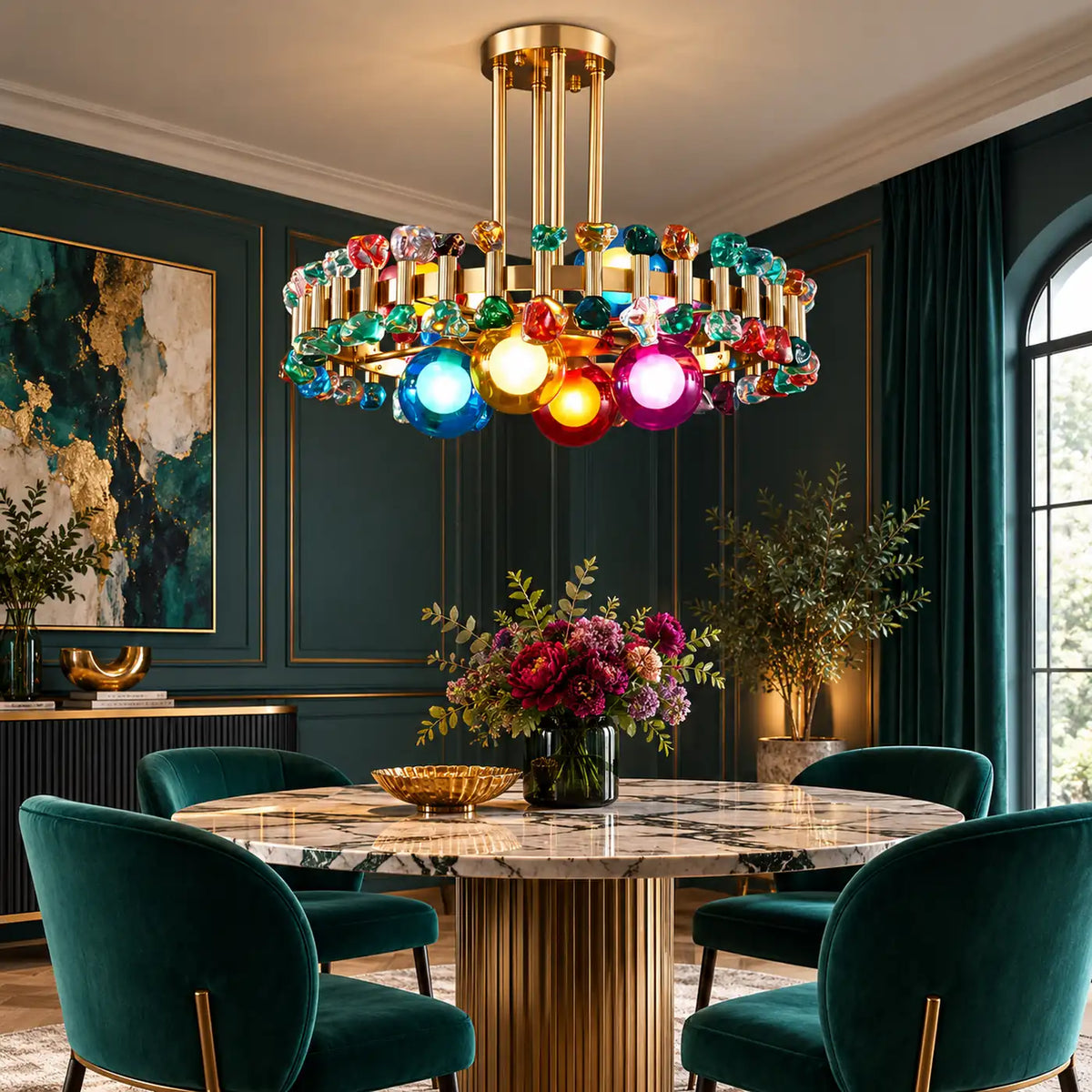
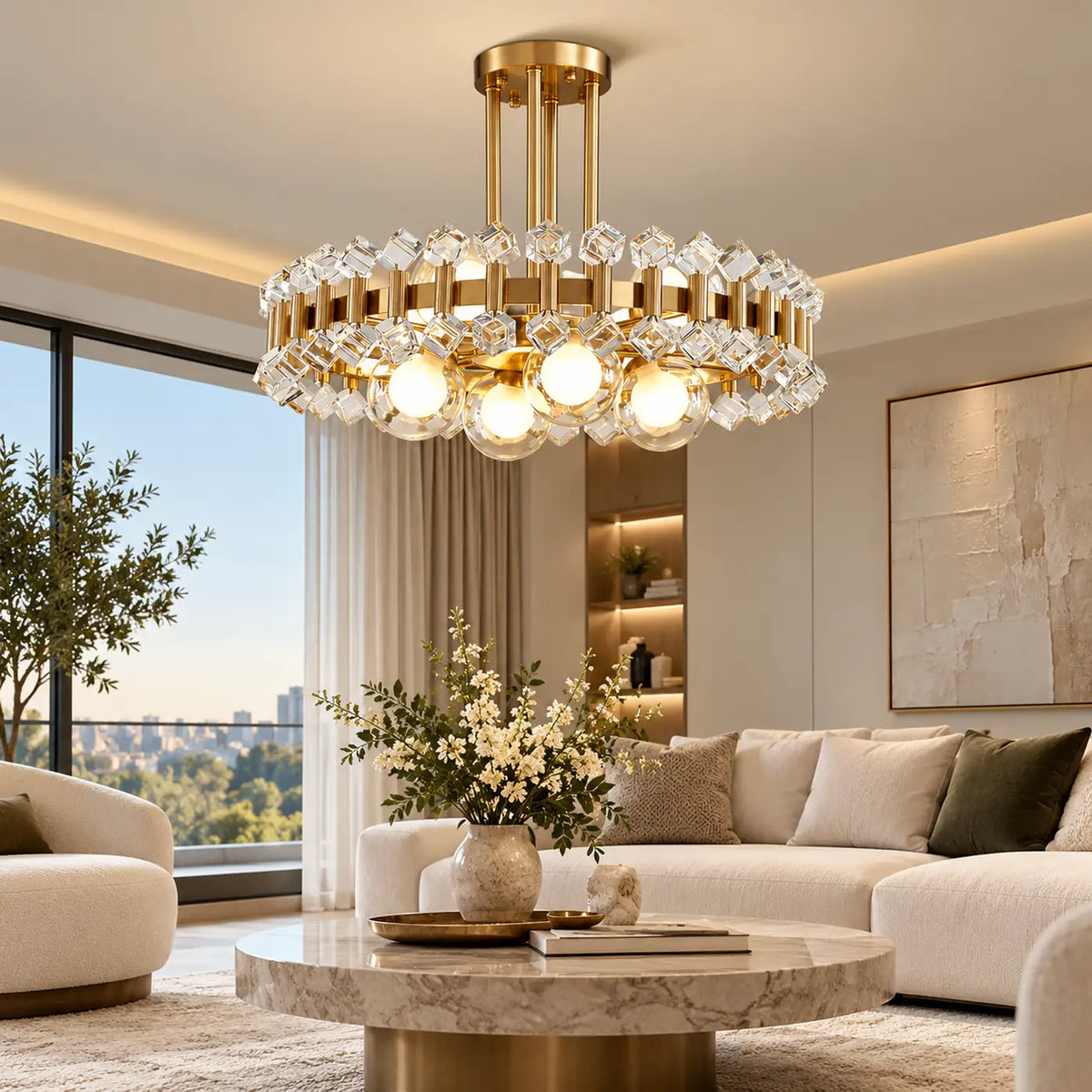
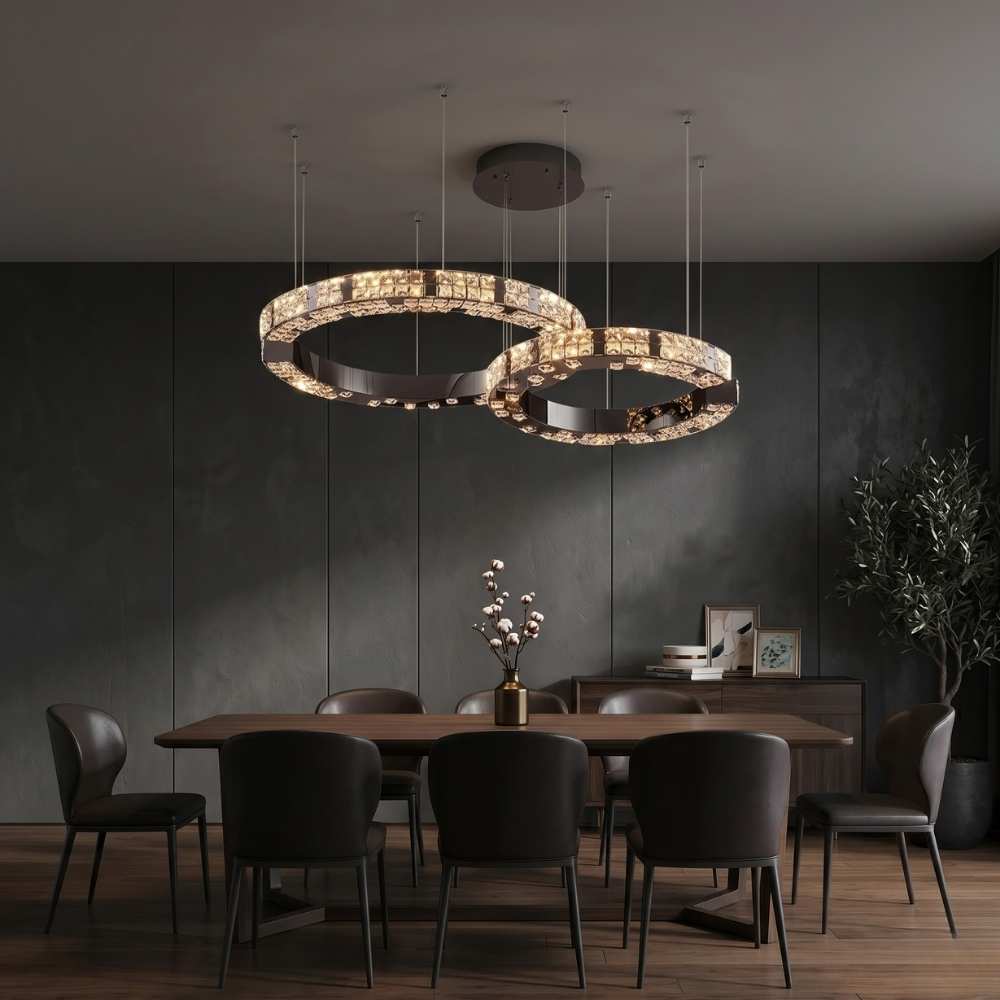
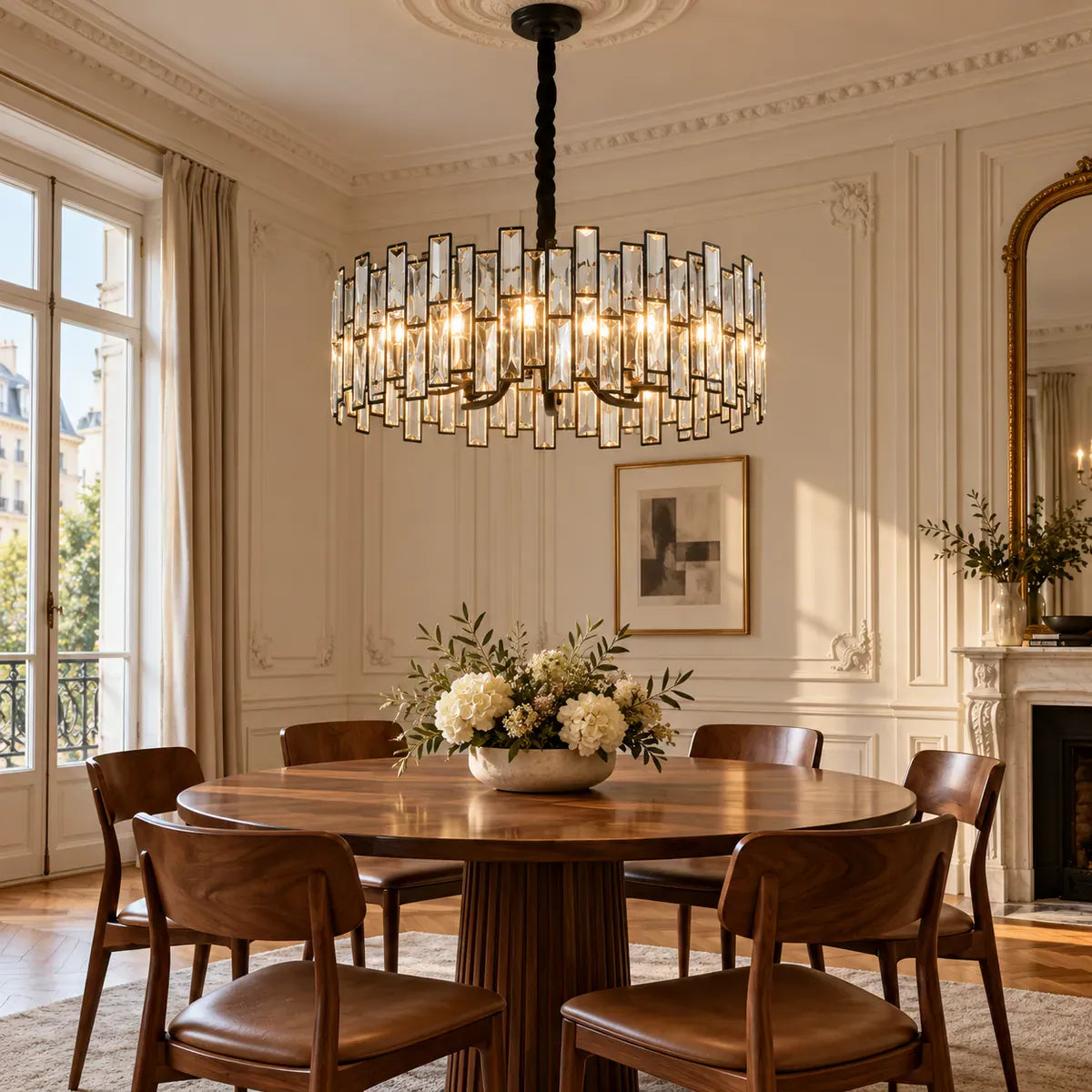
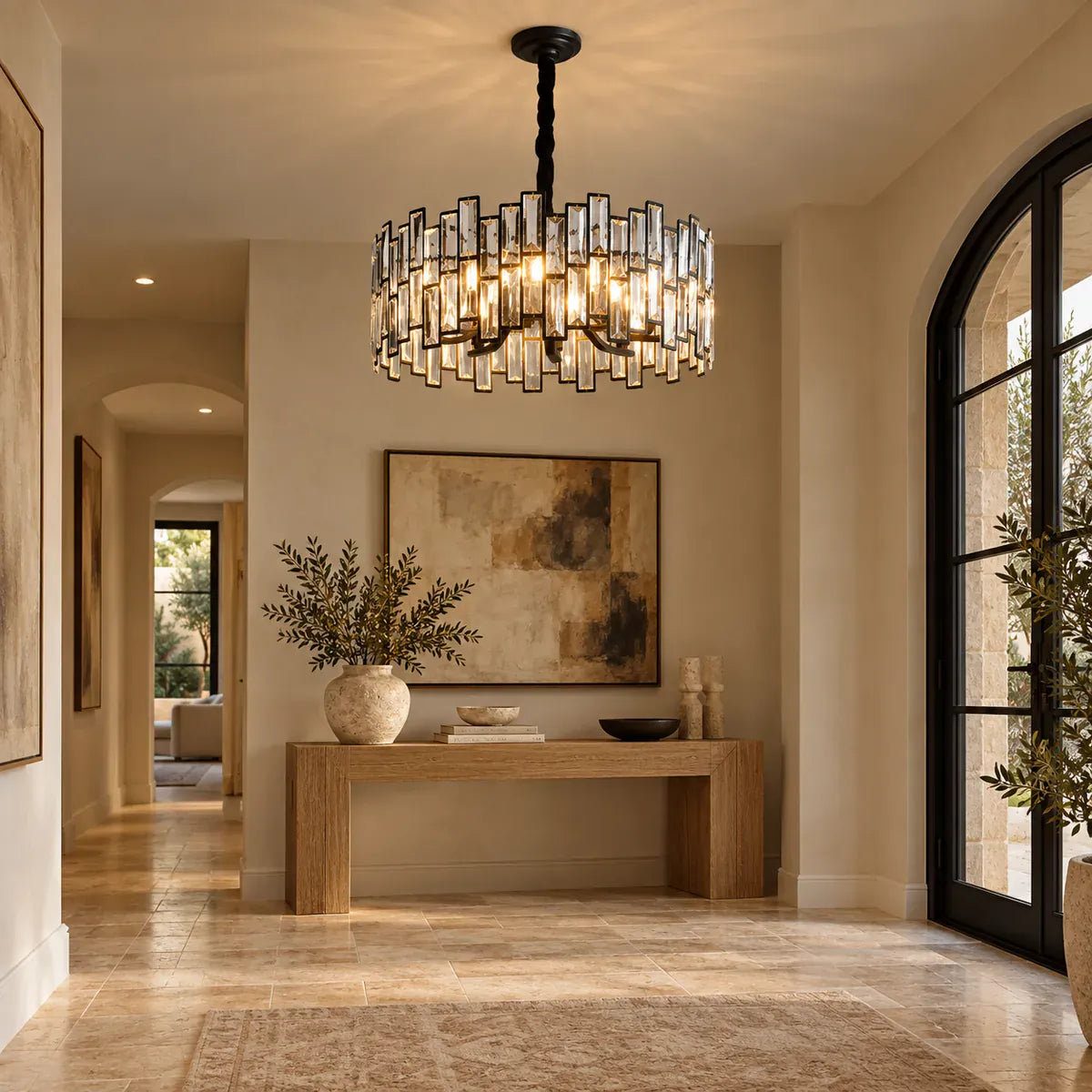
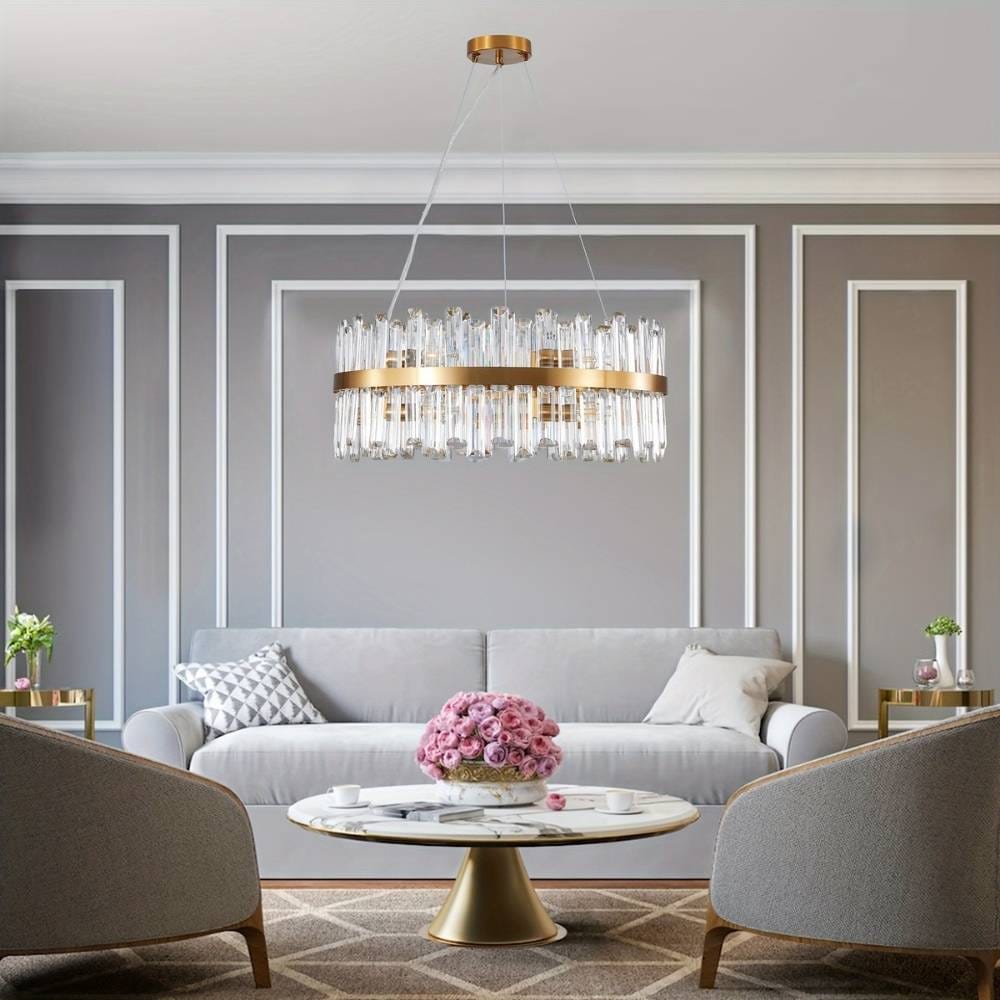
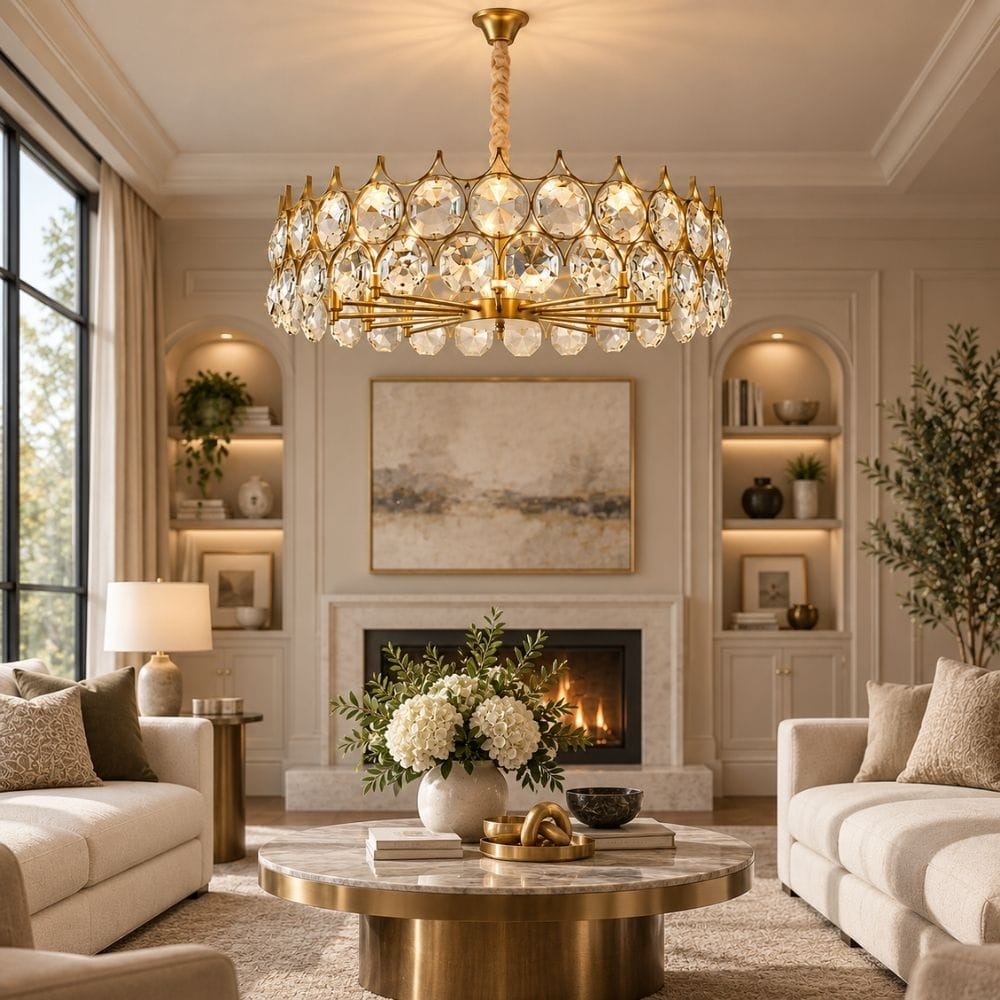
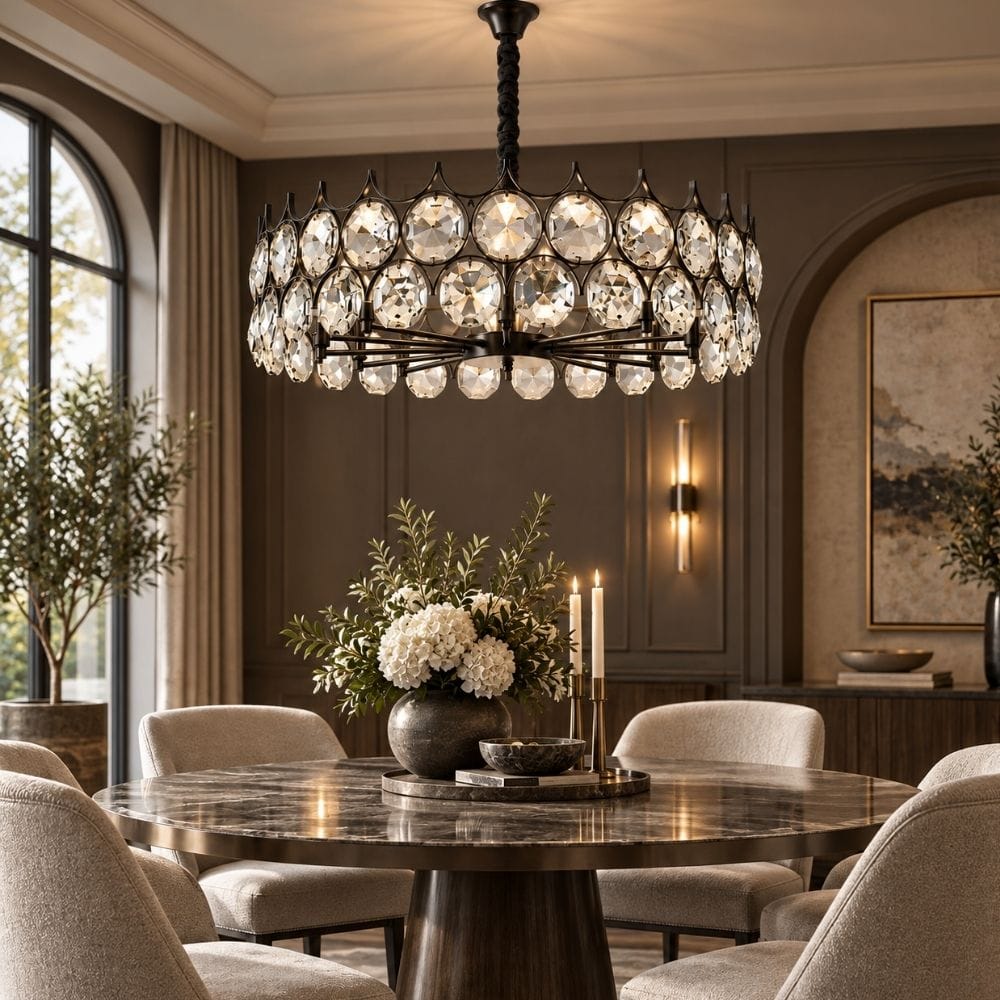
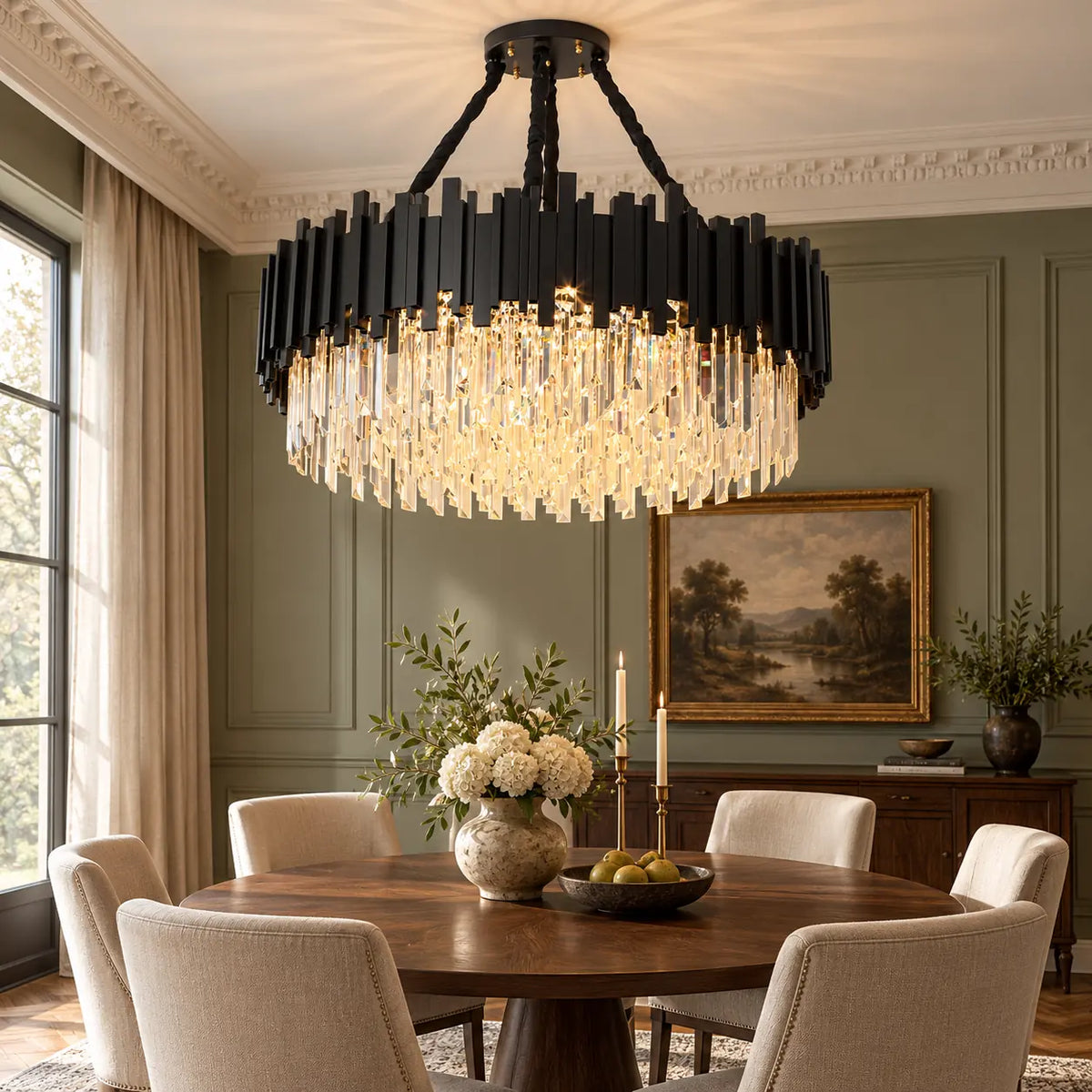
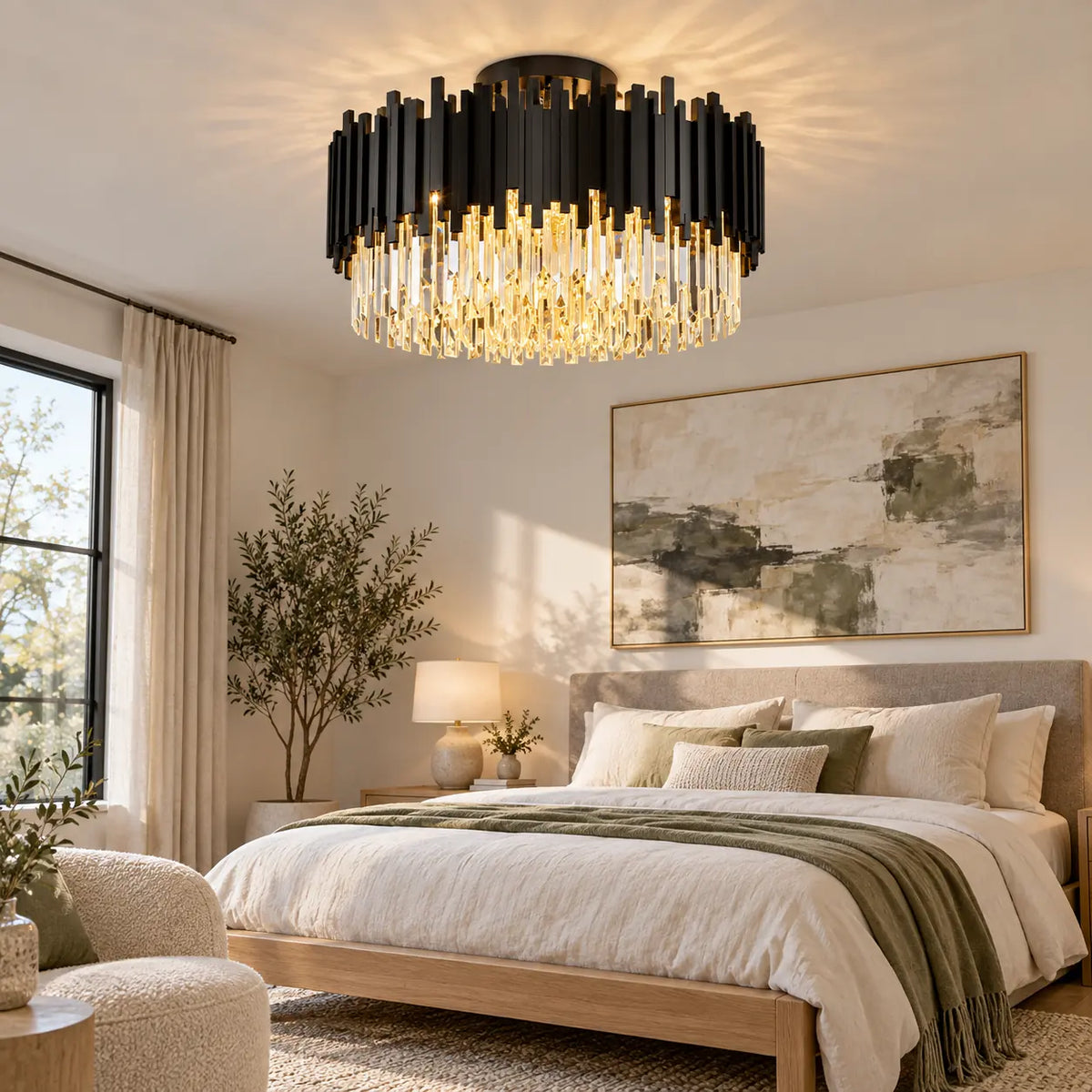
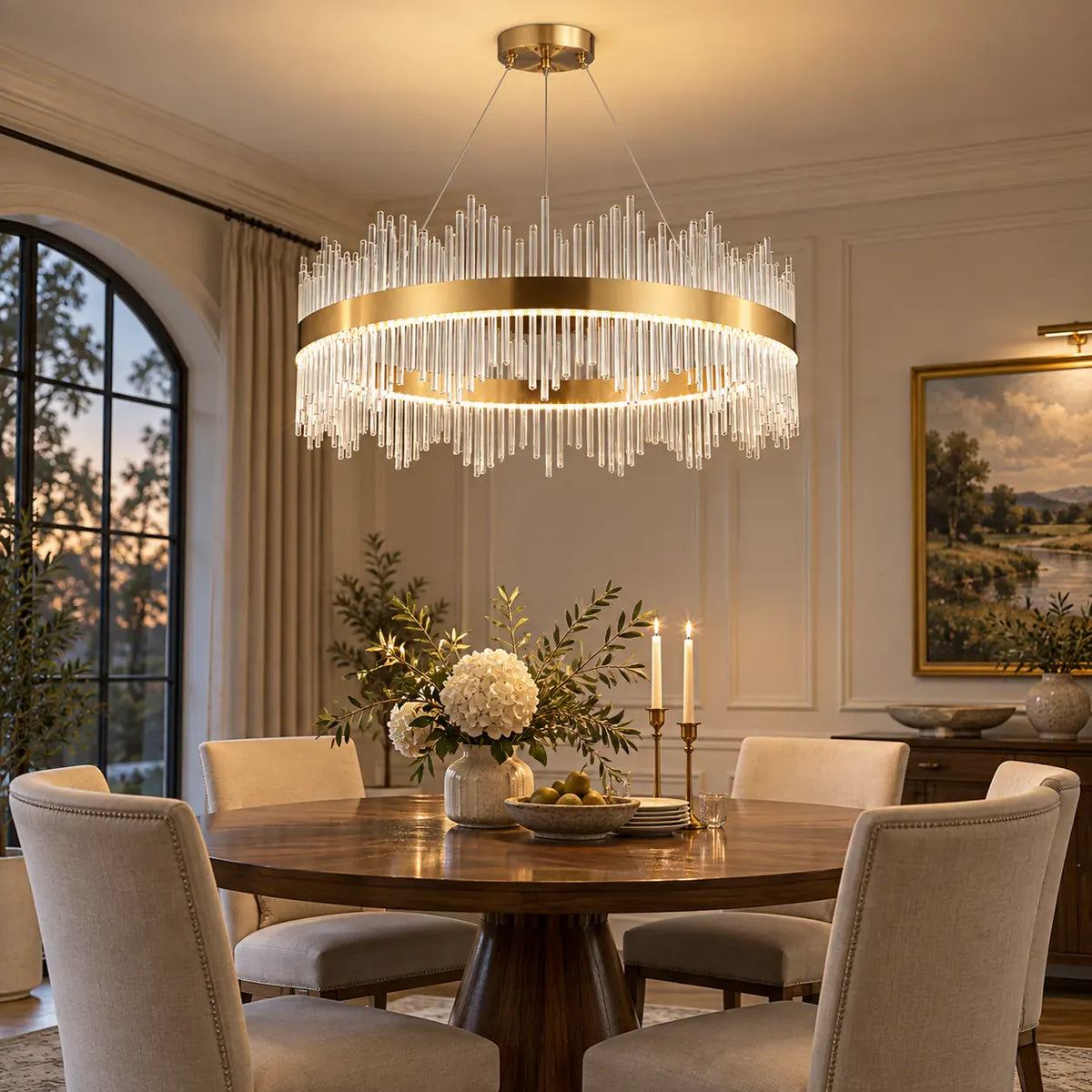
- Crystal-dressed: hoops carrying crystal drops or beads — geometry plus sparkle for dining rooms and formal spaces, from the wider crystal chandeliers collection family
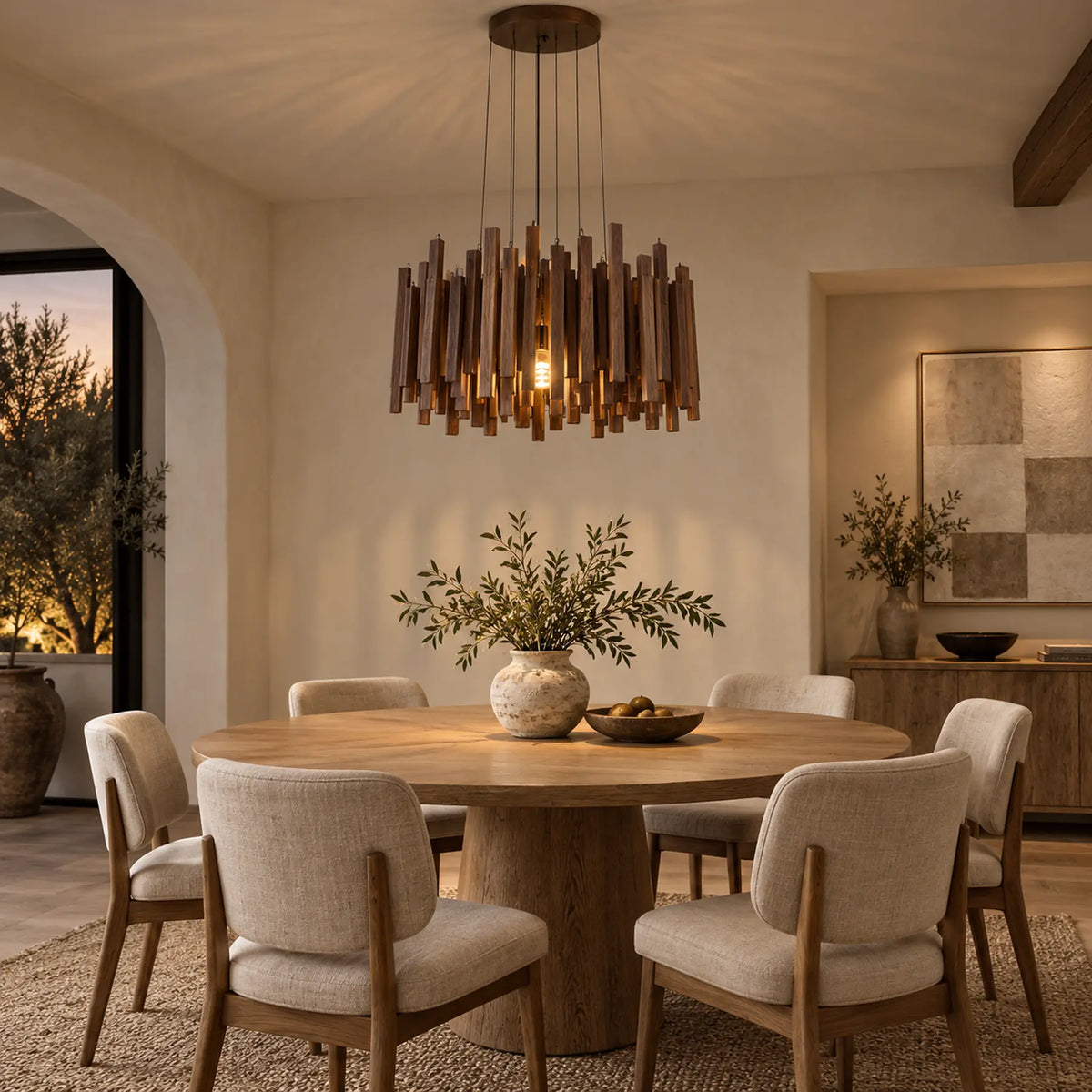
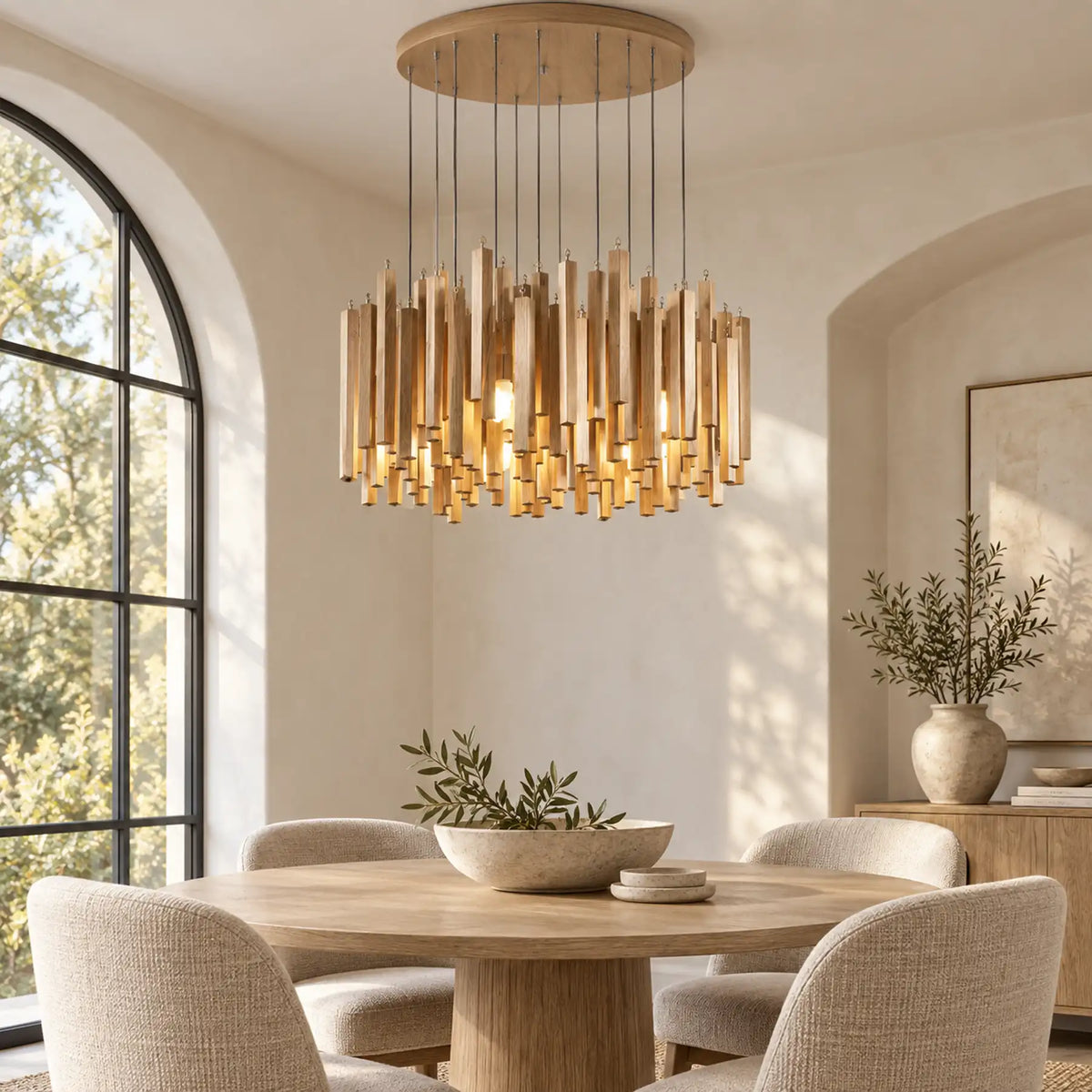
- Wood: the organic modern variant, pairing LED's precision with natural grain — see also the wood chandeliers collection
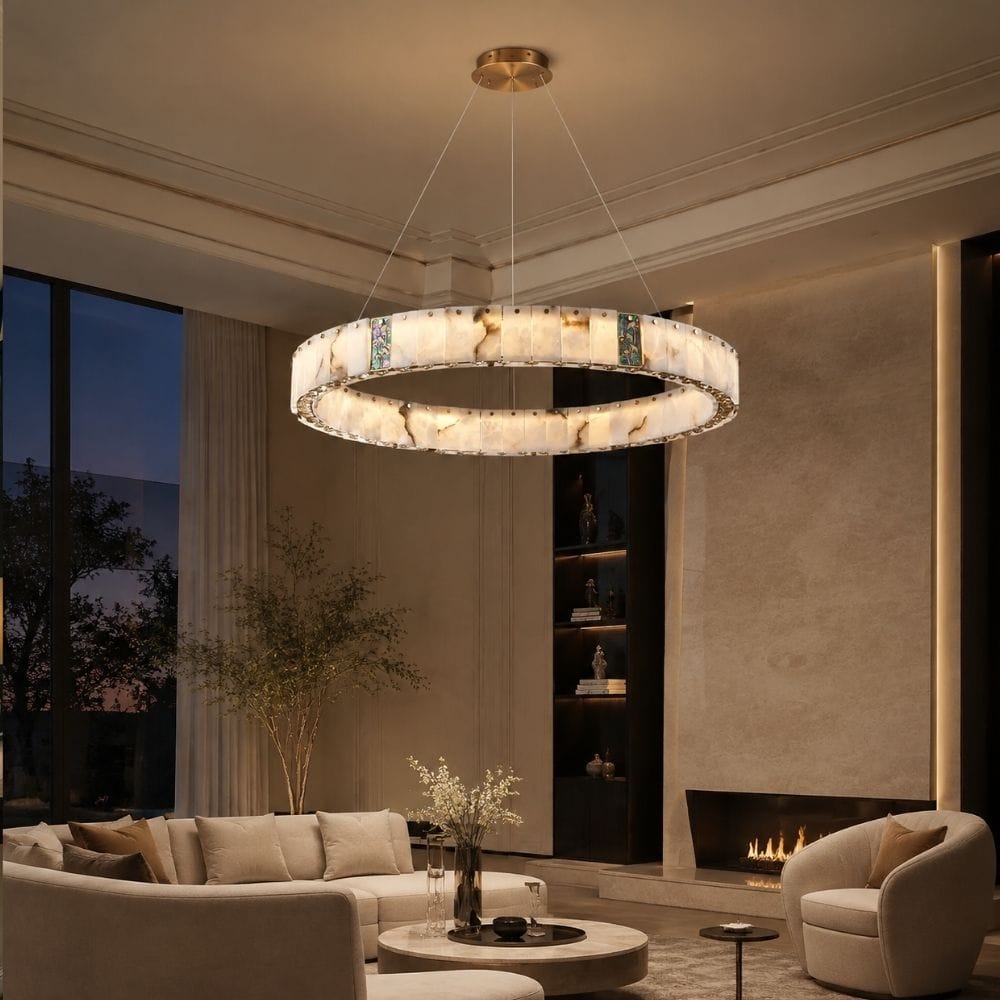
- Stone and textured finishes: the emerging luxury end, where the surface itself does the talking
Sizing and Placement by Room
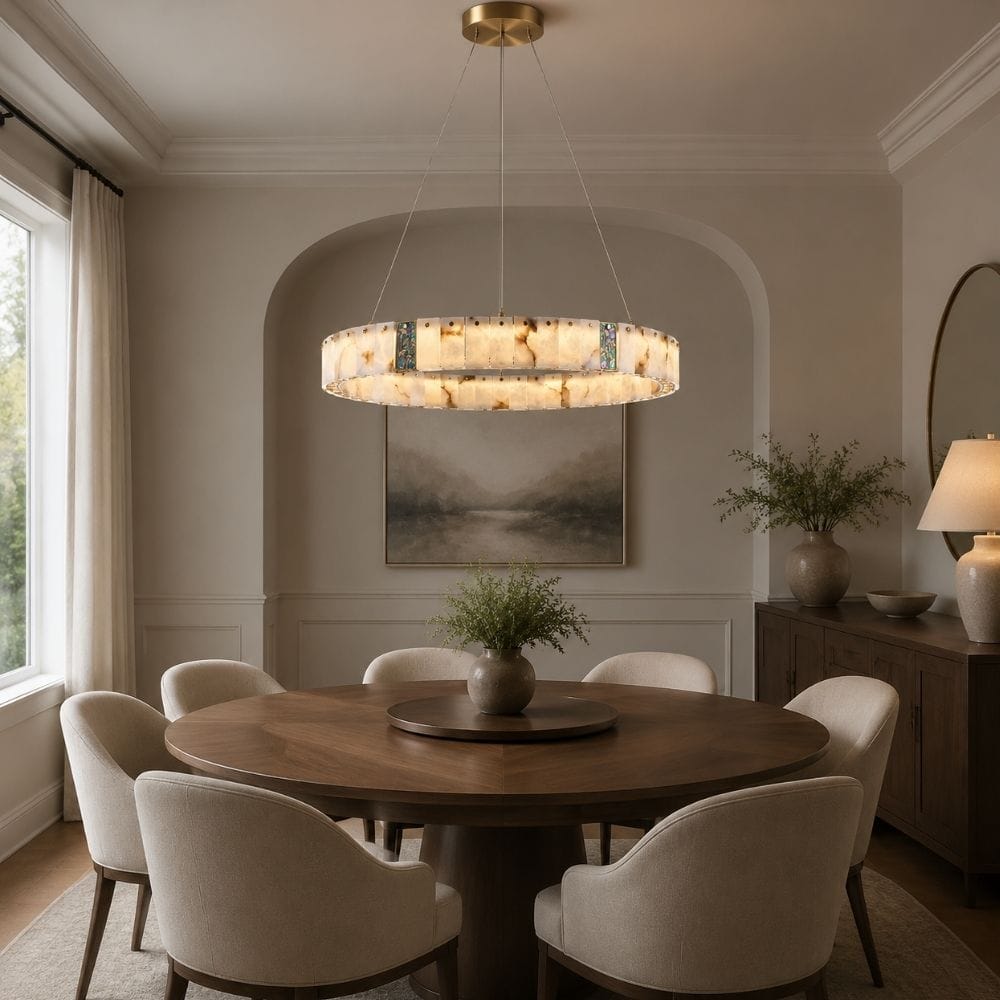
Sizing follows the standard formula — room length plus width in feet equals target diameter in inches — with one form-specific note: because the hoop is visually light, it forgives rounding up better than any other statement shape; when between sizes, take the larger. Over dining tables, size to one-half to two-thirds of the table's width at 30-36" (76-91 cm) above the top. Stacked cascades follow stairwell and two-story rules, keeping 84" (213 cm) of clearance in walking zones. The full numbers by room live in our chandelier size calculator.
Installation: Getting Rings Level
This form has one installation truth no spec sheet mentions: the form shows every degree of tilt. A traditional chandelier's complexity hides small imbalances; a floating circle telegraphs them across the room. Multi-point cable suspensions are adjustable for exactly this reason — level each hoop with a bubble level after hanging, working top-down on stacked designs, and re-check after the canopy is tightened. Some designs tilt their hoops intentionally; if yours hangs asymmetrically by design, set the tilt angles evenly instead. Beyond leveling, standard rules apply: fixtures over 50 lb (23 kg) need a reinforced junction box, and two-story cascades are professional installs.
Related Collections
Shoppers here most often cross-shop the modern chandeliers collection for the wider geometric range, linear chandeliers when a rectangular table calls for the straight-line equivalent, and staircase chandeliers for cascading stacked drops at two-story scale.
Frequently Asked Questions
What is a ring chandelier?
A fixture whose body is one or more open circles of continuous LED light — hollow geometry the eye passes through, glowing evenly along the full circumference with no visible bulbs. Halo, circle, and circular chandelier are common names for the same family.
Are ring chandeliers always LED?
True continuous-glow rings are — the unbroken circle of light is only possible with an LED strip inside a diffused channel. Check color temperature (2700-3000K for living spaces), dimming protocol, and rated lifespan before buying.
How many rings should I choose?
Single rings suit bedrooms and minimalist rooms; 2-3 ring designs scale to most living and dining spaces; 4-6+ ring cascades belong in two-story volumes. Our multi-ring buying guide covers the decision count by count.
What size ring chandelier for my room?
Room length plus width in feet equals target diameter in inches — and because the ring is visually weightless, round up when between sizes. Over a dining table: one-half to two-thirds of the table's width, hung 30-36" above.
Can the LED be replaced in a ring chandelier?
The strip itself is built into the form, but drivers — the component most likely to fail first — are serviceable on well-made designs. Check the listing for driver access and warranty term.
Why does my ring chandelier look crooked?
The form shows every degree of tilt. Level each ring with a bubble level using the adjustable cable points, working top-down on stacks, and re-check after tightening the canopy.