

High Ceiling Chandeliers for Better Vertical Scale and a More Complete Tall-Room Look
High ceiling chandeliers are a strong choice for shoppers who want a room with extra ceiling height to feel balanced, intentional, and visually complete from top to bottom. This category is built for spaces where standard chandeliers often feel too compact, too close to the ceiling, or too visually quiet once installed. If you want to compare the broader family first, you can begin with our full Chandeliers collection, then narrow your options here once your priority is a taller room that needs more chandelier presence.
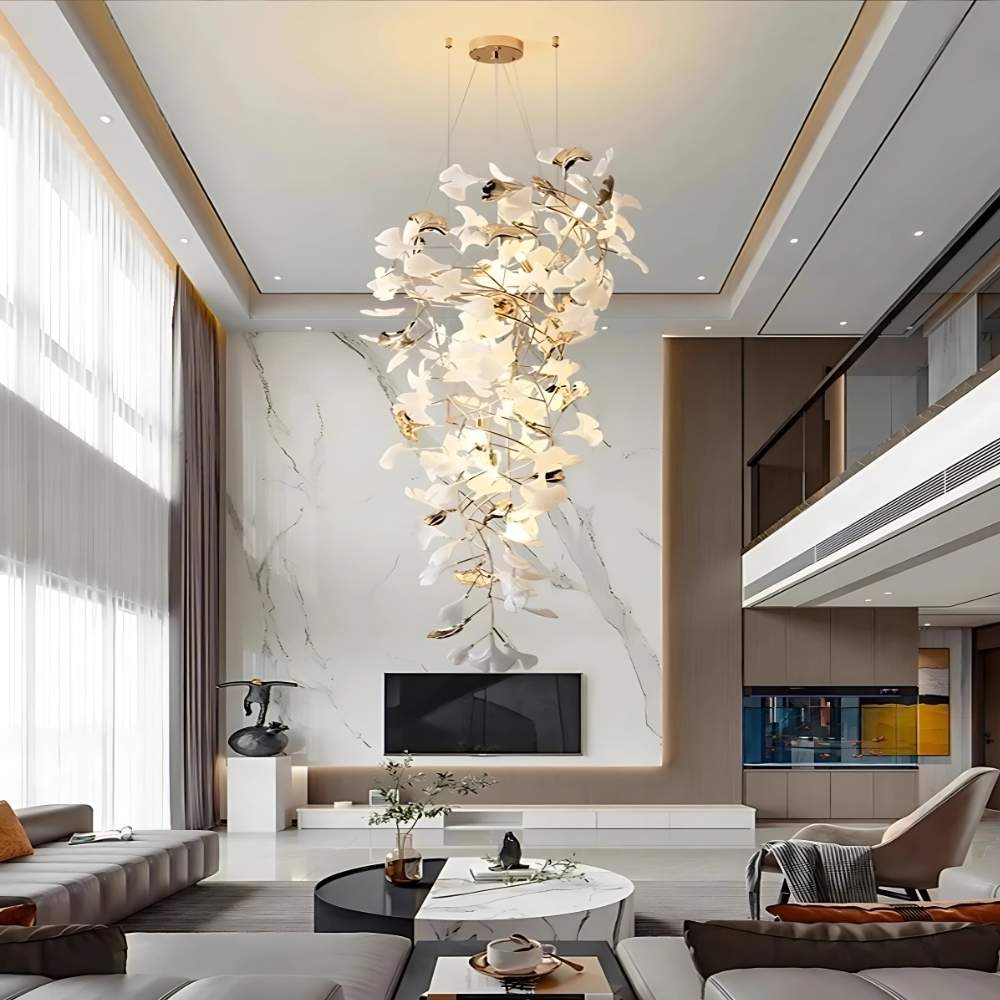
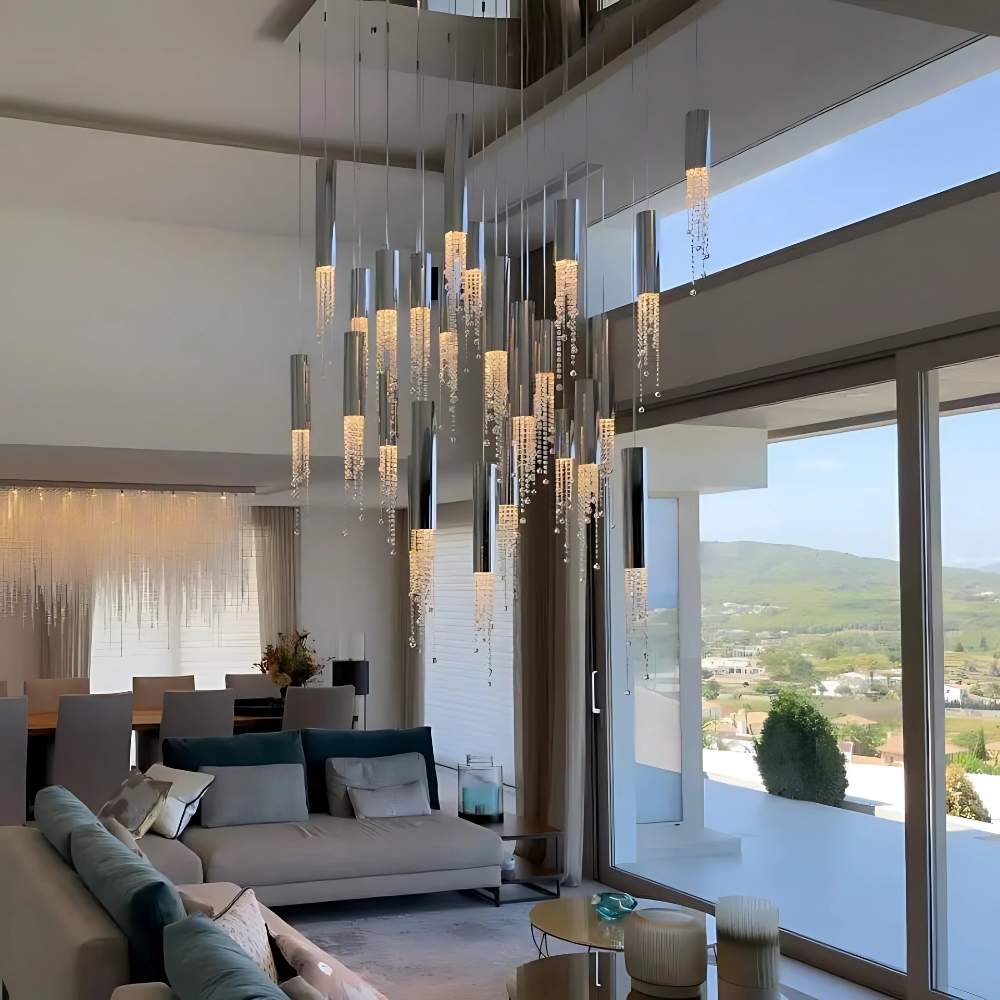
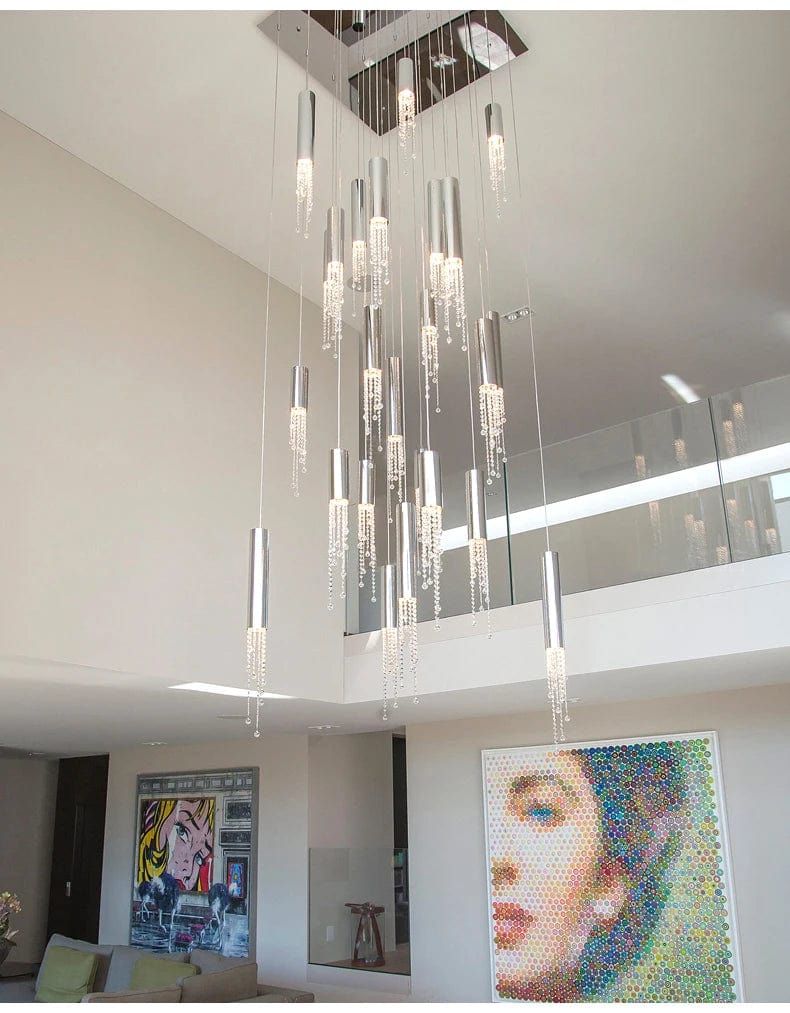
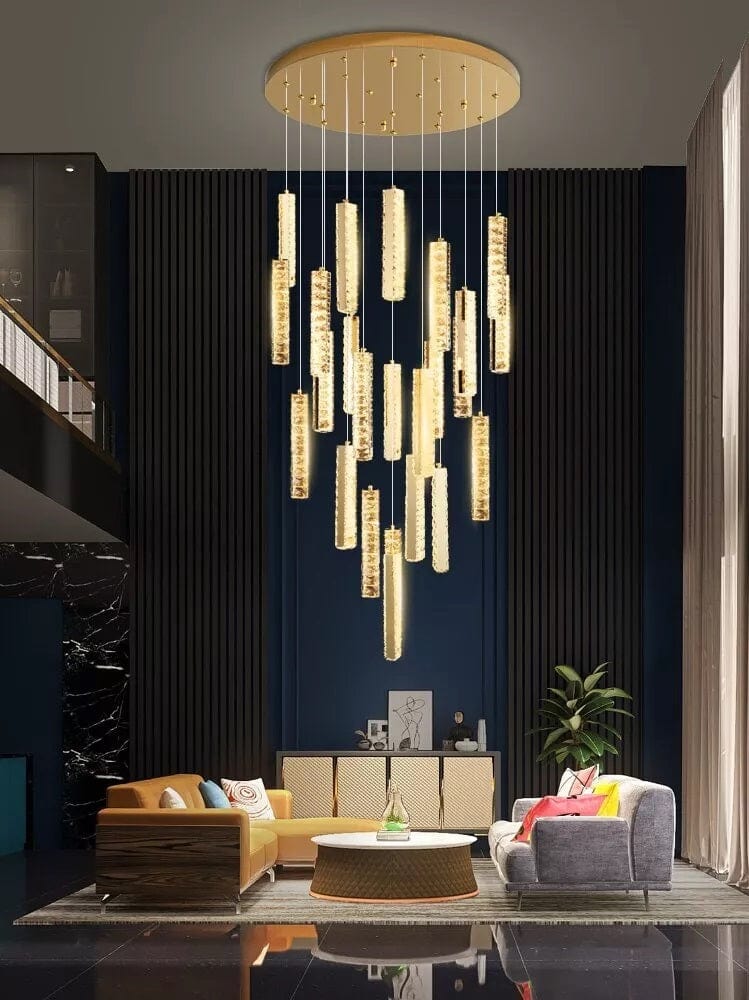
One of the biggest differences in a high-ceiling room is that the fixture has to do more work visually. In a standard room, a chandelier can still feel connected to the furniture and the people below even with a shorter drop. In a tall room, that same fixture can feel disconnected or undersized if it does not carry enough height, width, or visual rhythm. That is why this category focuses on chandeliers that help fill vertical space and create a stronger relationship between the ceiling line and the room below.
What Makes a Chandelier Right for a High Ceiling?
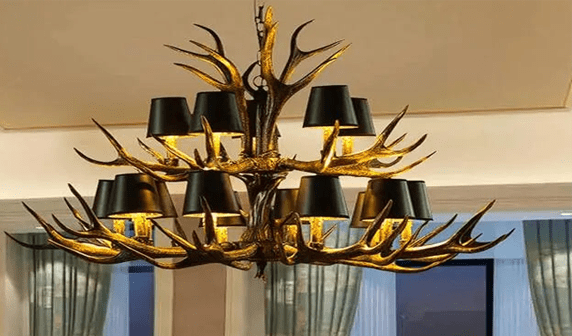
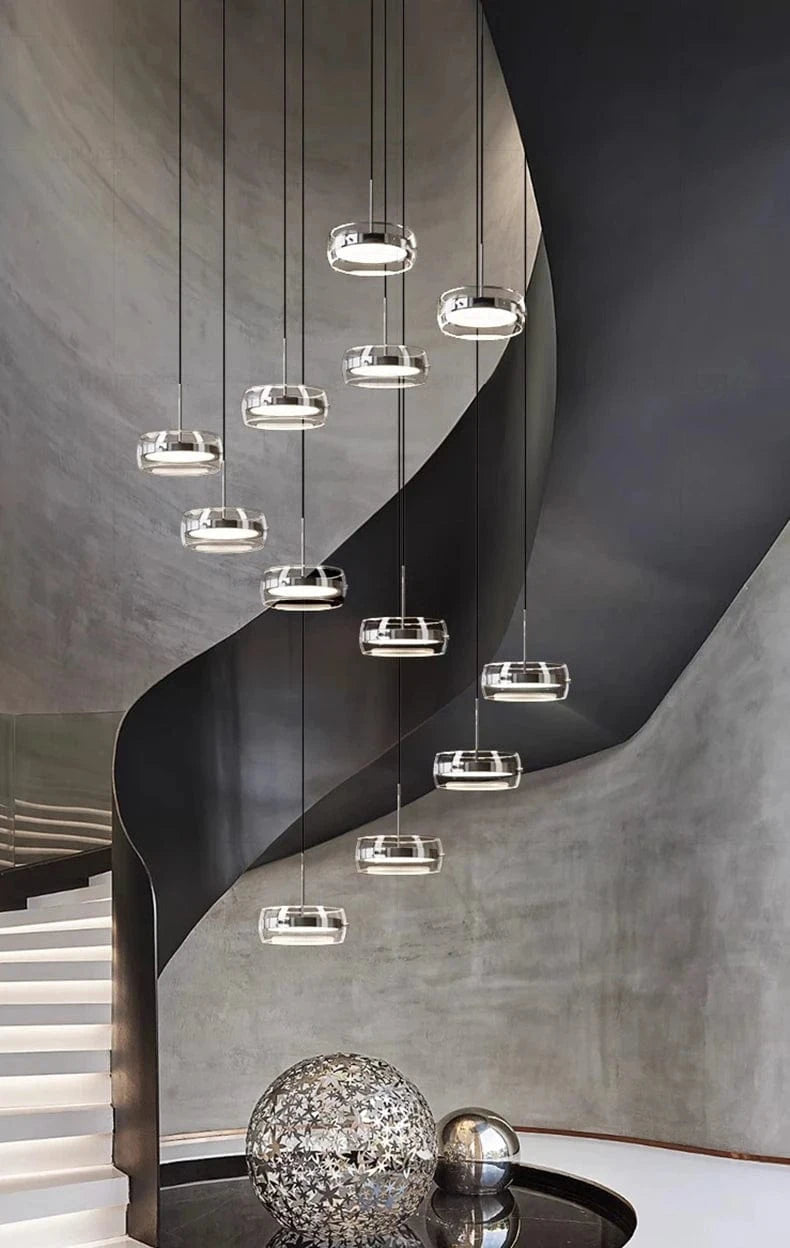
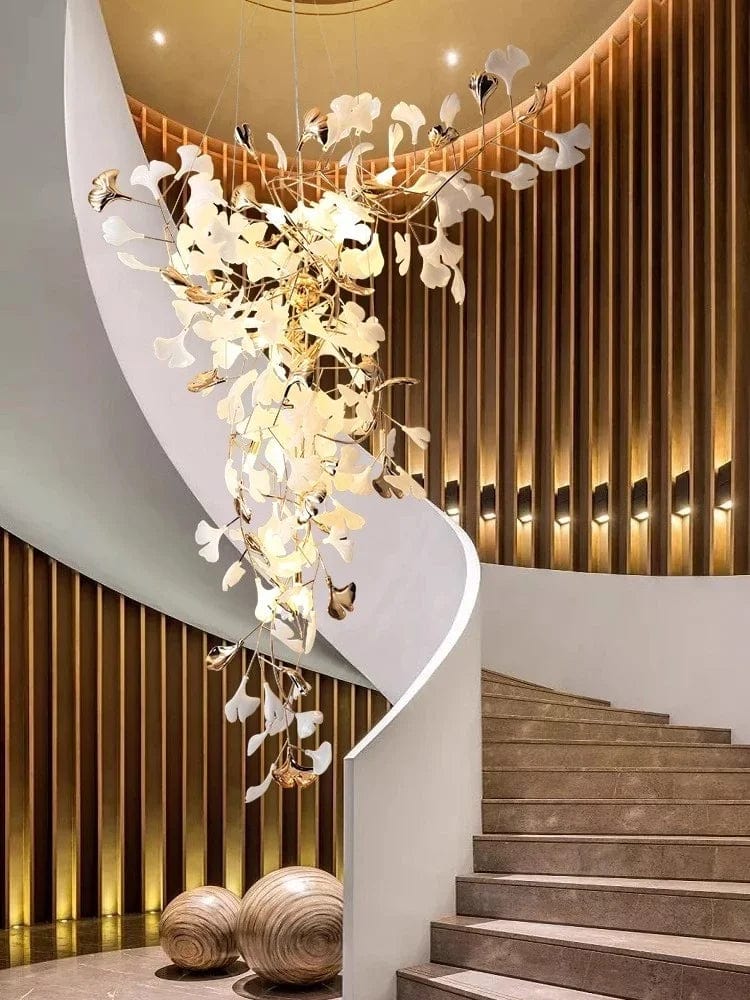
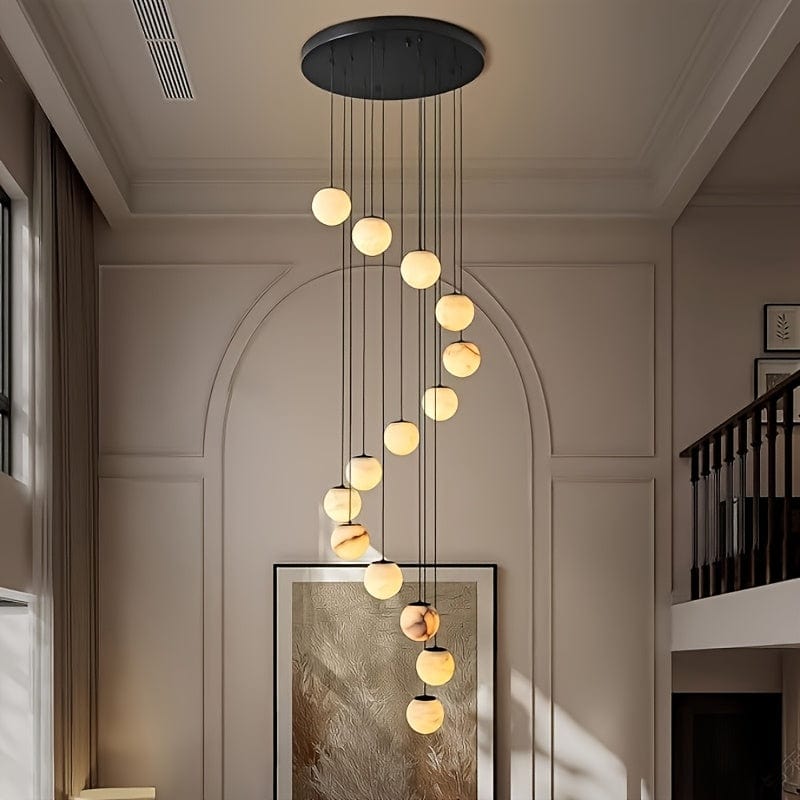
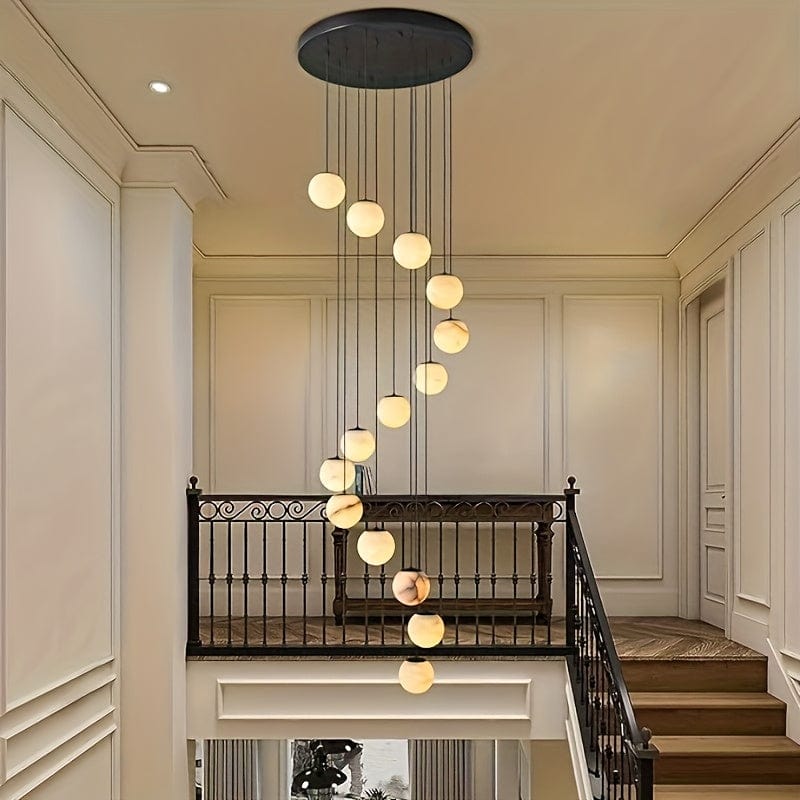
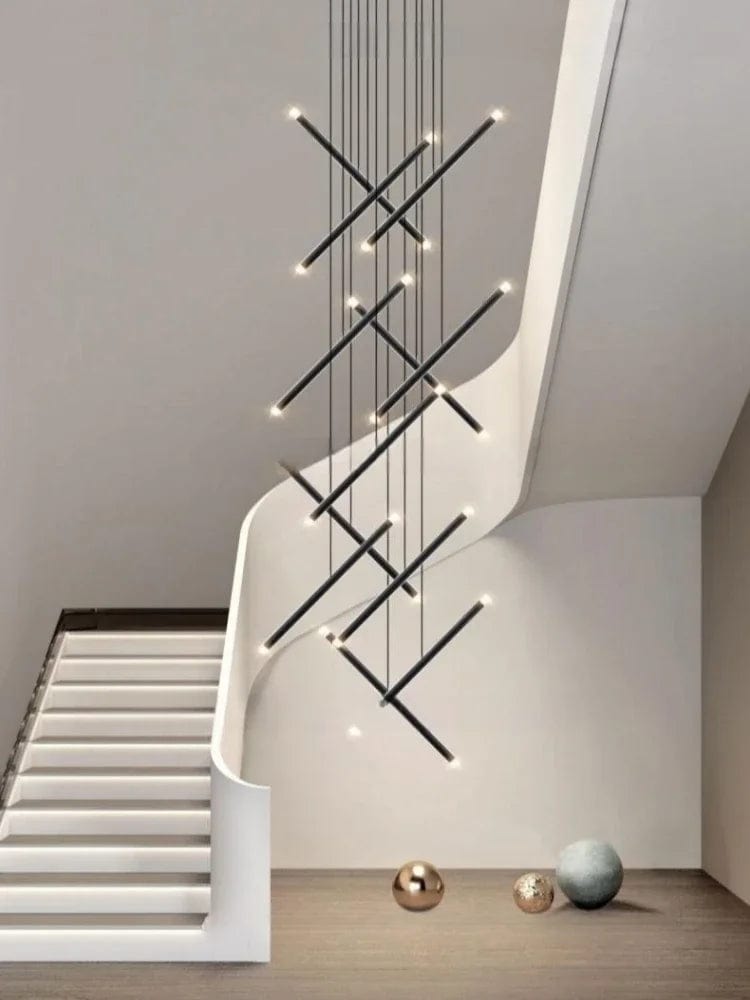
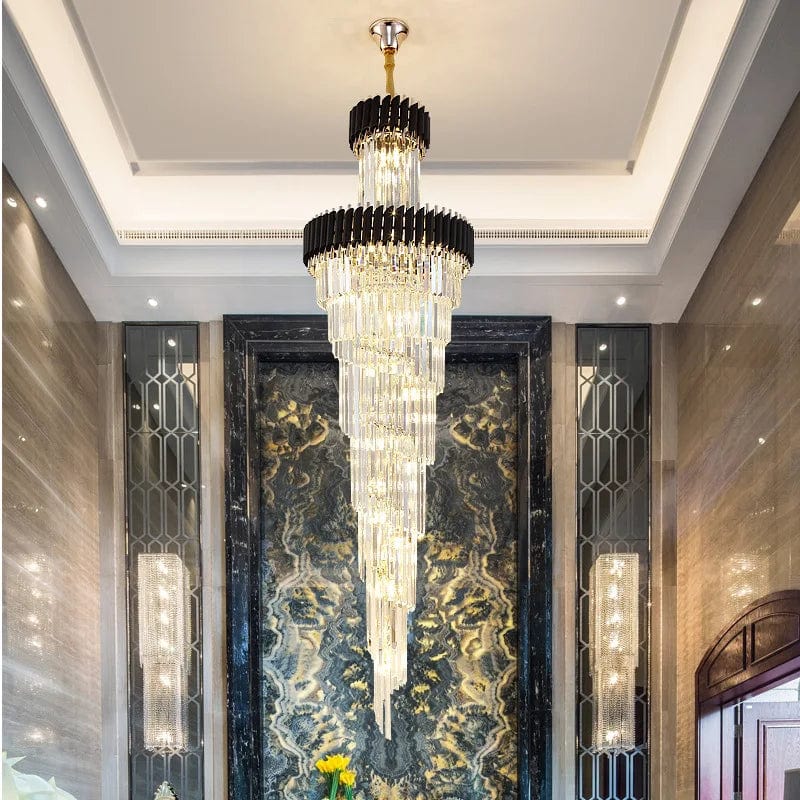
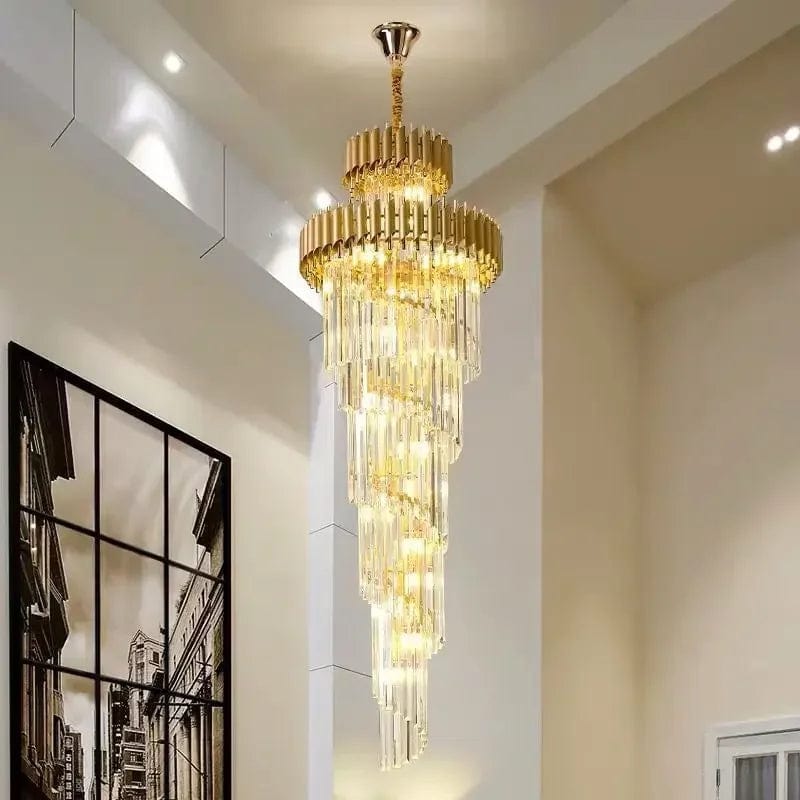
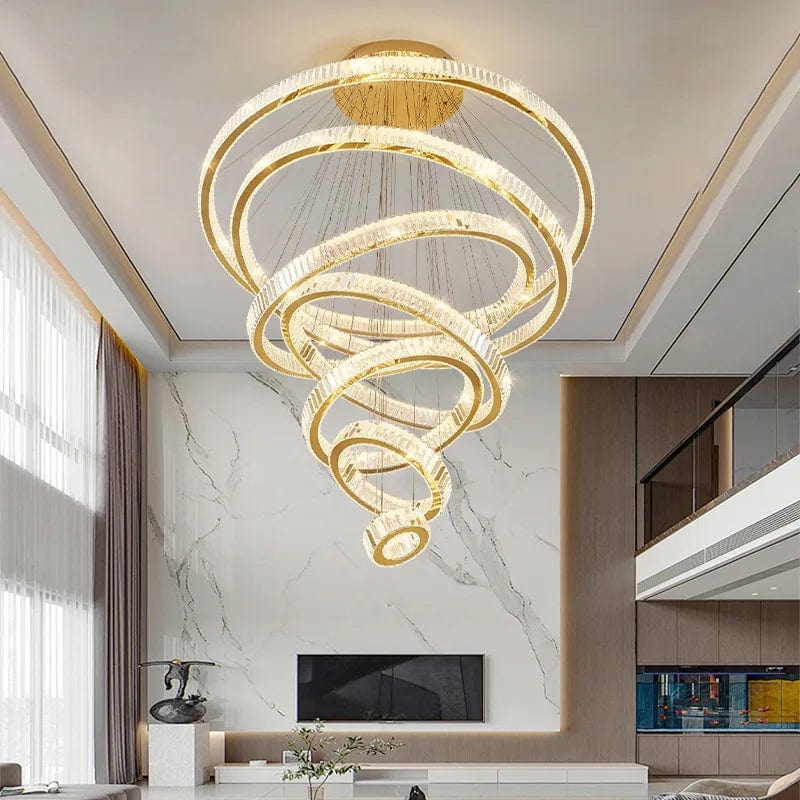
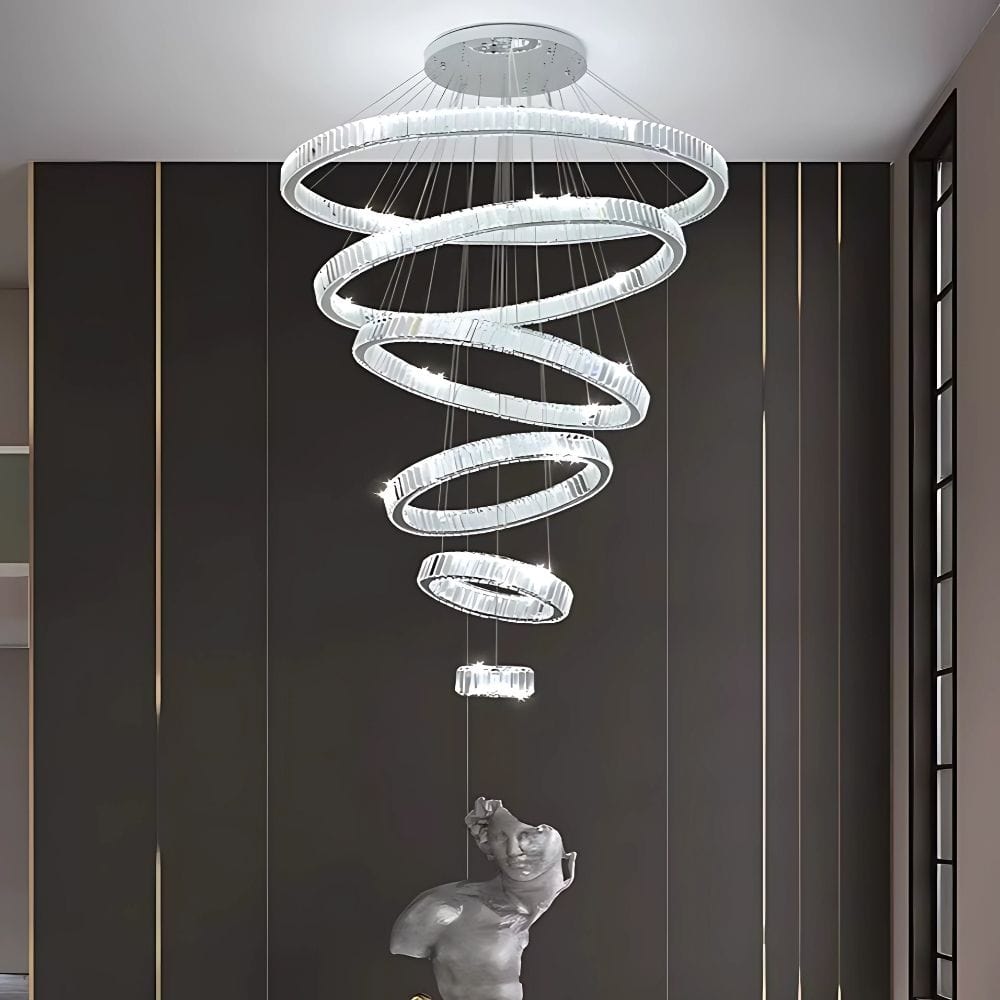
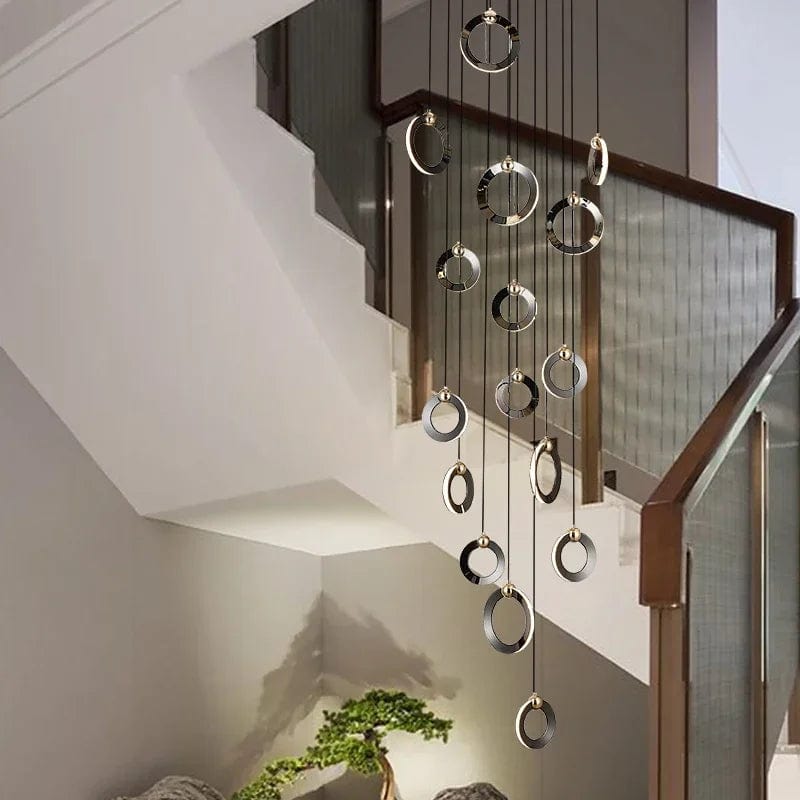
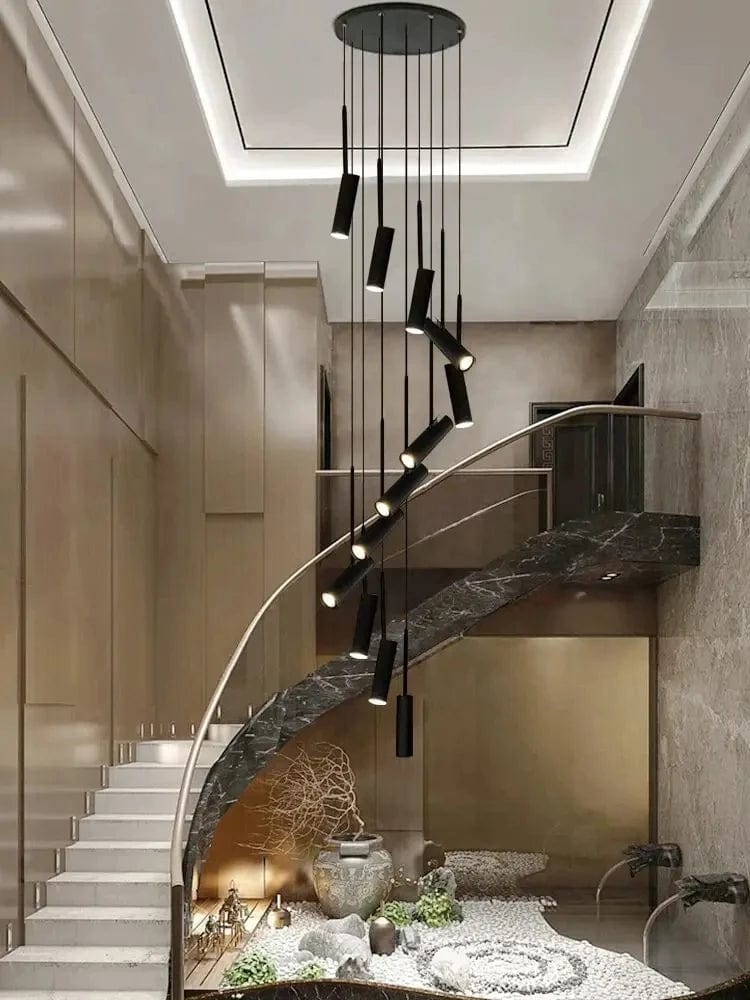
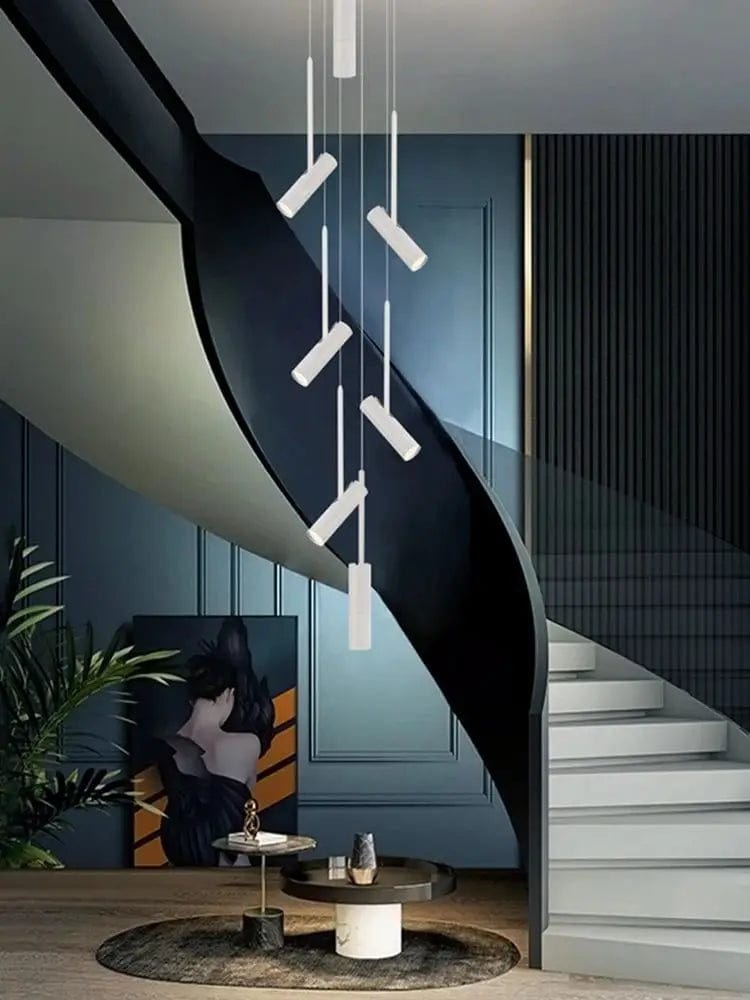
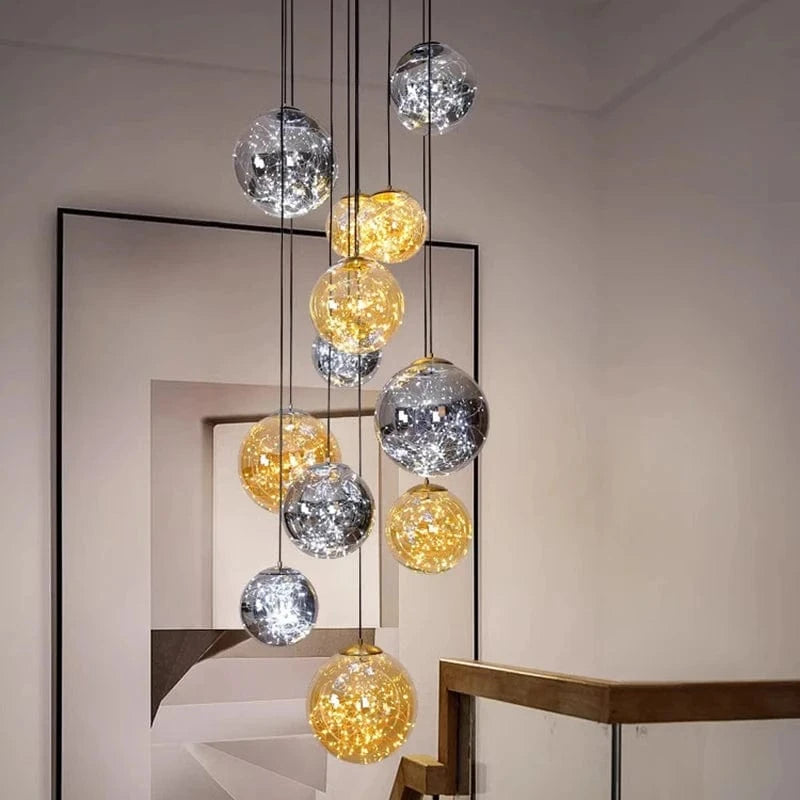
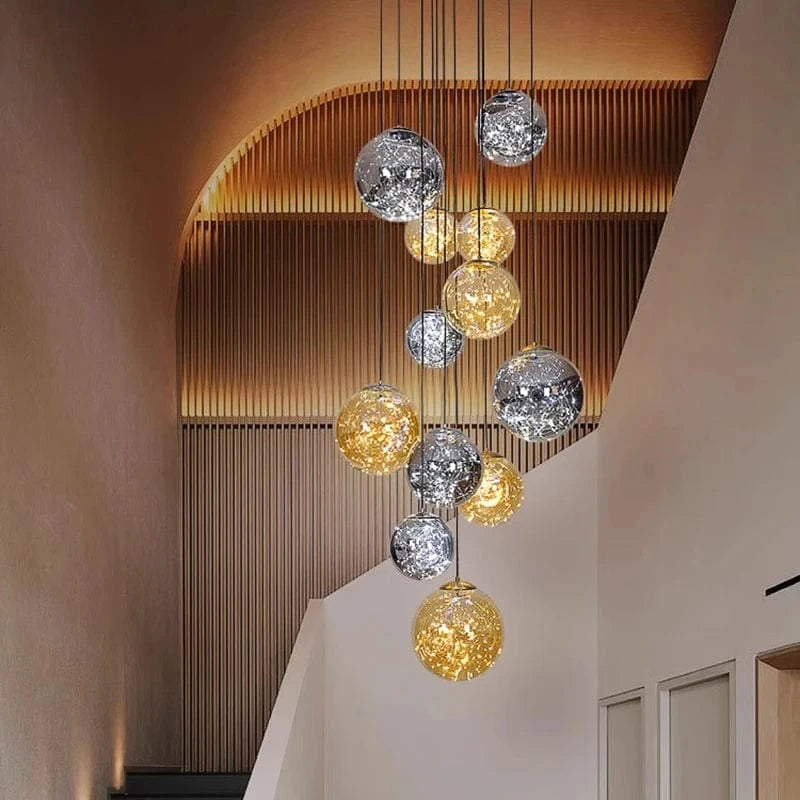
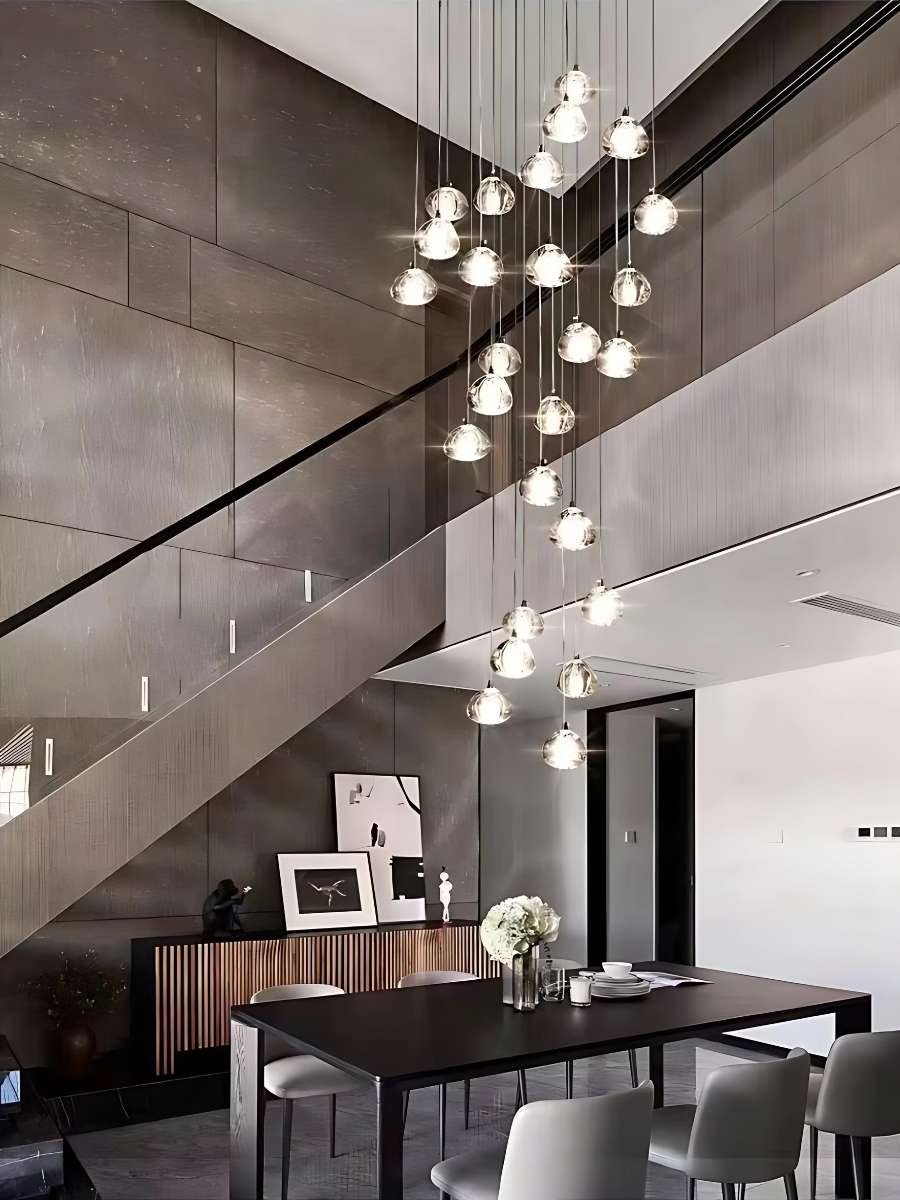
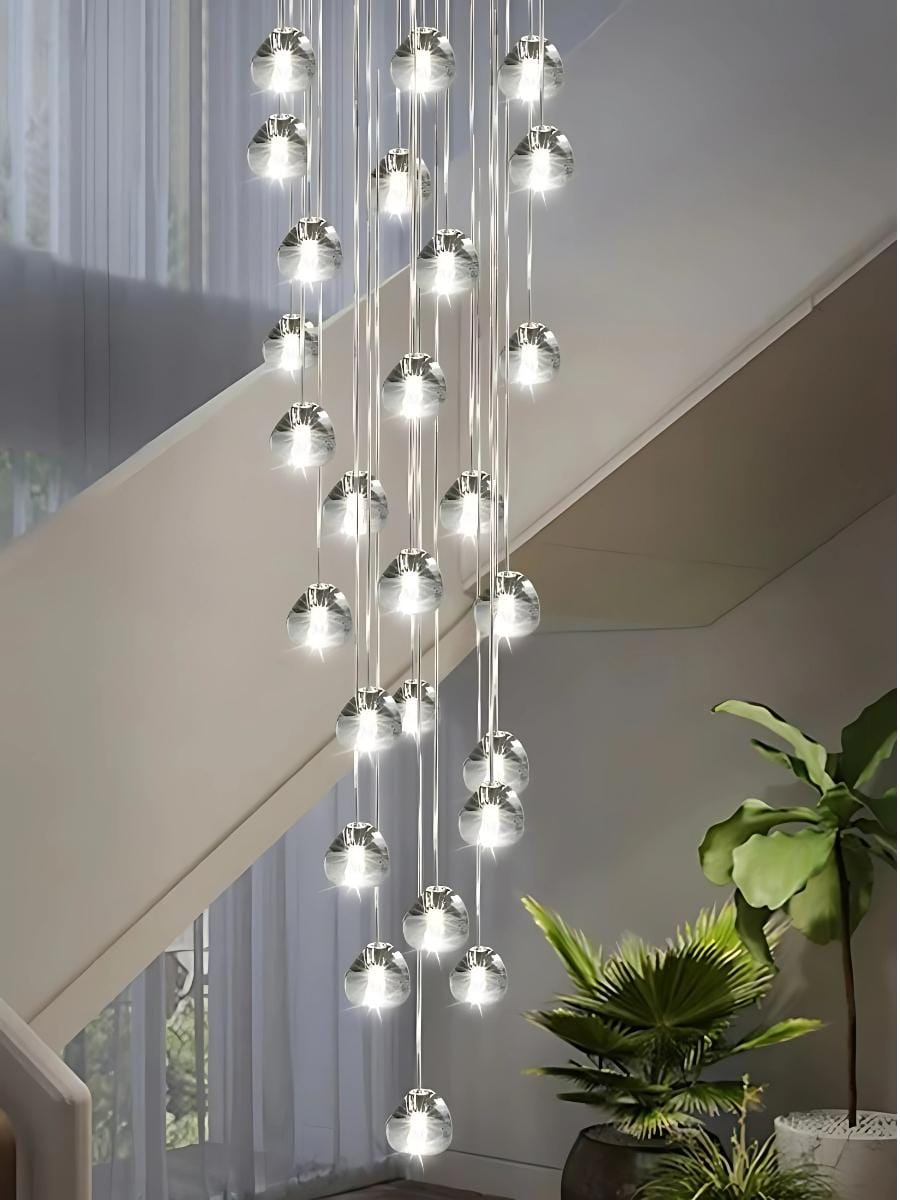
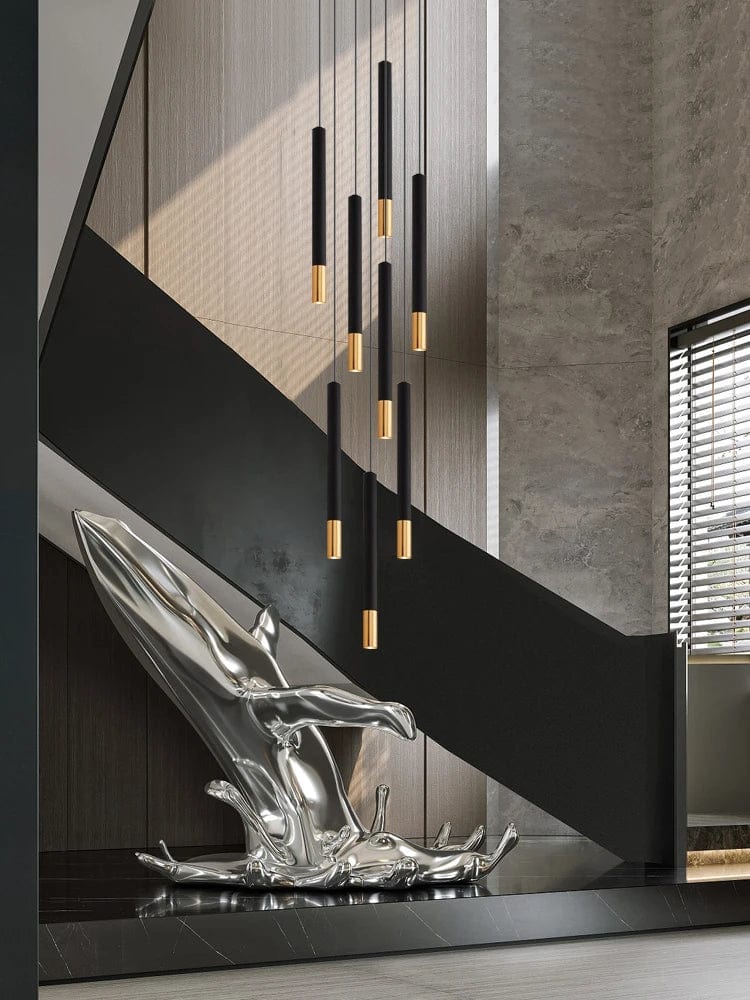
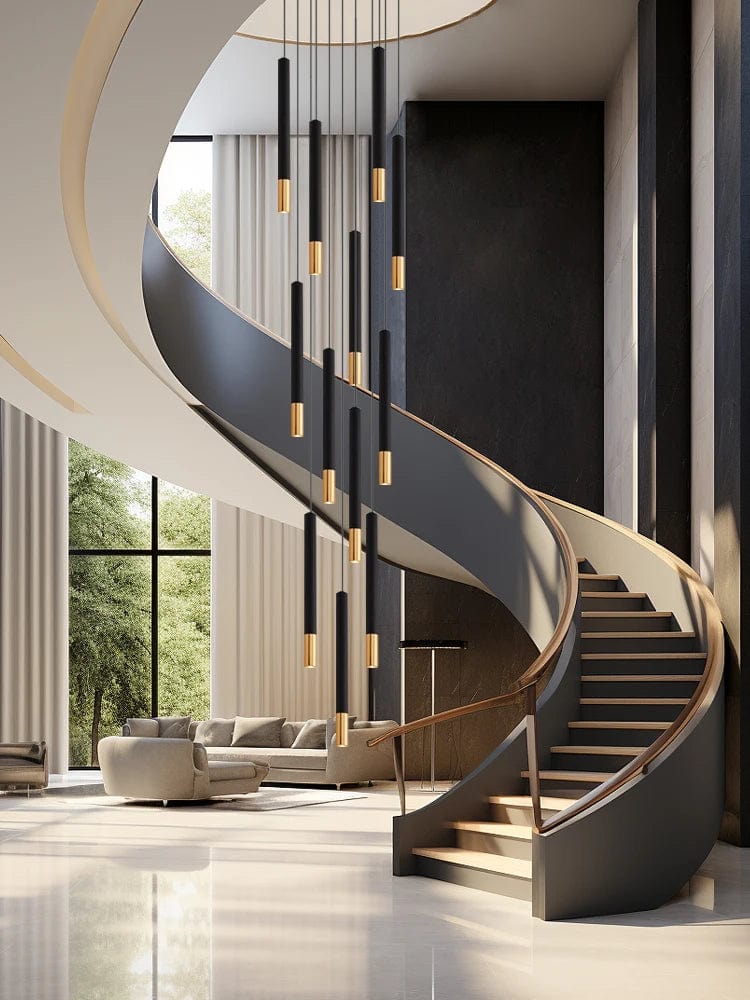
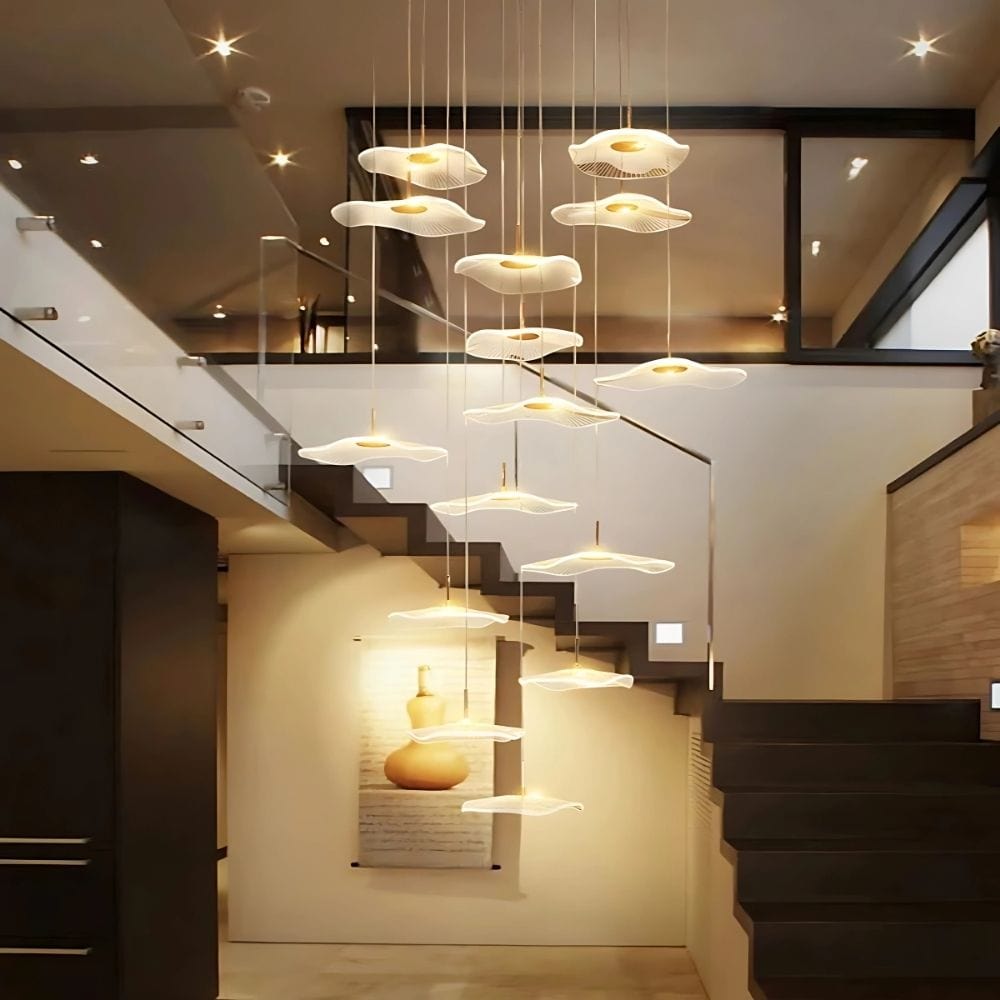
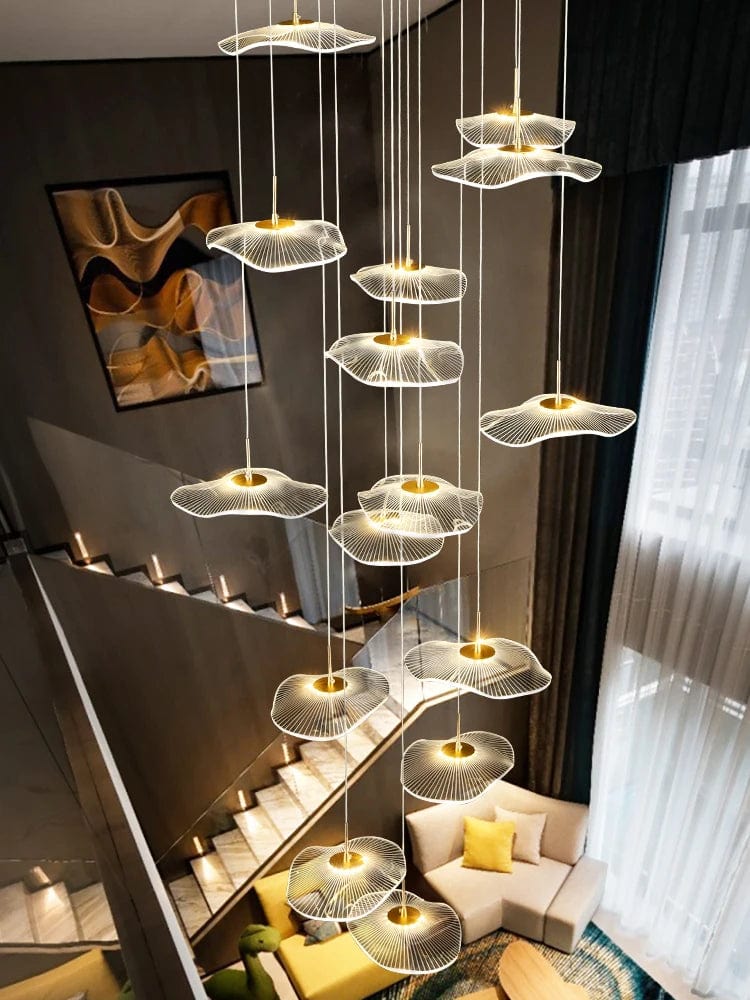
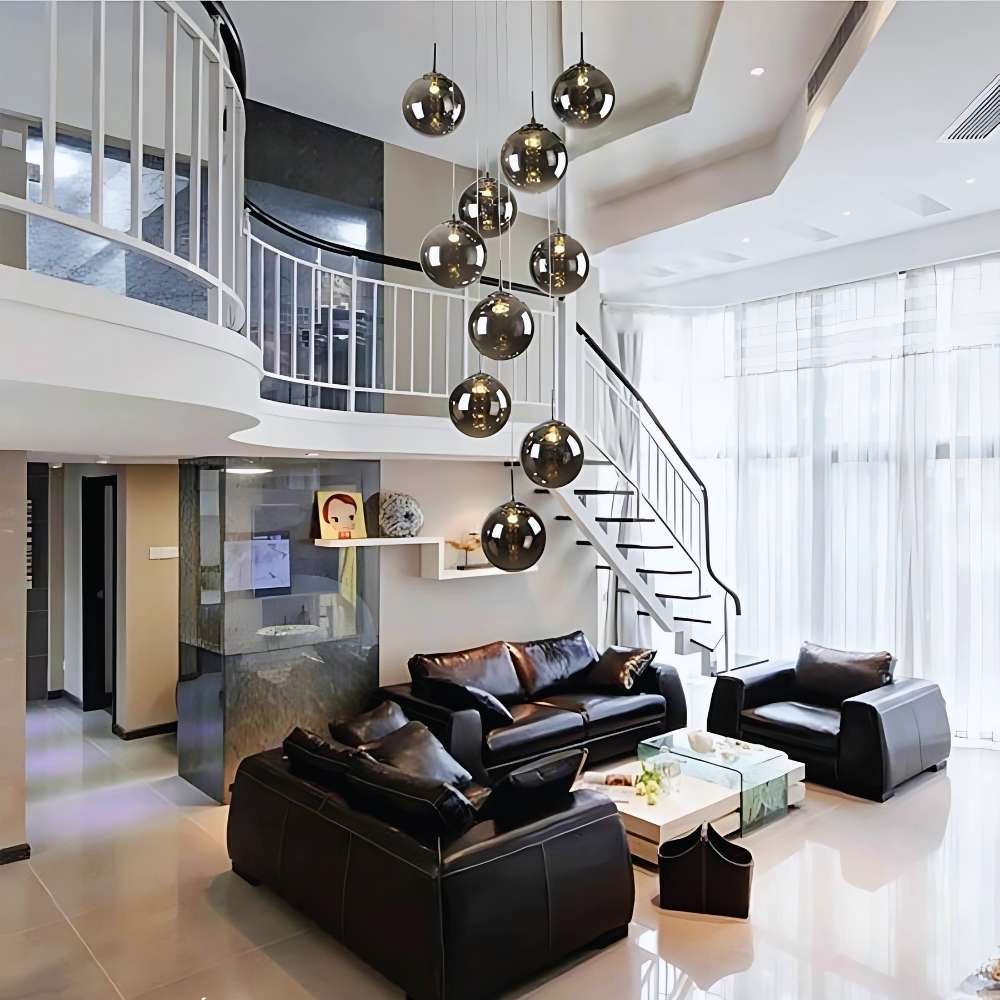
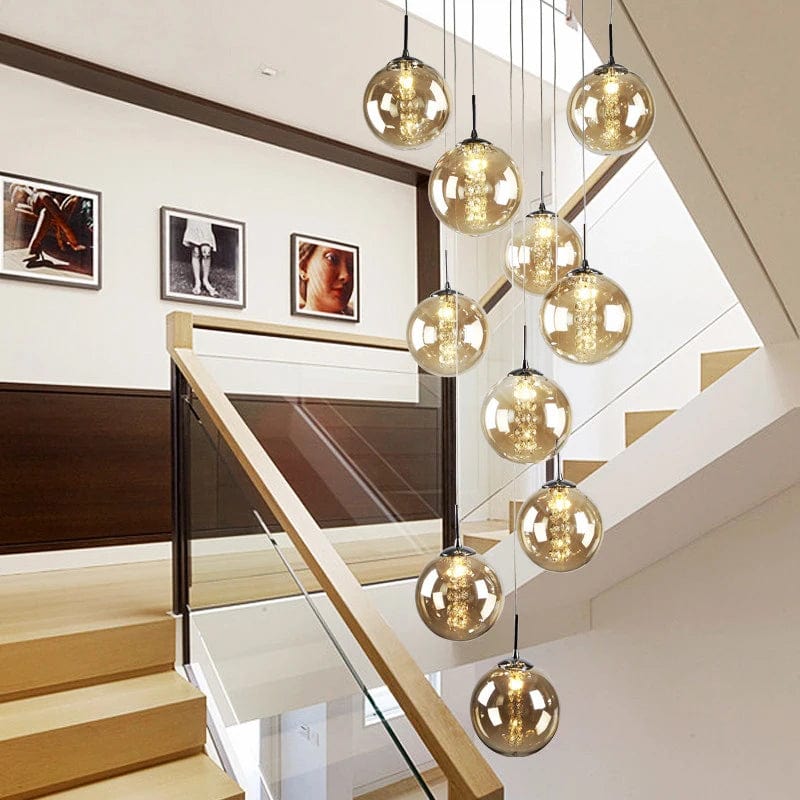
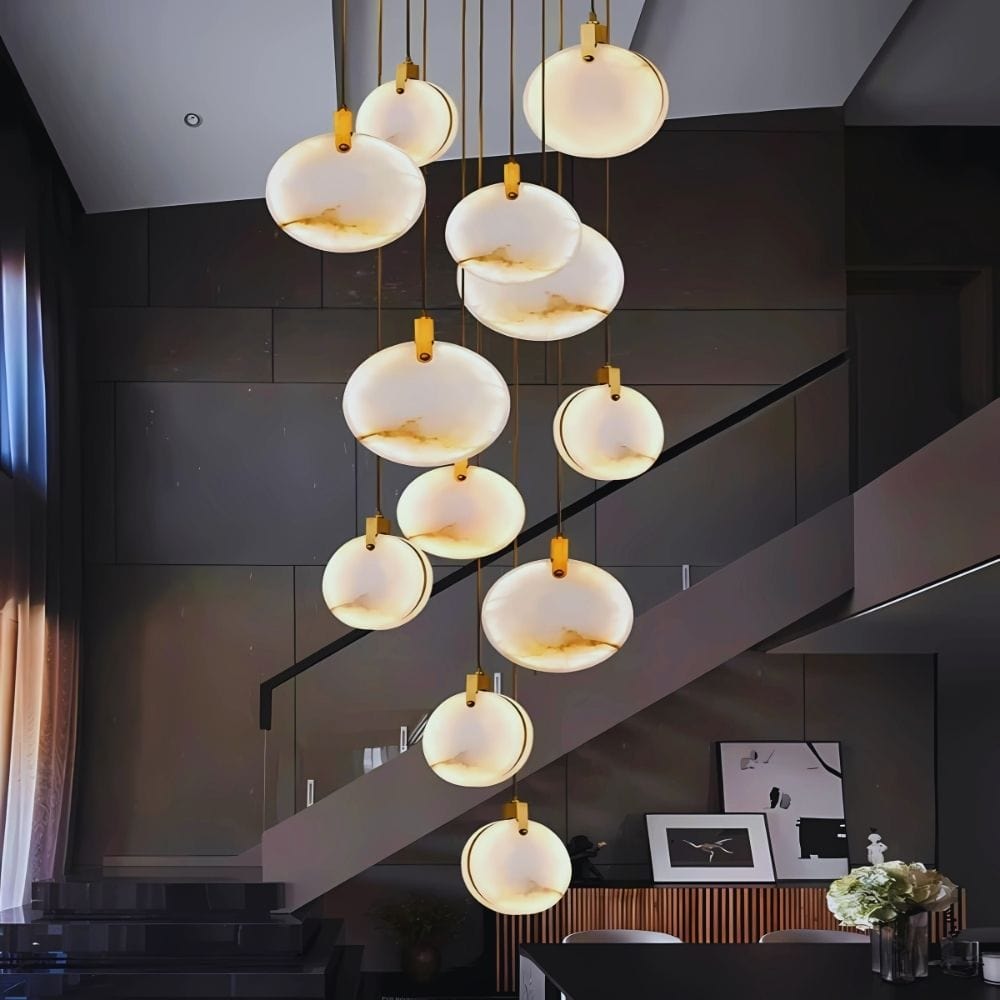
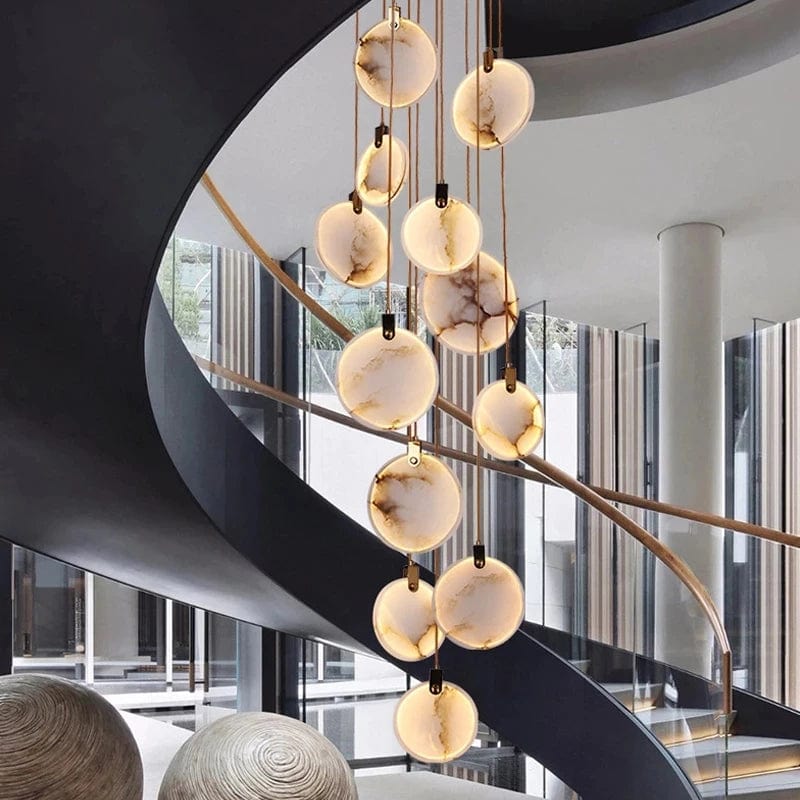
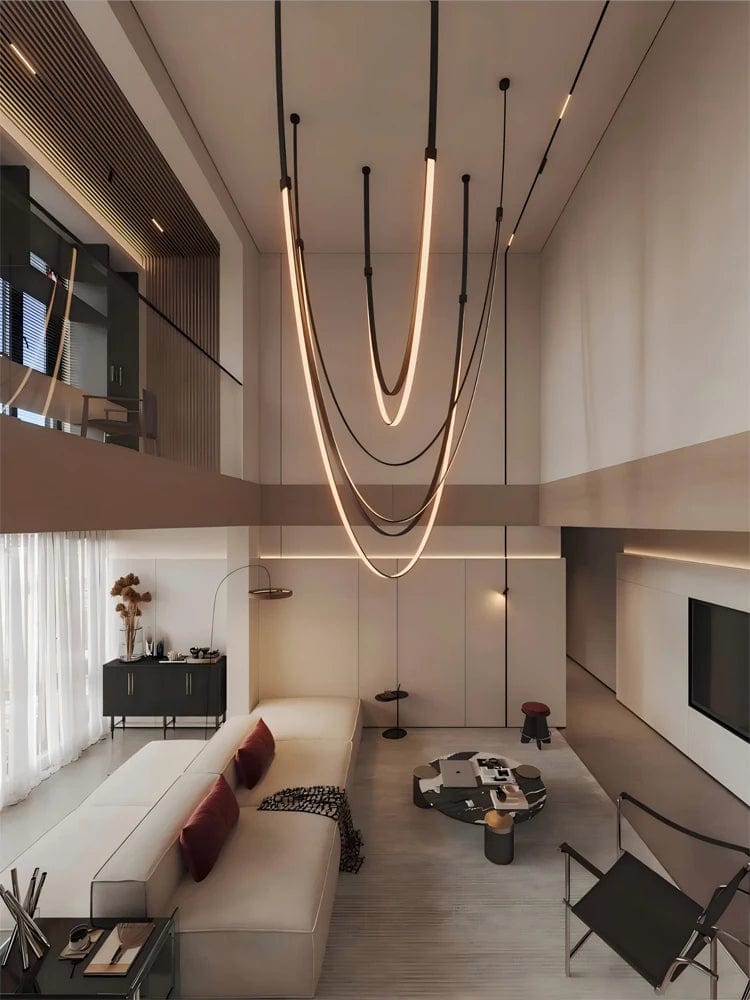
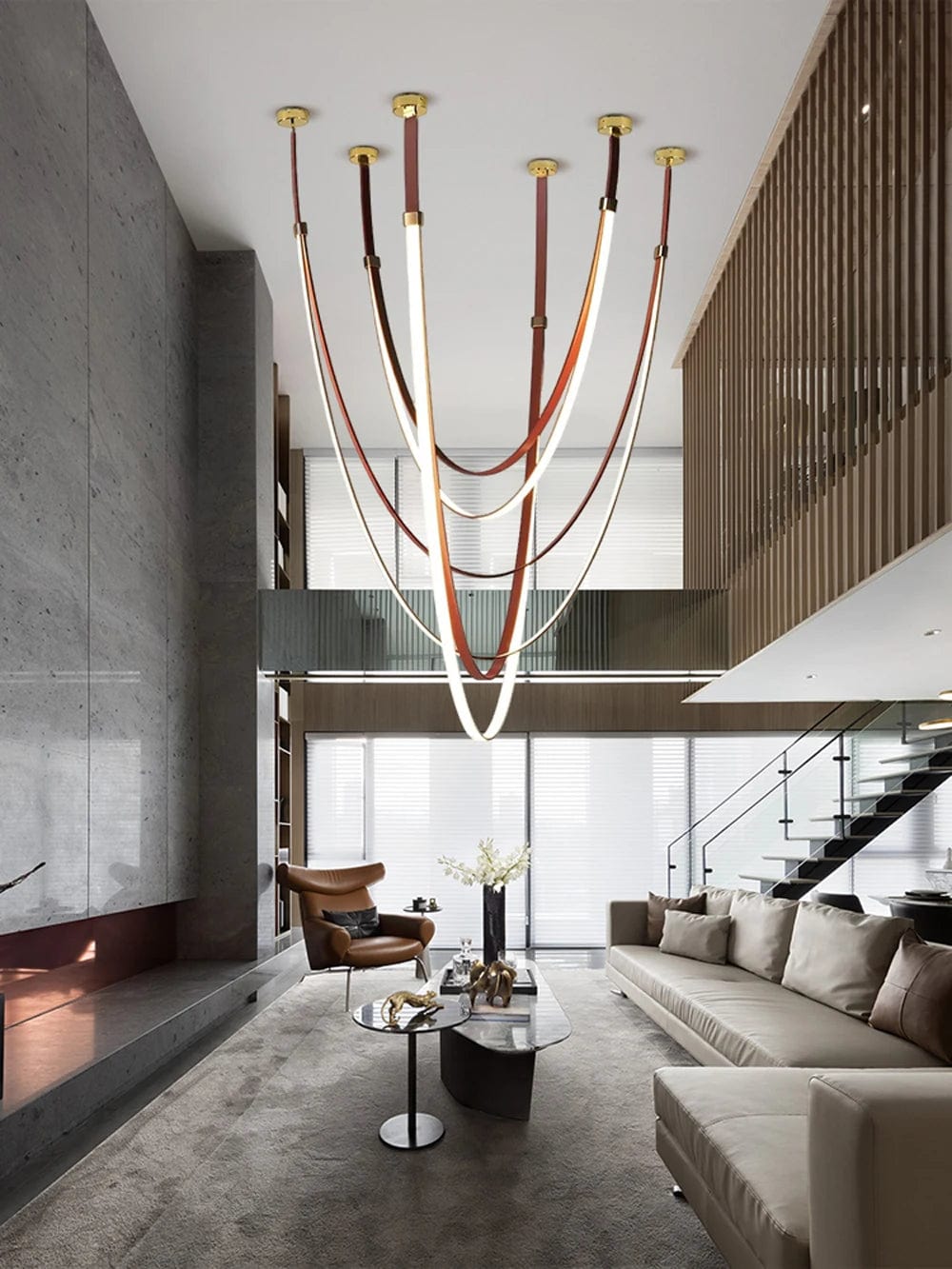
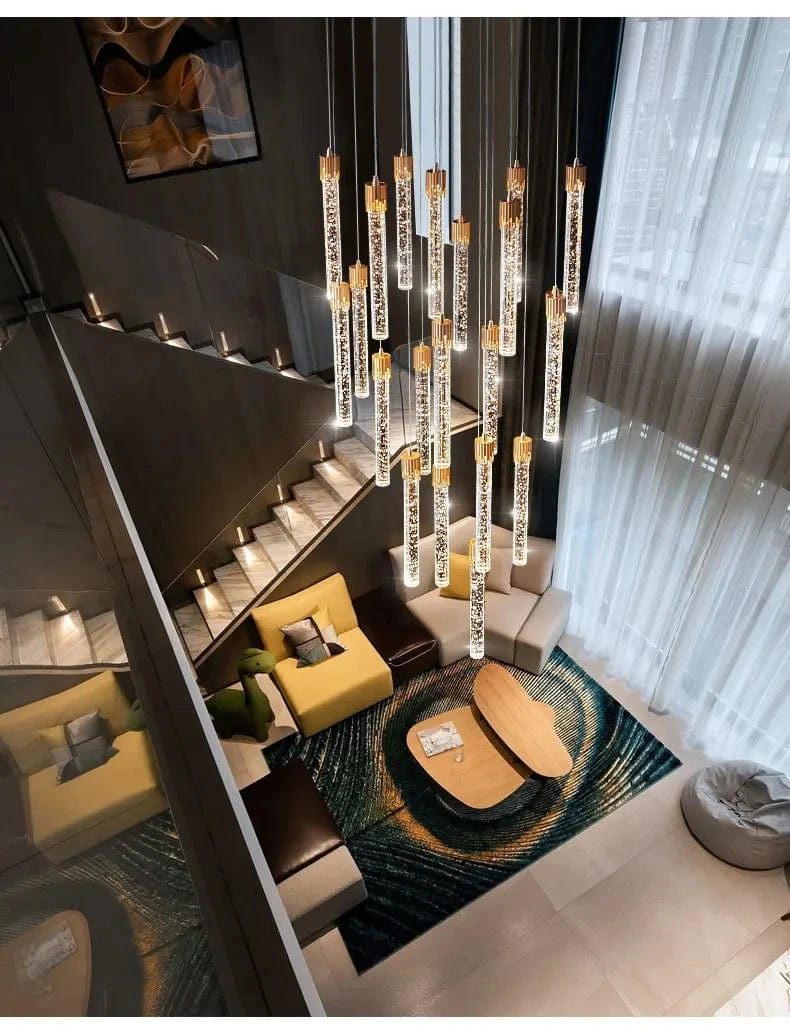
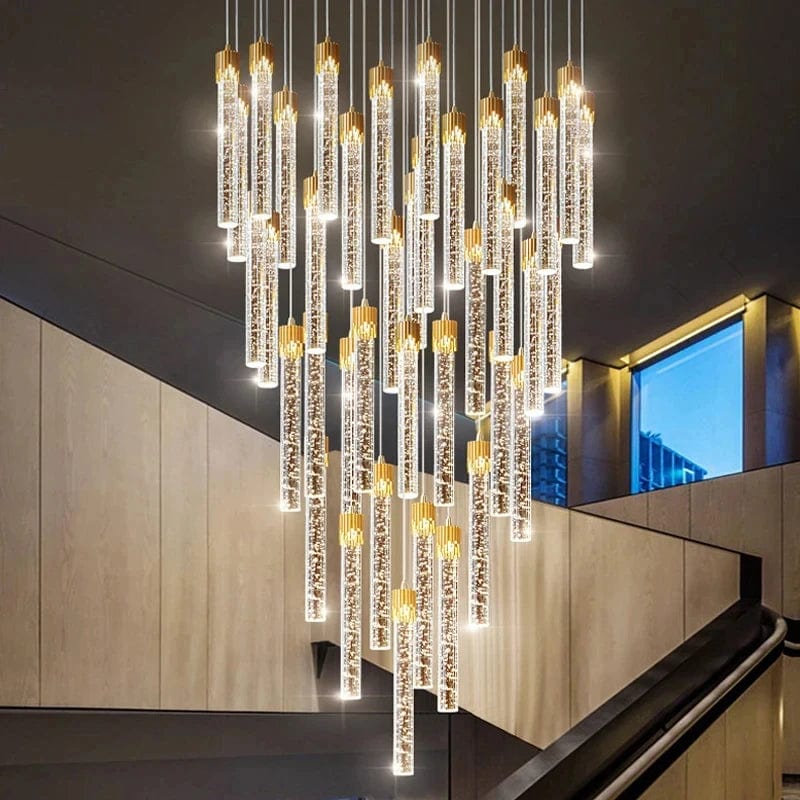
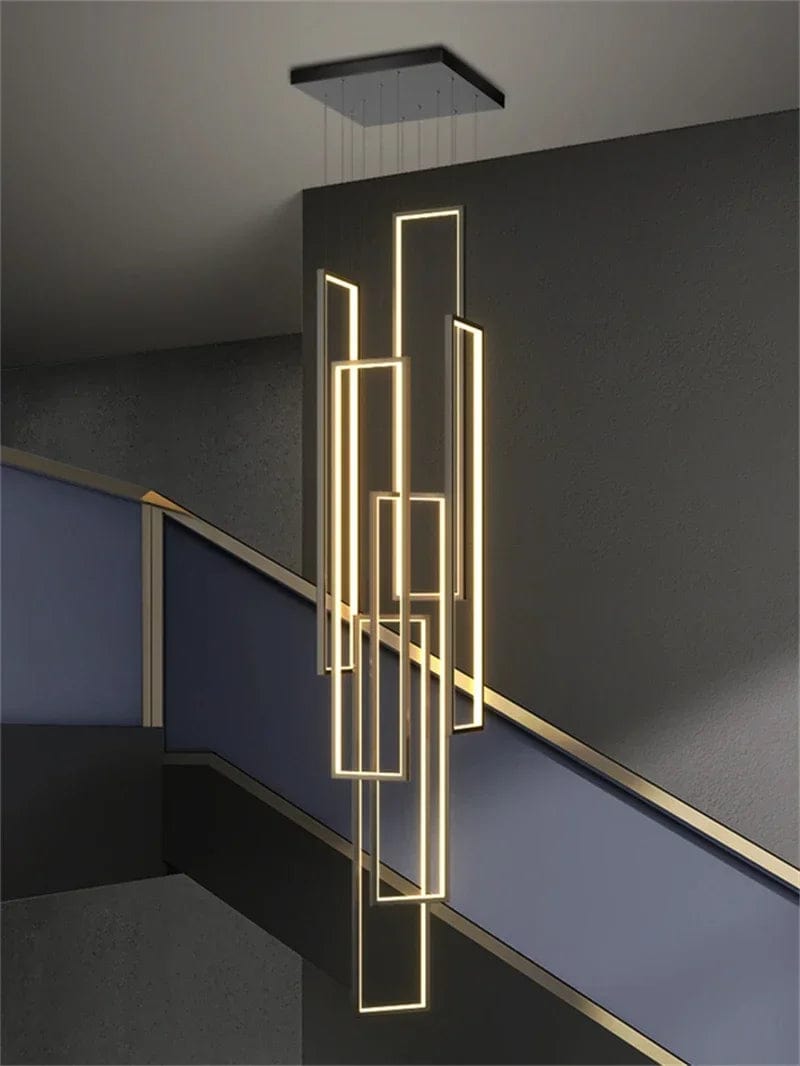
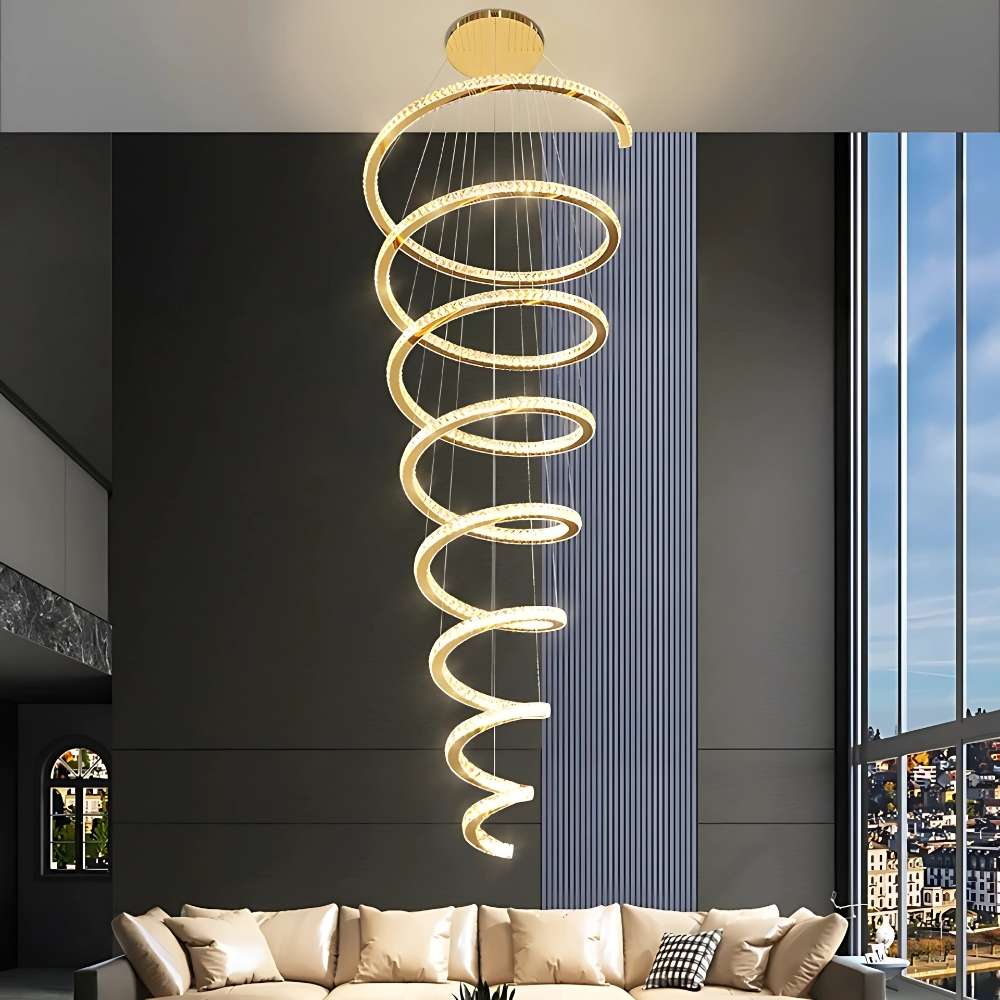
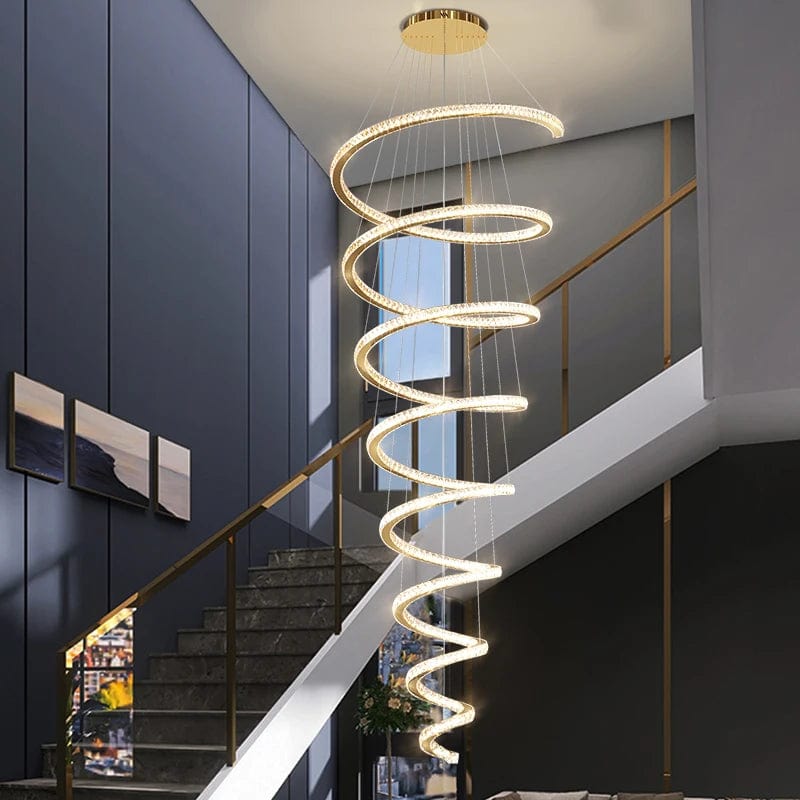
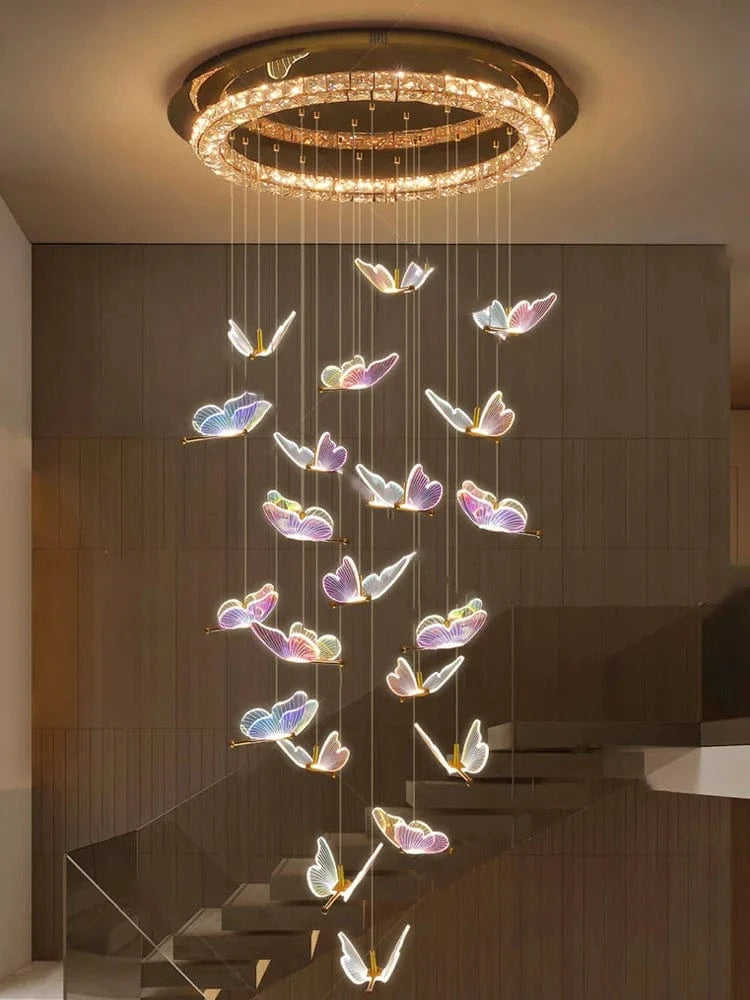
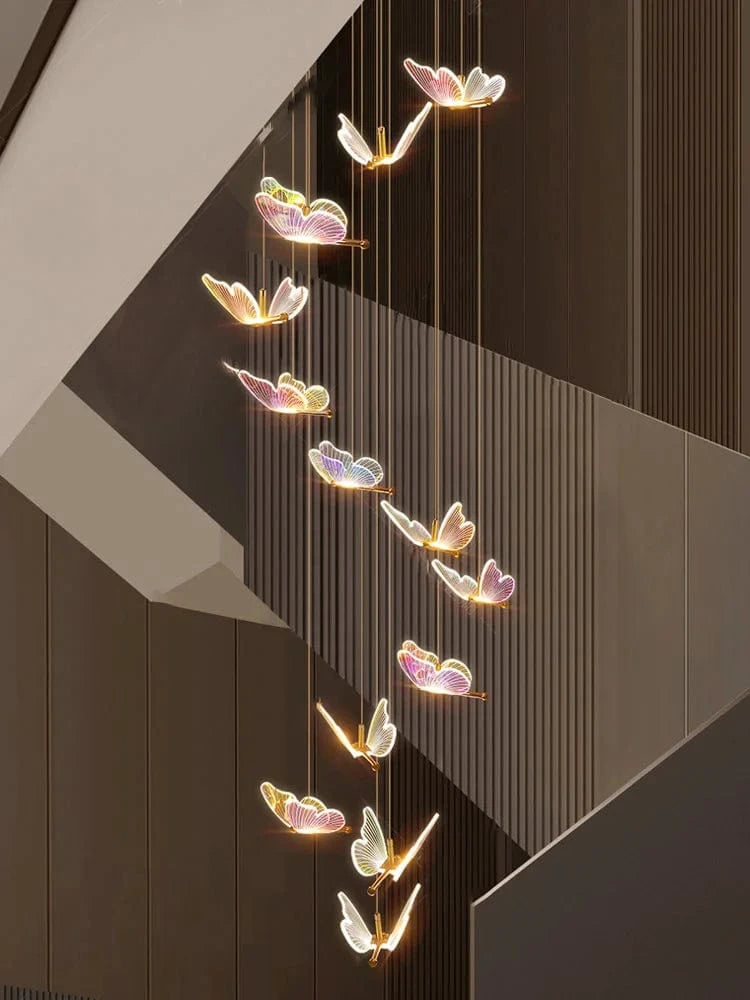
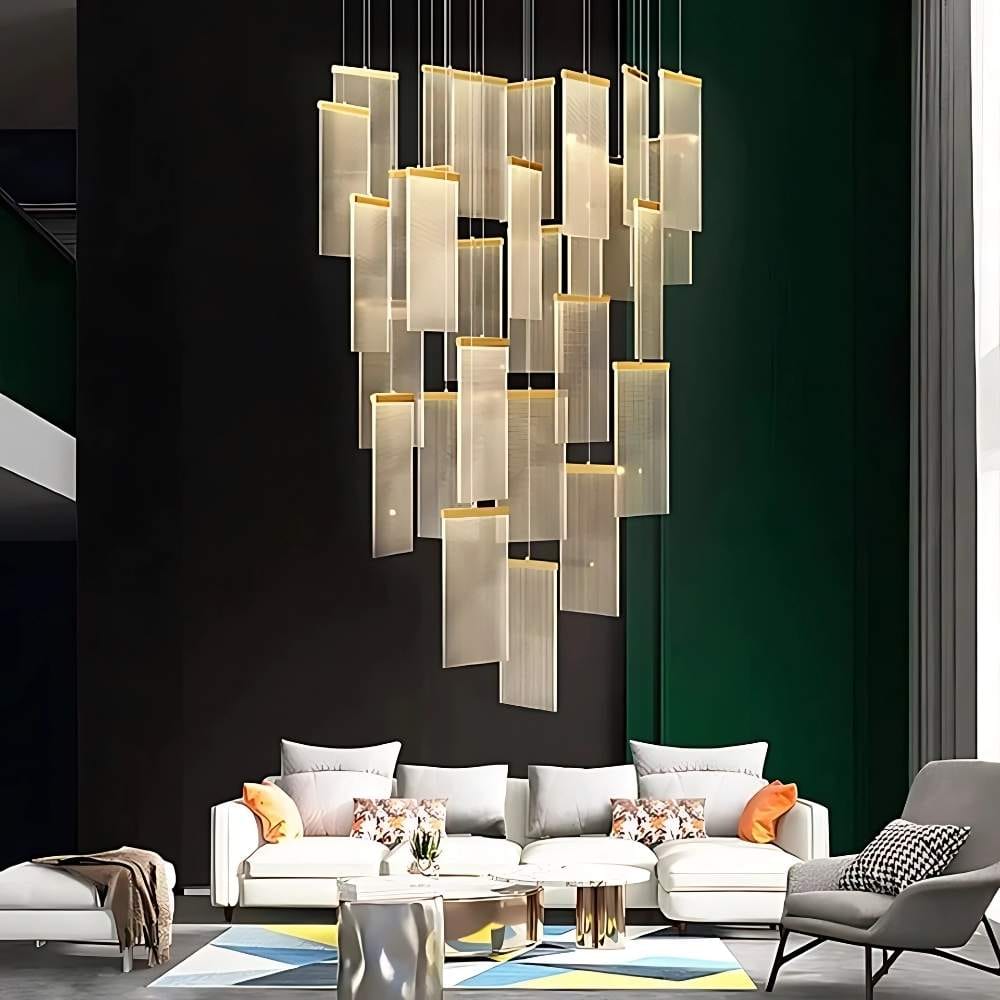
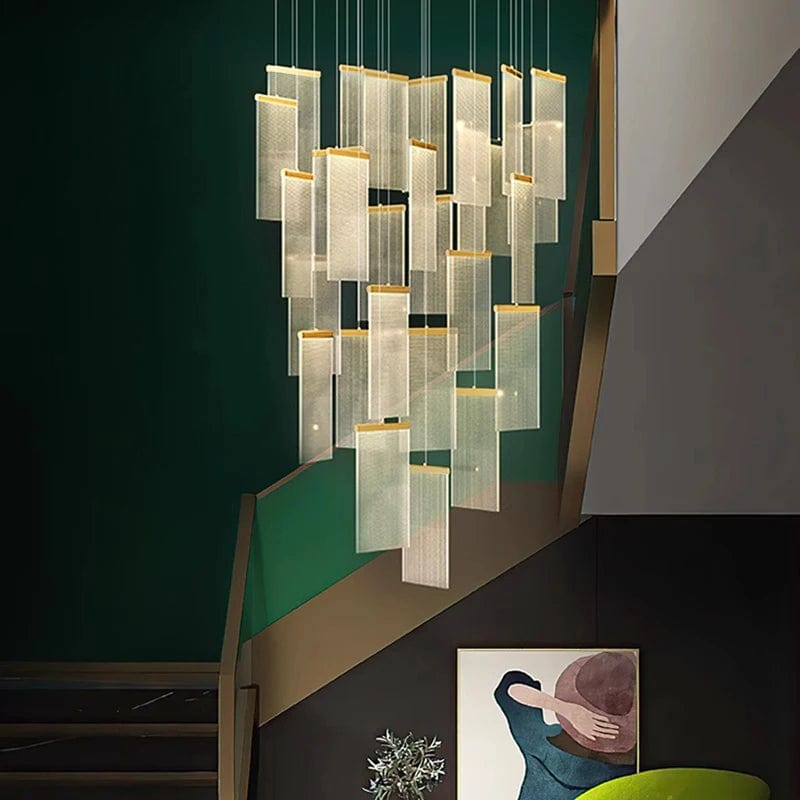
The defining factor is proportion. A high ceiling chandelier usually needs more vertical length, more visual structure, or more overall scale than a chandelier chosen for a standard-height room. Some do that through longer drop. Others use multi-tiered forms, layered crystal, spiral arrangements, ring compositions, open sculptural structure, or a wider frame that feels substantial enough for the room volume.
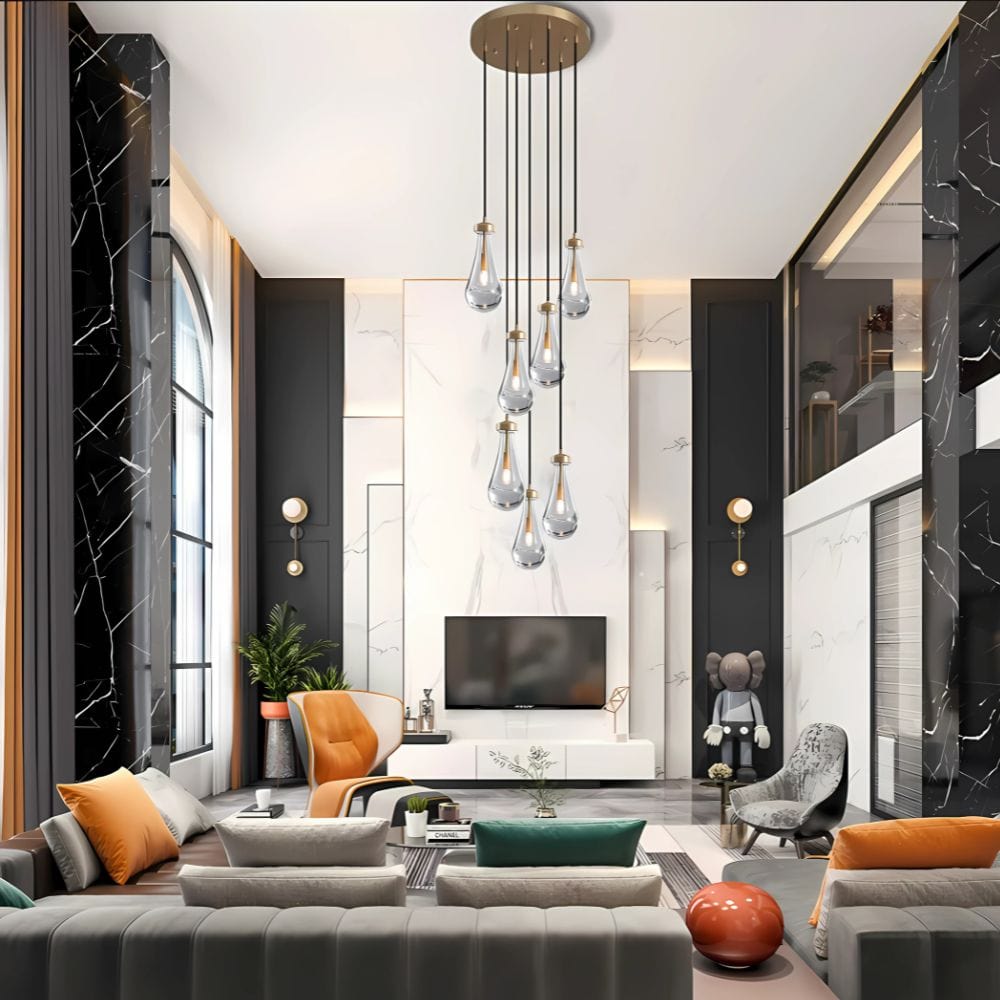
- Common use cases: great rooms, double-height foyers, open halls, vaulted living spaces, tall stair-adjacent rooms, and large central rooms
- Main visual benefit: better vertical fill and a stronger connection between the ceiling and the room below
- Best fit: rooms where an ordinary chandelier would look too small, too high, or visually disconnected once installed
Tip: In a tall room, the chandelier usually needs to be judged from floor level, not just by its product dimensions. A fixture that looks large online can still feel undersized if the ceiling volume is substantial.
How to Choose the Right High Ceiling Chandelier Size
The best high ceiling chandelier usually depends on three things: room footprint, ceiling height, and how open the space feels around the fixture. Diameter still matters, but in tall rooms the fixture height and visual layering often matter just as much. A chandelier can have enough width for the room and still feel too short if it does not carry enough drop or visual depth.
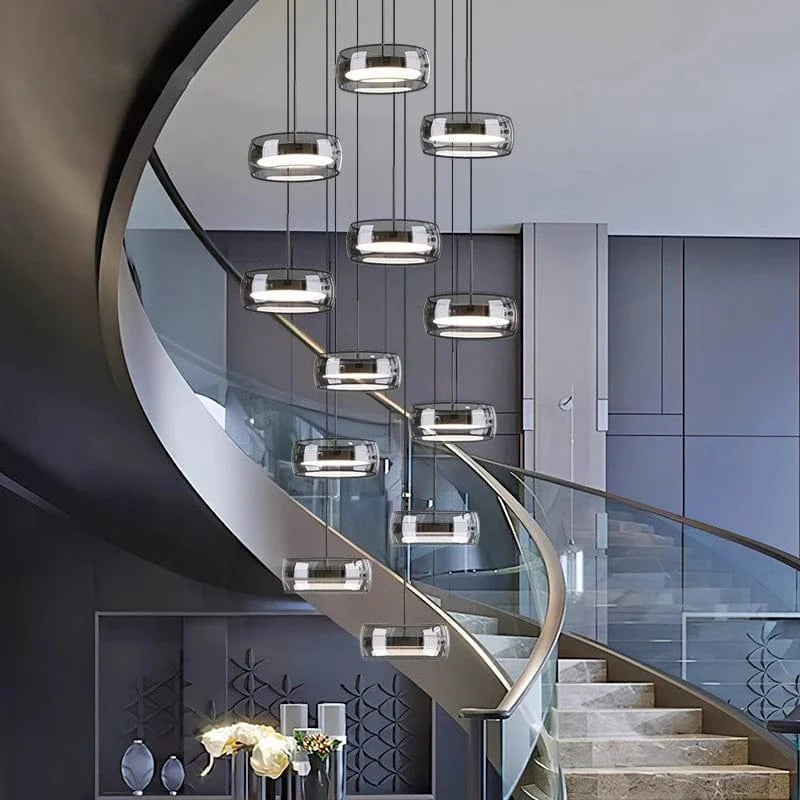
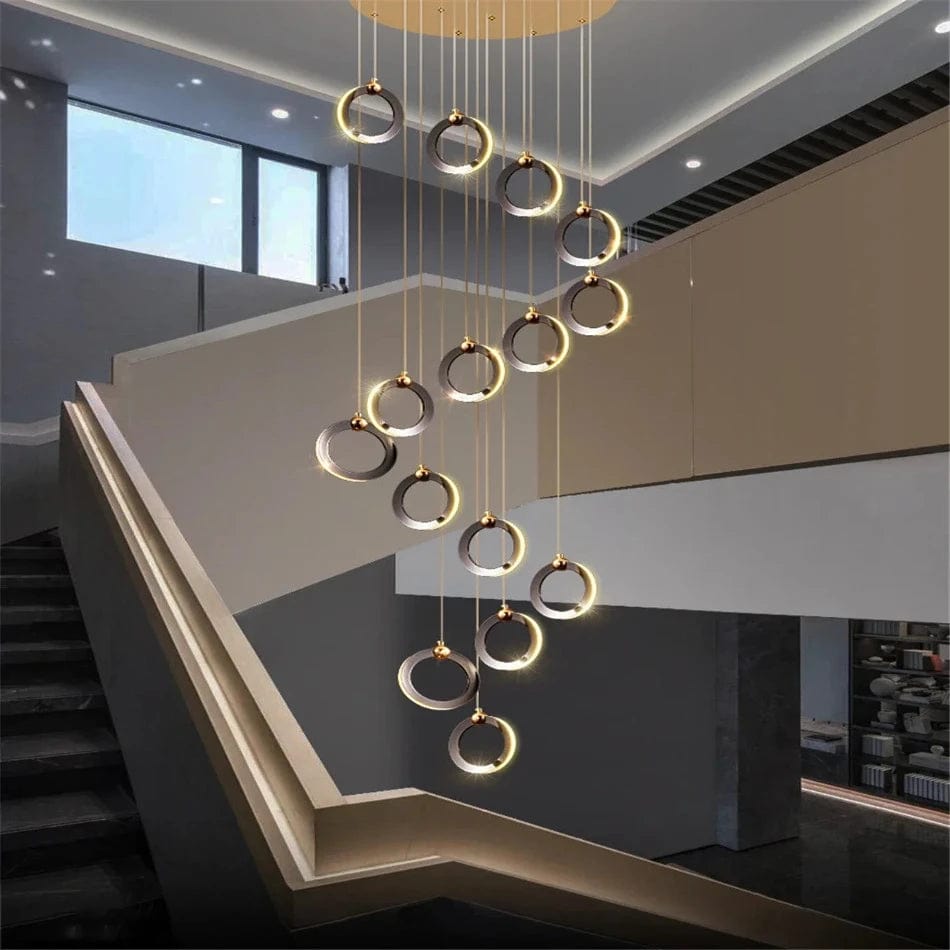
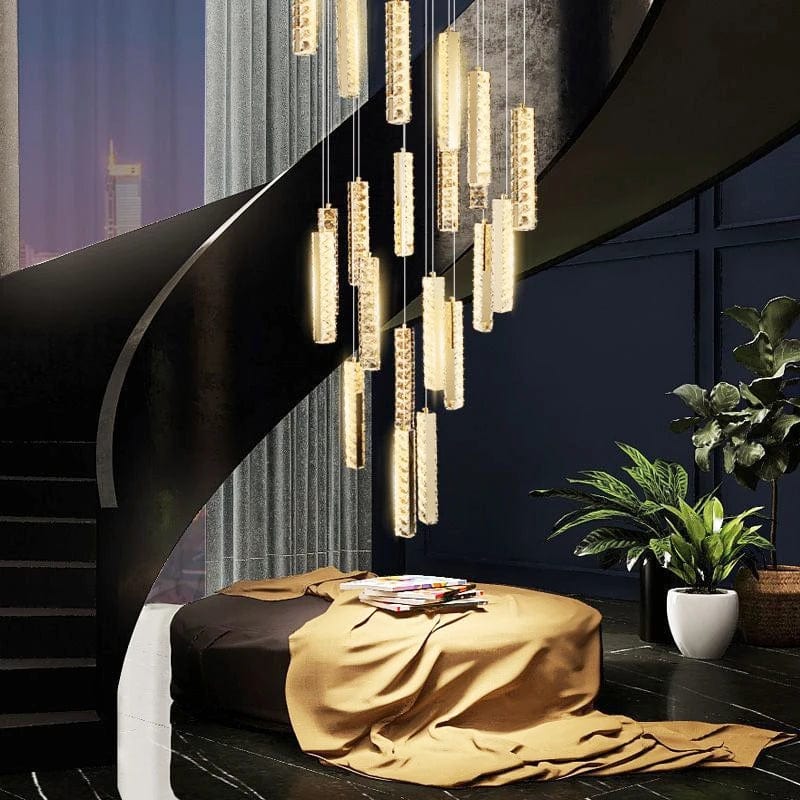
If your room is entry-first, it may help to compare this page with Foyer & Entryway Chandeliers. If the room includes a stairwell and the chandelier will be viewed from multiple levels, Staircase Chandeliers is a more specific adjacent category. If your goal is simply a visibly suspended fixture rather than overall tall-room proportion, Hanging Chandeliers may also be useful.
Quick planning notes:
- Taller rooms: often need more fixture height, more drop, or more layered structure to feel visually complete
- Open rooms: wider chandeliers can help, but vertical fill is often what makes the biggest difference
- Double-height spaces: a chandelier should look balanced from both near and far viewpoints
- Large-volume rooms: open-frame or multi-tiered forms often work better than small compact silhouettes
Measurement note: A common starting rule is to allow about 2.5 to 3 inches of chandelier height for every foot of ceiling height. In open areas, many shoppers also use about 7 feet of minimum clearance below the fixture as a practical baseline, then refine placement based on room layout and sightlines.
Choosing by Shape, Drop, and Visual Weight
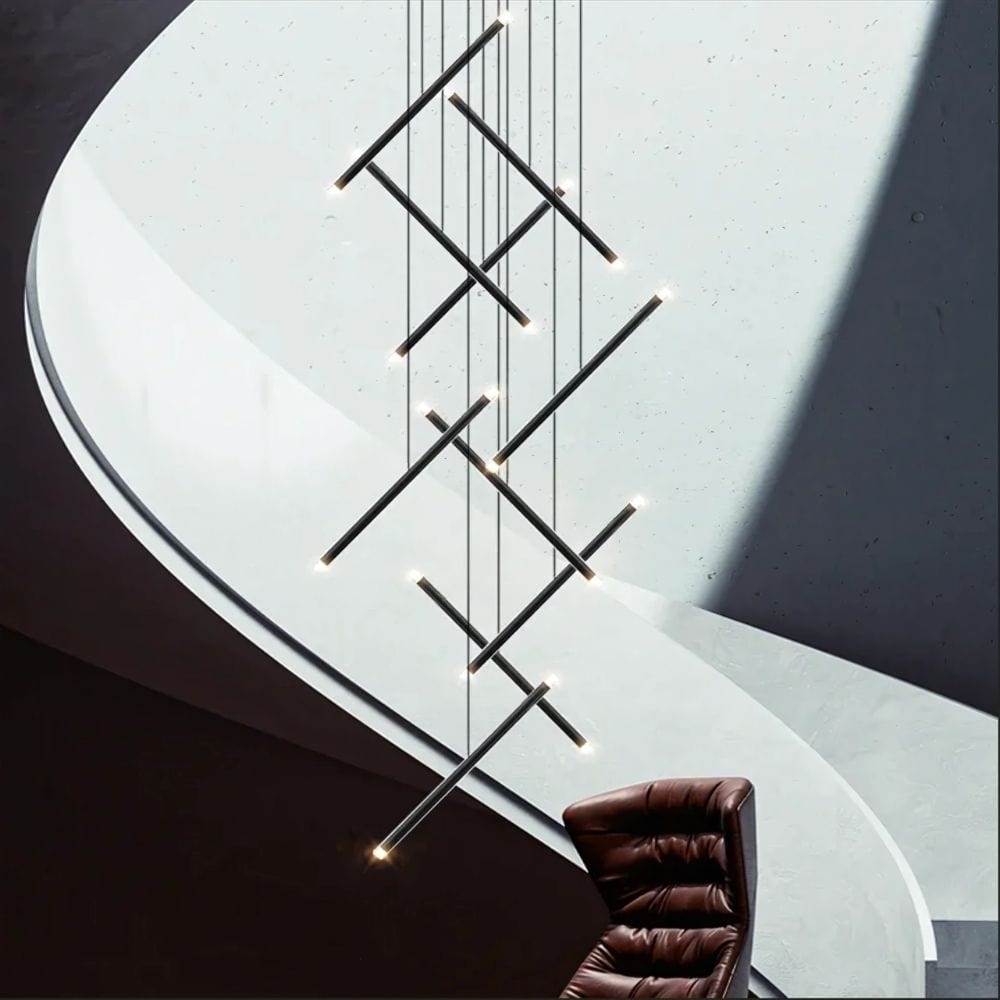
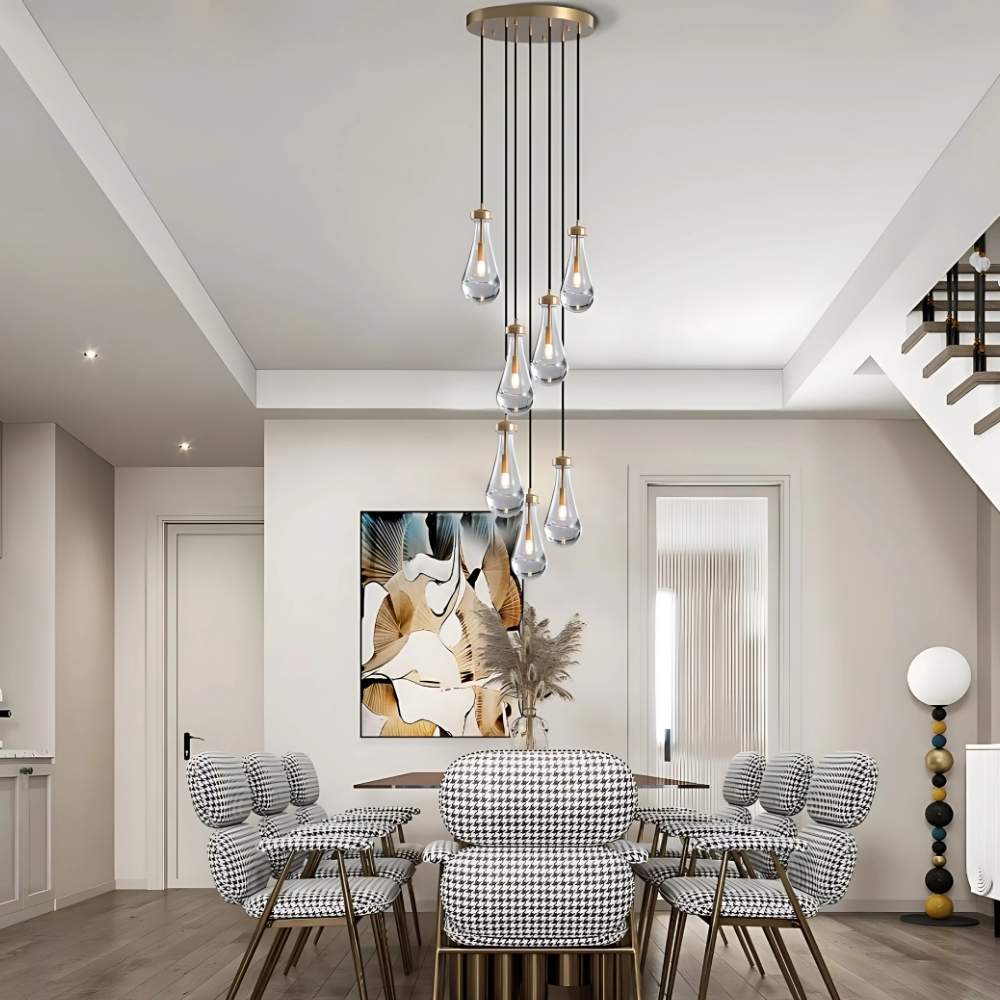
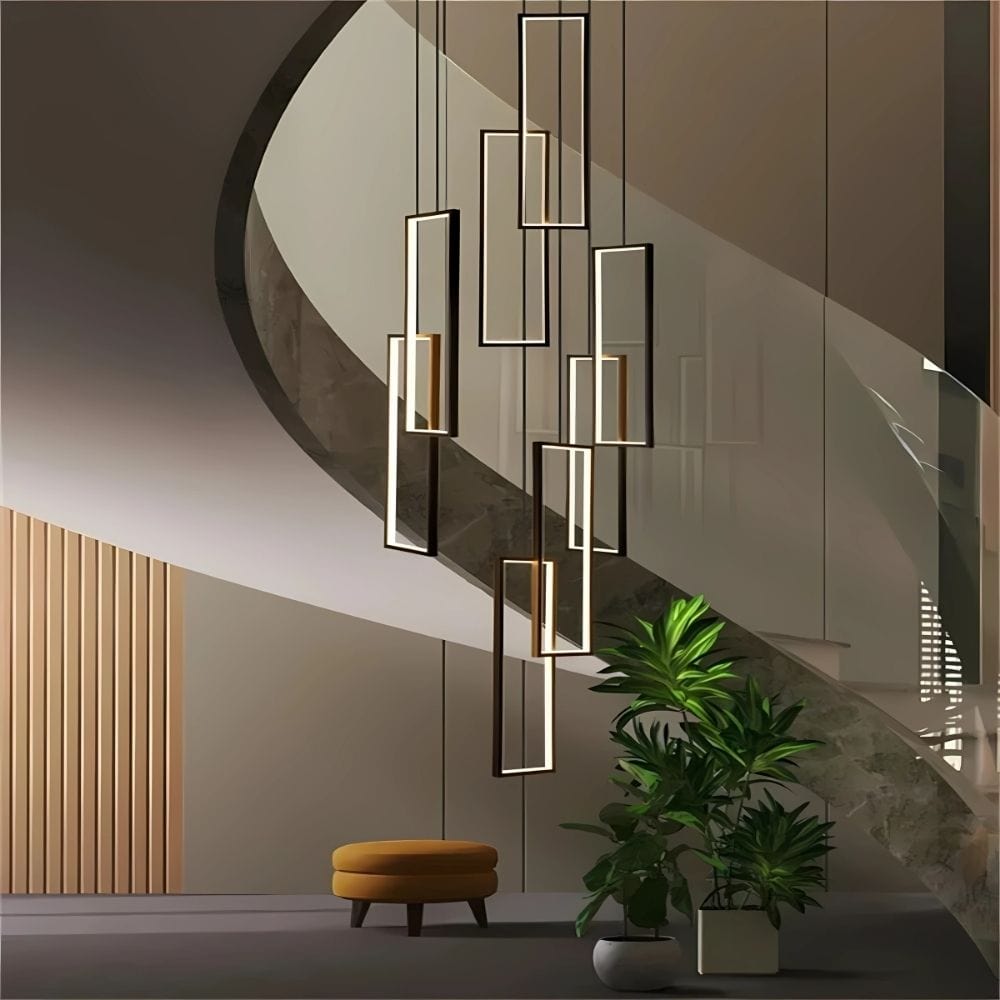
High ceiling chandeliers can change a room in very different ways. A spiral or multi-drop chandelier often emphasizes vertical movement most clearly. Tiered crystal chandeliers can fill volume and add reflection without always feeling visually dense. Ring-led or geometric chandeliers often create a cleaner, more architectural impression in contemporary homes. Open sculptural forms can also work well because they occupy volume without blocking too much visual space.
Visual weight matters just as much as dimensions. A dark, dense fixture with strong frame structure may feel larger and more dominant than a lighter glass or crystal chandelier with the same approximate diameter. In a tall room, the best result usually comes from choosing a fixture that feels substantial enough to hold the space, but not so heavy that it overwhelms the room or interrupts major sightlines.
Quick comparison:
- Multi-tier chandeliers - stronger vertical fill and more classic tall-room proportion
- Spiral or cascading forms - stronger sense of motion in double-height spaces
- Ring and geometric styles - cleaner lines in current architectural interiors
- Crystal or glass-led styles - more reflection and often a lighter visual feel in large rooms
High Ceiling Chandeliers vs. Staircase and Foyer Chandeliers
These categories overlap, but they do not serve the same intent. High ceiling chandeliers are chosen around tall-room scale in general, regardless of whether the room is a great room, foyer, hall, or open living space. Staircase chandeliers are more specifically selected for stair geometry and multi-level viewing. Foyer chandeliers focus more on entry impression and front-of-home placement. If your main issue is that the room has significant ceiling height and needs a chandelier sized for that volume, this collection is the more precise starting point.
Small reminder: The best high ceiling chandelier is not simply the longest or widest fixture. It is the one whose height, diameter, and visual weight make the room feel balanced from floor level and keep the ceiling from feeling empty or disconnected.