

Bubble Chandeliers with Glass Globes, Layered Movement, and a Lighter Statement Overhead
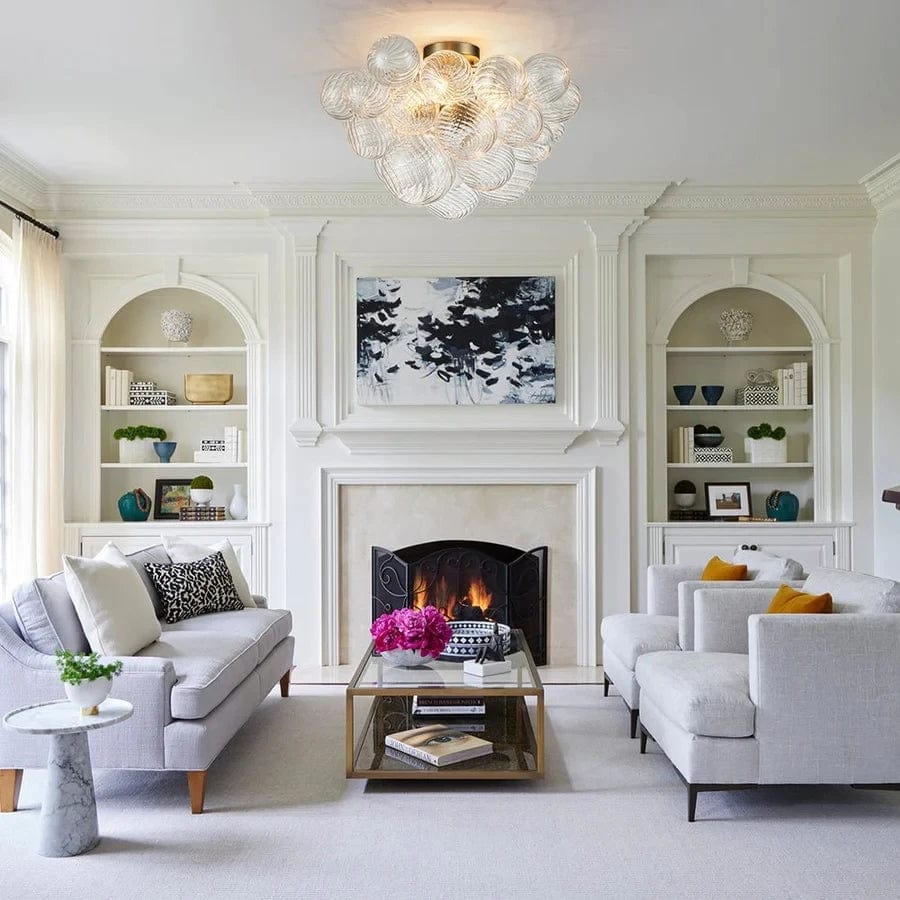
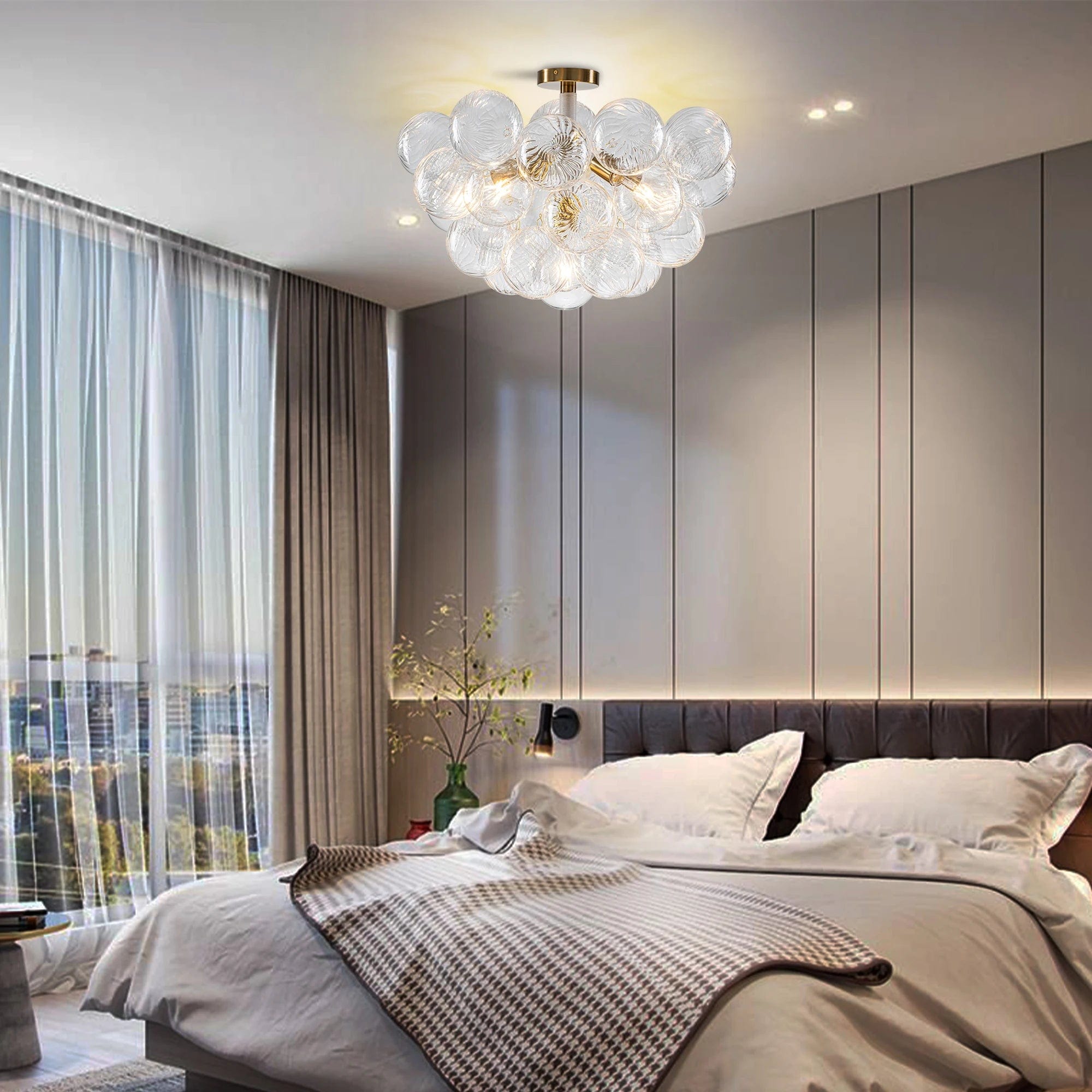
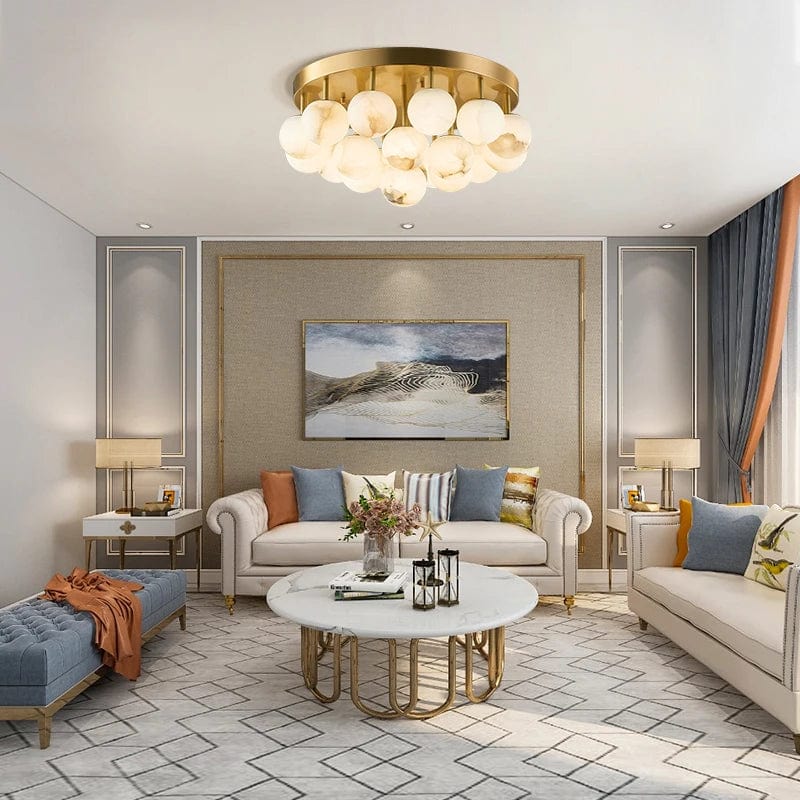
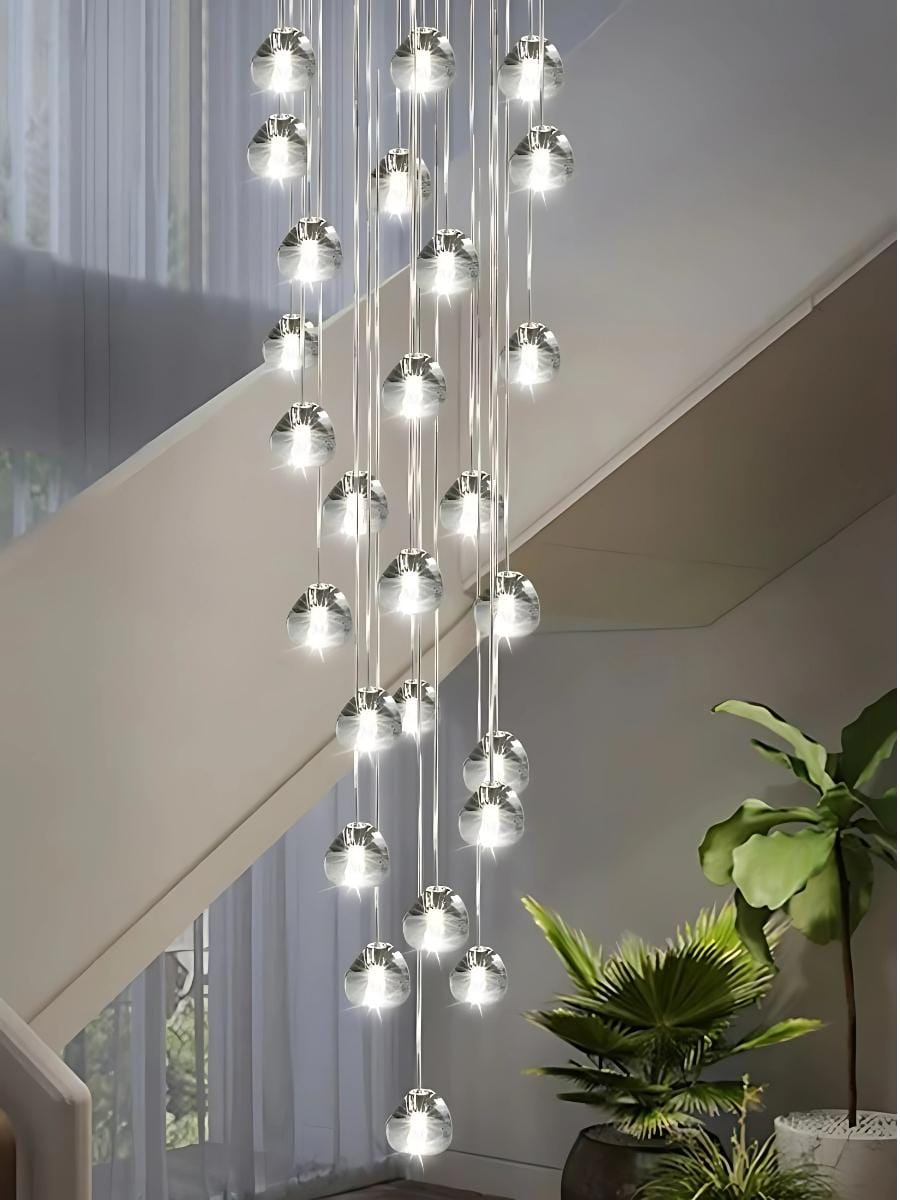
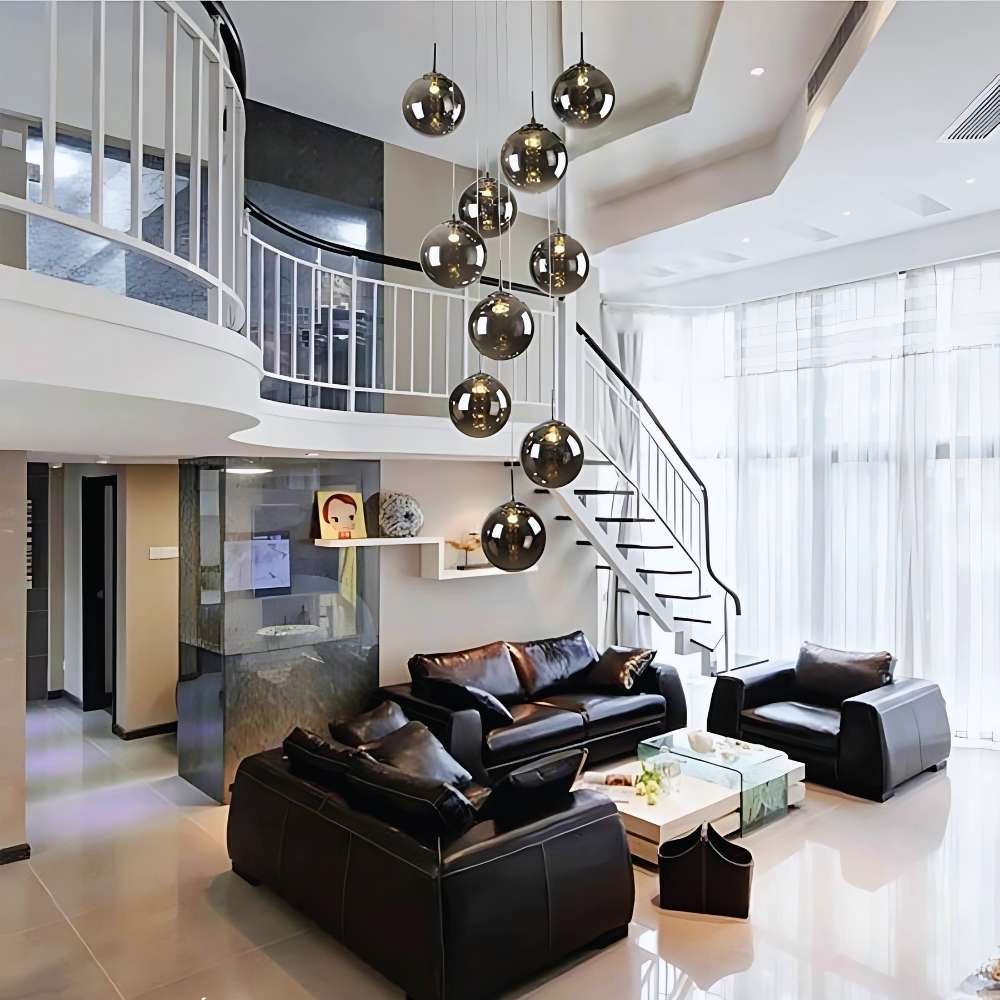
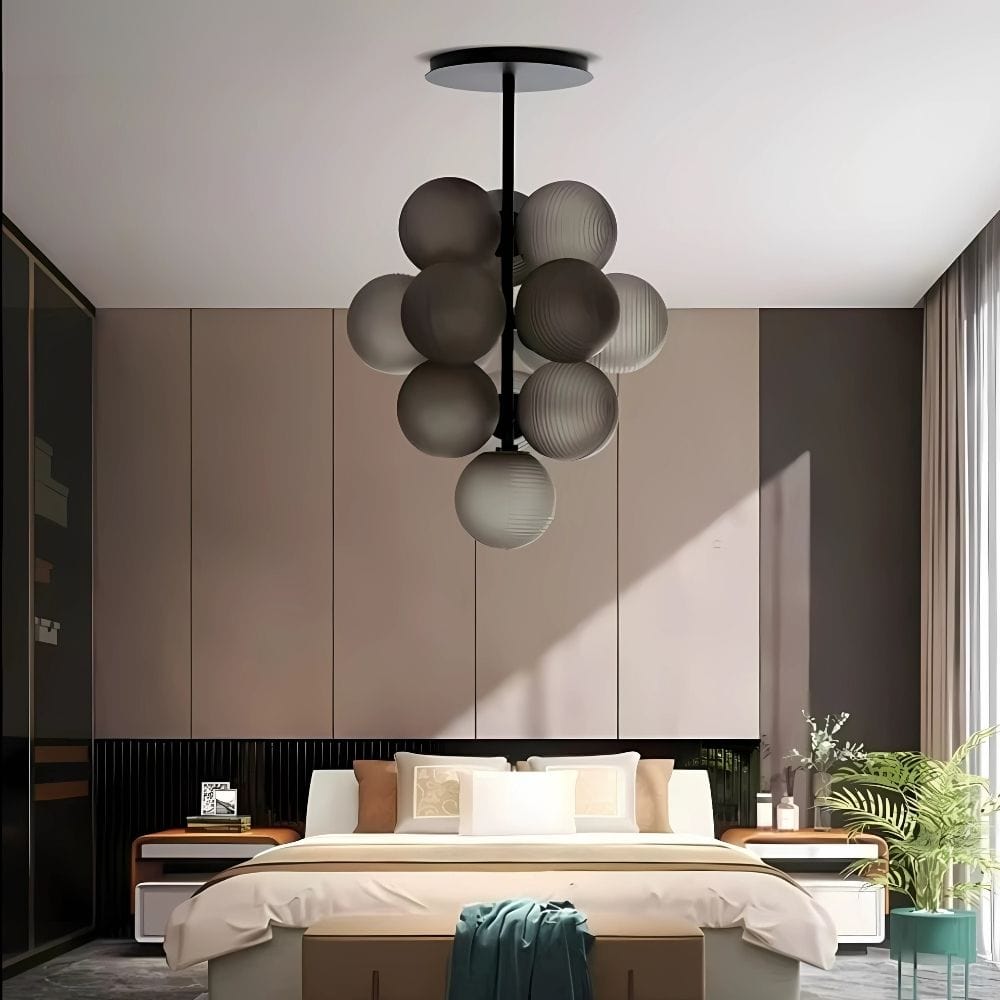
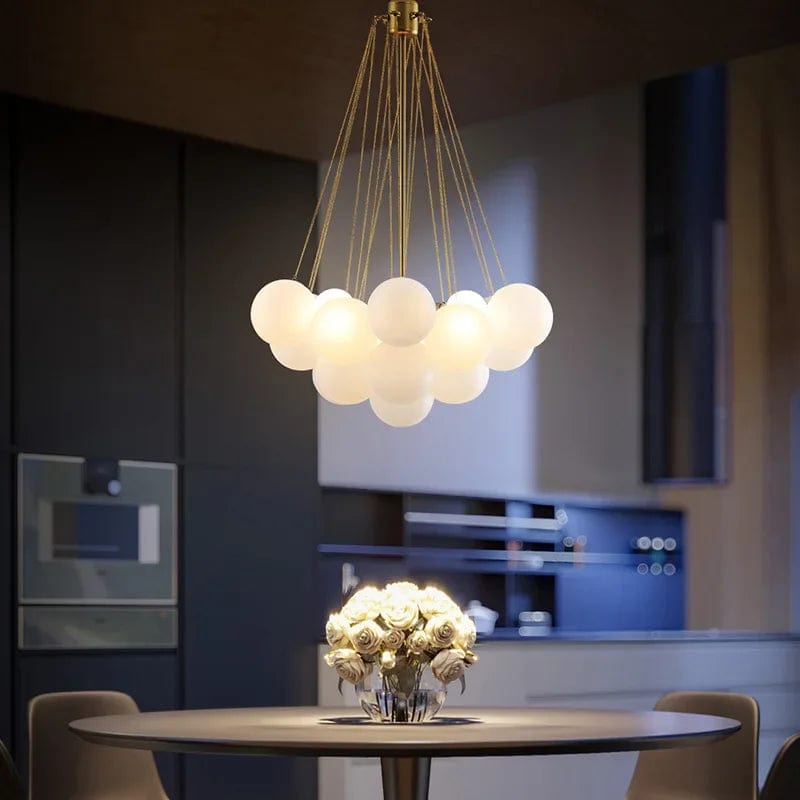
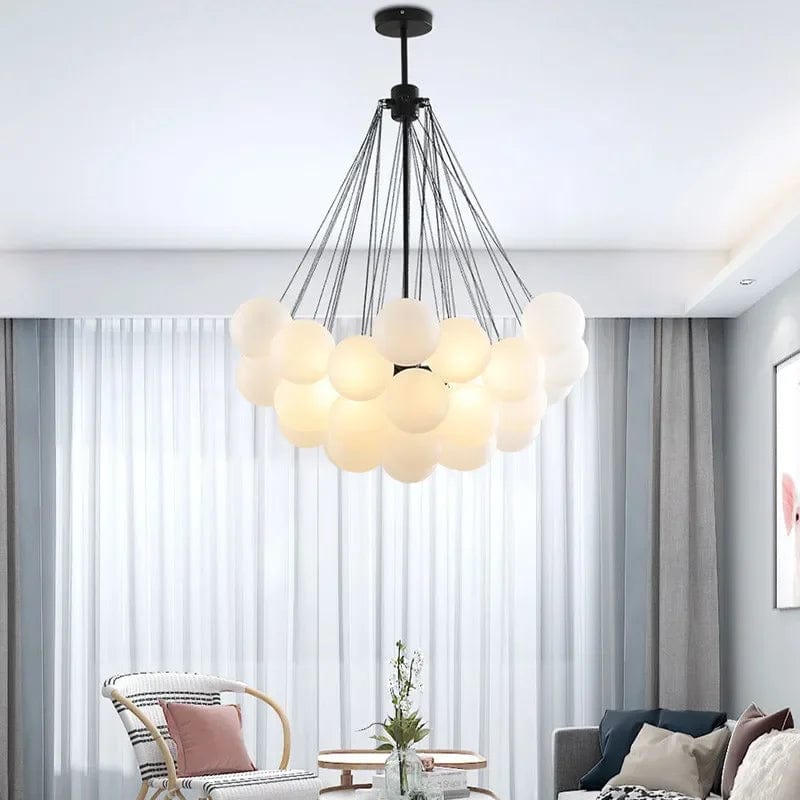
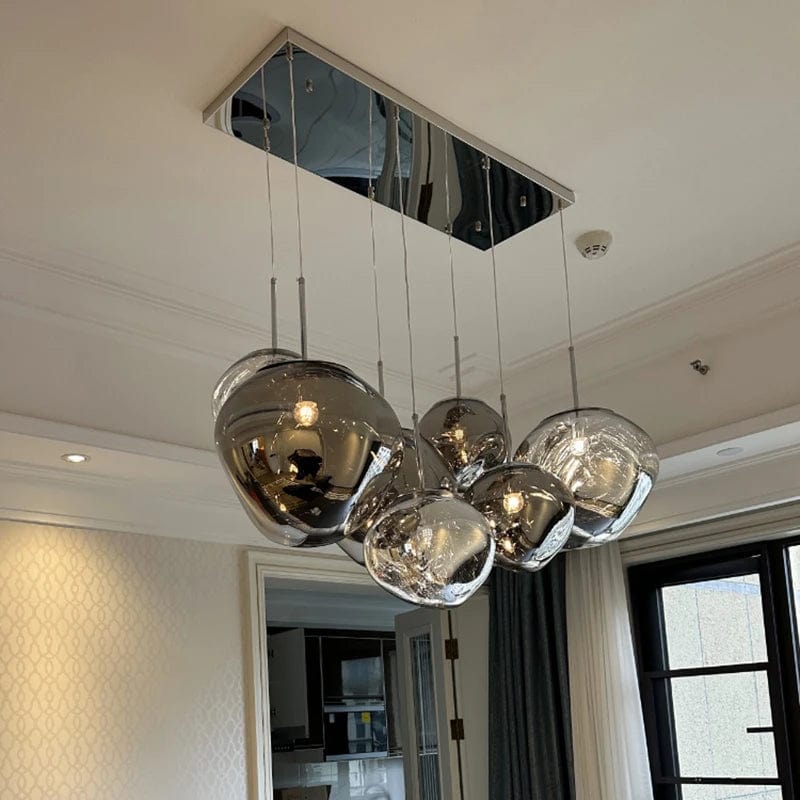
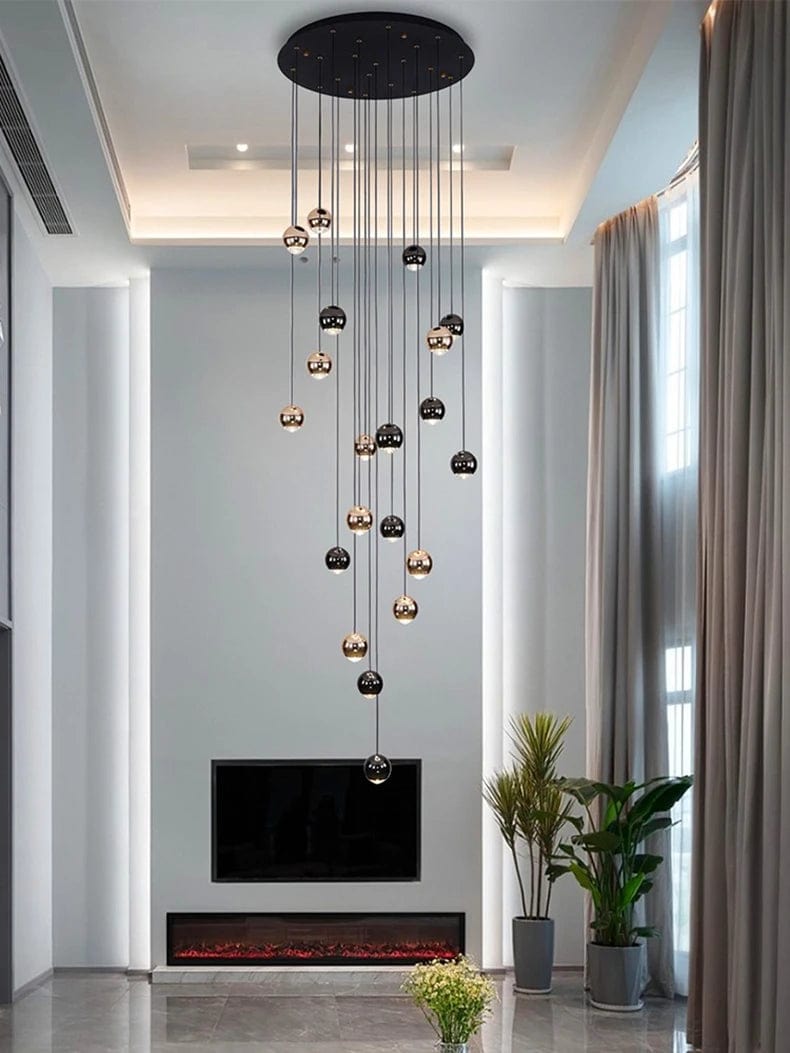
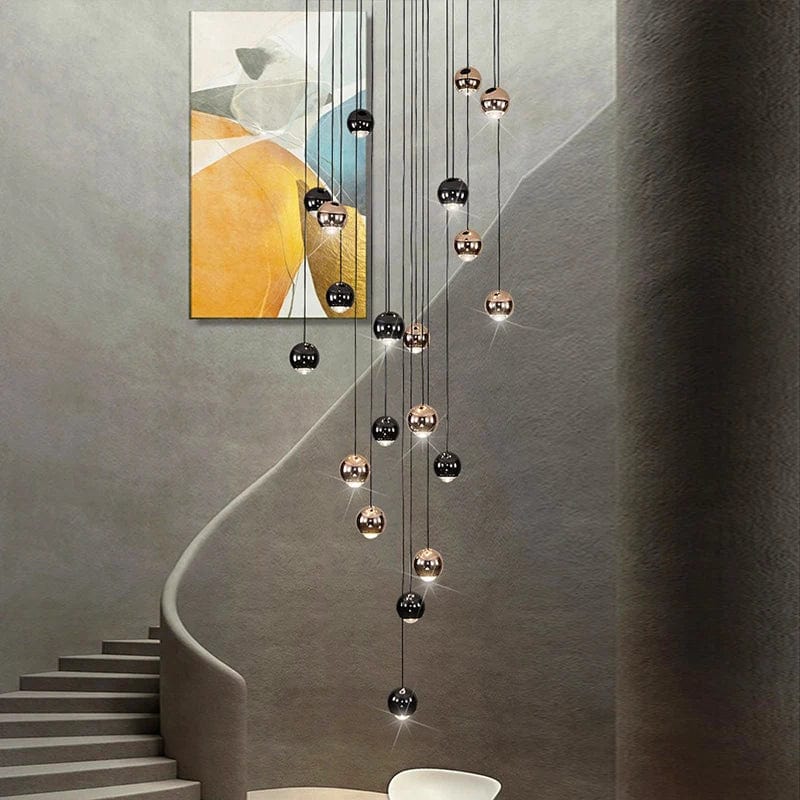
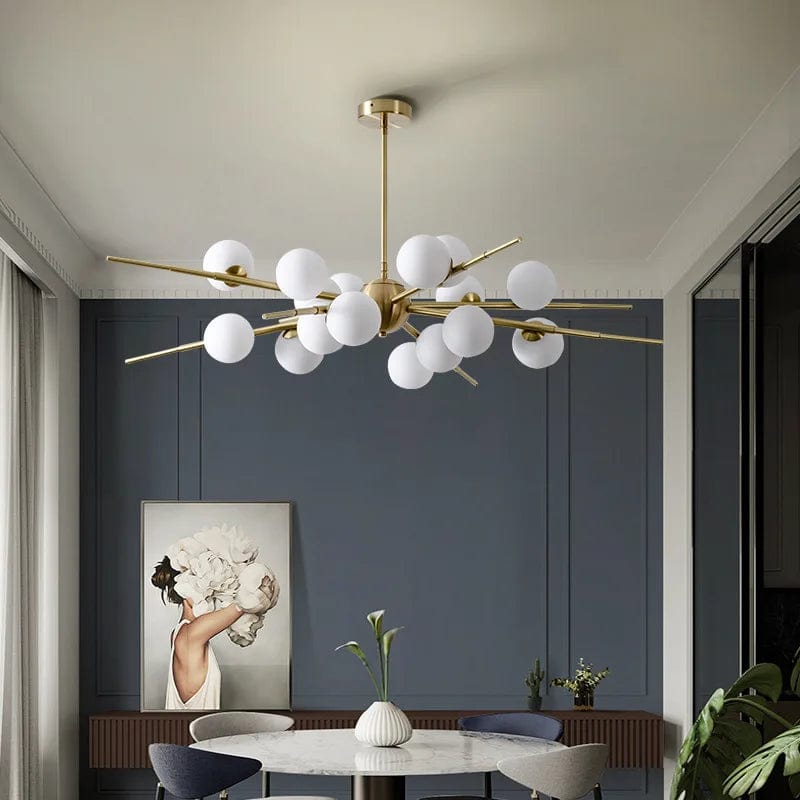
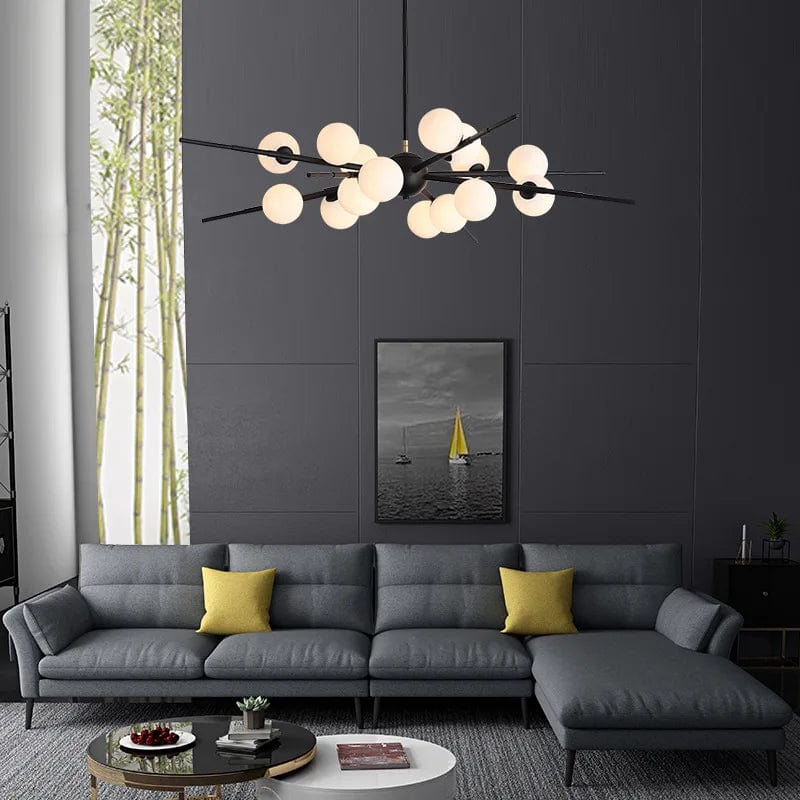
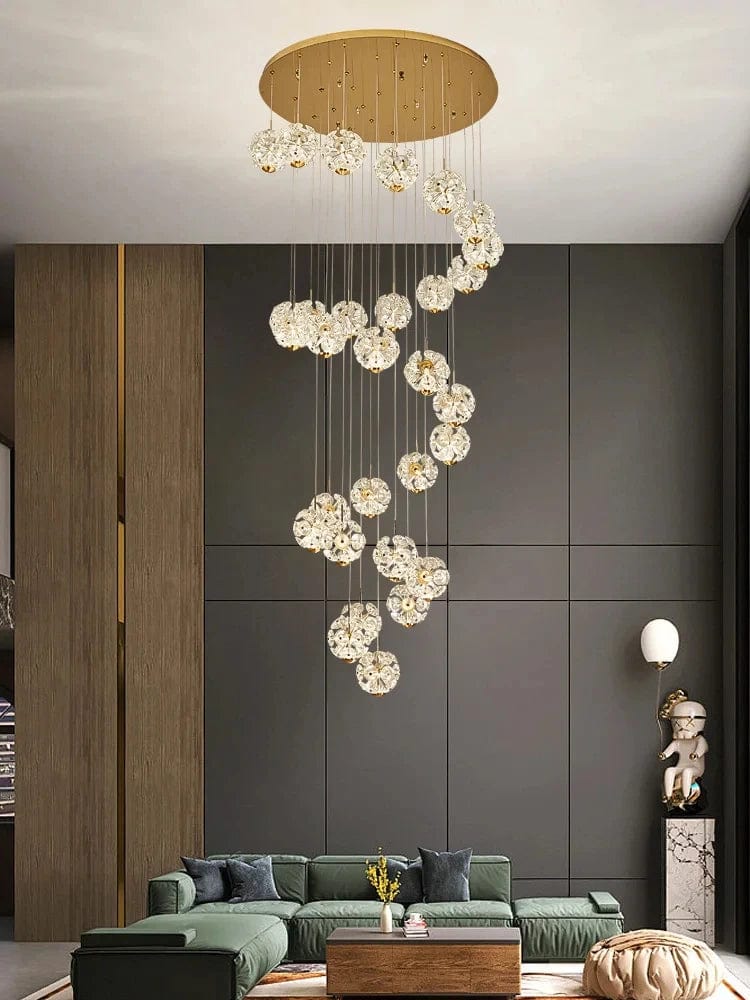
Bubble chandeliers are a strong choice for shoppers who want a fixture with visual character but do not want the ceiling to feel dense or overly traditional. This category is built around clustered glass spheres, globe-style forms, and arrangements that create a floating effect from below. On this page, that look appears in multiple directions, including flush mount, staircase, branch, pendant, and linear bubble styles, which makes it useful for more than one room type. If you want to compare the broader family first, you can start with our full Chandeliers collection, then return here once you know you want a glass-globe statement with more movement and rhythm.
One reason bubble chandeliers stand out is the way they balance presence and openness. A crystal chandelier can feel more reflective and formal, while a heavy metal frame can feel more structured and architectural. Bubble styles often sit somewhere in between. The repeated glass spheres add depth and shape, but the overall look can still feel airy, especially when the fixture uses open spacing, lighter framing, or clear and smoke-toned glass. That makes this category especially useful in rooms where you want a statement piece without making the ceiling feel visually closed in.
What Gives a Bubble Chandelier Its Look?
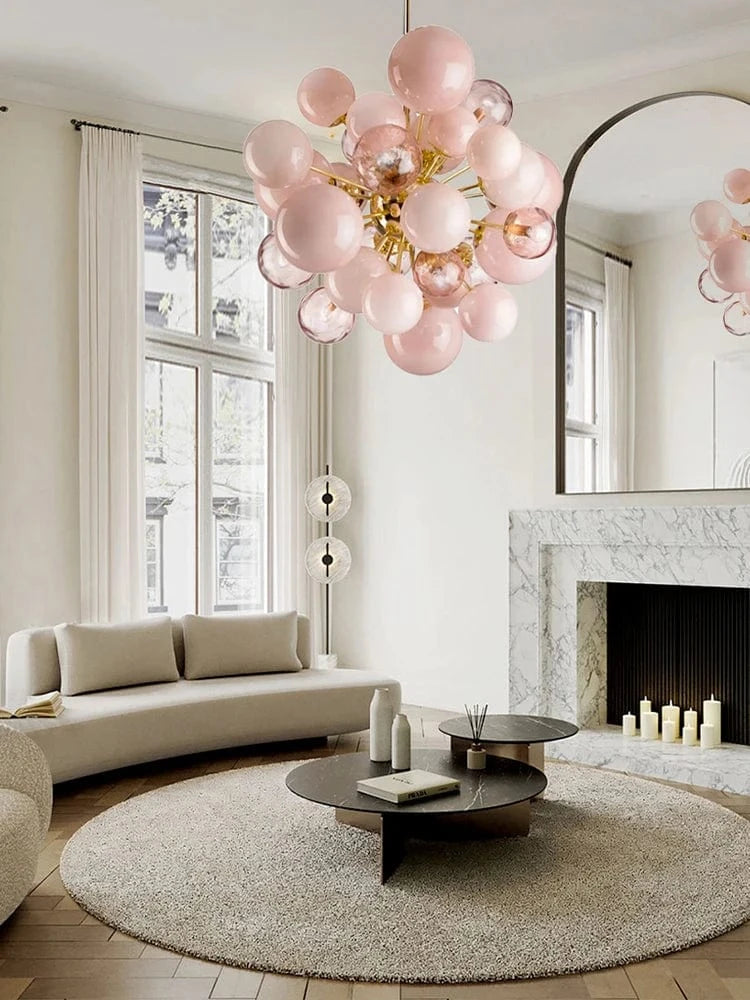
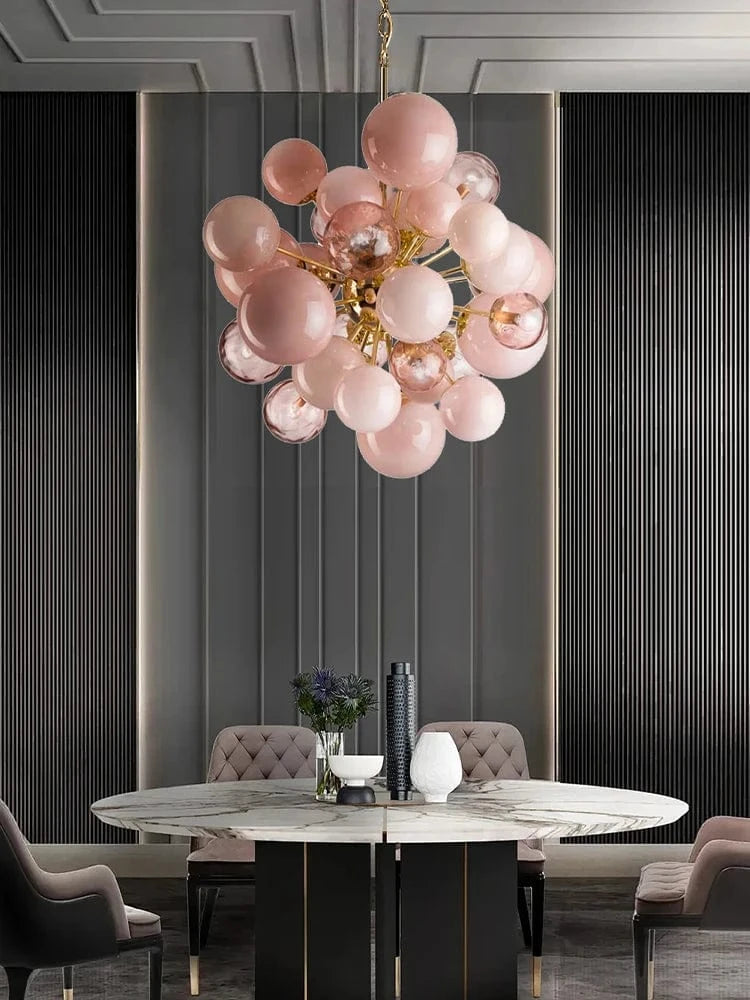
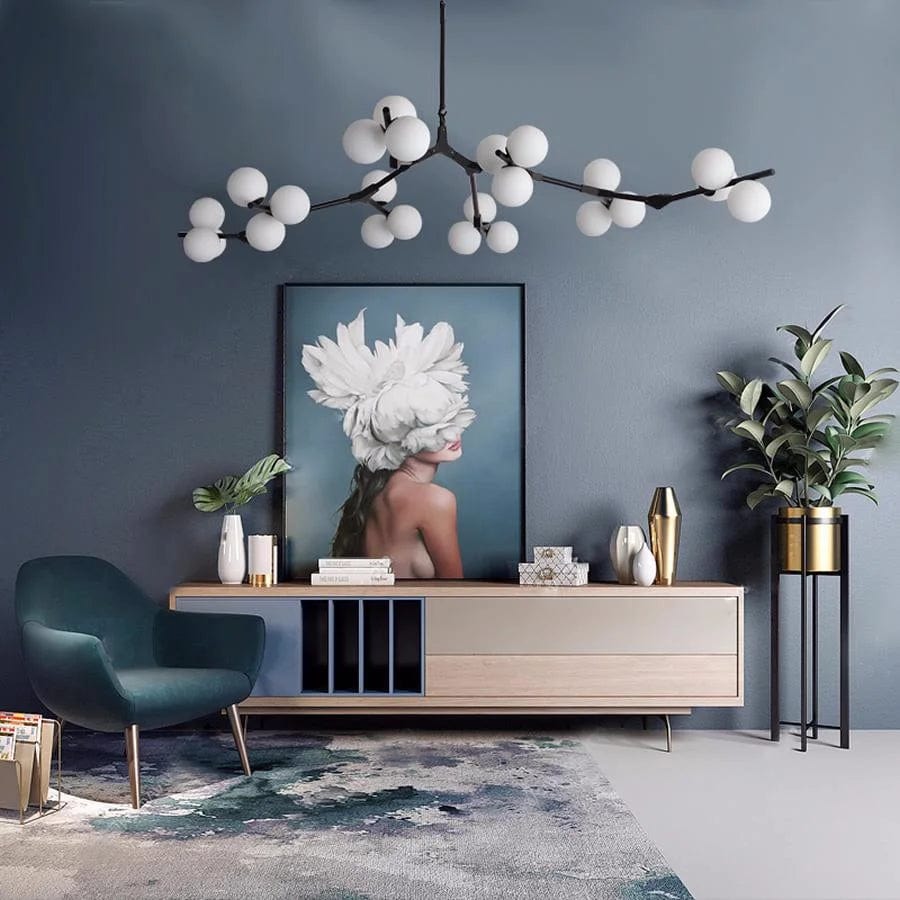
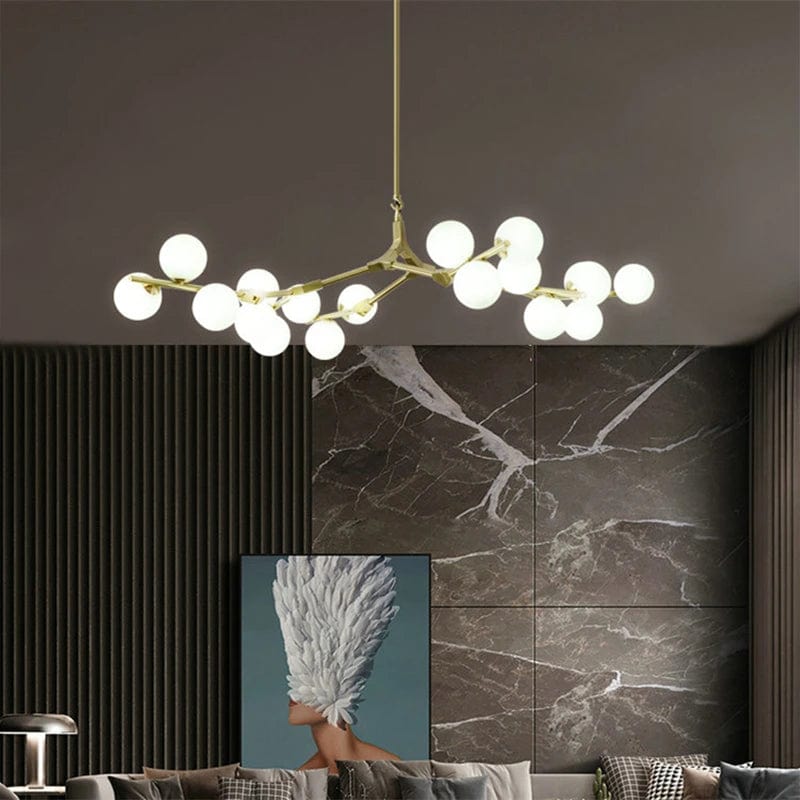
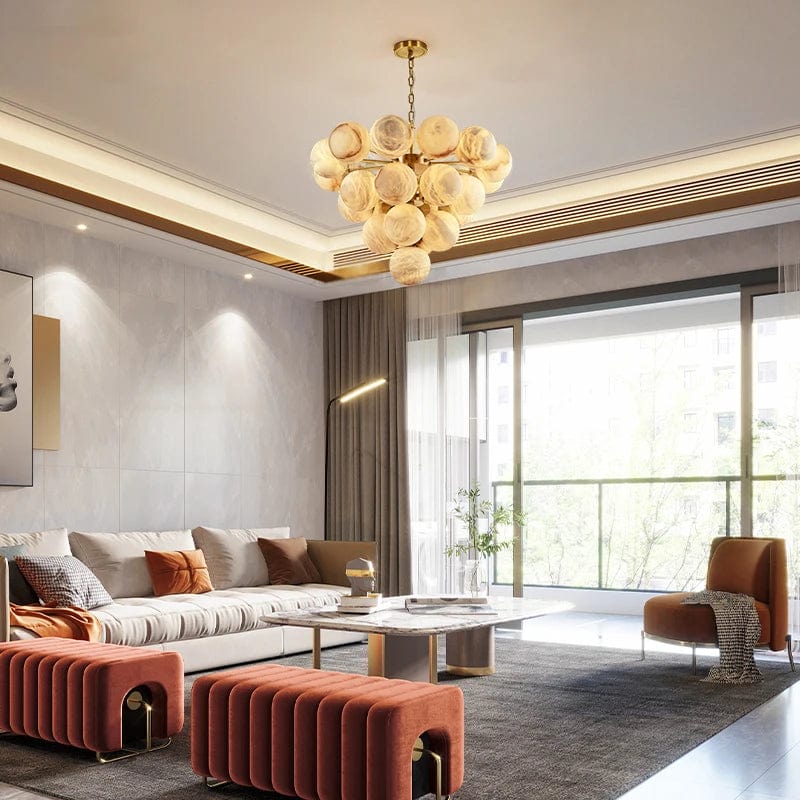
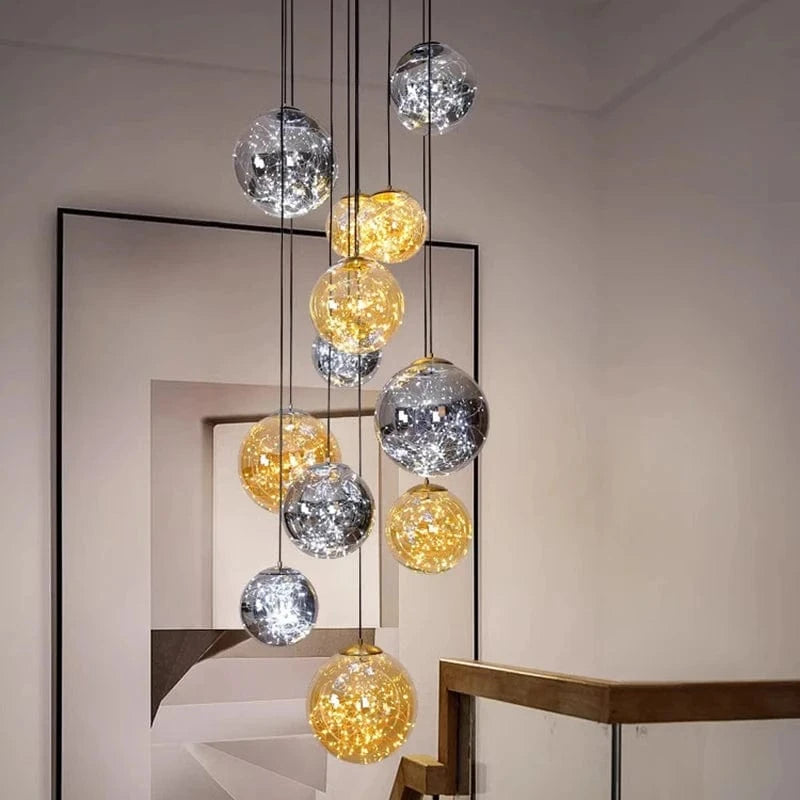
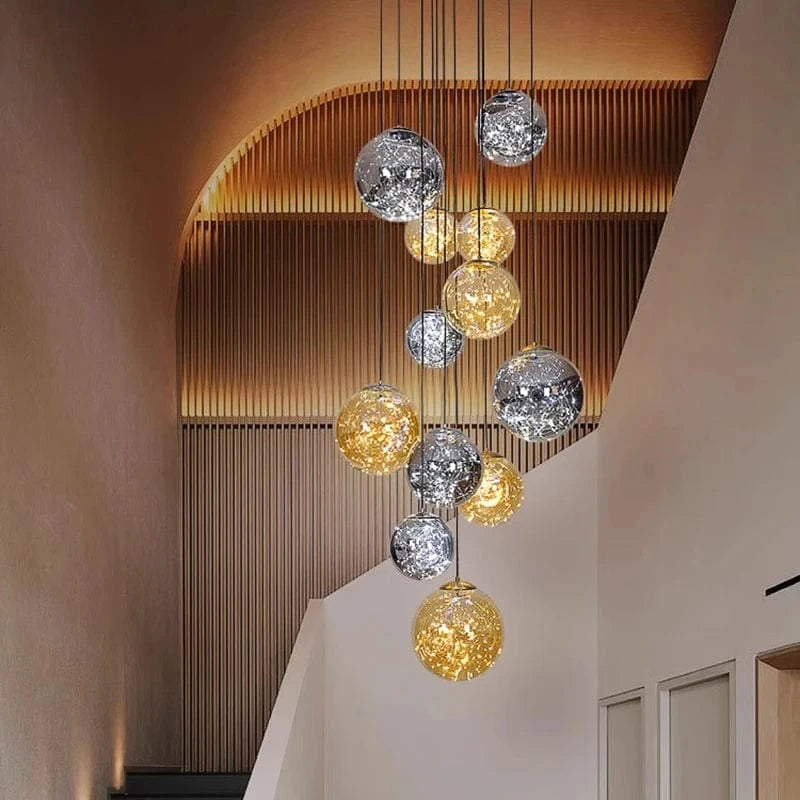
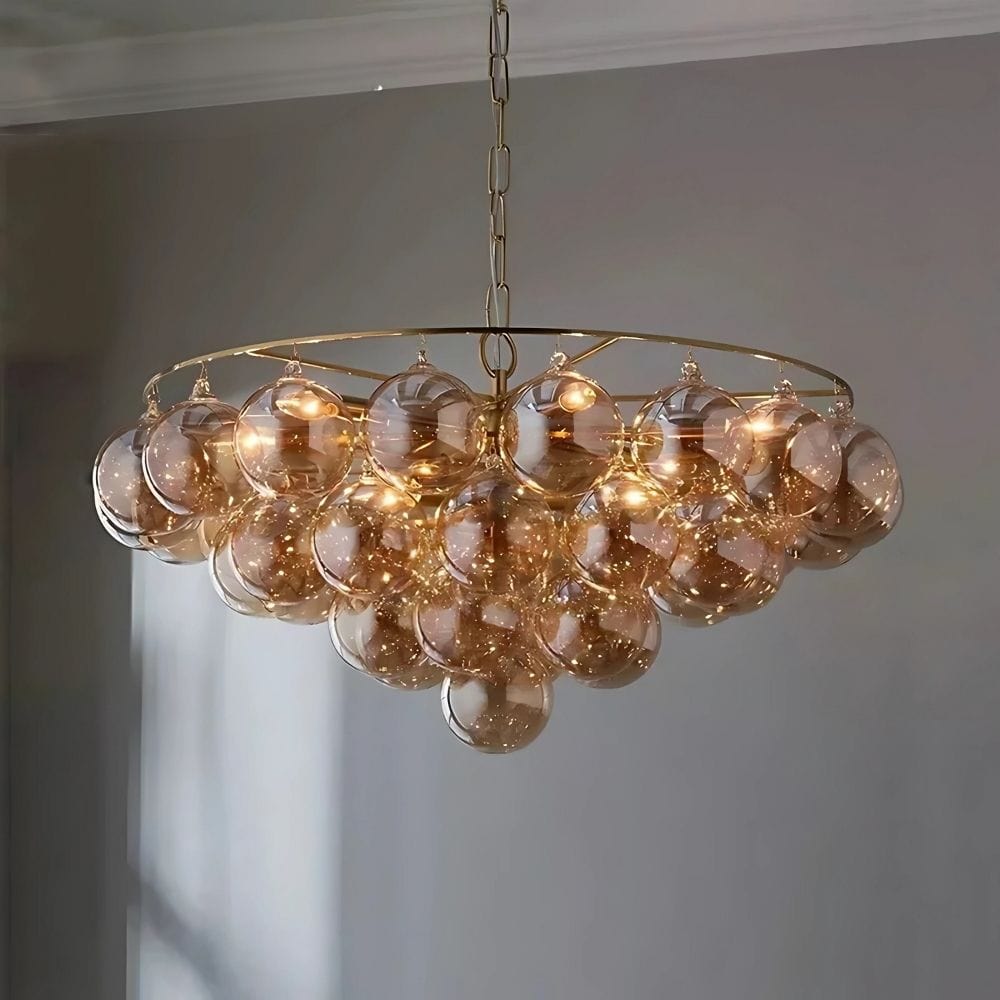
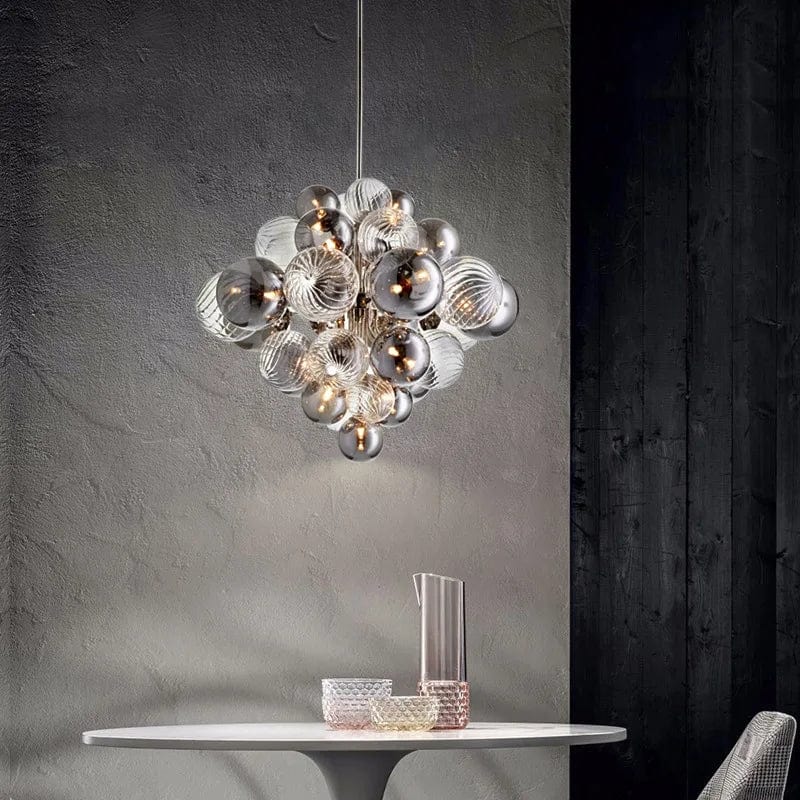
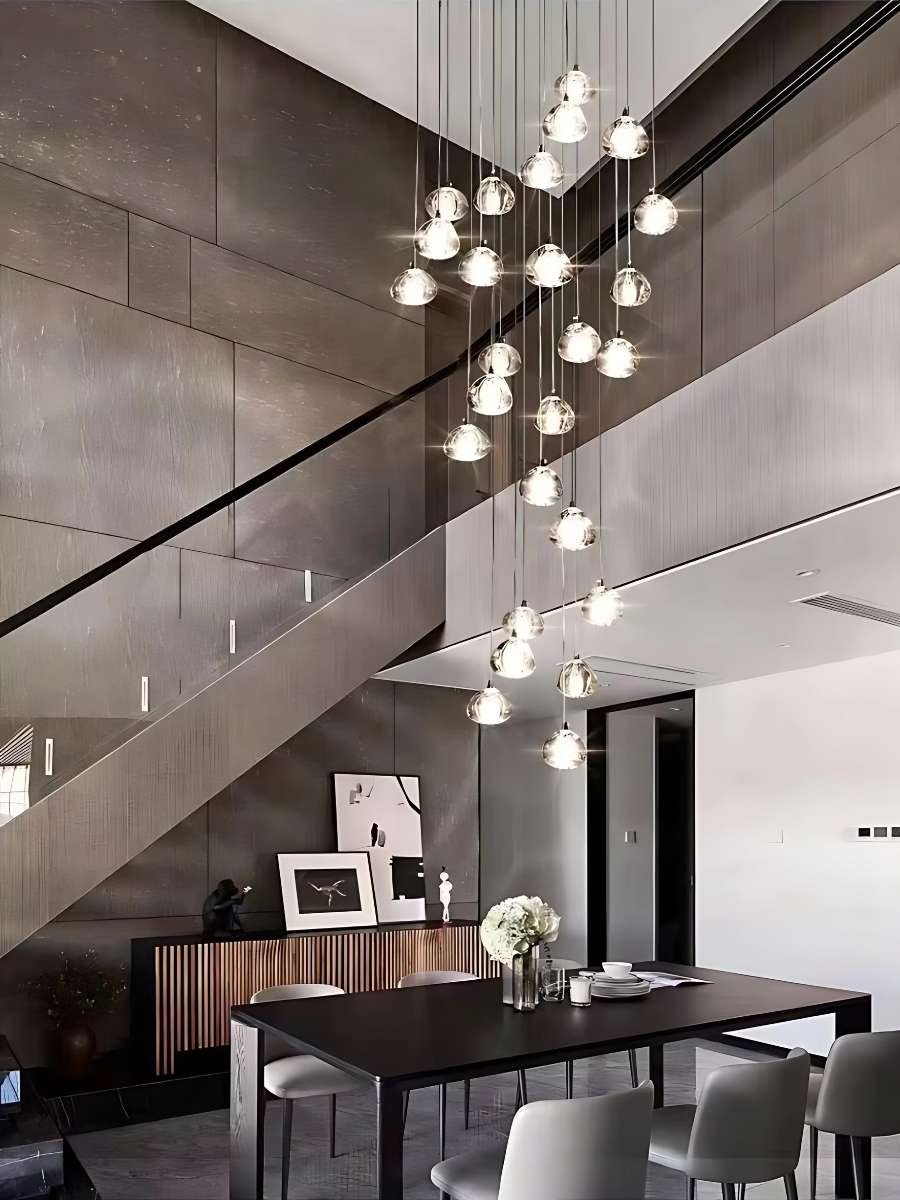
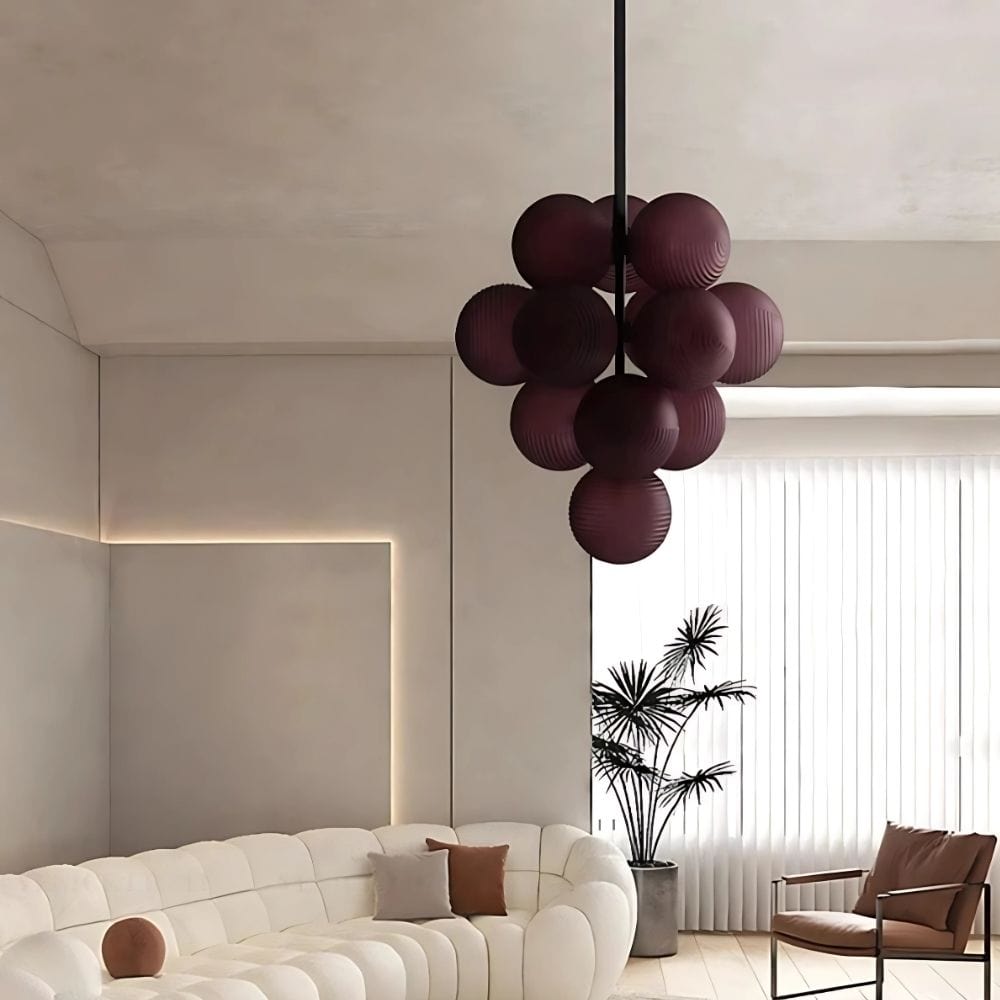
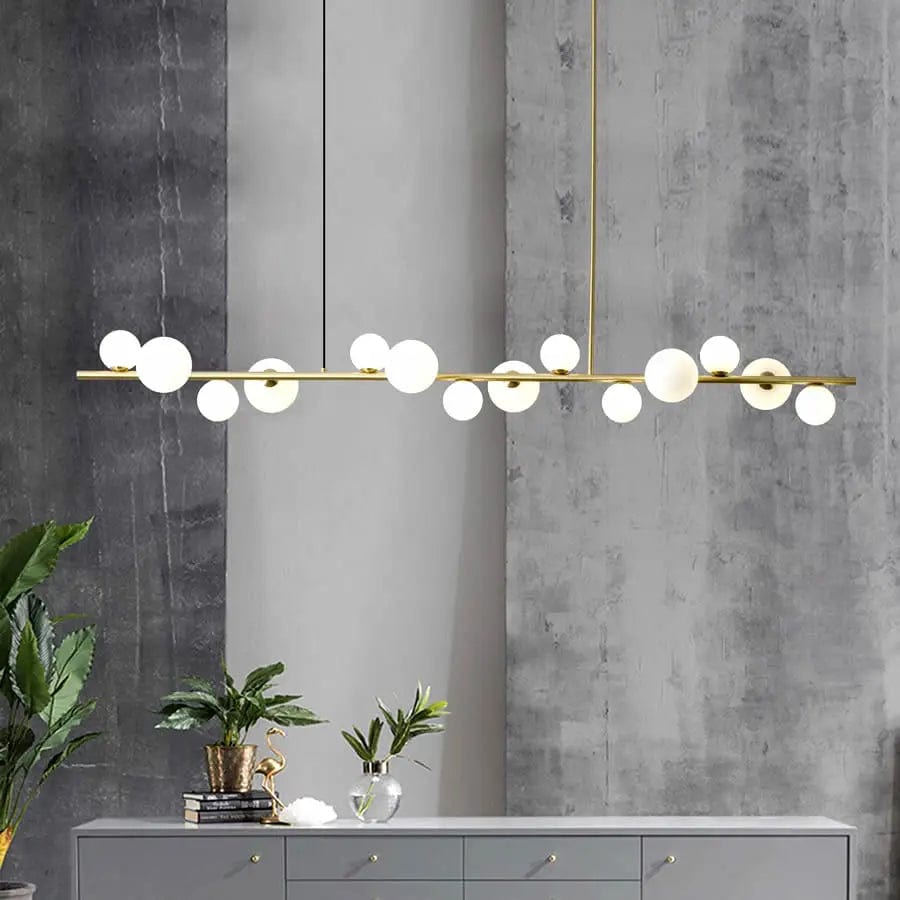
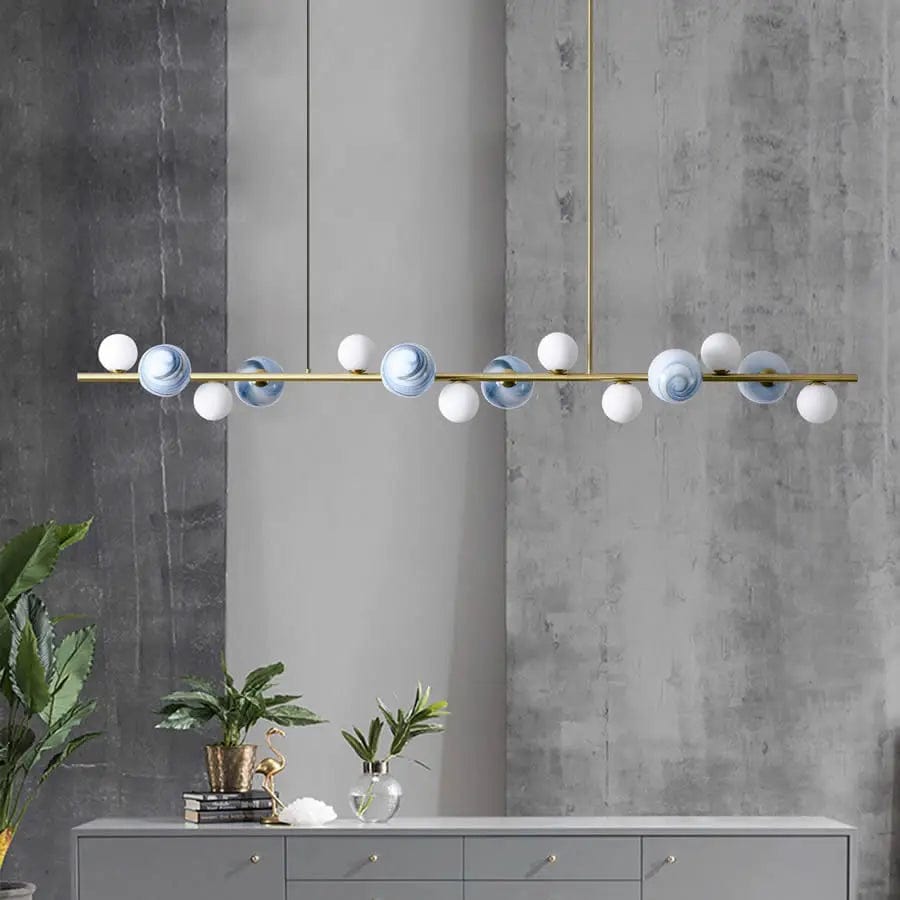
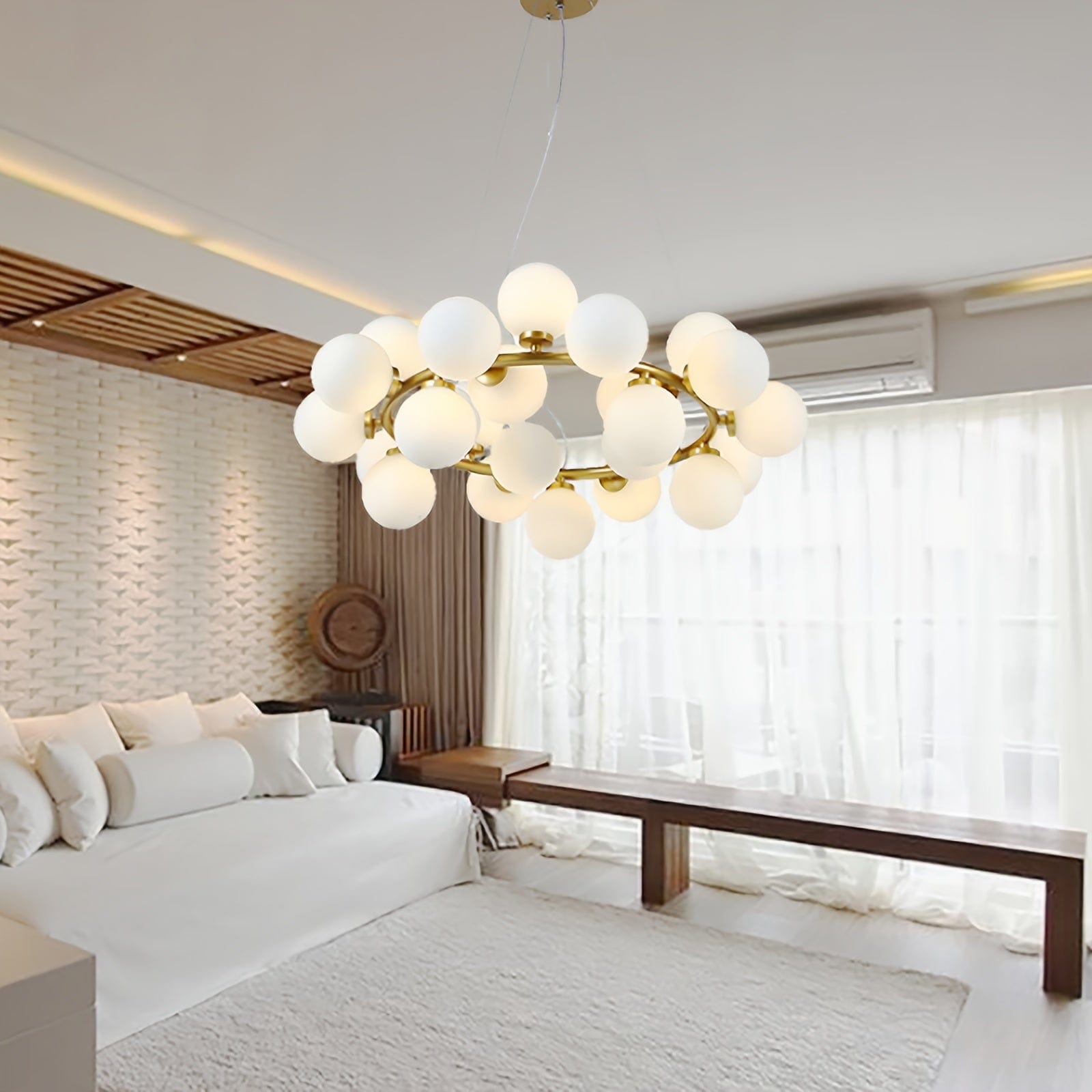
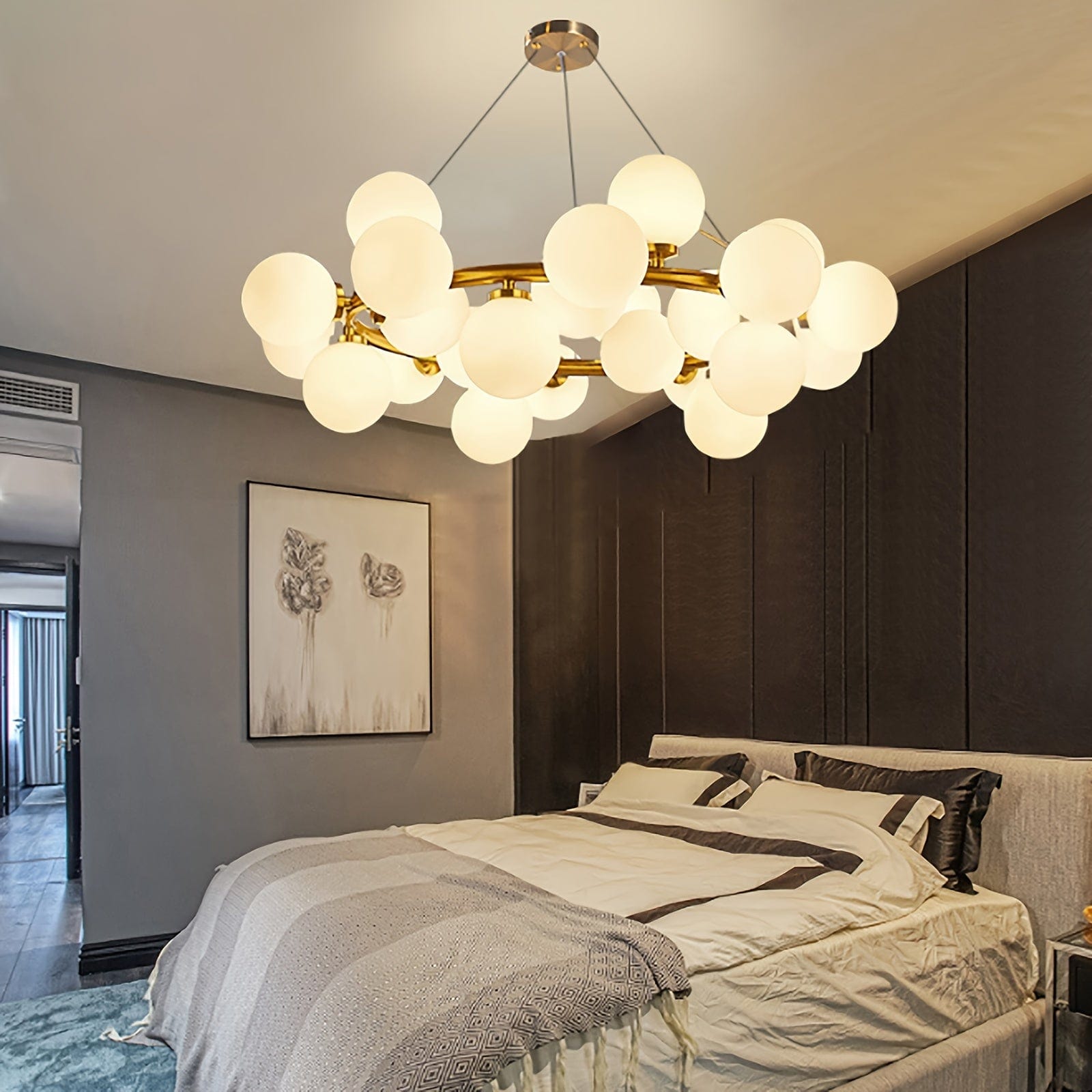
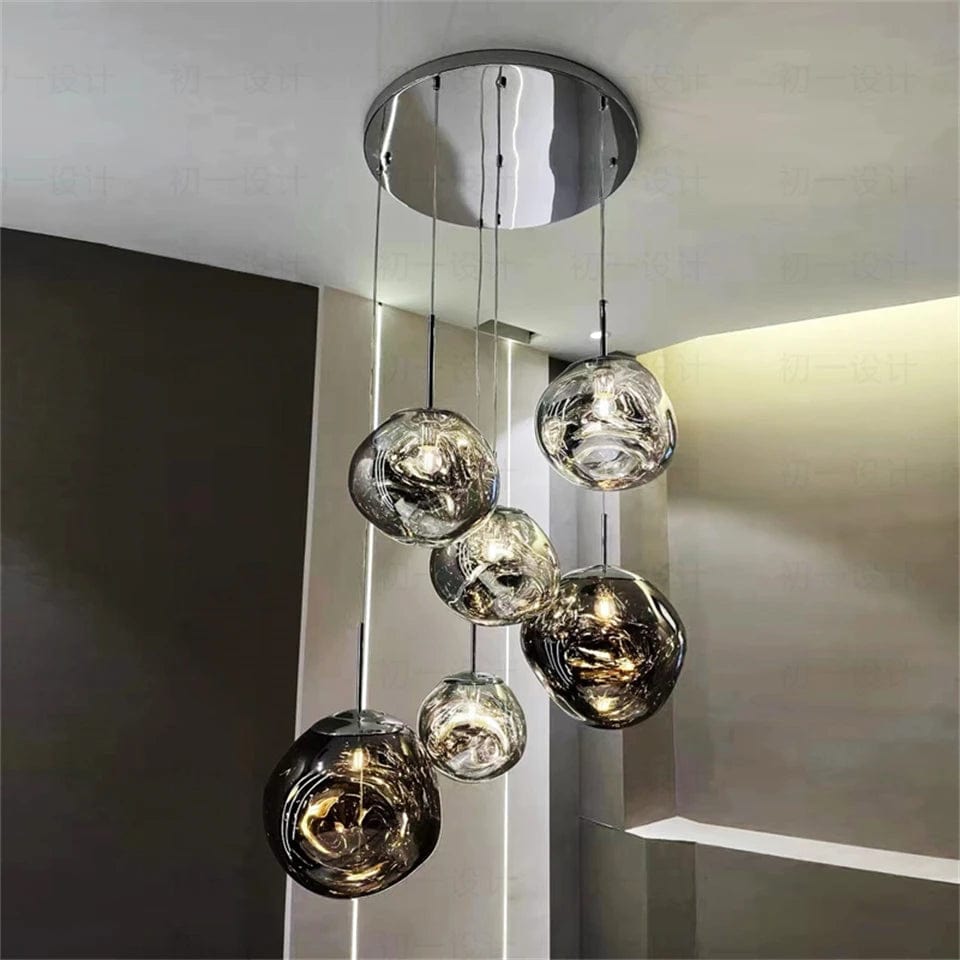
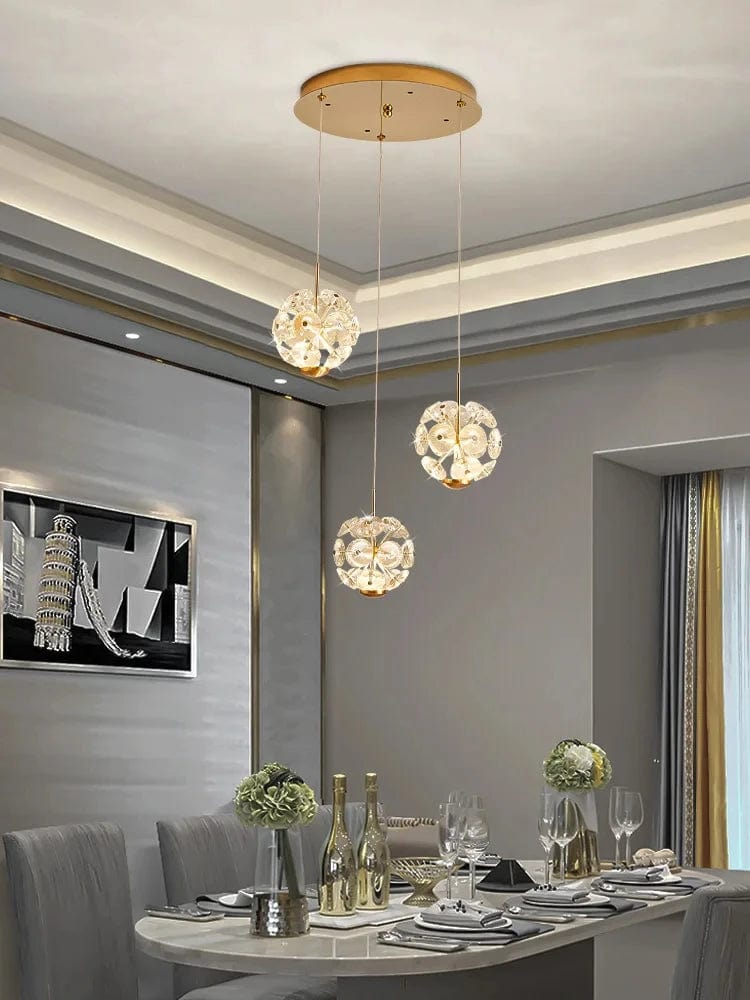
The defining feature is the globe. Instead of relying on one shade or one dominant frame, bubble chandeliers use multiple glass spheres to create texture, repetition, and a more layered ceiling line. Some fixtures keep the globes tightly grouped for a compact, clustered look. Others spread them across a branch-like frame, suspend them at different heights, or arrange them in a line for longer tables and islands.
- Common features: glass globes, clustered spheres, floating arrangements, branch forms, linear layouts, flush mount options, staircase drops
- Best room types: dining rooms, foyers, stairwells, living rooms, bedrooms, breakfast areas, and open-plan spaces
- Strong style pairings: modern interiors, contemporary spaces, softer minimalist rooms, mixed-material homes, and glass-forward lighting schemes
Tip: Bubble chandeliers are especially helpful when you want the fixture to feel noticeable from across the room, but not visually blocky or too solid from below.
Choosing the Right Bubble Chandelier by Room and Ceiling Height
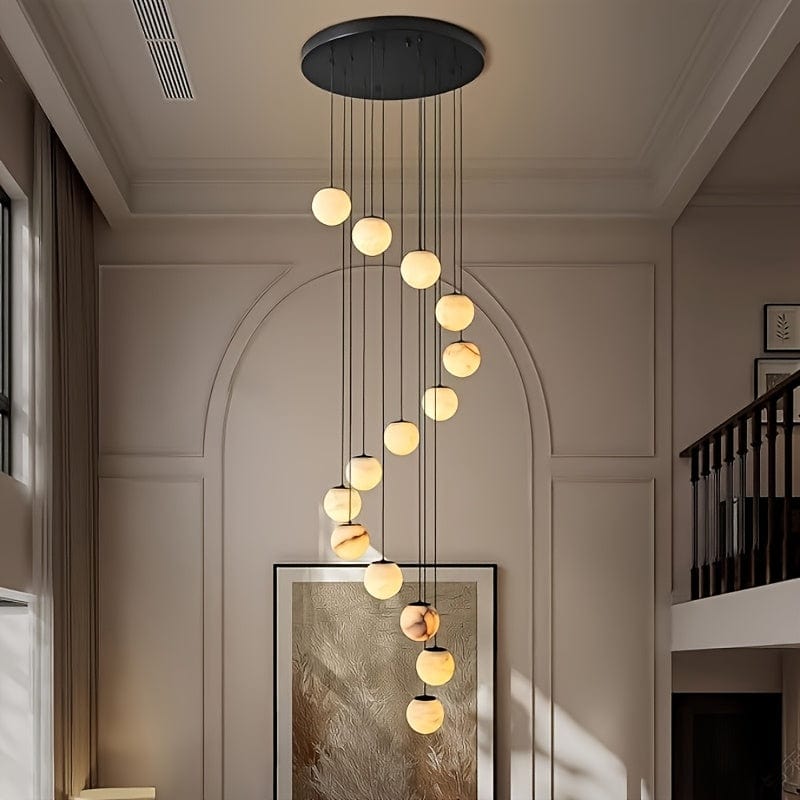
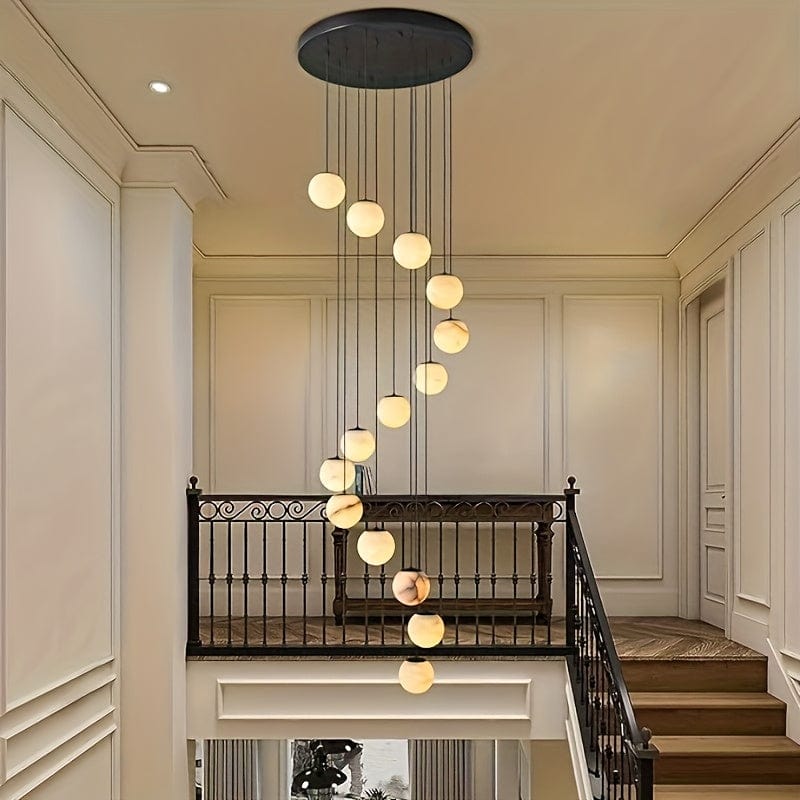
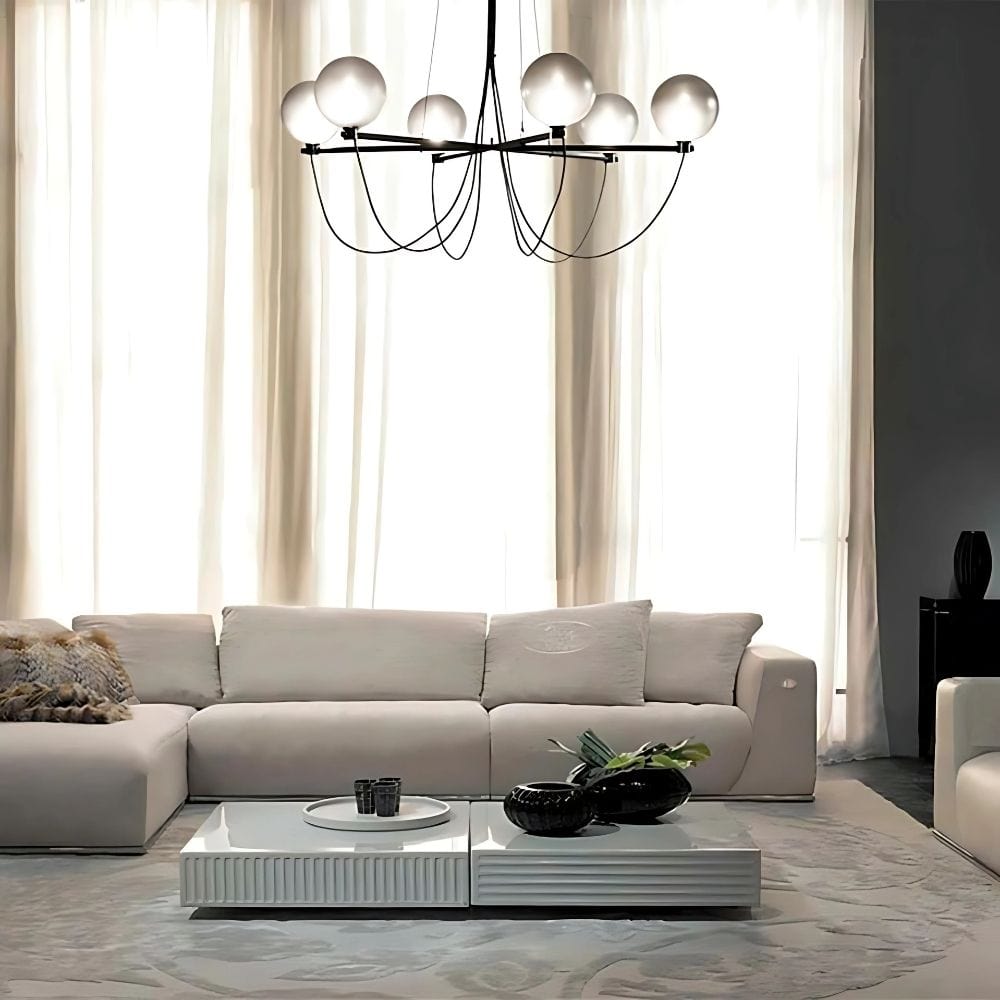
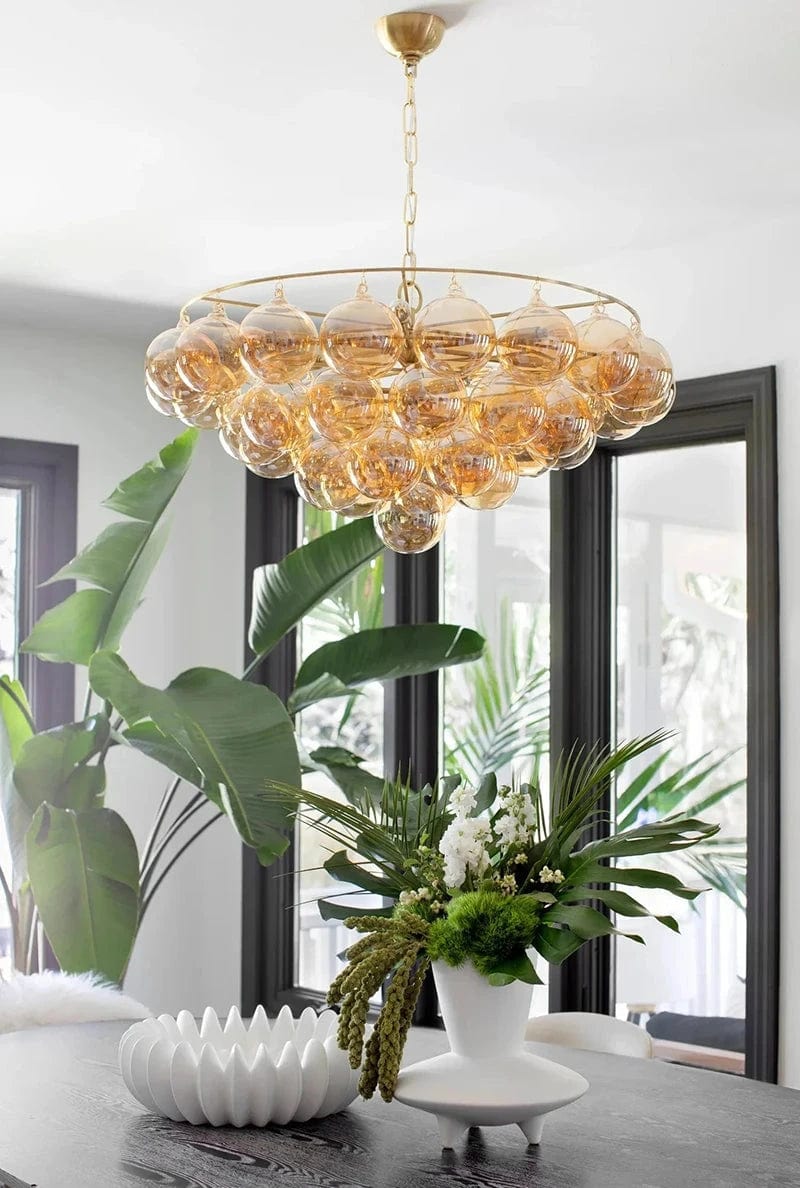
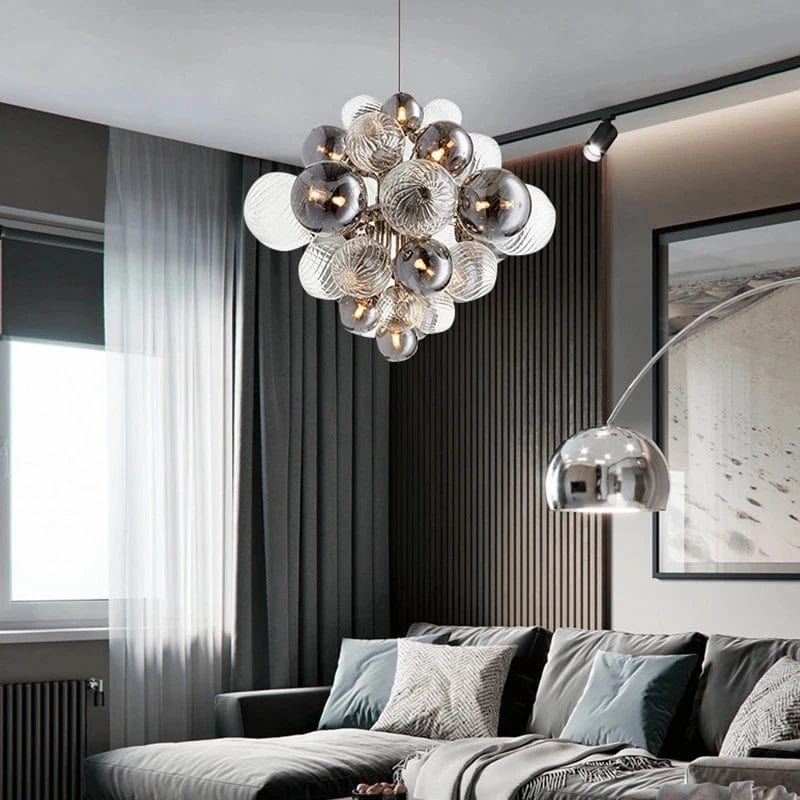
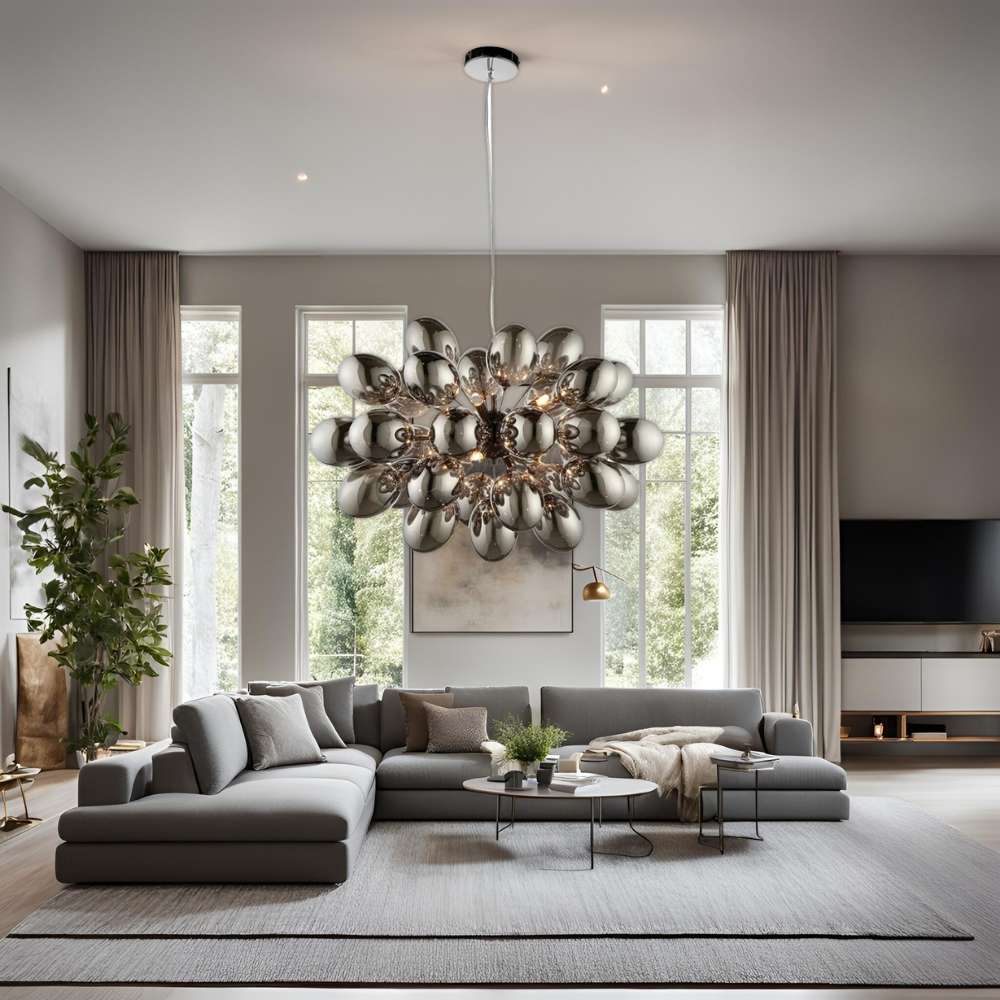
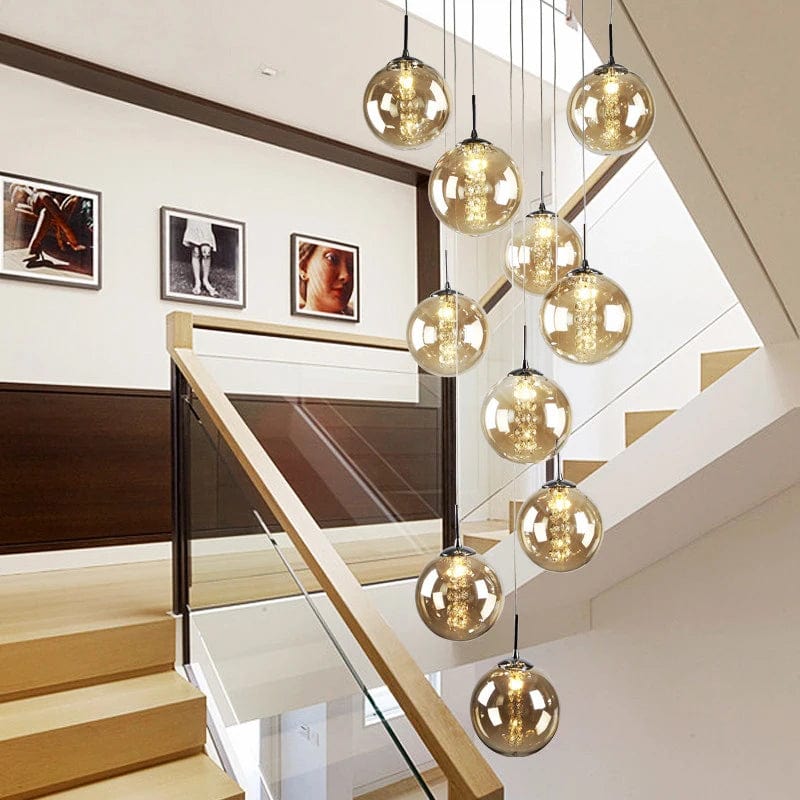
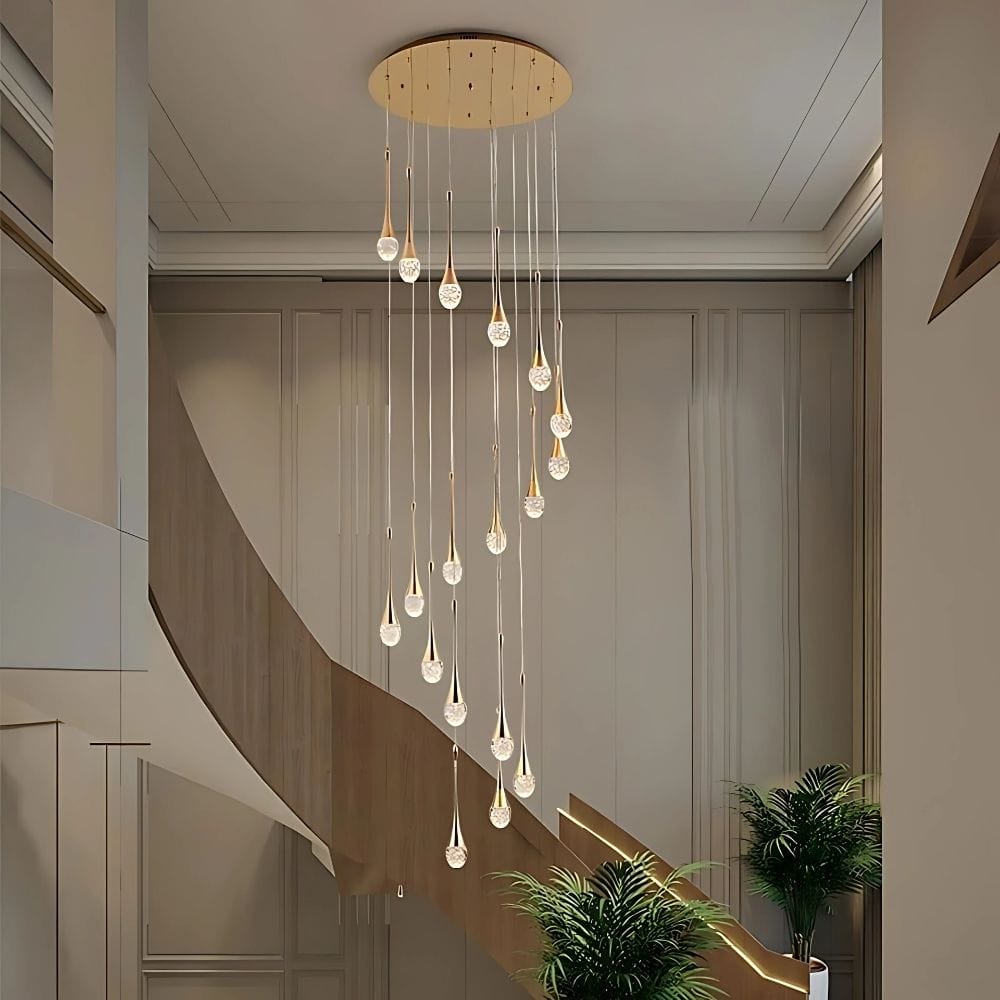
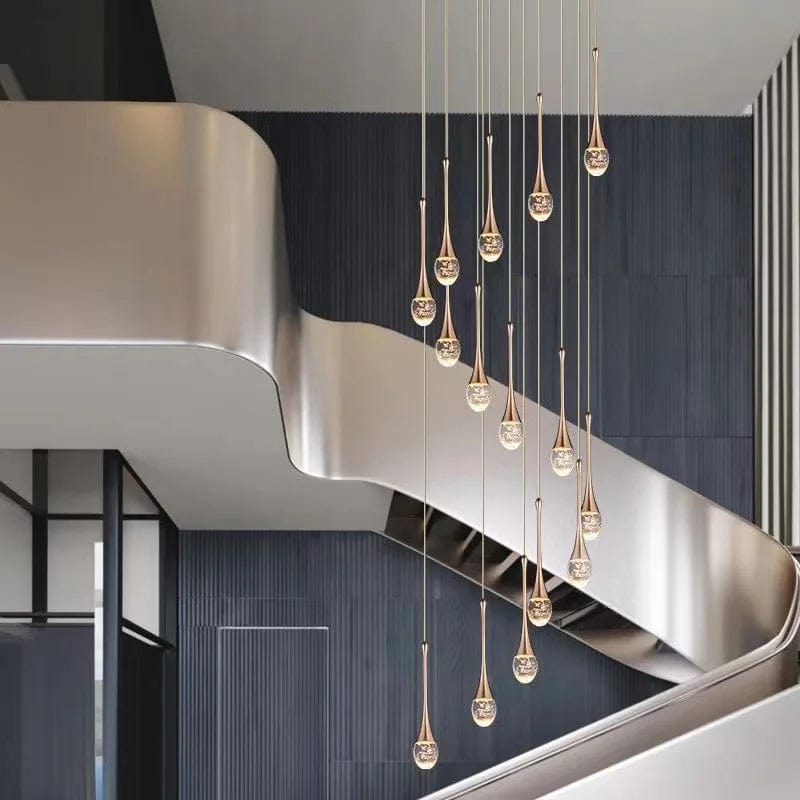
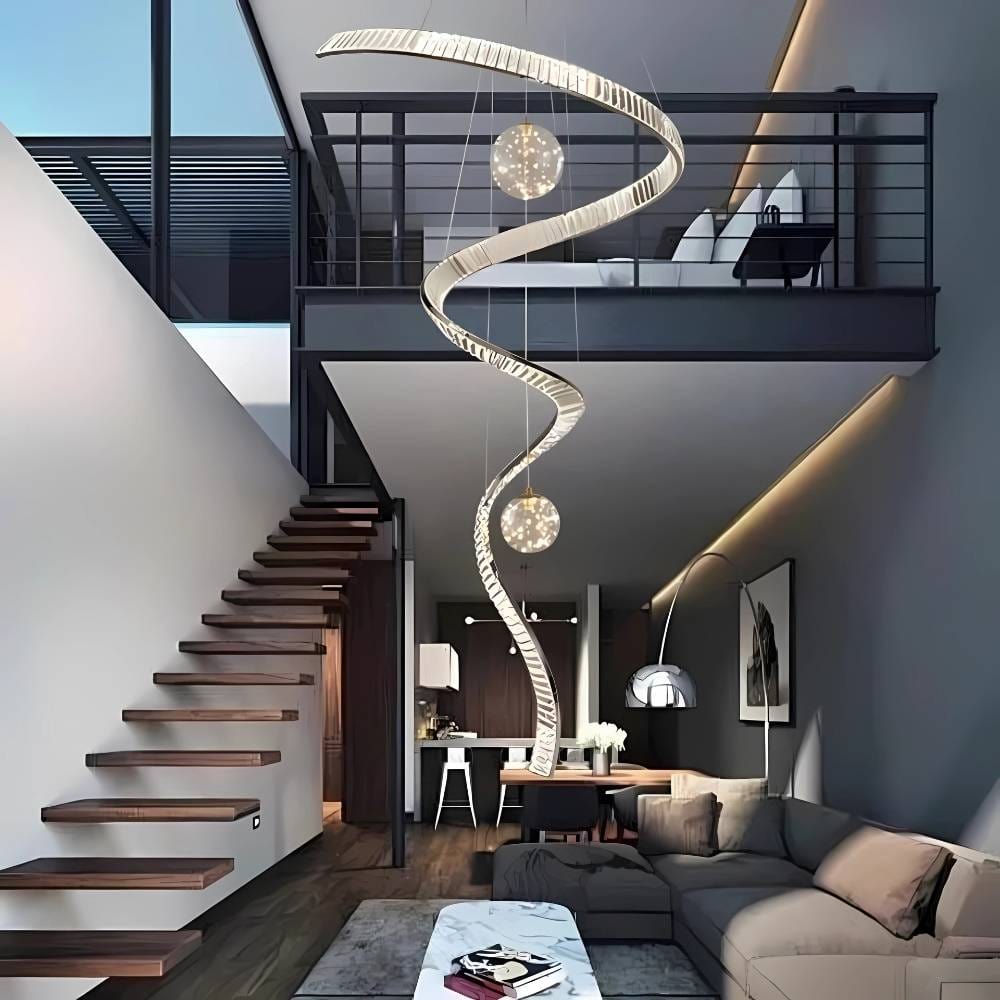
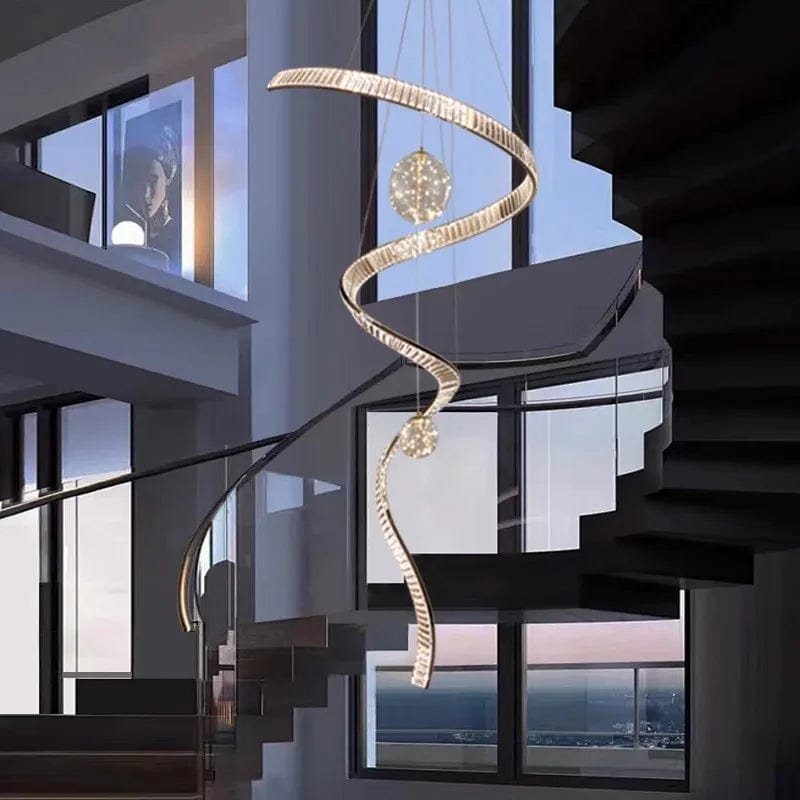
The best choice usually depends on how the room is laid out and how the chandelier will be viewed. Over a dining table, bubble chandeliers often work well because the repeated globes create a centered focal point without requiring a very traditional frame. In foyers and stair-adjacent spaces, multi-drop or taller bubble compositions usually feel more proportional because the eye reads the spheres from several angles and distances. In living rooms and bedrooms, a more compact or wider-spread bubble form can add interest overhead without making the room feel too formal.
If you are shopping by use case, it can help to compare this category with Dining Room Chandeliers, Staircase Chandeliers, and Foyer & Entryway Chandeliers. If your main priority is material feel rather than sphere styling, it is also worth comparing Glass Chandeliers.
Quick planning notes:
- Room-size starting point: add the room length and width in feet, then use that total in inches as a rough chandelier diameter guide
- Dining placement: many shoppers begin around 30 to 36 inches above the tabletop, then adjust for ceiling height and globe size
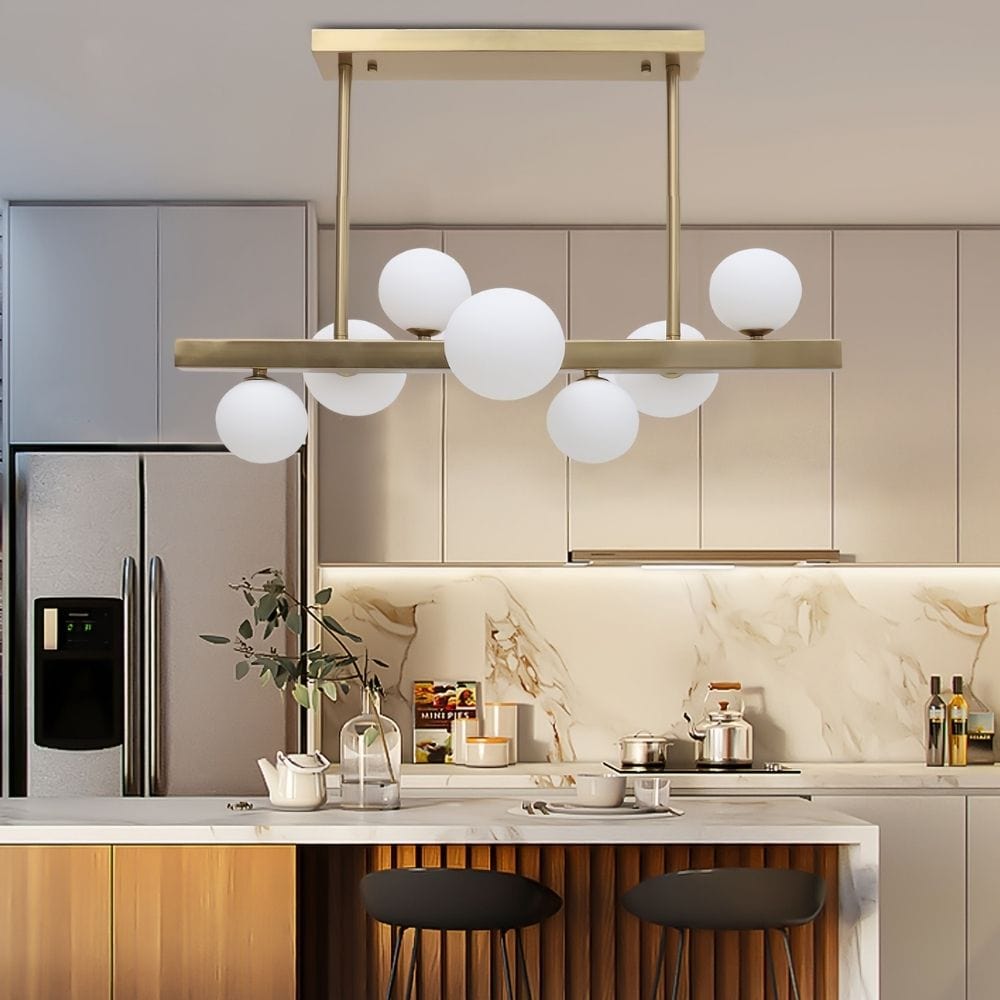
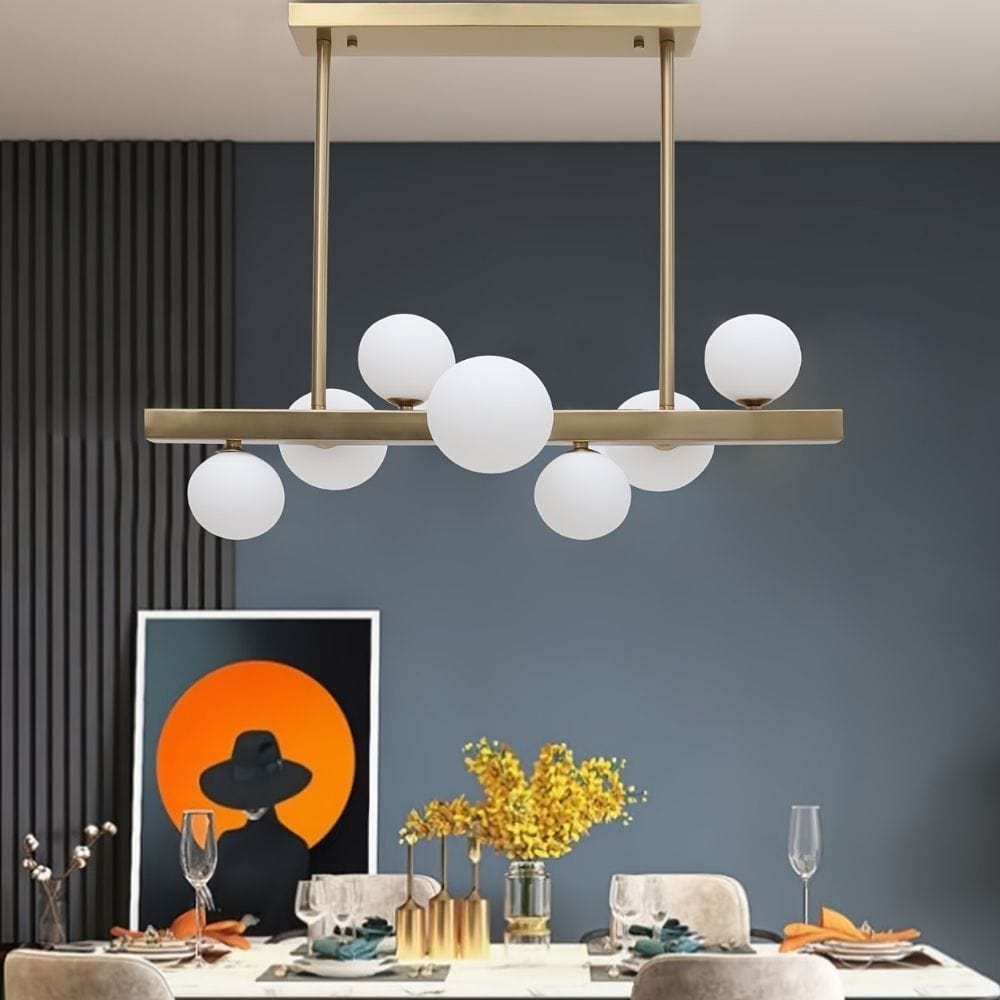
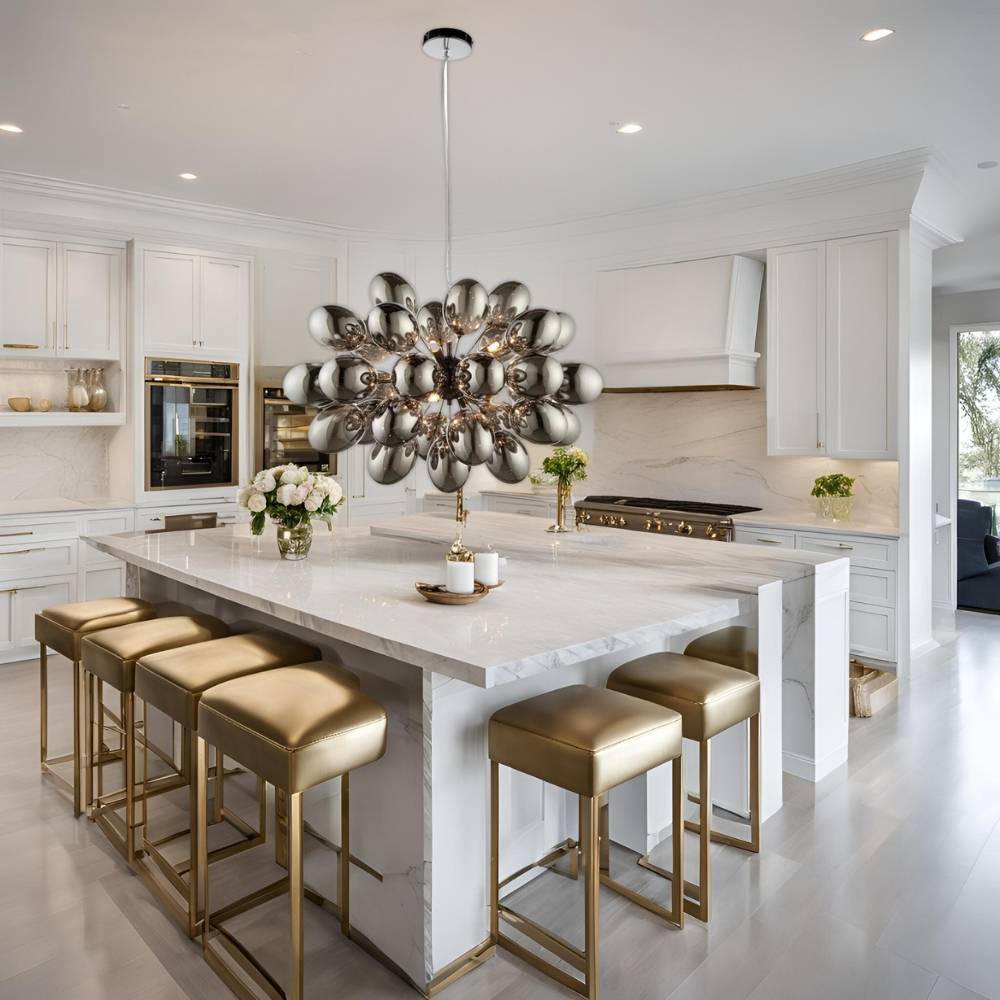
- Linear bubble styles: often make more sense over longer tables, islands, or surfaces with a directional layout
- Open walkways: keep comfortable head clearance in areas without a table underneath
Measurement note: With bubble chandeliers, diameter is only part of the story. A fixture with fewer, larger globes may feel very different from one with many smaller globes, even if the overall width is similar. Visual density matters just as much as size on paper.
Glass Tone, Finish, and Visual Weight
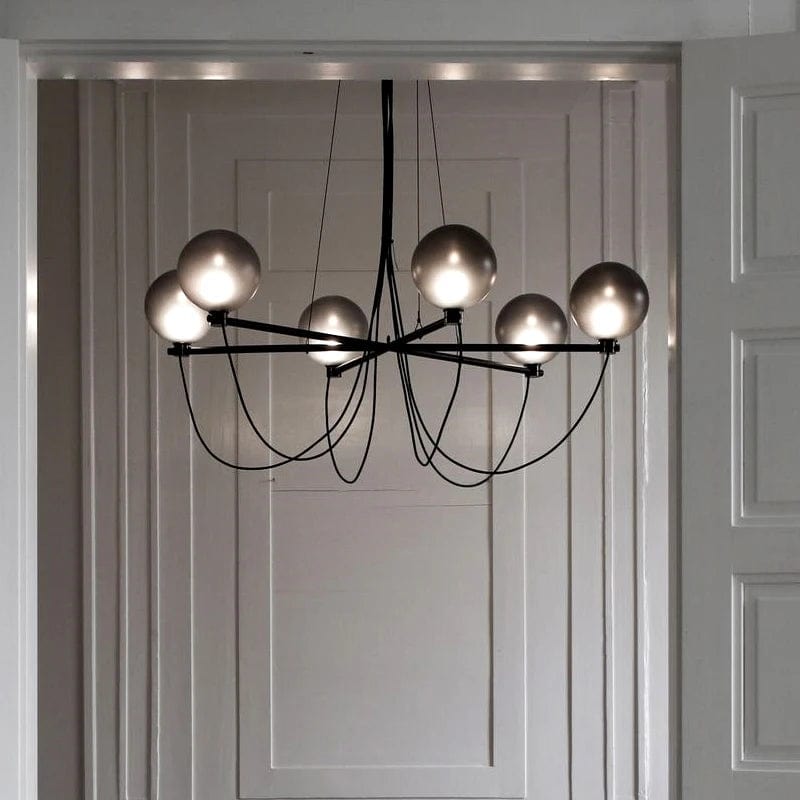
Bubble chandeliers can shift mood quickly depending on the glass and metal direction. Clear or lighter glass usually keeps the fixture feeling more open. Smoke, amber, milk, or colored globes can make the chandelier feel softer, moodier, or more decorative. Black hardware often creates more contrast and makes the spheres stand out more clearly, while gold and warmer metals can make the overall look feel richer and more layered.
This is one reason bubble chandeliers can cross into more than one interior style. Some feel very modern and restrained. Others feel more playful, sculptural, or even a little retro depending on the globe color, frame shape, and spacing. If you want a cleaner related category, compare Modern Chandeliers. If you want longer table-centered forms, Linear Chandeliers may help narrow the field.
Quick comparison:
- Clear or lighter globes - more open, brighter, and easier in airy interiors
- Smoke or colored glass - moodier, softer, and more decorative in feel
- Compact globe clusters - stronger focal point in centered layouts
- Branch or multi-directional forms - more movement and sculptural value from across the room
- Linear bubble fixtures - better fit for rectangular tables and islands
Bubble Chandeliers vs. Glass Chandeliers
These categories overlap, but they are not identical. Glass chandeliers are a broader group that can include many kinds of shades, drops, rods, and forms. Bubble chandeliers are more specific. They focus on globe repetition, clustered spheres, and a floating or layered visual effect. If you know you want the room to feel softer, more rhythmic, and more sculptural rather than simply glass-led, bubble is the more precise starting point.
Small reminder: Bubble chandeliers usually look best when the room has enough breathing space around them. They tend to perform well where the eye can appreciate the spacing between globes rather than reading the fixture as one dense block.
Use This Collection When You Want a Softer Sculptural Statement
This page works best when your goal is a chandelier that adds shape, texture, and movement without leaning into a heavy traditional frame. As you compare options, focus on how the globes are arranged, how open or dense the fixture feels, and how the chandelier will sit over the furniture or circulation area below. The strongest result usually comes from choosing a bubble chandelier that feels balanced with the room footprint, ceiling height, and overall styling direction, not simply the one with the most globes.