

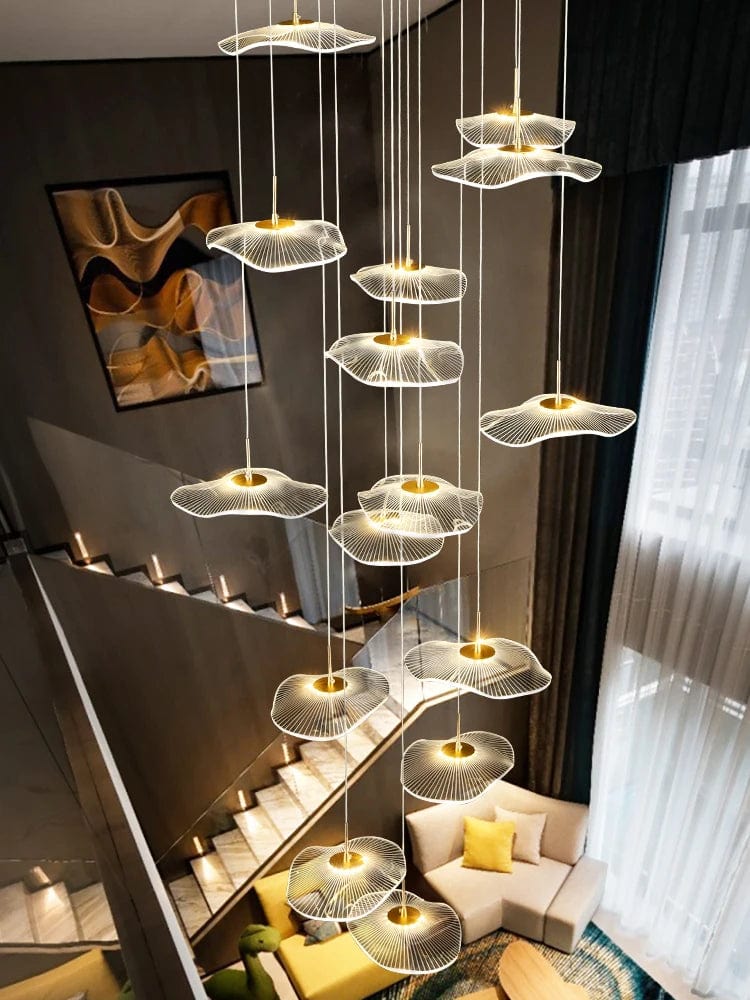
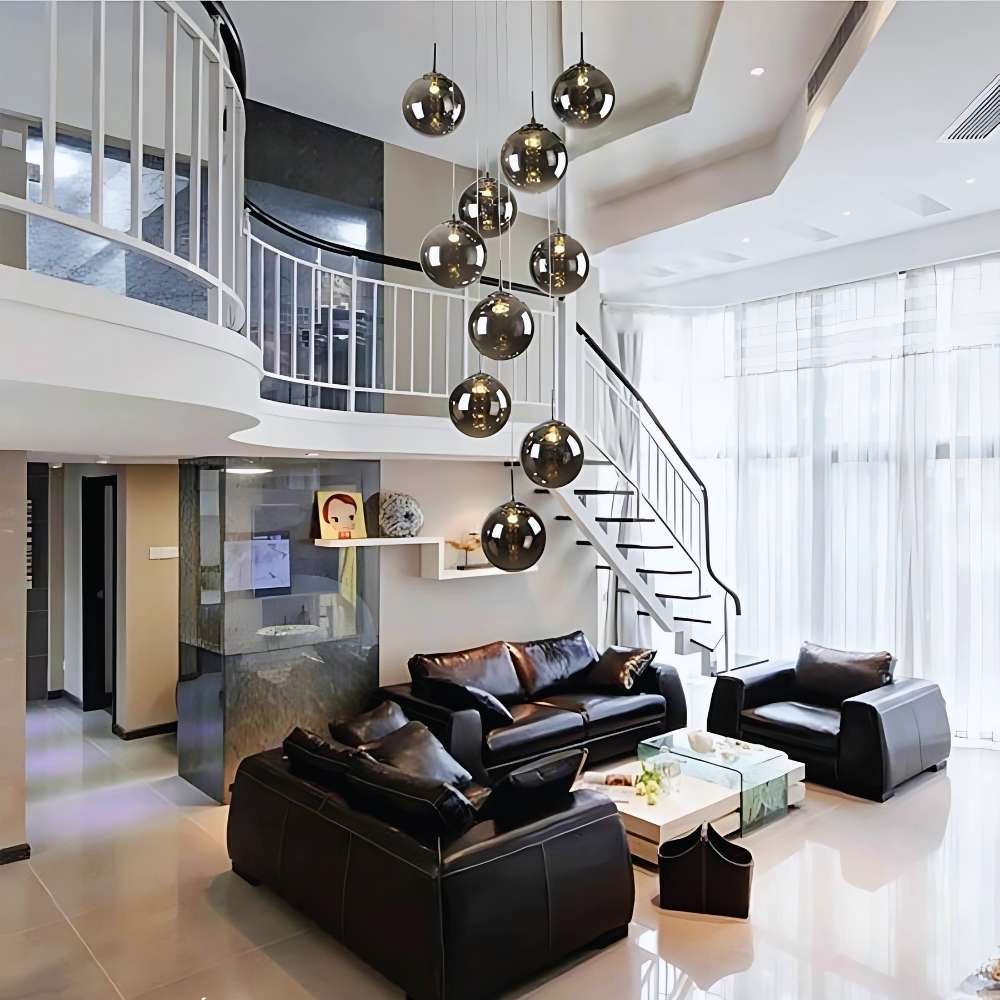
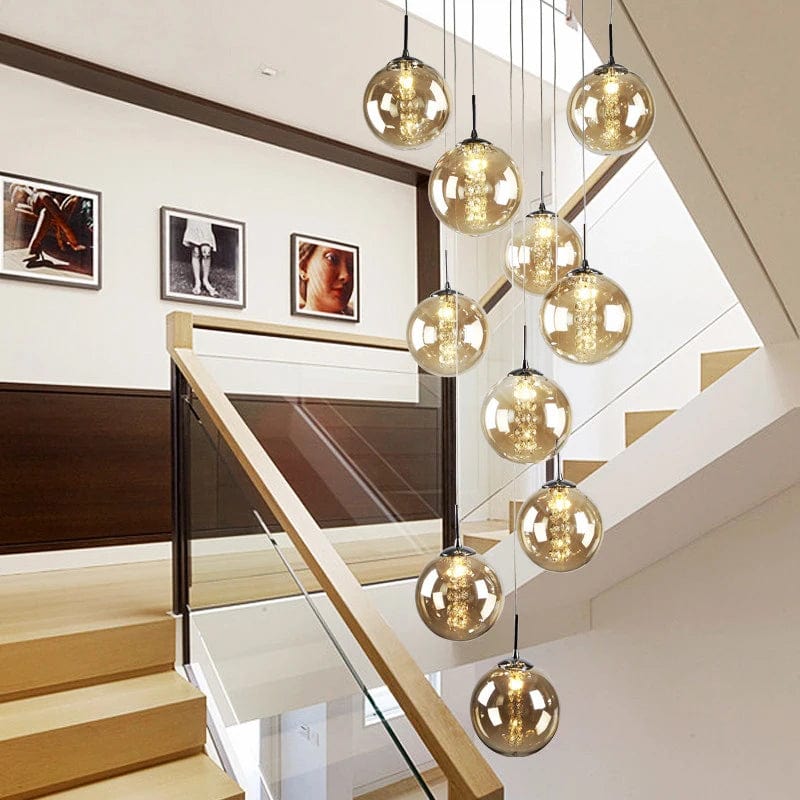
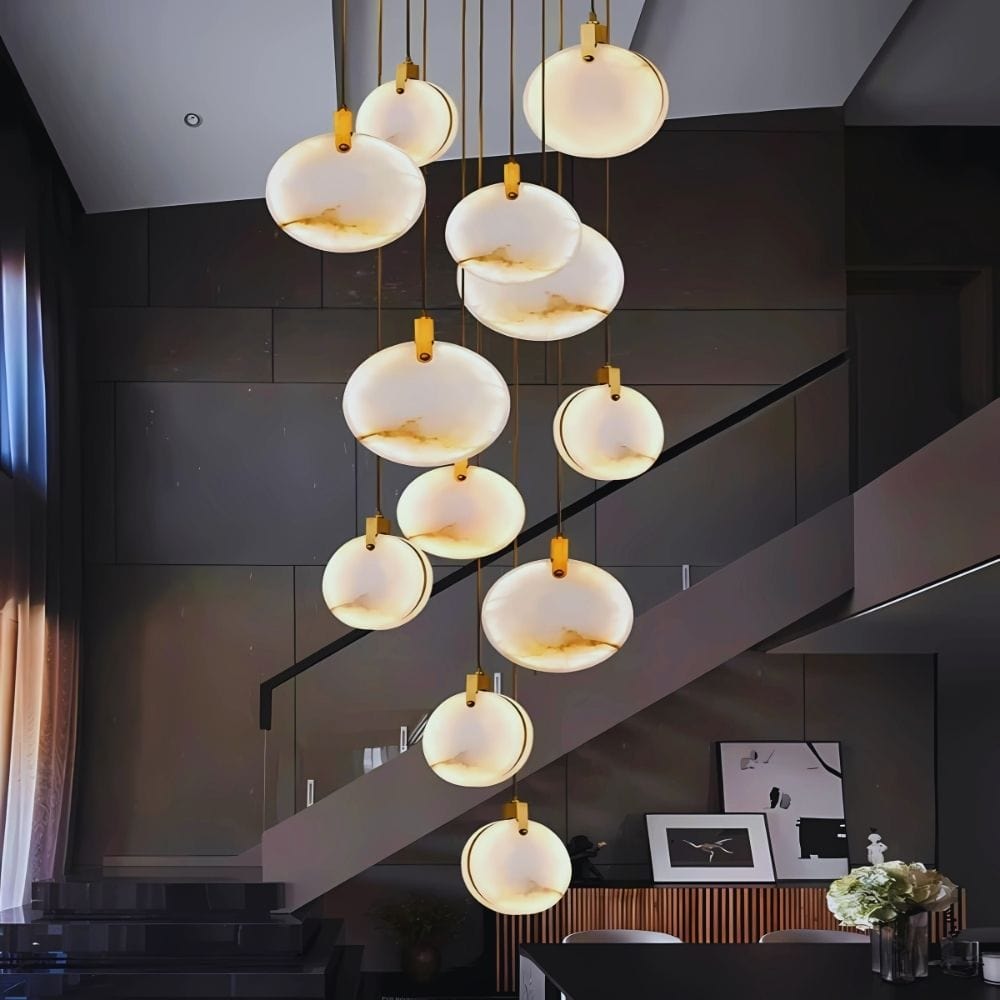
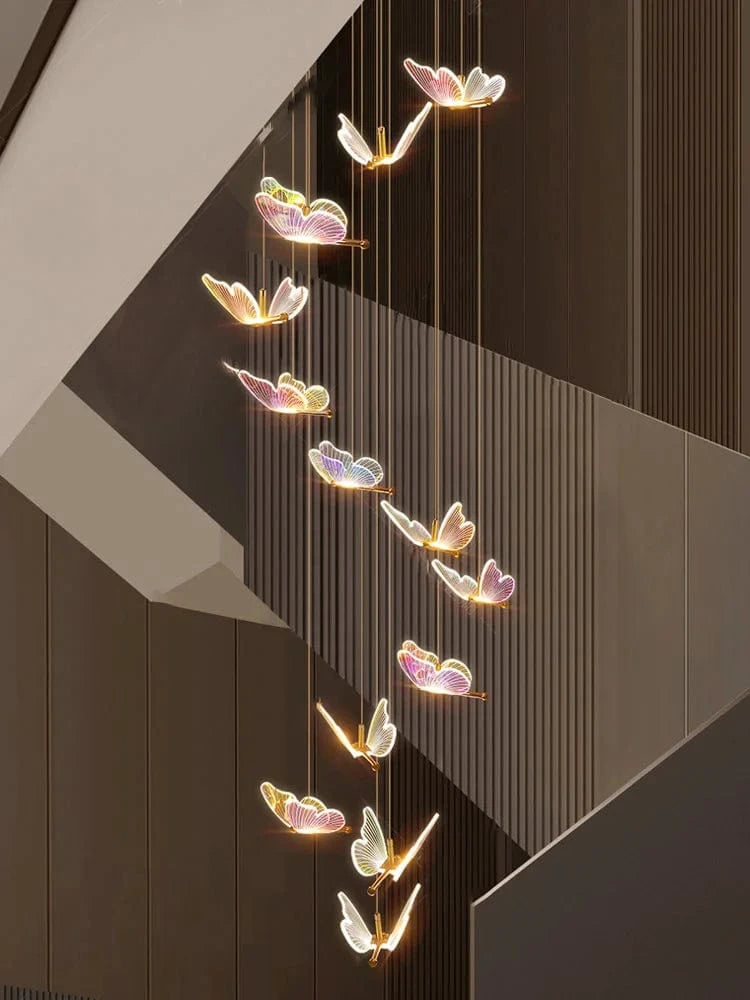
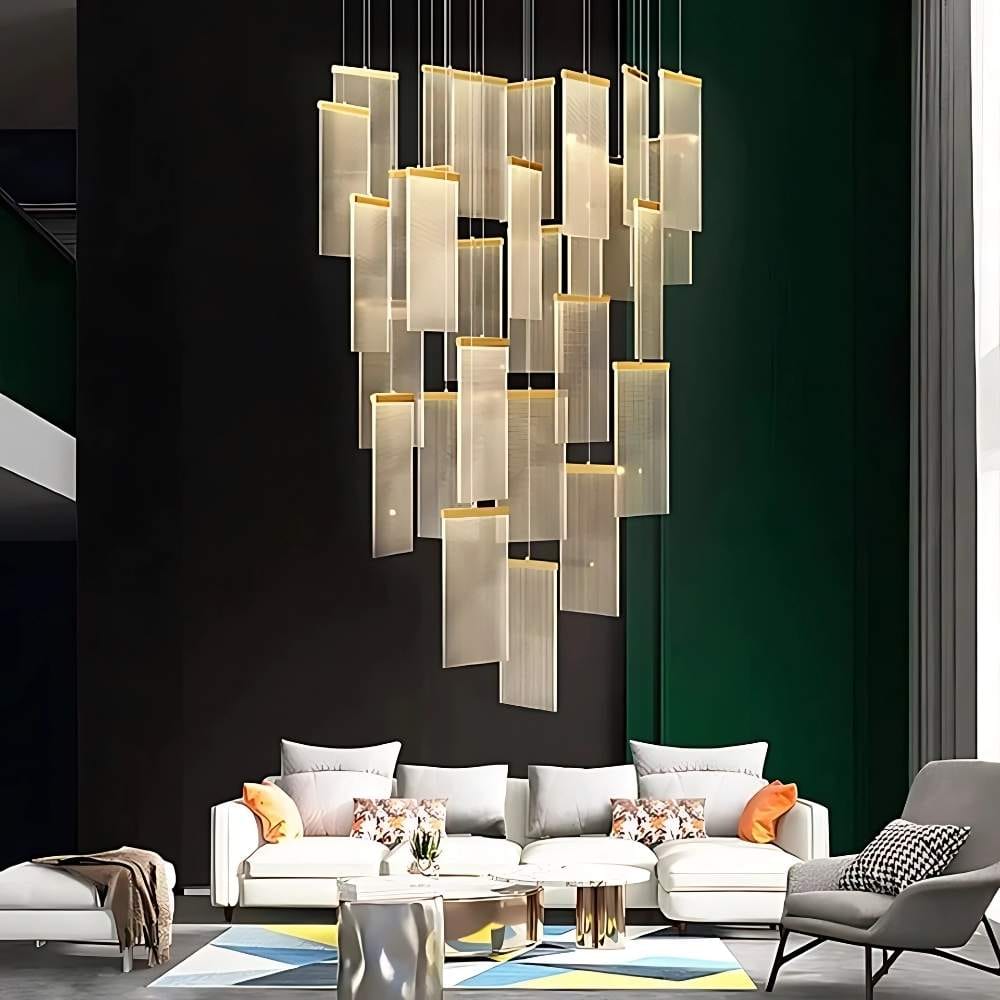
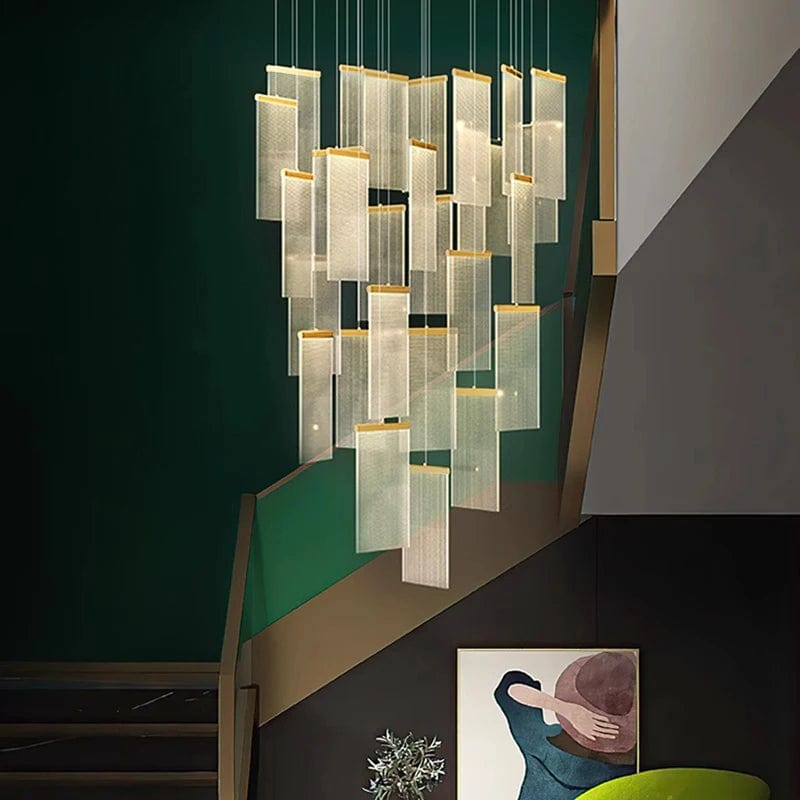
Staircase Chandeliers for Tall Spaces, Vertical Drop, and a Stronger Multi-Level Focal Point
Staircase chandeliers are designed for rooms where height, openness, and viewing angle matter more than they do in a standard ceiling-lighting setup. This category is built for stairwells, double-height entries, open foyers, and other vertical spaces where a regular chandelier may feel too compact or too visually quiet. If you want to compare the broader category first, you can begin with our full Chandeliers collection, then narrow your options here once you know the room needs a fixture with more drop and stronger vertical presence.
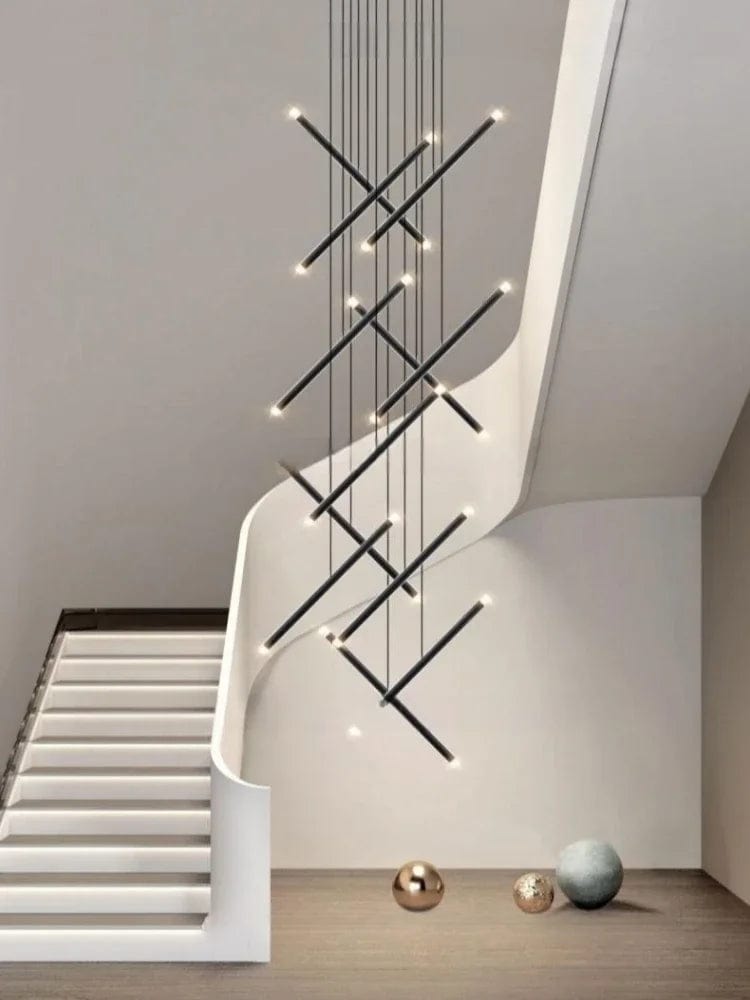
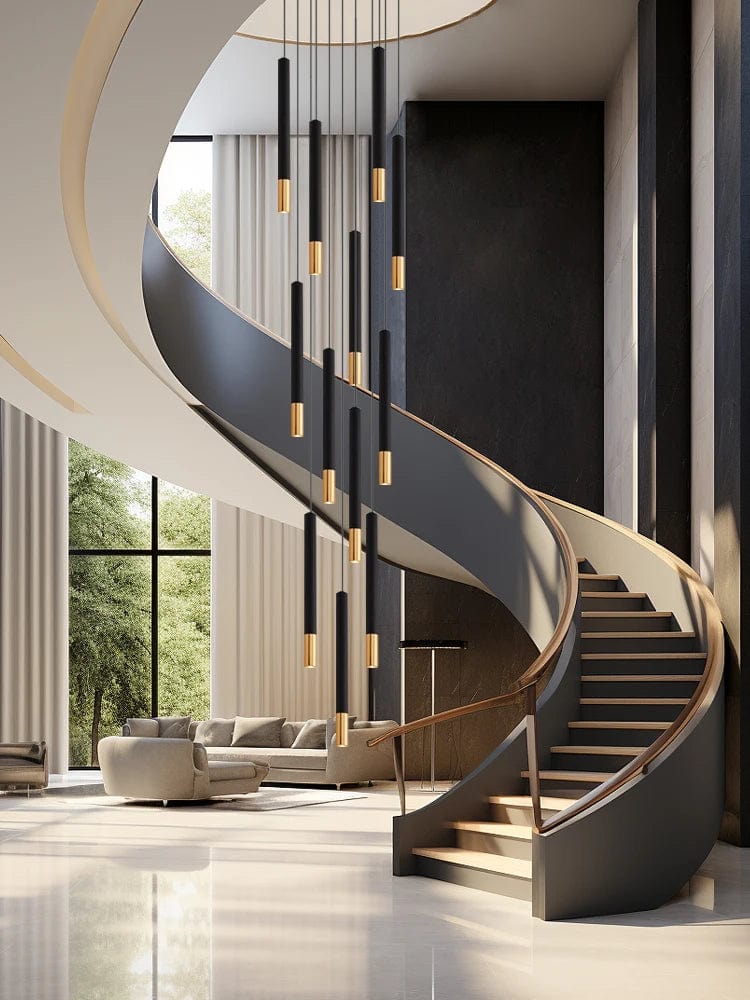
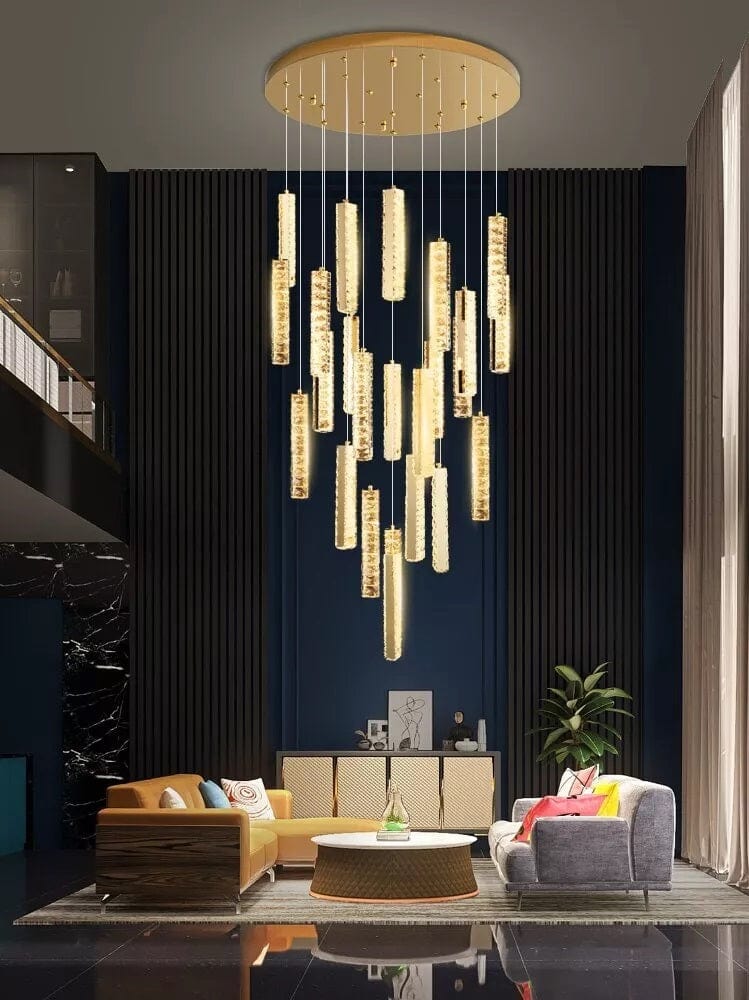
One of the biggest advantages of staircase chandeliers is how they fill volume. In a stairwell, the fixture is not usually seen from only one fixed position. It may be viewed from the lower floor, from the staircase itself, from an upper landing, and from adjacent open rooms. That means scale, silhouette, and spacing all matter more than they do in many other chandelier categories. A good staircase chandelier should feel intentional from multiple angles, not just attractive in a straight-on product photo.
What Makes a Chandelier Right for a Staircase?
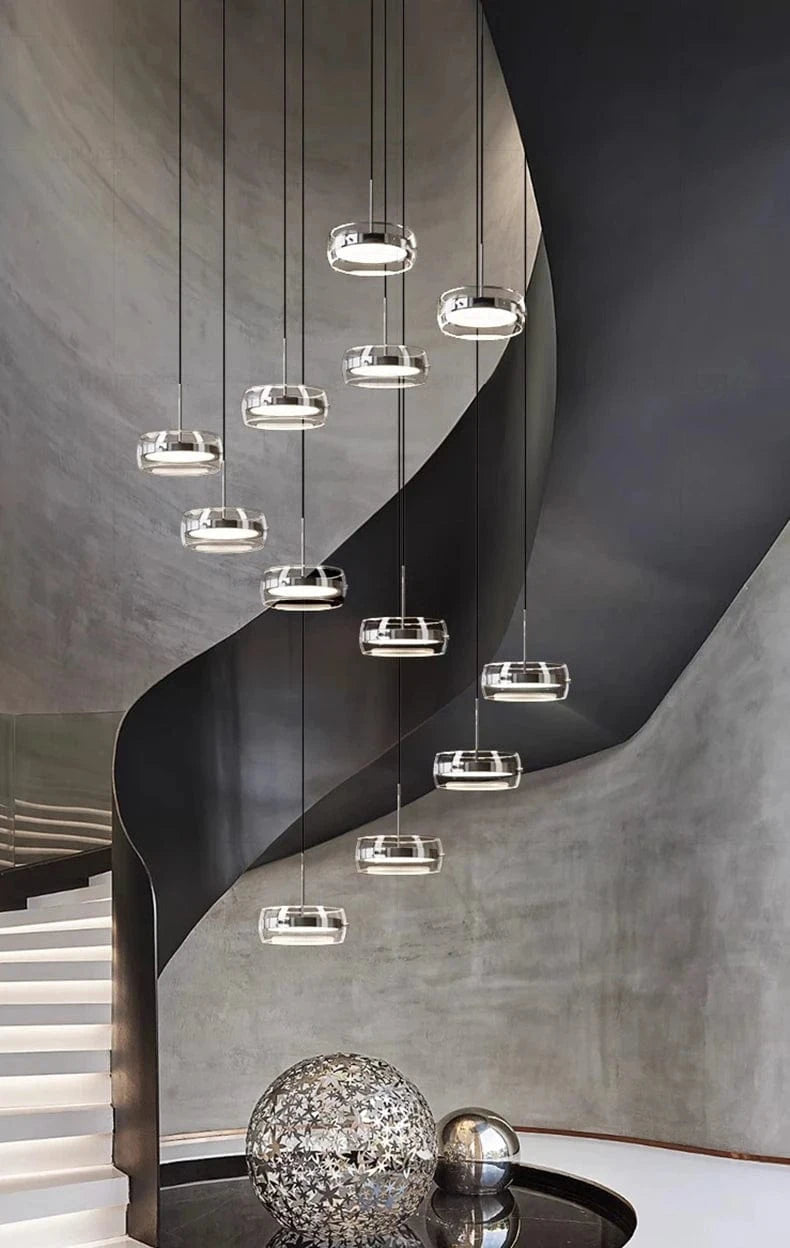
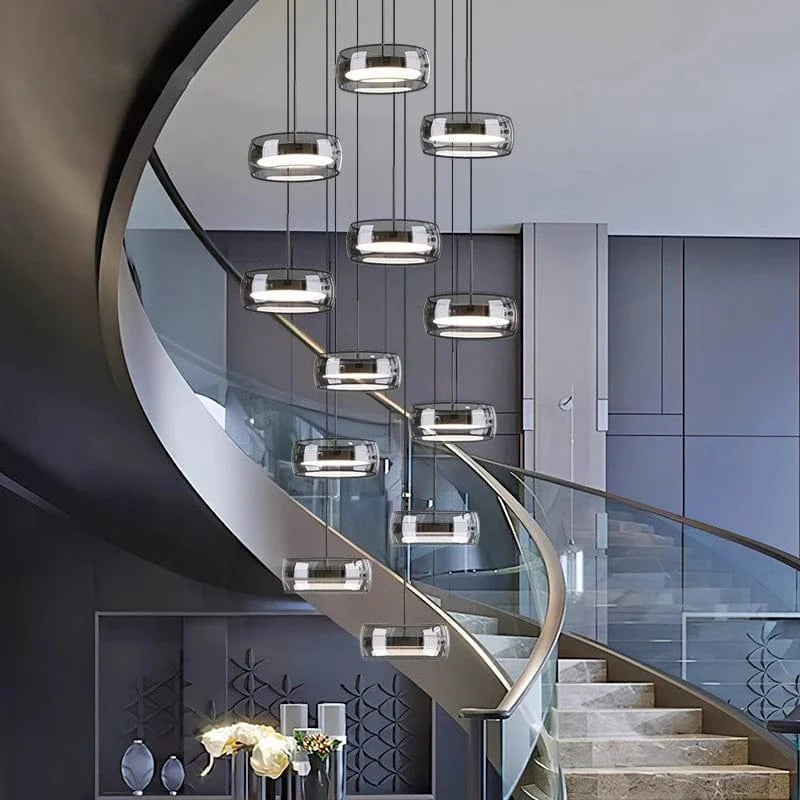
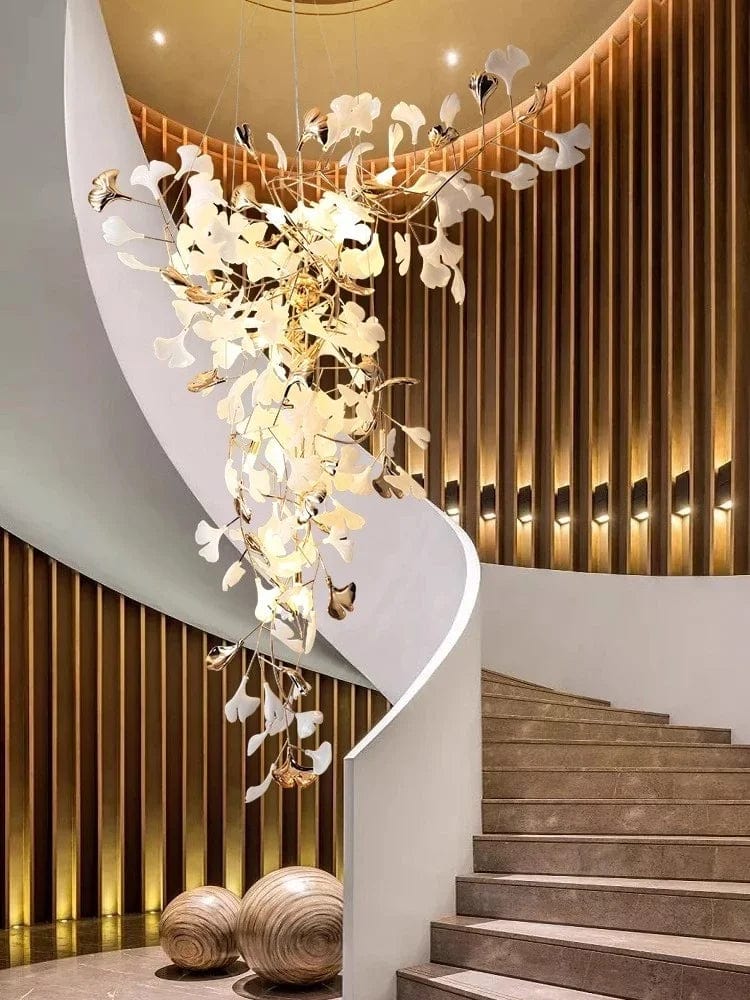
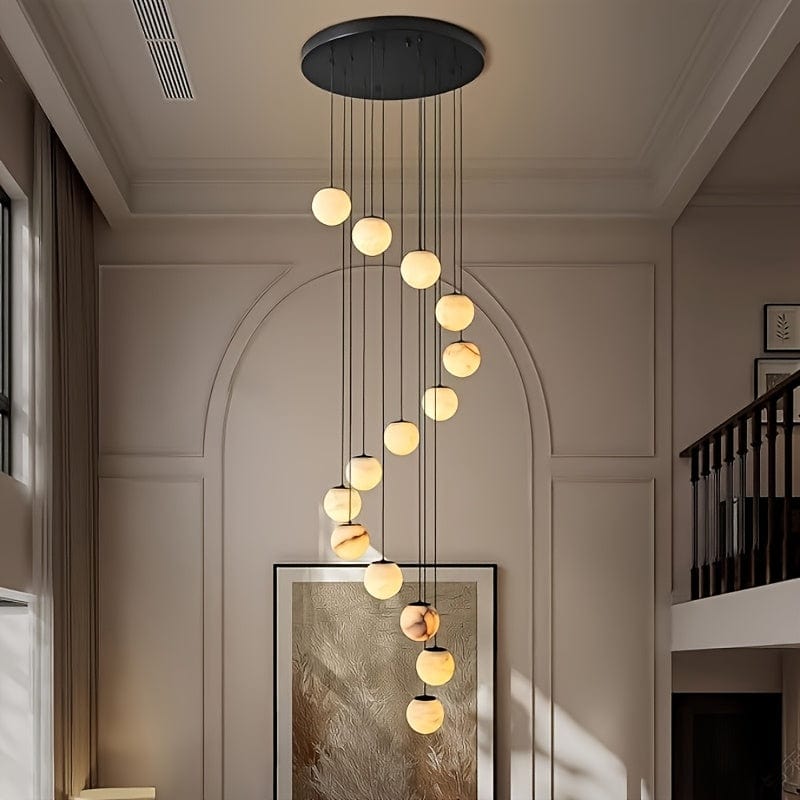
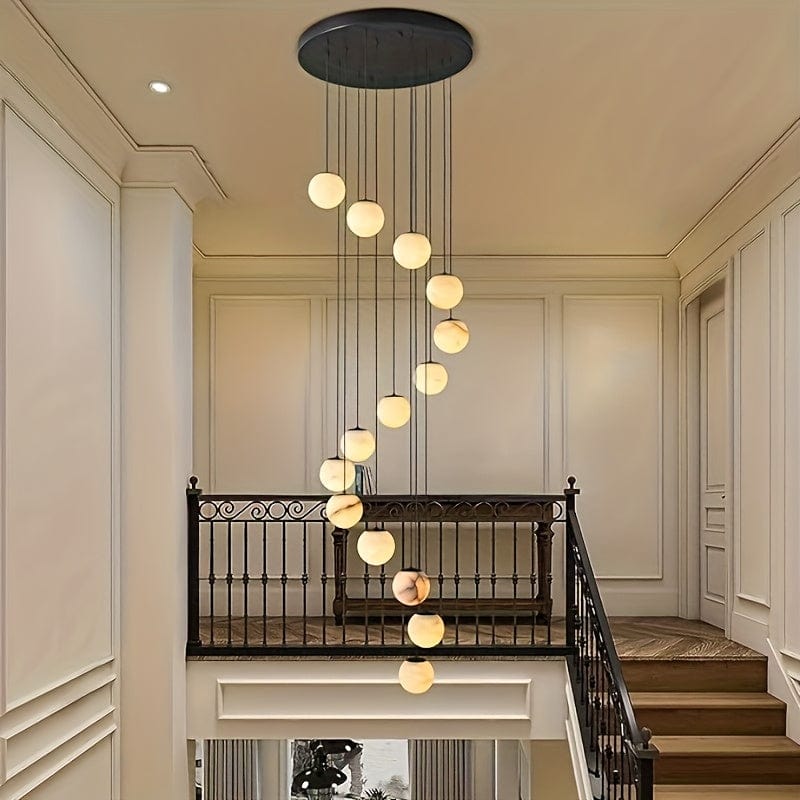
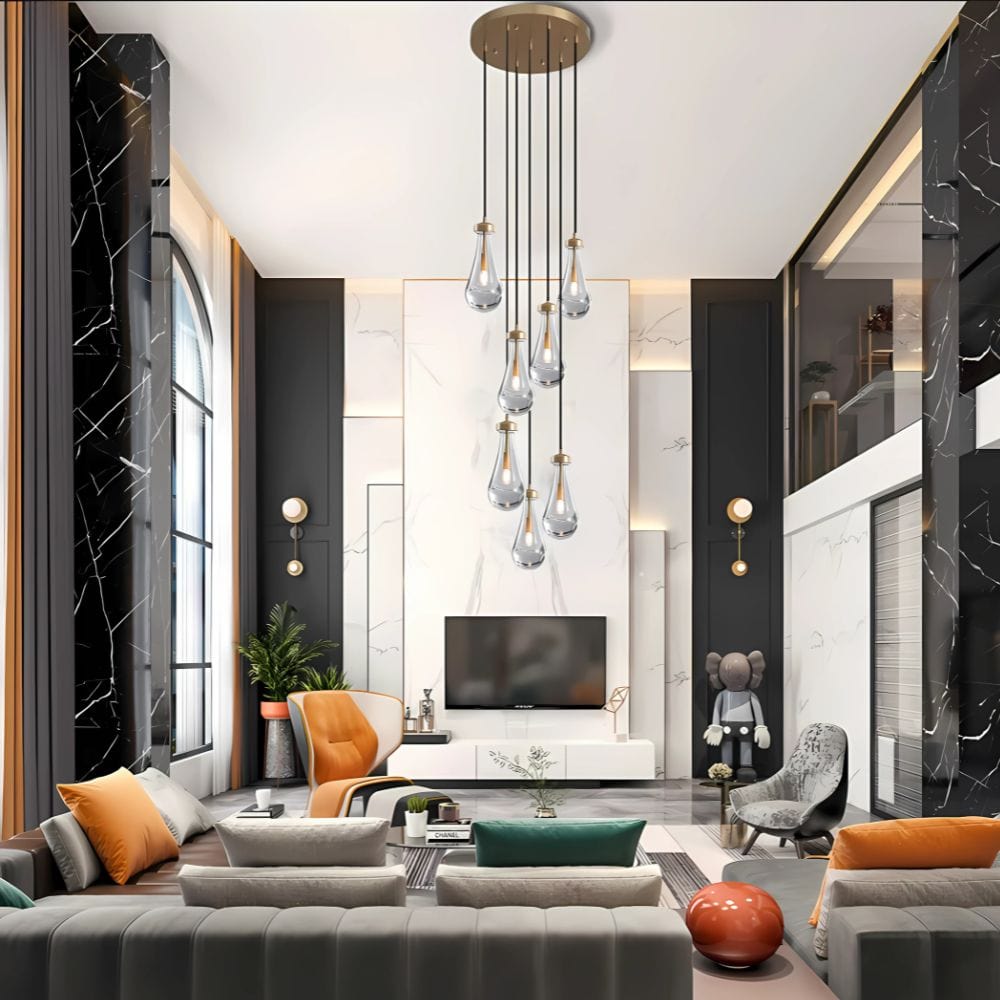
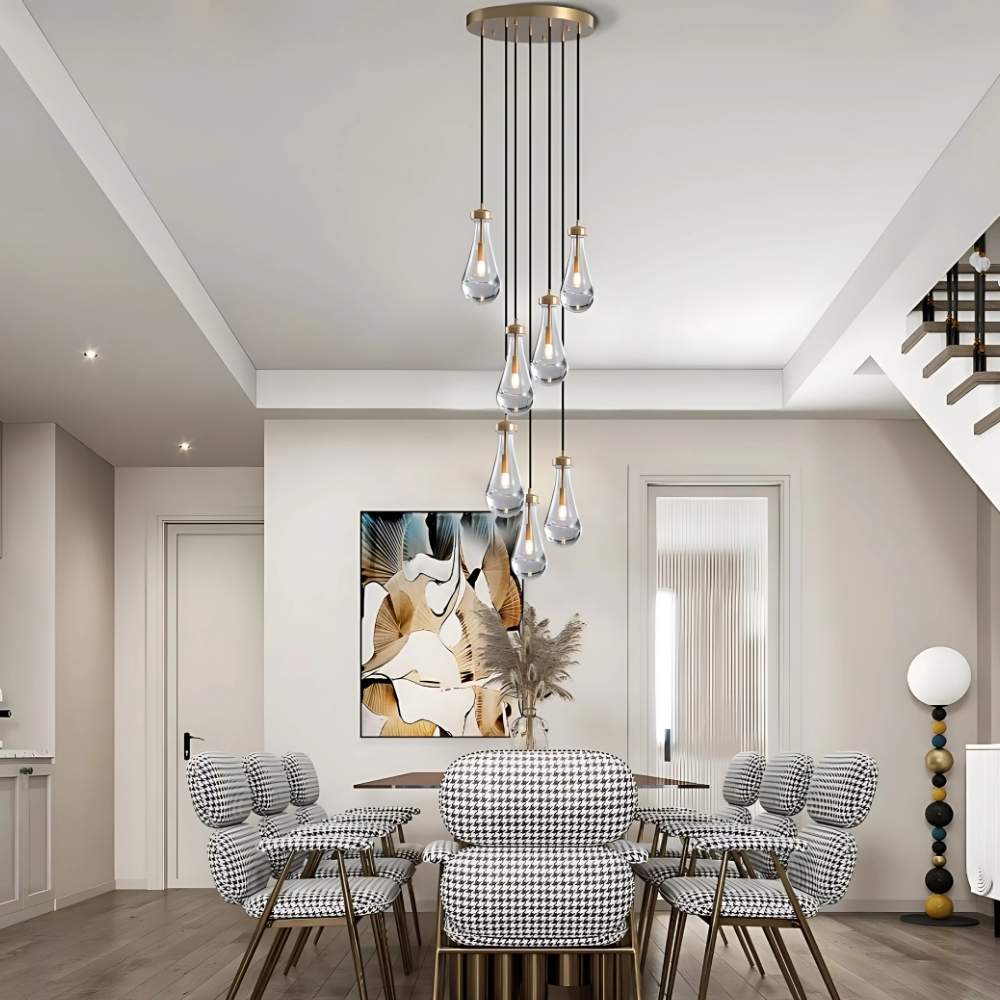
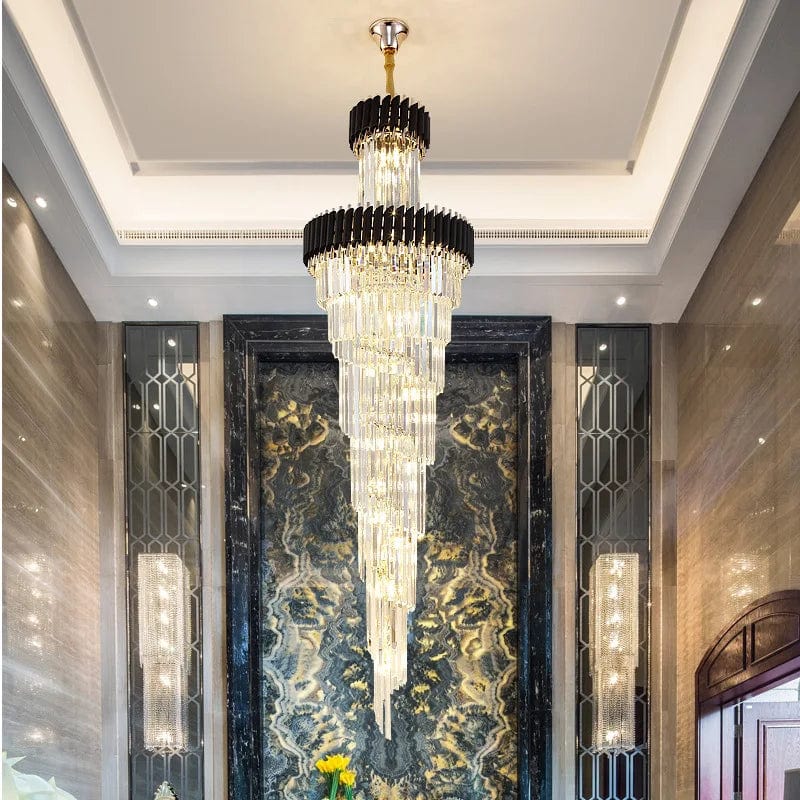
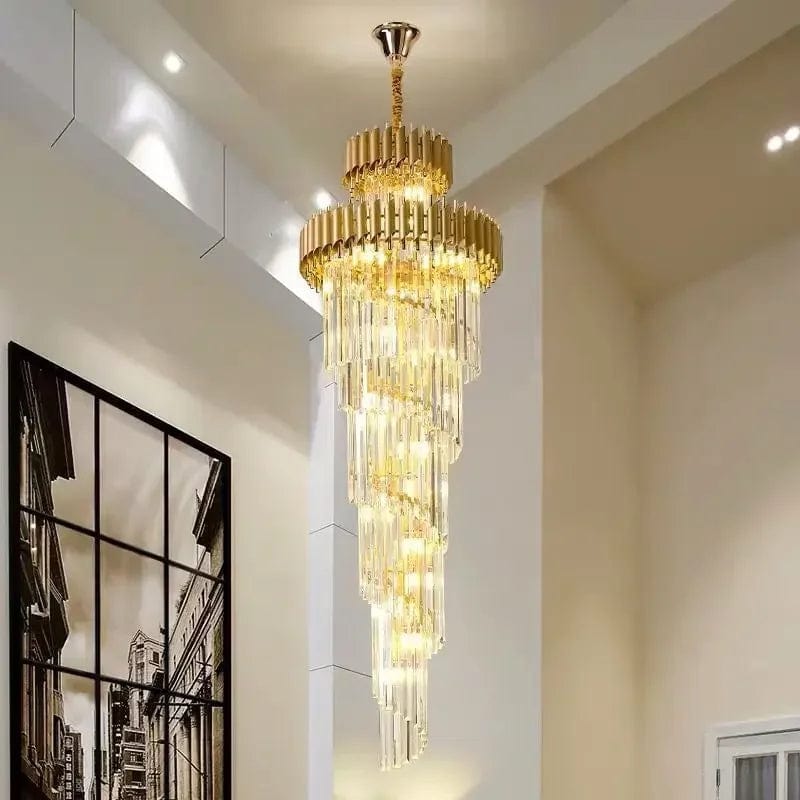
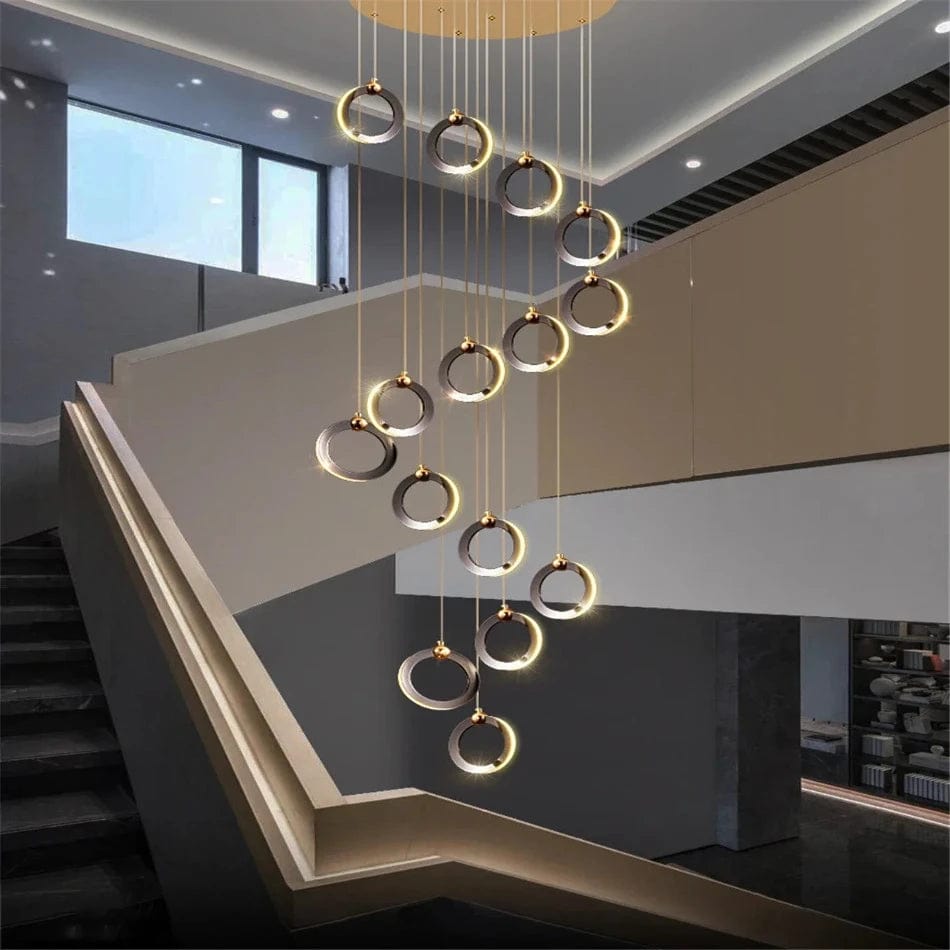
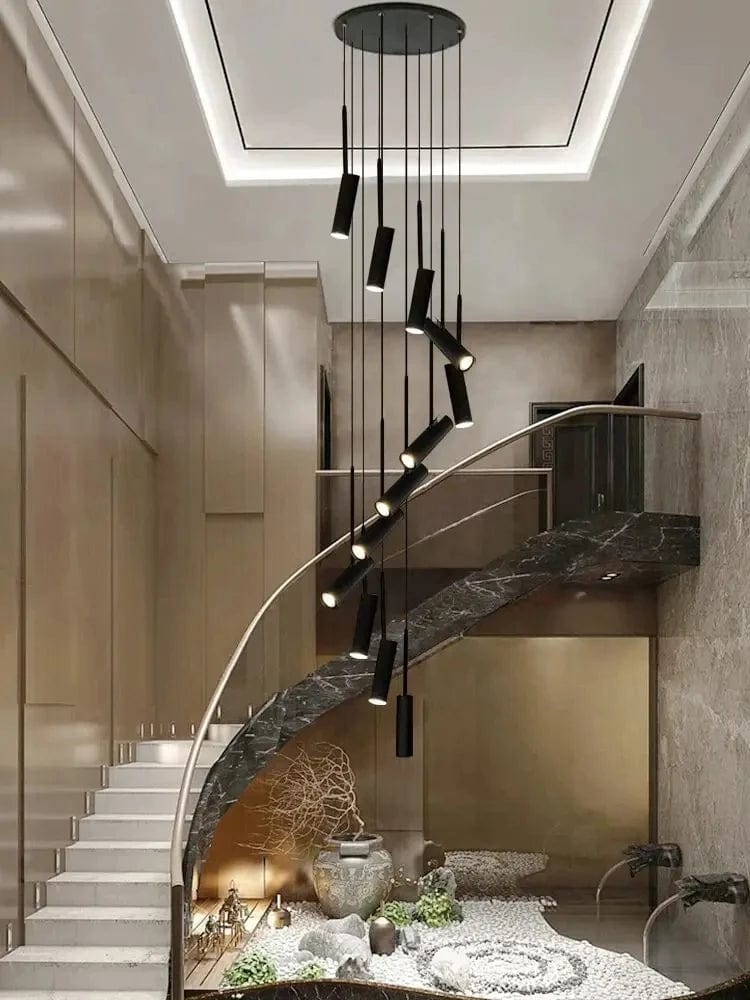
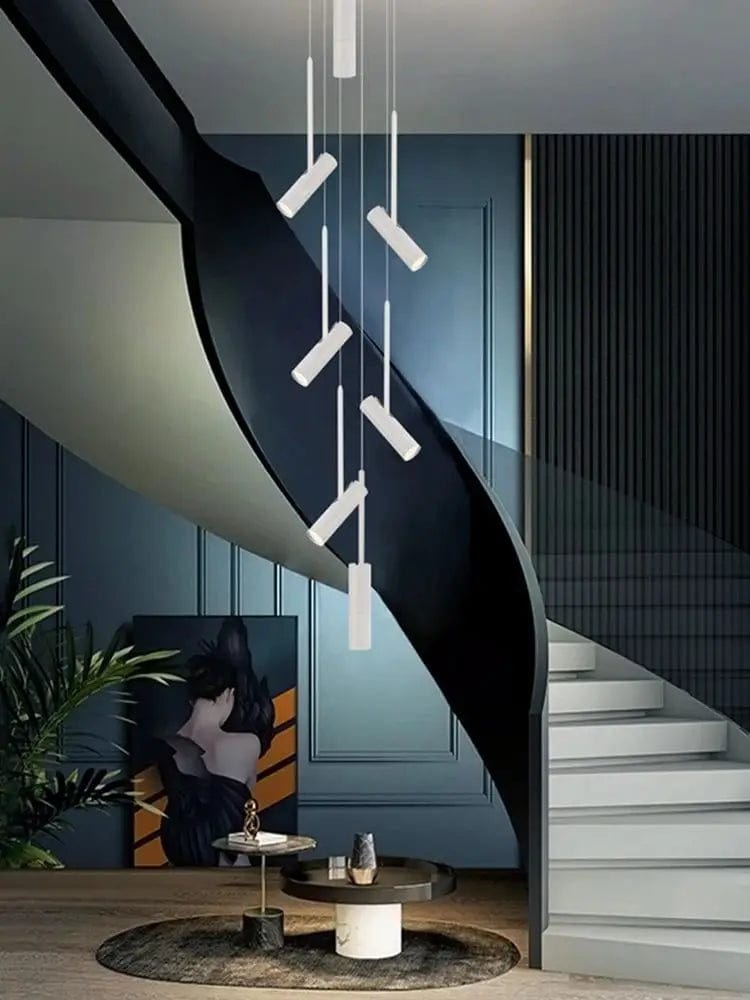
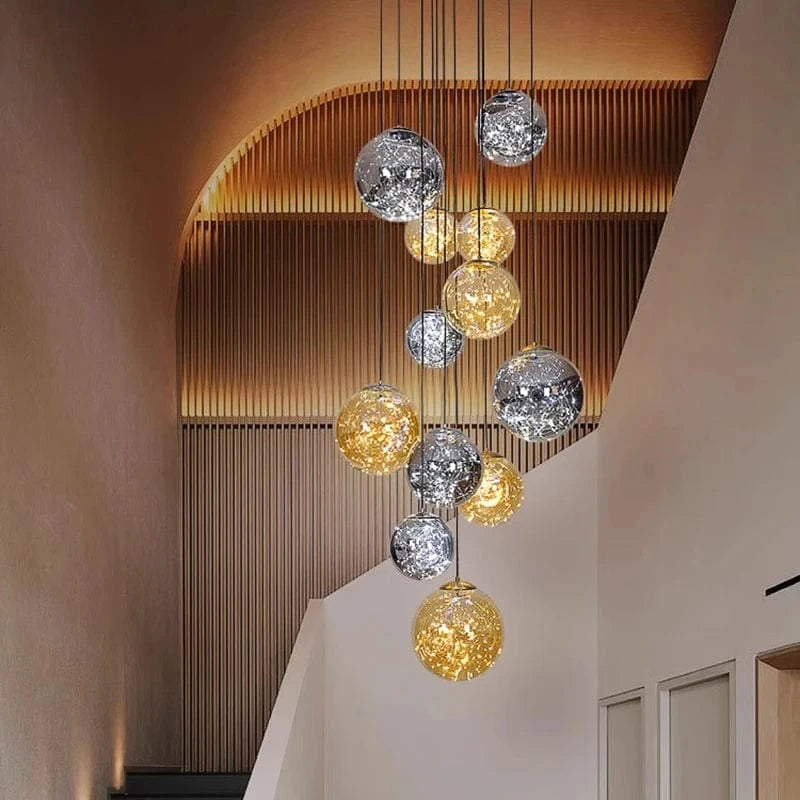
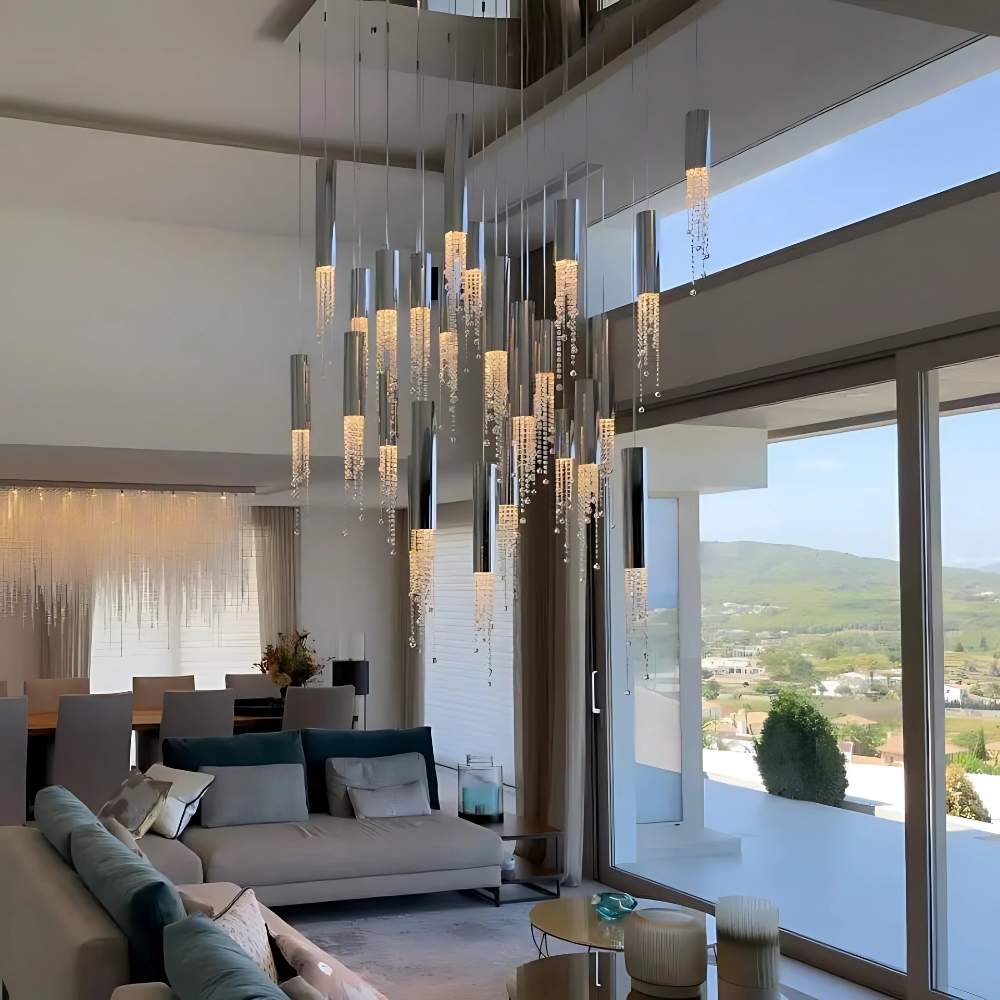
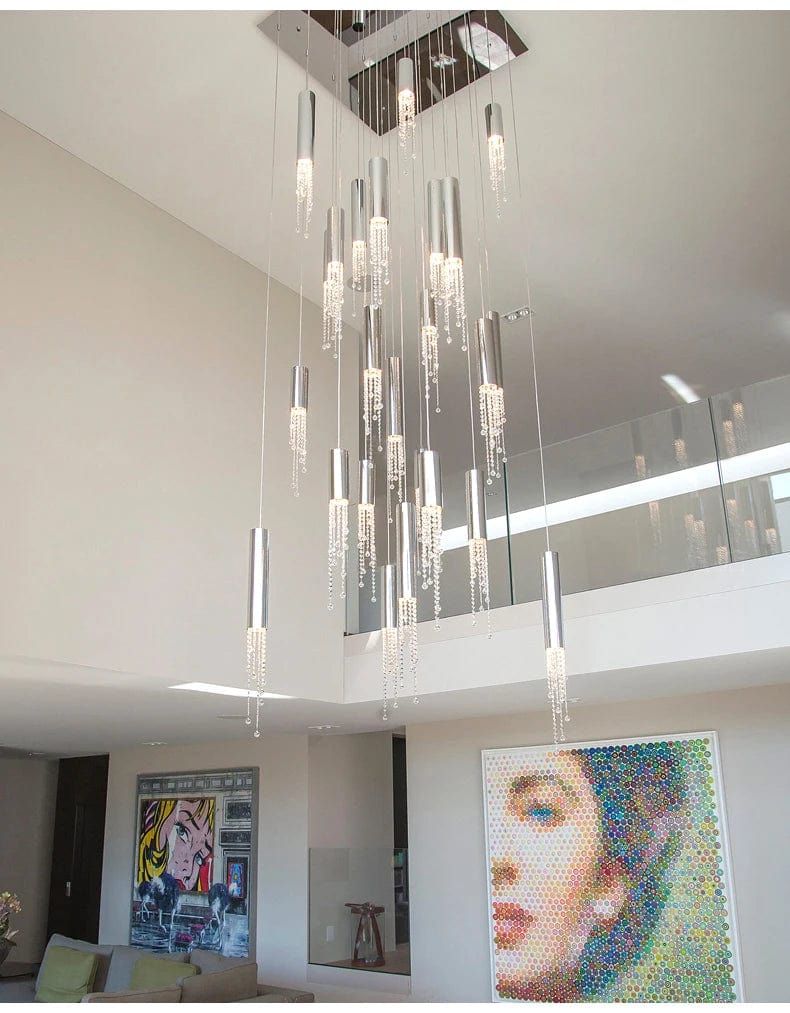
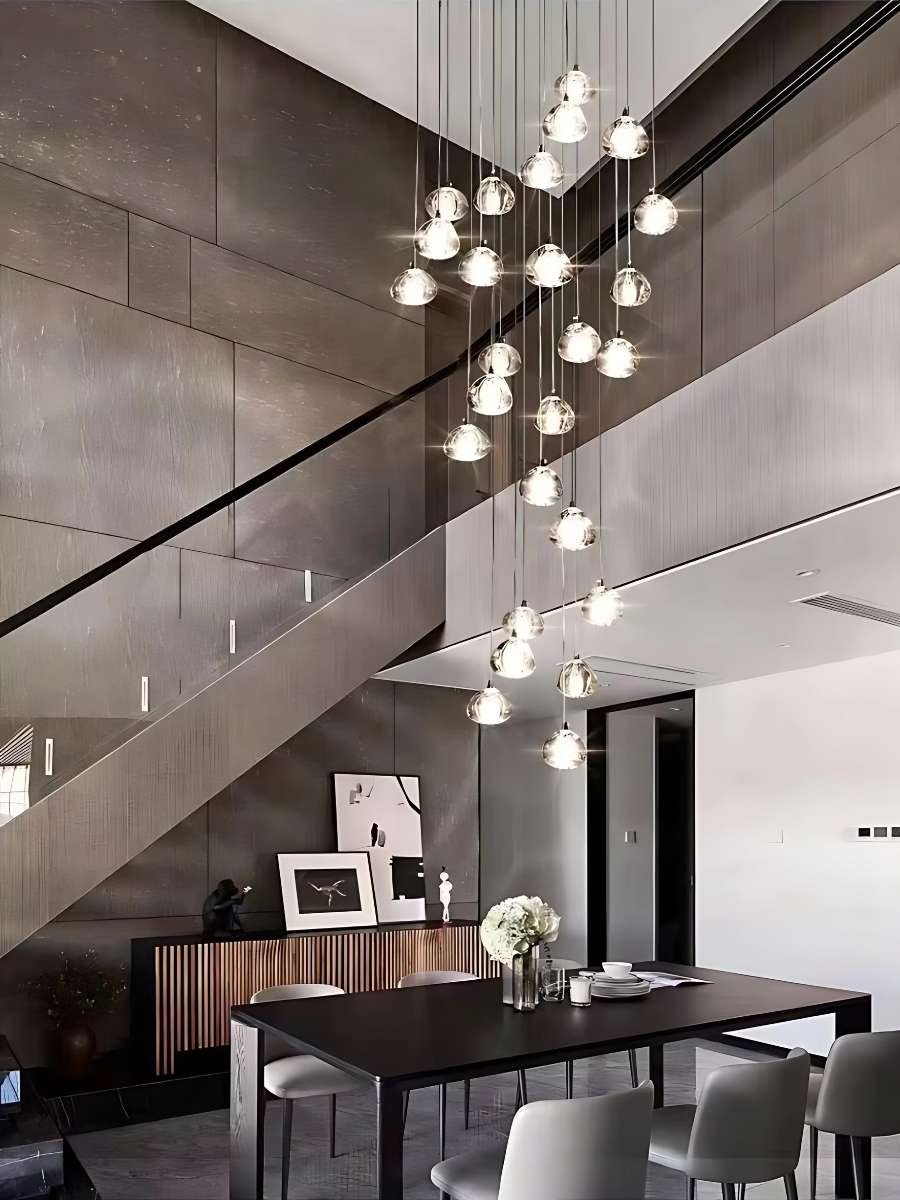
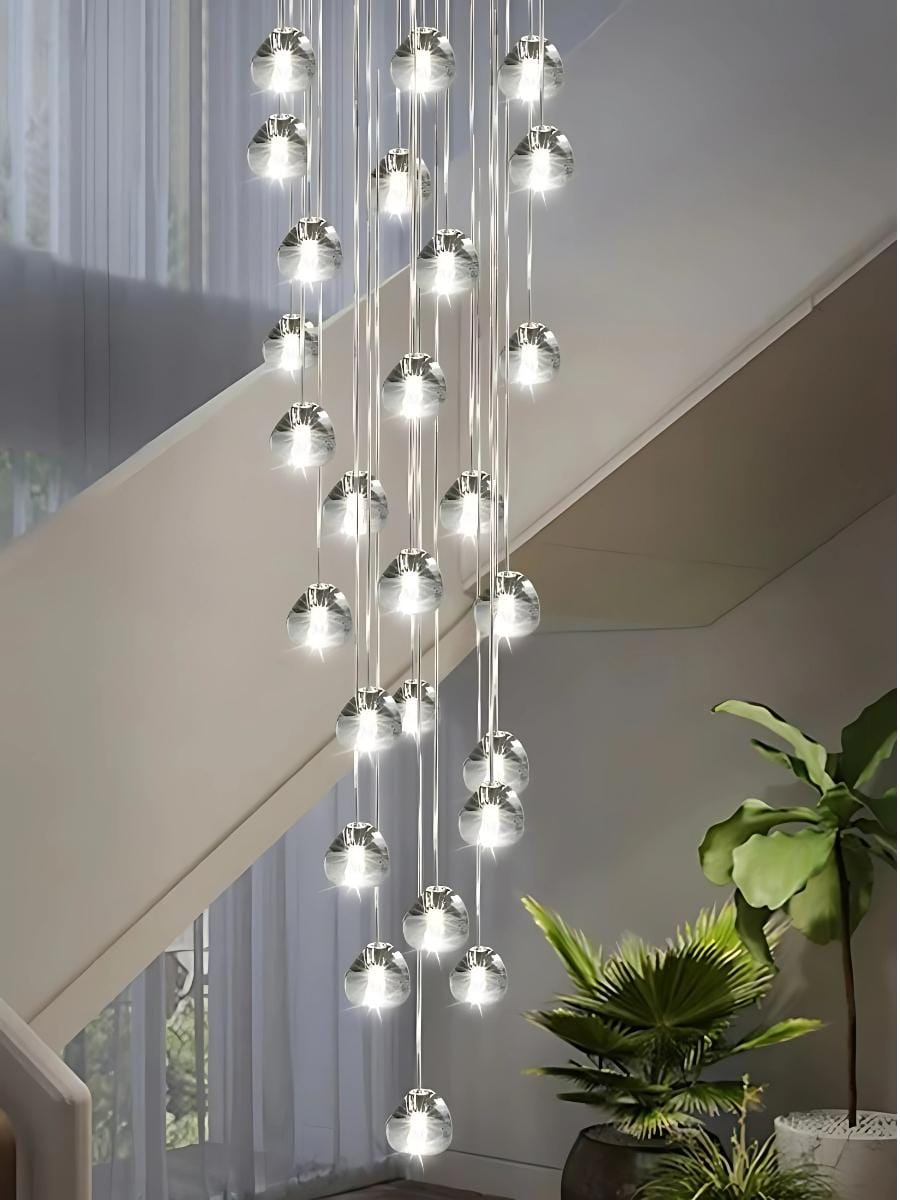
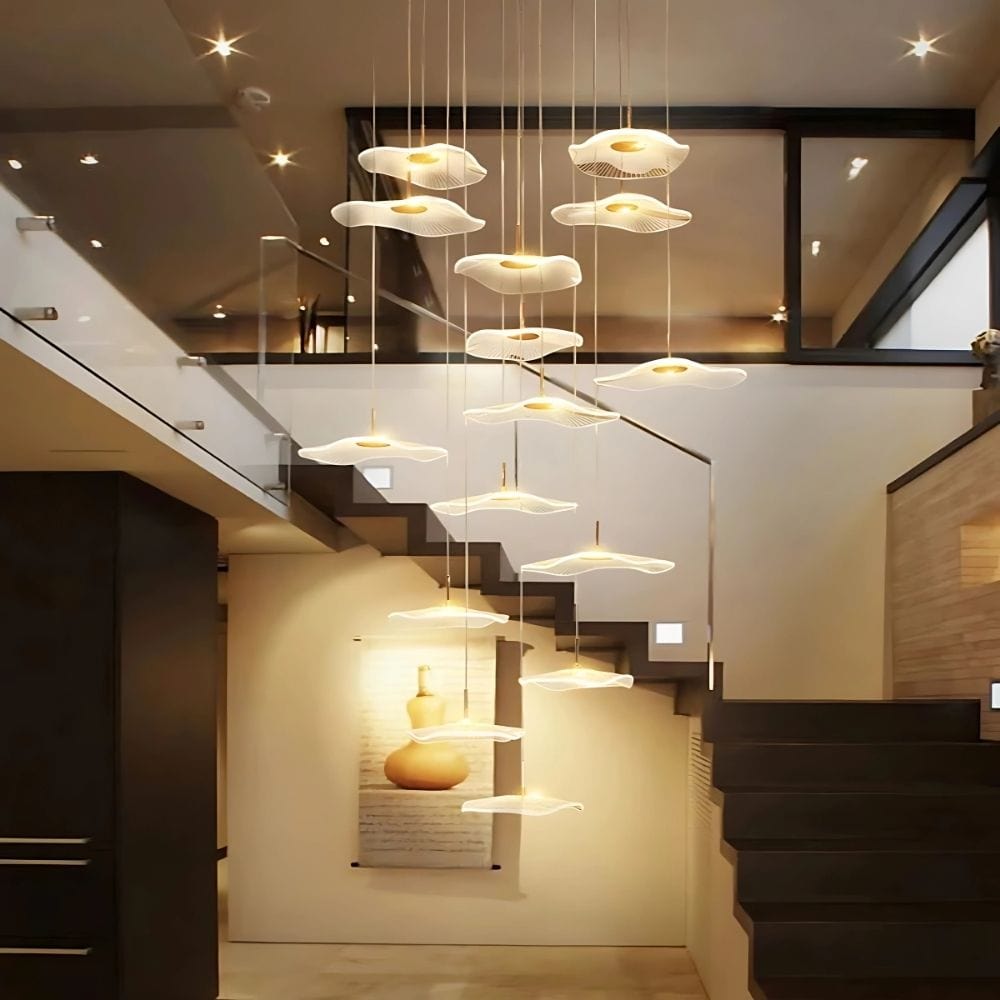
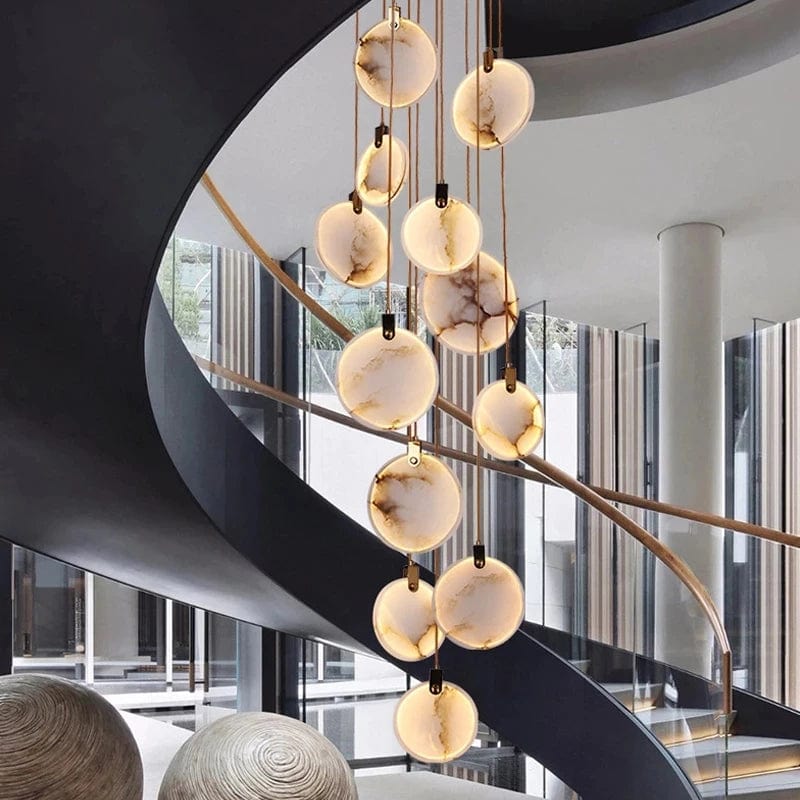
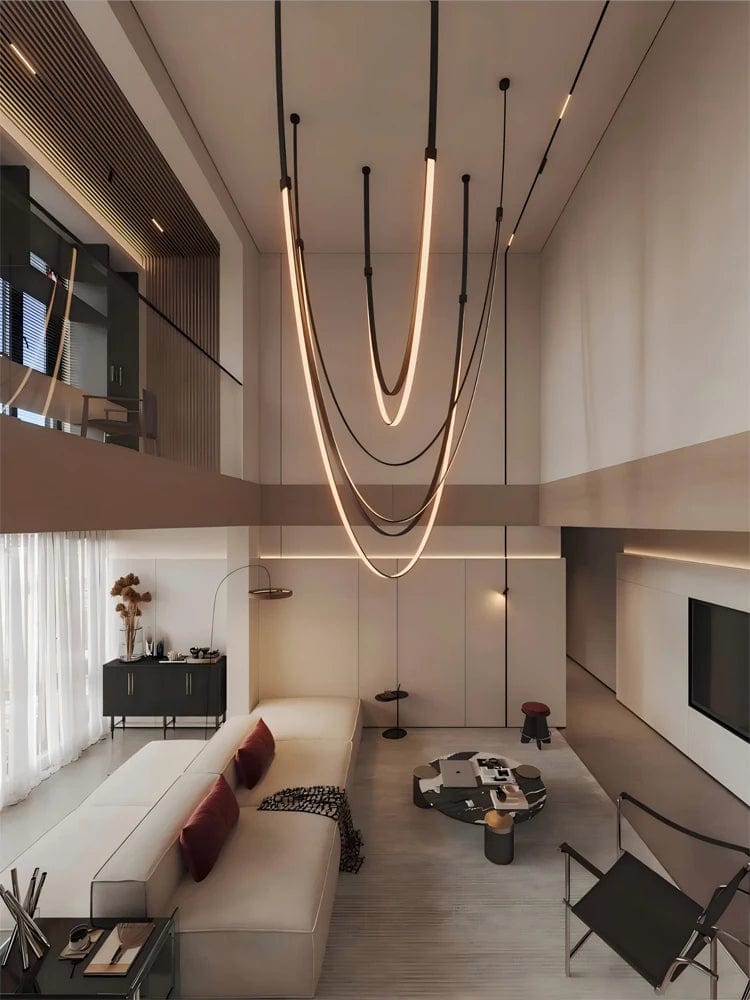
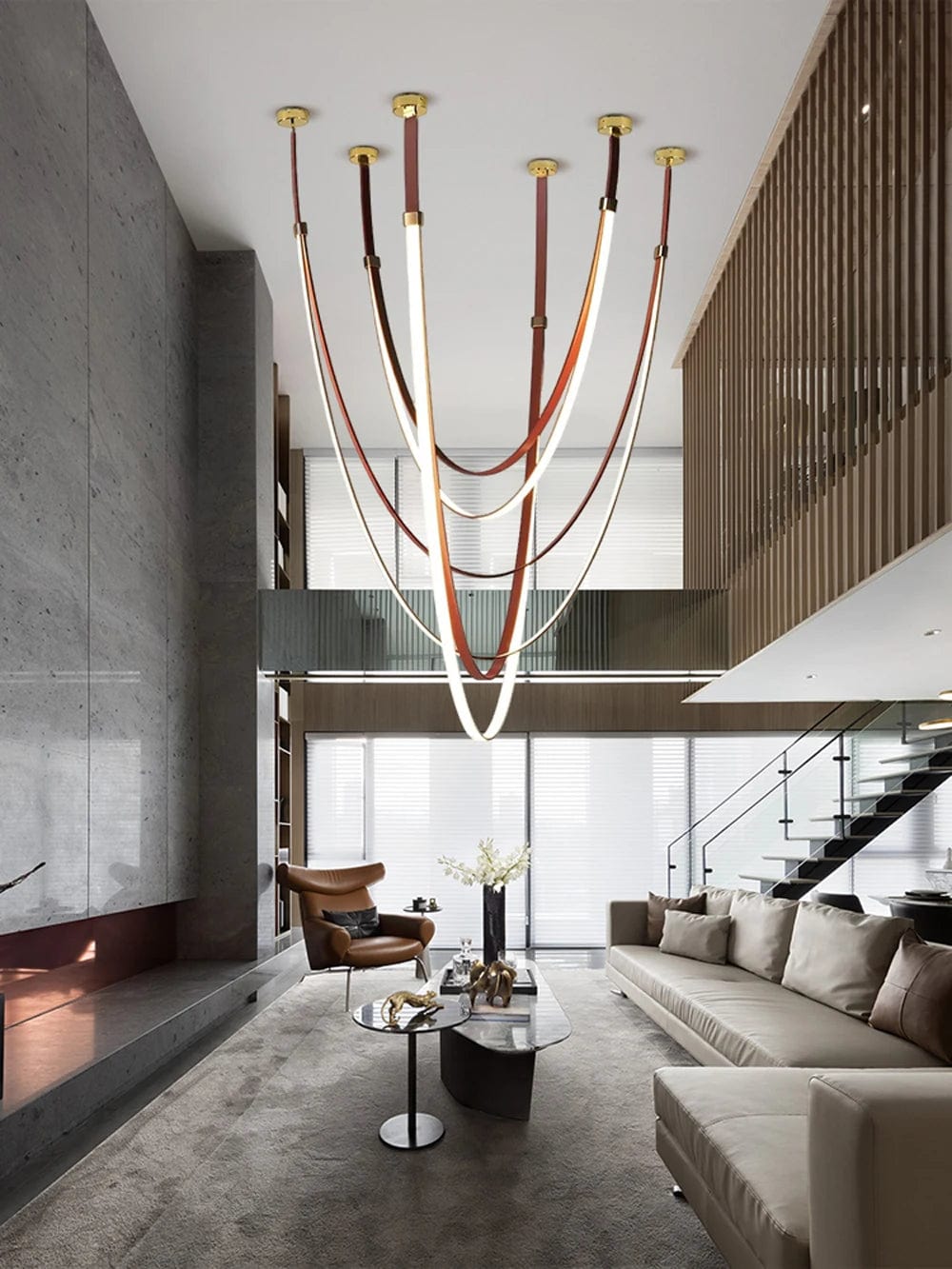
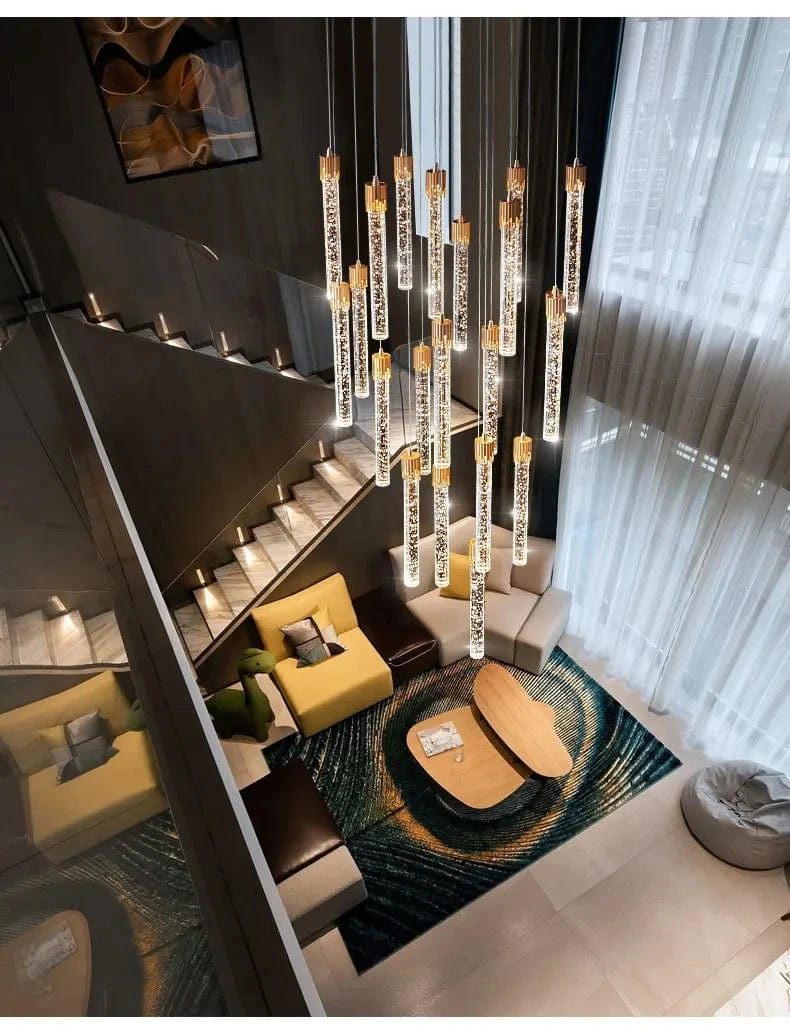
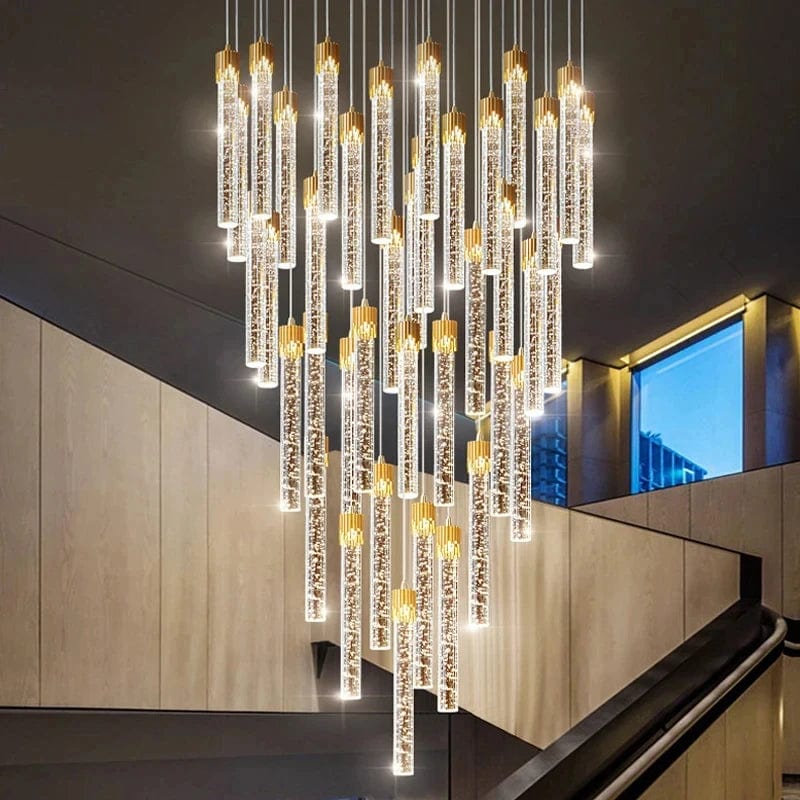
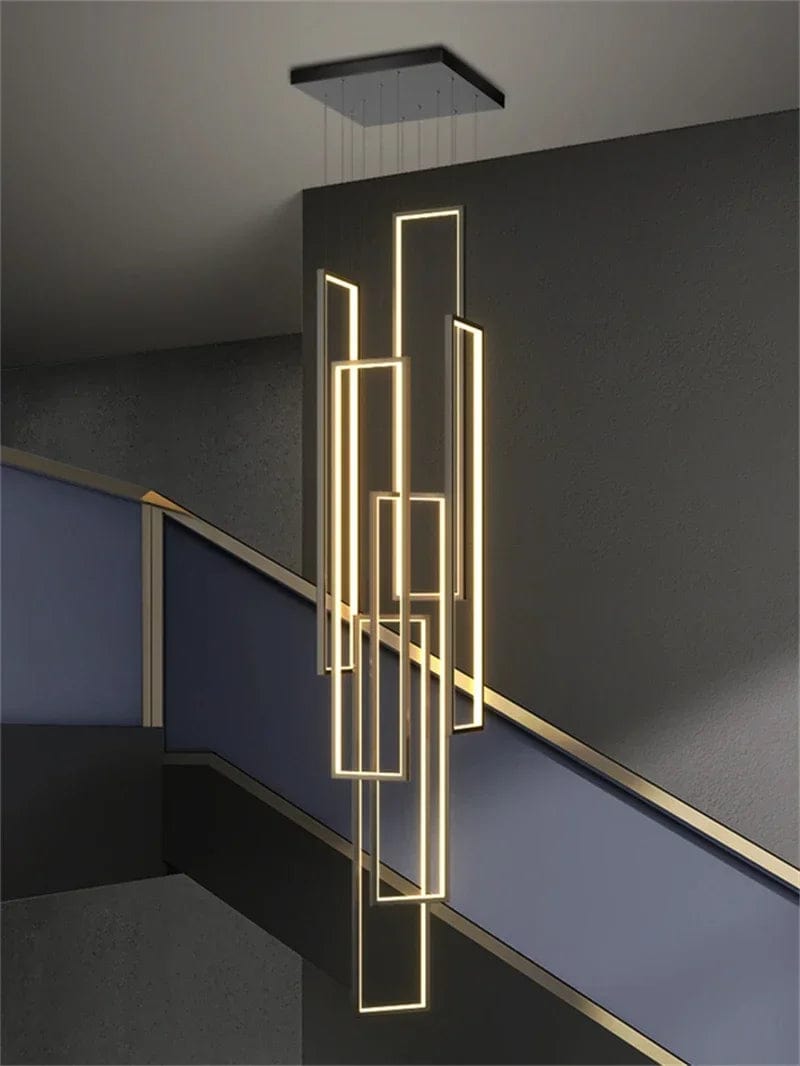
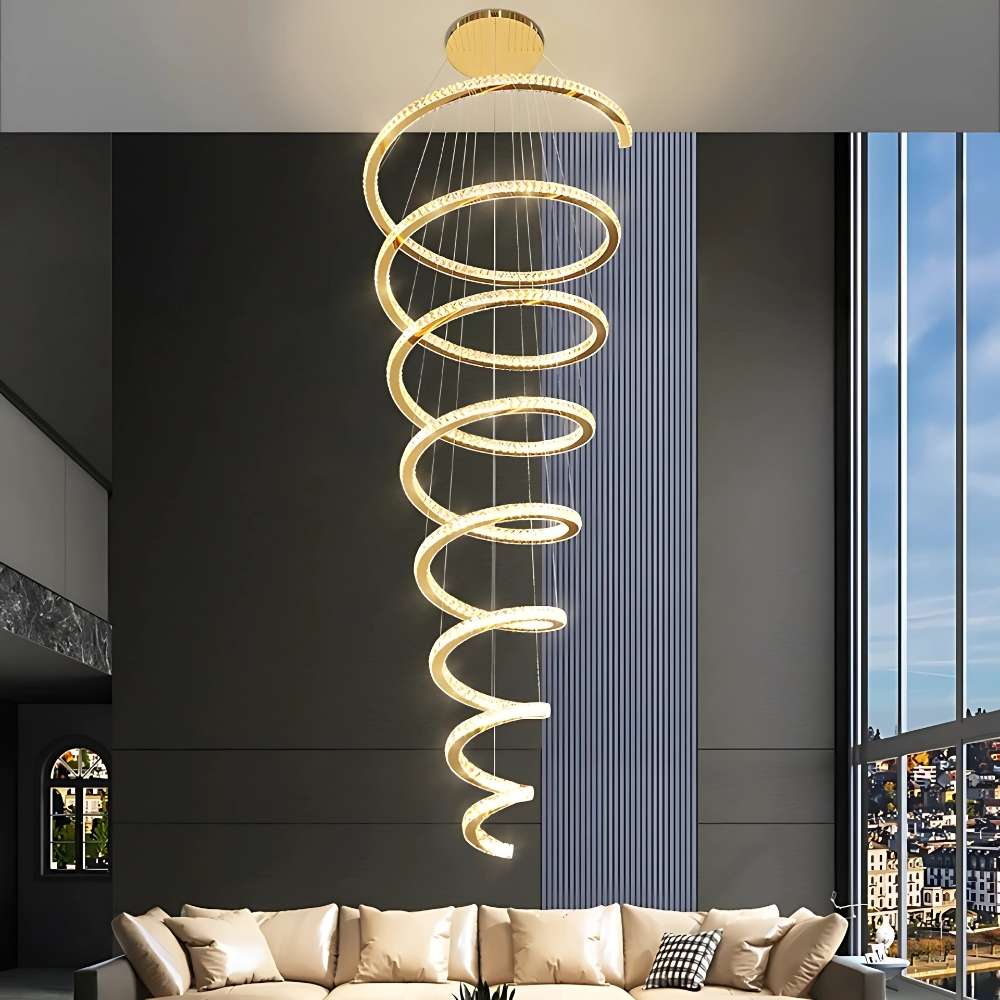
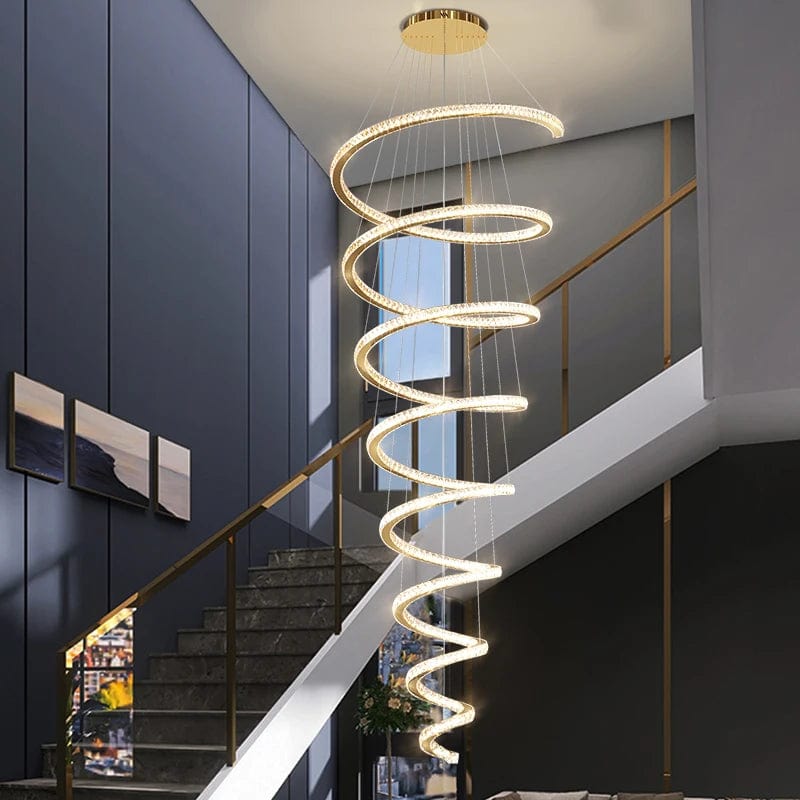
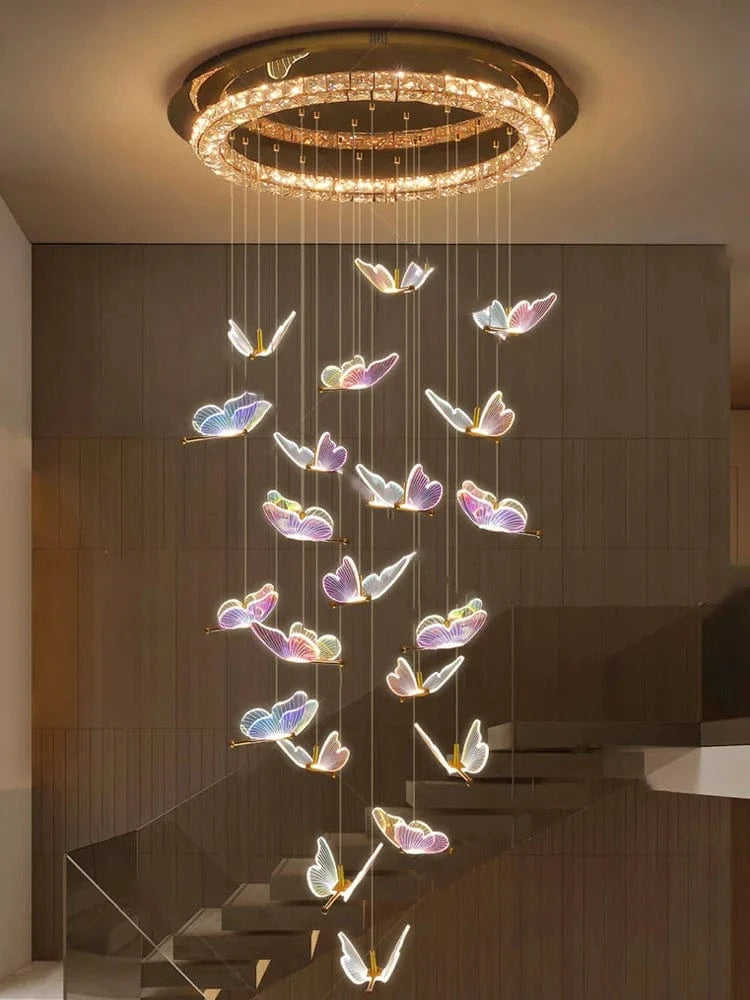
The defining factor is vertical fit. Staircase chandeliers are typically chosen for their ability to hang comfortably in taller spaces while creating a stronger visual connection between ceiling height and the stairwell below. Some use long multi-drop forms, while others rely on spiral layouts, layered clusters, elongated branch structures, crystal strands, or sculptural compositions that read well over several levels.
- Common staircase-friendly features: longer drop, multi-level composition, spiral layouts, open clustered forms, vertical crystal arrangements, and fixtures that stay readable from different angles
- Best room types: stairwells, double-height foyers, open entries, tall landings, and homes with significant ceiling volume
- Main advantage: stronger vertical scale and a more complete visual relationship between the ceiling and the stair zone
Tip: In staircase settings, the fixture often needs to do more than provide light. It also needs to visually organize empty vertical space so the stairwell feels finished rather than top-heavy or under-scaled.
How to Choose the Right Staircase Chandelier
The best staircase chandelier usually depends on ceiling height, stair layout, and sightlines. A tall open stairwell can often handle a longer drop or a more layered chandelier because the room has enough vertical space to support it. In a more moderate-height staircase, a fixture with a clear downward presence but lighter visual density may be the better fit. Width matters too, but in this category the drop, spacing, and silhouette often affect the room more than width alone.
If your goal is a broader entry-focused browse path, it can help to compare this category with Foyer & Entryway Chandeliers. If the main priority is ceiling height more generally rather than the staircase itself, High Ceiling Chandeliers is another useful adjacent category. For more organic forms in taller spaces, you may also want to browse Branch Chandeliers.
Quick planning notes:
- Walking clearance: in open circulation areas, keep comfortable head clearance below the fixture
- Multi-level viewing: choose a chandelier that still looks balanced from the bottom floor, the stairs, and the upper landing
- Taller ceilings: a little more drop often helps the chandelier feel connected to the space instead of floating too high overhead
- Open structures: fixtures with layered but breathable spacing often work better than overly dense forms in tall stairwells
Measurement note: In staircase applications, vertical proportion matters as much as overall size. A chandelier can have an impressive diameter but still feel undersized if the drop is too short for the stairwell. On the other hand, a long chandelier can feel awkward if it interrupts circulation or hangs too close to a landing or walking path.
Shape, Material, and Visual Rhythm
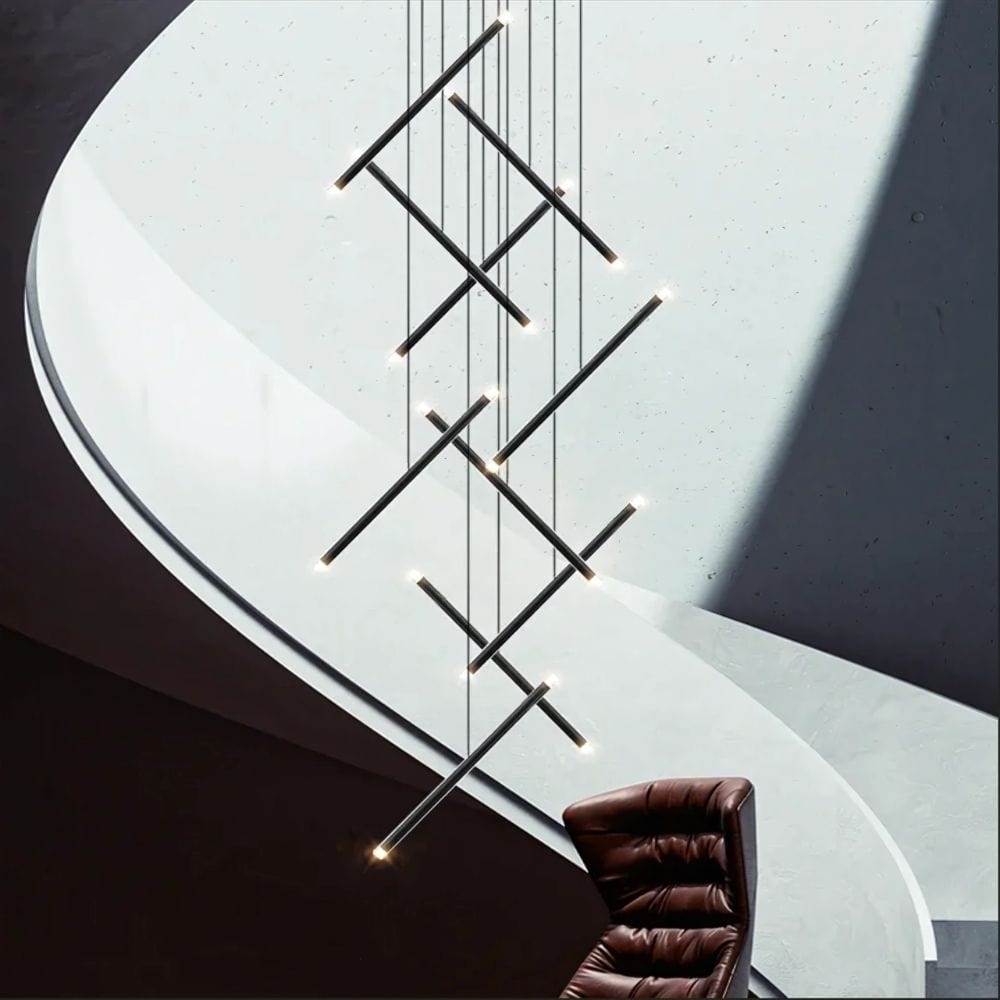
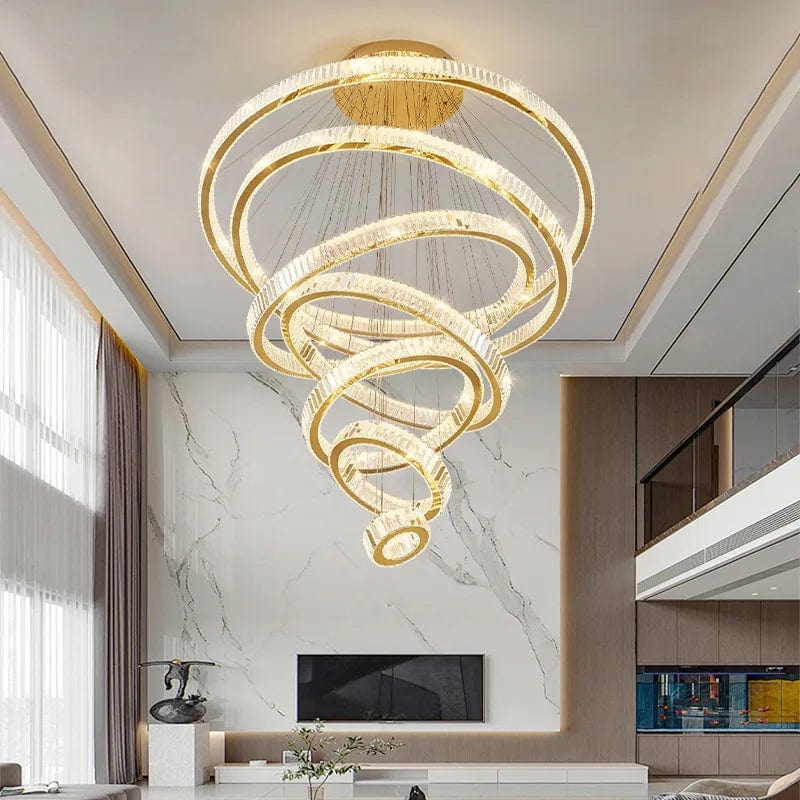
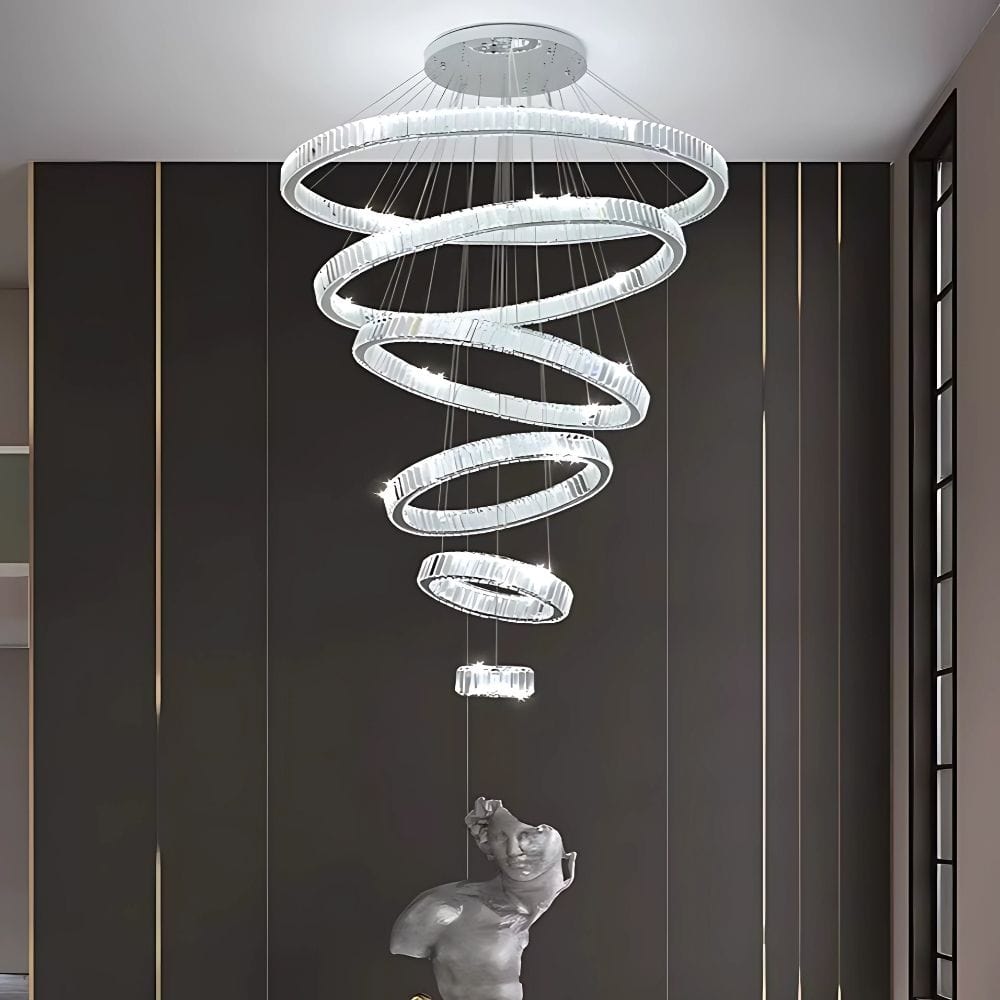
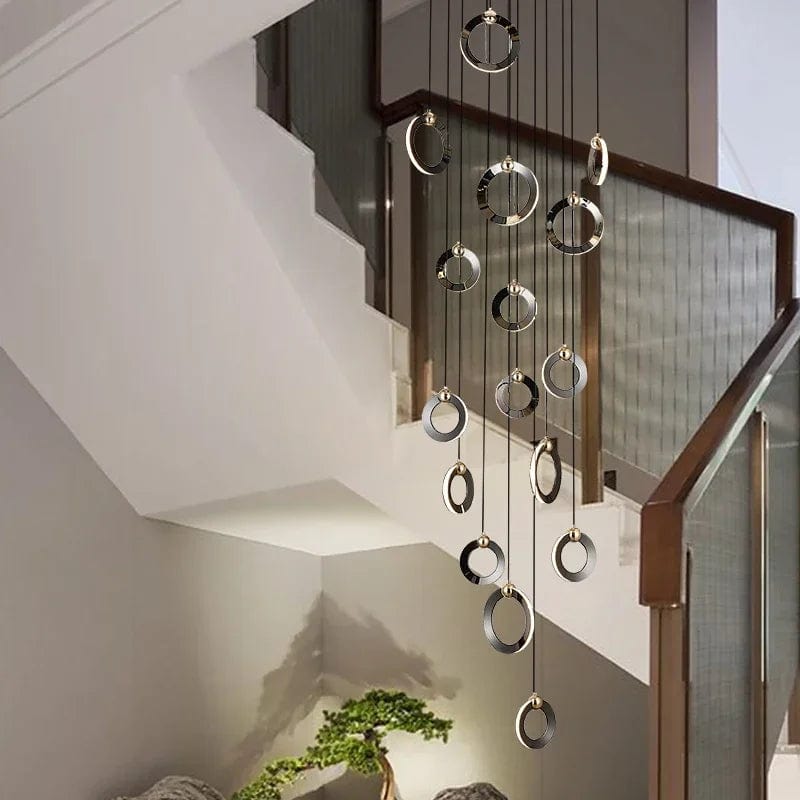
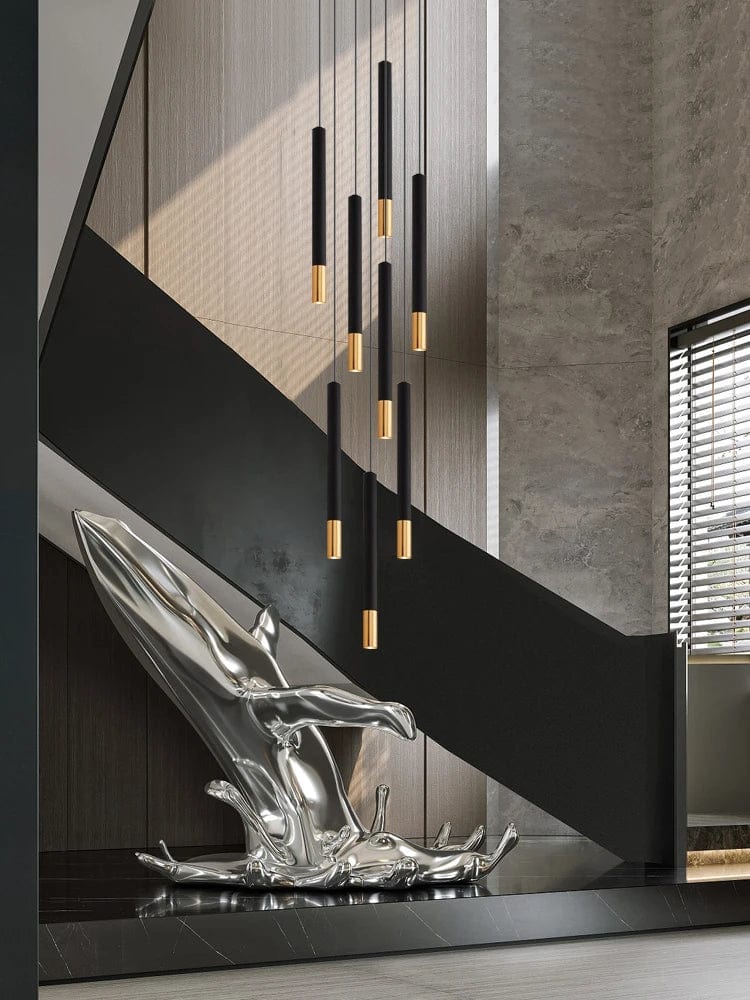
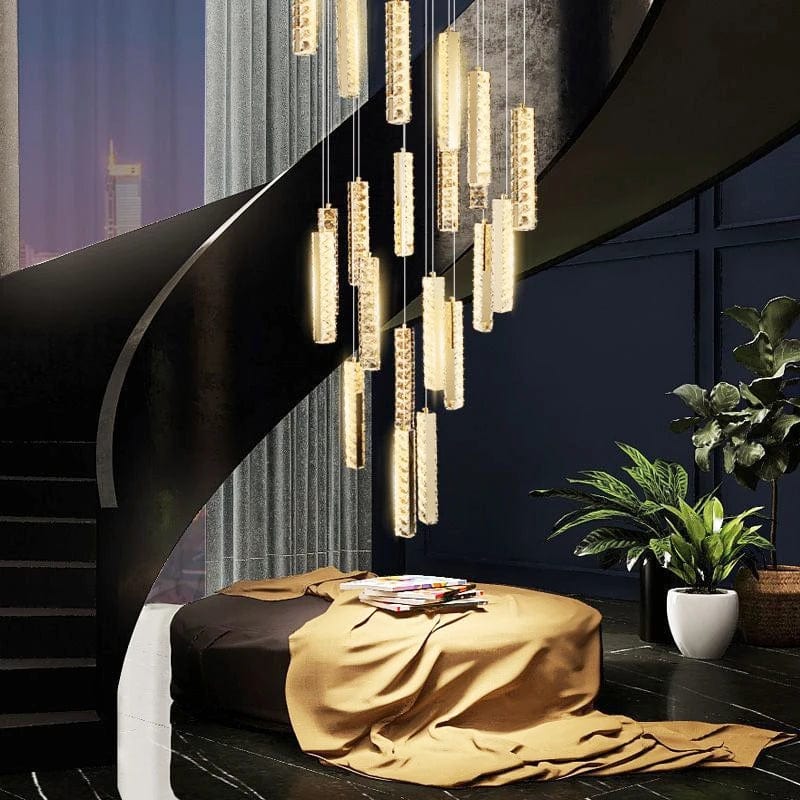
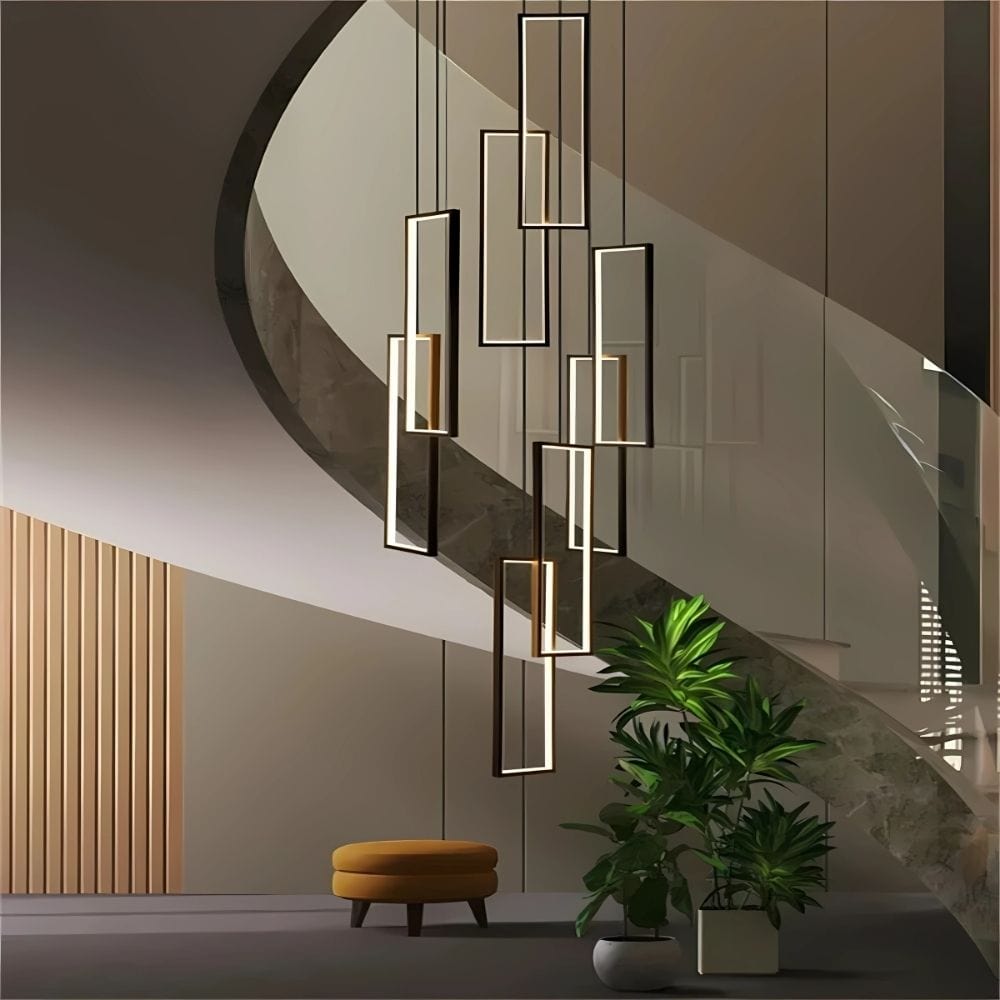
Different staircase chandeliers change the stairwell in different ways. Spiral and multi-drop forms often emphasize height most clearly. Crystal arrangements can add reflection and make the fixture feel more dramatic from multiple levels. Branch-inspired or sculptural chandeliers create more movement and can soften the vertical line of the stairwell. Ring-based or more geometric staircase chandeliers often feel cleaner and more architectural in contemporary homes.
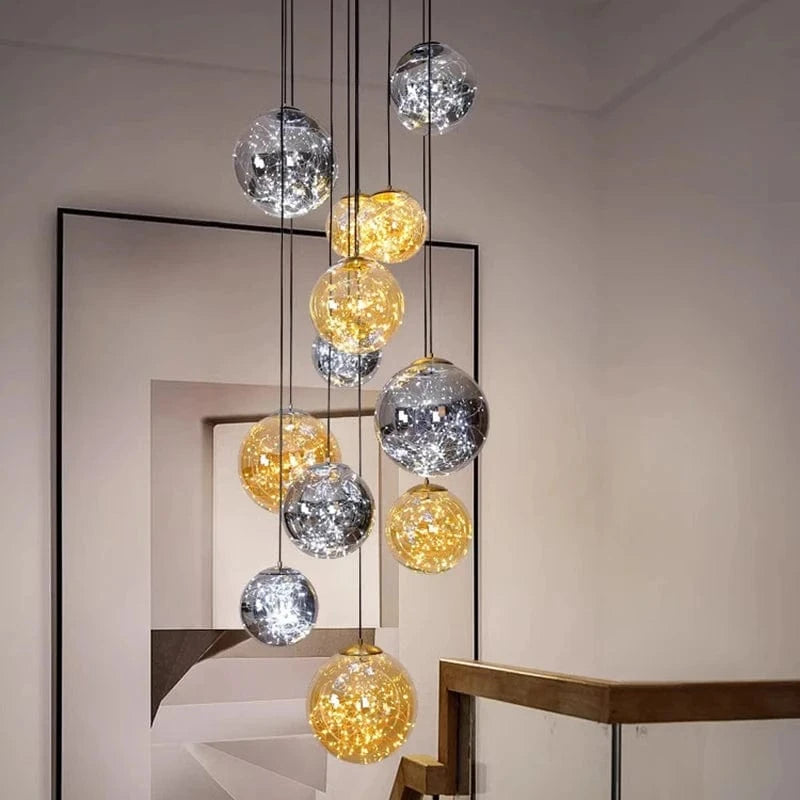
Material and finish also change how the chandelier reads in open space. Clear crystal or glass can make a large fixture feel lighter than a dense dark frame. Black metal often creates sharper contrast and stronger silhouette definition. Gold, brass, and warmer finishes usually add richness and make the chandelier feel more decorative. The right direction depends on whether you want the stairwell to feel dramatic, refined, soft, or highly architectural once the light is installed.
Quick comparison:
- Spiral staircase chandeliers - stronger vertical motion and a dramatic multi-level view
- Crystal staircase chandeliers - more reflection, more sparkle, and a dressier ceiling statement
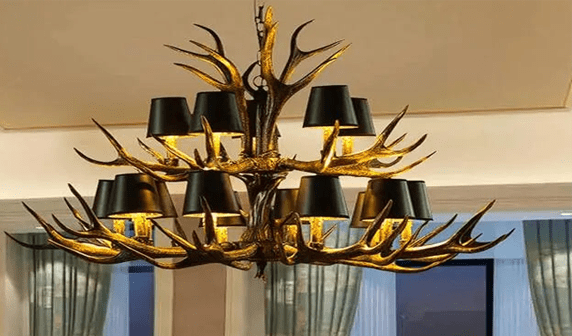
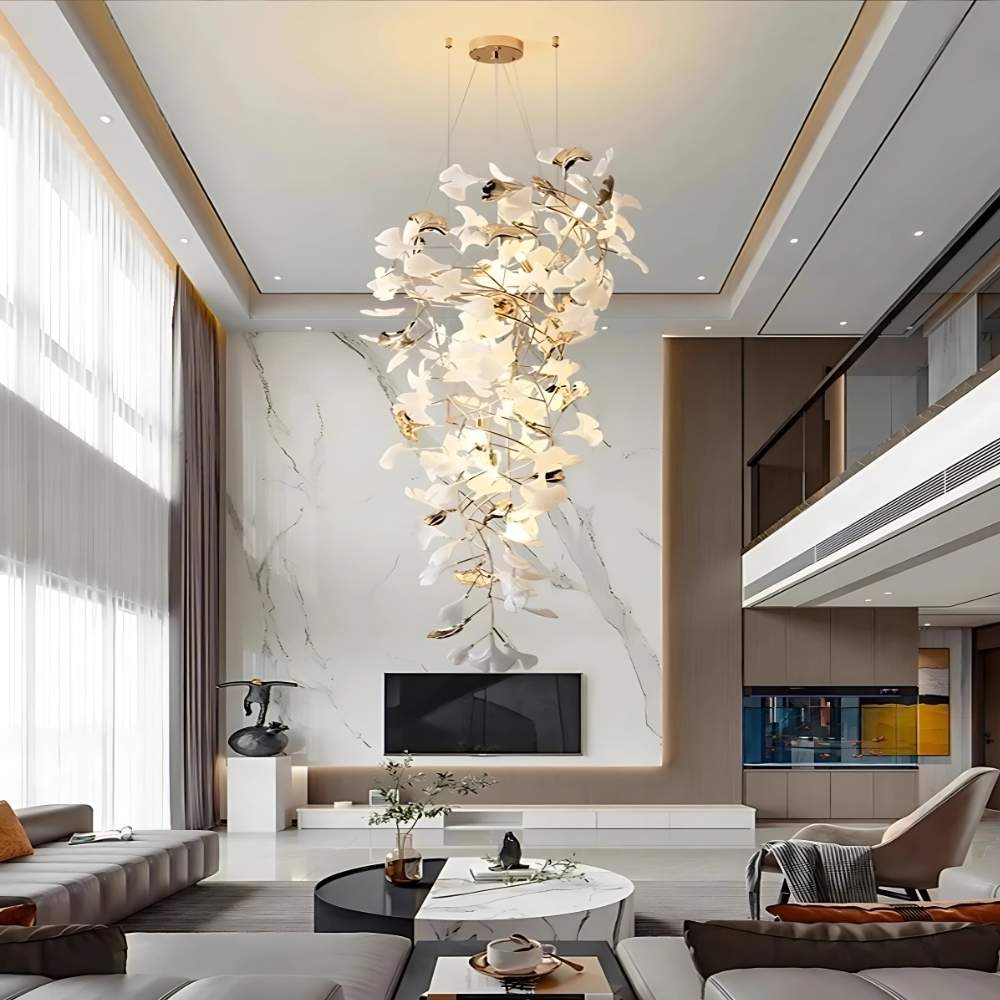
- Branch or sculptural forms - softer movement and more artistic visual flow
- Geometric or ring-led styles - cleaner lines and a more architectural look in current interiors
Staircase Chandeliers vs. Foyer and High-Ceiling Chandeliers
These categories overlap, but they do not serve exactly the same role. Staircase chandeliers are chosen specifically for stairwell geometry, vertical sightlines, and multi-level viewing. Foyer chandeliers are broader entry-focused fixtures that may not always need to work alongside a stair run. High-ceiling chandeliers are broader still and focus on ceiling scale in general rather than the staircase itself. If your room includes stairs and the chandelier will be seen from more than one level, this category is usually the more precise starting point.
Small reminder: The best staircase chandelier is not simply the longest fixture. It is the one whose drop, spacing, and visual weight make the stairwell feel balanced from top to bottom.