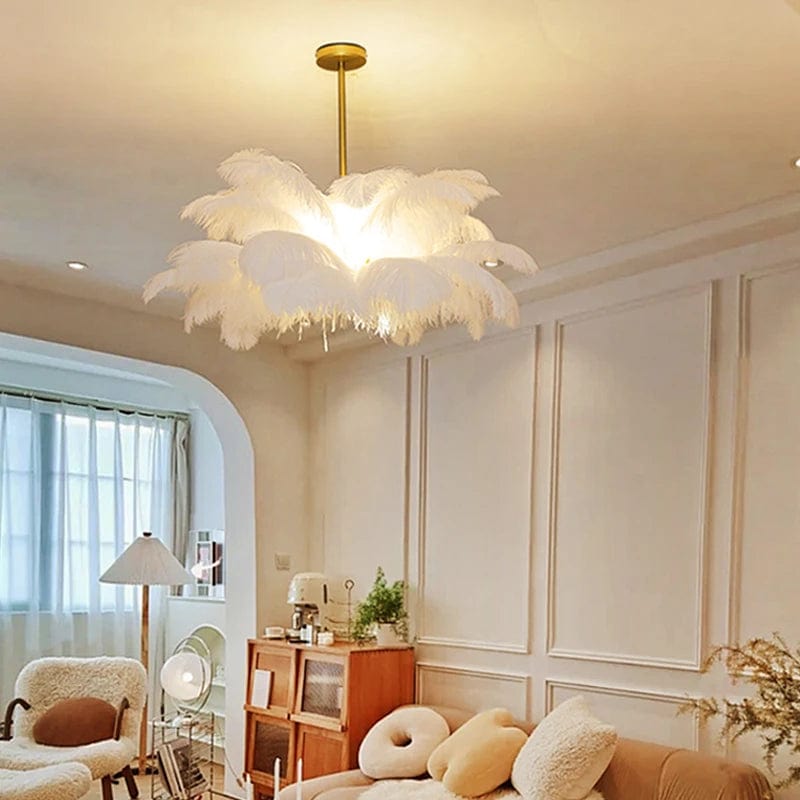
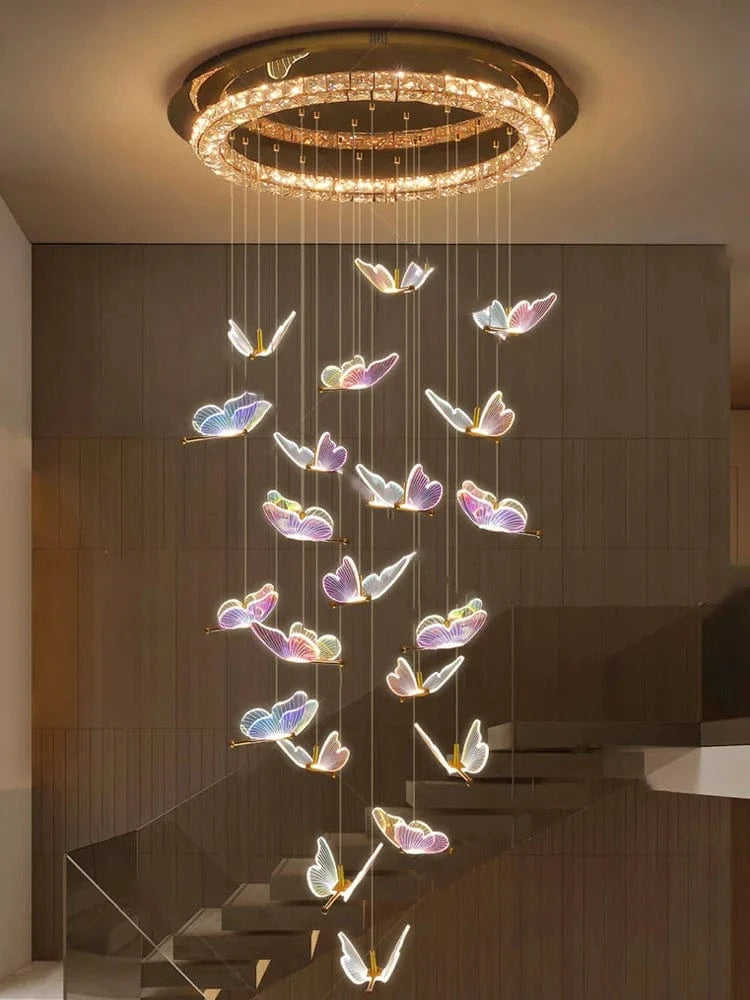
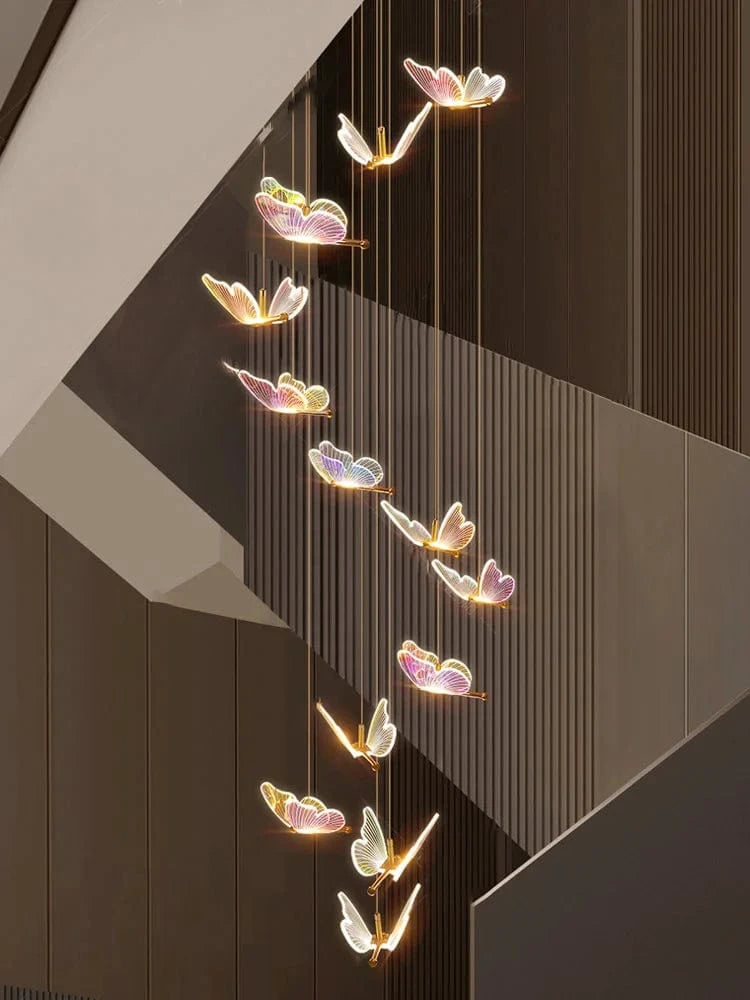
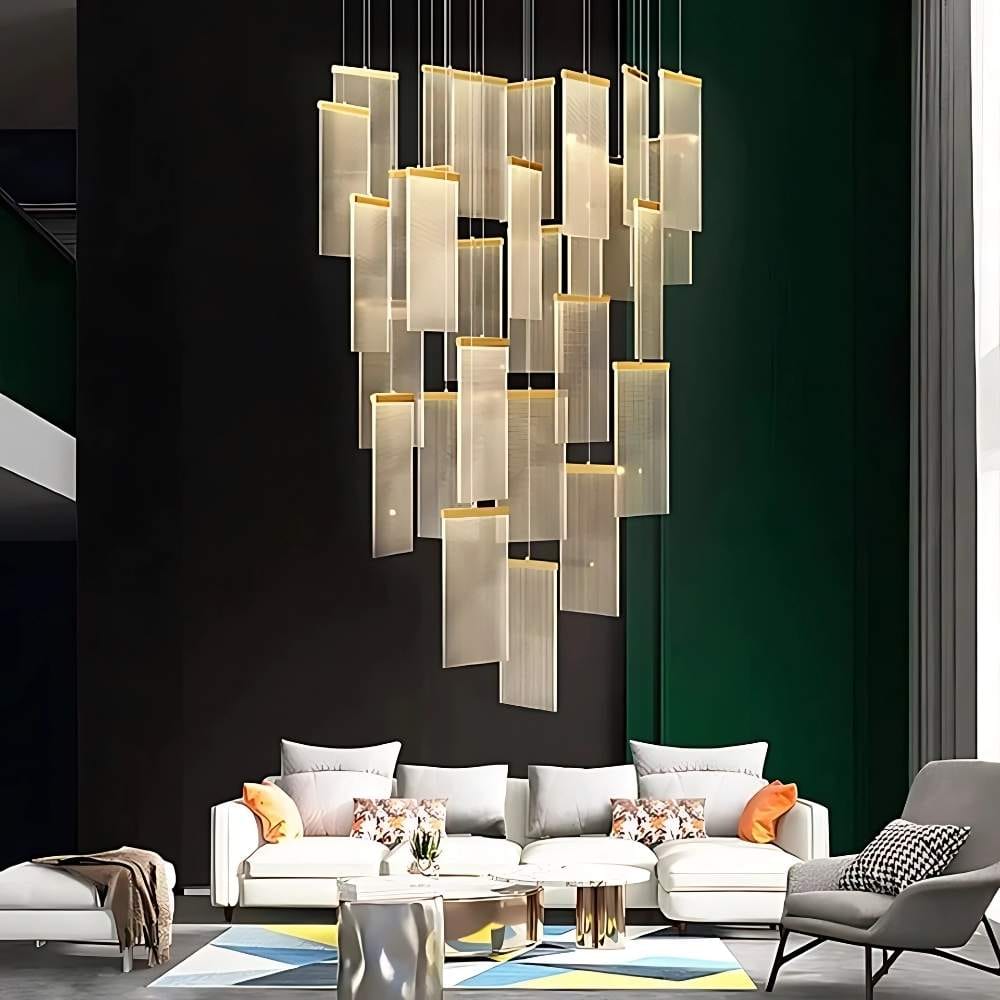
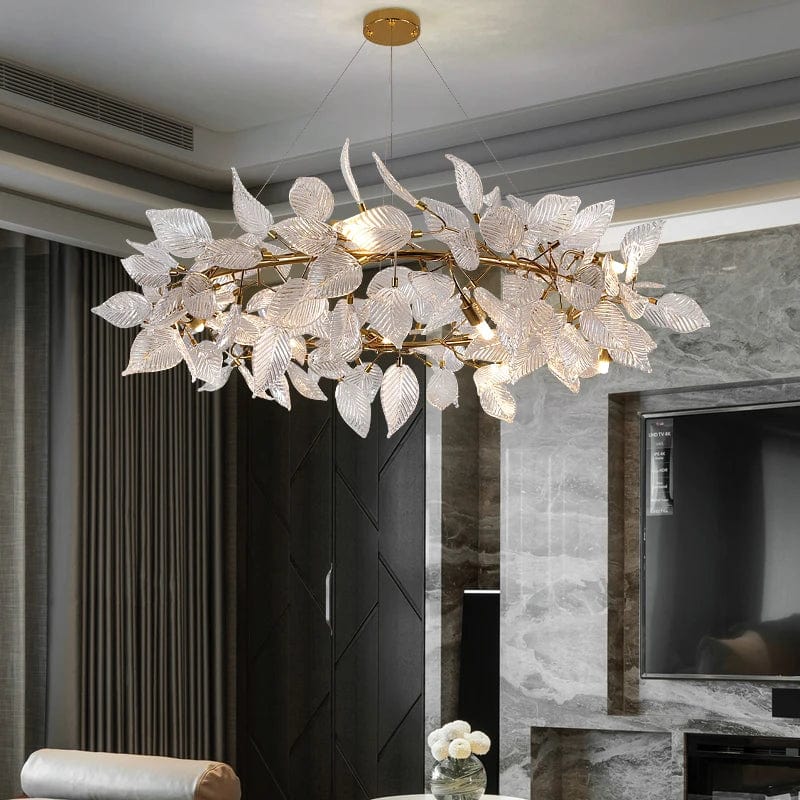
What a Chandelier Does for a Living Room
Any suspended or semi-flush fixture scaled and styled for a seating space qualifies — but the useful definition is functional. Unlike a dining fixture anchored over a table, a living room chandelier centers on the seating envelope, provides the ambient layer lamps build around, and hangs as a design object for the many hours it sits unlit. That last point separates strong choices from weak ones: sculptural presence and finish coordination matter here more than raw light output.
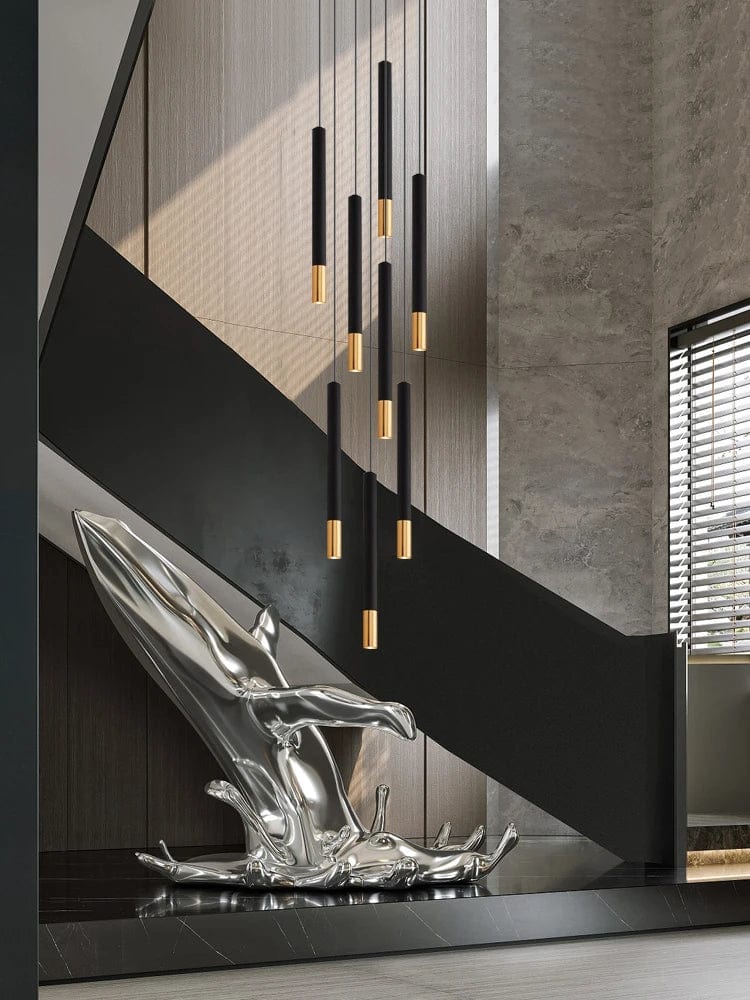
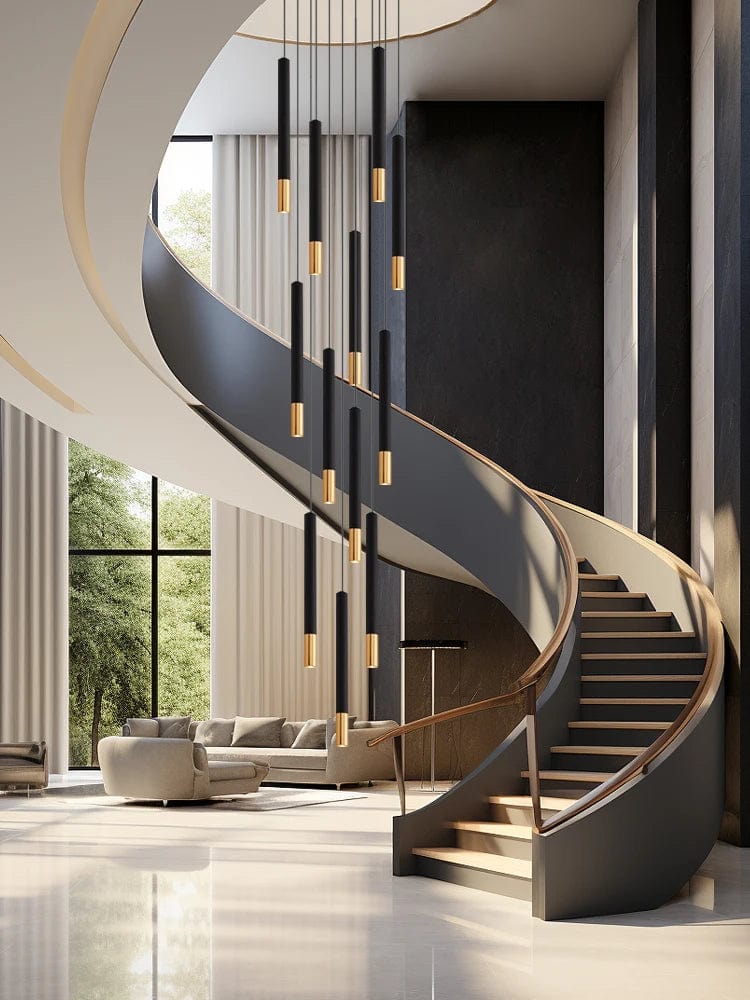
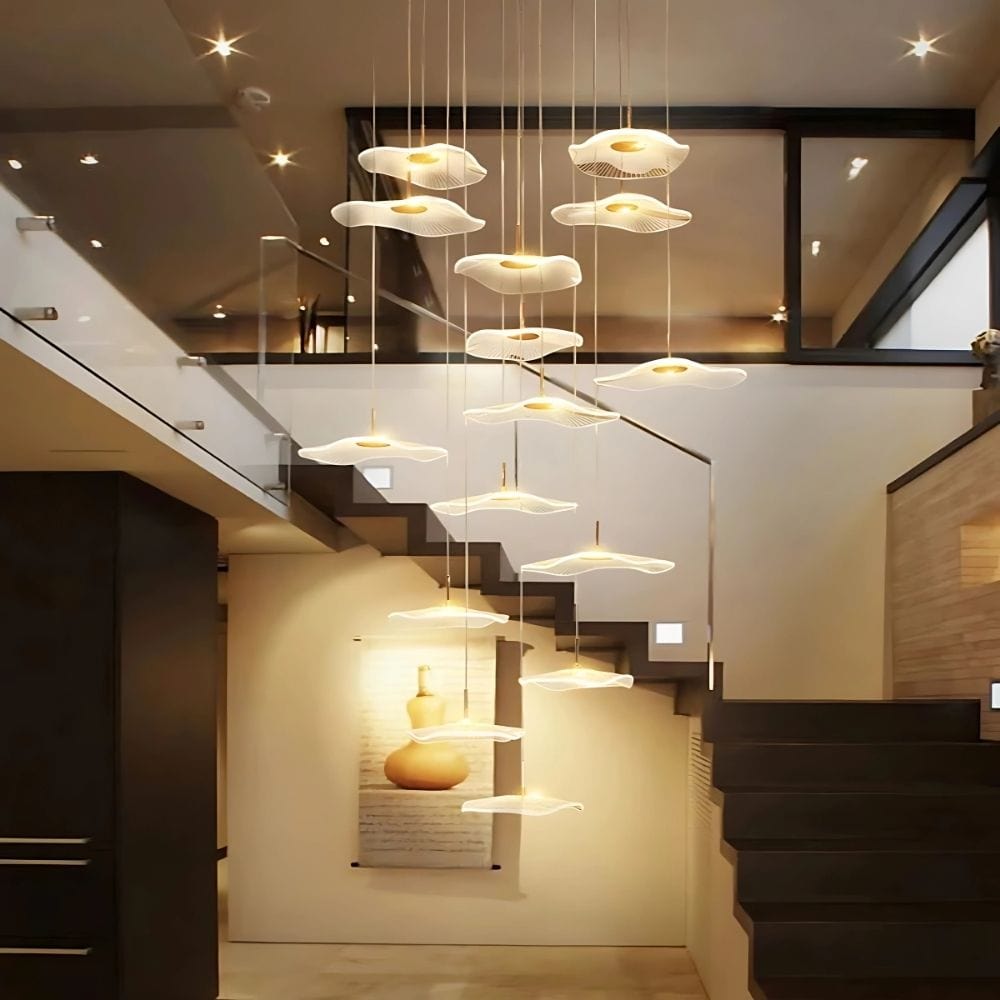
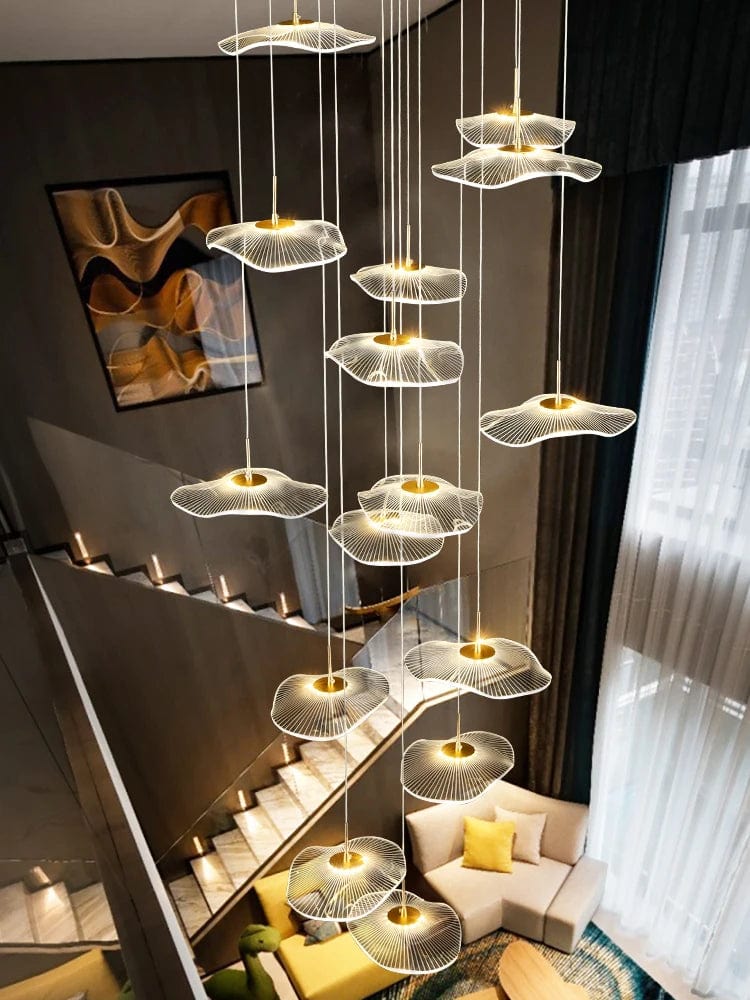
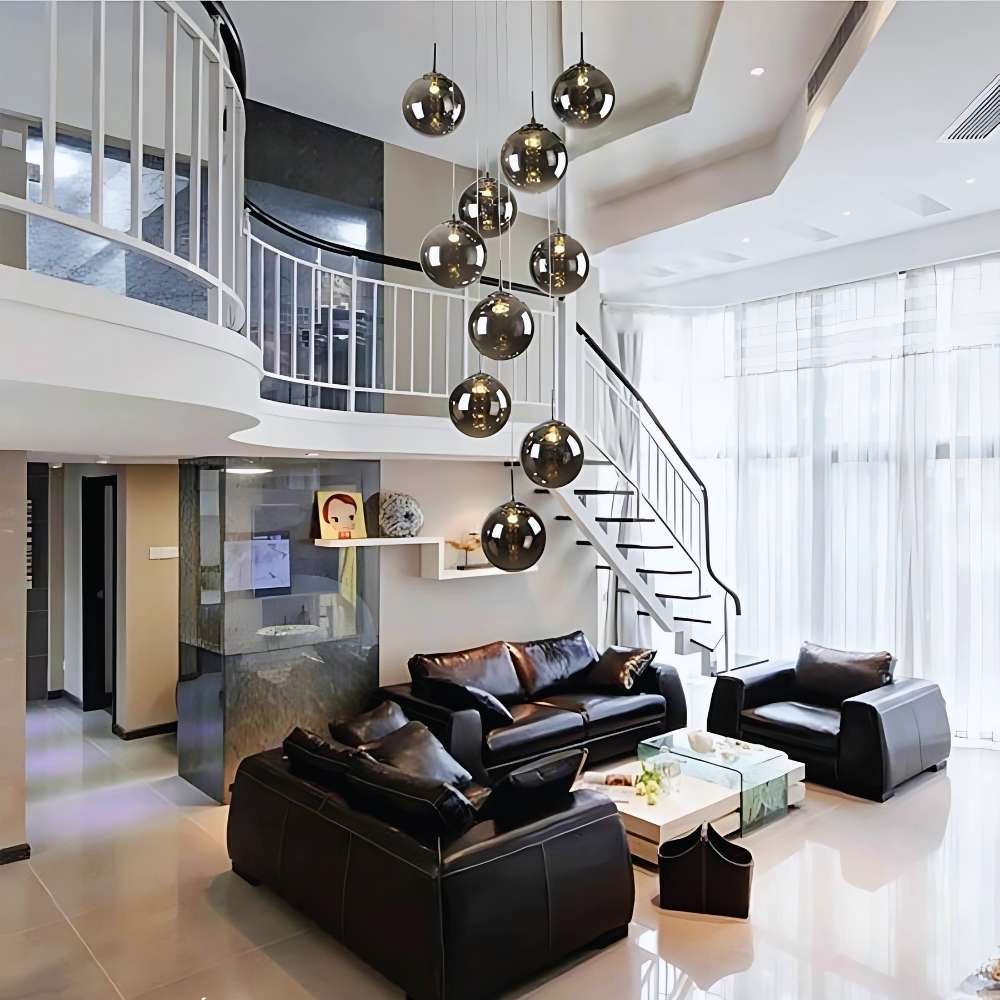
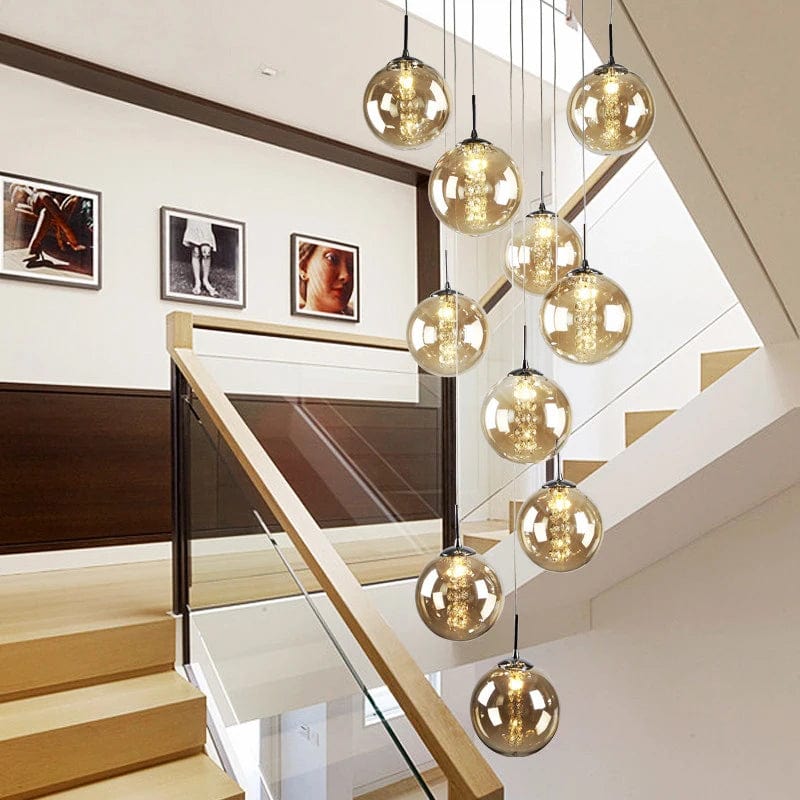
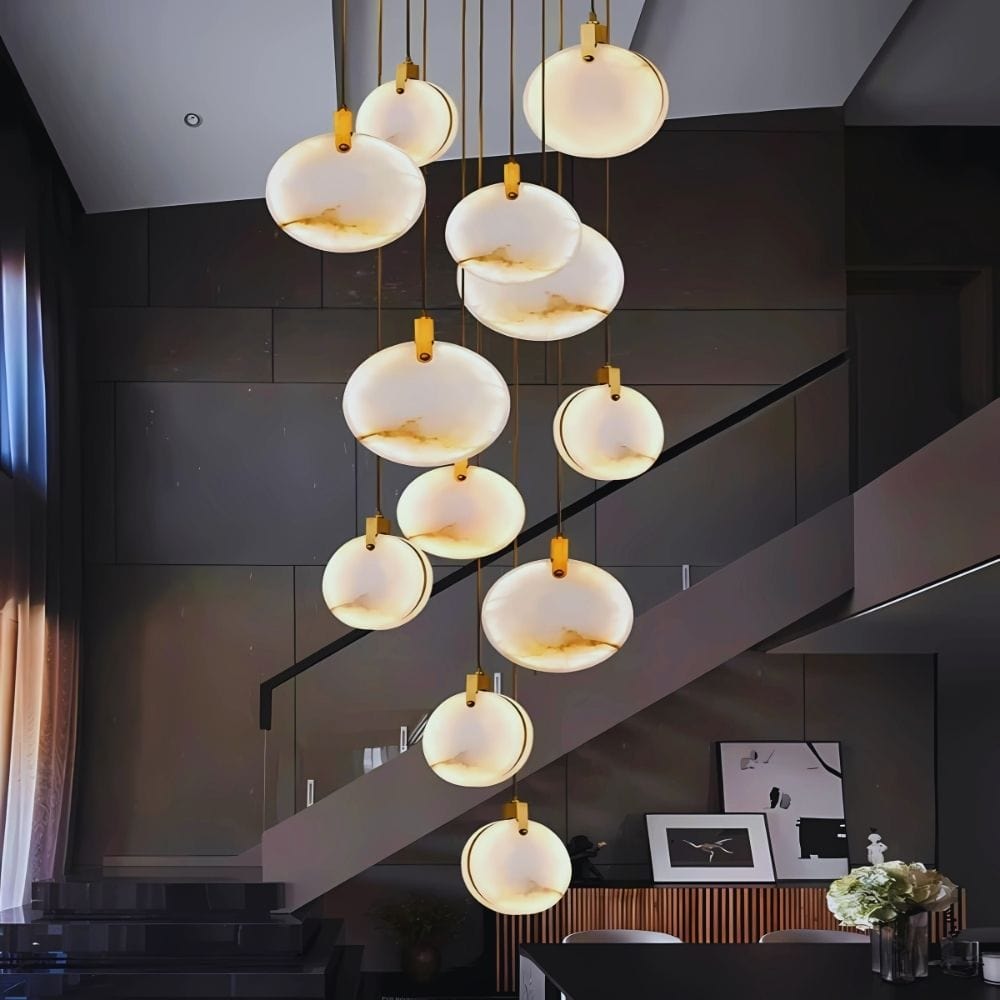
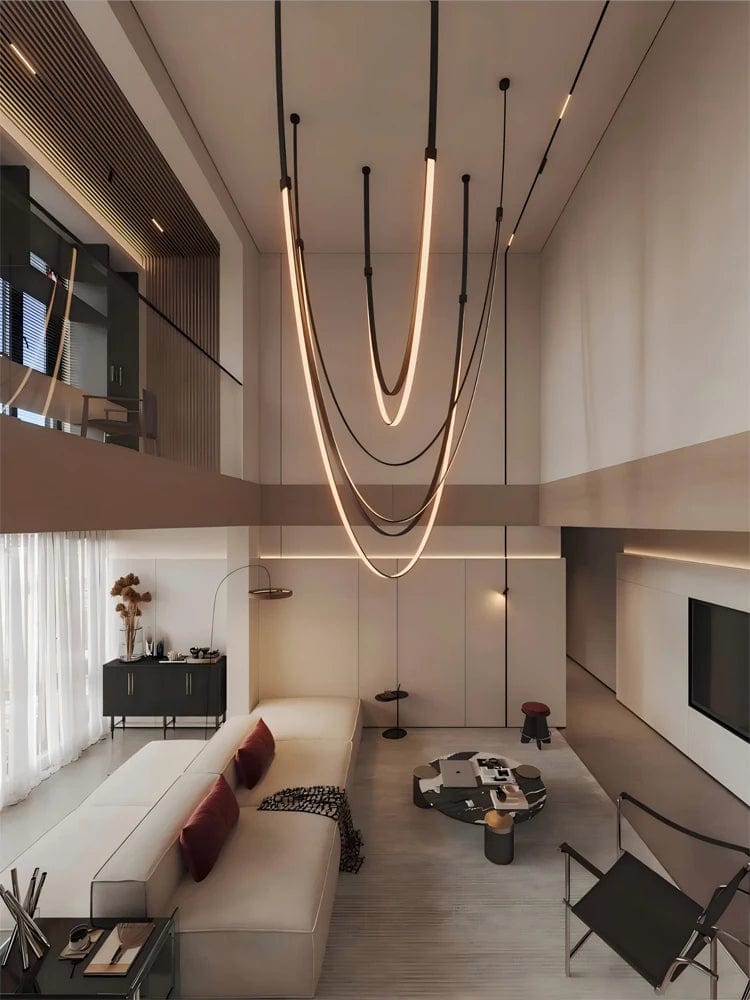
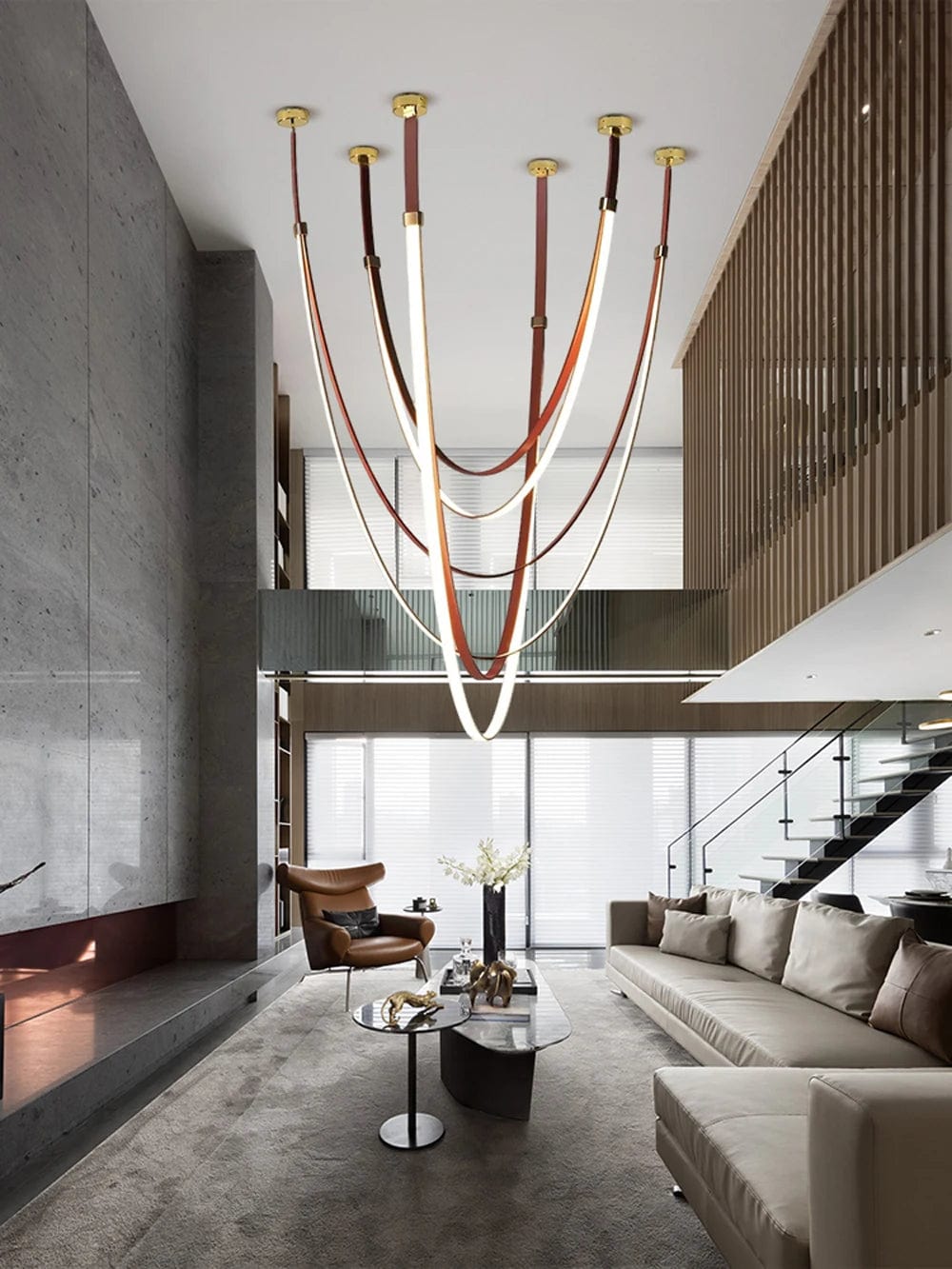
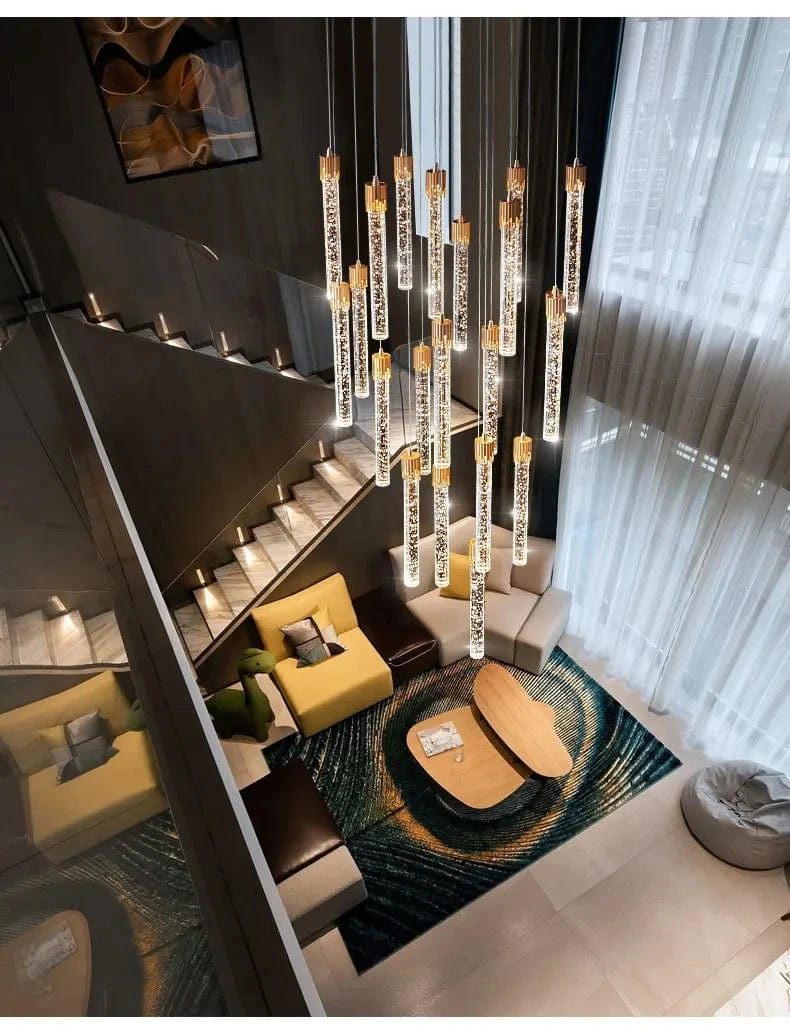
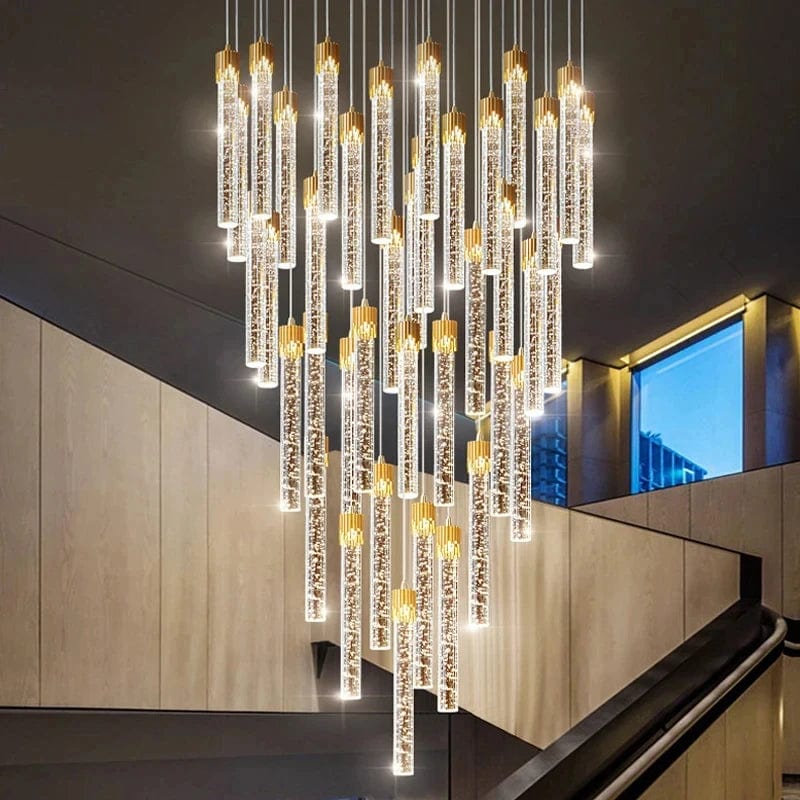
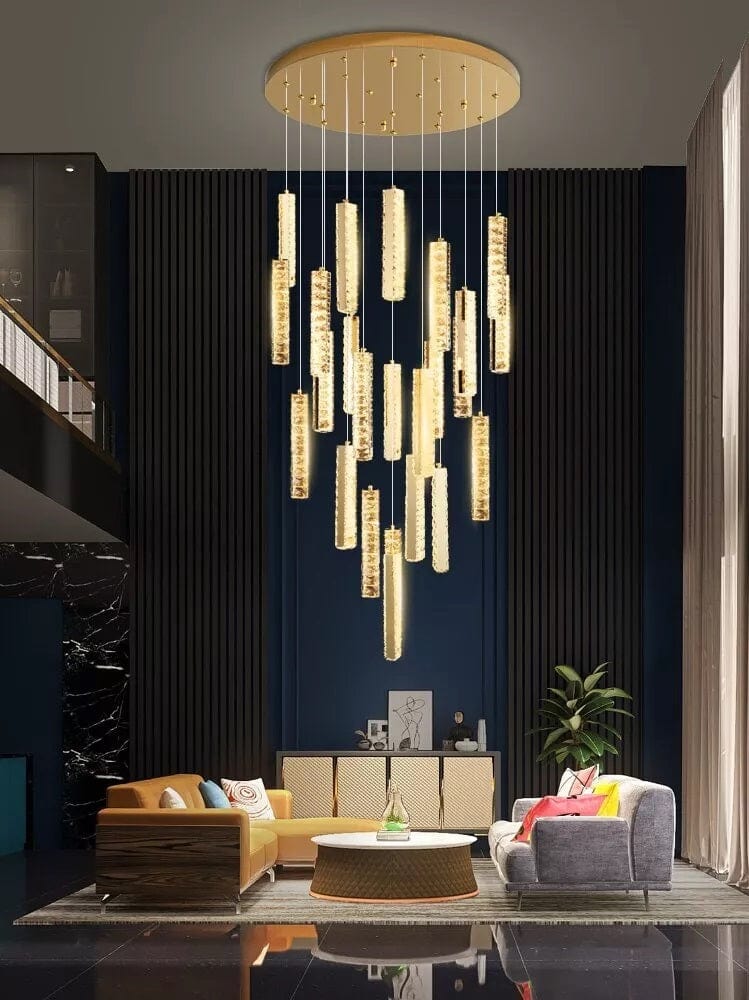
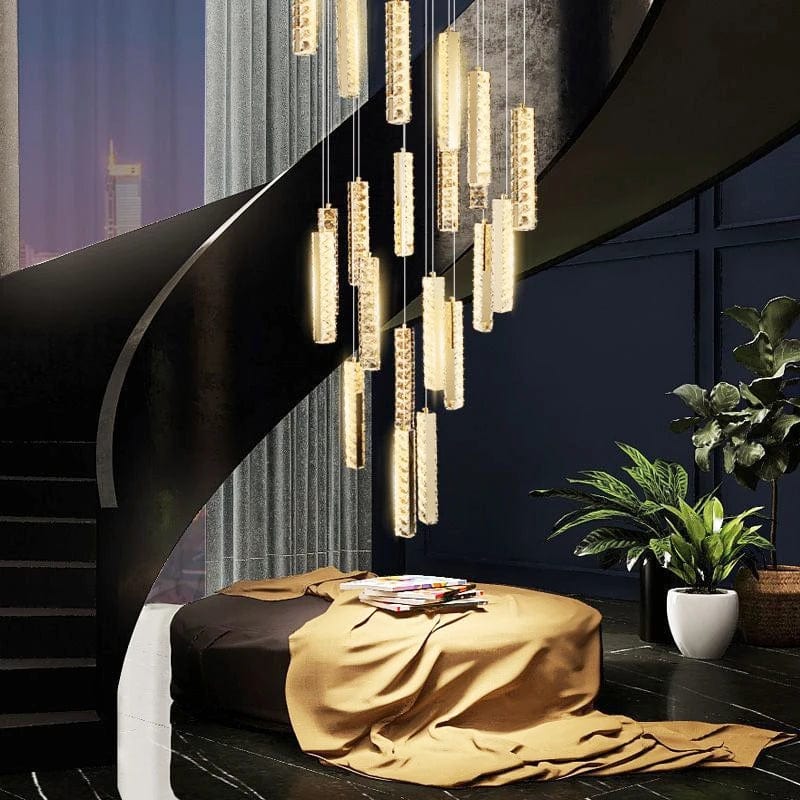
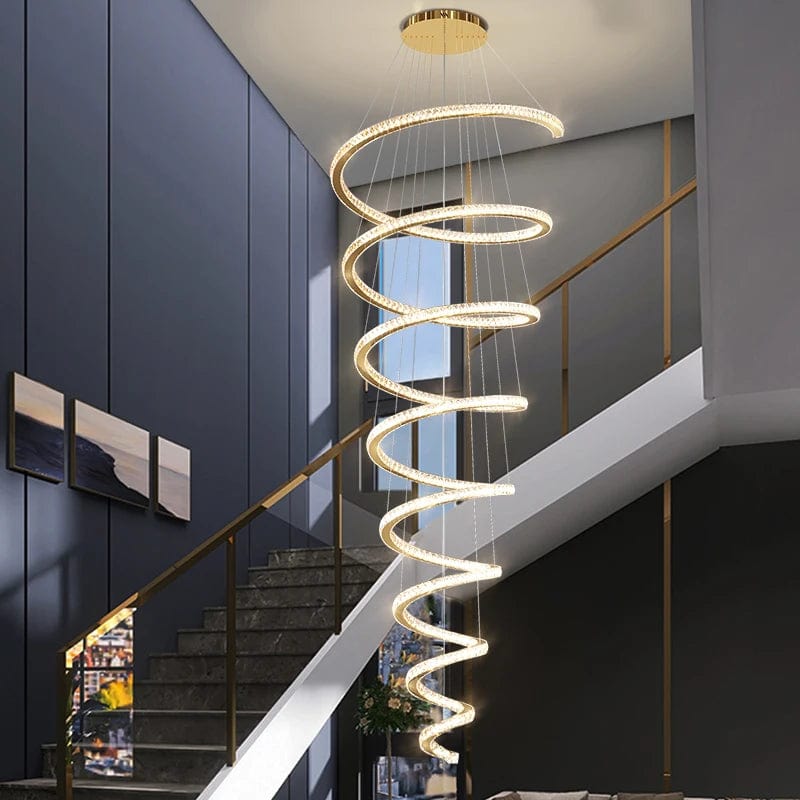
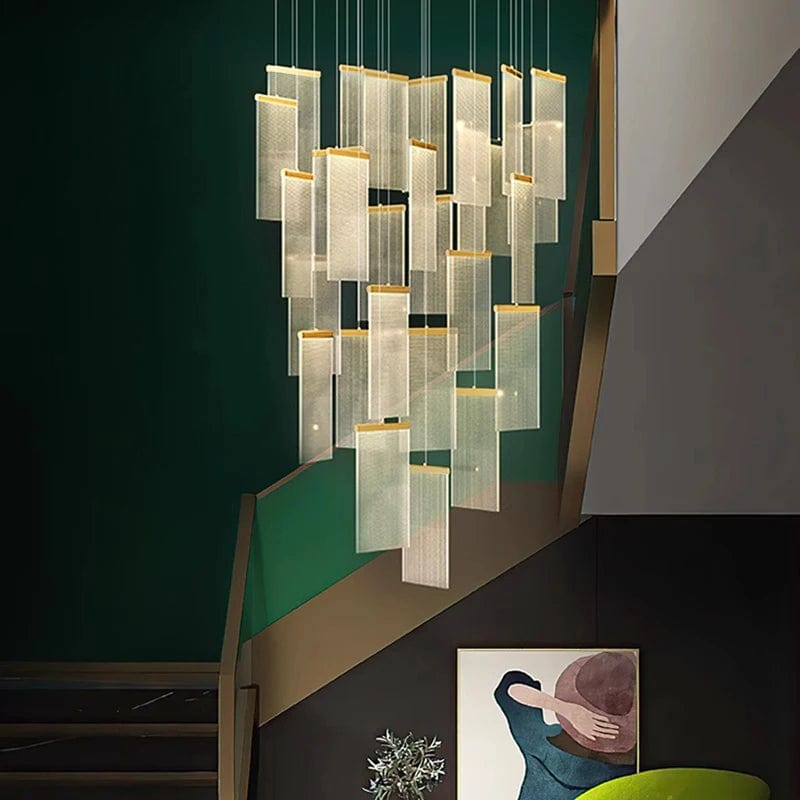
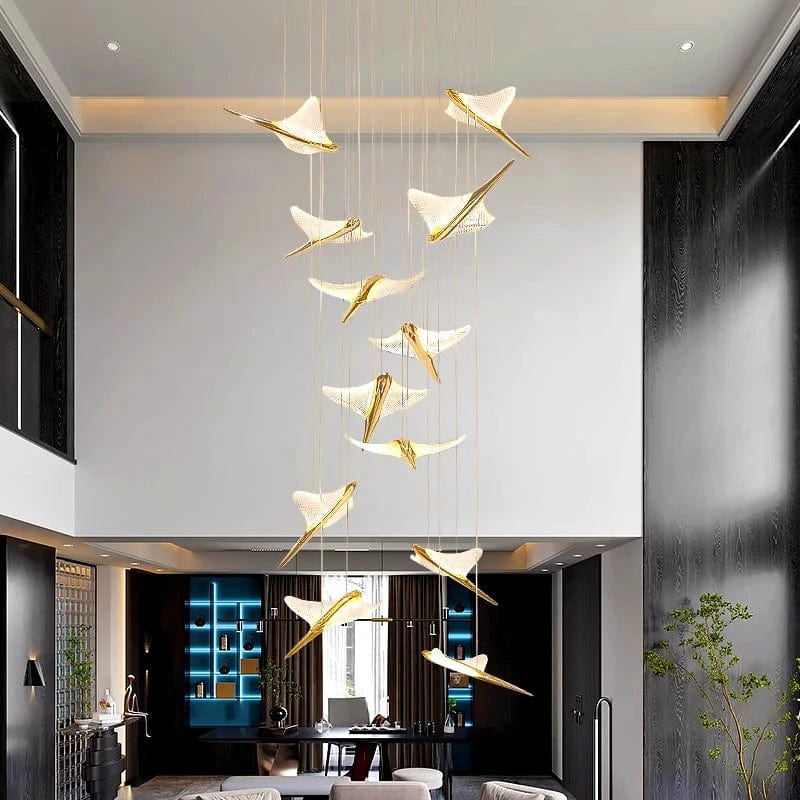
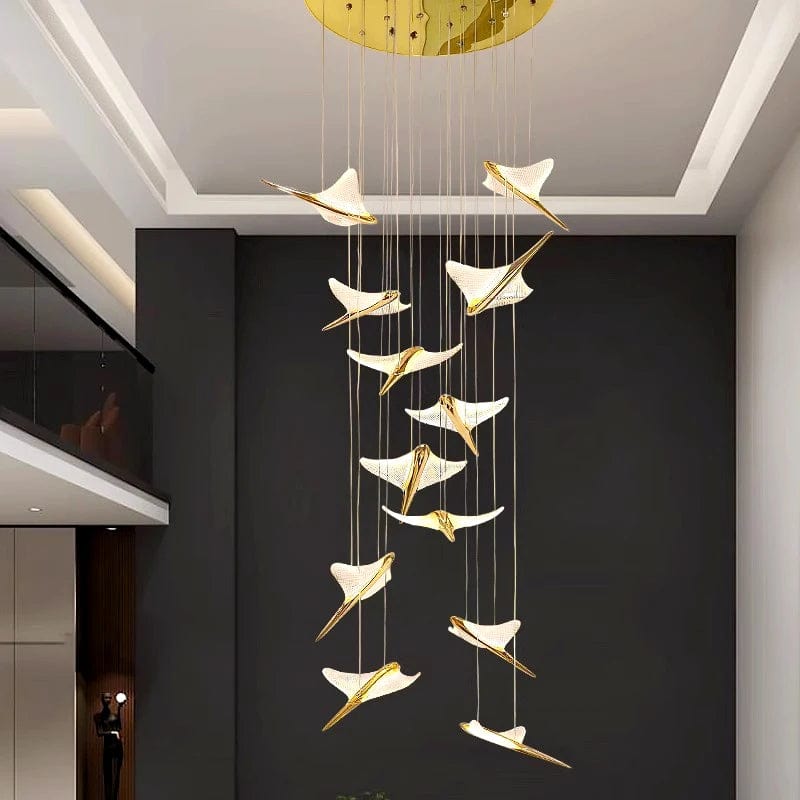
Four space types shape the range. Standard rooms take a single mid-scale fixture centered on the seating group. Great rooms and open plans need statement scale, plus finish coordination with adjacent kitchen, hall, or dining fixtures — related family, not identical twins. Formal sitting rooms suit the refined, compact end. Two-story rooms call for extended-drop compositions where body height matters as much as diameter — sized in full in our high ceiling living room guide.
Getting the Size and Height Right
Start With the Room Formula
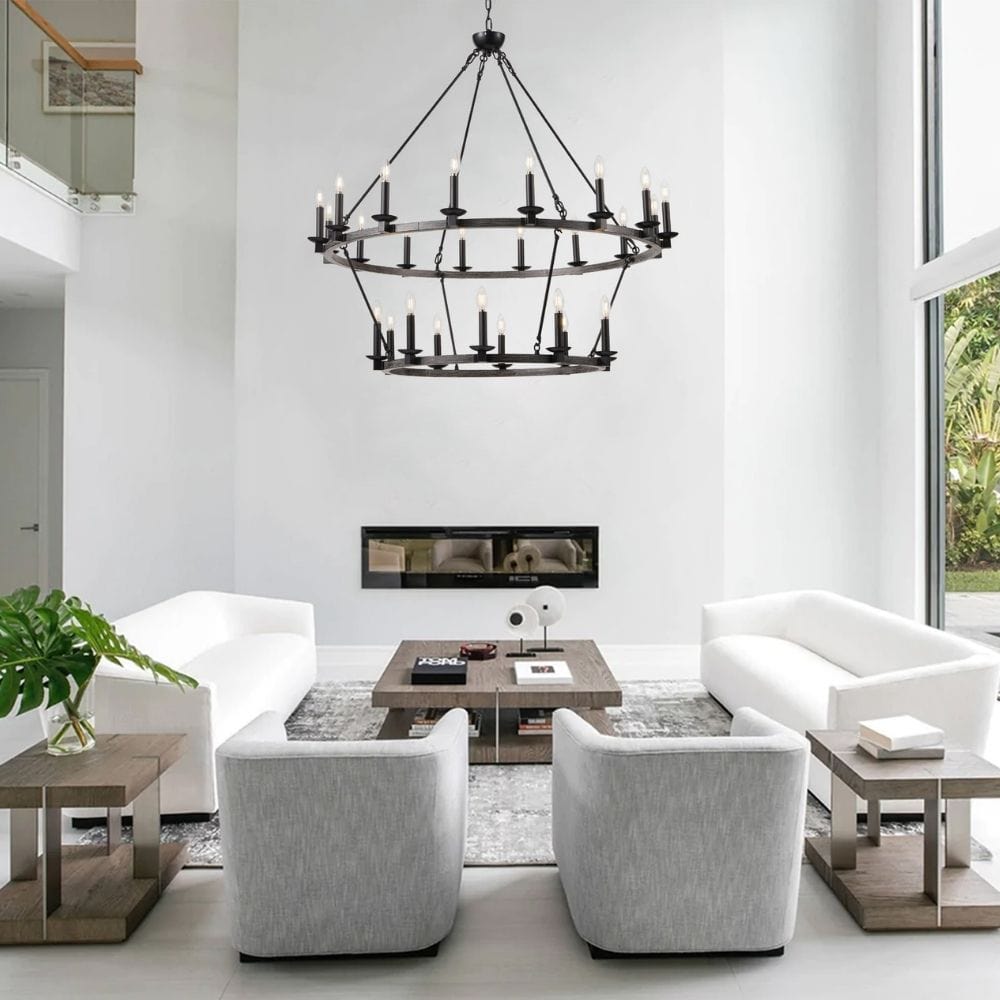
Add the room's length and width in feet — the total is your target diameter in inches. For open-plan spaces, size to the seating zone rather than the full floor plate, then round up one step so the fixture holds its own against the larger visual field.
- 10 x 12 ft room: 20-24" (51-61 cm) — apartment and compact rooms
- 12 x 14 ft room: 24-28" (61-71 cm) — standard living rooms
- 15 x 20 ft room: 32-36" (81-91 cm) — large living rooms
- 18 x 24 ft+ / open plan: 40"+ (102 cm+) — great rooms and statement scale
Keep 7 ft (84") of floor clearance wherever people walk beneath. Over a coffee table inside the seating envelope, the fixture can hang lower — treat the table like a dining anchor with roughly 30-36" above its surface. For worked examples across every layout, see the living room chandelier size guide.
Match the Format to Your Ceiling Height
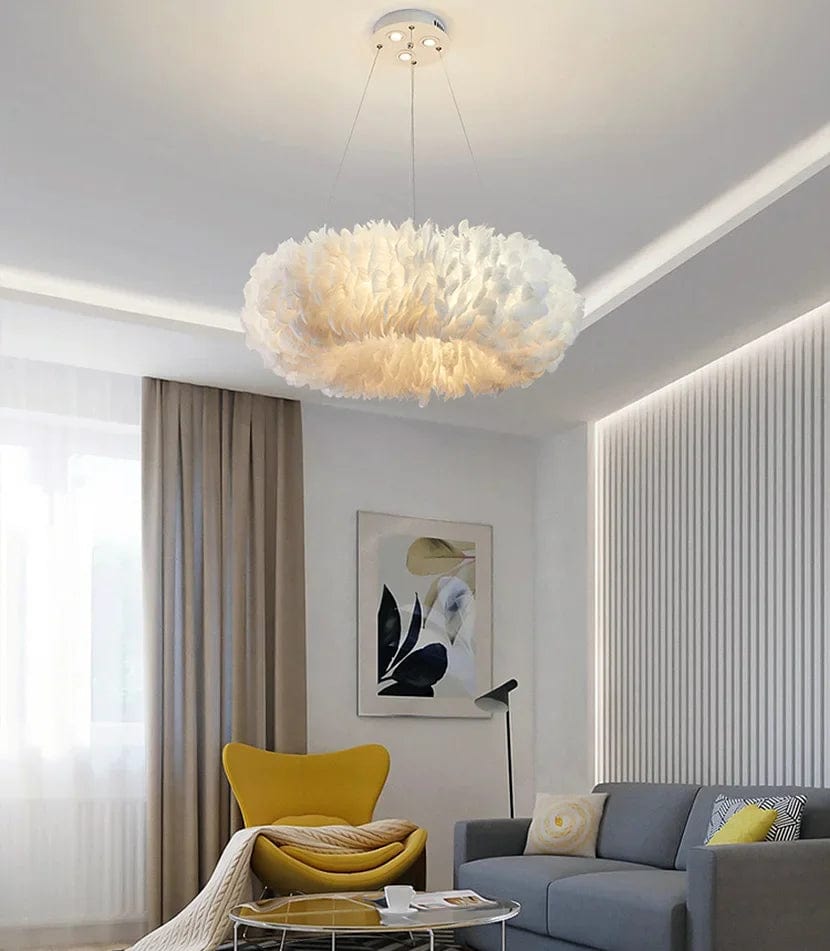
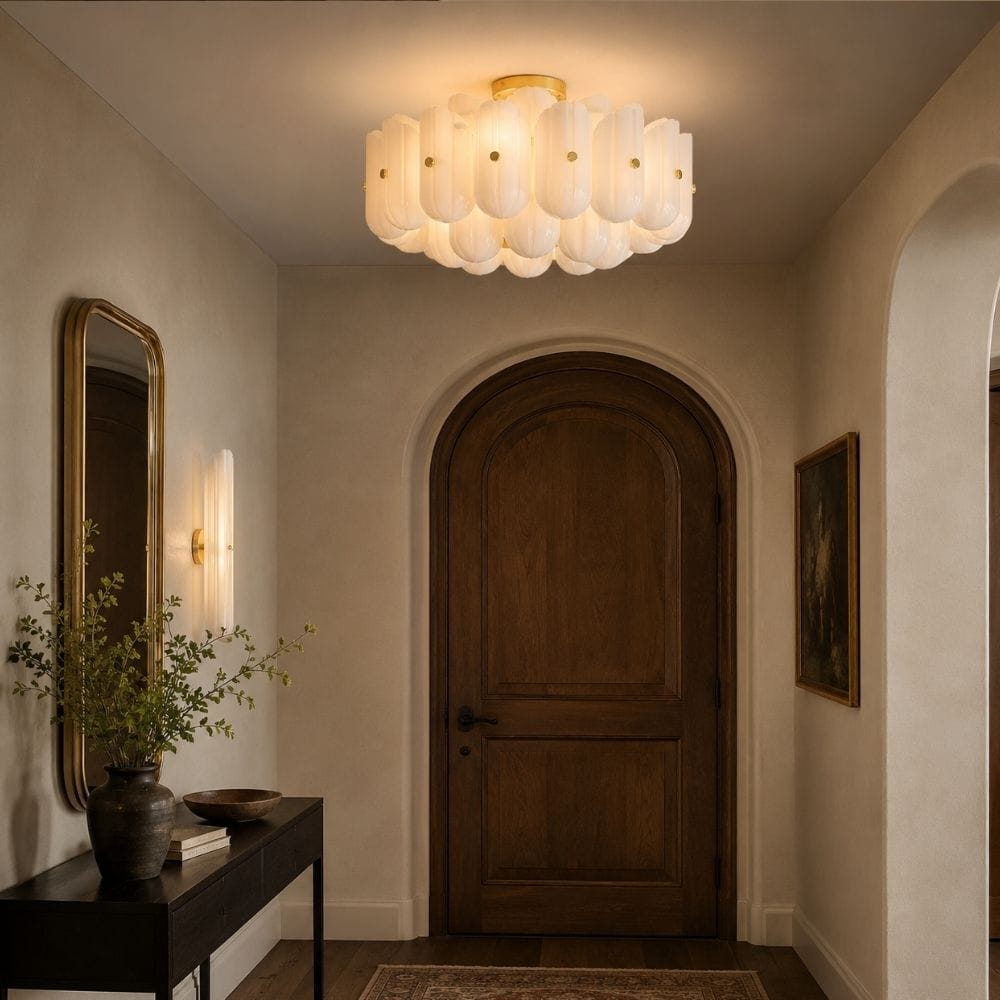
- 8 ft (2.44 m): flush or semi-flush formats with 8-12" body depth
- 9-10 ft (2.74-3.05 m): standard suspended designs with adjustable rod or cable
- 11-14 ft (3.35-4.27 m): multi-tier and extended-drop designs
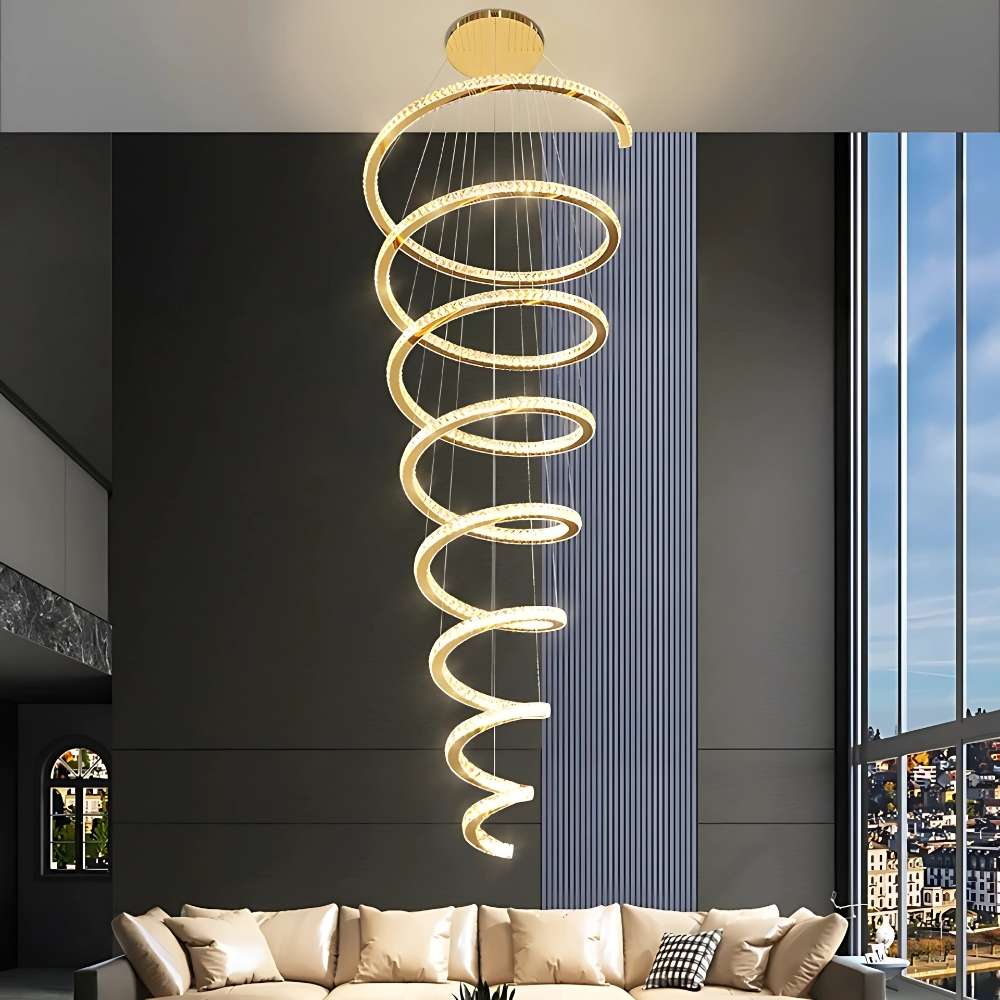
- 16 ft+ / two-story: cascade compositions with 50"+ body height
For two-story and cathedral rooms specifically, the high ceiling chandeliers collection carries the dedicated extended-drop range.
Choosing the Look: Style, Material and Finish
Materials That Set the Room's Character
- Crystal: reflective sparkle — formal and glam rooms
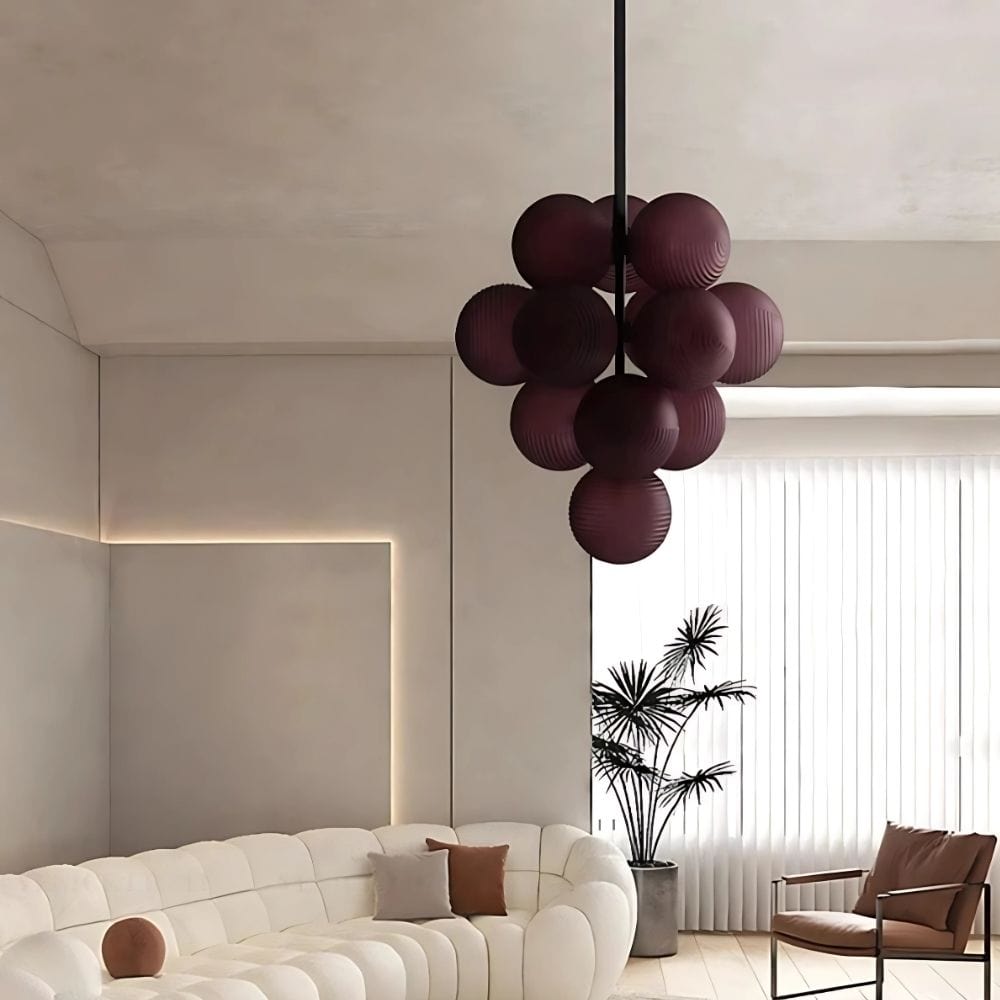
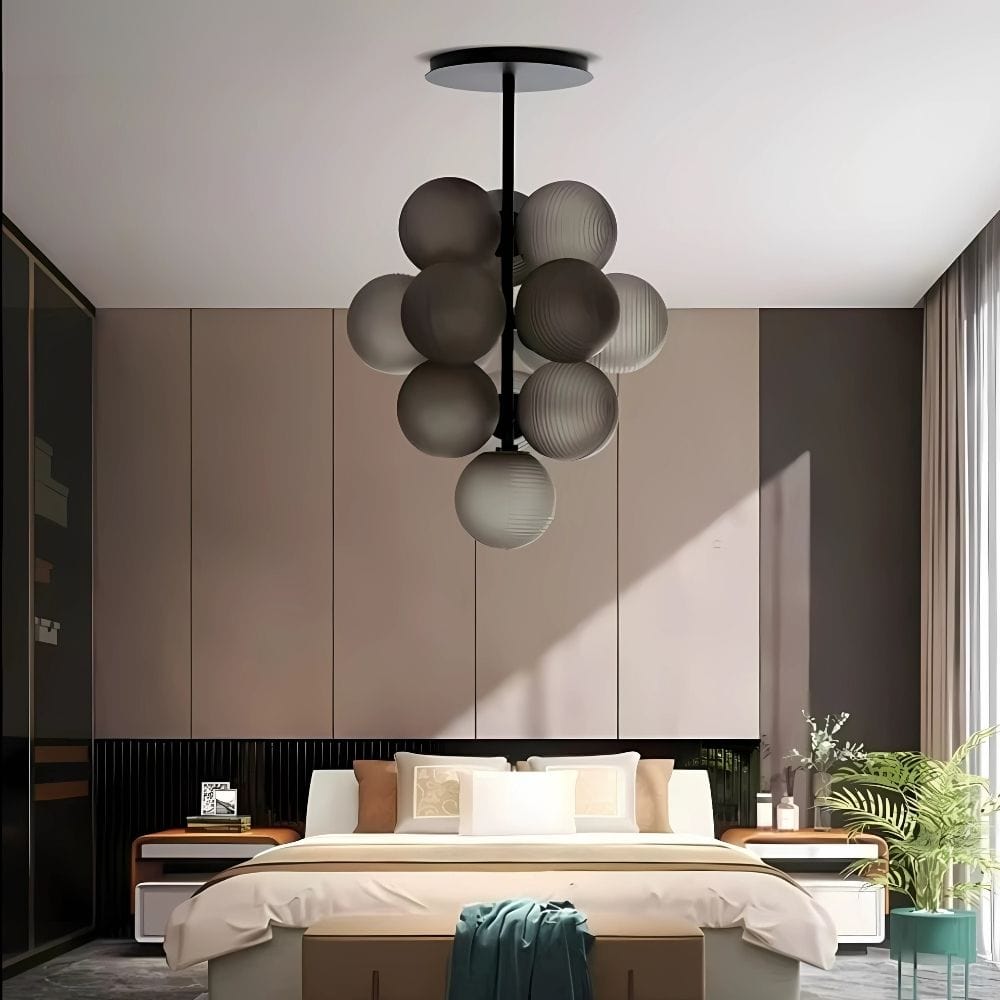
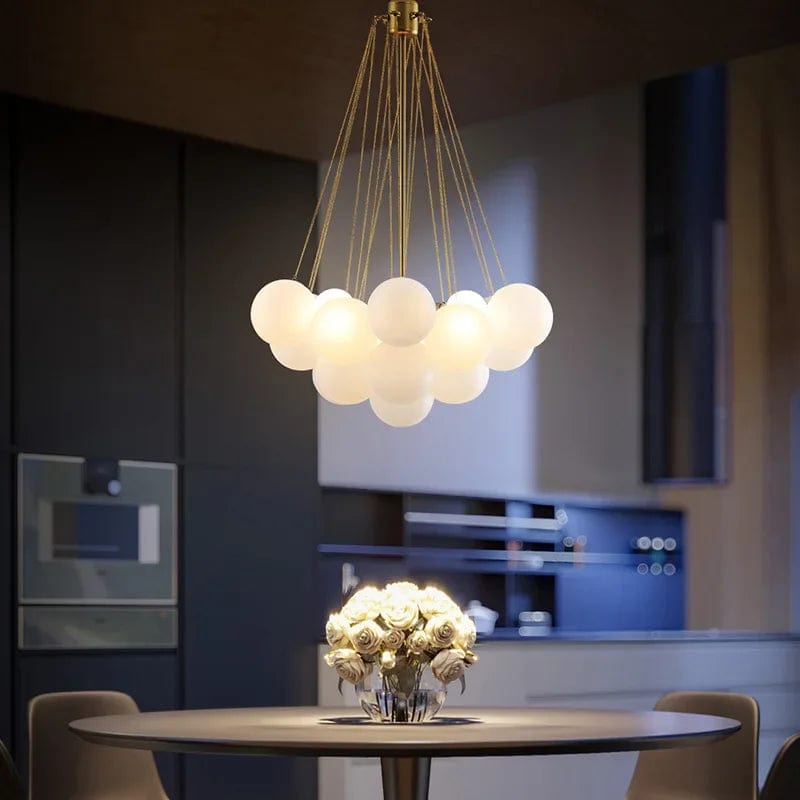
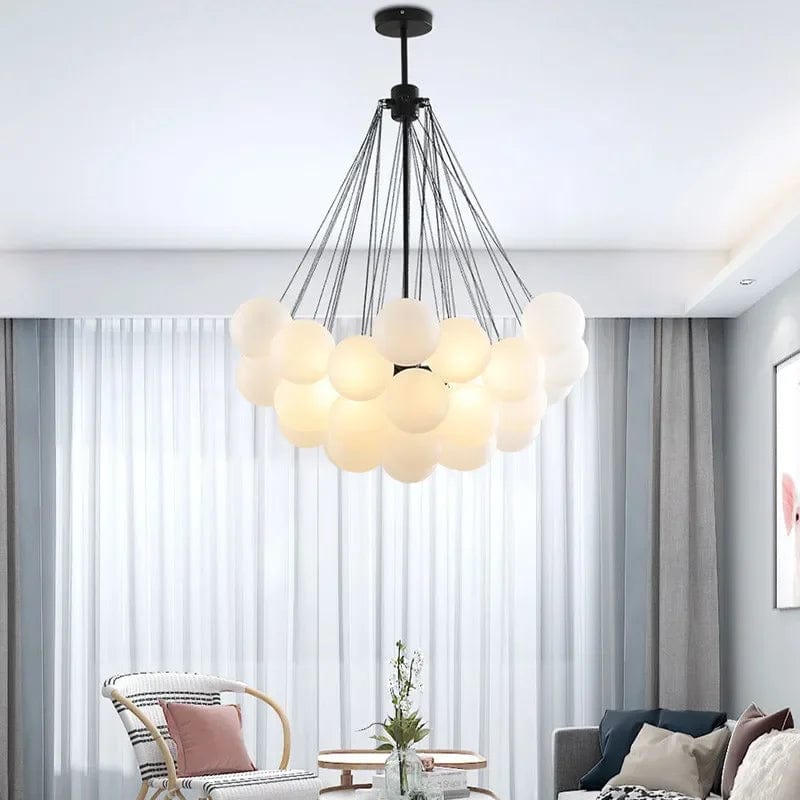
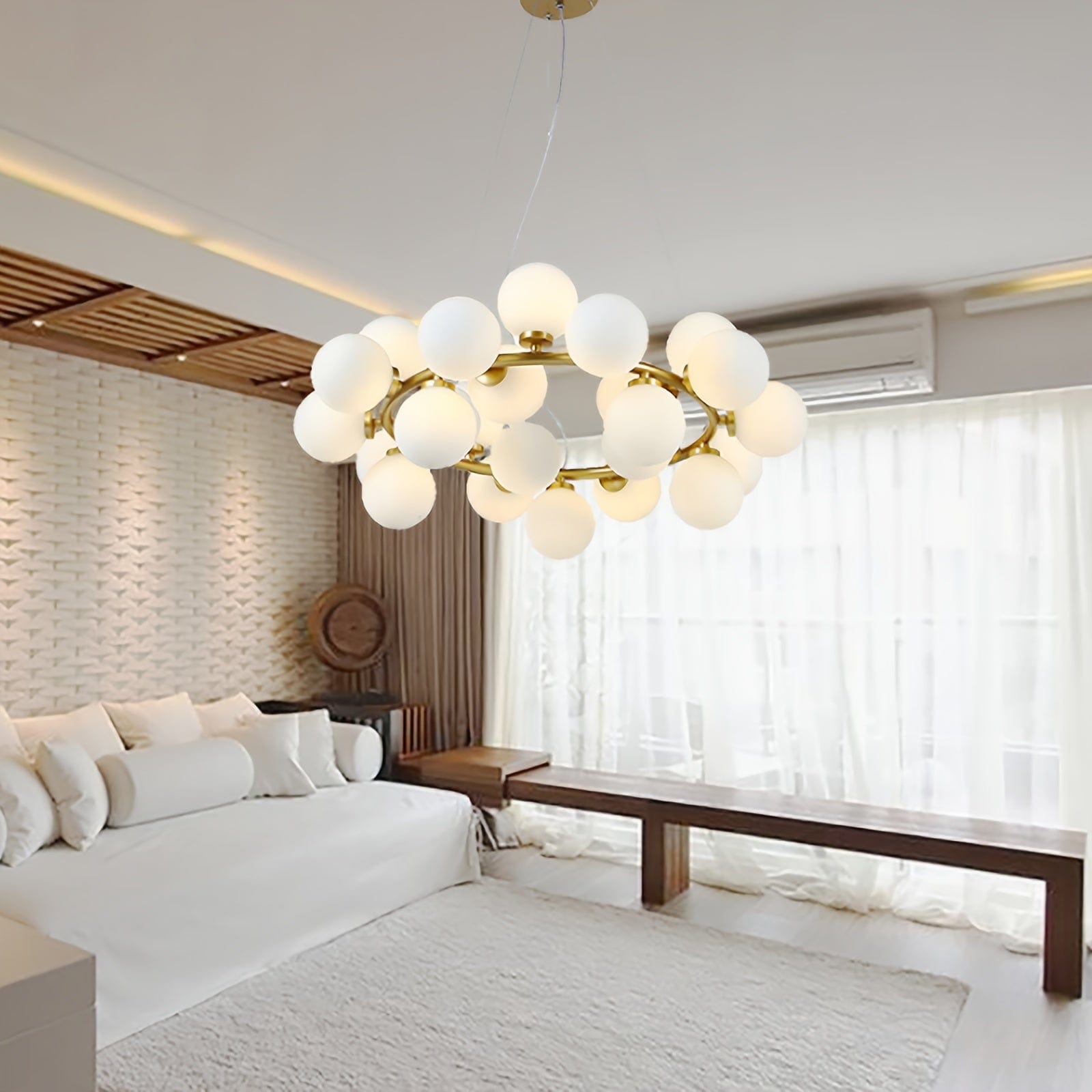
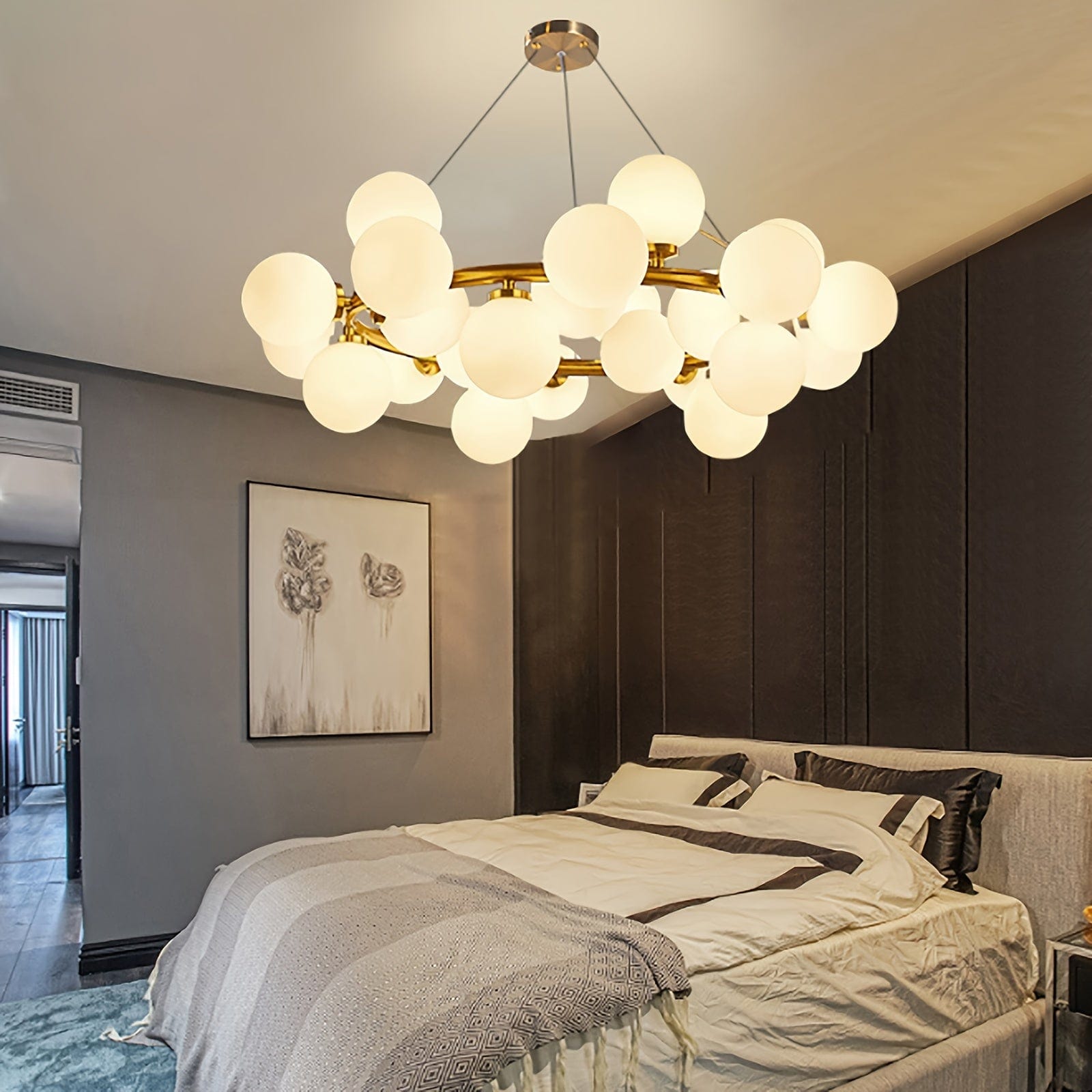
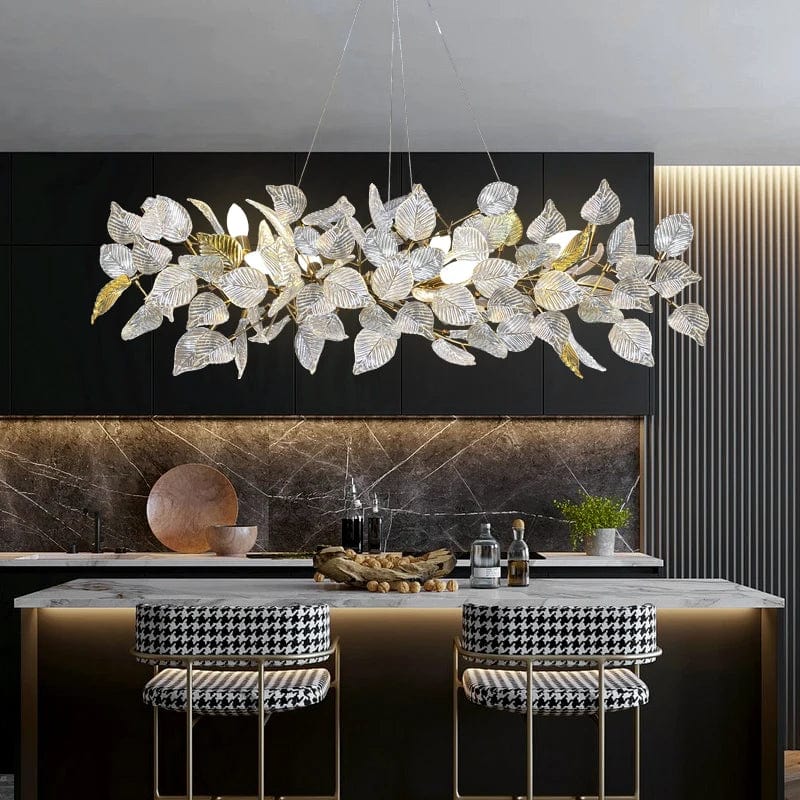
- Glass (clear, smoked, bubble): light, soft diffusion — modern and casual rooms
- Iron & steel: architectural restraint — modern, industrial, and farmhouse rooms
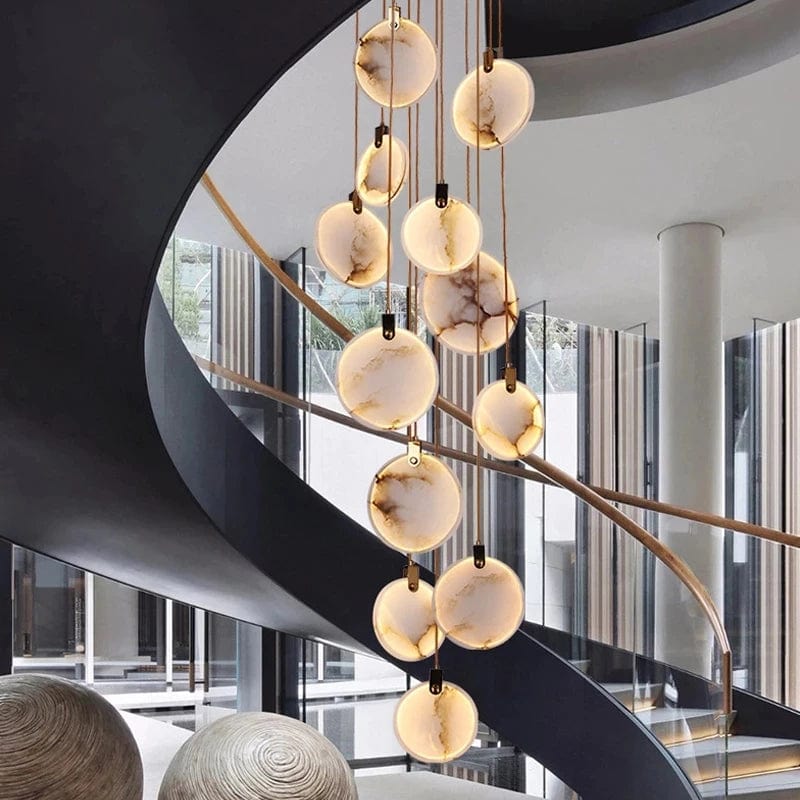
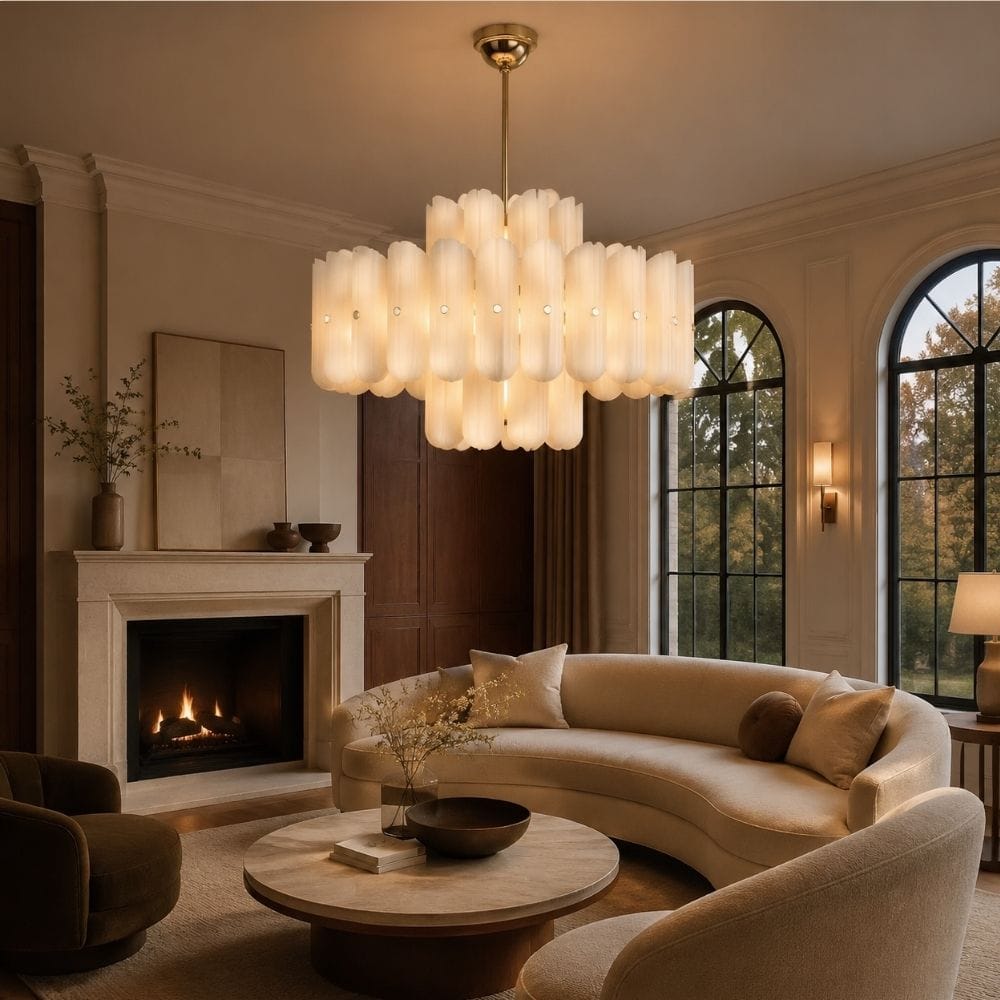
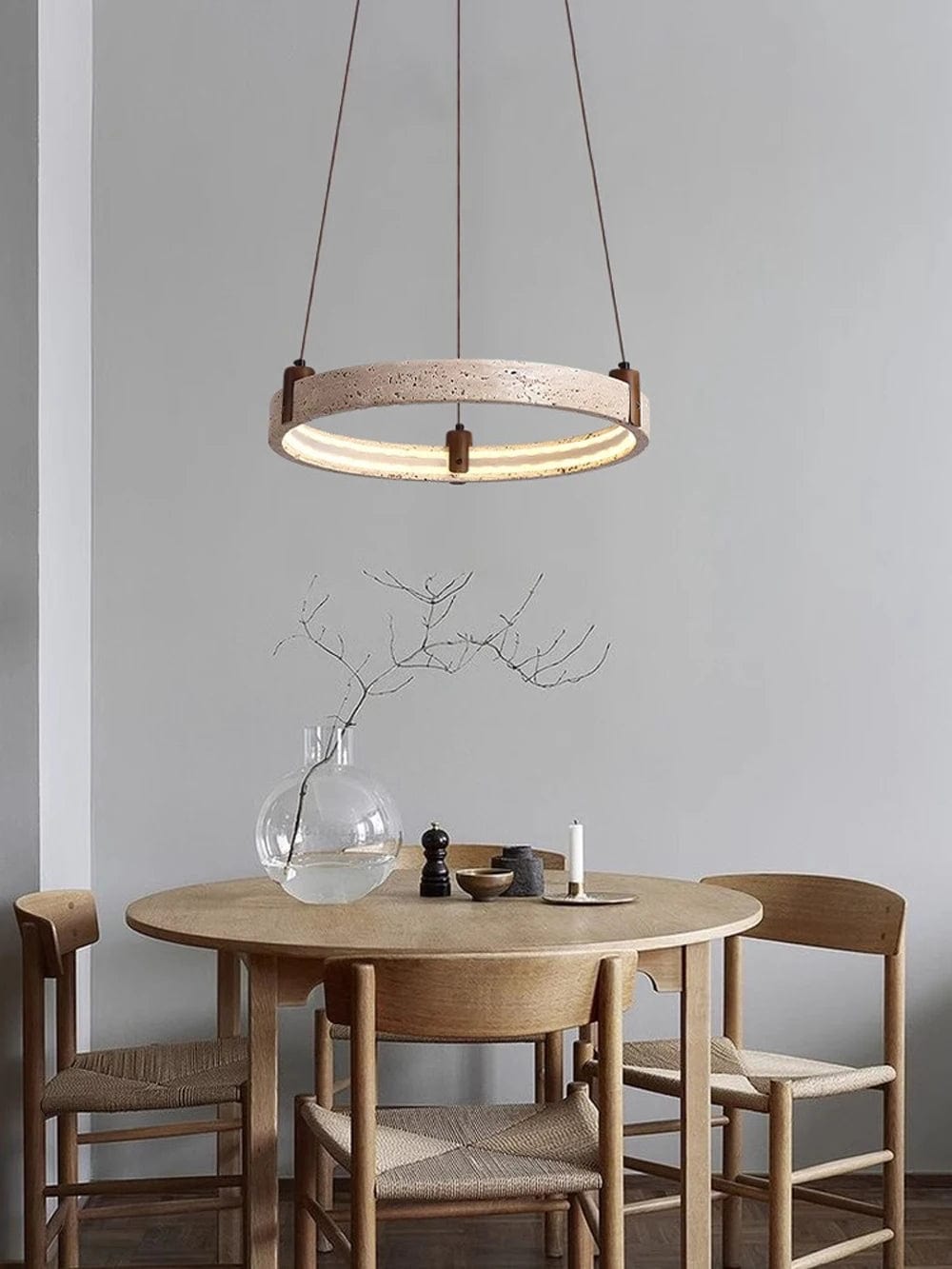
- Alabaster & natural stone: a warm glow through solid stone — the current luxury direction
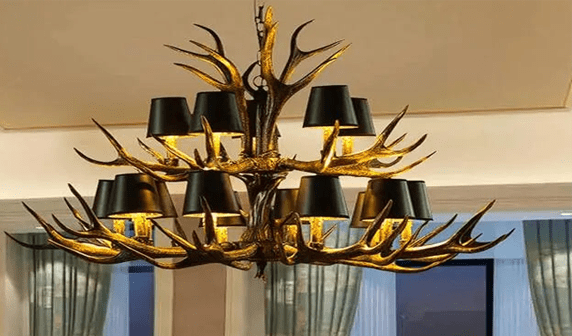
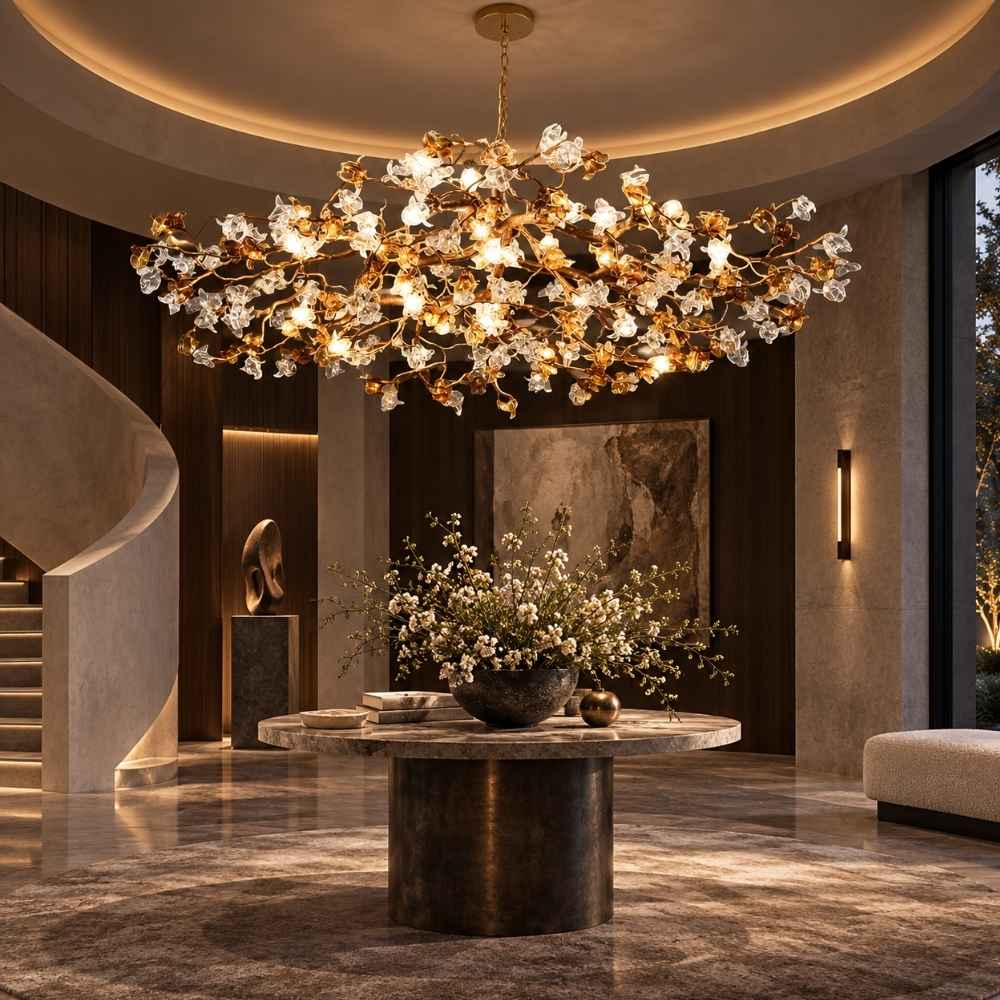
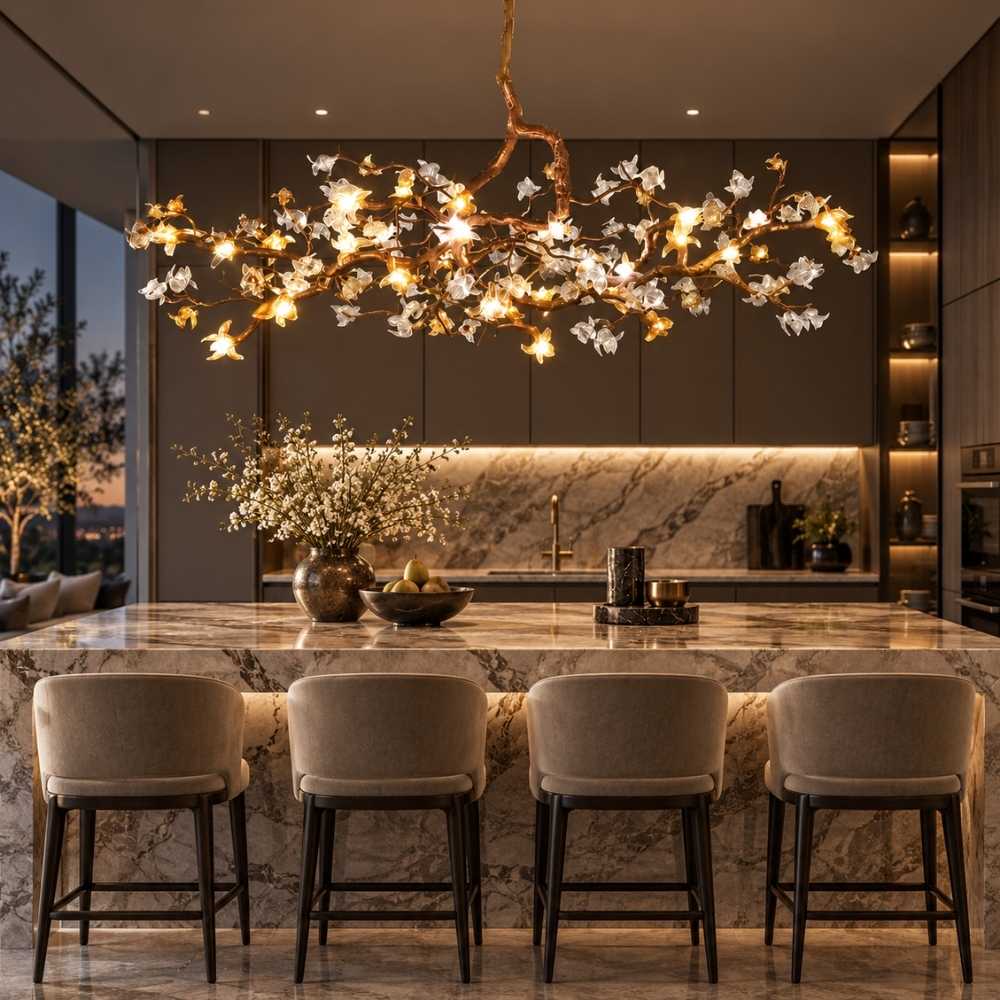
- Wood & branch: organic warmth — farmhouse and organic modern rooms
How Each Shape Reads From the Sofa
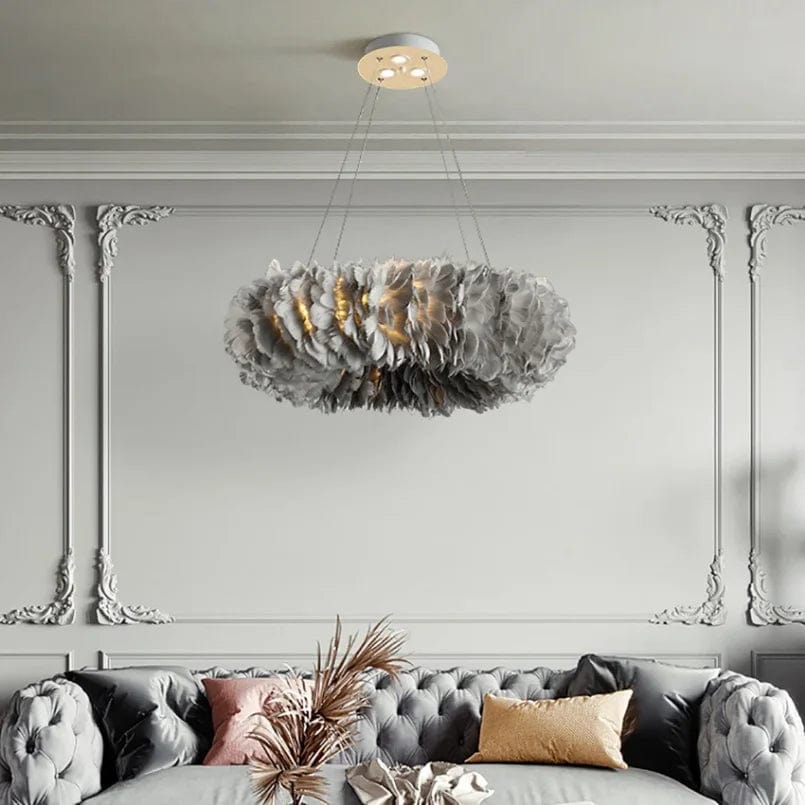
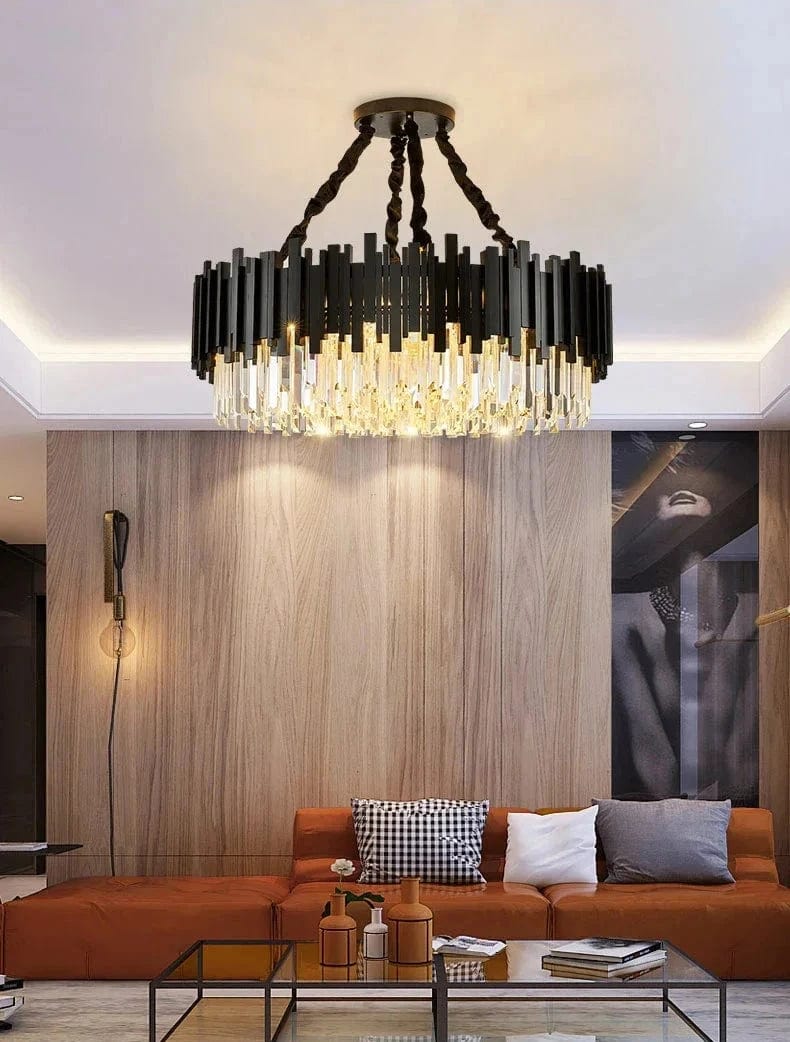
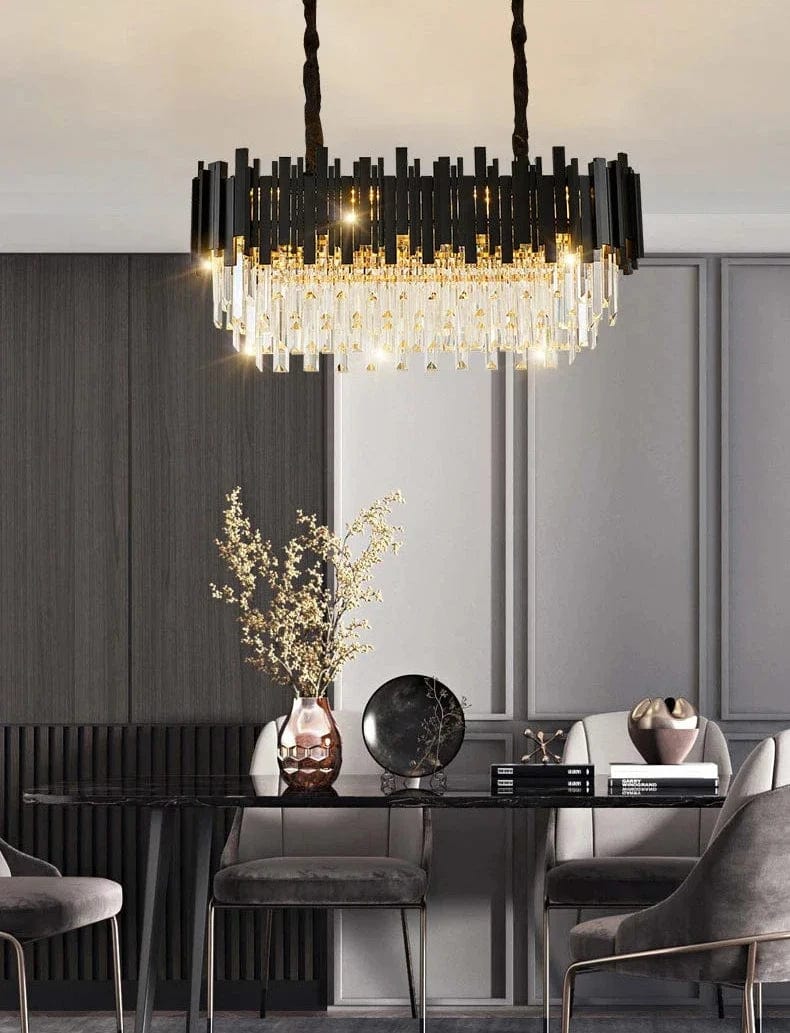
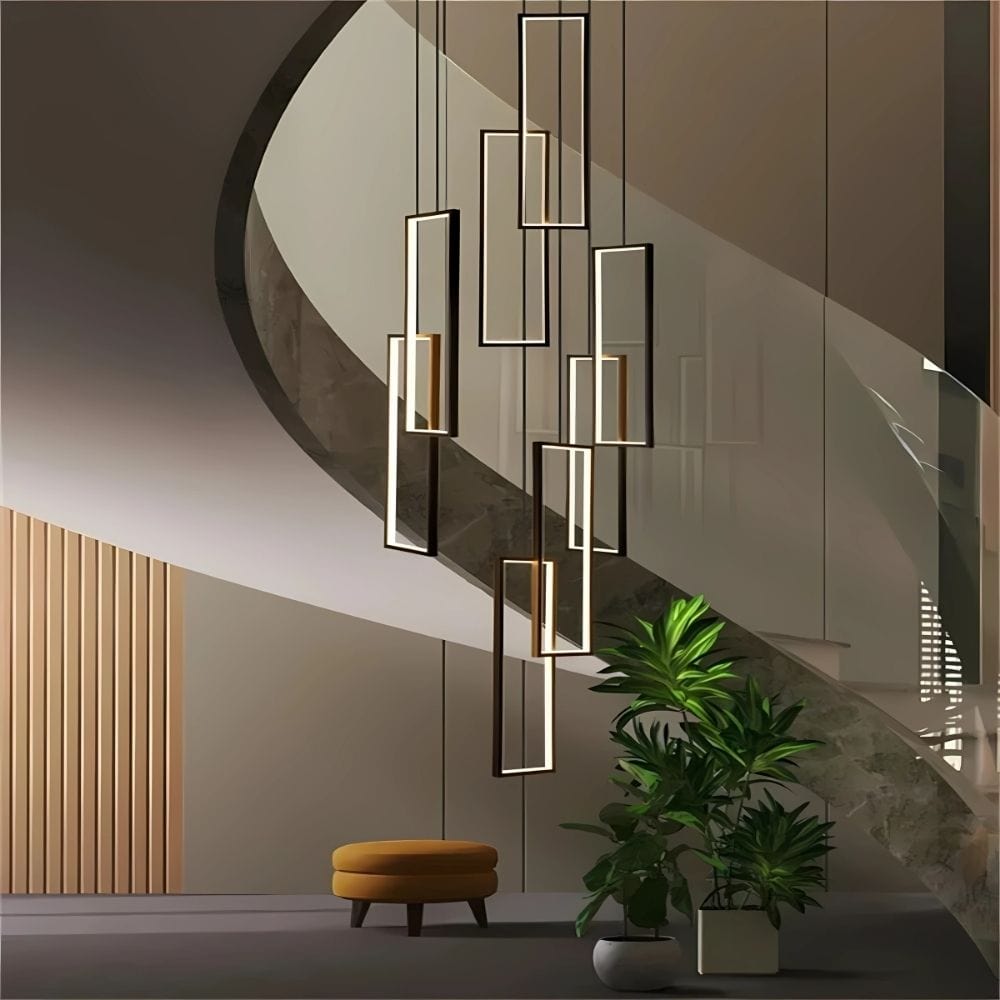
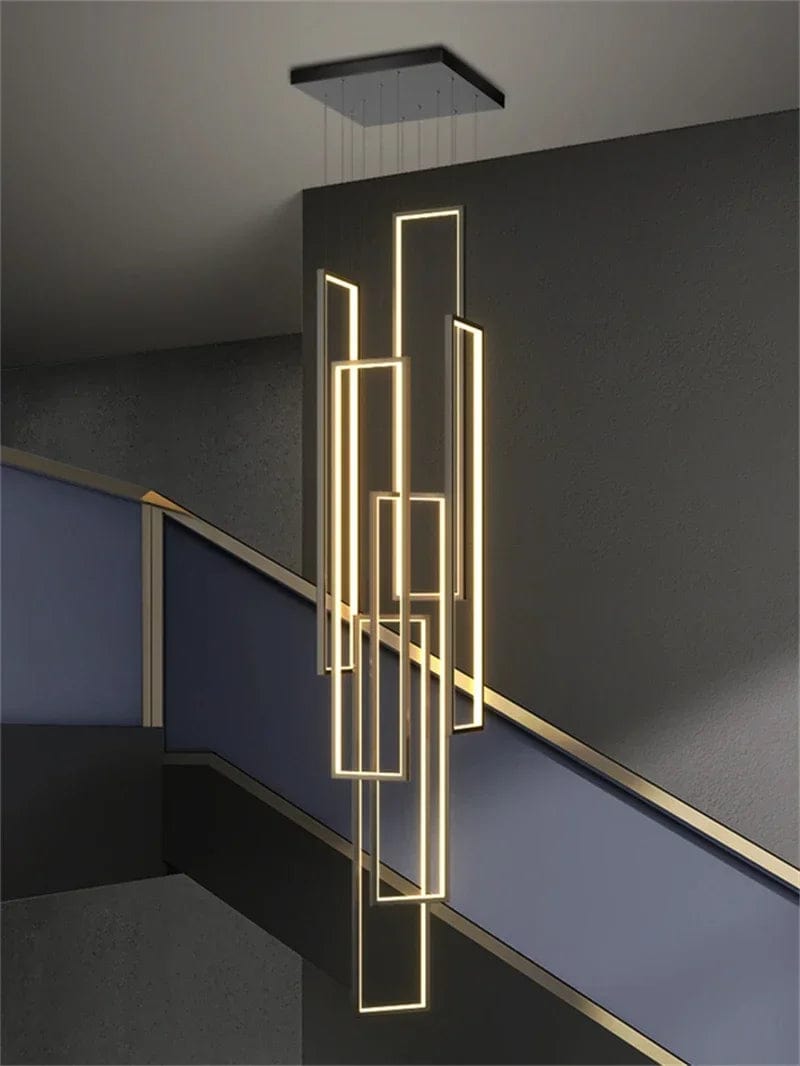
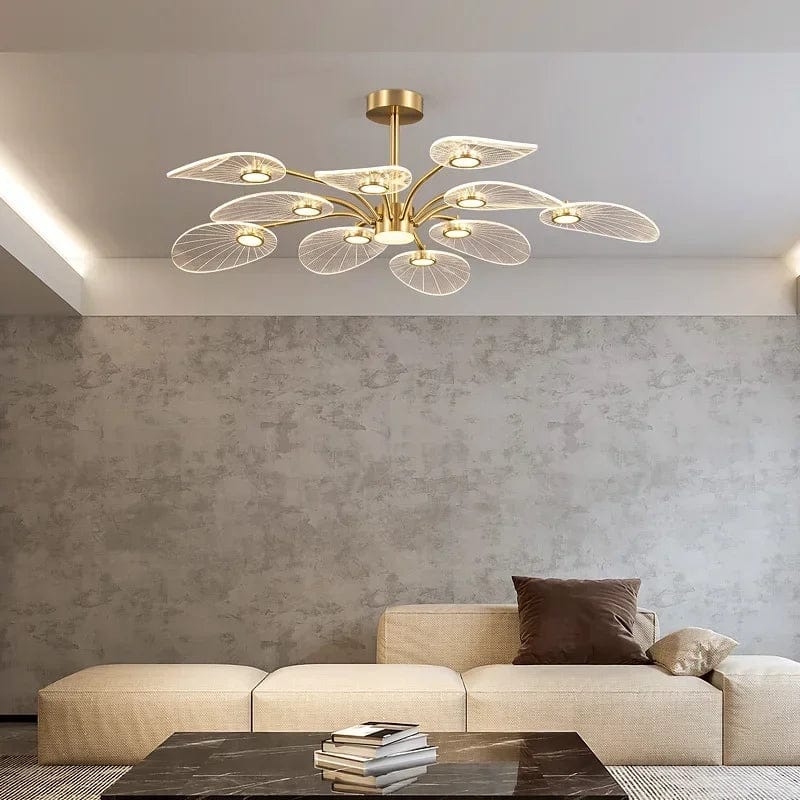
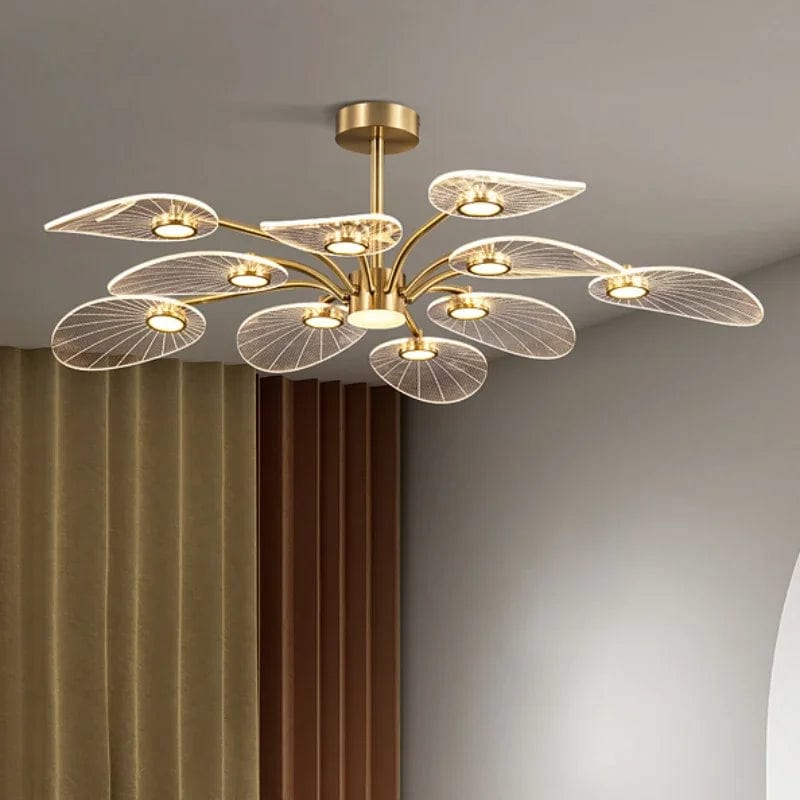
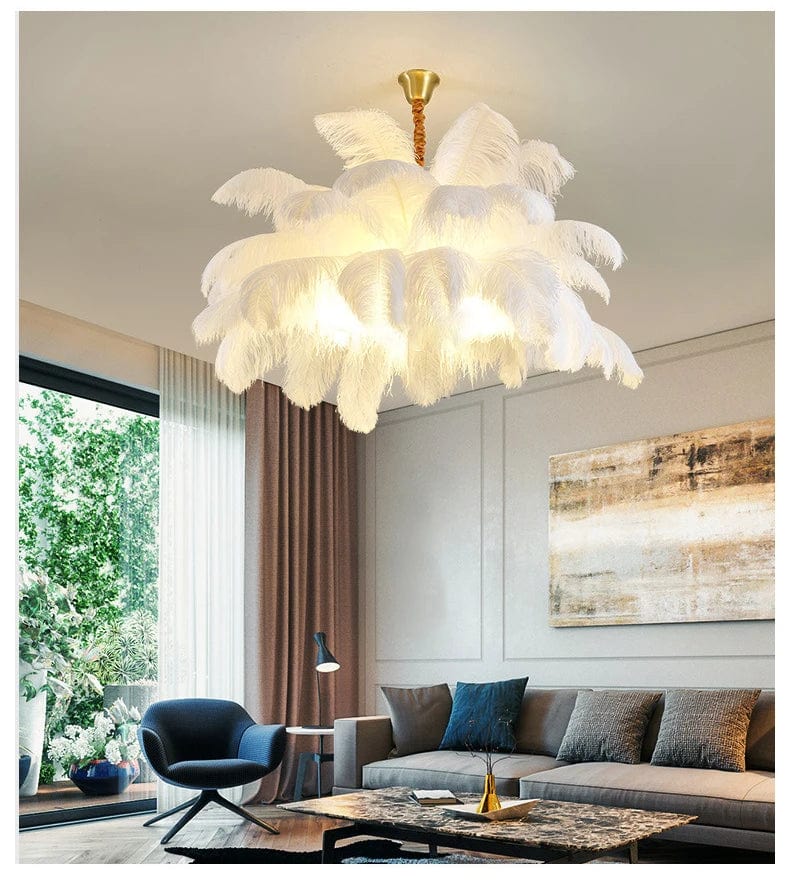
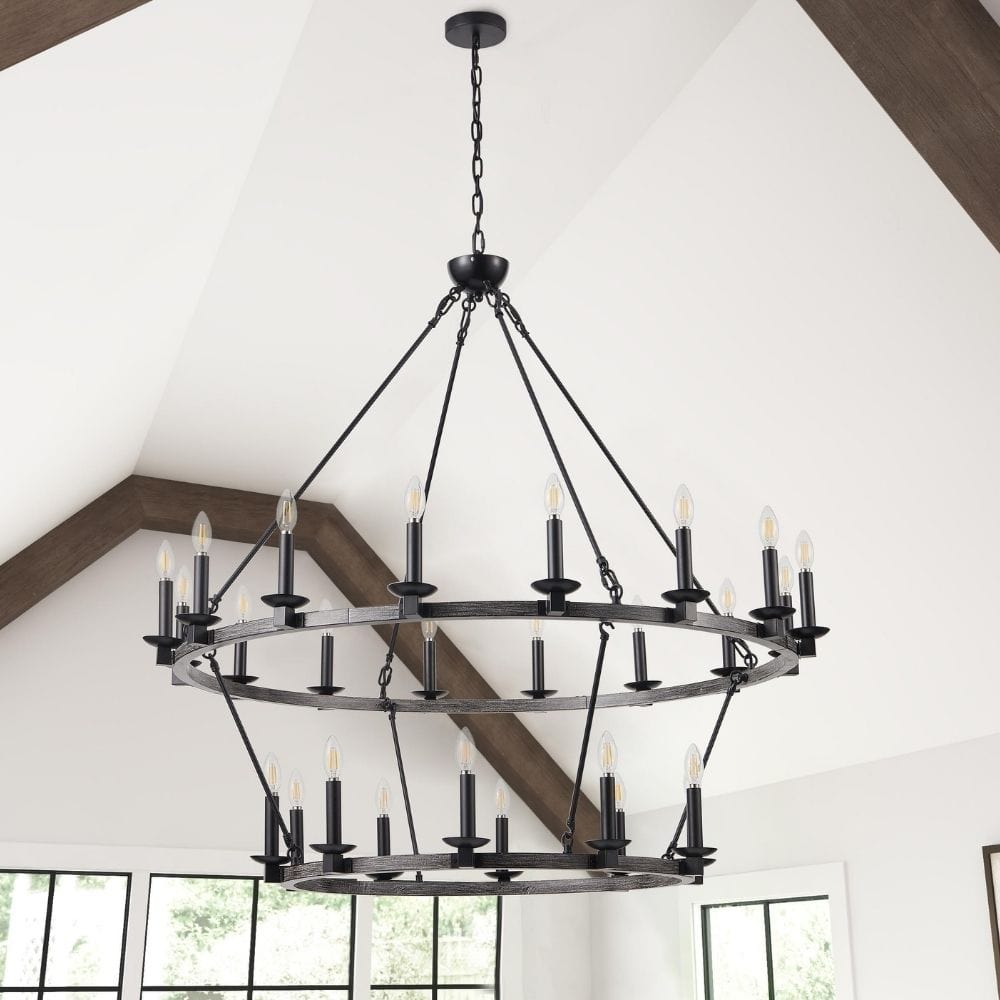
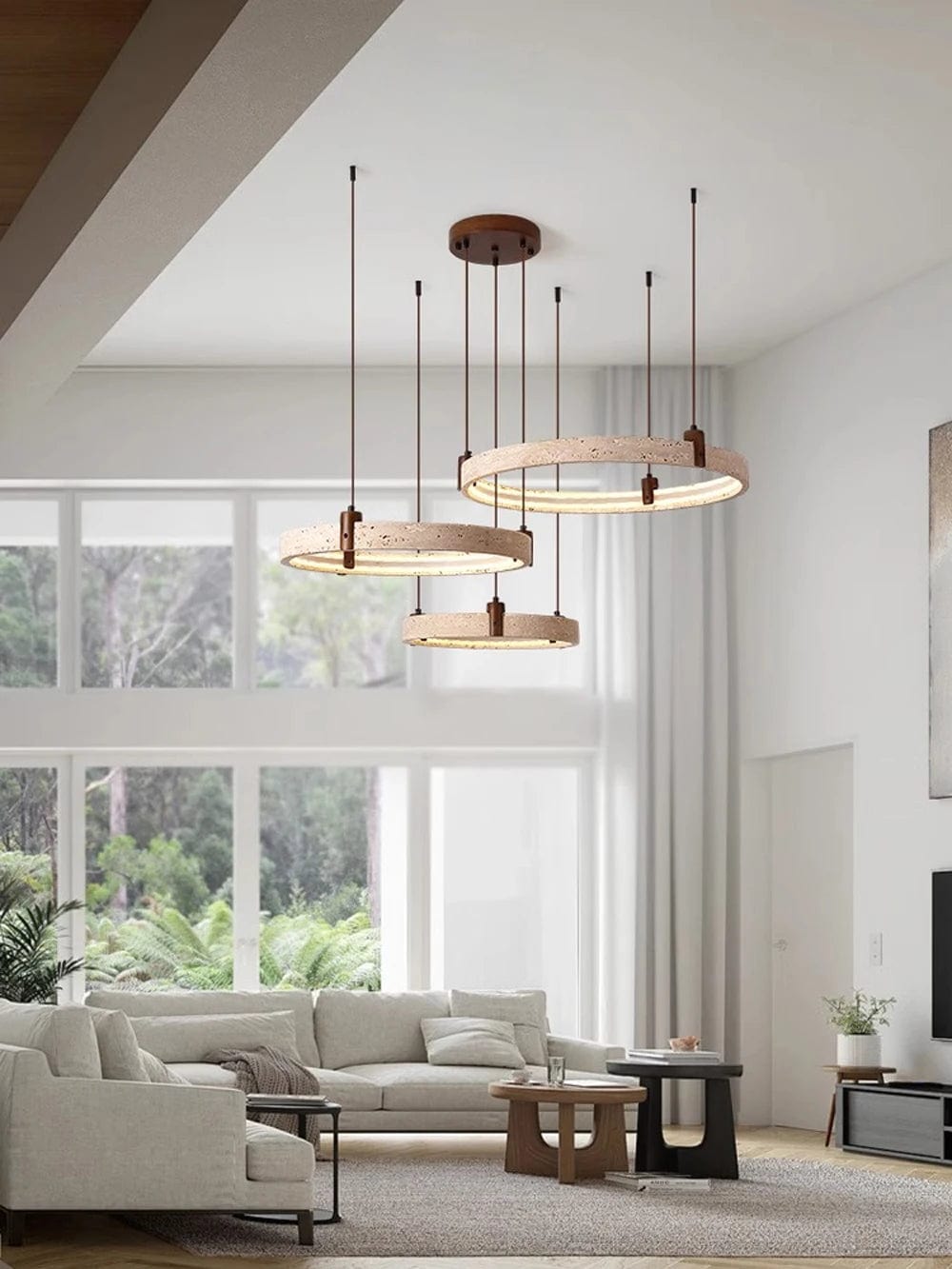
Round and drum forms anchor square-ish seating groups; ring compositions — single or multi-tier — read sleek, minimalist, and cleanly modern, scaling from compact to statement. Linear designs suit long rectangular rooms. Sputnik forms add mid-century graphic character, while branch and other unique sculptural forms behave as ceiling art. Cascade and spiral forms are the two-story answer, drawing the eye up through the vertical volume. Current picks across these directions are in our modern living room picks and the contemporary designs guide.
Picking a Finish the Room Already Speaks
Coordinate the fixture's metal with what the room already carries — frames, lamp bases, table legs, door hardware. This room typically displays more visible metal than any other, so the ceiling fixture should join that existing conversation rather than start a new one.
- Warm brass & gold: cream palettes, warm woods, brass hardware
- Matte black: modern farmhouse rooms, black window frames
- Chrome & polished nickel: cool gray palettes, existing nickel hardware
- White & light tones: smaller rooms, pale Scandinavian palettes
For the full decision across color families, see the chandelier color selection guide.
Installing It Right the First Time
Where to Center It and What the Box Must Hold
Fixtures over roughly 50 lb require a fan-rated or reinforced junction box — check the listed weight on each product page. Center the box on the seating envelope, not the room's geometric midpoint; a swag hook or relocated box solves an off-center start cleanly. Adjustable suspension ships with multi-tier designs — confirm the maximum drop covers your measured distance before ordering, since shortening on site is simple but extending requires added hardware.
Bulbs, LED and the Dimmer This Room Lives On
Warm white (2700-3000K) suits nearly every seating space; cooler temperatures read commercial in a lounge context. A dimmer is effectively mandatory — this room runs at 30-50% brightness most of its life. Integrated-LED designs list their dimmer protocol (TRIAC, ELV, or 0-10V); verify compatibility before installation. Bulb-based designs accept dimmable high-CRI (90+) LED bulbs so upholstery and wood tones render accurately.
Solving Sloped and Vaulted Ceilings
Vaulted rooms need a sloped-ceiling adapter (swivel canopy) so the fixture hangs plumb — most suspended designs here accept one, noted on the product page. Measure height at the actual mounting point, not the room's peak, and size the drop so the fixture's visual center sits over the seating group.
Related Collections
Shoppers browsing this range most often compare it with our modern chandeliers for the full contemporary range beyond seating rooms, crystal chandeliers for formal and glam direction, and dining room chandeliers when coordinating fixtures across an open plan. For the complete room scheme beyond the centerpiece — sconces, pendants, lamps, and the layered plan they build — see the living room lighting collection.
Frequently Asked Questions
What size chandelier is best for a living room?
Add the room's length and width in feet — the total equals the recommended diameter in inches. A 15 x 20 ft room points to roughly 35". Size open-plan spaces to the seating zone, then round up one step.
How high should it hang?
Keep 84" (7 ft) of floor clearance in any walking zone. Over a coffee table inside the seating group, lower placement works — roughly 30-36" above the table surface.
Can an 8 ft ceiling take a chandelier?
Yes — choose flush or semi-flush formats with 8-12" of body depth: the visual character of a chandelier without the drop.
Which style suits this room best?
Modern ring, linear, and sculptural designs lead current specification. Match the fixture's metal to the room's existing hardware, and weigh how the design reads unlit — it hangs as an object far longer than it runs as a light.
Do I need a dimmer?
Effectively yes. This room runs at low evening levels most of the time; pair a compatible dimmer with warm white (2700-3000K) bulbs or a matching-protocol integrated LED design.
What about vaulted ceilings?
Use a sloped-ceiling adapter so the fixture hangs plumb, measure height at the mounting point, and confirm the suspension's maximum drop before ordering.