

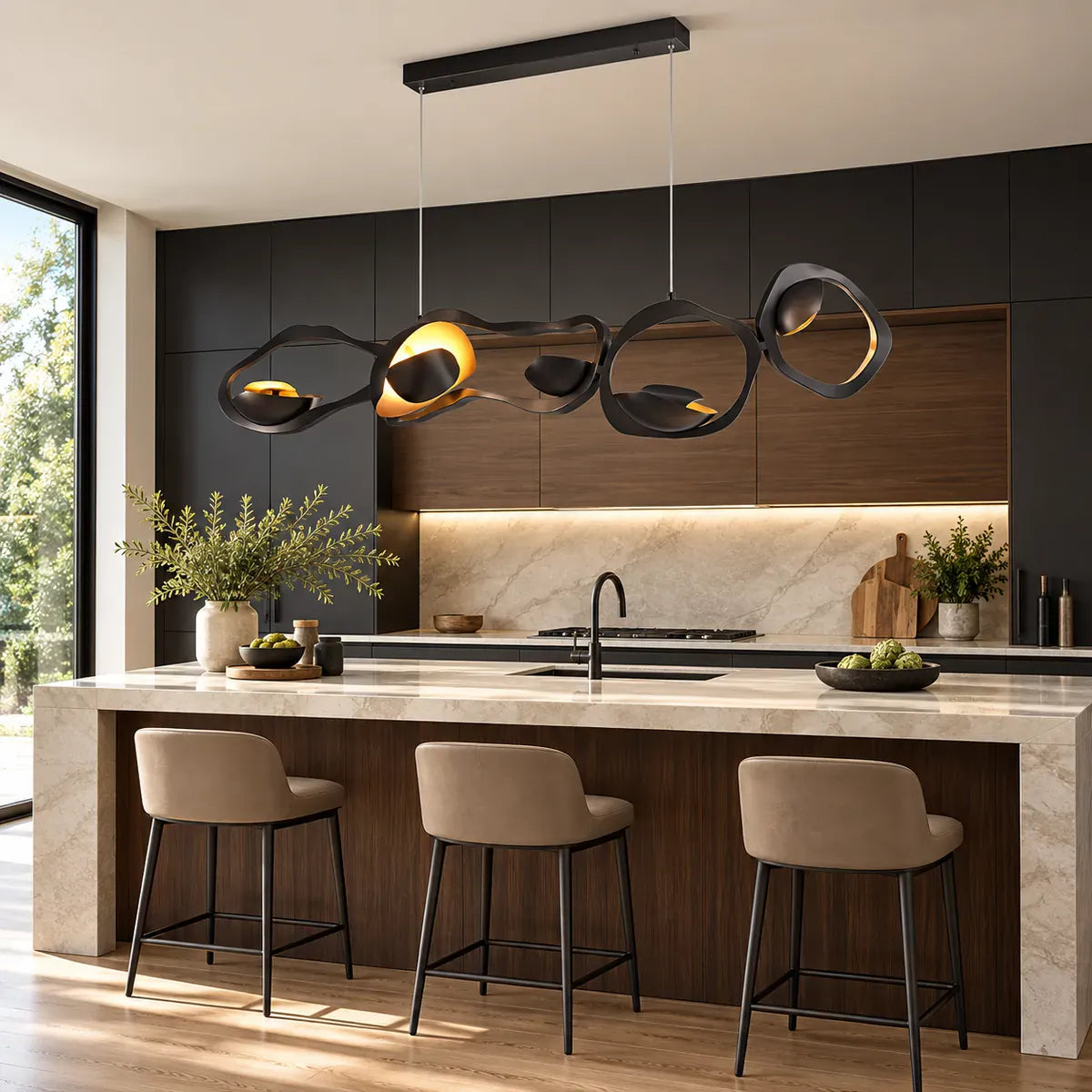
Why Iron Is Lighting's Structural Metal
Every metal glows; this one holds. Its strength-to-profile ratio is what the whole category is built on — arms thin as drawn lines that still carry crystal, frames that keep a perfect square across four feet of span, and scrollwork that survives a century of hanging. That structure is also why the metal owns the graphic register: most of the collection wears matte or aged black, turning each fixture into a silhouette the room reads instantly, lit or unlit. Where copper and brass warm a space, this metal composes it — the drawn outline every other element arranges itself around.
Wrought, Cast, Steel: The Vocabulary Sorted
- Wrought iron: worked iron — heated and shaped, historically by hand — the term behind traditional scrolls and candle arms, and the folk spelling "rod iron" names the same thing
- Cast iron: molded rather than worked — heavier, chunkier profiles with foundry character, the rustic and industrial end's material
- Steel: iron's modern alloy — stronger still, taking thinner profiles and cleaner welds; the material behind minimalist frames, and stainless steel where a cool silver finish is the point
- The practical truth: most current "iron" fixtures are steel engineered for the classic look — what matters at purchase is the finish, the profile, and the build quality, not the ore's certificate
Iron and Crystal: The Contrast Marriage
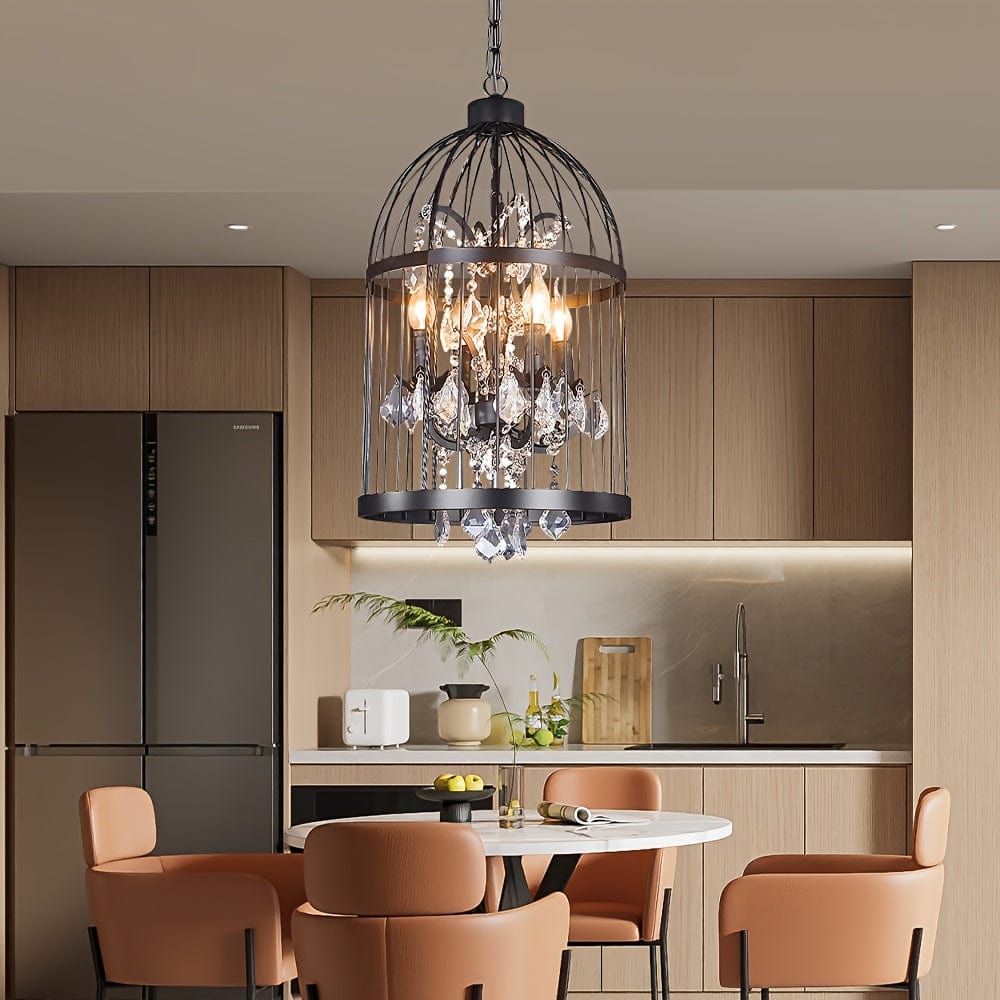
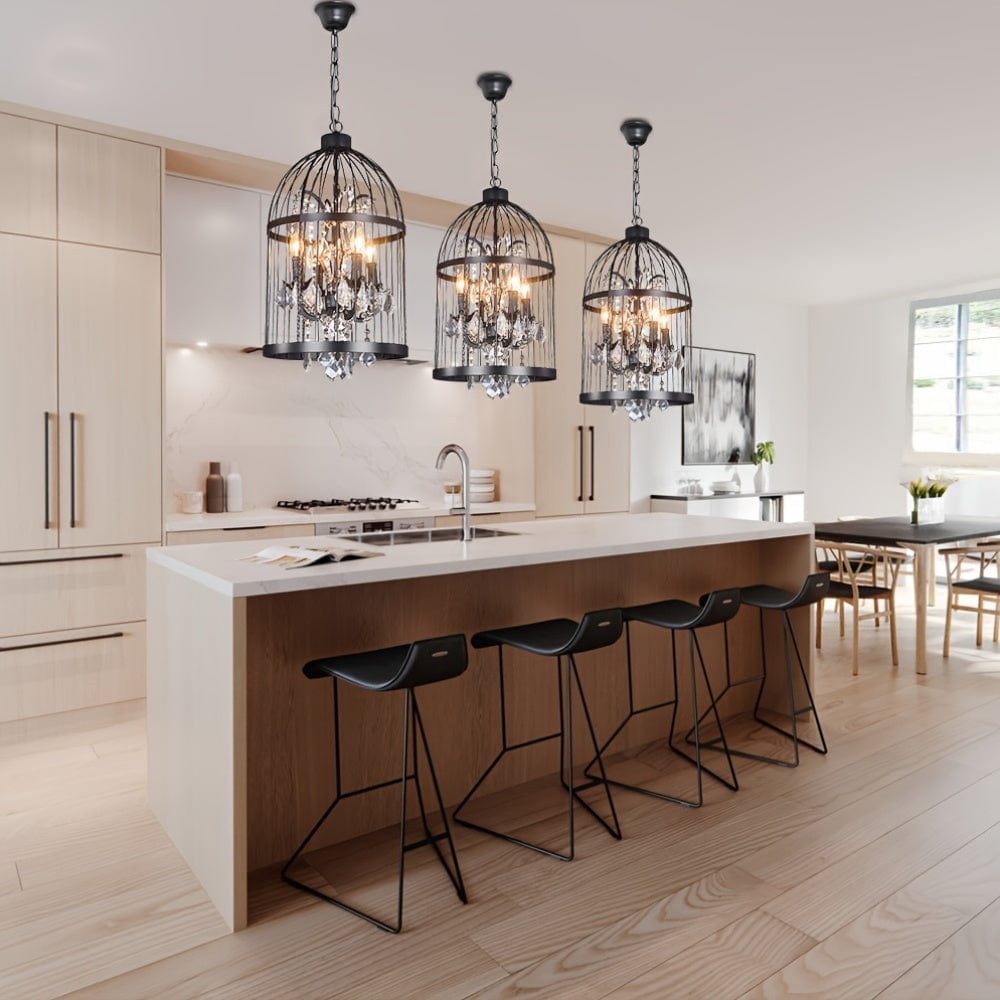
The collection's most-wanted combination pairs opposites on purpose: the hardest visual material carrying the brightest one. A forged frame hung with crystal gives the sparkle something to push against — black arms making the drops read whiter, structure making the shimmer read richer — which is why the pairing owns both ends of the style spectrum: traditional wrought-and-crystal for period dining rooms, and modern versions where sparse crystal rides a minimalist black ring. The crystal side of the marriage — grades, cuts, and quality — is covered across the crystal chandeliers collection.
The Custom Question, Answered Honestly
"Custom iron chandelier" is one of this category's biggest searches, and the honest answer has two parts. True one-off custom is blacksmith territory — commissioned, priced accordingly, and measured in months. What most shoppers actually need is what the designer range delivers: small-batch pieces with hand-applied finishes and forge character, offered across enough sizes, forms, and finishes that the right fixture exists without the commission. Between adjustable drops, multiple diameters per design, and the black/white/aged finish range, the practical customization is already on the spec sheet.
Shapes Iron Holds Best
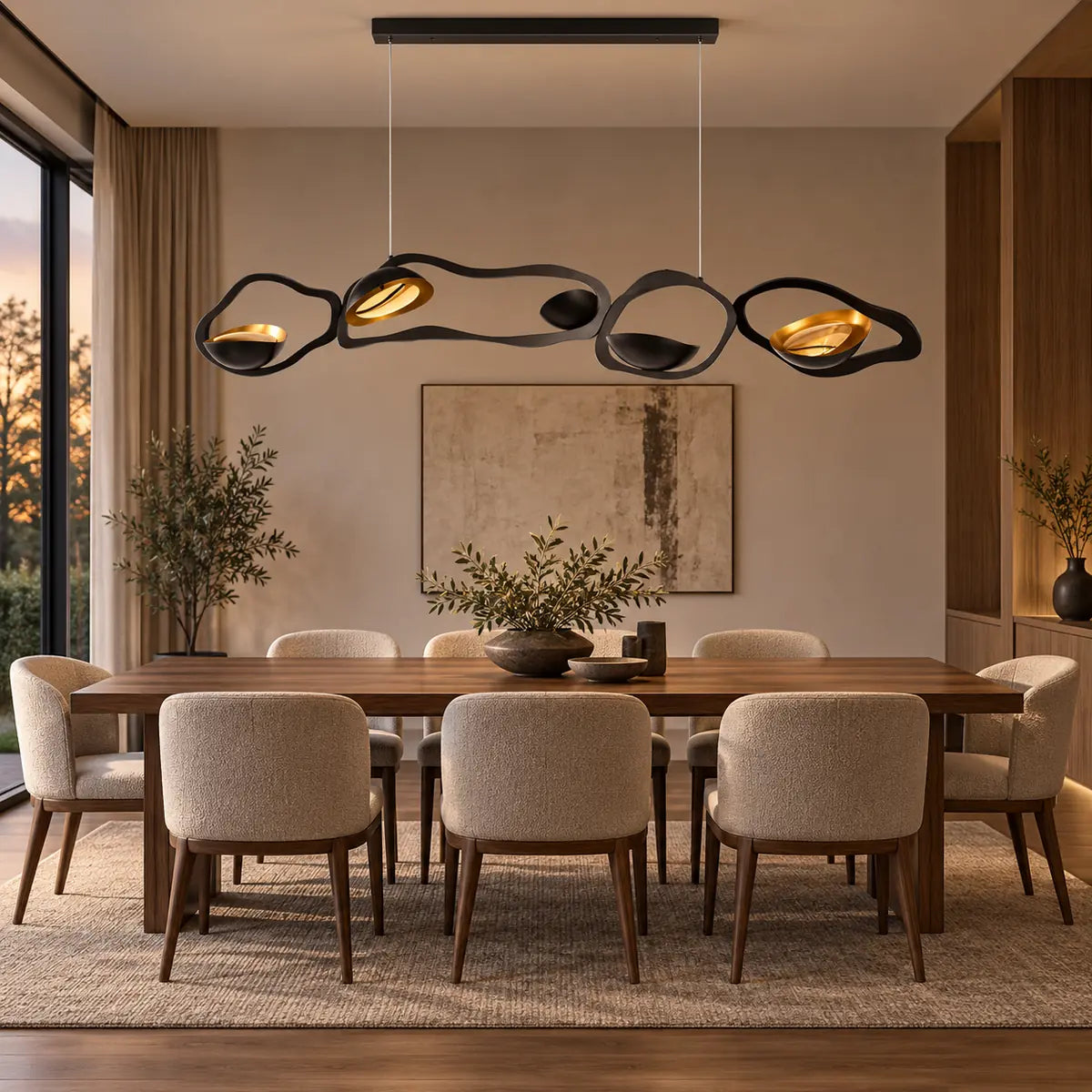
The metal's rigidity makes it the shape-keeper of the catalog: squares and rectangles stay perfectly true where softer builds sag — the reason square frames lead the modern geometric register; rounds and rings hold their circles at statement diameters; linear bars run a dining table's length without deflection; and the sculpted end — cones, bowls, orbs, lanterns, and candelabra arms — keeps every curve exactly where the designer drew it. Whatever the form, the drawn-outline effect is the constant: these shapes read as line art on the ceiling.
Styles and Finishes Across the Collection
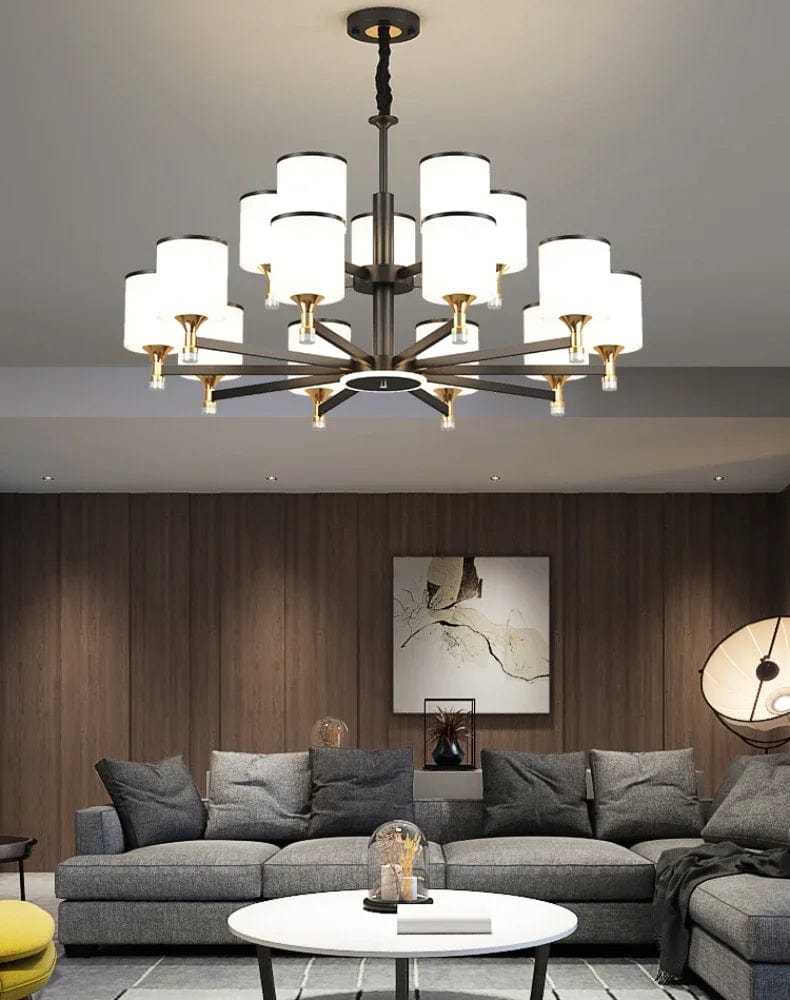
- Modern and contemporary: the lead — minimalist frames, geometric statements, and steel-clean profiles in matte black; the black register continues in our black chandelier guide
- Traditional and transitional: wrought scrolls, candle arms, and the crystal-dressed classics — period language in certified modern wiring
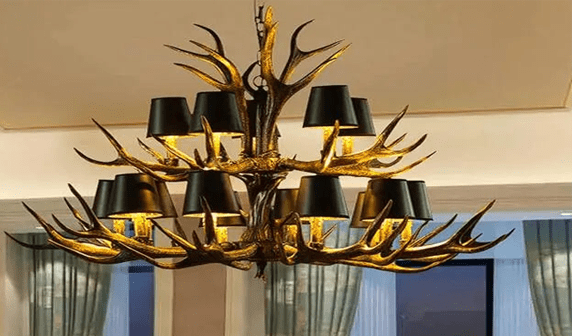
- Rustic and farmhouse: forge-marked, aged, and cast-character pieces — the deeper range lives in the rustic chandeliers collection and farmhouse chandeliers collection
- White and painted: the quiet alternative — the same structure in a soft finish, strongest in bedrooms, coastal rooms, and bright interiors
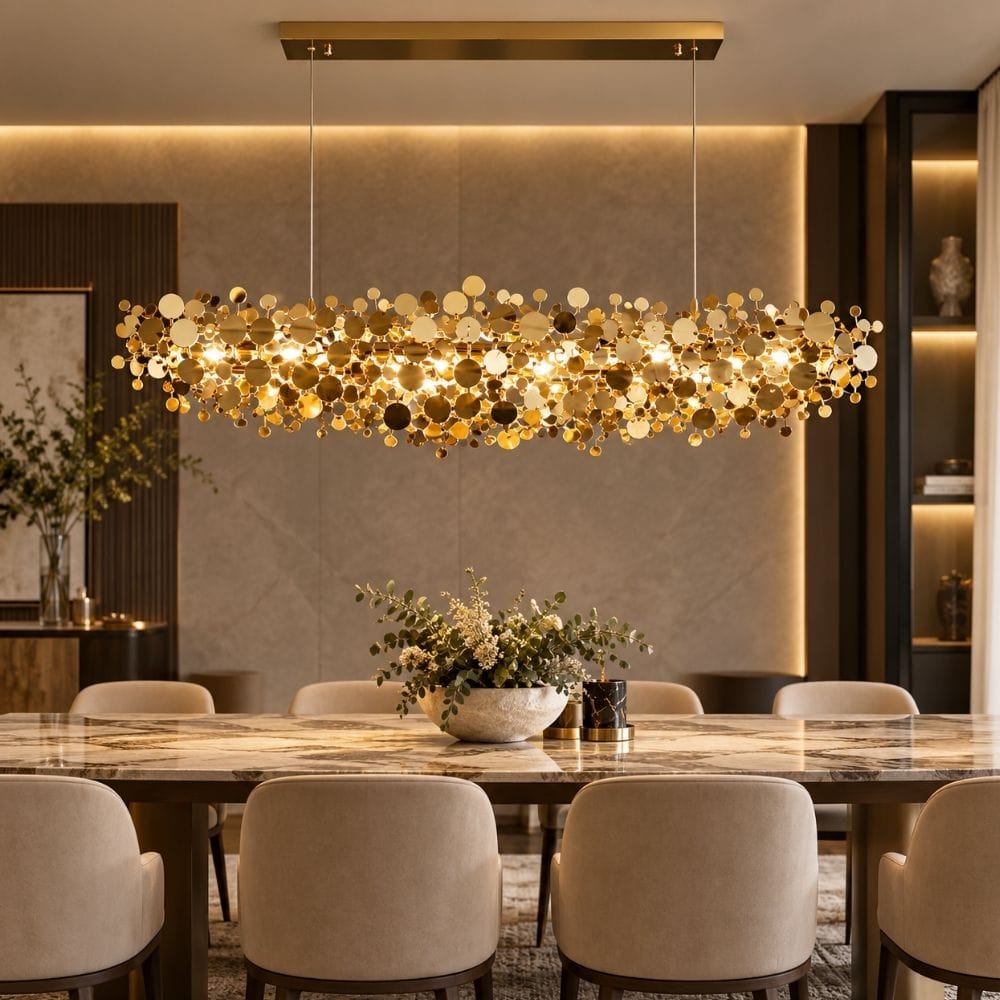
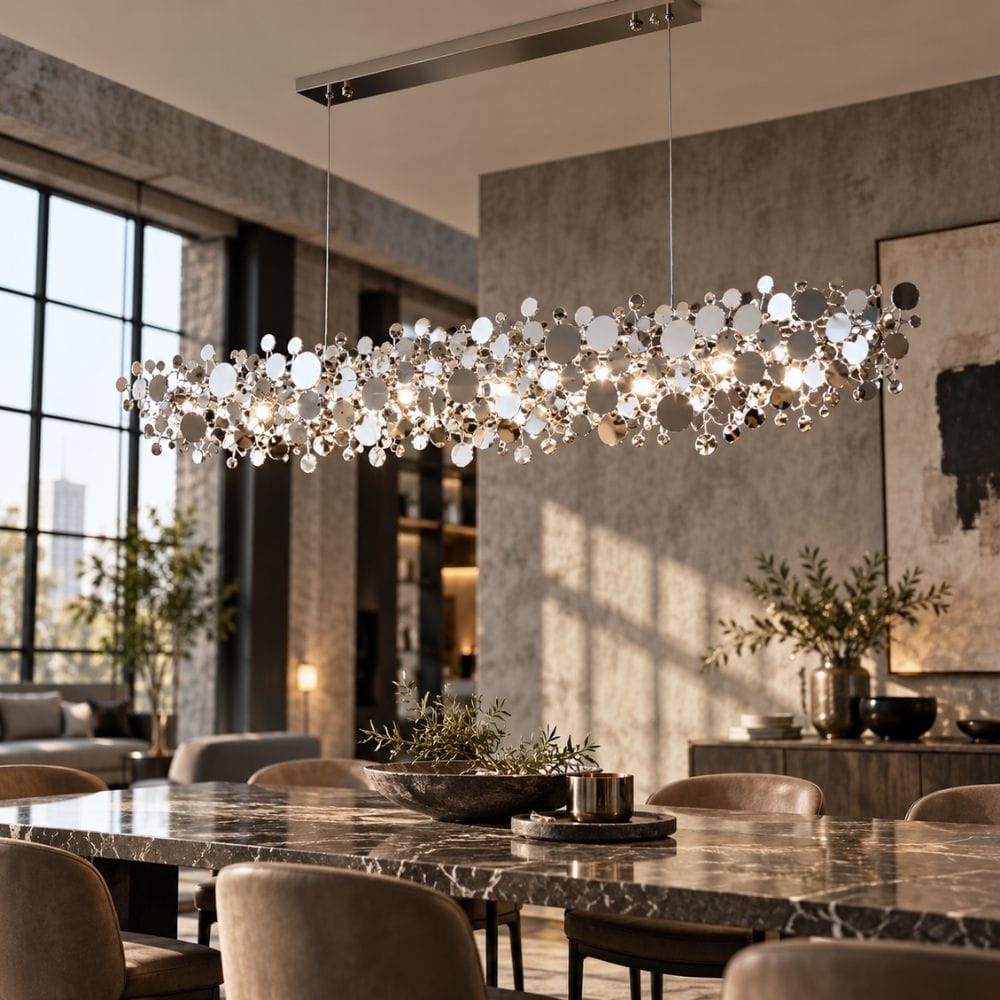
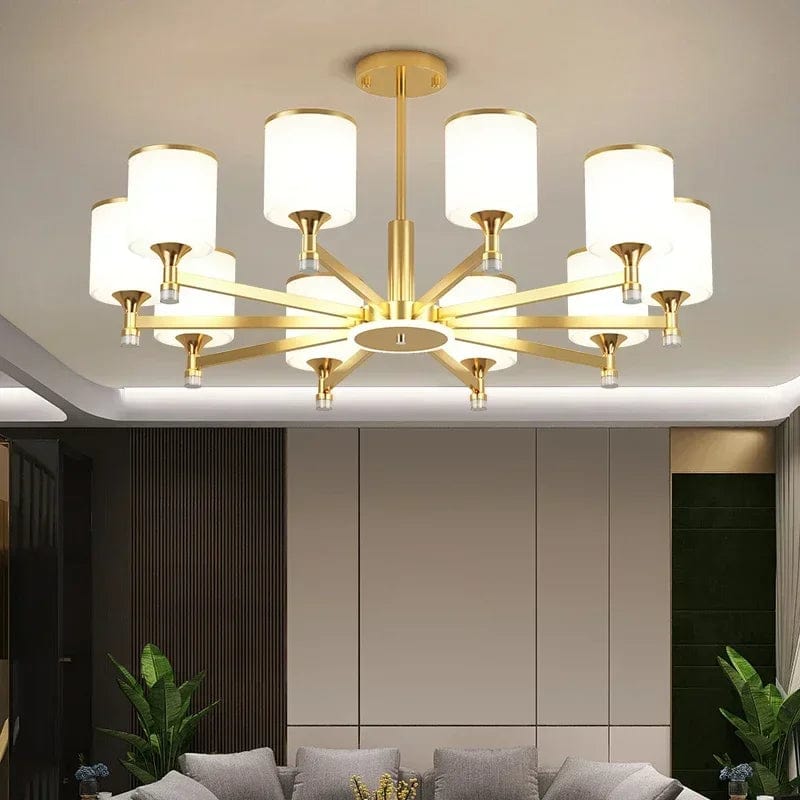
- Aged, gilded, and silver-grey: the character finishes — burnished depth, gold-touched detail, and steel's cool register
Scale and the Weight That Comes With It
The material scales magnificently — extra large forged statements over 40" (102 cm) carry great rooms and two-story spaces the way no light material can — and it brings mass to the job: large forged and crystal-dressed designs routinely pass 50 lb (23 kg), the threshold where a listed heavy-fixture brace box replaces the standard one and a second pair of hands joins the install. Check listed weight before ordering, size by the room formula (length plus width in feet equals inches), and let the metal's visual weight argue for the room's generous end — an undersized forged piece reads sparse where an undersized soft fixture merely reads small.
Related Collections
Cross the metal family at the copper & brass chandeliers collection for the warm register, pair the sparkle at the crystal chandeliers collection, and browse the full chandelier catalog for the complete designer range.
Frequently Asked Questions
What is the difference between wrought iron and cast iron chandeliers?
Wrought iron is worked — heated and shaped into scrolls and arms; cast iron is molded — heavier, chunkier, with foundry character. "Rod iron" is the folk spelling of wrought.
Iron or steel — does it matter?
Steel is iron's modern alloy, and most current "iron" fixtures are steel engineered for iron's look. What matters at purchase is finish, profile, and build quality — not the ore's certificate.
Do iron chandeliers work with crystal?
It is the collection's signature marriage — black structure making crystal read brighter. Traditional wrought-and-crystal suits period rooms; sparse crystal on minimalist black frames is the modern version.
Can I get a custom iron chandelier?
True one-off custom is blacksmith commission work. Designer iron delivers what most shoppers need: small-batch pieces with hand-applied finishes, across enough sizes and forms that the right fixture exists without the commission.
Are iron chandeliers heavy to install?
Large designs routinely pass 50 lb — the threshold for a listed heavy-fixture brace box and a two-person install. Check listed weight before ordering.
Does white iron work in modern rooms?
Beautifully — iron's crisp structure in a soft painted finish, strongest in bedrooms, coastal, and bright interiors where black would read heavy.