A hardwired light fixture is generally treated as a fixture — part of the property — and stays with the house unless the contract says otherwise. Anything that plugs in is personal property and goes with you. The disputes almost always involve a hardwired fixture the seller assumed was theirs.
If you want to keep a chandelier, swap it before listing, not during negotiation. Removing it from the listing photographs removes the argument entirely.
Lighting is one of the lowest-cost visible upgrades before a sale, because it photographs well, reads as recent, and signals a maintained house in a way few comparable spends do.
This is general guidance, not legal advice. Property law and contract practice vary by state and by contract form — confirm with your agent or attorney.
Two lighting questions come up in nearly every US home sale, and both are avoidable sources of friction. The first is whether a fixture stays or goes — a question with a general answer that surprises a lot of sellers. The second is whether replacing dated lighting before listing is worth the money. This guide covers the fixture-versus-personal-property distinction, how to handle a chandelier you want to keep, which lighting updates carry the most weight with buyers, and what not to bother with.
On this page
The General Rule
The distinction that governs this is between fixtures and personal property, and it turns on attachment rather than value or sentiment.
| Item | Generally treated as | Stays with the house? |
|---|---|---|
| Hardwired chandelier | Fixture | Yes, unless excluded in writing |
| Hardwired pendant or sconce | Fixture | Yes |
| Recessed and ceiling lighting | Fixture | Yes |
| Ceiling fan | Fixture | Yes |
| Plug-in floor or table lamp | Personal property | No — goes with the seller |
| Plug-in swag fixture | Usually personal property | Gray area — put it in writing |
| Smart bulbs | Usually personal property | Gray area — state it either way |
| Smart switches and dimmers | Fixture — wired in | Yes |
What Counts as a Fixture
Beyond the attachment test, two further factors come up when something is disputed.
How it was presented. A fixture shown prominently in listing photographs creates a reasonable expectation that it is included. This is the single most common way an argument starts: the seller always intended to take the dining room chandelier, and the buyer has been looking at it in the listing for three weeks.
Whether it was adapted to the property. A fixture custom-made for a specific stairwell, or one modified to fit a particular ceiling, leans further toward being part of the house than an off-the-shelf fixture does.
None of this is uniform. State law differs, contract forms differ, and local practice differs. What is uniform is that writing it down ends the question — an exclusion in the listing or the contract costs nothing and removes the entire category of dispute.
If You Want to Keep It
There is a right order of operations here, and it is not the one most people use.
- 1. Replace it before the listing photographs. The cleanest solution by a wide margin. A buyer who never saw the fixture cannot expect it, and nothing needs negotiating. Fit a reasonable replacement — not a bare bulb, which reads as something removed.
- 2. If it is already listed, exclude it explicitly in the listing text and again in the contract. "Dining room chandelier excluded; seller to replace with a comparable fixture prior to closing" is the kind of wording agents use.
- 3. Say what replaces it. "Excluded" with nothing in its place leaves a buyer imagining an empty wire. Specifying a replacement removes that.
- 4. Do the swap before closing, not after. Returning to a sold property to remove a fixture is a situation nobody wants to be in.
- 5. Keep the original fixture if it was there when you bought the house and you replaced it — reinstalling the original and taking yours is the cleanest version of all.
The cost of a modest replacement fixture is almost always less than the cost of the friction — and considerably less than a credit negotiated at the inspection stage.
If You're the Buyer
The same rules run in the other direction, with one addition: check the contract rather than the photographs.
If a fixture matters to you, confirm in writing that it is included. If the seller has excluded one, ask what will replace it and when — "a comparable fixture" is vague enough to arrive as a builder-grade dome. And at the final walkthrough, check that excluded fixtures were actually replaced rather than capped off.
One thing worth knowing as a buyer: a dated fixture is a cheap fix and a poor reason to walk away. Lighting is among the least expensive things to change in a house and among the most visible, so a property that is right in every other respect should not be judged on its light fittings.
Swap-Out Picks (3 Designs)
For replacing a fixture you are taking with you. The brief is specific: presentable, neutral enough to suit any buyer's taste, and not expensive.
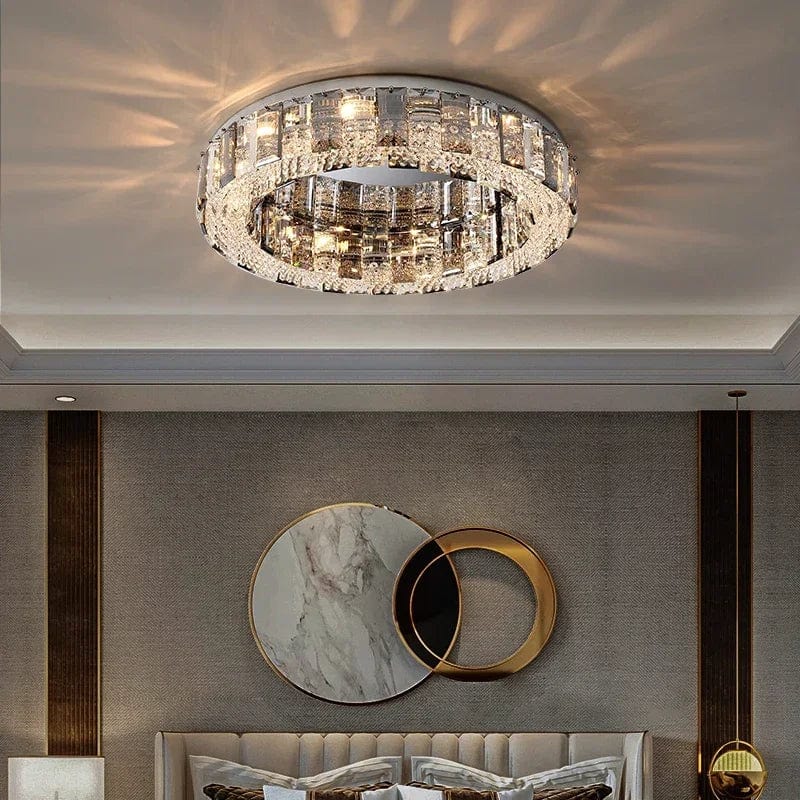
1Rina Crystal Ceiling Chandelier
Replacement · Reads Finished, Not RemovedThe point of a swap-out fixture is that nobody notices a swap happened. A close-mount crystal fixture reads as a deliberate choice rather than a placeholder, fits any ceiling height, and suits a wide enough range of tastes that no buyer is put off. A bare bulb or a basic dome does the opposite — it draws attention to the gap.
Why not a bare bulb: It reads as something removed
Fits: Any ceiling height, including 8 ft
Timing: Before listing photographs
Related: Flush mount chandeliers
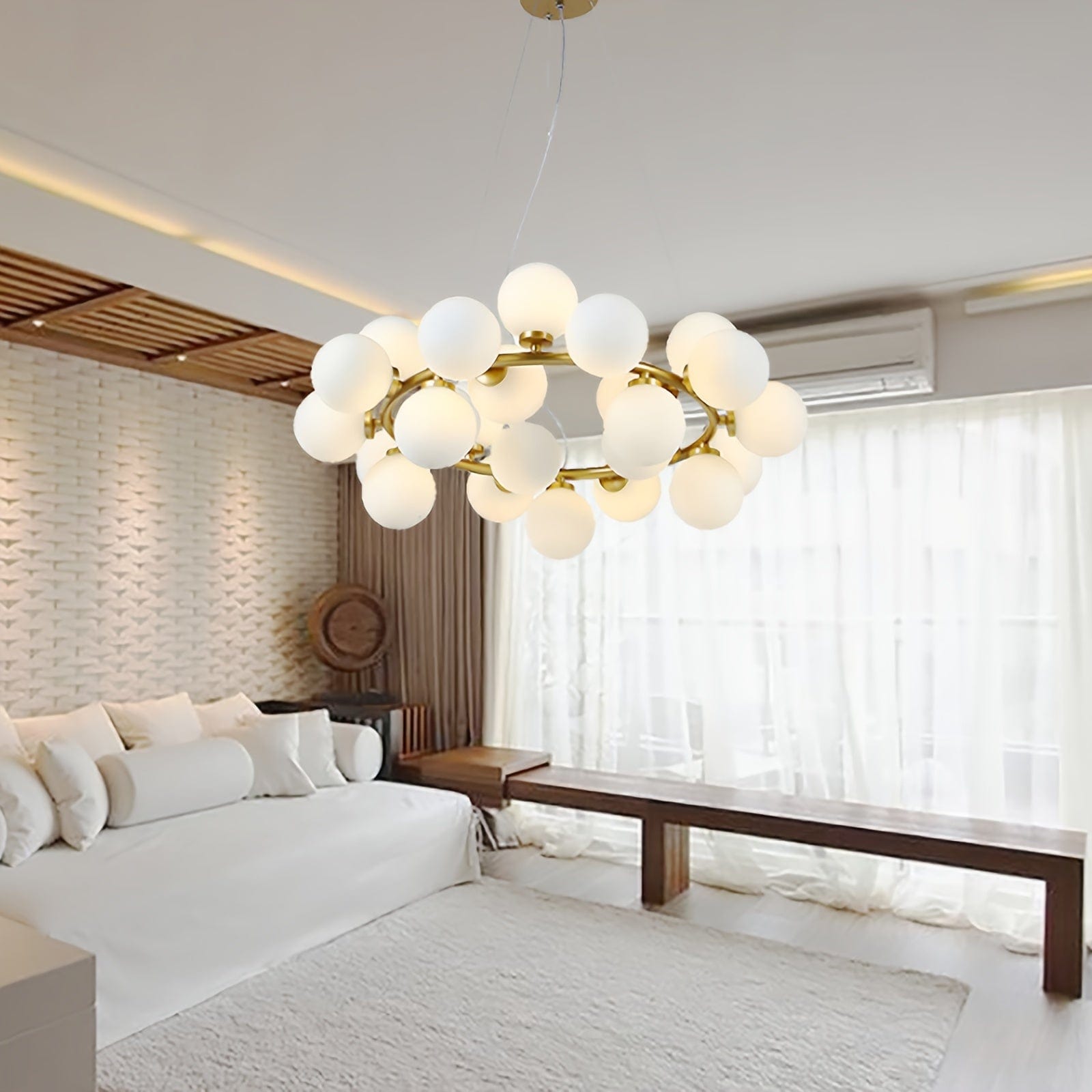
2Holly Milk Glass Chandelier
Opal · Photographs CleanlyOpal glass is the most photograph-friendly diffuser there is — no hot spots, no reflected camera flash, no bright blown-out points in a listing image. Fixtures that photograph badly make a room look worse than it is, and listing photographs are where most buyers form their first judgement of a property.
Neutral enough: Suits most buyer tastes
Also: Real output for showing a room brightly
Color: Keep every lamp matched at 2700-3000K
Related: Glass chandeliers
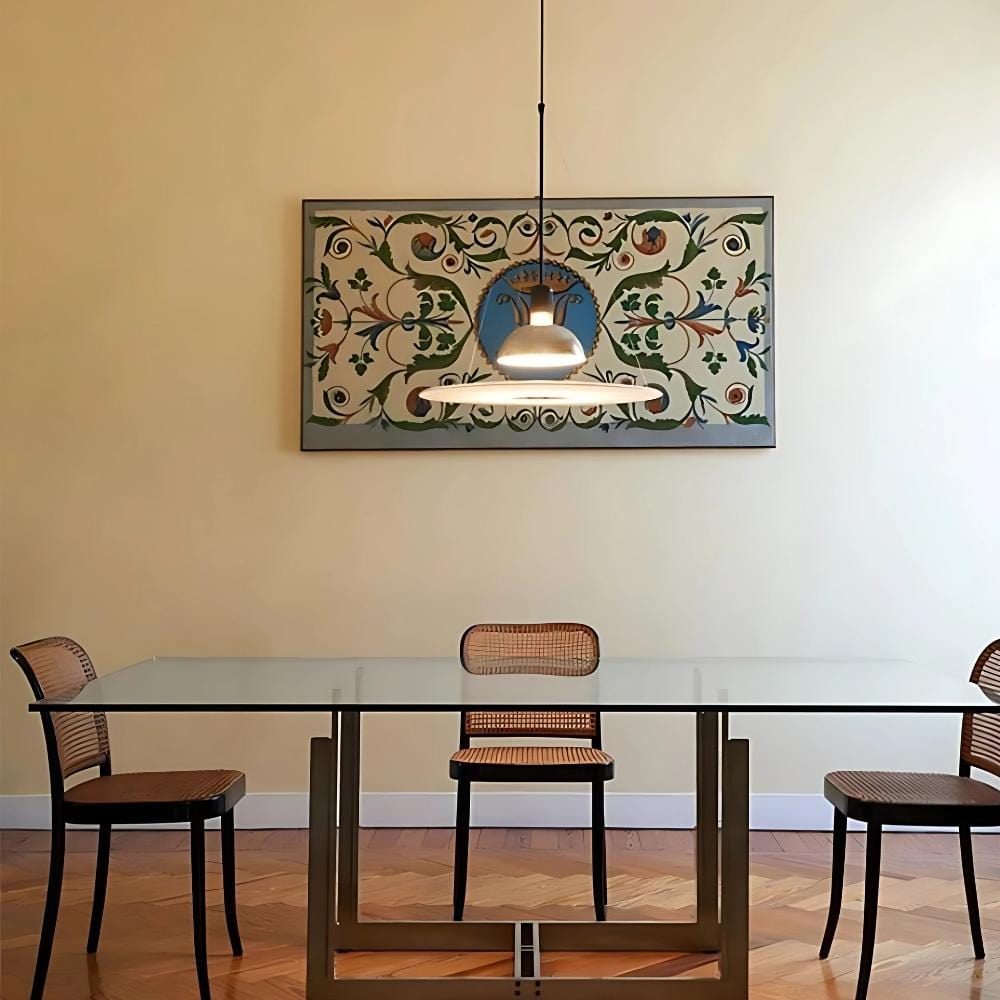
3Chiara Scandinavian Pendant Light
Neutral · Island and Hallway SwapsWhere the fixture being taken is over an island or in a hallway, a simple shaded pendant is the safe replacement — no strong style signal, nothing for a buyer to react against, and inexpensive enough that three of them over an island is still a modest spend. Two finishes covers most houses.
Suits: Island runs and hallways
Finishes: Silver or black
In a run: One per 24-30 in of counter length
Related: Pendant lights
Does Lighting Add Value?
Honestly: not in the way a kitchen or a bathroom does. No appraiser assigns value to a chandelier. What lighting does is different and worth understanding properly.
It changes how a house is perceived, which affects how quickly it sells and how confident buyers feel about what they are seeing. A dated fixture signals a house that has not been touched recently, and buyers generalise from it — if the lighting is from 1998, what else is? That inference does more damage than the fixture itself.
It is disproportionately cheap for how visible it is. Swapping a dated fixture costs a fraction of what any other visible improvement does, and it changes every photograph of the room. For a seller with a limited budget, it is one of the highest ratios of perceived change to money spent.
It photographs. Most buyers see a house online first and decide whether to visit from the images. Lighting affects those images twice — as objects in frame, and as the light the photographs are taken in.
Where to Spend Before Listing
| Priority | What | Why it comes first |
|---|---|---|
| 1 | Match every bulb in the house | Near-zero cost; mismatched color temperature is visible in every photo |
| 2 | Replace anything obviously dated | Brass-and-glass domes, exposed builder fittings, yellowed plastic |
| 3 | Entry fixture | First thing seen, in person and in the lead photograph |
| 4 | Dining room fixture | The most photographed fixture in a house |
| 5 | Kitchen island lighting | Kitchens drive buyer decisions more than other rooms |
| 6 | Add lamps to dark corners | No electrician; makes rooms photograph larger |
| 7 | Replace burnt-out bulbs everywhere | A dead bulb reads as neglect out of proportion to its cost |
The first item is the one people skip and it costs almost nothing. A house with 2700K in one room, 4000K in the next and a daylight bulb in a hallway photographs as three different houses. Buying a single multipack and going through every fixture is an hour of work and changes every image.
Pre-Listing Update Picks (3 Designs)
For the three positions that carry the most weight with buyers: the entry, the dining room and the kitchen island.
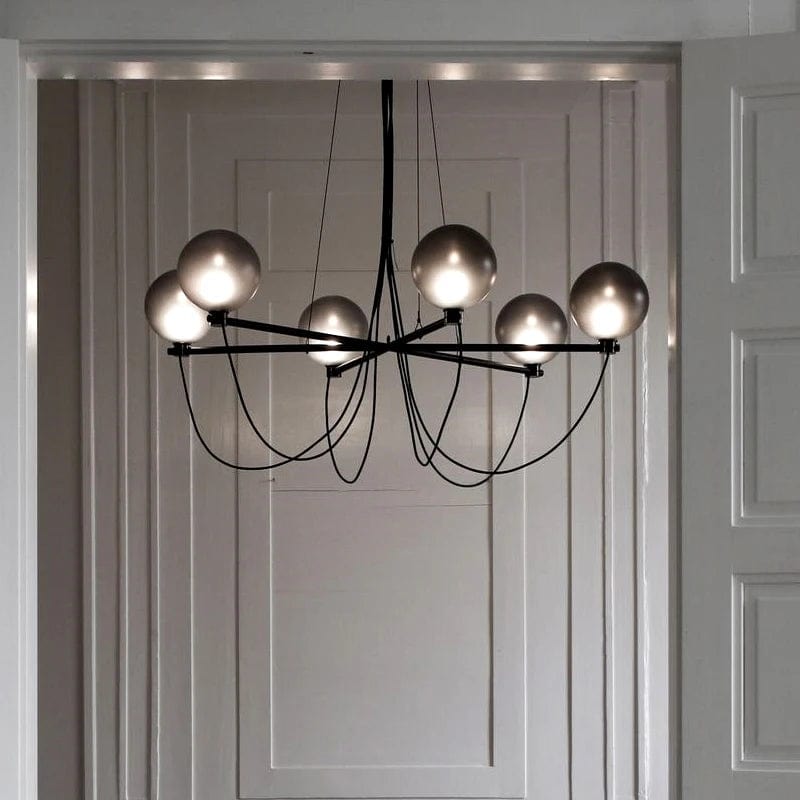
4Arc Modern Black Chandelier
Entry · Neutral to Any HardwareThe entry fixture appears in the lead listing photograph and is the first thing anyone sees in person. Black is the safe specification for a house being sold, because it reads as a line rather than as a metal and therefore does not clash with whatever hardware the house already has — and does not commit a buyer to a direction they may not share.
Why black: Does not clash with existing hardware
Neutral: Commits a buyer to nothing
Sizes: Two, from 31.50" (80 cm)
Related: Black chandeliers
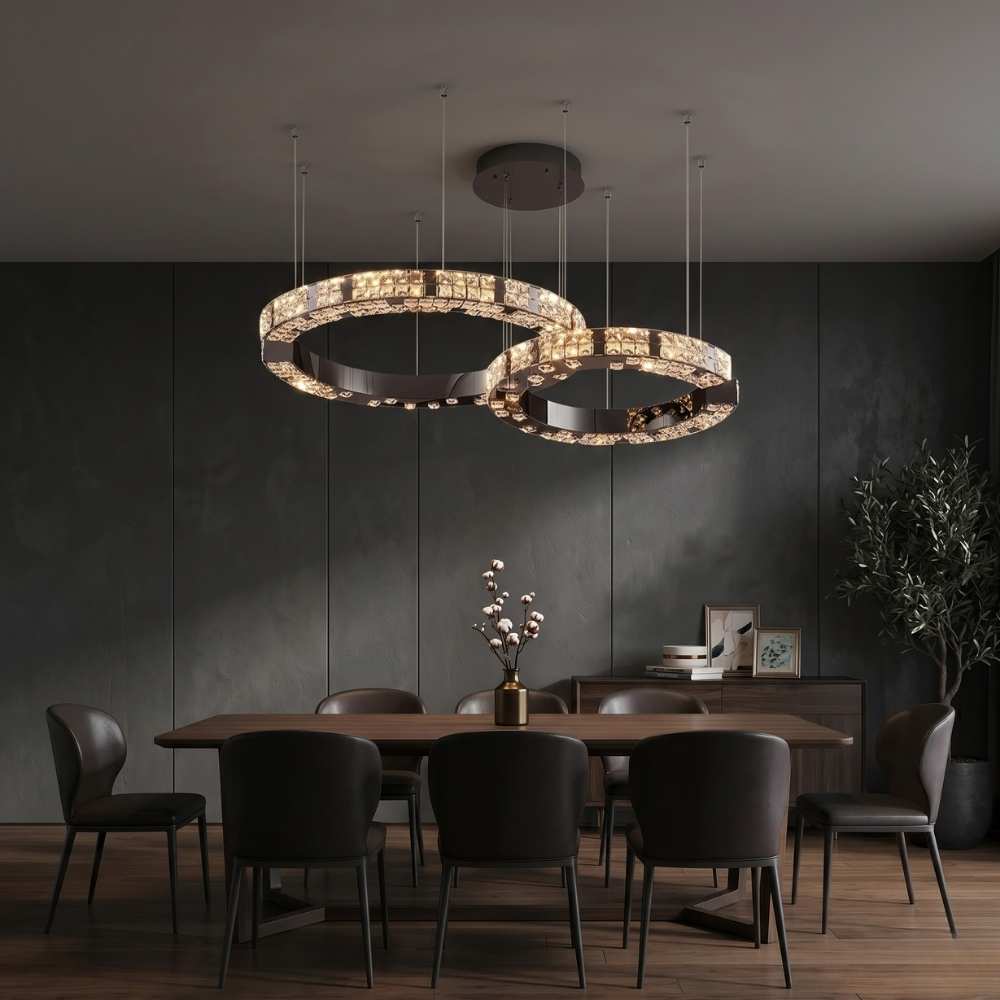
5Arven Modern Crystal Ring Chandelier
Dining Room · Most Photographed FixtureThe dining fixture appears in more listing photographs than any other, and it is the one buyers remember. A ring with crystal reads as current rather than period, suits round and square tables exactly, and gives a photograph something to catch light on — which makes the room look considered rather than staged.
Reads: Current, not period
Size to: ½ to ⅔ of the table's width
Hang at: 30-36 in above the tabletop
Related: Dining room chandeliers

6Iris Gold Glass Pendant Light
Kitchen Island · Where Buyers DecideKitchens influence buyer decisions more than any other room, and island pendants are the cheapest way to make one look updated without touching cabinetry. Match the finish to the existing hardware rather than introducing a new metal — the goal is a kitchen that reads coherent, not one with a new feature arguing with the old ones.
Match to: Existing cabinet hardware and tap
In a run: One per 24-30 in of island length
Cheapest route to: An updated-looking kitchen
Related: Kitchen lighting
Browse pre-listing updates
Entry, dining and kitchen fixtures that photograph well.
All Chandeliers → Dining → Flush Mount →Lighting for Listing Photographs
Lighting affects listing images twice — as objects in the frame and as the light those images are taken in. Four things help.
Every bulb at the same color temperature. Mixed Kelvin shows as color casts across a single photograph, and a wall can read two different colors in one image. This is the highest-impact and cheapest fix available.
Every bulb working. A photographer will shoot with the lights on, and a dead lamp in a multi-lamp fixture is visible in every frame of that room.
Diffused rather than exposed. Bare bulbs blow out to white blobs in a photograph and can make the camera underexpose the rest of the room. Opal and shaded fixtures photograph cleanly.
Lamps in dark corners. A corner in shadow reads as a smaller room. Adding a floor lamp costs nothing in electrical terms and makes a space photograph larger than it otherwise would.
Common Mistakes
- Assuming a hardwired fixture is yours because you bought it. Attachment governs, not purchase history. Exclude it in writing or swap it before listing.
- Leaving a prized chandelier in the listing photographs. The most common way the argument starts.
- Excluding a fixture without saying what replaces it. A buyer imagines a bare wire.
- Removing a fixture and leaving a bare bulb. It draws attention to the gap and reads as something taken.
- Mixed color temperatures through the house. Photographs as three different houses. A multipack and an hour fixes it.
- Dead bulbs anywhere. Reads as neglect out of all proportion to the cost.
- Over-investing in lighting to compensate for condition. It is presentation, not substance, and buyers see through it.
- Installing something strongly stylistic before selling. A buyer's taste is unknown. Neutral reads as finished; distinctive reads as something to change.
- Introducing a new metal finish in a kitchen. Match the existing hardware so the room reads coherent.
- Returning after closing to remove a fixture. A situation to avoid entirely by handling it before.
Frequently Asked Questions
Do light fixtures stay when you sell a house?
Hardwired fixtures — chandeliers, pendants, sconces, recessed lighting, ceiling fans — are generally treated as part of the property and stay unless excluded in writing. Plug-in lamps are personal property and go with the seller. Practice varies by state and contract, so confirm with your agent.
Can I take my chandelier when I sell?
Yes, if you handle it correctly. The cleanest approach is replacing it before the listing photographs so no buyer ever sees it. If the house is already listed, exclude it explicitly in both the listing and the contract, and state what will replace it.
What is the difference between a fixture and personal property?
Attachment. If removing it would leave a hole, exposed wiring or an obvious gap, it behaves like a fixture and belongs to the property. If it plugs into an outlet, it is personal property. Value and sentiment do not change the classification.
How do I exclude a chandelier from the sale?
In writing, in both the listing text and the contract, and specify the replacement. Wording along the lines of "dining room chandelier excluded; seller to replace with a comparable fixture prior to closing" is what agents typically use. Confirm the exact form with your agent.
Do light fixtures add value to a home?
Not in the way a kitchen or bathroom does — no appraiser assigns value to a chandelier. What lighting changes is perception: how quickly a house sells, how confident buyers feel, and how every photograph looks. It is one of the cheapest visible improvements available.
Should I replace dated light fixtures before selling?
Usually yes, and it is among the best returns on a small budget. A dated fixture signals a house that has not been updated, and buyers generalise from it. Prioritise the entry, the dining room and the kitchen island — the three positions that appear most in photographs.
What is the cheapest lighting improvement before listing?
Matching every bulb in the house to one color temperature, and replacing any that are dead. Mixed Kelvin photographs as color casts across a single image and can make one wall read as two colors. A multipack and an hour of work changes every photograph.
Are smart bulbs included in a house sale?
Usually treated as personal property, since they unscrew like any bulb — but it is a gray area worth stating either way. Smart switches and dimmers are wired in and generally stay. If you are taking the bulbs, leave ordinary ones in their place.
What if the seller took a fixture that was in the photos?
Raise it with your agent before closing, and check at the final walkthrough rather than after. This is exactly the dispute that written exclusions exist to prevent, which is why confirming inclusions in the contract matters more than relying on the listing images.
What style of fixture should I install before selling?
Neutral rather than distinctive. The buyer's taste is unknown, so something clean and current reads as finished, where something strongly stylistic reads as another thing to change. Black and simple opal glass are the safest specifications.
Does lighting affect listing photographs much?
Substantially, and in two ways — fixtures appear as objects in frame, and they provide the light the photograph is taken in. Diffused fixtures photograph cleanly; bare bulbs blow out to white and can make the camera underexpose the room around them.
Is this legal advice?
No. This is general guidance on common US practice. Property law, contract forms and local custom all vary, and anything contested should go to your agent or a real estate attorney rather than a general guide.
Swap It Before the Photographs
If a hardwired fixture is coming with you, replace it before anyone sees it — that single step removes the entire dispute. And if you are selling rather than taking, lighting is the cheapest visible improvement a house can have: match every bulb, replace what looks dated in the entry, dining room and kitchen, and the property photographs as one that has been looked after.
Browse the range: all chandeliers, dining room, flush mount.