Heat is what kills LED bulbs, not hours of use. Inside a sealed glass globe or a closed shade, hot air has nowhere to go — so the bulb's driver runs far above its design temperature and fails long before the rated life. The fixture is almost never at fault; the bulb specification is.
Look for "enclosed fixture rated" on the packaging. It is the single specification that matters here, and most standard LED bulbs do not carry it.
Smart bulbs are the worst offenders. They pack radio and control electronics into the same hot space, which is why they frequently underperform their stated life in closed fixtures.
Lower wattage, enclosed-rated, and leave the top vented where the design allows. Those three fix almost every case of "the bulbs keep going."
"The bulbs in this fixture keep burning out" is one of the most common complaints in decorative lighting, and the diagnosis is almost always wrong. People blame the fixture, the wiring, or the brand of bulb. The actual cause is usually thermal: a bulb that would last fifteen years in an open fixture lasts two in a sealed globe, because its electronics are cooking. This guide covers why that happens, which fixture shapes cause it, what the enclosed rating actually means, and how to specify so it stops.
On this page
- Why Heat Kills LEDs
- What "Enclosed Fixture Rated" Means
- Which Fixture Shapes Trap Heat
- Why Smart Bulbs Fail Fastest
- Enclosed Designs and What to Put in Them
- Five Fixes That Work
- The Integrated LED Alternative
- Open Designs and Integrated Options
- Diagnosing Your Own Fixture
- Common Mistakes
- Frequently Asked Questions
Why Heat Kills LEDs
LEDs are often described as cool-running, and the light-emitting part genuinely is. The problem is everything else inside the bulb.
A modern LED bulb contains a small power supply — a driver — that converts mains voltage into what the emitters need. That driver uses capacitors and semiconductors, and those components are the heat-sensitive part. They are rated for an ambient temperature that assumes the bulb can shed heat into open air.
Seal that bulb inside a glass globe and the assumption breaks. Warm air rises off the bulb, hits the top of the enclosure, and has nowhere to go. The temperature inside climbs and stays there for as long as the light is on. The emitters survive it; the driver does not. What fails is almost always the electronics, which is why an "LED rated for 25,000 hours" can stop working after two years in a closed fixture.
What "Enclosed Fixture Rated" Means
This is the one specification that resolves the problem, and it is easy to miss because it appears in small print rather than on the front of the box.
An enclosed-rated bulb is built and tested to run inside a sealed fixture: a driver specified for higher ambient temperatures, better internal heat paths, and sometimes a thermal protection circuit that dims the bulb rather than letting the electronics cook. Manufacturers test for it specifically, and bulbs that pass say so.
- Where to look: the side or back of the packaging, usually near the lifespan and dimming information. Phrasing varies — "suitable for enclosed fixtures", "enclosed fixture rated", or an icon of a sealed globe.
- Absence is meaningful. Most standard LED bulbs explicitly state not for use in enclosed fixtures, or stay silent, which amounts to the same thing. Silence is not approval.
- Rated bulbs cost slightly more and last several times longer in the position that matters. The economics are not close.
- It does not solve everything. Even a rated bulb runs hotter in an enclosure than in open air, so pairing the rating with lower wattage compounds the benefit.
- Check at purchase, not after. Buying the full count for a multi-lamp fixture in one rated batch also keeps colour temperature consistent.
Which Fixture Shapes Trap Heat
| Fixture form | Heat risk | Why | Bulb to use |
|---|---|---|---|
| Sealed glass globe | Highest | No airflow at all; heat has no exit | Enclosed-rated, lowest practical wattage |
| Opal or milk glass shade | High | Usually closed; thick glass holds heat | Enclosed-rated |
| Candle sleeve | High, locally | Sleeve wraps the bulb base, where the driver sits | Low-output decorative LED |
| Flush mount with a dome | High | Sealed to the ceiling; warm air pools at the top | Enclosed-rated |
| Fabric or woven shade | Moderate | Open at top and bottom, but close to the lamp | Low wattage, LED only |
| Open-bottom shade | Low | Warm air escapes upward | Standard LED is fine |
| Open frame / exposed lamp | Lowest | Full airflow around the bulb | Any LED, including decorative filament |
Two patterns are worth internalising. Sealed at the top is worse than sealed at the bottom, because heat rises — a shade open at the top vents even if it is closed below. And candle sleeves are a localised version of the same problem: the sleeve wraps the base of the bulb, which is exactly where the driver sits, so a long sleeve can overheat the electronics even in an otherwise open chandelier.
Why Smart Bulbs Fail Fastest
Smart bulbs carry rated lives comparable to ordinary LEDs, and in enclosed fixtures they routinely fall well short of them. The reason is structural rather than a quality issue.
A smart bulb contains everything a normal LED bulb does plus a radio, a microcontroller and its own power management — all packed into the same base, drawing power even when the light is off. That is more heat-generating electronics in the same confined space, and more components that degrade when it gets hot.
The practical conclusion: in a sealed globe or a closed shade, smart bulbs are the specification least likely to reach their rated life. Where smart control is the goal in an enclosed fixture, a smart dimmer switch with ordinary enclosed-rated bulbs is the more reliable route — the electronics live in the wall box where there is airflow, not inside the glass.
This matters more on a multi-lamp chandelier than on a single pendant. Twelve smart bulbs is twelve sets of electronics running hot, twelve standby draws, and twelve things that can fail at different times and leave the fixture mismatched.
Enclosed Designs and What to Put in Them (4 Fixtures)
These formats trap heat by design — which is also what makes them glare-free and comfortable. The fix is the bulb specification, not avoiding the fixture.

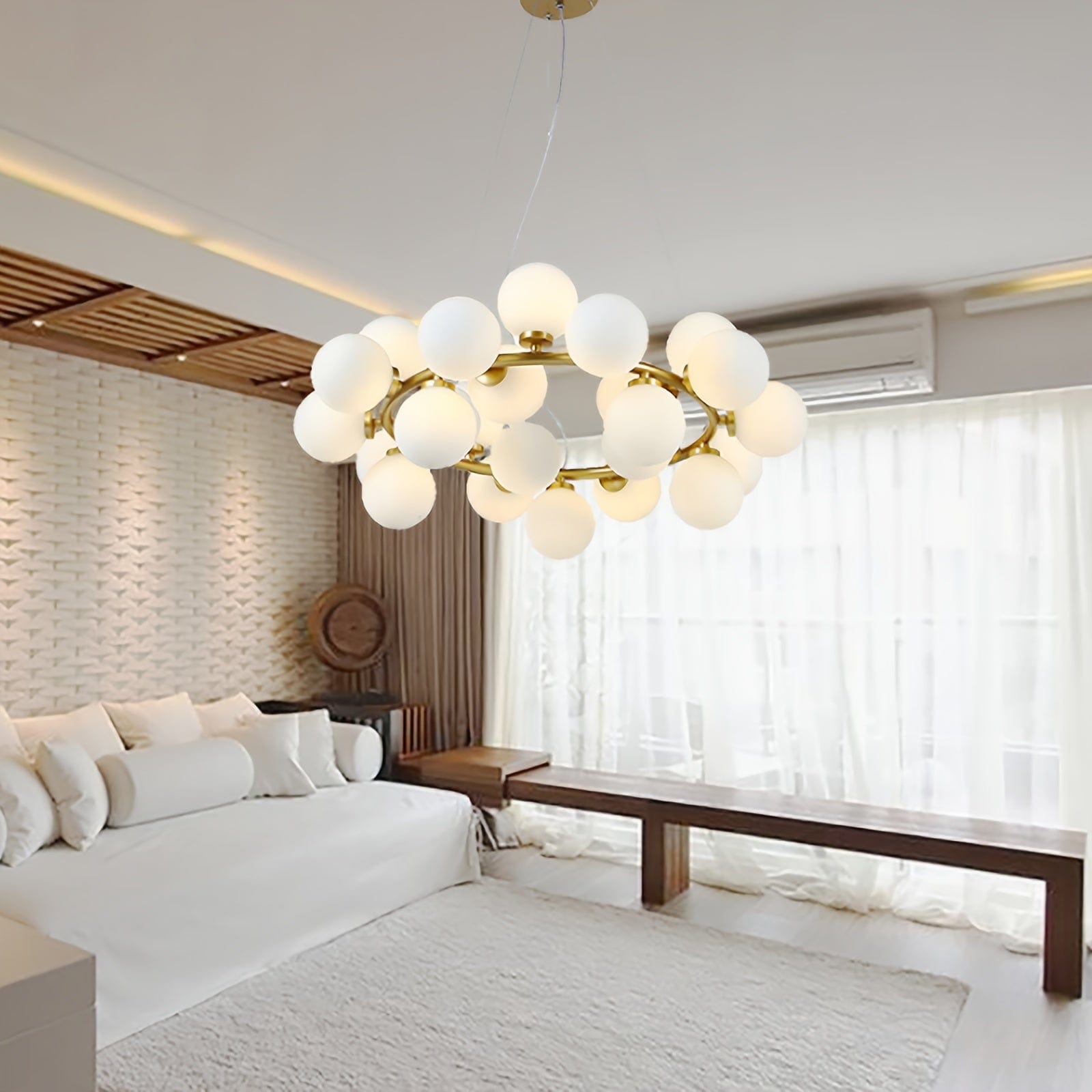
1Dove Glass Bubble Light Fixture
Sealed Globes · Enclosed-Rated EssentialGlass globes are the highest-risk form and the one where the rating matters most — a sealed sphere has no airflow at all. Use enclosed-rated bulbs at the lowest wattage that gives you the light you want, and buy the full count in one batch so colour stays consistent as they age together.
Bulb: Enclosed-rated, lowest practical wattage
Buy: Full count in one batch, plus spares
Avoid: Smart bulbs in sealed glass
Related: Bubble chandeliers
2Holly Milk Glass Chandelier
Opal Shades · Check Which Way They FaceOpal glass is the most efficient diffuser available, which is exactly why it is worth getting the bulb right. One detail decides how much heat matters here: whether the shades face up or down. A shade open at the top vents warm air; a shade facing downward traps it, and the same fixture in two orientations has very different thermal behaviour.
Upward: Vents — standard LED usually fine
Downward: Traps — enclosed-rated
Why opal is worth it: Best output-to-glare ratio
Related: Glass chandeliers
3Tyra Lantern Pendant Light Fixture
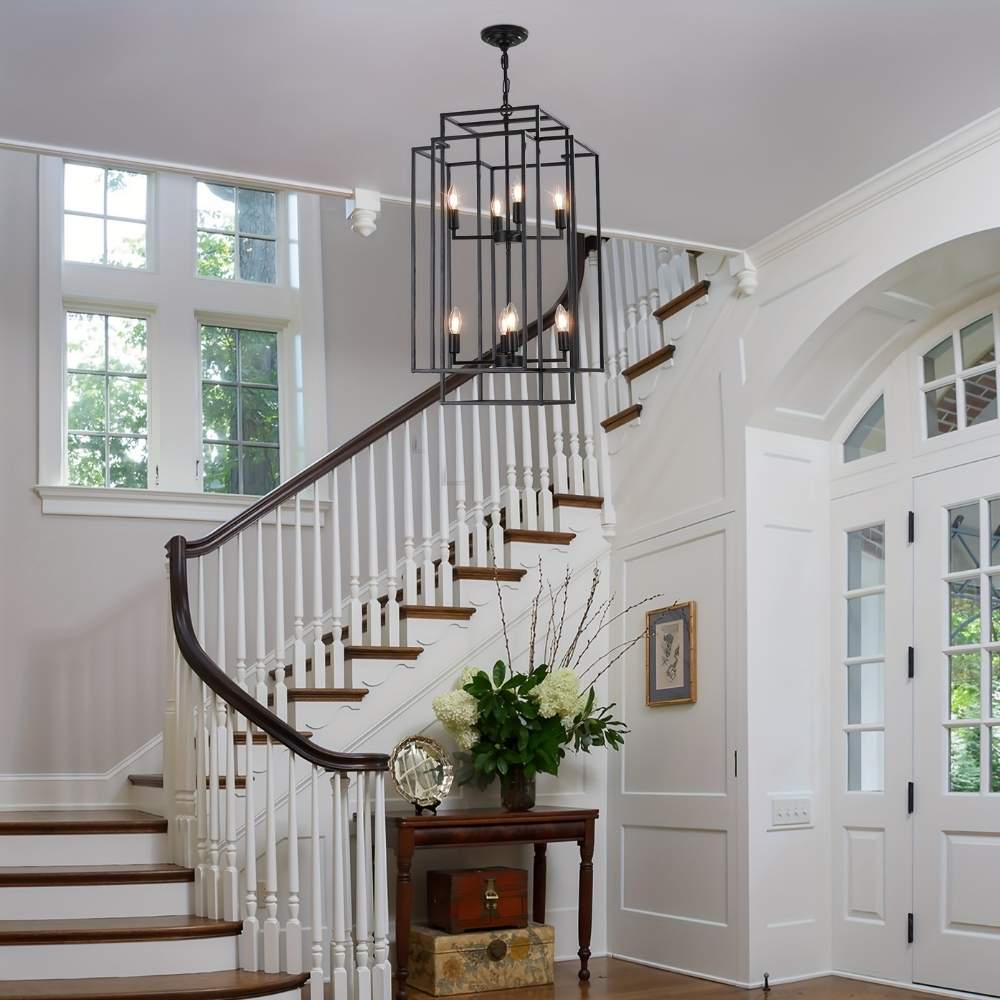
Lantern · Enclosed But Often VentedLanterns sit in the middle of the risk scale and reward a closer look. Many have a vented top or an open base, which changes everything — warm air escapes and a standard LED survives. Check the actual construction rather than assuming: a glazed lantern with a solid cap is as sealed as a globe, while an open-bottom one is barely enclosed at all.
Solid cap + glazed sides: Treat as sealed
Open base: Standard LED is usually fine
Bonus: Enclosed body means no glare at eye level
Related: Pendant lights
4Aldric Large Black Candle Chandelier
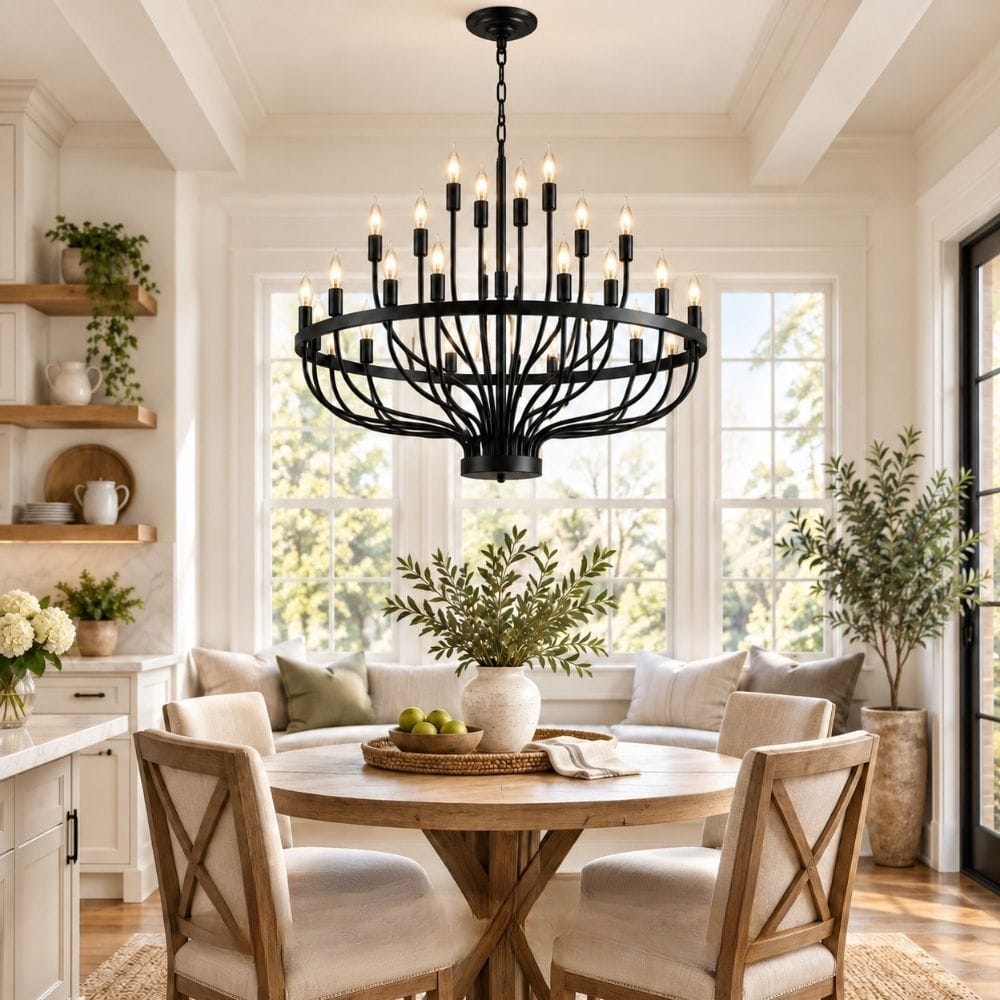
Candle Sleeves · Localised HeatAn open-frame chandelier with no enclosure anywhere — except around each bulb base, where the sleeve sits. That is precisely where the driver lives, so a long sleeve can overheat the electronics in an otherwise well-ventilated fixture. Low-output decorative LEDs solve it and suit the form anyway; incandescent in sleeves also discolours them over time.
Why it matters: The driver sits in the base
Bulb: Low-output decorative LED, 2700K
Bonus: LED keeps sleeves from discolouring
Related: Vintage chandeliers
Five Fixes That Work
- 1. Switch to enclosed-rated bulbs. The single highest-impact change, and it costs a few dollars more per bulb. Check the side of the packaging.
- 2. Drop the wattage. Less power in means less heat out. A 6W LED in a sealed globe runs substantially cooler than a 10W one, and in a decorative fixture the difference in brightness is usually acceptable — especially on a dimmer.
- 3. Use a dimmer and leave it below full. Running at 70% output reduces heat meaningfully as well as producing better light in most decorative positions. Check the bulb is dimmable first.
- 4. Leave the top vented where the design allows. Some shades and lanterns can be fitted either way up, and some have removable top caps. Venting the top is worth more than venting the bottom, because heat rises.
- 5. Replace all the bulbs together. In a thermally demanding fixture they age at the same rate, so staggered replacement leaves mismatched colour and a second trip up the ladder weeks later.
The Integrated LED Alternative
There is a category of fixture where this problem does not arise, and it is worth knowing why.
Integrated LED fixtures are designed as one thermal system. The emitters sit on a board bonded to the fixture's own metal body, which acts as a heat sink, and the driver is usually mounted in the canopy where there is airflow — not sealed inside a glass sphere. The manufacturer has engineered the heat path rather than leaving it to whichever bulb the owner buys.
That removes the failure mode entirely. What it adds is a different consideration: the driver is still the component with the shortest life, and on an integrated fixture it cannot be swapped by unscrewing something. Ask whether the driver is accessible and whether it is a standard part before buying, particularly for anything hung high. A serviceable driver makes the fixture repairable indefinitely; a sealed proprietary unit makes it a replacement when that part fails.
Open Designs and Integrated Options (4 Fixtures)
Where the thermal question does not arise — either because air moves freely around the lamp, or because there is no replaceable lamp at all.

5Asty Modern Ring LED Chandelier
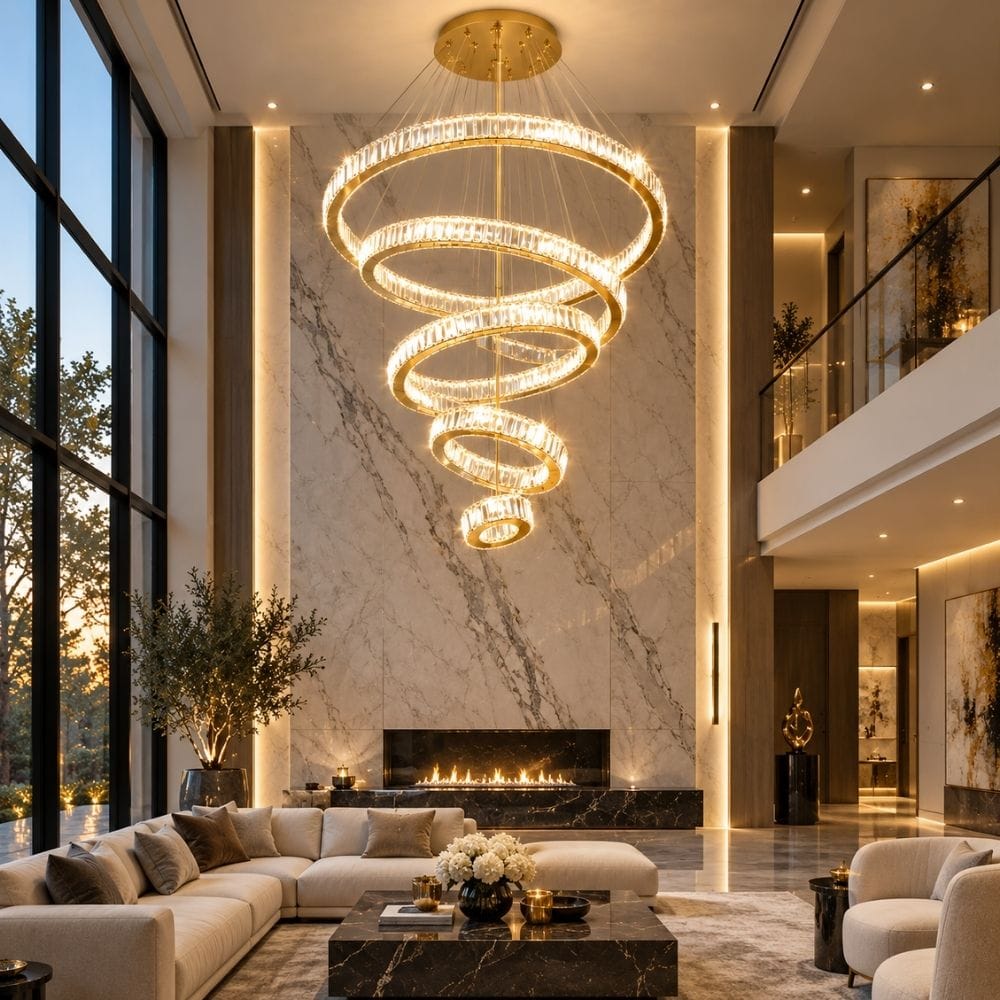
Integrated · Engineered Heat PathThe emitters sit in an aluminium channel that doubles as a heat sink, and the driver lives in the canopy rather than inside the fixture body. That is a designed thermal system rather than a bulb hoping for airflow — which is why integrated designs do not suffer the early-failure problem at all.
Driver location: Canopy, with airflow
Ask before buying: Is the driver serviceable?
Best for: High and hard-to-reach positions
Related: Ring chandeliers
6Bily LED Crystal Ring Chandelier
Crystal Without Enclosed BulbsCrystal fixtures often enclose their lamps behind glass or inside housings, which puts them in the high-risk group. An integrated LED ring carrying crystal elements avoids that completely — the refraction is unchanged, and there are no bulbs sealed inside anything to overheat.
Keeps: Full refraction effect
Dimmer: Check depth — crystal reads best at 30-60%
Finishes: Gold or chrome
Related: Crystal chandeliers

7Elise Sputnik Bubble Chandelier
Twelve Small Enclosures · Low Watt EachAn instructive middle case. Twelve small glass globes means twelve enclosures — but each holds a low-wattage lamp, and small enclosures with modest heat loads behave better than one large sealed body with a high-output bulb. Still use enclosed-rated bulbs, and buy all twelve at once so they age and fail together rather than individually.
Still use: Enclosed-rated bulbs
Buy: All 12 at once, plus spares
Principle: Low watt per enclosure beats high watt in one
Related: Sputnik chandeliers
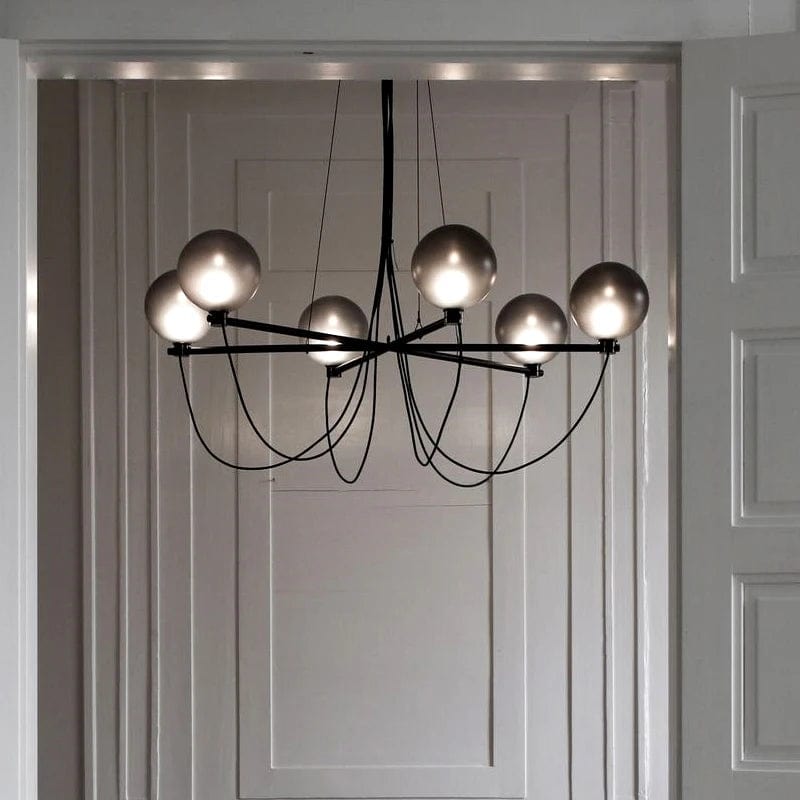
8Arc Modern Black Chandelier
Open Frame · Full AirflowThe lowest-risk category. An open frame leaves air moving freely around every lamp, so any LED works and decorative filament bulbs become an option — those run warm and are the first to suffer in an enclosure. If early bulb failure has been a recurring problem in your house, open designs remove the variable entirely.
Bulbs: Any LED, including decorative filament
Trade: Visible lamps — use a dimmer
Sizes: Two, from 31.50" (80 cm)
Related: Black chandeliers
Browse by fixture type
Integrated LED, open frame and enclosed glass designs.
All Chandeliers → Integrated LED → Glass →Diagnosing Your Own Fixture
Four questions settle whether heat is your problem, and all of them can be answered without tools.
- Does the same bulb last normally elsewhere in the house? If yes, the fixture is thermally demanding rather than faulty. If no, the bulbs are poor quality or the circuit has a voltage issue.
- Is the fixture sealed at the top? Heat rises, so a closed top is the determining feature. An open-topped shade vents even if the bottom is enclosed.
- Does the packaging of your current bulbs mention enclosed fixtures? If it is silent or says not suitable, you have your answer.
- Are the failures electronic or emitter? A bulb that flickers, dims progressively or dies suddenly while cold points to the driver — the classic thermal signature. A bulb that visibly darkens at the emitter is a different and much rarer failure.
One thing to rule out separately: repeated failures across several fixtures in one house usually indicate a supply issue rather than heat, and that is an electrician's question. Heat problems are fixture-specific by definition.
Common Mistakes
- Blaming the fixture. If the same bulb lasts elsewhere, the fixture is thermally demanding, not faulty. The specification is what changes.
- Buying a different brand of the same non-rated bulb. It will fail the same way. The rating is the variable, not the brand.
- Assuming silence means suitable. Most standard LED packaging says nothing about enclosed fixtures, and that is not approval.
- Using the maximum wattage the fixture allows. In an enclosure, less power means less heat and longer life.
- Smart bulbs in sealed glass. More electronics in the same hot space. Use a smart dimmer with enclosed-rated bulbs instead.
- Decorative filament bulbs in an enclosure. They run warm by design and are the first to fail in a sealed fixture.
- Replacing one bulb at a time. In a hot fixture they age together, so staggered replacement means mismatched colour and repeat trips.
- Overlooking candle sleeves. The sleeve wraps the base, where the driver sits — localised heat in an otherwise open chandelier.
Frequently Asked Questions
Why do my LED bulbs keep burning out in one fixture?
Almost always heat. A bulb's driver — its internal power supply — is the heat-sensitive part, and inside a sealed fixture warm air has nowhere to go. If the same bulb lasts normally elsewhere in the house, the fixture is thermally demanding rather than faulty, and an enclosed-rated bulb is the fix.
What does "enclosed fixture rated" mean?
The bulb is built and tested to run inside a sealed fixture: a driver specified for higher ambient temperatures, better internal heat paths, and sometimes thermal protection. It appears in small print on the side of the packaging, not on the front.
Can I use any LED bulb in a glass globe fixture?
You can, but most standard LEDs will fail early. A sealed sphere has no airflow at all, which makes it the highest-risk form. Use enclosed-rated bulbs at the lowest wattage that gives you the light you want.
Do smart bulbs work in enclosed fixtures?
Poorly, as a rule. A smart bulb packs a radio, microcontroller and power management into the same base as a normal LED, so there is more heat-generating electronics in the same confined space. A smart dimmer switch with enclosed-rated bulbs is the more reliable route.
Does lower wattage really help?
Yes, directly. Less power in means less heat out, and a 6W LED in a sealed globe runs substantially cooler than a 10W one. In a decorative fixture the brightness difference is usually acceptable, especially on a dimmer.
Which fixture shapes cause the most bulb failures?
Sealed glass globes first, then opal or milk glass shades facing downward, then dome flush mounts. Candle sleeves cause a localised version of the same problem, because the sleeve wraps the bulb base where the driver sits.
Does it matter if the shade is open at the top or bottom?
Substantially. Heat rises, so a shade open at the top vents even if it is closed below. A downward-facing shade traps warm air against the lamp. The same fixture in two orientations behaves very differently.
Do integrated LED fixtures have this problem?
No. The emitters sit on a board bonded to the fixture's metal body, which acts as a heat sink, and the driver usually lives in the canopy where there is airflow. The manufacturer has engineered the heat path rather than leaving it to whichever bulb you buy.
Can filament-style LED bulbs go in an enclosed fixture?
Generally not. Decorative filament LEDs run warm by design and are usually among the first to fail in a sealed fixture. They belong in open frames where air moves freely around them.
How do I know if a fixture counts as enclosed?
Ask whether warm air can escape upward. A closed top makes it enclosed regardless of what happens below. Glazed lanterns with a solid cap count; open-bottom lanterns and open frames largely do not.
Will a dimmer make bulbs last longer?
In an enclosed fixture, yes — running below full output reduces heat as well as improving the light in most decorative positions. Confirm the bulb is dimmable and that the dimmer is LED-compatible first.
My bulbs fail in several fixtures, not one. Is it still heat?
Unlikely. Heat problems are fixture-specific by definition. Repeated failures across multiple fixtures in one house usually point to a supply or voltage issue, which is an electrician's question rather than a bulb specification one.
Read the Side of the Box
A bulb that fails in two years inside a glass globe would have lasted fifteen in an open frame, and nothing about the fixture is wrong. Check for the enclosed rating, drop the wattage, use a dimmer, and vent the top where you can. Where the fixture is high or hard to reach, an integrated LED design removes the question entirely.
Browse the range: all chandeliers, integrated LED, glass chandeliers.