
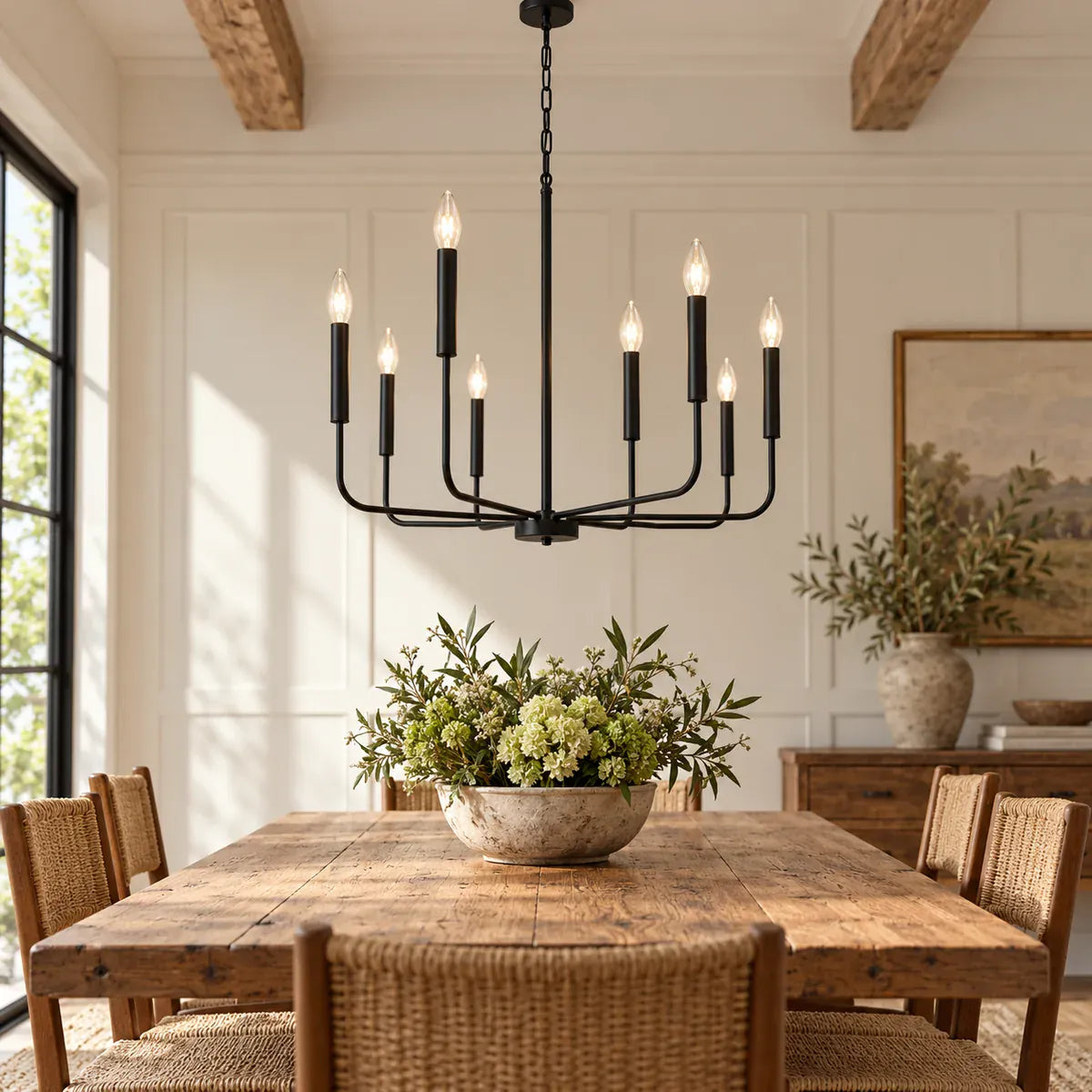
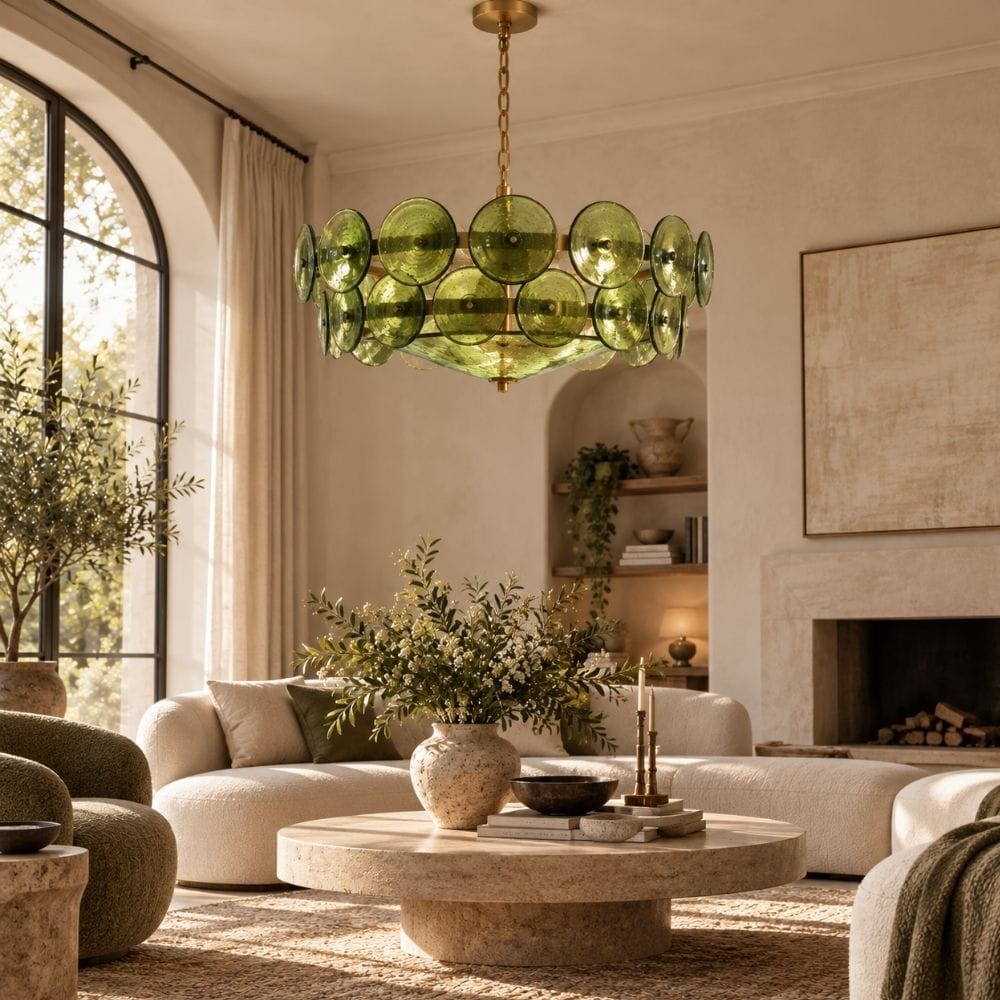
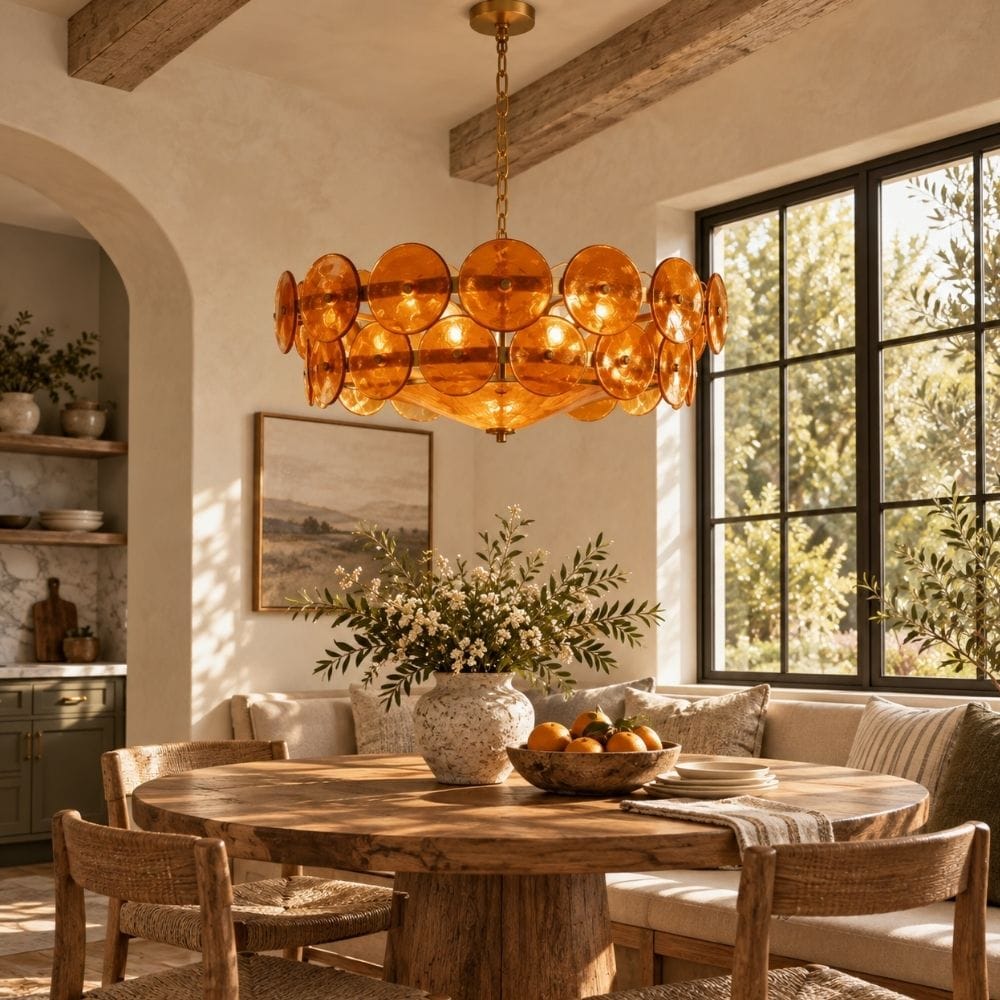



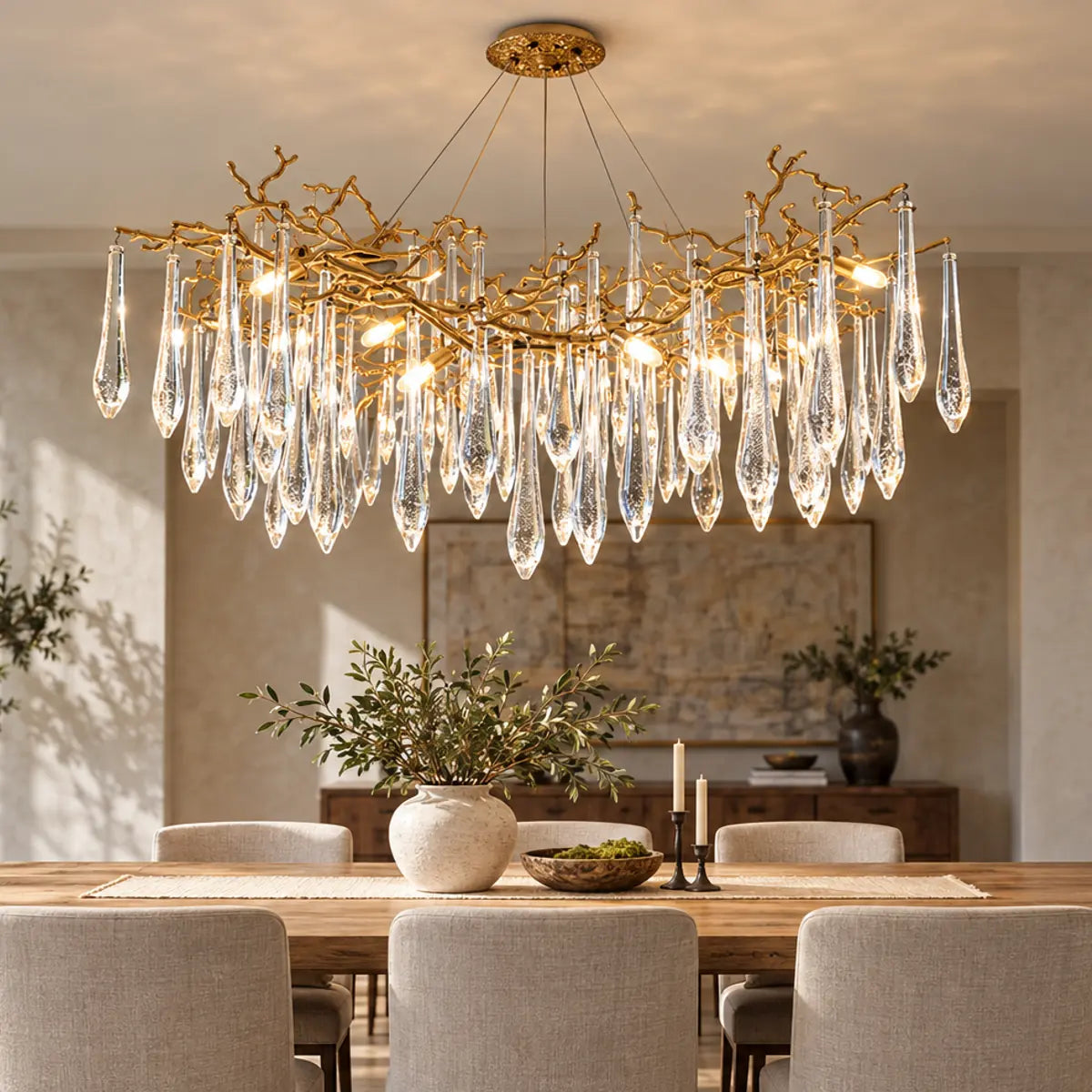








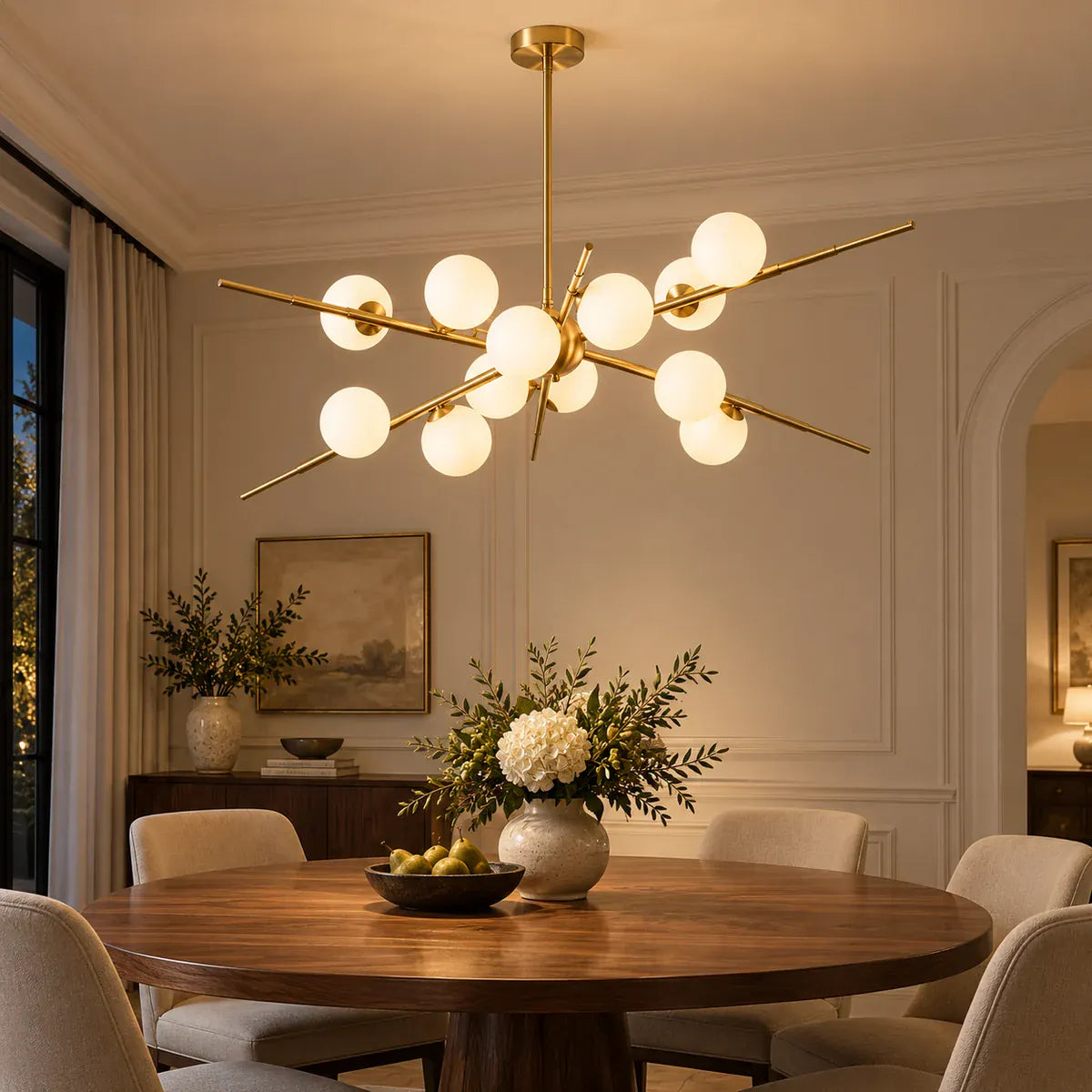
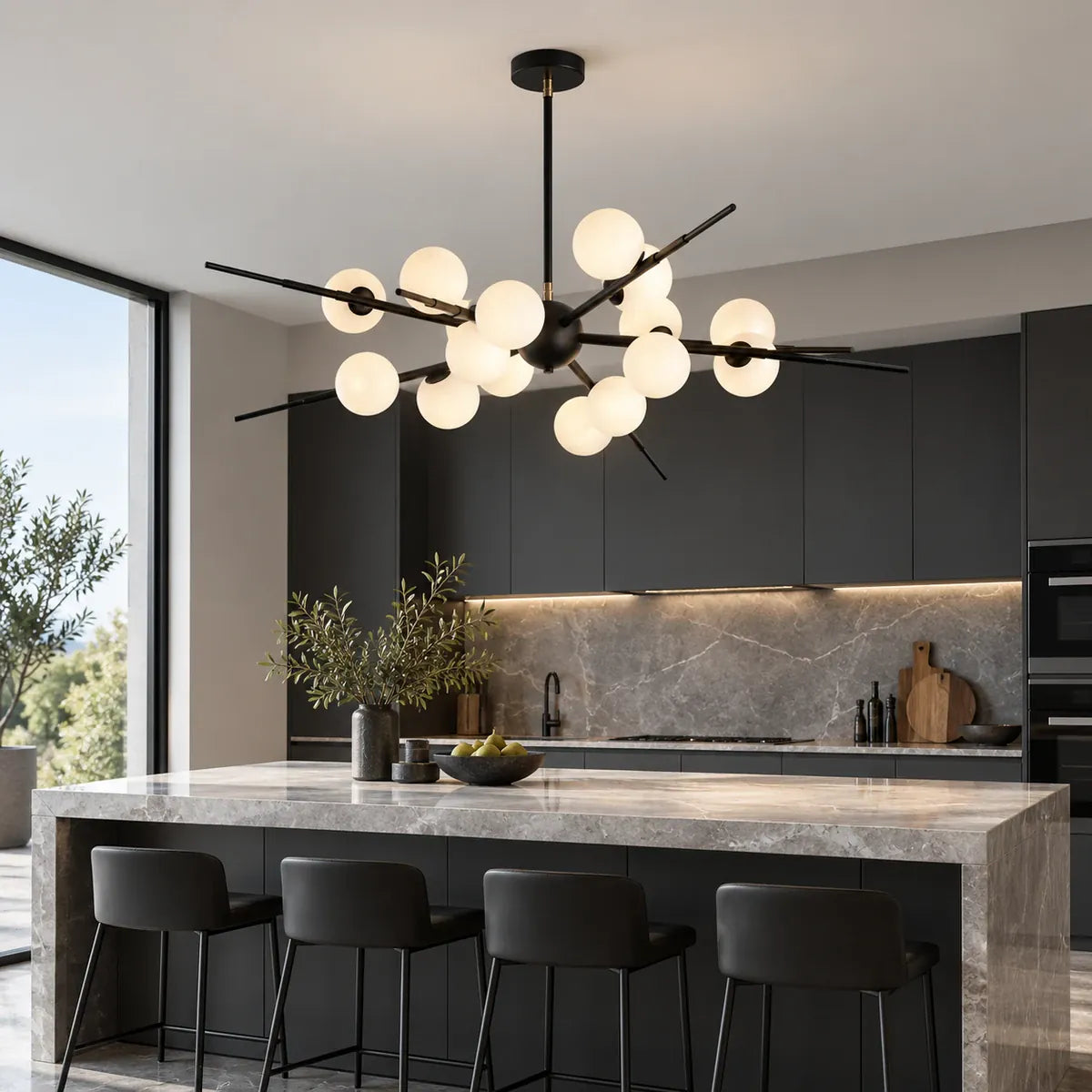
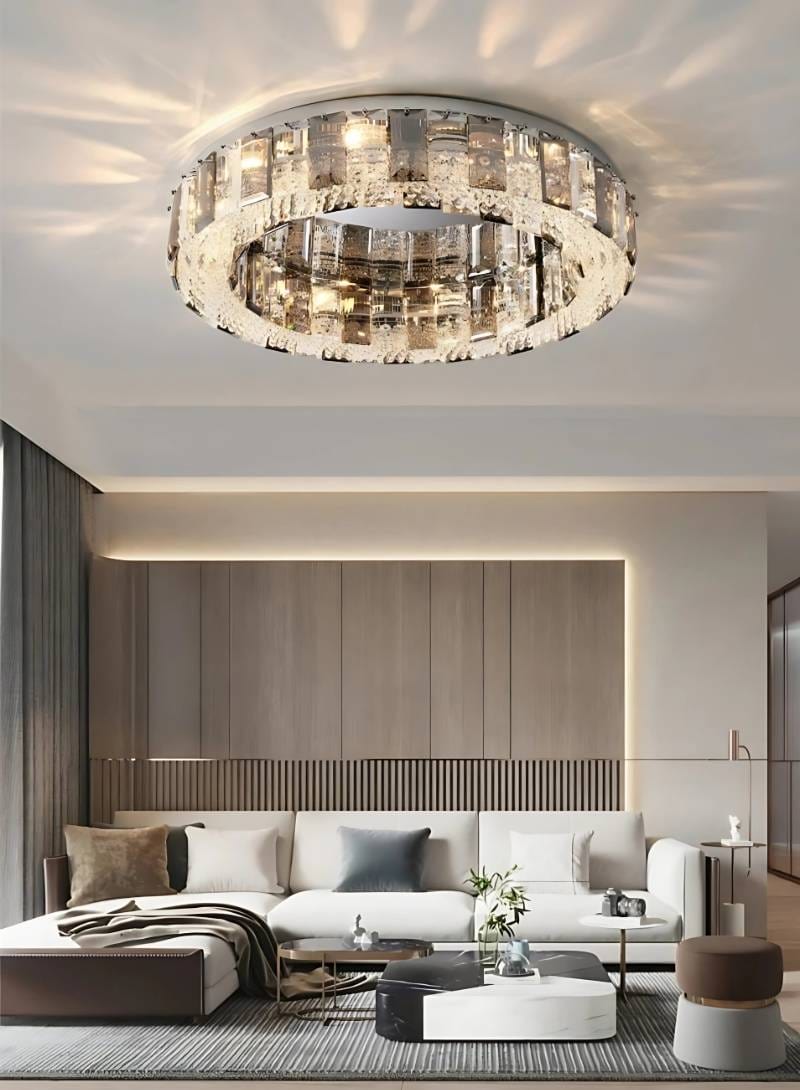
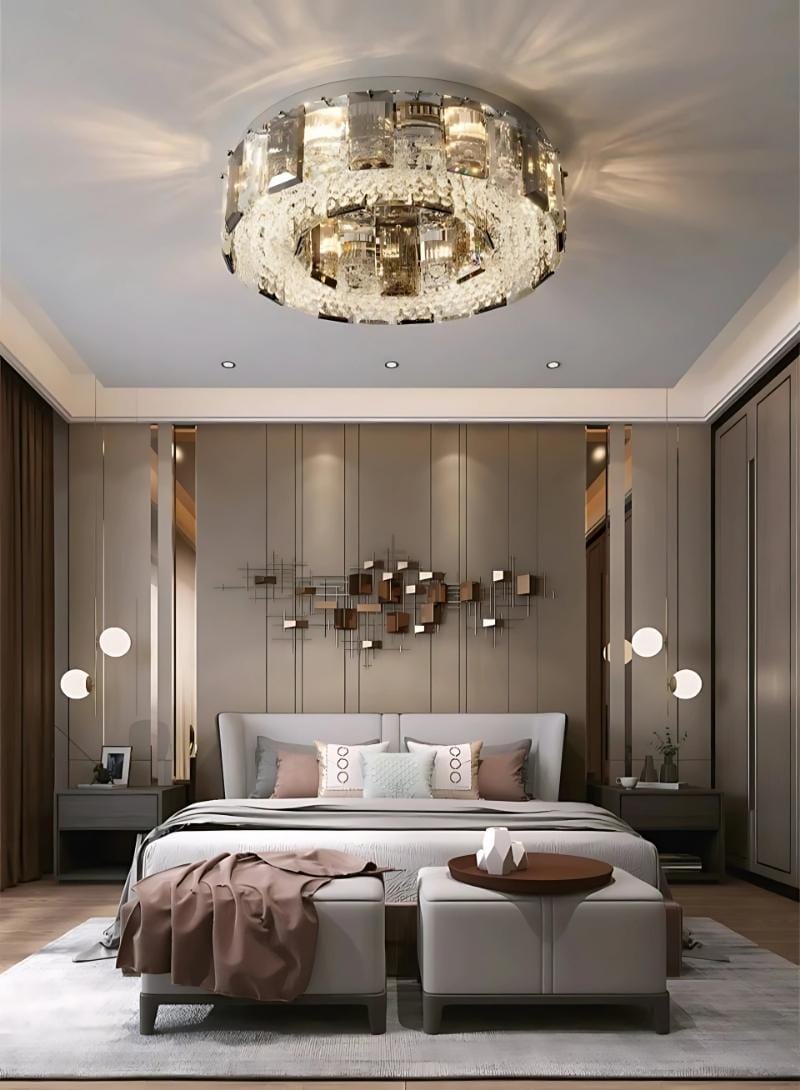




Why the Bedroom Earned Its Chandelier
For decades the statement fixture stopped at the bedroom door — the room was considered too private, too small, too functional for one. Current design reversed the verdict for a simple reason: the bedroom is the one room whose ceiling you actually look at, lying back at the end of every day, and a blank builder dome is a wasted view. A well-chosen fixture gives the room a center the way a headboard does — and because bedroom fixtures are seen at closer range and lower light than anywhere else in the home, the selection rules here are their own: softness first, dimming depth second, style third.
Over the Bed: The Placement That Changes the Rules
- The clearance advantage: no one walks under the bed's footprint, so the standard 84" (213 cm) walking rule does not apply there — leave 6-7 ft (183-213 cm) between mattress and fixture bottom so it clears sitting height with presence to spare
- Centering: center on the bed, not the room — the bed is the room's furniture anchor, and a fixture centered on empty floor reads unmoored; a swag or relocated box solves an off-position ceiling point
- Room-centered alternative: where the bed sits against a long wall or the room serves multiple zones, center on the room and keep 84" over the walking areas as usual
- Ceiling reality: standard 8 ft rooms take the statement in flush and semi-flush form — the range lives in the flush mount chandeliers collection — while 9 ft+ rooms open true suspension
Sizing for a Room Built Around a Bed
The standard formula holds — room length plus width in feet equals target diameter in inches, landing most bedrooms at 20-30" (51-76 cm) — with one bedroom-specific refinement: check the diameter against the bed, not just the room. Over a queen or king, a fixture between one-quarter and one-third of the bed's width sits in proportion; wider begins to loom over the sleeping position, smaller disappears against the headboard wall. Body height matters equally in this room — compact and low-profile designs preserve the airy read that bedrooms want, and the full number set by room dimension lives in our chandelier size calculator.
Soft by Design: Materials at Close Range
A dining fixture is seen across a table; a bedroom chandelier is seen from directly beneath, at arm's-reach distance, often at the day's lowest light — and materials behave differently that close. The room rewards diffusion: fabric drums, frosted and opal glass, alabaster, and smooth-drop crystal that glows rather than glitters. It punishes hard sparkle: heavily faceted elements that read festive across a dining room read restless twelve feet over a pillow. The practical test is the fixture's dimmed state — a bedroom design should look at its best at 20-30% output, which is where it will live most of its hours.
Style Directions That Suit the Room
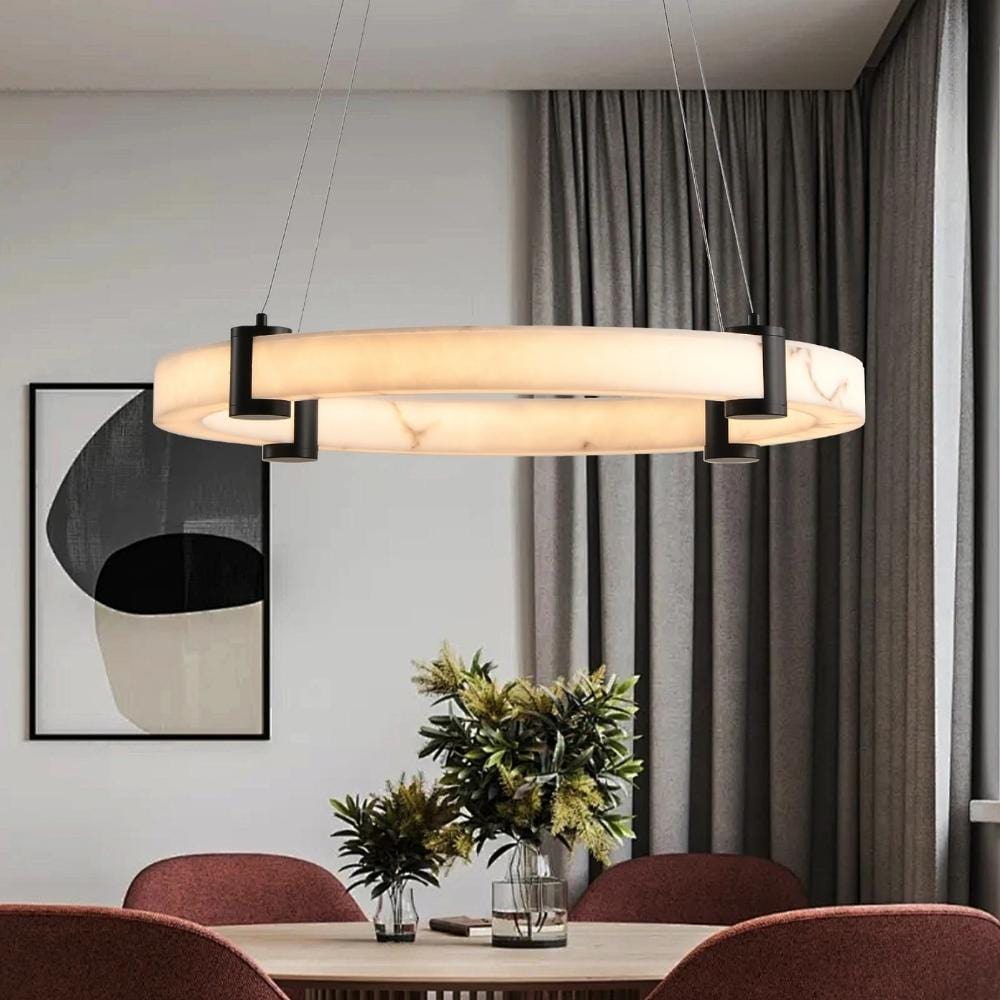
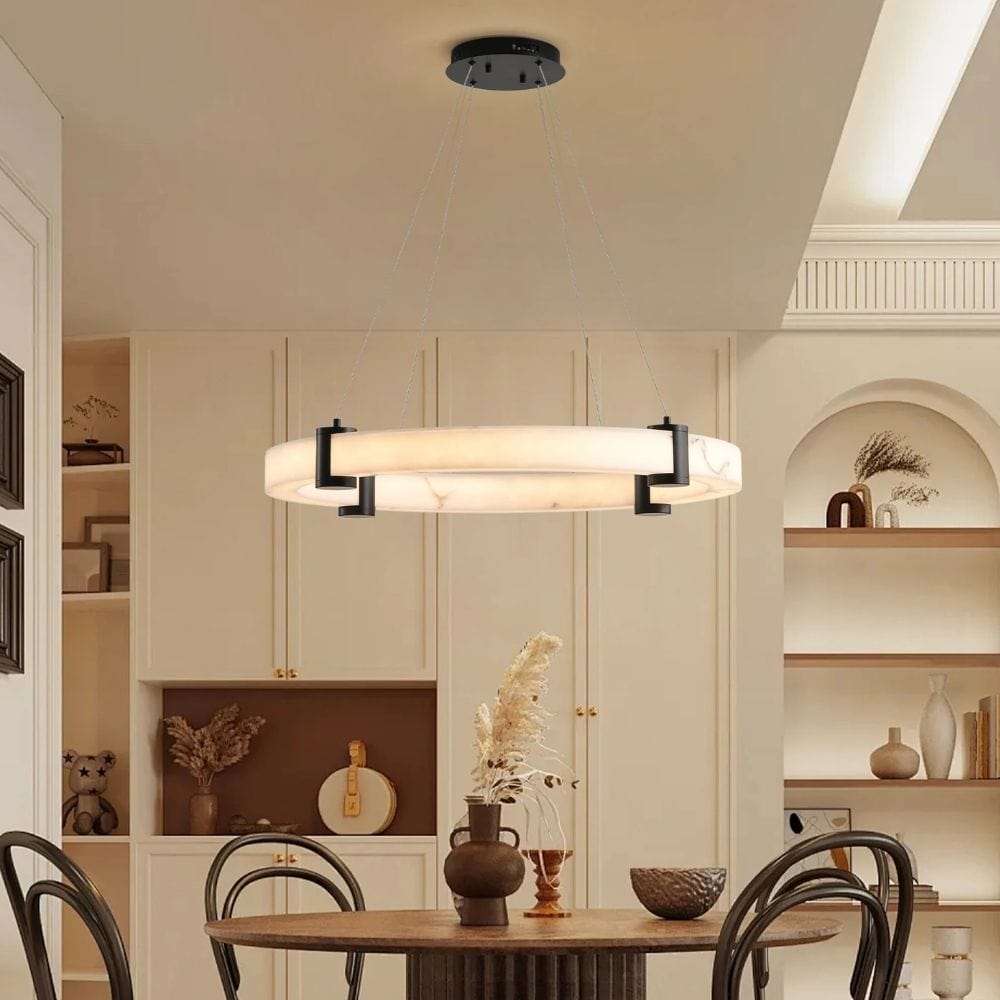
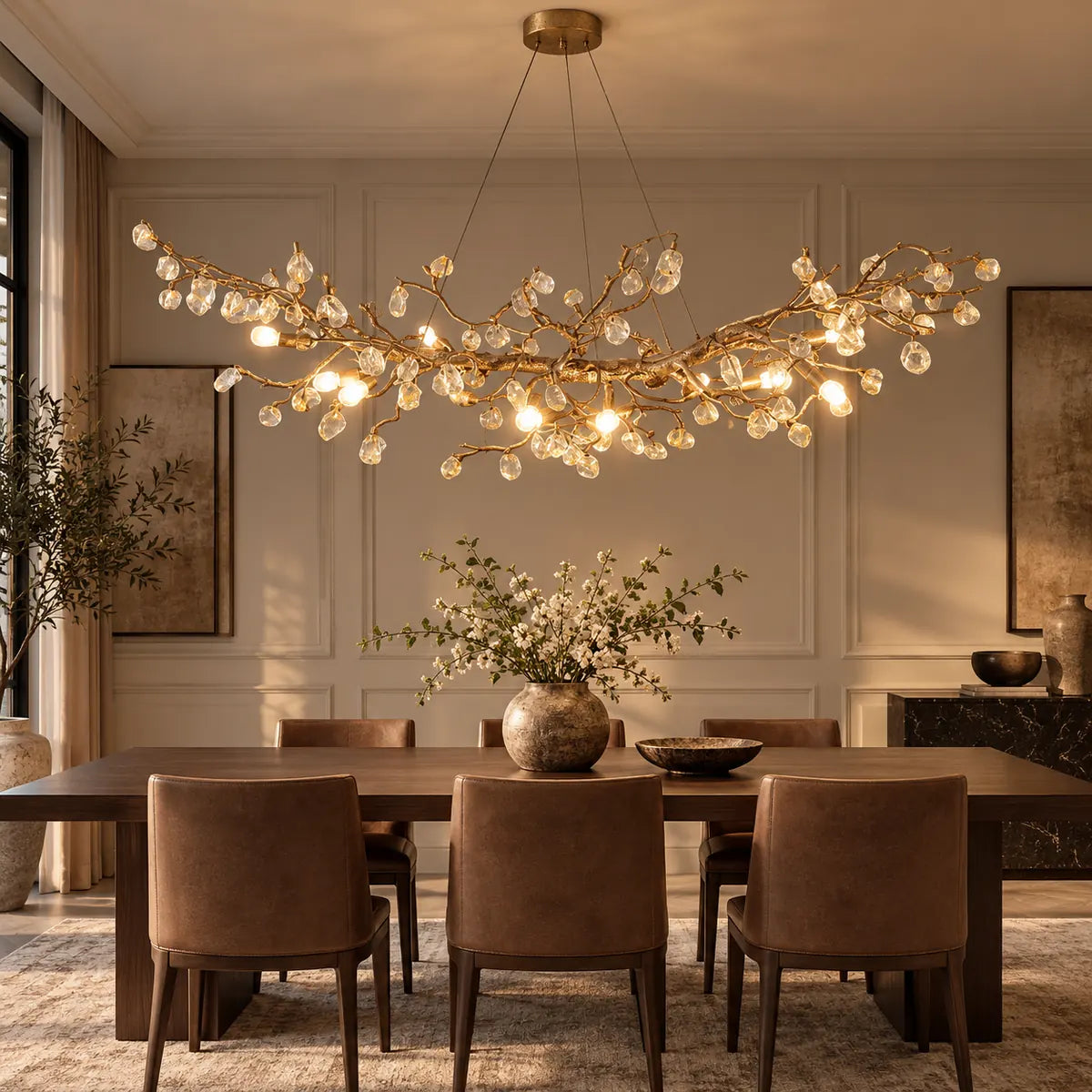
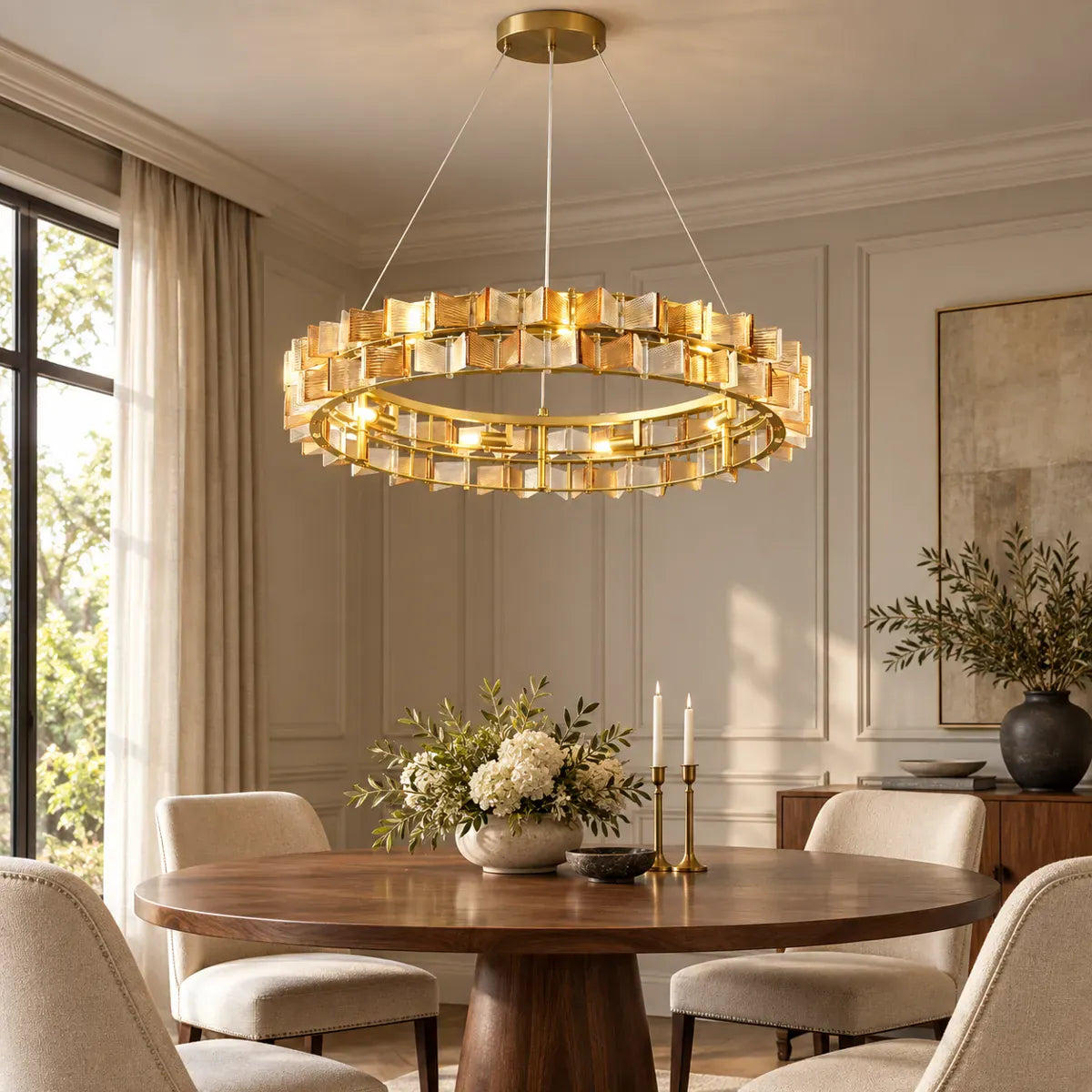
- Modern and contemporary: the lead — soft drums, rings, and clean suspended forms whose quiet geometry matches the room's job
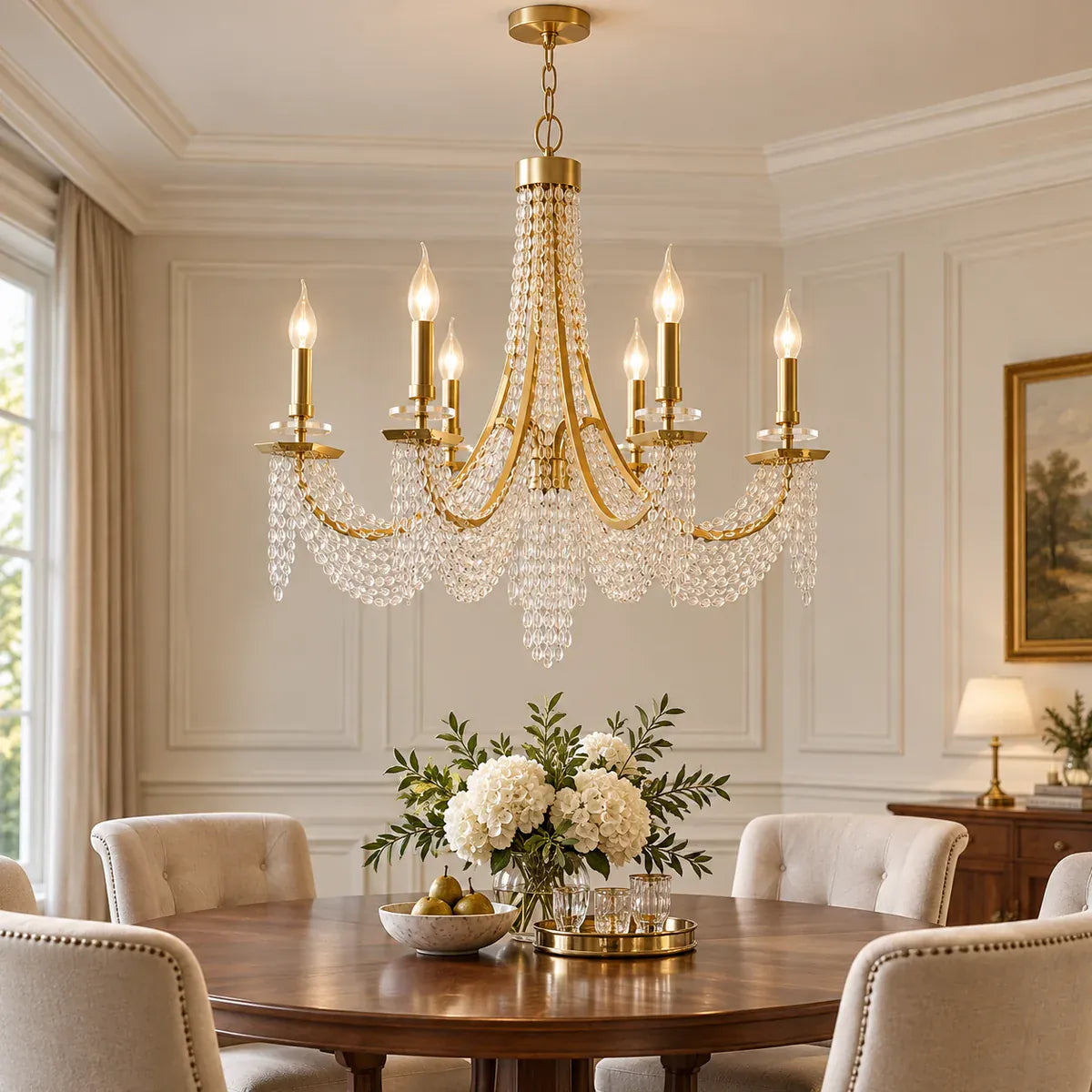
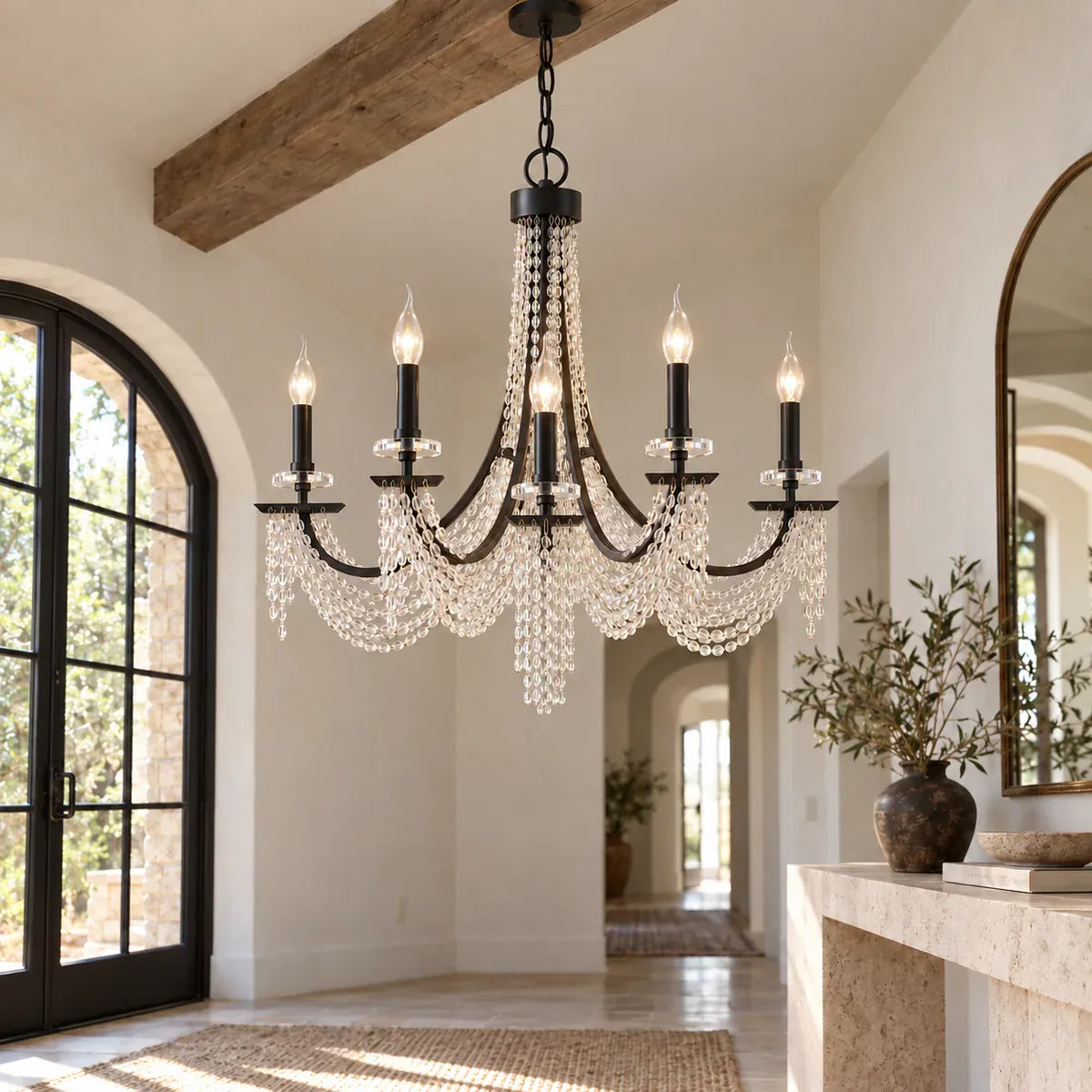
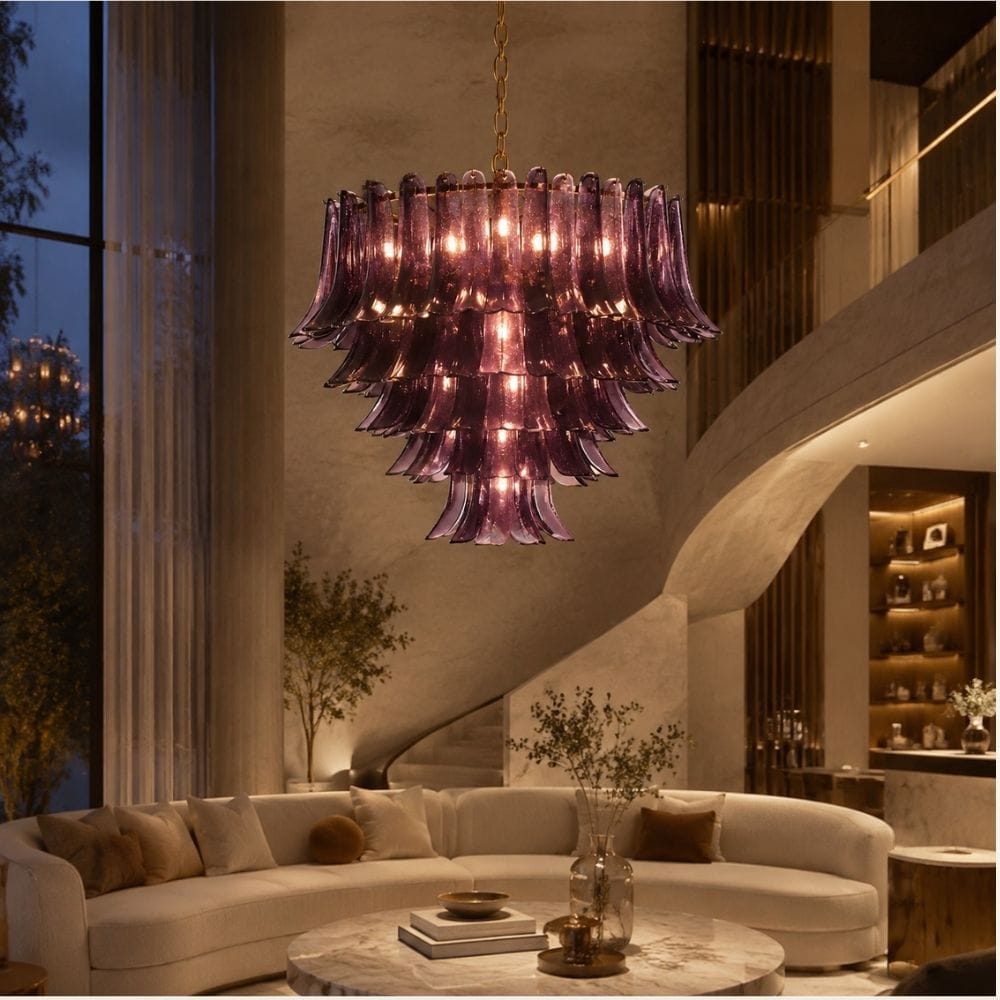
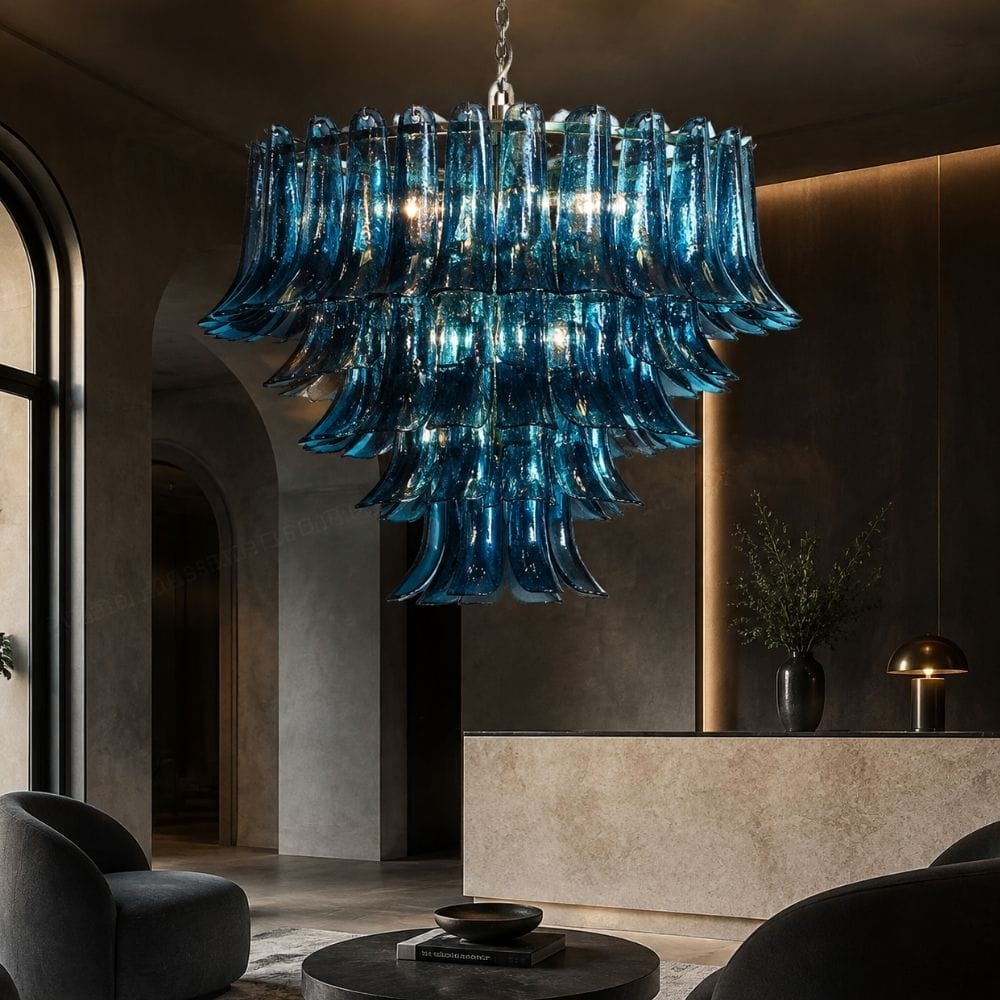
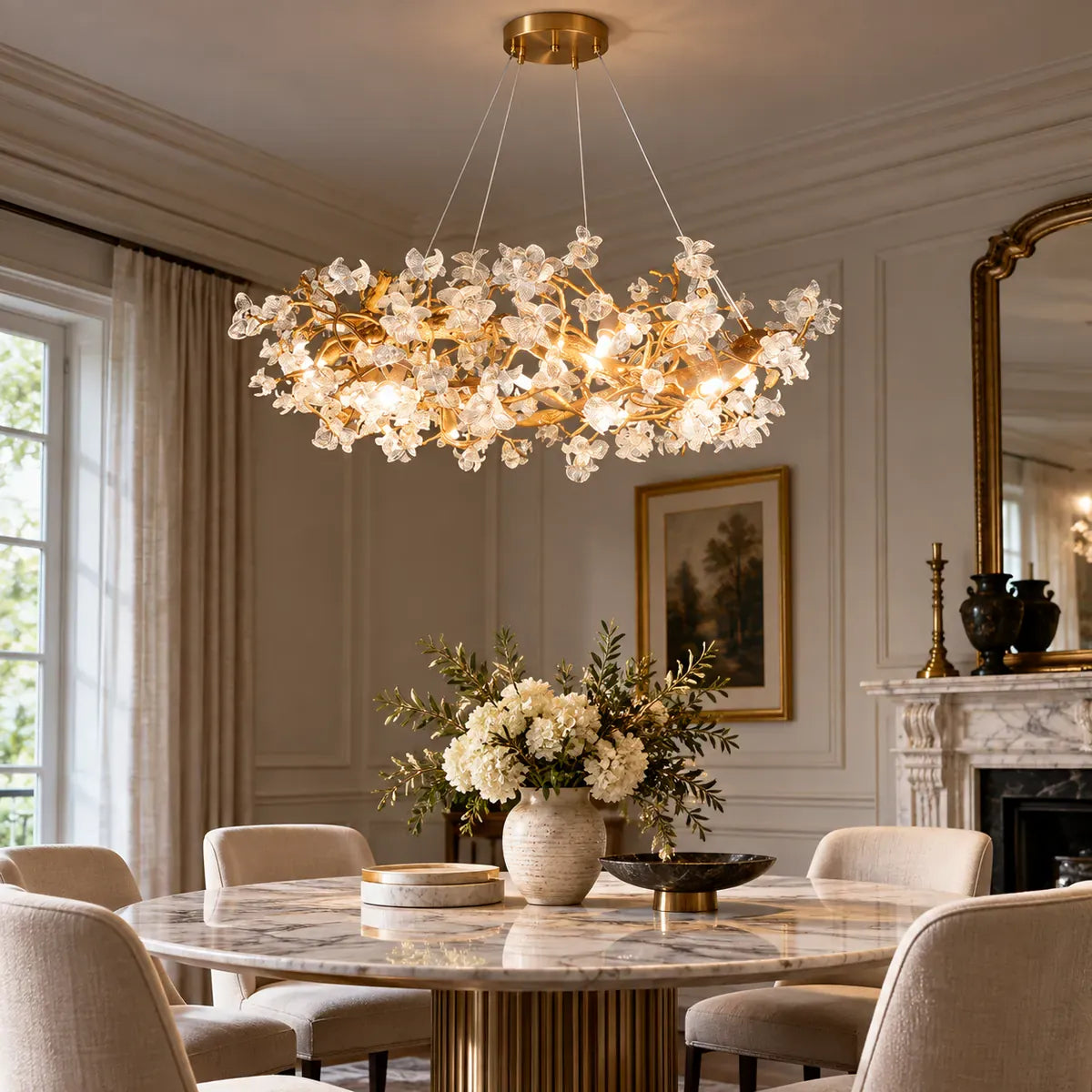
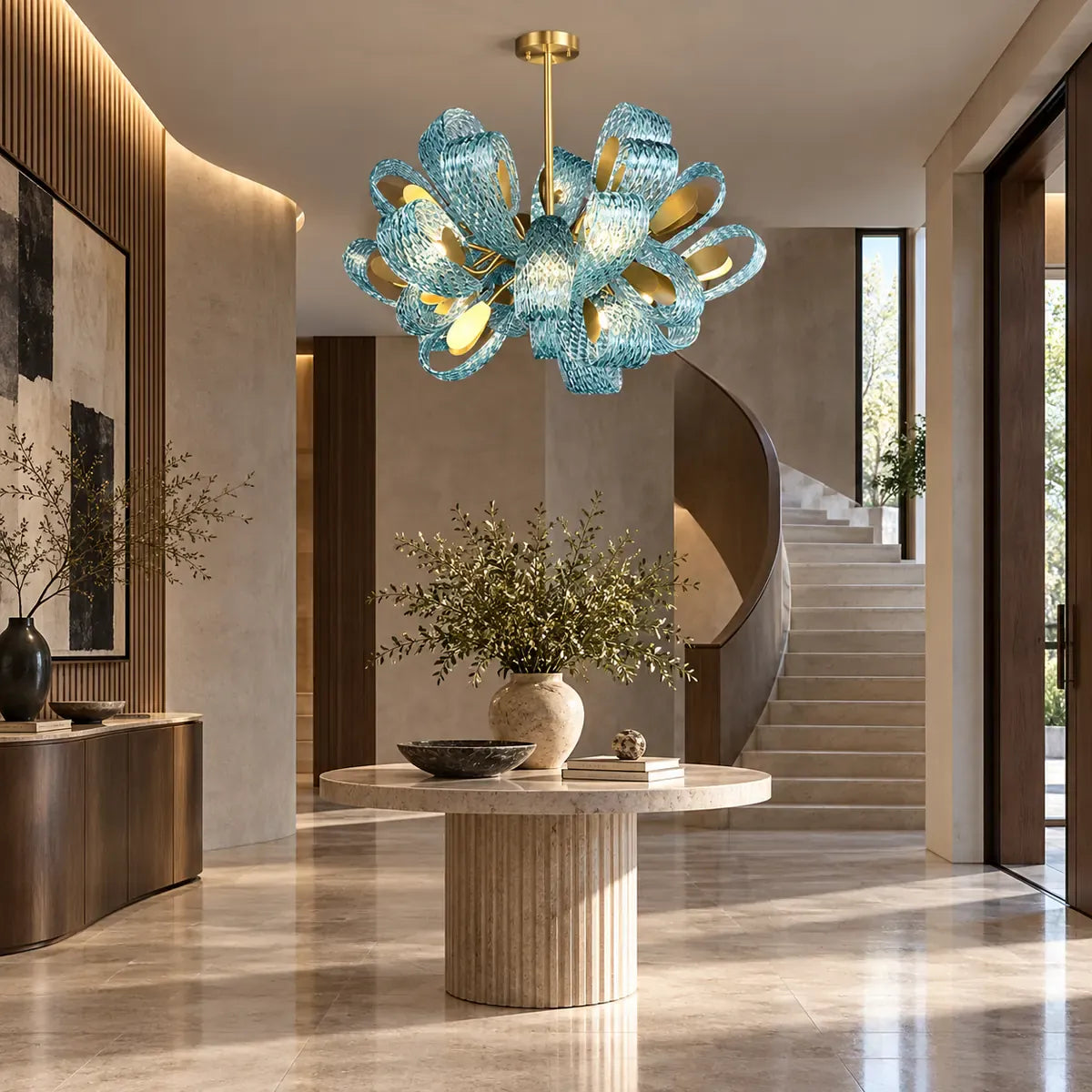
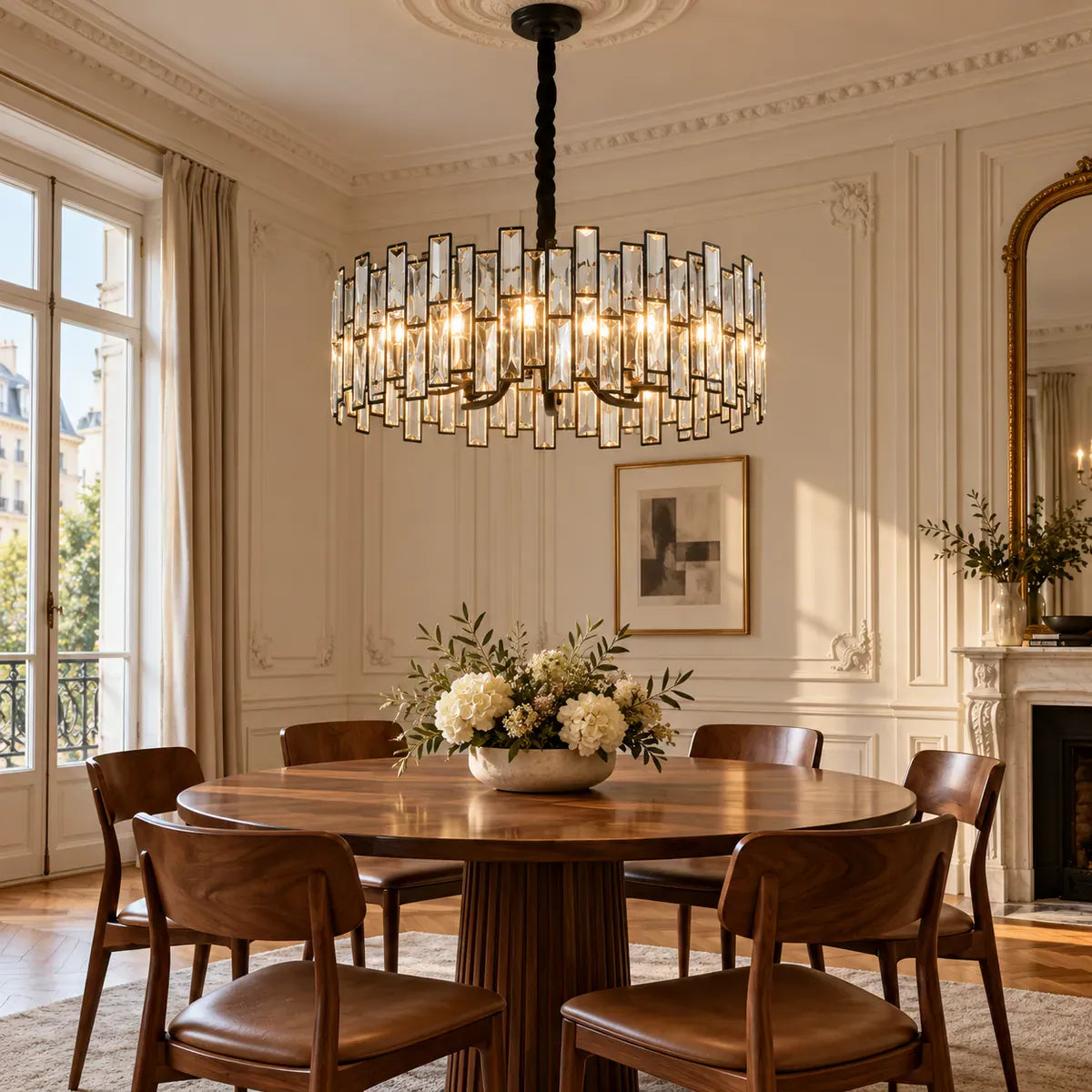
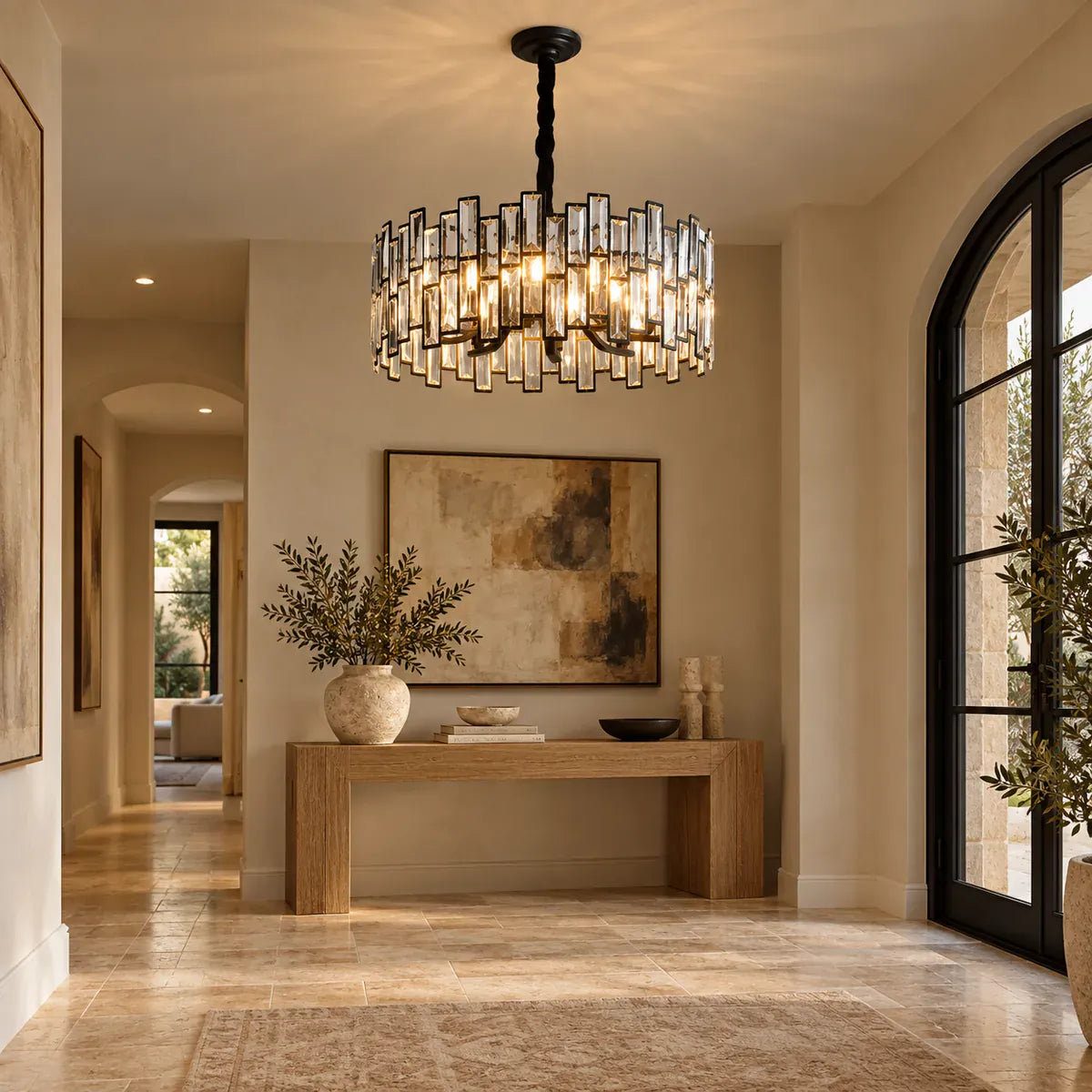
- Crystal, softened: smooth-drop and frosted crystal for the romantic register without the glitter — the wider material family is in the crystal chandeliers collection
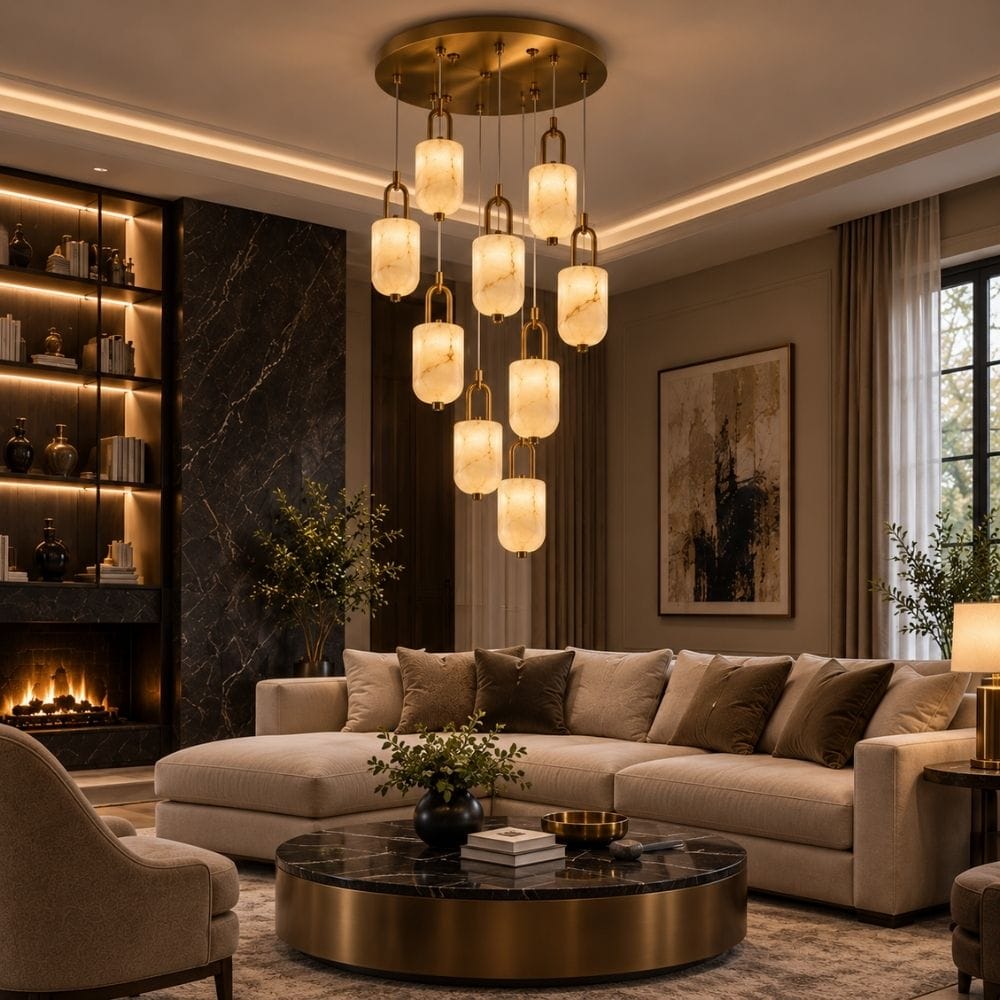
- Soft luxury: alabaster, fabric, and warm brass detailing — the boutique-hotel read that photographs as calm
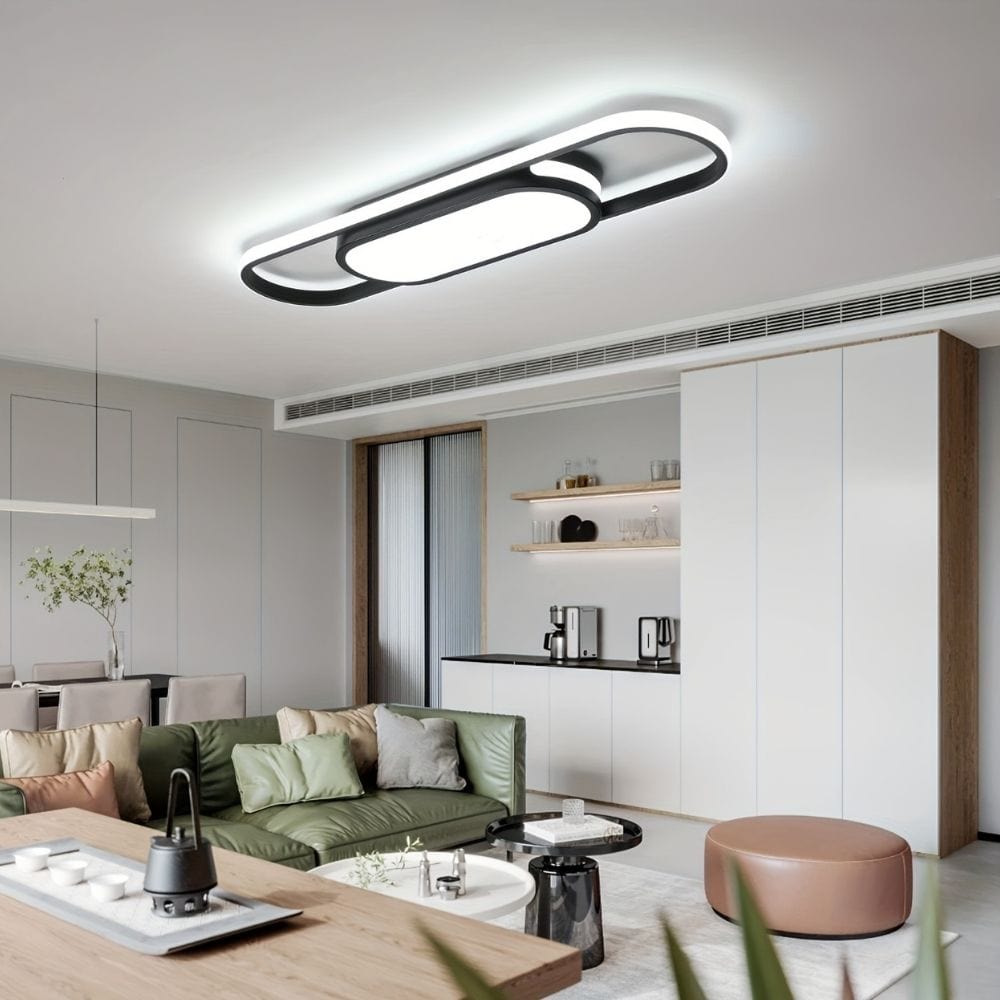
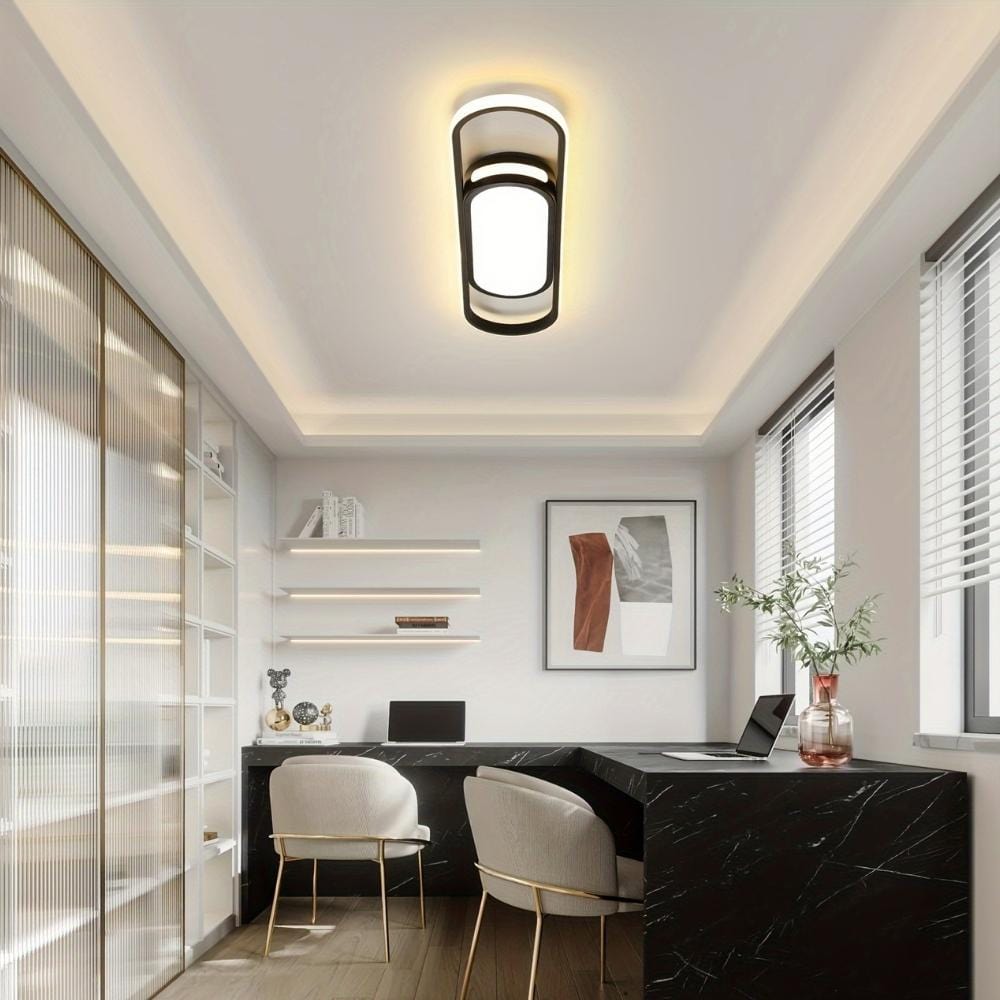
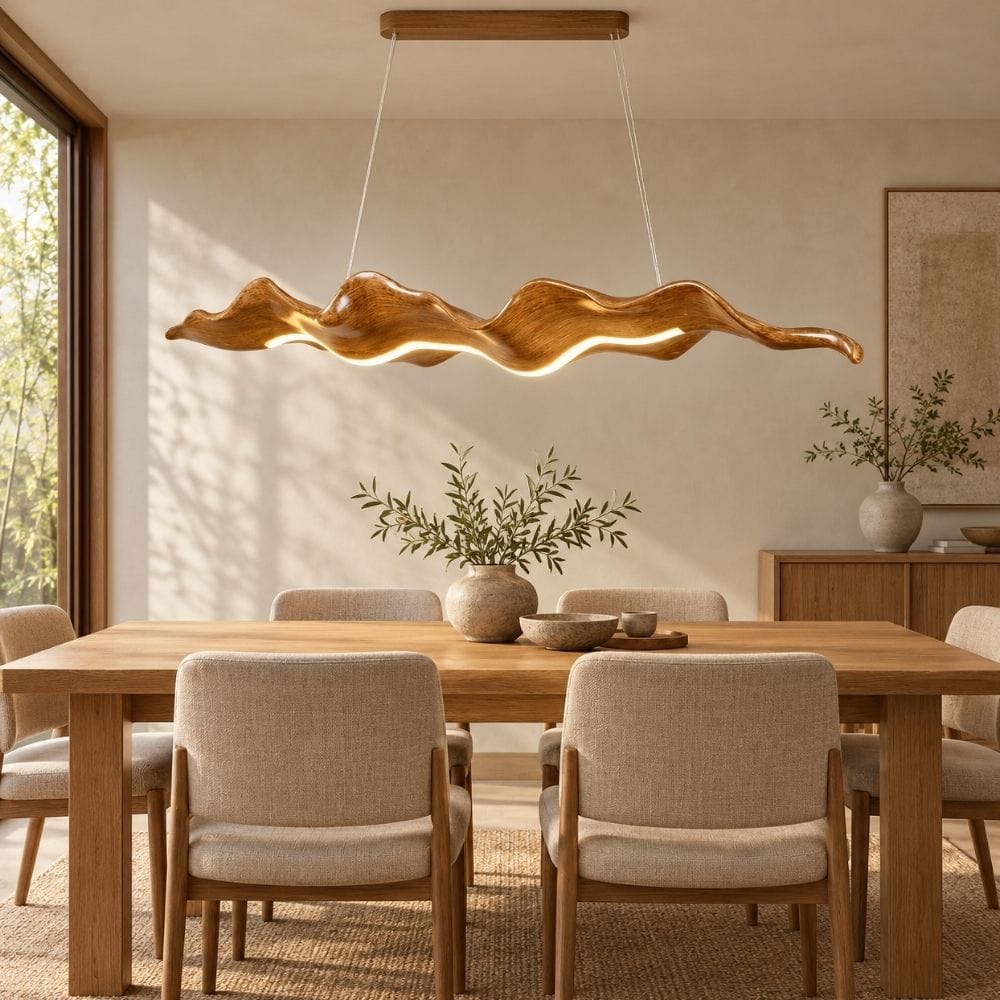
- Minimalist LED: slim integrated designs with the deepest dimming curves, including dim-to-warm models that drift toward candle tones as they lower
Current looks, finishes, and picks by bedroom style are walked through in our bedroom chandelier style guide.
Dimming: The Fixture's Real Job Description
No bedroom chandelier should be specified without its control. The room runs from morning-dressing brightness to a final register low enough to end the day, and one deep, flicker-free dimmer covers the whole curve — reachable from both the door and the bed, the two places the day starts and stops. Warm white 2700-3000K is the room's band; dim-to-warm LED, shifting toward 2200K as it lowers, is the category's best final-hour technology. The rest of the room's plan — bedside layers, ceiling alternatives, and control layout — is its own subject, covered across the bedroom lighting collection.
Related Collections
Build the full room with the bedroom lighting collection for the layered plan, flush mount chandeliers for standard ceilings, and the full chandelier catalog where the statement continues through the home.
Frequently Asked Questions
Can you hang a chandelier over a bed?
Yes — and the placement carries an advantage: no walking clearance applies over the mattress, so leave 6-7 ft between bed and fixture bottom and let the design hang where it shows best. Secure mounting matters as everywhere: reinforced box above roughly 50 lb.
What size chandelier for a bedroom?
Room length plus width in feet equals diameter in inches — most bedrooms land at 20-30". Over the bed, also check proportion against the mattress: one-quarter to one-third of the bed's width sits right.
What styles work best in a bedroom?
Diffused, soft-material designs — fabric drums, frosted glass, alabaster, smooth-drop crystal — that look their best dimmed to 20-30%, which is where a bedroom fixture lives most of its hours.
Is crystal too much for a bedroom?
Heavily faceted crystal can read restless at close range; smooth-drop and frosted crystal keeps the romantic register while glowing rather than glittering. The dimmed test decides.
What about a standard 8 ft ceiling?
Take the statement in flush or semi-flush form — the same design language at 6-12" of depth, keeping the room's headroom open.
Do I need a dimmer?
Effectively yes — deep, flicker-free dimming from dressing-bright to wind-down-low is the fixture's real job, controlled from both the door and the bed. Dim-to-warm LED is the room's best final-hour technology.