



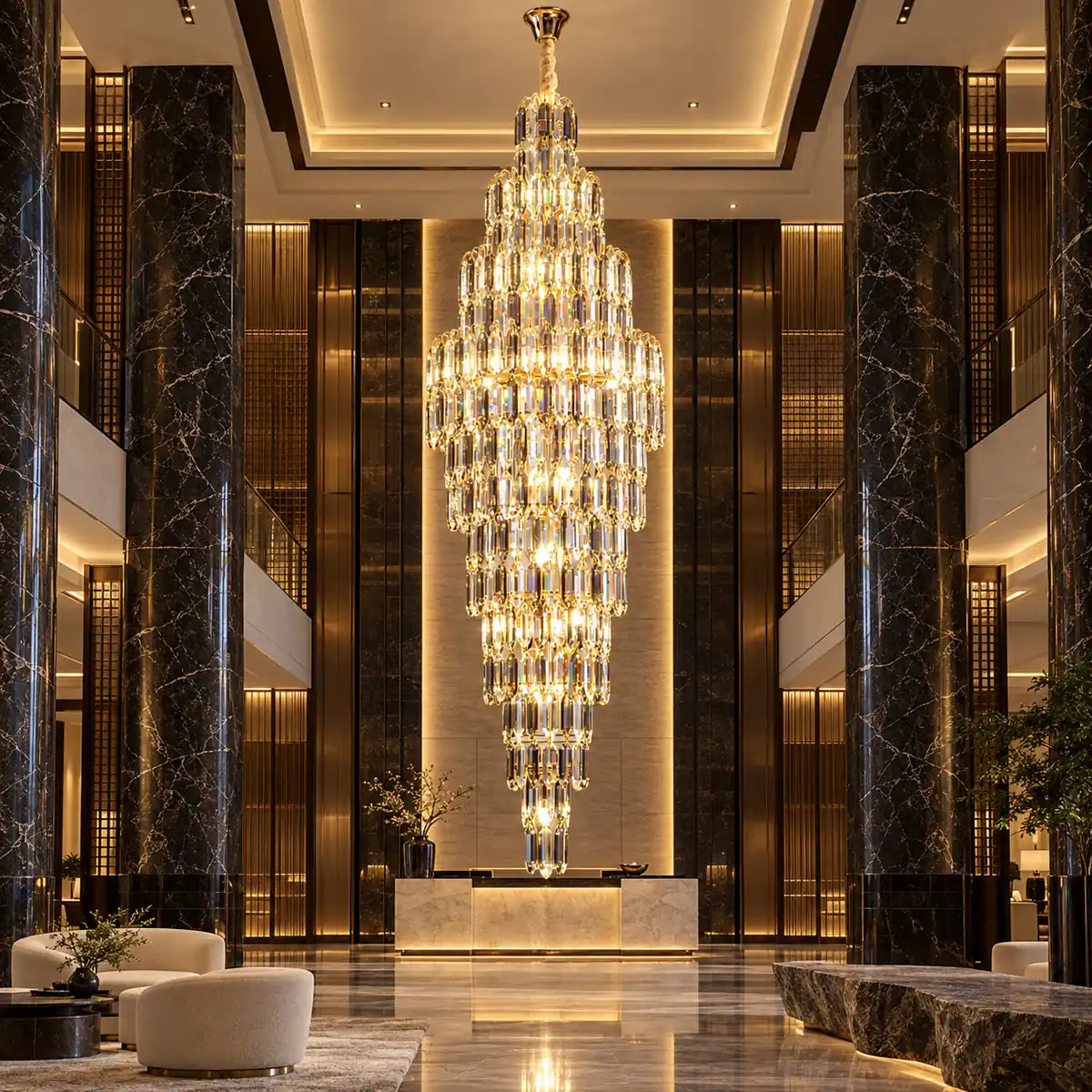
Why Crystal Still Rules the Statement
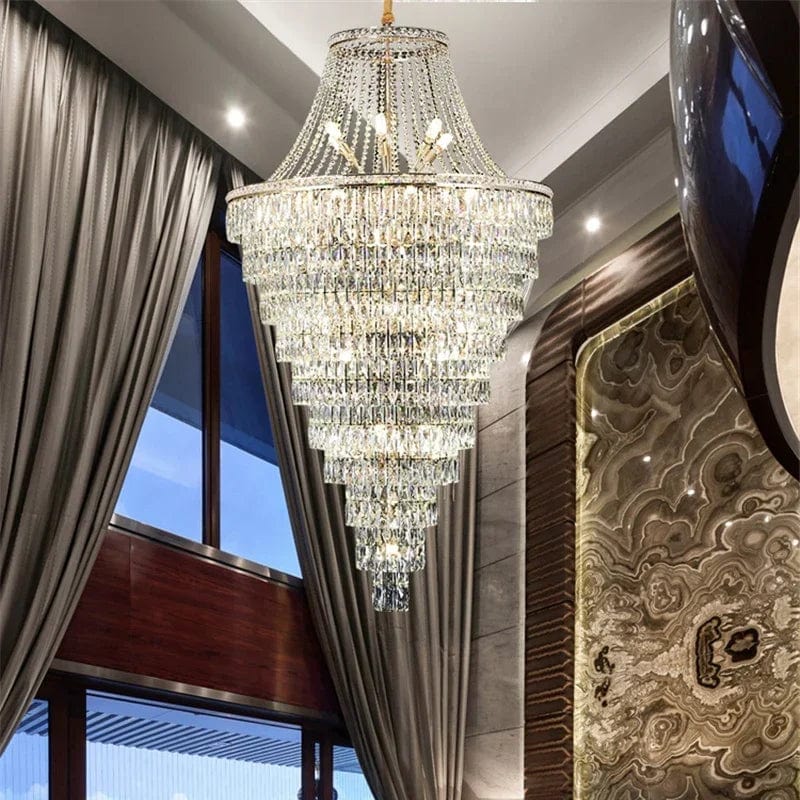
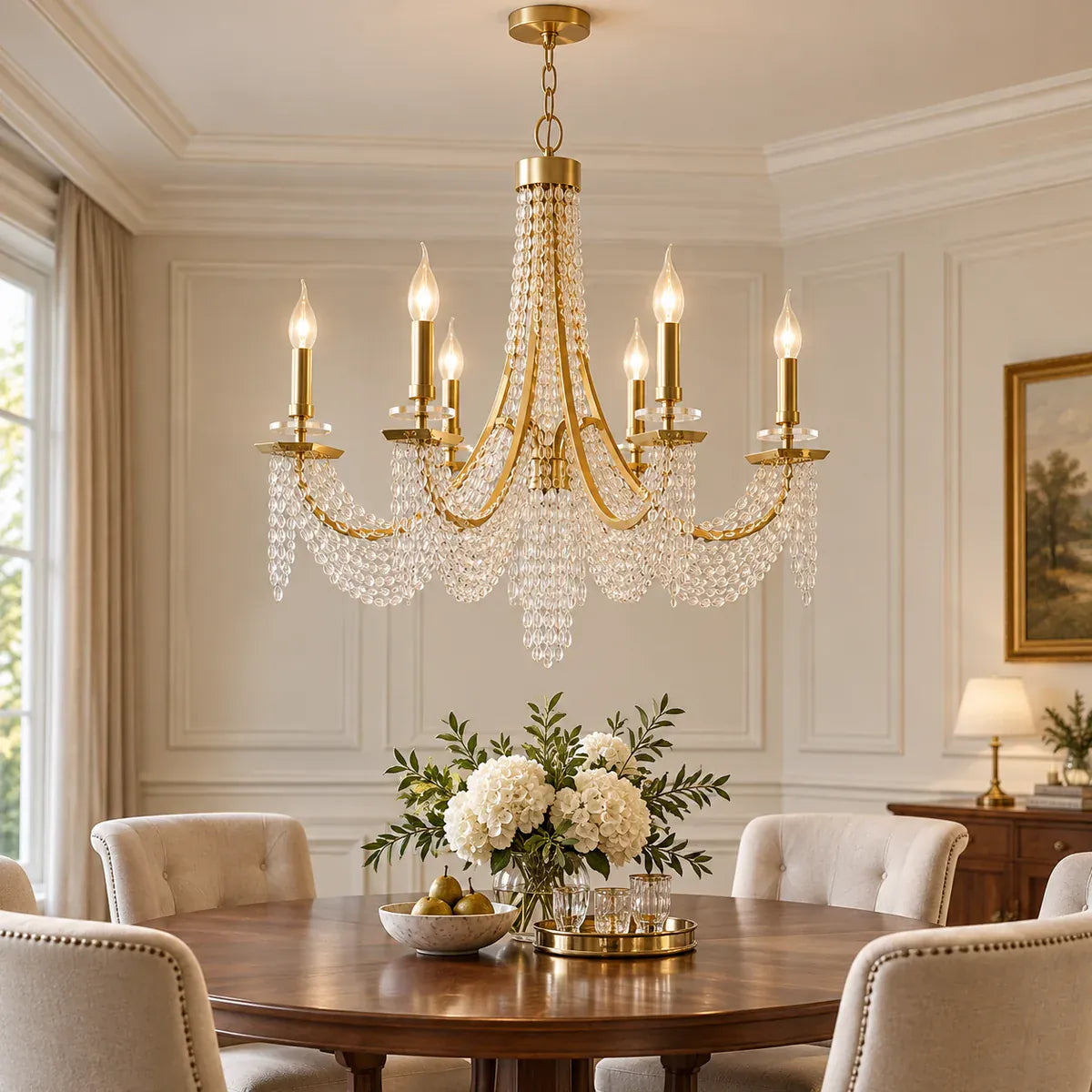
Every few years the question resurfaces — is crystal still in style? — and the market keeps answering the same way: no other material does what crystal does. Glass transmits light; this material performs it, splitting white light into moving color and multiplying every lumen into sparkle that shifts as you cross the room. What changed is not the material but the frame around it: today's designs put the sparkle on modern architecture — rings, lines, clean geometry — rather than tiered period silhouettes, which is exactly why the material reads current again. The full trend answer, with the evidence, is in our crystal trends article.
Real Crystal, and How to Know It
- K9 optical crystal: the modern standard — high lead-free clarity, precision faceting, and the refraction that defines the material; the workhorse of designer lighting
- Cut and faceted elements: the quality tell is the edge — machine-cut elements carry crisp, mirror-polished facets, while molded acrylic shows soft seams and rounded edges
- The hand test: the real material runs heavier and colder to the touch than acrylic, and throws prismatic color in sunlight where plastic throws plain white glare
- Rhinestone and acrylic lookalikes: lighter, warmer, seamed — fine for costume sparkle, wrong for a fixture bought to perform for decades
The complete material walkthrough — K9, cut crystal, prisms, and the quality grades between — is in our crystal types and quality guide.
What "Modern Crystal" Actually Means
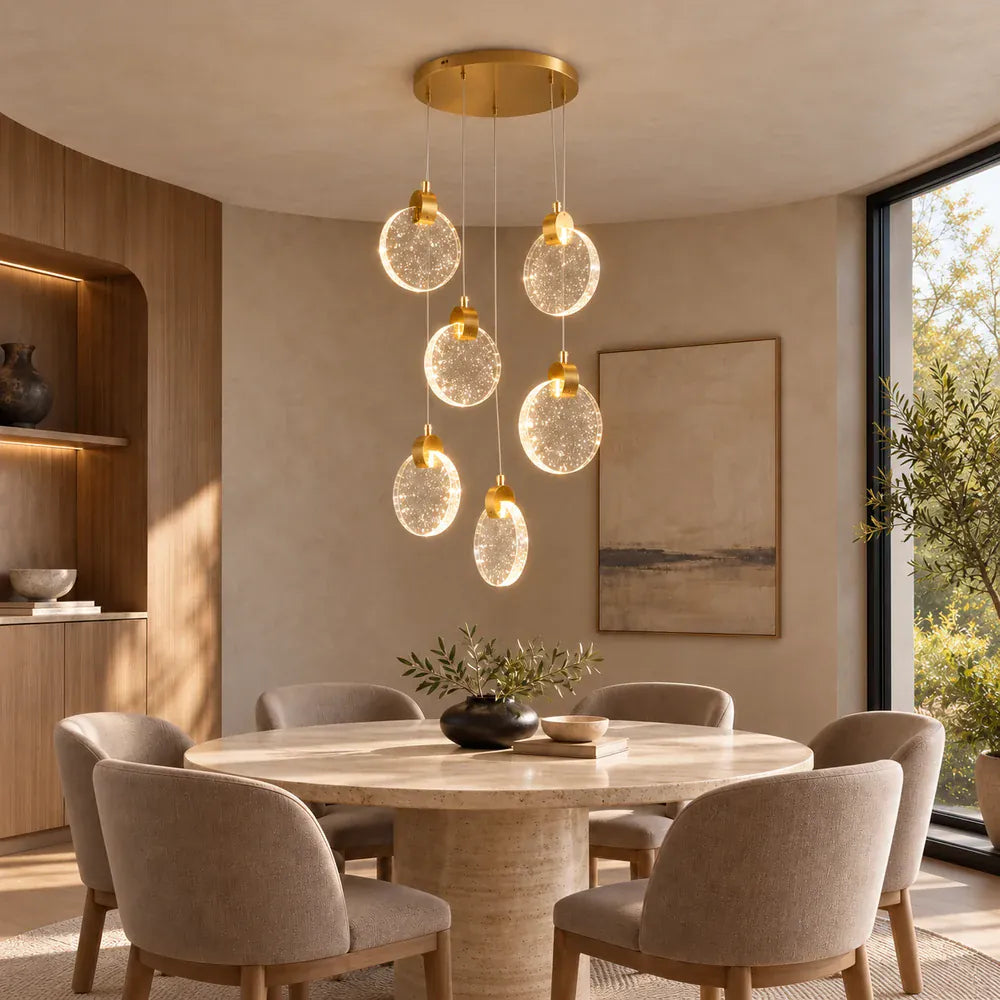
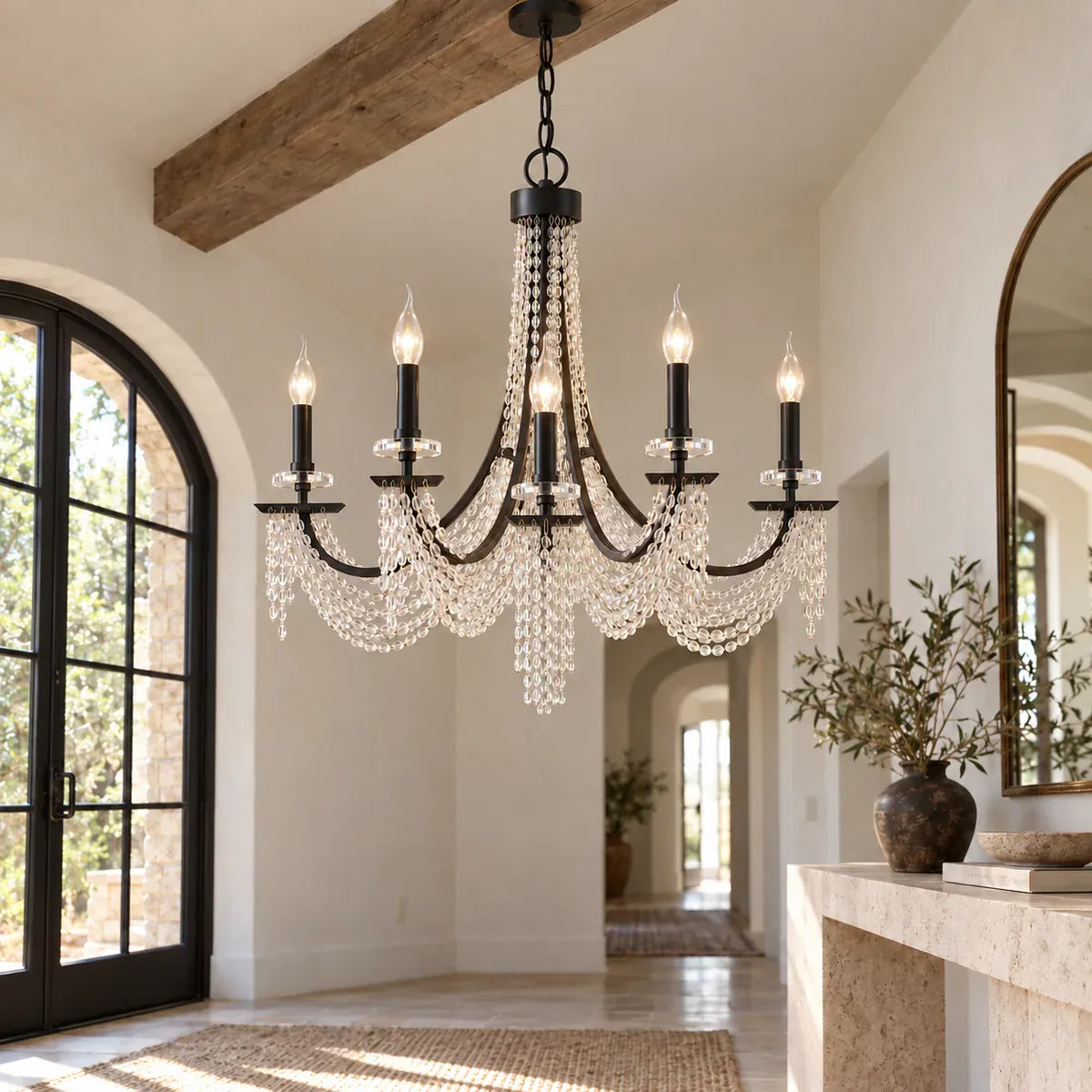
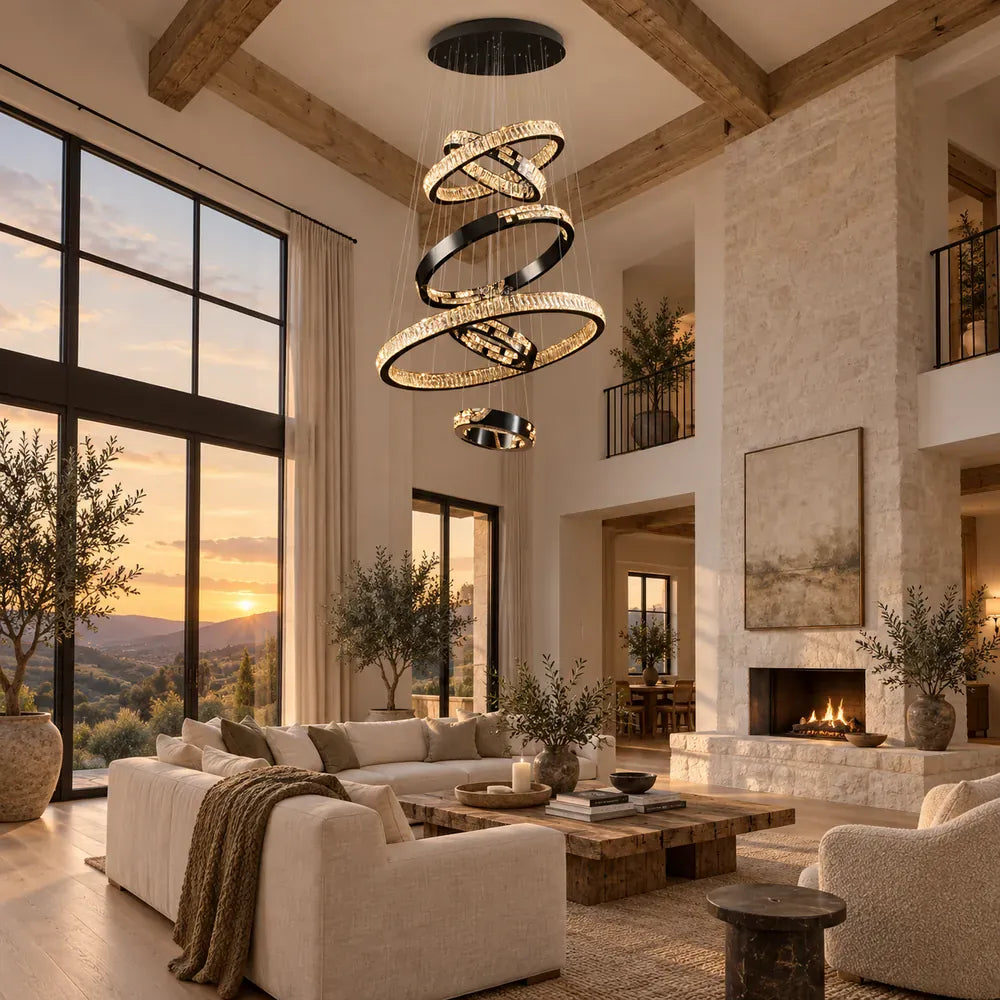
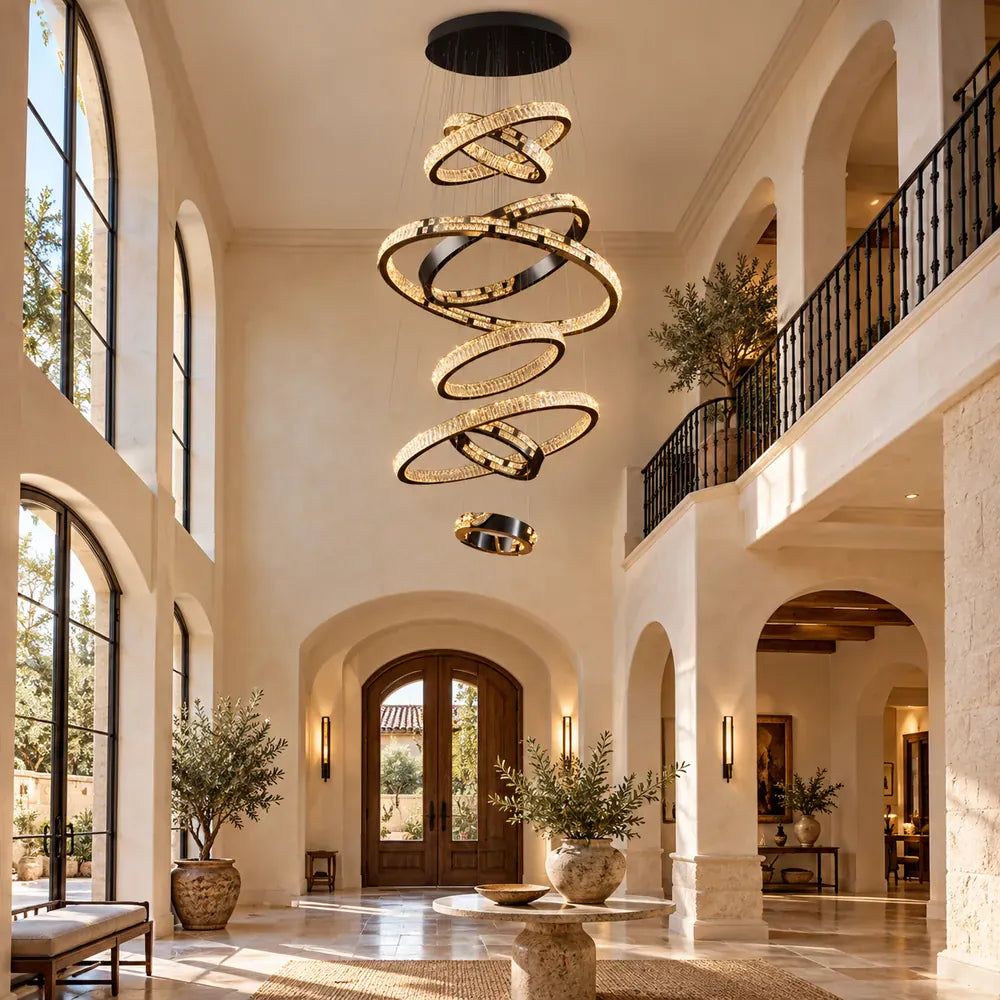
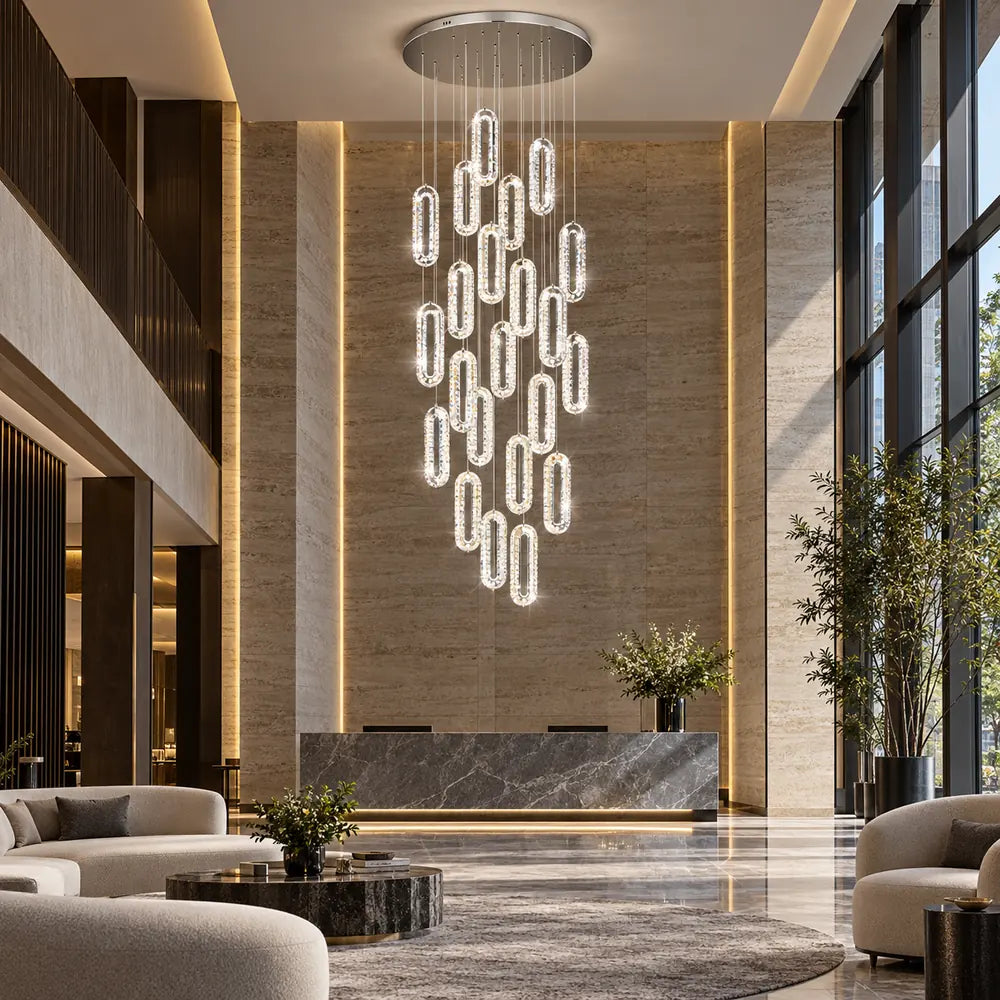
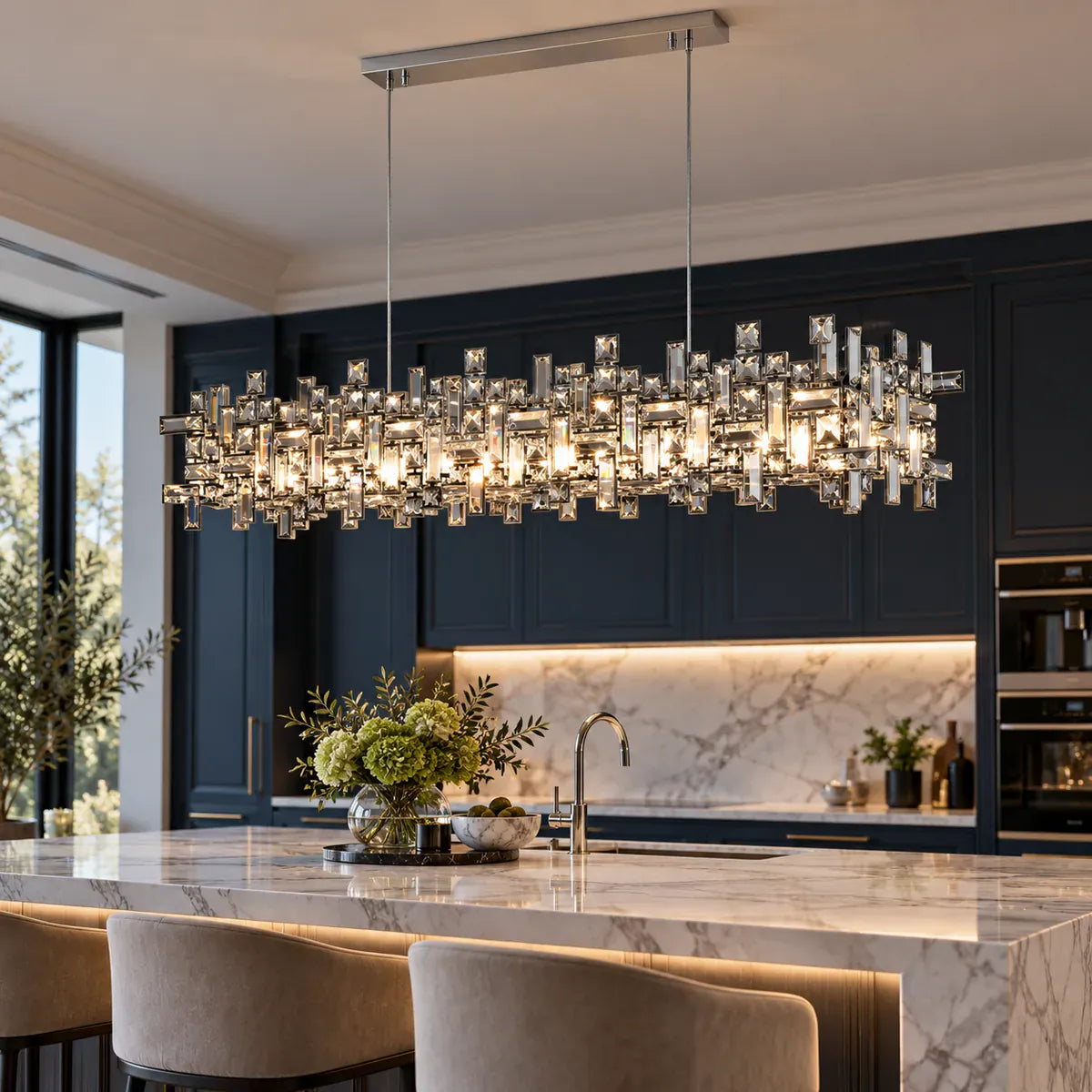
The category's most-searched phrase names a specific design position: crystal as an element, not a costume. The modern version carries its sparkle on disciplined architecture — smooth drops along a matte black ring, beads strung on a linear bar, sparse faceted elements inside clean geometry — so the material performs without the period baggage. The proportion is the tell: where a traditional design is sparkle with a frame hidden inside, a modern one is a frame wearing exactly as much of it as the room needs. The styling logic across the contemporary range is walked through in our modern crystal design guide.
Unique and Designer Crystal
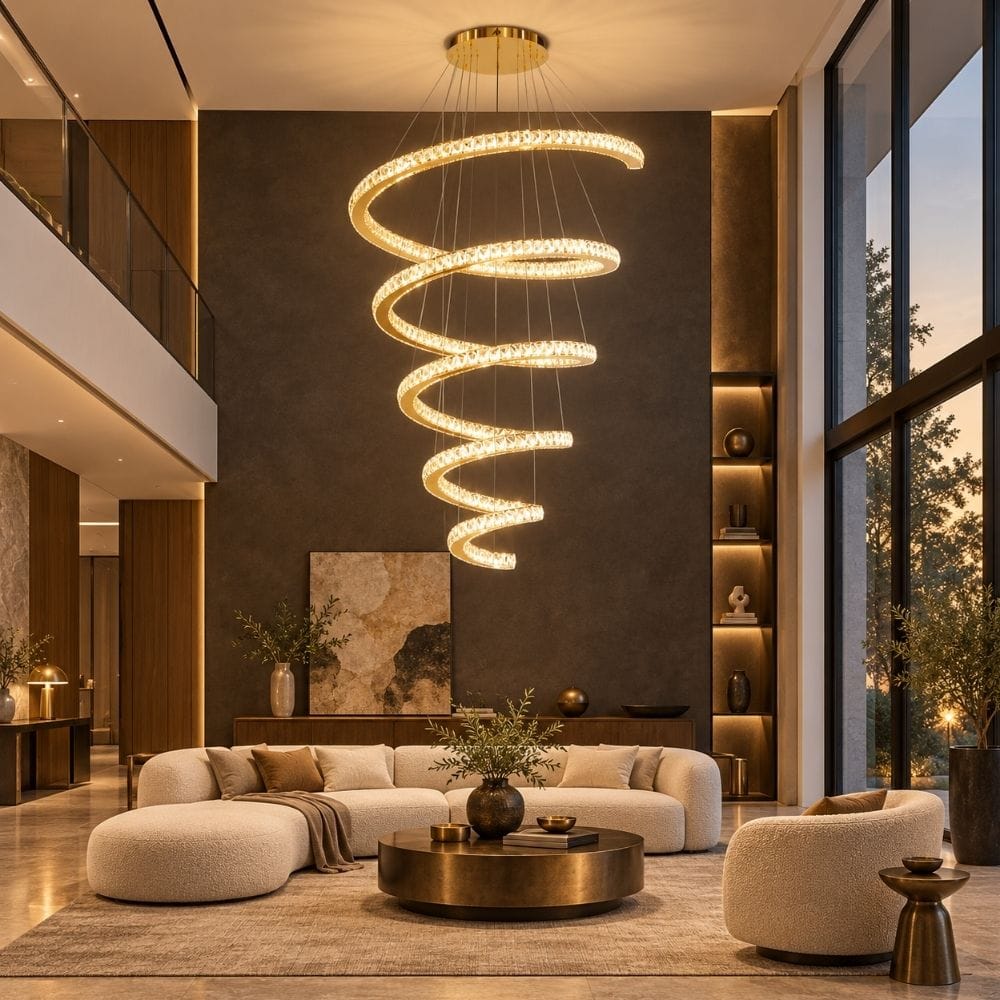
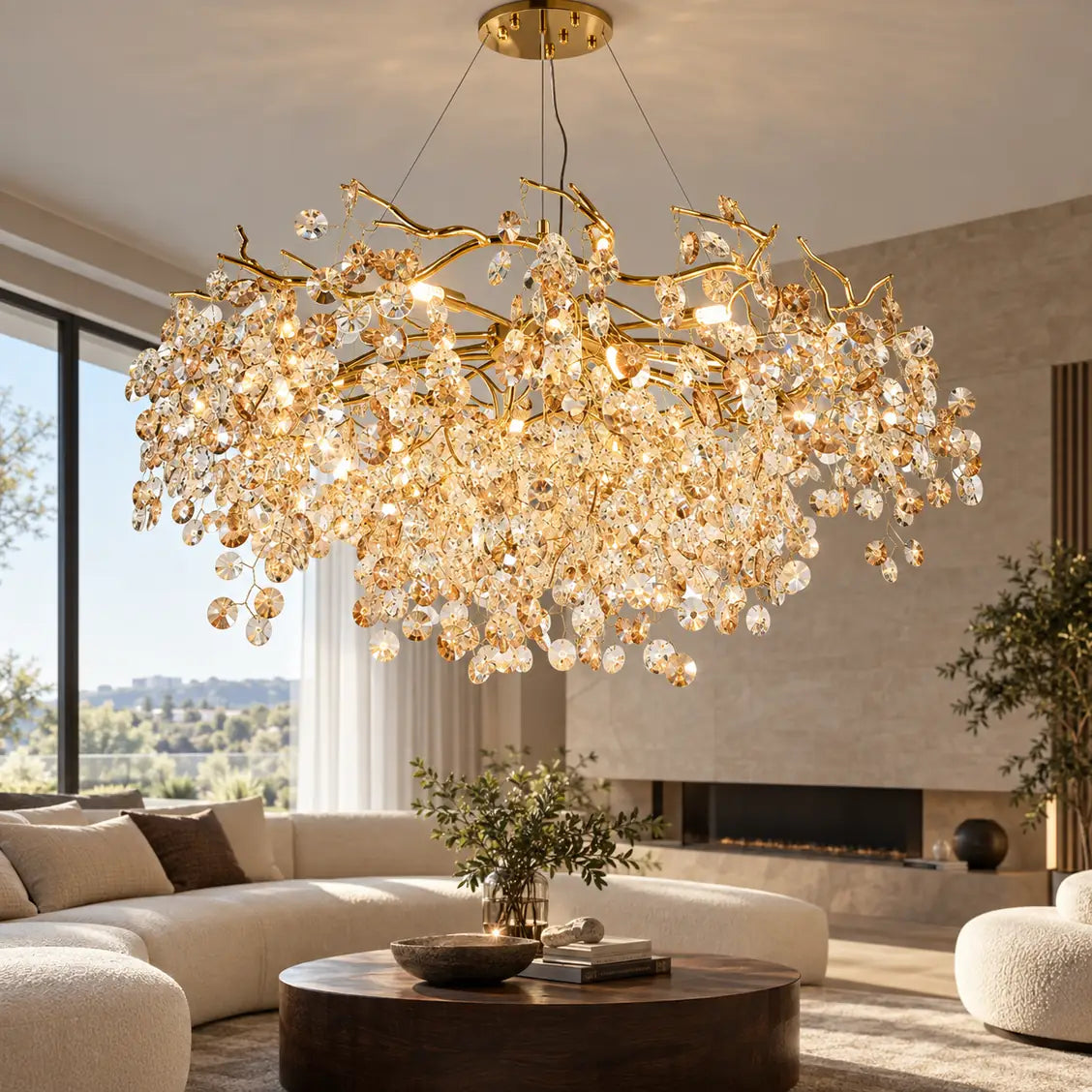
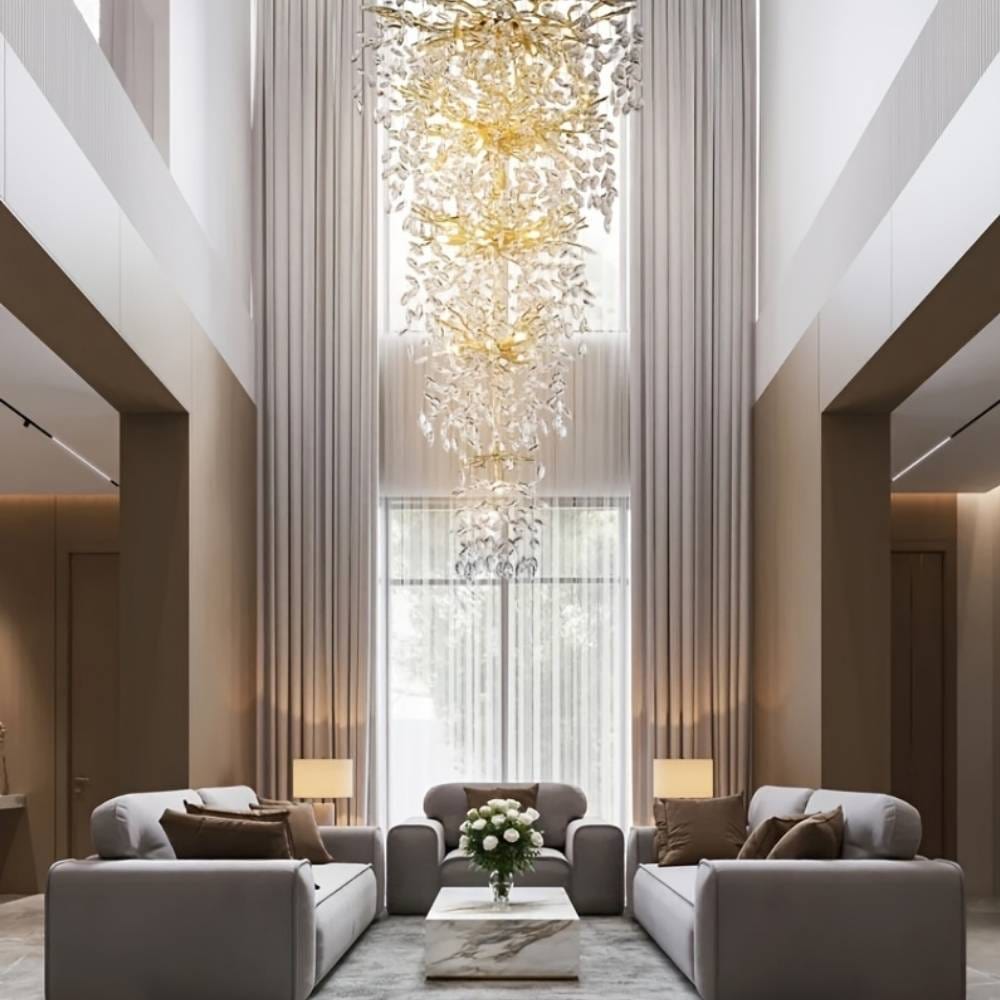
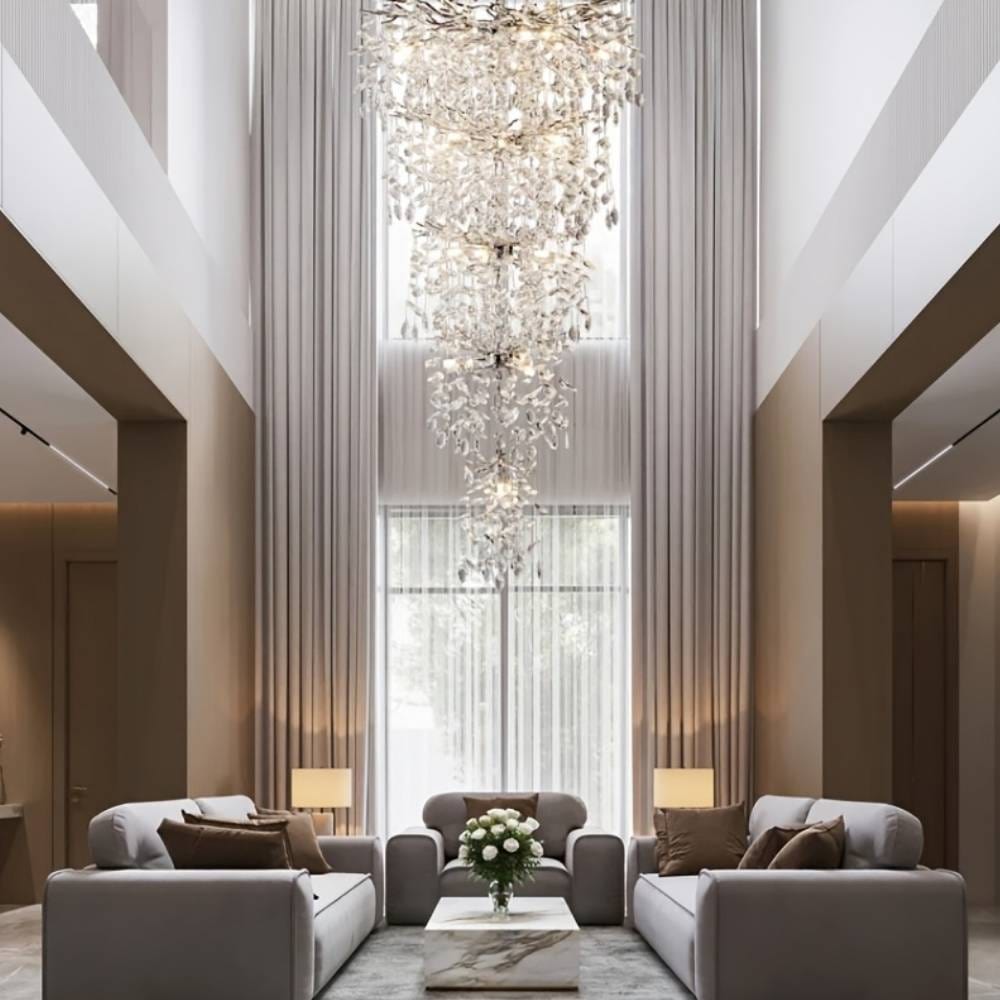
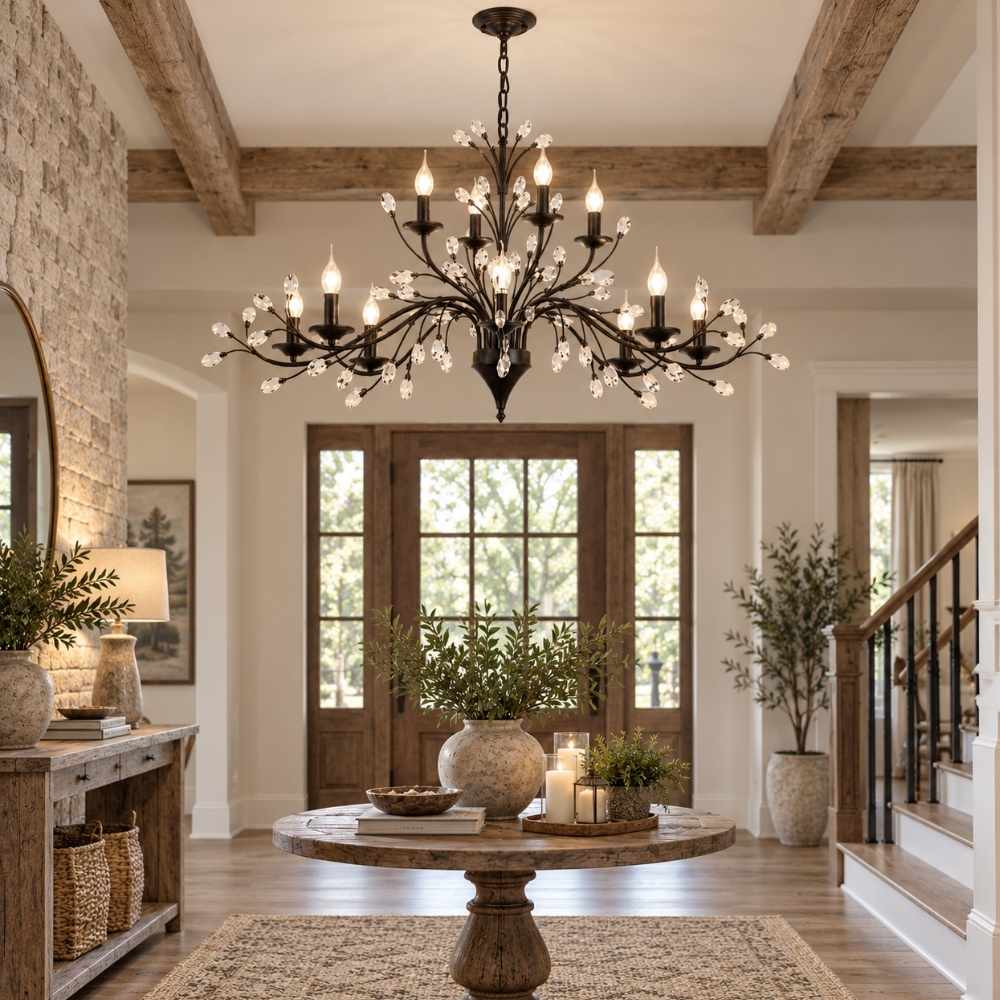
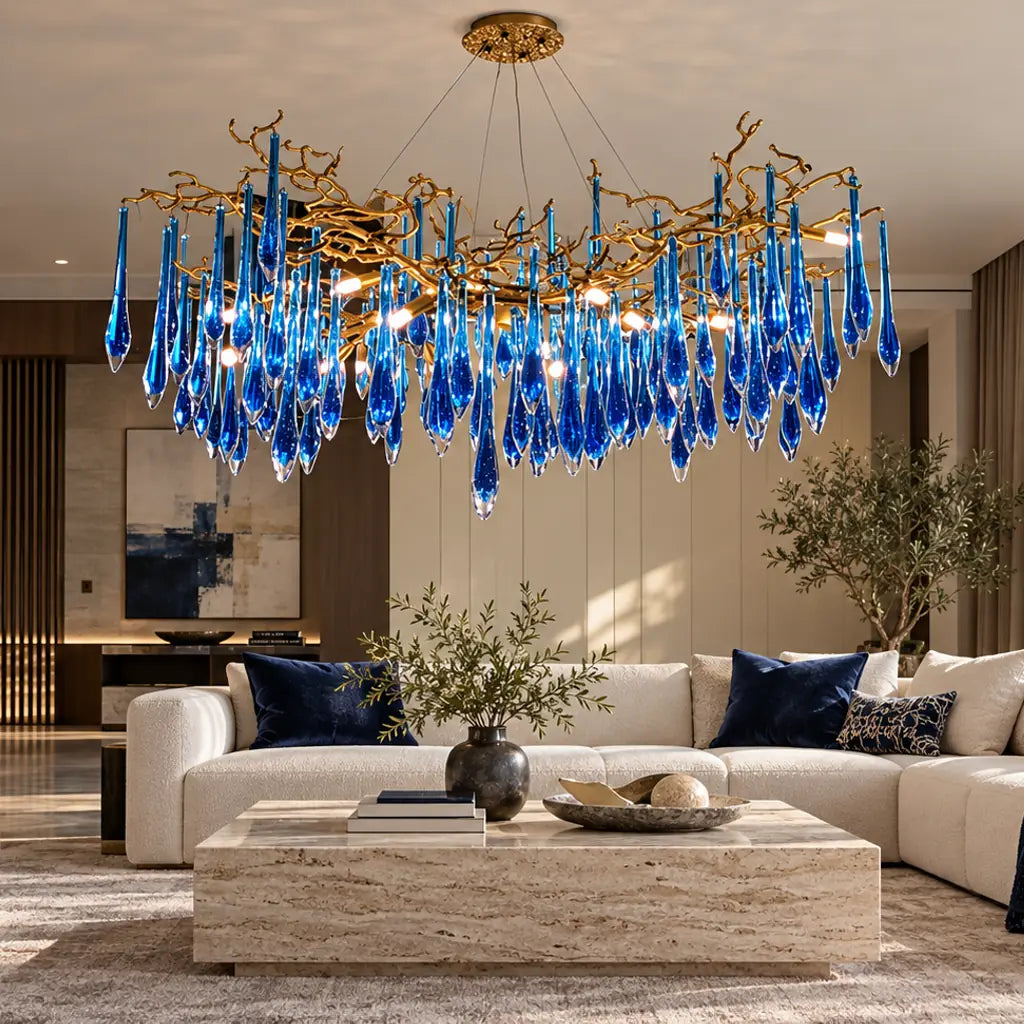
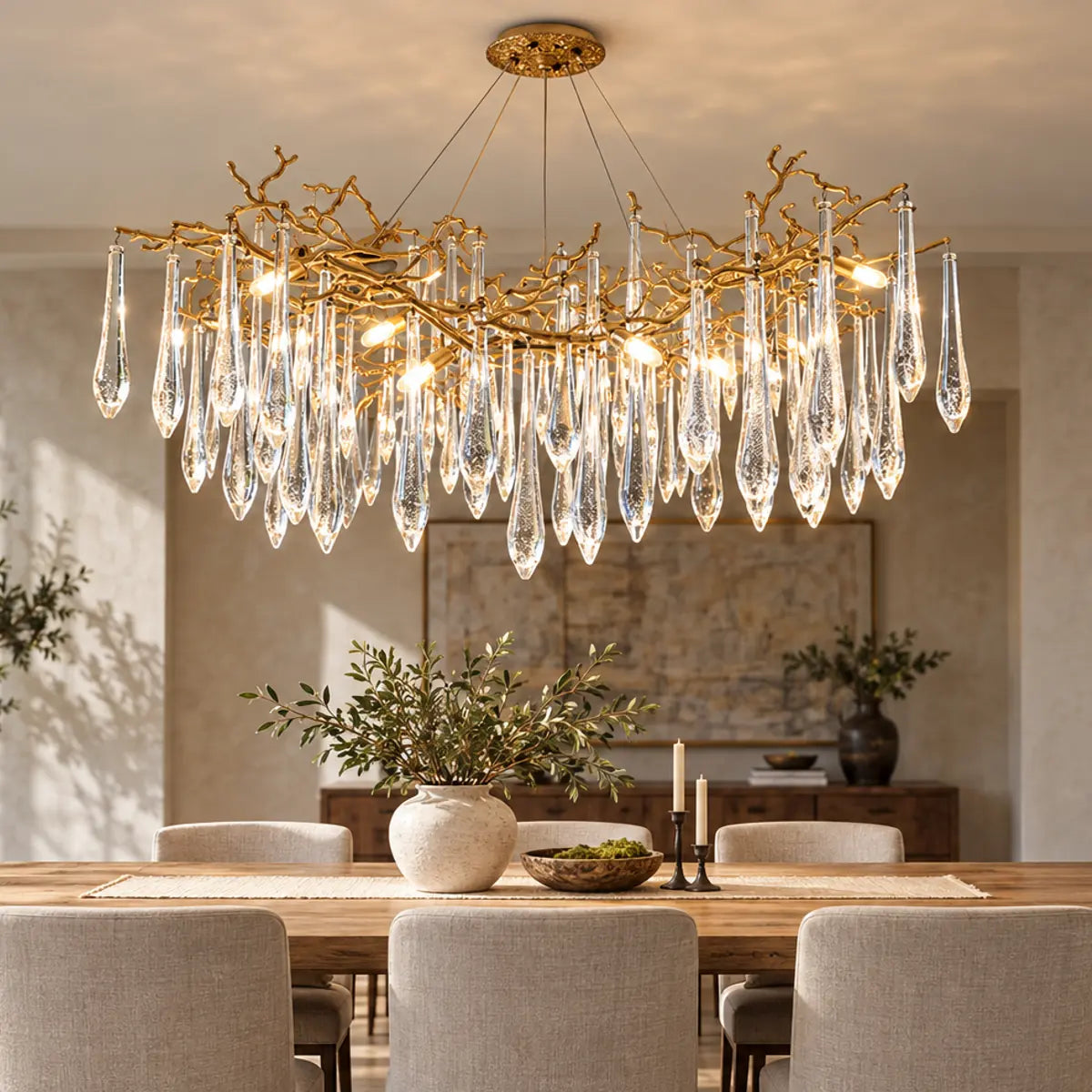
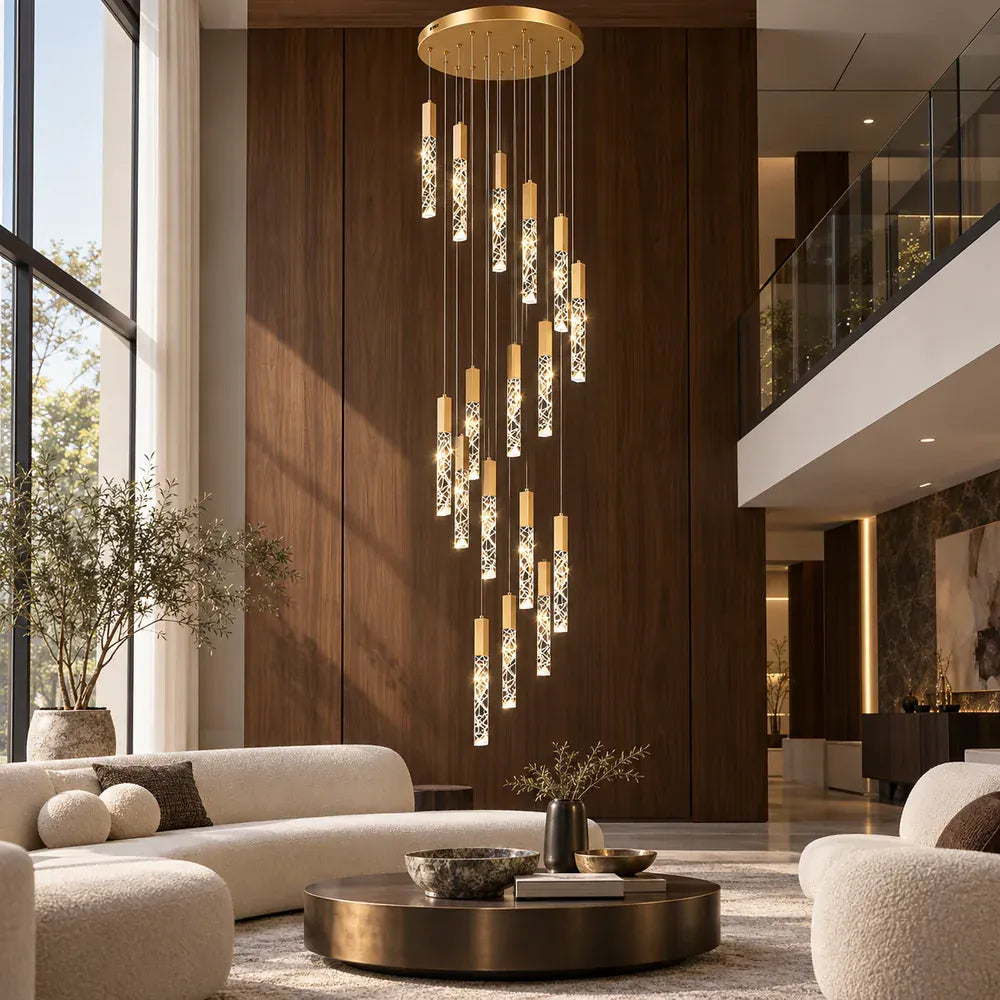
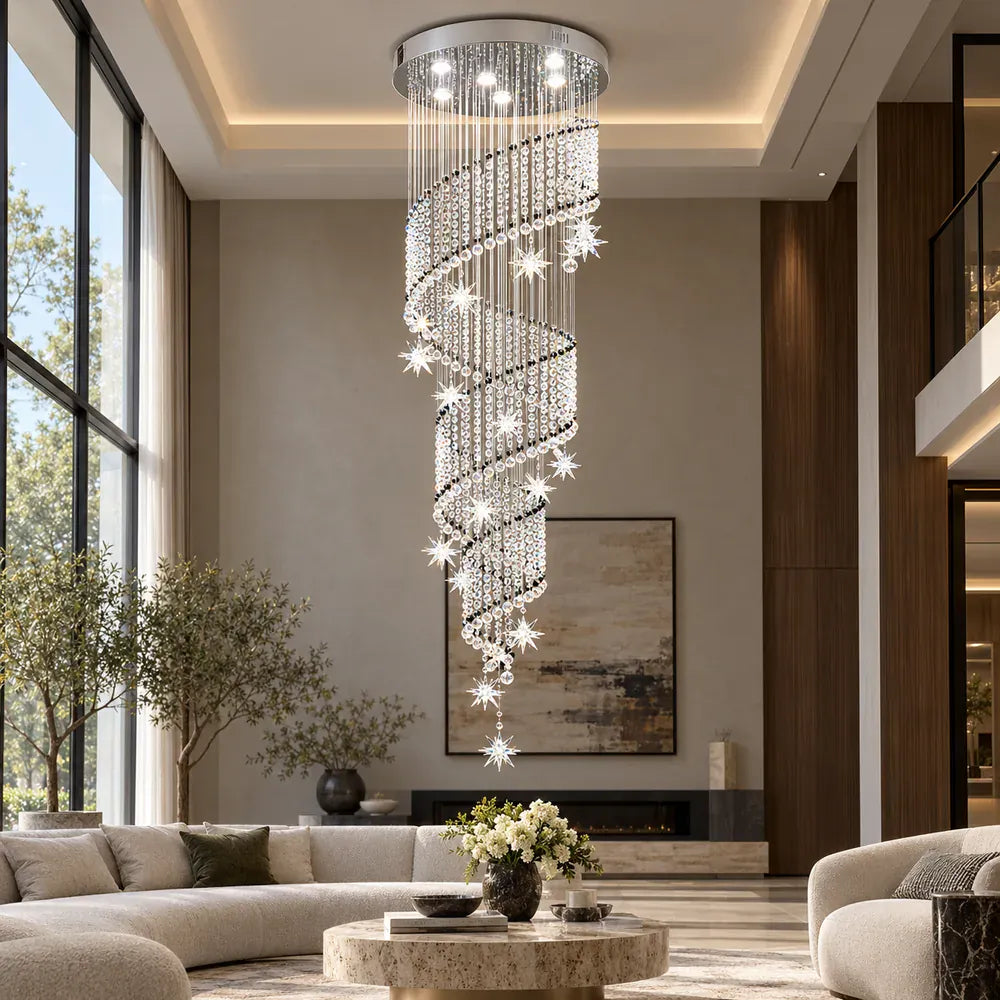
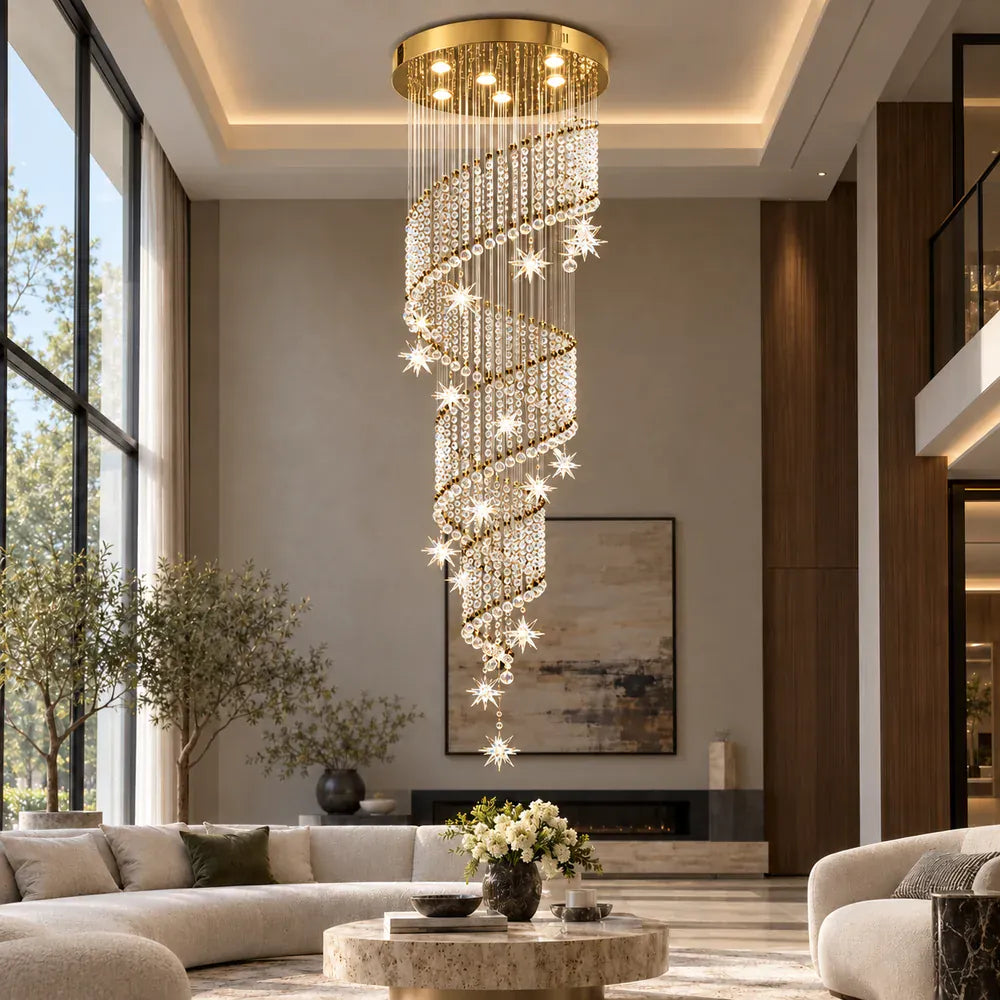
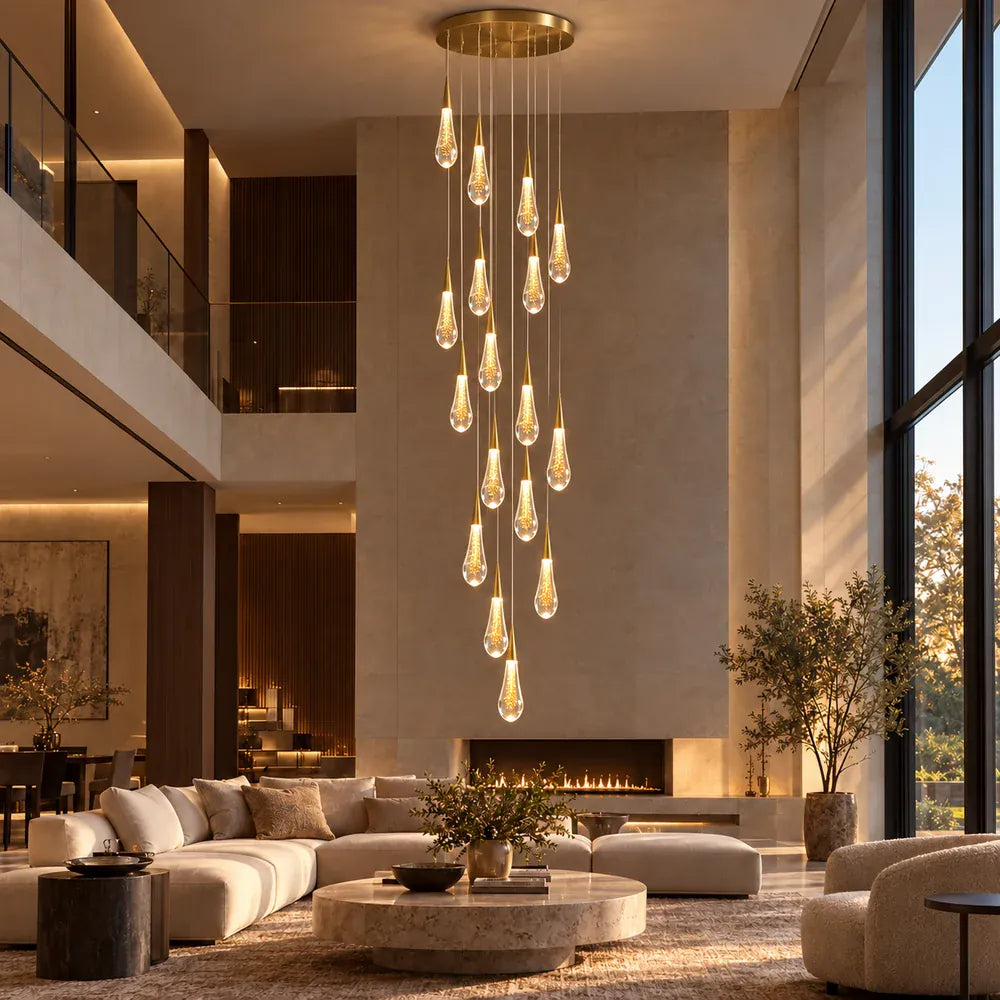
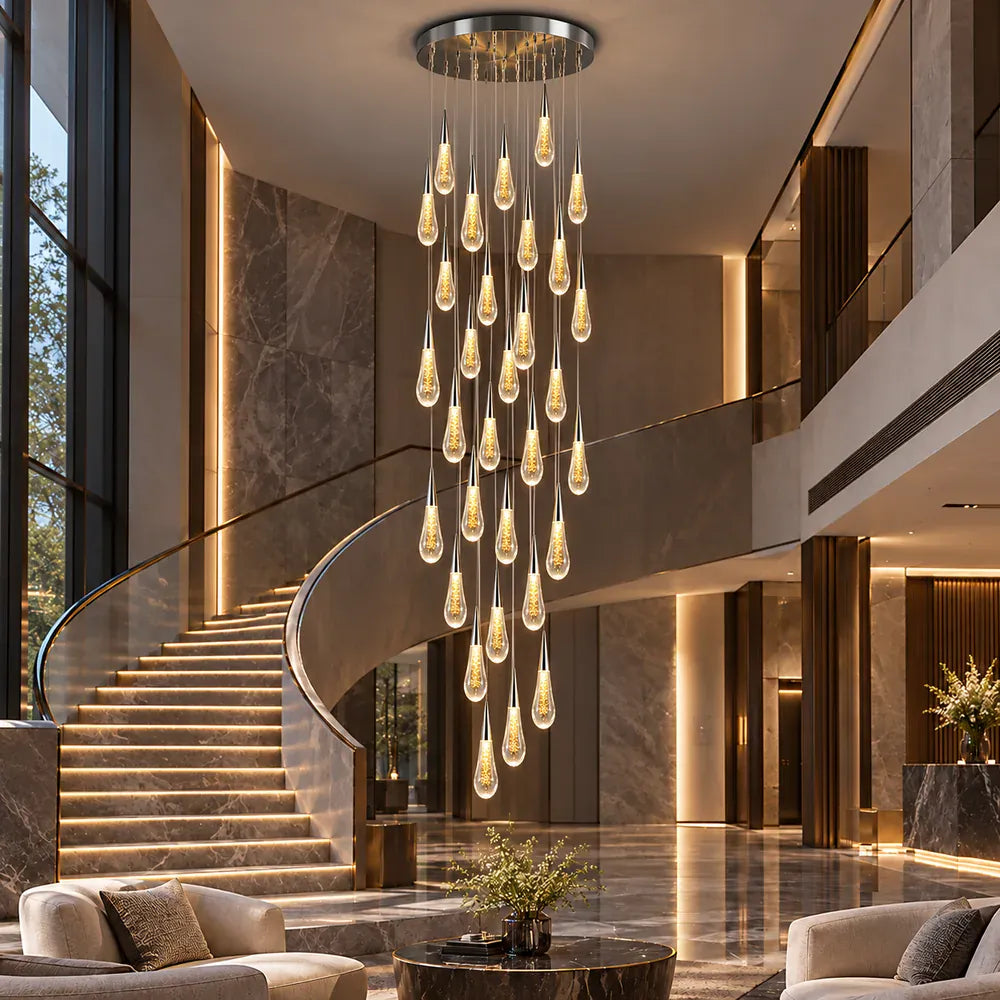
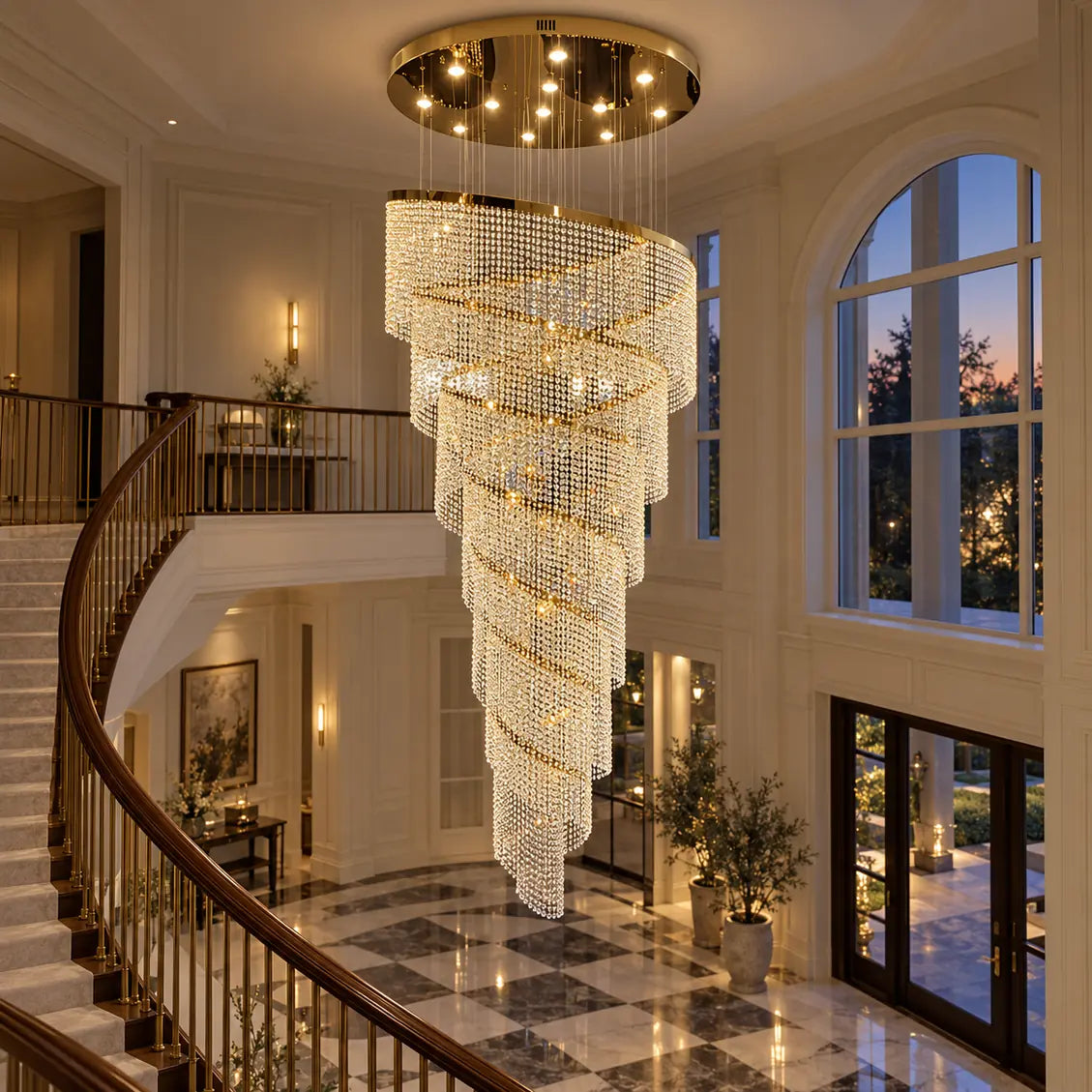
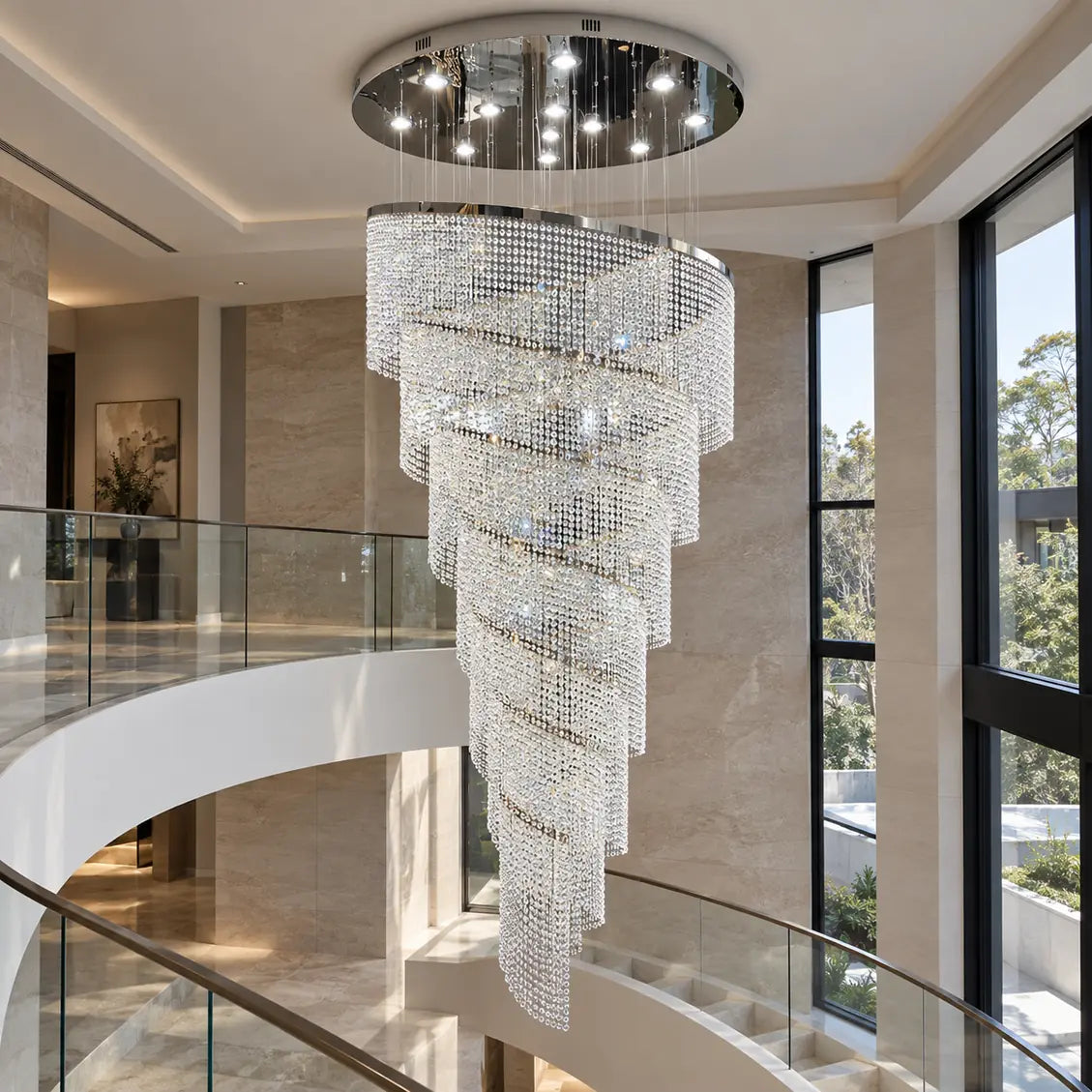
The unique end of the collection is where the material stops decorating and starts sculpting: asymmetric compositions, dressed branches, spiral cascades, and one-idea designer pieces — each named and cataloged, built in limited designer runs rather than mass patterns. The test for genuine uniqueness holds here as everywhere: a singular structural idea executed confidently, surprising on first sight and still calm above the thousandth evening. This is the register shoppers mean by designer crystal — and the register this catalog was built around.
The Luxury Tier
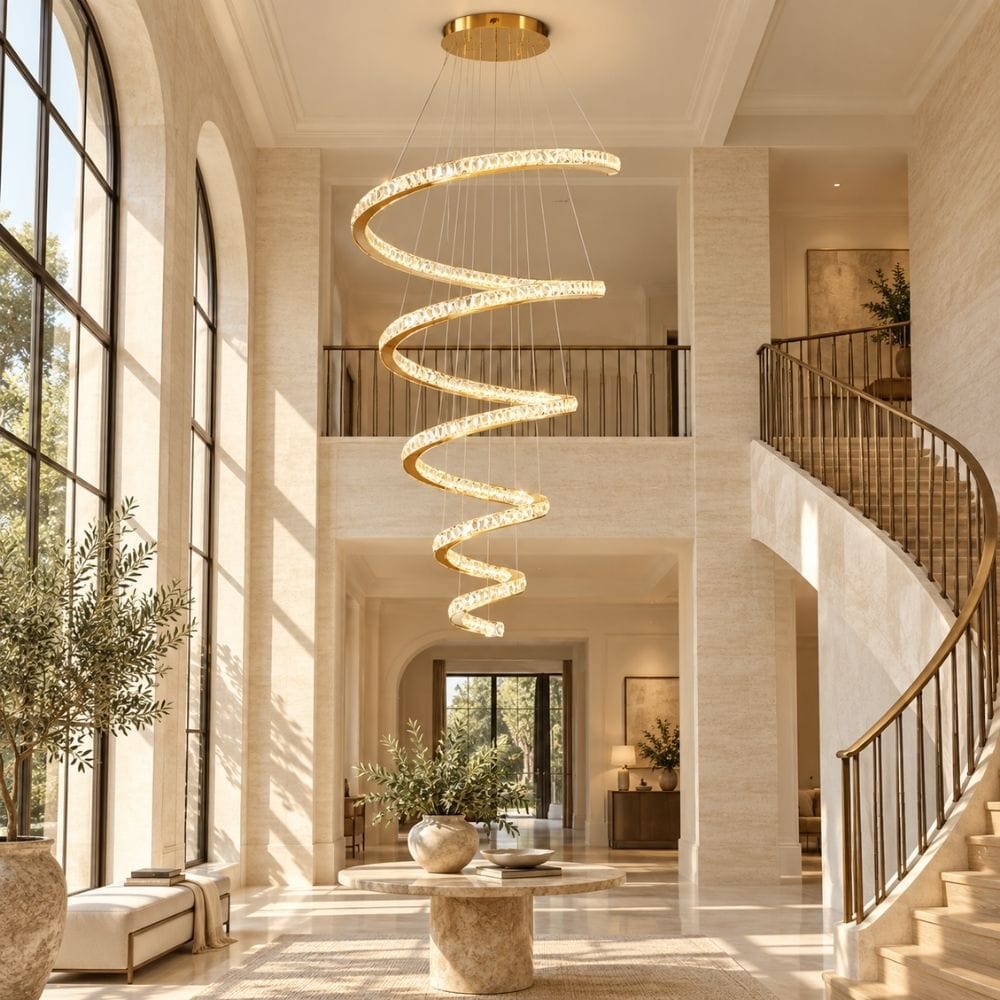
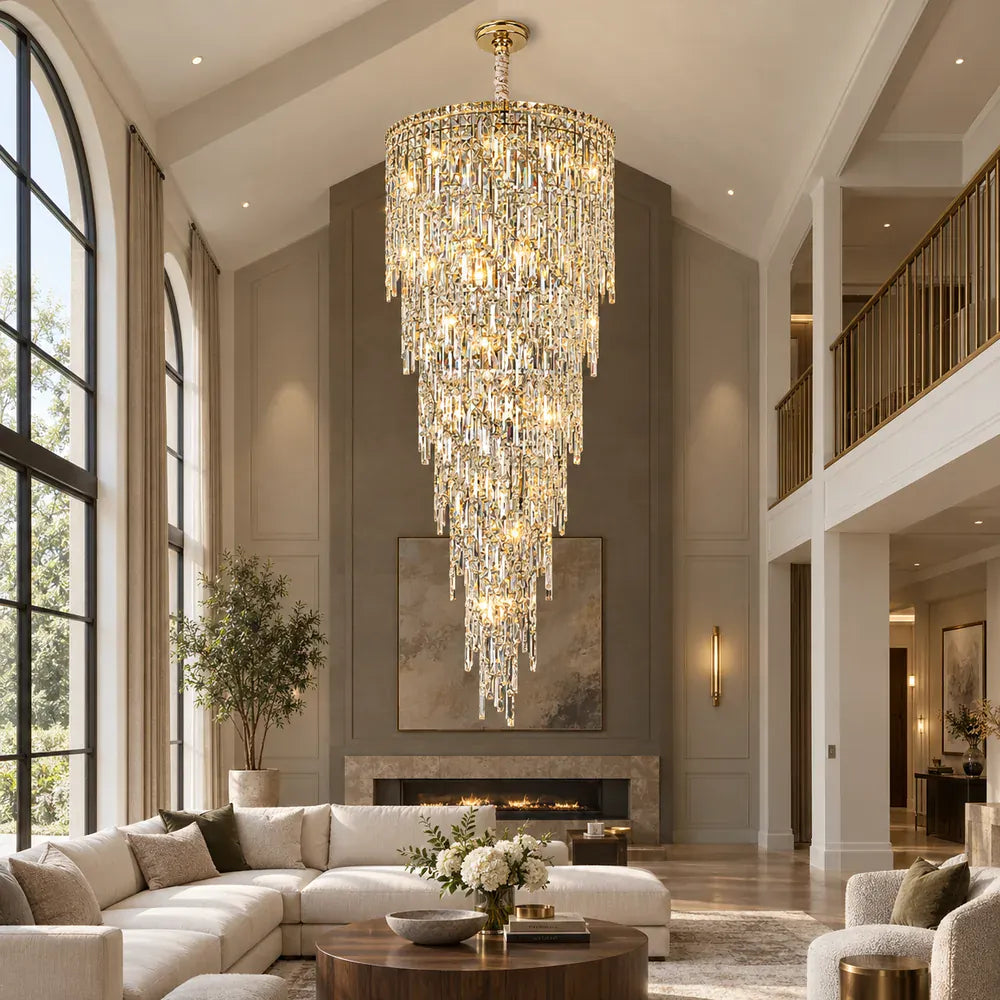
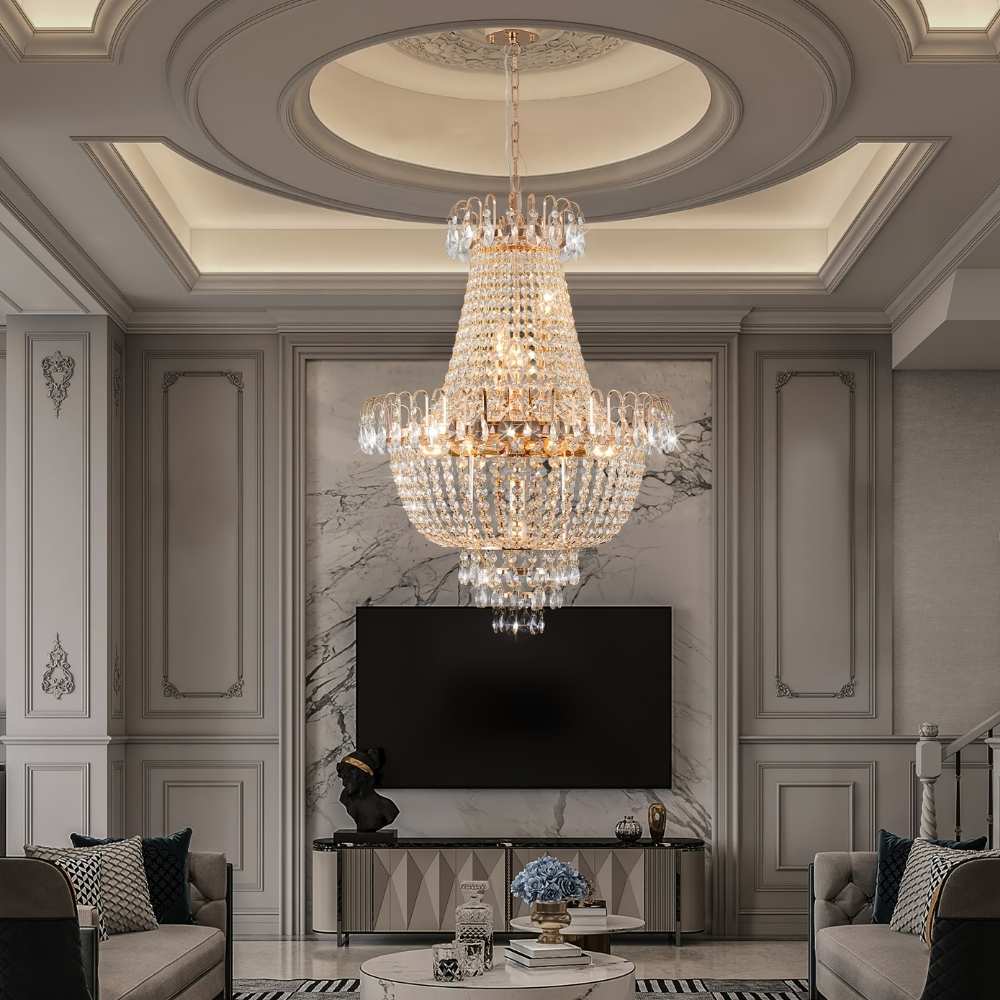
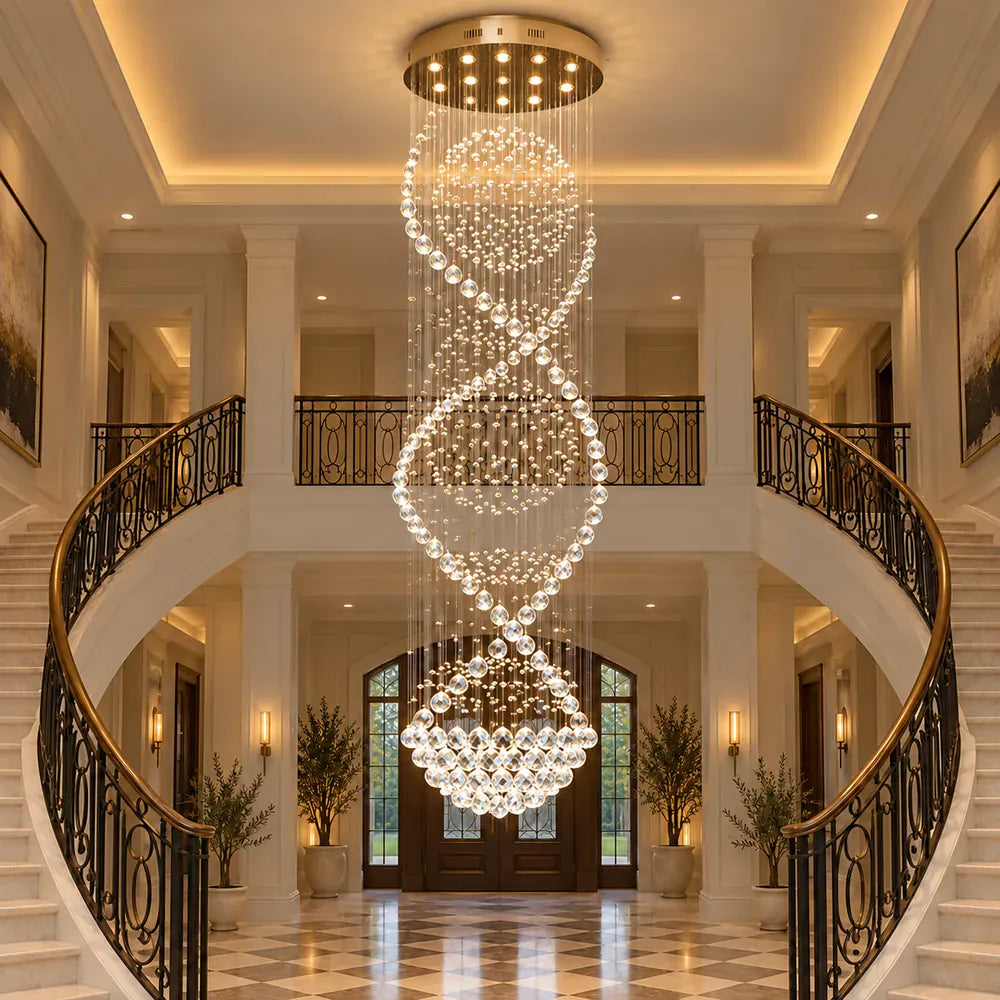
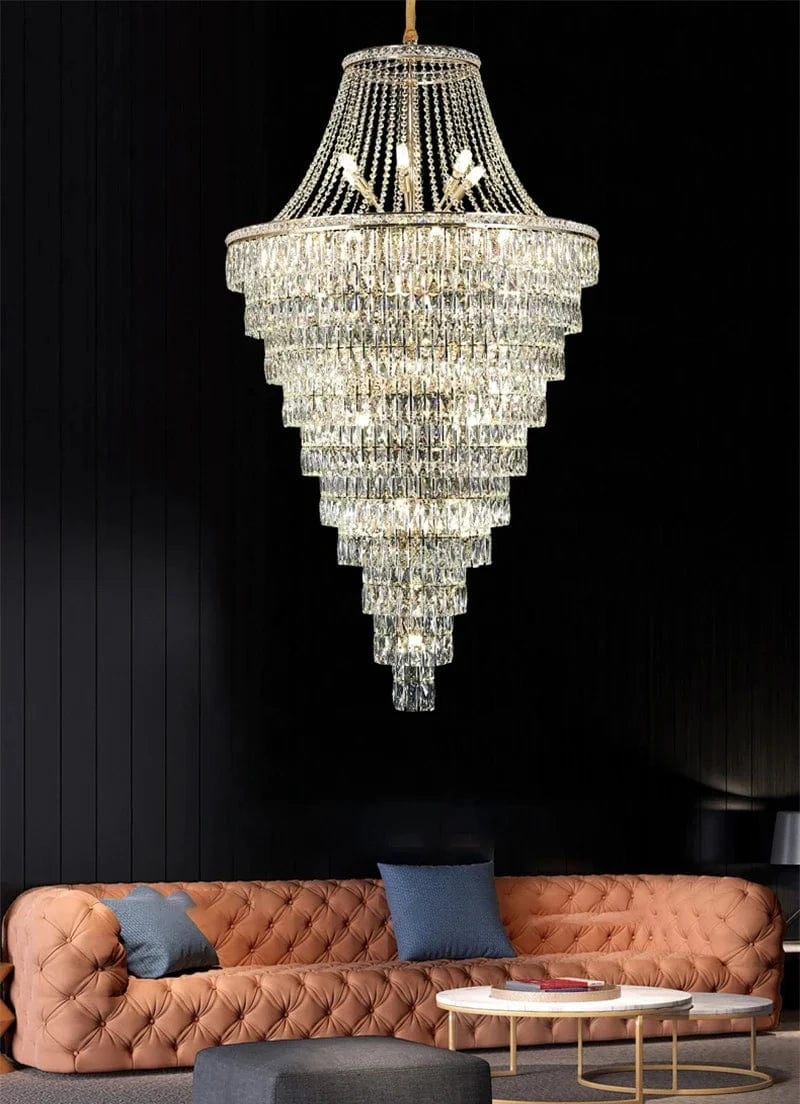
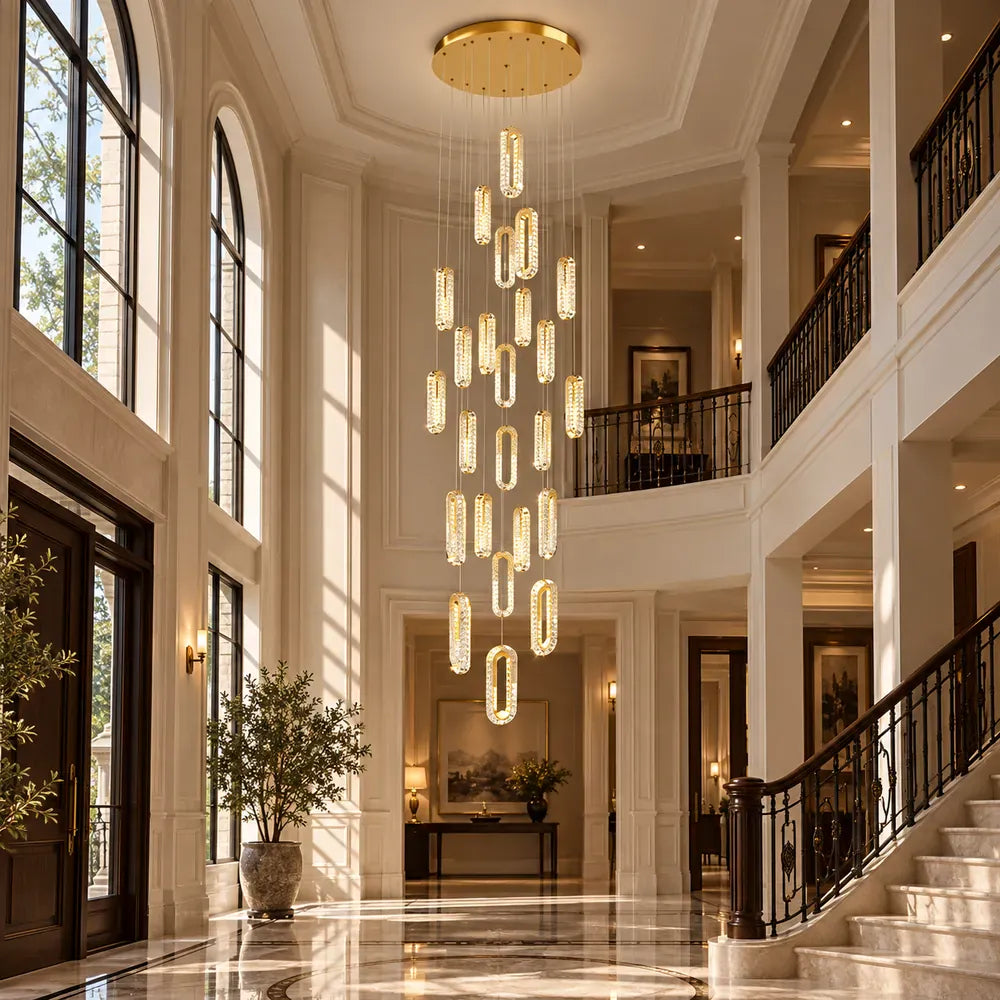
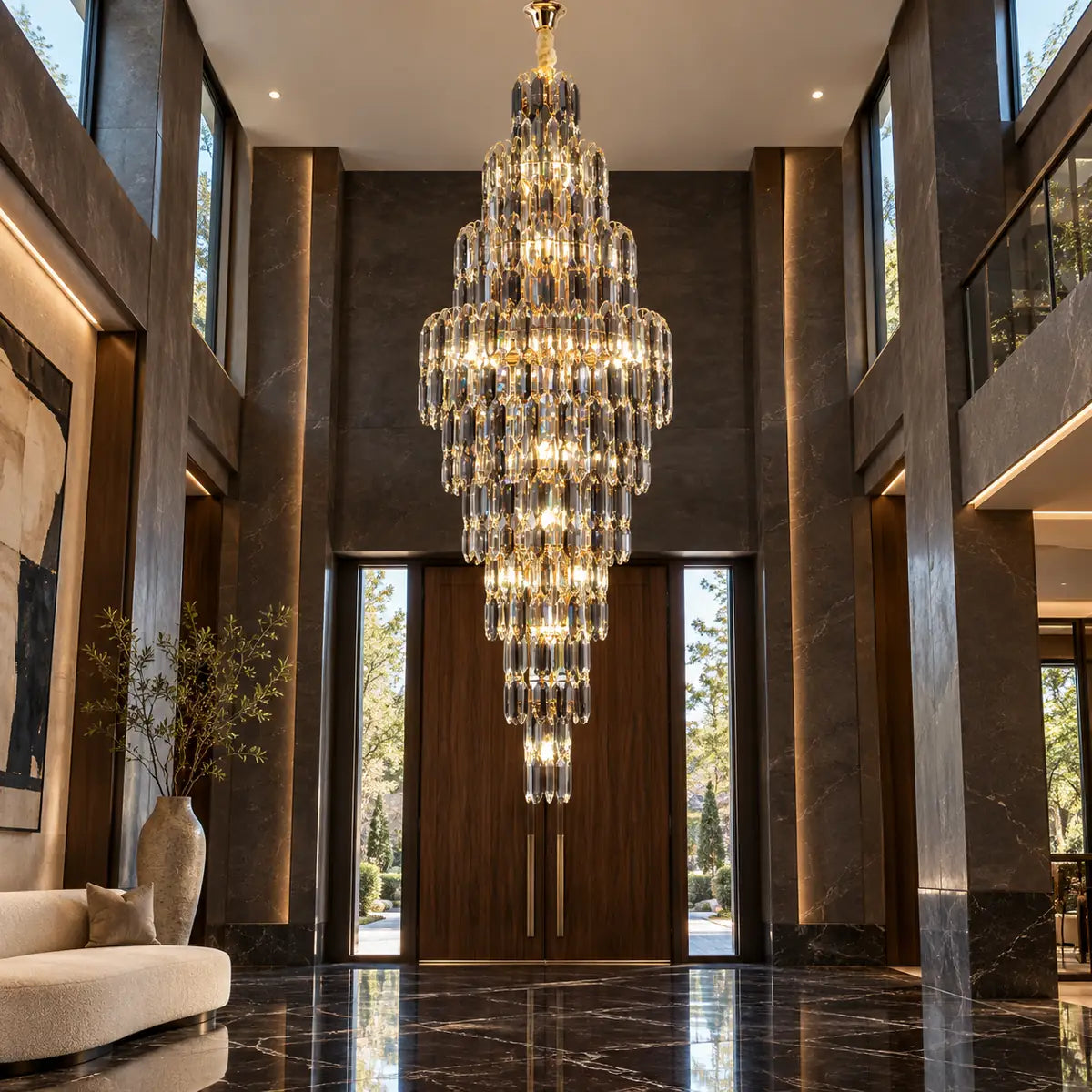
Above the designer range sits the luxury class: grand diameters, full-dress work, premium metals, and statement scale for double-height foyers, formal dining rooms, and homes where the fixture is specified like the architecture. Scale, materials, and the buying checks that separate genuine luxury from inflated pricing are covered in our luxury crystal guide. At the other end, the collection's entry points deliver real K9 on compact modern frames — smaller, not lesser — so the material's performance is never the compromise.
Shapes the Sparkle Rides On
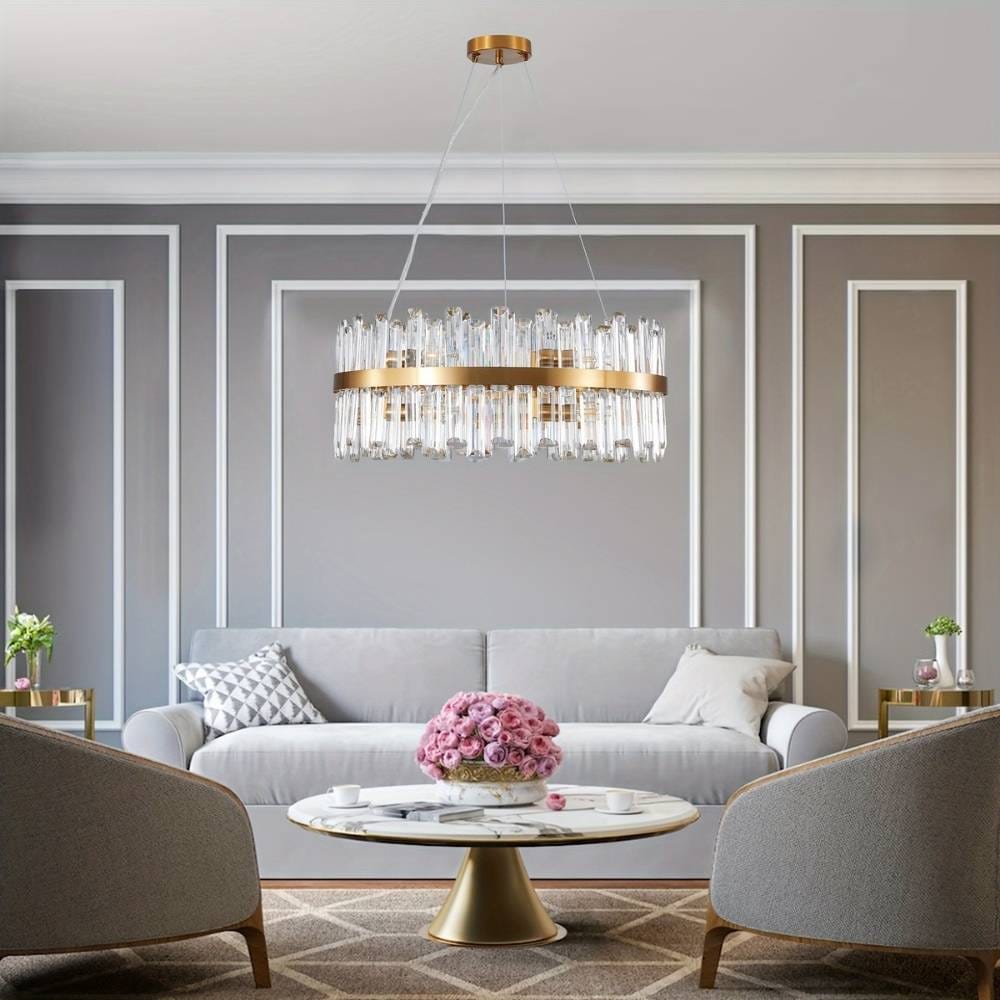
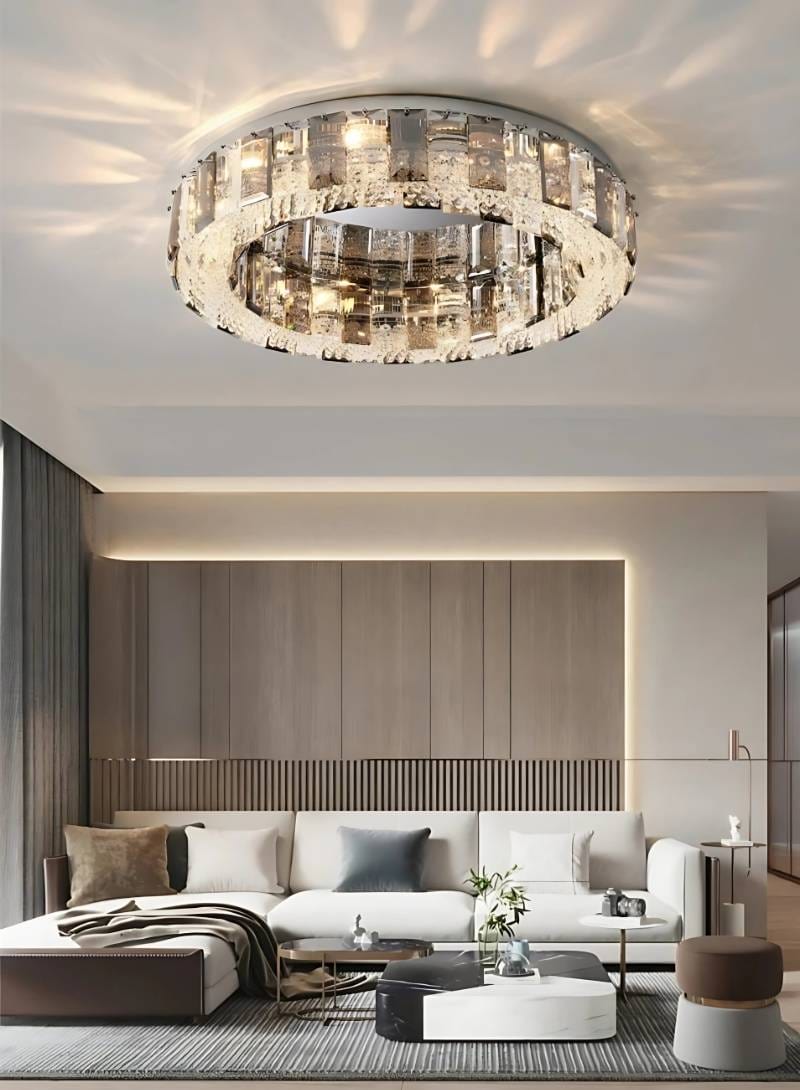
- Round and circular: drums, tiers, and dressed rings — the shape family for square rooms and round tables, deepened in the ring chandeliers collection
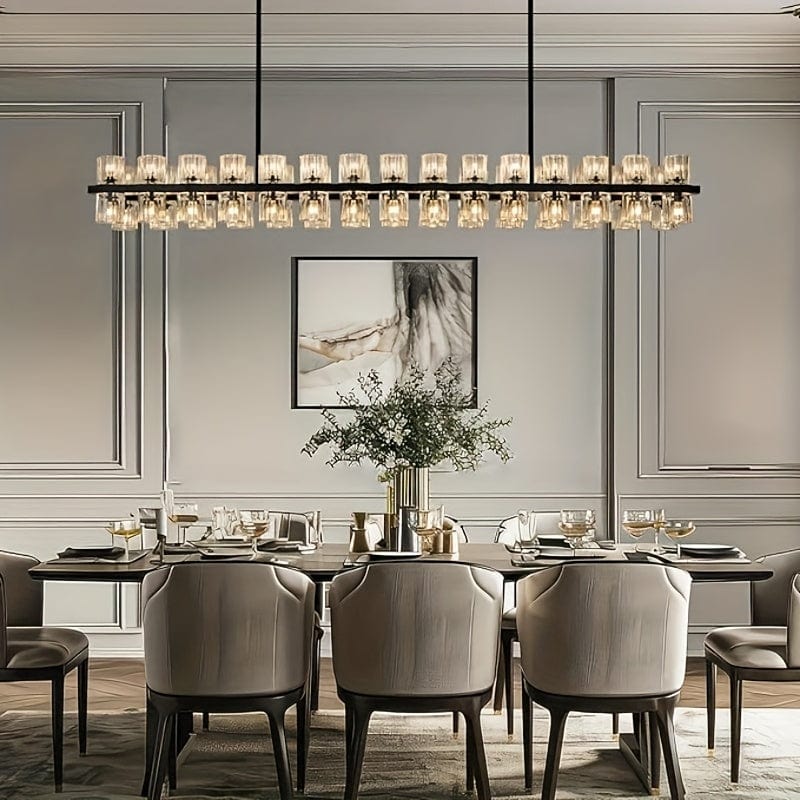
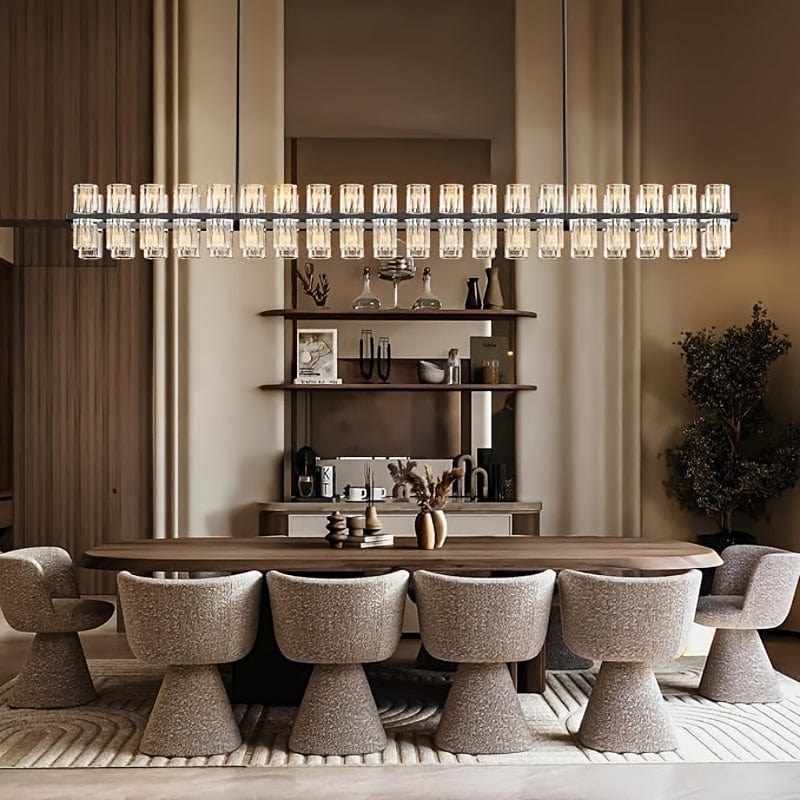
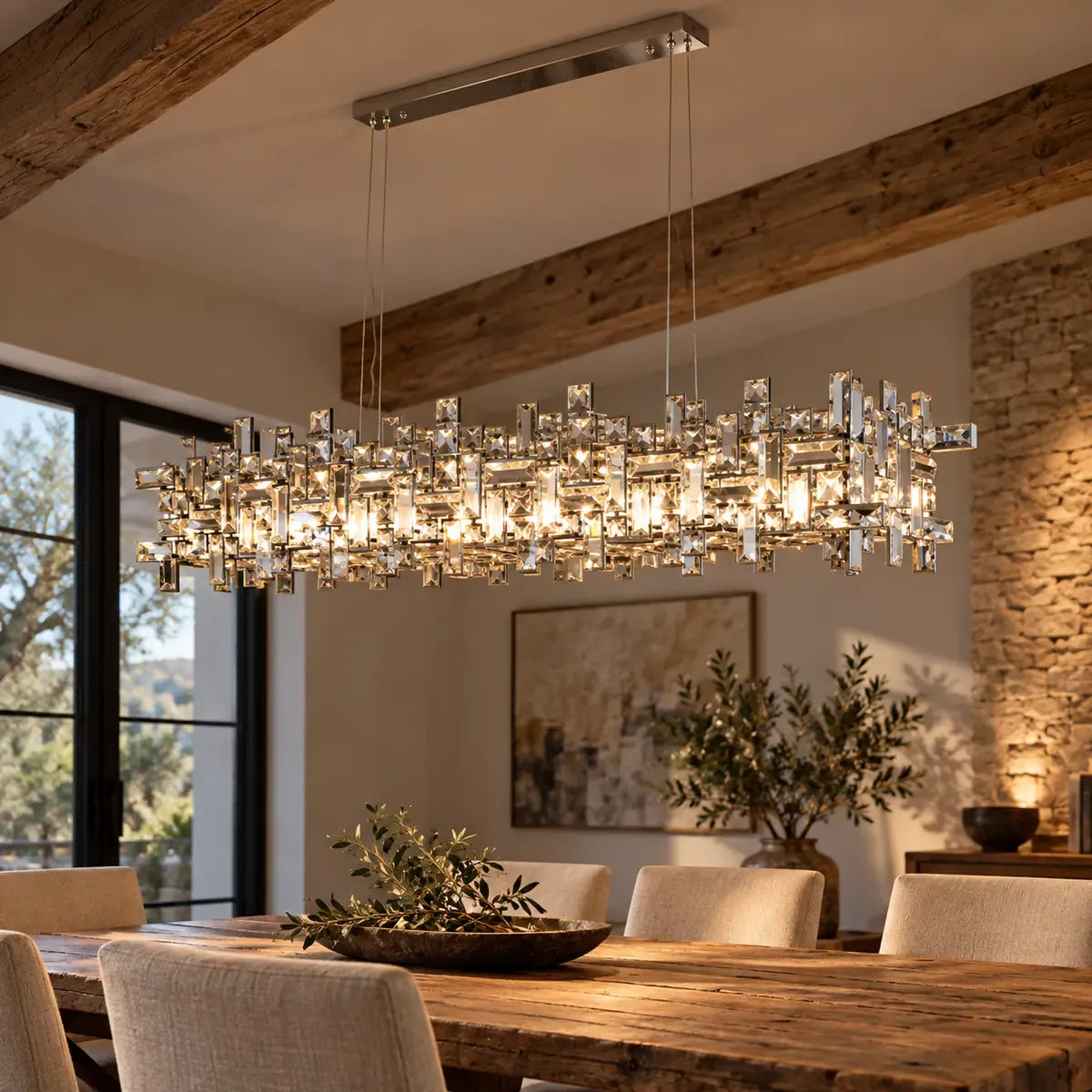
- Linear and rectangular: sparkle distributed the length of a long table — the format's luxury signature, in the linear chandeliers collection
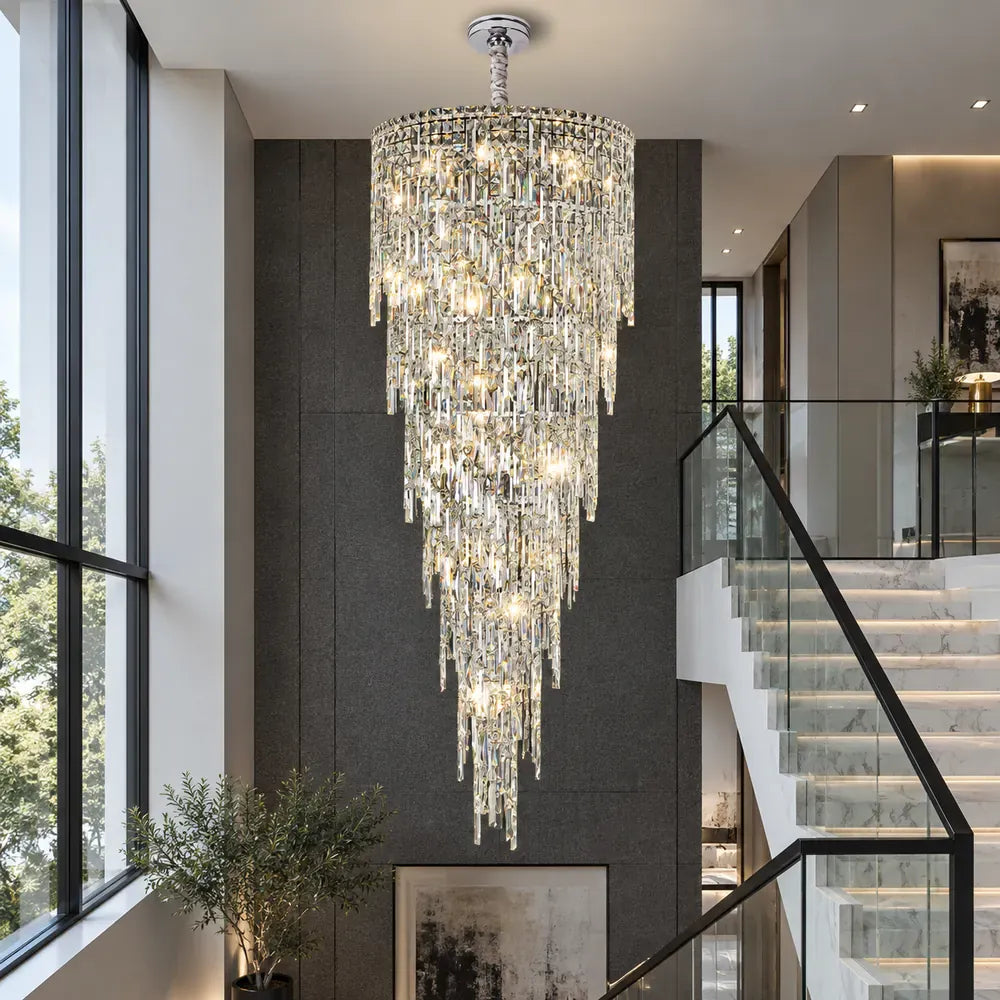
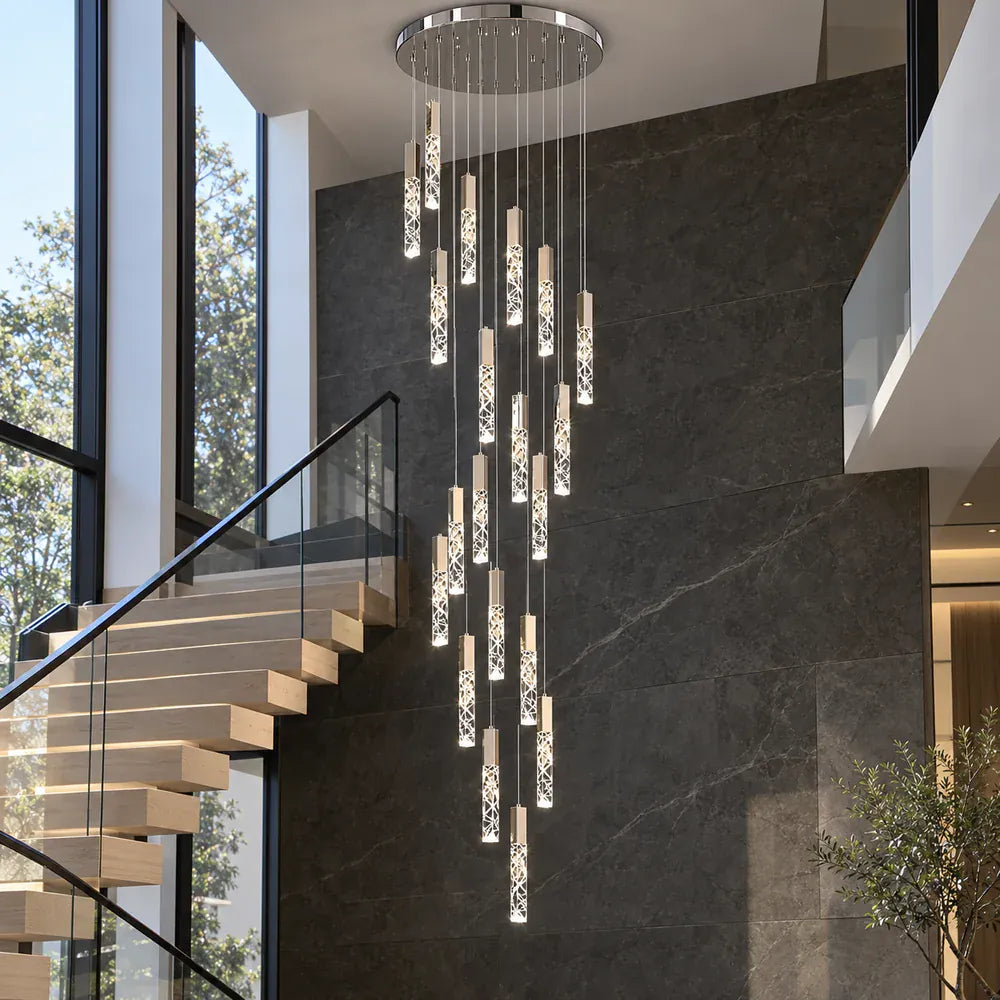
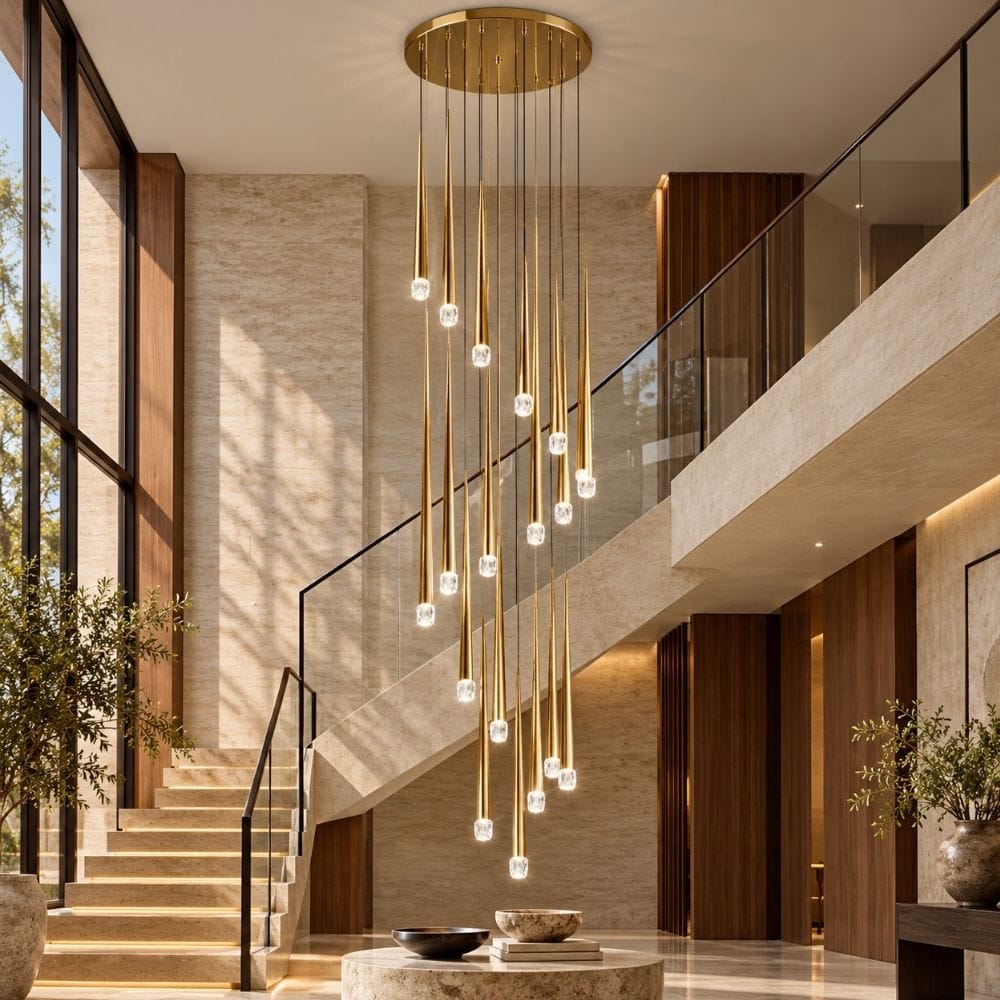
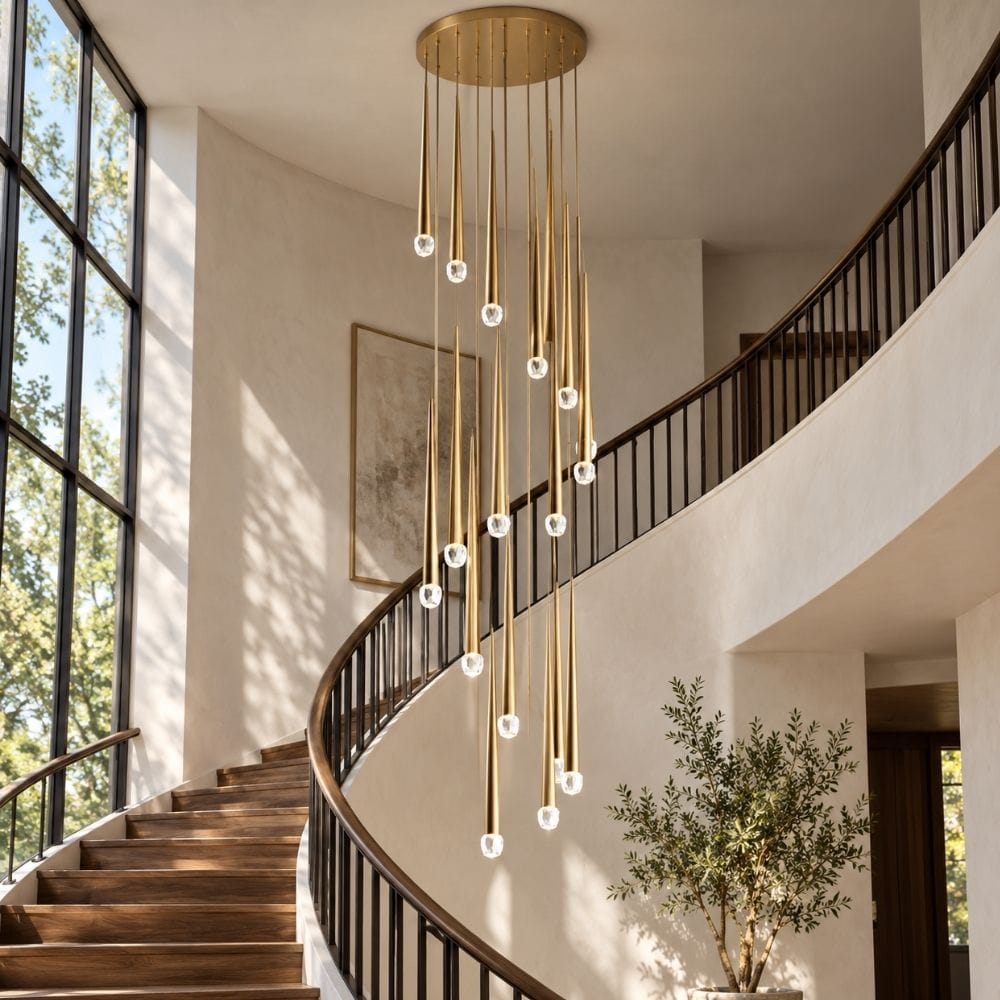
- Oval and long-drop: the between-shapes and the stairwell cascades, catching light along a vertical fall
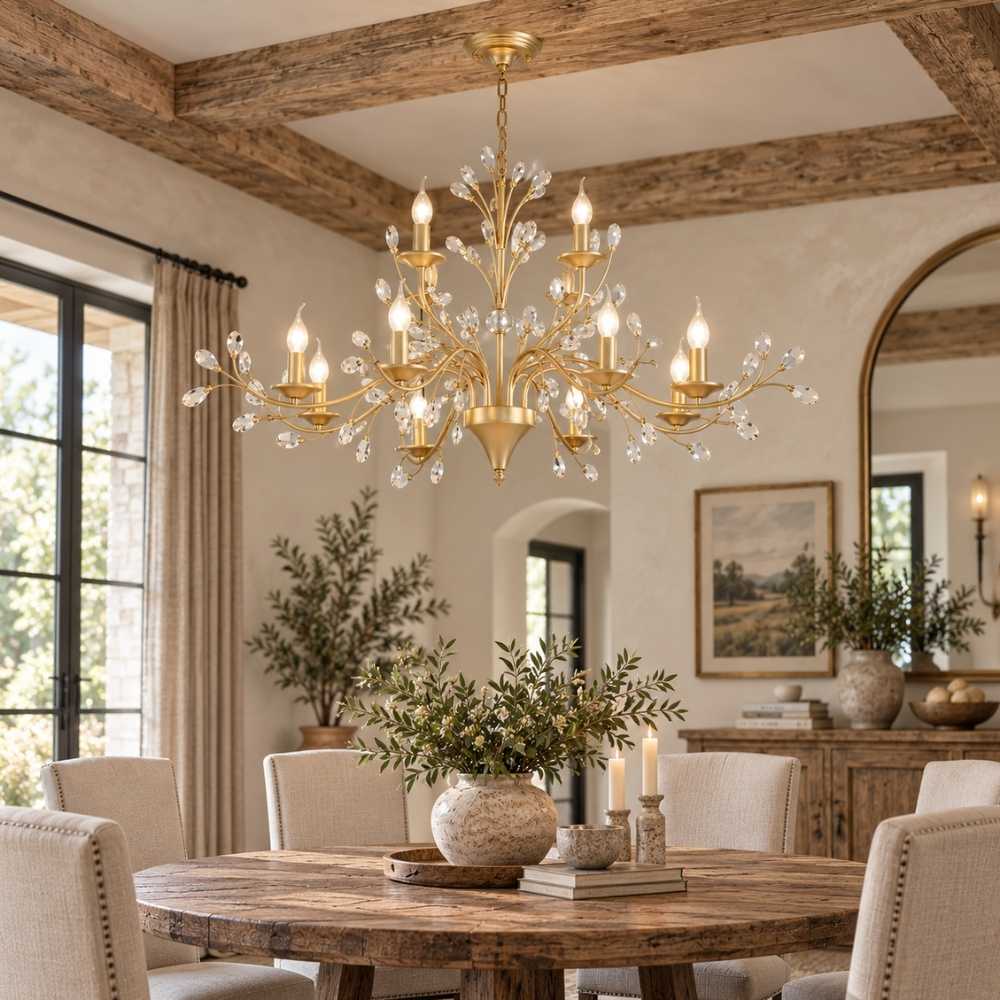
- Frames and metals: chrome and polished nickel for the cool-mirror read, gold and brass for warm luxury, and matte black or iron for the graphic modern contrast that reads newest
The Right Register for Every Room
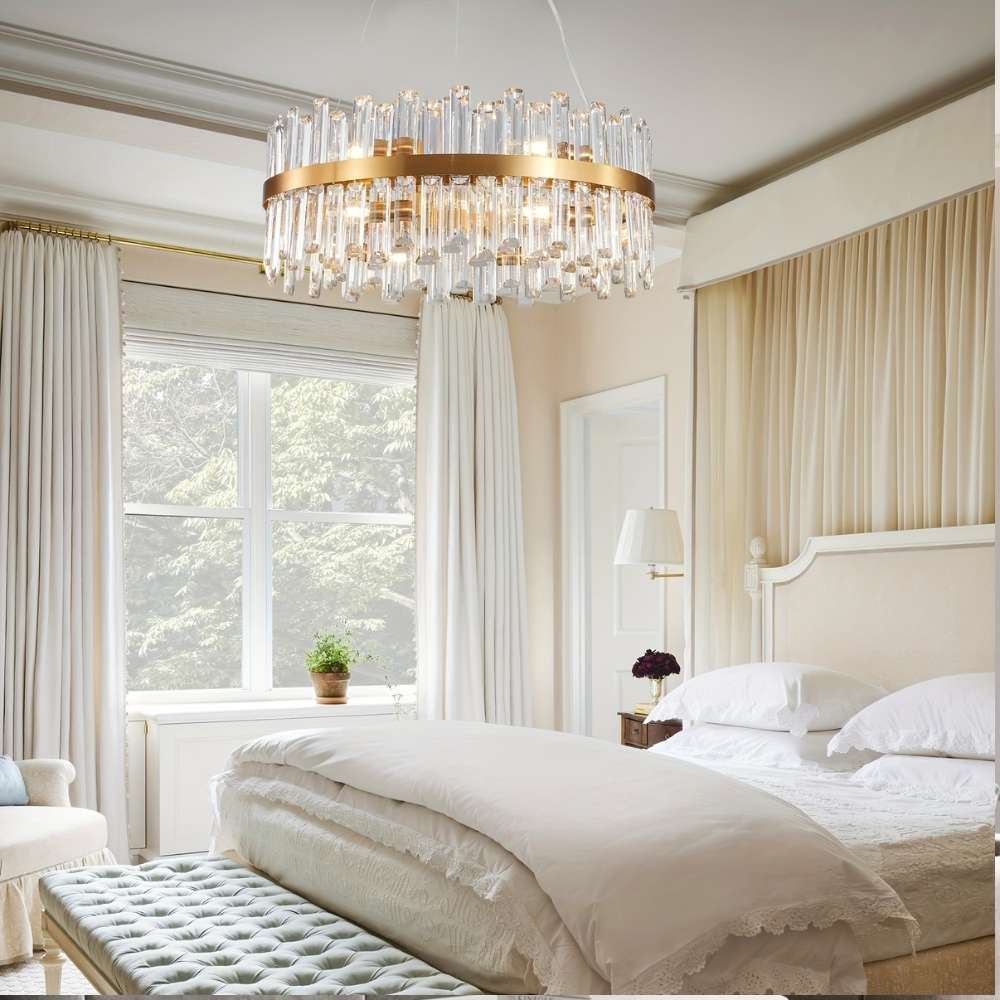
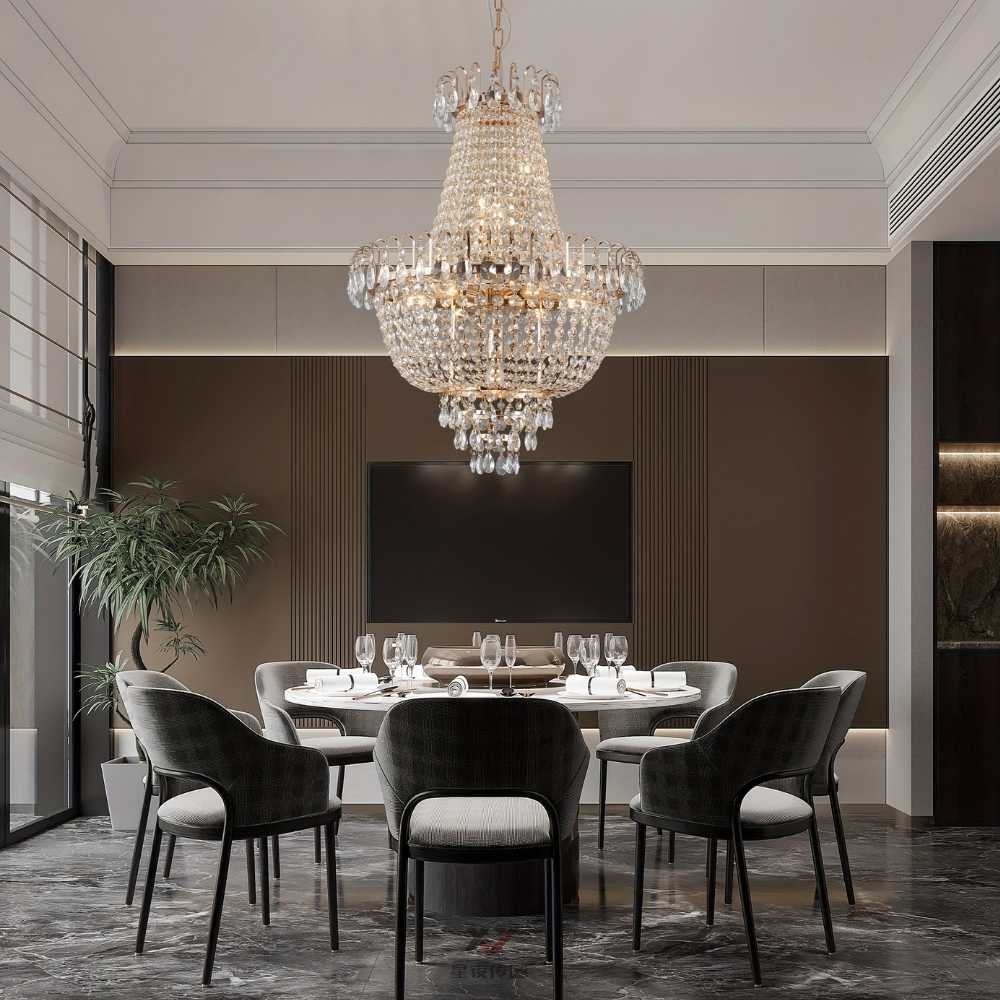
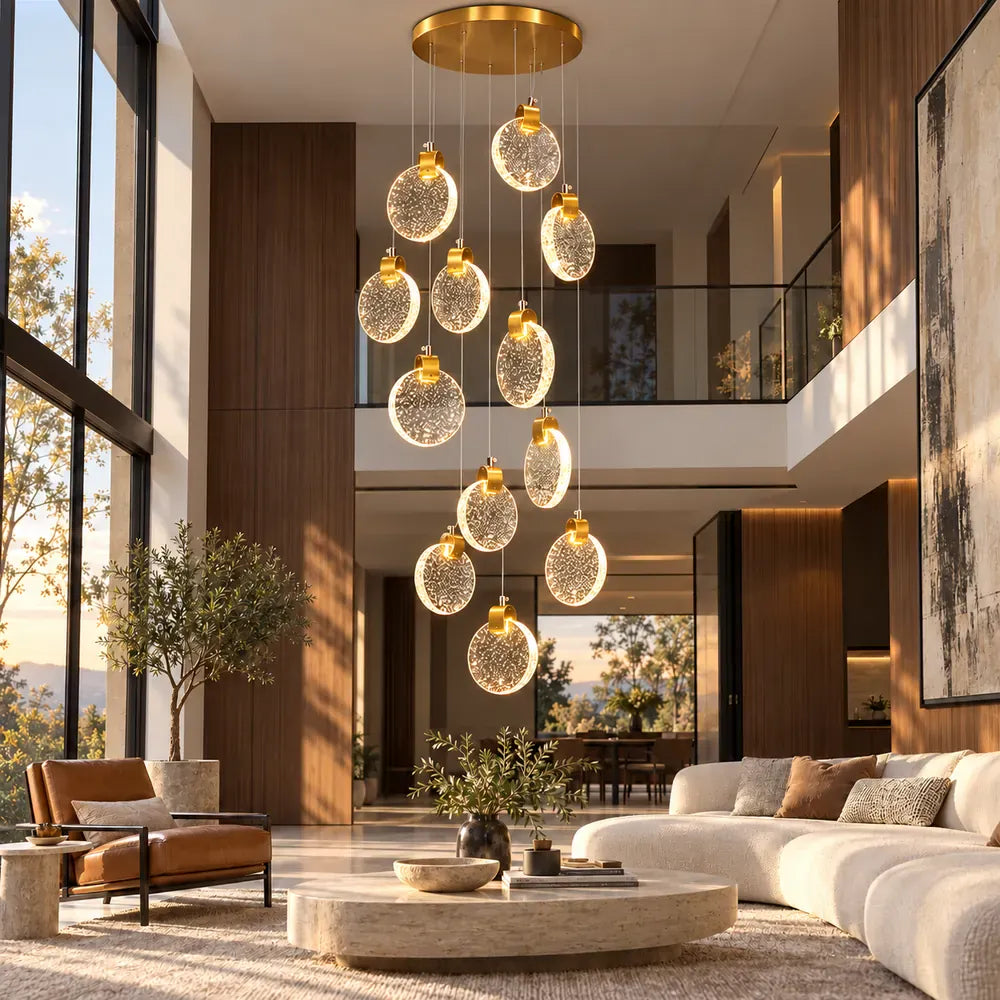
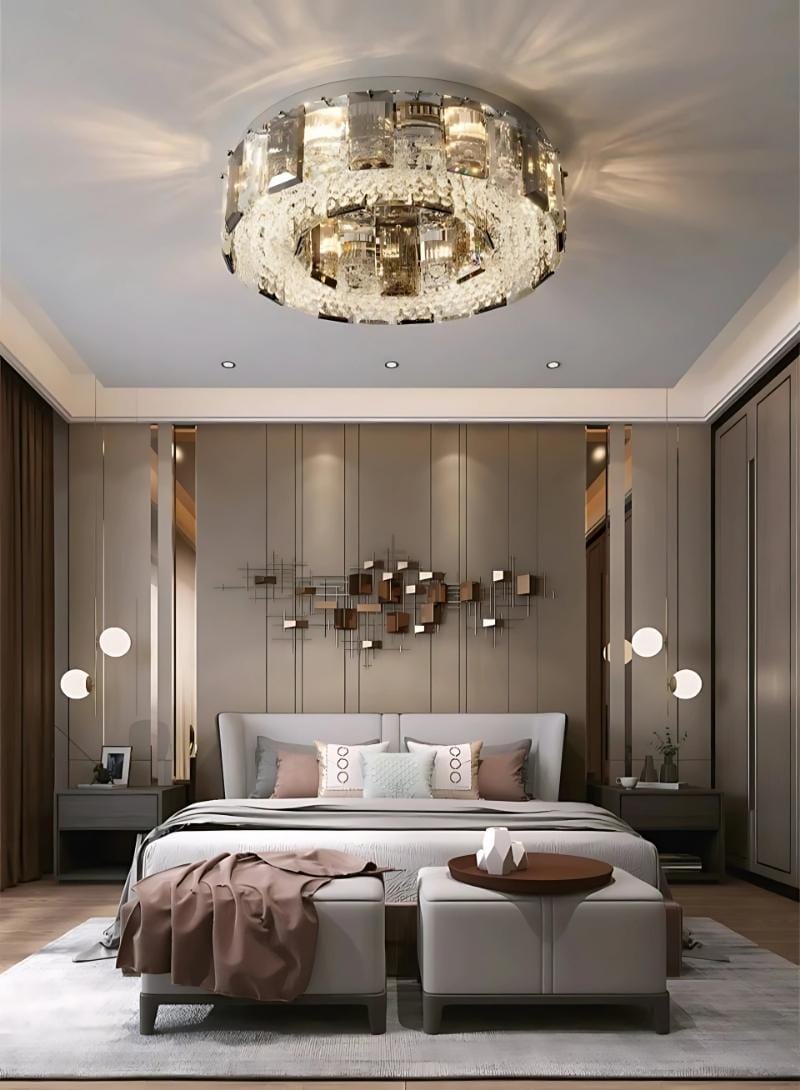
The material serves every room with a different register: living rooms take the modern centerpiece over the seating group (living room chandeliers), dining rooms its formal home (dining room chandeliers), bedrooms the smooth-drop softened versions (bedroom chandeliers), entries and stairwells the two-story showpieces (foyer & entryway chandeliers, staircase chandeliers). Wherever it hangs, warm dimmable light (2700-3000K) is the material's native register — the band where refraction turns to glow — and integrated-LED designs now deliver it with modern efficiency.
Related Collections
Continue the material story across the ring and linear chandeliers collections, cross into the era register at the vintage chandeliers collection, and browse the full chandelier catalog for the complete designer range.
Frequently Asked Questions
How can I tell real crystal from fake?
Real crystal runs heavier and colder than acrylic, carries crisp machine-cut facets instead of soft molded seams, and throws prismatic color in sunlight where plastic throws white glare. K9 optical crystal is the modern designer standard.
Are crystal chandeliers still popular in modern home decor?
Yes — the material never left; the frames changed. Current design carries crystal on modern architecture — rings, linear bars, sparse geometry — which is why it reads as contemporary luxury rather than period revival.
What is a modern crystal chandelier?
Crystal as an element rather than a costume: disciplined modern frames — rings, bars, clean geometry — wearing exactly as much crystal as the room needs, without the tiered period silhouette.
What size crystal chandelier should I choose?
Room length plus width in feet equals diameter in inches; over a dining table, one-half to two-thirds of the table's width, hung 30-36" above. Grand foyers scale to 36-48"+ statement pieces.
Which rooms suit crystal best?
All of them, in different registers: formal sparkle for dining and entries, sparse modern crystal for living rooms, smooth-drop softened designs for bedrooms, and cascades for stairwells.
How do I clean a crystal chandelier?
Dust regularly with a microfiber glove; deep-clean with a mild ammonia-free solution and soft cloth, working element by element with the power off. The complete routine is in our chandelier care guide.