Quick Answer
The core distinction: some changes are the material working as intended, others are damage. Deepening patina on aged iron, wood darkening or lightening with light exposure, and hand-applied finishes varying between pieces are all normal. Active rust that flakes, wood splitting across the grain, and loose joints are not.
Dry dusting is the default method. Microfiber cloth or a long-handled duster, with the power off at the breaker. Liquid cleaners are the leading cause of avoidable damage in this category — they strip aged finishes and raise wood grain.
Wood needs humidity more than it needs cleaning. Cracking comes from dry indoor air, not from dust. Rooms running below about 35% relative humidity in winter are where timber fixtures develop checks.
Order matched pairs together. Hand-finished surfaces vary between production batches, so two fixtures bought months apart will not match over the same table.
Rustic fixtures are sold on their materials — visible grain, forge marks, patina, weave — and those same materials are what makes buyers hesitate. Will the wood crack? Will the iron rust? What happens when it needs cleaning? The answers are more reassuring than most people expect, but they are specific: aged iron and real timber behave differently from powder-coated steel and glass, and the routine that keeps a modern fixture looking new will actively damage a rustic one. This guide covers what changes are normal, what needs attention, and the maintenance schedule that keeps materials improving rather than degrading.
On this page
- Feature or Flaw: Reading the Change
- Real Wood: Humidity, Grain and Tone
- Wrought and Aged Iron
- Rattan, Rope and Woven Materials
- Mixed Materials and Faux Finishes
- The Cleaning Method
- Wood and Mixed-Material Picks
- Iron and Woven Picks
- Batch Variation and Matched Pairs
- The Annual Schedule
- Kitchens, Bathrooms and Outdoor Spaces
- Common Care Mistakes
- Frequently Asked Questions
Feature or Flaw: Reading the Change
Rustic materials are chosen because they show their age, which means the ordinary maintenance question — has something gone wrong? — needs a different answer here than elsewhere. The following table covers what people actually notice.
| What you see | Reading | Action |
|---|---|---|
| Iron finish deepening and varying in tone | Feature — patina maturing | None; this is the finish working |
| Orange-brown bloom that wipes away | Surface oxidation | Dry-wipe, check the room's humidity |
| Rust that flakes or pits the surface | Flaw — active corrosion | Address promptly; see the iron section |
| Wood lightening or darkening over years | Feature — normal light response | None; rotate nothing, it evens out |
| Fine surface checks along the grain | Usually normal in solid timber | Monitor; raise winter humidity |
| A split running across the grain | Flaw — structural | Stop using; have it assessed |
| Two fixtures not matching exactly | Feature — hand-finish variation | Expected; order pairs together |
| Weave loosening at the rim | Flaw — wear point | Address early before it spreads |
| Joints working loose | Flaw — needs tightening | Annual check; tighten with power off |
Real Wood: Humidity, Grain and Tone
Wood is the material people worry about most and the one with the most reassuring answer, provided one variable is managed.
Cracking comes from dry air, not from age. Timber gains and loses moisture with the room around it. In a house heated through winter, indoor relative humidity frequently drops below 30%, and solid wood responds by shrinking — which shows as fine checks along the grain. Keeping the room in the 35-50% band, which is comfortable for people as well, prevents nearly all of it. A fixture directly above a heat register or a wood stove sits in the driest air in the house and deserves particular attention.
Fine checks along the grain are normal; splits across it are not. Solid timber develops surface checking as it settles, and in a rustic fixture that reads as character rather than failure. A crack running across the grain, or one that opens a joint, is structural and needs assessment rather than monitoring.
Tone shifts and then stabilizes. Most woods lighten or darken over the first year or two of light exposure, then settle. Walnut typically lightens; oak and cherry deepen. This is why the tan, brown and grey tones in the category are described as a spectrum rather than fixed colors — a fixture bought as a mid-brown may sit slightly differently within that range after two years.
Never use liquid cleaners. Water raises the grain on unsealed or oiled timber, and household sprays strip oil finishes outright. Dry microfiber only. Where a fixture is genuinely soiled rather than dusty, a barely damp cloth applied to the cloth rather than the wood, followed immediately by drying, is the limit.
Wrought and Aged Iron
Iron in this category is usually finished to look aged rather than new, and that finish is doing practical work as well as visual work.
Aged finishes hide handling marks by design. A fingerprint or a scuff on polished chrome shows against a uniform surface; the same mark on an oil-rubbed or forge-marked finish disappears into existing tonal variation. This is a genuine ownership advantage and one of the reasons the style suits fixtures hung high, where cleaning happens rarely.
Distinguish oxidation from corrosion. A light orange-brown bloom that wipes away with a dry cloth is surface oxidation, common in humid rooms and harmless. Rust that flakes, or that has begun pitting the metal, is active corrosion and needs addressing: with the power off, remove the loose material with a soft brass brush or fine abrasive pad, wipe clean, and apply a matching touch-up finish. Most manufacturers supply one on request.
Humidity is the driver here too, in the opposite direction. Where wood suffers below 35%, untreated iron suffers above roughly 60% — which is why bathrooms and unconditioned porches are the rooms where iron fixtures need damp-rated construction rather than a standard interior finish.
Do not polish it. The instinct to restore shine is the most common way an aged iron finish gets destroyed. Metal polish removes the patina that constitutes the finish, leaving a bright patch that will never match the rest.
Rattan, Rope and Woven Materials
Woven shades bring the warmest texture in the category and the most specific care requirements.
- Dust with a soft brush rather than a cloth. A cloth catches on the weave; a soft-bristle brush or a vacuum's brush attachment on low suction lifts dust out of the gaps without pulling strands.
- The rim is the wear point. Where the weave meets its frame, strands work loose first. Check it annually and address any loosening early, before it spreads along the edge.
- Keep it dry. Natural fibers absorb moisture and can develop mildew in humid rooms. Woven shades belong in dry interiors rather than bathrooms or covered porches unless specifically rated.
- Expect some color shift. Rattan and jute lighten with light exposure over years. Even lighting across the shade means it lightens evenly, which reads as maturing rather than fading.
- Watch the bulb heat. Natural fibers close to a lamp benefit from LED rather than incandescent, which runs considerably cooler and reduces long-term embrittlement.
Mixed Materials and Faux Finishes
Most rustic fixtures combine materials, and the care routine has to follow the most demanding component. A wood-and-iron fixture is cleaned as wood: dry only, no liquid, because whatever touches the metal will reach the timber.
Faux and resin materials — antler-inspired forms, cast elements finished to look like wood — behave differently again. They tolerate a damp cloth better than real timber, do not respond to humidity, and will not develop patina. They also cannot be refinished if the surface is damaged, since the finish is the material rather than a coating over it. Where a listing describes a piece as faux, resin or composite, treat the surface as final.
The Cleaning Method
Method, risk and humidity target for each material family in the category
The sequence itself is short. Switch off at the breaker and let the lamps cool completely. Protect the floor beneath. Dust from the top down, so material falls onto surfaces not yet cleaned rather than ones already done. Use a dry microfiber cloth on wood and metal, a soft brush on woven elements, and a barely damp cloth on glass and resin components only — dampening the cloth rather than the fixture, and keeping moisture entirely away from sockets and connections. Where the fixture hangs too high to reach safely, the answer is a professional visit rather than an improvised ladder; our chandelier care guide covers general technique across fixture types.
Wood and Mixed-Material Picks (4 Designs)
Fixtures where timber and mixed construction lead. All are cleaned dry, with room humidity in the 35-50% band doing more for their longevity than any cleaning routine.

1Jen 2 Tier Wagon Wheel Chandelier
Wood and Metal · Two TierMixed-material construction means the care routine follows the more demanding component: dry cleaning throughout, because anything applied to the metal reaches the timber. Two-tier compositions also have more horizontal surfaces than single-tier designs, which means dust settles faster and a longer duster earns its place.
Method: Dry only — follow the wood
Dust note: Two tiers collect faster than one
Humidity: Keep the room 35-50% RH
Annual check: Joints between tiers

2Pam Rustic Wagon Wheel Chandelier
Single Tier · Simple MaintenanceSingle-tier wheel designs present the least surface area in the category, which translates directly into longer intervals between cleanings. For fixtures hung where access is awkward, that difference matters more than most people weigh at purchase — simplicity of form is a maintenance specification as well as a style one.
Intervals: Longest in the category
Method: Dry microfiber, top down
Best where: Access is awkward
Annual check: Spoke joints and hardware

3Lana Rustic Vintage Chandelier
Aged Finish · Marks Blend InVintage-finished surfaces are the practical end of the category: tonal variation is built into the finish, so handling marks and dust shadows disappear into it rather than showing against a uniform coat. The corollary is the rule that protects it — no polish, ever, since restoring shine removes the finish itself.
Advantage: Marks blend rather than show
Never: Metal polish or abrasive cleaners
Method: Dry wipe only
Colors: Beige and warm neutrals

4Dennis Faux Antler Chandelier
Resin · Humidity-IndifferentResin and composite pieces behave differently from natural materials in a way that is genuinely useful: they do not respond to humidity, will not crack in dry winter air, and tolerate a damp cloth. The trade is that the finish is the material rather than a coating, so surface damage cannot be refinished — treat the surface as final.
Humidity: Indifferent — no cracking risk
Method: Damp cloth acceptable, away from sockets
Limitation: Cannot be refinished if damaged
Sizes: Five, in brown and white
Iron and Woven Picks (4 Designs)
Wrought iron, aged metal and natural fiber. Iron wants dry rooms below 60% humidity and no polish; woven shades want a soft brush and dry interiors.
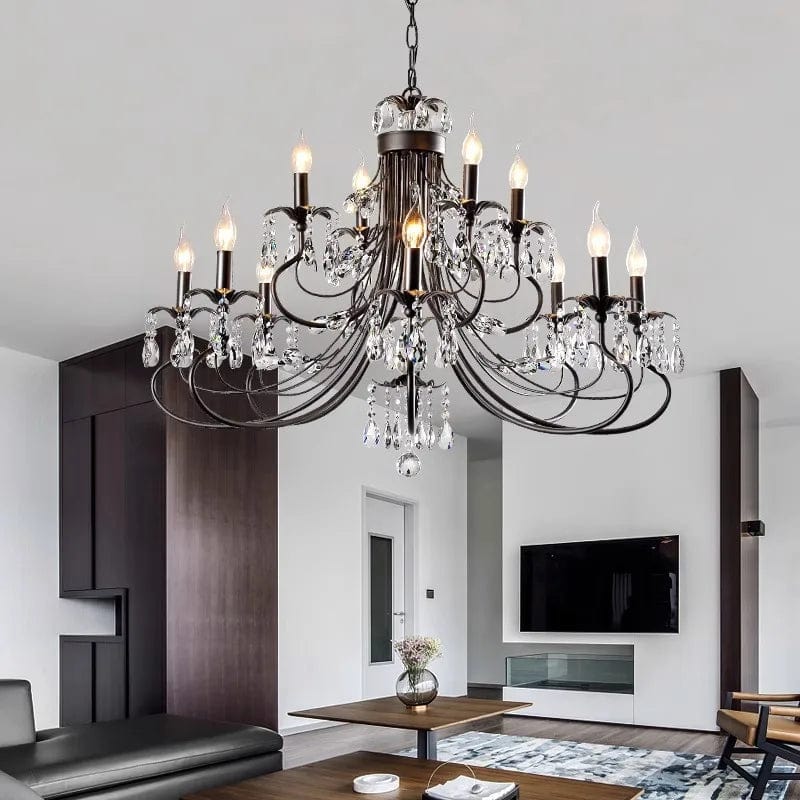
5Black Wrought Iron Chandelier
Wrought Iron · Forge-MarkedWrought iron is the category's most forgiving surface in daily ownership: forge marks and tonal variation absorb fingerprints and scuffs that would show immediately on a uniform coat. Keep the room below roughly 60% relative humidity, dry-wipe when dusty, and resist the instinct to polish — the patina is the finish.
Advantage: Marks absorb into the finish
Humidity: Below 60% RH
Never: Metal polish
If rust flakes: Brass brush, wipe, touch-up finish
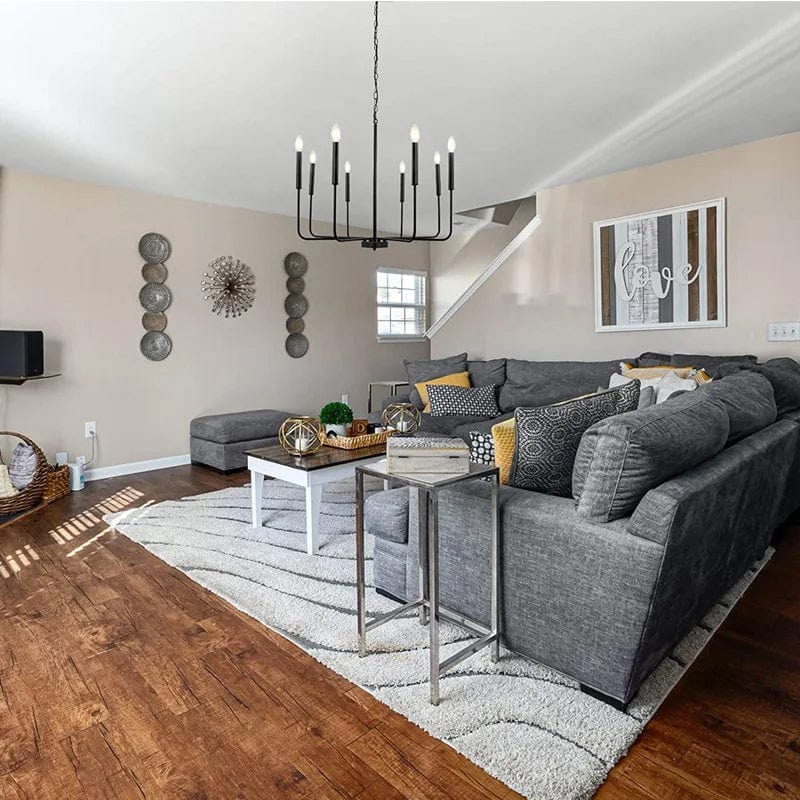
6Lissa Rustic Iron Chandelier
Aged Iron · Gold or BlackTwo finishes with slightly different maintenance profiles: black absorbs dust shadows better, while warmer gold-toned aged iron shows dust sooner against its lighter surface but hides handling marks equally well. Both follow the same rule — dry only, no polish, and touch-up finish rather than abrasives if corrosion appears.
Dust visibility: Black hides shadows better
Method: Dry wipe only
Corrosion: Touch-up finish, not abrasives
Related: Iron chandeliers

712-Light Black Iron Chandelier
Candle Style · Sleeve CheckCandle-style frames add one maintenance item the rest of the category does not have: the sleeves. Check them annually for slipping or discoloration from lamp heat, and use LED lamps, which run cool enough to leave sleeves and nearby finishes unaffected over years of use.
Extra check: Sleeves for slipping or heat marks
Lamps: LED — cooler, protects sleeves
Method: Dry wipe, top down
Annual: Tighten arms and hardware

8Piper Rattan Pendant Chandelier
Woven Rattan · Brush Not ClothNatural fiber is the one material here that needs a different tool: a soft brush or a vacuum brush attachment on low suction, since a cloth catches on the weave and pulls strands. Check the rim annually, keep the fixture in dry interiors, and use LED lamps to avoid long-term heat embrittlement of the fibers.
Tool: Soft brush — not a cloth
Wear point: The rim, checked annually
Environment: Dry interiors only
Lamps: LED to limit fiber heat exposure
Browse rustic lighting by material
Wood, wrought iron and mixed-material designs across the collection.
Rustic Chandeliers → Wood → Iron →Batch Variation and Matched Pairs
Hand-applied finishes vary between production runs. That variation is the product rather than a defect — it is precisely what separates a genuine aged finish from a printed pattern that repeats identically. But it has one practical consequence worth planning around.
The same logic applies to touch-up finish: request it from the manufacturer at the time of purchase rather than years later, when the original batch may no longer exist.
The Annual Schedule
| Interval | Task | Why |
|---|---|---|
| Every 2-3 months | Dry dust, top down | Prevents buildup that needs harder cleaning later |
| Seasonally | Check room humidity | 35-50% RH protects wood; below 60% protects iron |
| Annually | Tighten arms, joints and hardware, power off | Fixtures work loose slowly with thermal cycling |
| Annually | Inspect wood for checks and splits | Fine checks are normal; cross-grain splits are not |
| Annually | Inspect iron for flaking corrosion | Early treatment prevents pitting |
| Annually | Check woven rims and candle sleeves | Both are the first wear points in their material |
Kitchens, Bathrooms and Outdoor Spaces
Kitchens introduce airborne grease, which combines with dust into a film that resists dry cleaning. The practical answer is frequency: dusting a kitchen fixture more often prevents the buildup that would otherwise require the liquid cleaning wood cannot take. Range hood use matters more than any cleaning product.
Bathrooms are the hardest room for this category. Steam pushes humidity well above the band iron tolerates and cycles wood through repeated moisture gain and loss. A rustic fixture in a bathroom needs damp-rated construction, and even then belongs clear of the shower zone per code.
Covered porches and outdoor rooms need wet- or damp-rated fixtures specifically built for it. Untreated wood and standard interior iron finishes will not survive outdoor humidity cycling, however sheltered the position looks. The outdoor lighting collection covers fixtures rated for those conditions.
Common Care Mistakes
- Liquid cleaners on wood. The leading cause of avoidable damage in this category. Water raises grain, sprays strip oil finishes. Dry microfiber only.
- Polishing aged iron. Metal polish removes the patina that constitutes the finish, leaving a bright patch that will never match.
- Blaming age for cracking. Timber checks come from dry indoor air, not from years. Managing winter humidity prevents nearly all of it.
- A cloth on woven shades. It catches the weave and pulls strands. Soft brush or vacuum brush attachment on low suction.
- Buying a pair months apart. Hand-applied finishes vary between batches. Order matched pairs in one transaction.
- Cleaning bottom to top. Dust falls. Work downward so material lands on surfaces not yet cleaned.
- Skipping the annual tightening. Thermal cycling works joints and hardware loose slowly. Ten minutes a year with the power off prevents the failure.
- Incandescent lamps near natural fibers. Heat embrittles rattan and rope over years. LED runs cool enough to avoid it.
- Standard interior fixtures on a porch. Sheltered is not the same as rated. Outdoor humidity cycling defeats untreated wood and interior iron finishes.
Frequently Asked Questions
How do you clean a rustic chandelier?
Power off at the breaker, let lamps cool, and dust from the top down with a dry microfiber cloth on wood and metal, a soft brush on woven elements, and a barely damp cloth on glass or resin only. Keep moisture away from sockets entirely.
Can I use liquid cleaners on a wood chandelier?
No. Water raises the grain on unsealed and oiled timber, and household sprays strip oil finishes. Dry microfiber is the method; where a fixture is genuinely soiled, a barely damp cloth applied to the cloth and dried immediately is the limit.
Will a wood chandelier crack?
Only in dry air. Timber shrinks when indoor humidity drops below about 30%, which shows as fine checks along the grain. Keeping rooms in the 35-50% band prevents nearly all of it. Fine checks along the grain are normal; splits across it are structural.
Does wrought iron rust indoors?
Rarely in normal conditions. A light bloom that wipes away is harmless surface oxidation. Rust that flakes or pits indicates active corrosion, usually from sustained humidity above roughly 60% — treat it with a brass brush and matching touch-up finish.
Should I polish aged iron to restore shine?
No. Polish removes the patina that constitutes the finish, leaving a bright patch that cannot be matched to the rest. Aged finishes are meant to darken and vary; that maturing is the material working as intended.
Why do my two fixtures look slightly different?
Hand-applied finishes vary between production batches, and that variation is what distinguishes a genuine aged finish from a printed pattern. Order matched pairs in one transaction so both come from the same run.
How do you clean a rattan or woven shade?
A soft-bristle brush or a vacuum's brush attachment on low suction. A cloth catches on the weave and pulls strands. Check the rim annually, since that is where strands work loose first.
How often should a rustic chandelier be cleaned?
Dry dusting every two to three months prevents buildup that would otherwise need harder cleaning. Add an annual inspection: tighten hardware with the power off, check wood for cross-grain splits, iron for flaking, and woven rims for loosening.
Can rustic chandeliers go in bathrooms?
Only damp-rated ones, and clear of the shower zone per code. Steam pushes humidity above the band iron tolerates and cycles wood through repeated moisture gain and loss.
What about kitchens?
Airborne grease combines with dust into a film that resists dry cleaning, so the answer is frequency rather than stronger products. Dust more often and use the range hood; wood cannot take the liquid cleaning that film would otherwise require.
Does wood tone change over time?
Most woods lighten or darken over the first year or two of light exposure, then stabilize. Walnut typically lightens; oak and cherry deepen. This is normal and is why the category's tones are described as a spectrum.
Do faux and resin fixtures need different care?
They tolerate a damp cloth, do not respond to humidity, and will not crack in dry winter air. The trade is that the finish is the material rather than a coating, so surface damage cannot be refinished — treat the surface as final.
Dry Cloth, Right Humidity, Annual Check
Rustic materials ask less of an owner than most people expect, but what they ask is specific: dry cleaning rather than liquid, room humidity in a band that suits both timber and iron, and ten minutes a year tightening hardware with the power off. Do those three and the finish will keep deepening in the direction it was designed to go — which is the whole argument for choosing these materials in the first place.
Browse the range: rustic chandeliers, wood chandeliers, iron chandeliers, all chandeliers.