




Why Warm Metals Took the Lead
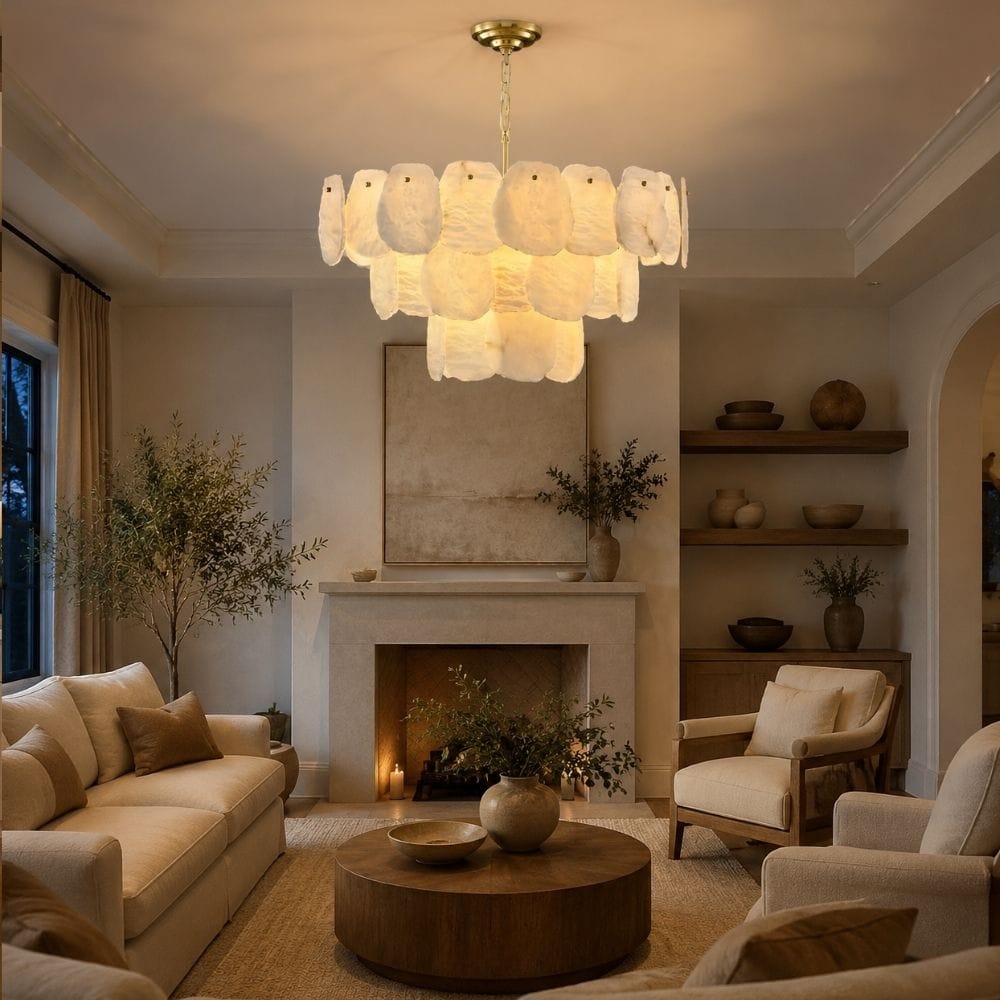
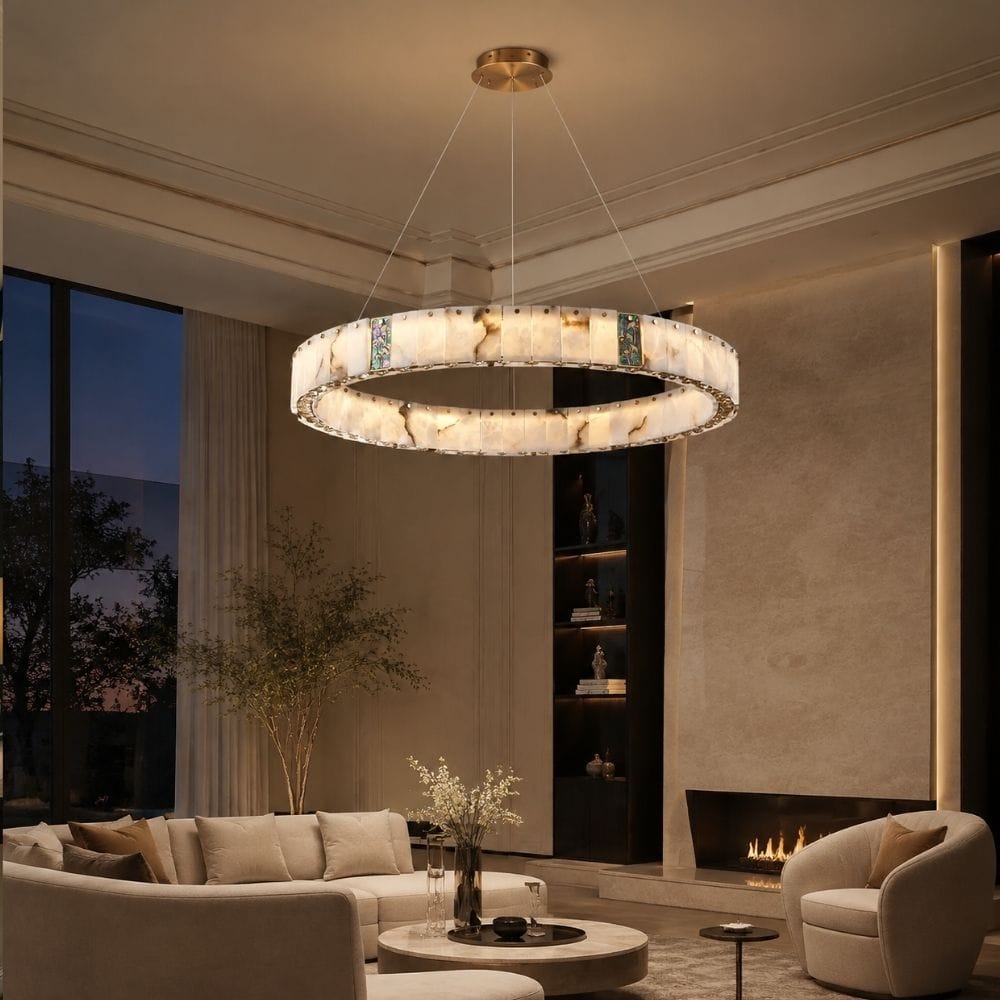
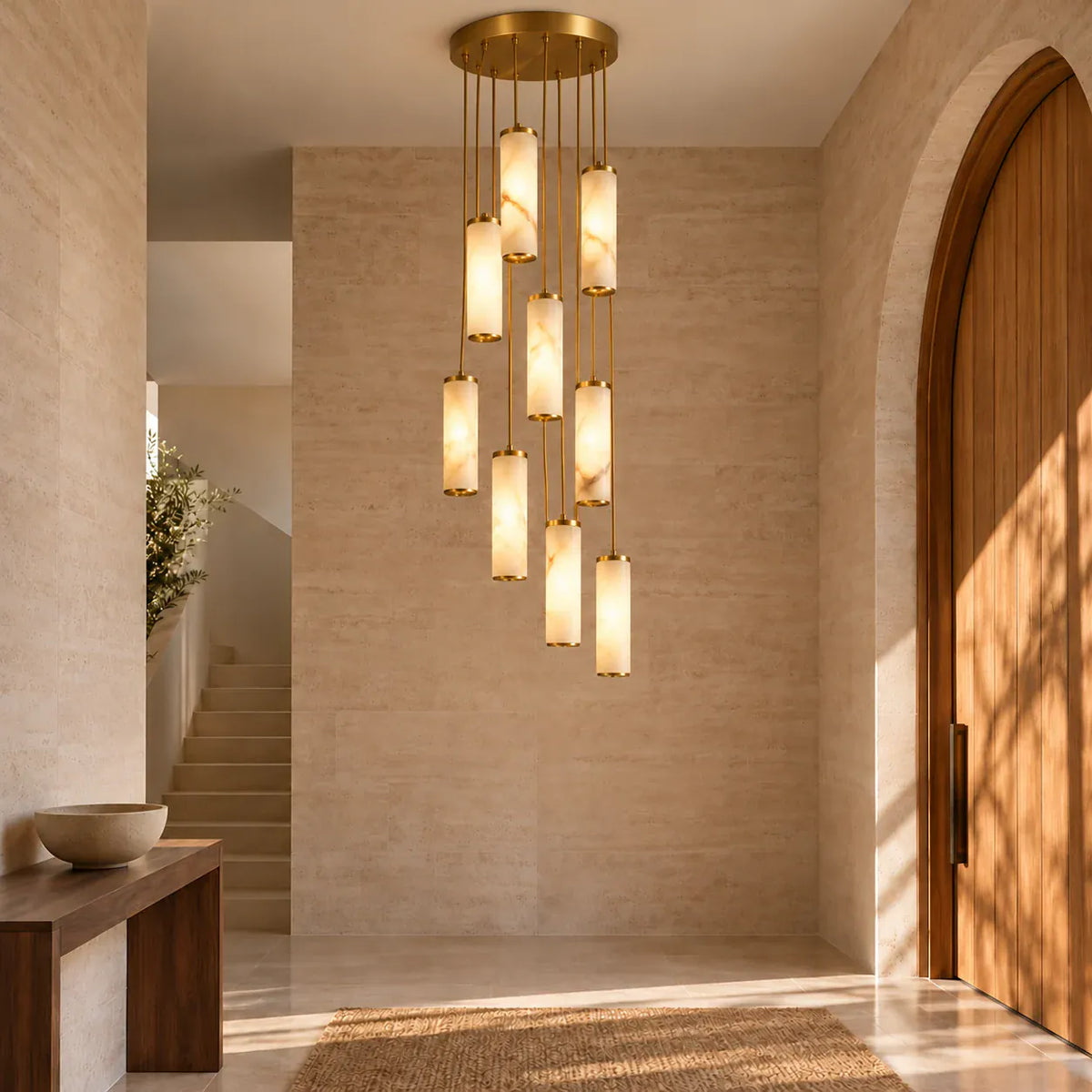
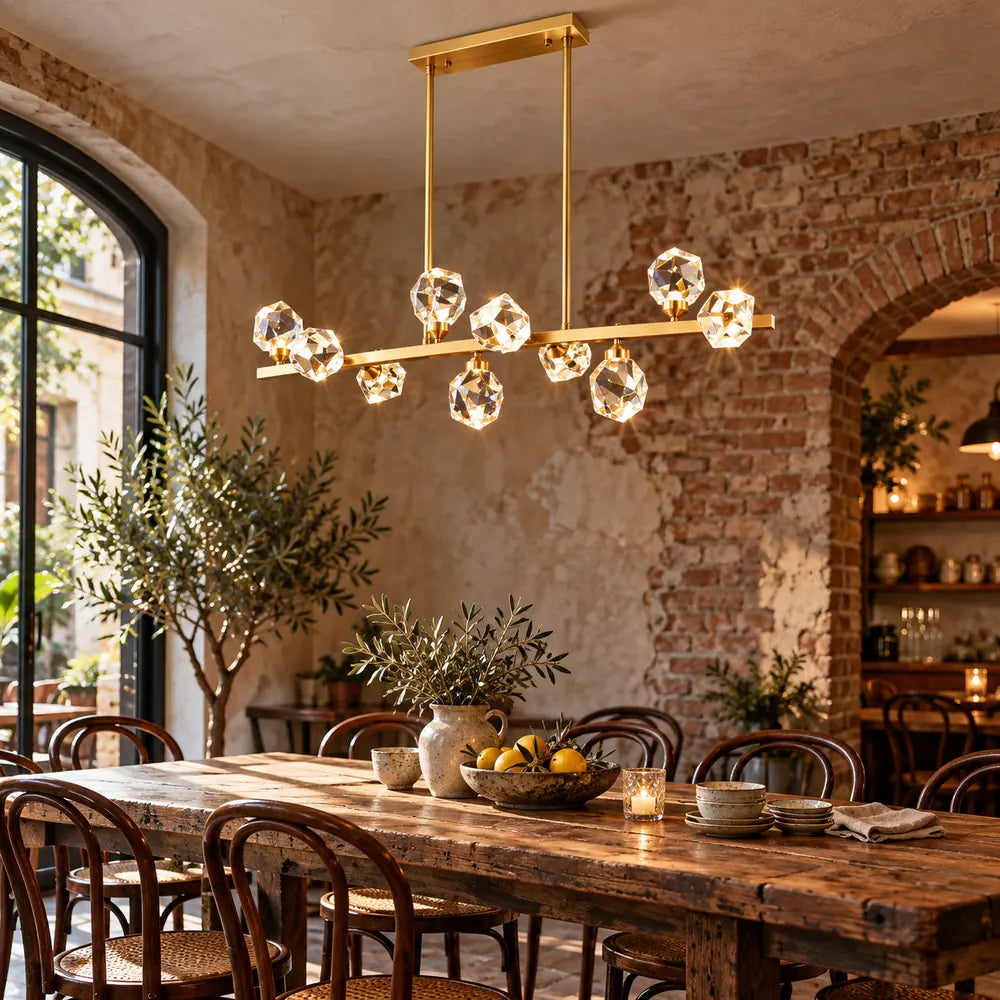
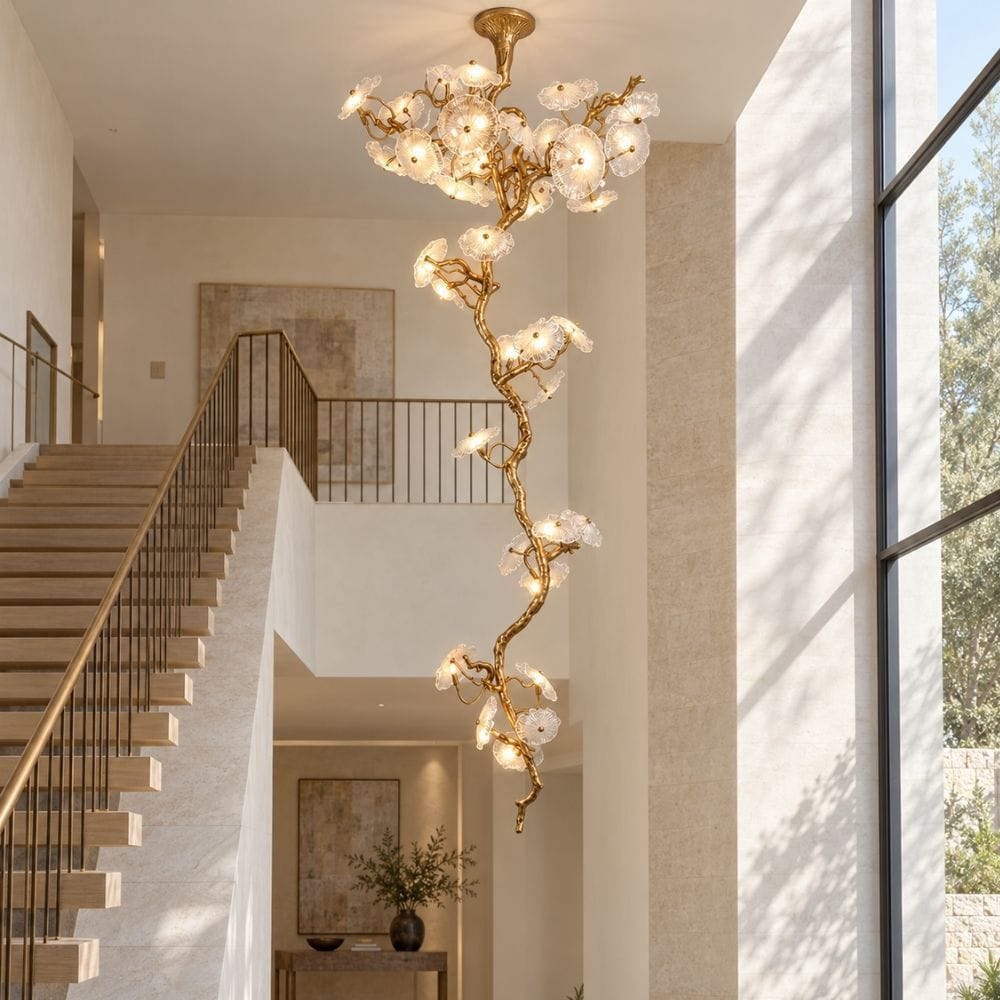
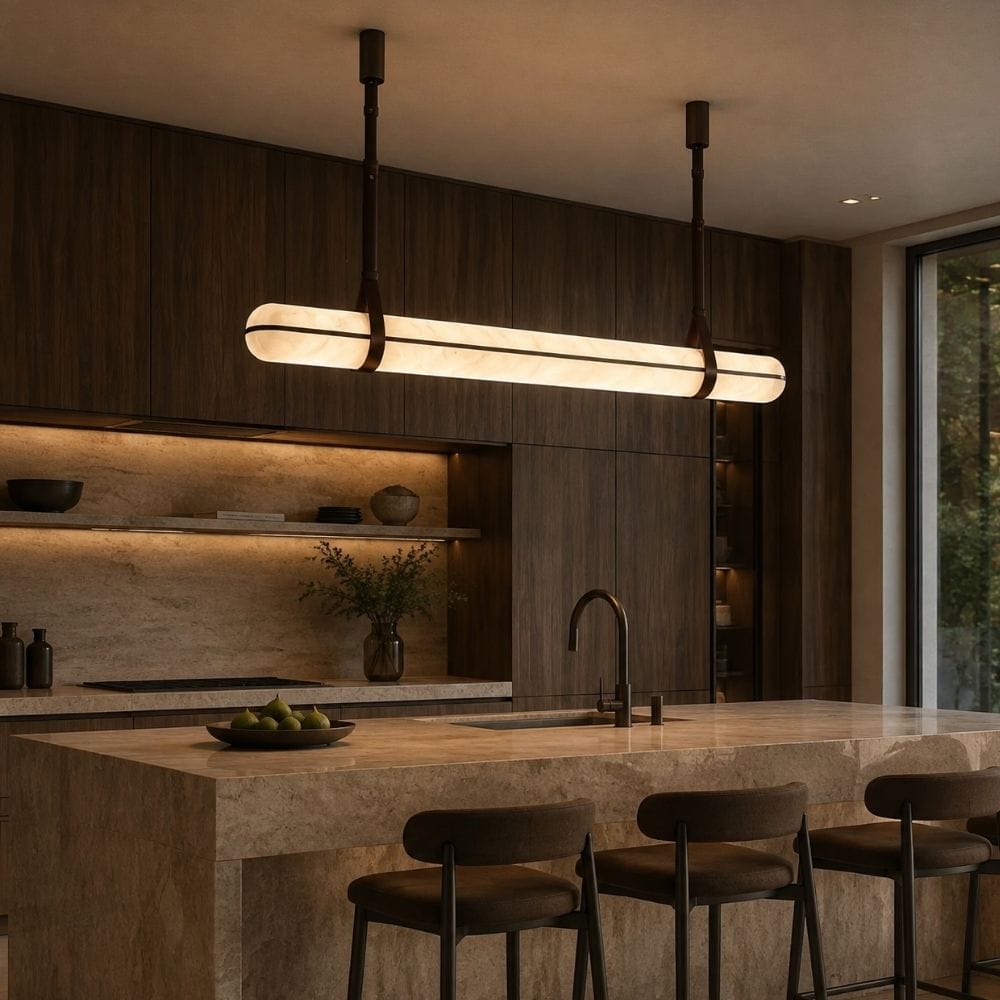
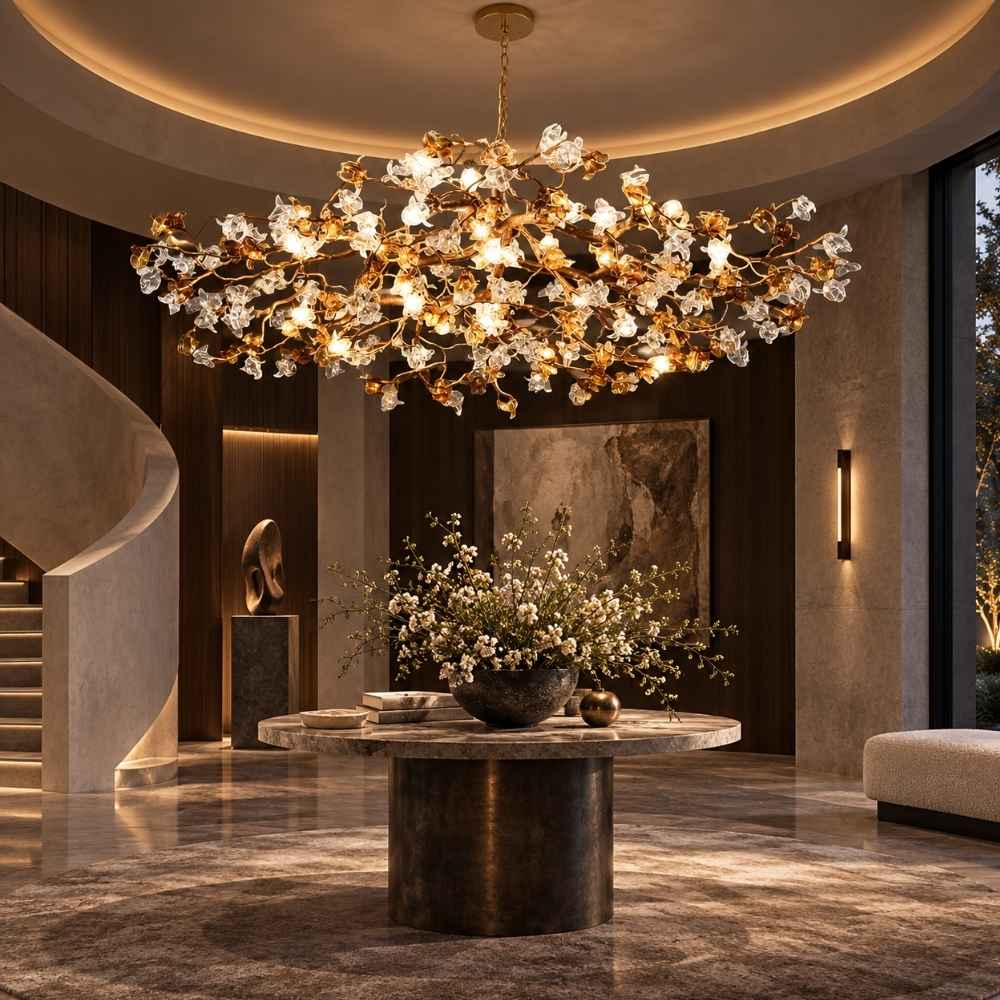
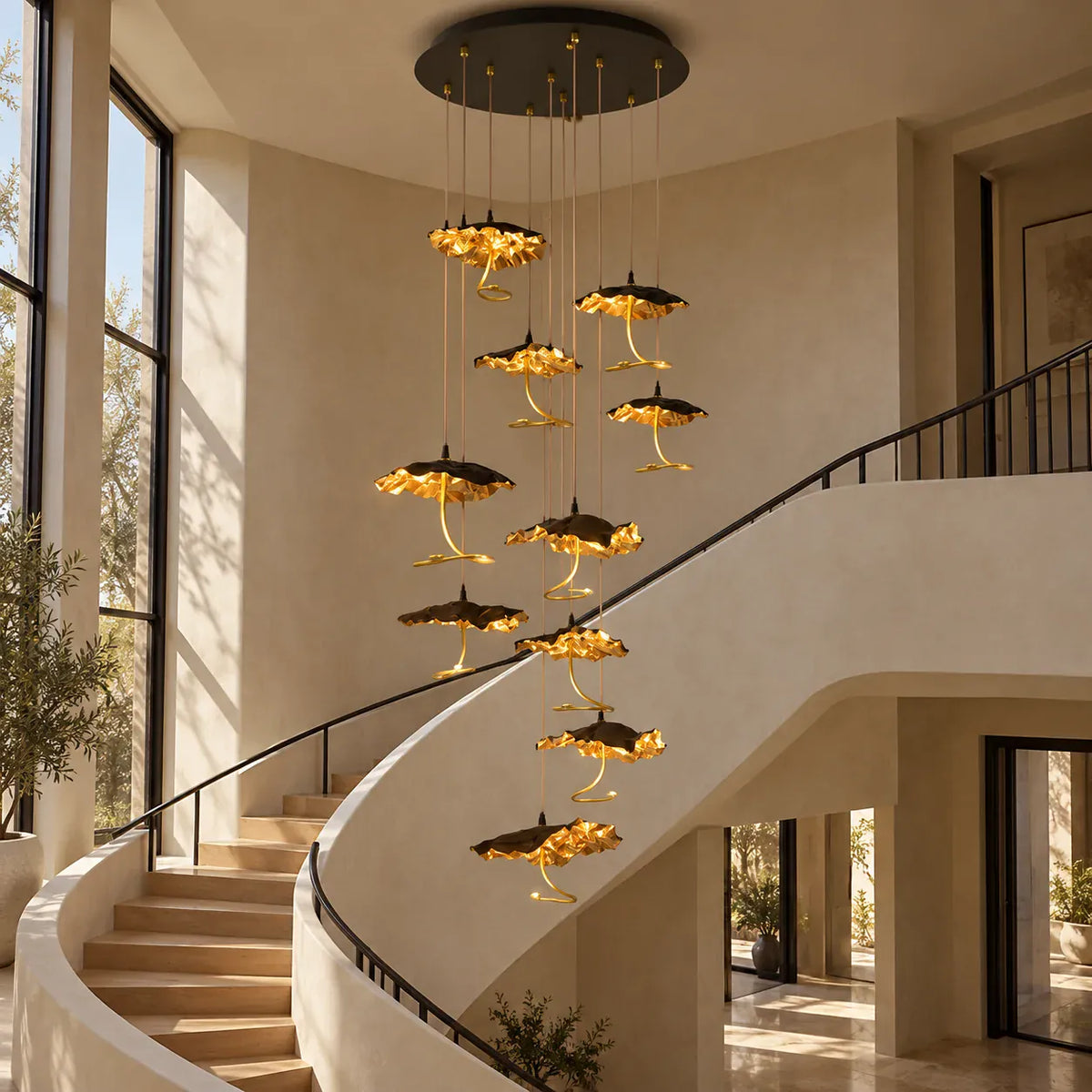
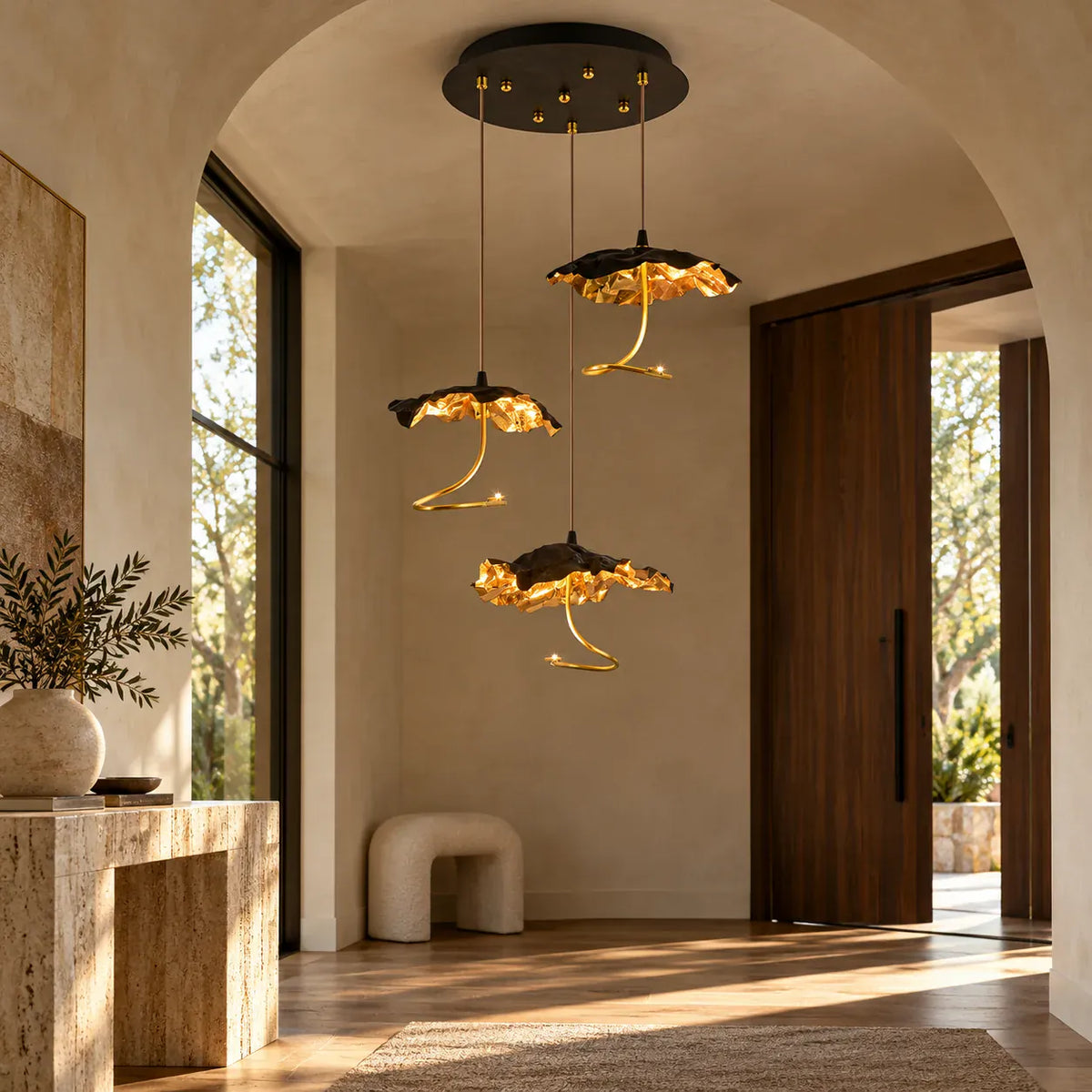
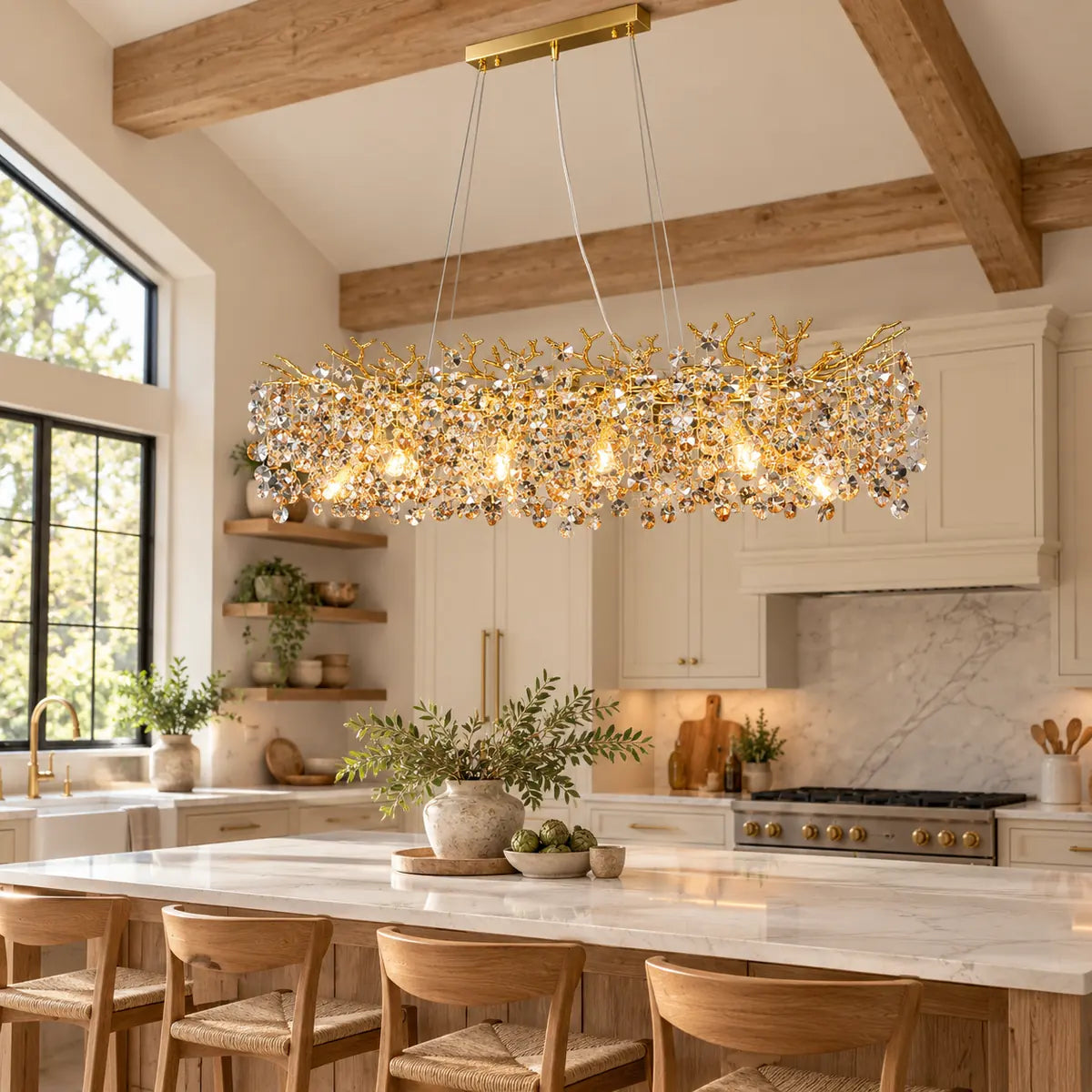
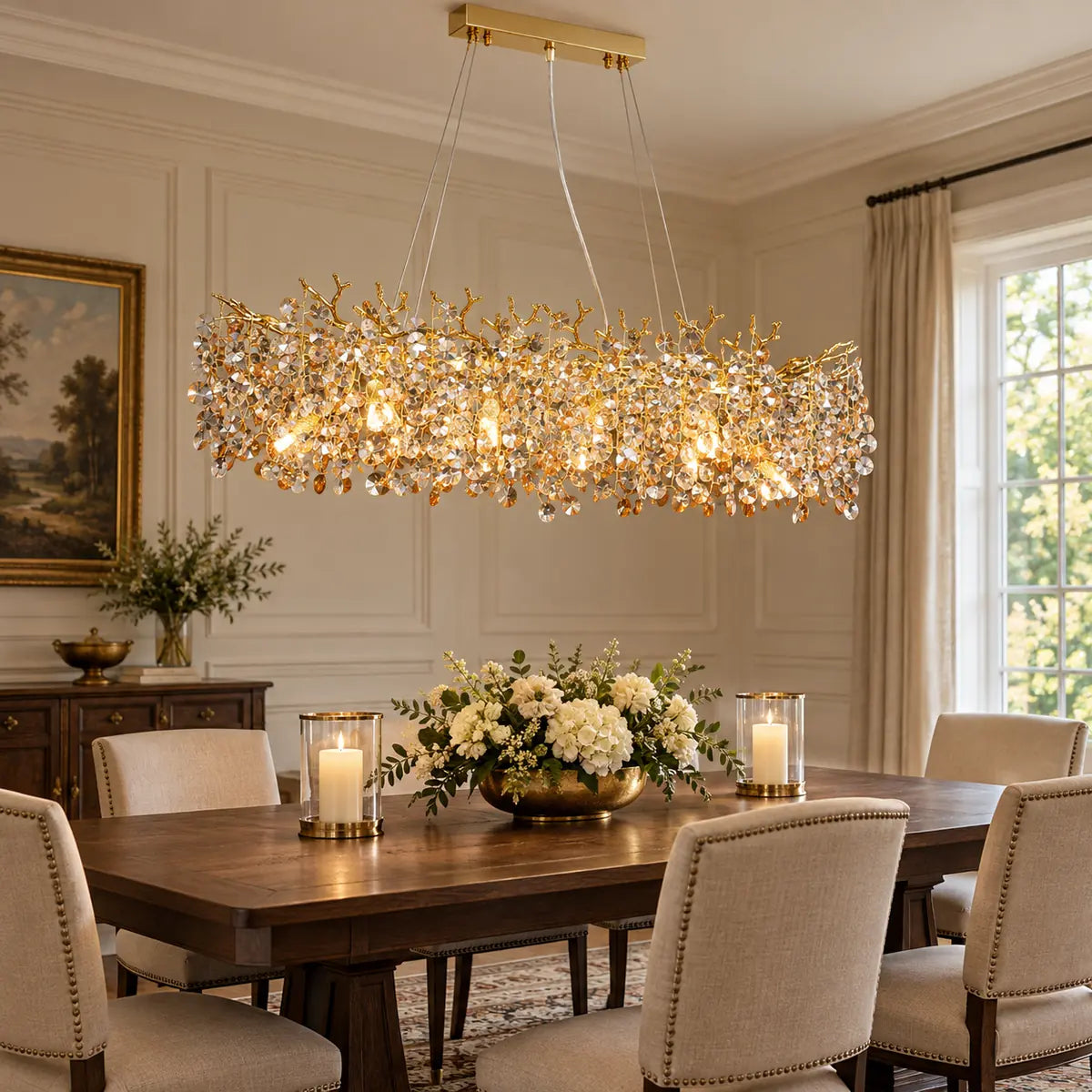
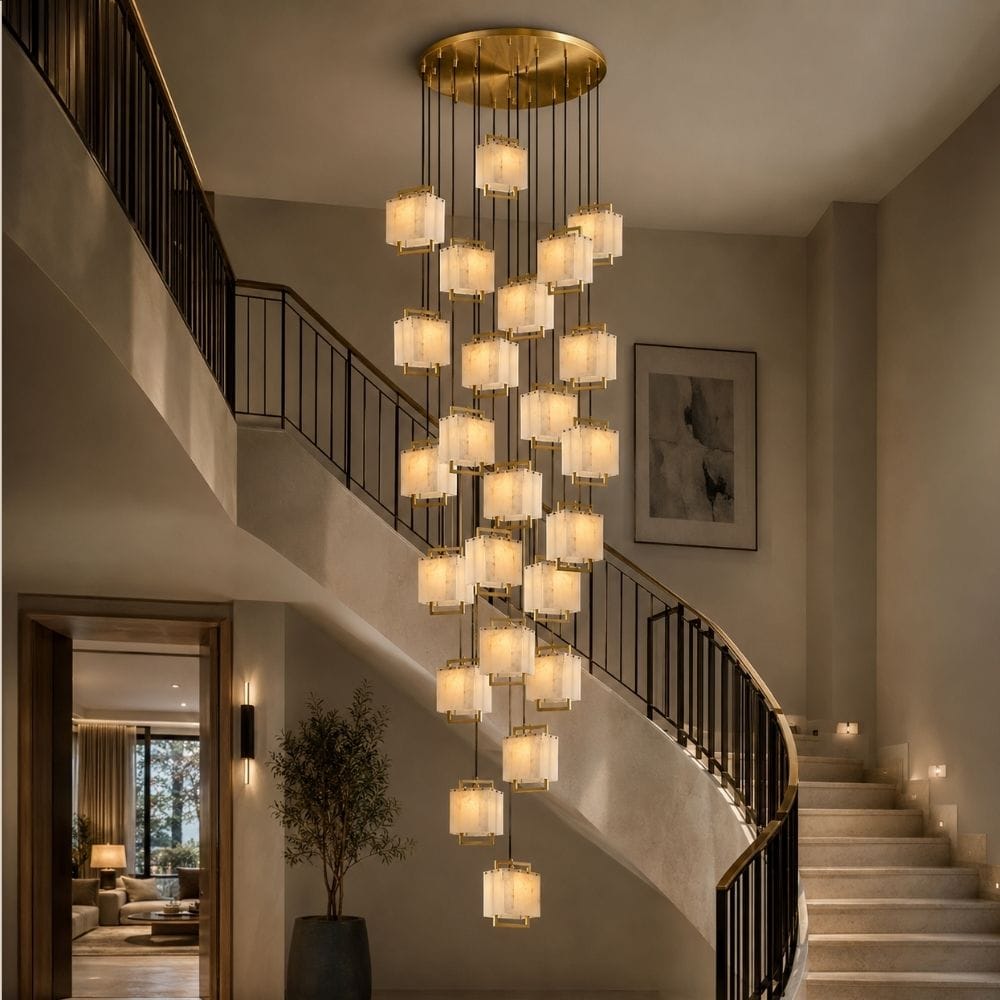
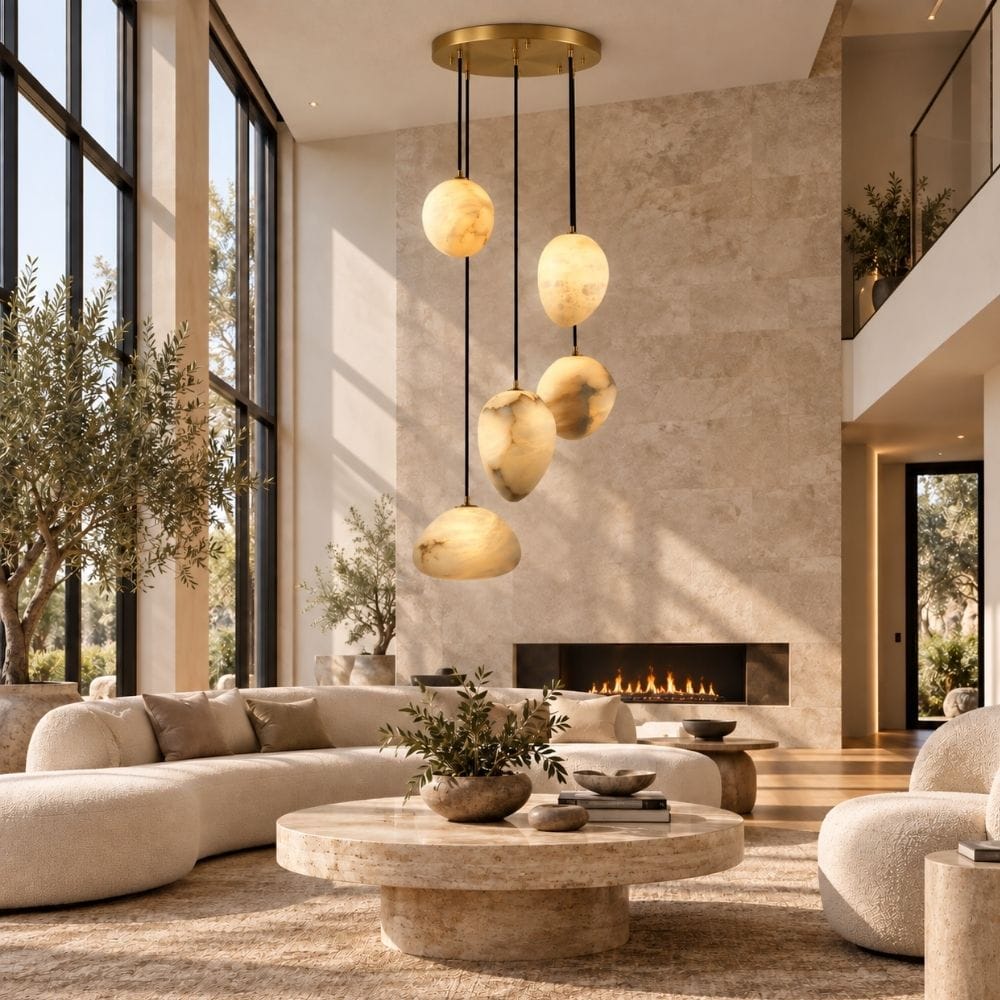
Interior design's metal pendulum swung — from the chrome-and-nickel decades to the current warm era — for a reason rooms feel before they name: warm metals flatter. Copper and brass reflect light in the amber band, the same register as candlelight and sunset, so skin tones, wood, and food all read better beneath them. They also age as assets rather than liabilities, developing character where cool metals develop fingerprints. The full warm-metal landscape — gold, brass, and copper compared across undertone and pairing — is mapped in our warm metal finishes guide.
Copper or Brass: The Two-Sentence Distinction
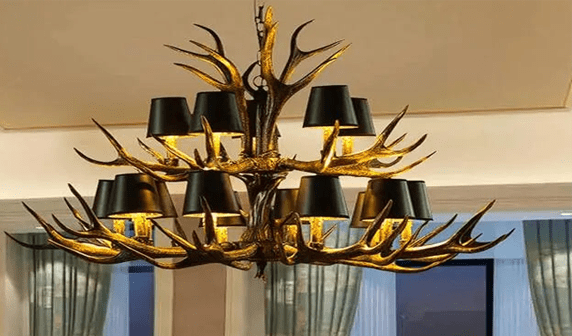
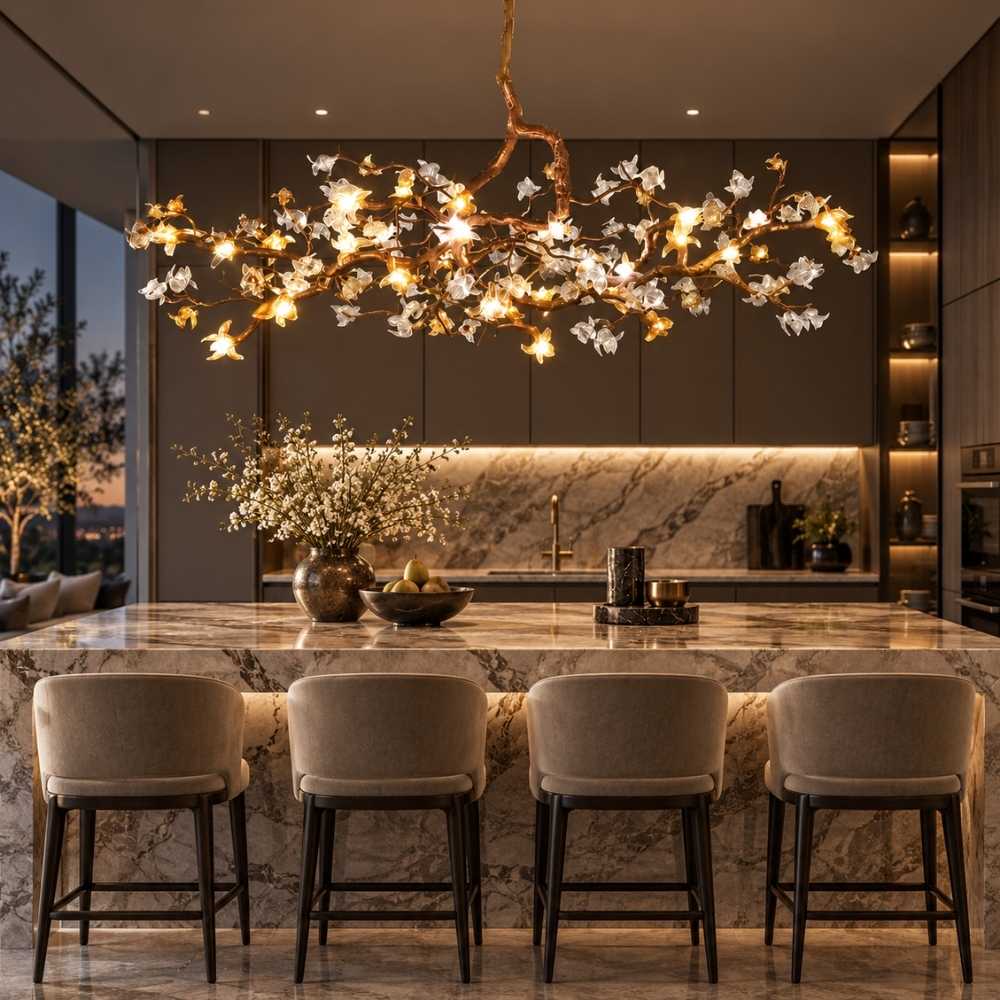
Copper is the livelier metal — rosier and pinker in tone, brighter in reflection, and a living finish that deepens toward russet character over years unless sealed. Brass is the steadier one — golden, muted, and stable, holding its tone for decades with almost no attention. Choose copper where the fixture should feel like an event (kitchens, dining rooms, rustic and industrial spaces it was born in); choose brass where it should feel like architecture (the whole-home default that agrees with everything). The deeper comparison, with picks, is in our copper and brass design guide.
Finishes Across the Warm Range
- Brushed: fine directional grain that softens reflections and hides touches — the modern default for both metals
- Polished: the mirror register — formal, jewelry-bright, best used on one statement rather than everywhere
- Burnished and aged: pre-deepened tone with the years built in — the character finish for rustic, traditional, and collected-looking rooms
- Sealed vs. living copper: sealed copper holds its day-one brightness; unsealed copper patinas actively — a feature to choose deliberately, not discover accidentally
Brass Without the Dated Look
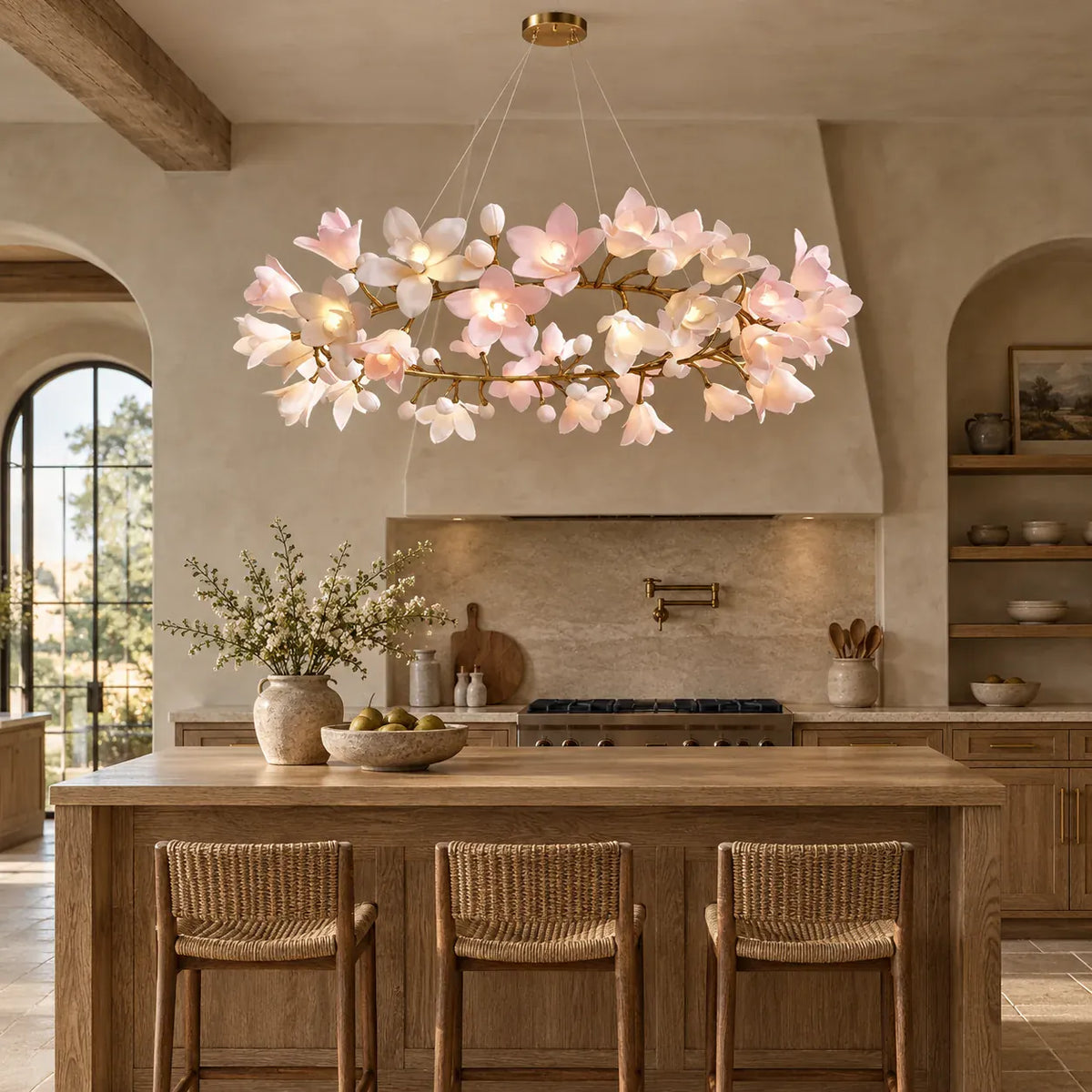
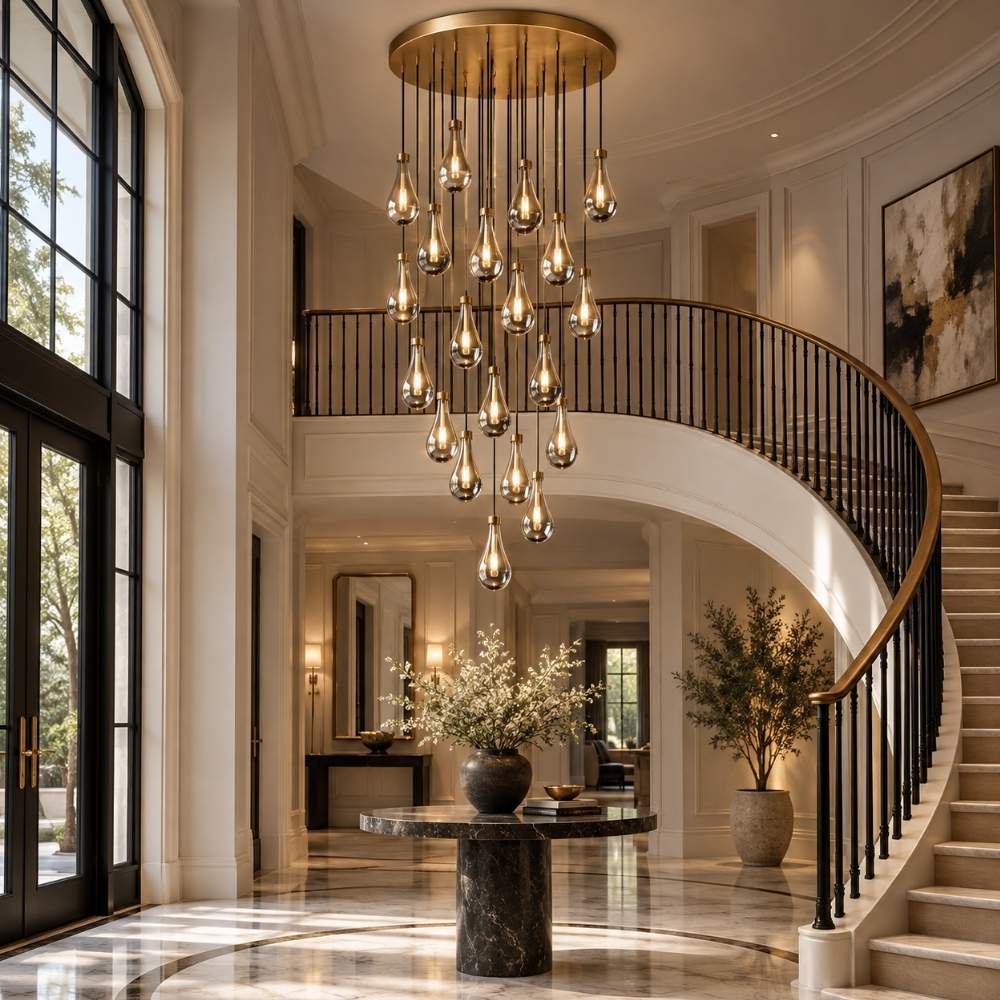
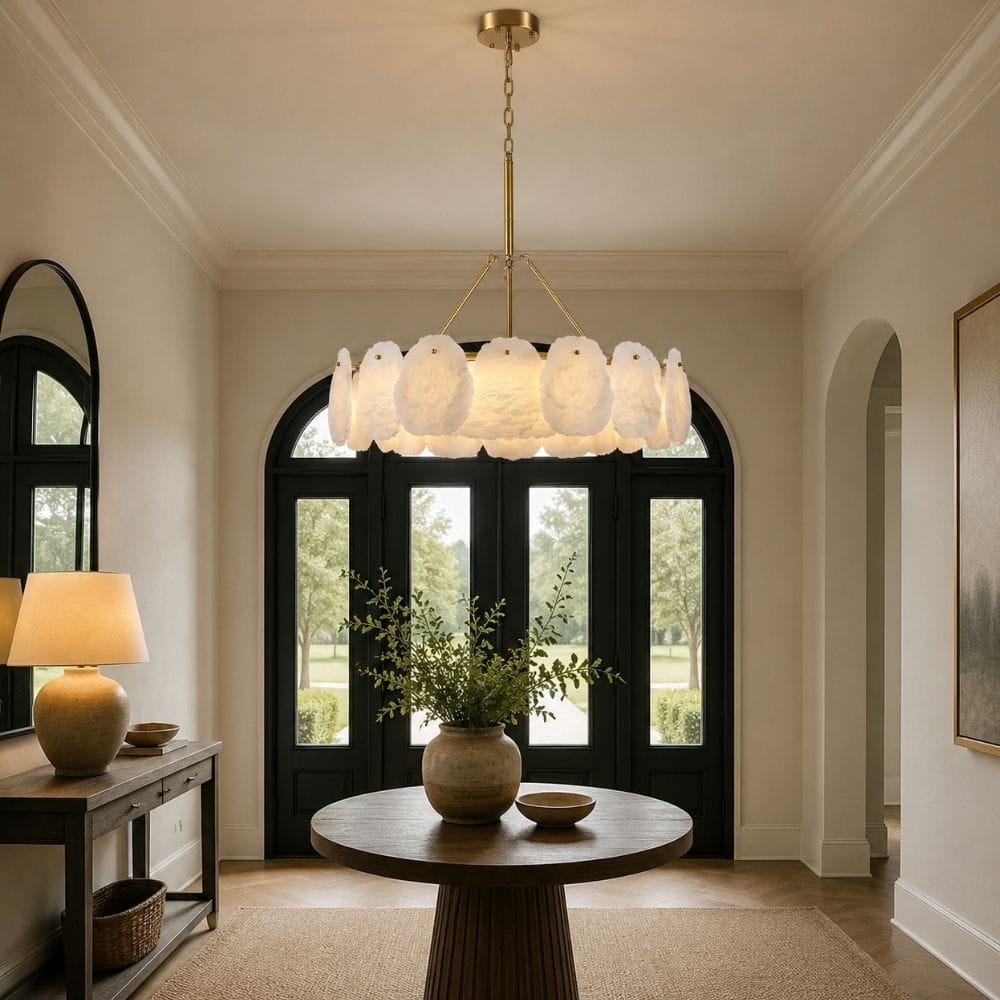
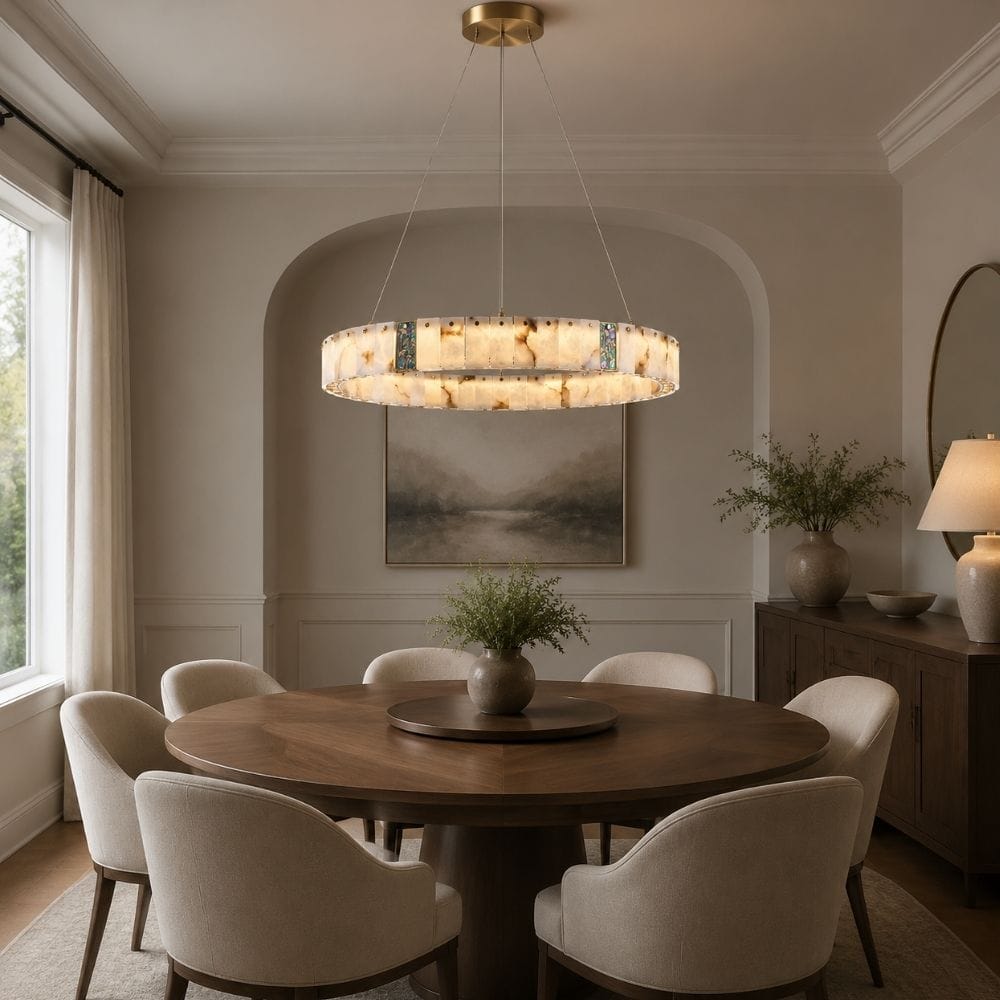
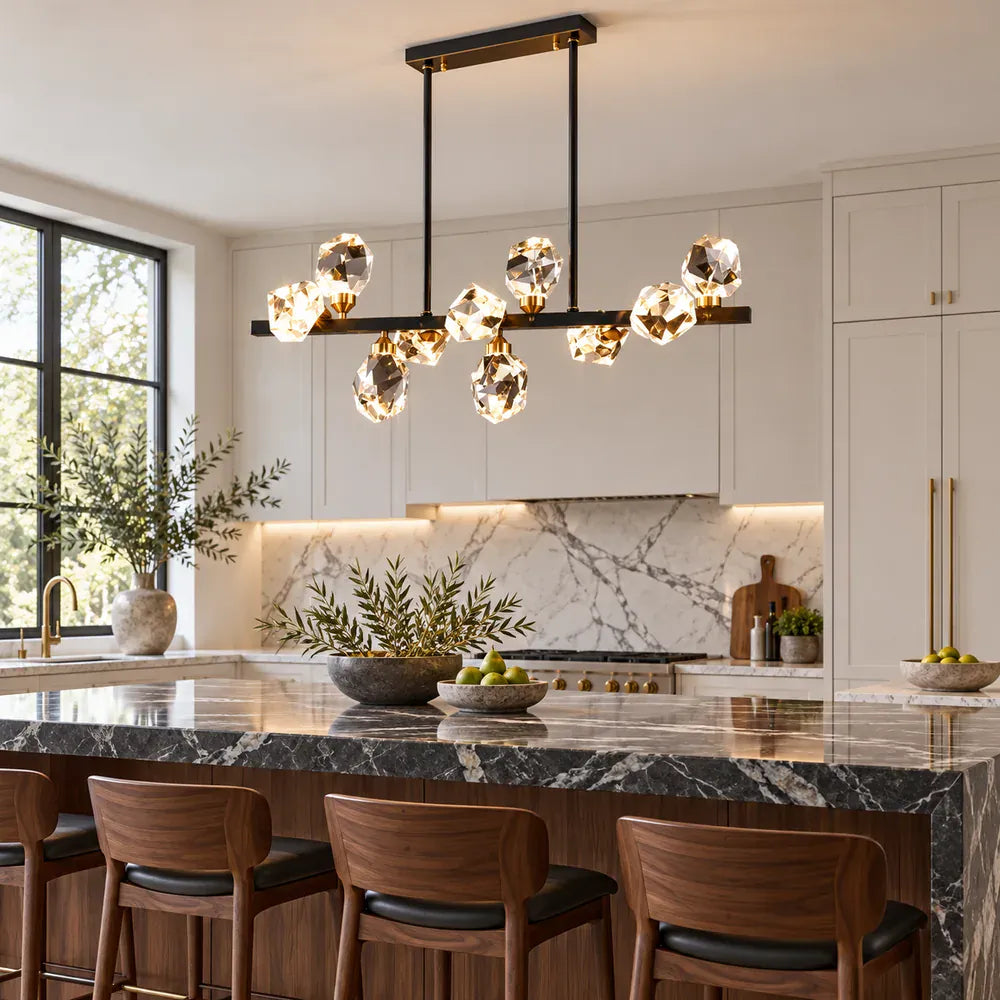
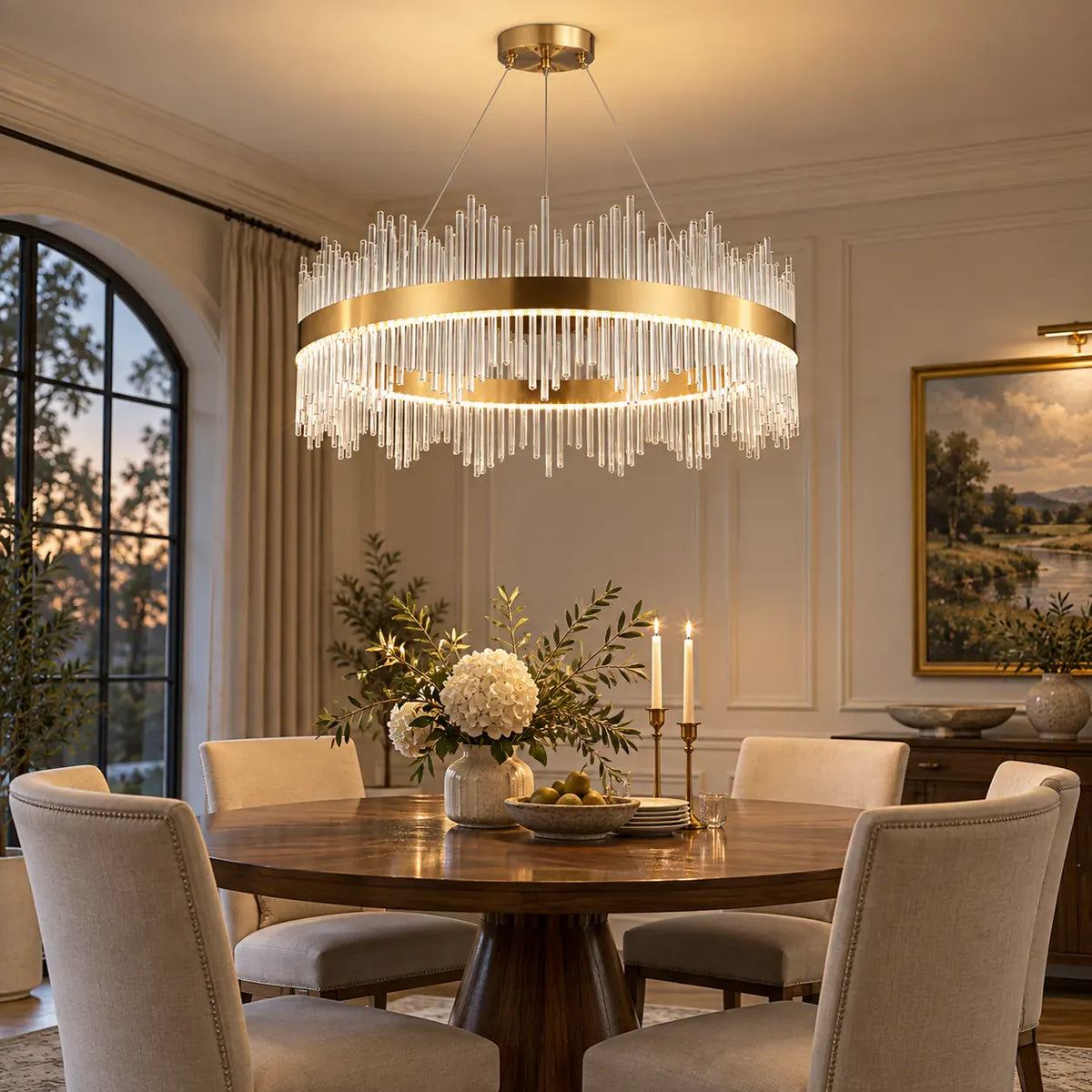
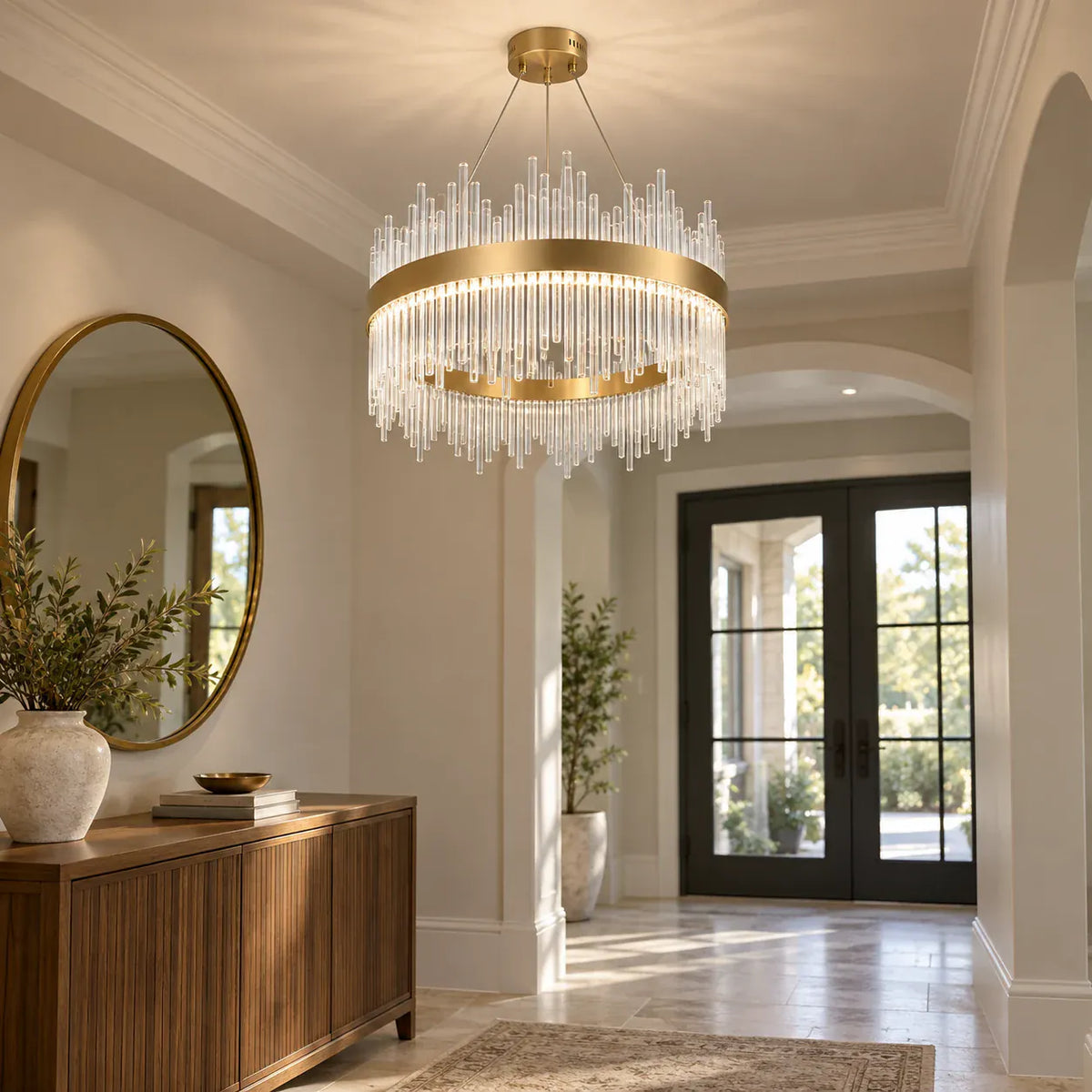
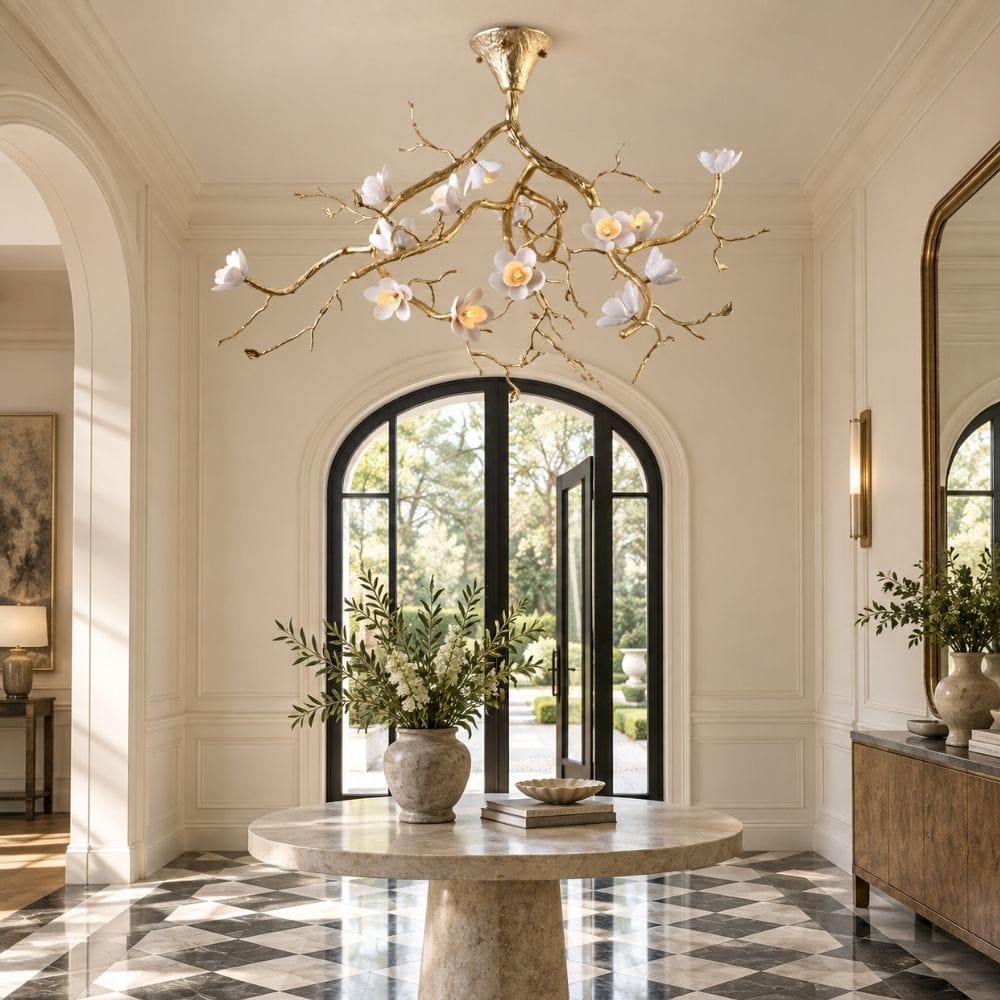
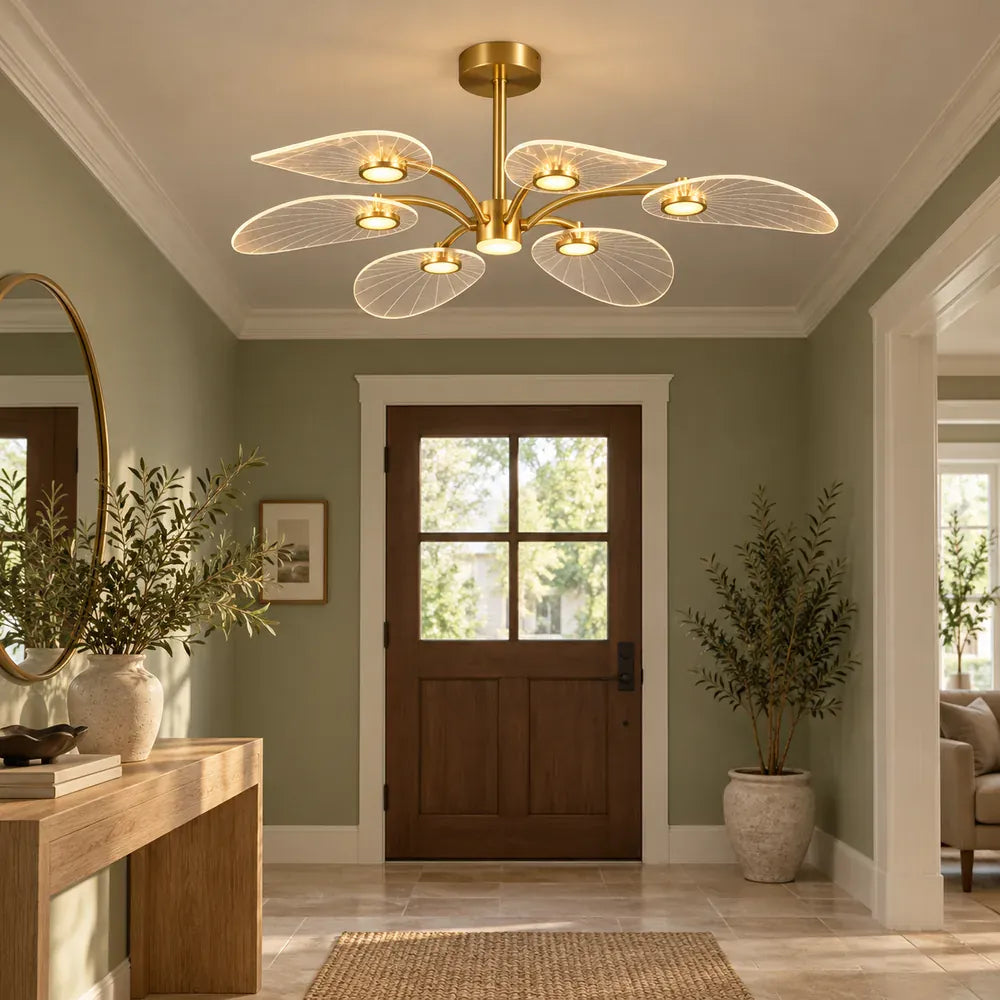
The fear is specific and fixable: the brass that dated badly was the 1980s builder package — thin polished plating on traditional silhouettes, everywhere at once. Current brass avoids all three mistakes. Keep the frame modern (rings, clean arms, sculptural geometry — the silhouette does more than the metal), keep the finish brushed or burnished rather than mirror-polished, and deploy it as an accent metal rather than a total scheme — one warm statement against black, wood, or glass reads current precisely because it is outnumbered. Mixing rules — brass with black, chrome, and bronze in one home — are covered in our metal mixing guide.
Pairings the Metals Love
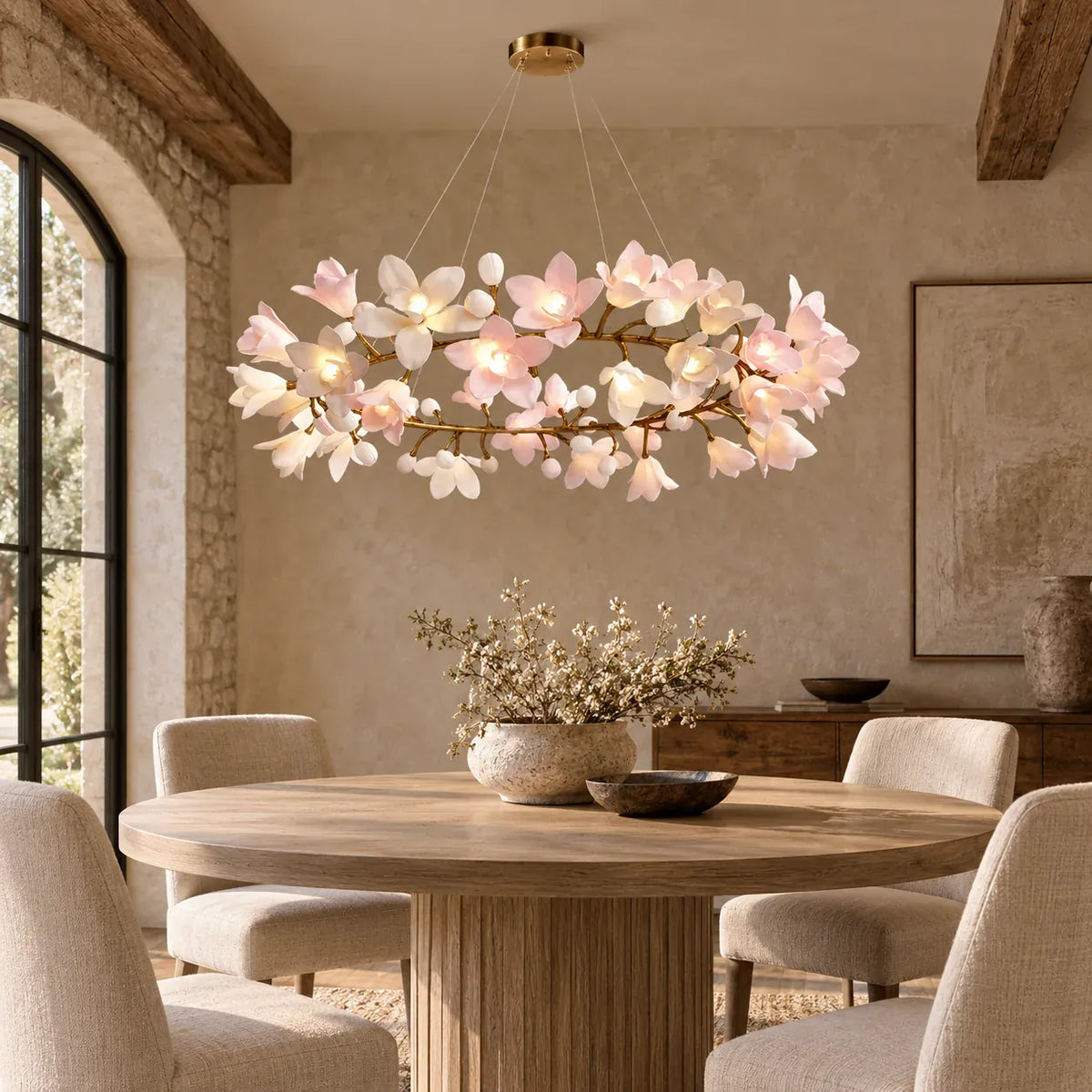
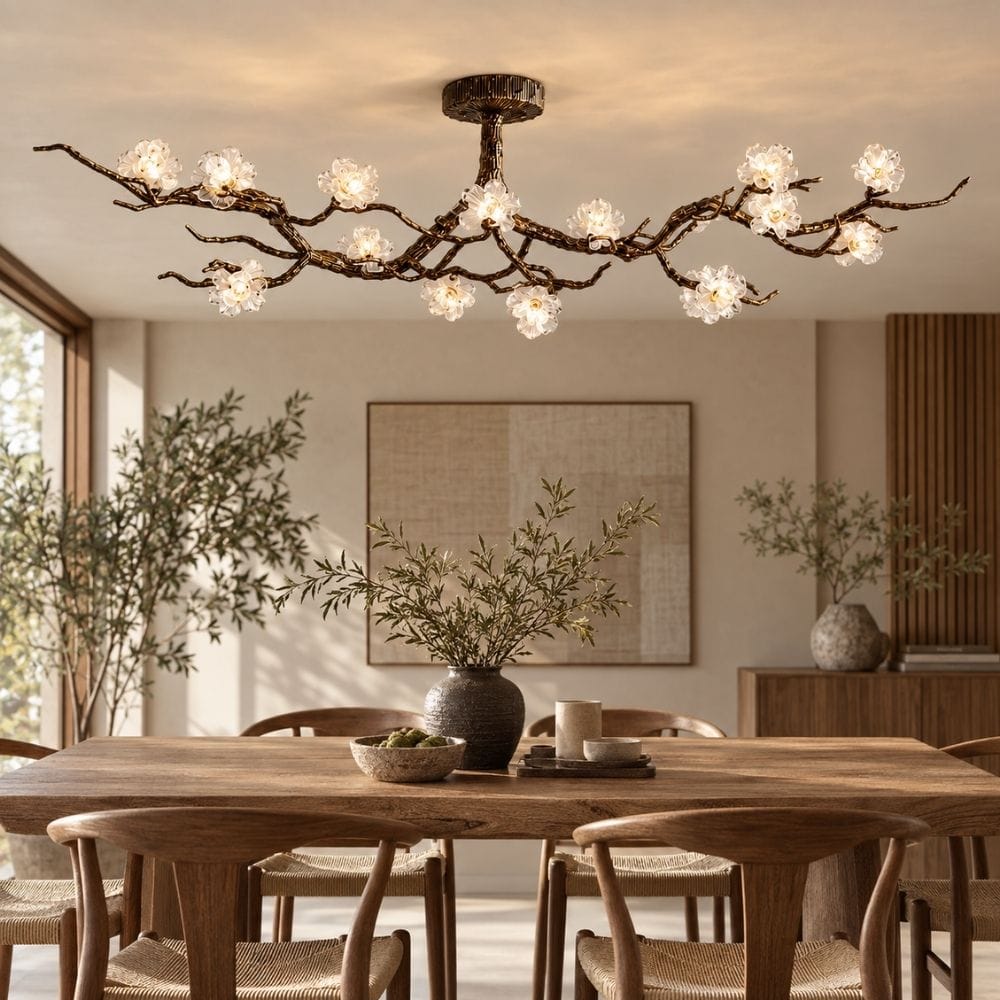
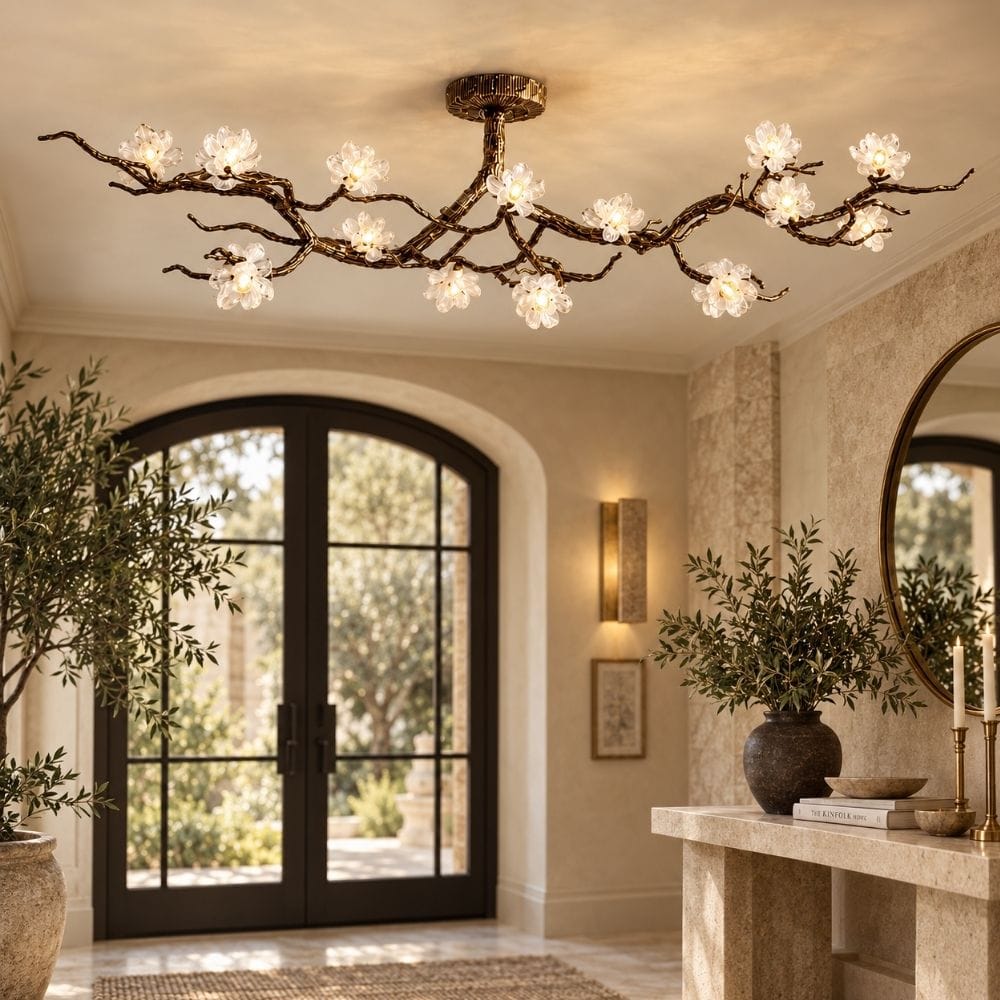
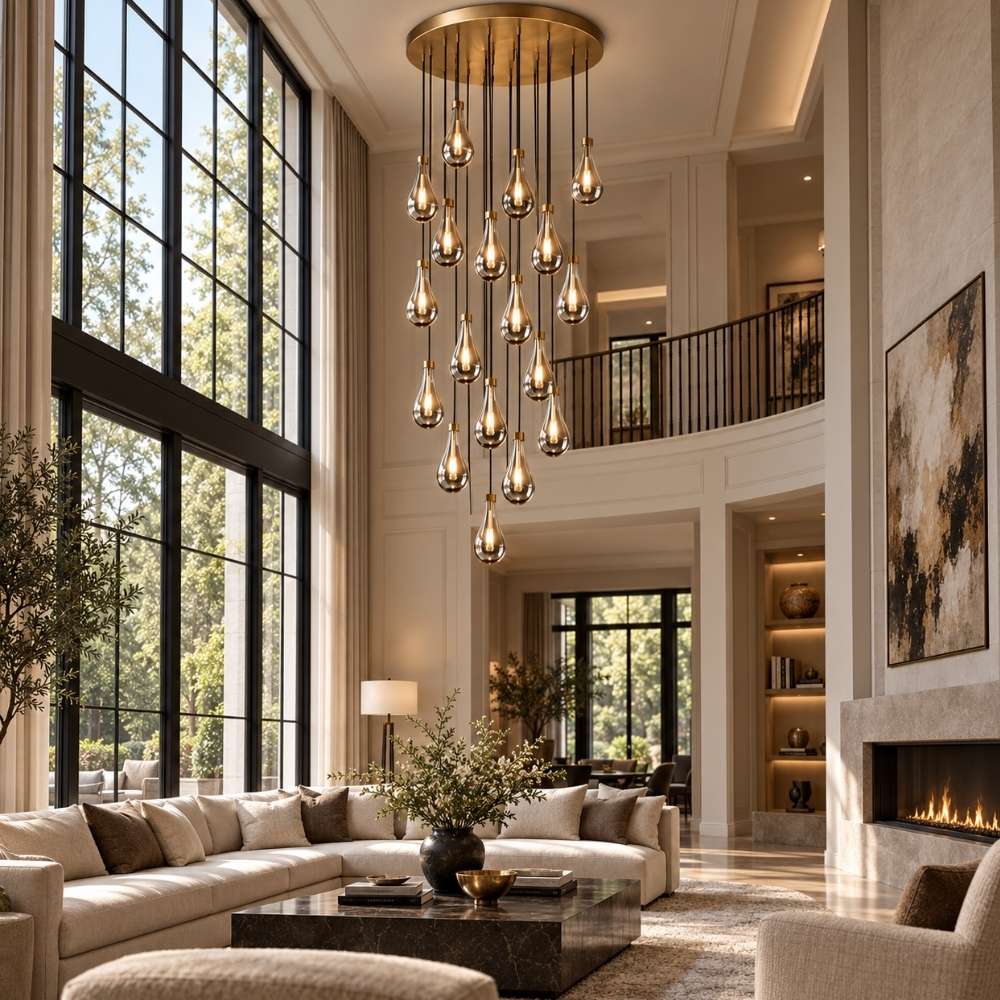
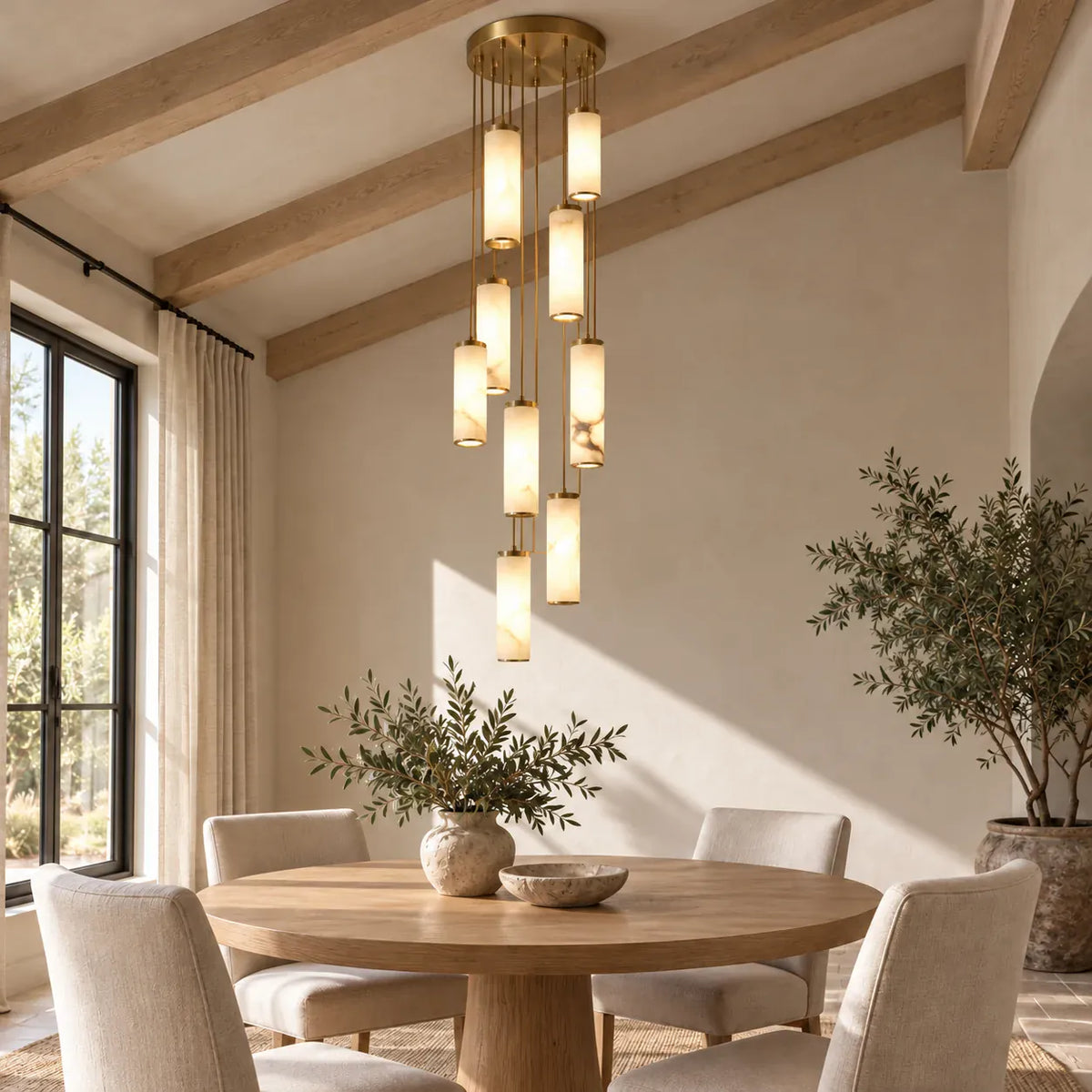
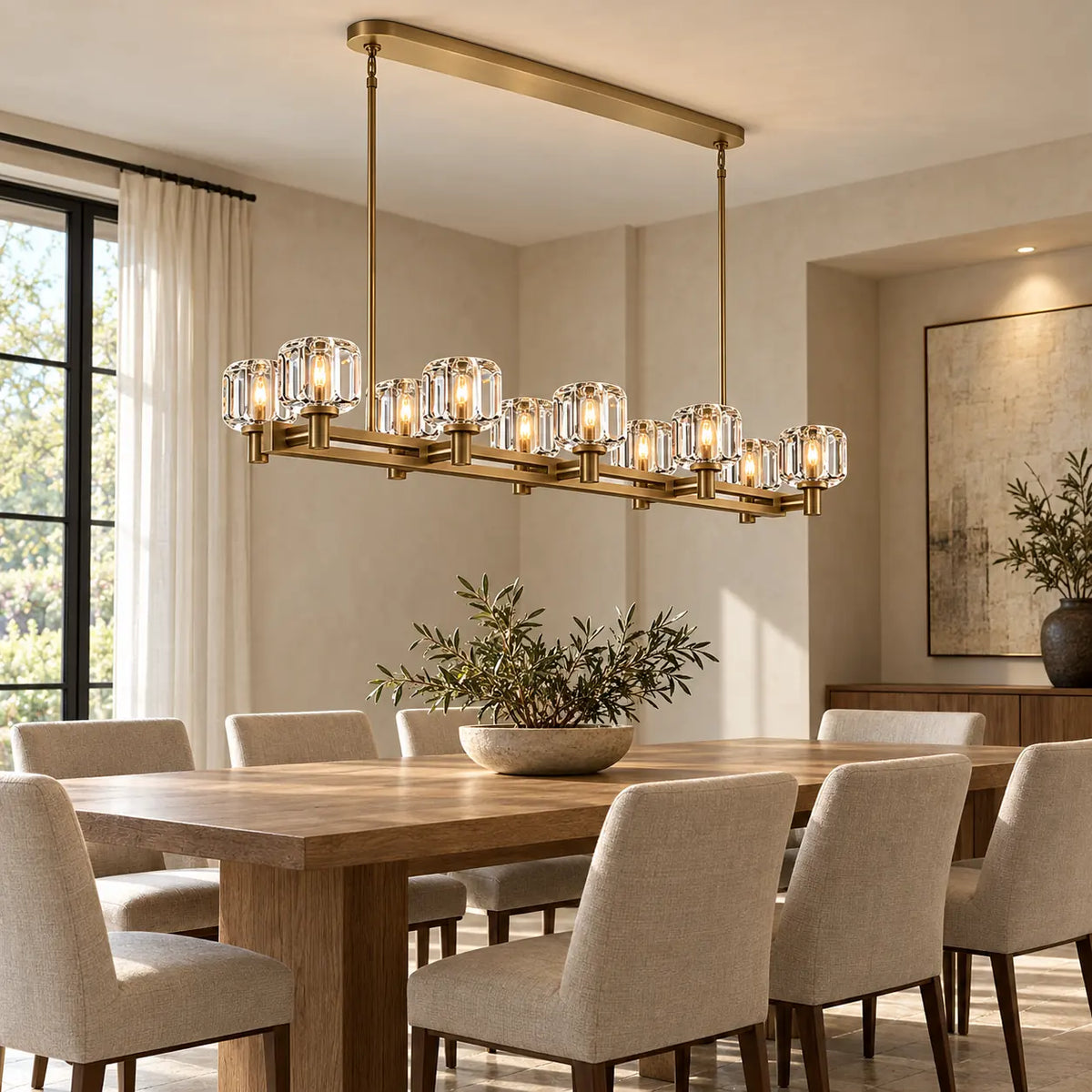
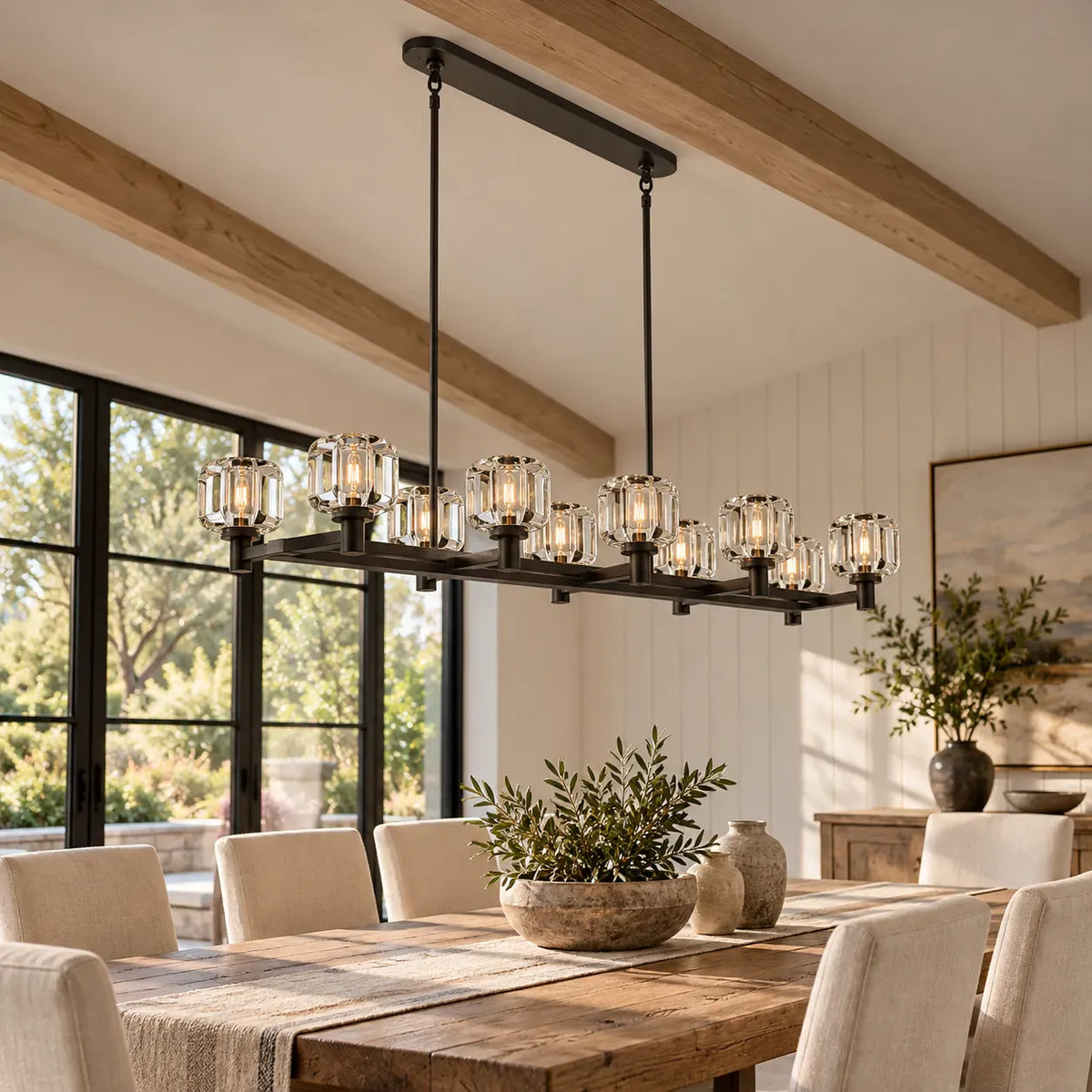
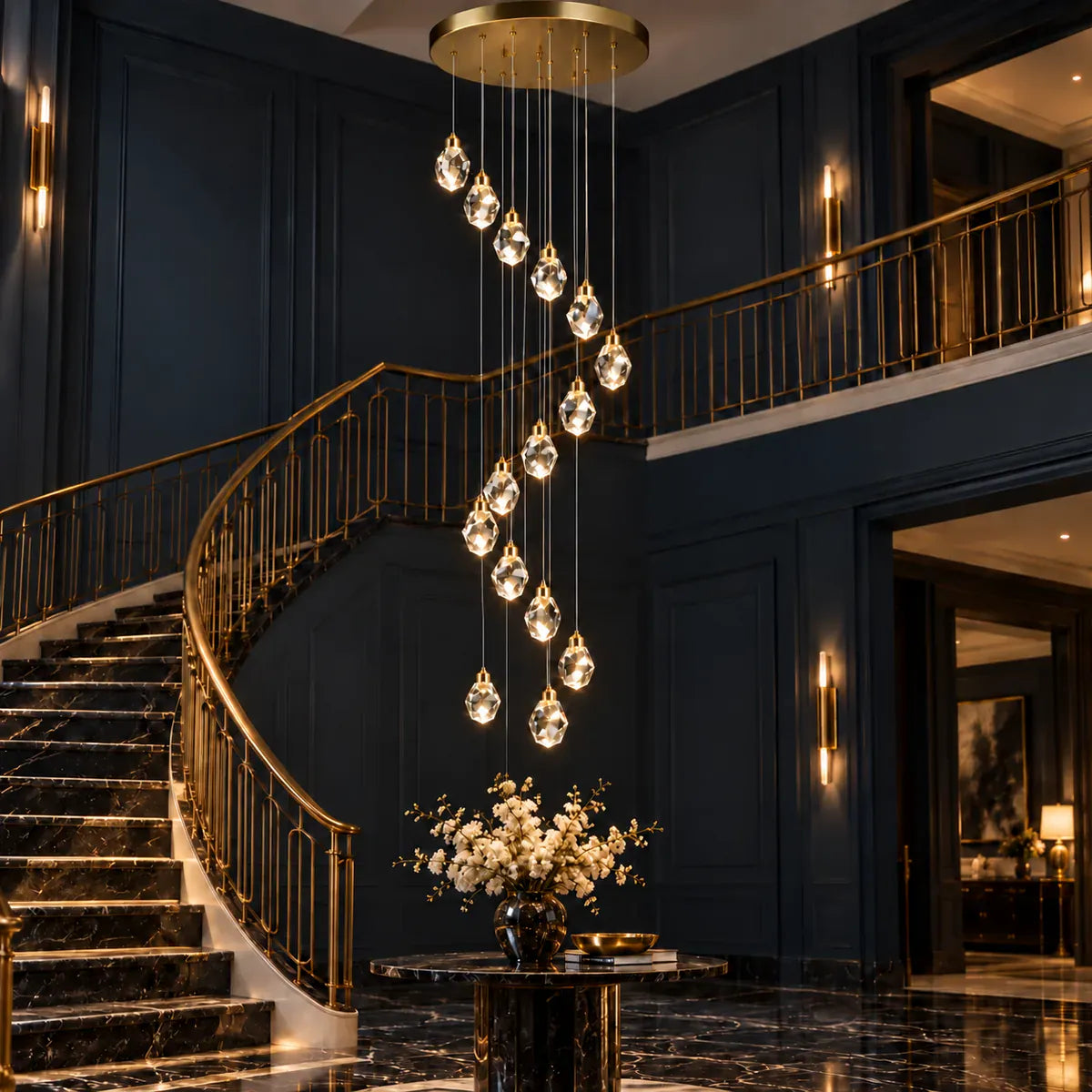
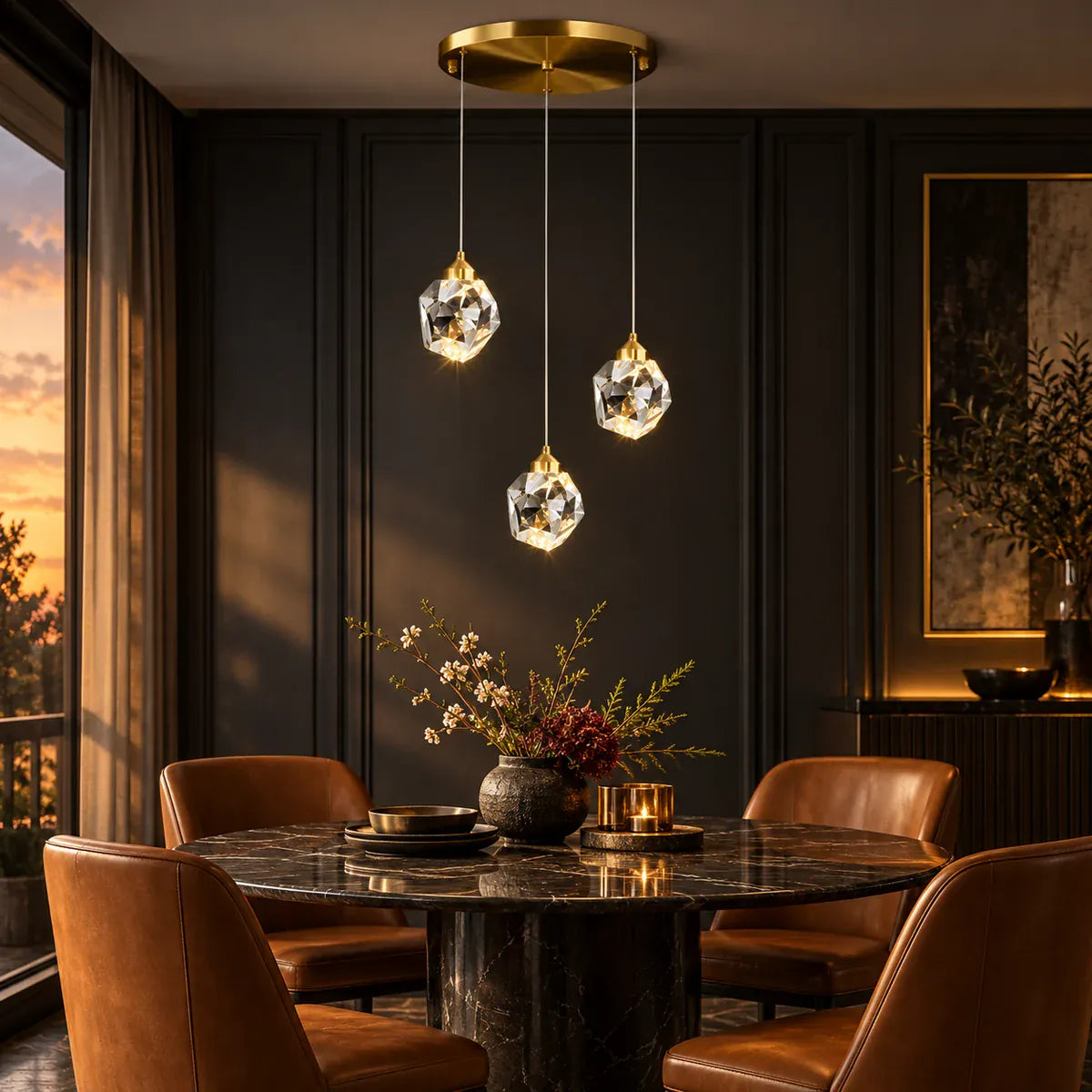
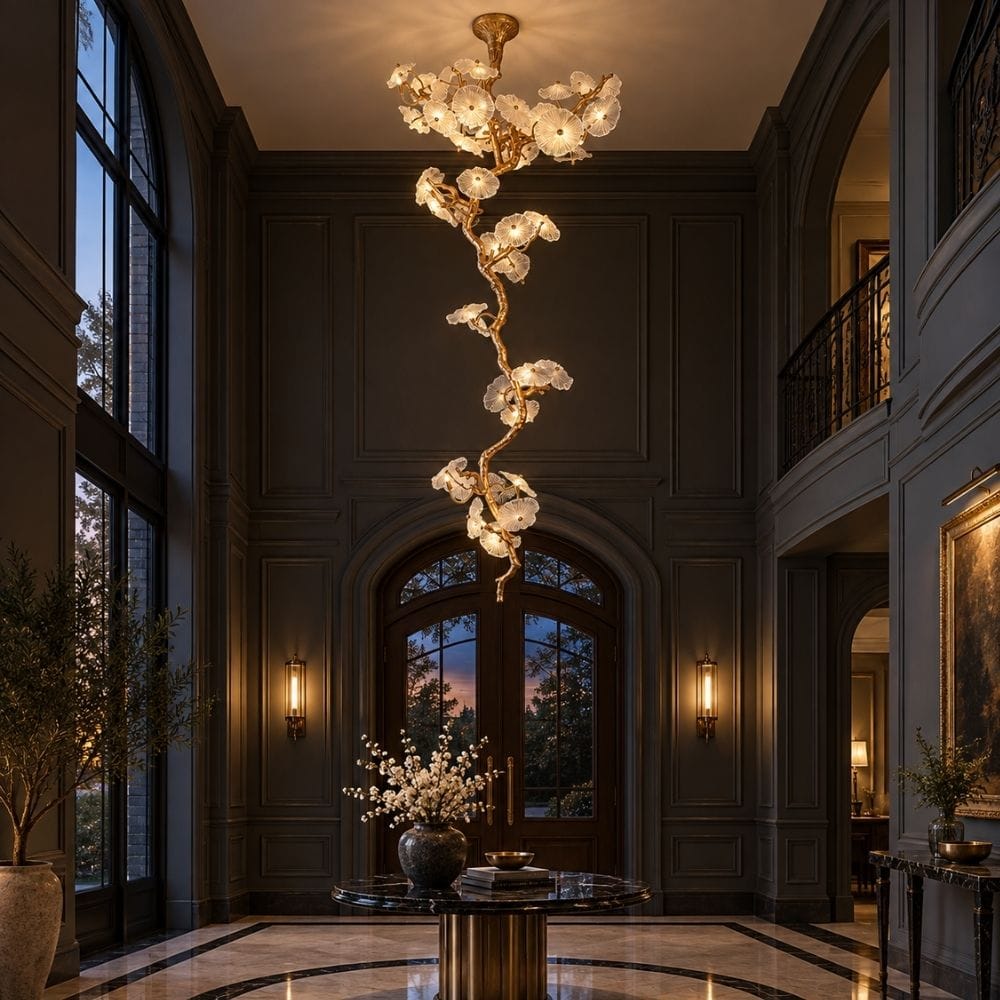
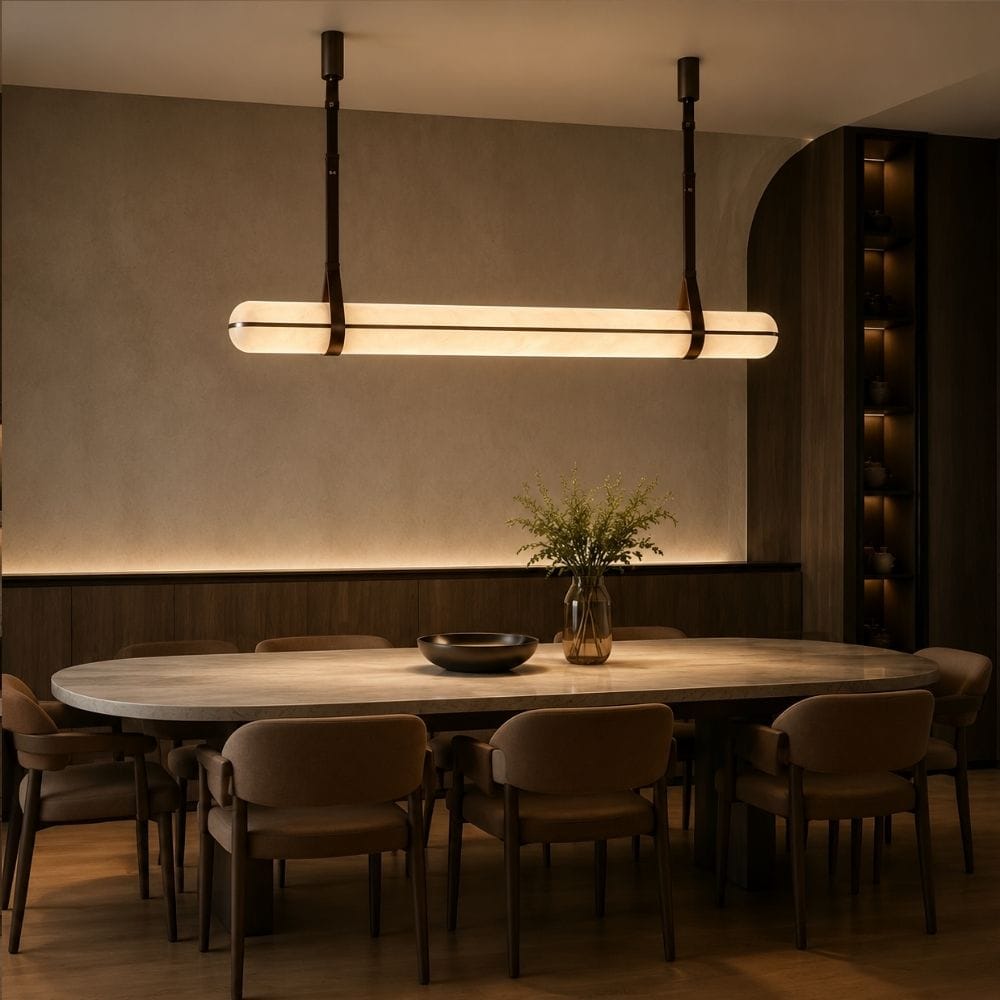
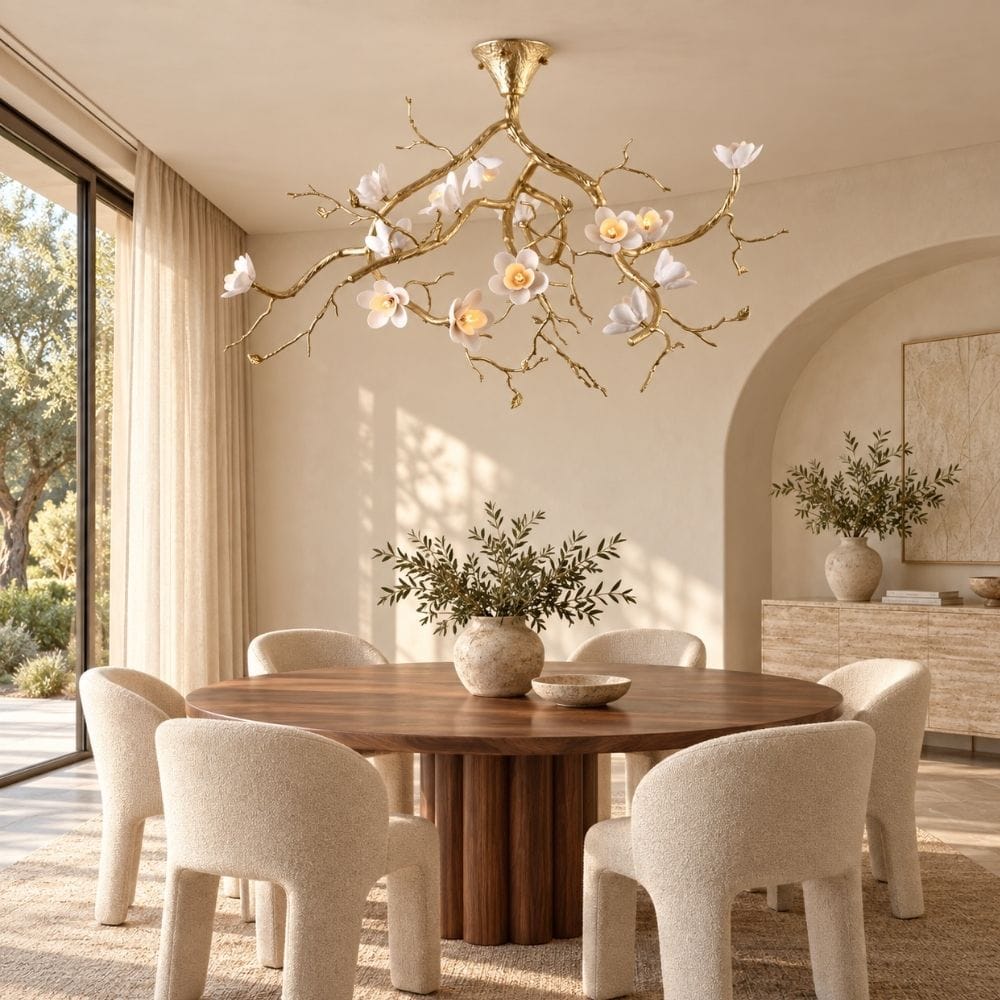
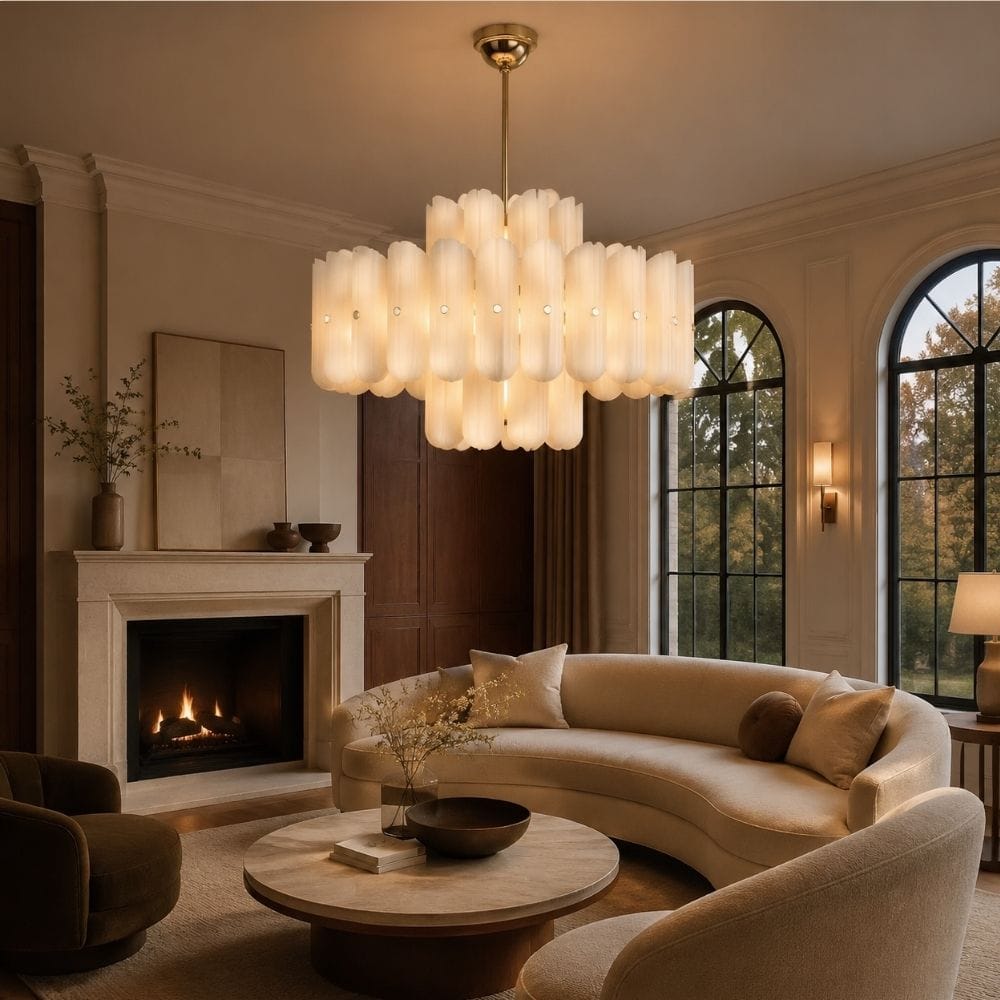
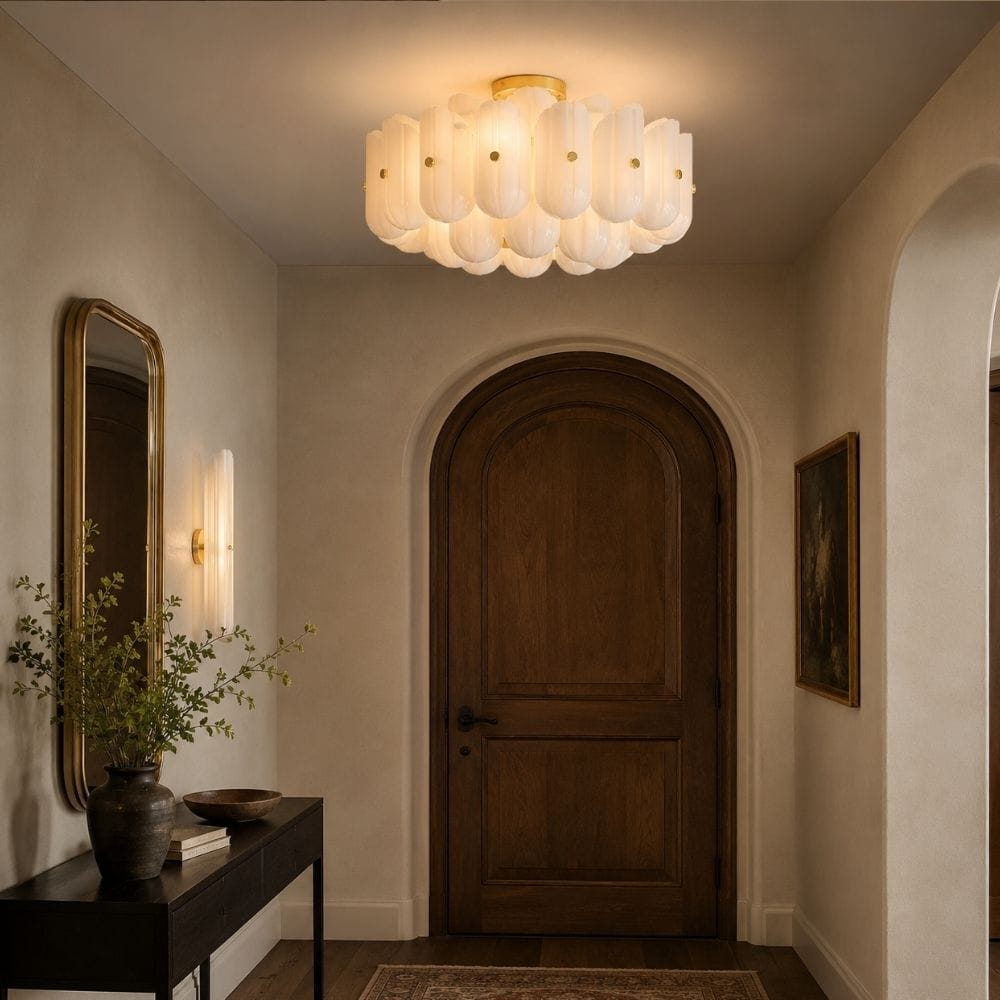
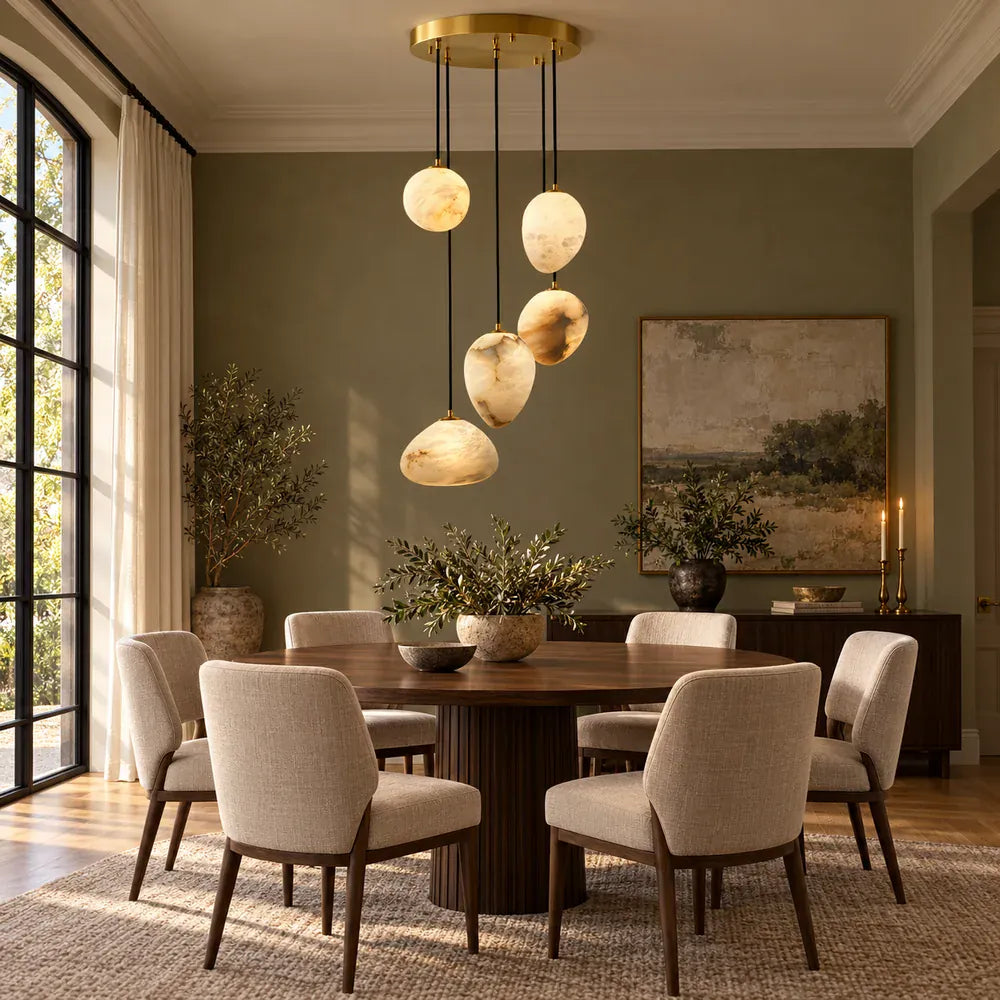
Copper and glass is the collection's signature duet — clear or smoked glass bodies on copper frames, each material warming the other. Wood and brass is the organic-modern handshake, walnut and oak meeting the golden tone they were always meant for. Black and brass is the graphic pairing leading current design — matte black frames with brass details, contrast doing the work. And in dining rooms — both metals' favorite address — warm metal above the table returns every dinner in candlelight tones, dimmed warm at 2700-3000K where these finishes do their best work.
Related Collections
Continue the warm family at the gold chandeliers collection, cross to the raw-metal register at the rustic chandeliers collection, and browse the full chandelier catalog for the complete designer range.
Frequently Asked Questions
What is the difference between copper and brass chandeliers?
Copper is rosier, brighter, and a living finish that deepens with years; brass is golden, muted, and stable for decades. Copper for the statement event; brass for the whole-home architectural default.
How do I use brass chandeliers without looking outdated?
Avoid the three 1980s mistakes: keep the frame modern (rings and clean geometry, not traditional silhouettes), the finish brushed or burnished rather than mirror-polished, and the metal an accent against black, wood, or glass rather than a total scheme.
Does copper tarnish?
Unsealed copper patinas — deepening toward russet character, which many buyers choose it for. Sealed copper holds its day-one tone. Check the listing; both are legitimate, but they are different fixtures in year five.
Brushed or polished — which finish?
Brushed is the modern default — softened reflections, hidden fingerprints, agrees with everything. Polished is the formal statement register, best on one fixture rather than a whole scheme.
Which rooms suit copper and brass best?
Dining rooms and kitchens lead — warm metal flatters food and faces — with living rooms, entries, and rustic or industrial spaces close behind. Warm dimmable light (2700-3000K) is both metals' home band.
Can I mix brass with other metals in one home?
Yes — one dominant metal, one accent, repeated deliberately. Brass pairs especially well with matte black and bronze; the mixing guide covers the full rulebook.