One pendant per 24-30 in of island length, hung 30-36 in above the counter, spaced by dividing the usable length into equal parts. A 72 in island takes two or three; a 96 in island takes three.
Keep each pendant under one-third of the island's width so the run reads as a line rather than a row of objects. On a 40 in island that means 12-14 in each.
Count the ceiling boxes before anything else. A run of three needs three boxes, placed before drywall. One box means a linear fixture instead.
An island needs task light as well as pendants. Decorative pendants rarely deliver the 50-75 footcandles a work surface wants — under-cabinet or recessed lighting does the rest.
The island is the most-used work surface in a modern kitchen and the position where lighting decisions are most often made backwards — fixtures chosen first, box positions discovered second, and the actual light levels never calculated at all. This guide covers the count, the sizing, the spacing arithmetic, what the boxes constrain, and why a run of pendants is usually only part of the answer.
On this page
How Many Pendants
| Island length | Pendant count | Each pendant | Alternative |
|---|---|---|---|
| Under 48 in | 1 | 14-18 in | Single pendant or small flush |
| 48-60 in | 2 | 10-14 in | One larger pendant |
| 60-72 in | 2 or 3 | 10-14 in | Linear fixture 30-40 in |
| 72-96 in | 3 | 12-16 in | Linear fixture 36-48 in |
| 96-120 in | 3 or 4 | 12-16 in | Linear fixture 48-64 in |
| Over 120 in | 4+ | 12-16 in | Two linear fixtures |
Odd numbers read better than even ones for a reason worth knowing: an odd count has a center pendant, which gives the run a visual anchor and aligns with the island's midpoint. An even count puts a gap at the center, which reads as a space where something should be. Three is the most common answer because it suits the most common island lengths.
Spacing: Divide, Do Not Gap
Two refinements. Keep the outer pendants inside the counter's ends rather than aligned to them — a pendant overhanging the edge reads as an error even when the spacing is arithmetically correct. And account for a seating overhang: where one side extends for stools, measure spacing on the counter's working length rather than its overall footprint.
Height is 30-36 in above the counter surface, measured from the counter rather than from the ceiling. Kitchen ceilings are less level than counters, and three pendants all half an inch low looks correct while one pendant lower than its neighbours is the only thing anyone will notice. Cut a stick to the target drop and hold it under each position.
Divide 96 by 3 and center a pendant in each third: 16, 48 and 80 in from one end
Sizing Each Pendant
Island pendant sizing has a width rule the general chandelier formula does not cover.
Each pendant should be under one-third of the island's width. On a 40 in island that means 12-14 in each; on a 48 in island, 14-16 in. Wider than that and the run reads as a row of separate objects rather than as a line, and the individual fixtures start to feel crowded against each other.
The second constraint is clearance between them. Aim for at least as much space between pendant edges as the pendants' own diameter — three 14 in pendants want at least 14 in of air between each. Tighter than that and they merge visually into a single mass, which is not the same effect as a cluster and rarely the intended one.
Visual weight matters as much as diameter here, because repetition multiplies it. Three simple shaded pendants read as one line; three ornate fixtures of the same diameter read as clutter. In a run, choose lighter than you would for a single fixture.
Island Pendant Picks (3 Designs)
Compact bodies with low visual weight — the property that lets three read as a single line. Order all of them together, since batch finish varies and a run is seen in one glance.
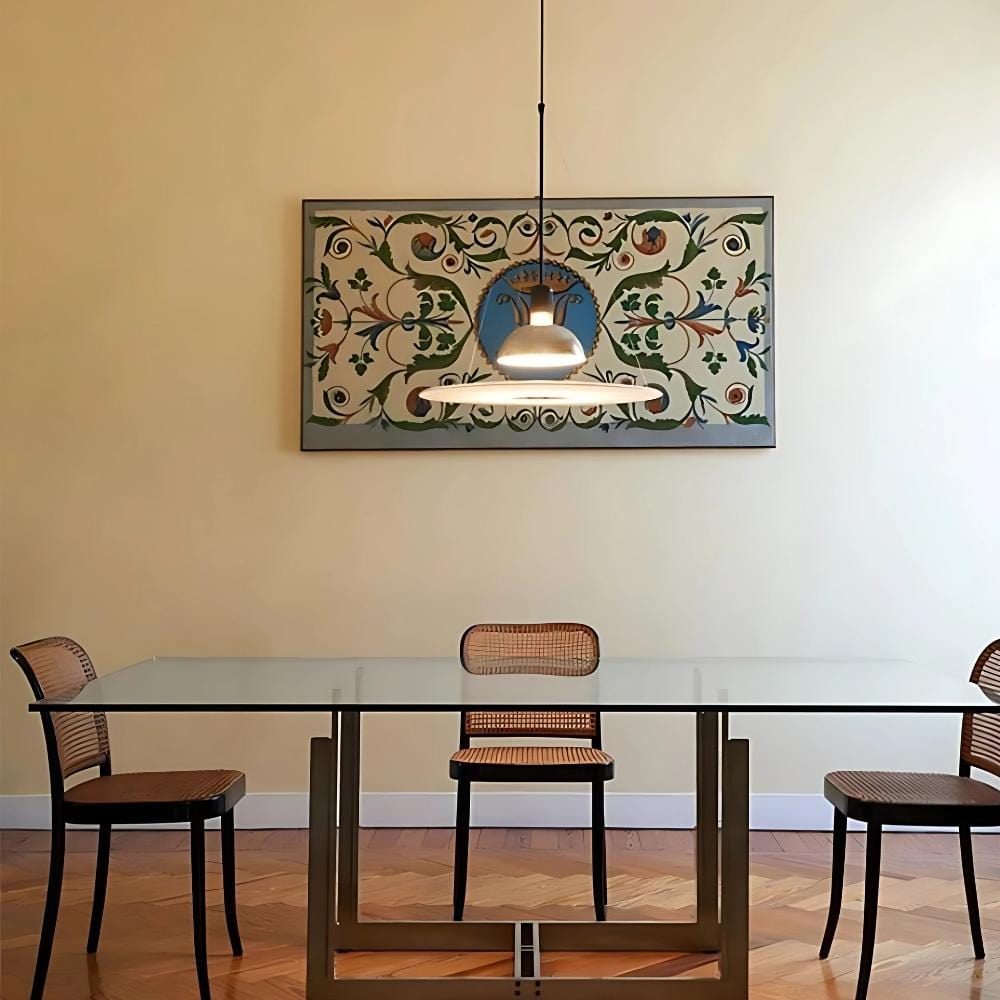
1Chiara Scandinavian Pendant Light
15.75 in · Built for RepetitionThe specification that decides whether a run works is visual weight per unit, and a simple shaded body at 15.75 in is squarely in the range. Three of these read as a single line across a 90-100 in island. A shaded body also directs light downward onto the counter rather than sideways into the room, which is what an island actually needs.
Suits islands: 90-100 in with three
Shade direction: Downward onto the work surface
Order: All three together — batch finish varies
Related: Pendant lights

2Iris Gold Glass Pendant Light
Warm Metal · Match the Cabinet HardwareThe kitchen is where the hardware rule is hardest to ignore, because the pulls and the tap are in the same view as the pendants. Warm metal joins an existing brass scheme rather than introducing a second one. Pairing it with glass also keeps the run light — three solid brass bodies in a row is more metal than most kitchens want.
Why glass helps: Keeps a brass run from reading heavy
Spacing: One per 24-30 in of island length
Height: 30-36 in above the counter
Related: Glass pendant lights
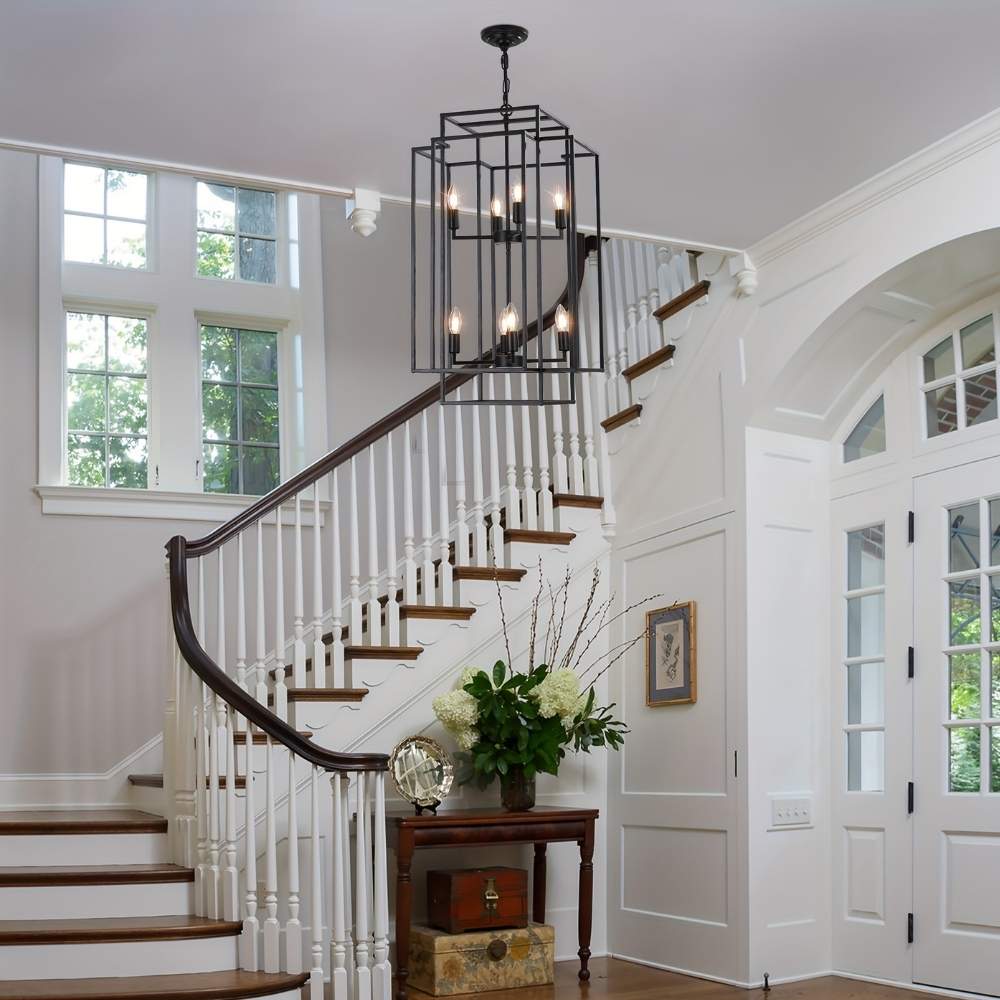
3Tyra Lantern Pendant Light Fixture
Enclosed · Safe Over Gloss CountersA run multiplies whatever each fixture does, including its problems. Three exposed bulbs above polished quartz means three mirrored reflections visible from every seat at the island — considerably worse than one. An enclosed lantern body removes that entirely, which makes it the safer choice over any gloss or honed-reflective surface.
Best over: Polished quartz, granite, gloss surfaces
Bulbs: Enclosed-rated — the body traps heat
Style: Transitional, shaker, farmhouse
Related: Modern pendant lights
What the Ceiling Boxes Decide
This constraint settles more island lighting decisions than style does, and it is fixed before drywall goes up.
| Ceiling has | Available | To change it |
|---|---|---|
| Three boxes, correctly spaced | A run of three pendants | A linear fixture leaves two capped |
| Three boxes, wrongly spaced | Linear fixture on the middle box | The standard rescue |
| One box, centered | Linear fixture, or a multi-pendant canopy | Add two boxes — drywall work |
| One box, off-center | Swag, or move the box | Either way a correction is needed |
| Nothing yet — pre-drywall | Anything, if decided now | This is the moment |
When a Linear Fixture Is Better
A linear fixture does what a run of pendants does — distributes light along the island's axis — from a single ceiling box. Four situations favour it.
- One box exists and adding more is not worth it. The most common case in a renovation rather than a new build.
- Boxes are already in the wrong positions. Center a linear fixture on the middle one and cap the others.
- The ceiling is not level. One drop cannot be out of alignment with itself, which removes the risk that makes runs go wrong in older houses.
- The island is narrow. Under about 36 in wide, three pendants can feel crowded while a slim linear fixture does not.
Size a linear fixture to one-half to two-thirds of the island's length — a 96 in island takes 48-64 in — and keep its body width under one-third of the island's width, the same rule as individual pendants.
Linear and Single-Box Picks (3 Designs)
For one centered box, or where levelling three separate fixtures is a risk not worth taking.
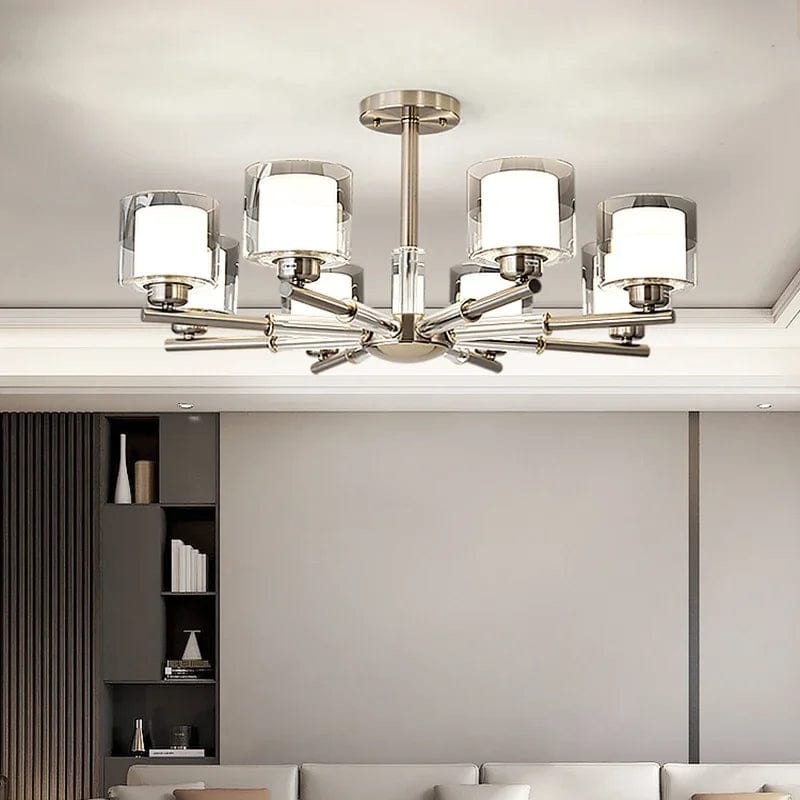
4Amanda Modern Silver Chandelier
Linear · One Box, Same AxisThe direct substitute for a run of pendants. It covers the island's length from a single mounting point, which removes both the box problem and the levelling problem in one decision. In a renovation where the ceiling already has one box and opening it is not worth the disruption, this is the answer rather than a compromise.
Size to: ½ to ⅔ of the island's length
Body width: Under ⅓ of the island's width
Removes: Cross-fixture levelling risk
Related: Linear chandeliers

5Vita Crystal Flush Mount Chandelier
Low Ceilings · Linear at Flush DepthWhere a kitchen ceiling is 8 ft and the island sits near a walking route, the 84 in clearance rule can apply across part of the span. A linear fixture at flush depth covers the island's length without the drop — and at 47.24 in the linear version suits islands up to about 96 in on the two-thirds rule.
Linear: To 47.24" (120 cm)
Suits islands: Up to ~96 in
Finishes: Gold or silver
Related: Flush mount chandeliers
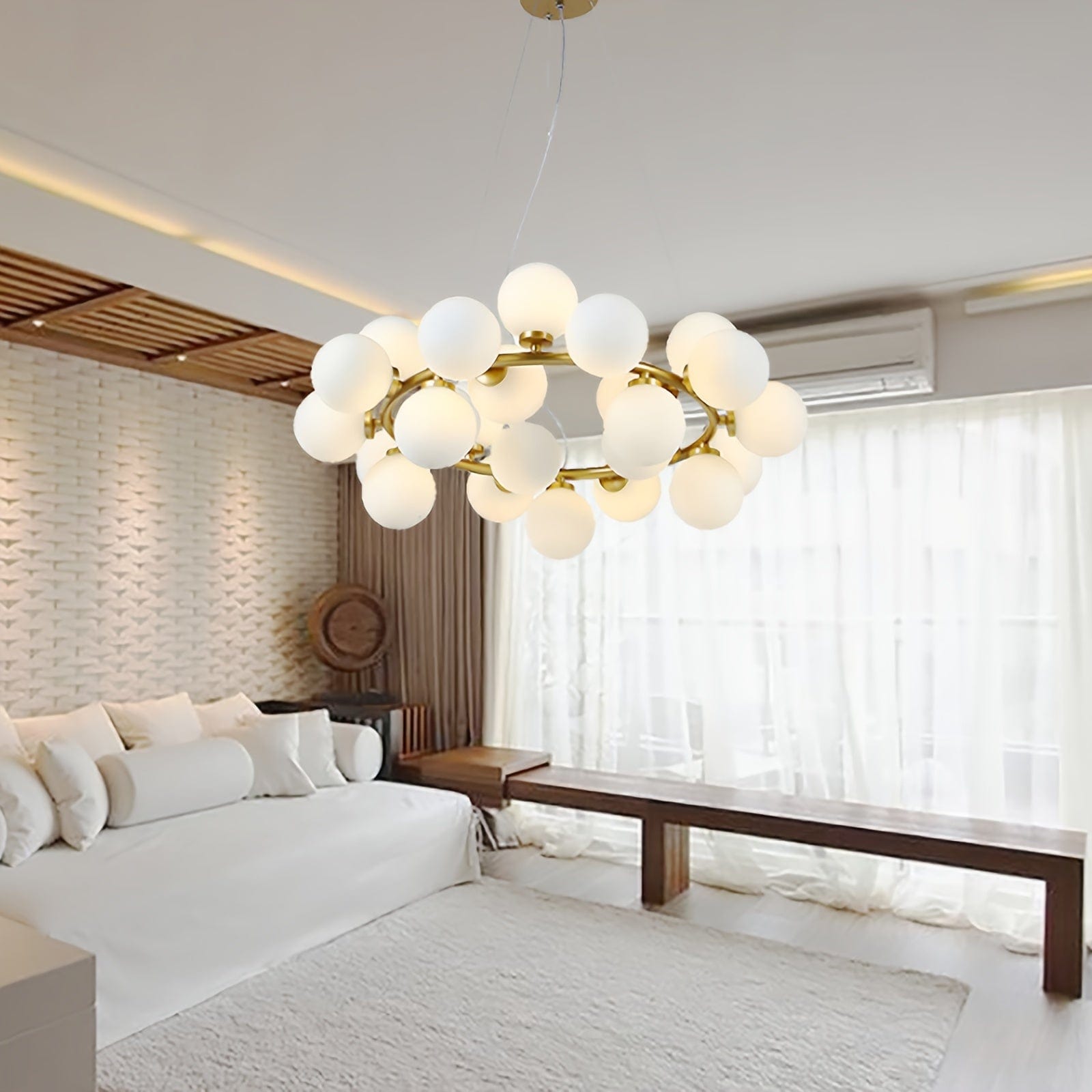
6Holly Milk Glass Chandelier
Multi-Shade · Run Look, One BoxSeveral shades on a single frame give the rhythm of a pendant run while needing one box and one installation — and the heights are fixed by the manufacturer, so the levelling problem disappears. Opal glass also delivers real output onto the counter, which matters more on an island than in most positions.
Heights: Fixed by the frame — no levelling
Output: Opal transmits most of the lamp
Still needs: Under-cabinet task light
Related: Kitchen lighting
Browse island lighting
Pendants, linear fixtures and kitchen lighting.
Pendant Lights → Linear → Kitchen →Task Light: The Missing Layer
This is the part most island lighting plans leave out, and it is the reason a kitchen with beautiful pendants can still be frustrating to work in.
A work surface wants roughly 50-75 footcandles — substantially more than ambient room light. Decorative pendants rarely deliver it, because they are chosen for appearance and because a shaded pendant at 36 in above a counter lights a circle, not a span. The light between pendants is dimmer than the light beneath them.
- Under-cabinet lighting handles the perimeter counters, which is where most actual prep happens. It is the single highest-value addition in a kitchen lighting plan.
- Recessed fixtures over the island fill the gaps between pendants. Two or three at a wider spacing than the pendants, on a separate switch.
- Separate circuits. Pendants for atmosphere, task lighting for work. A single switch controlling everything means either glare at breakfast or darkness while cooking.
- Dimmers on the pendants, not necessarily the task light. Task light wants to be at full output when it is on.
- Target 4,000-8,000 lumens total across a standard kitchen, more if the cabinetry is dark — dark surfaces absorb a substantial share of what reaches them.
The Four Layers a Kitchen Needs
Island pendants are one layer of four, and a kitchen that has only them is both over-decorated and under-lit.
| Layer | Fixture | Does | Switch |
|---|---|---|---|
| Decorative | Island pendants or linear | Marks the island, sets the character | Dimmer, own circuit |
| Task — perimeter | Under-cabinet | Lights the counters where prep happens | Own switch, full output |
| Task — island | Recessed over the island | Fills between pendants | Own switch |
| Ambient | Ceiling fixtures or recessed grid | General room light, walkways | Dimmer |
The under-cabinet layer is the highest-value addition in most kitchens and the one most often skipped. A perimeter counter lit from above by a ceiling fixture is lit by a source directly behind whoever is standing at it, which puts their own shadow on the work. Under-cabinet lighting comes from in front and removes that entirely.
Separate circuits are what make the layers useful. One switch controlling everything means either glare at breakfast or darkness while cooking, which is why so many kitchens end up permanently at one unsatisfying setting.
Kitchen-Specific Practicalities
Four things an island imposes that other positions do not.
Grease and steam reach the pendants. They sit in the airflow from the hob, and an open or woven fixture absorbs what a glass one wipes off. Glass, metal and stone are the practical materials over an island; rattan and fabric are not.
Enclosed bodies trap heat. A sealed glass pendant needs an enclosed-rated bulb, or the lamp's driver cooks and fails years early. This is the most common cause of "the bulbs keep going" in kitchens.
Gloss counters mirror the fixture. Polished quartz and granite reflect whatever hangs above, so an exposed bulb appears twice. Multiply that by three in a run.
Match the color temperature to the rest of the kitchen, and to adjoining rooms in an open plan. 3000K is the usual compromise; mixing temperatures across one continuous space makes the cabinetry read as two colors.
Common Mistakes
- Placing boxes before the island length is final. The one error here that cannot be undone cheaply.
- Equal gaps instead of equal divisions. Divide the length into equal parts and center a fixture in each.
- Measuring drops from the ceiling. Kitchen ceilings are less level than counters. Measure every drop from the counter surface.
- Pendants wider than one-third of the island. The run reads as separate objects rather than a line.
- Ornate fixtures in a run. Repetition multiplies visual weight. Choose lighter than you would for a single fixture.
- Even numbers. An odd count gives the run a center; an even one puts a gap where the anchor should be.
- Exposed bulbs over gloss counters. Three mirrored reflections instead of one.
- No enclosed-rated bulbs in sealed glass. The driver overheats and fails years early.
- Pendants as the only island light. They light circles, not a span. Add recessed or under-cabinet.
- One switch for everything. Atmosphere and task light need separate control.
Frequently Asked Questions
How many pendants over a kitchen island?
Roughly one per 24-30 in of island length. A 48-60 in island takes two, a 72-96 in island takes three, and over 120 in takes four or more. Odd numbers read better because they give the run a center pendant.
How far apart should island pendants be?
Divide the island's length into equal parts and center a pendant in each — not equal gaps between them. On a 96 in island with three, that puts the centers at 16, 48 and 80 in from one end.
How high should pendants hang over an island?
30-36 in above the counter surface, measured from the counter rather than the ceiling. Kitchen ceilings are rarely as level as counters, and one pendant lower than its neighbours is the thing everyone notices.
What size pendants for a kitchen island?
Under one-third of the island's width — 12-14 in each on a 40 in island, 14-16 in on a 48 in island. Also leave at least as much space between pendant edges as the pendants' own diameter.
Should I use two or three pendants?
Three where the island is 72 in or longer, two below that. Odd counts read better because the center pendant anchors the run to the island's midpoint, where an even count leaves a gap at the center.
Can I use one light over an island instead of pendants?
Yes — a linear fixture covers the same axis from a single box, which suits renovations with one existing box, uneven ceilings, and narrow islands where three pendants would crowd. Size it to one-half to two-thirds of the island's length.
What if my ceiling boxes are spaced wrong?
Center a linear fixture on the middle box and cap the others. It distributes light along the same axis from one point and sidesteps the spacing problem entirely — the standard rescue for boxes placed before the island was finalised.
Do pendants give enough light for an island?
Usually not on their own. A work surface wants roughly 50-75 footcandles, and decorative pendants light circles rather than a span. Add under-cabinet lighting for the perimeter and recessed fixtures to fill between pendants, on a separate switch.
What bulbs for kitchen island pendants?
Enclosed-rated if the pendant has a sealed body, since trapped heat is the usual cause of early bulb failure in kitchens. 3000K across the whole kitchen, matched to adjoining rooms in an open plan, with CRI 90 or better for food preparation.
Which materials suit an island?
Glass, metal and stone — they sit in the airflow from the hob and need to be wipeable. Rattan, fabric and woven materials absorb grease and steam and cannot be cleaned out.
Should island pendants match the dining fixture?
Keep the finish family consistent, particularly in an open plan where both are seen at once. The formats can and should differ — a run over the island and a single fixture over the table reads as considered, where identical fixtures in both reads as a matched set.
What color temperature for kitchen pendants?
3000K is the usual answer, matched across the whole kitchen and into adjoining rooms. Mixing temperatures in one continuous space makes cabinetry read as two different colors across a single run.
Count the Boxes, Then Divide the Length
One pendant per 24-30 in, an odd number where possible, spaced by dividing rather than gapping, each under a third of the island's width, hung 30-36 in from the counter surface. Then add the task layer the pendants cannot provide — that is the part that makes the kitchen work rather than just look right.
Browse the range: kitchen lighting, pendant lights, linear chandeliers.