There is no single best chandelier — there is a best one for each situation, and the situation is defined by four things: what sits beneath it, the ceiling height, how much light the room needs, and how easy it will be to reach again.
For most dining rooms, a ring or linear fixture sized to two-thirds of the table, hung 30-36 in above it, with opal or clear glass and a dimmer.
For most living rooms, a wider fixture sized by length plus width in feet, with 84 in of floor clearance and real light output rather than decorative output alone.
For a two-story foyer or stairwell, a long-drop or tiered design with integrated LED — because the access question outweighs almost everything else up there.
"Best chandelier" is a question with no general answer, which is why most attempts at it are lists of expensive fixtures. The useful version works the other way round: describe the situation, and the right category falls out of it. This guide ranks the decisions in the order they actually constrain each other, gives a direct answer for each common room, and names the specific fixture types that suit each one.
On this page
The Short Answer by Room
| Room | Best type | Size | Why |
|---|---|---|---|
| Dining, round table | Ring or centered fixture | ⅔ of table width | Matches the geometry, reads equally from every seat |
| Dining, long table | Linear or branch | ½-⅔ of table length | Reaches the end seats |
| Living room | Wide, diffused | Length + width in ft, as inches | Needs real output over open floor |
| Bedroom | Stone or opal, soft | One step below the formula | Comfort over brightness; no visible lamps |
| Two-story foyer | Long-drop or tiered, integrated LED | Formula +3 in per ft above 12 ft | Access dominates every other factor |
| Stairwell | Cascade or spiral, integrated LED | Fills the drop | Seen from three levels; hard to reach |
| Kitchen island | Run of pendants or linear | One per 24-30 in of length | Even light along a work surface |
| 8 ft ceiling, walkway | Flush or semi-flush, wide | Upper end of the formula | 84 in clearance leaves ~12 in of depth |
The Six Decisions in Order
These constrain each other, and taking them out of order is why people end up with a fixture that looks right and does not work.
1. What is directly beneath it. This decides the hanging height and therefore the available depth. Over a table, 30-36 in above the surface. Over open floor, 84 in of clearance. The same ceiling gives you 54 in of fixture in one position and 36 in two feet away.
2. The size. Over a table, two-thirds of its width. Over open floor, room length plus width in feet read as inches. Add about 3 in of diameter per foot of ceiling above 10 ft. This is the decision with the highest error rate, and almost all errors are too small.
3. How much light the room needs. A dining room wants 2,000-4,000 lumens; a living room 3,000-5,000; a kitchen 4,000-8,000. If the fixture is the only light source, it has to deliver that — which rules out stone and heavy diffusion as a sole fixture. Decide here whether this is the room's light or one layer of it.
4. How you will reach it. Over a stairwell, a two-story foyer or a cathedral ceiling, this outranks everything below it. Integrated LED removes lamp changes for decades; a multi-lamp fixture at 18 ft is a scaffold event every few years.
5. The finish. Match the room's dominant hardware — door handles, cabinet pulls, taps — not the walls. Black reads as a line rather than a metal and suits mixed or undecided hardware; warm metals join an existing warm scheme.
6. The style. Last, because the five decisions above have already narrowed the field to a handful of candidates. Choosing style first and discovering the constraints afterwards is the sequence that produces returns.
Choosing style first and discovering the constraints afterwards is what produces returns
Best for Dining Rooms (3 Designs)
Sized to the table rather than the room, hung 30-36 in above the surface, with diffusion appropriate to a fixture people look at through a whole meal.
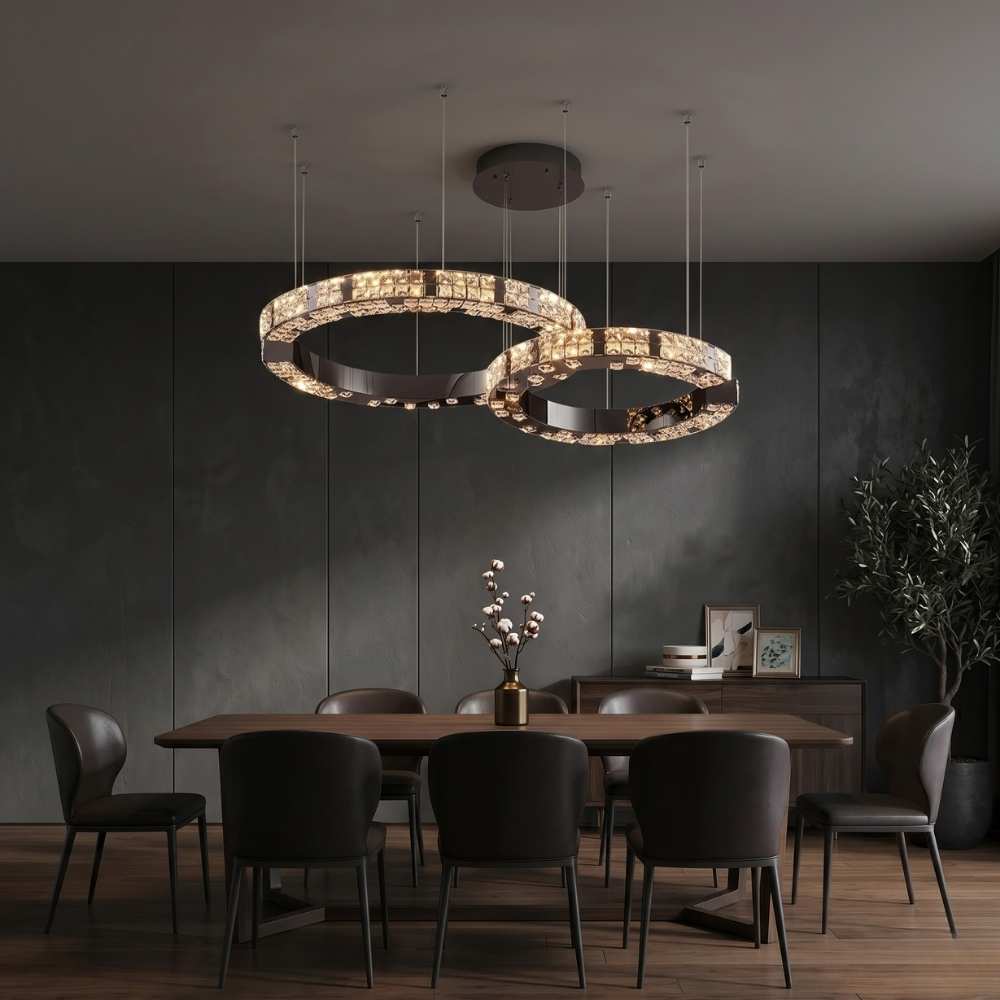
1Arven Modern Crystal Ring Chandelier
Round and Square TablesThe strongest general answer for a round or square dining table. A ring has no axis, so it reads the same from every chair — which is exactly what a table with no front or back needs. Crystal at dining distance is also seen directly rather than glimpsed overhead, which is the argument for putting the material here rather than in a hallway.
Size to: ⅔ of the table's width
Hang at: 30-36 in above the tabletop
Needs: A dimmer — crystal reads best at 30-60%
Related: Dining room chandeliers
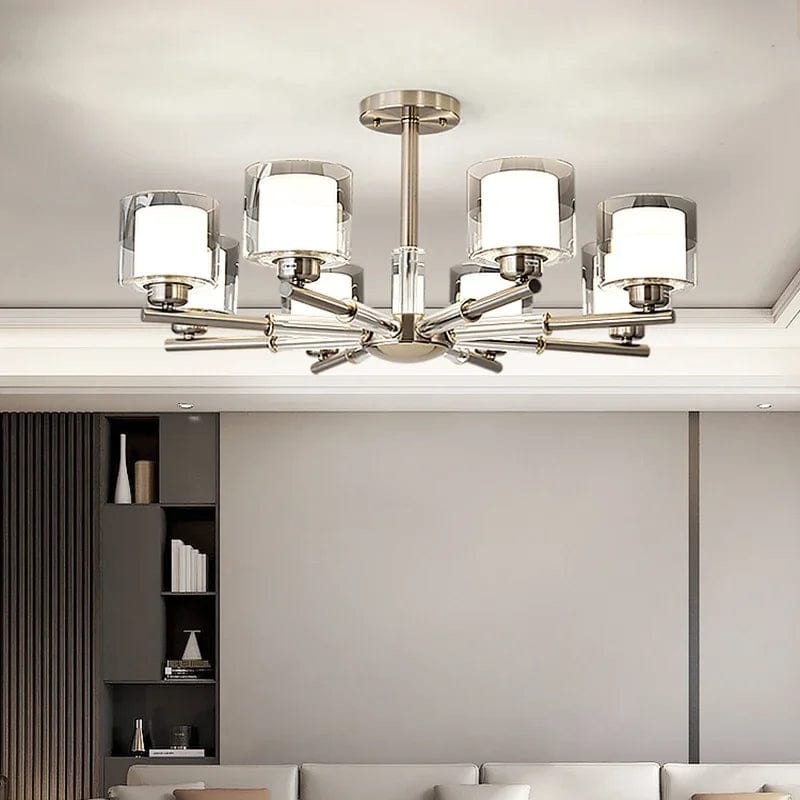
2Amanda Modern Silver Chandelier
Long Rectangular TablesOver a table longer than about 72 in, a linear fixture stops being a preference and becomes the functional answer. A round fixture lights the middle seats and leaves the ends dim, which matters whenever people actually sit at the ends. Available in round as well, so one finish can serve a rectangular table and a seating group.
Size to: ½ to ⅔ of the table's length
Solves: Dim end seats
Formats: Linear and round
Related: Linear chandeliers
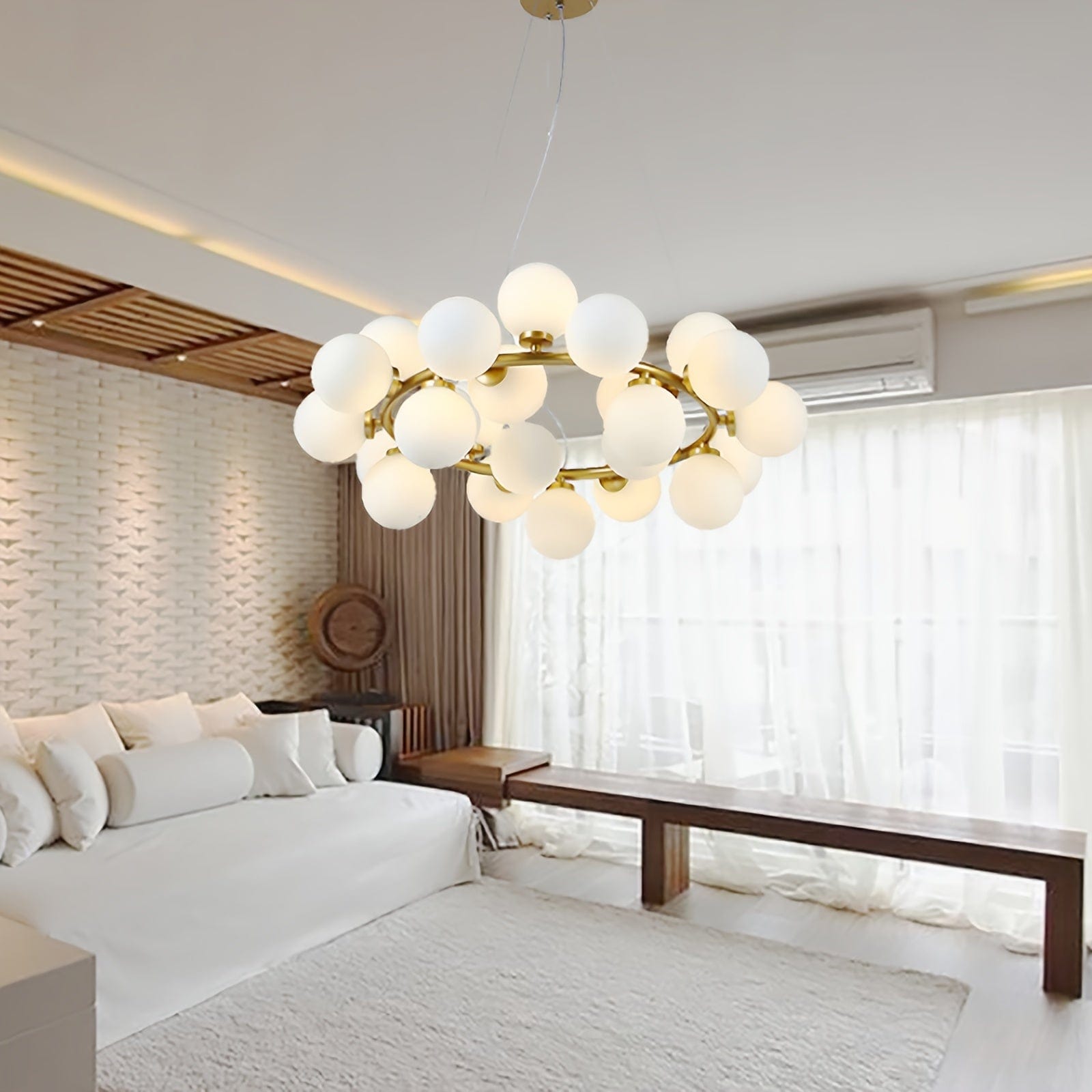
3Holly Milk Glass Chandelier
Where the Fixture Is the Only LightThe answer when decision three comes back as "this has to light the room." Opal glass transmits most of the lamp output while hiding the source completely — the combination that lets a decorative fixture do functional work. Most decorative chandeliers cannot, which is why so many dining rooms end up relying on a dimmer at full brightness.
Output: High — opal keeps most of the lamp
Glare: None — source concealed
Target: 2,000-4,000 lm in a dining room
Related: Glass chandeliers
Format by Constraint
The same room can take several formats, and the constraint usually picks between them rather than taste doing it.
| Format | Depth needed | Light output | Access burden | Picks it when |
|---|---|---|---|---|
| Ring | Low — 4-12 in | Moderate to high | Low with integrated LED | Round table, low ceiling, mixed hardware |
| Linear | 8-18 in | High — spread along an axis | Low — one drop | Long table, island, one ceiling box |
| Multi-shade | 12-20 in | Highest with opal | Moderate — several lamps | The fixture has to light the room |
| Tiered | 20-40 in | Moderate | High — many elements | Tall ceiling, formal register |
| Cascade | 36 in and up | Low to moderate | Highest | Stairwell, double-height void |
| Stone panel | 8-24 in | Low — absorbs a share | Lowest — dry dusting only | Bedroom, comfort over brightness |
| Flush / close mount | 4-12 in | Moderate | Low | 8 ft ceiling over a walkway |
| Pendant run | Per fixture | High along a surface | Moderate — levelling | Island or long table, three boxes exist |
Read the table by column rather than by row. If access is the binding constraint, scan that column first and the field halves immediately. If output is the constraint, the opal multi-shade and linear rows are where the answer lives. Style only decides between what survives those filters.
What Makes One Objectively Better
Style is subjective; several things are not. These separate a fixture that holds up from one that disappoints after a year, regardless of taste.
- Diffusion quality. Whether the lamp is visible from normal positions in the room. Opal and stone hide it completely; clear glass with an exposed filament does not. This is the single biggest contributor to whether a room feels comfortable.
- Color rendering. CRI 90 or better, with decent R9 for reds. Low-CRI light makes food, timber and skin look dull at any brightness — and the specification is invisible in a photograph.
- Dimming depth. How far down it actually goes. A fixture that bottoms out at 20% is a different object in the evening from one that reaches 5%.
- Serviceability. On integrated LED, whether the driver is accessible and standard. The emitters outlast the driver, so a sealed proprietary unit turns a repair into a replacement.
- Finish durability. Powder coat and plating on quality substrate versus thin coating on light alloy. This shows at close range and over years rather than in the first month.
- Weight and build. Heavier is not automatically better, but very light for its size usually means thin material and hollow components.
Best for Living Rooms and Entries (3 Designs)
Sized by the room formula, with 84 in of floor clearance, and chosen for a position where the fixture is seen from standing height rather than from a chair.
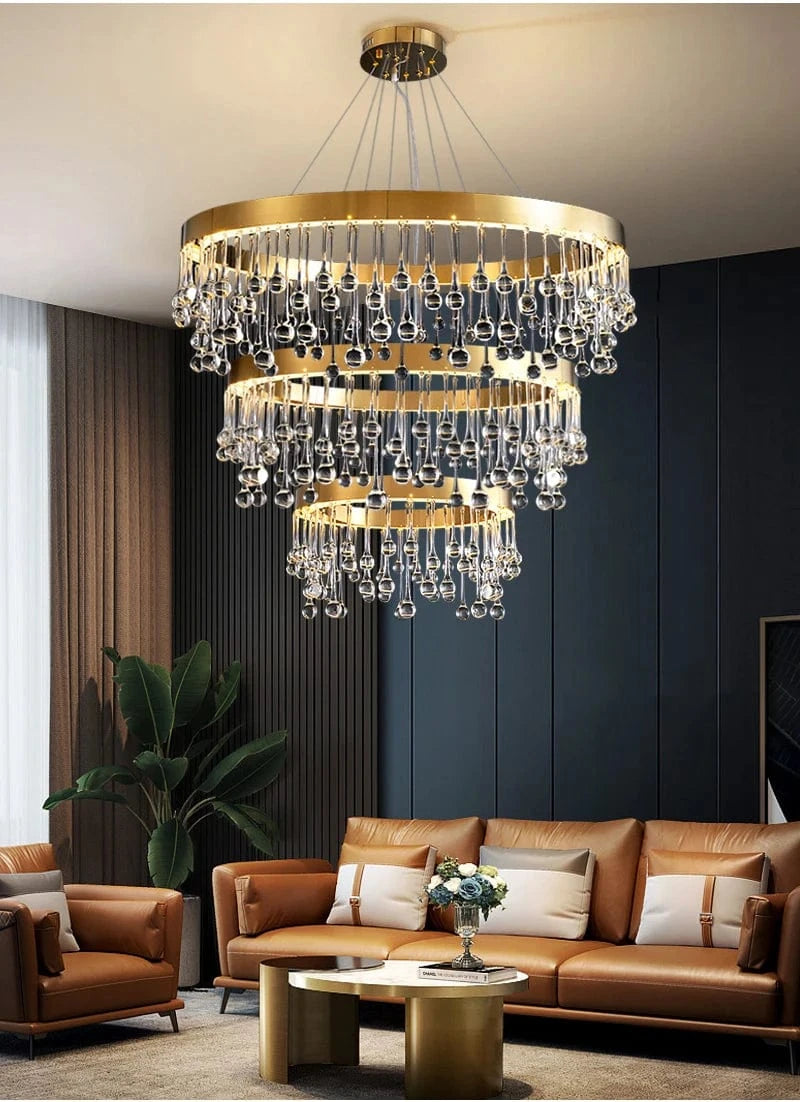
4Alvin Gold Ring Chandelier
Living Rooms · Six SizesLiving rooms are where the room formula applies directly, and the calculated answer is usually a specific number rather than a range. Six sizes means landing on it instead of rounding down, which is where under-sized fixtures come from. Tiered configurations also add vertical presence where the ceiling is above 10 ft.
Sizes: Six, up to 39.4" (100 cm)
Tiered option: For ceilings above 10 ft
Clearance: 84 in minimum over open floor
Related: Living room lighting
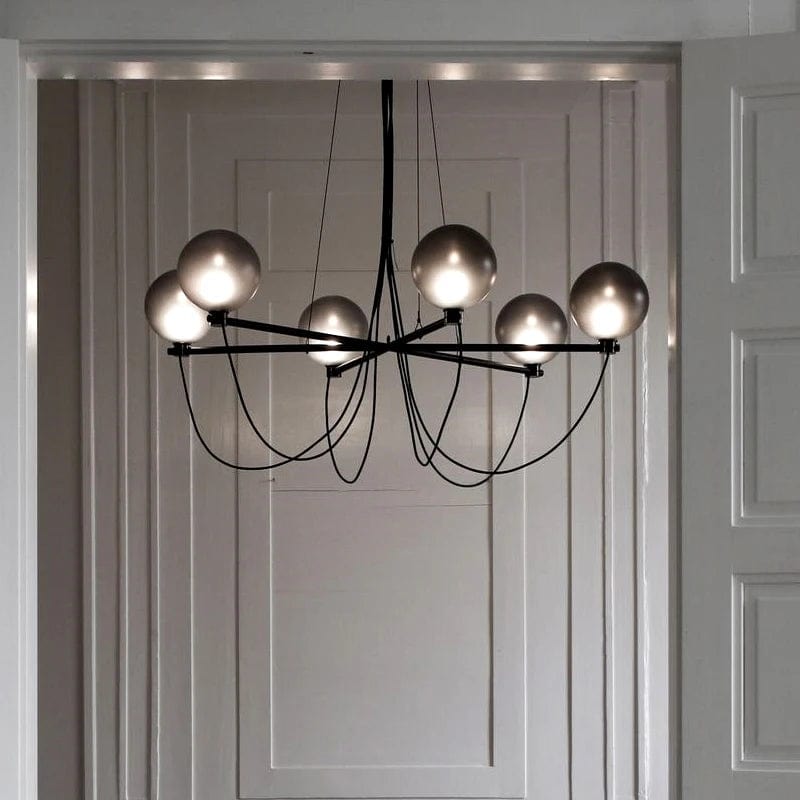
5Arc Modern Black Chandelier
Entries · Neutral to Any HardwareAn entry connects to every other room, which makes finish the deciding factor there. Black reads as a line rather than as a metal, so it does not clash with whatever hardware the house has and does not commit the entry to a direction the adjoining rooms may not share. The open frame also lets the ceiling show through, which keeps a small entry from feeling closed in.
Why black: Does not count as a second metal
Caution: Needs a pale ceiling for contrast
Sizing: Black reads larger — size down a step
Related: Black chandeliers
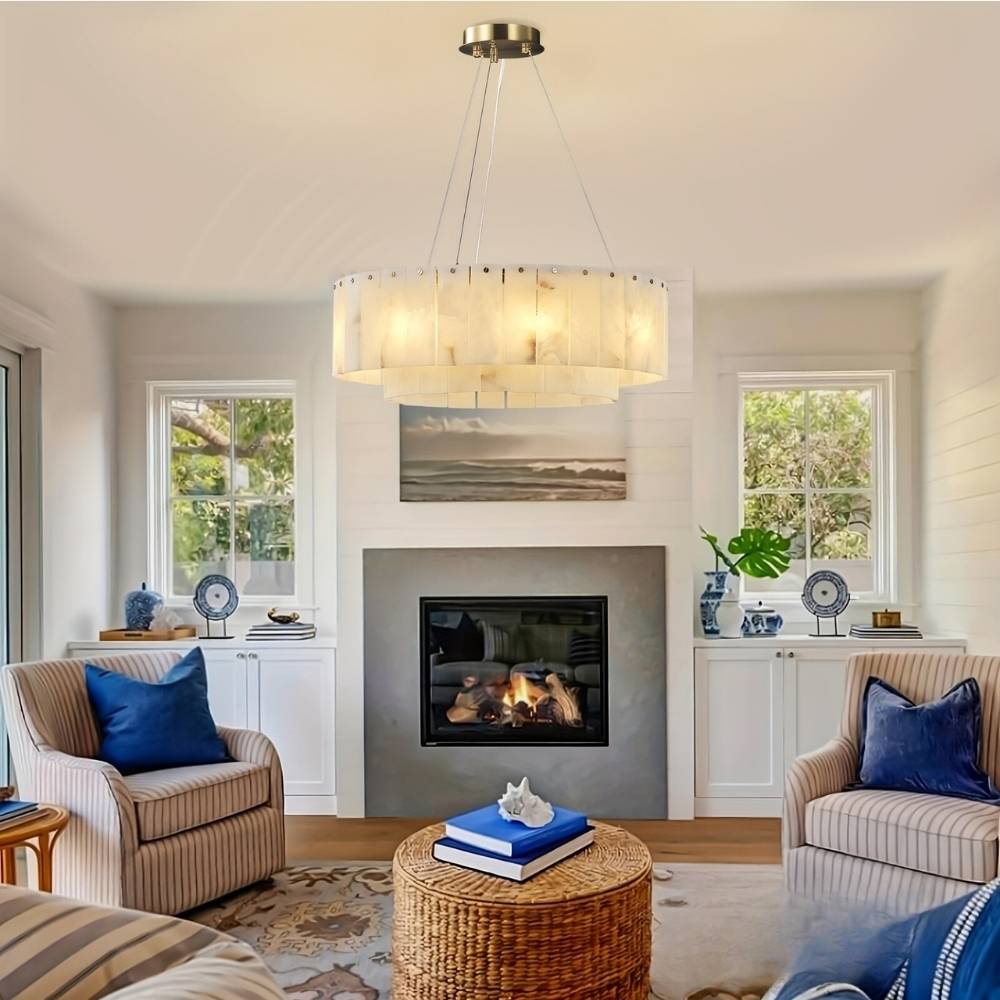
6Angie Alabaster Round Chandelier
Bedrooms · Comfort Over OutputBedrooms are the one room where decision three usually answers "comfort, not brightness" — and stone is what serves that. The source is invisible from every angle including from a pillow, and the light has a warmth glass does not reproduce. The trade is output, so plan bedside lamps alongside rather than expecting this to light the room.
Glare: None — including from a reclining position
Trade: Lower output — pair with bedside lamps
Not: Directly over the bed
Related: Alabaster & marble
What More Money Buys
Price tracks several things, and they are worth separating because only some of them matter in every position.
Material. Real stone, hand-blown glass and genuine crystal cost more than resin, pressed glass and acrylic — and the difference is visible at close range and largely invisible at ceiling height. Spend here on fixtures people pass within reach; spend less on a 20 ft stairwell.
Build quality. Substrate thickness, plating depth, joint construction. This shows over years rather than on arrival, and it matters most on fixtures that will be cleaned, moved or exposed to temperature swings.
Electrical components. Driver quality, dimming performance and CRI. This is the least visible and often the most consequential — a well-made fixture with a poor driver flickers and fails early, and nothing about the photograph warns you.
Scale. Large fixtures cost disproportionately more. A 44 in fixture is not twice the price of a 22 in one; it is often three or four times, because material, shipping and structural requirements all scale.
Best for Tall Spaces (3 Designs)
Where decision four — access — outranks everything else. Integrated LED and body length rather than visible chain.
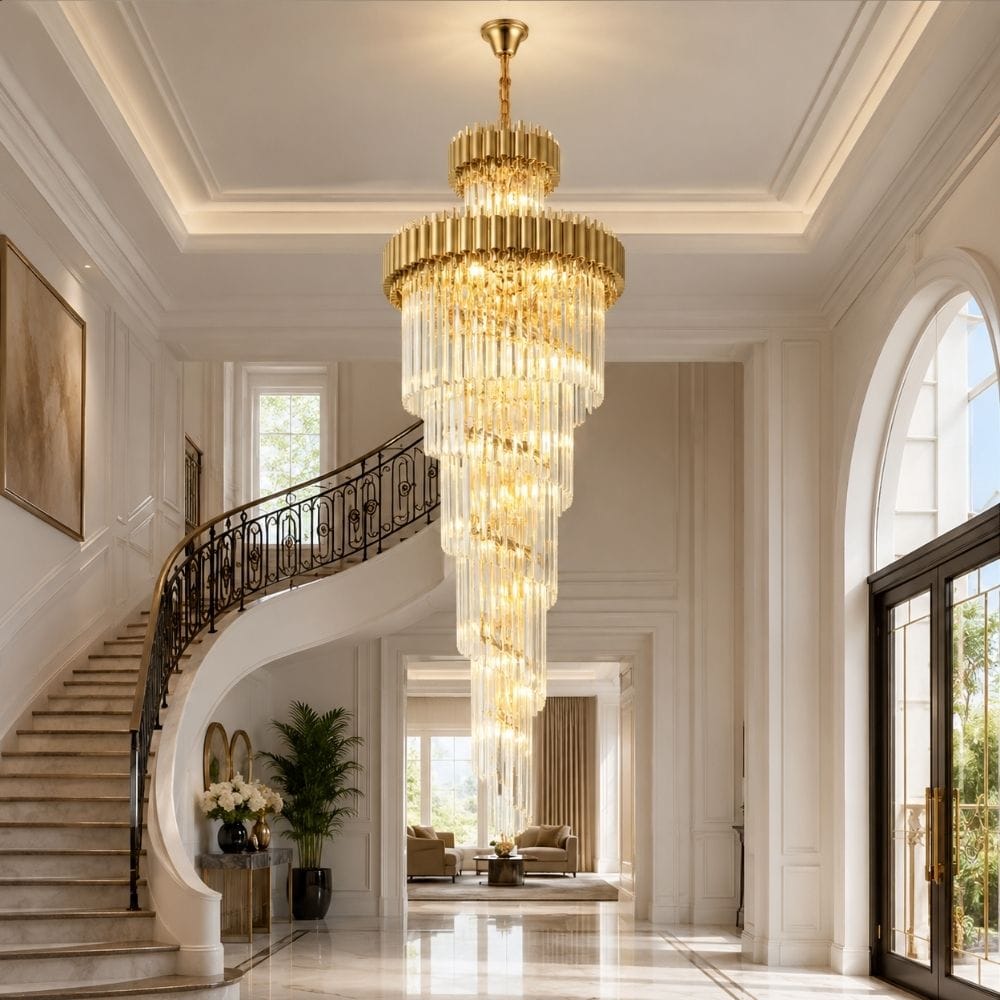
7Beth Extra Large Crystal Chandelier
Two-Story Foyers · Body Over ChainIn a tall volume, a compact fixture on sixty inches of visible chain reads as improvised and a fixture with real body height reads as designed. At 59 in the composition fills the space on its own terms. Plan the cleaning access before ordering — a heavily dressed crystal piece at 18 ft has a real annual cost worth knowing in advance.
Fills height: With body, not chain
Sizes: Five, from H59.06" (150 cm)
Plan: Access and cleaning cost before ordering
Related: High ceiling chandeliers

8Aureli Crystal Spiral Chandelier
Stairwells · Reads From Three LevelsA stairwell fixture is seen from the hall below, from the treads and from the landing above. A spiral is the one composition designed for all three — it reads as a continuous line from any angle including looking down, which flat tiered forms do not. Decide the access route before installation; this is the profile where a lowering system earns its cost.
Reads from: All three viewing levels
Decide first: Lowering system or annual service
Two sizes available
Related: Staircase chandeliers

9Asty Modern Ring LED Chandelier
Hard-to-Reach · No Lamp ChangesWhere access is genuinely difficult, this is the decision that matters most. Integrated LED means the only reason to reach the fixture is cleaning — once or twice a year rather than every time a lamp fails. Over fifteen years that is roughly two access events instead of eight. Ask whether the driver is serviceable, since it fails before the emitters do.
Removes: Lamp changes for decades
Ask: Driver serviceability and CRI figure
Configure: Ring count to the ceiling height
Related: Ring chandeliers
Browse by room
Dining, living, entry and high-ceiling fixtures.
All Chandeliers → Dining → High Ceiling →What to Avoid Regardless
A short list that applies in every room and at every budget.
- Under-sizing. The most common and most visible error. When between two sizes, the larger is usually right.
- No dimmer. A fixture without one is a single setting, and almost no room wants the same light level all day.
- Cool white above 3500K in a living space. It is what makes a home read commercial, and no fixture quality compensates for it.
- Exposed lamps below 9 ft. Comfortable at 10 ft and above, uncomfortable at head height.
- Buying before checking the box weight rating. Standard boxes have limits, and heavy fixtures need a listed box or independent support.
- Choosing style first. Every other constraint narrows the field. Style last is not a lack of taste; it is the order that works.
Common Mistakes
- Looking for a single best fixture. There is a best one per situation, and the situation defines it.
- Deciding style before size and position. The sequence that produces returns.
- Ignoring the access question in tall spaces. It outranks almost everything else above 12 ft.
- Assuming a decorative fixture will light the room. Most do not. Decide early whether this is the light or one layer.
- Spending the budget on the fixture seen least closely. Material quality shows at six feet and disappears at forty.
- Matching the fixture to the walls. Hardware is the reference — it is what the fixture is seen alongside.
- Ignoring CRI and dimming depth. Both invisible in a photograph and both decisive in the room.
- Buying the configuration in the product photograph. It is usually the largest one.
Frequently Asked Questions
What is the best chandelier?
There is no single answer — there is a best one per situation, defined by what sits beneath it, the ceiling height, how much light the room needs and how easy it will be to reach. For most dining rooms that is a ring or linear fixture at two-thirds of the table's width; for a two-story foyer it is a long-drop design with integrated LED.
How do I choose a chandelier?
In this order: what is beneath it, the size, how much light the room needs, how you will reach it, the finish, then the style. Style comes last because the five decisions above have already narrowed the field to a handful of candidates.
What makes one chandelier better than another?
Diffusion quality, color rendering at CRI 90+, dimming depth, driver serviceability on integrated LED, finish durability and build substance. Style is subjective; these are not, and most are invisible in a photograph.
What is the best chandelier for a dining room?
A ring or centered fixture for a round or square table, a linear or branch form for anything over 72 in long. Size to two-thirds of the table's width, hang 30-36 in above the surface, and use opal or clear glass with a dimmer.
What is the best chandelier for a high ceiling?
One with real body length rather than a compact fixture on long chain, and integrated LED so lamp changes do not require a scaffold. Add roughly 3 in of diameter per foot of ceiling above 10 ft so it does not read small from below.
Does a more expensive chandelier light a room better?
Not necessarily. Price tracks material, build and scale more than it tracks light quality. What actually affects the light is diffusion, CRI and dimming depth — and a moderately priced opal fixture can outperform an expensive one with exposed lamps.
Where should I spend more on a chandelier?
On the fixture seen most closely and most often. A dining fixture is looked at from six feet for hours; a stairwell fixture from forty feet in passing. Material quality shows in the first position and disappears in the second.
What size chandelier should I buy?
Over a table, two-thirds of its width. Over open floor, the room's length plus width in feet read as inches. Add about 3 in of diameter per foot of ceiling above 10 ft, and round up rather than down when between two sizes.
Should a chandelier be the only light in a room?
Only if it can deliver the room's output — 2,000-4,000 lumens for a dining room, more for a kitchen. Stone and heavily diffused fixtures cannot; opal glass and multi-lamp designs can. Decide this early, because it rules out whole categories.
What chandelier finish should I choose?
Match the room's dominant hardware — door handles, cabinet pulls, taps — rather than the walls or floor. Black reads as a line rather than a metal, so it suits mixed or undecided hardware; warm metals join an existing warm scheme.
Is integrated LED better than replaceable bulbs?
In hard-to-reach positions, substantially — no lamp changes for decades means cleaning is the only reason to go up. In reachable positions the advantage is smaller, and replaceable lamps let you correct a color temperature or CRI choice later.
What should I check before buying?
The overall drop separately from the body height, the box's weight rating, whether the fixture is dimmable and how deeply, the CRI figure, and on integrated LED whether the driver is serviceable. Suppliers answer all of these routinely when a listing does not state them.
Describe the Situation, Not the Style
The best chandelier is the one the room's constraints point to. Work out what sits beneath it, the size that follows, whether it has to light the space, and how you will reach it again — by the time those four are settled the field is small enough that choosing between what remains is straightforward.
Browse the range: all chandeliers, dining room, high ceiling.