Quick Answer
To tell whether an alabaster chandelier is real stone, read the listing language first. "Alabaster-style," "alabaster-look," "stone effect" and "marble finish" all describe resin. "Natural alabaster," "hand-cut stone" and named origins such as Spanish alabaster describe the real material. The wording is the fastest filter available and it costs nothing.
Then check the listed weight. Stone is dense: a 30 in alabaster chandelier in real stone commonly runs 40 lb (18 kg) or more, where a resin equivalent is a fraction of that. Weight is the single hardest specification to fake in a listing.
On arrival, three tests settle it. Real stone stays cool to the touch, shows veining that changes when the fixture is lit, and differs visibly from piece to piece within the same fixture.
Resin is not automatically wrong. It keeps large compositions light enough for standard mounting and survives rooms stone cannot. What matters is that it is a decision rather than a discovery — and that the price reflects it.
The rise of alabaster chandeliers has produced a large market in alabaster-effect resin, and the substitution is convincing in photographs — which is where nearly every purchase decision is made. Telling real stone from resin is not subtle in person: genuine alabaster weighs more, stays cool, varies between pieces and changes when lit. This guide covers the listing language that gives resin away before you buy, the specifications worth checking, the three tests to run on arrival, and the situations where resin is genuinely the better choice for a chandelier.
On this page
- The Listing Language Dictionary
- Four Checks Before You Buy
- Three Tests on Arrival
- Why "Spanish Alabaster Marble" Is Not a Material
- Real Stone Picks
- Where Other Materials Do It Better
- When Resin Is the Right Answer
- If It Arrives and It Is Not Stone
- Living With Real Stone
- Common Mistakes
- Frequently Asked Questions
The Listing Language Dictionary
Descriptions are written carefully, and the careful part is usually the material claim. Two vocabularies run in parallel across the market, and once you can read them the filtering takes seconds.
| Wording | What it means | Confidence |
|---|---|---|
| "Natural alabaster," "genuine alabaster" | Real stone | High |
| "Hand-cut," "hand-polished stone" | Real stone — casting is not hand-cut | High |
| Named origin: "Spanish alabaster" | Real stone — origin claims are quarry-specific | High |
| "No two pieces alike," "unique veining" | Real stone — resin repeats | Good |
| "Alabaster-style," "alabaster-look" | Resin or acrylic | High |
| "Stone effect," "marble finish," "faux alabaster" | Resin or coated substrate | High |
| "Resin," "composite," "acrylic" | Stated plainly — the honest listing | Certain |
| Material field says only "metal + shade" | Unstated — assume resin until confirmed | Ask |
Four Checks Before You Buy an Alabaster Chandelier
All four work from a listing page, without touching the fixture.
- 1. Listed weight. The hardest specification to misrepresent, because shipping is calculated from it. Stone is dense — a 30 in fixture at 40 lb (18 kg) or above is consistent with real material, while the same size at 12-15 lb is not. If weight is not published at all on a fixture claiming stone, that omission is informative.
- 2. Lit and unlit photographs. Good listings show both. Real alabaster looks materially different between them: veining that was barely visible unlit emerges clearly when the fixture is on. Resin looks broadly the same in both states, because its pattern is printed or cast rather than structural.
- 3. Variation across the images. Zoom into multiple panels of the same fixture, and compare product photographs of the same model. Real stone differs panel to panel and unit to unit. Identical veining repeated across every element is casting.
- 4. Price against size. Natural stone has to be quarried, cut thin enough to transmit light without fracturing, and hand-finished, with significant waste. Shipping costs more because of the weight. A large stone-claimed fixture at a price competitive with glass is telling you something the description is not.
Three Tests on Arrival
Run these before the fixture goes up — a returned fixture in its box is a straightforward transaction, and one already installed is not.
Temperature. Put a hand flat on a panel. Stone is cool to the touch and stays cool for several seconds because it conducts heat away. Resin sits at room temperature and warms almost immediately. This is the fastest test and the hardest to argue with.
The lit test. Fit a lamp and switch it on in a dim room. Real alabaster changes character completely: veining and cloudy density variation appear from what looked like a plain panel, and the brightness is uneven across the surface. Resin lights evenly, because its pattern sits on the surface rather than running through the body.
Panel-to-panel comparison. Hold two elements of the same fixture side by side. Natural stone will differ in veining, tone and translucency; the difference is sometimes considerable. Two panels that match exactly came from the same mould.
Temperature, the lit test and panel comparison — three minutes, no tools
Why "Spanish Alabaster Marble" Is Not a Material
The phrase appears across the market and it conflates two different stones. Worth untangling, because it affects what you should expect the fixture to do.
Alabaster and marble are not the same rock. Alabaster is soft and translucent — light passes through it, which is the entire reason it is used in lighting. Marble is harder and effectively opaque at the thicknesses fixtures use; it reflects rather than transmits. A fixture described as both is either using each in different places, or using the words loosely.
What the phrase usually indicates: in practice, most fixtures sold as "alabaster marble" are real alabaster, with "marble" added because it is the more familiar luxury word. That is imprecise rather than dishonest. But it means the description is not doing careful work, so the other checks matter more on that listing rather than less.
What to expect from each: if the panels glow when lit, it is alabaster doing the work. If the stone reads as surface and the light comes from around or beneath it, that is marble. The material difference is covered in full on our alabaster and marble collection.
Real Stone Picks (4 Designs)
Fixtures where the material is doing the work. Run the weight check against your ceiling box's marked rating before ordering, and order matched pairs in one transaction so both come from the same batch.

1Angie Alabaster Round Chandelier
Translucent Stone · Lit Test PassesThe lit test applied: veining and density variation that read faintly when the fixture is off emerge clearly once it is on, because the pattern runs through the stone rather than sitting on a surface. That change is what resin cannot reproduce, and it is visible within seconds of switching on.
Temperature: Cool to the touch, stays cool
Variation: Panels differ from each other
Before ordering: Listed weight against your box rating
Related: Alabaster & marble collection

2Elori Natural Stone Flower Brass Chandelier
"Natural Stone" · Stated PlainlyAn example of the listing language working in the buyer's favour: the material is named directly rather than described as an effect. Where a description says natural stone, it is claiming the expensive material on the record — which is exactly what a resin listing avoids doing.
Expect: Piece-to-piece veining variation
Frame: Warm brass — same tonal band as the stone
Pairs: Order together for batch matching
Sizes: Five, from L47.24" (120 cm)
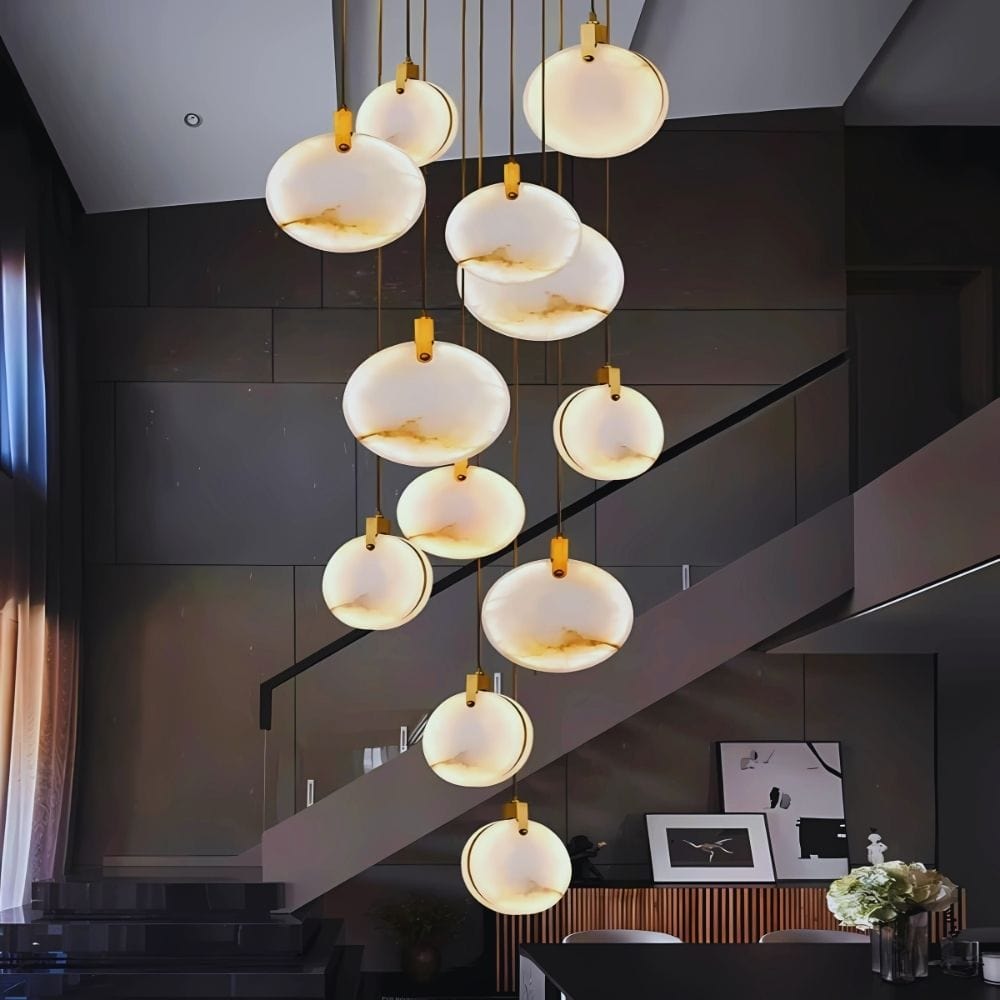
3Gaia Marble Staircase Chandelier
Marble · Surface Rather Than GlowA useful comparison point for the alabaster-versus-marble question. Marble is denser and reads as surface rather than glowing through, so the lit test looks different here — expect the material to hold its appearance rather than change. That is correct behaviour for marble, not a sign of substitution.
Why: Marble is denser and effectively opaque
Still check: Weight and piece-to-piece variation
Best for: Stairwells, entries, low-glare positions
Related: Staircase chandeliers

4Yale White Marble Pendant Light
Small Format · Where Checks Are EasiestCompact fixtures are where the tests are simplest to run: a single panel or shade can be handled directly, weighed against expectation and compared against a second unit if you have ordered a pair. Where a first stone purchase is uncertain, a small format is the low-risk way to learn what the material feels like.
Best use: Bedside pairs, compact positions
Pair note: Compare the two units against each other
Weight: Lower than a chandelier — standard mounting
Related: Bedside pendant guide
Where Other Materials Do It Better (4 Designs)
Rooms and scales where stone is the wrong specification regardless of authenticity — and what to choose instead. Honest alternatives beat a compromised stone purchase.
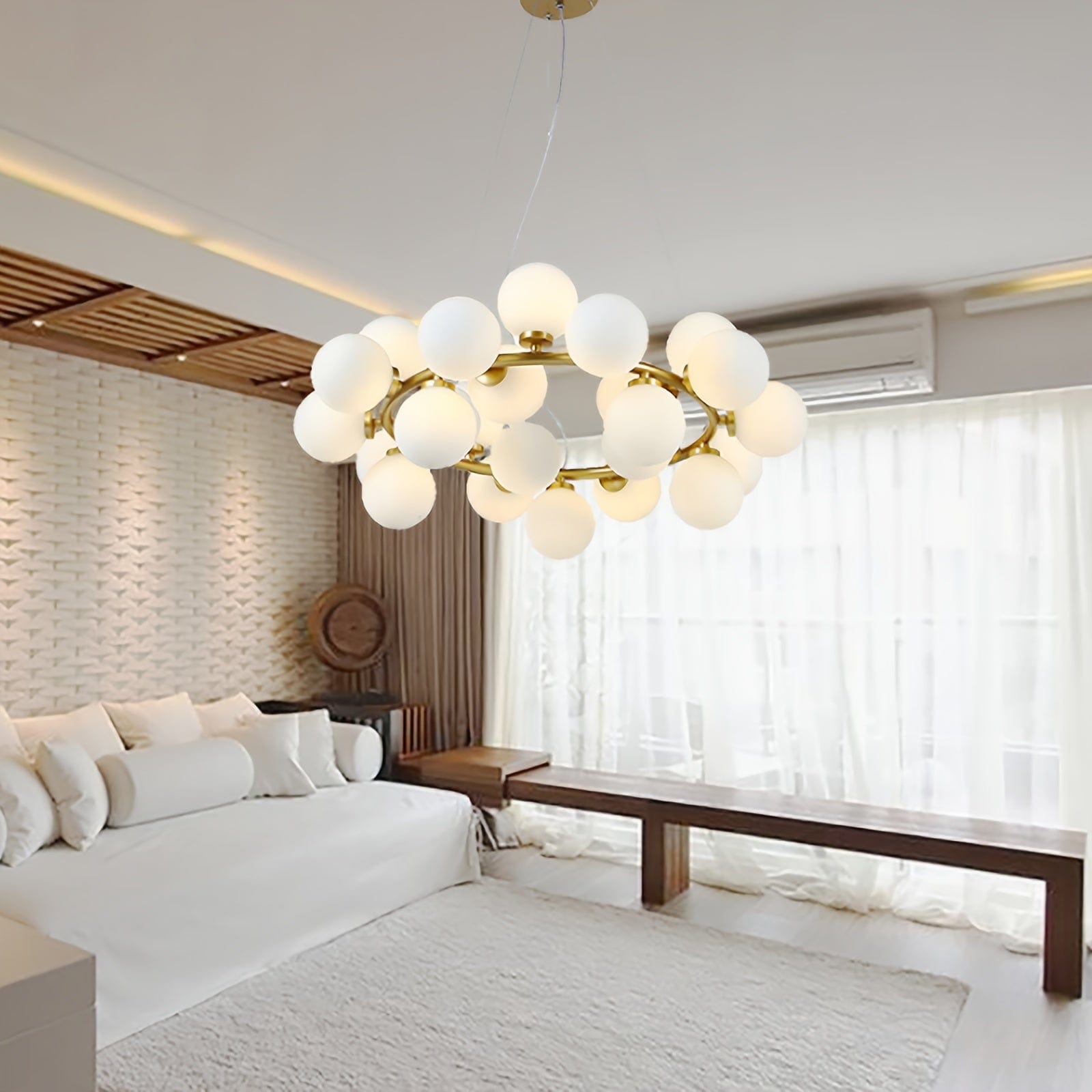
5Holly Milk Glass Chandelier
Opal Glass · When Brightness MattersIf the room needs a fixture that is both glare-free and genuinely bright, opal glass does that better than any stone — and it does it honestly, without asking whether the material is what it claims. Choosing real glass over questionable stone is the better purchase every time.
Advantage: Transmits far more of the lamp's output
Care: Damp cloth acceptable — practical in kitchens
Weight: A fraction of stone at the same diameter
Related: Glass chandeliers

6Neve Glass Bubble Chandelier
Statement Scale · Weight RealityAt large scale the mounting decides the material. A composition of this volume in real stone would need structural work in most ceilings; the same presence in glass stays within standard hardware. This is the clearest case where reaching for resin-stone is solving the wrong problem — glass solves it properly.
Reason: Stone at this volume needs structural mounting
Better than: Resin pretending to be stone at scale
Best rooms: Entries, stairwells, open plans
Related: Bubble chandeliers

7Dove Glass Bubble Light Fixture
Tinted Glass · The Warm Register, HonestlyWhere the appeal of stone is really its warmth rather than the material itself, amber and brown glass delivers that register directly — without the weight, the price or the authenticity question. It is the honest version of what resin-stone attempts.
Delivers: The warm register at glass weight and price
Does not deliver: Material presence when unlit
Sizes: Three, from 23.62" (60 cm)
Related: Glass bubble guide

8Asty Modern Ring LED Chandelier
Published Specs · The Broader SignalThe material question is one instance of a general principle: listings that publish their specifications expect the numbers to survive scrutiny. Weight, colour temperature, dimming behaviour, lifespan — where these appear, the material claim is more likely to be accurate too. Silence in one field often means silence in others.
What to look for: Weight, CCT, dimming, lifespan, material
Warning sign: A material field that says only "shade"
Applies to: Every category, not just stone
Related: Designer-grade guide
Browse real stone and its alternatives
Natural stone where the material matters, glass where output and scale do.
Alabaster & Marble → Glass → All Chandeliers →When a Resin Chandelier Is the Right Answer
A guide that treats resin as fraud would be overstating the case. It exists for engineering reasons, and in four situations it is the better specification.
- Large compositions. A statement fixture in real stone can pass 90 lb, which requires structural blocking rather than a brace box. Resin keeps the same visual scale inside standard mounting — a genuine trade, not a shortcut.
- Damp and steamy rooms. Alabaster is moisture-sensitive by nature. In a bathroom, a resin or glass fixture is not the compromise; stone there is the mistake.
- Homes with children, or fixtures in reach. Stone chips and marks. Resin tolerates handling that alabaster does not.
- Rentals and short-horizon rooms. If the fixture leaves in three years, the material premium never returns.
If It Arrives and It Is Not Stone
Act before installing. Photograph the fixture in its packaging, then run the three tests and document each: the panel comparison side by side, the lit and unlit states in the same frame, and the shipping label showing actual weight against the listed figure. That last one is the strongest evidence, because it is objective and the seller published the number themselves.
Contact the seller with the material claim quoted from the listing alongside your photographs. Where a description says "natural alabaster," a resin delivery is a straightforward misdescription rather than a matter of taste. Where it said "alabaster-style," the listing was accurate and the misunderstanding is on the buyer's side — which is exactly why reading the wording first saves the whole exercise.
Living With Real Stone
Confirmed genuine, the material asks for very little — but what it asks is specific.
Dry microfiber only, with no liquid cleaners and no water; unsealed alabaster is soft enough to mark and porous enough to stain. Skip polish entirely, since it removes surface rather than cleaning it. Keep the fixture out of damp rooms unless the design is specifically damp-rated. And because natural stone varies between production batches, order matched pairs in one transaction — two fixtures bought months apart will not carry the same veining above the same table. Full routine in our care guide.
Common Mistakes
- Skipping the wording. "-style," "-look," "-effect" and "finish" describe appearance rather than substance. The fastest filter available, and free.
- Ignoring the listed weight. The hardest specification to misrepresent. A 30 in stone-claimed fixture at 12-15 lb is not stone.
- Judging material from a single photograph. Resin photographs convincingly. Compare lit against unlit, and multiple panels against each other.
- Installing before testing. A boxed fixture is a simple return; an installed one is a negotiation.
- Assuming "marble" and "alabaster" are interchangeable. Alabaster transmits light, marble does not. A fixture described as both deserves closer reading.
- Treating resin as always wrong. In large compositions, damp rooms and short-horizon spaces it is the better specification — provided it is stated and priced as resin.
- Buying questionable stone over honest glass. Real glass beats doubtful stone. If the material claim is unclear, a well-made glass fixture is the stronger purchase.
- Cleaning confirmed stone with a damp cloth. Water is the specific thing to keep off alabaster. Dry microfiber only.
Frequently Asked Questions
How do I tell if an alabaster chandelier is real stone or resin?
Before buying: check the listing wording, the listed weight, lit-versus-unlit photographs and price against size. On arrival: real stone stays cool to the touch, shows veining that emerges when lit, and differs visibly from panel to panel.
What does "alabaster-style" mean in a listing?
Resin or acrylic. "-style," "-look," "-effect" and "finish" all describe an appearance rather than a substance. Listings selling real stone say so directly, because it is the expensive part.
How much should a real alabaster chandelier weigh?
Stone is dense: a 30 in fixture commonly runs 40 lb (18 kg) or more. The same size at 12-15 lb is not stone. Weight is the hardest specification to misrepresent because shipping is calculated from it.
Does real alabaster change when lit?
Yes, markedly. Veining and density variation that read faintly when off emerge clearly when on, and the brightness is uneven across the surface. Resin lights evenly because its pattern is on the surface rather than through the body.
Is "Spanish alabaster marble" a real material?
The phrase conflates two different stones. Alabaster is soft and translucent; marble is harder and effectively opaque at lighting thicknesses. Most fixtures sold under that phrase are real alabaster, with "marble" added as a familiar luxury word.
Why is real stone more expensive?
It has to be quarried, cut thin enough to transmit light without fracturing, and hand-finished, with significant waste — and its weight raises shipping on every unit. A large stone-claimed fixture priced against glass is worth a second look.
Is resin always worse than stone?
No. In large compositions where real stone would need structural mounting, in damp rooms where alabaster cannot go, in homes with children, and in short-horizon spaces, resin is the better specification — provided it is stated and priced as resin.
What should I do if a fixture arrives and is not stone?
Do not install it. Photograph the panel comparison, the lit and unlit states, and the shipping label showing actual weight against the listed figure, then contact the seller quoting the material claim from the listing.
Can I test it without switching it on?
Partly. The temperature test works immediately — stone stays cool for several seconds where resin warms in the hand — and panels can be compared for veining variation. The lit test is the most conclusive of the three.
Do two real stone panels look different from each other?
Yes, sometimes considerably, in veining, tone and translucency. That variation is the material working as intended. Panels that match exactly came from the same mould.
How do I care for confirmed real stone?
Dry microfiber only. No liquid cleaners, no water, no polish — unsealed alabaster marks and stains, and polish removes surface rather than cleaning it. Keep it out of damp rooms unless the design is damp-rated.
Should I buy stone or glass if I am unsure?
Glass. A well-made glass fixture beats a doubtful stone one, and if the appeal was warmth rather than the material itself, tinted glass delivers that register honestly.
Read the Words, Then the Weight
Most of this decision is settled before anything is ordered. The listing either names the material or describes an effect, and the published weight either matches stone density or does not. Where both check out, the three arrival tests confirm it in about three minutes. And where the answer turns out to be resin, that is only a problem if it was sold as something else — or if the room needed the real thing.
Browse the range: alabaster & marble chandeliers, glass chandeliers, all chandeliers.