The right fixture over a dining table is rarely about choosing the prettiest option — it's about matching style to room shape, table format, and ceiling height. This guide presents the ten dining lighting styles working in 2026, with quick recommendations for each plus links to in-depth guides on the styles you want to explore further.
Quick Decision Reference
- Long rectangular table? → Linear chandelier or two matching pendants.
- Round table 60" or smaller? → Single round chandelier.
- Round table 60"+? → Statement crystal or branched chandelier.
- Modern interior? → Linear, sputnik, or pendant cluster.
- Traditional or formal? → Crystal or branched chandelier.
- Farmhouse / rustic? → Wood-and-metal chandelier or rattan pendant.
- High ceiling (12 ft+)? → Statement chandelier with vertical drop.
- Open-plan with kitchen? → Linear or pendant cluster matching the kitchen island fixture.
- Hang height in any style: 30–36" above table at 8-foot ceilings; add 3" per additional foot of ceiling.
The 10 Styles
The 10 Styles for Dining Lighting in 2026

Linear Chandeliers
The default choice for rectangular tables 60 inches and longer. Linear fixtures distribute light evenly across the full table length rather than pooling it in one center point. The 2026 direction emphasizes warm metals — aged brass, champagne bronze, soft gold — over the chrome that dominated previous years.

Crystal Chandeliers
Crystal continues to anchor formal dining rooms, but the 2026 update is pairing crystal with warmer metal frames — aged brass, champagne, mixed black-and-gold combinations — rather than the all-chrome formats of past decades. The light play remains the draw; the frame is what places the fixture in 2026 rather than 2010.

Branch & Biomorphic
Biomorphic lighting — fixtures inspired by branching trees, coral, flowing water — emerged as one of the defining 2026 directions. The forms feel grown rather than designed, which counterbalances rooms with otherwise rigid geometry. Crystal accents on branched frames produce moving shadows and small rainbow effects.

Farmhouse & Rustic
Farmhouse dining lighting continues to evolve in 2026 toward "modern farmhouse" — keeping the warm wood-and-metal materials while shedding the heavy ornamentation of earlier rustic looks. The current direction emphasizes natural wood tones and aged metal finishes that read warm rather than weathered.

Sputnik & Globe
Sputnik chandeliers — radiating arms ending in light points or glass globes — are one of the few mid-century forms that have stayed continuously relevant. The 2026 update pairs sputnik silhouettes with smoked glass orbs (one of the year's biggest material trends) rather than the frosted or clear glass of previous decades.
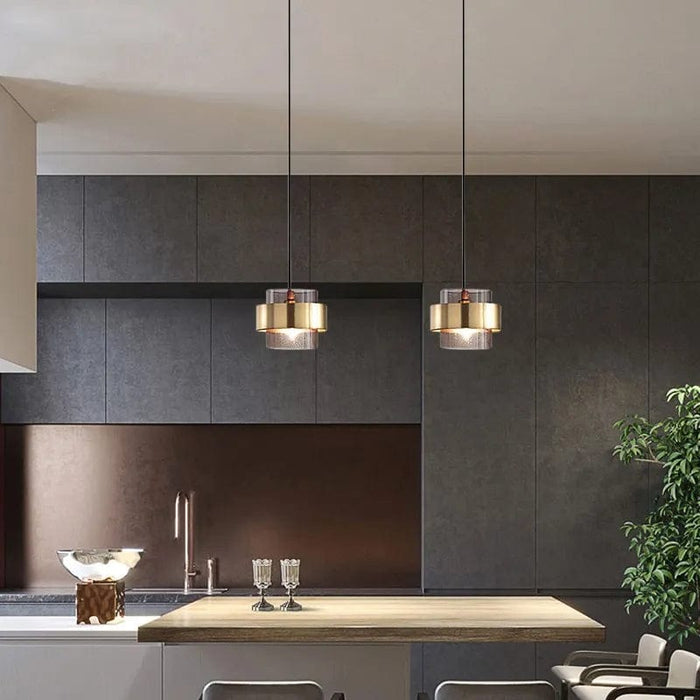
Minimalist Pendants
Single or grouped pendants offer the most flexible dining lighting — adjust each pendant independently, mix shapes, change spacing as needed. The 2026 direction favors warm metal pendants with smoked or amber glass shades, replacing the clear-glass pendants that defined the late 2010s.

Statement Oversized
Oversized statement chandeliers are still trending in 2026 — but in lighter materials than past years. Open-cage crystal compositions, blown-glass clusters, and thin-metal cascades deliver visual scale without structural weight. Reserved for grand dining rooms with 10 ft+ ceilings.

Rattan & Woven
Rattan and woven natural-fiber pendants align directly with the 2026 natural materials direction. The diffused light through woven fibers reads warm and intimate, suiting casual dining areas and breakfast nooks. The format works especially well in coastal, biophilic, or Scandinavian-influenced interiors.
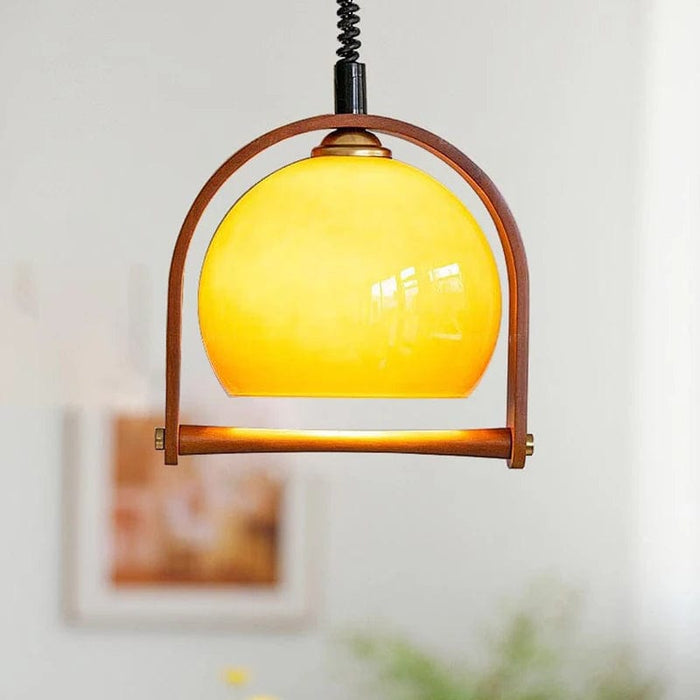
Adjustable & Retractable
Adjustable pendants let you change hang height for different occasions — lower for intimate meals, higher for everyday use, or to clear extended tables for large gatherings. The format is especially useful in multi-purpose dining areas and dual-use rooms where the table sometimes serves as a workspace.

Layered Lighting
Not a single fixture but a strategy — combining a primary chandelier with wall sconces, accent lighting, and dimmable controls to shift the dining atmosphere by occasion. The 2026 update integrates human-centric tunable white LEDs that automatically shift from cool 4000K at lunch to warm 2700K for evening dinners.
Style Decision Tree: Which Approach Fits Your Room?
Quick Decision Guide
Match your situation to the right style category. Each picks the strongest 2026-aligned starting point.
Universal Dining Lighting Rules
Regardless of style, these rules apply to every dining table fixture in 2026:
| Rule | Specification | Why It Matters |
|---|---|---|
| Hang Height | 30–36" above table at 8-ft ceilings | Add 3" per additional foot of ceiling height |
| Diameter / Length | ½ to ⅔ of table width or length | Avoids visual overhang and head-strike risk |
| Lumens | 30–40 lumens per square foot of dining area | Bright enough for meals, dimmable for atmosphere |
| Color Temperature | 2700–3000K | Warm enough for food and skin tones to appear correctly |
| CRI (Color Rendering) | 90+ minimum | Lower CRI distorts how food and finishes appear |
| Dimmer Control | Mandatory for dining rooms | Same fixture serves brunch, dinner, and late-night moods |
| End Clearance (linear) | 6"+ from each end of table | Visual balance and safety |
For full sizing math by table dimensions and ceiling height, use our dining room chandelier size guide with calculator. For shape-specific recommendations (round vs. rectangular vs. oval), see size by dining table shape.
2026 Trend Notes for Every Style
The ten styles above are evergreen — they have all worked for years and will continue to work. What changes year-to-year is the specific finish, glass, and color treatment. The 2026 directions affecting dining lighting:
- Warm metals replacing chrome — aged brass, champagne bronze, soft gold dominate.
- Smoked glass everywhere — gray and amber tinted glass on pendants, sputnik orbs, and chandelier shades.
- Mixed metal finishes are default — matte black + brass, antique bronze + warm gold, multi-tone fixtures.
- Cherry red and color accents — fashion-to-lighting transfer, showing up in shades and tinted glass.
- Biomorphic forms — branching, flowing silhouettes replacing rigid geometry.
- Sculptural minimalism — clean lines with warmth and texture, replacing hyper-minimalism.
- Human-centric tunable white — fixtures that shift color temperature throughout the day automatically.
- Natural materials — alabaster, rattan, hand-finished wood, reactive metal patinas.
For the full 2026 lighting trends overview: 2026 modern lighting trends guide.
Frequently Asked Questions
What style of chandelier is best over a dining table?
Match style to table shape and room aesthetic. Long rectangular tables work best with linear chandeliers. Round and square tables work with crystal, sputnik, or single round chandeliers. Modern interiors favor linear or sputnik; traditional interiors favor crystal or branched; farmhouse interiors favor wood-and-metal silhouettes.
What is the most popular dining room lighting style in 2026?
Linear chandeliers in warm metal finishes (aged brass, champagne bronze) lead the 2026 dining lighting category, followed closely by smoked-glass sputnik chandeliers and biomorphic branched chandeliers. Polished chrome finishes are noticeably retreating.
How high should a dining room light hang above the table?
30–36 inches above the table surface at 8-foot ceilings. Add 3 inches for each additional foot of ceiling height. A 10-foot ceiling puts the fixture 36–42 inches above the table.
What size chandelier do I need over a dining table?
Diameter (or length, for linear) should be ½ to ⅔ of the table width or length. A 60-inch round table accepts a 30–40 inch chandelier. A 72-inch rectangular table accepts a 36–48 inch linear fixture. For full sizing math, see our dining size guide.
Should I use a chandelier or pendant lights over a dining table?
Single chandelier for a unified architectural look and easier installation. Multiple pendants for rhythmic visual effect and individually adjustable heights. For tables 48–60 inches, either works. For tables 72 inches or longer, linear chandeliers usually outperform pendant clusters.
What color temperature is best for dining room lighting?
2700K to 3000K (warm white). Anything cooler than 3500K affects how food and skin tones appear. Always pair dining fixtures with a dimmer for full atmospheric control.
Can I mix chandelier styles in an open-plan home?
Yes, with one rule: match the metal finish family across all visible fixtures. Different silhouettes are fine — a linear over the dining table, a cluster over the living seating, a pair of pendants over the kitchen island — but the finishes should coordinate so the spaces read as connected.
Are crystal chandeliers still in style for dining rooms in 2026?
Yes, but reinterpreted. The 2026 direction pairs crystal with warm metal frames (aged brass, mixed black-and-gold) rather than the all-chrome formats of past decades. Pure traditional crystal still works in formal homes; modern-crystal pairings dominate everywhere else.
Is a rattan pendant appropriate over a dining table?
Yes, especially in casual dining areas, breakfast nooks, coastal-style homes, and biophilic interiors. Rattan and natural fibers align directly with the 2026 natural materials direction. For formal dining rooms, rattan reads too casual — choose crystal or branched chandeliers there.
How many pendants should I hang over a dining table?
Round or square tables: one centered pendant (or a small cluster of 3 in tight grouping). Rectangular tables 60–72 inches: 2 to 3 pendants spaced evenly. Tables longer than 72 inches: usually a linear chandelier outperforms multiple pendants.
What dining lighting works for low ceilings?
Flush-mount or semi-flush chandeliers, low-profile linear fixtures with integrated LED, and short-drop pendants. Avoid traditional chain-suspended fixtures with vertical drop in 8-foot ceiling rooms — they cut visual space.
Do I need a dimmer for dining room lighting?
Yes. Dining is the room with the widest range of lighting needs in any home — from full-brightness brunch to dim romantic dinner. A correctly-installed dimmer (matching TRIAC vs ELV LED type) extends fixture flexibility dramatically.
Should dining and kitchen lighting match in an open-plan home?
Coordinate, don't match. Match the metal finish across all visible fixtures (e.g., aged brass in both rooms). Vary the silhouette so each zone reads as distinct — a cluster or sphere over dining, a linear or pendant pair over the kitchen island.
How long should a linear chandelier be over a dining table?
½ to ⅔ of the table length, with at least 6 inches of clearance from each end. A 72-inch table accepts a 36–48 inch linear fixture; an 84-inch table accepts 42–56 inches.
What is the best dining lighting for a high-ceiling room?
Statement chandeliers with vertical presence — branched, oversized crystal, or multi-tier formats. The fixture should occupy enough vertical space to relate to the ceiling height; a small fixture in a 14-foot ceiling room reads stranded.
Find Your Style, Then Go Deep
This lookbook is a starting point — once a style direction stands out, the linked dedicated guides offer the depth you need to choose the specific fixture, size, and finish. Every style above has at least one in-stock fixture in our catalog matched to common US dining configurations.